Unlock your full potential by mastering the most common Court Liaising interview questions. This blog offers a deep dive into the critical topics, ensuring you’re not only prepared to answer but to excel. With these insights, you’ll approach your interview with clarity and confidence.
Questions Asked in Court Liaising Interview
Q 1. Describe your experience managing court documents and filings.
Managing court documents and filings is a crucial aspect of my role, requiring meticulous organization, accuracy, and adherence to strict deadlines. My experience encompasses the entire lifecycle, from initial drafting and review to ensuring timely and accurate filing with the court. This includes understanding specific formatting requirements, preparing exhibits, and managing version control to prevent confusion and errors.
For instance, in a recent case involving a complex commercial dispute, I managed over 500 documents, including contracts, financial statements, and emails. I utilized a document management system to meticulously track each document, ensuring its accessibility and facilitating rapid retrieval when needed by the legal team. I also implemented a robust version control system, using clearly labeled file names and a detailed tracking log, to avoid any confusion stemming from multiple revisions.
Furthermore, I am proficient in e-filing systems, ensuring compliance with court-specific regulations and deadlines. This includes understanding the nuances of various electronic filing portals, including formatting, submission processes, and confirmation tracking. I proactively monitor filing status to promptly address any issues or discrepancies, preventing delays and maintaining seamless workflow.
Q 2. How do you prioritize multiple deadlines and competing demands in a court setting?
Prioritizing multiple deadlines and competing demands in a court setting is a skill honed through experience and effective time management techniques. I utilize a combination of project management tools, prioritization matrices, and proactive communication to ensure all tasks are handled efficiently and effectively. Think of it like conducting an orchestra – each instrument (task) has its own part, but the conductor (me) needs to ensure they all play in harmony and hit their cues on time.
My approach typically involves creating a detailed timeline for each case, outlining key deadlines and milestones. This is complemented by a prioritized task list, employing methods like the Eisenhower Matrix (urgent/important) to focus on the most critical tasks first. Proactive communication with the legal team and court personnel ensures alignment on expectations and facilitates timely responses to potential issues.
For example, in a situation where a critical motion was due alongside several other tasks, I utilized the Eisenhower Matrix to identify the motion as both urgent and important, dedicating the majority of my time and resources to its timely preparation and filing. Simultaneously, I delegated less urgent tasks where possible and communicated clearly with the team to manage expectations and prevent bottlenecks.
Q 3. Explain your understanding of court procedures and protocols.
My understanding of court procedures and protocols is comprehensive and spans various jurisdictions and court types. This includes a deep understanding of rules of evidence, procedural rules, rules of civil/criminal procedure, and local court rules. Knowing these rules isn’t just about ticking boxes; it’s about understanding the ‘why’ behind them, how they affect the case, and how to navigate them effectively.
This knowledge extends to understanding the different stages of litigation – from pleadings and discovery to trial and post-trial proceedings. I’m familiar with the processes involved in managing evidence, preparing for hearings, and handling motions. I’m also adept at interpreting court orders, judgments, and other official documents, ensuring accurate and timely action.
For example, I’m familiar with the specific rules regarding the presentation of evidence in different court systems, ensuring all submissions are in the proper format and comply with relevant rules of evidence. This might involve organizing documents for discovery, preparing exhibits for trial, or managing the process of witness testimony.
Q 4. How proficient are you in using court-specific software and databases?
I am highly proficient in using various court-specific software and databases. My expertise extends to case management systems (CMS), electronic filing systems (EFS), and legal research databases like Westlaw and LexisNexis. Proficiency here isn’t just about knowing how to use the software; it’s about leveraging its features to improve efficiency and accuracy.
I’m experienced in using CMS to track case progress, manage deadlines, and access critical case information. I utilize EFS to ensure timely and compliant electronic filings. My legal research skills allow me to quickly locate relevant case law, statutes, and regulations, supporting the legal team’s strategic decision-making. Furthermore, I’m skilled in using data analysis tools within these systems to identify trends and patterns, which can be invaluable for case strategy and resource allocation.
For instance, in a recent case, I used a CMS to generate a report summarizing key deadlines and filing requirements, enabling the team to proactively manage their workload and prevent any missed deadlines. I also used the system’s reporting features to track case costs, providing valuable insights for budgeting and resource allocation.
Q 5. Describe your experience coordinating with judges, attorneys, and other court personnel.
Coordinating with judges, attorneys, and other court personnel is a crucial aspect of my work, requiring exceptional communication, interpersonal, and organizational skills. Building and maintaining positive working relationships is key to ensuring the smooth and efficient progress of cases.
My experience involves regularly interacting with judges’ chambers to schedule hearings, obtain rulings, and address procedural matters. I communicate clearly and professionally with attorneys to exchange documents, coordinate discovery, and manage the flow of information. I work effectively with court clerks and other personnel to manage filings, obtain necessary court orders, and resolve any procedural issues. This collaboration requires sensitivity, diplomacy, and the ability to navigate potentially challenging situations with professionalism and grace.
For example, in a situation where a scheduling conflict arose between two parties, I proactively communicated with all involved parties, including the judge’s chambers, to find a mutually agreeable solution. This required clear and concise communication, a willingness to compromise, and a commitment to finding a resolution that served the interests of all parties involved.
Q 6. How do you handle sensitive and confidential information in a court environment?
Handling sensitive and confidential information in a court environment is paramount. My approach strictly adheres to ethical guidelines, confidentiality protocols, and relevant legal regulations. This encompasses physical security measures, technological safeguards, and a strong ethical commitment to data protection.
Physically, I ensure that sensitive documents are stored securely, accessed only by authorized personnel, and disposed of properly when no longer needed. Technologically, I utilize encrypted email, password-protected files, and secure document management systems to prevent unauthorized access. My ethical commitment means I am always mindful of data privacy and avoid any action that could compromise the confidentiality of sensitive information.
For example, I would never discuss confidential case details with unauthorized individuals, and I always follow strict procedures for disposing of sensitive documents, such as shredding or secure electronic deletion. I also strictly adhere to all court rules and regulations regarding the handling of confidential information.
Q 7. How familiar are you with various legal terminology and concepts?
I possess a strong understanding of various legal terminology and concepts. My knowledge extends to a wide range of areas, including civil procedure, criminal procedure, contract law, evidence law, and tort law. This knowledge is not just theoretical; it’s practical, allowing me to efficiently manage cases and understand the nuances of legal processes.
This understanding allows me to effectively communicate with legal professionals, understand the context of documents, and anticipate potential procedural issues. I’m able to translate complex legal concepts into clear and concise language for non-legal personnel. I constantly update my knowledge base to stay current with legal developments and terminology.
For example, understanding the difference between ‘summary judgment’ and ‘default judgment’ allows me to anticipate and manage the appropriate procedural steps for each. Similarly, knowing the rules of evidence ensures I can efficiently manage the preparation and presentation of evidence in court.
Q 8. Explain your method for tracking cases and ensuring compliance with deadlines.
Tracking cases and meeting deadlines is paramount in court liaising. My method involves a multi-pronged approach combining technology and meticulous organization. I utilize a dedicated case management system, typically a software solution with features like calendar integration, automated reminders, and customizable workflows. This system allows me to input all key dates – filing deadlines, hearing dates, discovery deadlines, etc. – and set automated alerts. For example, I might set reminders 7 days, 3 days, and 1 day before a filing deadline.
Beyond the software, I maintain a detailed physical file for each case, organized chronologically with clearly labeled folders for different document types. This allows for quick access to information even when technology fails. Regularly reviewing my calendar and the case management system, often daily, allows me to proactively identify potential conflicts or impending deadlines. This proactive approach is key to avoiding missed deadlines and ensures smooth case progression.
Q 9. How do you effectively communicate complex legal information to non-legal personnel?
Communicating complex legal information to non-legal personnel requires a clear, concise, and empathetic approach. I avoid legal jargon whenever possible, opting for plain language that anyone can understand. Think of it like explaining a complicated recipe to someone who’s never cooked before – you break it down into simple, manageable steps.
I use analogies and real-world examples to illustrate complex concepts. For instance, instead of explaining ‘summary judgment,’ I might say, ‘Think of it like a referee in a game deciding the outcome before the full match is played because one side has clearly won based on the evidence presented.’ Visual aids such as flowcharts or diagrams can be incredibly helpful to illustrate processes or relationships between different legal elements. Finally, I always encourage questions and ensure the recipient understands the information before concluding the communication.
Q 10. Describe your experience preparing for and attending court hearings.
Preparing for court hearings involves thorough research, meticulous organization, and precise execution. This process begins well before the hearing date. I review all relevant documents, including pleadings, evidence, and witness statements, to ensure a complete understanding of the case and potential arguments. I create detailed checklists to ensure I’ve assembled all necessary materials—evidence, witness contact details, legal authorities, and even extra copies of documents.
During the hearing, I maintain a professional demeanor, actively listen to proceedings, and present information clearly and concisely. I anticipate potential questions from the judge or opposing counsel and prepare responses accordingly. Post-hearing, I review the proceedings to identify any actions that need to be taken, such as filing orders or preparing for the next stage. One instance where meticulous preparation was crucial was a complex contract dispute. By meticulously organizing the exhibits and preparing detailed witness summaries, we successfully presented our case, resulting in a favorable outcome for our client.
Q 11. How do you handle unexpected challenges or delays in court proceedings?
Unexpected challenges and delays are inevitable in court proceedings. My approach emphasizes proactive problem-solving and adaptability. When faced with a delay, I immediately assess the impact on the overall case strategy. This involves reviewing deadlines, adjusting my schedule accordingly, and communicating the changes to all relevant parties including the client, opposing counsel, and the court.
If a witness becomes unavailable, I immediately explore alternative options like securing substitute testimony or requesting a postponement. If there is a procedural issue, I research relevant laws and rules to determine the best course of action, often consulting with senior colleagues or legal experts. My goal is always to minimize disruption and maintain the momentum of the case. For instance, in a case where a key witness fell ill, we swiftly arranged for a video deposition to avoid significant delays.
Q 12. What strategies do you use to build and maintain positive relationships with court staff?
Building and maintaining positive relationships with court staff is crucial for efficient case management. This involves demonstrating respect, professionalism, and understanding. I always treat court staff with courtesy and respect, addressing them appropriately and acknowledging their workload. Clear, concise communication is paramount; I ensure my requests are clearly stated and timely.
Proactive communication is key – I provide updates promptly, anticipate potential issues, and inform the staff in advance of any significant changes. Small gestures of appreciation, such as expressing gratitude for their assistance, go a long way in fostering positive relationships. Building rapport with court staff is not just about personal interactions. It is about mutual understanding and respecting each other’s roles in ensuring the smooth functioning of the court system. This fosters a collaborative environment, making the court process more efficient and less stressful.
Q 13. Describe your experience with electronic filing systems.
I have extensive experience with various electronic filing systems, including [mention specific systems, e.g., CM/ECF, Odyssey]. My proficiency includes understanding the specific requirements of each system, ensuring all documents are correctly formatted, and meeting all filing deadlines. I am adept at troubleshooting technical issues that may arise, ensuring all filings are processed efficiently.
Beyond basic filing, I utilize the advanced features of these systems, such as electronic service and document management tools. This allows for improved efficiency and enhances organization, ensuring swift access to case-related documents. Regular updates on system changes and new features are crucial; I consistently seek to improve my expertise to remain current with the ever-evolving technological landscape of court processes. I find that familiarity with different electronic filing systems is invaluable as it simplifies the transition between different courts and jurisdictions.
Q 14. How do you manage and organize large volumes of case files?
Managing large volumes of case files requires a systematic and organized approach. I utilize a combination of physical and electronic filing methods. For electronic files, I use a robust case management software with a strong tagging and search function. This allows me to easily locate specific documents based on keywords, dates, or other relevant metadata.
For physical files, a color-coded system helps organize documents by category (e.g., pleadings, discovery, motions). Each case file has a clearly labeled index, and I maintain a comprehensive master list of all cases with relevant information, including file locations, key dates, and contacts. Regular purging of old or irrelevant documents ensures the files remain manageable. The key is to develop a system that is consistent, intuitive, and easily adaptable as caseloads change. This approach ensures quick access to information, reducing search time and improving overall efficiency.
Q 15. Explain your approach to resolving conflicts or disagreements within the court system.
Resolving conflicts within the court system requires a multifaceted approach emphasizing communication, collaboration, and a deep understanding of legal procedure. My strategy begins with actively listening to all parties involved, identifying the core issues, and seeking common ground. I strive to create a neutral and respectful environment where everyone feels heard. This often involves facilitating dialogue, clarifying misunderstandings, and exploring potential compromises. If direct negotiation fails, I’m adept at mediating discussions, guiding parties toward mutually acceptable solutions, and suggesting alternative dispute resolution (ADR) methods like arbitration or mediation where appropriate. For instance, in a case involving a property dispute, I successfully mediated a settlement by helping both parties understand each other’s perspectives and negotiate a fair division of assets, avoiding a lengthy and costly trial.
My approach emphasizes professionalism and adherence to legal ethics. I ensure all communication remains documented and compliant with court rules, protecting all parties involved. Finally, if a resolution cannot be reached through negotiation or mediation, I work to ensure a smooth transition to the next stage of legal proceedings, providing clear and concise information to all parties involved.
Career Expert Tips:
- Ace those interviews! Prepare effectively by reviewing the Top 50 Most Common Interview Questions on ResumeGemini.
- Navigate your job search with confidence! Explore a wide range of Career Tips on ResumeGemini. Learn about common challenges and recommendations to overcome them.
- Craft the perfect resume! Master the Art of Resume Writing with ResumeGemini’s guide. Showcase your unique qualifications and achievements effectively.
- Don’t miss out on holiday savings! Build your dream resume with ResumeGemini’s ATS optimized templates.
Q 16. How familiar are you with different types of court proceedings (e.g., criminal, civil, family)?
I possess extensive familiarity with various court proceedings, including criminal, civil, and family law. In criminal proceedings, I understand the complexities of pre-trial motions, plea bargaining, and trial procedures, including jury selection and witness examination. My experience encompasses supporting clients through various stages, from arrest to sentencing. In civil litigation, I’m well-versed in the procedures of discovery, motions, and trial, including understanding different types of damages and remedies. I’ve managed cases ranging from contract disputes to personal injury claims. In family law, I’m experienced in navigating sensitive matters like divorce, child custody, and child support, understanding the emotional complexities involved and the specific legal requirements related to these cases. This broad experience allows me to effectively adapt my approach based on the specific context of each case.
Q 17. Describe your experience with witness preparation and management.
Witness preparation and management is a crucial aspect of my work. My approach focuses on thorough preparation and clear communication. I begin by conducting detailed interviews with witnesses to understand their testimony and identify potential challenges. This involves clarifying timelines, reviewing relevant documents, and anticipating potential cross-examination questions. I then work with witnesses to refine their testimony, ensuring it’s accurate, concise, and persuasive. I emphasize the importance of honesty and clarity, helping witnesses to present their information calmly and confidently. For example, in a personal injury case, I worked with a key witness to ensure they clearly articulated the events leading to the accident, highlighting details such as time, location, and witness observations, effectively strengthening our client’s case.
I also manage witness appearances in court, coordinating schedules and ensuring they are well-informed about the process. This includes briefing them on courtroom etiquette and providing them with support during their testimony. Effective witness management not only ensures the smooth flow of proceedings but significantly contributes to successful case outcomes.
Q 18. How do you maintain confidentiality and data security in your work?
Confidentiality and data security are paramount in my work. I strictly adhere to all applicable laws and professional ethical guidelines regarding client confidentiality, including attorney-client privilege. I utilize secure communication channels, such as encrypted emails and secure file-sharing platforms, for transmitting sensitive information. All client documents are stored securely in password-protected databases and physical files, adhering to strict access control measures. I also undergo regular training on data security best practices and remain updated on relevant legislation, such as GDPR and CCPA. In summary, my commitment to protecting client confidentiality is unwavering, reflecting my understanding of its crucial role in maintaining trust and professional ethics.
Q 19. What is your understanding of the rules of evidence?
My understanding of the rules of evidence is comprehensive. I know that these rules govern what evidence can be admitted in court and how it can be presented. This includes understanding different types of evidence, such as direct, circumstantial, and hearsay evidence; the rules regarding authentication and best evidence; and the specific requirements for expert witness testimony. For instance, I am aware of the exceptions to the hearsay rule and how to use them strategically in a case. I also understand the importance of objections and how to make them effectively to protect my client’s interests. A solid grasp of the rules of evidence is crucial for ensuring a fair and efficient trial and to prevent the admission of inadmissible evidence that could harm a case.
Q 20. How do you handle difficult or demanding individuals in a court setting?
Handling difficult or demanding individuals in a court setting requires patience, diplomacy, and a firm but respectful approach. My strategy involves remaining calm and professional, even under pressure. I actively listen to their concerns, trying to understand their perspective, while clearly communicating expectations and boundaries. I’m adept at de-escalating tense situations by using clear and concise language, reframing statements to find common ground, and offering appropriate solutions. If necessary, I collaborate with court officials or security personnel to maintain order and safety. For example, if a witness is becoming disruptive, I’ll approach them calmly, remind them of the court’s decorum rules, and seek the judge’s guidance if necessary. Maintaining professionalism and composure is key to managing difficult situations effectively and maintaining a productive court environment.
Q 21. Explain your experience in preparing legal documents for court filings.
Preparing legal documents for court filings is a detail-oriented process requiring precision and adherence to strict legal standards. My experience includes drafting a wide range of documents, such as complaints, answers, motions, briefs, and affidavits. I’m proficient in using various legal software programs to ensure accurate formatting and compliance with local court rules. I’m meticulous in ensuring all necessary information is included and that the documents are clear, concise, and persuasive. For example, in preparing a motion for summary judgment, I carefully researched relevant case law and legal precedents to support our arguments, resulting in a compelling document that successfully persuaded the judge to grant the motion. I ensure that all documents are meticulously reviewed for accuracy and completeness before filing, minimizing the risk of errors or delays.
Q 22. How do you ensure the accuracy and completeness of court documents?
Ensuring the accuracy and completeness of court documents is paramount to the integrity of the judicial process. It’s a multi-step process that begins even before the document is drafted. First, I meticulously review all source materials – witness statements, police reports, medical records – verifying their authenticity and relevance. I then carefully cross-reference this information to ensure consistency and avoid contradictions.
Secondly, I utilize a rigorous checklist to ensure all necessary information is included. This checklist is tailored to the specific type of document (e.g., affidavit, motion, brief) and includes elements like correct case citation, proper formatting, and accurate dates and times. I also perform a thorough spell and grammar check, using both software tools and manual review. Finally, before submission, I conduct a final review with a colleague to catch any potential errors I may have overlooked.
For example, in one case involving a complex custody dispute, I identified a discrepancy between the dates mentioned in a witness statement and the timeline presented in the medical records. This seemingly small detail had the potential to significantly impact the judge’s decision, and by catching it, I helped ensure the accuracy of the submitted document.
Q 23. How familiar are you with the rules of professional conduct for court liaisons?
I am intimately familiar with the rules of professional conduct for court liaisons, which encompass several key areas. These include maintaining confidentiality, acting with integrity and impartiality, respecting the court’s authority, and adhering to all court rules and procedures. I understand that even seemingly minor breaches can have serious consequences. For example, disclosing confidential information or inappropriately influencing a judge can lead to disciplinary action, including suspension or even loss of license.
My commitment to ethical conduct extends beyond merely following the rules; it’s ingrained in my professional philosophy. I treat all parties with respect, regardless of their position in the case. I strive for transparency in my actions and ensure that my work is always conducted with the utmost integrity.
I regularly attend professional development workshops and keep abreast of any updates to the code of conduct to ensure my practice remains compliant and ethical.
Q 24. Describe your experience with case scheduling and courtroom logistics.
My experience with case scheduling and courtroom logistics is extensive. This involves coordinating with various stakeholders, including judges, attorneys, court staff, and witnesses. I’m adept at managing complex calendars, ensuring timely filings, and resolving scheduling conflicts proactively. This often involves negotiating with different parties to find mutually agreeable times and dates for hearings, trials, and other court proceedings.
In terms of courtroom logistics, I handle tasks such as arranging for the necessary technology, including video conferencing or courtroom recording equipment. I also manage the flow of documents, ensuring that they are properly organized and accessible to all relevant parties. Furthermore, I assist with witness preparation and management, coordinating their arrival and ensuring they are comfortable and prepared to testify.
For example, I recently managed the scheduling for a high-profile case involving multiple witnesses from out of state. Through meticulous planning and effective communication, I successfully coordinated their travel arrangements, lodging, and testimony schedules, ensuring a smooth and efficient trial process.
Q 25. How do you stay up-to-date on changes in court procedures and regulations?
Staying current with changes in court procedures and regulations is crucial for maintaining effectiveness as a court liaison. I utilize several methods to accomplish this. I regularly review updates from relevant professional organizations and government websites. I subscribe to legal journals and newsletters that report on court rule changes and legal precedents.
Furthermore, I actively participate in continuing legal education courses and workshops. These provide opportunities to network with other professionals and learn about best practices and emerging trends in court operations. I also maintain a network of contacts within the court system to stay informed about any internal changes or updates that might not be publicly announced.
This proactive approach ensures that I’m always equipped to navigate the ever-evolving legal landscape and provide the most effective support possible to my clients.
Q 26. Describe a time you had to adapt quickly to a changing situation in court.
In one instance, a key witness became unexpectedly unavailable just hours before a scheduled deposition. This presented a significant challenge, as the deposition was crucial for the case. I immediately sprang into action, exploring alternative solutions. I contacted the witness’s attorney, explored the possibility of rescheduling, and, simultaneously, initiated a search for a potential substitute witness with comparable knowledge.
Ultimately, we managed to reschedule the deposition for the following day, minimizing the disruption to the court’s schedule and safeguarding the integrity of the case. This experience highlighted the importance of adaptability, resourcefulness, and clear communication in handling unforeseen circumstances in a fast-paced court environment.
Q 27. How do you utilize technology to improve efficiency in court liaison tasks?
Technology plays a crucial role in improving efficiency in court liaison tasks. I utilize various software platforms for case management, document review, and communication. Case management software allows me to centralize case files, track deadlines, and manage communications with all parties involved. Document review software assists in ensuring accuracy and consistency in court documents, flagging potential errors and inconsistencies.
Secure communication platforms are utilized to exchange confidential information with clients and attorneys, maintaining privacy and security. For instance, I use secure file-sharing systems and encrypted email to ensure sensitive data remains protected throughout the legal process. Furthermore, proficiency in e-filing systems allows for streamlined submission of documents to the court, eliminating the need for physical delivery and reducing processing time.
Q 28. What are your salary expectations for this Court Liaison position?
My salary expectations for this Court Liaison position are commensurate with my experience, skills, and the market rate for similar roles. Considering my extensive background and proven track record in court liaison, I am seeking a compensation package within the range of [Insert Salary Range Here]. I am open to discussing this further and am confident that my contributions will significantly benefit your organization.
Key Topics to Learn for Court Liaising Interview
- Understanding the Court System: Familiarize yourself with the different court levels, procedures, and terminology. This includes civil, criminal, and family court processes.
- Legal Documentation & Procedures: Practice navigating legal documents like pleadings, motions, and orders. Understand the practical application of filing procedures and deadlines.
- Communication & Liaison Skills: Develop your skills in effectively communicating with judges, lawyers, court staff, and clients. Practice active listening and clear, concise communication, both verbally and in writing.
- Case Management & Organization: Learn how to efficiently manage case files, track deadlines, and maintain accurate records. Understanding electronic case management systems is crucial.
- Ethical Considerations & Confidentiality: Understand the ethical responsibilities of a court liaison and the importance of maintaining client confidentiality and adhering to professional standards.
- Problem-solving & Conflict Resolution: Prepare examples demonstrating your ability to handle challenging situations, resolve conflicts, and find practical solutions within the court environment. This includes anticipating potential issues and proactively addressing them.
- Technological Proficiency: Demonstrate familiarity with relevant software and technology used in court administration, such as case management systems and electronic filing platforms.
Next Steps
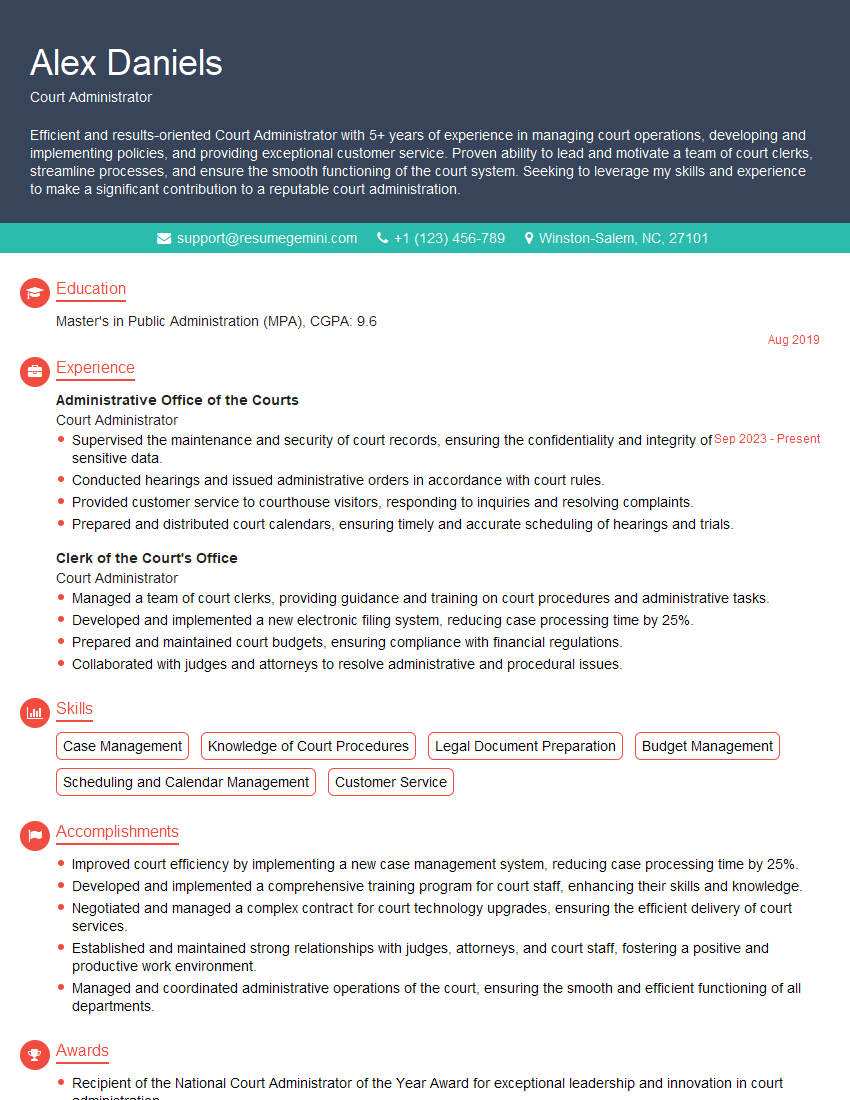
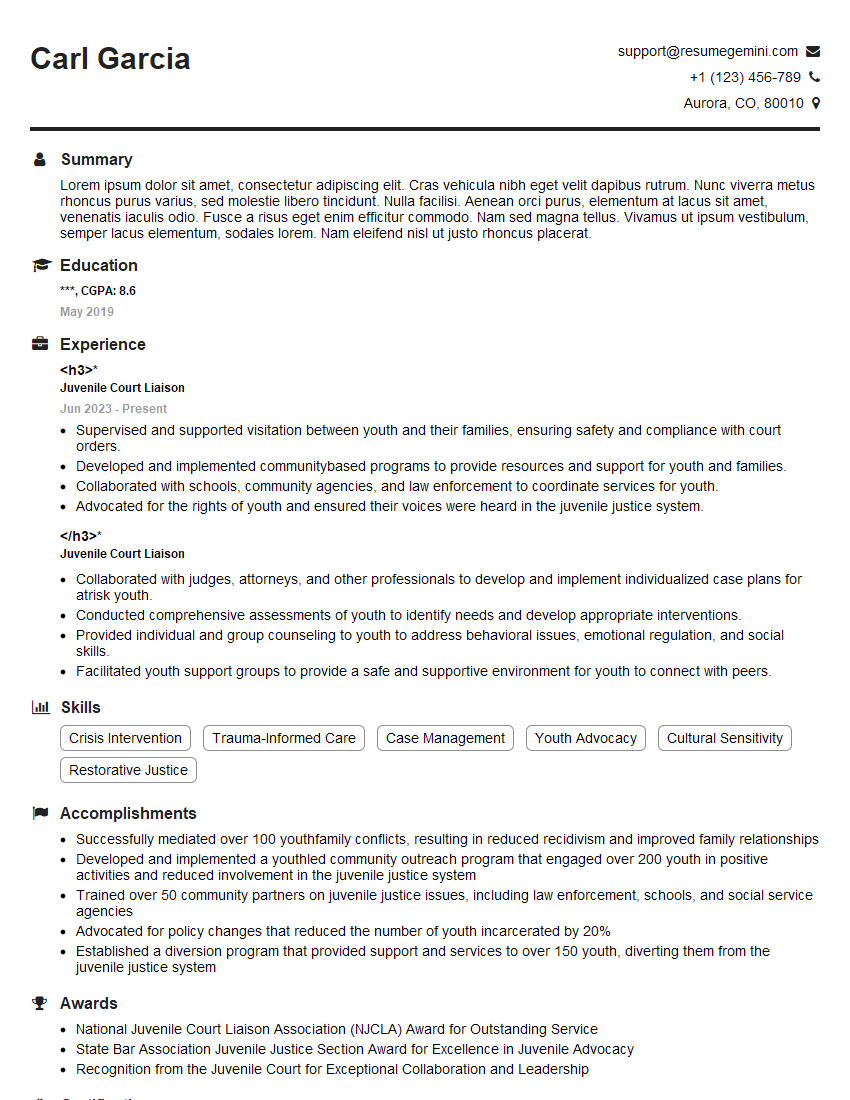
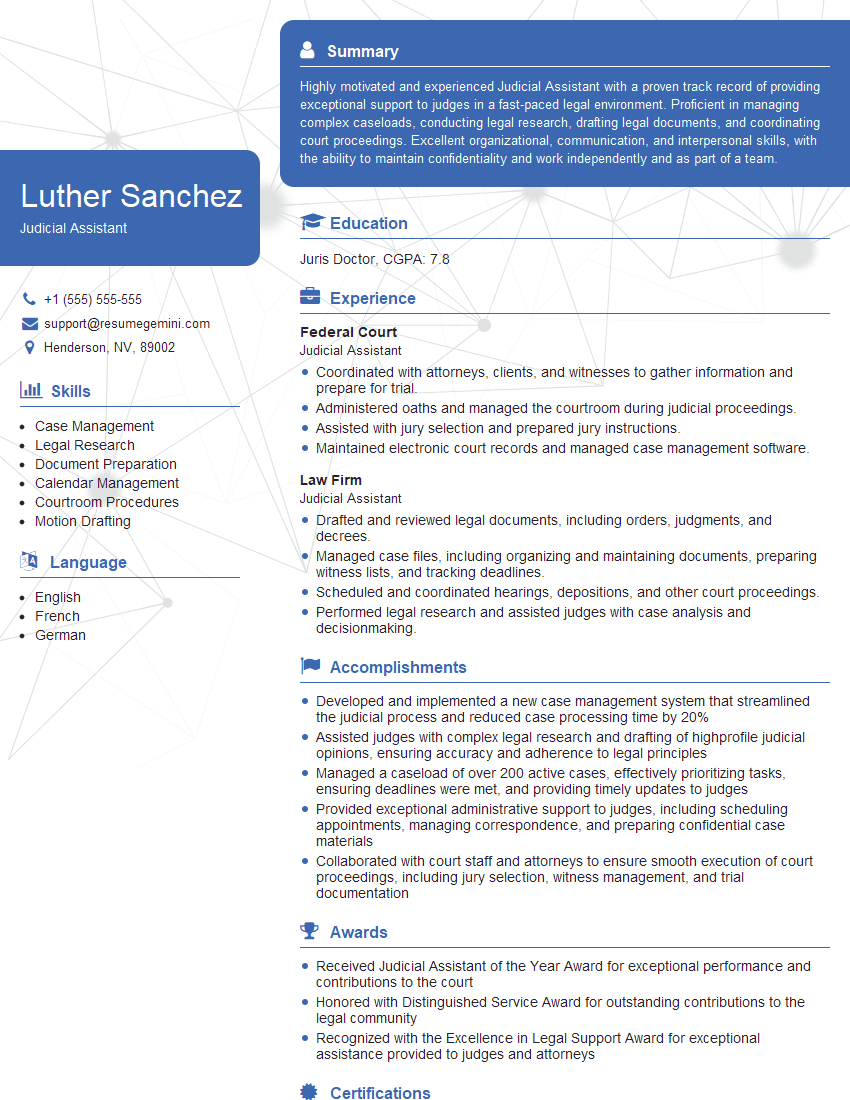
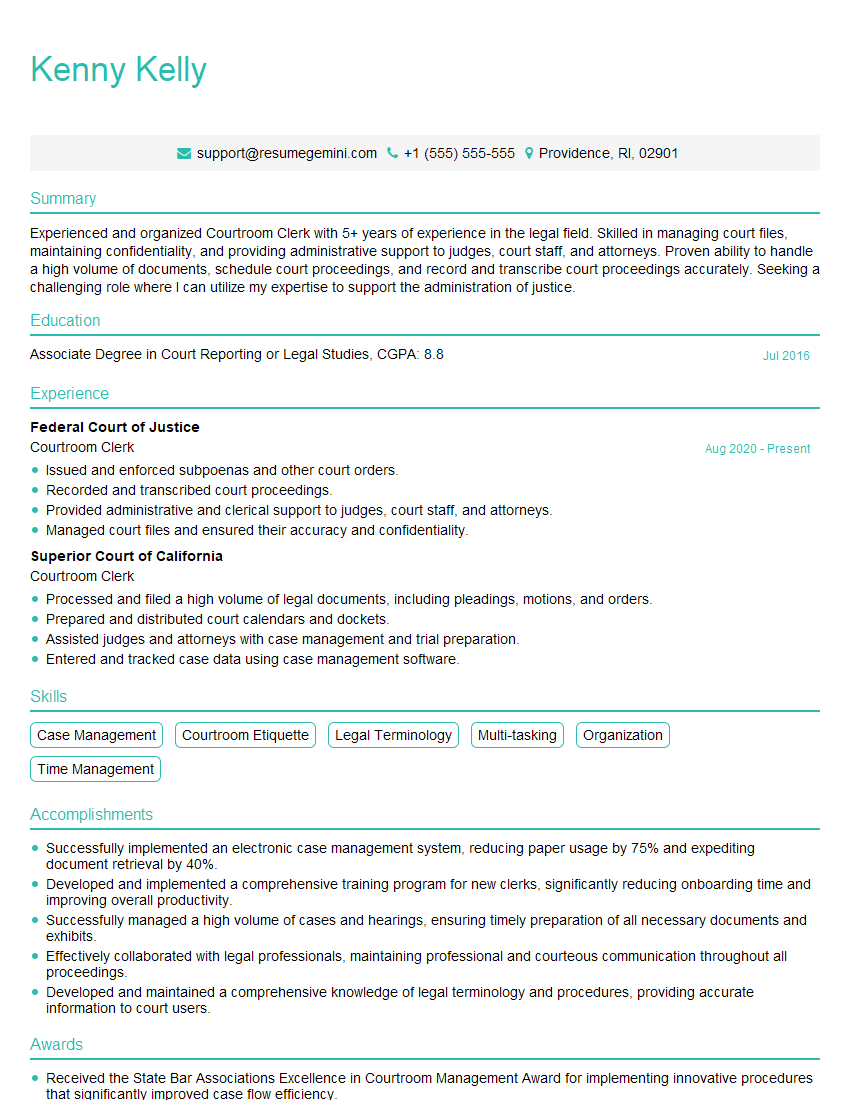
Mastering Court Liaising opens doors to a rewarding career offering stability, growth potential, and the satisfaction of contributing to the legal system. To maximize your job prospects, creating a strong, ATS-friendly resume is essential. ResumeGemini can help you craft a compelling resume that highlights your skills and experience effectively. We offer examples of resumes tailored to Court Liaising to help you present yourself as the ideal candidate. Take the next step toward your dream career – build your best resume with ResumeGemini.
Explore more articles
Users Rating of Our Blogs
Share Your Experience
We value your feedback! Please rate our content and share your thoughts (optional).
What Readers Say About Our Blog
Very informative content, great job.
good