Every successful interview starts with knowing what to expect. In this blog, we’ll take you through the top Fire Suppression Equipment interview questions, breaking them down with expert tips to help you deliver impactful answers. Step into your next interview fully prepared and ready to succeed.
Questions Asked in Fire Suppression Equipment Interview
Q 1. Explain the different types of fire suppression systems.
Fire suppression systems are broadly categorized into several types, each designed to combat different fire classes and suit specific environments. These systems can be broadly classified as water-based, chemical, gas-based, and specialized systems.
- Water-Based Systems: These are the most common and include wet pipe, dry pipe, pre-action, and deluge systems. They utilize water, often with additives, to extinguish fires by cooling and/or displacing oxygen.
- Chemical Systems: These systems use chemical agents like dry chemical powder or foam to suppress fires. They’re effective against various classes of fires, but some leave residue.
- Gas-Based Systems: These systems employ inert gases like CO2, Argon, or Nitrogen to displace oxygen and smother the fire. They’re ideal for sensitive equipment and environments where water damage is unacceptable.
- Specialized Systems: This category includes systems designed for specific hazards like kitchen fires (wet chemical), flammable metal fires (special dry powder), or electrical fires (CO2).
The choice of system depends on factors like the type of occupancy, fire hazards present, environmental considerations, and budget.
Q 2. Describe the operation of a wet pipe sprinkler system.
A wet pipe sprinkler system is the most common type. It consists of a network of pipes filled with water under pressure, connected to a water supply. Each sprinkler head is equipped with a heat-sensitive element (usually a glass bulb or fusible link). When the temperature around a sprinkler head reaches its activation threshold, the element melts or breaks, releasing water and extinguishing the fire. Think of it like a very precise, automated firehose network. The system is always pressurized, ready to respond instantly to a fire.
Imagine a kitchen fire: The heat from the flames causes the closest sprinkler head’s element to fail, discharging water directly onto the fire, containing and extinguishing it while limiting water damage to the immediate vicinity.
Q 3. What are the advantages and disadvantages of a dry pipe sprinkler system?
Dry pipe sprinkler systems are designed for areas susceptible to freezing temperatures. Unlike wet pipe systems, the pipes are filled with compressed air or nitrogen, not water. The water is introduced into the pipes only when a sprinkler head activates. This prevents freezing and pipe damage.
- Advantages: Protection in freezing environments; less water damage in case of accidental activation.
- Disadvantages: Slower response time due to the delay in water introduction; increased system complexity and maintenance requirements; potential for delayed activation in a fire.
For example, a warehouse in a cold climate would benefit from a dry pipe system to prevent freezing and costly repairs. However, the delayed response time needs careful consideration against the risks involved.
Q 4. How does a pre-action sprinkler system work?
A pre-action sprinkler system combines features of both wet and dry pipe systems. The pipes are initially filled with air or nitrogen. However, a fire detection system (like smoke detectors) must trigger the system before water is released into the pipes. This reduces the risk of accidental water discharge.
Imagine a museum or data center. A pre-action system provides early detection and confirmation of a fire before flooding the valuable and sensitive contents with water. Only upon fire detection will the system release water. This approach minimizes water damage while ensuring effective fire suppression.
Q 5. Explain the function of a deluge system.
A deluge system is designed for large areas with high fire risks, such as aircraft hangars or industrial storage facilities. Unlike other sprinkler systems, all sprinkler heads are open; no heat-sensitive element is present. A fire detection system triggers the release of water simultaneously from all heads, creating a rapid and widespread water curtain. This system offers the fastest response time but results in significant water damage if accidentally activated.
Consider an airplane hangar. The vast space and potential for rapid fire spread necessitate a deluge system. The immediate and thorough water application helps control and suppress a large fire rapidly.
Q 6. What are the different types of fire extinguishers and their applications?
Fire extinguishers are classified based on the type of fire they are designed to combat (fire classes A, B, C, D, K). They utilize various extinguishing agents:
- Water (Class A): For ordinary combustibles like wood and paper.
- Carbon Dioxide (CO2) (Class B, C): For flammable liquids and electrical fires; leaves no residue.
- Dry Chemical Powder (Class A, B, C): Versatile, but leaves a messy residue.
- Foam (Class A, B): For flammable liquids; creates a barrier to prevent reignition.
- Halon (Class A, B, C): (Mostly phased out due to ozone depletion) Excellent for electrical fires and sensitive equipment.
- Wet Chemical (Class K): Specifically for cooking oils and fats.
The type of extinguisher needed depends entirely on the type of fire involved. Misuse can be ineffective or even dangerous.
Q 7. Describe the PASS method for using a fire extinguisher.
The PASS method is a simple yet crucial procedure for using a fire extinguisher effectively and safely:
- P – Pull: Pull the pin, breaking the tamper seal.
- A – Aim: Aim the nozzle at the base of the fire.
- S – Squeeze: Squeeze the handle to discharge the extinguishing agent.
- S – Sweep: Sweep the nozzle from side to side, covering the base of the fire.
Remember to always maintain a safe distance from the fire and ensure you have an escape route planned. If the fire is too large or spreading rapidly, evacuate the area immediately and call emergency services.
Q 8. How do you inspect and maintain fire suppression systems?
Inspecting and maintaining fire suppression systems is a crucial aspect of fire safety. It involves a systematic approach, encompassing visual checks, functional testing, and record-keeping. The specifics vary depending on the system type (sprinklers, clean agent, foam, etc.), but generally include:
- Visual Inspection: This involves carefully examining all components for damage, corrosion, leaks, obstructions, and proper positioning. Look for things like dents in sprinkler heads, corrosion on pipes, or debris blocking nozzles.
- Functional Testing: This goes beyond visual inspection and involves actually testing the system’s ability to function correctly. For sprinkler systems, this might involve flow testing individual sprinklers or conducting a partial system test. For clean agent systems, it might involve checking the agent’s pressure and cylinder integrity. Regular alarm testing is also vital.
- Documentation: Meticulous record-keeping is essential. All inspections and tests must be documented, including dates, findings, and any corrective actions taken. This documentation is vital for compliance and demonstrating due diligence.
Example: In a recent inspection of a warehouse’s sprinkler system, I found a section of pipe showing significant corrosion. This was immediately flagged, and the affected section was replaced to prevent potential failure during a fire.
Q 9. What are the common causes of fire suppression system malfunctions?
Malfunctions in fire suppression systems stem from a variety of causes, often related to neglect, age, or environmental factors. Common culprits include:
- Corrosion: Exposure to moisture, chemicals, or saltwater can corrode pipes, valves, and sprinkler heads, leading to leaks or complete system failure.
- Obstructions: Storage of materials near sprinkler heads or in fire suppression system pathways can prevent proper discharge of the agent.
- Low Pressure/Agent Depletion: Over time, the pressure in a system can decrease, or the agent may be depleted. Regular pressure checks and agent level monitoring are essential.
- Mechanical Failure: Components can fail due to wear and tear, age, or manufacturing defects. Regular maintenance and inspections are crucial for detecting potential problems before they become critical.
- Improper Installation: Faulty installation is a major source of problems. Incorrectly sized pipes, improper valve placement, and other errors can compromise the system’s effectiveness.
Example: I once encountered a system malfunction caused by a misplaced valve that inadvertently blocked the flow of extinguishing agent to a crucial area. This highlights the importance of precise installation and regular inspections.
Q 10. Explain the importance of regular testing and inspection of fire suppression systems.
Regular testing and inspection of fire suppression systems are paramount to ensuring life safety and property protection. Think of it like a car’s regular maintenance – it prevents catastrophic failure and ensures the system is ready when needed most. The importance lies in:
- Early Detection of Problems: Regular inspections allow for the early detection of minor issues before they escalate into major problems, saving time and money.
- Prevention of System Failures: By proactively addressing issues, you significantly reduce the risk of the system failing during a real fire.
- Compliance with Codes and Standards: Regular testing and inspections are often required by building codes and insurance policies.
- Assurance of System Functionality: It provides confidence that your fire protection system will perform its intended function during an emergency.
Example: Early detection of a small leak in a sprinkler pipe during routine inspection prevented a larger, more costly repair down the line and ensured the building’s protection was not compromised.
Q 11. Describe the NFPA standards related to fire suppression systems.
The National Fire Protection Association (NFPA) publishes numerous standards that govern the design, installation, inspection, testing, and maintenance of fire suppression systems. Key standards include:
- NFPA 13: Standard for the Installation of Sprinkler Systems
- NFPA 10: Standard for Portable Fire Extinguishers
- NFPA 20: Standard for the Installation of Standpipe and Hose Systems
- NFPA 12A: Standard on Halon 1301 Fire Extinguishing Systems
- NFPA 2001: Standard on Clean Agent Fire Extinguishing Systems
These standards provide detailed requirements for various aspects of fire suppression, ensuring consistency and safety across diverse applications. They cover everything from system design and component selection to testing procedures and maintenance schedules. Compliance with these standards is essential for ensuring the effectiveness and safety of fire suppression systems.
Q 12. How do you identify and address potential hazards in a fire suppression system?
Identifying and addressing potential hazards in a fire suppression system requires a thorough and systematic approach. It involves a combination of visual inspection, functional testing, and understanding the system’s design and operation. This includes:
- Corrosion: Look for rust, pitting, or other signs of corrosion on pipes, fittings, and sprinkler heads.
- Leaks: Check for water leaks in sprinkler systems or agent leaks in clean agent systems.
- Obstructions: Ensure sprinkler heads are unobstructed and that there are no blockages in pipes or valves.
- System Pressure: Verify that the system is maintained at the appropriate pressure.
- Agent Levels: For clean agent systems, regularly check the agent level in the cylinders.
- Valve Operation: Verify that all valves operate smoothly and correctly.
Addressing hazards involves promptly repairing or replacing damaged components, clearing obstructions, and restoring system pressure or agent levels. Accurate documentation of all findings and corrective actions is crucial.
Q 13. What are the safety precautions you take when working with fire suppression equipment?
Safety is paramount when working with fire suppression equipment. Precautions must be taken to prevent accidents and injuries. These include:
- Lockout/Tagout Procedures: Before performing any maintenance or repair, always use lockout/tagout procedures to prevent accidental system activation.
- Personal Protective Equipment (PPE): Appropriate PPE, such as safety glasses, gloves, and protective clothing, should be worn at all times.
- Proper Training: All personnel working on fire suppression systems must be properly trained and certified.
- Confined Space Entry Procedures: If working in confined spaces, follow appropriate confined space entry procedures.
- Respiratory Protection: When handling certain extinguishing agents, appropriate respiratory protection may be necessary.
- Emergency Procedures: Be familiar with emergency procedures and have a plan in place in case of an accident.
Following these safety precautions ensures a safe working environment and minimizes the risk of injury.
Q 14. Explain the process of installing a fire sprinkler system.
Installing a fire sprinkler system is a complex process that requires expertise and adherence to strict codes and standards (primarily NFPA 13). The process generally involves these steps:
- System Design: Based on the building’s layout, occupancy, and fire hazards, a detailed system design is created, specifying pipe sizes, sprinkler head locations, and other components.
- Pipe Installation: The piping system is installed, typically using threaded or welded connections. Careful attention is paid to ensuring proper slope and support for the pipes.
- Sprinkler Head Installation: Sprinkler heads are installed according to the design specifications, ensuring proper spacing and orientation.
- Valve Installation: Control valves, such as check valves and control valves, are installed at strategic locations.
- Pump Installation (if applicable): If a fire pump is required, it is installed and connected to the system.
- Testing and Inspection: After installation, the system undergoes rigorous testing and inspection to ensure it meets code requirements and functions correctly. This includes pressure testing, flow testing, and visual inspections.
- Commissioning: Once testing is complete, the system is commissioned and ready for use. Documentation of all aspects of the installation and testing is maintained.
The entire process requires qualified and experienced professionals to ensure a properly functioning and safe fire sprinkler system.
Q 15. Describe the different types of fire suppression agents and their uses.
Fire suppression agents are the heart of any fire suppression system, responsible for extinguishing or controlling a fire. They come in various forms, each with its strengths and weaknesses.
- Water: The most common and cost-effective agent. It cools the fire, reducing its temperature below the ignition point. However, it’s not suitable for Class B (flammable liquids) or Class C (energized electrical) fires, and can cause water damage. Example: Sprinkler systems in most buildings.
- Foam: Effective on Class A and B fires. It forms a layer on the surface of flammable liquids, suppressing vapors and preventing reignition. Different types of foam exist, including protein, AFFF (aqueous film-forming foam), and fluorine-free foams, each with different properties and environmental impacts. Example: Airport fuel storage facilities.
- Dry Chemical Agents: These powders interrupt the chemical chain reaction of combustion. They’re effective on Class A, B, and C fires. Common types include monoammonium phosphate (MAP), sodium bicarbonate, and potassium bicarbonate. Example: Portable fire extinguishers.
- Carbon Dioxide (CO2): Displaces oxygen, suffocating the fire. Suitable for Class B and C fires, especially where water damage is a concern. However, it can displace oxygen in an enclosed space, posing a risk to occupants. Example: Computer server rooms.
- Inert Gases: Similar to CO2, these gases (like Argon, Nitrogen, or Argonite) displace oxygen to extinguish the fire. They are environmentally friendly and leave no residue but can be more expensive. Example: Museums or archives protecting valuable artifacts.
- Halons (Halocarbons): Extremely effective agents, but their ozone-depleting properties have led to their phasing out under the Montreal Protocol. They are now largely replaced with less harmful alternatives. Example: Historically used in sensitive electronics protection.
Choosing the right agent depends heavily on the type of fire hazard present and the environment to be protected.
Career Expert Tips:
- Ace those interviews! Prepare effectively by reviewing the Top 50 Most Common Interview Questions on ResumeGemini.
- Navigate your job search with confidence! Explore a wide range of Career Tips on ResumeGemini. Learn about common challenges and recommendations to overcome them.
- Craft the perfect resume! Master the Art of Resume Writing with ResumeGemini’s guide. Showcase your unique qualifications and achievements effectively.
- Don’t miss out on holiday savings! Build your dream resume with ResumeGemini’s ATS optimized templates.
Q 16. What are the environmental concerns associated with fire suppression agents?
Environmental concerns associated with fire suppression agents are a significant consideration in modern fire protection. Many agents have negative environmental impacts.
- Ozone Depletion: Halons were notorious for their ozone-depleting potential, leading to their ban.
- Global Warming: Some agents, like certain HFCs (hydrofluorocarbons) used as replacements for halons, are potent greenhouse gases contributing to climate change. The industry is actively seeking alternatives with lower global warming potentials.
- Water Contamination: While water is generally considered environmentally benign, its use can lead to water contamination if firefighting runoff contains pollutants or hazardous materials.
- Toxicity: Some dry chemical agents can be toxic to humans and the environment. Proper handling and disposal are crucial.
- Foam Degradation: Certain types of firefighting foams, especially AFFF, contain PFAS (per- and polyfluoroalkyl substances), which are persistent pollutants causing long-term environmental damage. The industry is moving towards fluorine-free alternatives.
Regulations are constantly evolving to address these concerns, pushing the industry towards the development and adoption of more environmentally friendly fire suppression technologies.
Q 17. How do you troubleshoot a malfunctioning fire alarm system?
Troubleshooting a malfunctioning fire alarm system requires a systematic approach. It involves checking various components and following established protocols.
- Check the power supply: Ensure the system is properly connected to the power source and that the power is not interrupted.
- Inspect the control panel: Look for any error messages displayed on the control panel. These messages provide clues to the problem. Check the system’s log for recorded events.
- Test the alarm devices: Manually test each smoke detector, heat detector, and manual call point to verify their functionality. Many systems have built-in test functions.
- Inspect wiring and connections: Check for any loose connections, damaged wiring, or broken cables. This often requires knowledge of the system’s wiring diagram.
- Verify the system’s communication: Ensure that all the components are communicating properly with the control panel. This might involve checking network connections or radio frequencies depending on the system type.
- Check the batteries: Replace or recharge batteries in battery-powered devices such as remote annunciators.
- Consult documentation: Refer to the system’s manufacturer documentation for troubleshooting guides and technical specifications.
- Contact a qualified technician: If you can’t identify and fix the problem yourself, it’s essential to call a trained fire alarm technician. Attempting to repair the system without the proper knowledge could compromise its effectiveness and lead to safety hazards.
Remember, fire alarm systems are critical for life safety. Regular inspection, testing, and maintenance are crucial for ensuring their proper functioning.
Q 18. Explain the concept of fire suppression system design and its considerations.
Fire suppression system design is a complex process that involves a detailed assessment of the risks and selection of appropriate technologies to mitigate those risks. It’s not just about picking the right equipment; it’s about integrating all elements into a seamless, efficient system.
- Hazard Analysis: Identifying the types of fire hazards present (Class A, B, C, D, K), their potential severity, and the occupancy characteristics are crucial starting points.
- Agent Selection: Choosing the most suitable suppression agent considering the hazards identified, environmental considerations, and the building’s occupancy.
- System Design: Determining the appropriate system type (e.g., sprinkler, clean agent, foam), the number and placement of suppression devices, and the piping and control systems.
- Environmental Considerations: Minimizing the environmental impact of the agent and ensuring the system doesn’t create secondary hazards.
- System Integration: Integrating the suppression system with other building systems such as fire alarms, HVAC, and emergency power supply.
- Code Compliance: Ensuring the design and installation comply with relevant fire codes and standards. Variations exist across different jurisdictions.
- Maintenance: Planning for regular maintenance, inspection, and testing to ensure the system’s continued effectiveness.
A poorly designed system can be ineffective or even dangerous. Experienced professionals must design these systems, incorporating extensive knowledge of fire science, engineering, and building codes.
Q 19. How do you determine the appropriate fire suppression system for a specific application?
Determining the appropriate fire suppression system for a specific application requires a thorough risk assessment. This is a multi-step process.
- Identify the hazards: What materials are present that could ignite? What are the potential ignition sources? What is the occupancy type and how many people are at risk?
- Assess the risks: Consider the likelihood and potential consequences of a fire. What’s the potential for rapid fire spread? What’s the impact on people and property?
- Evaluate the available options: Consider different fire suppression system types – sprinkler systems, clean agent systems, foam systems, etc. – weighing their effectiveness, cost, and environmental impact.
- Analyze the environment: Account for factors such as the building’s construction, ventilation, and occupancy. Some systems may be unsuitable for certain environments.
- Consult relevant codes and standards: Ensure the chosen system meets all applicable fire codes and safety regulations. These are usually jurisdiction-specific.
- Seek expert advice: Engage a qualified fire protection engineer or consultant who can conduct a thorough analysis and recommend the optimal solution based on your specific needs.
For example, a computer server room might require a clean agent system to protect sensitive equipment and prevent water damage, while a warehouse storing flammable liquids might need a foam system. Each application demands a tailored approach.
Q 20. What are the factors that influence the design of a fire suppression system?
Many factors influence the design of a fire suppression system. It’s a holistic process considering various aspects.
- Occupancy Type and Hazard Classification: The type of building (residential, commercial, industrial) and the nature of the materials stored or used greatly impact the design. A hospital requires different considerations than a manufacturing plant.
- Building Construction and Layout: Building materials, layout, and compartmentalization affect fire spread and influence system placement and design. Open-plan spaces require different approaches than compartmentalized buildings.
- Environmental Concerns: The selection of fire suppression agents and the system’s overall environmental impact are critical considerations, particularly for sensitive environments.
- System Cost and Maintenance: The budget available and the long-term maintenance costs associated with different systems need careful evaluation. Some systems are more costly to install and maintain than others.
- Regulatory Compliance: All systems must adhere to relevant fire codes, standards, and regulations. These vary based on location and building type.
- Integration with Other Systems: The fire suppression system should integrate smoothly with other building systems such as fire alarms, HVAC, and emergency power systems.
- Accessibility and Ease of Maintenance: The system’s accessibility for inspection, testing, and maintenance needs to be factored in during design.
Balancing these competing factors requires careful consideration and expertise. A successful design results from a thorough analysis and a well-informed decision-making process.
Q 21. Describe your experience with different types of fire suppression system components.
My experience encompasses a wide range of fire suppression system components across various system types.
- Sprinkler Systems: I’ve worked extensively with different sprinkler head types (pendent, upright, sidewall), various sprinkler pipe materials (steel, CPVC), and different types of control valves. I understand the intricacies of hydraulic calculations and system design for various flow rates and pressures.
- Clean Agent Systems: I have hands-on experience with various clean agent systems, including inert gas systems (nitrogen, argon) and Halon alternatives. This includes familiarity with agent storage containers, piping networks, and discharge nozzles. I understand the importance of precise agent distribution and concentration for effective suppression.
- Foam Systems: My experience covers low-expansion and high-expansion foam systems, including the design and installation of foam proportioners, monitors, and fixed foam systems. I am also familiar with different foam concentrate types and their application.
- Detection and Alarm Systems: I have experience integrating fire suppression systems with various detection systems, such as smoke detectors, heat detectors, and flame detectors. This involves understanding signaling protocols and system integration for timely activation of suppression systems.
- Control Panels and Monitoring Systems: I’m proficient in working with different types of control panels and monitoring systems, understanding their functionality and programming for seamless system operation and reporting.
My experience also extends to troubleshooting and maintenance of these systems, ensuring that they operate reliably and effectively.
Q 22. How do you handle a situation where a fire suppression system fails during a fire?
A fire suppression system failure during a fire is a critical situation requiring immediate, decisive action. The first priority is always the safety of personnel. We initiate emergency procedures, which include activating the building’s emergency response plan and immediately evacuating the affected area.
Simultaneously, we utilize alternative suppression methods such as fire extinguishers or fire hoses, depending on the fire’s size and type. We then assess the situation to determine the cause of the system failure. This might involve checking for power outages, inspecting for damaged components, or analyzing the system’s activation logs. Depending on the findings, we may need to perform temporary repairs to restore some functionality while awaiting professional repair services. A thorough post-incident investigation is crucial to identify the root cause, prevent future failures, and make necessary improvements to the system or emergency procedures.
For instance, I once encountered a failure due to a corroded pipe in a sprinkler system. While we fought the fire using portable extinguishers, the post-incident review led to a complete system overhaul, preventing similar incidents. The key is a layered approach: multiple strategies to contain the fire and a thorough investigation to prevent future failures.
Q 23. Explain the importance of proper documentation and record-keeping for fire suppression systems.
Proper documentation and record-keeping are paramount for fire suppression system effectiveness and compliance. Comprehensive records ensure the system’s ongoing efficiency and safety. This includes detailed system schematics, installation records, inspection reports, maintenance logs, and test results. These documents are vital for several reasons:
- Compliance: Regulations often mandate specific documentation for inspections, maintenance, and testing.
- Preventative Maintenance: Regular records help us identify patterns, predict potential failures, and schedule maintenance before problems arise.
- Incident Investigation: In case of a fire or malfunction, the records help us quickly pinpoint the problem’s cause, facilitating a prompt and effective response.
- Insurance Claims: Comprehensive documentation is essential for insurance claims in case of fire damage.
We maintain an electronic database, updated after each inspection and maintenance activity, for ease of access and data management. This digitized system provides a centralized location for all relevant documents, reducing the risk of missing records.
Q 24. How do you stay up-to-date with the latest advancements in fire suppression technology?
Staying current with fire suppression advancements is critical. I achieve this through several methods:
- Professional Organizations: Active membership in organizations like the National Fire Protection Association (NFPA) provides access to publications, training, and networking opportunities with industry experts.
- Industry Publications and Journals: I regularly read trade publications and journals to learn about new technologies and best practices.
- Conferences and Workshops: Attending industry conferences and workshops allows for direct interaction with manufacturers, researchers, and other professionals, gaining insights into the latest developments.
- Manufacturer Training: Direct training from equipment manufacturers keeps me updated on the specific nuances of their products.
- Online Resources: I utilize reputable online resources to access the latest research, codes, and standards.
For example, I recently completed a course on the use of water mist systems, a significant advancement in fire suppression offering greater efficiency and reduced water damage.
Q 25. Describe your experience with fire suppression system repairs and maintenance.
My experience encompasses a wide range of fire suppression system repairs and maintenance, covering various systems like sprinkler systems, fire alarm systems, clean agent systems, and kitchen hood suppression systems. I’m proficient in troubleshooting malfunctions, diagnosing problems, and performing necessary repairs. This includes:
- Inspections: Regularly scheduled inspections to identify potential hazards and ensure compliance with codes and standards.
- Testing: Conducting periodic testing of system components, including pressure tests, flow tests, and alarm activations.
- Repairs: Repairing or replacing damaged components such as sprinkler heads, valves, pipes, and control panels.
- Maintenance: Performing routine maintenance tasks such as cleaning, lubrication, and adjustments to ensure optimal system performance.
A recent example involved repairing a faulty valve in a sprinkler system that had caused a false alarm. Thorough diagnosis pinpointed a minor leak in the valve seat; replacing the valve resolved the issue.
Q 26. How do you work with a team to ensure the efficient operation of fire suppression systems?
Efficient fire suppression system operation requires a collaborative team effort. I believe in fostering strong communication and teamwork to achieve optimal outcomes. My approach involves:
- Clear Roles and Responsibilities: Establishing clear roles and responsibilities for each team member, ensuring everyone understands their tasks and contributions.
- Regular Communication: Maintaining open and regular communication channels to promptly address any issues or concerns.
- Collaborative Problem-Solving: Encouraging open discussion and brainstorming to collectively tackle complex problems.
- Shared Knowledge and Training: Sharing knowledge and providing regular training to enhance the team’s overall skills and understanding.
For instance, during a recent large-scale system upgrade, we created a detailed project plan, held regular meetings, and assigned specific responsibilities to different team members. This ensured the project progressed smoothly and efficiently.
Q 27. What are your problem-solving skills when dealing with complex fire suppression system issues?
My problem-solving approach for complex fire suppression system issues is systematic and data-driven. It involves:
- Thorough Assessment: A comprehensive analysis of the problem, gathering all relevant information including system logs, sensor data, and witness accounts.
- Hypothesis Generation: Formulating potential causes based on the collected data.
- Testing and Verification: Systematically testing each hypothesis through various methods, such as visual inspections, functional tests, and data analysis.
- Root Cause Analysis: Identifying the underlying cause of the issue, rather than just addressing the symptoms.
- Implementation of Solutions: Implementing the most effective solution based on the root cause analysis.
- Post-Incident Review: Conducting a thorough review to learn from the experience and prevent similar problems in the future.
I remember troubleshooting a system where intermittent failures were occurring. By meticulously analyzing the system logs and conducting targeted tests, we discovered a faulty power supply causing the intermittent failures, a problem not immediately apparent.
Q 28. Explain the regulations and codes you are familiar with in relation to fire suppression systems.
I am extensively familiar with a wide range of regulations and codes related to fire suppression systems, prominently including those published by the National Fire Protection Association (NFPA). Key codes and standards I regularly reference include:
- NFPA 13: Standard for the Installation of Sprinkler Systems
- NFPA 10: Standard for Portable Fire Extinguishers
- NFPA 20: Standard for the Installation of Stationary Pumps for Fire Protection
- NFPA 72: National Fire Alarm Code
- NFPA 70: National Electrical Code (NEC)
- Local and State Codes: I’m also well-versed in the specific regulations and building codes applicable to each jurisdiction where I work.
Understanding these codes is crucial for ensuring compliance, designing effective systems, and conducting proper inspections and maintenance. Regularly updating my knowledge of these codes is essential to maintaining expertise in this dynamic field.
Key Topics to Learn for Fire Suppression Equipment Interview
- Fire Suppression System Types: Understand the differences between water-based, foam, dry chemical, gaseous, and other suppression systems. Consider their applications in various environments (industrial, commercial, residential).
- Agent Selection and Deployment: Learn the criteria for selecting appropriate suppression agents based on fire class, hazard type, and environmental considerations. Discuss different deployment methods (e.g., total flooding, local application).
- System Design and Installation: Familiarize yourself with the principles of fire suppression system design, including piping, nozzles, detectors, and control panels. Understand relevant codes and standards (e.g., NFPA).
- Inspection, Testing, and Maintenance: Master the procedures for regular inspections, testing (e.g., hydrostatic testing), and maintenance of fire suppression systems to ensure optimal performance and compliance.
- Troubleshooting and Repair: Develop problem-solving skills to identify and diagnose malfunctions in fire suppression systems. Understand common causes of failure and effective repair techniques.
- Safety Procedures and Regulations: Be familiar with relevant safety regulations and procedures for handling fire suppression agents and working with pressurized systems. Understand personal protective equipment (PPE) requirements.
- Fire Dynamics and Suppression Principles: Gain a solid understanding of the fire triangle and the mechanisms by which different suppression agents extinguish fires. This theoretical knowledge will strengthen your practical application skills.
- Emerging Technologies: Research advancements in fire suppression technology, such as clean agents, intelligent systems, and automated suppression technologies. Demonstrate your awareness of industry trends.
Next Steps
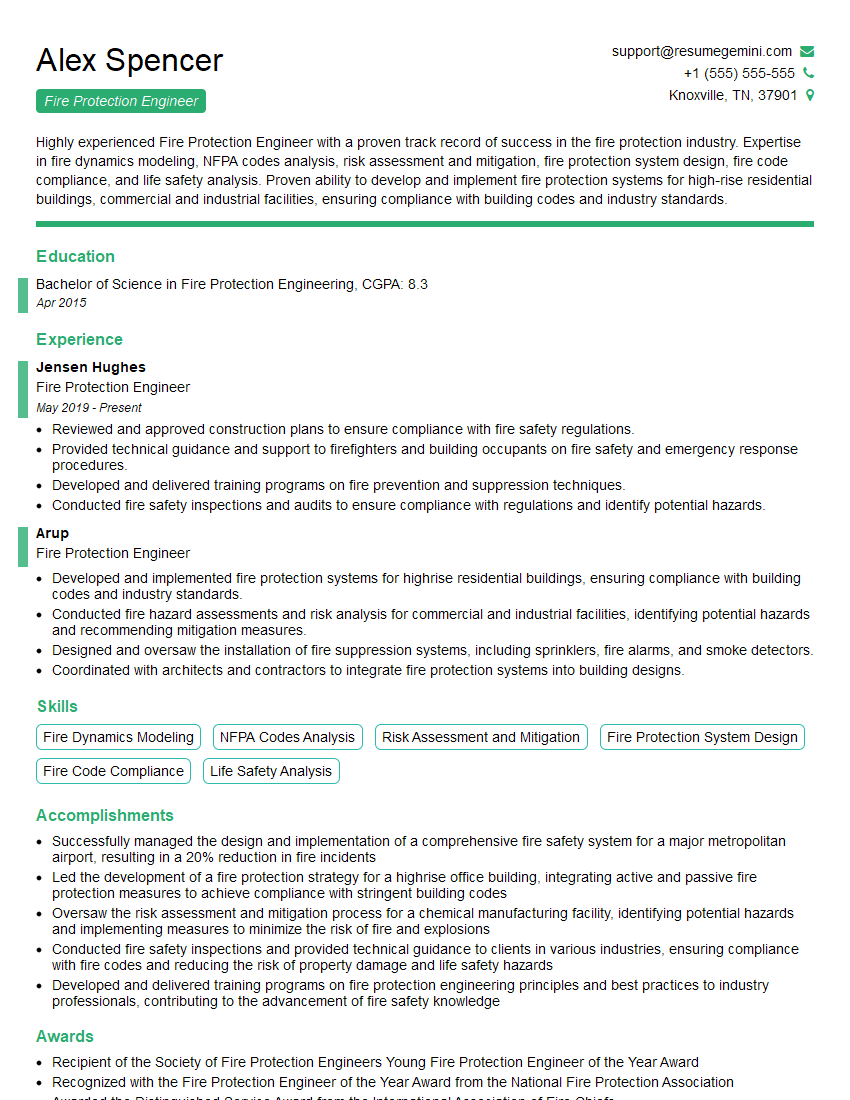
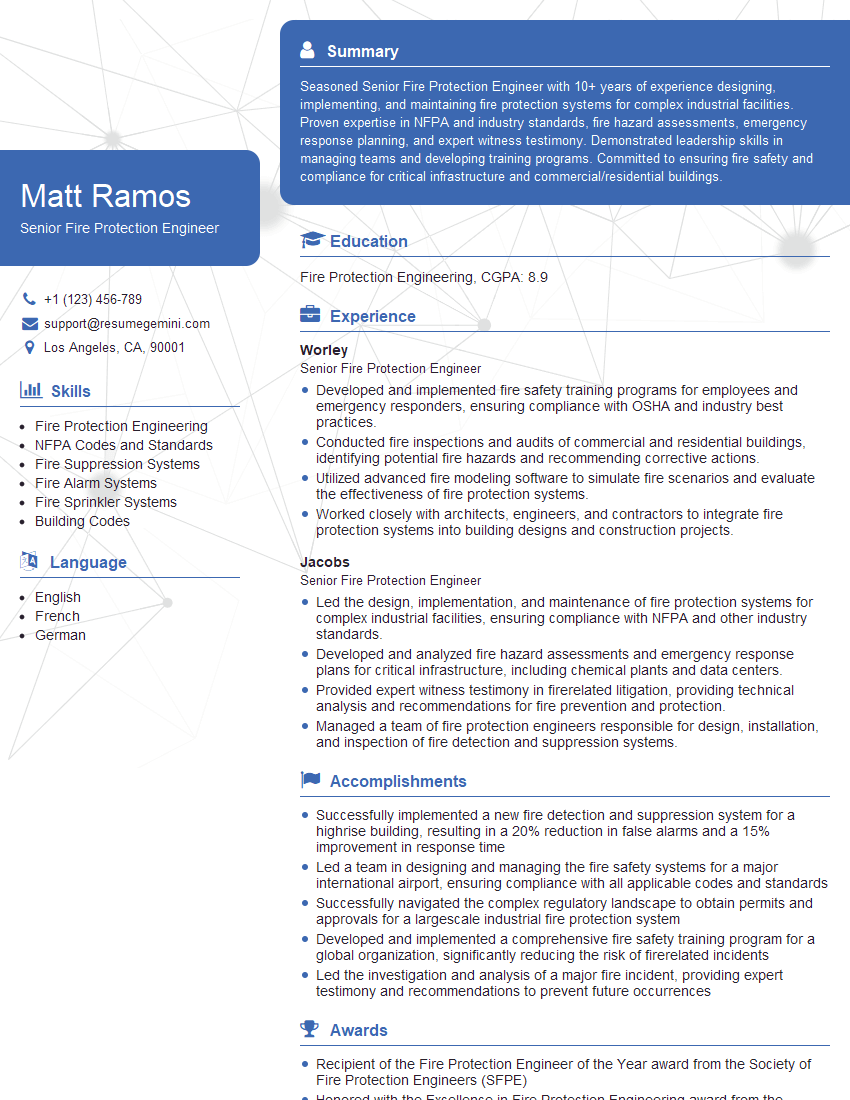
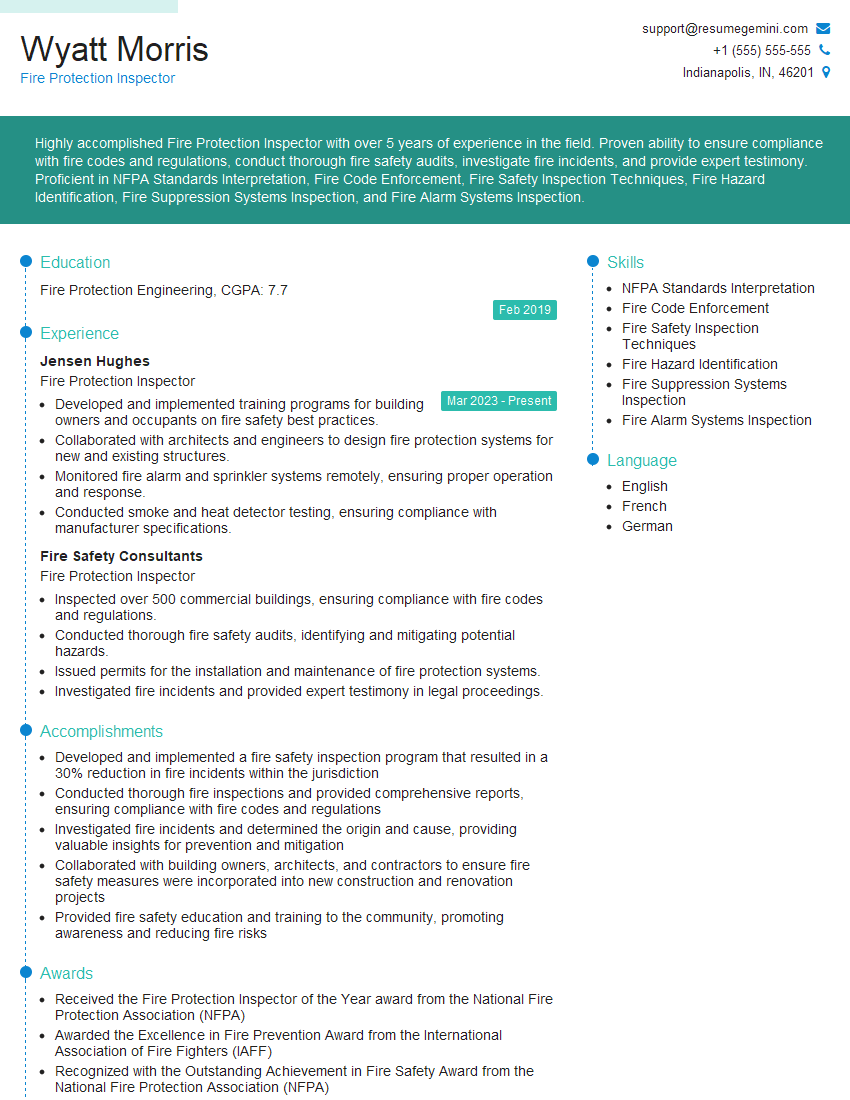
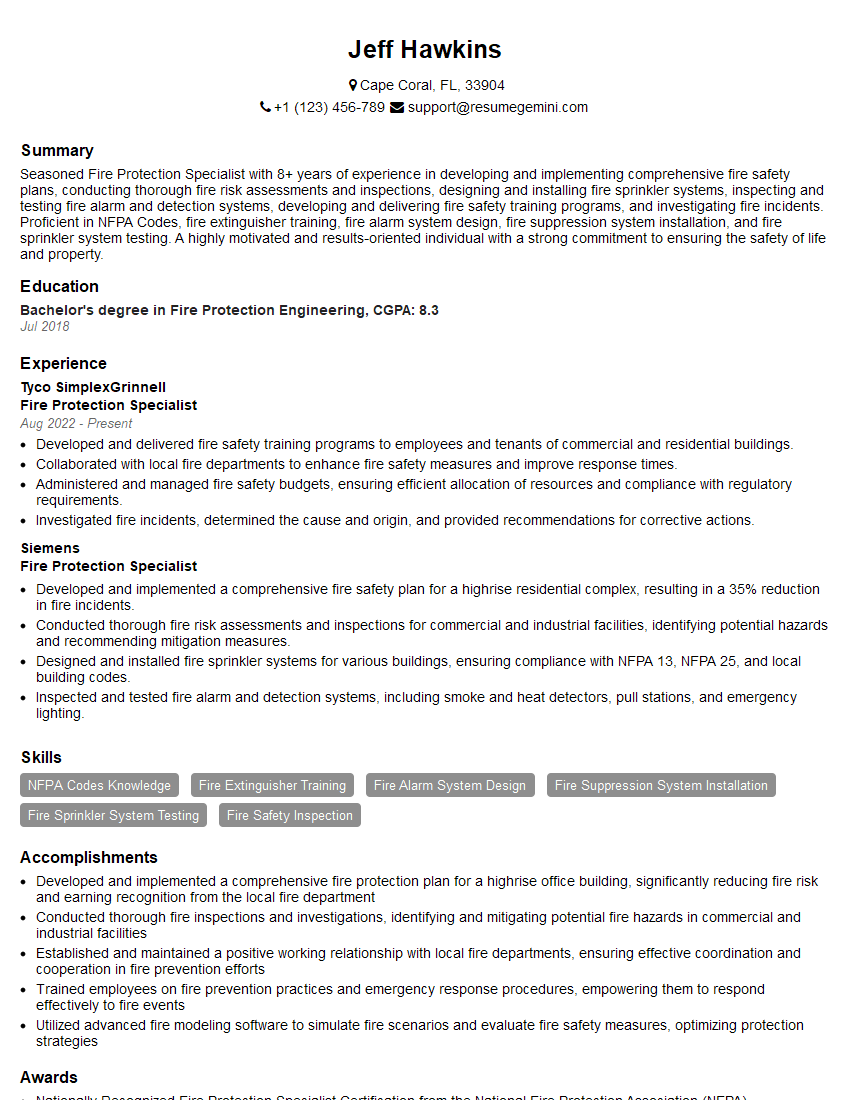
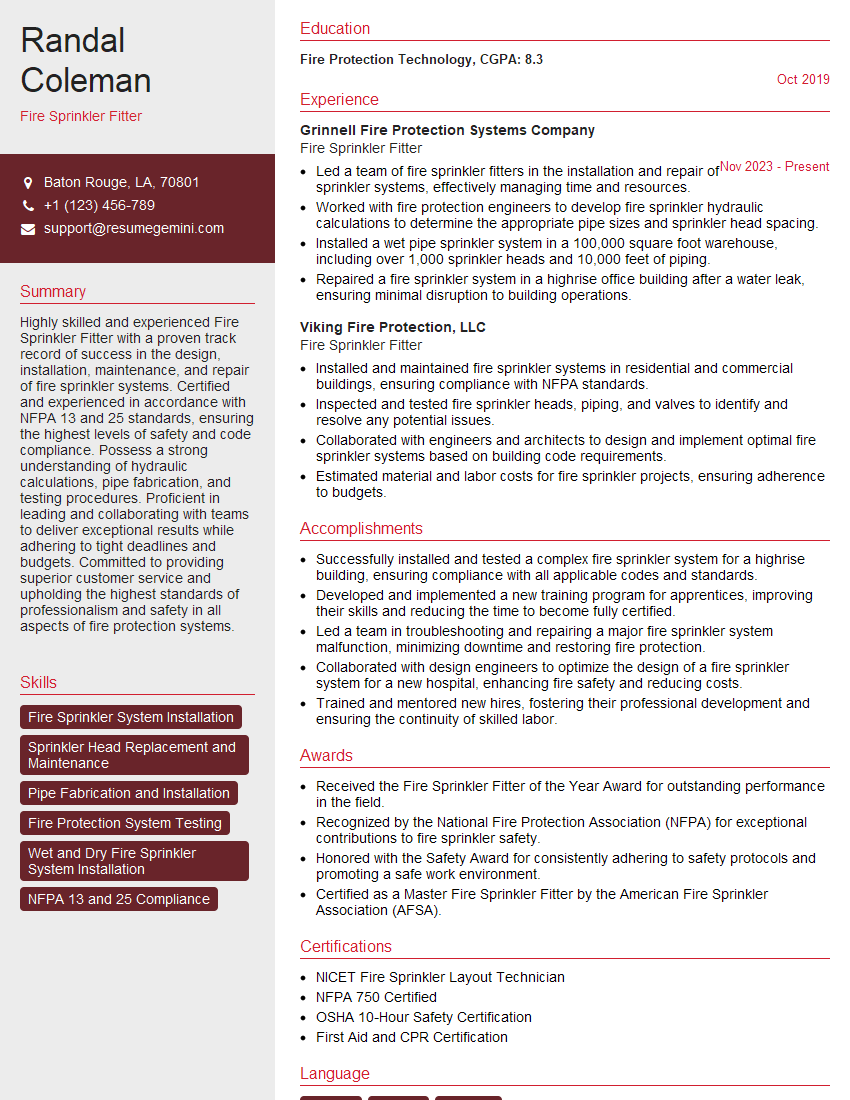
Mastering Fire Suppression Equipment knowledge significantly enhances your career prospects in a field crucial for safety and security. A strong understanding of these systems opens doors to diverse and rewarding roles within the industry. To maximize your job search success, focus on creating an ATS-friendly resume that effectively highlights your skills and experience. ResumeGemini is a trusted resource to help you build a professional resume that stands out. We provide examples of resumes tailored to the Fire Suppression Equipment field to guide you in crafting a compelling application.
Explore more articles
Users Rating of Our Blogs
Share Your Experience
We value your feedback! Please rate our content and share your thoughts (optional).
What Readers Say About Our Blog
Very informative content, great job.
good