Cracking a skill-specific interview, like one for Cover Crop and No-Till Farming, requires understanding the nuances of the role. In this blog, we present the questions you’re most likely to encounter, along with insights into how to answer them effectively. Let’s ensure you’re ready to make a strong impression.
Questions Asked in Cover Crop and No-Till Farming Interview
Q 1. Explain the benefits of no-till farming compared to conventional tillage.
No-till farming, as opposed to conventional tillage, dramatically alters soil management. Conventional tillage involves plowing or disking the soil to prepare seedbeds, disrupting soil structure and its natural ecosystem. No-till, on the other hand, minimizes soil disturbance, planting directly into the previous year’s residue. This seemingly simple change offers numerous advantages.
- Reduced Soil Erosion: The absence of plowing significantly reduces topsoil loss caused by wind and water. Think of it like leaving a protective blanket of crop residue on the soil surface.
- Improved Soil Structure: No-till promotes the formation of aggregates (soil clumps), enhancing water infiltration, aeration, and root penetration. This creates a healthier, more porous soil that breathes better.
- Increased Water Retention: The undisturbed soil structure in no-till systems improves water storage capacity, reducing irrigation needs and making the system more drought-resistant. Imagine a sponge versus a pile of sand – the sponge holds more water.
- Enhanced Biodiversity: The undisturbed soil supports a greater diversity of soil organisms, beneficial microbes, and earthworms that improve nutrient cycling and overall soil health. It’s like a thriving underground city.
- Lower Fuel Consumption: No-till significantly reduces the need for fuel-intensive tillage operations, leading to both cost savings and a smaller carbon footprint.
For example, I’ve seen farms transition from conventional tillage to no-till and experience a 30-40% reduction in soil erosion within just a few years, alongside a measurable increase in crop yields over time.
Q 2. Describe different types of cover crops and their applications.
Cover crops are plants grown primarily for improving soil health, not for direct harvest. They’re incredibly versatile, and the best choice depends on your specific goals and climate. Here are a few examples:
- Legumes (e.g., clover, alfalfa, vetch): These fix atmospheric nitrogen into the soil, providing a natural fertilizer for subsequent cash crops. It’s like having a built-in nitrogen factory.
- Grasses (e.g., rye, oats, barley): These improve soil structure, suppress weeds, and increase water infiltration. Think of them as strengthening the soil’s foundation.
- Brassicas (e.g., radish, mustard): These have allelopathic properties – they release compounds that inhibit the growth of certain weeds and pests. They’re the natural pest control agents of the cover crop world.
- Other Cover Crops: Sunflowers, sorghum-sudangrass, and buckwheat offer different benefits, including enhancing soil fertility and providing biomass for winter soil protection.
Applications vary. For instance, a fast-growing cereal rye can be planted in the fall to protect against erosion over winter, while a legume-grass mix might be used to increase nitrogen and build organic matter.
Q 3. How do cover crops improve soil health?
Cover crops are crucial for enhancing soil health in numerous ways. Their impact is multifaceted and significant:
- Increased Organic Matter: Cover crops add substantial organic matter to the soil as they decompose, improving soil structure, water retention, and nutrient availability. Think of it as nourishing the soil like compost.
- Improved Soil Structure: Their roots help bind soil particles together, creating stronger soil aggregates which leads to better aeration and drainage. Imagine knitting the soil together.
- Nutrient Cycling: Cover crops efficiently take up nutrients from the soil, preventing leaching and making them available for subsequent cash crops. This is like recycling nutrients within the system.
- Weed Suppression: Dense cover crops shade out weeds, reducing competition for resources. It’s like creating a natural weed barrier.
- Pest and Disease Suppression: Certain cover crops can disrupt pest and disease cycles, reducing the need for chemical interventions. Think of it as natural pest and disease control.
- Erosion Control: The biomass of cover crops protects the soil surface from wind and water erosion.
In my experience, incorporating cover crops consistently leads to noticeable improvement in soil tilth, water infiltration, and overall soil health within a few years.
Q 4. What are the challenges associated with no-till farming?
While no-till offers many benefits, it’s not without challenges. Successful implementation requires careful planning and management:
- Weed Management: Weed pressure can be a significant issue initially, requiring proactive strategies (discussed further in the next question).
- Pest and Disease Management: The lack of tillage can sometimes increase the risk of certain pests and diseases, necessitating integrated pest management techniques.
- Residue Management: Excessive crop residue can interfere with planting, requiring adjustments in planting equipment and techniques.
- Nutrient Management: Careful nutrient management planning is crucial, as no-till systems can sometimes show initial nutrient deficiencies due to reduced decomposition rates.
- Soil Compaction: While no-till reduces surface compaction, deep compaction can still be a problem if not managed with proper equipment and techniques. Heavy machinery can exacerbate this issue.
For example, managing residue buildup in no-till requires specialized planting equipment and may involve practices like roller-crimping cover crops before planting the main crop.
Q 5. How do you manage weed pressure in a no-till system?
Weed management in no-till systems is crucial and requires a multi-pronged approach:
- Cover Crop Selection: Strategic cover crop selection plays a vital role. Fast-growing, competitive cover crops such as cereal rye or dense brassicas can help suppress weeds.
- Proper Timing: Planting cover crops at the right time and managing their growth is vital to effectively control weeds. Early planting and dense growth are advantageous.
- Herbicide Use (Judicious): In some cases, carefully targeted herbicide application may be necessary, particularly for managing persistent weeds. This often involves pre-emergent herbicides applied before planting.
- Mechanical Weed Control: Techniques such as strip tillage or use of cultivators to manage weeds between rows can be selectively used.
- Crop Rotation: Rotating crops with different weed pressure requirements helps break weed cycles.
In my experience, a combination of cover cropping and precise herbicide application is generally the most effective approach. It’s about finding the right balance to manage weeds sustainably.
Q 6. Explain the role of cover crops in nutrient cycling.
Cover crops play a central role in nutrient cycling, acting as a bridge between the atmosphere, soil, and plants:
- Nitrogen Fixation: Leguminous cover crops fix atmospheric nitrogen into the soil, making it available for subsequent crops. This reduces reliance on synthetic fertilizers.
- Nutrient Uptake and Release: Cover crops take up nutrients that might otherwise be lost through leaching or runoff and then release those nutrients upon decomposition, making them available for the subsequent crop.
- Improved Soil Biology: Cover crops increase soil microbial activity, enhancing the decomposition of organic matter and the release of nutrients. The improved soil biology is like a nutrient recycling center.
- Reduced Nutrient Losses: By covering the soil, they reduce nutrient losses through erosion and runoff.
For example, I’ve observed farms utilizing legume cover crops reducing their nitrogen fertilizer applications by up to 50%, leading to significant cost savings and environmental benefits.
Q 7. Describe your experience with cover crop seed selection and planting.
Cover crop seed selection and planting is a critical aspect of successful no-till farming. Several factors influence my choices:
- Climate and Soil Conditions: Local climate, soil type, and growing season length are paramount. I need to select species that thrive in those specific conditions.
- Specific Goals: Whether the primary goal is nitrogen fixation, weed suppression, erosion control, or soil improvement will influence the species selected. Different crops offer different benefits.
- Seed Availability and Cost: Seed availability and cost are practical considerations. I consider local seed sources to ensure access and quality.
- Planting Methods: Planting methods vary – broadcasting, drilling, or aerial seeding. Each method requires appropriate seed selection and equipment.
My experience includes managing cover crop plantings ranging from simple cereal rye broadcasts to complex legume-grass mixes drilled with specialized no-till equipment. I always prioritize species that are adapted to local conditions and that achieve the desired soil health benefits. Careful monitoring of planting depth and seed emergence is crucial for success.
Q 8. How do you monitor soil health in a no-till system?
Monitoring soil health in a no-till system is crucial for its long-term success. Unlike conventional tillage, we can’t visually assess soil structure as easily. Instead, we rely on a multi-pronged approach combining various indicators.
- Visual Assessment: While less direct than with tilled land, we still observe soil surface characteristics. Look for good residue cover, earthworm activity (a great indicator of healthy soil biology), and the absence of significant erosion.
- Soil Sampling and Testing: Regular soil sampling (at least annually, preferably twice) is key. We test for key indicators like organic matter content (higher is better!), pH levels, nutrient levels (especially nitrogen, phosphorus, and potassium), and cation exchange capacity (CEC – a measure of soil’s ability to hold nutrients). We also look at biological indicators by sending samples to labs specializing in soil biology analysis for things like microbial biomass and diversity.
- Penetration Resistance Testing: A penetrometer measures soil compaction. High resistance indicates compaction, a problem we need to address proactively. We regularly test in different areas of the field to get a representative picture.
- Water Infiltration Tests: This helps us understand how effectively water penetrates the soil. Slow infiltration indicates potential compaction or poor soil structure, both linked to reduced water availability for plants. A simple infiltration test involves digging a small hole and measuring the time it takes for a set volume of water to disappear.
- Cover Crop Observations: The vigour and biomass of cover crops are excellent indicators. Stunted or unhealthy cover crops suggest problems with soil health that need investigation.
By tracking these indicators over time, we can build a comprehensive picture of soil health and identify potential problems early. This allows for timely interventions, preventing more serious issues down the line. For example, a consistent drop in organic matter might indicate a need to adjust our cover cropping strategy or incorporate more organic amendments.
Q 9. What are the best practices for managing soil erosion in no-till farming?
Managing soil erosion in no-till is paramount because the absence of tillage leaves the soil more exposed. Our strategy focuses on maximizing soil cover and minimizing water runoff.
- Cover Cropping: This is our first line of defense. Cover crops like rye, vetch, or clover protect the soil surface from the erosive force of rain and wind. Their extensive root systems also enhance soil structure, improving water infiltration and reducing runoff.
- Crop Residue Management: Leaving crop residues on the surface provides a physical barrier against erosion. We strive for a good balance – enough residue for protection, but not so much that it hinders planting.
- Contour Farming: Planting crops along the contours of the land slows water flow, reducing erosion. This technique is particularly effective on slopes.
- Terracing: On steeper slopes, terracing creates level platforms to further reduce water runoff and erosion. This is a more significant investment but crucial for preventing major losses on hilly land.
- No-Till Planting Techniques: Precision no-till drills are vital, allowing for accurate placement of seeds without disturbing the soil surface. This helps minimize soil disturbance and maintain the protective layer of cover crops and residue.
- Waterways and Buffer Strips: Establishing waterways and buffer strips along field edges helps intercept runoff and filter sediments before they reach streams and rivers.
A well-managed no-till system, employing these strategies, can significantly reduce erosion compared to conventional tillage systems. We often use a combination of these methods, tailored to our specific field conditions and climate.
Q 10. How do you address compaction issues in no-till fields?
Compaction is a potential concern in no-till, but it’s often less severe than in conventionally tilled fields. However, addressing compaction requires a proactive approach.
- Cover Cropping: Deep-rooted cover crops like daikon radish or tillage radish can physically break up compacted layers. Their roots create channels that improve water infiltration and aeration.
- Reduced Traffic: Minimizing the number of passes across the field with heavy machinery helps prevent further compaction. Strategic planning and efficient machinery use are essential.
- Controlled Traffic Farming (CTF): This system designates specific traffic lanes, preventing compaction in the areas where crops are growing. This minimizes the impact of heavy equipment.
- Subsoiling (Strategic Use): In cases of severe compaction, subsoiling can break up hardpans. However, this is a more disruptive practice and should be used judiciously, as it can negatively impact soil structure if done incorrectly. It’s usually a last resort.
- Biological Soil Amendments: Adding compost or other organic amendments can improve soil structure and reduce compaction over time.
Monitoring soil penetration resistance regularly allows us to detect compaction early and implement appropriate measures. The key is prevention; regular attention to minimizing heavy equipment traffic and maximizing the benefits of cover crops is crucial.
Q 11. Explain the importance of residue management in no-till systems.
Residue management is absolutely fundamental to successful no-till farming. The crop residue left on the soil surface plays multiple crucial roles.
- Erosion Control: Residue acts as a physical shield against wind and water erosion, protecting the soil from loss.
- Soil Health Improvement: Decomposing residue adds organic matter to the soil, improving its structure, water retention, and nutrient content. This also supports a diverse and healthy soil microbiome.
- Weed Suppression: A thick layer of residue can help suppress weed growth by reducing sunlight penetration and hindering germination.
- Improved Water Infiltration: Residue helps slow down water runoff, allowing more water to infiltrate into the soil and reducing surface runoff.
- Temperature Regulation: Residue helps moderate soil temperature, protecting against extreme temperature fluctuations.
Effective residue management involves striking a balance. Too much residue can hinder planting and decomposition, while too little leaves the soil vulnerable. We might use techniques like crimping or rolling to manage residue effectively, making it easier to plant into while still retaining its benefits. The exact management approach depends on the type of residue, the climate, and the specific cropping system.
Q 12. What are the economic considerations of no-till farming?
The economics of no-till farming involves both initial costs and long-term savings. While there are upfront investments, the long-term benefits often outweigh the expenses.
- Reduced Labor and Fuel Costs: Eliminating tillage significantly reduces fuel consumption and labor costs associated with plowing, disking, and harrowing. This is a major cost saving in the long run.
- Lower Machinery Costs: While specialized equipment may be required initially (no-till drills, etc.), the overall machinery costs are often lower in the long term due to reduced wear and tear from less tillage.
- Increased Yields (Potential): Improved soil health, water retention, and nutrient cycling often lead to increased crop yields over time, though this is not guaranteed in the first few years of transition.
- Reduced Soil Degradation Costs: By reducing erosion and improving soil health, no-till farming can mitigate the costs associated with soil degradation and the need for expensive soil amendments in the long term.
- Initial Investment Costs: The transition to no-till might involve purchasing new equipment (no-till drills, cover crop seeders) which is an initial expense.
- Potential for Reduced Herbicide Use: Although not always the case, reduced weed pressure due to improved soil health and cover crops may result in decreased herbicide use over time, but effective weed management strategies are still important.
Overall, the economic viability of no-till farming depends on factors such as initial investment costs, the specific cropping system, and the long-term benefits achieved through improved soil health and yield. A detailed cost-benefit analysis is essential before transitioning to no-till.
Q 13. How do you manage pests and diseases in a no-till system?
Pest and disease management in no-till requires a holistic and integrated approach, leveraging the benefits of a healthy soil ecosystem.
- Crop Rotation: Rotating crops breaks pest and disease cycles, reducing the buildup of specific pathogens or insects.
- Cover Cropping: Certain cover crops can suppress pests and diseases directly or indirectly through allelopathy (the release of chemicals that inhibit the growth of other organisms) or by creating a less hospitable environment for pests.
- Biological Control: Encouraging beneficial insects, nematodes, and microorganisms in the soil can help control pests and diseases naturally. Healthy soil promotes a balanced ecosystem.
- Resistant Varieties: Selecting crop varieties with resistance to common pests and diseases is crucial. This reduces reliance on chemical controls.
- Targeted Pesticide Use (When Necessary): While we aim to minimize pesticide use, in certain cases, targeted applications might be necessary to prevent significant losses. We always prioritize integrated pest management (IPM) strategies.
- Monitoring: Regular scouting and monitoring for pests and diseases allow us to detect problems early and take timely action, avoiding major outbreaks.
Successful pest and disease management in no-till is about building a resilient and healthy agroecosystem. This requires careful planning, diligent monitoring, and a focus on preventative measures rather than reactive chemical applications. We emphasize preventative strategies, creating a farming system less reliant on chemical interventions.
Q 14. Describe your experience with different no-till planting techniques.
My experience encompasses several no-till planting techniques, each suited for different conditions and preferences.
- No-Till Drill Planting: This is the most common method, using specialized drills to place seeds directly into the undisturbed soil. We use drills with various seed spacing and depth adjustments, tailored to the specific crop and soil conditions. This offers excellent precision and minimizes soil disturbance.
- Air Seeding: This technique involves dropping seeds onto the soil surface, relying on residue cover for protection and moisture retention. It’s more suitable for areas with sufficient residue and less prone to erosion.
- Roller-Crimping: We use this method with cover crops. A roller-crimper flattens the cover crop, creating a mulch layer that suppresses weeds and provides soil protection while allowing the planting of the next crop through the flattened residue.
- Strip-Till: This technique involves minimal tillage in narrow strips where seeds are planted, leaving the rest of the soil undisturbed. It combines some benefits of tillage with the advantages of reduced soil disturbance.
The choice of technique depends on factors like soil type, residue level, climate, available machinery, and the specific crop being planted. For instance, air seeding might be ideal for a low-residue environment with favorable moisture conditions, while roller-crimping works best with vigorous cover crops and is well-suited for drier conditions.
Q 15. How do you assess the effectiveness of cover crop implementation?
Assessing cover crop effectiveness involves a multifaceted approach, going beyond simply observing plant growth. We need to evaluate their impact on several key soil and crop health indicators.
- Visual Assessment: A simple, initial step involves visually inspecting the cover crop stand for density, height, and overall health. This gives a quick indication of establishment success.
- Biomass Measurement: We quantify the biomass (dry weight) of the cover crop at termination. Higher biomass indicates greater potential for soil improvement. We might use a sampling technique to represent the whole area.
- Soil Health Indicators: This is crucial. We measure changes in soil properties like organic matter content, water infiltration rates, and soil aggregation. Improved infiltration suggests better water management; increased organic matter is a direct measure of soil health; stronger aggregation indicates reduced erosion risk.
- Nutrient Levels: Soil tests before and after cover cropping help determine nutrient uptake by the cover crop and its impact on subsequent cash crops. This might reveal a reduction in the need for synthetic fertilizers.
- Weed Suppression: We assess the cover crop’s ability to suppress weed growth. Effective cover crops reduce competition for resources from weeds, minimizing the need for herbicides.
- Pest and Disease Control: Some cover crops can reduce pest and disease pressure in subsequent crops. This effect is assessed by monitoring pest and disease incidence in the following cash crops.
For example, in a recent project, we found that a rye cover crop increased soil organic matter by 15% and reduced erosion by 20% compared to a control plot with no cover crop. This data, combined with yield data from the following cash crop, provided a clear picture of the cover crop’s overall effectiveness.
Career Expert Tips:
- Ace those interviews! Prepare effectively by reviewing the Top 50 Most Common Interview Questions on ResumeGemini.
- Navigate your job search with confidence! Explore a wide range of Career Tips on ResumeGemini. Learn about common challenges and recommendations to overcome them.
- Craft the perfect resume! Master the Art of Resume Writing with ResumeGemini’s guide. Showcase your unique qualifications and achievements effectively.
- Don’t miss out on holiday savings! Build your dream resume with ResumeGemini’s ATS optimized templates.
Q 16. What are the environmental benefits of cover crops and no-till farming?
Cover crops and no-till farming offer significant environmental benefits, primarily by improving soil health and reducing environmental impacts associated with conventional agriculture.
- Reduced Soil Erosion: No-till farming leaves crop residue on the soil surface, protecting it from wind and water erosion. Cover crops further enhance this protection, acting as a living mulch.
- Improved Water Infiltration: Both practices increase soil porosity, allowing better water infiltration and reducing runoff. This reduces nutrient loss and prevents water pollution.
- Enhanced Carbon Sequestration: No-till and cover cropping increase soil organic matter, which stores significant amounts of carbon, helping mitigate climate change. The living roots of cover crops actively sequester carbon.
- Reduced Greenhouse Gas Emissions: Improved soil health leads to reduced emissions of nitrous oxide, a potent greenhouse gas. Less tillage also reduces fuel consumption, lowering carbon emissions from machinery.
- Improved Biodiversity: Cover crops increase habitat and food sources for beneficial insects and other organisms, boosting biodiversity in agricultural landscapes. No-till farming also promotes a more diverse soil microbial community.
- Reduced Fertilizer Runoff: Improved water infiltration and increased nutrient uptake by cover crops reduce the risk of nutrient runoff into water bodies, minimizing water pollution from excess fertilizers.
For instance, a study showed that a no-till system with cover crops sequestered significantly more carbon than a conventional tillage system, leading to a measurable reduction in the farm’s carbon footprint.
Q 17. How do you integrate cover crops into crop rotation systems?
Integrating cover crops into crop rotation is crucial for maximizing their benefits. The choice of cover crop depends on several factors, including climate, soil type, and the following cash crop.
- Timing: Cover crops are typically planted after the harvest of the main crop or during the fallow period. The timing ensures sufficient growth before termination.
- Species Selection: Choosing the right cover crop species is vital. For example, legumes like clover fix nitrogen, benefiting the following crop; grasses like rye provide good ground cover and erosion control.
- Termination: Cover crops are terminated (killed) before planting the main crop, usually through mowing, rolling, or herbicide application (carefully chosen to avoid harming the cash crop).
- Residue Management: The remaining cover crop residue can be incorporated into the soil by light tillage or left on the surface as mulch in no-till systems.
A common rotation might involve a cash crop like corn, followed by a winter cover crop like rye, which is terminated in the spring before planting a legume cover crop like clover, and then planting soybeans as the main cash crop in the fall. This rotation addresses nutrient balance (nitrogen fixation by clover), soil health (improving structure by rye), and erosion control. This allows a farmer to take advantage of different plant species’ strengths and avoid common issues associated with monoculture.
Q 18. What are the challenges of transitioning to no-till farming?
Transitioning to no-till farming presents several challenges that require careful planning and management.
- Weed Management: Initially, weed pressure can be significantly higher in no-till systems. Developing a robust weed management strategy involving cover crops, crop rotation, and targeted herbicide use is essential.
- Pest and Disease Management: No-till can potentially increase the incidence of some soilborne pests and diseases. This necessitates careful monitoring and integrated pest management strategies.
- Residue Management: Managing crop residue is critical. Excessive residue can hinder planting and create challenges for seedling emergence. Specific equipment, such as no-till drills, can help overcome this.
- Soil Compaction: Heavy machinery can compact the soil in no-till systems. This can be mitigated through careful traffic management and using lighter equipment.
- Nutrient Management: Nutrient cycling can be slower initially in no-till systems, requiring careful monitoring and adjustments to fertilizer strategies.
- Cost of Equipment: No-till farming may necessitate investment in specialized equipment, such as no-till drills and precision planting equipment.
For example, farmers transitioning to no-till might start by adopting a reduced tillage approach, gradually decreasing tillage intensity over several years before fully eliminating it. A phased approach helps the farmer and the soil system adapt to the changes.
Q 19. Explain the importance of soil testing in no-till farming.
Soil testing is paramount in no-till farming because it provides crucial information for optimizing nutrient management and adjusting farming practices to maintain soil health. In a no-till system, nutrient cycling is different from conventional tillage, making regular soil testing even more essential.
- Nutrient Levels: Soil tests reveal the levels of essential nutrients (nitrogen, phosphorus, potassium, etc.). This information informs fertilizer application strategies, ensuring optimal nutrient availability for crops without excessive use (reducing environmental impact).
- Soil pH: Soil pH impacts nutrient availability. Soil testing helps determine if adjustments are needed to optimize nutrient uptake by crops.
- Organic Matter Content: Monitoring organic matter levels is crucial in no-till. It indicates the soil’s health and carbon sequestration potential. Cover crops directly impact organic matter, so soil testing monitors this change.
- Soil Texture and Structure: Soil tests can assess the soil’s structure and identify areas with compaction issues. This helps inform decisions on equipment selection and traffic management.
For example, regular soil testing might reveal that a specific field requires more phosphorus than usual because the previous cover crop didn’t adequately replenish it. This information is crucial for optimizing fertilizer use and maximizing crop yields sustainably.
Q 20. How do you manage water resources in a no-till system?
Water resource management is crucial in no-till farming. The improved soil structure and increased water infiltration capacity of no-till systems offer significant advantages, but careful management is still necessary.
- Improved Water Infiltration: No-till soils typically absorb water more efficiently, reducing runoff and erosion. This reduces water waste and improves water use efficiency.
- Water Retention: Increased organic matter in no-till soils improves water retention capacity, ensuring better water availability for crops during dry periods.
- Irrigation Management: Precision irrigation techniques, such as drip irrigation, can be particularly effective in no-till systems, optimizing water use and reducing water waste.
- Monitoring Soil Moisture: Regular monitoring of soil moisture levels is vital, allowing for timely irrigation decisions and optimizing water use.
For instance, by using soil moisture sensors and incorporating cover crops, we can significantly reduce the amount of irrigation needed, conserving water resources and saving on irrigation costs. This precise approach improves water use efficiency without compromising crop yields.
Q 21. Describe your experience with different types of tillage equipment.
My experience encompasses a wide range of tillage equipment, from conventional tillage tools to specialized no-till implements.
- Conventional Tillage: I’ve worked with moldboard plows, disc harrows, and chisel plows in various soil conditions. These are effective for soil preparation but have significant drawbacks in terms of soil erosion and degradation. They are mostly unsuitable for no-till transitions.
- Reduced Tillage: I’ve used tools like vertical tillage equipment and cultivators which reduce soil disturbance compared to conventional tillage. These are transitional tools often used in the process of converting to a no-till system.
- No-Till Equipment: My primary focus is on no-till practices, and I have extensive experience with no-till drills, which allow for planting directly into the previous crop’s residue. These drills often have specialized coulters and closing wheels to minimize soil disturbance and ensure good seed-to-soil contact. I’ve also worked with precision seeders which provide better spacing and depth control.
- Other Specialized Equipment: I’ve used cover crop seeders, roller-crimpers for cover crop termination, and specialized residue management tools.
The selection of appropriate equipment is paramount. The choice depends on soil type, climate, crop type, and the specific goals of the farming system. For example, in heavy clay soils, a no-till drill with strong coulters is essential to overcome soil resistance and ensure proper seed placement. Choosing the right tools is as important as the farming methodology.
Q 22. What are the considerations for selecting cover crop mixes?
Selecting the right cover crop mix is crucial for maximizing benefits in no-till systems. It’s like choosing the right ingredients for a recipe – you need the right blend to achieve your desired outcome. The ideal mix depends on several factors:
- Climate and Soil Conditions: Cold-hardy species like rye or wheat are suited for colder climates, while warmer climates may benefit from sorghum-sudangrass or cowpeas. Soil type (clay, sandy, loam) dictates which species will thrive. For example, legumes like clover excel in fixing nitrogen in less fertile soils.
- Target Goals: Are you primarily aiming for improved soil health, erosion control, weed suppression, or nutrient cycling? Different cover crops excel in different areas. For instance, hairy vetch is a nitrogen-fixing powerhouse, while cereal rye is great for suppressing weeds.
- Pest and Disease Management: Certain cover crops can help suppress specific pests or diseases affecting your cash crop. A diverse mix can be more resilient to pest outbreaks.
- Timing and Planting Method: Consider the planting season, termination method (e.g., frost, herbicide, roller-crimper), and the time available for the cover crop to grow before your main crop. Some cover crops are better suited for early spring or late fall planting.
- Economic Considerations: Seed costs vary significantly between cover crops. Balancing cost-effectiveness with the desired benefits is key.
For example, a common mix for a cool-season climate might include cereal rye for weed suppression and winter cover, along with hairy vetch for nitrogen fixation. A warmer-climate mix could incorporate sorghum-sudangrass for biomass production and cowpeas for nitrogen fixation.
Q 23. How do you measure the success of no-till farming practices?
Measuring the success of no-till farming requires a holistic approach, considering multiple indicators beyond just yield. It’s not just about the quantity of the harvest, but also the quality and the long-term health of the entire system.
- Yield Monitoring: Comparing yields over time with and without no-till practices is a basic but crucial metric. Are you seeing consistent or improved yields?
- Soil Health Indicators: This is where the true value of no-till shines. Key indicators include:
- Organic matter content: No-till generally increases organic matter, improving soil structure and water retention. Soil tests measure this.
- Water infiltration rate: Improved soil structure leads to better water penetration. This can be measured using infiltration tests.
- Soil aggregation: No-till promotes the formation of soil aggregates (clumps), which improves aeration and drainage. This can be assessed visually and through laboratory analysis.
- Biodiversity: No-till supports a more diverse soil ecosystem. This can be assessed by measuring soil microbial biomass and diversity using DNA sequencing techniques.
- Erosion Control: Observe the level of soil erosion on your fields. No-till should significantly reduce erosion compared to conventional tillage.
- Weed Management: Monitor weed pressure. While no-till might require different weed management strategies, the overall goal is to maintain weed pressure at acceptable levels.
- Input Costs: Compare the total costs of no-till with conventional tillage, considering fuel, labor, and equipment. No-till often leads to cost savings in the long run.
Think of it like evaluating a patient’s health: You don’t just look at one symptom but assess multiple vital signs to get a complete picture.
Q 24. How do you incorporate technology into no-till and cover cropping practices?
Technology plays an increasingly vital role in optimizing no-till and cover cropping practices. It enhances efficiency and precision, leading to better outcomes.
- Precision Farming Technology: GPS-guided machinery allows for precise planting and application of inputs (seeds, fertilizers, herbicides) avoiding overlaps and gaps, crucial in no-till where soil disturbance is minimized. This saves inputs and reduces environmental impact.
- Remote Sensing and Drones: Drones equipped with multispectral or hyperspectral cameras can monitor crop health, assess cover crop biomass, and detect nutrient deficiencies or stress conditions before they become major problems, allowing for timely intervention.
- Soil Sensors: Sensors can measure soil moisture, temperature, and nutrient levels in real-time, guiding irrigation and fertilizer application decisions, making them more efficient and targeted.
- Data Management Systems: Software platforms integrate data from various sources (sensors, yield monitors, weather stations) providing a comprehensive view of farm operations, allowing for data-driven decision making.
- Variable Rate Technology (VRT): Allows for site-specific application of inputs, varying the amount based on the needs of different areas within a field. This is especially beneficial for no-till, maximizing efficiency and resource use.
For example, using a drone to monitor the growth and biomass of a cover crop allows farmers to determine the optimal time for termination, maximizing its benefits before planting the cash crop.
Q 25. Describe a time you overcame a challenge related to no-till farming.
One of my biggest challenges involved transitioning a large corn farm to no-till. Initially, we experienced significant weed pressure, especially in the first few years. Our conventional tillage methods had suppressed weeds effectively, but the switch to no-till disrupted this balance.
The initial strategy of simply relying on herbicides proved costly and unsustainable. We needed a more integrated approach. The solution was a multi-pronged strategy:
- Diversified Cover Crop Mixes: We shifted from using a single cover crop to diverse mixes including cereal rye, hairy vetch, and clover. This improved weed suppression through competition and allelopathy (the release of chemicals inhibiting weed growth).
- Improved Weed Management: We implemented a more targeted herbicide program, applying only where and when needed, based on weed pressure monitoring. We also employed mechanical weed control techniques, such as using a roller-crimper to terminate the cover crop and suppress weeds before planting.
- Soil Health Improvement: We focused on enhancing soil health to create a more competitive environment for the cash crop and less favorable conditions for weeds. This included improving organic matter through crop rotation and cover cropping.
Over three years, we significantly reduced weed pressure, eventually achieving yields comparable to, and eventually surpassing, the conventional system. This experience taught me the value of patience, adaptive management, and the importance of a holistic approach to soil health.
Q 26. Explain your understanding of soil biology and its relevance to no-till and cover cropping.
Soil biology is the foundation of healthy and productive no-till systems. A vibrant soil ecosystem, teeming with diverse microorganisms, is essential for nutrient cycling, disease suppression, and overall soil health. It’s like a miniature city underground, where everything works together. In conventional tillage, we disrupt this city, damaging its infrastructure and inhabitants.
No-till farming and cover cropping directly benefit soil biology by:
- Protecting Soil Structure: The lack of tillage preserves the soil’s natural structure, providing habitat for soil organisms.
- Increasing Organic Matter: Cover crops add organic matter to the soil, providing food for microorganisms and improving soil structure.
- Improving Soil Aggregation: Increased organic matter binds soil particles together, forming aggregates that enhance aeration and water infiltration.
- Enhancing Nutrient Cycling: Soil organisms play a vital role in breaking down organic matter and releasing nutrients for plant uptake. Cover crops, especially legumes, contribute to this process.
- Suppressing Soilborne Diseases: A healthy soil microbiome can suppress the growth of many plant pathogens.
For instance, the presence of mycorrhizal fungi, symbiotic fungi associated with plant roots, enhances nutrient uptake and stress tolerance in cash crops. Cover crops enhance their abundance. Understanding these biological processes is vital for optimizing no-till success.
Q 27. How do you address nutrient deficiencies in no-till systems?
Nutrient deficiencies can be addressed in no-till systems through a variety of methods, focusing on building long-term soil fertility rather than relying solely on synthetic fertilizers:
- Cover Cropping: Legumes, like clover or vetch, fix atmospheric nitrogen, reducing the need for nitrogen fertilizers. Other cover crops contribute organic matter, which slowly releases nutrients over time.
- Manure and Compost: Adding organic amendments like animal manure and compost improves soil fertility, providing a slow release of nutrients, and improves soil structure.
- Targeted Fertilizer Application: Soil testing is crucial to identify nutrient deficiencies. Based on the results, apply fertilizers strategically, either broadcasting or using techniques like banding or side-dressing to optimize nutrient use.
- Crop Rotation: Rotating crops with different nutrient requirements can help balance soil fertility. For example, legumes can replenish nitrogen levels depleted by previous crops.
- Biofertilizers: These are microbial inoculants that enhance nutrient availability. Examples include inoculants containing nitrogen-fixing bacteria or phosphorus-solubilizing bacteria.
It’s essential to remember that no-till aims to build long-term soil health; the focus is less on quick fixes with synthetic fertilizers and more on building a resilient system that provides its own nutrients over time.
Q 28. What are the long-term benefits of adopting no-till and cover cropping?
The long-term benefits of adopting no-till and cover cropping are substantial and far-reaching, extending beyond increased yields to encompass environmental sustainability and economic viability.
- Improved Soil Health: This is the cornerstone of long-term success. Enhanced soil structure, increased organic matter, improved water infiltration and retention, and greater biodiversity all contribute to more productive and resilient soils.
- Reduced Erosion: No-till significantly reduces soil erosion, protecting topsoil and preventing nutrient loss. This has long-term environmental and economic benefits.
- Increased Water Use Efficiency: Improved soil structure in no-till systems leads to better water infiltration and retention, reducing irrigation needs and improving drought tolerance.
- Reduced Greenhouse Gas Emissions: No-till practices sequester carbon in the soil, reducing the farm’s carbon footprint. This contributes to mitigating climate change.
- Reduced Input Costs: Lower fuel consumption, reduced labor costs, and less need for synthetic fertilizers contribute to significant long-term cost savings.
- Enhanced Biodiversity: No-till supports a more diverse ecosystem above and below ground, leading to a more resilient and productive agricultural system.
Adopting no-till and cover cropping is not just about farming; it’s about investing in the long-term health and sustainability of the land, building a legacy for future generations.
Key Topics to Learn for Cover Crop and No-Till Farming Interview
- Cover Crop Selection: Understanding the principles of choosing appropriate cover crop species based on soil type, climate, and desired outcomes (e.g., nitrogen fixation, erosion control, weed suppression). Practical application: Explain your experience selecting and managing cover crops for specific agricultural goals.
- No-Till Techniques: Mastering various no-till planting methods, including their advantages and disadvantages (e.g., direct seeding, precision drilling). Practical application: Describe your experience with different no-till equipment and techniques, including troubleshooting common challenges.
- Soil Health Improvement: Discuss the impact of cover cropping and no-till practices on soil structure, organic matter content, water infiltration, and nutrient cycling. Practical application: Explain how to assess soil health and interpret data related to these key parameters.
- Weed Management Strategies: Explore integrated weed management approaches within no-till systems, emphasizing the role of cover crops and other sustainable practices. Practical application: Describe your experience managing weeds in no-till systems, including preventative and reactive strategies.
- Pest and Disease Management: Understand the influence of cover crops and no-till farming on pest and disease dynamics. Practical application: Discuss your understanding of integrated pest management principles within a no-till context.
- Economic Considerations: Analyze the cost-effectiveness of cover cropping and no-till farming, including initial investment, long-term benefits, and potential return on investment. Practical application: Demonstrate your ability to analyze financial data related to sustainable farming practices.
- Environmental Impact: Discuss the environmental benefits of cover cropping and no-till farming, including reduced erosion, greenhouse gas emissions, and water pollution. Practical application: Explain how to quantify the environmental benefits of these practices.
Next Steps
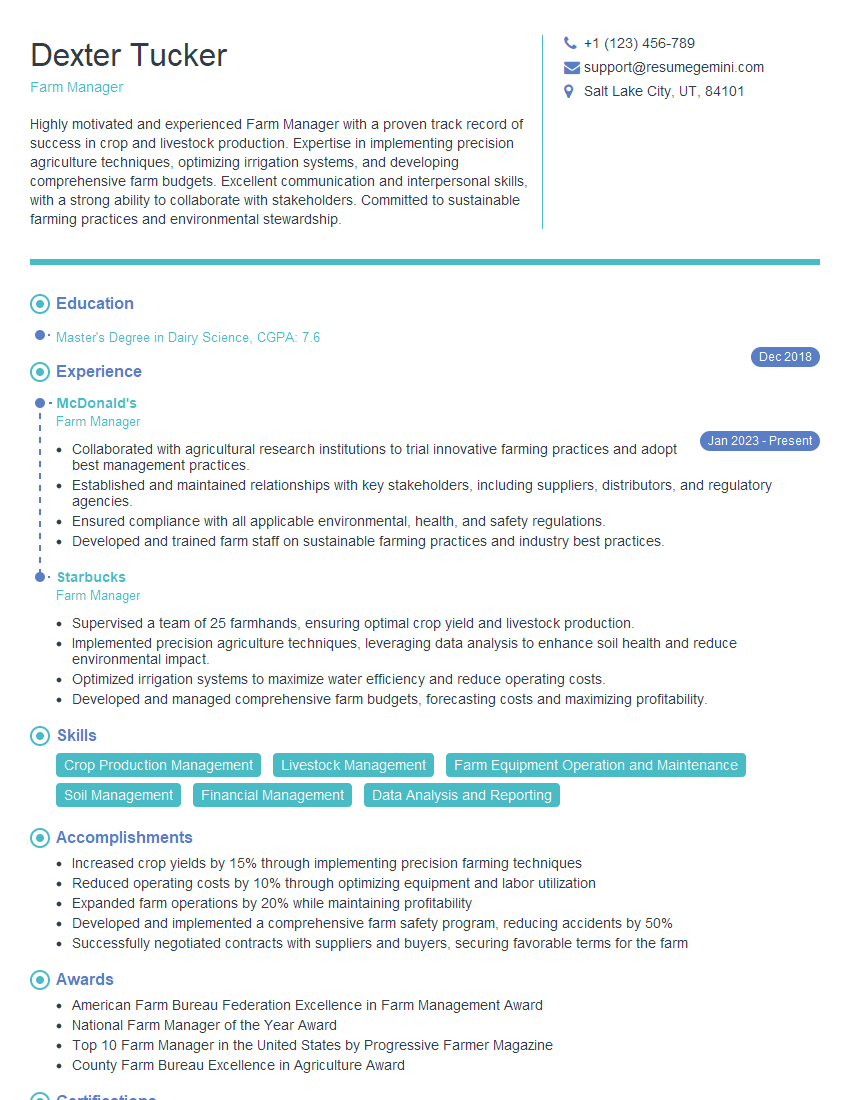
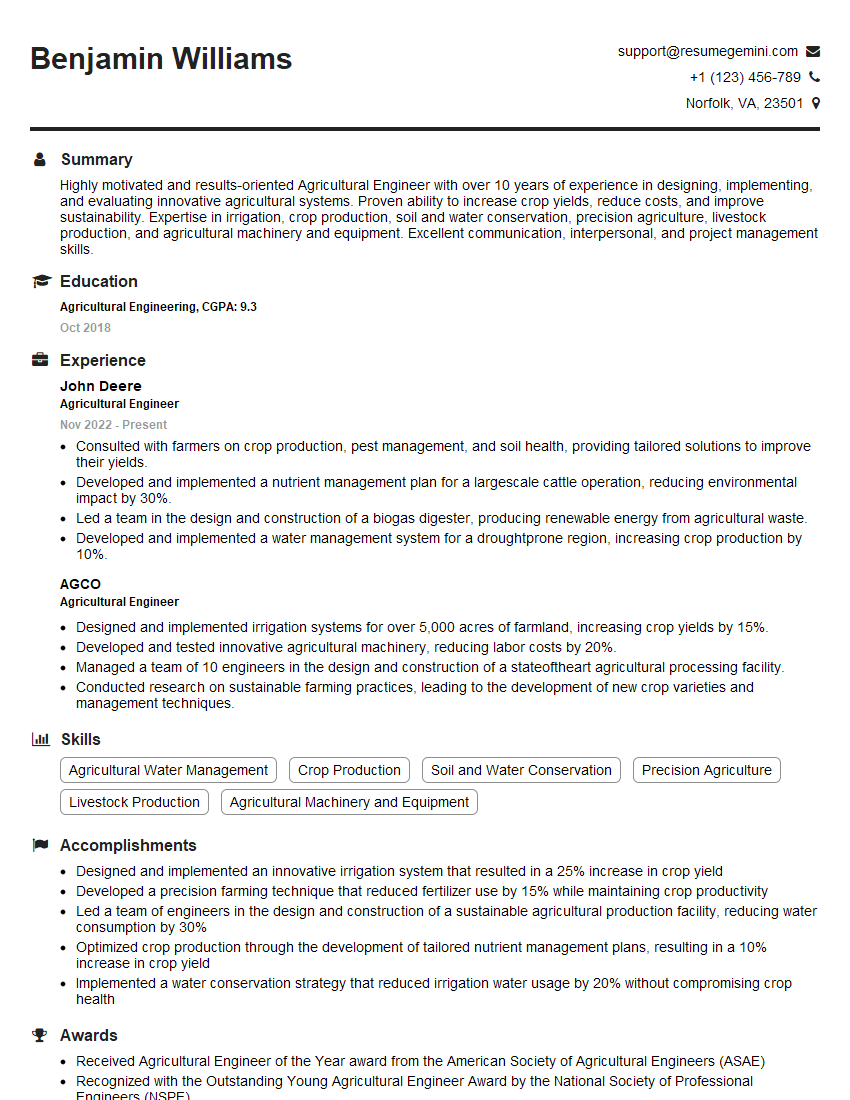
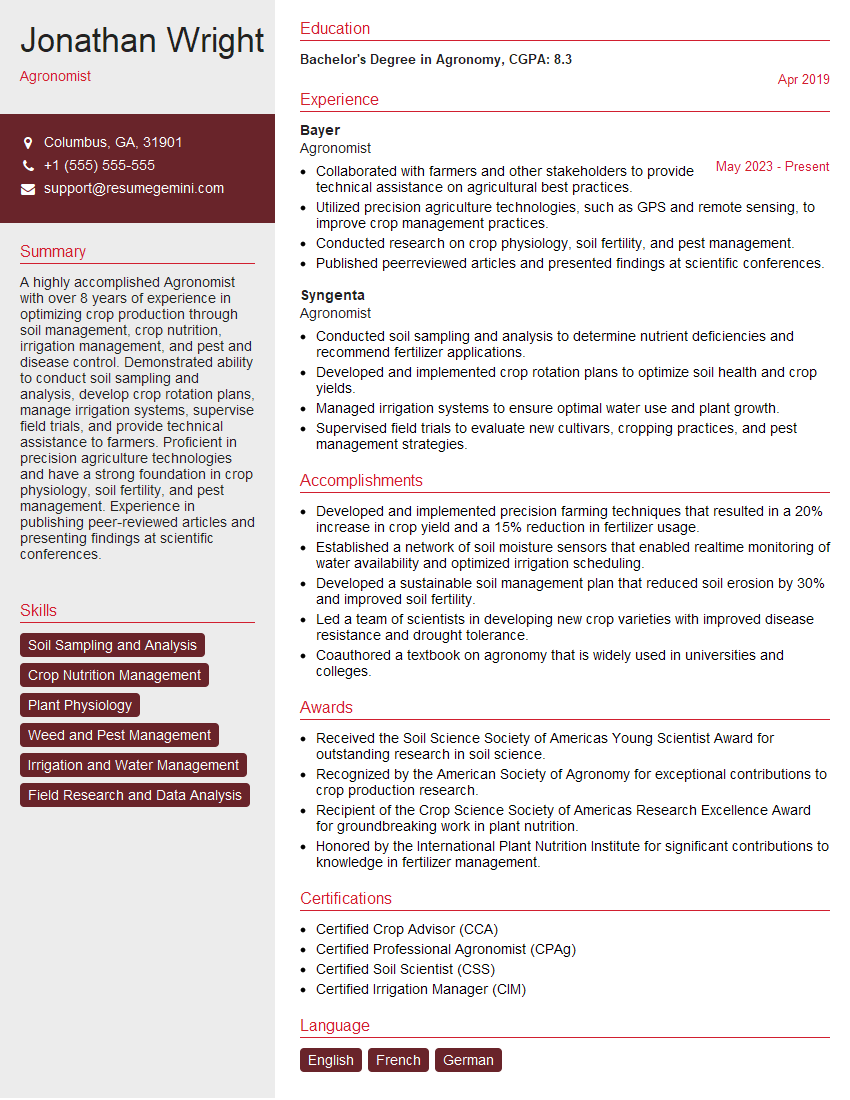
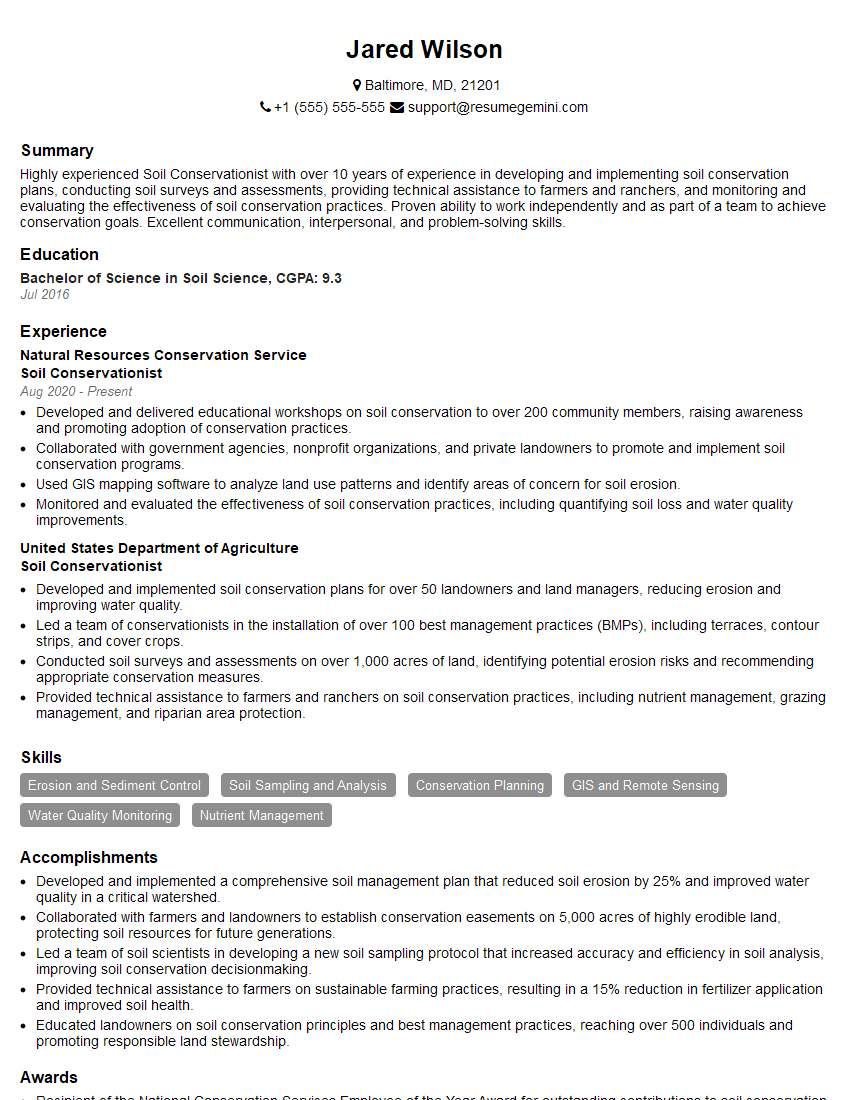
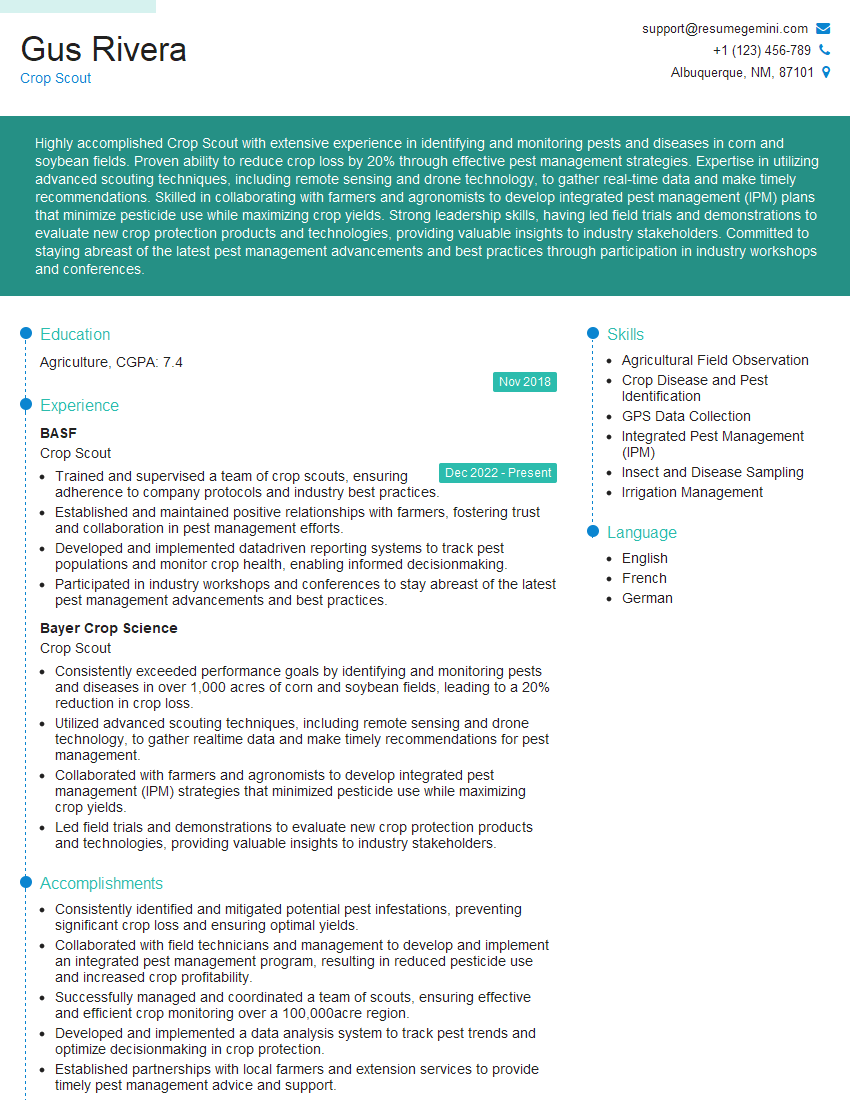
Mastering Cover Crop and No-Till Farming techniques is crucial for a successful career in sustainable agriculture. These practices are increasingly important in modern farming, offering significant environmental and economic advantages. To stand out, create a strong, ATS-friendly resume that highlights your skills and experience. ResumeGemini is a trusted resource to help you build a professional resume that showcases your expertise. They provide examples of resumes tailored to Cover Crop and No-Till Farming roles, helping you present your qualifications effectively and increase your chances of landing your dream job.



Explore more articles
Users Rating of Our Blogs
Share Your Experience
We value your feedback! Please rate our content and share your thoughts (optional).
What Readers Say About Our Blog
Very informative content, great job.
good