Every successful interview starts with knowing what to expect. In this blog, we’ll take you through the top Cemetery Planning interview questions, breaking them down with expert tips to help you deliver impactful answers. Step into your next interview fully prepared and ready to succeed.
Questions Asked in Cemetery Planning Interview
Q 1. Describe your experience with cemetery layout and design principles.
Cemetery layout and design are crucial for efficient space utilization, aesthetic appeal, and ease of navigation. My experience encompasses creating designs that balance these factors with respect for the bereaved and the sanctity of the site. This involves careful consideration of several key principles:
- Accessibility: Designing pathways and roads to accommodate visitors of all abilities, including those with mobility challenges, is paramount. This might involve wider paths, gentle slopes, and clearly marked directional signage.
- Aesthetics and Landscaping: Creating a serene and peaceful environment is crucial. This includes selecting appropriate plant species for the climate, incorporating water features (where appropriate and feasible), and using natural elements to enhance the beauty of the space. I’ve worked on projects that integrate existing natural features, such as mature trees, to minimize disruption and maximize the aesthetic impact.
- Sectioning and Plot Allocation: Efficiently managing land use involves creating logical sections, allowing for future expansion, and anticipating the needs of different burial types (e.g., in-ground, cremation niches, mausoleums). I utilize GIS software to model optimal plot allocation and track available space.
- Sustainability: Incorporating sustainable practices, such as water conservation techniques in landscaping and responsible material selection, is increasingly important. For example, using drought-resistant plants reduces water usage and maintenance costs.
For example, in one project, I redesigned a section of an overcrowded cemetery by incorporating vertical niches into an existing mausoleum, effectively increasing capacity without expanding the footprint. This required careful planning and coordination with the local authorities to ensure compliance with regulations.
Q 2. Explain your understanding of perpetual care and endowment funds.
Perpetual care and endowment funds are essential for ensuring the long-term maintenance and upkeep of a cemetery. Perpetual care refers to the ongoing maintenance of the cemetery grounds, including landscaping, grave marker upkeep, and general upkeep, in perpetuity. Endowment funds are dedicated financial resources set aside specifically to support these perpetual care obligations.
My understanding involves ensuring these funds are appropriately managed and invested to generate sufficient income to cover ongoing maintenance costs. This includes:
- Fund Establishment: I’m experienced in setting up and managing endowment funds, working with financial institutions and legal professionals to ensure the funds are legally sound and comply with regulations.
- Investment Strategies: Selecting appropriate investment strategies to ensure a steady stream of income while also preserving the principal is critical. This often involves a diversified portfolio, balancing risk and return.
- Transparency and Reporting: Maintaining transparent and accurate records of fund income, expenses, and investment performance is essential for accountability and regulatory compliance. Regular reports to stakeholders are crucial.
For example, I’ve successfully managed the transition of a cemetery’s endowment fund from a low-yielding savings account to a more diversified portfolio, resulting in a significant increase in annual income to support perpetual care initiatives.
Q 3. How would you handle a family dispute regarding burial arrangements?
Family disputes regarding burial arrangements are unfortunately common. My approach focuses on mediation and clear communication. I begin by:
- Gathering Information: I carefully document the wishes of all involved parties, including any existing wills, pre-need arrangements, or other relevant legal documents.
- Mediation and Facilitation: I act as a neutral facilitator, encouraging open communication and helping family members understand each other’s perspectives and concerns. I emphasize active listening and empathy.
- Legal Guidance: If necessary, I advise them to seek legal counsel to clarify legal rights and responsibilities, especially if there are conflicting wills or legal challenges.
- Finding Common Ground: I strive to help the family reach a consensus that respects the wishes of the deceased and the feelings of all involved, finding solutions that accommodate everyone as much as possible.
If a consensus cannot be reached, I may suggest alternative solutions such as a compromise or, in some cases, referring the dispute to a legal professional for resolution.
In a recent case, I helped two siblings resolve a conflict over their mother’s burial site by highlighting the symbolic significance of a particular location within the cemetery that honored both of their preferences.
Q 4. What software or systems are you familiar with for managing cemetery records?
I am proficient in several software systems used for managing cemetery records. This includes:
- CEMETERY Management Software: I have experience with several specialized cemetery management software packages, which typically include features for managing plot sales, interment records, perpetual care accounts, and generating reports. These systems often have features for data backup, security, and accessibility.
- Database Management Systems (DBMS): My skills extend to using relational database systems like MySQL or PostgreSQL to manage large volumes of cemetery data, allowing for complex queries and analysis.
- Geographic Information Systems (GIS): I use GIS software to map cemetery layouts, track available plots, and analyze spatial data for planning and decision-making. This is crucial for optimizing land use and future expansion.
- Spreadsheet Software: I also use spreadsheet software such as Microsoft Excel or Google Sheets for data entry, tracking, and reporting.
The specific software used depends on the needs of the cemetery and its size. In my past roles, I’ve been instrumental in implementing new software systems to improve efficiency and data management. This often involves training staff and providing technical support.
Q 5. Describe your experience with managing cemetery grounds and maintenance.
Managing cemetery grounds and maintenance is a critical aspect of cemetery operations. My experience includes overseeing all aspects of groundskeeping, from daily maintenance to long-term planning. This involves:
- Groundskeeping: Overseeing a team of groundskeepers responsible for lawn care, tree trimming, shrub maintenance, and snow removal (in applicable climates). This includes creating and adhering to schedules and using appropriate equipment and techniques.
- Grave Marker Maintenance: Ensuring grave markers are upright, clean, and in good repair. This may involve minor repairs or coordinating with specialized contractors for more extensive work.
- Pest and Weed Control: Implementing effective pest and weed control strategies while minimizing environmental impact. This often involves using Integrated Pest Management (IPM) techniques.
- Infrastructure Maintenance: Overseeing the upkeep of roads, paths, fences, and other cemetery infrastructure. This includes regular inspections and repairs to ensure safety and accessibility.
I have a strong understanding of various landscaping techniques and the specific needs of cemetery environments. In one role, I developed a sustainable landscaping plan that reduced water usage by 30% and lowered maintenance costs significantly.
Q 6. How would you address concerns about cemetery capacity and future expansion?
Addressing concerns about cemetery capacity and future expansion requires proactive planning and strategic decision-making. My approach involves:
- Capacity Assessment: Conducting a thorough analysis of current and projected capacity, considering factors like plot sales trends, burial practices, and available land.
- Expansion Planning: Developing a long-term expansion plan, which may involve acquiring additional land, developing new sections, or implementing innovative burial practices to maximize existing space (e.g., cremation niches, columbariums).
- Community Engagement: Consulting with the community, local authorities, and stakeholders to gather input and ensure the expansion plan aligns with community needs and environmental considerations.
- Financial Planning: Securing the necessary funding for land acquisition, infrastructure development, and other expansion-related costs.
For instance, in one instance, I collaborated with the local council to secure permission for a phased expansion that included both traditional in-ground burial sections and a modern columbarium. This strategy addressed the changing burial preferences while minimizing environmental impact.
Q 7. What are the key regulations and compliance issues in cemetery operations?
Cemetery operations are subject to a range of regulations and compliance issues that vary depending on location. These typically include:
- State and Local Regulations: Compliance with state and local laws concerning cemetery establishment, operation, maintenance, and record-keeping is paramount. This includes regulations on plot sales, perpetual care, and environmental protection.
- Health and Safety Regulations: Adhering to health and safety standards concerning handling human remains, protecting workers and visitors from hazards, and maintaining sanitary conditions.
- Environmental Regulations: Complying with environmental regulations regarding land use, water management, waste disposal, and the use of chemicals in landscaping.
- Consumer Protection Laws: Ensuring fair and transparent practices in dealing with families, respecting consumer rights, and providing clear information about services and costs.
- Record-Keeping and Reporting: Maintaining accurate and comprehensive records of plot sales, interments, and financial transactions and submitting regular reports to regulatory authorities.
Staying updated on all applicable regulations and working closely with regulatory bodies is crucial for avoiding penalties and maintaining a positive reputation. I have experience navigating complex regulations and developing robust compliance programs to ensure consistent adherence to the law.
Q 8. Explain your understanding of different burial methods and their associated costs.
Cemeteries offer a variety of burial methods, each with varying costs. The most common are in-ground burial, cremation burial (with options like inurnment in a niche or burial of the urn), and mausoleum entombment.
- In-ground burial: This traditional method involves placing the casket directly in the ground. Costs vary widely depending on the type of casket chosen, the plot location (e.g., premium locations cost more), and any additional features like a headstone or landscaping. A basic in-ground burial might cost several thousand dollars, while a more elaborate one can reach tens of thousands.
- Cremation burial: Cremation offers a more affordable alternative. The cost of cremation itself is generally lower than a traditional burial. However, costs can increase depending on the choice of urn, the type of burial (e.g., inurnment in a niche within a columbarium or burial of the urn in the ground), and the memorialization options. This can range from a few hundred to several thousand dollars.
- Mausoleum entombment: Entombment in a mausoleum is the most expensive option. Costs are influenced by the size and type of crypt purchased, location within the mausoleum, and any associated memorialization options. Prices can range from tens of thousands to hundreds of thousands of dollars.
Other factors impacting cost include opening and closing fees, perpetual care fees (which cover ongoing maintenance of the grounds), and the cost of any additional services such as memorialization, embalming, and funeral arrangements. It’s crucial for cemetery management to provide transparent and detailed pricing information to families.
Q 9. How do you ensure accurate record-keeping and data management in a cemetery?
Accurate record-keeping is paramount in cemetery operations. We utilize a comprehensive, integrated database management system, often incorporating Geographic Information Systems (GIS) technology. This allows for precise mapping of plot locations, including details about the interment, the deceased, and the family’s contact information.
The database tracks:
- Plot ownership and occupancy status: This ensures that plots are not accidentally sold or used more than once.
- Deceased information: Full name, date of birth, date of death, and other relevant details are recorded.
- Burial records: Type of interment (e.g., casket, urn), location within the plot, and any additional memorialization features.
- Family contact information: Keeping contact information up-to-date ensures we can communicate effectively about cemetery matters and maintenance.
- Maintenance records: We meticulously track all maintenance activities, including groundskeeping, repairs, and improvements.
Regular data backups and security protocols are implemented to prevent data loss and unauthorized access. We also adhere to all relevant data privacy regulations.
Q 10. How would you handle a complaint about the condition of a grave site?
Handling complaints about grave site conditions requires a prompt, empathetic, and professional approach. My first step would be to acknowledge the complaint, listen carefully, and show genuine concern for the family’s feelings.
Next, I would investigate the issue thoroughly. This may involve:
- Visiting the grave site: A personal inspection allows for a firsthand assessment of the problem.
- Reviewing records: Checking the database to verify plot ownership and any prior maintenance records.
- Consulting with groundskeeping staff: Understanding their perspective on the situation and any potential causes of the problem.
Once the issue is understood, we’d determine the appropriate solution. This may include immediate repairs (e.g., leveling a sunken grave marker, cleaning debris), scheduling future maintenance, or offering compensation for damages. Open communication with the family throughout the process is crucial. We would keep them informed of our progress and seek their input where appropriate. Documentation of the complaint, investigation, and resolution is essential.
Q 11. Describe your experience with sales and marketing in a cemetery setting.
Cemetery sales and marketing require a sensitive and respectful approach. My experience involves developing and implementing strategies that focus on pre-need sales (selling plots and services before death) and at-need sales (services arranged after a death).
Pre-need strategies involve:
- Educating the community about the benefits of pre-planning: This includes workshops, presentations to community groups, and informational brochures highlighting the peace of mind and financial advantages of planning ahead.
- Building relationships with funeral homes and other relevant professionals: Collaborating with these organizations allows for referrals and a streamlined process for families.
- Offering various payment options: Flexible payment plans can make pre-planning more accessible.
At-need sales require a compassionate and supportive approach, guiding families through a difficult time while respecting their grief. Digital marketing, such as targeted online advertising and a well-maintained website with clear information, is also crucial in today’s landscape.
Q 12. How would you manage a budget for cemetery operations and maintenance?
Budget management for cemetery operations and maintenance requires a balanced approach, ensuring both financial stability and the upkeep of the grounds. We would utilize a zero-based budgeting approach, starting with a clean slate each year.
Key budget categories include:
- Grounds maintenance: This includes mowing, trimming, planting, irrigation, and snow removal. Costs are estimated based on the size of the cemetery and the intensity of the required maintenance.
- Infrastructure maintenance: Repair and maintenance of roads, fences, buildings, and other infrastructure elements are factored in.
- Administrative costs: Salaries, insurance, utilities, and other operating expenses are included.
- Capital improvements: Allocating funds for significant projects like the construction of new mausoleums or the expansion of the cemetery.
- Perpetual care fund: Establishing and maintaining a dedicated fund to ensure long-term care of the cemetery is essential.
Regular budget monitoring and adjustments are crucial, with variances analyzed and addressed promptly. We would also conduct regular financial audits to maintain transparency and accountability.
Q 13. What is your experience with developing and implementing cemetery master plans?
Developing and implementing cemetery master plans is a crucial part of long-term planning and sustainable management. This involves a comprehensive assessment of the current state of the cemetery, including available land, existing infrastructure, and future needs.
The master plan would consider:
- Long-term capacity planning: Determining the cemetery’s capacity and forecasting future needs based on demographic trends and projected demand.
- Land use planning: Mapping out the allocation of land for different burial types (in-ground, cremation, mausoleum) and other facilities.
- Infrastructure planning: Planning for roads, utilities, and other infrastructure elements to accommodate future growth.
- Environmental considerations: Integrating sustainable landscaping practices and minimizing the environmental impact of operations.
- Community input: Gathering feedback from stakeholders, including families and community members, to ensure the master plan reflects their needs and preferences.
The master plan serves as a roadmap for future development and ensures the cemetery remains a well-maintained and respectful resting place for generations to come. It’s a living document that requires periodic review and updating to reflect changing circumstances.
Q 14. How would you handle a situation involving a misplaced or unmarked grave?
Misplaced or unmarked graves are serious issues requiring thorough investigation. Our first step would involve a careful review of existing records, including burial maps and historical documents. We might consult with experienced cemetery staff or even historical societies to access older records or local knowledge.
If records are inconclusive, we may consider:
- Ground-penetrating radar (GPR): This technology can detect subsurface anomalies, which may indicate the presence of a grave.
- Exhumation (in exceptional cases): This would only be considered as a last resort, and only with the consent of all relevant parties and after obtaining all necessary legal authorizations.
- Genealogical research: If no official records exist, genealogical research may help locate relevant information about the burial.
Throughout the process, communication with the family or relevant parties is essential. Transparency and empathy are crucial in such sensitive situations. Once the location of the grave is determined (or its absence confirmed), we would document the findings and take appropriate action, including potentially installing a marker or providing an explanation to the family.
Q 15. How do you ensure the safety and security of cemetery grounds and visitors?
Ensuring the safety and security of a cemetery involves a multi-faceted approach. It’s not just about preventing vandalism, but also ensuring visitor well-being and maintaining the dignity of the site.
- Perimeter Security: This includes robust fencing, well-lit pathways, especially during nighttime hours, and possibly security cameras strategically placed throughout the grounds. We could consider using motion-activated lighting to further deter unauthorized entry.
- Access Control: Restricting access after hours, or even during specific times, can significantly reduce risks. Implementing a gate system with controlled access points is beneficial. We could also offer guided tours during specific hours for enhanced safety.
- Regular Patrolling: Routine patrols, whether by staff or security personnel, are crucial. Regular checks act as a strong deterrent and allow for immediate response to any issues, such as vandalism or accidents. A schedule should be established that considers day and night patrol needs.
- Visitor Safety Measures: Well-maintained pathways, clear signage, and readily available emergency contact information are essential for visitor safety. First aid stations should also be available, and staff trained in emergency procedures.
- Emergency Response Plan: A detailed plan for responding to emergencies, including medical emergencies, accidents, or severe weather, is essential. Regular drills ensure everyone is prepared to respond effectively.
For example, at my previous role, we implemented a comprehensive security camera system, leading to a significant reduction in vandalism incidents. We also initiated a community watch program, encouraging residents to report suspicious activity, fostering a sense of shared responsibility.
Career Expert Tips:
- Ace those interviews! Prepare effectively by reviewing the Top 50 Most Common Interview Questions on ResumeGemini.
- Navigate your job search with confidence! Explore a wide range of Career Tips on ResumeGemini. Learn about common challenges and recommendations to overcome them.
- Craft the perfect resume! Master the Art of Resume Writing with ResumeGemini’s guide. Showcase your unique qualifications and achievements effectively.
- Don’t miss out on holiday savings! Build your dream resume with ResumeGemini’s ATS optimized templates.
Q 16. Explain your understanding of environmental regulations related to cemeteries.
Environmental regulations concerning cemeteries vary by location, but generally revolve around responsible land management, water protection, and waste disposal. Key aspects include:
- Ground Water Protection: Cemeteries often use embalming fluids and other chemicals. Regulations strictly control how these are handled and disposed of to prevent ground water contamination. This often involves specific burial methods or the use of environmentally friendly alternatives.
- Erosion and Sediment Control: Measures must be in place to prevent soil erosion, especially on sloping grounds. This could involve terracing, vegetation management, or the use of erosion control blankets. Stormwater management is another critical aspect.
- Waste Management: Careful management of waste generated during burials and cemetery maintenance is crucial. Recycling programs, proper disposal of hazardous materials, and waste reduction strategies are essential. This might involve contracts with specific waste disposal facilities.
- Air Quality: Regulations may address emissions from vehicles or equipment used on cemetery grounds. The use of eco-friendly machinery can be a significant factor.
- Protection of Natural Habitats: If the cemetery is located in or near a protected natural area, strict regulations are in place to minimize impact on the ecosystem. This might involve conservation efforts or habitat restoration projects.
For instance, one project I was involved in required a comprehensive environmental impact assessment before expansion, ensuring compliance with all local and state regulations concerning groundwater protection and vegetation management.
Q 17. How would you develop and maintain positive relationships with families and stakeholders?
Building and maintaining positive relationships with families and stakeholders is paramount in cemetery management. It involves empathy, clear communication, and a commitment to providing exceptional service.
- Empathy and Compassion: Understanding the emotional state of grieving families is critical. Providing compassionate support and creating a respectful environment is essential.
- Open Communication: Clearly communicating cemetery policies, fees, and procedures is vital. Maintaining open lines of communication throughout the entire process, from pre-need planning to post-burial maintenance, ensures transparency and trust.
- Proactive Engagement: Regular newsletters, community events, and family gatherings offer opportunities to connect and build lasting relationships. These events can help families celebrate their loved ones’ lives and find comfort in community.
- Feedback Mechanisms: Regularly soliciting and responding to feedback from families helps identify areas for improvement and demonstrates a commitment to customer satisfaction. Anonymous surveys can provide valuable insights.
- Stakeholder Collaboration: Maintaining positive relationships with community leaders, local government officials, and other stakeholders is crucial for securing support and navigating community issues. We should actively participate in town hall meetings and engage in community initiatives.
In one instance, we organized a yearly memorial service and implemented a system to personalize the service for each family, addressing their specific needs and creating a personalized experience.
Q 18. Describe your experience with managing cemetery staff and volunteers.
Managing cemetery staff and volunteers requires strong leadership, clear communication, and a focus on teamwork.
- Clear Roles and Responsibilities: Defining clear roles and responsibilities from the outset prevents confusion and ensures accountability. This should involve written job descriptions for all positions.
- Effective Training: Providing comprehensive training on safety protocols, equipment operation, and customer service techniques is vital for staff performance and efficiency. Regular refresher courses should also be incorporated.
- Open Communication: Regular staff meetings, open-door policies, and effective feedback mechanisms foster open communication and a collaborative work environment. This involves a clear method for communicating schedule changes, policy updates, and emergency procedures.
- Performance Management: Regular performance reviews provide opportunities to recognize achievements, address concerns, and establish clear expectations. It should be based on pre-determined metrics and evaluations.
- Volunteer Management: For volunteers, clear guidelines, scheduled tasks, and opportunities for recognition motivate and retain their engagement. This could involve coordinating a volunteer schedule, recognizing their contributions, and providing sufficient training.
In my experience, fostering a strong team spirit and recognizing individual contributions significantly improved staff morale and productivity, resulting in higher quality services and a more harmonious work environment.
Q 19. What are some common challenges in cemetery operations and how would you address them?
Cemetery operations face various challenges, including:
- Financial Sustainability: Balancing operational costs with revenue generation requires careful financial planning and management. This includes developing diversified revenue streams and implementing cost-effective strategies.
- Maintaining Grounds: Maintaining the aesthetics and structural integrity of the grounds requires considerable resources and expertise, especially concerning landscape maintenance, pest control, and repairs.
- Space Management: Efficient use of available space is crucial as cemeteries often face capacity constraints. Strategies for efficient plot allocation and record management are essential.
- Dealing with Vandalism and Theft: Protecting cemetery property from damage or theft requires proactive security measures. This could involve a multi-faceted security plan, including regular patrols and security systems.
- Regulatory Compliance: Staying compliant with environmental regulations and other relevant laws and rules is essential. Regular review of the regulations and maintaining documentation is crucial.
Addressing these challenges requires proactive planning, efficient resource management, and a commitment to continuous improvement. For instance, we implemented a computerized record-keeping system, improving efficiency and reducing costs. We also developed a long-term maintenance plan, prioritizing key areas to ensure long-term financial stability.
Q 20. How would you handle a situation involving a damaged or vandalized headstone?
Responding to a damaged or vandalized headstone requires a sensitive and efficient approach.
- Documentation: Thoroughly document the damage, including photos and a detailed description. This is important for insurance claims and potential investigations.
- Security Measures: Review and enhance security measures to prevent further incidents. This may involve reviewing camera placement, increasing patrols, or implementing additional security measures.
- Contacting Families: Immediately notify the affected family and offer sincere condolences and support.
- Repair or Replacement: Assess the damage to determine whether the headstone can be repaired or requires replacement. Depending on the type of stone and the extent of the damage, this might involve working with a specialized conservator.
- Insurance Claim: If applicable, file an insurance claim to cover the costs of repair or replacement. Be sure to have all documentation ready.
- Law Enforcement: Depending on the severity and nature of the damage, consider involving local law enforcement to investigate the incident.
In a previous incident, we quickly contacted the family, provided updates on the repair process, and covered all repair costs. This proactive approach maintained a positive relationship with the family during a difficult time.
Q 21. How would you prepare a presentation on a cemetery’s financial performance?
Preparing a presentation on a cemetery’s financial performance requires a structured approach focusing on key financial indicators and providing clear and concise information.
- Executive Summary: Start with a brief overview of the cemetery’s financial health, highlighting key achievements and challenges.
- Revenue Streams: Detail the various sources of revenue, such as plot sales, interment fees, perpetual care funds, and other income sources. This section should include trend analysis and forecasts.
- Expenses: Clearly outline the major expense categories, such as maintenance, administrative costs, salaries, and marketing expenses. Again, this should include trend analysis, showing potential cost-saving strategies.
- Key Financial Metrics: Present key financial indicators, such as net income, operating margin, and cash flow. Use charts and graphs to visualize the data clearly.
- Financial Projections: Include future financial projections, highlighting potential growth opportunities and risks. This should involve long-term and short-term forecasts.
- Compliance: Show how the financial operations are compliant with relevant regulations and industry best practices. This is particularly important in demonstrating financial stability and accountability.
The presentation should use simple, easily understood language, avoiding technical jargon, and incorporating visual aids to effectively communicate the cemetery’s financial story. A clear Q&A session at the end should be included.
Q 22. How do you utilize GIS technology in cemetery planning and management?
Geographic Information Systems (GIS) technology is invaluable in cemetery planning and management. It allows for the precise mapping and tracking of all plots, including their occupancy status, deed information, and even the type of monument present. This creates a dynamic, easily searchable database accessible to staff and, with appropriate security measures, even to families.
For example, imagine needing to locate a specific plot quickly for a burial. Instead of manually searching through paper records, a GIS system allows a quick visual search on a map, instantly pinpointing the location. Further, GIS can be used for long-term planning, visualizing future expansion needs based on sales trends and available land. We can use this data to analyze plot availability by type (e.g., single grave, family plot), identifying potential bottlenecks or areas requiring strategic planning for future development.
In addition to plot management, GIS can also optimize maintenance routes, helping crews efficiently manage tasks like mowing, landscaping, and seasonal upkeep. This significantly improves operational efficiency and reduces operational costs. Overlaying utility lines onto the cemetery map prevents accidental damage during ground work. It also helps in managing infrastructure such as roads, water lines, and electrical conduits within the cemetery.
Q 23. Describe your experience with the legal aspects of cemetery ownership and operations.
My experience encompasses a deep understanding of the legal framework surrounding cemetery ownership and operation, including compliance with state and local regulations. This includes a thorough knowledge of perpetual care funds, their management, and ensuring they are used as intended, complying with all regulatory mandates. I’m also well-versed in handling deed transfers, ensuring accurate record-keeping, and addressing issues related to plot ownership and inheritance. A key aspect of this is interpreting and applying the terms and conditions outlined in cemetery deeds, which can be quite intricate and vary depending on the historical context of establishment of the cemetery.
I’ve successfully navigated complex legal scenarios, including resolving disputes over plot ownership, addressing concerns about memorialization, and ensuring compliance with regulations pertaining to the handling of human remains. This frequently involves working closely with legal counsel to interpret regulations and implement compliant procedures. I also ensure that the cemetery’s operation stays compliant with the Americans with Disabilities Act (ADA) regulations to ensure equal access to everyone.
Q 24. How would you assess and mitigate risks associated with cemetery operations?
Risk assessment in cemetery operations is crucial and involves a multifaceted approach. We identify potential risks across various areas, including safety, legal compliance, financial stability, and environmental concerns. This includes identifying potential hazards such as unstable ground conditions, aging infrastructure, and potential risks of accidents.
- Safety: Implementing robust safety protocols for staff and visitors, including regular safety training, appropriate signage, and well-maintained equipment. Addressing potential hazards such as uneven ground or poor lighting.
- Legal Compliance: Regularly reviewing and updating operational procedures to ensure compliance with all relevant laws and regulations, including those related to burial practices, perpetual care funds, and consumer protection.
- Financial Stability: Developing sound financial management practices, including budgeting, investment strategies for endowment funds, and regular financial audits. Predictive modeling to identify long-term financial sustainability.
- Environmental Concerns: Implementing environmentally responsible practices to minimize the environmental impact of cemetery operations. Proper handling of chemicals, sustainable landscaping practices, and adherence to all environmental regulations.
Mitigation strategies depend on the specific risk identified. This can range from improving safety training and adding better signage to developing contingency plans for natural disasters and developing comprehensive emergency response protocols.
Q 25. Explain your experience with developing and implementing a cemetery’s marketing strategy.
Developing and implementing a successful cemetery marketing strategy requires a nuanced understanding of the target audience and their needs. It’s not about selling plots; it’s about offering peace of mind and providing a meaningful and respectful space for remembrance. We often use a combination of methods. It is important to be sensitive to the needs and preferences of the community.
For example, a well-structured marketing strategy might include:
- Website and Online Presence: Creating a user-friendly website with detailed information about services, pricing, and cemetery history.
- Community Engagement: Sponsoring local events, participating in community fairs, and building relationships with funeral homes and religious organizations.
- Targeted Advertising: Utilizing demographic data to tailor advertising campaigns to reach potential customers at pivotal life stages.
- Print and Traditional Media: Placing advertisements in local newspapers and magazines.
- Pre-need Sales Programs: Offering pre-need planning services to help individuals and families plan for their future needs, providing peace of mind and potential savings.
Regular analysis of marketing campaigns and feedback from customers helps refine the strategy over time to ensure its continued effectiveness.
Q 26. How familiar are you with different types of cemetery monuments and markers?
I have extensive knowledge of various monument and marker types. This includes understanding material options (e.g., granite, marble, bronze), sizes, styles, and the processes involved in their installation and maintenance.
The range extends from simple flat markers to elaborate upright monuments, including family mausoleums and cremation niches. Knowing the differences in materials and craftsmanship helps guide families in choosing appropriate and lasting memorials that fit their budget and preferences. We also must be aware of the regulations and restrictions that may be in place regarding monument sizes, materials, and placement within the cemetery.
My experience enables me to advise families on the best options available based on their needs and the cemetery’s regulations, ensuring compliance with all relevant rules and guidelines.
Q 27. How would you deal with a situation where a family member disagrees with cemetery policies?
Handling disagreements with family members requires a diplomatic and empathetic approach. The first step is active listening to understand the family’s concerns. It’s crucial to explain cemetery policies clearly and respectfully, highlighting the reasoning behind them. Often, policies are in place to ensure fairness, safety, and the long-term maintenance of the cemetery.
If a compromise is possible while adhering to established guidelines, exploring options that might satisfy their needs is crucial. However, maintaining consistency and fairness in applying cemetery rules is vital. Documentation of all interactions and agreements is extremely important. In instances where a resolution cannot be reached amicably, escalation procedures might involve referring the matter to a higher authority within the cemetery or even seeking legal counsel if necessary.
The goal is to find a resolution that respects both the family’s wishes and the cemetery’s operational needs, promoting a respectful and understanding environment.
Q 28. Describe your approach to improving customer service in a cemetery setting.
Improving customer service in a cemetery setting centers around empathy, compassion, and professionalism. It begins with training staff to be sensitive to the emotional state of visitors who are often dealing with grief. Training staff on active listening techniques, empathetic communication skills, and conflict resolution is crucial.
Creating a welcoming and respectful environment is key. This includes maintaining well-kept grounds, providing clear signage and easily accessible information, offering comfortable seating areas, and ensuring the cemetery is accessible to all.
Proactive communication is essential. This could involve sending sympathy cards, providing timely updates on plot preparation, offering grief counseling resources, and creating easily accessible channels for feedback. Regularly monitoring and responding to customer feedback is important for identifying areas where improvement is needed.
Key Topics to Learn for Cemetery Planning Interview
- Site Planning & Design: Understanding principles of landscape architecture, accessibility, and aesthetic considerations within a cemetery context. Practical application includes creating efficient and respectful layouts that meet diverse needs.
- Grave Space Management: Developing and implementing strategies for efficient grave space allocation, record-keeping, and future planning to ensure long-term operational viability. This includes addressing potential challenges like plot availability and expansion needs.
- Regulatory Compliance: Familiarity with local, state, and federal regulations pertaining to cemetery operations, including burial practices, environmental concerns, and record maintenance. Problem-solving involves navigating complex legal frameworks.
- Financial Management & Budgeting: Understanding cemetery finances, including revenue streams, operating costs, and long-term financial planning. Practical applications include creating and managing budgets, forecasting revenue, and ensuring profitability.
- Community Engagement & Outreach: Building strong relationships with families, community stakeholders, and religious organizations. This involves effective communication, sensitivity, and understanding diverse needs and cultural practices.
- Long-Term Sustainability & Preservation: Implementing strategies for the long-term maintenance and preservation of the cemetery grounds, including landscaping, infrastructure, and historical artifacts. This requires both short-term and long-term planning.
- Technology & Data Management: Utilizing software and databases for efficient record-keeping, plot management, and customer relationship management within a cemetery setting. Problem-solving involves optimizing data management systems.
Next Steps
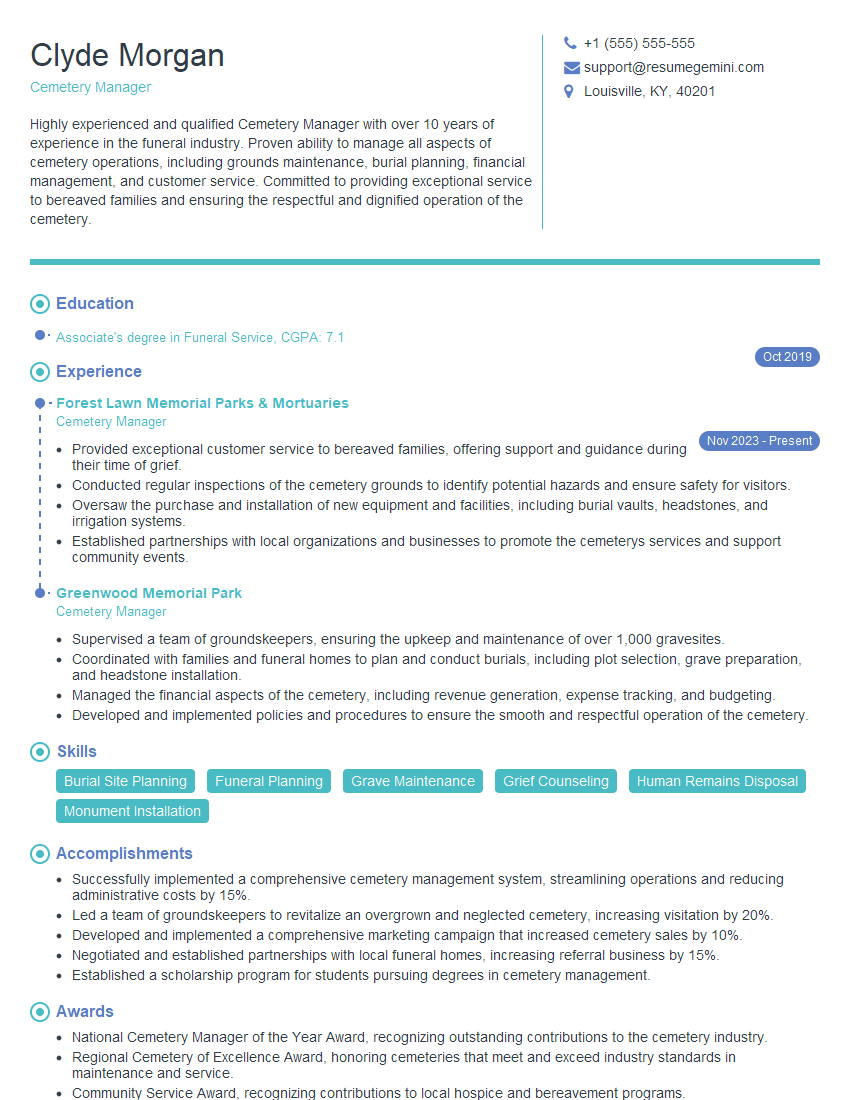
Mastering Cemetery Planning opens doors to a rewarding career offering opportunities for growth in management, design, and community service. A strong, ATS-friendly resume is crucial for highlighting your skills and experience to potential employers. To create a resume that truly showcases your qualifications, we recommend using ResumeGemini, a trusted resource for building professional resumes. Examples of resumes tailored to Cemetery Planning are available to help you get started. Take the next step towards your dream career today!
Explore more articles
Users Rating of Our Blogs
Share Your Experience
We value your feedback! Please rate our content and share your thoughts (optional).
What Readers Say About Our Blog
Very informative content, great job.
good