Cracking a skill-specific interview, like one for Cover Making and Mounting, requires understanding the nuances of the role. In this blog, we present the questions you’re most likely to encounter, along with insights into how to answer them effectively. Let’s ensure you’re ready to make a strong impression.
Questions Asked in Cover Making and Mounting Interview
Q 1. What types of adhesives are suitable for mounting photographs?
Selecting the right adhesive for mounting photographs is crucial for preserving the image and ensuring longevity. The best choice depends on the photograph’s material (e.g., gelatin silver print, inkjet print), its fragility, and the desired permanence.
- Photo mounting adhesives: These are specifically formulated for photos and are generally acid-free and pH-neutral, preventing damage. Examples include archival-quality spray adhesives and photo mounting squares (dry-mount tissue). These are great for larger prints.
- PVA (Polyvinyl Acetate) adhesives: PVA is a water-based adhesive that offers good adhesion and reversibility, making it suitable for less fragile items. However, it’s important to use a pH-neutral formulation.
- Pressure-sensitive adhesives: These are found in mounting corners or tapes, offering ease of use. However, it’s crucial to choose acid-free options to avoid damaging the photograph. Best for small photos or ephemera.
- Avoid: Using glues like Elmer’s, rubber cement or anything with acidic properties. These will damage the photograph and potentially lead to yellowing or degradation over time.
For particularly valuable or fragile photographs, always consult with a professional conservator.
Q 2. Explain the process of creating a custom-fit mat for an artwork.
Creating a custom-fit mat is an essential skill for enhancing the presentation and protection of artwork. A mat provides a buffer between the artwork and the frame, preventing contact and potential damage. Here’s the process:
- Measure the artwork: Accurately measure the artwork’s dimensions.
- Determine mat opening size: The mat opening should be slightly smaller than the artwork, typically leaving a ¼-inch to ½-inch border. The size of the border depends on the size of the artwork and personal preference.
- Cut the mat board: Using a mat cutter (or utility knife and metal ruler for smaller mats), carefully cut the mat board to the desired size. A mat cutter ensures a clean, accurate cut.
- Cut the window opening: Using the mat cutter, precisely cut the window opening for the artwork. Ensure the corners are clean and sharp.
- Inspect and adjust (optional): Check for any imperfections and adjust as needed.
- Mount the artwork: Carefully position the artwork within the mat opening and secure it using archival-quality mounting methods (e.g., acid-free mounting tape or corners).
Remember to use acid-free mat board to protect the artwork from damage.
Q 3. Describe different methods for covering books or documents.
Covering books or documents protects them from damage and enhances their presentation. Several methods exist, each with its own advantages and disadvantages.
- Cloth covers: Offer durability and a classic, elegant look. Often used for hardback books or valuable documents. The cloth is carefully glued to the book cover boards using PVA adhesive. This requires some skill and precision.
- Leather covers: Provides the highest level of protection and an exquisite appearance. Requires specialized tools and expertise. More costly than cloth.
- Paper covers: Simpler and less expensive. Suitable for documents or less valuable books. Paper can be adhered using PVA or other archival-quality adhesives. Book jackets are a common example of a simple paper cover.
- Plastic covers/Laminating: Provides excellent protection from moisture and dust, but can alter the look and feel of the original and sometimes makes the documents less easy to handle.
The chosen method should consider the item’s value, fragility, and the desired aesthetic.
Q 4. What are the advantages and disadvantages of using different types of mounting boards?
Mounting boards provide support and stability for artwork and documents. Different types offer varying advantages and disadvantages:
- Acid-free foam core: Lightweight, rigid, and easy to cut. Excellent for artwork that needs to be lightweight but needs to stay flat. However, it may not be as durable as other options, especially for large or heavy items.
- Museum board: Very stiff and durable, offers excellent protection for valuable artwork. Acid-free and pH neutral, preserving artwork for a longer period. More expensive than foam core.
- Mat board: Primarily used for matting artwork, it’s available in various colours and thicknesses. Provides a decorative border and protection for the artwork. However, it’s not ideal for large or heavy pieces.
- Cardboard: Cost-effective but generally not archival quality due to its tendency to contain acids which will damage the artwork over time.
The ideal choice depends on the item’s weight, fragility, and the desired level of protection.
Q 5. How do you ensure archival quality in your mounting and covering work?
Ensuring archival quality is paramount in mounting and covering. This involves using materials and methods that minimize the risk of damage and deterioration over time. Key aspects include:
- Acid-free materials: Using only acid-free adhesives, mounting boards, and covering materials is essential. Acids can cause yellowing, embrittlement, and degradation.
- pH-neutral adhesives: Ensure the adhesive is pH-neutral to prevent chemical reactions that might harm the item.
- Proper handling: Avoid excessive pressure or rough handling during the mounting process. Use soft gloves to protect the items.
- Appropriate environmental conditions: Store mounted items in a cool, dry place with stable humidity levels to prevent damage from moisture or temperature fluctuations.
- Minimising contact: Use methods like dry-mounting tissue or archival-quality mounting corners to minimize direct contact between the adhesive and the item.
Following these practices ensures the longevity and preservation of the items.
Q 6. What are common issues encountered when mounting fragile items?
Mounting fragile items presents unique challenges. Common issues include:
- Tears and rips: Fragile items are susceptible to tears during handling and mounting. Using archival-quality materials and careful handling techniques is crucial.
- Adhesive damage: Incorrect adhesive choice or application can damage the item. Acid-free and reversible adhesives are recommended.
- Surface distortion: Excessive pressure can cause distortion or damage to delicate surfaces. Use minimal pressure and appropriate support.
- Irreversible damage: Poor mounting techniques can lead to irreversible damage. Professional consultation might be needed for particularly valuable or delicate items.
Careful planning, appropriate materials, and gentle handling techniques are crucial to avoid these issues. Consider using specialized techniques like hinged mounting for particularly fragile items.
Q 7. Describe your experience with different types of covering materials (e.g., cloth, leather, paper).
My experience encompasses a wide range of covering materials, each with its unique properties and applications:
- Cloth: I’ve worked extensively with various cloth types, including linen, cotton, and silk. Linen provides strength and durability, cotton offers softness and affordability, and silk offers a luxurious finish. The choice depends on the project’s aesthetic and the item’s requirements.
- Leather: Leather offers exceptional durability and a luxurious feel. I’ve worked with various types, including calfskin, goatskin, and pigskin, each with its own texture and characteristics. Leather covering requires specialized tools and techniques.
- Paper: I’ve used a variety of papers for covering, from simple book papers to decorative papers with unique textures and designs. The selection depends on the aesthetic requirements and the desired level of protection.
In each case, the selection of material is guided by the client’s requirements, the nature of the item being covered, and the desired outcome. I always prioritize archival-quality materials and techniques to ensure longevity and preservation.
Q 8. How do you choose the appropriate adhesive for different substrates?
Choosing the right adhesive is crucial for successful cover making and mounting. The ideal adhesive depends heavily on the substrates you’re working with – the materials being bonded together. Think of it like choosing the right glue for a particular project: you wouldn’t use superglue for delicate paper, right?
- For porous substrates like canvas or cotton fabrics: A PVA (polyvinyl acetate) based adhesive or a spray adhesive with good penetration is ideal. These adhesives allow for good adhesion and flexibility, important for materials that might stretch or shift slightly.
- For non-porous substrates like acrylic or glass: A strong, solvent-based adhesive is often necessary. These adhesives create a very firm bond, essential for smooth, non-porous surfaces that won’t absorb the adhesive. However, careful application is crucial to avoid messy residue.
- For delicate substrates like photographs or archival papers: Acid-free, archival-quality adhesives are a must to prevent damage or discoloration. These are specifically formulated to avoid damaging the materials over time.
- For substrates with different densities: A flexible adhesive is needed to accommodate the differences in expansion and contraction; this helps prevent cracking or stress points. Pressure-sensitive adhesives (PSAs) are often a good choice in these cases.
Always test your chosen adhesive on a scrap piece of each material first to ensure compatibility and proper adhesion before applying it to the final project. This prevents costly mistakes!
Q 9. What safety precautions do you take when working with adhesives and sharp tools?
Safety is paramount in cover making and mounting. Sharp tools and adhesives require meticulous care. My safety procedures include:
- Always use sharp tools correctly: I maintain my blades frequently, ensuring they’re sharp to minimize pressure needed for clean cuts. Dull blades increase the risk of slippage and injury.
- Proper handling of adhesives: I work in a well-ventilated area, avoiding breathing in fumes from solvent-based adhesives. I always wear gloves to protect my skin from irritation or allergic reactions, and safety glasses to protect my eyes from splashes.
- Organized workspace: A clutter-free work area helps prevent accidents. I keep sharp tools in designated holders and adhesives tightly capped when not in use.
- First aid preparedness: I have a fully stocked first-aid kit readily accessible, along with knowledge of how to handle various injuries.
- Understanding Material Safety Data Sheets (MSDS): Before working with any new adhesive or material, I meticulously review the MSDS to understand potential hazards and necessary precautions.
Remember, a little bit of caution goes a long way in preventing accidents. It’s always better to be overly cautious than to suffer an injury.
Q 10. Explain your process for measuring and cutting materials precisely.
Precise measuring and cutting are fundamental. I use a combination of techniques to guarantee accuracy:
- High-quality measuring tools: Steel rulers, accurate measuring tapes, and self-healing cutting mats are essential. I regularly check my tools for accuracy.
- Precise cutting tools: I use sharp rotary cutters, craft knives, or shears depending on the material. The choice of tool depends on the material’s thickness and the desired cut.
- Marking techniques: I use pencils, tailor’s chalk, or marking pens to create clear guidelines, ensuring they are accurately placed before cutting.
- Double-checking measurements: I always double-check my measurements to prevent costly errors. It’s far better to take an extra minute to verify than to have to redo the work.
- Using templates: For intricate shapes or repetitive cuts, using pre-made templates ensures consistent accuracy.
For example, when mounting a large photograph, I would meticulously measure the mount board and the photograph to ensure a perfect fit, leaving the correct margins. Then, using a self-healing mat and a sharp blade, I would carefully cut the mount board according to my measurements.
Q 11. How do you handle a situation where materials are damaged during the mounting process?
Damage during mounting is unfortunately a possibility. My approach depends on the nature and extent of the damage:
- Minor damage (small scratches or tears): Depending on the material and the location of the damage, I might be able to carefully repair it using techniques like inpainting (for paintings) or adhesive repair (for tears). The repair needs to be invisible or at least minimally noticeable.
- Significant damage (large tears or creases): If the damage is too extensive to repair, I would assess whether I can salvage the project by using a different approach, like cropping the image or using a different piece of material. Sometimes, redoing the entire project is the best option for an optimal result.
- Documentation: In all cases of damage, I thoroughly document the situation, including photos of the damage and any repair attempts. This documentation is important for liability reasons and for learning from mistakes.
Prevention is always better than cure. Careful handling and a meticulous workflow significantly reduce the risk of damage. But it’s important to be prepared for unforeseen circumstances.
Q 12. What methods do you use to prevent bubbling or wrinkles during mounting?
Bubbling and wrinkles are common problems. To prevent them, I employ these methods:
- Using the correct adhesive: The adhesive should be appropriate for both the mounting board and the material being mounted. A properly chosen adhesive helps distribute the pressure evenly, preventing trapped air bubbles.
- Careful application of adhesive: I apply a thin, even layer of adhesive to avoid excess that could cause bubbling. I avoid placing the material directly onto an excessive amount of glue.
- Using a squeegee or roller: After positioning the material, I use a squeegee or a soft roller to smooth out any air bubbles and wrinkles, working from the center outwards to expel any trapped air.
- Applying even pressure: Using weights or a laminator ensures even pressure across the surface, helping to flatten out the material.
- Working in a clean environment: Dust and debris can interfere with adhesion and create uneven surfaces, promoting bubbling. A clean workstation is critical.
Remember, patience is key. Take your time and work methodically to achieve a smooth, bubble-free finish. It’s far better to take extra time to address bubbles and wrinkles immediately than deal with a flawed finished product.
Q 13. Describe your experience with different types of presses or laminators.
My experience encompasses various presses and laminators, each with its strengths and weaknesses:
- Cold presses: These are excellent for mounting delicate materials like photographs or archival prints. They apply gentle pressure without heat damage, preserving the material’s integrity.
- Hot presses: Offer more aggressive pressure and heat for bonding materials that require a strong, permanent bond. They are suitable for tougher materials, but require careful temperature control to avoid scorching or damage.
- Vacuum presses: Ideal for removing air bubbles and creating a perfectly flat surface, especially beneficial for large or irregularly shaped items. They offer excellent adhesion, but can be expensive.
- Laminators: Useful for applying a protective film over the mounted piece, increasing durability and longevity. Different laminators cater to diverse material thicknesses and heat tolerances.
The choice of press or laminator depends entirely on the materials and the project’s requirements. For example, a cold press is best for delicate archival materials, while a hot press might be necessary for mounting a thick canvas onto a panel.
Q 14. How do you handle large or oversized items for mounting?
Handling oversized items requires a different strategy. The key is careful planning and teamwork (when possible):
- Proper support: Using sturdy, stable work surfaces that can support the weight of the large item is crucial. This might involve using large tables or even the floor, with appropriate padding.
- Modular mounting: For extremely large pieces, consider dividing the mounting process into smaller, manageable sections. This approach reduces stress on materials and the risk of damage.
- Assisted mounting: Employing a helper for larger or heavier pieces provides extra support and ensures safe handling.
- Specialized equipment: Using a large-format laminator or a vacuum press is often necessary. This ensures even pressure and helps avoid wrinkles or air pockets.
- Planning work area and materials: Carefully plan the work area to ensure sufficient space and mobility around the large item. Having everything ready in advance keeps the process flowing smoothly and helps avoid extra stress.
For instance, when mounting a large banner onto a foam core board, I would use a large, sturdy work surface, pre-apply adhesive in sections, and use a squeegee and roller to smooth out the banner, working with a helper to ensure proper alignment and pressure. Everything is prepared in advance to prevent errors and stress.
Q 15. What are the different types of hinges used in mounting?
The choice of hinge for mounting depends heavily on the item’s weight, material, and intended display. We use several types, each with its strengths:
- Japanese Hinges: These are incredibly delicate, ideal for lightweight, fragile items like archival prints or watercolors. They consist of a thin, usually rice paper, strip folded and adhered, offering minimal intrusion and excellent archival qualities.
- Cloth Hinges: Slightly more robust than Japanese hinges, cloth hinges use strips of acid-free linen or cotton adhered to both the artwork and backing board. They’re suitable for moderately sized and weighted items.
- Metal Hinges: These are reserved for heavier pieces or items requiring more robust support. We primarily use acid-free metal hinges in conservation-grade mounting, carefully selecting the size and type of metal to avoid damaging the artwork.
- Photo Corners: For photographs or prints that don’t need a full backing board, photo corners are a great non-adhesive option. Choosing archival-quality photo corners made of acid-free materials is crucial.
The selection process always considers the artwork’s fragility and the display’s needs. A heavy sculpture demands a different approach than a delicate botanical illustration.
Career Expert Tips:
- Ace those interviews! Prepare effectively by reviewing the Top 50 Most Common Interview Questions on ResumeGemini.
- Navigate your job search with confidence! Explore a wide range of Career Tips on ResumeGemini. Learn about common challenges and recommendations to overcome them.
- Craft the perfect resume! Master the Art of Resume Writing with ResumeGemini’s guide. Showcase your unique qualifications and achievements effectively.
- Don’t miss out on holiday savings! Build your dream resume with ResumeGemini’s ATS optimized templates.
Q 16. How do you determine the appropriate level of support for a mounted item?
Determining appropriate support involves a careful assessment of several factors:
- Weight: Heavier items require more substantial backing and possibly added support structures like cradles or frames.
- Material: The material of the artwork greatly influences support. A canvas painting requires different support than a delicate watercolour.
- Size and Shape: Larger or unusually shaped items may need specialized support to prevent warping or sagging.
- Intended Display: A piece intended for a busy museum will need sturdier support than one for a private collection.
For example, a large, heavy oil painting might require a custom-built cradle to support the canvas from behind, preventing stretching or tearing. In contrast, a small, lightweight watercolor might only need a thin backing board and Japanese hinges.
Q 17. What is your experience with conservation-grade materials and techniques?
I have extensive experience with conservation-grade materials and techniques. My background includes working with museums and private collectors on high-value items. This means prioritizing the long-term preservation of the artwork. We exclusively use acid-free materials, including boards, adhesives, and hinges. We also maintain a climate-controlled workspace to minimize the risk of damage from temperature and humidity fluctuations. Examples of conservation-grade techniques I regularly employ include:
- Dry Mounting: Using heat-activated tissue to adhere artwork to a support board, minimizing damage.
- Float Mounting: A technique where artwork is raised slightly from the backing board, showcasing the edges.
- Custom Cradling: Constructing bespoke support structures for fragile or unusually shaped items.
We meticulously document every step of the process, including materials used, to ensure traceability and transparency for clients and future conservators.
Q 18. Describe your process for cleaning and preparing artwork for mounting.
Cleaning and preparation are critical first steps. The approach depends on the artwork’s material and condition:
- Assessment: We begin with a thorough examination, noting any damage, dirt, or debris. This guides the cleaning method.
- Dust Removal: A soft brush or air compressor is used to remove loose particles. For fragile items, a low-pressure vacuum with a special nozzle is preferred.
- Stain Removal: This is approached cautiously. Specialized cleaning solutions are used only if necessary and after careful testing on an inconspicuous area. Severe stains may require the expertise of a conservator.
- Inspection: Following cleaning, the artwork is inspected again to ensure no damage occurred during the process.
For example, a delicate pastel drawing would be cleaned differently than a robust oil painting. The goal is always to preserve the artwork’s integrity, minimizing any risk of harm during preparation.
Q 19. How do you ensure the longevity of mounted items?
Longevity is our primary goal. It’s achieved through meticulous attention to detail:
- Archival Materials: Using only acid-free, lignin-free materials prevents degradation over time.
- Proper Handling: Adhering to best practices during mounting, ensuring no damage occurs.
- Environmental Control: Storing mounted items in a climate-controlled environment minimizes exposure to damaging elements like light, temperature fluctuations, and humidity.
- Regular Inspection: Periodically examining mounted items for signs of degradation, allowing for prompt intervention if needed.
Think of it like preserving a valuable antique – careful storage and regular maintenance will ensure it remains in excellent condition for generations to come.
Q 20. What are the key differences between cold-press and hot-press mounting?
Both cold-press and hot-press mounting are techniques for adhering artwork to a backing board, but they differ significantly:
- Cold-Press Mounting: This uses an adhesive to attach the artwork to the backing board. It’s less aggressive and therefore preferred for delicate items. The process is slower but causes less risk of damage. It’s especially good for prints and drawings.
- Hot-Press Mounting: This uses heat-activated tissue to bond the artwork to the backing board. It’s faster but can potentially damage delicate items if not executed correctly. This is often preferred for photographs or items that need a flatter presentation.
The choice depends on the artwork’s material and fragility. Delicate items such as watercolors usually benefit from cold-press mounting, while a photographic print might be better suited for hot-press.
Q 21. How do you choose the correct size and type of cover for a specific item?
Cover selection is crucial for protection and aesthetics. Factors influencing the choice are:
- Artwork Size and Shape: The cover must be large enough to encompass the artwork with adequate margins. Unusual shapes may require custom-made covers.
- Material of the Artwork: The cover material should be appropriate for the artwork. A porous cover might not suit an oil painting, for example.
- Intended Use: A cover for storage will have different requirements than one for display. Some covers offer UV protection.
- Aesthetics: The cover’s appearance should complement the artwork.
For instance, a delicate watercolor would require a protective acid-free cover with enough space for cushioning. A sturdy metal-edged box might be appropriate for a framed sculpture. We offer a range of materials, including linen, cotton, and archival-quality plastics, to ensure a perfect match for every piece.
Q 22. Explain your experience with various stitching and binding methods.
My experience encompasses a wide range of stitching and binding methods, crucial for creating durable and aesthetically pleasing covers. I’m proficient in techniques like saddle stitching, perfect binding, case binding, and spiral binding, each suited to different project needs and budgets.
- Saddle stitching is ideal for smaller projects like booklets or brochures, offering a cost-effective and simple finish. I’ve used this extensively for client projects requiring quick turnaround times.
- Perfect binding, commonly used for books and magazines, provides a smooth, professional look. My expertise extends to ensuring a strong, reliable bond by carefully preparing the spine and applying the right adhesive. I’ve successfully managed projects with varying page counts, from thin pamphlets to substantial volumes using this method.
- Case binding, a more robust technique ideal for high-quality books, involves creating a separate cover that’s then attached to the text block. I’ve executed many complex case binding projects, carefully considering the cover material, spine construction, and overall aesthetics to match the client’s vision.
- Spiral binding, a versatile method, offers easy page turning and is perfect for calendars, notebooks, and reports. I’ve worked on both small-scale and large-scale projects using this method, adapting to different coil sizes and materials based on project specifics.
Choosing the right binding method requires careful consideration of factors like the document’s length, intended use, budget, and desired aesthetic. My experience allows me to make informed recommendations to best suit the project’s unique requirements.
Q 23. Describe your proficiency with different types of cutting tools (e.g., mat cutters, knives).
Precise cutting is paramount in cover making and mounting. My proficiency extends to various tools, each chosen depending on the material and the precision needed. I’m adept at using mat cutters for straight, clean cuts on materials like foam core or mat board, ensuring consistent accuracy across large projects. I also skillfully utilize different types of knives – rotary cutters for cutting fabric, craft knives for precise detail work, and utility knives for bulkier materials.
Safety is a priority, and I strictly adhere to safe handling procedures, always employing the appropriate cutting mat to protect my work surface and prevent injury. I regularly maintain my tools, ensuring sharpness and functionality for optimal results. For instance, when working on a delicate project requiring extremely fine cuts, I would use a craft knife with a fresh blade, prioritizing precision and minimizing the risk of tearing or damage.
Q 24. How do you manage your time and workflow efficiently when handling multiple projects?
Managing multiple projects efficiently involves a structured approach. I employ project management techniques, including prioritizing tasks based on deadlines and client urgency. I utilize a digital project management system to track progress, set milestones, and allocate resources effectively. This system helps me visualize the workload, identify potential bottlenecks, and stay on schedule.
For instance, I might break down a large project into smaller, manageable tasks. I might schedule the cutting and preparation of materials one day and the assembly and finishing on another. This allows for focused work and minimizes the risk of errors caused by multitasking.
Communication is key. Regular updates to clients keep them informed and ensure everyone is on the same page. This prevents misunderstandings and allows for timely adjustments to the project plan if needed.
Q 25. How do you deal with client requests that are outside your area of expertise?
When faced with a client request outside my expertise, honesty and proactive communication are paramount. I’ll openly discuss my limitations and explore options to find a solution that meets the client’s needs. This might involve collaborating with other specialists or recommending alternative providers who have the necessary skills.
For example, if a client requests a specific type of embossing that requires specialized equipment I don’t possess, I would transparently discuss this limitation, research alternative solutions, and potentially connect them with a colleague specializing in that area. Maintaining transparency and focusing on the client’s satisfaction is crucial, even if it means referring them elsewhere.
Q 26. What are the industry standards and best practices in cover making and mounting?
Industry standards and best practices in cover making and mounting emphasize quality, durability, and aesthetic appeal. This involves using high-quality materials suited to the project’s purpose and anticipated use. Precise measurements and careful cutting are essential for a clean, professional finish.
- Material Selection: Choosing appropriate materials for both the cover and the mounting board is crucial. Factors such as durability, weight, and aesthetic appeal are considered. For instance, for a high-end presentation, archival-quality materials would be used to ensure longevity.
- Adhesive Selection: The type of adhesive used should be appropriate for the materials being joined, ensuring a strong, long-lasting bond without causing damage. Acid-free adhesives are preferred for archival projects.
- Finishing Touches: Attention to detail in finishing is vital. This may include techniques such as edge finishing, corner rounding, and applying protective coatings to enhance the durability and appearance of the finished product.
Adherence to these best practices not only ensures a high-quality product but also builds client trust and demonstrates professional competence.
Q 27. Describe your problem-solving skills in relation to a challenging mounting project.
I recall a challenging project involving mounting a large, delicate watercolor painting onto archival mat board. The painting was fragile, and there was a significant risk of tearing or damage during the mounting process. My problem-solving approach involved a multi-step process:
- Assessment: I carefully examined the painting, noting its fragile areas and determining the best mounting method to minimize stress.
- Material Selection: I selected an archival-quality mat board and a conservation-grade adhesive, ensuring they wouldn’t damage the artwork.
- Method Selection: Instead of a traditional adhesive mounting, I opted for a dry-mounting press which evenly distributes heat and pressure, providing a secure bond without damaging the painting.
- Execution: I meticulously followed the dry-mounting process, carefully controlling the temperature and pressure to avoid damaging the artwork.
- Inspection: After mounting, I carefully inspected the artwork for any signs of damage or unevenness, ensuring a flawless result.
This methodical approach, coupled with the right tools and materials, enabled me to successfully complete this challenging project, maintaining the integrity of the delicate artwork and meeting the client’s expectations.
Key Topics to Learn for Cover Making and Mounting Interview
- Material Selection and Properties: Understanding different cover materials (e.g., paperboard, cloth, leather), their properties (weight, texture, durability), and suitability for various applications. Consider the impact of material choice on the final product’s aesthetics and functionality.
- Cover Design and Layout: Applying design principles to create visually appealing and functional covers. This includes understanding aspects like typography, color palettes, and image selection in relation to the content being protected.
- Cutting and Scoring Techniques: Mastering precision cutting and scoring techniques to ensure clean, accurate cuts and folds for a professional finish. This includes understanding the use of different cutting tools and machinery.
- Adhesive Selection and Application: Choosing the appropriate adhesives for different materials and applications, ensuring proper bonding and preventing damage. Understanding the environmental impact and safety precautions related to adhesive use is also key.
- Mounting Techniques: Proficiency in various mounting methods (e.g., case binding, perfect binding, spiral binding) and the ability to select the most appropriate method based on the project requirements.
- Quality Control and Troubleshooting: Identifying and resolving common issues during the cover making and mounting process, such as misalignment, uneven adhesion, or material defects. Demonstrating a proactive approach to quality assurance is crucial.
- Equipment Operation and Maintenance: Familiarity with common machinery and tools used in cover making and mounting, including their safe and efficient operation and basic maintenance procedures. Understanding the limitations and capabilities of each piece of equipment is important.
- Workflow Optimization and Efficiency: Demonstrating knowledge of streamlined workflows, efficient time management techniques, and best practices for maximizing productivity while maintaining quality.
Next Steps
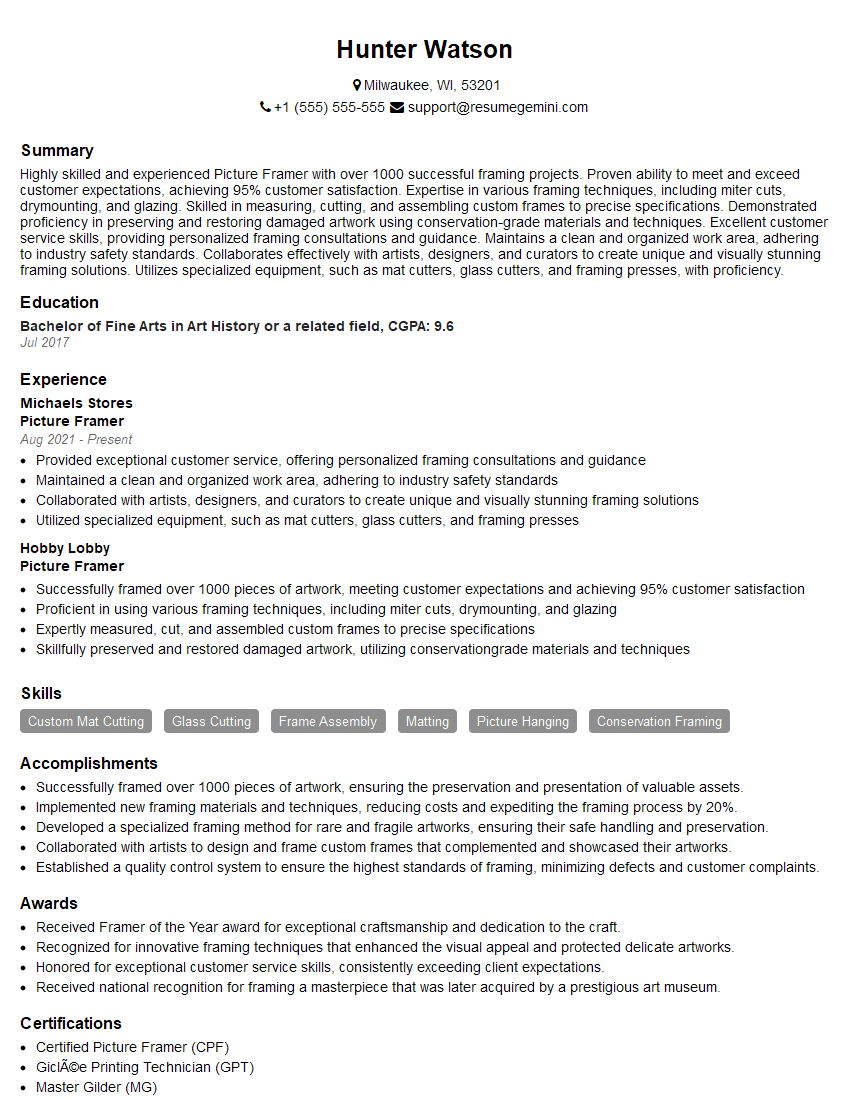
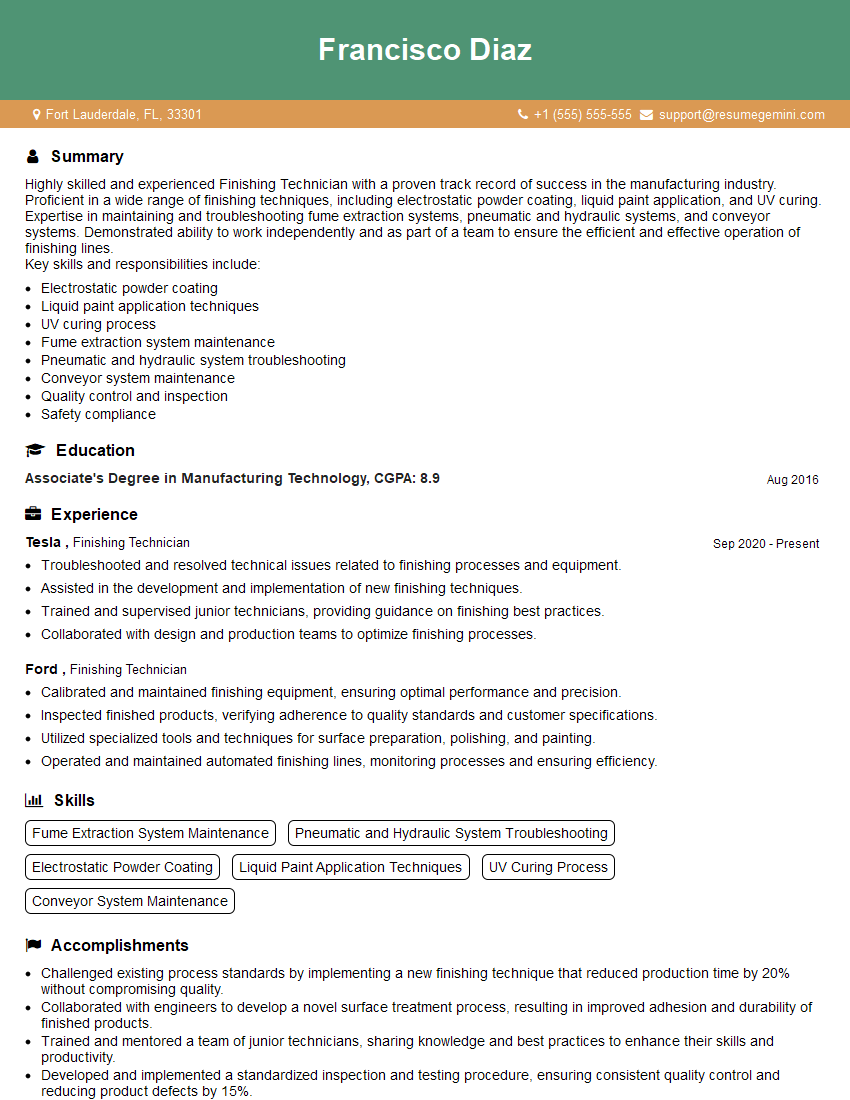
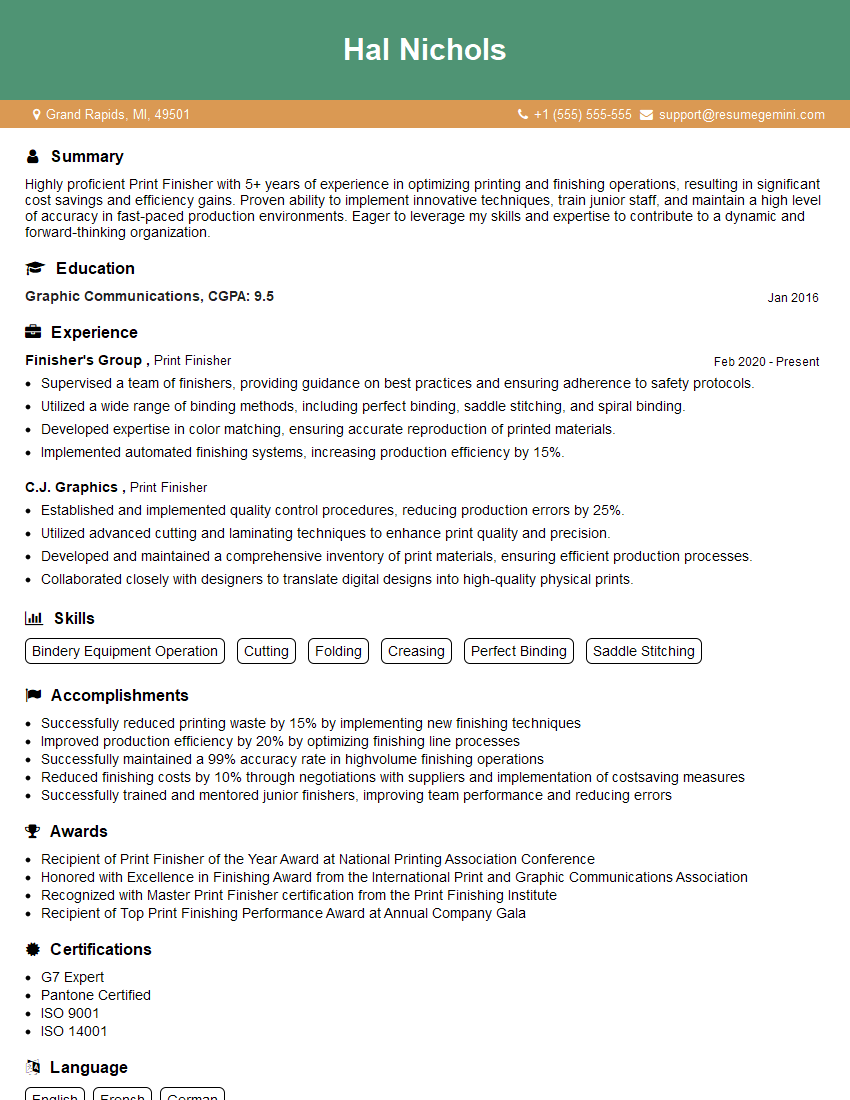
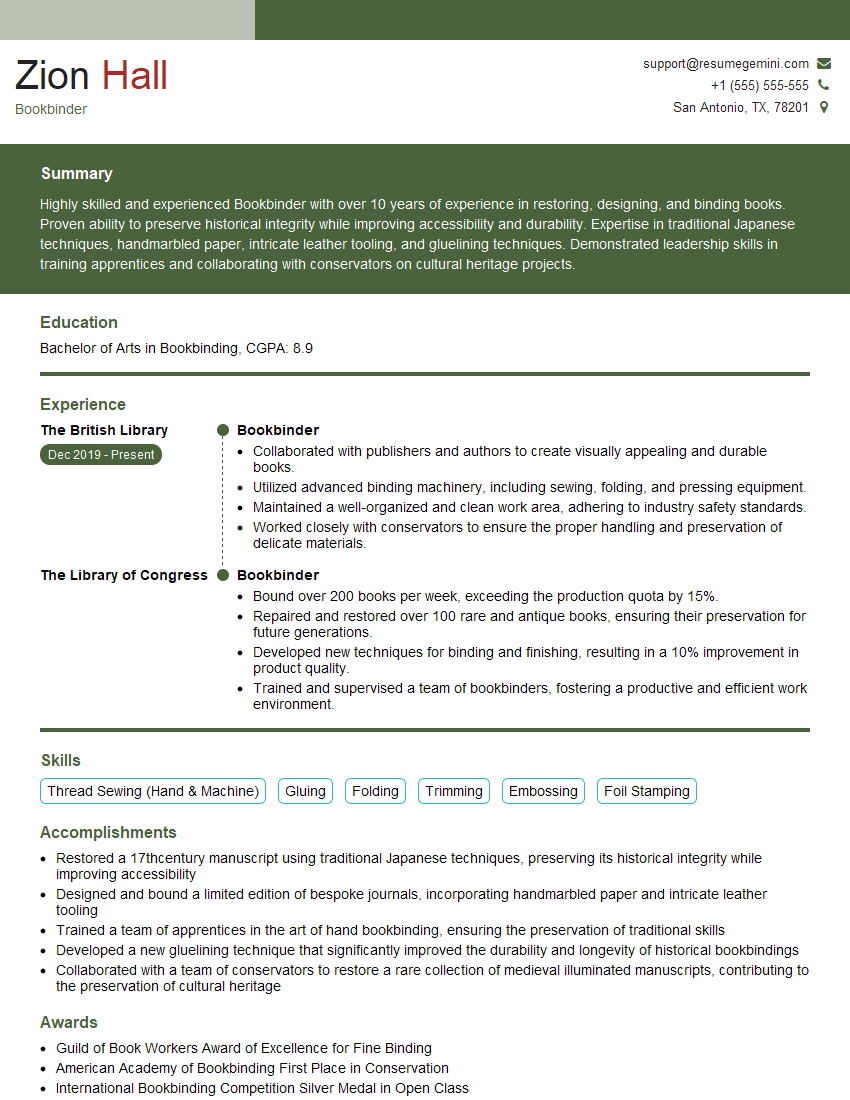
Mastering Cover Making and Mounting opens doors to diverse and rewarding career opportunities in publishing, print finishing, and related industries. A strong understanding of these skills is highly valued by employers. To enhance your job prospects, create an ATS-friendly resume that highlights your skills and experience effectively. ResumeGemini is a trusted resource to help you build a professional and impactful resume, ensuring your qualifications stand out. Examples of resumes tailored to Cover Making and Mounting are available to guide you through the process.
Explore more articles
Users Rating of Our Blogs
Share Your Experience
We value your feedback! Please rate our content and share your thoughts (optional).
What Readers Say About Our Blog
Very informative content, great job.
good