Every successful interview starts with knowing what to expect. In this blog, we’ll take you through the top Shipboard Weapon System Maintenance interview questions, breaking them down with expert tips to help you deliver impactful answers. Step into your next interview fully prepared and ready to succeed.
Questions Asked in Shipboard Weapon System Maintenance Interview
Q 1. Describe your experience with troubleshooting malfunctioning weapon systems.
Troubleshooting malfunctioning weapon systems requires a systematic approach. It begins with a thorough understanding of the system’s operational parameters and a careful assessment of the reported malfunction. I typically start by gathering all available data: error codes, sensor readings, witness accounts, and maintenance logs. This helps to pinpoint the potential source of the problem.
Next, I utilize a combination of diagnostic tools, both built-in and external, to isolate the fault. This might involve checking power supply, conducting continuity tests, inspecting wiring harnesses for damage, or even running specific diagnostic programs embedded within the weapon system’s control unit. For example, during my time on the USS Independence, a malfunctioning Phalanx CIWS resulted from a faulty power regulator; a simple voltage check identified the problem, leading to a quick fix. Once the problem is identified, I implement the necessary repair, always adhering to strict safety protocols. Finally, I perform a comprehensive system test to ensure the weapon system is fully operational and reliable.
My experience extends to various weapon systems, including both older and modern platforms, each with their unique troubleshooting challenges. I am adept at navigating both integrated systems and modular components.
Q 2. Explain the process for conducting preventative maintenance on shipboard weaponry.
Preventative maintenance (PM) on shipboard weaponry is crucial for ensuring readiness and preventing catastrophic failures. It’s a structured process that follows a schedule based on the manufacturer’s recommendations and operational demands. A typical PM schedule includes daily, weekly, monthly, and quarterly checks.
Daily PM might involve visual inspections for corrosion, damage, or loose components. Weekly PM might include more thorough checks of critical systems and lubrication of moving parts. Monthly PM might encompass functional testing of key components, calibration of sensors, and cleaning. Quarterly PM could involve more extensive disassembly and inspection of critical sub-systems.
The process often involves a documented checklist, ensuring all steps are followed consistently. For example, on the Mk 45 naval gun, daily PM would include checking ammunition handling mechanisms, while the monthly PM involves a much deeper inspection and functional test of the gun’s firing mechanism and recoil system. Thorough documentation of each PM activity is key, providing an auditable trail of maintenance and aiding in predicting future potential problems.
Q 3. What are the key safety procedures you follow when handling weapons systems?
Safety is paramount in handling shipboard weapon systems. The fundamental principle is to always treat every weapon system as if it were loaded and ready to fire, regardless of its apparent status.
- Weapon Safety Rules: Strict adherence to established weapon safety rules is mandatory, including proper clearing procedures, safety checks, and the use of approved safety devices.
- Personal Protective Equipment (PPE): Appropriate PPE, including eye protection, hearing protection, and gloves, must be worn during all maintenance activities.
- Clear Communication: Clear and constant communication with colleagues is essential, particularly during any maintenance or repair operation, to ensure everyone is aware of the work being performed and potential hazards.
- Authorized Personnel Only: Access to weapon systems is strictly limited to authorized and qualified personnel who have received the necessary training.
- Emergency Procedures: Familiarity with emergency procedures, including evacuation plans and response protocols, is critical in case of accidents or malfunctions.
Ignoring any of these procedures can have devastating consequences. Each step, from initial inspection to final testing, is approached with meticulous attention to safety.
Q 4. How familiar are you with various types of shipboard weapon systems (e.g., guns, missiles, CIWS)?
My familiarity with shipboard weapon systems encompasses a broad range of technologies. I have extensive experience with various gun systems, from the smaller caliber guns used for close-in defense to larger caliber naval guns for long-range engagement. My expertise also includes missile systems, both surface-to-air and surface-to-surface, encompassing their handling, loading, and maintenance procedures.
Furthermore, I am well-versed in Close-In Weapon Systems (CIWS), such as the Phalanx system, understanding its radar systems, targeting capabilities, and maintenance requirements. This experience includes working with both older legacy systems and the most modern weapon platforms, always keeping abreast of technological advancements and training on new systems.
Q 5. Describe your experience with diagnostic tools used in weapon system maintenance.
Diagnostic tools are indispensable in weapon system maintenance. My experience encompasses a wide array of these tools.
- Built-in Diagnostics: Many modern weapon systems have sophisticated built-in diagnostic systems that provide error codes and performance data. I am proficient in interpreting these outputs to isolate faults.
- Multimeters: Basic tools like multimeters are essential for checking voltage, current, and resistance.
- Oscilloscope: An oscilloscope is used to analyze complex waveforms and identify electrical anomalies within the system.
- Specialized Test Equipment: Depending on the specific weapon system, more specialized test equipment might be necessary, such as those used for verifying the operation of fire control systems or missile guidance systems.
- Computerized Maintenance Systems (CMS): I am proficient in utilizing CMS to access troubleshooting guides, schematics, and parts catalogs.
Proper use and interpretation of these tools is crucial for efficient and effective troubleshooting.
Q 6. How do you prioritize maintenance tasks in a high-pressure environment?
Prioritizing maintenance tasks in a high-pressure environment is critical for maintaining combat readiness. I use a risk-based approach, prioritizing tasks based on their impact on mission-critical functions and the potential consequences of failure.
Tasks are categorized using a system that weighs factors like mission impact, system criticality, and the likelihood of failure. For instance, a malfunctioning fire control system would take immediate precedence over a minor cosmetic issue. Using a system similar to a triage system in medicine, I focus on immediate fixes first, then move to issues that could cause system degradation.
Effective communication and clear task delegation are essential in these high-stress scenarios. A well-defined task list and clear communication with my team ensure everyone understands the priorities and can work collaboratively. The use of modern scheduling software can also be beneficial.
Q 7. What is your experience with interpreting technical manuals and schematics?
Interpreting technical manuals and schematics is a core skill for shipboard weapon system maintenance. I am highly proficient in deciphering technical documentation, including system diagrams, wiring harnesses, circuit layouts, and component specifications.
I view technical manuals as interactive guides, navigating diagrams and specifications to troubleshoot and implement repairs. My approach involves studying the schematic to trace signal paths, identify component functions, and understand system interactions. I am adept at cross-referencing information from different sources to resolve complex issues and identify potential causes of failure.
For example, while working on a faulty targeting system, the schematic helped me isolate a faulty capacitor that was causing intermittent signals. Without the technical documentation, identifying and fixing this issue would have been extremely time-consuming.
Q 8. Explain your understanding of weapon system reliability and maintainability.
Weapon system reliability and maintainability are crucial for ensuring mission success and crew safety. Reliability refers to the probability that a system will perform its intended function without failure for a specified period under stated conditions. Maintainability, on the other hand, focuses on the ease and speed with which a system can be restored to operational status after a failure. These two concepts are intrinsically linked; a highly reliable system is often inherently easier to maintain, and vice-versa.
For example, a reliable gun system will experience fewer malfunctions, reducing the maintenance workload. Conversely, a system designed for easy access to components and modular repair will increase the likelihood of swift restoration, boosting its operational readiness. We assess reliability through metrics like Mean Time Between Failures (MTBF) and Mean Time To Repair (MTTR). A high MTBF and a low MTTR are desirable goals. In practice, this means implementing robust design principles, rigorous quality control during manufacturing, and comprehensive preventative maintenance schedules.
Q 9. How do you ensure compliance with safety regulations during maintenance procedures?
Safety is paramount in shipboard weapon system maintenance. We adhere strictly to established safety regulations, including those outlined in the relevant Navy publications and manufacturer’s manuals. Before starting any procedure, a thorough risk assessment is conducted, identifying potential hazards and outlining mitigating measures. Lockout/Tagout (LOTO) procedures are strictly followed to prevent accidental activation of weapon systems during maintenance. Personal Protective Equipment (PPE), such as eye protection, gloves, and hearing protection, is mandatory. Regular safety briefings and training ensure all personnel are fully aware of the risks and procedures involved.
For instance, before working on a missile launcher, we would implement LOTO procedures to isolate the power and prevent accidental firing. We’d wear appropriate PPE to protect against potential hazards such as chemical exposure or debris. Our team conducts regular safety drills to practice emergency response procedures in case of unexpected events.
Q 10. Describe your experience working with different weapon system components.
My experience encompasses a wide range of weapon system components, including fire control systems, weapon mounts, ordnance handling equipment, and associated sensors and communication systems. I have worked extensively with various types of guns, missile launchers, and close-in weapon systems (CIWS). This includes experience with both legacy systems and newer, technologically advanced systems integrating advanced electronics and software. I’m proficient in troubleshooting issues related to hydraulics, pneumatics, electrical systems, and weapon system software. For example, I’ve diagnosed and repaired malfunctions in a Phalanx CIWS system, traced electrical faults in a fire control computer, and resolved hydraulic pressure issues in a 5-inch gun mount.
Working with these diverse components requires a comprehensive understanding of their individual functions and their integration within the overall weapon system. This cross-system understanding is key to efficient troubleshooting and repair.
Q 11. What is your experience with calibrating and aligning weapon systems?
Calibration and alignment are critical for ensuring the accuracy and effectiveness of weapon systems. I’m experienced in using specialized tools and equipment to precisely calibrate various weapon system components. This includes laser alignment tools for gun mounts, electronic test equipment for fire control systems, and specialized software for data acquisition and analysis. The calibration process involves carefully following manufacturer’s specifications and maintaining detailed records of the results. Alignment procedures ensure that the weapon’s aiming point matches its point of impact, a crucial factor for accuracy.
For example, calibrating a gun mount involves adjusting its elevation and azimuth mechanisms to ensure the barrel is correctly aligned with the fire control system’s targeting data. We use laser alignment tools to achieve precise alignment and verify its accuracy with test firings.
Q 12. How do you handle unexpected equipment failures during operations?
Unexpected equipment failures during operations require immediate and effective response. Our first priority is always safety. We follow established emergency procedures to secure the affected system and prevent further damage or injury. A thorough assessment of the failure is conducted to identify the root cause. This often involves using diagnostic tools and referring to technical manuals. Once the cause is identified, appropriate corrective actions are taken, ranging from simple repairs to component replacement. If the repair can’t be completed onboard, we initiate procedures to get the necessary support and replacement parts. In the meantime, contingency plans are implemented to maintain operational capability.
For instance, if a radar system fails, we might switch to backup systems or request support from other ships. Documentation of the failure, repair, and any lessons learned is crucial for improving future reliability and maintenance practices.
Q 13. What is your experience with repairing damaged weapon system components?
Repairing damaged weapon system components requires specialized skills and knowledge. I possess extensive experience in diagnosing the cause of damage, selecting the appropriate repair techniques, and carrying out the repairs efficiently and safely. This involves using a variety of tools and equipment, including welding machines, machining tools, and electronic test equipment. Depending on the extent of the damage, repairs can range from minor adjustments to major overhauls. We always follow strict quality control procedures to ensure the repaired component meets the original specifications and safety standards.
For instance, repairing a damaged hydraulic line might involve cutting out the damaged section, installing a new section, and pressure-testing the entire line. Repairing a damaged electronic circuit board might require component-level repair or replacement of the entire board. Proper documentation is key, including photos of the damage, details of the repair process, and final test results.
Q 14. How do you ensure the proper storage and handling of ordnance?
Proper storage and handling of ordnance are critical for safety and operational readiness. We strictly adhere to established procedures for storing ammunition, missiles, and explosives. This includes maintaining proper environmental conditions, such as temperature and humidity control, to prevent degradation. Ordnance is stored in designated magazines and handling areas, with strict access controls to prevent unauthorized access. Personnel handling ordnance receive specialized training and must follow rigorous safety protocols, including the use of PPE and the proper handling techniques to avoid accidents. Regular inspections are conducted to ensure proper storage conditions and identify any potential hazards.
For example, we maintain detailed logs of all ordnance movements, meticulously tracking the quantity, type, and location of each item. This ensures accountability and aids in inventory management. We also conduct periodic inspections of storage areas to check for corrosion, damage, or any other signs of degradation.
Q 15. Describe your experience with the maintenance of fire control systems.
My experience with fire control system maintenance encompasses a wide range of activities, from preventative maintenance to complex troubleshooting and repair. Fire control systems are the brains of a weapon system, directing the aiming and firing of weapons. Think of it like the sophisticated aiming system on a high-end rifle, but exponentially more complex. My work has involved meticulous checks of radar systems, ensuring accuracy of target acquisition and tracking. This includes verifying the functionality of gyroscopes, servo motors, and digital processors. I’ve also performed calibration procedures, using specialized tools to ensure precise alignment and optimal performance. A specific example involved troubleshooting a malfunctioning rangefinder on a naval gun system. By methodically checking each component, from the laser emitter to the processing unit, we identified a faulty circuit board and successfully replaced it, restoring full functionality. Furthermore, I’m experienced in the maintenance of associated software, ensuring smooth data flow between sensors, computers, and actuators.
Career Expert Tips:
- Ace those interviews! Prepare effectively by reviewing the Top 50 Most Common Interview Questions on ResumeGemini.
- Navigate your job search with confidence! Explore a wide range of Career Tips on ResumeGemini. Learn about common challenges and recommendations to overcome them.
- Craft the perfect resume! Master the Art of Resume Writing with ResumeGemini’s guide. Showcase your unique qualifications and achievements effectively.
- Don’t miss out on holiday savings! Build your dream resume with ResumeGemini’s ATS optimized templates.
Q 16. What is your familiarity with different types of ammunition and their handling requirements?
My familiarity with ammunition types extends to various calibers and types, including conventional high-explosive rounds, guided munitions, and even specialized rounds like those used in anti-submarine warfare. Each type has unique handling requirements, dictated by its composition and sensitivity. For instance, handling high-explosive rounds necessitates strict adherence to safety protocols, including proper storage, transportation, and handling procedures to prevent accidental detonation. Guided munitions require a more specialized approach, involving careful inspection of their guidance systems and associated electronics. The documentation and procedures associated with these processes are stringent, and I’m thoroughly versed in them, having participated in countless ammunition handling exercises and live-fire drills. For example, I’ve personally supervised the loading and unloading procedures for numerous live-fire exercises, ensuring complete compliance with safety regulations and accounting for every single round.
Q 17. Explain your understanding of weapon system testing and evaluation procedures.
Weapon system testing and evaluation are critical for ensuring operational readiness. These procedures involve a series of checks and tests, ranging from basic functionality checks to more comprehensive performance evaluations. Testing can be broken down into several stages: initial system tests after installation or maintenance, routine operational checks, and then more extensive testing under simulated or live-fire conditions. Each stage has specific criteria and documentation requirements. For instance, a basic functionality check might involve verifying that all sensors are operating correctly, while a live-fire exercise will rigorously test the weapon system’s accuracy and effectiveness under actual firing conditions. Data from these tests are meticulously recorded and analyzed to identify any issues and make improvements. One example was analyzing data from a recent live-fire test which revealed a slight deviation in accuracy at longer ranges. This led to adjustments in the fire control system calibration, ultimately enhancing its accuracy.
Q 18. How do you document maintenance activities and generate reports?
Maintenance activities are meticulously documented using a combination of electronic and paper-based systems. Electronic systems, like CMMS (discussed further below), store comprehensive records of all maintenance actions, including dates, personnel involved, parts used, and the outcome of the maintenance. Paper-based logs provide an immediate record, especially crucial during operational scenarios where electronic access might be limited. These logs are then later transcribed into the CMMS. Reports are generated from these systems, providing summaries of completed maintenance tasks, identifying recurring issues, and predicting potential future maintenance needs. These reports are essential for resource planning and operational readiness. For instance, a regular report might highlight a pattern of failure in a specific component, leading to proactive replacement strategies and minimizing downtime.
Q 19. What is your experience with using computerized maintenance management systems (CMMS)?
I have extensive experience using computerized maintenance management systems (CMMS). These are sophisticated software platforms that allow for efficient tracking and management of all aspects of maintenance, from scheduling preventative maintenance to tracking inventory and generating reports. I’m proficient in using various CMMS software to record maintenance activities, manage spare parts inventory, schedule maintenance tasks, and generate reports. My experience includes working with both off-the-shelf CMMS and customized solutions adapted to the unique needs of specific weapon systems. A real-world example would be utilizing a CMMS to optimize the scheduling of preventative maintenance for multiple weapon systems, minimizing downtime and maximizing operational readiness. The CMMS would track the operational hours of each system, predict potential failures based on historical data and optimize the scheduling of maintenance personnel.
Q 20. Describe your experience with working as part of a team in a maintenance environment.
Teamwork is paramount in a shipboard maintenance environment. I’ve consistently worked as part of a team, collaborating with engineers, technicians, and other specialists to effectively maintain weapon systems. This requires strong communication skills, the ability to work under pressure, and a commitment to shared goals. Effective teamwork relies on mutual respect, clear communication, and the ability to troubleshoot problems collaboratively. For example, during a critical repair of a damaged radar system, we worked as a team, each member contributing their expertise to diagnose the problem and implement a solution efficiently. Clear communication ensured that every team member understood their role and worked towards a shared objective, and ultimately minimizing the impact of the damage.
Q 21. How do you stay up-to-date with the latest technologies and advancements in weapon systems?
Staying current with technological advancements in weapon systems is a continuous process. I actively participate in professional development courses, attend industry conferences, and stay informed through relevant publications and online resources. This includes studying manuals for new upgrades or modifications to existing weapon systems and actively engaging with manufacturers’ training and support resources. I also seek out opportunities to work on new and emerging technologies. For instance, recent training covered the integration of new AI-based target recognition systems into our existing fire control systems, enhancing their capabilities and efficiency significantly. Remaining at the forefront of technological advancements ensures we maintain our operational advantage and optimal weapon system performance.
Q 22. Describe your experience with troubleshooting electrical and electronic faults in weapon systems.
Troubleshooting electrical and electronic faults in weapon systems requires a systematic approach combining theoretical knowledge with practical skills. It starts with a thorough understanding of the system’s schematics and operational procedures. I begin by identifying the symptom – for example, a malfunctioning targeting system. Then, I systematically isolate the problem using diagnostic tools like multimeters, oscilloscopes, and specialized weapon system test equipment. This might involve checking power supplies, signal integrity, and component functionality.
For instance, on a recent deployment, the ship’s close-in weapons system experienced intermittent power failures. Using a multimeter, I traced the issue to a faulty connection in the main power distribution board, a simple but crucial fix that prevented a major operational disruption. I also possess experience with digital troubleshooting techniques, involving the use of embedded diagnostic software and data analysis to pinpoint and resolve software-related faults within the weapon system’s control and fire control systems. My approach always prioritizes safety, ensuring power is isolated before working on live circuits.
Beyond simple component replacement, I’m proficient in interpreting error codes, analyzing diagnostic logs, and performing board-level repairs where possible, minimizing downtime and maximizing operational readiness. I am also adept at using fault-finding charts and working with technical manuals, understanding the intricate details of the weapon system’s architecture and interconnections.
Q 23. What is your understanding of hydraulic and pneumatic systems within weapon systems?
Hydraulic and pneumatic systems are vital for many weapon systems, providing power for movement, aiming, and other critical functions. Hydraulic systems use pressurized liquids to transmit power, often employed in larger systems like gun mounts or missile launchers. Pneumatic systems use compressed air or gas, typically for smaller, faster-acting mechanisms like aiming adjustments or ejection systems. Understanding both systems is essential for effective maintenance.
My experience includes troubleshooting leaks in hydraulic lines, identifying wear and tear in hydraulic pumps and actuators, and correctly interpreting pressure readings. I am familiar with the safety procedures involved in working with high-pressure systems, including proper lockout/tagout procedures and the use of personal protective equipment (PPE). With pneumatic systems, I understand the importance of air purity, pressure regulation, and the identification of leaks. I’ve worked with various types of pneumatic valves and actuators, diagnosing malfunctions through systematic testing and component replacement as needed. Think of it like a car’s brake system – understanding the hydraulics is essential to diagnose and repair any faults.
Q 24. Explain your experience with conducting inspections and assessments of weapon systems.
Regular inspections and assessments are critical for ensuring weapon system readiness and safety. My experience encompasses conducting both preventative and corrective maintenance inspections, adhering to strict military standards and manufacturer guidelines. These inspections include visual checks for wear and tear, corrosion, and damage; functional testing of all components; and thorough documentation of findings. I’m familiar with various inspection checklists and reporting procedures.
During a recent inspection of a missile launching system, I discovered a hairline crack in a crucial hydraulic line, a problem that was not readily apparent during routine operation. Early detection prevented a potentially catastrophic failure during a live-fire exercise. I utilize a range of tools and techniques during inspections – from simple visual observations to advanced non-destructive testing methods like ultrasonic inspection to check for internal flaws in critical components. The goal is always to identify potential problems before they escalate, ensuring the weapon system maintains optimal performance and reliability.
Q 25. How familiar are you with the different types of weapon system sensors and their functions?
Weapon system sensors are crucial for targeting, navigation, and situational awareness. My familiarity extends to a range of sensor types, including radar, sonar, electro-optical (EO), infrared (IR), and laser rangefinders. I understand the operating principles, limitations, and maintenance requirements of each. For example, radar sensors provide long-range detection, sonar is used for underwater surveillance, EO/IR sensors provide visual and thermal imaging for target identification, and laser rangefinders precisely measure distances to targets.
Understanding sensor calibration and alignment is crucial. Incorrect calibration can significantly impact accuracy and effectiveness. I have experience calibrating and aligning various sensors, ensuring they meet required performance standards. Furthermore, I’m familiar with the different data processing techniques used to interpret sensor data, including signal processing and image analysis. Troubleshooting sensor issues often involves identifying anomalies in the data output and tracing them back to the source of the malfunction. This requires a strong understanding of electronics and signal processing.
Q 26. Describe your experience with the integration of new weapon systems onto existing platforms.
Integrating new weapon systems onto existing platforms requires careful planning and execution, considering factors like physical integration, software compatibility, and power requirements. My experience in this area involves working with engineering teams and manufacturers to ensure seamless integration. This includes interface design, software configuration, testing, and documentation. I’m adept at working with technical specifications, drawings, and software interfaces.
For instance, I participated in the integration of a new fire control system onto an older warship. This involved coordinating with software engineers to ensure compatibility with the existing platform’s systems, adapting the physical interface to fit existing mounting points, and conducting extensive testing to verify proper functionality and safety. The success of this integration required close collaboration, meticulous attention to detail, and a clear understanding of the complexities involved in integrating new technologies into older systems. Thorough testing, both in simulated and real-world environments, is always a critical part of the integration process.
Q 27. What is your experience with managing inventory and spare parts for weapon systems?
Effective inventory management and spare parts control are vital for weapon system maintainability. My experience encompasses maintaining accurate inventory records, forecasting future needs, and managing the procurement process for spare parts. I use various inventory management systems, ensuring timely replenishment of critical components to prevent delays in maintenance and repairs. Understanding the obsolescence of parts and proactively planning for replacements is a key aspect of this role.
I’ve implemented efficient inventory control procedures, reducing storage costs and preventing stockouts of crucial parts. This includes implementing a robust tracking system, regular audits, and collaboration with logistics teams to streamline procurement. Proper inventory management is not just about having parts readily available; it’s about controlling costs, minimizing waste, and ensuring the weapon system’s long-term operational readiness. Effective inventory management translates directly to improved mission readiness and cost savings.
Q 28. How do you handle pressure and tight deadlines in a dynamic operational environment?
The shipboard environment often presents challenges with tight deadlines and high-pressure situations. I’ve developed strong organizational skills and time management techniques to effectively handle these demands. My approach involves prioritizing tasks based on urgency and criticality, breaking down complex problems into smaller, manageable steps, and effectively delegating responsibilities when possible. I am a proactive problem-solver, anticipating potential issues and planning accordingly to mitigate risks.
For example, during a critical repair operation with a very tight deadline, I coordinated a team of technicians, ensuring everyone understood their roles and responsibilities. By prioritizing tasks efficiently and leveraging everyone’s skills, we completed the repair successfully and ahead of schedule. Clear communication, effective teamwork, and maintaining a calm and methodical approach are crucial in high-pressure situations. I’m able to stay focused under pressure, adapting readily to changing circumstances, and ensuring that the safety of personnel and the integrity of the weapon system remain paramount.
Key Topics to Learn for Shipboard Weapon System Maintenance Interview
- Weapon System Fundamentals: Understanding the basic principles of various shipboard weapon systems, including their components, operation, and limitations. This includes theoretical knowledge of projectile motion, targeting systems, and fire control.
- Preventive Maintenance (PM): Practical application of scheduled maintenance procedures, including inspection, lubrication, and component replacement. Be prepared to discuss your experience with following maintenance schedules and documenting your work.
- Troubleshooting and Diagnostics: Explain your approach to identifying and resolving malfunctions in shipboard weapon systems. This includes the use of diagnostic tools, interpreting error codes, and utilizing technical manuals.
- Safety Procedures: Demonstrate a thorough understanding of safety protocols related to handling weapons, ammunition, and hazardous materials. Highlight your commitment to safety regulations and best practices.
- System Integration: Discuss your knowledge of how various weapon system components interact and the importance of system-level understanding for effective maintenance.
- Data Analysis and Reporting: Explain your experience with collecting, analyzing, and reporting maintenance data. This includes the use of computerized maintenance management systems (CMMS).
- Communication and Teamwork: Highlight your ability to effectively communicate technical information to both technical and non-technical audiences, and to collaborate effectively within a team environment.
- Specific Weapon Systems: Depending on the specific job description, familiarize yourself with the theoretical and practical aspects of the weapon systems mentioned. Research the systems and their maintenance requirements thoroughly.
Next Steps
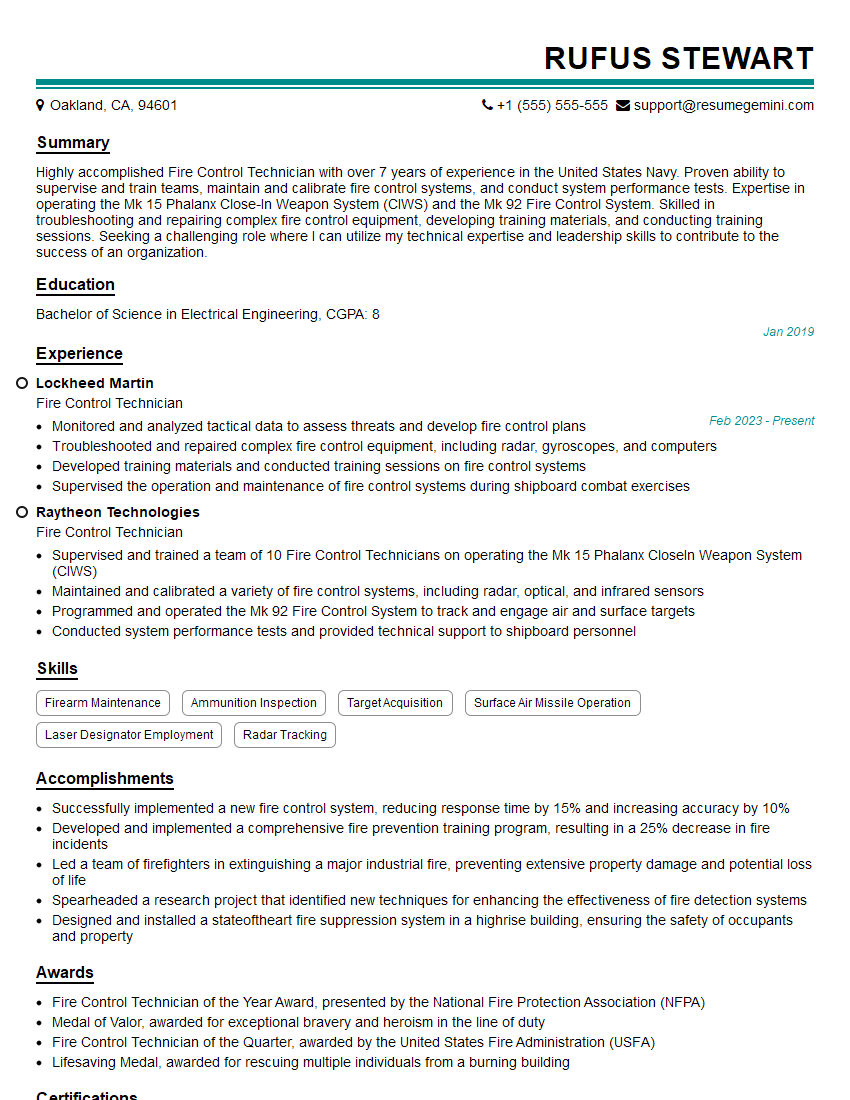
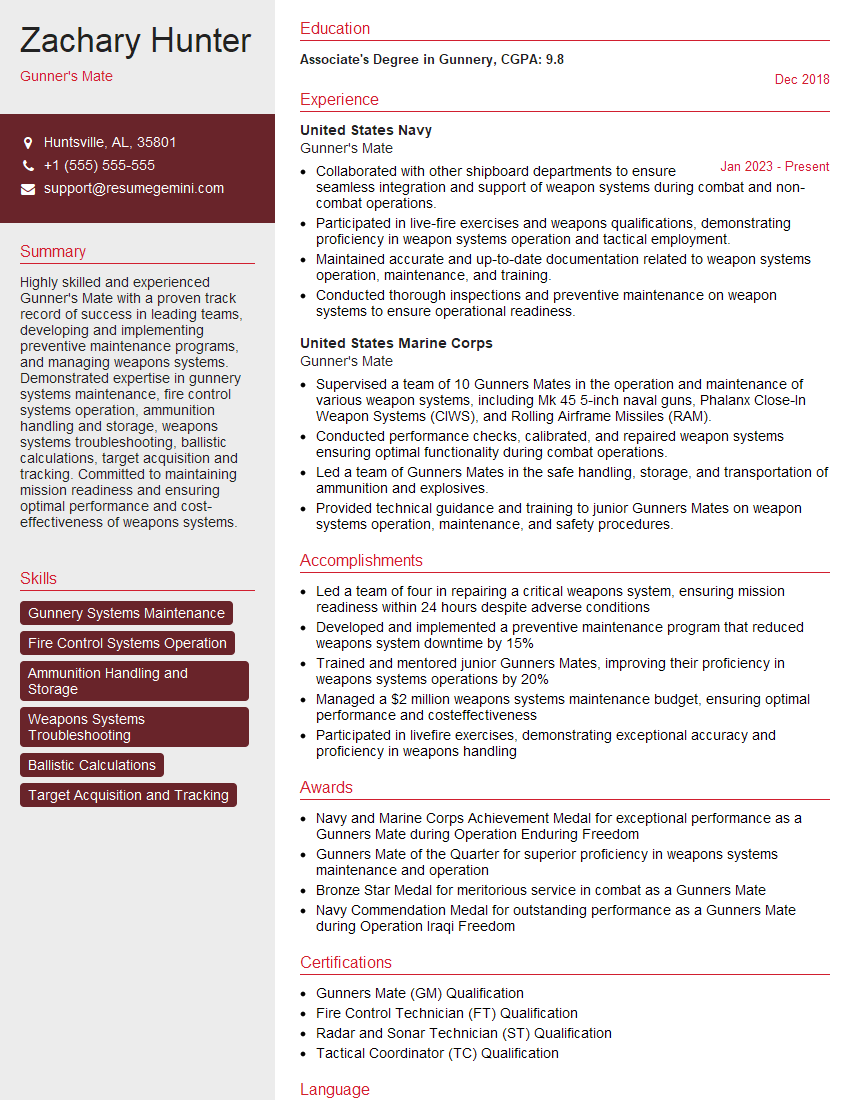
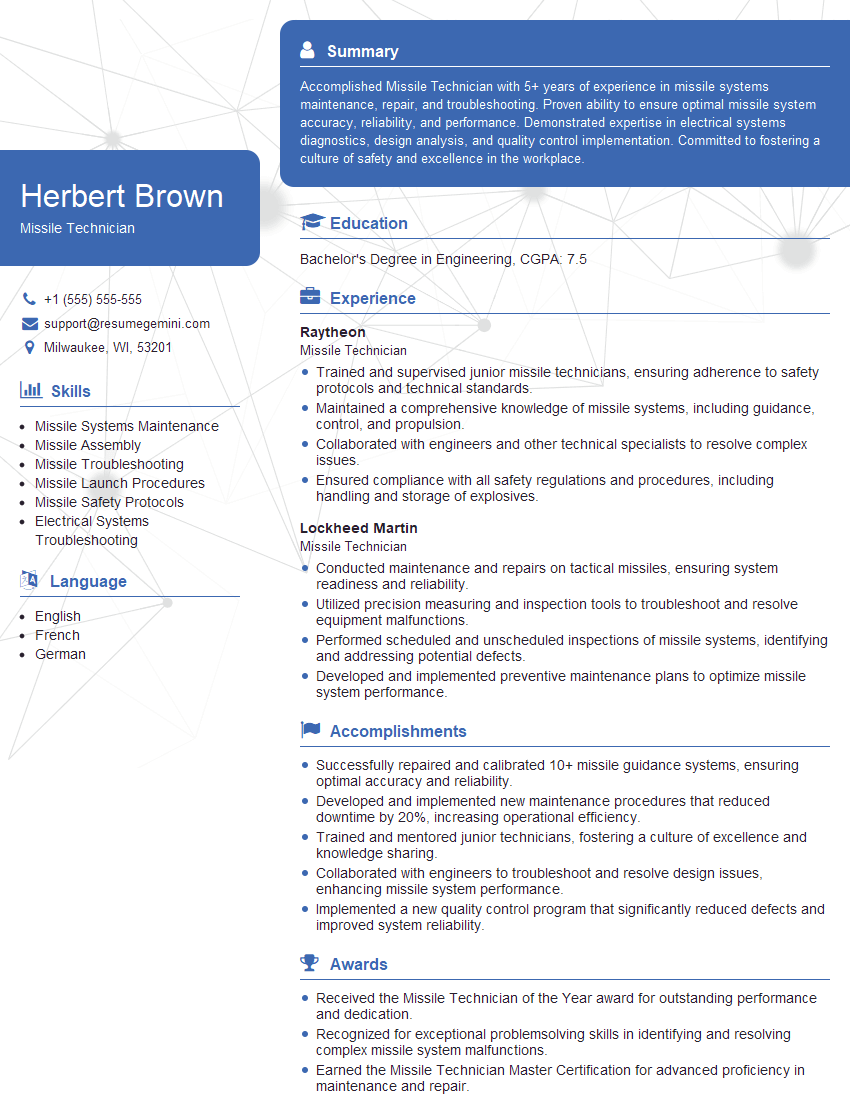
Mastering Shipboard Weapon System Maintenance opens doors to exciting and rewarding career opportunities within the maritime defense industry. A strong foundation in these skills demonstrates your commitment to excellence and ensures your readiness for the demanding challenges of this field. To significantly boost your job prospects, crafting an ATS-friendly resume is crucial. This ensures your application gets noticed by recruiters and hiring managers. ResumeGemini is a trusted resource that can help you build a professional and effective resume. They provide examples of resumes tailored to Shipboard Weapon System Maintenance, helping you showcase your skills and experience in the best possible light. Invest in your future; create a compelling resume that highlights your expertise.
Explore more articles
Users Rating of Our Blogs
Share Your Experience
We value your feedback! Please rate our content and share your thoughts (optional).
What Readers Say About Our Blog
Very informative content, great job.
good