Interviews are more than just a Q&A session—they’re a chance to prove your worth. This blog dives into essential CPR and First Aid for Animals interview questions and expert tips to help you align your answers with what hiring managers are looking for. Start preparing to shine!
Questions Asked in CPR and First Aid for Animals Interview
Q 1. Describe the steps involved in performing CPR on a small dog.
Performing CPR on a small dog requires a gentle yet firm approach. Remember, your primary goal is to restore circulation and breathing. First, check for responsiveness. If the dog is unresponsive, carefully place it on its side on a firm, flat surface. Next, check for a pulse – usually on the inside of the rear leg, near the thigh. If there’s no pulse and no breathing, begin CPR.
- Check the airway: Gently extend the neck and open the mouth, removing any visible obstructions.
- Initiate chest compressions: Place your hands on the dog’s chest, just behind the elbows. Use one or two fingers for a very small dog, or your palm for a larger small breed. Compress the chest at a rate of 100-120 compressions per minute, aiming for a depth of about 1/3 of the chest’s diameter. For every 30 compressions, give two rescue breaths by gently sealing the dog’s mouth and nose and blowing air for 1-2 seconds. Be careful not to overinflate the lungs.
- Continue CPR: Continue the cycles of 30 compressions and two breaths until the dog shows signs of life (breathing, coughing, or moving), professional veterinary help arrives, or you are too exhausted to continue. Remember to assess the airway regularly for obstruction.
Example: Imagine you find a small chihuahua unresponsive. After confirming it’s not breathing, you’d use two fingers for chest compressions. The breaths would be very gentle and short. Always assess the dog for injury, as CPR should only be performed on an animal that is not breathing and has no pulse.
Q 2. Explain the differences between administering CPR to a cat versus a large dog.
The primary difference between administering CPR to a cat and a large dog lies in size and technique. Cats are much smaller and more delicate, requiring a modified approach.
- Size and Positioning: For a large dog, you’ll use your hands differently than with a cat. With a large dog, you might use both hands for chest compressions, while a cat would require one or two fingers only. Cats are also prone to more injury due to their delicate bone structure, so extra care is vital. The positioning remains similar, a flat surface with the animal on its side.
- Compression Depth and Rate: The rate remains consistent (100-120 compressions per minute), but the depth needs adjustment. In a large dog, the compression depth should be about 1/3 of the chest depth, but much shallower for a cat. The force needed varies significantly.
- Rescue Breaths: The technique is similar (sealing the nose and mouth and gently blowing), but the volume of air delivered should be smaller for a cat to avoid lung damage.
Example: A Great Dane requires firm compressions with both hands, while a kitten requires gentler compressions with just one or two fingers. Overzealous compressions could easily damage a cat’s ribs and organs.
Q 3. How would you assess the airway of an unconscious animal?
Assessing the airway of an unconscious animal is crucial in determining the cause of respiratory distress and to perform effective CPR and First Aid. The method involves the following steps:
- Check for responsiveness: Gently shake or call the animal’s name. If there is no response, proceed to the next step.
- Open the airway: Carefully extend the animal’s neck and tilt the head slightly back to open the airway. Avoid unnecessary neck movement in suspected spinal injuries.
- Inspect the mouth and throat: Examine the mouth and throat for any foreign bodies such as vomit, food, or toys, that may be obstructing the airway. If present, gently remove them with your fingers or forceps if available. If you see something, but cannot remove it easily, carefully try to maneuver the object out with a hooking motion. It may be best to skip this step if the object is lodged deeply as it may become more embedded.
- Check for breathing: Look, listen and feel for breathing. Look for chest movement, listen for breath sounds, and feel for airflow against your cheek close to the animal’s nose and mouth.
Example: If you find a dog lying still with its mouth open and something stuck in its throat, carefully removing the obstruction is a high priority before attempting rescue breaths. If unsure about removal, prioritize starting chest compressions while awaiting veterinary support.
Q 4. What are the signs of shock in animals, and how would you treat it?
Shock is a life-threatening condition where the body’s organs aren’t getting enough blood flow. In animals, signs of shock can be subtle and vary, but common indicators include:
- Rapid, weak pulse:
- Pale gums:
- Rapid breathing:
- Cold extremities:
- Weakness or collapse:
- Lethargy:
- Dilated pupils:
Treatment: Immediate veterinary attention is crucial. However, while waiting for help, you can take steps to stabilize the animal:
- Keep the animal warm: Use blankets to insulate it from the cold.
- Keep the animal quiet and still: Minimize stress and movement.
- Elevate the rear legs slightly (if no spinal injury is suspected): This improves blood flow to the vital organs.
- Do not give food or water: This could cause further complications.
Example: A dog hit by a car may show pale gums, rapid breathing, and weakness. You would prioritize keeping it warm, minimizing movement and contacting a vet immediately.
Q 5. Explain how to control external bleeding in an animal.
Controlling external bleeding in an animal involves applying direct pressure to the wound to stop the bleeding. Here’s the process:
- Assess the situation: Check for other injuries and ensure your safety.
- Apply direct pressure: Use a clean cloth or bandage to apply firm, direct pressure to the wound. Do not remove the cloth even if it becomes soaked with blood; add more layers on top.
- Elevate the injured limb (if possible): Elevating the injured area helps reduce blood flow to the wound.
- Monitor for signs of shock: Be vigilant for signs of shock, such as weakness, pale gums, rapid breathing, or a weak pulse.
- Seek veterinary attention: Transport the animal to a veterinary clinic as soon as possible. Severe bleeding can quickly lead to shock and death.
Example: A dog with a deep laceration on its leg would benefit from firm pressure applied directly to the wound with a clean cloth, elevated leg, and immediate transportation to a veterinary clinic.
Q 6. How do you determine if an animal needs artificial respiration?
An animal needs artificial respiration if it’s not breathing or is breathing inadequately (very shallow or gasping). You determine this by assessing its breathing:
- Look: Observe the chest for movement. Look for any visible sign of breathing such as rise and fall of the chest or abdomen.
- Listen: Place your ear close to the animal’s nose and mouth to listen for breath sounds.
- Feel: Feel for the airflow on your cheek close to the animal’s nose and mouth.
If there’s no breathing, or breathing is very shallow and ineffective, artificial respiration (rescue breaths) is necessary, often in conjunction with chest compressions (CPR).
Example: A cat that is unresponsive and not showing any chest movement clearly needs artificial respiration as part of CPR. A dog gasping for air may also benefit from rescue breaths.
Q 7. What are the common causes of respiratory distress in animals?
Respiratory distress in animals can have various causes. Some common ones include:
- Foreign body obstruction: Objects lodged in the airway.
- Pneumonia:
- Asthma:
- Heart failure:
- Anaphylaxis (severe allergic reaction):
- Trauma to the chest:
- Heatstroke:
- Toxic ingestion:
Recognizing the signs is crucial: Symptoms vary, but common ones are labored breathing, rapid breathing (tachypnea), coughing, wheezing, bluish discoloration of the gums (cyanosis), and open-mouth breathing. Immediate veterinary care is essential for accurate diagnosis and treatment.
Example: A dog struggling to breathe and making wheezing sounds may have asthma, while a dog that has collapsed after eating something toxic may have developed respiratory distress due to the ingestion.
Q 8. Describe the proper technique for bandaging a wound on a dog’s leg.
Bandaging a dog’s leg wound requires careful technique to ensure proper healing and prevent further injury. First, clean the wound gently with saline solution or clean water, removing any debris. Avoid scrubbing, as this can worsen the injury. Next, apply a sterile, non-stick dressing directly to the wound. This protects the wound from contamination.
For the bandage itself, you’ll want a clean, absorbent material like gauze. Start by placing a layer of padding around the wound, this will provide cushioning and prevent the bandage from sticking to the wound. Secure the padding with a few strips of adhesive tape, ensuring they are not too tight, restricting blood flow. Continue wrapping the bandage, overlapping each layer by about half the width, working from the lower leg towards the upper leg, to prevent slippage. You want it snug but not too tight; you should be able to fit two fingers under the bandage.
Important Considerations: Always monitor the bandage for excessive wetness, swelling, or odor, which could be signs of infection. If you see any of these, remove the bandage, clean the wound again, and reapply a fresh one. If the wound is deep, severely bleeding, or shows signs of infection like pus, seek veterinary attention immediately.
Q 9. How would you handle a cat with a suspected spinal injury?
Suspected spinal injuries in cats require utmost caution. Minimizing movement is crucial to prevent further damage. Do not attempt to lift or move the cat yourself; you risk causing irreparable harm. Instead, carefully use a stiff, flat surface like a piece of cardboard or a board to support the cat. If possible, create a makeshift stretcher using a blanket or towel and two people to carefully slide the cat onto it. Keep the cat’s head, neck, and spine in alignment as much as possible.
Once the cat is immobilized, contact your veterinarian or emergency animal hospital immediately. Explain the situation clearly and follow their instructions carefully. They may advise you on providing first aid until transport is possible, like keeping the cat warm and comfortable. Remember, even seemingly minor movements can exacerbate a spinal injury, so minimal handling is paramount.
Q 10. What are the signs of heatstroke in animals, and what first aid measures should be taken?
Heatstroke in animals is a life-threatening emergency. Signs include excessive panting, rapid heartbeat, drooling, vomiting, staggering, collapse, and even seizures. The animal’s body temperature will be significantly elevated. Think of it like a human suffering from a heat stroke – the body’s cooling mechanisms have failed.
Immediate first aid is critical. Move the animal to a cool, shaded area. Apply cool (not ice cold) water to their body, especially the paws, armpits, and groin. Use fans to circulate air and accelerate cooling. Offer small amounts of cool water to drink if the animal is conscious and able to swallow. Do not submerge the animal in cold water. This can cause shock.
Once the animal’s temperature begins to drop, seek veterinary attention immediately. Heatstroke can cause organ damage if not treated promptly.
Q 11. Explain how to safely restrain an injured animal.
Restraining an injured animal requires a calm and controlled approach. Your priority is to minimize the animal’s pain and further injury while ensuring your own safety. Never approach a frightened or injured animal directly from the front. Instead, approach from the side, speaking softly and calmly.
If the animal is small, you may be able to gently wrap it in a towel, holding it securely but gently. For larger animals, a towel or blanket can be used to cover them, limiting their movement while also providing comfort. If the animal needs to be moved, consider using a stretcher or a stiff board. If you are unable to safely restrain the animal yourself, seek assistance from someone else, or contact your local animal control or emergency services. Remember, your safety is also paramount; if you feel the situation is unsafe, do not attempt to restrain the animal alone.
Q 12. How would you administer oral medication to a reluctant cat?
Giving oral medication to a reluctant cat can be challenging but is often necessary. First, carefully assess the cat’s temperament and choose a safe and quiet location. Have a helper present to aid in restraint if necessary.
One effective method is to gently wrap the cat in a towel, leaving the head exposed. Gently hold the cat, ensuring the cat feels secure but isn’t stressed. Use a pill-pocket or a small amount of palatable food (tuna, for example, is often effective) to hide the pill. Offer this to the cat; often they will eat it without resistance. If that doesn’t work, you can use a pill gun (pilling device) or place the pill at the back of the throat, then gently stroke the cat’s throat to help them swallow.
Important Note: Never force the pill down the cat’s throat; this could lead to aspiration pneumonia. If you’re uncomfortable administering medication, consult your veterinarian or a veterinary technician for assistance.
Q 13. What are the symptoms of poisoning in animals, and what is your first response?
Symptoms of poisoning in animals vary greatly depending on the toxin ingested. However, common signs include vomiting, diarrhea, drooling, tremors, seizures, weakness, difficulty breathing, and changes in behavior such as lethargy or agitation. It’s critical to identify the potential source of poisoning, if possible – was there exposure to pesticides, medications, household cleaners, or something else?
Your first response is to contact your veterinarian or an animal poison control center immediately. Provide them with as much information as possible, including the animal’s species, weight, breed, age, what you suspect they ingested, and any symptoms observed. They will provide specific guidance, depending on the suspected toxin. Do not induce vomiting unless explicitly instructed to do so by a veterinarian or poison control; in some cases it can be harmful.
Q 14. How would you handle a snake bite in a dog?
A snake bite in a dog is a serious medical emergency. Keep the dog calm and minimize movement. Note the appearance of the snake if possible – this helps in determining the type of venom and necessary antivenom.
Do not attempt to suck out the venom. This is ineffective and can introduce more bacteria. Keep the bitten area still and below the heart to slow the spread of venom. Rinse the bite area gently with water. Transport the dog to the nearest veterinary emergency hospital immediately. Provide the veterinarian with any information you have about the snake. The veterinarian will provide appropriate treatment, possibly including antivenom.
Q 15. What are the signs of an allergic reaction in an animal?
Recognizing an allergic reaction in an animal can be crucial for prompt intervention. Symptoms can vary widely depending on the allergen and the animal’s sensitivity, but common signs include:
- Respiratory distress: This can range from mild coughing and sneezing to labored breathing, wheezing, and even difficulty breathing.
- Skin reactions: Hives (urticaria), swelling (angioedema), redness, and intense itching are frequent indicators. You might see them on the face, paws, or abdomen.
- Gastrointestinal upset: Vomiting, diarrhea, and abdominal pain can occur.
- Cardiovascular effects: In severe cases, a rapid heart rate, low blood pressure, and collapse are possible.
- Behavioral changes: Restlessness, anxiety, weakness, and collapse are also potential signs.
Example: A dog who suddenly starts vomiting, develops hives after eating a new treat, and is struggling to breathe is exhibiting classic signs of an allergic reaction. Immediate veterinary attention is necessary.
Career Expert Tips:
- Ace those interviews! Prepare effectively by reviewing the Top 50 Most Common Interview Questions on ResumeGemini.
- Navigate your job search with confidence! Explore a wide range of Career Tips on ResumeGemini. Learn about common challenges and recommendations to overcome them.
- Craft the perfect resume! Master the Art of Resume Writing with ResumeGemini’s guide. Showcase your unique qualifications and achievements effectively.
- Don’t miss out on holiday savings! Build your dream resume with ResumeGemini’s ATS optimized templates.
Q 16. What are the risks associated with performing CPR on an animal?
Performing CPR on an animal carries inherent risks, and it’s crucial to understand them before attempting it. These risks include:
- Rib fractures: Incorrect chest compression technique can easily fracture ribs, causing pain and potential further complications.
- Internal organ damage: Excessive force or improper hand placement can injure internal organs like the liver and spleen.
- Further injury to the animal: If the animal has an underlying injury, CPR might worsen the situation.
- Risk of transmission of zoonotic diseases: Always wear appropriate protective gear to minimize the risk of exposure to diseases that can be transmitted from animals to humans.
- Psychological stress for the animal and rescuer: CPR is a stressful procedure for both the animal and the person performing it.
Important Note: It’s best to get veterinary training before attempting animal CPR. Improper technique can do more harm than good.
Q 17. Describe different types of animal wounds and how to treat them.
Animal wounds vary widely in type and severity. Proper treatment depends on accurate assessment:
- Abrasions (scrapes): Superficial damage to the skin; clean gently with mild soap and water, apply antibiotic ointment, and cover with a clean bandage.
- Lacerations (cuts): Deeper wounds that may involve muscle or tissue; control bleeding with direct pressure, clean the wound thoroughly, and seek veterinary care for deeper wounds that may need stitches.
- Puncture wounds: Caused by objects penetrating the skin; these are particularly dangerous due to the risk of infection; seek veterinary attention immediately; do not attempt to clean or probe the wound.
- Avulsions (tears): Severe wounds where a piece of tissue is torn away; control bleeding immediately, cover the wound with a clean, moist dressing, and seek immediate veterinary care.
- Burns: Cool the burn under cool running water (avoid ice); cover with a sterile, non-adhesive dressing and seek veterinary care, particularly for larger or deeper burns.
Example: A cat with a deep laceration on its leg requires immediate veterinary attention to prevent infection and ensure proper healing. A simple scrape, however, can often be treated at home with cleaning and antiseptic ointment.
Q 18. What is the importance of proper documentation in animal first aid cases?
Proper documentation in animal first aid is crucial for several reasons:
- Continuity of care: Detailed records allow subsequent veterinary professionals to understand the history of the animal’s injury and treatment.
- Legal protection: Accurate records protect you and the animal owner from liability in case of legal disputes.
- Improved treatment outcomes: Clear documentation helps track the animal’s progress and allows for appropriate adjustments in treatment strategies.
- Research and education: Data collected can be used to improve animal first aid protocols and practices.
Documentation should include the date, time, location, species of animal, a description of the injuries, first aid administered, the animal’s response, and any observations made. Consider using photos as well.
Q 19. How would you assess the level of consciousness in an animal?
Assessing an animal’s level of consciousness requires a systematic approach. We use a modified version of the human assessment known as the AVPU scale (Alert, Verbal, Pain, Unresponsive):
- Alert: The animal is responsive and aware of its surroundings.
- Verbal: The animal responds to sound or voice.
- Pain: The animal responds only to painful stimuli (such as a pinch).
- Unresponsive: The animal shows no response to any stimuli.
Example: A dog that is awake, looks at you, and wags its tail when you call its name is alert. A cat that only moves when you gently pinch its paw is responding to pain.
Q 20. What safety measures should be taken when providing first aid to an animal?
Safety is paramount when providing first aid to any animal. Remember these precautions:
- Approach cautiously: Always approach an injured animal slowly and calmly. A frightened or injured animal may bite or scratch in self-defense.
- Use appropriate restraint: If necessary, use a towel or muzzle to prevent bites, but avoid causing further injury or stress.
- Wear protective gear: Gloves, eye protection, and even a mask may be necessary depending on the situation (especially if there’s a risk of bloodborne pathogens or a bite).
- Assess the scene: Before approaching, make sure the environment is safe for both you and the animal.
- Seek veterinary assistance: Your role is primarily to provide immediate stabilization; always seek professional veterinary care as soon as possible.
Example: Before attending to a dog injured in a car accident, assess the scene for further hazards like traffic and approach the dog cautiously while using a towel to prevent a potential bite.
Q 21. Explain the difference between cardiopulmonary arrest and respiratory arrest.
Both cardiopulmonary arrest (CPA) and respiratory arrest are life-threatening emergencies but involve different aspects of the body’s functioning:
- Respiratory arrest: This refers to the complete cessation of breathing. The heart may still be beating, but the animal is not getting oxygen. Signs include the absence of chest movements, no detectable heartbeat, and cyanosis (blue discoloration of the gums).
- Cardiopulmonary arrest (CPA): This is a complete failure of both the heart and lungs. The heart stops beating, and no breathing occurs. It’s the most severe form of respiratory arrest.
In essence: Respiratory arrest is the lack of breathing, while cardiopulmonary arrest is the lack of both breathing and heartbeat. CPA is a more serious condition than respiratory arrest because oxygen is not delivered to the body’s tissues.
Q 22. What is the role of oxygen in CPR?
Oxygen is absolutely crucial in CPR because it’s the fuel for cellular respiration – the process that provides energy to the body’s cells. When an animal’s heart stops, oxygen delivery to the tissues ceases, leading to rapid cell death. CPR aims to restore circulation, getting oxygenated blood flowing to the vital organs like the brain and heart, buying precious time until professional veterinary help arrives. Think of it like this: the heart is a pump, and oxygen is the fuel it needs to pump effectively. Without fuel, the pump fails.
During CPR, providing rescue breaths (if indicated by the animal’s condition and your training) is one way we supply oxygen. Effective chest compressions help to circulate the remaining oxygenated blood, maximizing the limited oxygen supply until more oxygen can be delivered by the animal’s own heart.
Q 23. Discuss the limitations of first aid for animals; when is veterinary care essential?
First aid for animals is meant to stabilize the animal until professional veterinary care can be obtained. It’s crucial to understand its limitations. First aid addresses immediate threats, like controlling bleeding or opening an airway, but it cannot diagnose or treat underlying conditions. For instance, you can apply a bandage to a wound, but you can’t determine if there’s internal bleeding or infection.
Veterinary care is essential when:
- The animal is unconscious or unresponsive.
- There’s severe bleeding that you can’t control.
- The animal has significant trauma (e.g., broken bones, severe burns).
- There are signs of poisoning or ingestion of toxins.
- The animal’s breathing or heart rate is abnormal and doesn’t improve with first aid.
- You’re unsure about the animal’s condition or the appropriate first aid measures.
Always remember, first aid buys time. Prompt veterinary care offers the best chance of a positive outcome.
Q 24. How do you handle a situation where an animal is aggressive or frightened?
Handling an aggressive or frightened animal requires utmost caution and prioritizes safety for both the animal and yourself. Never attempt to approach a potentially dangerous animal alone. If possible, create distance and secure the area to prevent further injury.
Steps to take:
- Assess the situation: Determine the level of aggression or fear. What triggered it?
- Call for help: Contact animal control, a veterinarian, or a qualified animal handler.
- Maintain distance: Do not attempt to restrain or touch the animal unless absolutely necessary and you have the proper training and equipment.
- Use calming techniques: Speak softly, avoid sudden movements, and offer a slow and measured approach (if safe to do so).
- If you must intervene: Use a towel or blanket to create a barrier between yourself and the animal.
- Use appropriate restraint: If restraint is absolutely necessary, ensure you are adequately trained and have assistance. Improper restraint can lead to further injury to both the animal and the handler.
Remember, your safety is paramount. If in doubt, always prioritize professional assistance.
Q 25. How would you approach providing first aid to a large animal (e.g., horse)?
Providing first aid to a large animal like a horse presents unique challenges due to their size and strength. Safety is paramount. You’ll need assistance, potentially specialized equipment (e.g., large animal bandages), and a calm, controlled approach.
Key Considerations:
- Safety First: Ensure a safe environment with sufficient space. Assess for any potential dangers to you and others.
- Teamwork: You will almost certainly need help. Two or more people are essential for proper restraint and first aid administration.
- Assess and Stabilize: Quickly assess the situation, check for immediate life threats such as severe bleeding, airway obstruction, or profound shock.
- Restraint: Gently but firmly restrain the animal, preferably with well-trained and experienced assistance, using techniques appropriate for the situation.
- Controlled Administration: Perform first aid calmly and efficiently, avoiding any movements that may frighten or agitate the animal.
- Veterinary Care: Large animal veterinary care is crucial. Contact your local equine veterinarian or emergency services immediately.
Providing first aid to a large animal often requires a coordinated effort. Prioritize safety, communicate clearly with your team, and focus on stabilizing the animal until professional veterinary help arrives.
Q 26. Describe the different types of bandages and their appropriate use.
Several bandage types are used in animal first aid, each suited to a specific purpose:
- Robert Jones Bandage: A thick, supportive bandage used for immobilizing limbs. It’s a good choice for sprains, fractures, and post-surgery support. It’s a bulky bandage, applying many layers to provide support.
- Modified Robert Jones Bandage: Similar to the Robert Jones but utilizes less material and is lighter and less restrictive; ideal for smaller animals or wounds where extreme immobilization isn’t necessary.
- Compression Bandages: Used to control bleeding and reduce swelling. Elastic bandages are typically used for this. They must be applied correctly to avoid cutting off circulation.
- Adhesive Bandages: Smaller, adhesive bandages are great for minor wounds or abrasions. They provide protection and help to keep the wound clean.
- Splints: Rigid materials, like wood or plastic, used to immobilize a limb in case of suspected fractures.
The choice of bandage depends on the specific injury and the animal’s size and temperament. Proper application is essential to avoid further harm.
Q 27. What are some common mistakes made when performing animal CPR?
Common mistakes in animal CPR include:
- Incorrect hand placement for chest compressions: Compressions must be performed over the widest part of the chest, focusing on proper depth and rate, adapting to the size of the animal. Applying compressions too high or too low is ineffective.
- Insufficient compression depth: Compressions must be deep enough to effectively pump blood, yet gentle enough to avoid causing further damage. The exact depth varies depending on the size and species of the animal.
- Interruptions in compressions: Maintaining continuous, rhythmic compressions without pausing is essential to ensure adequate blood flow.
- Improper rescue breaths (if indicated): Too much or too little air can be harmful. The correct technique and volume must be practiced and understood.
- Failure to assess the animal before beginning CPR: It’s important to ensure the animal is truly in cardiac arrest before initiating CPR. Checking for a pulse and breathing is crucial.
- Ignoring safety precautions: Always prioritize personal safety when working with a distressed or injured animal.
Proper training and practice are key to avoiding these errors. Familiarizing yourself with species-specific CPR techniques is highly recommended.
Q 28. What continuing education is crucial for maintaining proficiency in animal CPR and first aid?
Maintaining proficiency in animal CPR and first aid requires ongoing commitment to continuing education. The techniques and best practices evolve, and regular updates are crucial.
Crucial aspects of continuing education include:
- Regular refresher courses: Participating in periodic CPR and first aid certification courses helps to maintain skills and knowledge and learn updates to techniques.
- Advanced training: Consider specialized training in advanced animal first aid or emergency veterinary care techniques for specific species or situations.
- Reading professional journals and publications: Staying informed about the latest research, guidelines, and best practices in veterinary medicine and emergency care is vital for any professional in this field.
- Attending workshops and conferences: Professional development through workshops and conferences offers opportunities to network with other professionals, learn new skills, and address any knowledge gaps.
- Practicing regularly: Skills degrade without practice. Regular practice scenarios (with appropriate models and supervision) are crucial to maintaining proficiency.
Continuous learning is the cornerstone of providing the best possible care to animals in need.
Key Topics to Learn for CPR and First Aid for Animals Interview
- Recognizing Emergency Situations: Understanding the signs of distress in various animal species (dogs, cats, birds, etc.) and prioritizing immediate actions.
- Assessing the Animal: Performing a quick yet thorough assessment to identify injuries, level of consciousness, and breathing difficulties. This includes checking for pulse and airway obstructions.
- CPR Techniques: Mastering the proper techniques for performing CPR on different sized animals, adapting your approach based on species and size.
- Airway Management: Understanding how to clear an animal’s airway of obstructions and maintain a patent airway. This includes techniques for both conscious and unconscious animals.
- Wound Care and Bleeding Control: Knowing how to assess, clean, and dress wounds, as well as effectively control bleeding using appropriate methods.
- Shock Management: Recognizing the signs of shock and implementing appropriate treatment strategies to stabilize the animal’s condition.
- Bandaging and Immobilization: Applying proper bandaging techniques to support injured limbs and minimize further damage. Understanding basic splinting techniques.
- Post-Emergency Care: Knowing the importance of monitoring the animal’s vital signs after administering first aid and understanding when professional veterinary care is crucial.
- Legal and Ethical Considerations: Understanding the legal implications of administering first aid to animals and acting within ethical guidelines.
- Species-Specific Considerations: Recognizing the unique first aid needs of different animal species, considering their anatomy and physiology.
Next Steps
Mastering CPR and First Aid for Animals significantly enhances your career prospects in veterinary care, animal rescue, and related fields. A strong understanding of these skills demonstrates your commitment to animal welfare and your preparedness for handling critical situations. To increase your chances of landing your dream role, focus on crafting an ATS-friendly resume that highlights your expertise effectively. ResumeGemini is a trusted resource to help you build a professional resume tailored to your skills and experience. We provide examples of resumes specifically tailored for candidates with CPR and First Aid for Animals certifications, making your job search significantly easier. Take the next step toward your career goals and build a winning resume today!
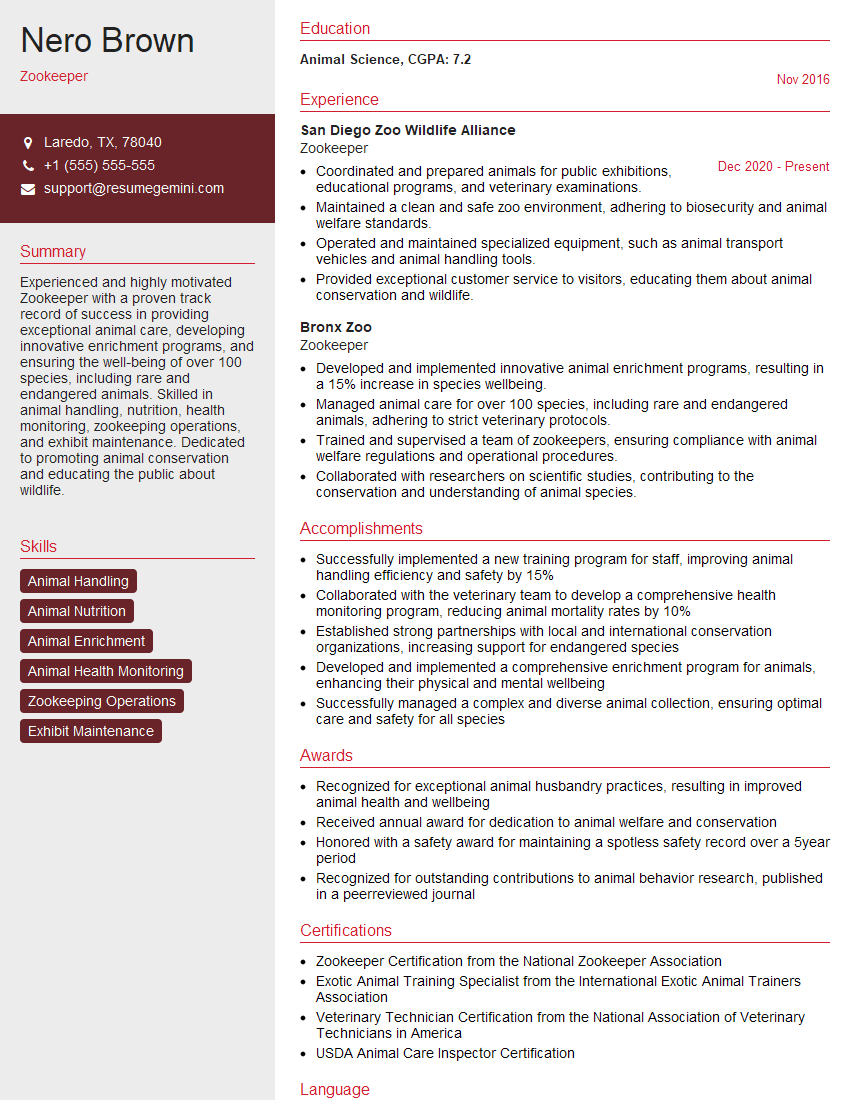
Zookeeper Resume Sample
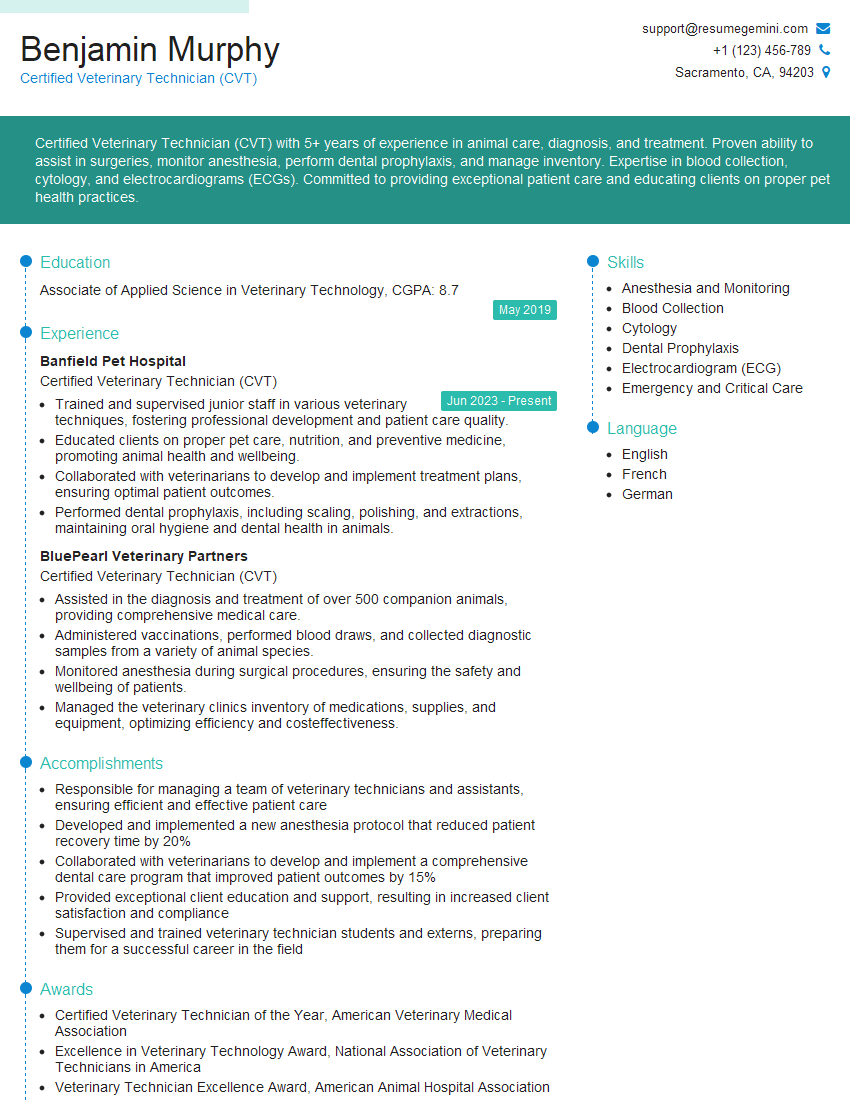
Certified Veterinary Technician (CVT) Resume Sample
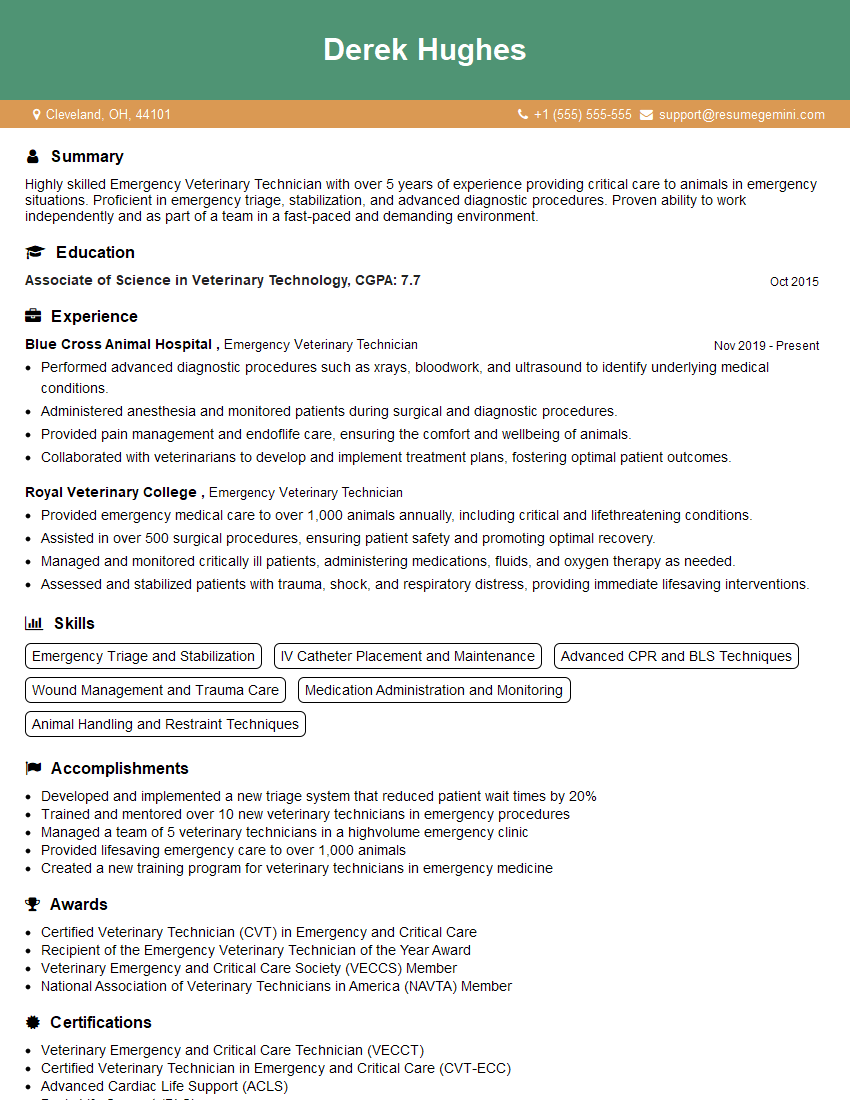
Emergency Veterinary Technician Resume Sample

Licensed Veterinary Technician (LVT) Resume Sample

Veterinary Assistant Resume Sample
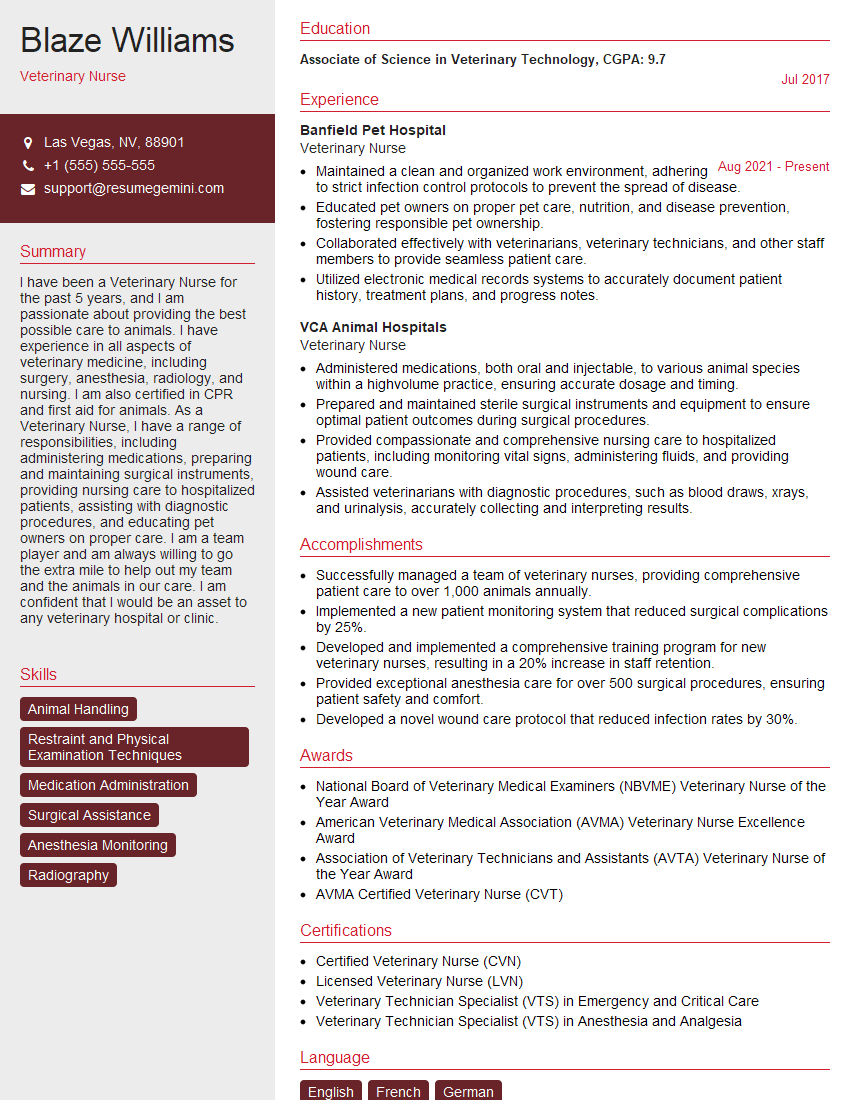
Veterinary Nurse Resume Sample
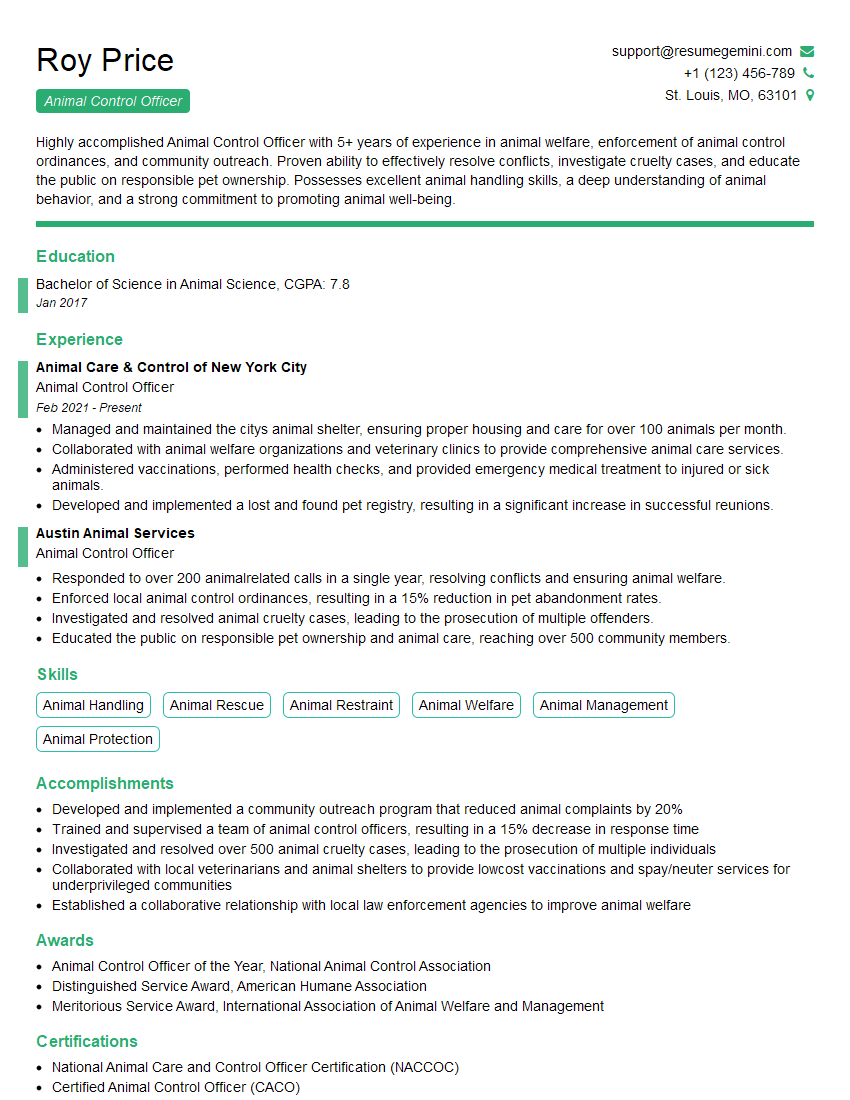
Animal Control Officer Resume Sample
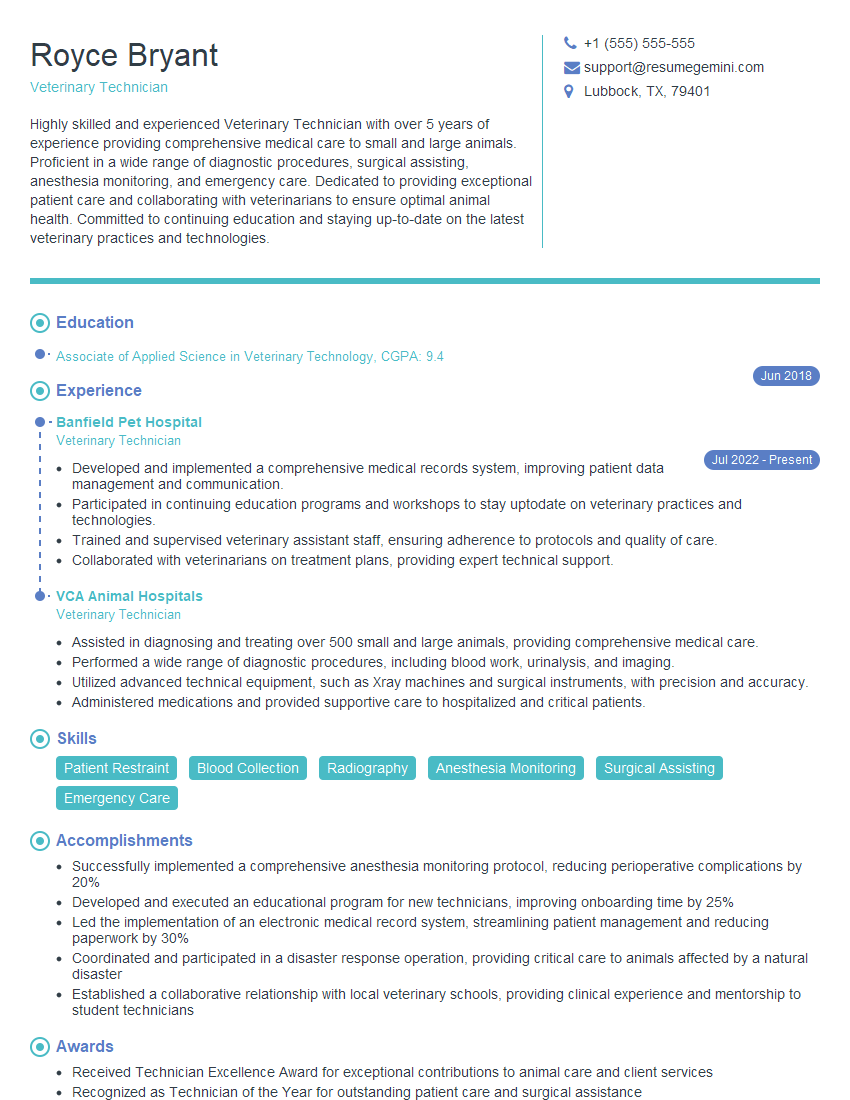
Veterinary Technician Resume Sample

Wildlife Rehabilitator Resume Sample
Explore more articles
Users Rating of Our Blogs
Share Your Experience
We value your feedback! Please rate our content and share your thoughts (optional).
What Readers Say About Our Blog
Very informative content, great job.
good