Preparation is the key to success in any interview. In this post, we’ll explore crucial Crane Assembly and Dismantling interview questions and equip you with strategies to craft impactful answers. Whether you’re a beginner or a pro, these tips will elevate your preparation.
Questions Asked in Crane Assembly and Dismantling Interview
Q 1. Explain the different types of crane assemblies.
Crane assembly varies depending on the crane type. Generally, we categorize them into:
- Tower Cranes: These are assembled section by section, starting with the base and gradually adding sections to reach the desired height. The jib (horizontal arm) and hoisting mechanism are then attached. This is a complex process often involving specialized lifting equipment and meticulous planning.
- Mobile Cranes (e.g., crawler cranes, truck cranes): Assembly for these is usually simpler, focusing on connecting the boom sections, counterweights, and outriggers. However, ensuring proper counterweight distribution and outrigger setup is crucial for stability.
- Overhead Cranes: These are typically assembled in a workshop or factory setting. Components like the bridge, trolley, and hoist are pre-fabricated and then connected using bolts, pins, and other fasteners. Precise alignment is key to ensure smooth operation.
- Gantry Cranes: Similar to overhead cranes, Gantry cranes are assembled by connecting the gantry legs, bridge, and hoisting mechanism. They are often site-assembled but the components are usually pre-manufactured.
The specific assembly method depends on the crane’s design, size, and the site conditions. Each type requires a detailed assembly manual and adherence to strict safety procedures.
Q 2. Describe the process of crane dismantling.
Crane dismantling is essentially the reverse of assembly, but equally demanding in terms of safety and precision. The process generally follows these steps:
- Planning and Risk Assessment: A thorough risk assessment is conducted, outlining potential hazards and mitigation strategies. This includes weather conditions, access routes, and the presence of nearby obstructions.
- Disconnection and Securing: The hoisting mechanism, jib (if applicable), and other components are carefully disconnected. All parts are securely fastened or supported to prevent accidental movement during dismantling.
- Systematic Removal: Components are removed in a reverse order of assembly. Heavier sections are generally removed first, using suitable lifting equipment to manage the weight and avoid damaging other parts. This may involve using smaller cranes to assist in the removal of sections.
- Transportation and Storage: Once removed, components are safely transported and stored in designated areas. Proper labelling and inventory management are essential.
- Site Clearance: Once all components are removed, the site is thoroughly inspected for any leftover materials or potential hazards.
The entire process requires meticulous attention to detail and the same level of safety precautions as the assembly process. One mistake can have serious consequences.
Q 3. What safety regulations must be followed during crane assembly and dismantling?
Safety is paramount in crane assembly and dismantling. Regulations vary by location, but some common requirements include:
- Competent Personnel: Only trained and certified personnel should participate in assembly and dismantling operations.
- Site Safety Plans: Detailed plans outlining procedures, safety measures, and emergency response protocols must be in place.
- Permit-to-Work System: A formal permit system is often required, ensuring that all necessary checks and approvals are obtained before starting work.
- Equipment Inspections: Regular inspections of lifting equipment, rigging gear, and the crane itself are mandatory. Any defects must be rectified before work commences.
- Fall Protection: Adequate fall protection measures must be in place for personnel working at heights.
- Signaling and Communication: Clear communication protocols must be established to ensure safe and coordinated movement of equipment and personnel.
- Emergency Procedures: Emergency evacuation plans and procedures must be in place and communicated to all personnel.
- Adherence to Local and National Standards: Compliance with all relevant local and national safety regulations is crucial.
Ignoring these regulations can lead to accidents, injuries, and fatalities. It’s vital to prioritize safety at every stage of the process.
Q 4. How do you ensure the stability of a crane during assembly?
Ensuring crane stability during assembly is critical to prevent collapses. Key aspects include:
- Ground Conditions: The ground must be level, firm, and capable of supporting the crane’s weight. Soil analysis may be required for larger cranes.
- Foundation/Base: The crane’s base must be properly secured to the ground using appropriate methods (e.g., concrete bases, outriggers). This ensures even weight distribution and prevents tilting.
- Counterweights: Counterweights are strategically added to balance the crane’s load and maintain stability, especially when lifting heavy objects at a long reach.
- Guying (for tower cranes): Temporary guy wires are often used to provide additional support during assembly and to increase stability in certain wind conditions.
- Progressive Assembly: Sections are assembled gradually, ensuring stability at each stage. Improper sequencing can compromise stability.
- Regular Inspections: Throughout the assembly process, regular inspections are conducted to check for alignment, stability, and any signs of structural weakness.
For example, on a construction site, I once encountered soft ground near a riverbank. We had to reinforce the foundation using compacted gravel and additional concrete footings to ensure the crane’s stability. Neglecting this could have resulted in a catastrophic collapse.
Q 5. What are the critical components of a crane and how are they inspected?
Critical components of a crane and their inspection methods:
- Hoisting Mechanism: This includes the drum, brakes, gears, and motor. Inspections involve visual checks for wear and tear, lubrication checks, testing brake function, and load testing.
- Boom (jib): This is the main structural element. Inspections involve checking for cracks, dents, or deformation using visual inspection, ultrasonic testing, or magnetic particle testing.
- Slewing Mechanism: This allows the crane to rotate. Inspections include checking for smooth rotation, lubrication levels, and wear on bearings and gears.
- Counterweights: These ensure stability. Inspections involve verifying their weight, condition, and secure attachment to the crane.
- Outriggers (for mobile cranes): These provide additional stability. Inspections involve checking their deployment, locking mechanisms, and condition of the pads.
- Wire Ropes: These lift the loads. Inspections involve visual checks for broken wires, corrosion, and kinks. Regular testing is also important.
- Hydraulic System (if applicable): Regular inspection involves checking hydraulic fluid levels, leaks, hoses, and cylinders for damage.
Each component requires a specific inspection procedure, often detailed in the crane’s manufacturer’s manual. Non-destructive testing methods like ultrasonic testing are sometimes employed to detect internal flaws.
Q 6. Explain the importance of load charts and weight calculations.
Load charts and weight calculations are crucial for safe crane operation. Load charts provide information on the crane’s lifting capacity under different conditions (e.g., boom length, radius, and wind speed). Accurate weight calculations ensure the load doesn’t exceed the crane’s capacity, preventing overloading and potential collapses.
For example, the load chart might show a crane’s maximum capacity is 10 tons at a 10-meter radius. If the load weighs 12 tons, it exceeds the capacity, even if the boom is only partially extended. Using incorrect weight estimations or ignoring the load chart can lead to accidents. Weight calculations must account for the weight of the load, lifting equipment (hooks, slings, etc.), and any other attachments. This prevents overloading which can lead to catastrophic failure.
Q 7. How do you handle unexpected issues during crane assembly or dismantling?
Handling unexpected issues during crane assembly or dismantling requires a calm, systematic approach:
- Stop Work Immediately: Safety is the priority. If a problem arises, halt the operation immediately.
- Assess the Situation: Identify the problem and determine its severity. Is it a minor issue that can be easily resolved, or something more significant requiring additional resources?
- Consult Relevant Personnel: Seek guidance from experienced supervisors, engineers, or safety officers.
- Implement Corrective Actions: Once the cause of the problem is identified, develop and implement the necessary corrective actions.
- Document the Incident: Record the details of the issue, the corrective actions taken, and lessons learned for future operations.
- Resume Work Safely: Once the problem is resolved and all necessary safety checks are completed, work can resume.
For example, I once encountered a damaged wire rope during dismantling. The operation was immediately halted. The damaged rope was replaced with a certified one, and the lifting procedure was meticulously reviewed and revised before restarting.
Q 8. Describe your experience with different types of rigging equipment.
My experience with rigging equipment encompasses a wide range, from basic wire ropes and shackles to more complex systems like spreader beams, multiple-leg slings, and specialized lifting attachments. I’m proficient in selecting the appropriate equipment based on load capacity, weight distribution, and the specific characteristics of the lifted object. For instance, I’ve extensively used wire rope slings for their versatility and strength in various heavy lifting operations, while synthetic web slings proved ideal for delicate loads requiring protection against scratches or damage. I’ve also worked with master links, shackles, and various types of hooks, always ensuring they are inspected meticulously before each lift for signs of wear, damage, or deformation. My experience includes working with both manual and powered rigging tools, understanding their limitations and safe operating procedures.
- Wire Rope Slings: Excellent for heavy loads, but susceptible to damage from abrasion and crushing.
- Synthetic Web Slings: Stronger than their weight suggests and gentler on delicate loads, but susceptible to UV degradation.
- Chain Slings: Durable and resistant to abrasion, but can be heavy and prone to stretching over time.
- Spreader Beams: Distribute the load evenly across multiple lifting points, reducing stress on individual components.
Q 9. What are the signs of a damaged crane component?
Identifying damaged crane components requires a keen eye for detail and a thorough understanding of structural integrity. Signs of damage can vary, but common indicators include: visible cracks or fractures in the boom, jib, or other structural members; significant bending or deformation; excessive wear and tear on cables, hooks, or sheaves; signs of corrosion or rust; oil leaks indicating hydraulic system failure; unusual noises or vibrations during operation; and any noticeable play or looseness in moving parts. For example, a slight bend in a boom might seem insignificant, but it can drastically reduce its load-bearing capacity and become a critical safety hazard. Regular inspections, following manufacturer’s guidelines and utilizing appropriate inspection checklists, are crucial to catch potential problems early on.
Q 10. What are the different types of crane foundations and their applications?
Crane foundations are crucial for stability and safety. The type of foundation selected depends on several factors including the crane’s capacity, soil conditions, and environmental considerations. Common types include:
- Shallow Foundations: These include concrete footings or pads, suitable for smaller cranes on stable soil. They are relatively inexpensive and easy to construct.
- Deep Foundations: For larger cranes or unstable soil, deep foundations such as piles or caissons provide greater support. Piles are driven deep into the ground, while caissons are constructed in situ.
- Spread Footings: Used when a wide distribution of load is required, particularly across softer soils. These can be quite large and require significant excavation work.
The selection process typically involves a thorough geotechnical investigation to assess the soil’s bearing capacity. The design of the foundation must ensure that it can withstand the maximum loads and overturning moments generated by the crane during operation. I have personally overseen the construction of various foundations, adapting designs to meet site-specific conditions and regulatory requirements.
Q 11. How do you select the appropriate crane for a specific lifting task?
Selecting the appropriate crane is a critical decision impacting safety and efficiency. I use a systematic approach considering several key factors: the weight of the load; the distance the load needs to be lifted; the height to which the load needs to be lifted; the reach required; and the overall worksite conditions such as space constraints and ground stability. For example, a tower crane is ideal for high-rise construction, whereas a mobile crane is more suitable for shorter tasks requiring mobility. I also consider the crane’s capacity chart, ensuring it has sufficient lifting capacity for the heaviest load anticipated with a significant safety margin. Lastly, the environmental conditions such as wind speed and temperature should be factored into the decision making process. A detailed lift plan that considers these factors is a crucial component of the process.
Q 12. Explain your experience with different types of lifting slings.
My experience with lifting slings covers a broad range of materials and configurations. I’m familiar with the strengths and limitations of each type, ensuring proper selection for the task at hand. This includes:
- Wire Rope Slings: Durable and strong, but require regular inspection for fraying or kinking.
- Synthetic Web Slings: Excellent for protecting delicate surfaces, but susceptible to damage from sharp edges or chemicals.
- Chain Slings: Robust and resistant to abrasion, but can be heavy and prone to stretching.
Selecting the correct sling involves considering the load’s weight, shape, and any specific handling requirements. For instance, I’d use a multiple-leg sling for evenly distributing the weight of an unusually shaped object, reducing stress concentration. Regular inspection of slings for wear and tear is paramount, ensuring they are replaced or repaired as needed in accordance with manufacturer guidelines and relevant safety regulations.
Q 13. What are the common causes of crane accidents and how can they be prevented?
Crane accidents are often preventable with proper planning, training, and maintenance. Common causes include: inadequate load capacity planning resulting in overloading; improper rigging techniques leading to load instability; operator error such as exceeding operating limits or ignoring safety protocols; equipment malfunction due to lack of maintenance or improper repairs; environmental factors such as high winds; and insufficient communication among personnel. To prevent these accidents, we must emphasize rigorous training for crane operators, implement thorough pre-lift inspections of both the equipment and the lifting plan, enforce strict adherence to safety regulations, and establish a strong safety culture on site. Regular maintenance schedules coupled with documented inspection results and prompt repairs are critical to mitigating equipment failure.
Q 14. How do you ensure the proper lubrication and maintenance of crane components?
Proper lubrication and maintenance are crucial for extending the lifespan of crane components and ensuring safe operation. This involves adhering to the manufacturer’s recommended lubrication schedule and using the appropriate lubricants for each component. For example, hydraulic systems require specific types of oil, and moving parts like sheaves and bearings need regular greasing. In addition to lubrication, I implement a comprehensive maintenance program which includes: regular inspections for wear and tear; checking hydraulic fluid levels; testing safety systems; and promptly addressing any identified issues. This includes creating and following detailed maintenance logs to track the work undertaken. The maintenance schedule must follow manufacturer’s instructions and industry best practices, incorporating preventative maintenance and ensuring the crane remains compliant with all safety standards.
Q 15. Describe your experience with troubleshooting crane malfunctions.
Troubleshooting crane malfunctions requires a systematic approach combining practical experience with a deep understanding of mechanical and electrical systems. My approach starts with a thorough safety assessment – ensuring the area is secured and power is isolated if necessary. I then proceed with a methodical investigation, starting with the most obvious signs and working my way through potential causes. This might involve checking for loose bolts, worn cables, hydraulic leaks, or electrical faults. For instance, I once encountered a situation where a crane experienced intermittent hoisting failures. By carefully inspecting the electrical wiring and control system, we discovered a faulty limit switch causing the problem. Replacing the faulty switch resolved the issue, demonstrating the importance of meticulous inspection and understanding of electrical components.
Often, troubleshooting involves using diagnostic tools such as multimeters, pressure gauges, and specialized crane diagnostic equipment. I’m proficient in using these tools to pinpoint the exact cause of a malfunction. Once the problem is identified, I ensure all repairs are done according to manufacturer specifications and safety regulations, followed by rigorous testing before returning the crane to service. Safety is paramount, and documentation of the entire troubleshooting process is essential for future reference and preventative maintenance.
Career Expert Tips:
- Ace those interviews! Prepare effectively by reviewing the Top 50 Most Common Interview Questions on ResumeGemini.
- Navigate your job search with confidence! Explore a wide range of Career Tips on ResumeGemini. Learn about common challenges and recommendations to overcome them.
- Craft the perfect resume! Master the Art of Resume Writing with ResumeGemini’s guide. Showcase your unique qualifications and achievements effectively.
- Don’t miss out on holiday savings! Build your dream resume with ResumeGemini’s ATS optimized templates.
Q 16. What are your preferred methods for documenting crane assembly and dismantling procedures?
My preferred method for documenting crane assembly and dismantling procedures involves a combination of visual aids and detailed written instructions. I believe in leveraging technology to improve efficiency and accuracy. I utilize digital photography and videography extensively to capture each step of the process. These visuals are then incorporated into comprehensive digital documentation, often utilizing software like AutoCAD for detailed diagrams and assembly instructions. These diagrams clearly show component locations, assembly sequences, and crucial torque specifications. Written procedures accompany the visuals, outlining all steps in clear, concise language and include safety precautions at each stage. The inclusion of checklists helps ensure no steps are missed.
For instance, when assembling a large tower crane, we create detailed 3D models, and time-lapse videos help verify that the assembly matches the plans. Having multiple forms of documentation enhances understanding for the entire team, minimizes errors and improves safety. This comprehensive approach is crucial in ensuring that procedures can be followed accurately by other technicians even if the original team is unavailable.
Q 17. How do you ensure compliance with OSHA or relevant safety regulations?
Ensuring compliance with OSHA (or equivalent) safety regulations is a non-negotiable aspect of my work. This begins with a thorough understanding of all applicable regulations, including those specific to crane operation, assembly, and dismantling. I ensure all personnel involved in the operations are properly trained and certified. This includes having the necessary certifications like OSHA 30 and any crane-specific qualifications, and verifying their competence through practical assessments. Before any operation commences, we conduct a comprehensive job safety analysis (JSA), identifying potential hazards and developing strategies for mitigation. This JSA is carefully reviewed and approved by the relevant safety officers before work begins.
We maintain detailed records of inspections, certifications, and training, readily available for audits. Throughout the entire process, we strictly adhere to lock-out/tag-out procedures when working on energized equipment. Regular safety meetings and toolbox talks are integral to maintaining safety awareness among the team. We continuously reinforce the importance of following safety protocols. A strong safety culture, built on proactive measures and clear communication, is fundamental to preventing accidents.
Q 18. Explain your experience working with different types of lifting techniques.
My experience encompasses a wide range of lifting techniques, including but not limited to:
- Conventional Lifting: Using standard crane hooks and slings for general lifting operations.
- Specialized Lifting: Employing spreader beams, vacuum lifters, and magnetic lifters for specific load configurations and materials.
- Heavy Lift Techniques: Planning and executing lifts of exceptionally large and heavy objects, requiring intricate rigging and multiple cranes.
- Critical Lift Planning: This involves considering the center of gravity, load stability, wind conditions and other variables to ensure safe and efficient lifting.
For example, in one project we had to lift a massive transformer using a multi-crane lift, requiring precise coordination and detailed calculations to ensure the transformer’s stability during the move. The selection of appropriate lifting techniques depends entirely on the load characteristics, environmental conditions, and available equipment. Incorrect techniques can lead to accidents; hence careful planning and execution are paramount.
Q 19. Describe your experience with pre-lift planning and risk assessment.
Pre-lift planning and risk assessment are critical steps in any crane operation. It begins with a thorough site survey to identify potential hazards such as overhead obstructions, ground conditions, and nearby utilities. The next step involves detailed load calculations to determine the appropriate crane capacity and lifting equipment. This includes considering the weight of the load, its center of gravity, and any additional stresses from the rigging.
We then develop a detailed lift plan, including a step-by-step sequence of operations, designation of personnel responsibilities, and emergency procedures. This plan always includes a thorough risk assessment, identifying potential hazards and assigning risk levels. Mitigation strategies are developed for each identified risk, including the use of safety equipment and procedures to minimize the likelihood of accidents. This meticulous planning approach helps ensure a safe and efficient lifting operation. For instance, we recently conducted a pre-lift plan for installing a large industrial boiler, which involved analyzing potential wind loads and ground bearing capacity to ensure stability and prevent accidents.
Q 20. How do you communicate effectively with a crane operator during lifting operations?
Effective communication with the crane operator during lifting operations is crucial for safety and efficiency. We use a standardized hand signal system, but more importantly, we maintain clear and concise verbal communication throughout the lift. The pre-lift briefing is a key part of this communication, where we review the lift plan, the operator’s responsibilities and emergency procedures. During the lift, we use clear, unambiguous instructions, ensuring the operator understands our instructions perfectly. We avoid using jargon and maintain constant visual contact. If using a radio, we verify that communications are clear and that the operator acknowledges each instruction. I also encourage open communication; the crane operator is actively encouraged to report any concerns they may have at any time during the operation.
For example, if there’s a sudden change in wind conditions, the operator immediately communicates it and we respond by adjusting our strategy accordingly. Open and constant communication ensures everyone is on the same page and enhances the safety and efficiency of the entire process.
Q 21. Describe your experience with using specialized tools and equipment for crane assembly and dismantling.
My experience involves the use of a variety of specialized tools and equipment. This includes:
- Rigging Hardware: Various types of slings, shackles, hooks, and wire ropes, each selected based on the load characteristics and lift requirements.
- Lifting Beams and Spreader Beams: Used to distribute the load across multiple lifting points, improving stability and safety.
- Hydraulic Jacks and Load Cells: To assist in precise load positioning and monitoring during complex lifts.
- Crane Maintenance Tools: Specialized tools for inspecting, maintaining, and repairing cranes, including torque wrenches, cable testing equipment, and hydraulic tools.
- Lifting Accessories: A range of accessories, such as load indicators, lifting magnets, and vacuum lifters, which accommodate unique load types and handling situations.
Using these tools correctly is vital for safe and efficient operations. For example, selecting an incorrect sling or misjudging the required load capacity of a shackle can compromise the safety of the entire lift. Regular maintenance and inspections of these tools are also paramount to ensuring their proper functioning.
Q 22. How do you manage and control the assembly site to ensure safety and efficiency?
Managing a crane assembly site for safety and efficiency requires a meticulous approach. It begins with a comprehensive site survey to identify potential hazards – things like uneven terrain, overhead obstructions, proximity to power lines, and the presence of other equipment or personnel. Next, a detailed site plan is created, outlining designated work zones, material staging areas, access routes, and emergency escape paths. This plan is communicated to all team members.
We implement strict safety protocols, including mandatory Personal Protective Equipment (PPE) such as hard hats, safety glasses, high-visibility clothing, and fall protection harnesses. Regular safety meetings are conducted to reinforce procedures and address any concerns. We utilize traffic control measures such as signage, barricades, and flag persons to manage pedestrian and vehicle movements around the crane. Furthermore, the use of technology such as lifting plans and load charts, ensures accuracy and minimizes the risk of accidents. For instance, on a recent project assembling a large tower crane, we implemented a colour-coded system to identify different work zones and assigned specific supervisors to each area. This ensured everyone understood their responsibilities and contributed to a smooth and safe operation.
Q 23. What are your problem-solving strategies when faced with unexpected challenges during a crane operation?
Unexpected challenges are inevitable in crane operations. My problem-solving strategy follows a systematic approach. First, I immediately halt operations and assess the situation, prioritizing safety. This often involves determining the nature of the problem, its potential impact, and the resources available. Then, I convene a team meeting to brainstorm solutions, drawing on the collective experience of the crew. We leverage our knowledge of crane mechanics, rigging techniques, and safety regulations to develop potential solutions. This collaborative approach is vital, fostering quick decision making and minimizing downtime.
For example, during a dismantling operation, we encountered unexpectedly high winds. The initial plan was to use a conventional dismantling method, but the wind speed exceeded our operational limits. The team quickly devised an alternative solution – a revised rigging plan which used extra counterweights to maintain stability. By adapting our plan, we finished the job safely and efficiently. Documentation of these solutions – including the initial problem, the solution implemented, and lessons learned – is crucial for continuous improvement.
Q 24. Explain your experience with different types of crane booms and their functionalities.
I have extensive experience with various crane booms, including lattice booms, telescopic booms, and jib booms. Each type offers unique capabilities and is suited to different lifting tasks.
- Lattice booms are known for their high strength-to-weight ratio, making them ideal for lifting very heavy loads at significant heights. They’re commonly used in the construction of tall buildings or bridges.
- Telescopic booms offer variable reach and are more adaptable for various job sites due to their compact nature during transport and ease of extension. They are frequently used in general construction and industrial applications.
- Jib booms are typically attached to the main boom, providing additional reach and maneuverability for lifting objects in restricted spaces. They are often used in confined construction areas.
My experience includes selecting the appropriate boom type based on project requirements such as load capacity, reach, and the overall site layout. Understanding the limitations of each boom type is crucial for ensuring safe and effective operation. For example, a recent project demanded precision in lifting delicate equipment in a congested area. A jib boom, attached to a smaller mobile crane, provided the necessary reach and control to manoeuvre the load safely, without causing any damage to the surrounding structure.
Q 25. Describe your experience with working at heights and following fall protection procedures.
Working at heights is an inherent part of crane assembly and dismantling. Safety is paramount, and we strictly adhere to fall protection procedures. This includes the use of approved fall arrest systems, such as harnesses, lanyards, and anchor points. Before commencing work at heights, we conduct thorough risk assessments, identifying potential fall hazards and implementing appropriate control measures. Regular inspections of fall protection equipment are mandatory to ensure it’s in good working condition. Furthermore, all team members receive comprehensive training on fall protection procedures, covering proper harness use, anchor point selection, and rescue techniques.
I’ve personally overseen several projects involving significant heights, including the assembly of a wind turbine, which involved working at considerable elevation. Our adherence to stringent fall protection protocols was instrumental in maintaining a zero-incident record throughout the project. In this instance, detailed planning of the rigging, including the use of advanced suspension systems, and regular checks on the safety gear was critical for the safe completion of the job.
Q 26. How do you ensure the proper transport and storage of crane components?
Proper transport and storage of crane components are essential for preventing damage and ensuring safe re-assembly. This begins with careful planning and the use of appropriate transportation methods, based on component size and weight. Heavy components may require specialized trailers and secure fastenings, while smaller parts may be transported in containers or crates. Components must be adequately protected during transit to prevent scratching, corrosion, or impact damage. This often includes the use of padding, wrapping, and protective coatings.
Storage involves selecting a secure, dry location that is protected from the elements and unauthorized access. Components should be stored in an organized manner to allow for efficient retrieval during assembly. Heavy components are typically stored on level ground using proper support to prevent deformation or collapse. Clear and visible labeling of each component is also essential for quick identification during re-assembly. A project involving the transportation of a disassembled tower crane utilized specialized heavy-duty trucks with crane-specific trailers and tie-down systems ensuring safe and secure transportation to the assembly site.
Q 27. What is your experience with different types of crane control systems?
My experience encompasses various crane control systems, ranging from traditional mechanical lever controls to advanced computer-aided systems. Understanding the nuances of each system is vital for safe and efficient operation. Mechanical systems require a high level of operator skill and precision, while computer-aided systems offer features like load moment indicators (LMIs), which calculate the load’s stability and provide real-time feedback to the operator, helping prevent tipping and other accidents. Furthermore, many modern cranes use radio remote control systems, allowing for greater flexibility and safety in operation, particularly in confined or hazardous areas.
I have worked with both traditional and advanced systems, and I am proficient in operating and maintaining each. This knowledge is critical for ensuring that the chosen control system is appropriate for the specific crane and the task at hand. For example, on a recent project involving a large, heavy-duty crane, the use of a sophisticated computer-aided control system with an LMI was crucial for managing the complex lifting operations and ensuring the safety of personnel and equipment.
Q 28. Explain your experience with conducting post-operation inspections and reporting.
Post-operation inspections and detailed reporting are crucial for maintaining crane safety and identifying potential issues before they become major problems. These inspections are carried out after each operation, regardless of size or complexity, and they encompass a visual inspection of the crane’s structural components, rigging equipment, and control systems. We also check for any signs of wear and tear, damage, or leakage. All findings are meticulously documented in a comprehensive report, along with any necessary corrective actions.
The reports include details of the operation, including dates, times, location, loads lifted, and any unusual occurrences. They also note any repairs or maintenance required. This information is crucial for tracking the crane’s operational history, identifying trends, and scheduling preventative maintenance. For instance, during a post-operation inspection after a lengthy dismantling operation, we detected minor wear on a critical component. This early detection allowed us to schedule the necessary repair proactively, preventing a potential safety hazard in future operations. The comprehensive report detailed the issue, the actions taken, and the scheduled preventative maintenance, ensuring the crane remains operational and safe for future tasks.
Key Topics to Learn for Crane Assembly and Dismantling Interview
- Crane Types and Components: Understanding different crane types (tower, mobile, overhead) and their individual components (hoists, booms, counterweights, etc.) is fundamental. Be prepared to discuss their functionalities and limitations.
- Assembly Procedures and Safety Protocols: This includes knowledge of proper assembly sequences, load capacity calculations, rigging techniques, and adherence to relevant safety regulations (OSHA, etc.). Practical experience detailing specific assembly steps will be valuable.
- Disassembly and Maintenance: Safe and efficient disassembly techniques, including de-rigging, component removal, and storage are crucial. Understanding preventative maintenance schedules and common troubleshooting procedures will demonstrate your practical skills.
- Hydraulic and Mechanical Systems: A strong understanding of the mechanical and hydraulic systems within cranes is essential. Be prepared to discuss troubleshooting common issues and preventative maintenance.
- Blueprint Reading and Technical Drawings: The ability to interpret crane blueprints and technical drawings accurately is vital for successful assembly and dismantling.
- Risk Assessment and Mitigation: Demonstrate your understanding of identifying potential hazards during crane operations and implementing effective mitigation strategies.
- Load Calculations and Stability: This involves understanding the principles of load distribution, center of gravity, and maintaining crane stability during all operations. Be ready to discuss practical applications of these concepts.
- Communication and Teamwork: Effective communication and teamwork are essential in this field. Be prepared to discuss your experience working collaboratively in a potentially high-pressure environment.
Next Steps
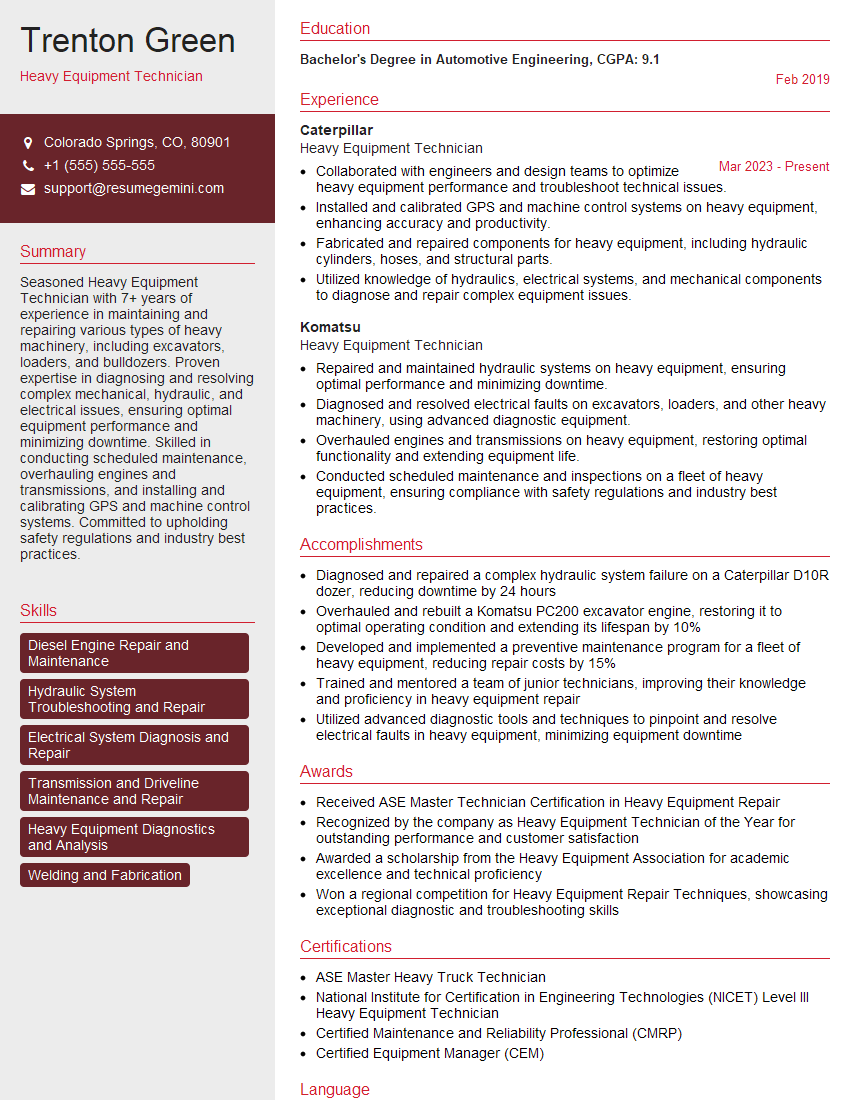
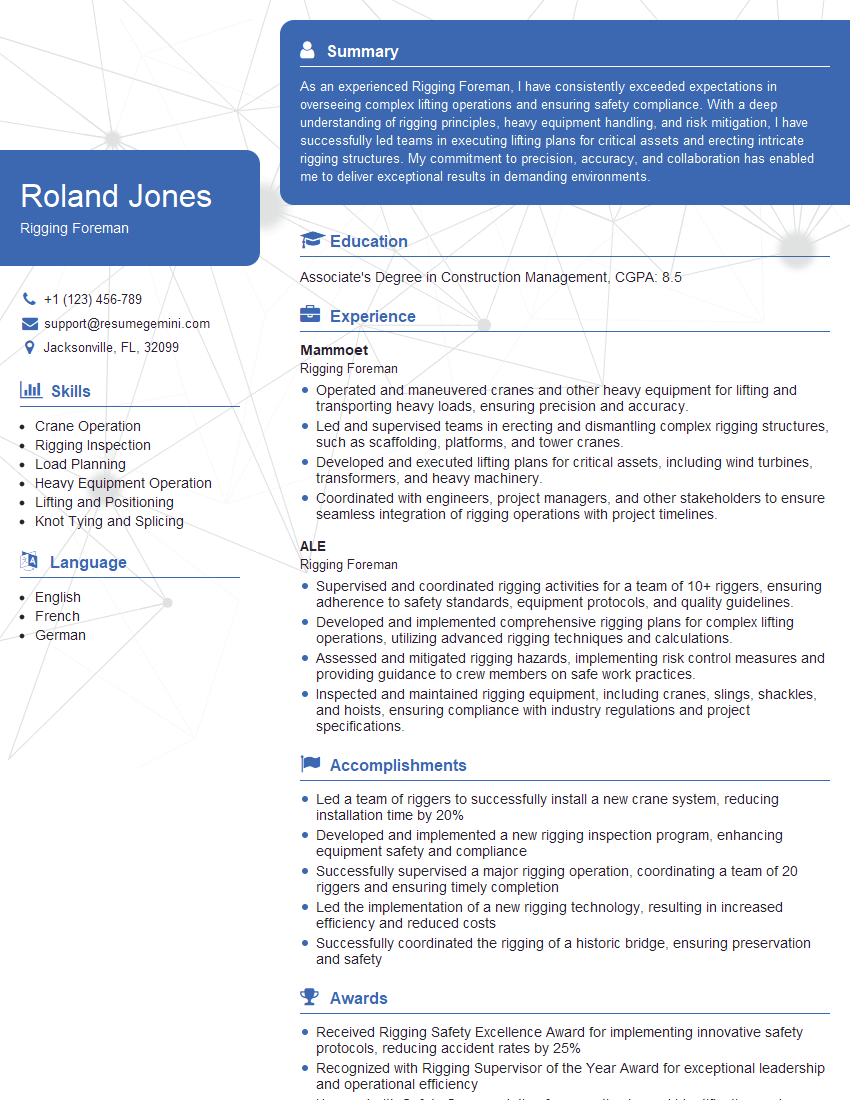
Mastering Crane Assembly and Dismantling opens doors to a rewarding career with excellent growth potential, offering opportunities for specialization and advancement. A strong resume is crucial to showcasing your skills and experience to potential employers. To maximize your job prospects, focus on creating an ATS-friendly resume that highlights your key achievements and qualifications. ResumeGemini is a trusted resource that can help you craft a professional and impactful resume tailored to the industry. Examples of resumes tailored to Crane Assembly and Dismantling are available to further guide your resume building process.


Explore more articles
Users Rating of Our Blogs
Share Your Experience
We value your feedback! Please rate our content and share your thoughts (optional).
What Readers Say About Our Blog
Very informative content, great job.
good