Cracking a skill-specific interview, like one for Crane Operator Safety and Certification, requires understanding the nuances of the role. In this blog, we present the questions you’re most likely to encounter, along with insights into how to answer them effectively. Let’s ensure you’re ready to make a strong impression.
Questions Asked in Crane Operator Safety and Certification Interview
Q 1. What are the different types of cranes and their applications?
Cranes are categorized based on their structure, operation, and application. Understanding these differences is crucial for safe and efficient operation.
- Tower Cranes: These tall, freestanding cranes are commonly used in construction of high-rise buildings and large infrastructure projects. Their ability to reach significant heights and cover a wide area makes them ideal for lifting heavy materials to upper floors.
- Mobile Cranes: These cranes are mounted on vehicles (trucks, crawlers, etc.) offering mobility on construction sites. They’re versatile, used for lifting and transporting various loads across different locations within a site. Think of the crane you see moving materials at a bridge construction project.
- Overhead Cranes: These are commonly found in factories and warehouses. They run on tracks along the ceiling, enabling horizontal and vertical movement of loads within a building. Imagine a crane moving parts in a car manufacturing plant.
- Floating Cranes: These are specialized cranes mounted on barges or ships used in offshore construction, salvage operations, and port work. They are crucial for lifting heavy equipment in marine environments.
- Gantry Cranes: These are typically found in ports and shipyards. They feature a bridge-like structure that runs on tracks, enabling lifting and moving heavy loads within a large area. They are frequently used in container yards.
The choice of crane depends heavily on the specific job, the weight and size of the load, the working environment, and the required reach.
Q 2. Explain the pre-operational checks you perform on a crane before operation.
Pre-operational checks are non-negotiable for crane safety. A thorough inspection before each use is vital and should be documented. Here’s a typical checklist:
- Visual Inspection: Check the crane’s structure for any visible damage like cracks, bends, or corrosion in the boom, jib, and supporting structures. Look for signs of wear on cables, hooks, and sheaves.
- Mechanical Inspection: Verify the proper functioning of all mechanical components, including the hoisting mechanism, slew drive, braking system, and all control levers and switches. Listen for unusual noises during operation.
- Hydraulic Systems: For hydraulic cranes, check fluid levels, look for leaks, and ensure the hydraulic system operates smoothly. Inspect hydraulic cylinders and hoses for damage.
- Electrical Systems: Inspect wiring for damage or wear. Verify the proper functioning of lights, emergency stop systems, and any other electrical components.
- Load Indicators and Safety Devices: Ensure that load indicators, limit switches, and overload protection systems are functioning correctly. These are crucial for preventing accidents.
- Ground Conditions: Check the stability of the ground where the crane is positioned to ensure there is adequate support and no risks of sinking or shifting.
- Documentation: Thoroughly document all inspections, noting any issues discovered, repairs completed, and the operator’s signature. This is crucial for traceability and regulatory compliance.
Remember, if any issues are found, the crane should not be operated until they are rectified by a qualified technician.
Q 3. Describe the different types of crane hooks and their uses.
Crane hooks are critical components, and their selection depends on the load type and operational requirements.
- Standard Hooks: These are the most common type, used for general lifting purposes. They are relatively simple in design and suitable for a wide range of loads.
- Clevis Hooks: These have a clevis or pin-type connection, providing a more secure attachment for the load. They are generally stronger than standard hooks.
- Grab Hooks: These hooks are designed to engage with specific types of lifting points on the load, like those found on certain containers or parts. They often require special attachments.
- Heavy-Duty Hooks: These are designed for lifting very heavy loads and are made from high-strength materials and incorporate features to resist extreme stress.
- Swivel Hooks: These allow the load to rotate freely while preventing twisting of the sling.
It’s critical to use the correct type of hook for the load and to regularly inspect hooks for cracks, bends, or deformation. A damaged hook can lead to catastrophic failure.
Q 4. What are the common causes of crane accidents?
Crane accidents are often preventable, stemming from a combination of factors. Understanding these causes is key to improving safety.
- Operator Error: This is a leading cause, including exceeding load capacity, improper rigging, inadequate training, or failure to follow safety procedures. For example, an operator might lift a load that exceeds the crane’s capacity, leading to structural failure.
- Equipment Failure: Mechanical or structural failures due to inadequate maintenance, improper inspection, or damage can result in accidents. A worn cable or a faulty brake system are examples.
- Inadequate Rigging: Incorrect use of slings, shackles, or other rigging equipment can lead to load slippage, entanglement, or failure. Using a sling that is too weak or incorrectly attached are examples.
- Environmental Factors: Adverse weather conditions (high winds, rain, ice) or poor ground conditions can affect stability and increase the risk of accidents.
- Lack of Communication: Poor communication between the crane operator and the signal person can lead to misunderstandings and dangerous situations. If there is a misinterpretation of hand signals, for example.
- Improper Planning: Failure to adequately plan the lift, including assessing the load, the path, and potential hazards, can contribute to accidents.
A comprehensive safety program addressing these points is essential to prevent crane accidents.
Q 5. How do you calculate the load capacity of a crane?
Calculating a crane’s load capacity isn’t a simple formula; it depends on several variables. It’s not just about the crane’s maximum rated capacity. The actual safe working load is often much less.
Factors impacting load capacity:
- Crane Model and Specifications: The manufacturer’s specifications provide the maximum rated capacity under ideal conditions.
- Boom Length and Angle: The further the boom extends, and the higher the angle, the lower the safe lifting capacity. This is because the moment increases.
- Radius of the Lift: The distance between the crane’s center of rotation and the load affects the capacity.
- Wind Speed: High winds drastically reduce the crane’s capacity due to increased stress on the boom and the load.
- Ground Conditions: The stability of the ground supporting the crane is crucial. Soft or uneven ground reduces the safe capacity.
- Load Configuration: The shape and distribution of the load impact the capacity. A load that swings wildly is not as safe to lift as a more evenly-distributed load.
Load charts, provided by the manufacturer, are crucial. They illustrate the safe working load for various combinations of boom length, radius, and other relevant factors. Using a load chart is essential for ensuring safety and complying with regulations. Never exceed the values indicated on the load chart.
Q 6. What are the different types of crane signals and how are they used?
Effective communication is paramount in crane operations. Crane signals ensure clear instructions between the operator and the signal person.
- Hand Signals: These are standardized gestures that communicate commands such as hoist, lower, swing, and emergency stops. These signals must be clearly visible and understood by both parties. There is extensive training on what the correct hand signals mean.
- Radio Communication: Two-way radios are increasingly used, particularly in noisy environments or when hand signals might be difficult to see. Clear, concise communication is vital.
- Visual Signals: In some cases, lights, flags, or other visual signals might be used in addition to hand signals or radio communication.
Importance of Consistency: It’s essential that both the operator and the signal person are trained on and consistently use the same signaling system to prevent confusion and accidents. Miscommunication can lead to loads being moved in the wrong direction or at the wrong speed. Regular training and practice are essential to maintain proficiency.
Q 7. What is the importance of a crane load chart?
A crane load chart is a critical document showing the safe working load limits for the crane under various operating conditions. It’s indispensable for safe operation and compliance.
Importance:
- Safety Assurance: It prevents overloading, a major cause of crane accidents. The chart clearly states the maximum load that can be safely lifted at any given boom length, radius, and other conditions.
- Legal Compliance: Operating a crane without adhering to the load chart violates safety regulations and potentially exposes the operator and the company to legal liability.
- Prevention of Equipment Damage: Exceeding the load limits can damage the crane, requiring costly repairs or even replacement.
- Preventing Injuries: Overloading significantly increases the risk of structural failure and serious injury or fatality.
The load chart should be readily accessible to the crane operator at all times. It is crucial to understand how to interpret the chart correctly and to never attempt to lift a load that exceeds the specified limits. It’s not just a chart; it’s a safeguard for lives and equipment.
Q 8. Explain the concept of swing radius and its safety implications.
The swing radius is the arc of a circle created by the crane’s rotating superstructure and the maximum distance the load can swing. Think of it like the length of a pendulum’s arc. Understanding this radius is crucial for safety because it defines the area where the load can potentially move unexpectedly.
Safety Implications: A poorly calculated or ignored swing radius can lead to devastating accidents. For example, if a crane operator doesn’t account for the swing radius, the load could collide with nearby structures, equipment, personnel, or even power lines. This is particularly dangerous in confined spaces or areas with heavy pedestrian traffic. Proper planning, clear communication, and established swing radius boundaries (often marked with signage or barriers) are essential safety measures.
Example: Imagine a crane lifting a large steel beam near a building. If the swing radius isn’t considered, the beam could swing into the building’s side during rotation, causing significant damage and potential injury. A safety plan would include calculating the swing radius, establishing a clear exclusion zone around the swing radius, and possibly even using a tag line to further control the load’s movement.
Q 9. How do you handle an emergency situation during crane operation?
Emergency situations demand quick, decisive action based on established safety procedures. My response depends entirely on the nature of the emergency. However, the first step is always to immediately stop the crane operation and secure the load to prevent further movement.
Next, I would assess the situation, determining the cause of the emergency and any immediate dangers. Is there a structural failure? Equipment malfunction? Is someone injured?
Depending on the assessment, I would then follow the established emergency response plan. This may involve:
- Alerting emergency services (e.g., calling 911 or the company’s emergency response team).
- Evacuating the area to secure the safety of bystanders and personnel.
- Implementing appropriate safety controls (e.g., cutting power to the crane if necessary).
- Providing first aid if injuries are present.
- Cooperating fully with any investigation into the cause of the emergency.
Example: If I notice a significant crack appearing in a crane boom during operation, my immediate response would be to stop the crane, lower the load slowly and carefully, and then alert my supervisor and emergency personnel. I would remain with the crane to prevent unauthorized access until it is deemed safe by an expert.
Q 10. Describe your experience with different types of crane controls.
Throughout my career, I have worked with various crane control systems, including both conventional lever controls and modern electronic control systems.
Conventional lever controls typically involve a complex system of levers and switches that control hoisting, lowering, swinging, and luffing functions. They require a high degree of skill and precision, particularly in accurately controlling speed and load movement. The feel and responsiveness of the levers are often critical for effective operation.
Electronic control systems often incorporate joysticks and displays that provide precise and often programmable control over the crane’s functions. These systems frequently offer additional safety features like load moment indicators (LMIs), anti-two-block systems, and more sophisticated monitoring capabilities. They’re often easier to learn for beginners but still require a strong understanding of crane mechanics and safety regulations.
Example: My experience includes operating both a traditional lattice boom crawler crane with lever controls and a modern tower crane with a joystick-based electronic system. The differences in the feel and precision of the controls were significant, but my safety procedures and operational awareness remained consistent across both systems.
Q 11. What safety measures do you implement to prevent crane tip-over?
Preventing crane tip-over is paramount. My safety measures start with proper pre-operation checks including confirming the ground conditions, assessing the load weight and dimensions, and carefully calculating the crane’s capacity and stability.
Key measures include:
- Using outriggers fully extended and properly seated on stable ground. This significantly increases the crane’s stability base.
- Checking ground bearing capacity to ensure the ground can support the weight of the crane and the load. Soft or uneven ground is a major tip-over risk.
- Avoiding extreme lifting angles, keeping the load close to the crane as much as possible to minimize the moment arm (the distance between the load and the crane’s pivot point).
- Using load moment indicators (LMIs) to monitor the crane’s stability and prevent overload conditions. LMIs visually indicate if the load is too heavy or if the crane is at risk of tipping.
- Proper load handling: Ensuring loads are well secured and evenly distributed.
- Weather considerations: Never operate a crane in high winds or during inclement weather conditions that could compromise stability.
Example: Before lifting a heavy piece of equipment, I always assess the ground beneath the crane outriggers, using a level and checking for any soft spots. I also utilize the crane’s LMI to ensure I stay within the crane’s safe operating limits. I’d never attempt a lift if the LMI shows I’m approaching the tipping point, even if it means stopping the lift and taking corrective action.
Q 12. Explain the importance of regular crane maintenance and inspections.
Regular crane maintenance and inspections are vital to preventing catastrophic failures and ensuring operational safety. Think of it like a regular checkup for your car – preventative maintenance extends its life and reduces the chances of breakdowns.
Importance: Inspections reveal potential problems early on, allowing for timely repairs before they become major issues. This includes wear and tear on components, such as cables, hooks, and hydraulic systems. Regular maintenance keeps the crane functioning efficiently and extends its lifespan, minimizing downtime and associated costs.
Components of regular maintenance:
- Daily inspections – visual checks of critical components before each use.
- Monthly inspections – more detailed checks, including operational testing.
- Annual inspections – comprehensive checks often performed by qualified inspectors.
- Thorough overhauls – periodic complete inspections and component replacements.
Example: During a daily inspection, I might notice fraying on a wire rope. This would be immediately reported and the rope replaced. Delaying this simple repair could lead to a serious accident. Furthermore, the detailed annual inspections help to identify small, potentially overlooked issues.
Q 13. What are the legal requirements and regulations regarding crane operation in your area?
Crane operation is heavily regulated. In my area ([Insert your area/state/country]), compliance is mandatory with [Insert relevant legislation and regulations, e.g., OSHA regulations in the US, relevant local/national standards]. These regulations typically cover various aspects of crane operation, including:
- Operator certification and licensing: Operators are required to obtain and maintain specific licenses or certifications demonstrating their competency and knowledge of safe operating practices.
- Crane inspections and maintenance: Regular inspections and maintenance procedures are mandated to ensure the crane’s structural integrity and operational safety.
- Load capacity and stability: Strict regulations dictate load limits and safe operating practices to prevent overloads and tip-overs.
- Safety equipment requirements: Specific safety equipment such as load moment indicators (LMIs), safety harnesses, and emergency shutdown systems are required.
- Worksite safety procedures: Regulations outline requirements for the safe execution of crane operations, including the designation of safe zones and exclusion areas.
Non-compliance can lead to severe penalties, including fines and suspension of operations. Therefore, thorough understanding and adherence to all applicable laws and regulations are essential for responsible crane operation.
Q 14. Describe your experience with load securing techniques.
Secure load handling is crucial. Improper securing can lead to load slippage, dropping, and devastating accidents. My experience encompasses various securing techniques, adapted to the specific load and its characteristics.
Techniques I utilize include:
- Using appropriate rigging equipment: Selecting the correct slings, chains, hooks, and other lifting gear, ensuring they have the correct weight capacity and are in good condition.
- Proper hitching and slinging techniques: Using correct hitching points and distributing the load evenly to prevent excessive stress on any one point.
- Load stability: Ensuring the load is balanced and secured to prevent shifting during lifting or transport.
- Proper load documentation: Accurate documentation of load weight, center of gravity, and securing methods for reference.
- Use of load binders and other securing devices: Employing additional securing devices where necessary, such as load binders, chains, or straps, to reinforce the stability of the load during transit.
Example: When lifting a large, irregularly shaped piece of machinery, I would carefully assess its center of gravity and select appropriate slings to distribute the load evenly. I would then use additional securing straps or chains to prevent any movement of the load during the lift. Pre-lift checklists and detailed documentation help me maintain consistent safety standards across various load types and sizes.
Q 15. How do you identify and mitigate potential hazards at a construction site related to crane operation?
Identifying and mitigating hazards at a construction site related to crane operation requires a proactive and systematic approach. It begins with a thorough pre-lift plan, encompassing a site-specific risk assessment. This assessment considers factors like:
- Ground conditions: Are the ground bearing capacities sufficient for the crane and load? Are there any unstable areas, underground utilities, or potential for ground shifting?
- Obstacles and clearances: Are there power lines, buildings, trees, or other obstructions that could interfere with crane movements? Sufficient clearance must be maintained at all times.
- Weather conditions: High winds, heavy rain, or extreme temperatures can significantly impact crane operation safety. Strict adherence to weather-related operational limits is crucial.
- Traffic and personnel: A well-defined exclusion zone around the crane must be established and maintained, preventing unauthorized personnel from entering the hazardous area. Clear communication and signage are essential.
- Crane condition: Regular inspections and maintenance are vital. A crane with mechanical issues or deficiencies poses a serious risk. Operator competence and certification must also be validated.
Mitigation involves implementing control measures based on the identified hazards. These can include:
- Engineering controls: Installing barriers, modifying the work area to improve clearances, using specialized rigging equipment.
- Administrative controls: Establishing clear procedures, implementing a permit-to-work system, providing comprehensive training, and conducting regular safety briefings.
- Personal protective equipment (PPE): Ensuring that all personnel within the vicinity wear appropriate PPE, such as hard hats, safety glasses, and high-visibility clothing.
Finally, a post-lift inspection should be conducted to verify the safe completion of the operation and identify any areas needing improvement for future operations.
Career Expert Tips:
- Ace those interviews! Prepare effectively by reviewing the Top 50 Most Common Interview Questions on ResumeGemini.
- Navigate your job search with confidence! Explore a wide range of Career Tips on ResumeGemini. Learn about common challenges and recommendations to overcome them.
- Craft the perfect resume! Master the Art of Resume Writing with ResumeGemini’s guide. Showcase your unique qualifications and achievements effectively.
- Don’t miss out on holiday savings! Build your dream resume with ResumeGemini’s ATS optimized templates.
Q 16. What is your experience with different types of crane attachments?
My experience encompasses a wide range of crane attachments, including:
- Standard hook blocks: These are the most common, used for lifting a variety of loads.
- Grab buckets: Used for lifting loose materials like sand, gravel, or demolition debris. I’m experienced with both clamshell and orange peel grab buckets, understanding their differing capabilities.
- Magnets: Used for lifting ferrous materials in steel fabrication or scrap yards. I’m proficient in understanding magnetic lifting limitations and safety considerations such as de-magnetization procedures.
- Spreader beams: Used to distribute the load across multiple points, enabling the safe handling of large or oddly shaped objects.
- Specialised attachments: I have experience with less common attachments such as concrete buckets, timber grabs, and specialized lifting frames which often require tailored lifting plans and careful consideration of load distribution.
The safe and effective use of each attachment requires a thorough understanding of its operational limits, capacity ratings, and attachment procedures. I always verify these details before commencing a lift.
Q 17. How do you communicate effectively with the rigger and signal person?
Effective communication with the rigger and signal person is paramount to safe crane operation. It’s a three-way conversation built on clear, concise signals and verbal confirmation. I use a combination of:
- Standard hand signals: Adherence to industry-standard hand signals is non-negotiable. We regularly review these to ensure consistent understanding.
- Two-way radio communication: For larger sites or complex lifts, radios allow for continuous communication, clarifying instructions and addressing potential issues immediately.
- Verbal confirmation: Before each lift, I confirm the load weight, sling configuration, intended placement, and any potential hazards with both the rigger and signal person. I will also provide verbal updates during the lift.
- Non-verbal cues: Observing body language and paying attention to any hesitations from the rigger or signal person. If I sense any uncertainty, I will pause and clarify.
Maintaining open communication, proactively addressing concerns, and ensuring mutual understanding are crucial to preventing accidents.
Q 18. Explain your understanding of load stability and center of gravity.
Load stability and center of gravity are fundamentally linked to safe crane operation. The center of gravity (CG) is the point where the weight of an object is concentrated. Understanding the CG is essential to ensure the load remains balanced and stable during lifting and movement. An improperly balanced load can easily swing, topple, or cause the crane to become unstable.
Load stability is achieved by:
- Proper slinging techniques: Using the correct type and number of slings, ensuring even load distribution, and attaching slings to the load’s proper lifting points.
- Awareness of load dimensions: Understanding the load’s dimensions and weight distribution helps determine the CG and the potential for instability during movement.
- Careful movement: Smooth and controlled movements help prevent sudden shifts in the load’s CG, which can lead to instability. Avoid sudden acceleration, deceleration, or jerky movements.
- Wind considerations: High winds can significantly impact load stability. Strong winds may require postponement of the lift.
For example, lifting a long, slender object requires careful consideration of the CG. If the CG is not correctly positioned, the load might swing and endanger the surrounding area. I always ensure the load’s center of gravity is within the lifting capacity of the crane and is safely centered.
Q 19. What are the limitations of your crane operation experience?
While my experience is extensive, my expertise is primarily focused on tower cranes and mobile cranes. I have less experience with specialized cranes like floating cranes or heavy lift cranes, and I would need further training before operating such equipment. Additionally, while familiar with various lifting techniques and applications, my experience is more extensive in construction and less so in other industries like maritime or manufacturing. I will readily admit this and always seek appropriate assistance for any task outside my certified skillset.
Q 20. Describe a situation where you had to make a quick, safety-critical decision during crane operation.
During the construction of a high-rise building, I was lifting a large prefabricated wall section. As the section neared its final placement, a sudden gust of wind caused the load to swing unexpectedly. This was particularly concerning due to its proximity to power lines. I immediately stopped the lift, communicated the situation to the rigger and signal person via radio, and secured the load. We then waited for the wind conditions to improve before carefully completing the lift using smaller incremental movements to maintain control. The quick reaction and reliance on clear communication were crucial in preventing a potentially disastrous incident.
Q 21. How do you ensure compliance with OSHA/relevant safety regulations?
Compliance with OSHA (or relevant regional safety regulations) is fundamental to my practice. I ensure compliance through:
- Regular training and certification: Maintaining current certifications and undertaking additional training on new techniques, equipment or safety regulations.
- Thorough pre-lift inspections: Conducting pre-lift inspections of the crane, load, rigging equipment, and the worksite to identify and mitigate potential hazards. Any non-compliance is reported immediately.
- Adherence to load charts and operational limits: Never exceeding the crane’s rated capacity or operational limits. All lifts are planned within these parameters.
- Maintenance records: Ensuring all necessary maintenance records for the crane are up-to-date and readily available for inspection.
- Reporting near misses and incidents: Any near misses or accidents are meticulously reported, documented, and investigated to identify root causes and implement preventative measures.
- Staying updated: I regularly review updates and changes to OSHA regulations and industry best practices to stay abreast of the latest safety requirements.
Safety is not just a guideline; it’s a fundamental principle that guides every aspect of my work.
Q 22. What is your experience with working at height safety protocols?
Working at height safety is paramount in crane operation. It’s not just about wearing a harness; it’s a comprehensive approach encompassing risk assessment, safe access and egress procedures, and the use of appropriate fall protection equipment. My experience includes rigorous training in fall arrest systems, understanding the limitations of various types of anchors, and conducting pre-task inspections of all equipment. For instance, I’ve personally overseen the installation of safety nets around crane bases during high-risk operations and ensured that all personnel involved understand and adhere to the designated escape routes and emergency procedures.
A key aspect is understanding the specific risks involved. A simple lift might have minimal height-related risks, while a high-rise building project necessitates meticulous planning, including the use of designated access points, secured platforms, and potentially, the use of specialized fall arrest equipment tailored to the type of crane and its movements. I always emphasize proactive risk mitigation, including regular inspections and thorough communication among the crew.
Q 23. Describe your understanding of different types of crane failures and their causes.
Crane failures can be catastrophic, and understanding their causes is crucial for prevention. These failures can broadly be classified into structural failures, mechanical failures, and human errors. Structural failures can result from metal fatigue, corrosion, or overloading – think of a boom collapsing due to exceeding its weight limit. Mechanical failures can stem from hydraulic system leaks, brake malfunctions, or issues with the hoisting mechanisms. For example, a sheave failure could cause a load to drop unexpectedly. Human error, encompassing operator negligence, improper maintenance, and inadequate inspection, unfortunately accounts for a significant number of accidents.
- Structural Failures: These are often caused by overloading, corrosion, fatigue cracking or impact damage. Regular inspections using non-destructive testing (NDT) methods are vital.
- Mechanical Failures: Problems in the engine, brakes, hydraulic systems, or other mechanical components can lead to failure. This requires strict adherence to manufacturer-recommended maintenance schedules and regular inspections of these components.
- Human Errors: This is a broad category including operator mistakes, inadequate training, poor communication and lack of supervision. This emphasizes the importance of comprehensive training programs, clear communication protocols, and strong site supervision.
Q 24. What type of personal protective equipment (PPE) do you use while operating a crane?
Personal Protective Equipment (PPE) is non-negotiable for crane operation. The specific PPE depends on the task and environment but typically includes:
- Hard hat: To protect against falling objects.
- Safety glasses or goggles: To protect eyes from debris and flying particles.
- High-visibility clothing: To improve visibility in all conditions.
- Gloves: To protect hands from cuts, abrasions and cold.
- Steel-toe boots: To protect feet from dropped objects.
- Hearing protection: To protect against excessive noise levels.
- Fall Protection Harness (depending on work): In situations requiring working at heights near the crane.
I always ensure my PPE is in good condition and properly worn. A torn glove or cracked hard hat is unacceptable.
Q 25. How do you maintain accurate records of crane operation and maintenance?
Accurate record-keeping is essential for crane safety and legal compliance. I maintain detailed logs of each operation, including date, time, operator name, lift details (weight, height, location), and any unusual occurrences or maintenance performed. These records are typically maintained electronically using dedicated software, or, where required, in hard-copy log books that follow specific company or regulatory templates. Maintenance records are similarly meticulous, documenting all inspections, repairs, and certifications. This information is crucial for ensuring the crane’s continued safe operation, identifying potential problems early, and providing evidence of due diligence in case of any incident or audit.
Digital record-keeping often involves using barcodes or RFID tags to track components and inspections. This enhances accuracy and reduces the risk of human error when compared to manual recording systems.
Q 26. What are the different types of crane inspections and their frequency?
Crane inspections are crucial for preventing accidents. Several types of inspections are performed at different frequencies:
- Daily Inspections (Pre-Operational): Performed by the operator before each shift, checking for any visible damage, fluid leaks, or operational issues. These are usually simple visual inspections.
- Periodic Inspections: More thorough inspections, conducted monthly or quarterly (frequency varies by crane type and regulations), that may involve more detailed checks of mechanical components and safety systems.
- Annual Inspections: Comprehensive inspections by qualified personnel that involve detailed examination of all components and systems. These inspections may include non-destructive testing (NDT) methods to detect hidden defects.
- Thorough Inspections: Following a major repair, accident, or significant event. These ensure the crane is fully functional and safe after any incident.
The frequency of inspections is determined by regulatory requirements, manufacturer recommendations, and risk assessments. All inspections should be documented meticulously.
Q 27. Explain your understanding of the different types of crane wire ropes and their maintenance.
Crane wire ropes are critical for safe operation. Different types exist, each with its strengths and weaknesses. For example, 6×19 (6 strands of 19 wires each) is a common type, offering good flexibility. 6×36 or 6×37 offer higher strength but less flexibility. Proper maintenance is crucial to prevent failures.
- Visual Inspection: Regular visual checks for broken wires, corrosion, kinks, or excessive wear are crucial. Any damaged rope must be replaced immediately.
- Testing: Periodic testing (e.g., load testing or non-destructive testing) is essential to verify rope integrity. This includes checking for broken wires and reduced rope diameter.
- Lubrication: Proper lubrication helps to prevent corrosion and extend the rope’s lifespan. The type of lubricant used should be appropriate for the environment and the rope material.
- Storage: When not in use, ropes should be stored properly to avoid damage. They should be kept dry, clean, and free from sharp objects.
Ignoring wire rope maintenance can lead to catastrophic failures, so adherence to manufacturers’ guidelines and regulatory requirements is paramount.
Q 28. How do you deal with challenging weather conditions during crane operation?
Challenging weather conditions significantly impact crane operations. High winds, heavy rain, snow, and ice can all create hazardous situations. My approach involves several key steps:
- Risk Assessment: Before commencing any lift, I carefully assess the weather conditions and their potential impact on crane stability and load security. If conditions are too hazardous, I will halt operations.
- Wind Speed Monitoring: I monitor wind speed using anemometers or other monitoring devices. Operations are generally suspended when wind speeds exceed the crane’s operational limits as specified by the manufacturer and site-specific safety guidelines.
- Load Securing: Extra care is taken to secure the load, using additional lashing or bracing as needed to prevent it from shifting in high winds or heavy rain.
- Communication: Constant and clear communication with ground personnel is critical to ensure everyone is aware of the changing conditions and potential risks.
- Emergency Procedures: In the event of severe weather, I’m prepared to execute well-defined emergency procedures, such as lowering the load, securing the crane, and evacuating the area.
Safety in challenging conditions is always the top priority. Ignoring unfavorable weather conditions can lead to accidents.
Key Topics to Learn for Crane Operator Safety and Certification Interview
- Crane Operation Fundamentals: Understanding basic crane mechanics, load charts, and safe operating procedures. This includes pre-operation checks, load calculations, and communication protocols.
- Safety Regulations and Compliance: Thorough knowledge of OSHA (or relevant regional) regulations pertaining to crane operation, including signal handling, personal protective equipment (PPE), and emergency procedures. Practical application involves demonstrating understanding of specific regulations and how they apply to real-world scenarios.
- Rigging and Load Handling: Mastering proper rigging techniques, including selecting appropriate slings, chains, and other lifting devices based on load characteristics. This also involves understanding load stability, weight distribution, and the prevention of load swing.
- Troubleshooting and Problem Solving: Developing the ability to identify and address potential hazards, mechanical malfunctions, and environmental challenges. This includes understanding preventative maintenance and knowing how to react to unexpected events.
- Communication and Teamwork: Effective communication with riggers, signal persons, and other crew members is crucial. Understanding hand signals, radio communication protocols, and the importance of clear, concise communication in potentially hazardous environments.
- Crane Types and Applications: Familiarizing yourself with different types of cranes (tower, mobile, overhead) and their respective applications and limitations. Being able to discuss the advantages and disadvantages of each type in various work environments.
- Emergency Procedures and Response: Understanding and practicing emergency protocols, including load failure scenarios, equipment malfunctions, and weather-related incidents. This encompasses knowing how to safely shut down equipment and how to react in an emergency.
Next Steps
Mastering Crane Operator Safety and Certification opens doors to a rewarding career with excellent growth potential. A strong understanding of these critical topics demonstrates your commitment to safety and professionalism, making you a highly desirable candidate. To further enhance your job prospects, focus on crafting an ATS-friendly resume that highlights your skills and experience effectively. ResumeGemini is a trusted resource that can help you build a professional and impactful resume. We provide examples of resumes tailored to Crane Operator Safety and Certification to guide you in showcasing your qualifications effectively.

Crane Operator Resume Sample

Heavy Equipment Operator Resume Sample

Rigger Resume Sample

Derrick Operator Resume Sample

Crane Mechanic Resume Sample
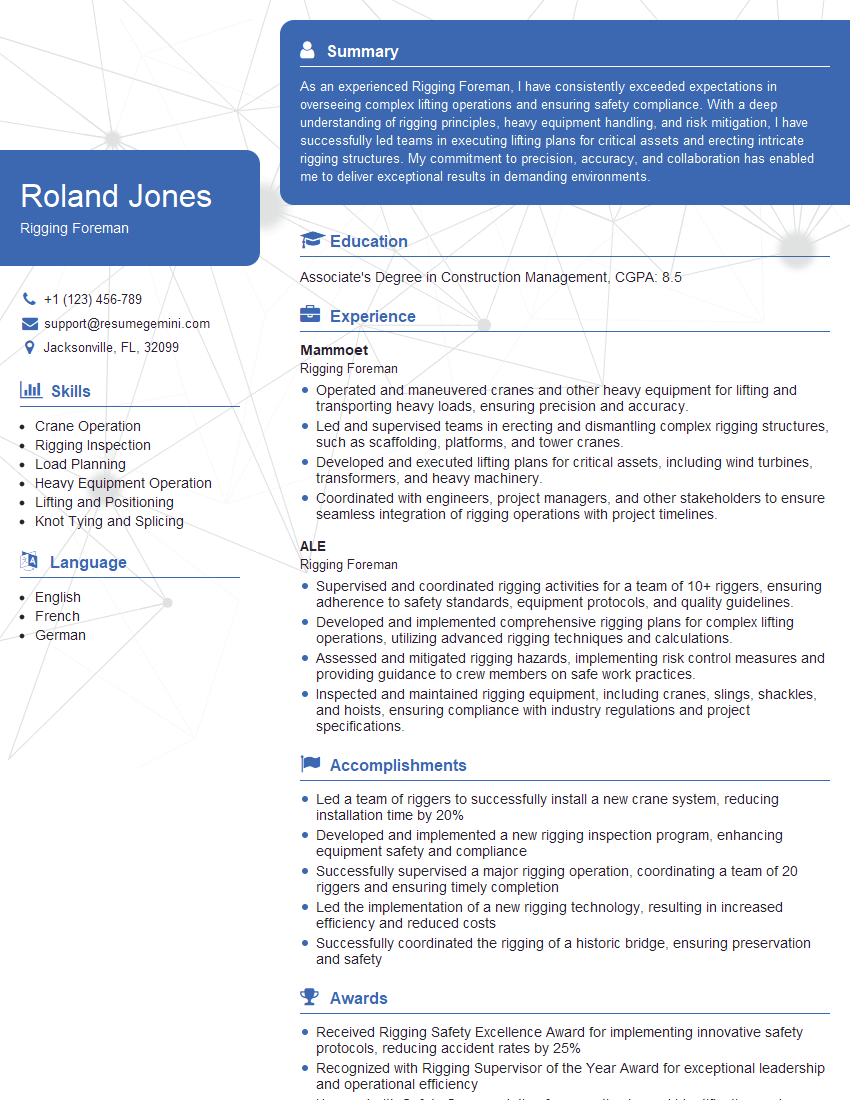
Rigging Foreman Resume Sample

Signal Person Resume Sample

Mobile Crane Operator Resume Sample

Overhead Crane Operator Resume Sample

Tower Crane Operator Resume Sample

Winch Operator Resume Sample
Explore more articles
Users Rating of Our Blogs
Share Your Experience
We value your feedback! Please rate our content and share your thoughts (optional).
What Readers Say About Our Blog
Very informative content, great job.
good