The thought of an interview can be nerve-wracking, but the right preparation can make all the difference. Explore this comprehensive guide to Needle Operation interview questions and gain the confidence you need to showcase your abilities and secure the role.
Questions Asked in Needle Operation Interview
Q 1. Describe your experience with different types of sewing machine needles.
Sewing machine needles are far from a one-size-fits-all affair. The type of needle you choose drastically impacts the quality of your stitching and the lifespan of your machine. My experience encompasses a wide range, from the ubiquitous universal needles, suitable for most general sewing tasks, to specialized needles for specific fabrics and techniques.
- Universal needles: The workhorses of the sewing world. I use these frequently for cotton, linen, and blends.
- Ballpoint needles: Essential for knits. Their rounded tip prevents snagging and damage to stretchy fabrics. I’ve relied on these countless times when working with jersey or lycra.
- Sharp needles: Perfect for woven fabrics like silk, linen, and denim where a clean pierce is needed. They’re my go-to for creating crisp seams.
- Jeans needles: Specifically designed for heavy-duty fabrics, these needles have reinforced shafts to prevent bending under pressure. I use these when working with multiple layers of denim.
- Stretch needles: Similar to ballpoint, but with a slightly larger eye, making them perfect for delicate knitwear and ensuring a smooth feed of thread.
- Embroidery needles: These needles have a larger eye and a sharper point to handle multiple layers of fabric and embroidery threads. I’ve used them extensively for machine embroidery projects, ensuring thread flow doesn’t cause any breakages.
Choosing the right needle is half the battle in achieving professional-looking results. Ignoring this can lead to broken needles, skipped stitches, and damaged fabric.
Q 2. Explain the process of threading a sewing machine needle.
Threading a sewing machine needle might seem simple, but the precise method varies slightly depending on the machine model. However, the general principles remain the same: accuracy and patience are key.
- Raise the needle to its highest position: This ensures ample space for threading.
- Insert the needle: Most machines have a specific slot where the needle goes – always observe the flat side of the needle to ensure it’s correctly oriented.
- Thread the needle: Gently pull the thread through the eye of the needle. Using a needle threader can be helpful for those with limited dexterity or vision problems.
- Engage the bobbin mechanism: After threading the needle, check that the upper tension disc is appropriately adjusted and the bobbin mechanism functions without any issues. A quick test stitch is always recommended.
A common mistake is forcing the thread, which can bend or break the needle. A smooth, controlled threading ensures a long needle lifespan and flawless sewing. I always advise using a good quality thread to maximize the efficiency of the operation, and this also ensures the longevity of the needle.
Q 3. How do you identify a bent or damaged needle?
Identifying a bent or damaged needle is crucial to preventing fabric damage and machine malfunction. A seemingly minor bend can cause significant problems.
- Visual Inspection: Carefully examine the needle under good lighting. Look for any bends in the shaft, particularly near the eye or point. Even slight curves are problematic.
- Point Integrity: Check the point for any nicks, chips, or dullness. A damaged point can lead to skipped stitches or snagged fabric.
- Shaft Condition: Look for any scratches or signs of wear on the needle shaft. If the shaft is visibly damaged it needs to be replaced.
- Testing Stitch Quality: If you’re unsure, sew a test seam. Inconsistent stitching, skipped stitches, or broken threads are sure signs of a faulty needle.
Remember, it’s always better to replace a questionable needle. The cost of a new needle is far less than the cost of repairing damaged fabric or the sewing machine itself. I treat it as a preventative measure, ensuring I maintain high sewing quality.
Q 4. What are the different types of needle threads and their applications?
Thread selection is another critical aspect of successful sewing. Different threads offer unique properties affecting stitch quality, durability, and appearance.
- Cotton thread: A versatile option suitable for many fabrics. It offers good strength and is readily available in a wide range of colors. I always use this for general sewing, as it gives me great results.
- Polyester thread: Known for its strength and resistance to shrinking. It’s an excellent choice for projects requiring durability and doesn’t fray easily.
- Silk thread: A luxurious option for delicate fabrics, offering a beautiful sheen. However, it’s more prone to breakage than others. I’d often use it to add a touch of elegance.
- Rayon thread: A smooth, lustrous thread offering a silky texture. Ideal for projects where a subtle shimmer is desired. It often works well on softer fabrics.
- Embroidery thread: Specifically designed for machine and hand embroidery, offering a wide array of colors, weights, and textures. I use these in various embroidery projects as needed.
The type of thread you choose depends heavily on the fabric and desired outcome. Using the incorrect thread can lead to poor stitch quality, broken threads, and overall disappointing results.
Q 5. How do you adjust needle tension?
Needle tension is the force applied to the upper and lower threads to create a balanced stitch. Correct needle tension is essential for creating even, attractive seams. Improper tension leads to problems such as puckering, skipped stitches, or loose threads.
The adjustment mechanism varies across machine models, but it’s generally a dial or screw on the machine’s body.
- Observe the stitches: Examine your stitching to see if you have issues with needle tension. Too loose will leave the stitch visibly weak; too tight and the fabric is drawn together.
- Adjust the dial: Increase the tension if the stitches are loose and decrease it if they’re too tight. The goal is to achieve a balanced appearance on both the top and bottom of the fabric.
- Test and readjust: Sew a few test stitches before committing to your project. Make small adjustments until the desired tension is achieved. It’s an iterative process.
Experimenting with small adjustments is key to mastering needle tension. Practice makes perfect!
Q 6. How do you troubleshoot common needle-related sewing machine problems?
Troubleshooting needle-related problems involves systematic investigation. Start with the most likely causes and move to more complex issues.
- Broken Needle: Replace the needle immediately. Check the needle plate for damage.
- Skipped Stitches: Check the needle for bending or damage. Ensure the needle is correctly threaded and the bobbin case is properly seated. Examine thread tension.
- Uneven Stitches: Adjust the needle tension. Make sure the needle is correctly inserted and the thread is appropriately threaded. Also check for fabric irregularities.
- Bent Needle: Replace the needle. Examine the machine’s needle plate for any obstructions that may have caused the needle to bend.
- Thread breakage: Check for frayed or damaged thread. Inspect thread tension. Make sure the needle is correctly threaded and in good working order.
A methodical approach ensures you quickly pinpoint the problem. Keeping a detailed log of your troubleshooting process can help you quickly address similar issues in the future. I always keep a notebook recording what I’ve done and the results.
Q 7. What safety precautions do you take when operating sewing machines?
Safety should always be the top priority when operating sewing machines. Simple precautions can prevent serious injuries.
- Keep fingers clear: Never place your fingers near the needle while the machine is running. I always use a finger guard whenever I am sewing a seam.
- Proper maintenance: Regularly clean and oil the machine to prevent malfunctions. This will ensure the longevity of the equipment.
- Use appropriate materials: Always use the correct type of needle and thread for the fabric you are working with.
- Proper posture: Maintain good posture while sewing to prevent muscle strain and fatigue. I try to take breaks as well.
- Keep the work area clear: Clear the area around the machine of any unnecessary items. A clean environment reduces trip hazards.
By following these basic safety procedures, you can minimize the risk of injury and create a safer and more efficient sewing experience. Prevention is always the best approach.
Q 8. How do you maintain and clean sewing machine needles?
Maintaining and cleaning sewing machine needles is crucial for preventing skipped stitches, broken needles, and damage to your fabric. Think of it like keeping a sharp knife clean – a dull or dirty blade won’t cut cleanly.
- Regular Inspection: Before each sewing project, inspect the needle for bends, burrs, or damage. Even a tiny imperfection can lead to problems.
- Cleaning: After each sewing session, gently wipe the needle with a lint-free cloth to remove dust, lint, and thread fragments. For stubborn buildup, you can carefully use a small brush.
- Storage: Store needles in a designated case or container to protect them from damage and keep them organized. This helps prevent accidental breakage or misplacing them.
- Replacement: Even with careful cleaning, needles will eventually wear out. Noticeable bending, dullness, or frequent breakage are signs that it’s time for a replacement.
For example, I once noticed a tiny burr on a needle which I initially overlooked. This resulted in skipped stitches and thread breakage until I carefully removed the burr and replaced the needle, illustrating the importance of proper inspection.
Q 9. What is the importance of proper needle selection for different fabrics?
Proper needle selection is paramount for achieving a high-quality stitch and preventing damage to your fabric. Different fabrics have different thicknesses and structures which require needles of varying sizes and types.
- Fine Fabrics (Silk, Chiffon): Require very fine needles (size 60/8 or finer) to avoid puncturing or snagging the delicate material. A sharp point is essential for clean penetration.
- Medium-weight Fabrics (Cotton, Linen): Typically use needles in the size 70/10 to 80/12 range. These needles offer a balance between strength and finesse.
- Heavyweight Fabrics (Denim, Canvas): Need heavier needles (size 90/14 to 100/16 or even larger), designed to penetrate thick materials without bending or breaking.
- Stretch Fabrics (Lycra, Knit): Often require ballpoint or stretch needles (like 75/11 or 90/14 stretch) to smoothly glide between the fabric fibers without causing damage or skipped stitches.
For instance, using a heavy needle on silk would result in holes and damaged fabric, while a fine needle on denim would likely bend or break.
Q 10. How do you determine the correct needle size for a specific project?
Determining the correct needle size is essential for successful sewing. The fabric weight is the primary factor; however, needle type is also crucial. Consult your fabric’s weight and type and match to recommended needles.
- Check the Fabric Weight: The weight of the fabric will dictate the needle size. Heavier fabrics need stronger needles.
- Consider the Thread Weight: The needle size should also be compatible with the thread weight. A thicker thread needs a larger needle eye.
- Consult Charts: Use needle size charts provided by needle manufacturers. These charts usually provide recommendations based on the fabric type and weight.
- Experimentation (with caution): With experience you may adjust needle size based on individual results. Start with the chart recommendation.
For example, if you are sewing a medium-weight cotton with a medium-weight thread, you might start with a size 70/10 needle. Always refer to the manufacturer’s guidelines.
Q 11. Explain the concept of needle plate alignment.
Needle plate alignment refers to the precise positioning of the needle relative to the feed dogs and the needle plate hole. Proper alignment ensures that the needle penetrates the fabric in the correct location, resulting in even stitching and prevents skipped stitches or needle breakage.
Misaligned needle plates can cause several issues, including:
- Broken Needles: A misaligned needle may hit the needle plate, causing it to bend or break.
- Skipped Stitches: An offset needle may not properly pierce the fabric, leading to inconsistent stitching.
- Uneven Stitching: Improper alignment affects the feed dog’s ability to consistently move the fabric under the needle.
Checking for Alignment: Carefully lower the needle into the needle plate hole. The needle should pass directly through the center of the hole, neither touching the sides nor appearing offset. If there is a misalignment, the needle plate or feed dog may need adjustment – often requiring professional servicing.
Q 12. How do you recognize and correct skipped stitches?
Skipped stitches are a common sewing problem, often caused by several factors. The key is to systematically troubleshoot the cause.
- Check the Needle: Inspect the needle for bends, burrs, or dullness. Replace if necessary. A dull or bent needle is the most frequent culprit.
- Examine the Thread: Ensure that the thread is correctly threaded through the machine and isn’t tangled or frayed. Use the correct thread type for the fabric and needle.
- Inspect the Tension: Incorrect top or bottom tension can cause skipped stitches. Adjust the tension dials to find the optimal balance. Too much tension on either side is common.
- Check the Bobbin: Ensure that the bobbin is correctly wound and inserted, and the bobbin tension is correct.
- Assess the Needle Plate Alignment: Verify that the needle is properly aligned with the feed dogs and the needle plate hole, as discussed earlier.
For example, I encountered skipped stitches recently and after carefully checking everything else, discovered a slight bend in the needle – a simple replacement solved the problem immediately.
Q 13. What is your experience with different needle systems (e.g., 130/705H)?
The 130/705H needle system is a common industrial needle system, characterized by its strong build and ability to handle a wide range of fabrics. This needle system is used for many industrial machines, and often seen in heavy duty sewing. I have extensive experience using this system for various applications, including heavy-duty sewing and leather work. The ‘H’ designates a heavy-duty point, ideal for fabrics that require stronger penetration.
My experience encompasses other needle systems, like the 15x1 system common in some overlock machines, and various domestic needle systems. Understanding the nuances of each system, including point type, shaft length, and shank size, is critical for achieving optimal stitch quality and machine performance.
Choosing the correct needle system is fundamental. A misplaced needle system can lead to machine malfunctions or cause poor stitching quality.
Q 14. Describe your experience with industrial sewing machines.
I possess significant experience working with industrial sewing machines, ranging from single-needle lockstitch machines to multi-needle machines and specialized industrial overlockers. This experience covers various machine brands, models, and functions, enhancing my expertise in troubleshooting, maintenance and repair, and operational efficiency.
Industrial machines demand different techniques and skills from domestic machines. They operate at a higher speed, handle heavier fabrics and require more robust maintenance. My experience includes:
- Troubleshooting and Repair: Diagnosing and resolving mechanical and electrical issues common in industrial machines.
- Maintenance: Performing routine maintenance like lubrication, cleaning, and adjustments to ensure optimal performance and longevity.
- Operation and Setup: Configuring machines for specific applications and adjusting stitch parameters to meet specific production requirements.
- Working with Different Needle Systems: Understanding the different needle systems used in industrial machines and selecting the correct needles for various fabrics and sewing tasks.
For example, I once worked on a malfunctioning industrial lockstitch machine used to sew heavy denim. After a thorough investigation, I discovered a small piece of debris jamming the needle bar mechanism. Removing the debris and performing a quick lubrication restored the machine to full operational capability, highlighting the importance of regular maintenance and timely troubleshooting.
Q 15. How do you handle needle breakage during operation?
Needle breakage is a common, yet serious, issue in sewing. The first step is always safety – immediately turn off the machine and unplug it to prevent further injury. Next, carefully remove the broken needle fragment. Depending on where the break occurred, this might involve using tweezers or a needle-remover tool. It’s crucial to thoroughly inspect the sewing machine’s throat plate and bobbin case for any remaining fragments to avoid damage to the machine or future injury. Finally, replace the needle with a new one of the correct type and size for the fabric you are sewing. Prevention is key; regularly inspecting needles for bending or damage before each sewing session will significantly reduce breakage. Using the correct needle for the fabric type is also crucial; a heavy-duty needle for light fabric will lead to breakage as will using a fine needle on a thick fabric. If breakage is a recurring problem, it’s worth considering whether the machine’s tension settings are properly adjusted.
Career Expert Tips:
- Ace those interviews! Prepare effectively by reviewing the Top 50 Most Common Interview Questions on ResumeGemini.
- Navigate your job search with confidence! Explore a wide range of Career Tips on ResumeGemini. Learn about common challenges and recommendations to overcome them.
- Craft the perfect resume! Master the Art of Resume Writing with ResumeGemini’s guide. Showcase your unique qualifications and achievements effectively.
- Don’t miss out on holiday savings! Build your dream resume with ResumeGemini’s ATS optimized templates.
Q 16. What is your experience with high-speed sewing machines?
I have extensive experience operating high-speed sewing machines, primarily in industrial settings. My proficiency spans various models and brands, including Juki, Singer, and Brother industrial machines. Working with high-speed machines demands precision, quick reflexes, and a deep understanding of needle and machine maintenance. I am comfortable achieving high production rates while maintaining consistent stitch quality. For example, I once worked on a production line where we needed to sew over 1,000 garments per day using high-speed machines. Mastering the nuances of foot control and thread tension at these speeds was vital to meeting that target while maintaining quality. Furthermore, regular machine maintenance, such as lubrication and cleaning, is crucial in ensuring optimal performance and reducing the risk of needle breakage or machine malfunction at these high speeds.
Q 17. How do you ensure consistent stitch quality?
Consistent stitch quality is paramount. I achieve this through a multi-faceted approach starting with selecting the correct needle and thread type for the fabric. Proper machine maintenance is essential, ensuring that the machine is lubricated, the tension is balanced (both upper and lower tension), and the needle is properly aligned. I also pay close attention to my sewing speed – rushing leads to inconsistent stitches. I meticulously check the stitch length, ensuring it’s appropriate for the fabric weight and the desired aesthetic outcome. For instance, while sewing delicate silks, a shorter stitch length and a finer needle are essential to prevent puckering or breakage. Conversely, for heavy canvas, longer stitches and a heavier needle are used. Regularly checking the stitch quality during the sewing process also allows for timely adjustments should any issues arise.
Q 18. Describe your experience with different sewing machine speeds.
My experience encompasses a wide range of sewing machine speeds, from the slower speeds used for intricate detail work to the high speeds required for mass production. I understand that the appropriate speed is determined by several factors including the fabric type, stitch complexity, desired stitch quality, and the operator’s skill level. Slower speeds allow for more precise control and are often necessary when working with delicate materials or complex designs. Higher speeds significantly increase productivity, but require a higher level of skill and machine proficiency to prevent inconsistencies. Over time, I’ve developed a keen sense of what speed is optimal for any given task – a crucial skill that reduces errors and ensures efficiency.
Q 19. What is your experience with computerized sewing machines?
I am proficient with computerized sewing machines. My experience includes programming stitch patterns, adjusting parameters such as stitch length and density, and troubleshooting common errors using the onboard diagnostics. These machines offer a high degree of precision and repeatability, ideal for consistent production of complex designs. For example, I’ve used computerized sewing machines to program intricate embroidery patterns for high-end garments and to execute precise quilting on complex projects. The ability to store and recall different stitch settings and patterns is a significant advantage, allowing for efficient workflow management and the replication of complex designs without error.
Q 20. How do you handle fabric jams or needle misalignment?
Fabric jams and needle misalignment are common problems that I address efficiently. A fabric jam often results from improper feeding, incorrect tension settings, or a build-up of lint and debris in the machine. I troubleshoot this systematically: First, I turn off and unplug the machine. Then, I carefully examine the fabric path, removing any obstructions and ensuring the fabric is feeding smoothly. Adjusting the feed dogs and checking the tension is the next step. Needle misalignment usually arises from a bent or improperly installed needle. I replace the needle with a new one, making sure it’s correctly aligned and firmly seated. If the issue persists, I inspect the needle bar and associated components for any wear or damage.
Q 21. How familiar are you with various needle types (e.g., ballpoint, sharp)?
I am very familiar with various needle types and their applications. Understanding the differences is critical for achieving optimal results. Ballpoint needles, for instance, are ideal for knit fabrics as their rounded tips prevent the fabric from being snagged or damaged. Sharp needles, with their pointed tips, are best suited for woven fabrics. Other needle types include stretch needles for stretchy fabrics like Lycra and jeans needles for heavy denim. I also have experience with microtex needles for fine fabrics and embroidery needles for intricate embroidery work. Choosing the incorrect needle type can lead to skipped stitches, broken needles, and damage to the fabric; hence this is crucial to my sewing process.
Q 22. How do you maintain a clean and organized workspace?
Maintaining a clean and organized workspace is paramount for efficient and safe needle operation. Think of it like a surgeon preparing for an operation – a cluttered space leads to errors and accidents. My approach involves several key steps:
- Pre-sewing organization: Before I even begin, I lay out all my materials – threads, needles, fabrics – in a logical order. This prevents frantic searching mid-project.
- Regular cleaning: I clean my workspace after each project, removing scraps, lint, and dust. I use a lint brush for delicate fabrics and a vacuum cleaner for larger debris. This prevents needles from being accidentally damaged or misplaced in debris
- Designated storage: I have designated containers for needles, categorized by type and size, preventing mix-ups. Threads are neatly wound and stored in labeled boxes. Tools are organized on a magnetic strip or in a tool caddy for quick access.
- Ergonomic setup: My workspace is ergonomically designed to minimize strain. Good lighting, comfortable seating, and a height-adjustable table ensure I can work comfortably for extended periods.
This organized approach not only improves efficiency but also significantly reduces the risk of accidents. A clean workspace allows for focused work and prevents costly mistakes.
Q 23. Describe your experience with different stitching techniques.
My experience encompasses a wide range of stitching techniques, each suited to different fabrics and desired aesthetics. I’m proficient in:
- Straight stitch: The foundation of sewing, used for seams, topstitching, and more. I can adjust tension and stitch length for varying fabric weights.
- Zigzag stitch: Excellent for finishing seams to prevent fraying, applying decorative effects, and sewing stretchy fabrics.
- Overlock stitch (serging): Used for professional-looking seam finishes and prevents unraveling on delicate fabrics. I’m experienced with both machine and hand overlocking techniques.
- Blind hem stitch: Creates an almost invisible hem, ideal for garments and curtains. Requires precision and a good understanding of needle tension.
- Decorative stitches: I’m proficient in using various decorative stitches available on modern sewing machines to add unique aesthetic touches to projects.
My expertise extends beyond basic techniques. I can adapt these techniques to create unique designs and effects, demonstrating creativity and problem-solving skills.
Q 24. How do you maintain the quality and consistency of your work?
Maintaining consistent, high-quality work involves attention to detail throughout the entire process. It starts with:
- Using high-quality materials: I select needles and thread appropriate for the fabric type, preventing breakage and ensuring consistent stitching.
- Proper machine maintenance: Regular cleaning and lubrication of my sewing machine ensures smooth operation and prevents skipped stitches or uneven tension.
- Consistent techniques: I follow established best practices for each stitch, maintaining a uniform speed and stitch length. I frequently check my work for consistency.
- Testing beforehand: I always test my stitch settings on a scrap of the same fabric before starting the main project. This allows me to adjust tension and stitch length to achieve optimal results.
- Quality control checks: I conduct regular quality control checks throughout the process, catching errors early and ensuring a flawless finish.
This meticulous approach ensures that every project meets the highest standards of quality and consistency.
Q 25. What are your preferred methods for troubleshooting sewing machine issues?
Troubleshooting sewing machine issues requires a systematic approach. I usually follow these steps:
- Identify the problem: Carefully observe the machine’s behavior. Is it skipping stitches? Is the tension off? Is the needle breaking?
- Check the basics: Ensure the needle is properly inserted, the thread is correctly threaded, and the bobbin is properly wound and installed.
- Clean the machine: Remove lint, dust, and debris from the bobbin area, feed dogs, and other critical areas. A clogged machine is a common cause of problems.
- Inspect the needle: Check the needle for bends, burrs, or damage. Even a slightly bent needle can cause skipped stitches or breakage.
- Adjust the tension: If the stitching is uneven, carefully adjust the upper and lower tension settings.
- Check the timing: For more advanced problems, I may need to check the machine’s timing and make adjustments if necessary.
- Consult the manual: If the issue persists, I refer to the sewing machine’s manual for troubleshooting guidance.
Sometimes, despite thorough troubleshooting, professional repair may be needed. Knowing when to seek professional help is just as important as knowing how to troubleshoot common issues.
Q 26. How do you adapt your needle operation techniques to different fabrics?
Adapting needle operation to different fabrics is crucial for achieving optimal results. The choice of needle, thread, and stitch settings are all affected by fabric type.
- Fabric weight: Heavier fabrics like denim require heavier needles and stronger threads. Lighter fabrics like silk need finer needles and lighter threads.
- Fabric type: Knits require needles designed for stretch fabrics, while woven fabrics use standard needles. Delicate fabrics like lace may need special needles to prevent snagging.
- Stitch length: Shorter stitch lengths are usually preferred for stretchy fabrics to prevent puckering, while longer stitch lengths are often suitable for heavier fabrics.
- Needle size: Choosing the correct needle size is critical. Too small a needle can break, while too large a needle can damage the fabric.
For example, sewing a delicate silk scarf requires a very fine needle and a lightweight thread, while sewing heavy canvas needs a heavy-duty needle and strong thread. My experience allows me to quickly assess the fabric and select the appropriate tools and settings.
Q 27. Describe a time you had to solve a complex needle-related problem.
Once, I was working on a complex beaded garment. The beads were quite large and heavy, and the fabric was a delicate silk chiffon. I encountered significant problems with needle breakage and skipped stitches. The weight of the beads was causing the needle to bend and break repeatedly.
To solve this, I systematically tested different needle types and sizes. I started with heavier-duty needles, but they damaged the delicate silk. I then experimented with needles designed for stretch fabrics, but they still broke. Finally, I discovered that using a very fine needle with a slightly larger eye (to accommodate the thread plus the bead) and reducing the stitch length significantly minimized needle breakage and produced a clean stitch. I also changed to a stronger but finer thread. This solution required careful manipulation and adjusting the tension to prevent the silk from puckering under the weight of the beads.
This experience taught me the importance of meticulous planning and testing when working with challenging materials and techniques. It reinforced the need to be adaptable and creative in problem-solving.
Q 28. What steps do you take to ensure the safety of yourself and others while operating sewing machines?
Safety is paramount in needle operation. My safety procedures include:
- Proper machine setup: Before starting any project, I ensure the sewing machine is properly set up, with the power cord secured and the area around the machine clear of obstructions.
- Using appropriate safety devices: I always use the appropriate needle for the fabric and task, ensuring it’s in good condition. I use a needle threader to prevent needle pricks.
- Avoiding distractions: I concentrate on my work and avoid distractions that could lead to accidents, like using my phone while operating the machine. I ensure a focused and safe environment around my work space
- Maintaining good posture: I maintain good posture to prevent fatigue and strain. Poor posture can lead to accidents.
- Following manufacturer instructions: I carefully read and follow the manufacturer’s instructions for my sewing machine.
- Regular maintenance: Regular cleaning and maintenance of my sewing machine reduce the risk of unexpected malfunctions.
By consistently following these safety procedures, I minimize the risk of injury to myself and others. I understand that accidents can happen, but proactive safety measures are essential in reducing the likelihood of them.
Key Topics to Learn for Needle Operation Interview
- Needle Types and Selection: Understanding the various types of needles (e.g., surgical, embroidery, sewing) and their appropriate applications based on material, thickness, and desired outcome.
- Needle Handling Techniques: Mastering proper insertion, manipulation, and removal techniques to ensure precision, efficiency, and safety. This includes understanding ergonomic principles for preventing injury.
- Troubleshooting Common Issues: Identifying and resolving problems such as needle breakage, bending, or jamming, and understanding preventative measures.
- Safety Procedures and Regulations: Familiarizing yourself with relevant safety protocols, including sterilization techniques, handling of sharps, and waste disposal procedures.
- Maintenance and Care: Understanding the importance of proper needle maintenance, cleaning, and storage to prolong their lifespan and maintain operational efficiency.
- Advanced Techniques (if applicable): Depending on the specific role, this might include specialized techniques such as microsurgery needle manipulation, automated needle systems, or specific industry-related applications.
- Quality Control and Inspection: Understanding the importance of quality control in needle operation, including inspection procedures to ensure the integrity and functionality of needles and related equipment.
Next Steps
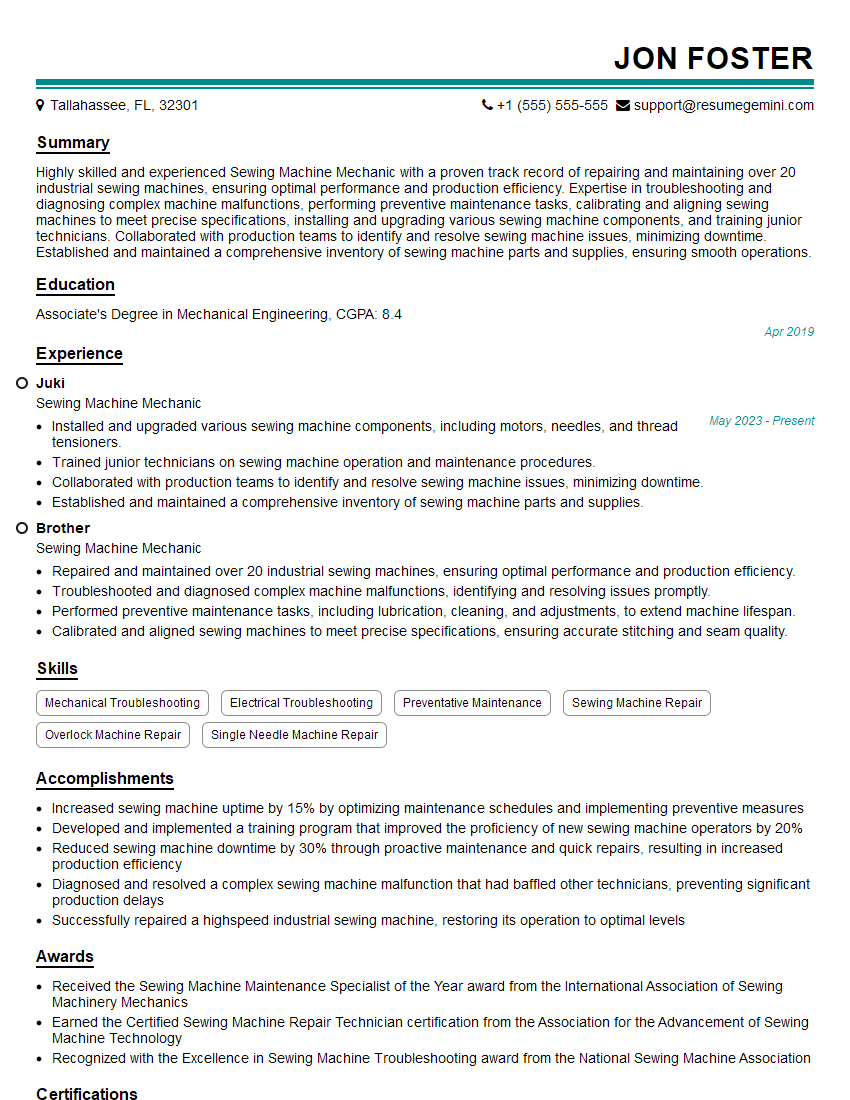
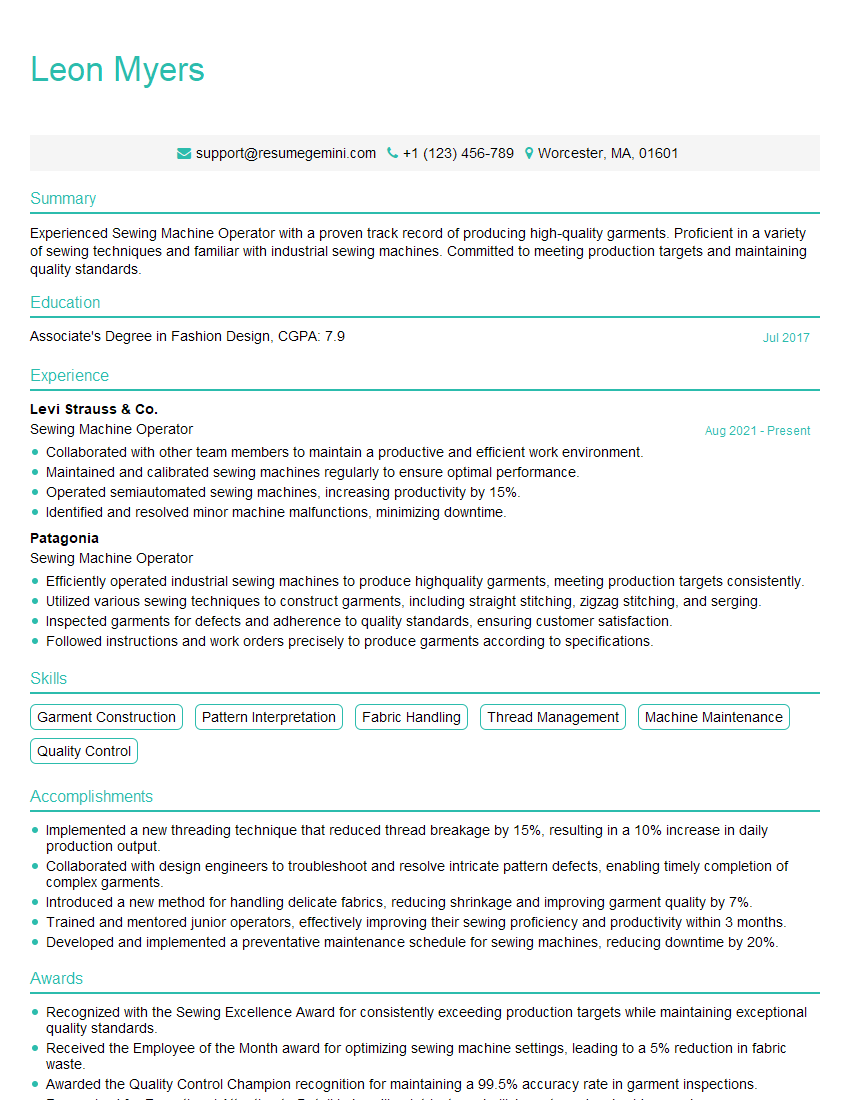
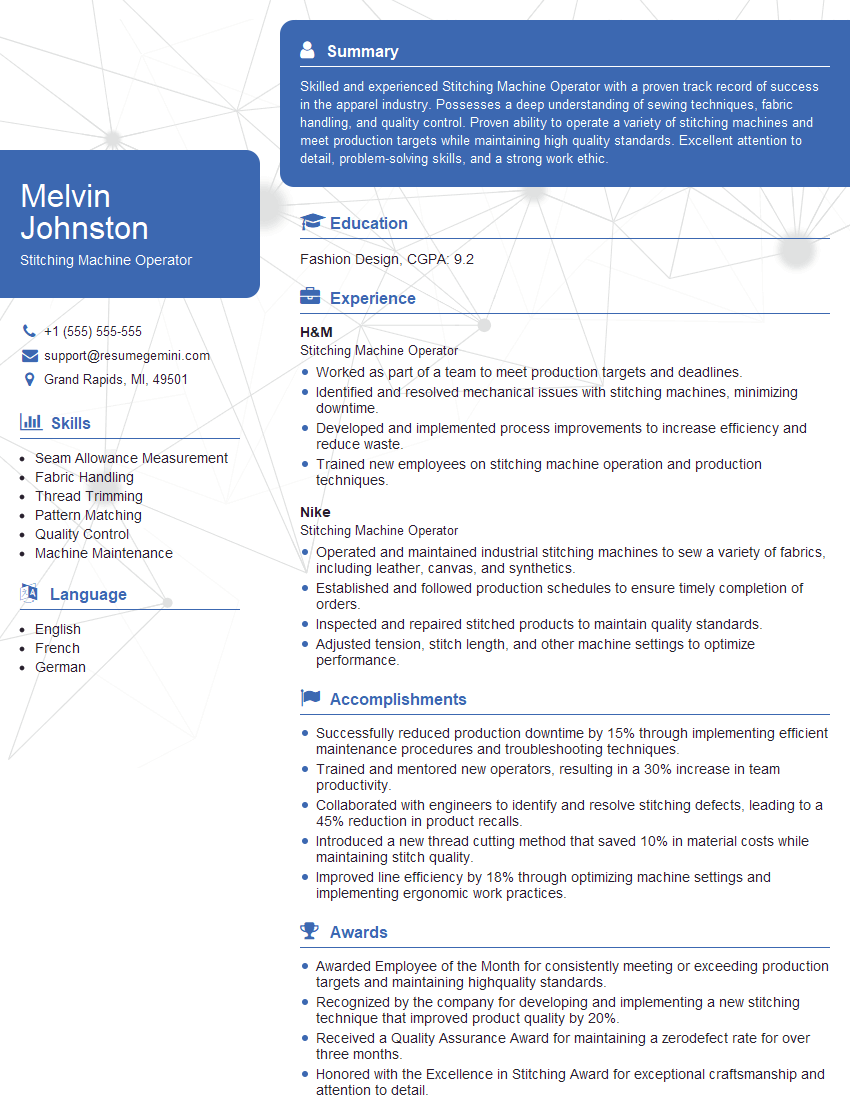
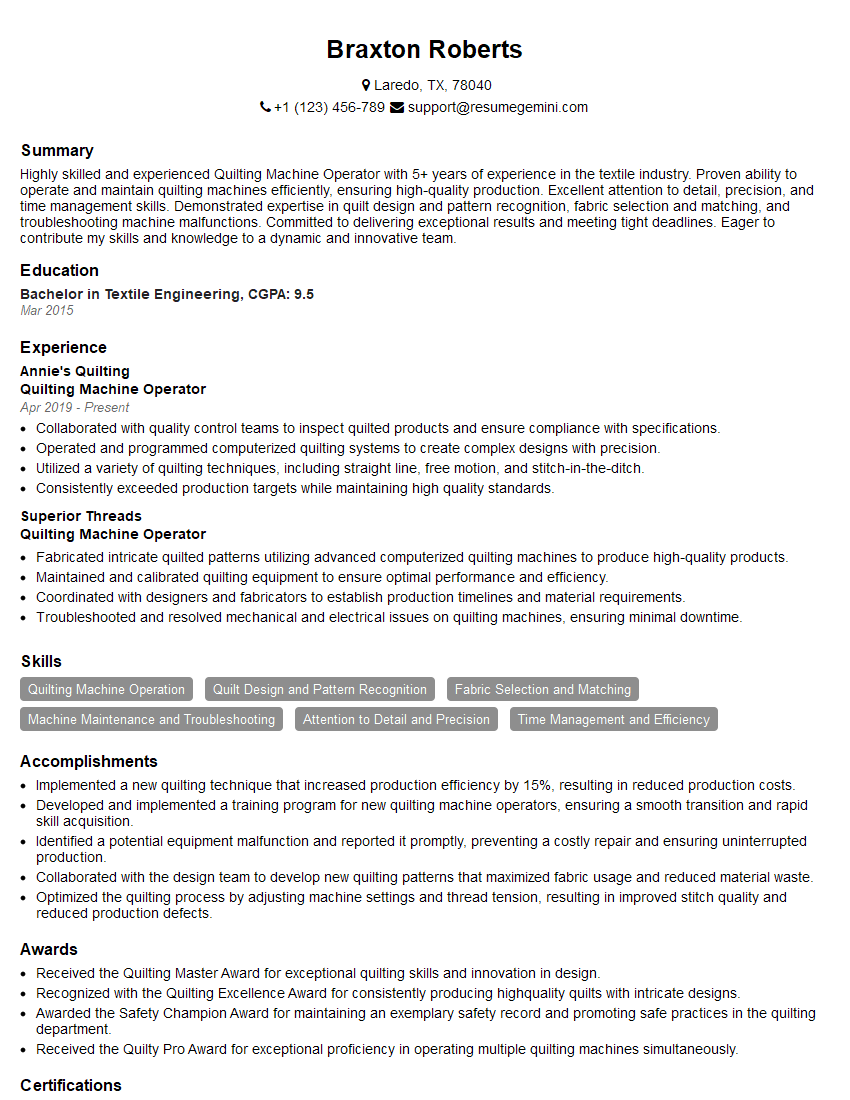
Mastering needle operation is crucial for career advancement in numerous fields, from healthcare to manufacturing. A strong understanding of these techniques demonstrates competence, precision, and a commitment to safety. To significantly improve your job prospects, creating an ATS-friendly resume is essential. ResumeGemini is a trusted resource to help you build a professional and effective resume that highlights your skills and experience. We provide examples of resumes tailored to Needle Operation to help you craft a compelling application.

Explore more articles
Users Rating of Our Blogs
Share Your Experience
We value your feedback! Please rate our content and share your thoughts (optional).
What Readers Say About Our Blog
Very informative content, great job.
good