Are you ready to stand out in your next interview? Understanding and preparing for CraneOperation interview questions is a game-changer. In this blog, we’ve compiled key questions and expert advice to help you showcase your skills with confidence and precision. Let’s get started on your journey to acing the interview.
Questions Asked in CraneOperation Interview
Q 1. What are the different types of cranes you have experience operating?
Throughout my career, I’ve operated a variety of cranes, each suited for different tasks and environments. My experience encompasses:
- Tower Cranes: These are typically found on large construction sites, used for lifting heavy materials to significant heights. I’m proficient in operating both luffing jib and hammerhead tower cranes, understanding their unique operational characteristics and limitations.
- Mobile Cranes: I’m experienced with various types of mobile cranes, including rough-terrain cranes ideal for uneven terrain, and all-terrain cranes which offer superior maneuverability. I’m familiar with their different boom configurations and lifting capacities.
- Overhead Cranes: I have extensive experience operating overhead cranes, both bridge and gantry types, commonly found in factories and warehouses. My expertise includes understanding the intricacies of trolley movement and load balancing within these systems.
- Crawler Cranes: These powerful cranes, known for their stability on soft ground, are part of my operational expertise. I understand the importance of proper ground preparation and safe operating procedures with this type of equipment.
Each crane type requires a different skillset, from precise maneuvering in confined spaces with overhead cranes to assessing ground conditions and managing boom configurations with mobile cranes. My experience ensures I can adapt safely and effectively to any situation.
Q 2. Describe the pre-operational checks you perform before operating a crane.
Pre-operational checks are crucial for ensuring both the safety of the operator and the integrity of the lift. My pre-operational checklist is thorough and follows a standardized procedure. It includes:
- Visual Inspection: A detailed examination of the crane’s structure, including the boom, hoisting mechanism, ropes, and wheels, checking for any damage, wear, or leaks. I pay close attention to any signs of fatigue or unusual noises.
- Mechanical Checks: Verification of all mechanical functions: hoist, swing, luffing (if applicable), and travel mechanisms. Testing these systems under no-load conditions is critical before lifting any weight.
- Safety Devices: Testing emergency stops, limit switches, load indicators, and other safety devices to ensure they’re functioning correctly. This step is non-negotiable for safe operation.
- Documentation Review: Checking the crane’s load chart, certification documents, and any specific operational instructions for the current job. This ensures the crane is suitable for the task and within its operational limits.
- Weather Conditions: Assessing environmental factors, such as wind speed, visibility, and precipitation. Operations may need to be suspended if conditions pose a risk.
These checks are not just a formality; they are an essential part of preventing accidents and ensuring smooth, efficient operation. Think of it like a pilot’s pre-flight checklist—every step is vital.
Q 3. Explain the different types of crane hooks and their applications.
Crane hooks are essential components, and their selection depends heavily on the load being lifted. Different types offer varying levels of strength, versatility, and safety features.
- Standard Hook: This is the most common type, a simple hook with a relatively high load-bearing capacity suitable for a wide range of materials. It’s easy to use and maintain.
- Clevis Hook: Features a clevis (a U-shaped fitting) at the point of attachment to the load. It allows for easier connection with shackles or other lifting devices, offering greater flexibility in rigging.
- Grab Hooks: Used for lifting materials that cannot be easily hooked directly, such as coils of wire or other irregularly shaped objects. These are designed to securely grip the load.
- Alloy Steel Hooks: Made from high-strength alloy steel, offering enhanced durability and load-bearing capacity, making them ideal for handling heavy, high-strength materials.
Selecting the right hook is critical. Using an incorrect hook can lead to load instability, damage to the load, and potentially serious accidents. I always ensure the hook is rated for the load, is in excellent condition and is correctly attached to both the crane and the load.
Q 4. How do you calculate the load capacity of a crane considering various factors?
Calculating a crane’s load capacity is complex and requires considering several factors beyond the crane’s rated capacity. The actual load capacity is always less than the rated capacity due to these influential factors.
- Radius: The distance between the crane’s center of rotation and the load. Load capacity significantly decreases as the radius increases.
- Boom Angle: The angle of the crane’s boom affects the load capacity. Steeper angles generally reduce the capacity.
- Wind Speed: High wind speeds drastically reduce the safe working load. Wind forces can create instability and potentially lead to accidents.
- Crane Condition: The age, maintenance history, and overall condition of the crane affect its capacity. A well-maintained crane will operate closer to its rated capacity.
- Ground Conditions: The stability of the ground beneath the crane is crucial, particularly for mobile and crawler cranes. Soft or uneven ground reduces the crane’s effective load capacity.
We use load charts specific to each crane which incorporate these variables. The load chart is like a lookup table; we find the intersection of boom angle and radius to determine the maximum allowable load under the prevailing conditions. It’s vital to always consult and adhere to the load chart to prevent overloading.
Q 5. What are the safety regulations and procedures you follow when operating a crane?
Safety is paramount in crane operation. I strictly adhere to all applicable safety regulations and procedures, which includes:
- Rigging and Signaling: Following proper rigging techniques to ensure secure load attachment. I only work with certified riggers and utilize clear and standardized hand signals for communication with the signal person.
- Load Weight Verification: Always independently verify the weight of the load before lifting, ensuring it’s within the crane’s calculated capacity.
- Safe Operating Radius: Maintaining a safe distance from power lines, buildings, and other obstacles. I’m aware of the potential hazards, calculating swing radii to avoid collisions.
- Emergency Procedures: I’m thoroughly familiar with emergency shutdown procedures and know how to respond in case of equipment malfunctions or accidents.
- Personal Protective Equipment (PPE): I always wear appropriate PPE, including hard hats, safety shoes, and high-visibility clothing. The work area should also be secured to prevent unauthorized entry.
- Regular Inspections: Participation in routine crane inspections and maintenance to ensure the crane is in top working order.
Safety isn’t just about following rules; it’s a mindset. I proactively identify and mitigate potential hazards, ensuring the job is completed safely and efficiently.
Q 6. Explain the importance of load charts and how to interpret them.
Load charts are essential documents providing critical information on a crane’s safe working load (SWL) under various operating conditions. They are indispensable for safe crane operation. These charts are specific to each crane model and are typically provided by the manufacturer.
Interpreting a load chart involves identifying the relevant parameters: boom length (radius), boom angle, and the corresponding safe working load. These charts usually present this information in a tabular format or a graphical representation. For instance, you might find the maximum allowable load decreases as the boom length and/or boom angle increases. The chart also usually notes factors that could further reduce the SWL such as wind speed or ground conditions.
Failure to consult and adhere to the load chart can result in severe accidents and structural damage to the crane and should never be taken lightly. The load chart is the definitive guide for determining safe lifting limits.
Q 7. What are the different types of crane signals and how do you respond to them?
Crane signals are vital for communication between the crane operator and the signal person, ensuring safe and efficient lifting operations. There are several types of crane signals used, but these are standardized for clarity and safety.
- Hand Signals: These are the most common and are clearly defined in industry standards. They cover movements such as hoisting, lowering, swinging, and traveling.
- Radio Signals: In larger or more complex operations, radio communication offers clear and immediate instructions, particularly advantageous in noisy environments or when visual signals are hampered.
- Light Signals: These can be used as supplementary signals, especially in low light conditions, using lights to indicate specific directions or commands.
My response to signals is prompt and precise. I only initiate a movement after receiving a clear and unambiguous signal, ensuring I fully understand the intended operation before executing it. If a signal is unclear or ambiguous, I always stop and request clarification to avoid any potential errors or safety concerns. Safety always comes first.
Q 8. How do you handle unexpected situations or emergencies during crane operation?
Handling unexpected situations during crane operation hinges on preparedness, quick thinking, and adherence to safety protocols. My approach involves a structured process:
- Immediate Assessment: The first step is to rapidly assess the situation. What’s the problem? Is there an immediate threat to life or property? For example, if a load starts to swing dangerously, I would immediately stop all crane operations.
- Communication: Clear and concise communication is vital. I would alert the ground crew and any other personnel nearby using established communication channels, like radios, to ensure everyone is aware of the emergency. I would inform them of the situation and the actions being taken.
- Emergency Procedures: Depending on the nature of the emergency, I would follow the pre-determined emergency procedures. This could involve lowering the load slowly and carefully, securing the load, or activating the emergency shut-off systems. Having practiced these scenarios ensures a calm and effective response.
- Damage Control and Reporting: Once the immediate danger is mitigated, I would assess any damage caused and secure the area. Following that, a detailed report would be filed, documenting the event, the actions taken, and any contributing factors. This report helps prevent future incidents.
For instance, once, during a high-wind event, a load started to sway unexpectedly. I immediately stopped the lift, communicated the situation to the ground crew, and slowly lowered the load while keeping a safe distance from any obstructions. Thorough post-incident reporting helped identify the need for improved wind-speed monitoring procedures.
Q 9. Describe your experience with different types of crane attachments.
My experience encompasses a wide range of crane attachments, each designed for specific tasks. Here are a few examples:
- Buckets: Used for handling bulk materials like gravel, sand, or demolition debris. Different bucket designs are chosen depending on the material’s properties and the handling needs. For example, clamshell buckets are ideal for grabbing and closing on material.
- Hooks: Standard attachments for lifting various objects secured with slings or chains. Different hook sizes and designs accommodate varied load capacities and shapes. The selection is crucial for safety and proper load distribution.
- Magnets: Used primarily for lifting ferrous metals in scrapyards and steel fabrication plants. The magnet’s strength must match the load’s weight and size for secure handling. A safety check is imperative before each lift.
- Spreader Beams: Employed to distribute the load over two or more lifting points, particularly useful for oversized or irregularly shaped objects. Proper configuration and load calculations are essential for preventing damage to the load or the crane.
- Grab Hooks: These are specifically designed for picking up and securely grasping materials like large rolls of paper or bundles of timber.
Selecting the appropriate attachment is critical for safe and efficient operation. The wrong attachment can lead to accidents, delays, and damage to both the load and the equipment.
Q 10. How do you ensure the stability of the crane during operation?
Ensuring crane stability is paramount. My approach focuses on several key aspects:
- Ground Conditions: I always thoroughly assess the ground conditions before commencing any operation. This involves checking for soft ground, uneven surfaces, or any potential obstacles that could compromise the crane’s stability. If conditions are unfavorable, appropriate measures like using ground mats or outriggers are implemented.
- Crane Setup: Correct placement of the crane is crucial. The crane’s manual provides specific guidelines on positioning, especially concerning outrigger placement. I always ensure adequate clearance from any obstacles and that the crane is positioned for optimal stability.
- Load Calculations: Accurate load calculations are non-negotiable. I always refer to load charts, consider wind speed, and take into account any additional stresses before lifting a load. Overloading is a major cause of crane accidents.
- Swing Radius: I am always mindful of the crane’s swing radius and ensure that it remains clear of any obstructions throughout the entire operation. This includes personnel, buildings, and equipment.
- Monitoring: Continuous monitoring of the crane’s indicators such as load indicators, pressure gauges, and swing indicators throughout the operation ensures I am aware of any changes impacting the crane’s stability.
Ignoring any of these steps can lead to tipping, overloading, or other dangerous situations.
Q 11. Explain the process of rigging and unrigging loads.
Rigging and unrigging are critical processes that demand precision and attention to detail. Rigging involves attaching the load to the crane, while unrigging is the reverse process.
- Rigging: This starts with selecting the correct rigging equipment—slings, shackles, and other hardware—appropriate for the load’s weight, shape, and material. The load is then secured to the rigging equipment using the proper techniques, ensuring proper load distribution and minimizing stress points. A thorough inspection of all equipment before each use is mandatory.
- Lifting: The crane operator carefully lifts the load, ensuring it moves smoothly and safely, continuously monitoring the load’s movement and stability. All relevant personnel are notified to ensure their safety.
- Unrigging: After the load is placed, unrigging involves carefully releasing the load from the rigging equipment. The process is done slowly and methodically, making sure the load is stable before releasing. The rigging equipment is then inspected for any damage.
For example, when rigging a large steel beam, I would use multiple slings attached at carefully chosen points along the beam to ensure even weight distribution and prevent bending or damage. A pre-lift inspection would be carried out with the rigger and ground crew involved. This helps to prevent many of the problems associated with load shifting and structural failure.
Q 12. What are the common causes of crane accidents and how can they be prevented?
Crane accidents stem from various causes, many preventable through diligent safety measures:
- Operator Error: This includes overloading, exceeding the crane’s capacity, improper rigging, and disregarding safety protocols. Training and regular competency assessments are vital to minimize human error.
- Mechanical Failure: Malfunctioning components such as brakes, hydraulic systems, or structural elements can lead to accidents. Regular maintenance and inspections are key to preventing such failures.
- Environmental Factors: High winds, extreme temperatures, and poor visibility can significantly impact crane stability and operation. Weather monitoring and implementing appropriate safety measures are crucial in such conditions.
- Improper Rigging: Using incorrect or damaged rigging equipment, improper attachment points, or inadequate load distribution contributes significantly to accidents. Regular inspection of rigging gear, appropriate selection, and training are needed to minimize these issues.
- Lack of Communication: Miscommunication between the crane operator, riggers, and ground crew can lead to accidents. Establishing clear communication protocols and using appropriate signaling devices are essential.
Preventing accidents involves a multi-faceted approach: robust training programs for operators and riggers, stringent maintenance schedules, regular inspections, clear safety protocols, and open communication channels.
Q 13. What are the maintenance procedures for different crane components?
Crane maintenance varies depending on the type of crane and its components, but it generally includes:
- Regular Inspections: Daily, weekly, and monthly inspections are crucial to identify potential issues early. These checks cover all aspects, from structural components and hydraulic systems to electrical systems and safety devices.
- Lubrication: Regular lubrication of moving parts is essential to reduce friction, extend component life, and prevent premature wear. This is done according to the manufacturer’s specifications.
- Hydraulic System Maintenance: This includes regular fluid checks, filter replacements, and hose inspections to prevent leaks and maintain proper hydraulic pressure. Leaks can compromise both system function and safety.
- Electrical System Maintenance: This includes inspecting wiring, connectors, and control systems to ensure they are functioning correctly. Any damaged or worn components should be replaced immediately.
- Structural Inspections: Regular inspections of the crane’s boom, jib, and other structural components are conducted to identify any signs of wear, corrosion, or damage. This often involves visual inspection as well as more sophisticated methods depending on the component.
A comprehensive maintenance program is vital for ensuring the crane’s longevity and safe operation. Failure to adhere to proper maintenance schedules can lead to catastrophic failures and potentially serious accidents. This also involves following the manufacturer’s instructions and keeping detailed maintenance records.
Q 14. How do you identify and report potential hazards related to crane operation?
Identifying and reporting potential hazards is a continuous process. I rely on a combination of proactive measures and observations:
- Pre-Operational Inspections: Before each operation, I thoroughly inspect the crane, the work area, and the load to identify potential hazards. This includes checking for any obstructions, unstable ground conditions, overhead power lines, or other potential risks.
- Continuous Monitoring: Throughout the operation, I maintain constant vigilance, observing for any changes in conditions or potential hazards. This includes monitoring weather conditions, ground stability, and the load’s behaviour.
- Reporting: Any identified hazards, regardless of how minor they may seem, are immediately reported through the established channels. This could involve verbally notifying the supervisor, site safety officer, or submitting a written report.
- Near Miss Reporting: Near-miss incidents, where an accident nearly occurred, are just as important to report as actual accidents. These reports provide valuable information to improve safety practices and prevent future incidents.
For example, if I notice a damaged cable, I immediately stop work and report the issue to the supervisor. This proactive approach ensures that potential hazards are addressed before they lead to accidents. Thorough reporting and documentation are crucial, providing valuable data for continuous improvement in safety procedures.
Q 15. What is your experience with different types of crane control systems?
My experience encompasses a wide range of crane control systems, from traditional mechanical lever controls to advanced computerized systems with sophisticated load monitoring and safety features. I’ve worked extensively with both analog and digital systems, understanding the nuances of each. For instance, I’m proficient with systems using PLC (Programmable Logic Controller) based control, which allows for precise movements and automated sequences. I also have experience with radio remote control systems, crucial for operations in challenging environments where direct access to the crane is difficult or dangerous. Furthermore, I’m familiar with the safety protocols and maintenance requirements specific to each system type. Understanding the differences is critical for ensuring safe and efficient operations. For example, while radio controls offer flexibility, they require meticulous attention to signal strength and potential interference, which I address through rigorous pre-operational checks.
Career Expert Tips:
- Ace those interviews! Prepare effectively by reviewing the Top 50 Most Common Interview Questions on ResumeGemini.
- Navigate your job search with confidence! Explore a wide range of Career Tips on ResumeGemini. Learn about common challenges and recommendations to overcome them.
- Craft the perfect resume! Master the Art of Resume Writing with ResumeGemini’s guide. Showcase your unique qualifications and achievements effectively.
- Don’t miss out on holiday savings! Build your dream resume with ResumeGemini’s ATS optimized templates.
Q 16. Describe your experience with working at height safety procedures.
Working at height safety is paramount in my profession. My experience includes rigorous adherence to all relevant safety regulations and best practices. This starts with thorough pre-operational inspections of all equipment, including harnesses, lanyards, and fall arrest systems. I always ensure that these are correctly fitted and functioning perfectly. I’m trained and certified in the proper use of fall protection equipment and understand the limitations of various systems. Furthermore, I have experience with various rescue techniques and emergency procedures for working at height. For example, in one instance, a colleague experienced a minor fall while working on a high-rise construction site. My quick response and knowledge of rescue procedures, which included proper harness usage and communicating with emergency services, ensured his swift and safe recovery. This reinforced the importance of proactive safety measures and immediate response strategies.
Q 17. How do you manage communication and coordination with ground personnel?
Clear and concise communication is crucial for safe crane operations. I utilize a multi-faceted approach, combining hand signals, radio communication, and pre-planned procedures. Before any lift, I conduct thorough briefings with ground personnel, ensuring everyone understands the lifting plan, the location of all personnel, and any potential hazards. I use standardized hand signals to communicate directions during lifts and employ clear and concise radio communication to address unforeseen circumstances or changes in the plan. For example, during a particularly complex lift involving a large prefabricated section, maintaining constant communication with the ground crew regarding the placement, adjustments, and final positioning was crucial to successfully execute the operation without any incident.
Q 18. How do you handle weather-related challenges during crane operation?
Weather significantly impacts crane operations. My approach involves continuous weather monitoring throughout the operation. High winds, heavy rain, snow, or extreme temperatures can severely affect crane stability and visibility, compromising safety. My experience includes implementing weather-contingency plans, which involve halting operations when conditions exceed safe operating limits. I’m familiar with various wind speed charts and other guidelines that dictate when crane operation should cease. In instances of inclement weather, I prioritize the safety of the crew and the surrounding area by securing the crane and delaying operations until conditions improve. I’ll even use supplementary weather-protective gear to increase visibility in heavy rain or snow. We have specific protocols for each type of weather event, which range from simply adjusting the lift speed and using additional safety measures to shutting down completely and seeking shelter in the appropriate designated areas.
Q 19. What is your understanding of different lifting techniques?
My understanding of lifting techniques is extensive, encompassing various methods suitable for diverse loads and situations. I am proficient in techniques such as vertical lifts, horizontal lifts, tandem lifts (using multiple cranes), and specialized lifts requiring intricate planning. I also have practical experience with the use of rigging hardware, ensuring proper load distribution and minimizing stress on the load and crane itself. The selection of the lifting technique depends on several factors, including the weight, size, shape, and fragility of the load, as well as the working environment and available equipment. For example, when lifting a very fragile piece of equipment, a specialized sling and a more delicate lifting technique must be selected.
Q 20. Explain your experience with various types of slings and their limitations.
I have worked with numerous types of slings, including wire rope slings, chain slings, synthetic web slings, and round slings, each with unique properties and limitations. Wire rope slings are strong but prone to wear and internal damage, requiring regular inspection. Chain slings are durable but can be susceptible to damage from impact or sharp objects. Synthetic web slings are lightweight and flexible, ideal for delicate loads, but have lower tensile strength compared to wire rope or chain. I understand the importance of choosing the appropriate sling type for a specific load and understanding the weight limits and proper inspection procedures for each type. Using the wrong sling for the job can lead to catastrophic equipment failure and injuries. Prior to each lift, I rigorously inspect slings for any visible signs of wear, damage, or defects, and always adhere to the manufacturer’s guidelines and safety regulations.
Q 21. How do you ensure the safe transportation and storage of crane equipment?
Safe transportation and storage of crane equipment is crucial for maintaining operational readiness and preventing accidents. My experience includes securing equipment appropriately using tie-down straps and securing mechanisms. I also ensure that the equipment is stored in a designated area, protected from the elements and potential damage. During transportation, cranes are frequently disassembled and transported on specialized trailers. I am very familiar with the requirements for such transportation to guarantee safe and responsible movement. I’m also meticulous about pre- and post-transport inspections to check for any damage incurred during the journey. This systematic approach minimizes risk and ensures the longevity and reliability of the equipment.
Q 22. What are the legal requirements for crane operation in your region?
Legal requirements for crane operation vary significantly by region, but generally include adherence to national and local safety regulations, licensing and certification of operators, regular crane inspections and maintenance, and site-specific risk assessments. In my region, we must comply with OSHA (Occupational Safety and Health Administration) regulations in the United States, which mandate rigorous training, certification, and periodic inspections for all crane operators and equipment. This includes detailed documentation of inspections, operator qualifications, and any incidents or near misses. Additionally, site-specific permits are often required, dependent on the complexity of the lift and the location. For instance, working near power lines mandates specific procedures and clearances. Failure to comply can result in hefty fines and legal action.
- Licensing and Certification: Operators must hold valid licenses and certifications demonstrating competency in crane operation, specific to the type of crane being used.
- Regular Inspections: Cranes undergo frequent inspections, both pre-operational and scheduled maintenance, documented meticulously in logs.
- Risk Assessments: Detailed risk assessments are mandatory for each lifting operation, identifying potential hazards and outlining mitigation strategies.
- Emergency Procedures: Clear emergency procedures, including communication protocols and evacuation plans, must be established and practiced.
Q 23. Describe your experience working with different types of load configurations.
My experience encompasses a wide range of load configurations, from simple, single-point lifts to complex, multi-point lifts involving multiple cranes. I’ve worked with various load types including steel beams, precast concrete elements, heavy machinery, and oversized modules. One memorable project involved lifting and positioning a massive transformer weighing over 200 tons using a specialized crawler crane. The load was particularly challenging due to its size and the need for precise placement. To ensure safety, we used multiple rigging points and load monitoring systems to distribute the weight evenly and prevent any undue stress on the crane or the load. Another project included lifting and placing prefabricated modular sections for a building. These were highly sensitive to impact, and careful coordination and precision placement were key for successful installation. I’m proficient in calculating center of gravity and understanding the impact of different load configurations on crane stability and stress.
- Single-Point Lifts: Simple, straightforward lifts using a single hook or lifting point.
- Multi-Point Lifts: More complex lifts involving multiple lifting points for better load distribution and stability.
- Oversized and Heavy Lifts: Specialized lifting techniques and equipment are required for exceptionally heavy or large loads.
- Sensitive Loads: Requiring careful handling and precise placement to avoid damage.
Q 24. How do you assess and mitigate risks associated with crane operation?
Risk assessment and mitigation are paramount in crane operation. My approach involves a multi-step process: First, a thorough site survey identifying potential hazards like overhead obstructions, unstable ground, proximity to power lines, and environmental factors such as wind speed. Second, a detailed analysis of the lifting plan, including load weight, center of gravity, rigging configuration, and crane capacity. Third, implementing control measures, including using appropriate safety equipment, establishing exclusion zones, and ensuring clear communication among the team. For instance, if working near power lines, we’d use a qualified spotter and ensure adequate clearance is maintained. For unstable ground conditions, we’d use ground mats or cribbing to provide a stable base for the crane. If high winds are anticipated, we’d postpone the lift or employ wind-resistant strategies. Documentation of all risk assessments and mitigation strategies is crucial for maintaining safety records.
- Pre-Lift Inspection: A thorough check of the crane, rigging equipment, and site conditions.
- Load Calculation: Accurate calculation of the load weight and center of gravity.
- Rigging Plan: A detailed plan for attaching the load to the crane.
- Site Survey: Identification of potential hazards.
- Emergency Plan: A plan for handling emergencies.
Q 25. What are your experience with different types of soil conditions affecting crane operations?
Different soil conditions significantly impact crane stability and operational safety. My experience includes working on various sites with diverse soil types, from firm bedrock to soft, saturated clay. For example, when operating on soft soil, we’d employ ground improvement techniques such as using ground mats, cribbing, or even constructing temporary support structures under the crane’s outriggers to distribute the weight and prevent sinking or tilting. Working on slopes requires careful consideration of the ground’s stability and the crane’s position to avoid tipping. On rocky terrain, proper positioning and ground preparation are crucial to prevent damage to the crane’s outriggers or tracks. Understanding soil bearing capacity is critical – this often involves ground investigation reports before operations begin.
- Ground Improvement Techniques: Using mats, cribbing, or other techniques to improve ground stability.
- Ground Bearing Capacity: Understanding the weight-bearing capacity of the soil to ensure crane stability.
- Slope Considerations: Adjusting crane setup and operation to account for the effects of slopes.
- Site Preparation: Preparing the ground to ensure a stable and level working area for the crane.
Q 26. Explain your experience with troubleshooting crane malfunctions.
Troubleshooting crane malfunctions requires a systematic approach. My experience involves identifying the problem, assessing its severity, and taking appropriate action. This often involves checking hydraulic systems for leaks, inspecting electrical systems for faults, and examining mechanical components for wear and tear. I have experience diagnosing issues related to hoisting mechanisms, swing systems, and outrigger systems. For instance, a sudden loss of hoisting power might indicate a problem with the hydraulic pump or a blown fuse. A malfunctioning swing system might point to a problem with the motors or gearing. I’m also familiar with using diagnostic tools and interpreting error codes, and know when to call in specialized maintenance personnel. Safety is always the priority; if a serious malfunction occurs, the crane is immediately shut down, the area is secured, and qualified personnel are notified.
- Systematic Troubleshooting: A step-by-step approach to identifying and fixing problems.
- Diagnostic Tools: Utilizing specialized tools to diagnose and identify malfunctions.
- Safety Procedures: Ensuring safety procedures are followed during troubleshooting.
- Emergency Procedures: Knowing how to handle serious malfunctions.
Q 27. How do you maintain accurate records and logs of crane operation?
Maintaining accurate records and logs is crucial for compliance and safety. We utilize both electronic and paper-based systems to document all aspects of crane operation. Electronic systems often include software specifically designed for crane management, storing data such as pre-operational inspections, daily maintenance checks, operational logs (including lifting details, time, location, and personnel involved), and any incidents or near misses. These systems can generate reports that assist in compliance auditing. Paper-based logs are also maintained as backups and for immediate on-site record keeping. Detailed records are essential for tracking crane usage, scheduling maintenance, and investigating any incidents or near misses. These logs serve as vital evidence in accident investigations or insurance claims. Information accuracy is paramount; even minor discrepancies can hinder any investigations and impact legal outcomes.
- Pre-Operational Inspections: A detailed checklist of checks before each use.
- Daily Maintenance Logs: Record of daily checks and maintenance activities.
- Operational Logs: Detailed records of each lift, including weights, times, locations, and personnel.
- Incident Reports: Documentation of any incidents or near misses.
Q 28. Describe your experience working within a team environment on a crane operation project.
Effective teamwork is critical for safe and efficient crane operation. I’ve worked on numerous projects involving diverse teams – crane operators, riggers, signal persons, engineers, and supervisors. Good communication is paramount; this often involves using standardized hand signals, radio communication, and pre-lift briefings to ensure everyone understands the plan and their roles. One project involved lifting heavy steel beams into place for a high-rise building. The team’s coordinated effort, with clear communication and precise signal coordination, ensured the beams were placed perfectly, minimizing delays and ensuring safety. Successful teamwork requires mutual respect, a shared understanding of safety protocols, and a commitment to achieving the project goals while maintaining high safety standards. Open communication and proactive problem-solving are essential for resolving any conflicts or unforeseen issues.
- Communication: Clear and consistent communication among team members.
- Coordination: Coordinated efforts to ensure smooth and safe operation.
- Safety Protocols: Adherence to strict safety procedures.
- Problem-Solving: Proactive problem-solving to address any challenges.
Key Topics to Learn for Crane Operation Interview
- Crane Types and Mechanisms: Understanding the different types of cranes (tower, mobile, overhead, etc.) and their operating mechanisms is fundamental. Consider the advantages and disadvantages of each type in various applications.
- Load Charts and Stability: Mastering the interpretation of load charts and understanding the principles of crane stability is crucial for safe operation. Practice calculating safe working loads and recognizing potential instability factors.
- Rigging and Signaling: Familiarize yourself with proper rigging techniques, including selecting appropriate slings and attachments. Learn standard hand signals and communication protocols used in crane operation.
- Safety Regulations and Procedures: Thorough knowledge of relevant safety regulations (OSHA, etc.) and standard operating procedures is essential. Be prepared to discuss preventative maintenance, emergency procedures, and risk assessment.
- Practical Application: Think about scenarios involving lifting heavy loads, working at heights, and navigating confined spaces. How would you approach these situations safely and efficiently? Consider different weather conditions and their impact on operation.
- Troubleshooting and Problem-Solving: Be ready to discuss how you would troubleshoot common crane malfunctions, address unexpected situations, and make informed decisions under pressure. Consider examples from your experience (if any).
- Advanced Concepts (Optional): Depending on the seniority of the role, you might be asked about advanced topics such as load moment indicators (LMIs), anti-collision systems, or specific software used for crane management.
Next Steps
Mastering crane operation opens doors to rewarding and highly skilled careers in construction, manufacturing, and logistics. To stand out from the competition, a strong, ATS-friendly resume is vital. ResumeGemini is a trusted resource to help you create a professional resume that highlights your skills and experience effectively. Examples of resumes tailored to Crane Operation are provided to help you craft a compelling application.

Crane Operator Resume Sample

Heavy Equipment Operator Resume Sample

Rigger Resume Sample

Derrick Operator Resume Sample

Crane Mechanic Resume Sample
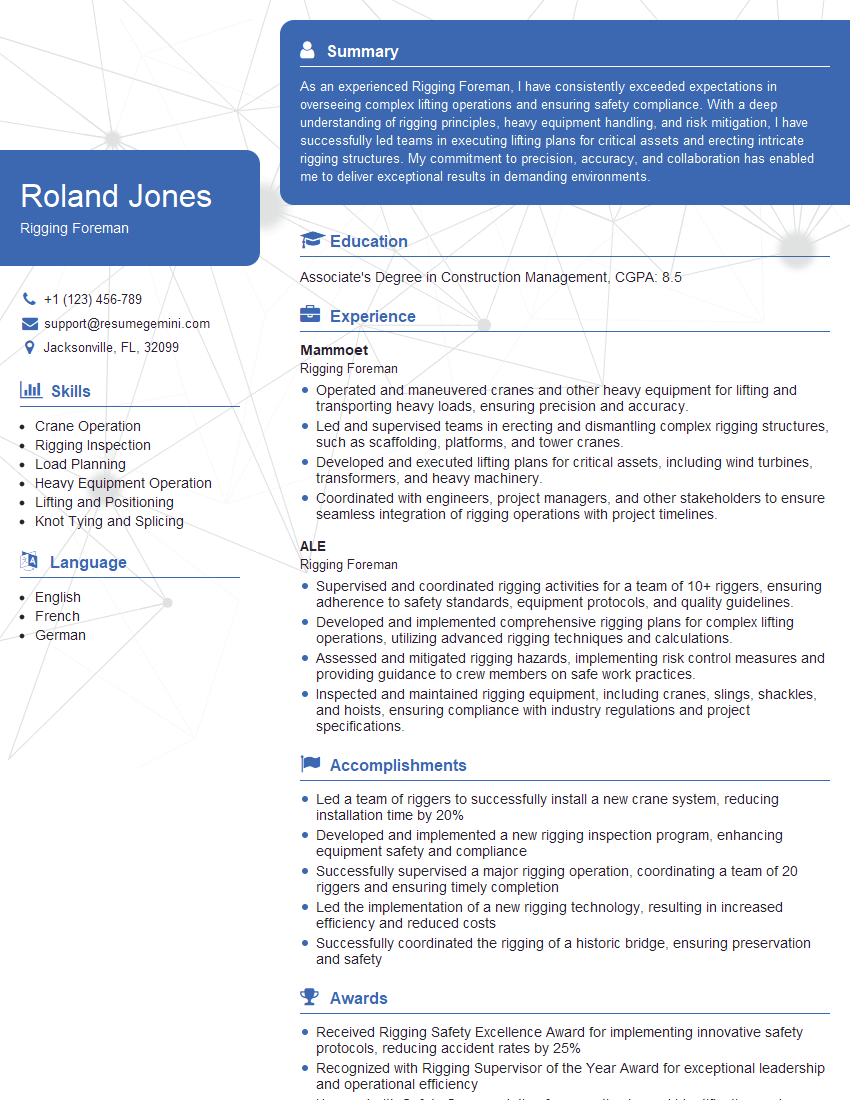
Rigging Foreman Resume Sample

Signal Person Resume Sample

Mobile Crane Operator Resume Sample

Overhead Crane Operator Resume Sample

Tower Crane Operator Resume Sample

Hoist Operator Resume Sample

Winch Operator Resume Sample
Explore more articles
Users Rating of Our Blogs
Share Your Experience
We value your feedback! Please rate our content and share your thoughts (optional).
What Readers Say About Our Blog
Very informative content, great job.
good