Preparation is the key to success in any interview. In this post, we’ll explore crucial Crashworthiness and Safety Design interview questions and equip you with strategies to craft impactful answers. Whether you’re a beginner or a pro, these tips will elevate your preparation.
Questions Asked in Crashworthiness and Safety Design Interview
Q 1. Explain the difference between active and passive safety systems.
Active and passive safety systems work together to protect vehicle occupants during a crash, but they operate at different times and in different ways. Think of it like this: passive systems are your seatbelt – always there, ready to act. Active systems are like your brakes – you activate them to avoid a collision or mitigate its severity.
- Passive safety systems are features built into the vehicle that automatically work to reduce injury during a crash. Examples include airbags, seatbelts, crumple zones, and energy-absorbing materials. These systems are designed to absorb and redirect crash energy away from the occupants.
- Active safety systems are features that help prevent crashes or reduce their severity. Examples include anti-lock brakes (ABS), electronic stability control (ESC), adaptive cruise control (ACC), and lane departure warning systems. These systems actively intervene to prevent or lessen the impact of a collision.
In essence, passive systems deal with the consequences of a crash, while active systems aim to prevent the crash from happening in the first place or minimize its impact.
Q 2. Describe your experience with finite element analysis (FEA) in crashworthiness simulations.
I have extensive experience using finite element analysis (FEA) for crashworthiness simulations, primarily using LS-DYNA and ABAQUS. My work involves building detailed finite element models of vehicle structures, incorporating material models that accurately represent the behavior of steel, aluminum, and composite materials under high-strain-rate loading conditions.
For example, in a recent project, I modeled a frontal impact of a vehicle, incorporating detailed meshing of the front-end structure, including the bumper, radiator support, and crash rails. I utilized material models like Johnson-Cook and Cowper-Symonds to capture the plastic deformation and strain rate effects accurately. The simulation allowed us to identify areas of high stress concentration and optimize the design to improve occupant safety by modifying the geometry and material properties.
Beyond the structural analysis, my FEA work also includes occupant simulation, using dummy models to predict injury criteria like HIC (Head Injury Criterion) and chest acceleration. This allows a comprehensive evaluation of the vehicle’s crashworthiness performance.
Q 3. What are the key design considerations for minimizing head injuries in a frontal impact?
Minimizing head injuries in frontal impacts requires a multi-faceted design approach that focuses on managing and redirecting energy away from the occupant’s head. Key considerations include:
- Optimized Crumple Zones: Designing efficient crumple zones in the front structure to absorb and dissipate crash energy progressively. This slows the deceleration rate, reducing the forces transmitted to the occupant compartment.
- Advanced Restraint Systems: Implementing advanced airbag systems, including dual-stage, multi-stage, and curtain airbags, to provide optimal protection based on crash severity. Proper positioning and deployment timing are crucial.
- Head Restraint Design: Designing head restraints to minimize whiplash injury by providing appropriate support and limiting head and neck motion during a collision. Optimal height and angle adjustment are critical factors.
- Stiffening of the Passenger Compartment: Maintaining the structural integrity of the passenger compartment to prevent intrusion and protect the occupant space. This includes reinforcing the A-pillars, roof, and floor structure.
- Energy-Absorbing Materials: Using energy-absorbing materials in strategic locations, such as in the dashboard and steering column, to mitigate the impact forces on the occupant’s head and upper body.
These design considerations are not independent but are integrated for a holistic approach to head injury protection. For instance, improved crumple zone design directly influences the effectiveness of the airbag system by reducing the impact velocity.
Q 4. How do you validate the accuracy of your crash simulation models?
Validating the accuracy of crash simulation models is a crucial step in ensuring their reliability. This process involves a multi-step approach combining correlation with experimental data and model refinement.
- Correlation with physical test data: The simulation results, such as acceleration, displacement, and strain values, are compared to data collected from physical crash tests. This comparison helps identify discrepancies and areas for improvement in the model.
- Mesh sensitivity studies: These studies evaluate the effect of mesh refinement on the simulation results. A properly refined mesh ensures the accuracy and convergence of the solution.
- Material model validation: Material models used in the simulation (e.g., Johnson-Cook, Cowper-Symonds) need to be calibrated against experimental data obtained from material testing under crash-relevant conditions. This ensures the accurate representation of material behavior in the simulation.
- Component-level validation: Individual components of the vehicle structure are often tested separately before being integrated into the full-vehicle model, providing independent validation of component-level behavior.
- Iterative model refinement: Based on the comparison between simulation and experimental data, the model is iteratively refined to reduce discrepancies. This can involve adjusting material parameters, mesh density, boundary conditions, or even the model geometry.
The goal is to achieve a good correlation between the simulation and the experimental data, indicating the accuracy of the model. Acceptable levels of correlation vary depending on the specific application and the required level of accuracy.
Q 5. What are the common failure modes observed in vehicle structures during a crash?
Vehicle structures experience several failure modes during a crash, each dependent on the impact type, location, and severity. Common failure modes include:
- Plastic deformation: This is the permanent deformation of the material beyond its elastic limit. It’s a desirable failure mode in crumple zones, as it absorbs energy.
- Fracture: This involves the complete separation of material along a crack, typically resulting from high stress concentration. This can compromise structural integrity.
- Buckling: This is a sudden collapse of a structural member due to compressive loads, often observed in thin-walled structures like doors and pillars.
- Shear failure: This is the failure of the material along a plane parallel to the applied force, often observed in welds or joints.
- Tensile failure: This is the fracture of the material due to tensile stress, commonly occurring in areas subjected to pulling forces.
Understanding these failure modes is crucial for designing crashworthy structures. The goal is to manage and control these failures, directing them to specific areas to protect the occupant compartment. For example, directing plastic deformation to the front crumple zone minimizes damage to the passenger cabin.
Q 6. Explain your understanding of different crash test standards (e.g., FMVSS, Euro NCAP).
Crash test standards, like FMVSS (Federal Motor Vehicle Safety Standards) and Euro NCAP (European New Car Assessment Programme), define the procedures and criteria for evaluating the safety performance of vehicles. They are crucial for ensuring a minimum level of safety for all vehicles sold in their respective regions.
- FMVSS: These are US federal regulations mandating minimum safety performance standards for various aspects of vehicle design, including crashworthiness. They are prescriptive, setting specific requirements for crash performance metrics (e.g., maximum allowable intrusion into the passenger compartment).
- Euro NCAP: This is a European independent safety assessment program providing ratings (star ratings) based on the results of crash tests and other safety assessments (e.g., pedestrian safety, active safety features). It provides a more holistic and consumer-focused evaluation compared to FMVSS. Its testing protocols are more stringent and include more crash scenarios.
Understanding these standards is essential in designing crashworthy vehicles, as they provide benchmarks for performance and drive the design and development process. The specific requirements of the relevant standards must be taken into account during the design and simulation stages to ensure compliance.
Q 7. How do you interpret and analyze crash test data?
Interpreting and analyzing crash test data requires a systematic approach that combines engineering expertise, data analysis techniques, and an understanding of injury biomechanics. The process involves several steps:
- Data acquisition: Collecting data from various sensors during the crash test, such as accelerometers, strain gauges, and high-speed cameras.
- Data processing: Cleaning and preparing the raw data for analysis, including removing noise and outliers.
- Injury criterion assessment: Calculating injury criteria like HIC (Head Injury Criterion), chest acceleration, and femur force to assess the risk of injury to occupants.
- Structural analysis: Analyzing the deformation patterns and failure modes of the vehicle structure to identify areas for improvement.
- Correlation with simulations: Comparing the experimental data with simulation results to validate the accuracy of the models and identify areas for refinement.
- Reporting and interpretation: Preparing a detailed report summarizing the findings and proposing design modifications to improve safety performance.
Visualizing the data using tools like plotting software or animation tools is crucial for effectively identifying trends and understanding the vehicle’s dynamic behavior during the crash. This detailed process allows engineers to learn from crash test results and iteratively improve vehicle design for enhanced occupant protection.
Q 8. What software packages are you proficient in for crashworthiness simulation?
My expertise in crashworthiness simulation relies heavily on several leading software packages. I’m highly proficient in LS-DYNA, a widely recognized industry standard for explicit finite element analysis (FEA). This software allows for detailed modeling of highly nonlinear events like impacts. I’m also experienced with Abaqus, known for its capabilities in implicit FEA, particularly useful for analyzing static and quasi-static scenarios that complement dynamic crash simulations. Furthermore, I have working knowledge of HyperMesh for pre- and post-processing, which is crucial for mesh generation, model setup, and result visualization. Finally, I utilize Altair Radioss, another powerful explicit solver, offering a different solution approach and often valuable for validation purposes. Each software has its strengths; selecting the right one depends on the specific problem and desired level of detail.
Q 9. Describe your experience with different material models used in crash simulations.
Material models are the heart of accurate crash simulations. My experience spans a wide range, from simple elastic-perfectly plastic models for simpler components to highly sophisticated material laws for complex components. For metals, I frequently employ Johnson-Cook and Cowper-Symonds models to capture the effects of strain rate and temperature on material behavior during the high-energy deformation of a crash. These models are crucial for predicting accurate failure initiation and propagation. For polymers, I’ve used models like Ogden and Arruda-Boyce, which account for the hyperelastic nature of these materials. Furthermore, I have experience with composite material models, including those that capture fiber orientation and failure mechanisms. Choosing the appropriate model requires a deep understanding of the material’s properties and the loading conditions. For example, using a simple elastic model for a high-speed impact would be grossly inaccurate and lead to misleading results.
Q 10. How do you address challenges related to mesh convergence in FEA?
Mesh convergence is a critical aspect of ensuring accurate FEA results. It refers to the process of refining the mesh until the solution no longer changes significantly with further refinement. I address this through a systematic approach. First, I perform a mesh sensitivity study, progressively refining the mesh in critical areas like impact zones and comparing the results. I use metrics such as energy balance and key response quantities (e.g., intrusion, acceleration) to assess convergence. If convergence isn’t achieved, I investigate the mesh quality, looking for distorted elements or excessively large aspect ratios, which can lead to inaccuracies. Techniques such as adaptive mesh refinement (AMR) can be employed for focusing computational resources on areas experiencing high stress gradients. Effectively managing mesh convergence is a balance between accuracy and computational cost. Overly refined meshes can be computationally expensive, while insufficient refinement can lead to inaccurate and unreliable results. I always aim for a balance that provides sufficient accuracy without unduly increasing simulation times.
Q 11. Explain your understanding of occupant kinematics during a crash.
Understanding occupant kinematics is essential for designing effective restraint systems. During a crash, the occupant undergoes complex movements influenced by the vehicle’s deceleration and the restraint system’s performance. I analyze these movements using FE models that include a detailed representation of the human body, often using anthropomorphic test devices (ATDs) or finite element human models (FEHM). Key kinematic parameters include head acceleration, chest deflection, and pelvic displacement. These parameters are used to assess the risk of injury based on established injury criteria, such as the Head Injury Criterion (HIC) and chest acceleration limits. For example, a high HIC value indicates a greater risk of head injury. My analyses focus on optimizing the interaction between the occupant and the restraint system, minimizing the risk of injury through careful design of restraint system geometry, activation timing, and material properties.
Q 12. What are the key design considerations for pedestrian safety?
Pedestrian safety is a growing concern, and design considerations are crucial. Key aspects include minimizing the impact forces to the pedestrian’s head and legs. This involves designing the vehicle’s front-end structure to yield progressively upon impact, thereby reducing the severity of the collision. The hood and bumper are designed to absorb energy and have features to reduce the risk of head injury like hood deformation and strategically positioned impact absorbers. The lower extremities can be protected by having the shape of the bumper and other front-end components designed to redirect impact forces to less vulnerable areas. Regulations and standards (like those from Euro NCAP and IIHS) are carefully considered during this design process. Simulation plays a critical role, allowing us to evaluate the performance of various design concepts before physical testing. For example, simulating the impact of a pedestrian leg against the bumper helps optimize its geometry for minimum injury risk.
Q 13. How do you assess the effectiveness of different restraint systems (e.g., airbags, seatbelts)?
Assessing the effectiveness of restraint systems requires a multifaceted approach. For seatbelts, I analyze parameters such as load distribution, belt pretensioning characteristics, and slack. Excessive loads could indicate potential injury to the occupant, while insufficient restraint could allow for excessive movement during the collision. For airbags, I assess their deployment timing, inflation pressure, and gas generator performance. Premature or delayed deployment can be detrimental, and excessive pressure may cause injury. I use simulation and experimental data to optimize these systems. For instance, simulation allows us to evaluate how changes in airbag geometry or belt stiffness impact occupant kinematics and injury risk. These simulations help in optimizing restraint systems to meet regulatory requirements and achieve the best possible occupant protection during various impact scenarios.
Q 14. Explain your experience with experimental crash testing.
I possess extensive experience in experimental crash testing, including planning, execution, and data analysis. This involves setting up tests according to standardized procedures (e.g., FMVSS, ECE regulations), using various test facilities and equipment, such as sled tests, barrier impacts, and side impacts. This hands-on experience allows me to validate my simulation models and refine them based on real-world data. I’m familiar with instrumentation techniques, including accelerometers, load cells, and high-speed cameras. The data acquired from these tests is meticulously analyzed to correlate with simulation outputs, ensuring model accuracy. For example, in one project, I oversaw full-scale vehicle crash tests to validate a new crumple zone design. Analyzing the test data not only verified the simulation’s predictive capability but also revealed the need for minor adjustments to the design for enhanced performance.
Q 15. Describe your understanding of energy absorption mechanisms in vehicle structures.
Energy absorption in vehicle structures is crucial for mitigating the impact forces during a crash and protecting occupants. It’s all about strategically managing the kinetic energy of the vehicle, converting it into other forms of energy like plastic deformation, heat, and sound, thereby reducing the energy transferred to the occupants.
Several mechanisms contribute to this energy absorption:
- Plastic deformation: This is the most significant mechanism. Materials like steel and aluminum are designed to deform permanently (plastically) absorbing energy in the process. Think of crumpling a piece of aluminum foil – it absorbs energy as it deforms. In a car, programmed crumple zones are designed to undergo controlled plastic deformation, slowing the vehicle down gradually.
- Fracture: Certain components might fracture, absorbing energy in the process. While seemingly destructive, controlled fracture can be beneficial, diverting energy away from the passenger compartment.
- Elastic deformation: While less significant in crashworthiness compared to plastic deformation, elastic deformation (where the material returns to its original shape after loading) can play a role in absorbing some energy. Think of a spring absorbing shock.
- Energy dissipation through other mechanisms: Some energy is dissipated as heat through friction during the deformation process. Also, sound energy is generated during a collision.
Effective crashworthiness design involves optimizing these energy absorption mechanisms through material selection, component design, and structural arrangement to ensure maximum protection for occupants during various impact scenarios.
Career Expert Tips:
- Ace those interviews! Prepare effectively by reviewing the Top 50 Most Common Interview Questions on ResumeGemini.
- Navigate your job search with confidence! Explore a wide range of Career Tips on ResumeGemini. Learn about common challenges and recommendations to overcome them.
- Craft the perfect resume! Master the Art of Resume Writing with ResumeGemini’s guide. Showcase your unique qualifications and achievements effectively.
- Don’t miss out on holiday savings! Build your dream resume with ResumeGemini’s ATS optimized templates.
Q 16. What are the key regulatory requirements related to vehicle crashworthiness?
Vehicle crashworthiness is governed by stringent regulations worldwide, primarily aimed at protecting occupants and pedestrians. Key requirements vary slightly by region (e.g., FMVSS in the US, ECE R regulations in Europe, etc.), but common themes include:
- Occupant protection: Regulations specify minimum performance standards for things like seatbelts, airbags, and the structural integrity of the passenger compartment. These are often tested using standardized crash tests like frontal, side, and rollover tests, which measure parameters like head injury criteria (HIC), chest acceleration, and pelvic acceleration.
- Pedestrian protection: Regulations focus on minimizing injuries to pedestrians in the event of a collision. This involves design features such as energy-absorbing bumpers and hood designs.
- Vehicle stability: Regulations often address issues like rollover resistance and electronic stability control systems (ESC) to reduce the likelihood of crashes.
- Structural integrity: Regulations often define minimum requirements for the strength and rigidity of vehicle structures to withstand various impact scenarios.
Compliance with these regulations is essential for vehicle manufacturers to gain market access and avoid legal liabilities. Meeting these standards necessitates extensive crash testing and computer simulations.
Q 17. How do you balance cost and performance in crashworthiness design?
Balancing cost and performance in crashworthiness design is a crucial challenge. It’s a continuous optimization problem where we seek the best safety performance within budget constraints.
Strategies for achieving this balance include:
- Material selection: Using high-strength steels (HSS) or advanced high-strength steels (AHSS) can enhance strength and energy absorption, but these materials are generally more expensive than mild steel. The challenge is finding the optimal balance between the material’s cost and its contribution to improving the crashworthiness.
- Design optimization: Utilizing advanced simulation techniques and optimization algorithms to fine-tune the geometry and structural topology to maximize energy absorption while minimizing material usage. This involves utilizing CAE (Computer-Aided Engineering) tools for analysis and simulation.
- Hybrid designs: Combining different materials to leverage their respective strengths. For example, using lighter materials (like aluminum) in certain areas to reduce overall weight and cost while employing high-strength steel in critical areas for impact protection.
- Component standardization: Using standardized components can reduce manufacturing costs without compromising safety significantly.
- Lifecycle analysis: Considering the whole vehicle’s lifecycle, including manufacturing, operation, and recycling, to find cost-effective solutions.
This requires a holistic approach involving engineers from various disciplines and a deep understanding of both material science and manufacturing processes.
Q 18. Explain your experience with optimization techniques in crashworthiness design.
Optimization techniques are integral to modern crashworthiness design. They allow engineers to explore a vast design space efficiently, seeking the optimal design that meets safety targets while minimizing weight and cost.
My experience includes using various optimization algorithms, including:
- Topology optimization: This technique determines the optimal material distribution within a given design space to maximize stiffness and energy absorption. The result is often a complex, lightweight structure.
- Shape optimization: This adjusts the shape of existing components to improve their crash performance. For example, optimizing the geometry of a bumper beam to better absorb impact energy.
- Size optimization: This method adjusts the dimensions (thickness, cross-sectional area) of structural elements to optimize crash performance.
These techniques are typically coupled with finite element analysis (FEA) software to simulate crash events and evaluate the performance of different designs. Optimization algorithms often involve iterative processes, where the design is modified based on the simulation results until a satisfactory solution is found. This is computationally intensive and often requires high-performance computing resources.
I have experience using commercial FEA and optimization software packages such as LS-DYNA, Abaqus, and OptiStruct to implement and validate these optimization approaches for various vehicle components, contributing to improved crashworthiness performance and reduced development times.
Q 19. Describe your understanding of different types of impact loading (e.g., frontal, side, rollover).
Different impact loading scenarios demand specific design considerations due to the varying impact forces and energy distribution.
- Frontal impact: This involves a head-on collision. The design focuses on energy absorption in the front structure, crumple zones, and the engine compartment to prevent intrusion into the passenger cabin. The objective is to decelerate the vehicle gradually and minimize occupant injury.
- Side impact: This involves collisions with another vehicle or an object on the side. Design focuses on strengthening side structures (e.g., B-pillars, side impact beams), optimizing door structures, and incorporating side airbags to protect occupants from lateral forces.
- Rollover: This happens when a vehicle tips over. The design emphasizes enhancing the vehicle’s stability and protecting occupants from ejection. Features like roll bars, electronic stability control (ESC), and reinforced roof structures play crucial roles.
- Rear impact: Concerns whiplash injuries. Headrests and seat design are crucial. Energy absorption in the rear structure also plays a role.
Each impact type requires a unique approach to design, material selection, and structural arrangement to effectively manage the kinetic energy and protect occupants. For instance, high-strength steel is often used in B-pillars to withstand side impacts, whereas controlled crumpling is prioritized in frontal structures.
Q 20. How do you handle uncertainties and limitations in crash simulation?
Crash simulations, while powerful tools, are inherently subject to uncertainties and limitations. Material models, boundary conditions, and impact parameters are often simplified or approximated, leading to potential discrepancies between simulation results and real-world crash behavior.
Strategies for handling these uncertainties include:
- Validation with experimental data: Comparing simulation results to physical crash test data is crucial to validate the accuracy of the model and identify potential sources of error. Calibration and fine-tuning of material models are often necessary.
- Sensitivity analysis: Determining the impact of uncertainties in input parameters on the simulation results. This helps identify critical parameters that require more accurate characterization.
- Probabilistic approaches: Incorporating statistical methods to account for variations in material properties and impact conditions. This provides a more realistic representation of the crash event, including statistical distributions of injury metrics.
- Advanced material models: Utilizing more sophisticated material models that capture the complex behavior of materials under large deformations and high strain rates.
- Mesh refinement: Using finer meshes in critical areas to improve the accuracy of the simulation.
Understanding these limitations is crucial for interpreting simulation results and making informed design decisions. It’s important to remember that crash simulation is a tool to aid design, not a replacement for physical testing, especially during critical design stages. A conservative approach is always advisable to ensure occupant safety.
Q 21. What are the ethical considerations in crashworthiness engineering?
Ethical considerations in crashworthiness engineering are paramount. The primary ethical obligation is to prioritize occupant and pedestrian safety above all else. This involves:
- Honest and transparent reporting: Accurately representing the capabilities and limitations of crashworthiness designs, including any potential risks, to stakeholders.
- Prioritizing safety over cost: Not compromising safety to reduce costs. Safety should be a primary driver in design decisions.
- Responsible use of technology: Ensuring that advanced simulation tools and optimization techniques are used responsibly and ethically, without cutting corners or neglecting important safety aspects.
- Addressing biases in testing and analysis: Avoiding any biases in the design, testing, and analysis process that may disproportionately affect certain groups of occupants or pedestrians.
- Continuous improvement: Staying updated on the latest research and advancements in crashworthiness technology to continually improve safety performance.
Ethical considerations extend beyond technical aspects, encompassing the entire design and development process. It’s about a commitment to saving lives and minimizing harm, driven by a sense of social responsibility.
Q 22. Describe your experience with different types of sensors used in crash testing.
My experience with sensors in crash testing spans a wide range, from traditional accelerometers and load cells to advanced technologies like high-speed cameras and digital image correlation (DIC) systems. Accelerometers, for instance, measure the rate of change of velocity, providing crucial data on impact forces and deceleration. Load cells, on the other hand, measure the forces applied to specific structural components during a crash. These are essential for understanding the load paths and structural integrity.
High-speed cameras capture the deformation process at incredible speeds, allowing for detailed analysis of the vehicle’s response to impact. This helps us understand the sequence of events and identify areas for improvement. Digital image correlation (DIC) uses images from cameras to track the deformation of specific points on the vehicle’s surface with high accuracy, providing detailed strain information. We also frequently utilize airbag deployment sensors which measure deployment timing and pressure to ensure optimal airbag performance. The choice of sensors depends entirely on the specific objectives of the test, whether it’s focused on occupant safety, structural integrity, or component-level performance. For example, in a pedestrian safety test, high-speed cameras and force plates measuring impact forces on the pedestrian simulator are crucial.
Q 23. How do you communicate complex technical information to non-technical audiences?
Communicating complex technical information to non-technical audiences is a crucial skill in my field. My approach involves breaking down complex concepts into simple, relatable terms. I avoid technical jargon whenever possible, using analogies and visual aids to illustrate key points. For example, instead of explaining complex finite element analysis results, I might use a simple analogy of a bridge’s structural components to demonstrate load transfer and stress distribution under pressure. Similarly, when presenting data, I prioritize clear visuals like charts and graphs that make the information accessible and understandable. This also includes using storytelling techniques to create a narrative around the data, making it more engaging and easier to remember. I find that real-world examples, like showing videos of crash tests and explaining the lessons learned, resonate better with non-technical audiences than abstract explanations.
Q 24. What are your strengths and weaknesses in crashworthiness and safety engineering?
My strengths lie in my deep understanding of crash dynamics, finite element analysis (FEA), and experimental testing methodologies. I’m proficient in using various FEA software packages like LS-DYNA and ABAQUS to model and simulate vehicle crashes, and I’m adept at interpreting and applying experimental data from crash tests to validate and refine my models. I also possess strong problem-solving abilities; I can effectively analyze complex crash scenarios, identify critical failure modes, and propose innovative design solutions to improve vehicle safety.
One area I’m constantly working on is expanding my knowledge of advanced material characterization techniques. While I understand the basics, staying abreast of the latest advancements in material science and its application to crashworthiness is a continuous learning process. Another weakness I am actively addressing is my experience with full-vehicle crash testing in specific regulatory environments beyond the US, although I have a solid foundation in the underlying principles.
Q 25. Describe your experience working in a team environment on crashworthiness projects.
I’ve consistently thrived in collaborative team environments. In my previous role, I worked as part of a multidisciplinary team of engineers, designers, and technicians on multiple crashworthiness projects. Our team successfully developed and implemented new safety features in a passenger vehicle, significantly improving its overall crash performance. My contribution involved leading the FEA modeling and simulation efforts, collaborating with the design team to incorporate the simulation results into the vehicle’s design, and finally validating the design through physical crash testing. Effective communication and open collaboration were crucial for our success. For example, regular team meetings, clear task assignments, and transparent information sharing enabled everyone to stay informed and work towards the shared goals. I actively sought feedback and contributed to the collective knowledge base, ensuring every team member’s expertise was utilized effectively. This involved actively listening, offering constructive criticism, and valuing different perspectives.
Q 26. How do you stay up-to-date with the latest advancements in crashworthiness technology?
Staying current with advancements in crashworthiness technology is paramount. I accomplish this through several methods: I actively participate in industry conferences and workshops, such as those hosted by SAE International and NHTSA. These events provide valuable insights into the latest research and development efforts. Additionally, I regularly read peer-reviewed journals and industry publications, such as the International Journal of Crashworthiness and the Journal of the Mechanical Behavior of Materials. I also maintain a professional network of contacts within the automotive and safety engineering community, exchanging knowledge and ideas. This includes participating in online forums and attending webinars. Finally, I leverage online resources and databases to access technical papers and research reports. This multi-faceted approach guarantees that I stay informed about the newest innovations, challenges, and best practices in crashworthiness engineering.
Q 27. What are your salary expectations for this role?
My salary expectations for this role are in the range of $120,000 to $150,000 annually, depending on the overall compensation package and the specific responsibilities of the position. This range reflects my experience, skills, and qualifications in the field of crashworthiness and safety engineering.
Key Topics to Learn for Crashworthiness and Safety Design Interview
- Finite Element Analysis (FEA): Understand the principles of FEA and its application in predicting crash behavior. Be prepared to discuss meshing strategies, material models, and solver techniques.
- Crash Simulation Software: Familiarize yourself with industry-standard software like LS-DYNA, Abaqus, or PAM-CRASH. Highlight your experience with pre-processing, simulation setup, and post-processing of crash simulations.
- Impact Dynamics: Demonstrate a strong understanding of impact mechanics, including energy absorption mechanisms, impulse-momentum principles, and the role of structural design in mitigating impact forces.
- Vehicle Safety Standards and Regulations: Be prepared to discuss relevant safety standards (e.g., FMVSS, ECE R94) and their influence on vehicle design. Understand compliance testing and certification processes.
- Passive Safety Systems: Discuss the design and function of various passive safety systems, including airbags, seatbelts, and energy-absorbing structures (e.g., crumple zones). Understand their interaction and performance in a crash event.
- Active Safety Systems: Be familiar with active safety technologies like Electronic Stability Control (ESC), Anti-lock Braking Systems (ABS), and Advanced Driver-Assistance Systems (ADAS). Understand their role in preventing accidents.
- Injury Biomechanics: Possess a foundational understanding of human injury mechanisms and how vehicle design impacts occupant safety. Knowledge of dummy models and injury criteria (e.g., HIC, Head Injury Criterion) is valuable.
- Material Selection and Properties: Discuss the properties of various materials used in crashworthiness design (e.g., high-strength steel, aluminum, composites) and their impact on structural performance.
- Optimization Techniques: Understand how optimization techniques are used to improve crashworthiness while considering weight, cost, and manufacturing constraints.
- Experimental Validation: Discuss the importance of validating simulation results through physical testing and the interpretation of experimental data.
Next Steps
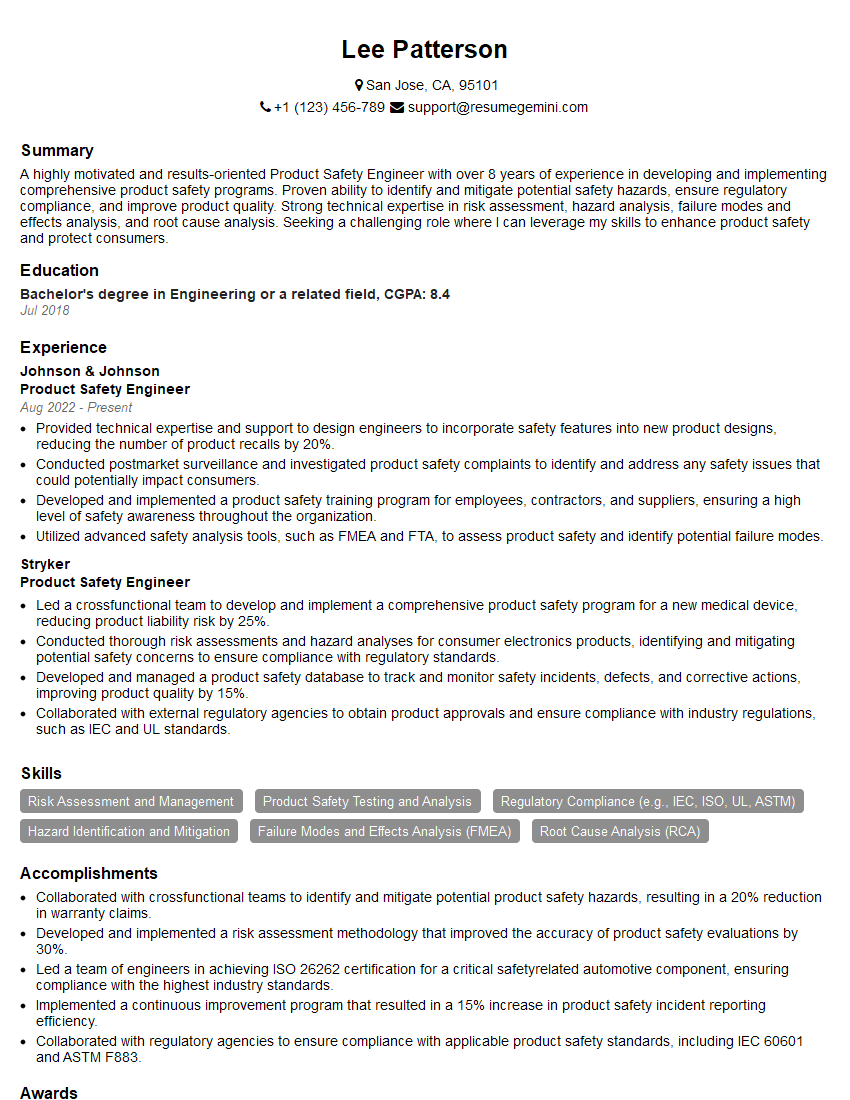
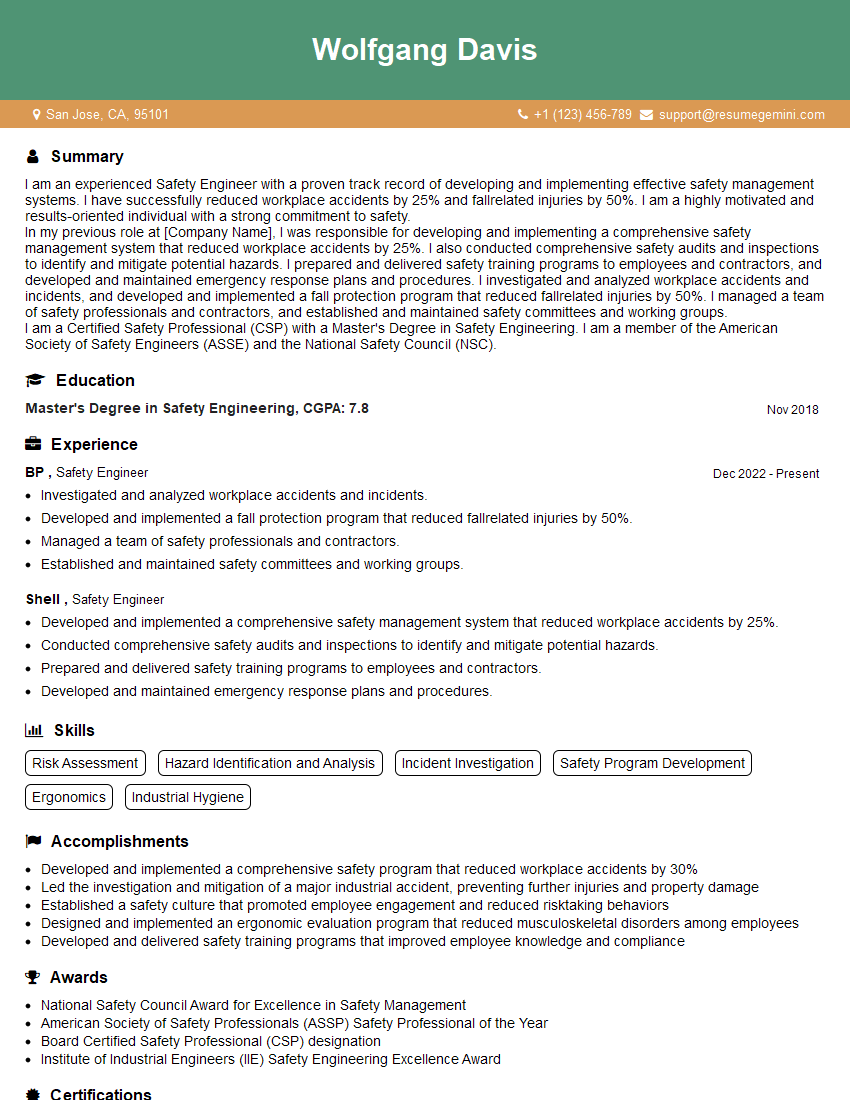
Mastering Crashworthiness and Safety Design opens doors to exciting and impactful careers in the automotive and related industries. A strong understanding of these principles is highly sought after, leading to increased job opportunities and career advancement. To maximize your chances, create an ATS-friendly resume that effectively showcases your skills and experience. ResumeGemini is a trusted resource for building professional and impactful resumes. Use ResumeGemini to craft a compelling narrative of your qualifications, and take advantage of the examples of resumes tailored to Crashworthiness and Safety Design provided to further enhance your application materials.
Explore more articles
Users Rating of Our Blogs
Share Your Experience
We value your feedback! Please rate our content and share your thoughts (optional).
What Readers Say About Our Blog
Very informative content, great job.
good