Interviews are more than just a Q&A session—they’re a chance to prove your worth. This blog dives into essential Creel Surveying interview questions and expert tips to help you align your answers with what hiring managers are looking for. Start preparing to shine!
Questions Asked in Creel Surveying Interview
Q 1. Describe the purpose of creel surveys in fisheries management.
Creel surveys are a fundamental tool in fisheries management, providing crucial data on angler harvest and fishing effort. Their primary purpose is to estimate the total catch of fish (the harvest) from a specific water body over a given period. This information is essential for setting catch limits, assessing the impact of fishing on fish populations, and evaluating the effectiveness of fisheries management strategies. Essentially, they help us understand how many fish are being caught, by whom, and where, allowing for data-driven decisions to ensure sustainable fisheries.
Imagine trying to manage a forest without knowing how many trees are being harvested. Creel surveys are the equivalent for fish populations, giving us the vital information we need for responsible management.
Q 2. Explain different creel survey methodologies (e.g., roadside, intercept, diary).
Several creel survey methodologies exist, each with its own strengths and weaknesses. The three most common are:
- Roadside Creel Surveys: These surveys involve interviewers stationed at access points to fisheries, such as boat ramps or parking lots. They intercept anglers as they leave and collect information on their catch.
- Intercept Surveys: Similar to roadside surveys, but interviewers approach anglers directly at various locations within the fishery, such as on the water or along shorelines. This allows for greater coverage but requires more resources.
- Diary Surveys: Anglers are provided with a diary to record their catch and effort throughout their fishing trip. This method relies on angler participation and accurate record-keeping.
Other less common methods include mail surveys and telephone surveys, but they typically have lower response rates.
Q 3. What are the advantages and disadvantages of each creel survey method?
Each method has advantages and disadvantages:
- Roadside Surveys: Advantages: Relatively inexpensive and easy to implement. Disadvantages: Can miss anglers who access the fishery through less common points or who don’t return to the access point. May not accurately capture the catch of anglers who leave early or fish for extended periods.
- Intercept Surveys: Advantages: Can capture a broader range of anglers. Disadvantages: More time-consuming and expensive than roadside surveys. Interviewer bias is a potential concern.
- Diary Surveys: Advantages: Can provide detailed information on angler effort and catch. Disadvantages: Relies on angler participation and accuracy of record keeping. Low response rates are common. Potential for recall bias.
Q 4. How do you ensure accurate and representative sampling in creel surveys?
Ensuring accurate and representative sampling is paramount. Several strategies contribute to this goal:
- Stratified Random Sampling: Dividing the fishery into strata (e.g., by location, time of day, or type of angler) and randomly selecting samples from each stratum ensures representation from all relevant sub-populations.
- Appropriate Sample Size: Determining the necessary sample size using statistical power analysis is crucial to minimize sampling error. This calculation involves considering the desired precision and confidence level.
- Well-Trained Interviewers: Thorough training is essential to minimize interviewer bias and ensure consistent data collection. Standardized interview protocols and clear guidelines are vital.
- Data Validation and Quality Control: Regular checks of data quality, including consistency checks and outlier analysis, identify and correct errors before analysis.
Q 5. How do you account for non-response bias in creel surveys?
Non-response bias, where certain types of anglers are more likely to participate than others, is a significant challenge. Strategies to mitigate this include:
- Increasing Response Rates: Offering incentives, reducing survey length, and using multiple contact methods can help improve participation.
- Weighting: Statistically adjusting data to account for differences in participation rates between different groups of anglers. For example, if a particular type of angler is underrepresented, their responses can be weighted more heavily in the analysis.
- Using Multiple Methods: Combining different creel survey methods (e.g., roadside and diary surveys) can provide a more complete picture and help identify potential biases.
- Analysis of Non-respondents: Attempting to understand the characteristics of non-respondents can help assess the potential impact of the bias on the results.
Q 6. Explain the concept of sampling error and how it relates to creel surveys.
Sampling error is the inherent variability in estimates obtained from a sample of a population, rather than the entire population. In creel surveys, it reflects the difference between the estimated catch from the survey and the true, unknown total catch. Several factors contribute to sampling error, including sample size and the variability of catch among anglers. A larger sample size generally reduces sampling error. Understanding sampling error is essential for calculating confidence intervals around estimates, allowing us to quantify the uncertainty in our results. For example, we might report that the estimated total catch is 10,000 fish with a 95% confidence interval of 9,000 to 11,000 fish, acknowledging the uncertainty associated with the estimate.
Q 7. What are the key factors to consider when designing a creel survey?
Designing an effective creel survey requires careful consideration of several key factors:
- Objectives: Clearly defining the specific research questions or management goals the survey aims to address.
- Study Area: Defining the geographic boundaries of the study area, including access points and fishing areas.
- Target Population: Identifying the specific angler population of interest (e.g., all anglers, residents only, specific fishing methods).
- Sampling Design: Selecting an appropriate sampling method and sample size to ensure representativeness and minimize sampling error.
- Data Collection Methods: Choosing suitable data collection methods (e.g., interviews, diaries) and developing standardized protocols.
- Data Analysis Plan: Defining the statistical methods to be used for analyzing the collected data and interpreting the results.
- Budget and Timeline: Determining the financial resources and time frame required to complete the survey.
Q 8. How do you estimate angler effort from creel survey data?
Estimating angler effort in creel surveys involves quantifying the total fishing pressure on a water body. We don’t simply count the number of anglers; we account for the duration of their fishing trips. The most common approach is to calculate angler-hours. This is done by multiplying the number of anglers interviewed by the duration of their fishing trip (in hours). For example, if we interview 10 anglers, and 5 fished for 2 hours and 5 fished for 3 hours, the total angler-hours would be (5 anglers * 2 hours/angler) + (5 anglers * 3 hours/angler) = 25 angler-hours. More complex methods might involve stratified sampling, where different areas or times of day are sampled differently to account for varying fishing pressure. For instance, you might sample more heavily on weekends when fishing pressure is typically higher. We also consider the effective fishing period – accounting for the fact that anglers may not be actively fishing during the entire duration of their trip.
Q 9. How do you estimate catch rates from creel survey data?
Catch rate, a key metric in creel surveys, represents the number of fish caught per unit of angler effort. The most common unit of angler effort is angler-hours, as discussed previously. To estimate catch rate, we divide the total number of fish caught (from all interviews) by the total angler-hours. For instance, if we recorded 50 fish caught across our 25 angler-hours from the example above, the catch rate would be 50 fish / 25 angler-hours = 2 fish per angler-hour. This can then be broken down further to estimate catch rates for specific species, sizes, or fishing methods. We often use stratified estimates here as well. For instance, catch rates might be significantly different for fly fishing versus trolling, so we would want to report catch rates for each method separately. It’s crucial to note that catch rates are estimates and are subject to sampling variability and potential biases associated with the survey design.
Q 10. Describe methods for calculating confidence intervals for creel survey estimates.
Calculating confidence intervals for creel survey estimates is essential for understanding the precision of our results. It quantifies the uncertainty associated with our estimates due to sampling variability. We typically use methods based on the central limit theorem. The most common approach involves calculating the standard error of the mean (or another relevant statistic) and then using this to construct a confidence interval. For instance, if we’re estimating the total catch, we might use a bootstrap method to generate a distribution of possible total catches, and then use the quantiles of this distribution to determine a confidence interval. This could also involve employing more complex models, such as those that account for the stratified nature of our sampling. For a simpler example, if our estimated catch rate is 2 fish/angler-hour with a standard error of 0.5 fish/angler-hour, a 95% confidence interval would be approximately 2 ± 1.96 * 0.5, or 1 to 3 fish per angler-hour. The specific method chosen depends on the complexity of the survey design and the statistical properties of the data.
Q 11. What statistical software are you familiar with for creel survey data analysis?
I have extensive experience using several statistical software packages for creel survey data analysis. These include R, with its numerous packages like survey and dplyr that are specifically designed for complex sample surveys, and SAS, known for its robust capabilities in handling large datasets and creating sophisticated reports. I’m also proficient in using specialized creel survey software, such as [mention specific software if applicable, avoiding specific product endorsements]. My expertise extends to programming in these environments to perform custom analyses and create visualizations to effectively communicate findings. The choice of software depends largely on the scale and complexity of the project, and often involves collaborating with statisticians to select the most appropriate tools.
Q 12. How do you handle missing data in creel survey datasets?
Handling missing data is a critical aspect of creel survey analysis. Simply ignoring missing data can lead to biased estimates. My approach depends on the nature and extent of missing data. For data missing at random (MAR), I might employ imputation techniques, such as multiple imputation in R using the mice package. This creates several plausible imputed datasets, and the results are then combined to account for uncertainty introduced by imputation. For missing data that are not at random (MNAR), this is more challenging, and I would carefully investigate potential causes of the missingness and explore different strategies including sensitivity analyses to explore how different assumptions about the missing data might affect the results. Sometimes, a weighting approach to account for the missing observations may be appropriate. The best method is chosen carefully, taking into consideration the potential bias introduced and ensuring transparent reporting of the methods employed.
Q 13. Explain the importance of quality control in creel surveys.
Quality control is paramount in creel surveys because the accuracy and reliability of the resulting management decisions depend heavily on data quality. My quality control procedures begin with the survey design itself, ensuring that the sampling strategy is appropriate and that the questionnaire is clear, concise, and unambiguous. During data collection, rigorous training of interviewers is essential to minimize inconsistencies in recording data. I implement strict data validation checks during data entry to identify and correct inconsistencies or outliers. These checks might include range checks, consistency checks (e.g., ensuring that reported species match the habitat type), and plausibility checks. Finally, I perform a thorough review of the processed data to identify any remaining inconsistencies before beginning the analysis. This multi-stage approach ensures that our creel survey results are both reliable and credible.
Q 14. Describe your experience with data entry and validation in creel surveys.
I possess extensive experience with data entry and validation in creel surveys. I’m proficient in using various data entry software and techniques, ranging from manual entry with double-entry procedures to directly importing electronic data from handheld devices. My experience includes designing and implementing data entry forms, ensuring their accuracy and consistency. I typically use a standardized format to ensure all data is entered uniformly and includes quality control checks within the data entry system itself. Post-entry validation involves systematic checks for inconsistencies, outliers, and missing values, as discussed previously. I often utilize scripting languages such as R to automate much of this process and generate detailed reports on data quality. For example, creating custom scripts to identify impossible combinations of variables or missing data patterns helps streamline the identification and resolution of errors. The goal is to ensure the integrity of the data before any analysis is conducted.
Q 15. How do you ensure the confidentiality of angler information collected in creel surveys?
Confidentiality of angler information is paramount in creel surveys. We adhere to strict protocols to protect angler privacy. This begins with informed consent – anglers are clearly informed about the purpose of the survey, how their data will be used, and that their individual responses will remain anonymous in any published reports. We often use coded identifiers instead of names, and data is stored securely, adhering to all relevant data protection regulations. For example, we might use a unique number to identify each angler, linking this to their catch data, but never revealing names in the final analysis or reports. Our analysis focuses on aggregate data, providing population-level estimates rather than identifying individual fishing behavior. Data is often de-identified or aggregated before it’s shared with stakeholders, further protecting privacy. Finally, we maintain meticulous records of data handling procedures, ensuring full transparency and accountability.
Career Expert Tips:
- Ace those interviews! Prepare effectively by reviewing the Top 50 Most Common Interview Questions on ResumeGemini.
- Navigate your job search with confidence! Explore a wide range of Career Tips on ResumeGemini. Learn about common challenges and recommendations to overcome them.
- Craft the perfect resume! Master the Art of Resume Writing with ResumeGemini’s guide. Showcase your unique qualifications and achievements effectively.
- Don’t miss out on holiday savings! Build your dream resume with ResumeGemini’s ATS optimized templates.
Q 16. Explain the role of GIS in creel survey data analysis and map creation.
Geographic Information Systems (GIS) are indispensable for creel survey data analysis and map creation. GIS allows us to spatially visualize catch data, overlaying it with environmental variables (water depth, habitat type, etc.). This provides powerful insights into the relationship between fishing effort, catch rates, and environmental factors. For example, using GIS, we can create maps showing angler density across a lake or river, identifying ‘hotspots’ of fishing activity. We can also correlate catch rates with specific habitat features, helping to understand fish distribution and inform habitat management. Furthermore, we can use GIS to model potential impacts of management actions, like the creation of a fish refuge, on angler access and catch. The software enables us to create professional-looking maps and other visualizations that clearly communicate our findings to a diverse range of stakeholders. This often involves using tools such as ArcGIS or QGIS.
Q 17. How do you interpret and present creel survey results to stakeholders?
Interpreting and presenting creel survey results requires careful consideration of the audience. We typically create concise reports that include clear summaries of key findings, presented using tables, charts, and maps. For example, we might report on total catch per unit of effort (CPUE), average fish size, and angler satisfaction. We always present data with appropriate measures of uncertainty (e.g., confidence intervals) to reflect the sampling variability. Technical jargon is minimized, and visual aids are used to make the data accessible to non-technical audiences. For a scientific audience, we might present more detailed analyses, including statistical models and discussions of potential biases. We tailor our presentations to match the audience’s level of understanding and information needs. Interactive dashboards and online maps can also effectively communicate results.
Q 18. How do you use creel survey data to inform management decisions?
Creel survey data informs many aspects of fisheries management. For example, estimates of total catch can be used to set harvest limits that prevent overfishing. Information on angler catch rates can help managers assess the success of stocking programs or habitat restoration projects. Data on angler demographics and preferences can be used to tailor recreational fishing regulations to meet the needs of diverse angler groups. If CPUE for a particular species declines significantly over time, it could indicate a need for conservation measures such as fishing restrictions or habitat improvements. In essence, the data acts as a powerful feedback loop, allowing managers to assess the impact of existing regulations and adapt management strategies to achieve sustainable fisheries and maximize angling opportunities. For instance, data showing that a certain size limit is ineffective in protecting large fish might trigger a reassessment of that regulation.
Q 19. How do you handle conflicts or challenges that may arise during a creel survey?
Conflicts during creel surveys are rare, but they can arise. For example, an angler might be unwilling to participate, or there might be disagreements on the interpretation of regulations. We address these through careful planning and well-trained interviewers. Our interviewers are instructed to be polite, respectful, and to clearly explain the purpose of the survey. If an angler is unwilling to cooperate, we respect their decision and move on to another angler. Disagreements about regulations are handled by referring to the official rules and providing clear explanations. Involving local stakeholders (fishing clubs, guides, etc.) in the survey design and implementation can help mitigate potential conflicts by ensuring the survey is perceived as relevant and fair.
Q 20. Describe your experience with different sampling frames (e.g., stratified, random).
My experience encompasses various sampling frames. Random sampling ensures every angler has an equal chance of being selected. This is straightforward but may not be efficient if angler density varies significantly across the surveyed area. Stratified sampling addresses this by dividing the area into strata (e.g., different lake sections or river reaches) with differing angler densities, then sampling randomly within each stratum. This allows for more precise estimates and better representation of all angler groups. I have also used other methods like systematic sampling, where anglers are selected at regular intervals, or purposive sampling, where anglers are chosen based on specific characteristics (e.g., targeting experienced anglers to assess their attitudes). The choice of sampling frame depends on the research question, available resources, and the spatial distribution of anglers. The design is always documented meticulously, along with justification for its selection.
Q 21. How do you deal with difficult or uncooperative anglers?
Handling difficult or uncooperative anglers requires patience, diplomacy, and a clear understanding of the survey’s purpose and ethical considerations. Our interviewers are trained to approach each interaction with respect and empathy. We start by clearly explaining the voluntary nature of the survey and emphasizing the importance of the data for fisheries management. If an angler remains uncooperative, we thank them for their time and move on. It’s crucial to avoid pressure tactics, as this could bias the results or damage the reputation of the survey. We always prioritize maintaining a positive relationship between anglers and fisheries managers. Detailed records of all interactions, including any instances of non-cooperation, are kept as part of the project documentation. This is not only for tracking survey progress, but also to identify potential patterns that might help improve future interactions with anglers.
Q 22. Explain the importance of proper training for creel survey interviewers.
Proper training for creel survey interviewers is paramount to ensuring data quality and the reliability of the resulting estimates of fish harvest. Imagine trying to build a house with poorly trained builders – the result wouldn’t be sturdy or safe. Similarly, poorly trained interviewers can introduce significant bias and error into creel survey data.
Training should cover several key areas:
- Survey methodology: Interviewers need a thorough understanding of the specific creel survey design, including sampling strategy, data collection protocols, and the importance of consistent application.
- Interview techniques: This includes active listening, clear communication, handling difficult situations (e.g., reluctant respondents), and building rapport with anglers. Role-playing exercises are particularly useful here.
- Data recording: Interviewers need to be proficient in accurately recording angler responses, whether using paper forms or electronic devices. Training should emphasize the importance of legibility, completeness, and minimizing errors.
- Species identification: Accurate identification of fish species is critical. Training should include practical sessions using photos, diagrams, and potentially real specimens.
- Ethical considerations: Interviewers must be aware of and adhere to ethical guidelines regarding confidentiality, informed consent, and responsible data handling.
Comprehensive training, including both theoretical instruction and practical fieldwork, is essential for producing high-quality, credible creel survey data.
Q 23. Describe your experience with different data collection methods (e.g., paper, electronic).
My experience encompasses both traditional paper-based and modern electronic data collection methods in creel surveys. Paper-based methods, while simpler to implement initially, can be time-consuming for data entry and analysis, increasing the potential for transcription errors. I’ve utilized paper forms extensively in remote areas with limited internet connectivity. This involved rigorous quality control checks during data entry to minimize errors.
However, electronic data collection (using tablets or smartphones) offers significant advantages. It reduces data entry time and errors, enables real-time data validation, and facilitates easier data management and analysis. I’ve used custom-designed mobile applications for creel surveys, which allow for immediate data checks, reduce ambiguity through pre-populated options, and incorporate GPS location tagging for spatial analysis. For instance, one project involved a custom app that prompted the interviewer to take a picture of the catch, further verifying the reported species and size.
The choice of data collection method depends on various factors, including the survey’s budget, technological infrastructure in the study area, and the level of interviewer training. It’s crucial to select the method that best balances cost-effectiveness, data quality, and feasibility in the specific context of the survey.
Q 24. What are the ethical considerations in conducting creel surveys?
Ethical considerations are paramount in creel surveys, as they involve interactions with people and potentially impact the resource being studied. Respect for anglers’ time and privacy is crucial. This involves:
- Informed consent: Anglers should be informed about the purpose of the survey, how their data will be used, and their right to refuse participation.
- Confidentiality: Angler identities and personal information should be kept confidential. Data should be anonymized and securely stored to protect privacy.
- Transparency: The methodology and results of the survey should be transparent and accessible to stakeholders.
- Minimizing disruption: Interviewers should strive to minimize disruption to anglers’ fishing experience. Efficient and respectful interview techniques are vital.
- Avoiding bias: Interviewers should remain neutral and avoid influencing angler responses. This includes refraining from expressing personal opinions about fishing practices.
Breaching ethical guidelines can undermine the credibility of the survey and damage trust with the angling community. A robust ethical framework is essential for maintaining the integrity of the research.
Q 25. How do you account for size selectivity in catch rates?
Size selectivity in catch rates refers to the fact that anglers may target or preferentially keep certain size classes of fish. This means that catch data may not accurately reflect the true size distribution of the fish population. For example, anglers might release smaller fish and keep larger ones, leading to an overestimation of the number of large fish and an underestimation of smaller fish in the population.
Addressing size selectivity involves several techniques:
- Size-specific catch rates: Calculate catch rates separately for different size classes to understand the patterns of size selectivity.
CatchRate = (Number of fish of size X caught) / (Fishing effort by anglers targeting size X) - Length-frequency distributions: Analyze the length-frequency distributions of the caught fish to determine if certain size classes are over- or under-represented.
- Angler interviews: Ask anglers detailed questions about their fishing practices, including their targeting strategy and reasons for keeping or releasing certain sizes of fish.
- Statistical modeling: Use statistical models to adjust for size selectivity and estimate the true size distribution of the fish population. This often involves incorporating data from other sources, such as sonar surveys or mark-recapture studies.
By incorporating these approaches, we can develop a more accurate picture of the fish population’s size structure, despite size selectivity.
Q 26. What are the limitations of creel surveys?
Creel surveys, while valuable, have limitations that must be acknowledged when interpreting results:
- Sampling bias: Creel surveys rely on samples of anglers, and these samples might not accurately represent the entire angler population. Certain types of anglers might be more likely to be interviewed than others (e.g., those fishing in easily accessible locations).
- Recall bias: Anglers may have difficulty accurately recalling their catch, particularly over longer periods. This is especially true for less memorable fishing events.
- Non-response bias: Some anglers may refuse to participate in the survey, leading to an incomplete representation of the fishing population.
- Incomplete reporting: Anglers might not report all their catch, particularly if they are unaware of the survey or believe their catch is insignificant.
- Underreporting of catch and release: The number of fish released is often difficult to quantify accurately as this relies entirely on angler reporting.
These limitations necessitate careful consideration of the study design and the use of appropriate statistical methods to account for potential biases and uncertainties in the estimates. It’s vital to acknowledge these limitations when reporting and interpreting creel survey findings to ensure responsible scientific communication.
Q 27. How can you improve the accuracy and precision of creel survey estimates?
Improving the accuracy and precision of creel survey estimates requires a multi-pronged approach:
- Increase sample size: Larger sample sizes reduce the impact of sampling variability and lead to more precise estimates. This often requires more resources but significantly improves data reliability.
- Improve sampling design: Employing robust sampling strategies (e.g., stratified random sampling) ensures that different angler groups are adequately represented in the survey.
- Reduce non-response bias: Strategies such as repeated attempts to contact anglers and offering incentives can increase response rates.
- Minimize recall bias: Use shorter recall periods (e.g., daily interviews) to reduce the potential for inaccurate recall. Consider using methods like diaries to record catches.
- Utilize multiple data sources: Combine creel survey data with other sources of information (e.g., biological sampling, catch records from license sales) to validate and refine estimates.
- Employ advanced statistical techniques: Use appropriate statistical models to account for various biases and uncertainties (e.g., using regression models to adjust for environmental factors).
- Careful interviewer training: As discussed previously, well-trained interviewers are crucial to minimize errors and bias in data collection.
By focusing on these aspects, we can enhance the reliability and precision of creel survey estimates, providing more robust information for fisheries management decisions.
Q 28. Describe your experience with reporting and presenting creel survey findings.
Reporting and presenting creel survey findings involve a clear and concise communication of the results to various stakeholders, including fisheries managers, researchers, and the public. My approach emphasizes clarity, accuracy, and accessibility.
I typically use a combination of:
- Formal reports: These provide a comprehensive overview of the study methodology, results, limitations, and conclusions. They follow a standard scientific format with clear sections (e.g., introduction, methods, results, discussion, conclusions).
- Data visualizations: Graphs, charts, and maps are used to effectively communicate key findings. For example, bar charts can show catch rates by species, while maps can illustrate spatial patterns in fishing effort.
- Presentations: Oral presentations are utilized to disseminate the findings to different audiences, tailoring the content and level of detail according to their needs. Visual aids are essential in these presentations.
- Interactive data dashboards: For larger projects, I might develop interactive dashboards to allow stakeholders to explore the data independently and generate custom reports based on their interests.
- Plain language summaries: To ensure broad accessibility, plain language summaries are prepared for the public, avoiding technical jargon and focusing on the key implications of the findings.
The choice of reporting methods depends on the target audience and the objectives of the study. The ultimate goal is to make the findings understandable, usable, and influential in informing effective fisheries management practices.
Key Topics to Learn for Creel Surveying Interview
- Fundamentals of Creel Surveying: Understanding the core principles, methodologies, and applications of creel surveys in fisheries management.
- Sampling Techniques: Mastering various creel survey sampling methods, including stratified random sampling, cluster sampling, and their respective advantages and limitations. Be prepared to discuss bias mitigation strategies.
- Data Collection and Management: Familiarize yourself with efficient data recording methods, data entry techniques, and the use of relevant software for data analysis and visualization. Consider the importance of data accuracy and integrity.
- Statistical Analysis: Gain proficiency in applying statistical methods to creel survey data, including estimating population parameters (e.g., catch per unit effort, total catch), and understanding the implications of statistical significance.
- Creel Survey Design and Implementation: Understand the process of designing a creel survey, from defining objectives and selecting sampling sites to developing questionnaires and ensuring ethical considerations are met.
- Reporting and Interpretation: Learn how to effectively communicate survey results through clear and concise reports, including the interpretation of findings and their implications for fisheries management.
- Technological Advancements: Explore the integration of technology in modern creel surveying, such as GPS tracking, mobile data collection apps, and remote sensing techniques.
- Ethical Considerations in Creel Surveying: Understand the ethical implications of data collection and reporting, including issues of confidentiality and ensuring the responsible use of data.
Next Steps
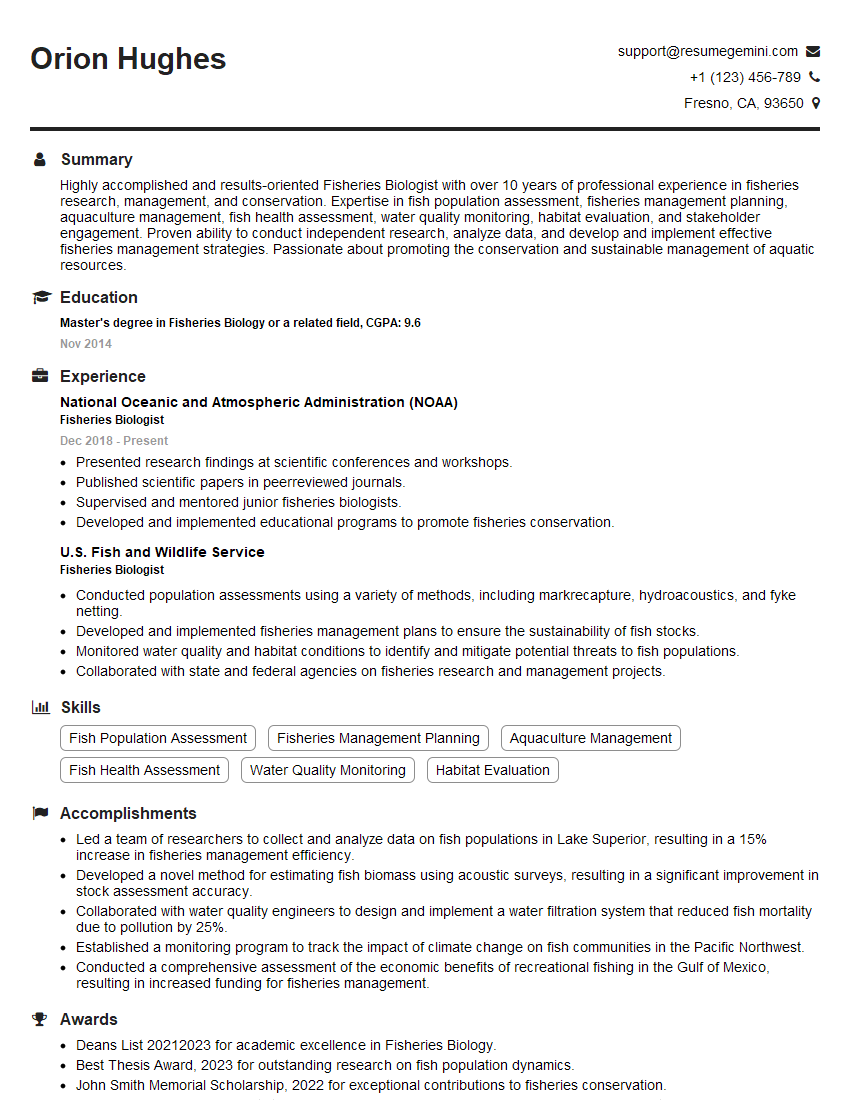
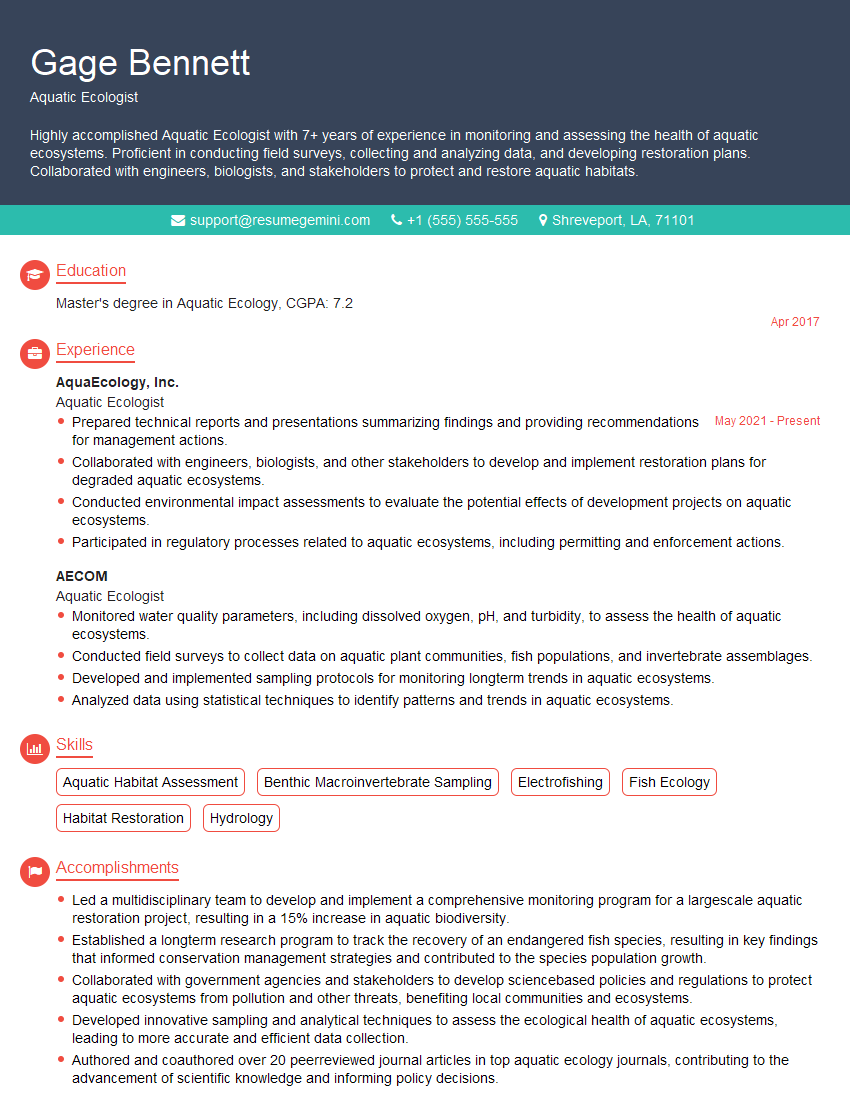
Mastering Creel Surveying opens doors to exciting career opportunities in fisheries management and conservation. A strong understanding of these principles is highly valued by employers. To maximize your chances of landing your dream job, focus on crafting an ATS-friendly resume that showcases your skills and experience effectively. ResumeGemini is a trusted resource to help you build a professional and impactful resume that highlights your qualifications for Creel Surveying positions. We provide examples of resumes tailored to Creel Surveying to guide you through the process. Invest time in crafting a compelling resume – it’s your first impression and a critical step in securing your next role.


Explore more articles
Users Rating of Our Blogs
Share Your Experience
We value your feedback! Please rate our content and share your thoughts (optional).
What Readers Say About Our Blog
Very informative content, great job.
good