Unlock your full potential by mastering the most common Teamwork Operation interview questions. This blog offers a deep dive into the critical topics, ensuring you’re not only prepared to answer but to excel. With these insights, you’ll approach your interview with clarity and confidence.
Questions Asked in Teamwork Operation Interview
Q 1. Describe your experience in facilitating team communication and conflict resolution.
Effective team communication and conflict resolution are cornerstones of successful teamwork. My approach is multifaceted, focusing on proactive communication strategies and structured conflict resolution processes. I believe in establishing clear communication channels from the outset, utilizing tools like project management software (e.g., Asana, Jira) for task assignments, progress updates, and file sharing. This ensures transparency and reduces misunderstandings.
For conflict resolution, I employ a collaborative, problem-solving approach. Instead of focusing on assigning blame, I encourage open dialogue where each team member can express their perspective. I facilitate this by actively listening, asking clarifying questions, and ensuring everyone feels heard. If necessary, I employ mediation techniques to help conflicting parties reach a mutually acceptable solution. A recent example involved a disagreement between a designer and a developer over the feasibility of a design element. By creating a safe space for them to discuss their concerns, focusing on the project goals, and suggesting alternative solutions, we were able to find a compromise that satisfied both parties and improved the final product.
- Proactive Communication: Regular team meetings, project updates, and open-door policies.
- Structured Conflict Resolution: Active listening, collaborative problem-solving, and mediation if needed.
- Communication Tools: Project management software, instant messaging platforms.
Q 2. How do you measure team performance and identify areas for improvement?
Measuring team performance requires a balanced approach, combining qualitative and quantitative data. I use a variety of metrics tailored to the specific project goals and team objectives. Quantitative metrics might include project completion rates, on-time delivery, budget adherence, and defect rates. For example, tracking the number of bugs reported and resolved per sprint gives insights into software quality and team efficiency. Qualitative metrics focus on team dynamics, collaboration effectiveness, and individual contributions. This might involve conducting regular team surveys to gauge team morale, conducting peer reviews to assess individual performance, and analyzing project postmortems to identify areas for improvement.
Identifying areas for improvement involves analyzing the data collected, looking for trends and patterns. For example, consistently exceeding the budget on certain tasks might highlight the need for improved resource allocation or better project planning. Low team morale indicated by surveys could signal a need for improved team-building activities or addressing individual concerns. By systematically analyzing both qualitative and quantitative data, I can pinpoint areas needing attention and develop targeted strategies for improvement.
Q 3. Explain your approach to delegating tasks effectively within a team.
Effective delegation involves matching tasks to individual skills and capabilities, ensuring clear expectations, and providing the necessary support. I begin by assessing each team member’s strengths, experience, and current workload. I then assign tasks that align with their skillset and allow them to grow professionally. It’s crucial to provide clear instructions, including deadlines, desired outcomes, and any relevant resources. Furthermore, I establish regular check-in points to monitor progress, offer guidance, and address any challenges that arise. I believe in empowering team members, giving them autonomy to complete the tasks in their own way, while remaining available for support.
For instance, when delegating a complex coding task, I’ll first discuss the problem with the developer, ensuring they understand the requirements and the overall project goals. I’ll provide them with relevant documentation and access to necessary resources, then schedule regular check-ins to discuss progress, answer questions, and remove any roadblocks.
Q 4. How do you ensure team members stay motivated and engaged in projects?
Maintaining team motivation and engagement requires a holistic approach that considers both individual and team needs. I focus on creating a positive and supportive work environment where team members feel valued, respected, and challenged. This involves fostering open communication, recognizing and rewarding accomplishments, and offering opportunities for professional development. Regular team-building activities, both formal and informal, are also vital in strengthening team cohesion and building camaraderie.
In addition to these, I focus on providing clear goals and objectives, ensuring everyone understands their role and how their contribution contributes to the bigger picture. Regular feedback sessions, both positive and constructive, keep individuals informed about their performance and identify areas for growth. Empowering team members by giving them ownership of tasks and providing them with the autonomy to make decisions boosts their motivation and fosters a sense of responsibility.
Q 5. Describe a time you had to manage a team through a challenging situation.
During the development of a new software application, we encountered a critical bug just two weeks before the launch date. This bug threatened to delay the launch and negatively impact our client’s business. The initial reaction among the team was panic and frustration. My approach was to stay calm and composed. First, I convened an emergency meeting to assess the situation objectively. We broke down the problem into smaller, more manageable tasks and assigned these to different team members based on their expertise. I emphasized the importance of collaboration and communication and established clear escalation paths for any new roadblocks. We implemented a dedicated communication channel to ensure swift and transparent updates on progress. By working collaboratively and utilizing an agile methodology of rapid iteration and testing, we managed to fix the bug within 48 hours and launched the application on schedule. This experience taught me the value of remaining calm under pressure, fostering teamwork, and focusing on effective problem-solving.
Q 6. What strategies do you use to build trust and rapport within a team?
Building trust and rapport within a team is an ongoing process that requires consistent effort. I prioritize creating a safe and inclusive environment where team members feel comfortable expressing their ideas and concerns without fear of judgment. This involves actively listening to team members, showing empathy, and demonstrating respect for diverse perspectives. Transparency in communication, both regarding project progress and organizational decisions, is crucial in building trust. Celebrating team successes, acknowledging individual contributions, and providing constructive feedback fosters a sense of shared accomplishment and strengthens team bonds. I also encourage team-building activities to create informal connections among members.
For example, I regularly conduct one-on-one meetings with team members not only to discuss work but also to learn about their personal interests and aspirations. This approach helps in understanding their perspectives and building personal rapport. Additionally, I try to create opportunities for cross-functional collaborations, so team members have a chance to work together on different tasks and learn from each other’s experiences.
Q 7. How do you handle disagreements or differing opinions amongst team members?
Disagreements and differing opinions are inevitable in any team setting. I view these as opportunities for growth and innovation, as long as they are handled constructively. My approach is to encourage open and respectful dialogue. I facilitate discussions by ensuring everyone has a chance to express their viewpoint without interruption. I help the team to focus on the underlying issues and potential solutions rather than getting bogged down in personal disagreements. I encourage active listening, the identification of common goals, and brainstorming of alternative solutions. If a consensus cannot be reached, I may facilitate a structured decision-making process, such as voting or a compromise based on weighted priorities. The key is to ensure that all team members feel heard and respected, even if their ideas are not ultimately adopted.
Q 8. How do you use technology to enhance teamwork and collaboration?
Technology is crucial for modern teamwork. I leverage a variety of tools to enhance collaboration and communication. For example, project management software like Asana or Jira allows for centralized task assignment, progress tracking, and streamlined communication. This eliminates the confusion of scattered emails and ensures everyone is on the same page. We use video conferencing tools like Zoom or Google Meet for regular team meetings, brainstorming sessions, and quick check-ins, regardless of geographical location. For document collaboration, Google Docs or Microsoft SharePoint enables simultaneous editing and version control, fostering real-time collaboration and minimizing version control issues. Finally, instant messaging platforms like Slack or Microsoft Teams facilitate quick communication for urgent matters or informal updates, keeping the team connected and responsive.
In a recent project, utilizing a combination of Jira for task management and Slack for instant communication dramatically improved our team’s efficiency. We were able to track progress in real-time, address roadblocks swiftly, and foster a more transparent and collaborative work environment.
Q 9. How do you ensure that team goals align with overall organizational objectives?
Aligning team goals with organizational objectives is paramount. I achieve this through a combination of clear communication and strategic planning. Firstly, I ensure that team members understand the overarching organizational goals. This usually involves participating in strategic planning sessions and clearly communicating the company’s vision and mission to the team. Then, we collaboratively define specific, measurable, achievable, relevant, and time-bound (SMART) team goals that directly contribute to these broader objectives. This might involve creating a work breakdown structure (WBS) to break down larger objectives into smaller, manageable tasks. Regular progress reviews and check-ins ensure the team stays on track and allows for course correction if needed.
For instance, if the organizational objective is to increase market share by 15%, a team goal might be to launch a new product feature within a specific timeframe. The team’s success in launching this feature directly contributes to the overall organizational goal of increasing market share.
Q 10. Describe your experience with different team management methodologies (e.g., Agile, Scrum).
I have extensive experience with Agile and Scrum methodologies. Agile, a flexible framework focusing on iterative development and customer feedback, has been my preferred approach for many projects. Scrum, a specific Agile framework, provides a structured approach with defined roles (Product Owner, Scrum Master, Development Team) and events (Sprint Planning, Daily Scrum, Sprint Review, Sprint Retrospective).
In a previous role, we adopted Scrum for a software development project. The daily Scrum meetings proved incredibly effective in identifying and resolving roadblocks quickly. The sprint retrospectives allowed us to continuously improve our processes and team dynamics. The iterative nature of Scrum allowed us to incorporate user feedback early and often, leading to a more successful product launch.
Q 11. What metrics do you use to track team productivity and efficiency?
Tracking team productivity and efficiency requires a multifaceted approach. I use a combination of quantitative and qualitative metrics. Quantitative metrics include velocity (in Scrum), task completion rates, project deadlines met, and bug counts (for software projects). Qualitative metrics encompass team morale, collaboration effectiveness, and overall project quality. Tools like Jira and Asana provide built-in dashboards for tracking many of these metrics.
For instance, consistent delays in meeting sprint goals could signal a need for process improvement or additional resources. Low team morale, observed through informal feedback and team meetings, might suggest a need for improved communication or workload distribution.
Q 12. How do you identify and address individual team members’ strengths and weaknesses?
Identifying and addressing individual strengths and weaknesses is vital for building a high-performing team. I use a combination of methods to understand team members’ capabilities. This includes regular one-on-one meetings to discuss individual progress, challenges, and career aspirations. 360-degree feedback can also provide valuable insights into how team members perceive each other’s strengths and weaknesses. Personality assessments (like Myers-Briggs) can provide insights into individual work styles and preferences, though this should be used cautiously and with the individual’s consent.
Once identified, I focus on leveraging individual strengths by assigning tasks that align with their expertise and interests. Weaknesses are addressed through mentoring, training, or providing additional support. For example, if a team member struggles with public speaking, I may provide opportunities for them to practice in a low-pressure setting or connect them with resources that can enhance their skills.
Q 13. How do you handle underperforming team members?
Addressing underperformance requires a structured and empathetic approach. I begin by having a private conversation with the team member to understand the root cause of the underperformance. Is it due to lack of training, unclear expectations, personal issues, or lack of motivation? Once the reason is identified, I work collaboratively with the team member to create an improvement plan. This plan typically includes specific, measurable goals, timelines, and support mechanisms.
Regular check-ins are essential to monitor progress and offer ongoing support. If the underperformance persists despite these interventions, more serious measures, such as performance improvement plans (PIPs) or other HR-related actions, may be necessary. It’s important to document all interactions and progress made.
Q 14. Explain your approach to planning and organizing team projects.
My approach to planning and organizing team projects is highly structured. It begins with a clear definition of project scope, objectives, and deliverables. Then, I create a detailed project plan, outlining tasks, timelines, responsibilities, and milestones. This plan is often visualized using Gantt charts or Kanban boards to provide a clear overview of the project’s progress. Regular project meetings are held to track progress, identify and address roadblocks, and ensure everyone is aligned on tasks and deadlines. Risk management is an integral part of my planning process; identifying potential risks early allows us to proactively mitigate them.
For example, I might use a work breakdown structure (WBS) to decompose a large project into smaller, manageable tasks, assigning responsibilities and deadlines for each. Throughout the project, regular status updates and agile sprint reviews ensure we stay on track and adapt to changing circumstances.
Q 15. How do you ensure teams adhere to deadlines and project timelines?
Ensuring teams meet deadlines requires a proactive, multi-faceted approach. It starts with clear goal setting and realistic timelines from the outset. This involves collaboratively defining project scope, breaking down large tasks into smaller, manageable ones, and assigning clear responsibilities. We use tools like Gantt charts to visualize the project schedule and identify potential bottlenecks early on.
Regular progress tracking is crucial. This isn’t just about monitoring completion percentages; it’s about identifying and addressing roadblocks promptly. Daily stand-up meetings, weekly progress reviews, and regular check-ins provide opportunities for open communication and early identification of potential delays.
Effective communication is paramount. Team members need to be kept informed of progress, potential delays, and any changes to the plan. Transparency fosters trust and accountability, encouraging everyone to contribute towards timely completion. If delays occur, we analyze the root cause, develop a revised plan, and communicate these changes transparently to all stakeholders.
Finally, celebrating milestones and achievements keeps the team motivated and engaged throughout the process. This positive reinforcement helps build momentum and contributes to a sense of shared success. For example, in my previous role, we used a Kanban board to visually track progress and celebrated hitting each sprint goal with a team lunch.
Career Expert Tips:
- Ace those interviews! Prepare effectively by reviewing the Top 50 Most Common Interview Questions on ResumeGemini.
- Navigate your job search with confidence! Explore a wide range of Career Tips on ResumeGemini. Learn about common challenges and recommendations to overcome them.
- Craft the perfect resume! Master the Art of Resume Writing with ResumeGemini’s guide. Showcase your unique qualifications and achievements effectively.
- Don’t miss out on holiday savings! Build your dream resume with ResumeGemini’s ATS optimized templates.
Q 16. Describe your experience with managing remote teams.
Managing remote teams requires a different skillset than managing co-located teams. Effective communication is even more critical. I leverage various tools like Slack for quick communication, Zoom for video conferencing, and project management software (discussed in a later answer) for task assignment and progress tracking.
Building trust and rapport is paramount. I schedule regular virtual team-building activities to foster camaraderie and a sense of community. This can range from online games to virtual coffee breaks or even online team lunches. It’s important to be mindful of time zones and work schedules to ensure inclusivity and avoid burnout. I emphasize asynchronous communication whenever possible, allowing team members flexibility in their work schedules.
Clear expectations and documentation are key to avoid ambiguity and misunderstandings. I ensure that project guidelines, roles, and responsibilities are clearly documented and accessible to everyone. I also implement regular check-ins and feedback sessions to ensure everyone is aligned and feels supported. In one project, leading a fully remote team of designers, I employed regular ‘virtual office hours’ where team members could drop in for informal discussions and support. This fostered a stronger sense of connection and open communication.
Q 17. How do you adapt your teamwork strategies to different team dynamics?
Adapting teamwork strategies to different team dynamics is fundamental. I believe in using a flexible and adaptive approach rather than a one-size-fits-all solution. Firstly, I assess the team’s strengths, weaknesses, communication styles, and work preferences. This involves active listening, observing team interactions, and using team assessments or feedback mechanisms.
For teams that thrive on structured processes, I might implement agile methodologies like Scrum or Kanban, focusing on clear roles, regular sprints, and iterative development. For teams that prefer more autonomy, I adopt a more decentralized approach, providing clear goals and empowering team members to manage their own tasks and workflows.
Communication styles also vary greatly. Some teams prefer formal communication channels, while others thrive on informal exchanges. I adapt my communication style accordingly, utilizing a mix of emails, instant messaging, video conferencing, and regular team meetings to best suit the team’s needs. For instance, a highly creative team might benefit from brainstorming sessions, while a detail-oriented team might appreciate more structured reporting and documentation. Understanding and adapting to these nuances is crucial for building a high-performing team.
Q 18. Describe your experience using project management software (e.g., Asana, Trello).
I have extensive experience using various project management software, including Asana, Trello, and Jira. My choice of software depends on the project’s complexity and the team’s preferences. Asana, for instance, is excellent for task management, collaboration, and progress tracking. Its features, such as customizable workflows, integrated communication tools, and progress visualization, significantly improve team organization and communication.
In Trello, I appreciate the Kanban board functionality, which is perfect for visualizing workflow, identifying bottlenecks, and tracking progress. Its simplicity makes it ideal for smaller projects or teams that prefer a visual and less complex system. Jira, on the other hand, is more suited for complex projects, especially software development, due to its robust issue tracking, bug management, and agile project management capabilities.
Regardless of the software, I ensure that the chosen platform is user-friendly, supports team collaboration effectively, and aligns with the project’s methodology. I also provide thorough training to ensure all team members understand how to use the software effectively. In a past project, we migrated from Trello to Asana to accommodate the growing complexity of the project and the need for more sophisticated reporting capabilities.
Q 19. How do you foster a positive and inclusive team environment?
Fostering a positive and inclusive team environment is a priority for me. It starts with establishing clear expectations and promoting open communication. I encourage team members to share their ideas, concerns, and perspectives freely, creating a safe space where everyone feels valued.
Regular team-building activities, both formal and informal, are essential to strengthen relationships and build camaraderie. This can include team lunches, social events, or even virtual coffee breaks for remote teams. Recognizing and celebrating individual and team achievements boosts morale and strengthens a sense of shared success.
I actively promote diversity and inclusion by ensuring that all team members have equal opportunities, are treated with respect, and their contributions are valued. I strive to create a culture of psychological safety where everyone feels comfortable taking risks, making mistakes, and learning from them. This involves actively listening to concerns, addressing conflicts constructively, and ensuring fair and equitable distribution of workload and opportunities. For example, I instituted anonymous feedback mechanisms to gather candid perspectives on the team’s culture and identify areas for improvement.
Q 20. How do you provide constructive feedback to your team members?
Providing constructive feedback is a critical skill for any team leader. I focus on providing feedback that is specific, actionable, and timely. This means avoiding vague statements and focusing on observable behaviors and their impact. For instance, instead of saying “You’re not meeting expectations,” I’d say, “I’ve noticed the last two reports were submitted late, impacting the project timeline. Let’s discuss how we can improve your time management.”
I always frame feedback in a supportive and encouraging manner, focusing on helping the individual improve and grow. I emphasize strengths alongside areas for development. The feedback process is a two-way street; I encourage open dialogue and questions to ensure understanding and mutual agreement on the next steps.
The timing of feedback is crucial. I provide feedback regularly, not just during performance reviews, using informal check-ins as opportunities to offer quick feedback or address minor issues proactively. I always ensure that feedback is delivered privately and respectfully, considering the individual’s personality and preferences. In one instance, I helped a team member improve their presentation skills by providing detailed feedback on a practice presentation, focusing on both positive aspects and areas for improvement, and offering specific suggestions for enhancement.
Q 21. Describe a time you had to adapt your team’s approach due to unforeseen circumstances.
In a previous project, we were developing a new software application with a tight deadline. A week before launch, a critical bug was discovered in the core functionality. This was an unforeseen circumstance that threatened to derail the entire project.
Our initial reaction was to panic, but we quickly regrouped. We immediately held an emergency meeting to assess the situation and define the problem. Then, we used a risk assessment framework to evaluate different solutions and their potential impact on the project timeline and budget. We prioritized the most critical fixes and re-allocated resources accordingly, even extending the working hours temporarily with proper compensation and rest consideration.
We implemented a new, more rigorous testing protocol to prevent similar issues from occurring in the future. We successfully launched the application with minor delays, but the experience taught us the importance of thorough testing, proactive risk management, and agile adaptation. Open and honest communication throughout the crisis was paramount in maintaining team morale and collaborative problem-solving.
Q 22. How do you prioritize tasks and manage competing priorities within a team?
Prioritizing tasks and managing competing priorities requires a structured approach. I typically use a combination of methods, starting with a clear understanding of project goals and deadlines. Then, I employ techniques like the Eisenhower Matrix (urgent/important), MoSCoW method (Must have, Should have, Could have, Won’t have), or a simple prioritization matrix based on impact and effort. For example, in a recent project involving website redesign and a concurrent marketing campaign, we used the Eisenhower Matrix to identify urgent bug fixes as high priority, while the new website features were categorized as important but not urgent, allowing for a phased rollout. Regular team meetings and open communication are key to ensuring everyone understands the priorities and any necessary adjustments.
I also advocate for using project management tools like Jira or Asana to visually represent tasks, dependencies, and priorities. This allows for easy tracking and adjustment as priorities shift. Finally, it’s crucial to be flexible and adaptable. Unexpected issues will arise; the ability to re-prioritize based on new information is vital for successful teamwork.
Q 23. How do you ensure that all team members are informed and updated on project progress?
Keeping the team informed and updated requires a multi-pronged strategy that leverages both synchronous and asynchronous communication. Regular stand-up meetings (daily or weekly, depending on project complexity) are invaluable for quick updates on individual progress and identifying roadblocks. For detailed progress, I utilize project management tools to provide a centralized, easily accessible repository of information. These tools often include features like progress dashboards, task completion tracking, and integrated communication channels.
Beyond formal meetings and project management systems, I maintain open channels of communication—such as email, instant messaging, or team collaboration platforms—to facilitate quick questions, updates, and clarification. I also believe in the power of visual progress tracking, using Gantt charts or Kanban boards to visually display progress, providing transparency and fostering accountability. Finally, regular project status reports (either written or presented) are essential for keeping stakeholders informed about overall progress and achievements.
Q 24. Describe your experience with risk management within a team environment.
Risk management is an integral part of successful teamwork. My approach is proactive and systematic, involving identification, analysis, response planning, and monitoring. I typically start by conducting a risk assessment at the beginning of the project, brainstorming potential problems with the team. We consider technical challenges, resource constraints, and external factors. This is often documented in a risk register, which outlines each identified risk, its likelihood, its potential impact, and the proposed mitigation strategy.
For example, in a previous project involving a software launch, we identified the risk of server overload during peak usage. Our mitigation strategy involved implementing load balancing and scaling our servers as needed. We regularly monitored server performance and adjusted our strategy accordingly. Regular monitoring and communication are crucial; risks are reassessed and mitigation plans are updated as the project evolves. This ensures that the team is well-prepared to handle unexpected challenges, minimizing disruptions and maximizing the chances of project success.
Q 25. How do you measure the success of a team project?
Measuring the success of a team project goes beyond simply completing it on time and within budget. It requires a holistic approach that considers several key metrics, aligned with the project’s initial objectives. These metrics may include:
- On-time and within-budget completion: A fundamental measure of project efficiency.
- Quality of deliverables: Meeting pre-defined quality standards and client expectations.
- Client satisfaction: Feedback from clients and stakeholders regarding their experience and the delivered product.
- Team performance: Evaluating team collaboration, communication effectiveness, and individual contributions.
- Return on Investment (ROI): Measuring the financial benefit achieved from the project.
For a recent project developing a mobile application, we tracked downloads, user engagement metrics, and positive app store reviews to gauge success, in addition to the project’s on-time and within-budget delivery. The combination of quantitative and qualitative data paints a complete picture of the project’s overall success.
Q 26. Explain your approach to onboarding new team members.
Onboarding new team members is crucial for smooth integration and quick ramp-up. My approach is structured and comprehensive, starting with pre-boarding activities. Before their first day, I provide them with essential information, such as project overview, team introductions, and access to necessary tools and systems.
The first day involves a warm welcome and introduction to the team and company culture. A structured onboarding program follows, including team meetings, assigned mentor, access to training materials, and clear expectations regarding roles and responsibilities. Regular check-ins are scheduled to address any questions or concerns, providing ongoing support and guidance. This careful approach ensures the new team member feels welcome, understands their role, and contributes effectively from the outset.
Q 27. How do you handle situations where team members lack the necessary skills?
When team members lack necessary skills, I address the situation proactively and supportively. First, I assess the specific skill gap and its impact on the project. Then, I explore several options:
- Training and development: Providing access to online courses, workshops, or mentorship opportunities to develop the required skills.
- Task re-assignment: If the skill gap is significant and cannot be addressed quickly, I may re-assign tasks to team members with the necessary expertise.
- External resources: If internal resources are insufficient, I may consider bringing in external consultants or contractors with the specific skills.
- Mentorship: Pairing the team member with a more experienced colleague for guidance and support.
The key is to create a supportive learning environment and ensure the team member feels empowered to improve their skills. Open communication and clear expectations are vital for a successful outcome.
Q 28. How do you ensure that team processes are efficient and effective?
Ensuring efficient and effective team processes requires continuous monitoring and improvement. I use a combination of methods to achieve this:
- Regular process reviews: We periodically review existing processes to identify bottlenecks and areas for improvement. This often involves gathering feedback from team members.
- Process documentation: Maintaining clear and concise documentation of team processes ensures consistency and reduces confusion.
- Automation: Automating repetitive tasks frees up team members’ time for more strategic work.
- Tool utilization: Using collaborative project management software streamlines workflows and improves communication.
- Agile methodologies: Embracing agile principles, such as iterative development and continuous feedback, fosters adaptability and efficiency.
For instance, we implemented a Kanban board to visualize our workflow, improving task management and reducing delays. Continuous improvement is key; regularly reviewing and refining our processes ensures our team operates at peak efficiency.
Key Topics to Learn for Teamwork Operation Interview
- Collaboration & Communication: Understanding effective communication strategies within a team environment, including active listening, clear articulation, and conflict resolution. Practical application: Describe a situation where you successfully navigated a team conflict or facilitated productive collaboration.
- Project Management Fundamentals: Grasping core project management principles like planning, execution, monitoring, and closure. Practical application: Outline your approach to managing a project with multiple stakeholders and deadlines. Consider discussing methodologies like Agile or Waterfall.
- Process Optimization & Improvement: Identifying inefficiencies and developing strategies for streamlining workflows. Practical application: Share an experience where you improved a team process, highlighting the methodology used and the resulting benefits.
- Resource Allocation & Management: Understanding how to effectively allocate resources (time, budget, personnel) to optimize project outcomes. Practical application: Describe a situation where you had to make difficult resource allocation decisions and justify your choices.
- Problem-Solving & Decision-Making: Demonstrating analytical skills and the ability to make sound judgments under pressure. Practical application: Provide an example of a complex problem you solved within a team setting, explaining your approach and the outcome.
- Team Dynamics & Leadership: Understanding different team structures and leadership styles. Practical application: Discuss your experience working in diverse teams and your role in fostering a positive and productive team environment.
- Tools & Technologies: Familiarity with project management software and collaboration platforms (mention general categories, not specific software). Practical application: Describe your experience using collaboration tools to enhance teamwork and project management.
Next Steps
Mastering Teamwork Operation is crucial for career advancement, opening doors to leadership roles and higher-paying positions. To maximize your job prospects, it’s essential to have a well-crafted, ATS-friendly resume that highlights your relevant skills and experience. We strongly recommend using ResumeGemini to build a professional and impactful resume. ResumeGemini provides a user-friendly platform and offers examples of resumes tailored to Teamwork Operation roles to help you showcase your abilities effectively. Take the next step towards your dream job today!
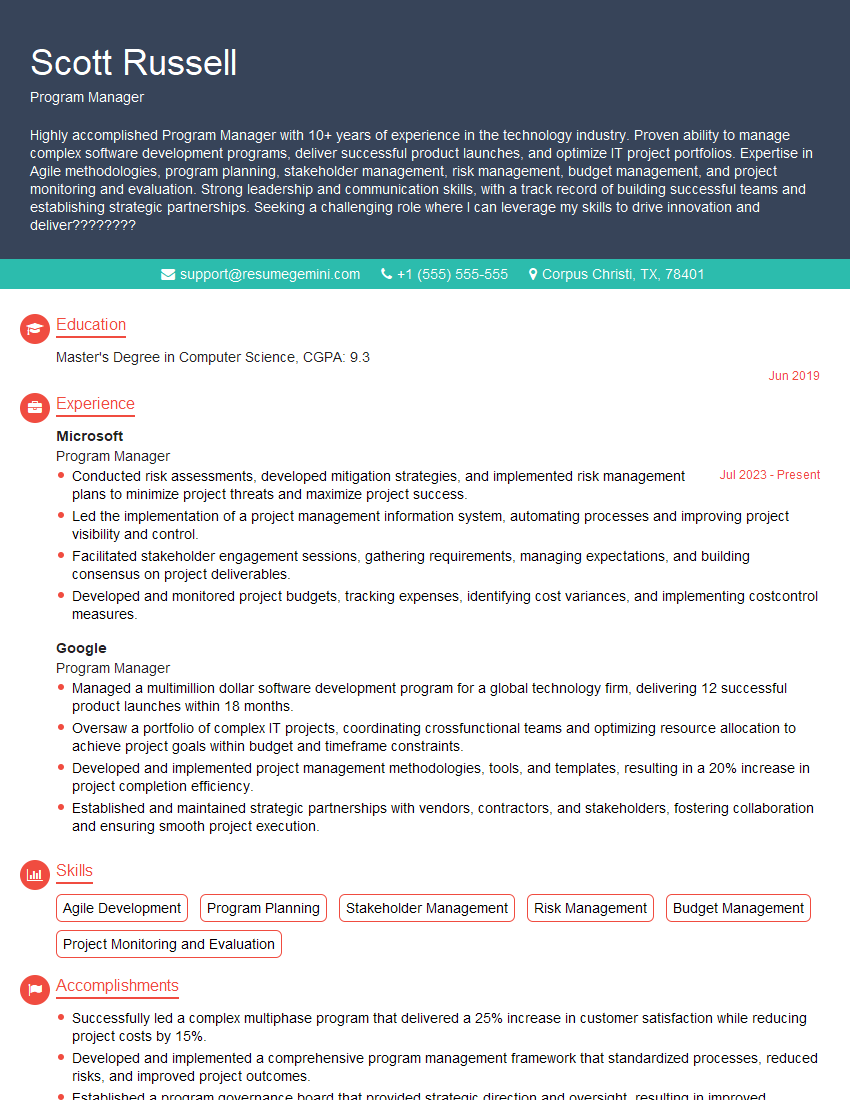
Program Manager Resume Sample

Operations Manager Resume Sample
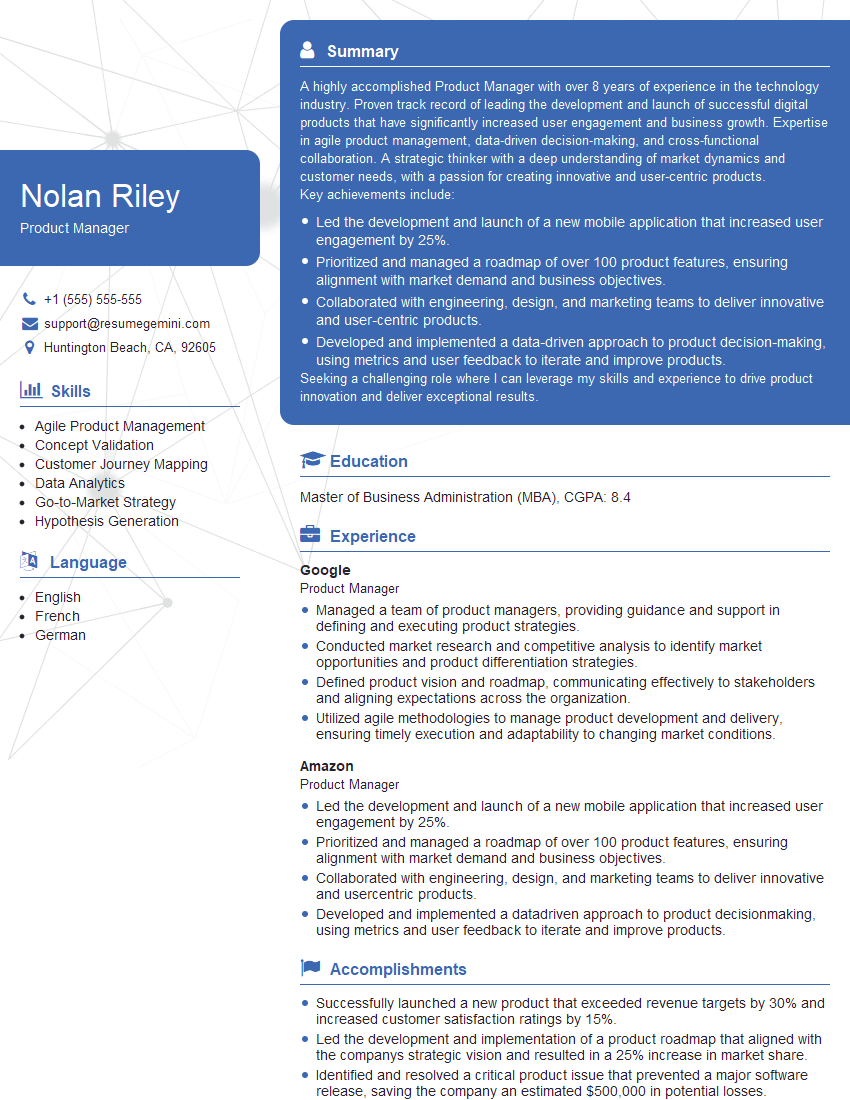
Product Manager Resume Sample
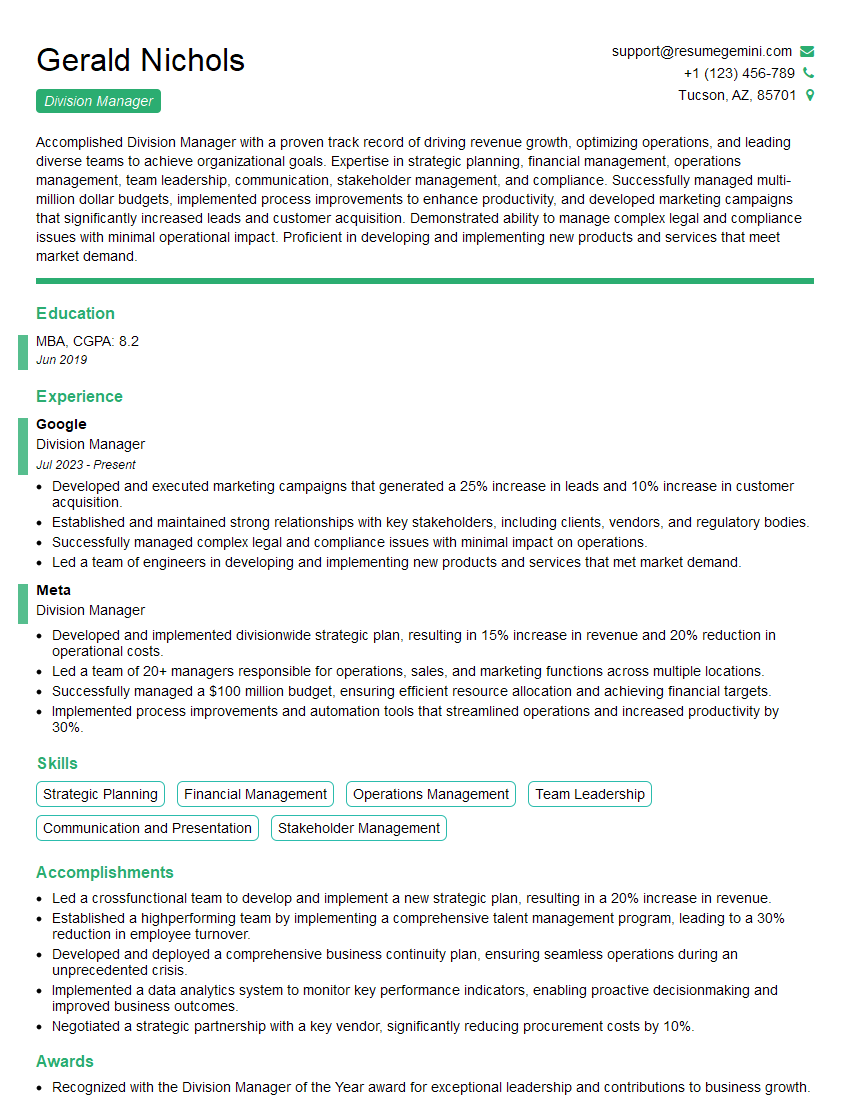
Division Manager Resume Sample
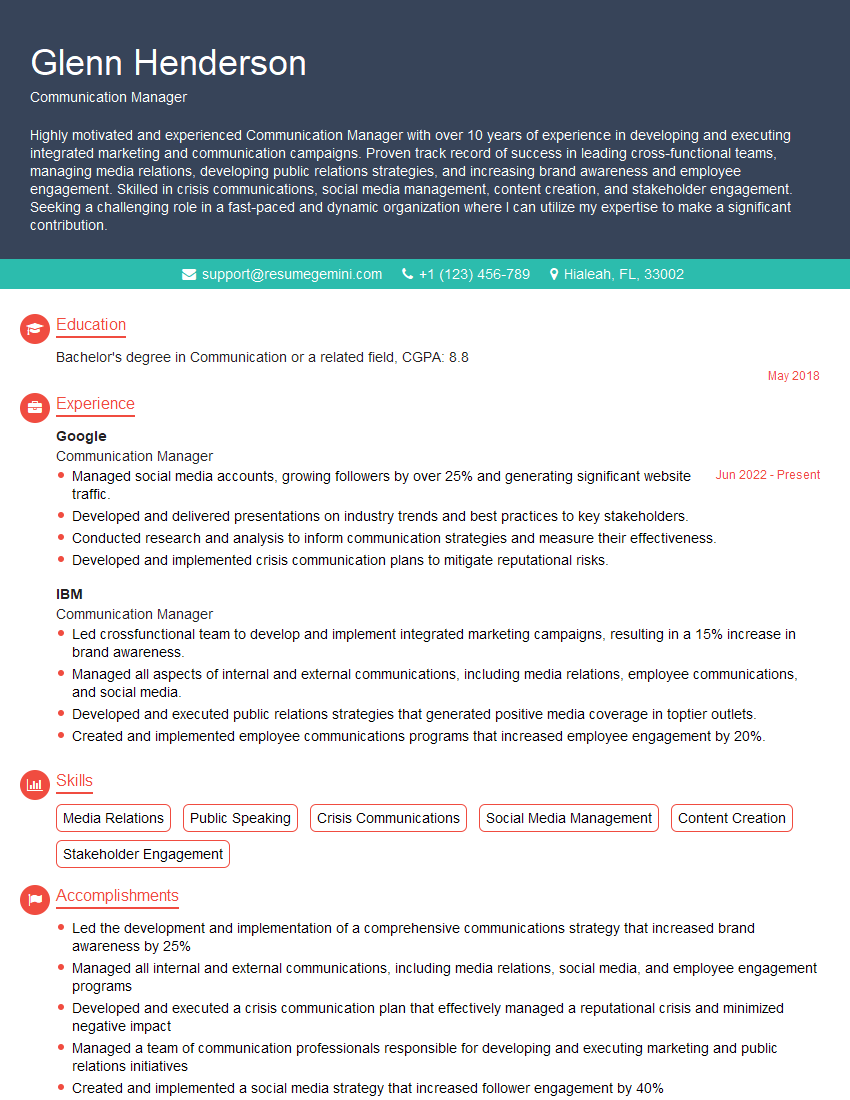
Communication Manager Resume Sample
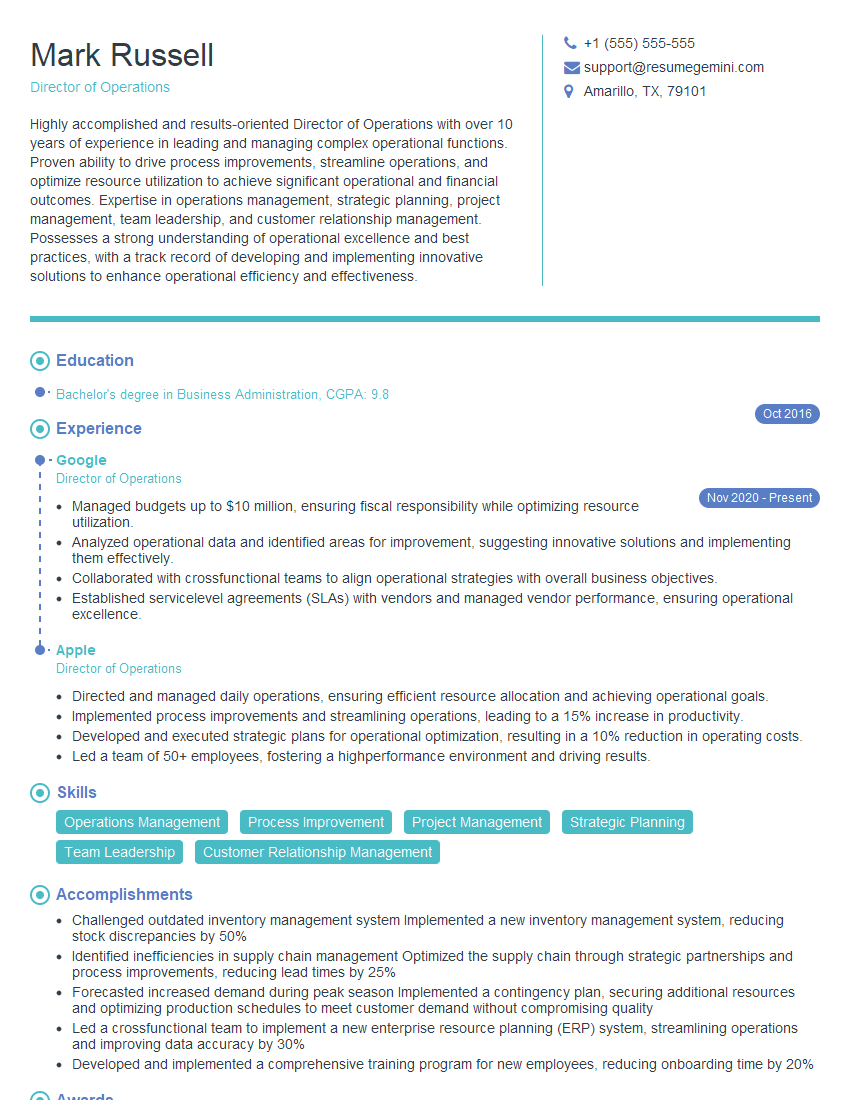
Director of Operations Resume Sample
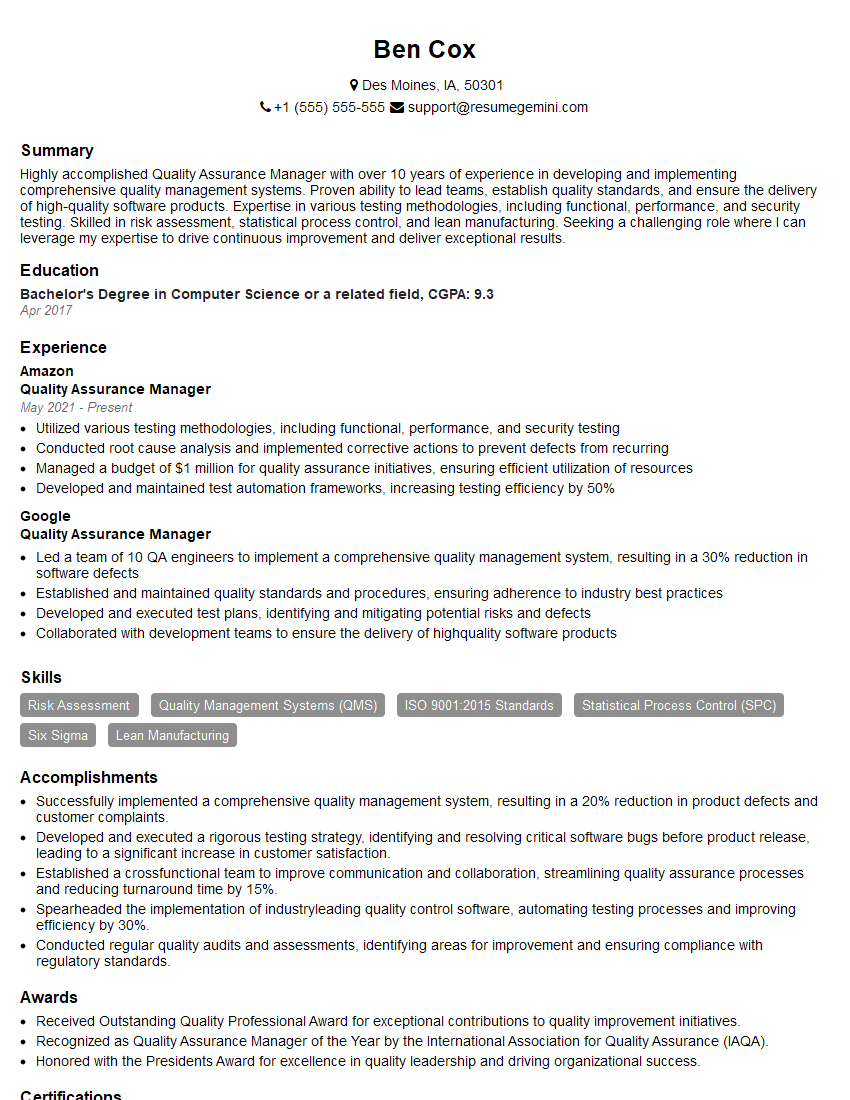
Quality Assurance Manager Resume Sample

Project Manager Resume Sample
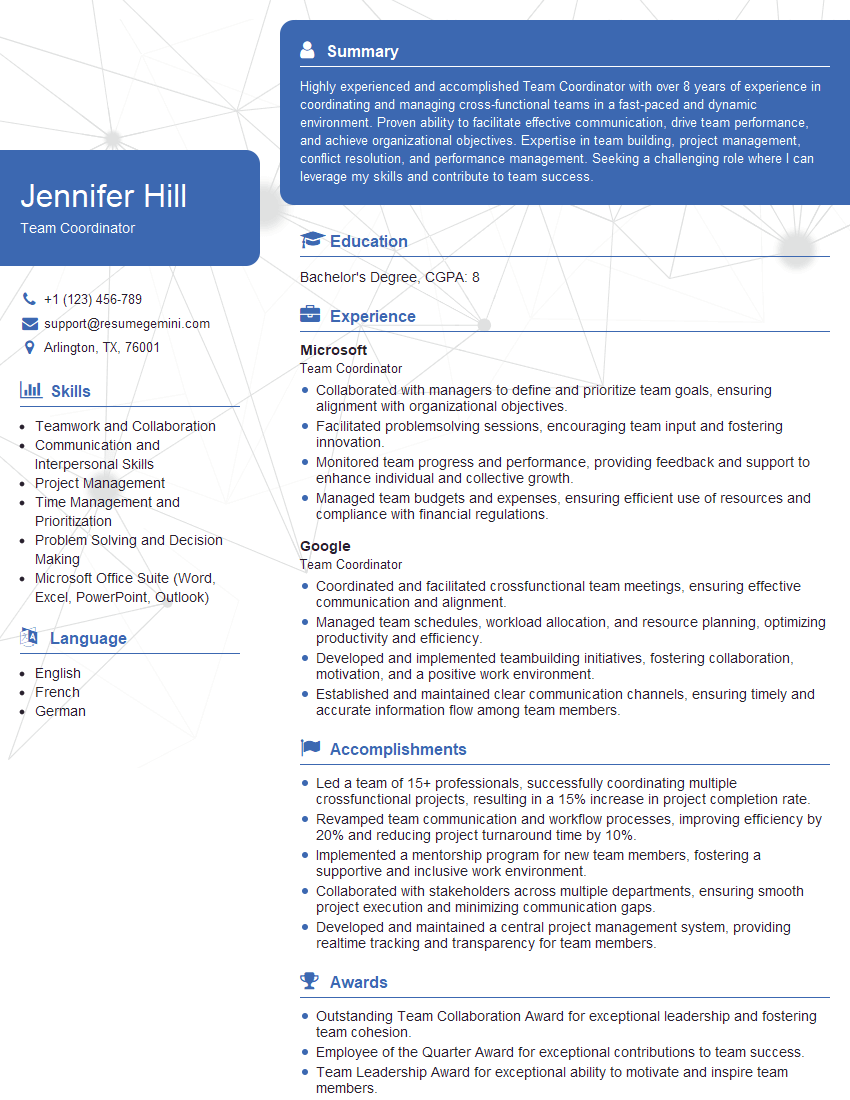
Team Coordinator Resume Sample
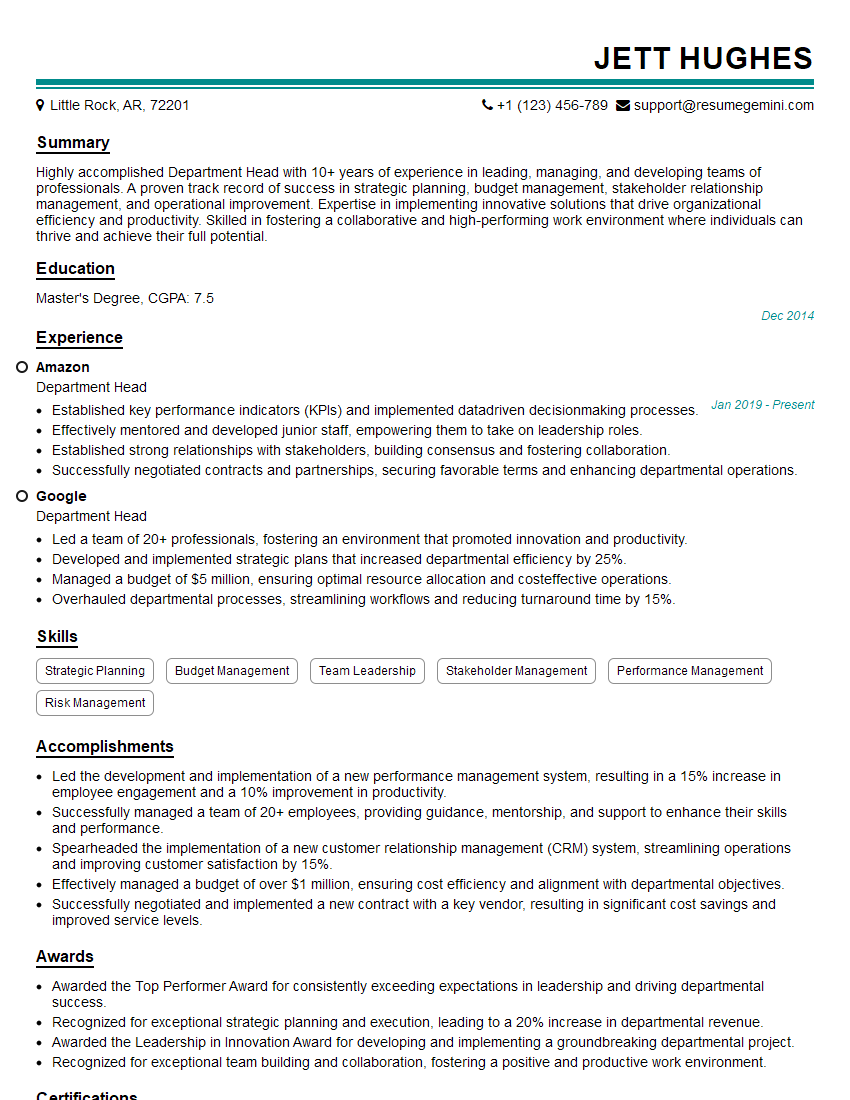
Department Head Resume Sample
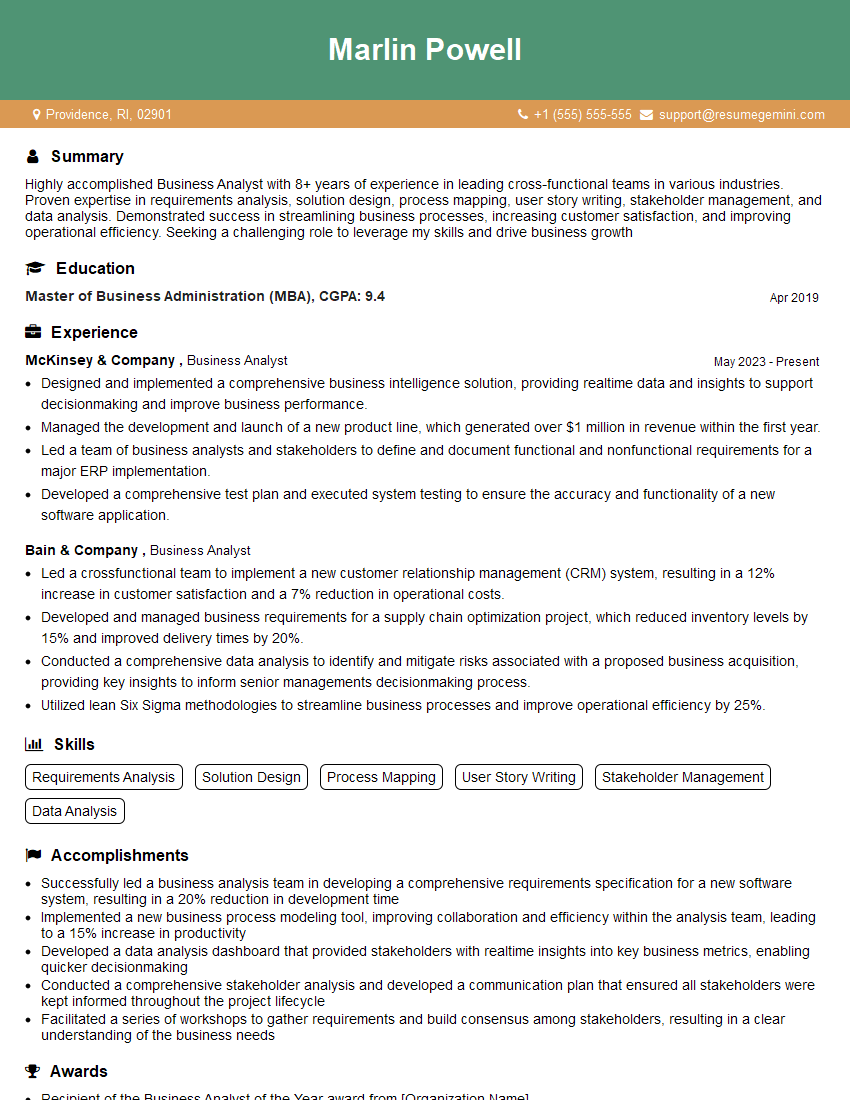
Business Analyst Resume Sample
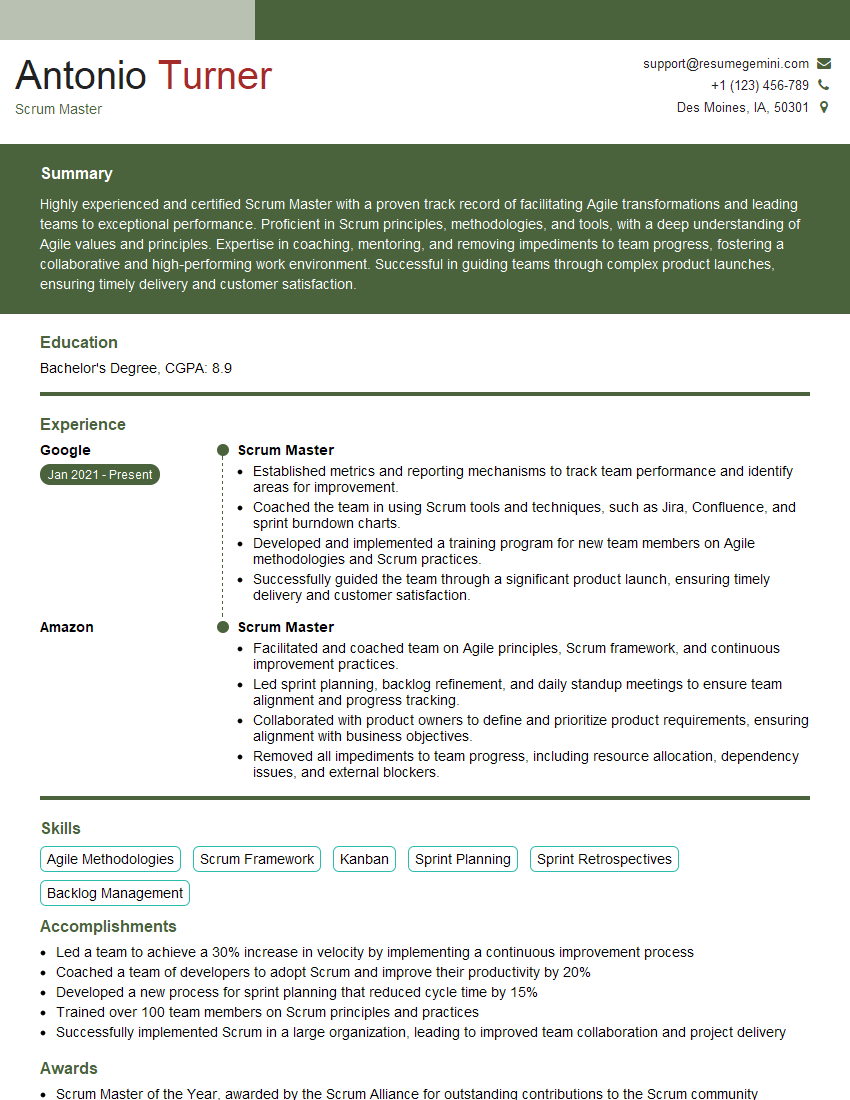
Scrum Master Resume Sample
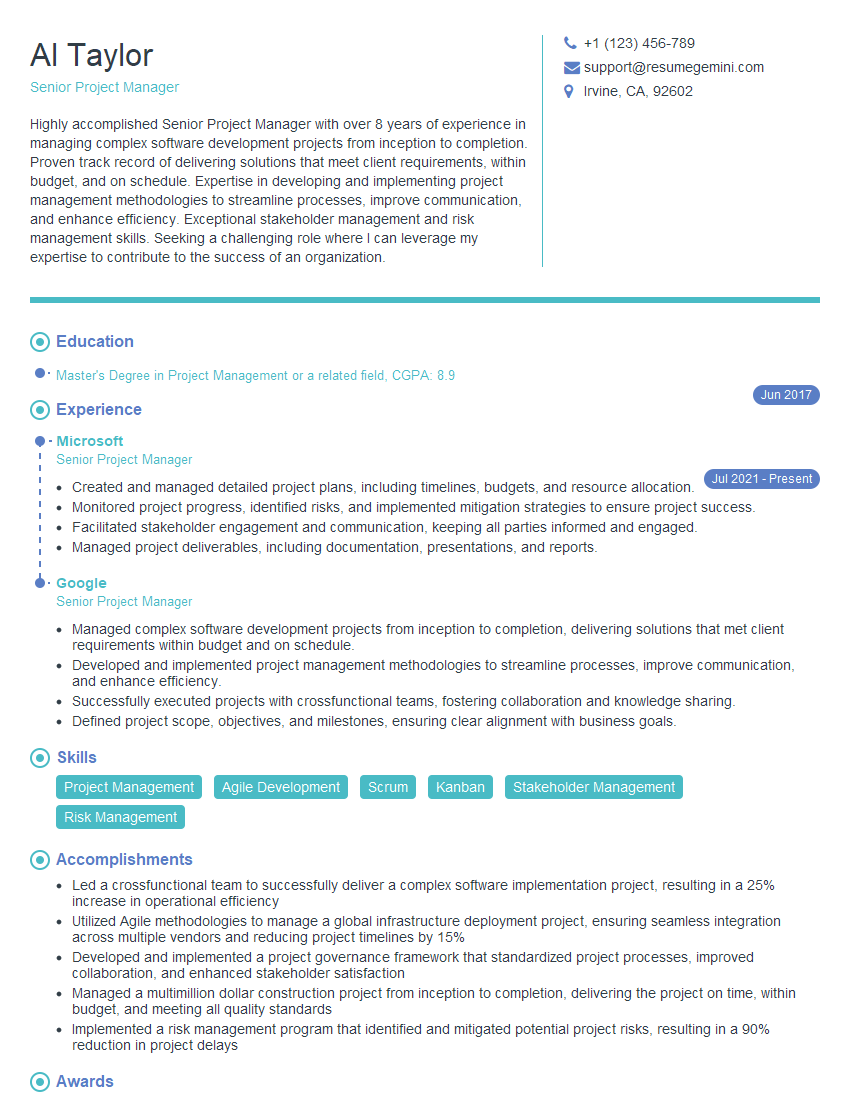
Senior Project Manager Resume Sample
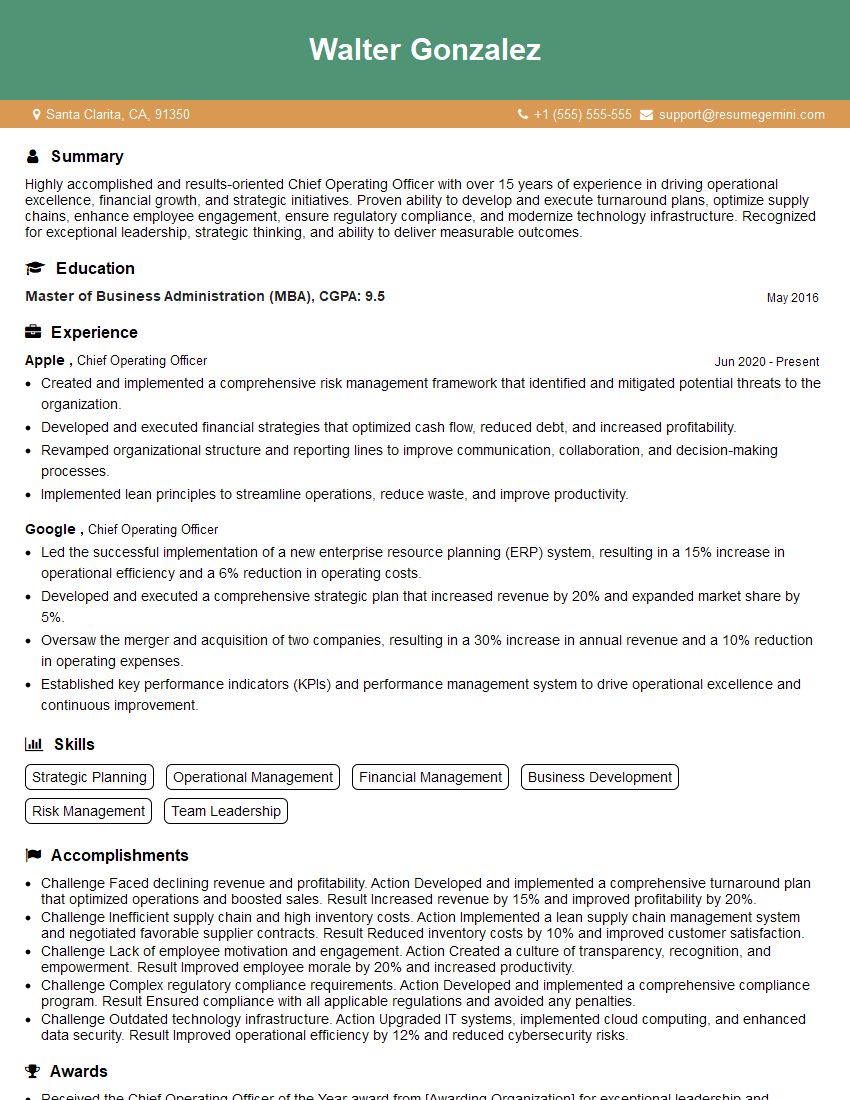
Chief Operating Officer Resume Sample
Explore more articles
Users Rating of Our Blogs
Share Your Experience
We value your feedback! Please rate our content and share your thoughts (optional).
What Readers Say About Our Blog
Very informative content, great job.
good