Interviews are opportunities to demonstrate your expertise, and this guide is here to help you shine. Explore the essential Crop Irrigation Planning interview questions that employers frequently ask, paired with strategies for crafting responses that set you apart from the competition.
Questions Asked in Crop Irrigation Planning Interview
Q 1. Explain the different types of irrigation systems and their suitability for various crops.
Irrigation systems are broadly categorized based on how water is delivered to crops. The choice of system depends heavily on factors like crop type, terrain, water availability, and budget.
- Surface Irrigation: This is the simplest method, involving flooding or furrowing the field. It’s suitable for relatively flat lands and crops tolerant of slight waterlogging, like rice. However, it’s inefficient in terms of water use and can lead to soil erosion.
- Sprinkler Irrigation: Water is sprayed onto the field through a network of pipes and sprinklers. This method is versatile, suitable for various terrains and crops, and offers better water control than surface irrigation. However, it requires higher initial investment and can be affected by wind.
- Drip Irrigation (Micro-irrigation): Water is delivered directly to the plant roots through a network of tubes and emitters. This is the most water-efficient method, minimizing evaporation and runoff. It’s ideal for high-value crops like fruits and vegetables, but it can be more expensive to install and maintain and requires careful emitter selection to match crop needs.
- Subsurface Irrigation: Water is applied below the soil surface through a network of buried pipes. This minimizes evaporation losses and can be suitable for crops sensitive to wet foliage, but requires careful design to ensure even water distribution and avoid waterlogging.
For example, rice thrives in flooded fields, making surface irrigation appropriate. Conversely, drip irrigation is ideal for delicate vegetables like tomatoes, maximizing water use efficiency and preventing fungal diseases that can develop from overhead watering.
Q 2. Describe the process of designing an irrigation system for a specific field, considering soil type and crop needs.
Designing an irrigation system is a multi-step process requiring a thorough understanding of the field and the crop’s water requirements. It begins with a comprehensive site assessment.
- Site Survey: This includes mapping the field, analyzing the topography (slope, elevation), and determining the soil type and its properties (infiltration rate, water holding capacity). Soil samples are crucial for determining the appropriate irrigation method and scheduling.
- Crop Water Requirements: Determine the crop’s evapotranspiration (ET) rate, which represents the water lost to the atmosphere through evaporation and transpiration. This can be estimated using weather data, crop coefficients, and established formulas like the Penman-Monteith equation. Consider the crop’s growth stages – water requirements vary throughout the growing season.
- Irrigation System Selection: Based on site assessment and crop needs, select the appropriate irrigation method. For example, a steep slope might necessitate drip irrigation to avoid runoff, while a flat field might be suitable for surface irrigation.
- System Design: This involves detailing the layout of pipes, sprinklers, or emitters, determining the required pressure and flow rates, and calculating the number and size of pumps and other components. Computer-aided design (CAD) software can assist with this process.
- Economic Analysis: Evaluate the initial investment costs, operating costs, and potential return on investment to ensure the chosen system is economically viable.
For instance, designing an irrigation system for a vineyard on a hillside would necessitate drip irrigation for targeted water delivery to minimize water wastage and ensure even growth. Conversely, a large field of wheat on flat land might be more economically served by sprinkler or surface irrigation.
Q 3. How do you determine the optimal irrigation schedule for a given crop?
Determining the optimal irrigation schedule involves monitoring soil moisture levels and considering weather conditions. The goal is to maintain adequate soil moisture without overwatering or underwatering the crop.
- Soil Moisture Monitoring: Regularly measure soil moisture content using tools like tensiometers, soil moisture sensors, or even simple feel tests. This helps to gauge the actual water status in the root zone.
- Weather Data: Daily weather data, including temperature, humidity, wind speed, and solar radiation, influences the crop’s evapotranspiration rate and thus the irrigation needs. Weather stations and online resources provide this information.
- Crop Growth Stage: Water requirements vary throughout the crop’s life cycle. For example, higher water demands occur during peak growth and flowering stages.
- Irrigation Scheduling Methods: Several methods exist, such as the soil water depletion method, which irrigates when the soil moisture reaches a predefined depletion level, or the climate-based scheduling methods, which use weather data and crop coefficients to estimate water needs. These methods require careful calibration for specific soil types and crops.
For example, in a drought-prone region, a farmer might rely on frequent soil moisture monitoring and climate-based scheduling to optimize irrigation, while in a region with consistent rainfall, irrigation might only be necessary during periods of extended dry spells.
Q 4. What are the key factors to consider when selecting an irrigation water source?
Selecting a suitable irrigation water source is critical and involves considering various factors.
- Water Availability: The source must provide a sufficient quantity of water throughout the growing season. This can be surface water (rivers, lakes), groundwater (wells), or treated wastewater.
- Water Quality: The water’s salinity, pH, and presence of harmful chemicals can impact crop growth and soil health. High salinity can damage plant roots, while excessive alkalinity can affect nutrient uptake.
- Cost: The cost of pumping, treating, and transporting water significantly impacts the overall irrigation cost. Energy costs, maintenance, and potential water tariffs must be factored in.
- Environmental Impact: Sustainable practices are paramount. Over-extraction of groundwater can lead to depletion, while surface water withdrawal needs to respect environmental flow requirements.
For example, a farmer might choose groundwater if it’s readily available and of good quality, but if groundwater is scarce or saline, they might explore surface water options or consider rainwater harvesting to supplement their irrigation needs. Using treated wastewater requires careful assessment of the water quality and its suitability for the intended crops.
Q 5. Explain the concept of water use efficiency in irrigation and how it can be improved.
Water use efficiency (WUE) refers to the amount of water used to produce a unit of crop yield. Maximizing WUE is essential for sustainable irrigation practices and minimizing water waste.
- Efficient Irrigation Systems: Drip irrigation, with its targeted water delivery, significantly improves WUE compared to surface irrigation. Other techniques like subsurface drip irrigation further enhance efficiency by minimizing evaporation losses.
- Appropriate Irrigation Scheduling: Avoiding overwatering and underwatering is crucial. Monitoring soil moisture and using weather data to fine-tune irrigation schedules can optimize water use.
- Improved Water Management Practices: This includes regular system maintenance to minimize leaks and ensure proper functioning. Using soil covers (mulch) to reduce evaporation and optimizing planting density to optimize water use at the plant level are other key strategies.
- Drought-Tolerant Crops: Choosing crop varieties that are inherently more efficient at using water helps improve overall WUE.
Imagine two farmers growing the same crop. One uses surface irrigation with frequent flood irrigations and the other utilizes a well-maintained drip irrigation system and precision scheduling. The second farmer will likely achieve significantly higher WUE, producing comparable or better yields while conserving water.
Q 6. What are the common challenges faced in crop irrigation planning and how can they be addressed?
Several challenges hamper effective crop irrigation planning.
- Water Scarcity: In many regions, limited water availability restricts irrigation capacity. This necessitates exploring alternative water sources, implementing water-efficient techniques, and prioritizing water allocation.
- Soil Degradation: Salinization, erosion, and compaction impact water infiltration and soil health. Soil conservation practices and appropriate irrigation management are needed to mitigate these problems.
- Climate Change: Increasing temperatures and altered rainfall patterns increase evapotranspiration rates and create uncertainties in water availability. Adaptive strategies, including drought-resistant crops and advanced irrigation technologies, are crucial.
- High Initial Investment Costs: Installing efficient irrigation systems can be costly, especially for smallholder farmers. Financial assistance programs, subsidized equipment, and innovative financing mechanisms can help overcome this barrier.
- Lack of Technical Expertise: Proper system design, operation, and maintenance require technical expertise. Training programs and extension services can help bridge this knowledge gap.
For example, in arid regions, water scarcity might necessitate rainwater harvesting and efficient irrigation scheduling to maximize water use, while in regions prone to soil erosion, the focus may shift towards terracing and minimizing runoff from irrigation.
Q 7. Describe your experience with irrigation scheduling software and data analysis tools.
I have extensive experience using irrigation scheduling software and data analysis tools. I’m proficient with programs like CIMIS (California Irrigation Management Information System) and several proprietary irrigation management software packages.
These tools allow for precise irrigation scheduling based on weather data, soil properties, and crop characteristics. I’m capable of integrating data from various sources – weather stations, soil moisture sensors, and yield monitors – to create comprehensive irrigation plans. Data analysis enables me to track water use efficiency, identify areas for improvement, and optimize irrigation strategies over time.
For example, I’ve used CIMIS data to develop tailored irrigation schedules for vineyards in California, taking into account the unique microclimates and soil conditions of each vineyard block. By analyzing yield data alongside irrigation data, I’ve been able to fine-tune irrigation schedules to enhance yields while conserving water.
Q 8. How do you assess the water requirements of different crops at various growth stages?
Assessing crop water requirements is crucial for efficient irrigation. We use a combination of methods, starting with understanding the crop’s evapotranspiration (ET) – the water lost to the atmosphere through evaporation from the soil and transpiration from the plant. This ET is influenced by several factors, including climate (temperature, humidity, solar radiation, wind speed), crop type, and growth stage.
- Crop Coefficients (Kc): These coefficients represent the ratio of a specific crop’s ET to the ET of a reference crop (often alfalfa). Kc values vary throughout the growing season, typically being lower in the early and late stages and higher during peak growth. We use established Kc values from research data or field observations.
- Reference Evapotranspiration (ET0): This is the ET of the reference crop under the specific climatic conditions. We calculate ET0 using various methods, like the Penman-Monteith equation, which considers all those climatic parameters. Weather stations provide the necessary input data.
- Crop Water Requirement (ETc): This is the final calculation: ETc = Kc * ET0. This tells us the total amount of water needed by the crop per unit area per day or other time interval. Different growth stages (e.g., seedling, vegetative, reproductive, maturity) have varying Kc values, leading to different ETc.
For example, a corn crop will have a much higher water requirement during its reproductive stage (when ears are developing) compared to its early seedling stage. We adjust irrigation schedules accordingly.
Q 9. Explain the principles of soil moisture monitoring and its role in irrigation management.
Soil moisture monitoring is the cornerstone of precision irrigation. It involves measuring the water content in the soil to determine when and how much to irrigate. This avoids over-irrigation (leading to waste and potential problems like salinity) and under-irrigation (reducing crop yields).
- Methods: We use several techniques, including tensiometers (measuring soil water tension), soil moisture sensors (measuring volumetric water content), and neutron probes (for larger-scale assessments). These methods provide real-time data about soil moisture levels at different depths.
- Role in Irrigation Management: The data collected allows us to schedule irrigation based on actual soil conditions rather than a fixed schedule. This is known as ‘irrigation scheduling’ or ‘water deficit irrigation’ where we allow some water stress before applying irrigation to optimize water use and save costs. Using a threshold approach is common; we trigger irrigation when the soil moisture reaches a predefined level. This approach greatly improves water-use efficiency.
- Data Interpretation: We must understand the soil type as different soils hold different amounts of water. Clay soils, for instance, retain more water than sandy soils. Soil moisture data is analyzed alongside weather forecasts and crop requirements to determine the appropriate irrigation volume and frequency.
Imagine a farmer using a simple tensiometer. When the tension reaches a critical point, indicating a low soil moisture content, the farmer knows it’s time to irrigate. This prevents unnecessary water use, saving money and conserving resources.
Q 10. How do you calculate irrigation water application rates?
Calculating irrigation water application rates involves determining the amount of water to apply per unit area (e.g., mm/ha or inches/acre) for each irrigation event. This must match the water deficit, which is the difference between the crop’s water requirement (ETc) and the amount of water available in the soil.
- Net Irrigation Requirement (NIR): This represents the amount of water needed to meet the crop’s needs, considering precipitation and any existing soil moisture. It is calculated as: NIR = ETc – Effective Rainfall.
- Irrigation Efficiency: No irrigation system is 100% efficient; some water is lost through evaporation, deep percolation, or runoff. This efficiency (typically expressed as a percentage) is crucial. The gross irrigation requirement (GIR) accounts for this: GIR = NIR / Irrigation Efficiency.
- Application Rate: Finally, the application rate considers the irrigation time, the system’s delivery rate (e.g., liters per minute per emitter for drip irrigation or gallons per hour per sprinkler), and the area covered. It’s important to avoid over-application, which can lead to runoff and leaching of nutrients.
For example, if the NIR is 50 mm and the irrigation efficiency is 80%, then the GIR is 62.5 mm. We then need to calculate the application rate to deliver this volume of water over a specific period, ensuring the soil isn’t flooded or left overly dry.
Q 11. Discuss the economic aspects of irrigation, including cost-benefit analysis.
Irrigation significantly impacts farm economics. A cost-benefit analysis is vital to justify investments and optimize water use.
- Costs: These include initial investment (equipment, infrastructure), operational costs (energy, labor, maintenance, water costs), and potential environmental costs (e.g., energy consumption).
- Benefits: Increased crop yields, improved crop quality, reduced risk of crop failure due to drought, expanded cropping possibilities.
- Analysis: We compare the present value of the benefits and costs over the lifespan of the irrigation system. Techniques like net present value (NPV), internal rate of return (IRR), and payback period help assess the economic viability. Sensitivity analyses help assess the impact of changes in input parameters.
For example, a farmer might compare the costs of installing a drip irrigation system against the potential increase in profits due to higher yields and reduced water costs. This analysis should also incorporate the potential for reduced labor needs and better quality produce.
Q 12. How do you incorporate sustainability principles into irrigation planning?
Sustainable irrigation focuses on minimizing environmental impacts while ensuring long-term agricultural productivity. Key principles include:
- Water conservation: Using efficient irrigation technologies (drip, sprinkler), scheduling based on actual water needs, and minimizing water losses.
- Energy efficiency: Optimizing irrigation scheduling to reduce energy consumption by pumps and other components. Selecting technologies with lower energy requirements.
- Soil health improvement: Practices that enhance soil infiltration and water retention, reducing the need for frequent irrigation. This includes cover cropping, no-till farming, and organic matter addition.
- Environmental protection: Minimizing the risk of groundwater contamination through proper management of fertilizers and pesticides, and avoiding over-irrigation that can lead to salinity.
For instance, using rainwater harvesting alongside efficient irrigation techniques drastically reduces the reliance on groundwater, contributing to both water conservation and environmental sustainability.
Q 13. What is your experience with different irrigation technologies, such as drip, sprinkler, and flood irrigation?
My experience encompasses various irrigation technologies. Each has its strengths and weaknesses:
- Drip Irrigation: Highly efficient, delivering water directly to the plant roots, minimizing water loss. Ideal for high-value crops and water-scarce regions. Requires careful design and maintenance to avoid clogging.
- Sprinkler Irrigation: More versatile than drip, suitable for various crops and terrains. Offers better uniformity than flood irrigation, but still susceptible to water losses through evaporation and wind drift. Different sprinkler types (e.g., center pivot, lateral move) offer varying levels of automation and efficiency.
- Flood Irrigation: The simplest method, involving flooding the entire field. Least efficient, significant water loss, prone to soil erosion and waterlogging. Appropriate only for specific situations and crops where water is abundant.
I’ve worked on projects implementing all these technologies, selecting the most suitable one based on the specific conditions, crop type, budget, and environmental considerations. For example, I’d recommend drip irrigation for a vineyard in a dry climate but a center pivot sprinkler system for a large field of wheat.
Q 14. Describe your approach to troubleshooting irrigation system malfunctions.
Troubleshooting irrigation system malfunctions involves a systematic approach:
- Visual Inspection: Check for obvious issues – leaks in pipes, damaged emitters, clogged filters, malfunctioning pumps, and problems with valves or pressure regulators.
- Pressure Monitoring: Measure pressure at various points in the system to identify pressure drops, indicating leaks or blockages.
- Flow Rate Measurement: Verify that water is being delivered at the expected rate at each emitter or sprinkler. Low flow rates may be caused by blockages, poor pump performance, or incorrect valve settings.
- Data Analysis: If using automated systems, review sensor data and logs to identify anomalies in water delivery, soil moisture levels, or pump operation.
- Component Testing: Isolate potentially faulty components (pumps, valves, sensors) and test their functionality individually.
For example, if a section of the field isn’t getting sufficient water, I’d start by checking for clogged emitters, then look at the pressure at that point. If pressure is low, I’d move upstream to find the source of the blockage or leak. Using a systematic approach ensures the problem is quickly and efficiently resolved.
Q 15. Explain your understanding of water rights and regulations related to irrigation.
Water rights and regulations are the legal frameworks governing the use of water resources, crucial for irrigation planning. These rights dictate who can access water, how much they can use, and for what purposes. Regulations often involve permits, licenses, and allocations, ensuring equitable distribution and sustainable management. For example, a farmer might hold a water right to divert a specific amount of water from a river for irrigation during a particular season. These rights can be complex, varying by location and often involving historical usage, prior appropriation, or riparian rights (rights based on land ownership adjacent to a water source). Ignoring these legal aspects can lead to serious penalties and conflicts with other water users. Successful irrigation planning necessitates a thorough understanding of applicable water laws and regulations to ensure legal compliance and access to water resources.
Regulations may also dictate water use efficiency standards, potentially including penalties for exceeding allowed water consumption or failing to meet specific environmental protection measures. For instance, regulations might require the use of specific irrigation technologies like drip irrigation to minimize water waste.
Career Expert Tips:
- Ace those interviews! Prepare effectively by reviewing the Top 50 Most Common Interview Questions on ResumeGemini.
- Navigate your job search with confidence! Explore a wide range of Career Tips on ResumeGemini. Learn about common challenges and recommendations to overcome them.
- Craft the perfect resume! Master the Art of Resume Writing with ResumeGemini’s guide. Showcase your unique qualifications and achievements effectively.
- Don’t miss out on holiday savings! Build your dream resume with ResumeGemini’s ATS optimized templates.
Q 16. How do you address water scarcity issues in irrigation planning?
Addressing water scarcity requires a multi-pronged approach in irrigation planning. It’s not just about saving water; it’s about using it more wisely and sustainably. This involves:
- Improving irrigation efficiency: Implementing techniques like drip irrigation, sprinkler irrigation with pressure regulation, and soil moisture monitoring to deliver water precisely where and when it’s needed, minimizing evaporation and runoff. For instance, replacing furrow irrigation with micro-irrigation systems can dramatically reduce water consumption.
- Water harvesting and storage: Collecting rainwater and storing it in reservoirs or tanks for later use during dry periods. This can supplement scarce water sources and reduce dependence on groundwater or surface water.
- Drought-resistant crops: Choosing crops that are naturally more tolerant to water stress and require less irrigation. Crop selection should align with the local climate and water availability.
- Improved water management practices: Implementing techniques like deficit irrigation (strategically reducing irrigation amounts during certain growth stages) to optimize water use without significantly compromising crop yield. Soil health improvement techniques also help increase water retention and efficiency.
- Water reuse and recycling: Exploring opportunities to reuse treated wastewater or other non-potable water sources for irrigation, reducing reliance on freshwater supplies. This requires careful consideration of water quality and potential impacts on soil and crop health.
Ultimately, successful water scarcity mitigation requires a collaborative effort involving farmers, policymakers, and researchers to develop and implement sustainable water management strategies.
Q 17. Discuss the role of climate change in irrigation planning and adaptation strategies.
Climate change significantly impacts irrigation planning. Changes in temperature, precipitation patterns, and the frequency of extreme weather events (droughts, floods) necessitate adaptation strategies. Increased temperatures lead to higher evapotranspiration rates, requiring more frequent and potentially larger irrigation applications. Altered rainfall patterns can disrupt traditional irrigation schedules, leading to water shortages or unexpected flooding. More intense rainfall events increase runoff, and decreases in groundwater levels will decrease supply to wells. Planning for climate change requires proactive measures such as:
- Climate-resilient crop selection: Selecting crops that are tolerant to heat, drought, and salinity, reducing the impact of climate variability.
- Diversification of water sources: Relying on multiple water sources (e.g., rainwater harvesting, groundwater, surface water) to mitigate risks associated with single-source dependence.
- Improved water storage and management: Investing in infrastructure for water storage and efficient distribution to manage seasonal variations in water availability.
- Precision irrigation technologies: Utilizing technologies like soil moisture sensors and variable rate irrigation to optimize water use under varying climatic conditions.
- Climate modeling and forecasting: Incorporating climate projections into irrigation planning to anticipate future water needs and adapt irrigation strategies accordingly.
A comprehensive understanding of climate projections is essential for developing effective adaptation strategies and ensuring the long-term sustainability of irrigation systems in the face of climate change.
Q 18. How do you integrate remote sensing and GIS technologies in irrigation management?
Remote sensing and GIS technologies are game-changers in irrigation management. Remote sensing, using satellites or drones, provides spatially explicit data on various parameters relevant to irrigation, such as vegetation health (NDVI), soil moisture, and surface water availability. GIS integrates this spatial data with other information, such as soil type, topography, and land ownership, creating a comprehensive picture of the irrigation system. This integration allows for:
- Precision irrigation scheduling: Soil moisture data from remote sensing can be used to determine irrigation needs in specific fields, optimizing water use and avoiding over-irrigation or under-irrigation. Algorithms can be applied to this data, combined with weather forecasts, to provide automatic irrigation schedules.
- Irrigation system optimization: GIS can assist in designing efficient irrigation layouts, minimizing pipe lengths and maximizing water distribution efficiency.
- Monitoring crop health: Vegetation indices from remote sensing allow for early detection of crop stress, enabling timely intervention and reducing yield losses.
- Water resource management: GIS can map water sources, assess their availability, and support decisions regarding water allocation and distribution.
For example, a farmer could use drone imagery to identify areas within a field experiencing water stress, allowing targeted irrigation in those areas only. Combining this data with a GIS system that integrates soil type allows for optimization of water delivery to different zones based on their water holding capacity.
Q 19. Describe your experience with precision irrigation techniques, such as variable rate irrigation.
Precision irrigation techniques, such as variable rate irrigation (VRI), offer significant advantages in optimizing water use and improving crop yields. VRI involves applying different amounts of water to different zones within a field based on site-specific needs. This is often guided by data from soil sensors, remote sensing, or yield maps. My experience with VRI has shown it to:
- Reduce water consumption: By tailoring water application to the actual needs of each zone, it minimizes water waste associated with uniform irrigation.
- Improve crop yields: Providing optimal water amounts leads to better crop growth and higher yields compared to uniform irrigation practices.
- Reduce fertilizer and pesticide use: VRI can be integrated with variable rate fertilization and pesticide application, further enhancing efficiency and sustainability.
In one project, I assisted a farmer in implementing VRI using soil moisture sensors and a GPS-guided irrigation system. The result was a 20% reduction in water consumption without impacting crop yields, demonstrating the substantial economic and environmental benefits of this technique.
Q 20. How do you monitor and evaluate the performance of an irrigation system?
Monitoring and evaluating irrigation system performance involves a multifaceted approach, combining field measurements with data analysis. This includes:
- Regular inspections: Assessing the physical condition of the irrigation system, checking for leaks, blockages, or damaged components.
- Water flow measurements: Measuring water flow rates at various points in the system to ensure proper water distribution.
- Soil moisture monitoring: Using soil moisture sensors to evaluate the effectiveness of water application and identify areas that may require adjustment.
- Crop monitoring: Regularly assessing crop growth and yield to evaluate the impact of irrigation management.
- Data logging and analysis: Recording irrigation schedules, water usage, and other relevant parameters to track system performance and identify areas for improvement. This data allows for identifying trends and patterns over time.
- Energy consumption monitoring: Tracking energy used by pumps and other irrigation equipment to assess the overall energy efficiency of the system.
By combining these approaches, a comprehensive evaluation of irrigation system performance can be achieved, enabling informed decisions to improve efficiency and optimize water use.
Q 21. What are the key performance indicators (KPIs) used to assess irrigation efficiency?
Key Performance Indicators (KPIs) for assessing irrigation efficiency include:
- Water application efficiency (WAE): The ratio of water used by plants to the total water applied. A higher WAE indicates less water loss through runoff, deep percolation, and evaporation. Typical ranges are between 50% and 80%, although higher is always preferred.
- Irrigation water use efficiency (IWUE): The ratio of crop yield to the amount of irrigation water used. This KPI indicates the overall productivity of the irrigation system in terms of crop yield per unit of water.
- Water use per unit area: Measures the total volume of water used per unit area (e.g., hectare) of land. Lower values indicate more efficient water use.
- Crop yield: A direct indicator of the effectiveness of the irrigation system in supporting plant growth and production.
- Energy use per unit of water: Measures the energy efficiency of the pumping system. Lower values indicate less energy consumed per unit of water delivered.
- Economic return on water investment: A measure of the net income generated per unit of water used, reflecting the economic efficiency of irrigation investments.
By tracking these KPIs, irrigation managers can effectively monitor system performance, identify areas for improvement, and make data-driven decisions to optimize water use and maximize crop production.
Q 22. Explain the importance of regular maintenance for irrigation systems.
Regular irrigation system maintenance is crucial for ensuring optimal water use efficiency, maximizing crop yields, and extending the lifespan of the system. Neglecting maintenance leads to decreased performance, increased water waste, and costly repairs down the line.
- Component Checks: Regular inspections of pumps, pipes, valves, sprinklers, and other components identify leaks, clogs, or wear and tear before they become major problems. Think of it like a car – regular oil changes prevent engine damage.
- Cleaning: Accumulation of sediment and debris in pipes and sprinklers reduces flow and efficiency. Regular flushing and cleaning are essential. Imagine a clogged artery; proper cleaning ensures smooth flow.
- Calibration: Consistent calibration of pressure regulators and flow meters ensures accurate water delivery, preventing overwatering or underwatering, optimizing resource usage and crop health. It’s like ensuring your kitchen scales are accurate for baking a perfect cake.
- Preventative Repairs: Addressing minor issues promptly before they escalate into major problems significantly reduces downtime and repair costs. A stitch in time saves nine, as the saying goes.
For example, in a drip irrigation system, a single clogged emitter can significantly reduce water delivery to a whole section of plants. Regular maintenance ensures early detection and easy resolution of such issues, maximizing crop yield and minimizing water loss.
Q 23. Describe your experience working with different stakeholders in irrigation projects.
My experience working with diverse stakeholders in irrigation projects is extensive. Successful projects hinge on effective communication and collaboration among farmers, government agencies, engineers, and community leaders. I’ve worked on projects involving:
- Farmers: Understanding their needs, concerns, and existing farming practices is paramount. I’ve facilitated workshops and one-on-one consultations to educate farmers on efficient irrigation techniques and technologies.
- Government Agencies: Navigating regulations, securing permits, and obtaining funding often involves close cooperation with government bodies. I’ve been involved in preparing proposals, presenting project plans, and ensuring compliance with relevant environmental standards.
- Engineers: Collaborating with engineers on the design, installation, and maintenance of irrigation systems is crucial. I’ve worked closely with engineers to ensure the systems are both effective and sustainable.
- Community Leaders: Engaging community leaders and building consensus helps ensure project acceptance and long-term sustainability. I’ve participated in community meetings and facilitated discussions to address concerns and build trust.
For instance, in a recent project, I successfully mediated between a group of farmers with differing opinions on water allocation by facilitating a series of meetings where we collaboratively developed a fair and equitable distribution plan that considered everyone’s needs and the environmental impact.
Q 24. How do you manage conflicts arising from water allocation among different users?
Water allocation conflicts require careful management, emphasizing fairness and sustainability. My approach involves a combination of technical analysis, stakeholder engagement, and conflict resolution techniques.
- Data-driven Allocation: Using accurate water flow measurements, soil moisture sensors, and crop water requirement data, we can develop a scientifically sound allocation plan based on need rather than historical practices or claims.
- Negotiation and Mediation: Facilitating open communication and negotiation among water users is essential. I use mediation techniques to help parties find mutually agreeable solutions. Often, compromise and flexibility are key.
- Prioritization and Regulation: In cases where water scarcity is severe, a prioritization scheme might be necessary, perhaps favoring high-value crops or those with higher water-use efficiency. Regulations and penalties can deter overuse.
- Water-use Efficiency Improvements: Promoting efficient irrigation technologies like drip irrigation or rainwater harvesting can alleviate pressure on water resources and reduce conflict.
For example, in a case where two farmers argued over a shared water source, I utilized a combination of flow monitoring data and mediation to demonstrate the actual water usage of each farmer, leading them to agree on a more equitable allocation based on actual need, not historical usage.
Q 25. Discuss your understanding of the environmental impacts of irrigation and mitigation strategies.
Irrigation, while essential for food production, can have significant environmental impacts if not managed properly. Understanding and mitigating these impacts is crucial.
- Water depletion: Irrigation consumes vast quantities of water, potentially depleting groundwater resources and affecting water availability for other uses. Strategies include using drought-resistant crops, implementing efficient irrigation systems, and managing irrigation scheduling based on soil moisture.
- Salinization: Irrigation water can contain dissolved salts, which accumulate in the soil over time, reducing soil fertility and harming crop yields. Techniques to combat salinization involve using high-quality irrigation water, implementing proper drainage systems, and leaching salts from the soil.
- Nutrient runoff: Fertilizers applied to irrigated fields can runoff into waterways, causing eutrophication and harming aquatic ecosystems. Buffer strips, reduced fertilizer use, and precision fertilization techniques can minimize this problem.
- Greenhouse gas emissions: Irrigation pumping requires energy, and some irrigation systems release methane. Using renewable energy sources for pumping and adopting efficient irrigation practices can reduce carbon footprint.
For instance, promoting the adoption of rainwater harvesting systems in combination with efficient drip irrigation significantly reduces reliance on groundwater, minimizing water depletion and ensuring more sustainable agricultural practices. Similarly, implementing precision agriculture techniques reduces fertilizer usage, lowering nutrient runoff and benefiting the environment.
Q 26. How do you handle unexpected events, such as equipment failure or extreme weather conditions?
Unexpected events are an inherent part of irrigation management. A proactive approach involves preparedness, contingency planning, and quick response strategies.
- Regular System Monitoring: Implementing remote monitoring systems, coupled with regular on-site inspections, enables early detection of problems such as equipment malfunctions or leaks.
- Emergency Repair Kits: Maintaining a readily accessible emergency repair kit with spare parts and tools reduces downtime during equipment failures.
- Weather Forecasting and Contingency Plans: Regularly monitoring weather forecasts allows for adjustments to irrigation schedules to account for extreme weather conditions. Contingency plans should include strategies for dealing with droughts, floods, or extreme temperatures.
- Communication Network: Establishing a clear and effective communication network among farmers, technicians, and relevant authorities ensures a quick response to unexpected events.
For example, during a recent unexpected hailstorm that damaged several sprinkler heads, our pre-existing communication network allowed for a swift response: We immediately contacted the repair crew, obtained the needed replacement parts, and had the system repaired within a day, minimizing crop damage.
Q 27. Explain your experience with irrigation system automation and control systems.
My experience with irrigation system automation and control systems is extensive. These systems are critical for maximizing efficiency and minimizing water waste.
- Sensor Integration: I’ve worked with various sensors including soil moisture sensors, weather stations, and flow meters to provide real-time data about the irrigation system and the surrounding environment. This data is crucial for making informed decisions about irrigation scheduling.
- Control Systems: I have experience programming and managing various irrigation control systems, including those based on programmable logic controllers (PLCs) and cloud-based platforms. This allows for automated scheduling, remote monitoring and adjustments, optimizing water use and ensuring precise water delivery.
- Data Analysis and Optimization: I utilize historical data and real-time sensor readings to optimize irrigation schedules, ensuring that crops receive the precise amount of water they need, at the optimal time, minimizing water waste.
- Smart Irrigation Technologies: I have experience integrating smart irrigation technologies like variable rate irrigation (VRI) systems that allow for customized water application based on the specific needs of different areas within a field.
For example, in one project, we implemented a PLC-based control system that uses soil moisture sensors to automate irrigation scheduling, reducing water consumption by 25% while maintaining crop yields. The system also sends alerts via SMS to the farmer and the irrigation technician in case of malfunctions.
Q 28. How do you ensure the accuracy and reliability of irrigation data?
Ensuring the accuracy and reliability of irrigation data is paramount. This involves a multi-faceted approach:
- Calibration and Validation: Regularly calibrating sensors and flow meters using established protocols is essential. We cross-validate data from multiple sources to ensure accuracy and identify potential errors.
- Data Logging and Storage: Implementing robust data logging and storage systems ensures data integrity and accessibility. We utilize secure databases and cloud-based platforms for data storage and retrieval.
- Data Quality Control: Implementing data quality checks, including outlier detection and error correction, identifies and addresses inconsistencies or inaccuracies in the data. This involves statistical analysis and manual review.
- Data Visualization and Reporting: Clear and concise visualization of data through dashboards and reports aids in understanding trends, patterns, and potential problems, facilitating informed decision-making.
For example, we use statistical process control (SPC) charts to monitor the performance of our sensors and identify any deviations from normal operation. Any outliers are investigated and addressed, ensuring the reliability of the data used for irrigation management decisions.
Key Topics to Learn for Crop Irrigation Planning Interview
- Water Requirements of Crops: Understanding evapotranspiration, crop coefficients, and irrigation scheduling methods like the soil water balance approach. Practical application: Calculating irrigation needs for a specific crop in a given climate.
- Irrigation System Design: Exploring various irrigation systems (drip, sprinkler, surface) and their suitability for different crops and terrains. Practical application: Evaluating the efficiency and cost-effectiveness of different irrigation systems for a particular farm.
- Soil and Water Properties: Knowledge of soil texture, water holding capacity, infiltration rates, and their influence on irrigation management. Practical application: Interpreting soil tests to optimize irrigation strategies.
- Irrigation Management Technologies: Familiarity with sensors, automation systems, and data-driven approaches to improve irrigation efficiency and water use. Practical application: Designing a smart irrigation system using available technologies.
- Water Management and Conservation: Understanding principles of water conservation, deficit irrigation, and strategies for minimizing water waste. Practical application: Developing a water management plan for a farm aiming to reduce water consumption.
- Economic Analysis of Irrigation: Evaluating the costs and benefits of different irrigation strategies and their impact on crop yield and profitability. Practical application: Conducting a cost-benefit analysis of implementing a new irrigation system.
- Environmental Impacts of Irrigation: Understanding the environmental consequences of irrigation practices (e.g., salinity, nutrient runoff) and methods for mitigation. Practical application: Developing an environmentally sustainable irrigation plan.
Next Steps
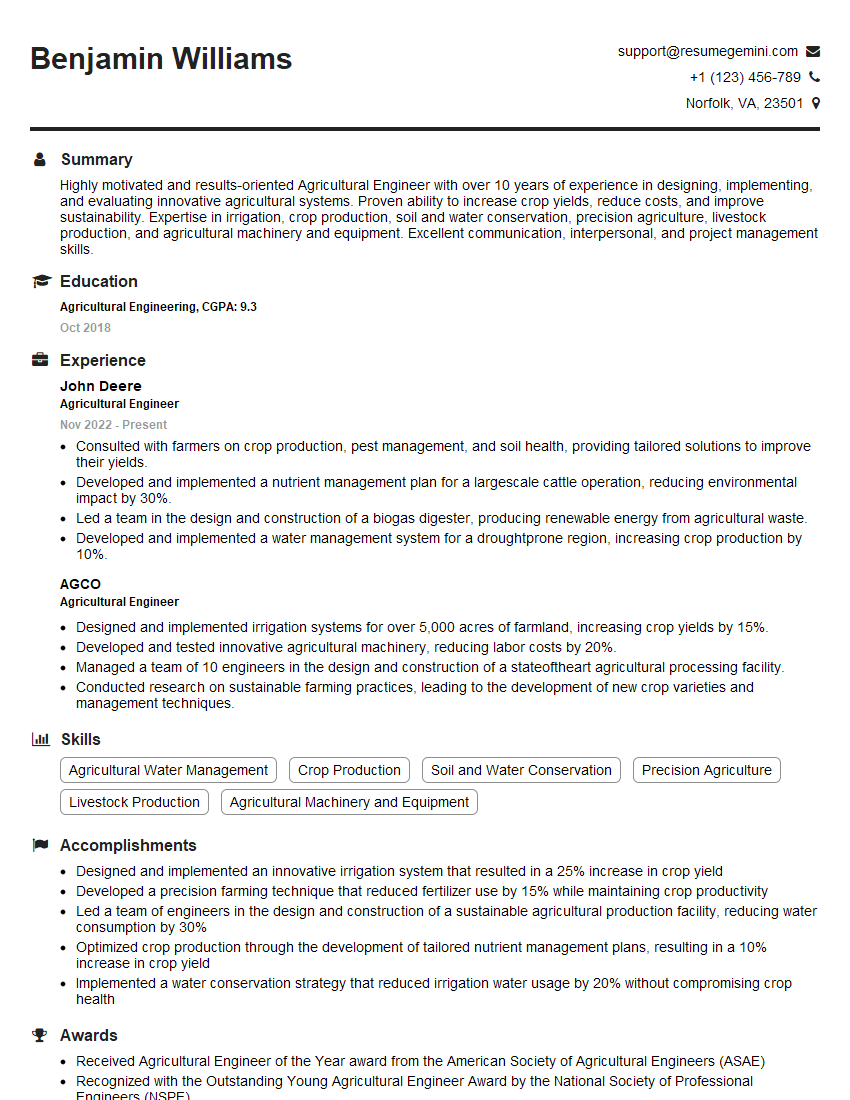
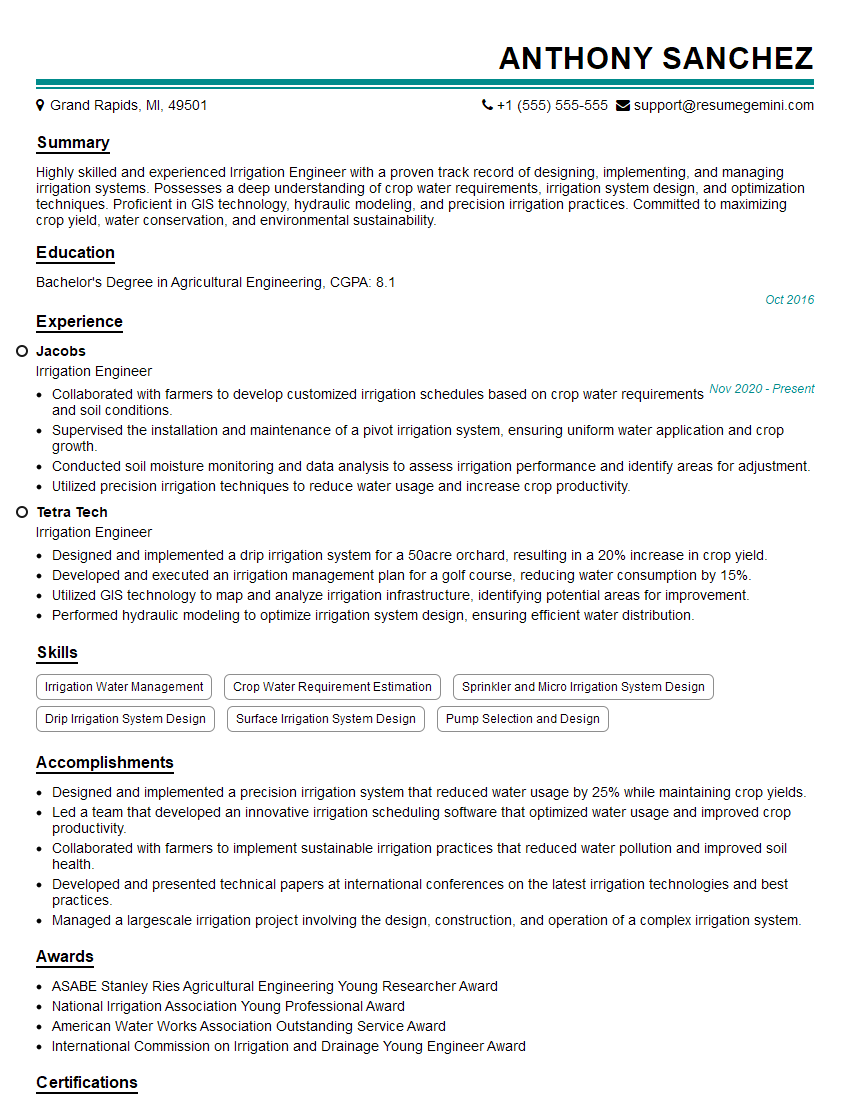
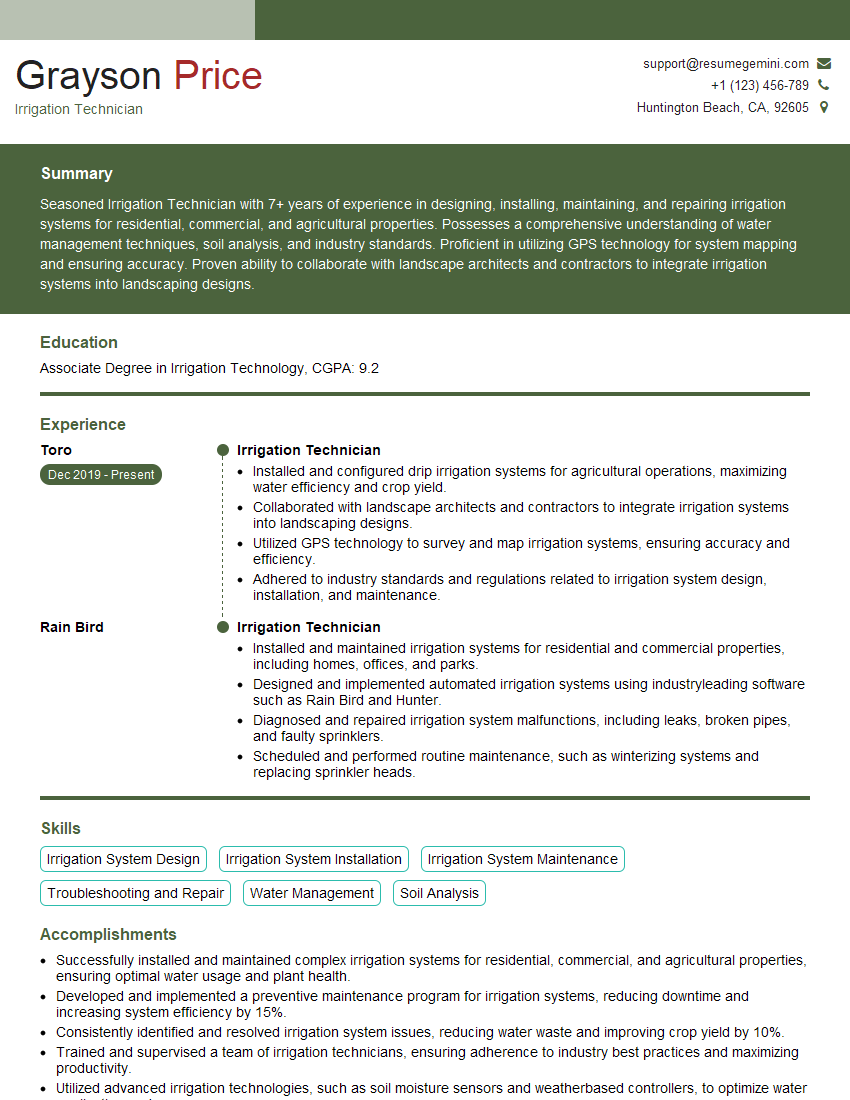
Mastering Crop Irrigation Planning opens doors to exciting career opportunities in agriculture, water management, and environmental consulting. To stand out in a competitive job market, a strong and ATS-friendly resume is crucial. We encourage you to build a compelling resume that showcases your skills and experience effectively. ResumeGemini is a trusted resource that can help you craft a professional and impactful resume tailored to your specific career goals. Examples of resumes tailored to Crop Irrigation Planning are available to guide you through the process.


Explore more articles
Users Rating of Our Blogs
Share Your Experience
We value your feedback! Please rate our content and share your thoughts (optional).
What Readers Say About Our Blog
Very informative content, great job.
good