Unlock your full potential by mastering the most common CrossContamination Prevention interview questions. This blog offers a deep dive into the critical topics, ensuring you’re not only prepared to answer but to excel. With these insights, you’ll approach your interview with clarity and confidence.
Questions Asked in CrossContamination Prevention Interview
Q 1. Describe the different types of cross-contamination and their sources.
Cross-contamination occurs when harmful substances transfer from one surface or food item to another, causing potential illness or spoilage. There are several types:
- Physical Contamination: This involves foreign objects like hair, glass, or metal getting into food. Source: Improper handling, inadequate sanitation of equipment.
- Chemical Contamination: This involves the transfer of chemicals, such as cleaning agents or pesticides, into food. Source: Inadequate cleaning, improper storage of chemicals near food.
- Biological Contamination: This is the most common and serious type, involving the transfer of microorganisms like bacteria, viruses, or parasites. Source: Raw meat juices, contaminated surfaces, infected individuals.
- Allergen Contamination: This involves the transfer of allergens such as nuts, dairy, or soy into other foods, posing a risk to sensitive individuals. Source: Shared equipment, cross-contact during processing, inadequate allergen control procedures.
Understanding the source is crucial for effective prevention. For instance, if raw chicken juice contaminates a salad, the source is improper separation and sanitation of cutting boards.
Q 2. Explain the principles of HACCP in relation to cross-contamination prevention.
HACCP (Hazard Analysis and Critical Control Points) is a systematic preventative approach to food safety. In cross-contamination prevention, HACCP focuses on identifying and controlling critical points where contamination is most likely to occur. This involves:
- Hazard Analysis: Identifying potential cross-contamination hazards (e.g., raw meat near ready-to-eat foods).
- Critical Control Point (CCP) Identification: Determining the steps in the process where contamination can be prevented or eliminated (e.g., proper temperature control, hand washing stations).
- Critical Limits Establishment: Setting specific measurable limits for each CCP (e.g., temperature, time).
- Monitoring: Regularly monitoring CCPs to ensure they are within the critical limits.
- Corrective Actions: Establishing procedures to correct deviations from critical limits.
- Verification: Verifying that the HACCP plan is effective.
- Record Keeping: Maintaining detailed records of all aspects of the plan.
Imagine a restaurant: a CCP might be the temperature of a refrigerator storing raw chicken. Consistent monitoring ensures the temperature remains below 40°F (4°C), preventing bacterial growth and cross-contamination to other foods.
Q 3. What are the key elements of a good GMP program for preventing cross-contamination?
Good Manufacturing Practices (GMPs) are crucial for preventing cross-contamination. Key elements include:
- Sanitation: Regular cleaning and sanitizing of all equipment and surfaces using appropriate cleaning agents.
- Personnel Hygiene: Hand washing protocols, proper attire (hairnets, gloves), and health checks for employees.
- Equipment Design: Using equipment that is easy to clean and prevents cross-contamination (e.g., separate cutting boards for raw and cooked foods).
- Facility Layout: Strategically organizing the facility to minimize the risk of cross-contamination (e.g., separating raw and cooked food areas).
- Raw Material Handling: Proper receiving and storage of raw materials to prevent contamination.
- Pest Control: Implementing a comprehensive pest control program to prevent insects and rodents from accessing food.
- Allergen Control: Implementing procedures to prevent allergen cross-contamination (e.g., dedicated equipment for allergen-containing products).
A well-structured GMP program, like a well-organized kitchen, prevents chaos and contamination. Dedicated equipment prevents a nut allergy catastrophe, while regular cleaning eliminates bacterial breeding grounds.
Q 4. How do you identify and mitigate cross-contamination risks in a food processing environment?
Identifying and mitigating cross-contamination risks involves a systematic approach:
- Hazard Analysis: Conduct a thorough assessment of all processes, identifying potential sources of contamination (e.g., raw materials, equipment, personnel).
- Risk Assessment: Evaluate the likelihood and severity of each identified hazard. This prioritizes the most critical areas.
- Control Measures: Implement control measures to mitigate the identified risks, such as using separate equipment, implementing proper sanitation protocols, and training employees.
- Monitoring and Verification: Regularly monitor the effectiveness of control measures through visual inspections, environmental monitoring (e.g., swab testing), and audits.
- Corrective Actions: Implement corrective actions promptly to address any identified deviations or contamination events. This often includes retraining, equipment repair, or deeper cleaning.
For example, in a bakery, a risk assessment might reveal that flour dust poses an allergen risk. Mitigation would include dedicated flour handling equipment for products with allergens, frequent cleaning, and employee training on allergen control.
Q 5. What are the critical control points (CCPs) for cross-contamination prevention in your area of expertise?
Critical Control Points (CCPs) for cross-contamination prevention vary depending on the specific food processing environment, but common examples include:
- Raw Material Handling: Ensuring raw materials are stored and handled properly to prevent contamination.
- Equipment Cleaning and Sanitization: Thorough cleaning and sanitizing of all food contact surfaces between different products or after handling raw materials.
- Temperature Control: Maintaining proper temperatures during processing and storage to inhibit microbial growth.
- Personnel Hygiene: Implementing and enforcing strict handwashing and personal hygiene protocols.
- Allergen Control: Implementing procedures to prevent cross-contact between allergen-containing and allergen-free products.
- Waste Management: Proper disposal of waste materials to prevent contamination.
Think of a meat processing plant: the CCP for preventing bacterial spread might be the temperature of the chilling system, ensuring that meat is rapidly cooled to inhibit growth. Another is the sanitation of equipment between processing different types of meat.
Q 6. Describe your experience with implementing and maintaining a sanitation program.
I have extensive experience developing and implementing sanitation programs across various food processing facilities. My approach involves:
- Developing a written sanitation plan: This outlines detailed procedures for cleaning and sanitizing all equipment and surfaces, including frequency, cleaning agents, and personnel responsibilities.
- Selecting appropriate cleaning and sanitizing agents: Choosing agents that are effective against specific microorganisms and compatible with equipment materials.
- Training employees: Providing thorough training to all staff members on proper sanitation procedures and techniques.
- Implementing a monitoring program: Regularly monitoring the effectiveness of the sanitation program through visual inspections, ATP bioluminescence testing (measuring surface cleanliness), and microbiological testing of environmental samples.
- Implementing corrective actions: Addressing any deficiencies in the sanitation program promptly to prevent contamination.
In one instance, implementing a new sanitation schedule with a focus on high-touch areas within a bakery dramatically reduced yeast and mold counts, leading to a significant improvement in product quality and shelf life.
Q 7. Explain your understanding of allergen cross-contamination and control measures.
Allergen cross-contamination is a significant food safety hazard, particularly for individuals with severe allergies. It involves the unintentional transfer of allergens from one food to another. This can be through direct contact, shared equipment, or airborne particles.
Control measures include:
- Allergen-Specific Equipment: Using dedicated equipment for processing allergen-containing products. This prevents cross-contact.
- Cleaning and Sanitization: Thorough cleaning and sanitizing of equipment between different products, paying close attention to hard-to-reach areas.
- Ingredient Handling: Storing and handling allergen-containing ingredients separately to avoid cross-contamination.
- Facility Layout: Strategically designing the facility to minimize cross-contamination risks, such as separating processing lines for allergen-containing and allergen-free products.
- Labeling: Clear and accurate labeling of products to indicate the presence of potential allergens.
- Employee Training: Thorough training of employees on allergen awareness, handling procedures, and cleaning protocols.
Imagine a peanut butter factory: dedicated equipment is essential to prevent contamination. Thorough cleaning and sanitation between batches prevents even trace amounts of peanut protein from contaminating other products, ensuring consumer safety.
Q 8. How do you validate the effectiveness of cleaning and sanitation procedures?
Validating the effectiveness of cleaning and sanitation procedures is crucial for preventing cross-contamination. We use a multi-faceted approach, combining visual inspections with microbiological testing. Visual inspections ensure proper cleaning techniques are followed – checking for visible residues, ensuring all surfaces are reached, and verifying that equipment is correctly disassembled for cleaning. This is like a pre-flight check for an airplane – visually ensuring everything looks in order before a more rigorous test.
Microbiological testing provides quantitative data on the effectiveness of our procedures. We use ATP bioluminescence testing, which measures the presence of adenosine triphosphate (ATP), an indicator of microbial contamination. A lower ATP reading indicates a cleaner surface. We also perform swab tests followed by culturing on selective media, which identify specific microorganisms that may be present. This gives us a precise picture of the level of microbial load, helping us to identify areas needing improvement. For example, if we consistently find high levels of E. coli in a specific area, we know we need to review our sanitation protocol for that particular zone.
We establish baseline readings from the testing and regularly monitor these readings. Any significant increase above the baseline triggers an investigation into the root cause, which may involve reviewing cleaning procedures, staff training, or even equipment upgrades. This ongoing monitoring helps ensure the long-term effectiveness of our sanitation processes, providing assurance that our procedures are consistently effective.
Q 9. What are the common indicators of cross-contamination?
Common indicators of cross-contamination can be subtle, but identifying them promptly is vital. They can be broadly categorized into visual, sensory, and microbiological indicators. Visual indicators might include visible food residue, discoloration on surfaces, or mold growth. Imagine finding bits of tomato sauce on a cutting board used for preparing chicken – that’s a clear sign. Sensory indicators include unpleasant odors or off-flavors in food, which might suggest microbial growth or transfer of undesirable tastes and smells.
Microbiological indicators, revealed through testing, are the most definitive. The detection of specific pathogens on surfaces or in foods that shouldn’t be there signals cross-contamination. For instance, finding Salmonella on a lettuce leaf after it was processed near a contaminated cutting board, indicates cross-contamination. We also look for indicators like elevated microbial counts (higher than baseline readings) or the presence of indicator organisms (like coliforms) which often signify fecal contamination.
It’s important to note that the absence of these indicators doesn’t guarantee the absence of cross-contamination. Some contaminants are invisible and may not have detectable sensory effects. Therefore, a combination of visual inspections, sensory evaluations, and microbiological testing provides a comprehensive approach.
Q 10. What microbiological testing methods are used to detect cross-contamination?
Several microbiological testing methods are employed to detect cross-contamination. These methods depend on the type of contaminant suspected and the sensitivity required. Swab sampling is a common technique; a sterile swab is used to collect samples from surfaces or equipment. These samples are then cultured on various selective and differential media to isolate and identify specific microorganisms. The growth pattern and characteristics of the colonies help determine the type of bacteria or other microorganisms present.
Rapid methods, such as ATP bioluminescence testing, provide quicker results and are excellent for routine monitoring. These methods measure the amount of ATP present, a good indicator of microbial contamination, and give an immediate estimation of cleanliness. PCR (Polymerase Chain Reaction) is a highly sensitive technique used for detecting specific DNA sequences of pathogens, offering a quick and accurate identification of target microorganisms, even at low levels. ELISA (Enzyme-Linked Immunosorbent Assay) is another powerful technique used to detect specific microbial antigens or antibodies, useful for detecting toxins produced by certain microorganisms.
The choice of method depends on the specific needs of the situation. For routine monitoring, rapid methods like ATP testing are efficient. For investigations into specific contamination events, culture methods and PCR might be necessary for definitive identification and quantification of microorganisms.
Q 11. Describe your experience with investigating and resolving cross-contamination incidents.
I’ve been involved in numerous cross-contamination investigations. A recent case involved a salad bar in a large cafeteria. Several customers reported experiencing gastrointestinal illness after eating salads. Our investigation began with collecting samples from the salad bar ingredients, utensils, and the surrounding area. We performed both swab and food samples testing using culture methods and PCR for common foodborne pathogens like Salmonella and Listeria.
The results revealed high levels of Salmonella on the lettuce and a cutting board used to prepare the vegetables. Our analysis of the kitchen workflow revealed that a staff member had handled raw chicken before preparing the salad without changing gloves or adequately sanitizing the cutting board. We immediately implemented corrective actions, including enhanced staff training on proper hand hygiene and equipment sanitation procedures, improved work flow to prevent cross-contamination between raw and ready-to-eat foods, and a thorough cleaning and sanitization of the affected areas. We also collaborated with the local health department to track down all affected individuals and provide public health alerts.
This incident highlighted the importance of detailed investigation, focusing on not just the identification of contaminants, but the root cause of the contamination. Thorough staff training and robust Standard Operating Procedures (SOPs) are critical in preventing future occurrences. Following the incident, we implemented a system of regular microbiological testing and a visual inspection checklist for the salad bar.
Q 12. How do you ensure proper personal protective equipment (PPE) is used to prevent cross-contamination?
Ensuring the proper use of PPE is fundamental in preventing cross-contamination. Training is key – staff must understand the purpose of each piece of PPE and how to use it correctly. We provide thorough training on proper donning and doffing procedures, ensuring staff know how to put on and remove gloves, gowns, masks, and eye protection without contaminating themselves or the environment. This training includes both theoretical sessions and hands-on practice sessions.
We provide different types of PPE appropriate for various situations. Gloves are essential for all food handling, with different types of gloves used for different tasks (e.g., nitrile gloves for handling raw meats, sterile gloves for handling sensitive samples). Gowns provide a barrier for clothing. Masks and eye protection prevent contamination via droplets or splashes. We emphasize the importance of changing gloves frequently, particularly when switching between handling raw and ready-to-eat foods.
Regular audits and observations ensure that PPE is used consistently and correctly. We also reinforce the importance of proper disposal of contaminated PPE to prevent cross-contamination during disposal. A well-defined, easily accessible procedure for PPE use, clear communication, and regular follow-up are essential to maintaining consistent and effective use.
Q 13. What are the regulatory requirements related to cross-contamination prevention in your industry?
Regulatory requirements regarding cross-contamination prevention vary depending on the industry and location, but many common principles apply. In the food industry, regulations such as the FDA Food Code (in the US) and similar regulations in other countries provide comprehensive guidelines for food handling and processing, with strong emphasis on preventing cross-contamination. These regulations cover aspects such as proper sanitation procedures, employee hygiene practices, and the use of appropriate equipment.
HACCP (Hazard Analysis and Critical Control Points) is a widely adopted system that focuses on identifying and controlling potential hazards throughout the food production process, including cross-contamination. It involves identifying critical control points where cross-contamination is most likely to occur and implementing measures to control these points. GMPs (Good Manufacturing Practices) offer a broader framework that covers various aspects of production, including cleanliness, sanitation, and pest control, all relevant to preventing cross-contamination. Specific regulations may also exist at the state or local level depending on location.
Regular inspections and audits are conducted by regulatory authorities to ensure compliance with these requirements. Non-compliance can result in significant penalties, including fines or even facility closure. Maintaining a robust system for preventing cross-contamination is not just good practice; it’s a legal obligation.
Q 14. Explain the importance of proper equipment design and layout in preventing cross-contamination.
Proper equipment design and layout are crucial for preventing cross-contamination. The design of equipment should minimize the risk of cross-contamination. For instance, equipment should be easy to clean and sanitize, with smooth, non-porous surfaces. Avoid designs with crevices or hard-to-reach areas where contaminants can accumulate. Equipment should be made of materials that are resistant to corrosion and deterioration, reducing the risk of contamination from material breakdown.
The layout of the facility also plays a vital role. Work flow should be designed to minimize the movement of raw materials across areas designated for processing ready-to-eat foods. Separate zones for different stages of processing, with clearly demarcated boundaries, minimize the risk of cross-contamination. For example, a kitchen should have distinct areas for raw meat preparation, vegetable preparation, and food serving. Traffic flow should be managed to prevent cross-contamination, preventing raw materials from being transported through areas handling ready-to-eat foods.
Proper storage practices are essential. Different types of food should be stored appropriately to prevent cross-contamination. Raw materials should be stored separately from ready-to-eat foods, ideally at different temperatures. First-in-first-out (FIFO) inventory management reduces the risk of contamination from aged products. A well-designed facility layout and strategically placed equipment minimizes the risks of accidental contamination and enables smooth workflow.
Q 15. How do you train employees on proper hygiene practices to prevent cross-contamination?
Effective cross-contamination prevention starts with a robust employee hygiene training program. We don’t just hand out a manual; we use a multi-faceted approach. It begins with interactive sessions covering handwashing techniques (emphasizing the proper duration and thoroughness), proper use of PPE like gloves and aprons, and the importance of preventing contamination from hair, clothing, and jewelry. We use visuals, demonstrations, and role-playing to ensure understanding.
Our training includes specific procedures for different work areas. For example, in a food processing facility, we’d emphasize the importance of preventing cross-contamination between raw and cooked foods, proper cleaning of equipment between uses, and the correct disposal of waste. In a pharmaceutical setting, we’d focus on aseptic techniques and preventing contamination of sterile products. Regular refresher courses, quizzes, and observation checks reinforce these practices. We also document all training, including attendance and competency assessments, ensuring each employee is up to par.
For example, I once worked with a bakery where a simple training session on proper handwashing drastically reduced the number of reported foodborne illnesses. Before training, handwashing was inconsistent and ineffective. After a thorough training session emphasizing the proper technique, the rate of reported illnesses significantly decreased, demonstrating the impact of proper employee training.
Career Expert Tips:
- Ace those interviews! Prepare effectively by reviewing the Top 50 Most Common Interview Questions on ResumeGemini.
- Navigate your job search with confidence! Explore a wide range of Career Tips on ResumeGemini. Learn about common challenges and recommendations to overcome them.
- Craft the perfect resume! Master the Art of Resume Writing with ResumeGemini’s guide. Showcase your unique qualifications and achievements effectively.
- Don’t miss out on holiday savings! Build your dream resume with ResumeGemini’s ATS optimized templates.
Q 16. How do you monitor and document sanitation procedures to ensure effectiveness?
Monitoring and documenting sanitation procedures is crucial. We utilize a combination of methods for effective oversight. This includes regular inspections using checklists to verify that cleaning and sanitizing steps are followed correctly, the proper chemicals are used at the correct concentrations, and equipment is functioning properly.
We employ environmental monitoring through swabbing and testing of surfaces for microbial contamination. Results are documented and analyzed to identify trends and potential problem areas. We also track the usage and maintenance logs of sanitation equipment (like cleaning machines and sanitizers) to guarantee optimal performance. All data is recorded in a centralized system, allowing for easy traceability and analysis. Deviations from standard procedures are immediately investigated, and corrective actions are implemented and documented.
Using this system, we were able to identify a recurring issue with the sanitation of a specific piece of equipment in a food production plant. Regular monitoring revealed consistently high microbial counts, which led to an investigation. We discovered a malfunction in the automated cleaning system, and the issue was quickly resolved, preventing further contamination.
Q 17. What are some common challenges in implementing and maintaining a cross-contamination prevention program?
Implementing and maintaining a cross-contamination prevention program presents several challenges. One major hurdle is maintaining consistent employee compliance. Even with thorough training, complacency can creep in, leading to shortcuts and lapses in hygiene practices. Human error remains a significant factor.
Another challenge is the cost of implementing and maintaining the program. This includes purchasing specialized cleaning and sanitizing agents, investing in equipment, and dedicating personnel to monitoring and training. The complexity of the program also scales with the size and type of facility, adding to the difficulty of implementation and maintenance.
Finally, keeping up with evolving industry regulations and best practices requires continuous effort. New technologies and scientific understanding constantly improve our techniques, demanding adaptation and updated training protocols. For example, dealing with antibiotic-resistant bacteria demands a heightened level of cleaning and sanitization protocols.
Q 18. How do you prioritize cross-contamination risks based on their likelihood and severity?
Prioritizing cross-contamination risks requires a systematic approach. We typically use a risk assessment matrix, considering both the likelihood of contamination and the severity of its potential consequences. Likelihood is assessed based on factors like the type of processing, the frequency of handling, and the potential for cross-contamination between different products or stages. Severity considers factors like the potential for illness or spoilage and the impact on product quality, reputation, and regulatory compliance.
For example, handling raw meat in a food processing facility would be considered high likelihood and high severity, requiring stringent controls. In contrast, handling packaged goods might be low likelihood and low severity, requiring less stringent controls. A matrix helps visualize and rank these risks, guiding resource allocation and enabling focused mitigation efforts.
Risk Matrix Example: | Likelihood | High | Medium | Low | |---|---|---|---| | **Severity** | | | | | **High** | 1 (Highest Priority) | 2 | 3 | | **Medium** | 4 | 5 | 6 | | **Low** | 7 | 8 | 9 (Lowest Priority) |
Risks falling into categories 1-3 receive immediate attention, while those in categories 7-9 receive lower priority.
Q 19. Describe your experience with different cleaning and sanitizing agents and their applications.
My experience encompasses a wide range of cleaning and sanitizing agents, each with its specific applications and limitations. Acidic cleaners, for example, are excellent for removing mineral deposits but can be corrosive to certain surfaces. Alkaline cleaners are effective against fats and proteins, while chlorine-based sanitizers are powerful disinfectants but can be harsh and potentially harmful if not used correctly.
In food processing, we often use detergents followed by sanitizers like chlorine dioxide or peracetic acid, which are effective against a wide range of microorganisms and leave behind minimal residue. In pharmaceutical manufacturing, sterile techniques and specialized disinfectants like hydrogen peroxide are critical for maintaining sterility. Choosing the correct agent depends on several factors, including the type of surface, the nature of the soiling, the presence of specific pathogens, and regulatory requirements. We always carefully follow the manufacturer’s instructions for proper dilution and application.
For instance, in one project, we switched from a less effective chlorine-based sanitizer to a peracetic acid-based system in a dairy facility. This improved the effectiveness of our sanitization procedures, reducing bacterial counts significantly and improving product shelf life.
Q 20. How do you conduct a thorough environmental monitoring program to prevent cross-contamination?
A thorough environmental monitoring program involves a multi-step process. It begins with defining the scope, identifying critical control points (CCPs) within the facility where contamination is most likely to occur. These CCPs are then sampled regularly using appropriate methods, like swabbing or air sampling. Samples are analyzed in an accredited laboratory to determine the presence and levels of microorganisms. The frequency of monitoring depends on the risk assessment and may vary based on the CCP.
We use statistical process control (SPC) techniques to analyze the data, establishing baselines and identifying trends. This allows for early detection of potential problems, and any deviations from acceptable levels trigger investigations and corrective actions. The entire process, including sampling methodology, analysis techniques, and corrective action plans, is carefully documented, ensuring traceability and compliance.
For example, during an environmental monitoring program at a pharmaceutical plant, we detected an unexpected increase in bacterial counts on a specific cleanroom surface. The investigation revealed a breach in protocol during the cleaning process, which was immediately corrected.
Q 21. What are the best practices for preventing cross-contamination in different manufacturing processes?
Preventing cross-contamination varies significantly across manufacturing processes. In food processing, dedicated equipment and processing areas for raw and cooked products are essential. Using color-coded cutting boards and utensils helps prevent accidental mixing. Proper handwashing and glove changing between tasks are critical.
In pharmaceutical manufacturing, strict adherence to Good Manufacturing Practices (GMP) is paramount. This includes controlled environments like cleanrooms, aseptic techniques for sterile products, and rigorous cleaning and sanitization protocols. The use of single-use disposables can also significantly reduce cross-contamination risks.
In other manufacturing sectors, like cosmetics or electronics, different approaches might be necessary. For cosmetics, preventing contamination of products with microbial agents is crucial, involving careful handling and sanitation of equipment. In electronics, preventing cross-contamination of different components during assembly might involve dedicated workspaces and the use of electrostatic discharge (ESD) protective measures.
The key across all sectors is a risk-based approach, identifying potential contamination points and implementing appropriate controls based on the specific nature of the process and the potential consequences of contamination.
Q 22. Explain your knowledge of different sanitation methods (e.g., CIP, SIP).
Sanitation methods are crucial for preventing cross-contamination. Two prominent methods are CIP (Clean-in-Place) and SIP (Sterilization-in-Place). CIP involves cleaning equipment without disassembling it, typically using automated systems with circulating cleaning solutions. Think of it like giving your dishwasher a thorough cleaning without taking it apart. SIP, on the other hand, uses steam or other sterilants to sterilize equipment in place, ensuring a higher level of sterility, often required in pharmaceutical or medical device manufacturing. Imagine a pressure cooker sterilizing its contents without needing to be opened.
- CIP: This is commonly used for cleaning pipelines, tanks, and processing equipment in the food and beverage industry. The process usually involves several steps: pre-rinse, cleaning solution circulation, intermediate rinse, and final rinse. Different cleaning agents are used depending on the type of soil being removed (e.g., alkaline cleaners for fats, acidic cleaners for mineral deposits).
- SIP: This is a more aggressive method, achieving a higher level of sterility by using saturated steam at high temperature and pressure. It’s particularly important in industries with stringent sterility requirements like pharmaceutical manufacturing, where eliminating all microorganisms is paramount. Validation of the SIP cycle is crucial to ensure consistent sterilization effectiveness.
The choice between CIP and SIP depends on the specific application, the required sterility level, and the type of equipment being cleaned. Some facilities even use a combination of both methods for optimal sanitation.
Q 23. How do you manage and track cleaning and sanitation supplies?
Managing cleaning and sanitation supplies requires a robust system for inventory control, tracking, and usage. We utilize a combination of physical inventory checks, a computerized inventory management system, and designated storage areas with clear labeling. This ensures that we always have enough supplies on hand and that we can accurately track usage, which is essential for budgeting and preventing waste. Our system includes:
- Designated storage: Supplies are stored in clearly marked areas to prevent mix-ups and contamination. First-in, first-out (FIFO) rotation is strictly followed.
- Inventory management software: This software helps us track stock levels, automate reordering, and generate reports on consumption. We use barcodes or RFID tags for efficient tracking.
- Regular inventory checks: Physical checks are performed regularly to verify inventory levels and identify potential shortages or discrepancies. This helps prevent production delays caused by unexpected supply shortages.
- Calibration and maintenance: We follow a strict schedule for calibrating equipment used for measuring and dispensing cleaning solutions, ensuring accuracy and consistency.
This multi-layered approach provides comprehensive control and ensures that we always have the right cleaning supplies at the right time, contributing to effective cross-contamination prevention.
Q 24. What metrics do you use to assess the effectiveness of your cross-contamination prevention program?
Assessing the effectiveness of our cross-contamination prevention program relies on several key metrics:
- Microbiological testing: We regularly conduct environmental swabs and sample testing to monitor the presence of microorganisms on surfaces and in finished products. Low microbial counts indicate effective sanitation procedures.
- Defect rates: A decrease in product defects related to contamination signifies improvement in our program. Tracking defect types helps to pinpoint specific areas needing improvement.
- Audit scores: Internal and external audits assess compliance with regulatory standards and best practices. High scores indicate robust implementation and effectiveness.
- Employee training records: Tracking employee participation in sanitation training demonstrates commitment to maintaining standards. Regular refreshers ensure updated knowledge and best practice adherence.
- Cleaning validation data: For CIP and SIP systems, we meticulously document and analyze validation data to verify effectiveness of the cleaning and sterilization processes.
By combining these quantitative and qualitative metrics, we obtain a comprehensive understanding of our program’s effectiveness and identify areas for improvement.
Q 25. How do you ensure traceability in case of a cross-contamination event?
Traceability is paramount in the event of cross-contamination. Our system ensures complete traceability through detailed record-keeping and batch tracking. We use lot numbers and unique identifiers for all raw materials, intermediate products, and finished goods. This allows us to precisely track the movement and processing of each batch throughout the entire production process. In addition:
- Detailed production records: These records meticulously document every step of the production process, including equipment used, personnel involved, and any deviations from standard operating procedures.
- Calibration records: Records of equipment calibration and maintenance are maintained to ensure the accuracy and reliability of measurements.
- Cleaning logs: Detailed cleaning logs record the date, time, cleaning agents used, and personnel responsible for each cleaning event. This allows for quick identification of potential sources of contamination.
- Supplier certifications: We verify that our suppliers have appropriate quality control systems in place to ensure the safety and purity of incoming raw materials.
This comprehensive tracking system enables rapid investigation and resolution of cross-contamination events, minimizing potential impact.
Q 26. Describe your experience with implementing and managing a recall plan.
Implementing and managing a recall plan is a critical aspect of our food safety program. Our plan outlines detailed procedures for identifying, containing, and recalling contaminated products. It encompasses:
- Rapid response team: A dedicated team is responsible for coordinating recall activities. Roles and responsibilities are clearly defined.
- Communication plan: The plan outlines communication strategies for informing customers, regulatory agencies, and internal stakeholders about the recall. We prioritize clear, concise, and timely communication.
- Product identification and tracing: Our traceability system, as described earlier, allows rapid identification and isolation of affected product lots.
- Distribution tracking: We maintain accurate records of product distribution to facilitate efficient recall execution.
- Recall execution and monitoring: The plan details the steps for retrieving contaminated products from the market and monitoring the effectiveness of the recall.
- Post-recall analysis: After the recall, a thorough investigation is conducted to determine the root cause of the contamination and identify areas for process improvement. This helps prevent future recalls.
Regularly testing and updating our recall plan ensures its effectiveness and our readiness to respond swiftly to any potential contamination issues.
Q 27. How do you stay up-to-date with the latest regulations and best practices in cross-contamination prevention?
Staying current with regulations and best practices in cross-contamination prevention is vital. We achieve this through several methods:
- Subscription to industry publications and journals: This keeps us abreast of the latest research, emerging technologies, and evolving regulatory requirements.
- Attendance at industry conferences and workshops: These events provide opportunities to network with other professionals and learn about cutting-edge techniques and approaches.
- Participation in professional organizations: Membership in relevant organizations provides access to resources, training, and networking opportunities.
- Regulatory agency websites: We regularly monitor websites of relevant regulatory agencies (e.g., FDA, USDA) for updates and changes in regulations.
- Internal training programs: We conduct regular training sessions for our employees to ensure they are updated on the latest best practices.
This proactive approach ensures we maintain a high level of compliance and implement the most effective cross-contamination prevention strategies.
Q 28. Describe a situation where you had to troubleshoot a cross-contamination issue. What steps did you take?
In one instance, we experienced a higher-than-normal microbial count in a specific batch of our product. Our investigation followed these steps:
- Initial assessment: We identified the affected batch and isolated it immediately.
- Root cause analysis: We reviewed production records, cleaning logs, and environmental monitoring data to pinpoint the potential source of contamination. This involved interviewing personnel and thoroughly examining the processing equipment used for that particular batch.
- Sampling and testing: We conducted additional microbiological testing of the affected batch, equipment surfaces, and environmental samples.
- Corrective actions: Based on our findings, we implemented corrective actions, which included a more rigorous cleaning procedure for the identified equipment and enhanced employee training on sanitation protocols.
- Verification: After implementing corrective actions, we repeated microbiological testing to confirm the effectiveness of our interventions.
- Documentation: We thoroughly documented the entire process, including findings, corrective actions, and verification results. This information was then used to update our standard operating procedures (SOPs).
This systematic approach allowed us to quickly identify and resolve the issue, preventing wider contamination and ensuring the safety of our products. The experience highlighted the importance of our robust traceability system and the value of a well-defined problem-solving framework.
Key Topics to Learn for Cross-Contamination Prevention Interview
- Understanding Contamination Sources: Identifying potential sources of cross-contamination (e.g., equipment, personnel, environment) and their pathways.
- Hygiene Practices and Protocols: Mastering hand hygiene techniques, proper cleaning and sanitization procedures, and personal protective equipment (PPE) usage.
- Facility Design and Workflow: Analyzing facility layouts for optimal flow to minimize cross-contamination risks, including traffic patterns and equipment placement.
- Validation and Monitoring Techniques: Understanding methods for verifying the effectiveness of prevention strategies and identifying potential breaches (e.g., environmental monitoring, swab testing).
- Regulatory Compliance: Familiarity with relevant regulations and guidelines (e.g., GMP, HACCP) pertaining to cross-contamination prevention in your specific industry.
- Investigating and Addressing Contamination Events: Developing problem-solving skills to effectively identify the root cause of contamination events and implement corrective actions.
- Risk Assessment and Mitigation: Conducting thorough risk assessments to pinpoint high-risk areas and implementing appropriate preventive measures.
- Documentation and Record Keeping: Maintaining accurate and complete documentation of all procedures, findings, and corrective actions.
- Training and Communication: Understanding the importance of effective training programs for personnel on cross-contamination prevention practices.
Next Steps
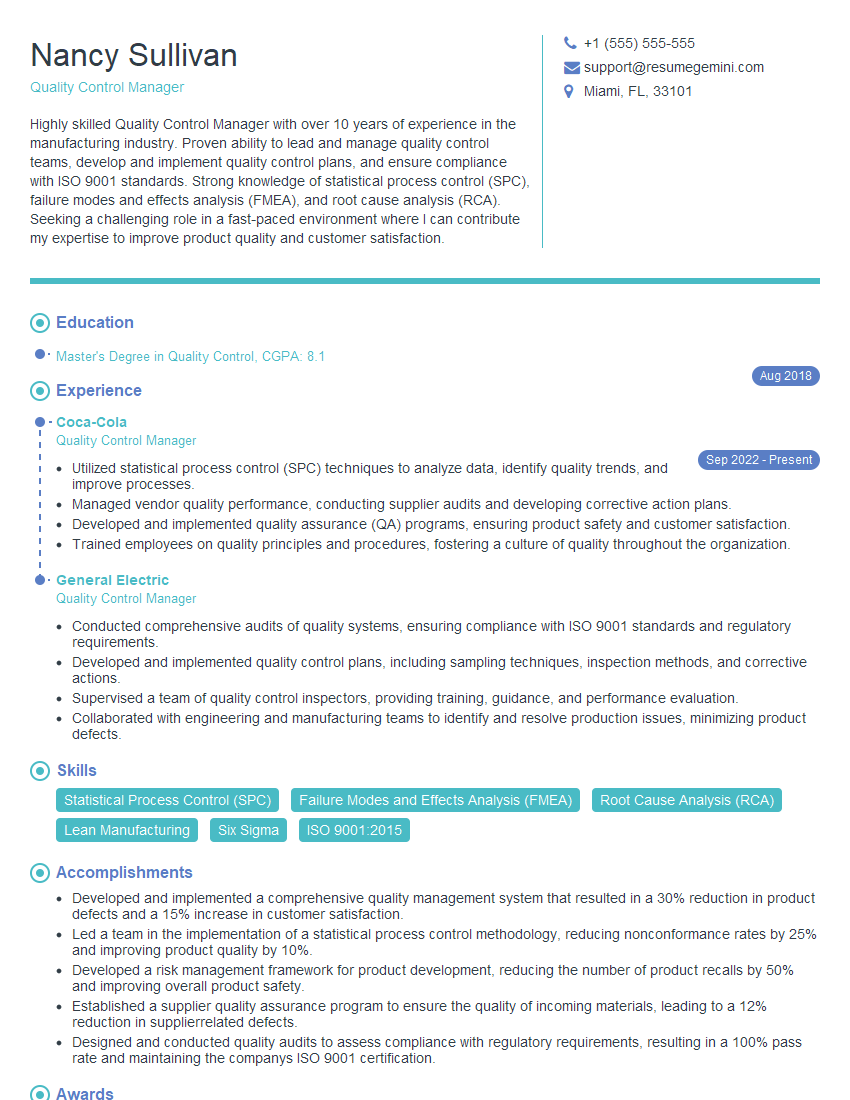
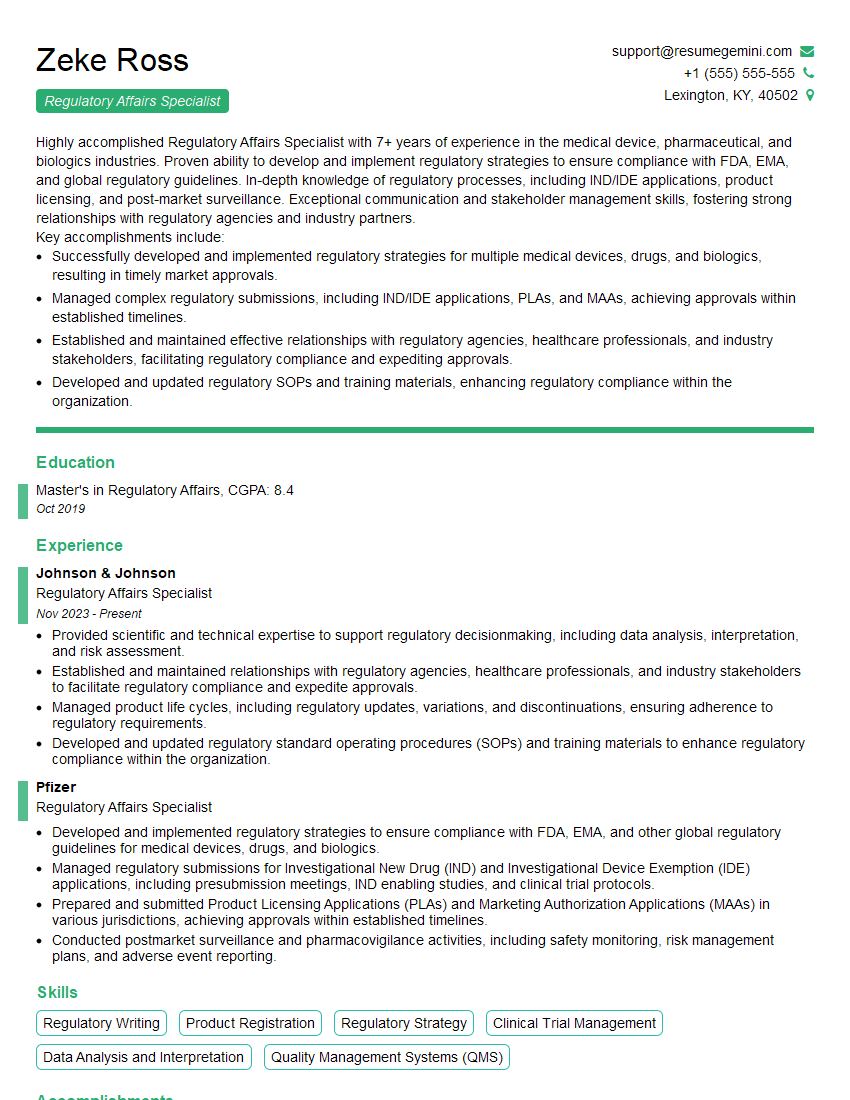
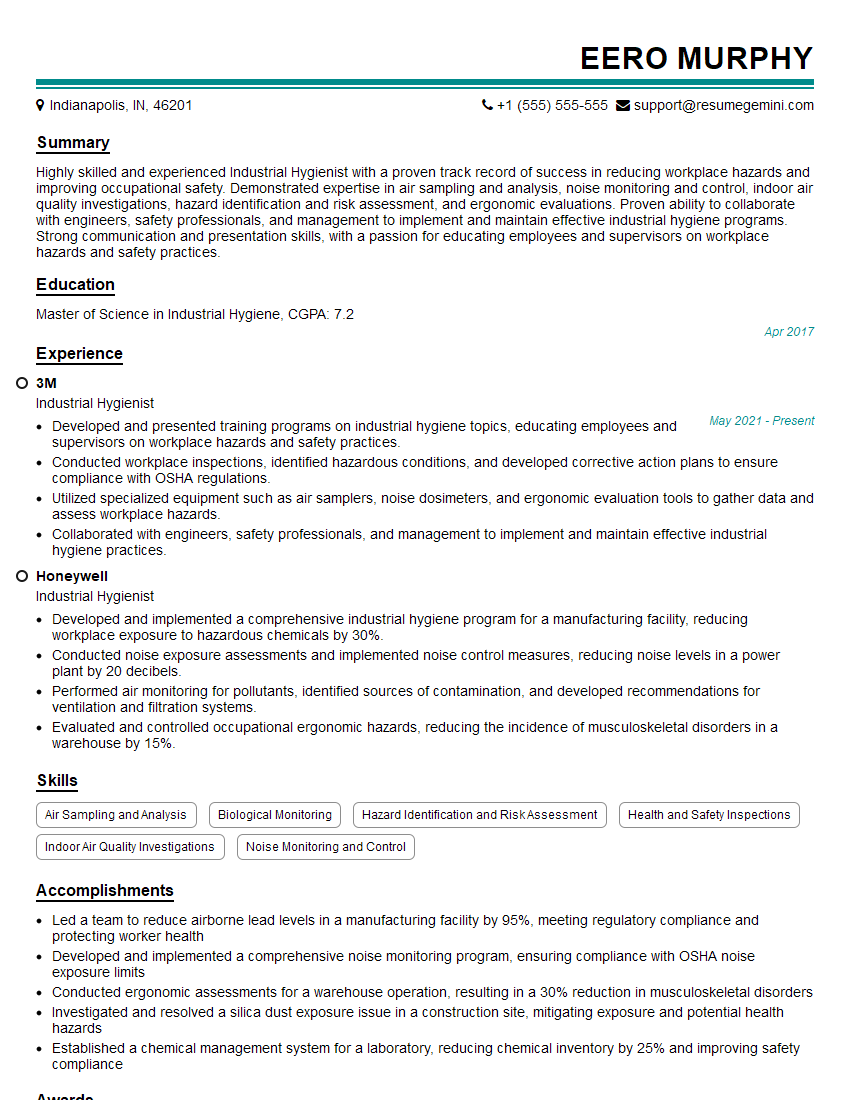
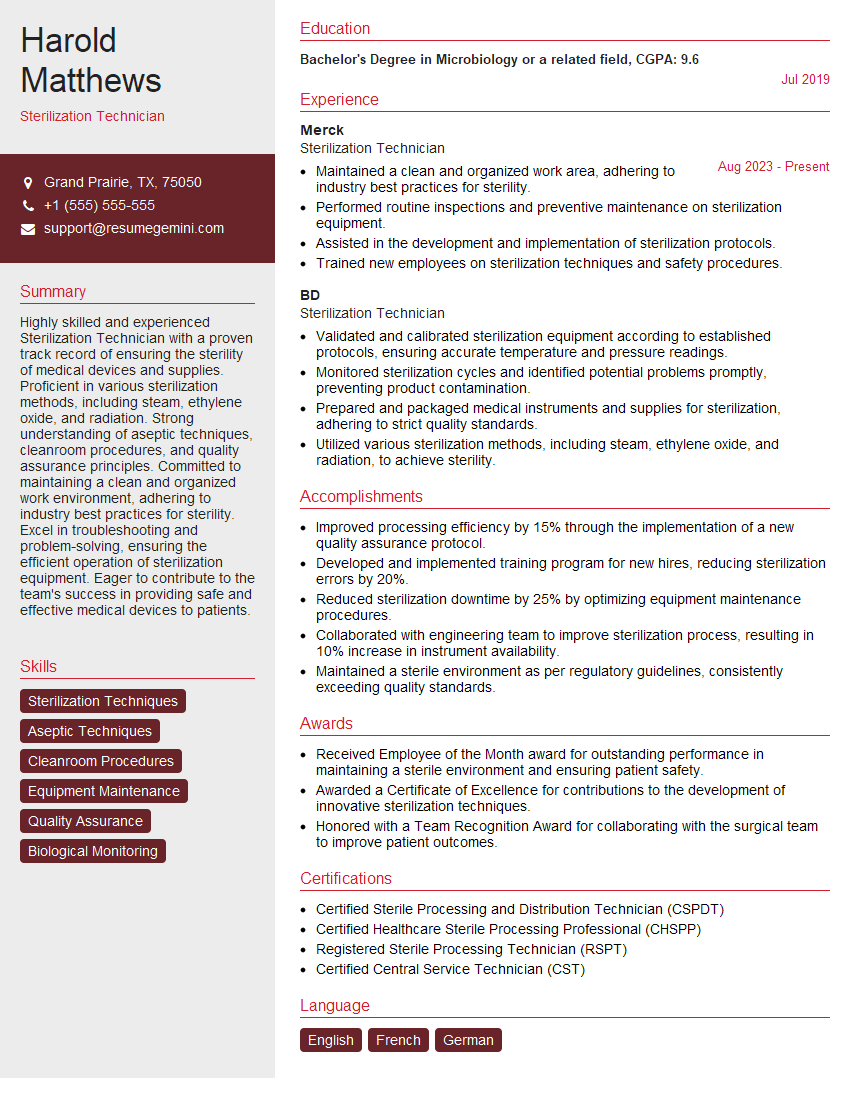
Mastering Cross-Contamination Prevention is crucial for career advancement in many high-demand industries. A strong understanding of these principles demonstrates your commitment to safety, quality, and compliance, making you a highly valuable asset to any organization. To showcase your expertise effectively, it’s essential to have a polished, ATS-friendly resume. ResumeGemini is a trusted resource that can help you create a powerful resume tailored to highlight your skills and experience in Cross-Contamination Prevention. We offer examples of resumes specifically designed for this field to help you build a document that will get noticed. Invest the time to craft a compelling resume – it’s your first step towards securing your dream role.
Explore more articles
Users Rating of Our Blogs
Share Your Experience
We value your feedback! Please rate our content and share your thoughts (optional).
What Readers Say About Our Blog
Very informative content, great job.
good