Preparation is the key to success in any interview. In this post, we’ll explore crucial Paint Mixing interview questions and equip you with strategies to craft impactful answers. Whether you’re a beginner or a pro, these tips will elevate your preparation.
Questions Asked in Paint Mixing Interview
Q 1. Explain the process of creating a custom paint color using a tinting system.
Creating a custom paint color using a tinting system is a precise process that involves blending a base paint with colorants, also known as pigments. Think of it like baking a cake – you start with a base (the batter) and add ingredients (pigments) to achieve your desired color (the cake!). The process typically involves using a computerized tinting system that measures and dispenses the exact amount of each pigment needed to match a specific color formula or a sample.
Here’s a step-by-step breakdown:
- Color Selection: You choose your desired color, either from a color chart, a digital database, or by providing a sample.
- Formula Generation: The tinting system’s software calculates the precise amount of each pigment needed to achieve the color, factoring in the base paint’s color and the desired final shade. This is based on complex color formulas and algorithms.
- Pigment Dispensing: The system automatically dispenses the correct amount of each pigment into a mixing container.
- Mixing: The base paint is added to the container, and the mixture is thoroughly blended using a specialized paint mixer to ensure a uniform color. Thorough mixing is crucial for a consistent final product.
- Quality Check: A spectrophotometer is often used to verify the accuracy of the color match. This instrument measures the color precisely, ensuring it matches the target.
- Packaging: Once the color is verified, the paint is packaged ready for use.
For example, if I need to create a specific shade of blue, the system might add small amounts of blue, cyan, and white pigments to a white base to achieve the precise hue, saturation and value.
Q 2. Describe the different types of paint bases (e.g., water-based, oil-based, acrylic).
Paint bases are the foundation upon which colors are built. They differ significantly in their chemical composition, properties, and application. The three most common types are:
- Water-Based Paints (Latex): These are the most popular choice for home use, due to their low odor, easy cleanup (with water), and relatively quick drying time. They are also generally less toxic than oil-based paints. Examples include acrylic latex and vinyl acrylic paints.
- Oil-Based Paints (Alkyd): These paints offer superior durability and are often used for exterior applications or where high-resistance to moisture and abrasion is needed. They have a stronger odor and require solvents for cleanup, making them less convenient for most DIY projects.
- Acrylic Paints: These are versatile paints that can be water-based or solvent-based. They are known for their vibrant colors, quick drying time, and excellent adhesion. They are frequently used in fine art and crafts as well as in some construction applications.
The choice of base significantly impacts the final product’s characteristics, including drying time, durability, sheen, and clean-up method. For instance, a water-based base would be inappropriate for a project requiring high moisture resistance, while an oil-based paint would be unsuitable for a project where fast drying time and easy cleanup are essential.
Q 3. How do you ensure accurate color matching using a spectrophotometer?
Accurate color matching is crucial for consistency and customer satisfaction. A spectrophotometer is a precision instrument that measures the color of a paint sample by analyzing the spectrum of light reflected from its surface. This provides objective and numerical data about the color, unlike relying solely on the human eye, which can be subjective.
Here’s how it works for accurate color matching:
- Target Color Measurement: The spectrophotometer first measures the color of a reference sample, whether it’s a digital color code or a physical sample.
- Mixed Paint Measurement: After mixing the paint, the spectrophotometer measures the color of the newly mixed batch.
- Color Comparison and Adjustment: The instrument compares the two measurements, quantifying the difference. This difference is then used to guide further adjustments to the paint mix, if needed. The system allows for precise adjustments to the pigment ratios until the two measurements are virtually identical.
By using a spectrophotometer, we eliminate the guesswork and ensure consistent color reproduction across multiple batches. It’s like having a highly precise color ‘scale’ that guarantees the finished paint matches the desired shade every time.
Q 4. What are the common challenges encountered in paint mixing, and how do you address them?
Paint mixing presents several challenges. One major issue is achieving consistent color matching across different batches, due to variations in pigment batches or environmental factors like temperature and humidity. Another common challenge is managing viscosity – ensuring the paint is neither too thick nor too thin for proper application. Additionally, maintaining accurate inventory control of pigments and bases is critical.
Addressing these challenges involves:
- Strict Quality Control: Using calibrated equipment, adhering to precise mixing procedures, and regularly checking the calibration of equipment. This includes careful tracking of pigment batch numbers.
- Environmental Control: Maintaining a consistent temperature and humidity in the mixing area to minimize variations in the paint’s properties.
- Effective Inventory Management: Employing a robust inventory management system to track pigments and bases, preventing stockouts and ensuring the availability of necessary materials.
- Proper Training: Training personnel on precise mixing techniques, troubleshooting potential problems, and use of equipment.
For example, if I notice a color variation, I might re-calibrate the spectrophotometer, review the pigment lot numbers, and check the mixing procedure to identify and correct the source of error.
Q 5. Explain the importance of viscosity control in paint mixing.
Viscosity control is paramount in paint mixing. Viscosity refers to the paint’s thickness or resistance to flow. It directly impacts the paint’s application, finish, and overall quality. The paint needs to be the right consistency for the application method.
Importance of Viscosity Control:
- Application: Too thick, and the paint will be difficult to apply smoothly, leaving brushstrokes or roller marks. Too thin, and it may drip or run, resulting in an uneven finish.
- Finish: The viscosity impacts the final look. Proper viscosity helps achieve a smooth, even finish.
- Coverage: The right viscosity ensures even coverage, maximizing efficiency and minimizing material waste.
We use various techniques, like adding viscosity modifiers (thickeners or thinners), to control viscosity. This requires a good understanding of the impact of these modifiers on the paint’s final properties. For example, adding too much thinner can compromise the paint’s durability.
Q 6. How do you maintain accurate inventory control of paint pigments and bases?
Accurate inventory control is essential for efficient paint mixing operations. It prevents stockouts, reduces waste, and ensures consistency in color matching. We employ a combination of techniques to achieve this:
- Computerized Inventory System: Using software to track pigment and base stock levels, consumption rates, and order deadlines. This software helps generate automated alerts when stock levels fall below a certain threshold.
- Regular Stock Audits: Conducting regular physical audits to verify the accuracy of the inventory data and identify any discrepancies.
- FIFO (First-In, First-Out) System: Implementing a FIFO system to ensure that older pigments and bases are used before newer ones, minimizing the risk of spoilage or degradation.
- Proper Storage: Maintaining a clean, organized storage area with appropriate environmental controls to protect pigments and bases from damage or deterioration.
By combining these methods, we ensure that we always have the necessary materials on hand and minimize the chances of errors caused by outdated or incorrectly identified inventory.
Q 7. Describe your experience with different paint mixing equipment (e.g., mixers, shakers).
My experience encompasses a range of paint mixing equipment. I’m proficient in using both high-speed and low-speed mixers for different paint types and volumes. High-speed mixers are effective for thoroughly blending large batches, while low-speed mixers are gentler and better suited for delicate pigments or to prevent excessive air incorporation.
I’ve also worked with various shaking systems, ranging from simple hand-held shakers for small batches to automated shaking systems capable of processing numerous containers simultaneously. Each piece of equipment has its strengths and limitations, and the selection depends on factors like batch size, paint viscosity, and the desired level of automation. I am also familiar with different types of pigment dispersers, used to effectively break down pigment agglomerates for optimal color development and consistency.
Understanding the capabilities and limitations of each piece of equipment is essential for efficient and effective paint mixing. For example, I’d use a high-speed mixer for a large batch of exterior paint, but a low-speed mixer for a small batch of high-quality interior paint to avoid creating air bubbles that would affect the finish.
Q 8. How do you handle inconsistencies in color batches?
Inconsistencies in color batches are a serious issue in paint mixing, impacting both the aesthetic appeal and the structural integrity of the final product. They often stem from variations in raw materials, inaccurate measurements, or inconsistent mixing processes. My approach involves a multi-pronged strategy for handling these inconsistencies.
- Strict adherence to standardized procedures: We use precise measuring tools (digital scales, calibrated measuring cups) and follow detailed, documented mixing protocols. Every step, from ingredient weighing to mixing time and speed, is carefully monitored and recorded.
- Regular calibration and maintenance: Our equipment, including mixing machines and colorimeters, is regularly calibrated and maintained to ensure accuracy and precision. This minimizes errors introduced by faulty instruments.
- Batch tracking and analysis: We maintain meticulous records of each batch, including raw materials used, mixing parameters, and the resulting color values. This allows us to quickly identify the source of inconsistencies if they occur, enabling corrective action.
- Color matching and adjustment: Using a spectrophotometer, we can precisely measure the color of each batch and compare it to the target color. Small adjustments, such as adding small amounts of tinting color, can be made to correct minor deviations. For larger discrepancies, investigating the source of the problem becomes crucial.
- Statistical Process Control (SPC): This method tracks and analyzes variations in our processes to identify trends and potential problems before they result in significant inconsistencies. Implementing SPC can substantially reduce batch-to-batch variation.
For instance, I once encountered a situation where a batch of red paint was consistently too dark. By carefully reviewing our records, we discovered that a new supplier’s pigment was slightly more concentrated than the previously used one. We adjusted our formula accordingly, ensuring consistent color across subsequent batches.
Q 9. Explain your understanding of color theory and its relevance to paint mixing.
Color theory is fundamental to paint mixing. It’s the science and art of understanding how colors interact with each other, including how they mix, combine, and create different effects. This understanding directly translates to achieving desired colors accurately and predictably.
- The color wheel: This is a visual representation of the relationships between colors. Understanding primary, secondary, and tertiary colors, as well as complementary and analogous color schemes, helps in predicting the outcome of mixing different hues.
- Hue, saturation, and value (HSV): These three elements define a color. Hue represents the pure color (e.g., red, blue, green), saturation refers to the intensity or purity of the color, and value refers to the lightness or darkness of the color. Mastering these allows for precise color control.
- Additive vs. subtractive color mixing: Additive mixing (like in light) involves combining colors to create white, while subtractive mixing (like in paints) involves combining colors to create black. Understanding this difference is crucial, as paints don’t behave the same way as light.
- Color temperature: Colors can be categorized as warm (reds, oranges, yellows) or cool (blues, greens, purples). This impacts the overall feel and ambiance created by a paint color, and understanding this helps in choosing and mixing appropriate colors for various applications.
For example, knowing that red and green are complementary colors allows me to adjust a slightly off-shade of red by adding a touch of green, neutralizing any unwanted tones. This precise control minimizes waste and ensures accurate color reproduction.
Q 10. What safety precautions do you take while handling paint and chemicals?
Safety is paramount in paint mixing. Handling paints and chemicals requires strict adherence to safety protocols to protect both myself and the environment.
- Personal Protective Equipment (PPE): This includes wearing gloves, safety glasses, and respirators to prevent skin contact, eye irritation, and inhalation of harmful fumes.
- Proper ventilation: Working in a well-ventilated area, preferably with an exhaust system, is crucial to minimize exposure to volatile organic compounds (VOCs) present in many paints.
- Safe handling and storage: Paints and chemicals should be stored properly, away from ignition sources and in a cool, dry place. Proper labeling is essential for easy identification and to prevent accidental mixing of incompatible substances.
- Spill response: Knowing how to handle spills is critical. This includes having absorbent materials readily available and understanding the proper disposal methods for different types of spills.
- Emergency procedures: Familiarization with emergency procedures, including eye wash stations and first aid kits, is vital in case of accidental exposure.
I always follow the safety data sheets (SDS) provided by manufacturers to understand the specific hazards associated with each product and how to mitigate those risks. A recent incident involved a small paint spill; my prompt response, using the appropriate absorbent and cleanup procedure, prevented any further contamination or hazard.
Q 11. Describe your experience with different types of paint finishes (e.g., matte, gloss, satin).
Different paint finishes significantly impact the final appearance and functionality of a painted surface. My experience encompasses a range of finishes, each with distinct properties.
- Matte: Offers a flat, non-reflective finish, excellent for hiding imperfections but less durable and more prone to staining.
- Gloss: Provides a high-shine, reflective finish, very durable and easy to clean, but highlights imperfections on the surface.
- Satin: A compromise between matte and gloss, offering a smooth, low-luster finish with good durability and cleanability.
- Eggshell: Similar to satin but with a slightly less reflective sheen.
- Semi-gloss: More reflective than satin, offering good durability and washability.
The choice of finish depends on the intended application. For example, I might recommend a high-gloss paint for kitchen cabinets for their easy cleanability, while a matte finish is better suited for walls to minimize the visibility of imperfections. My experience enables me to advise clients on selecting the appropriate finish based on their needs and expectations.
Q 12. How do you calculate the required amount of each component for a specific paint formula?
Calculating the required amount of each component for a paint formula is a crucial aspect of paint mixing. It ensures consistent color and quality across batches. The process involves understanding the formula and using appropriate calculations.
- Understanding the Formula: Paint formulas are often expressed as ratios or percentages of each component (pigment, binder, solvent, additives). For example, a formula might specify a ratio of pigment to binder of 1:3 or a percentage composition.
- Target Batch Size: Determine the total quantity of paint needed.
- Calculations: Once the formula and target batch size are known, simple mathematical calculations can determine the amount of each component needed.
- Conversion: Formulas are often provided in weight (grams, kilograms) or volume (milliliters, liters). Conversion factors may be necessary if the formula uses different units than the available materials.
- Checking and Adjustments: Recheck the calculations and make adjustments if needed to ensure accuracy. The outcome is always checked to be within acceptable tolerances.
For example, if a formula calls for a pigment-to-binder ratio of 1:3 and you need 1000g of paint, you would calculate 250g of pigment (1/4 of 1000g) and 750g of binder (3/4 of 1000g). These calculations help in precise and consistent paint production.
Q 13. What are the different types of pigments used in paint manufacturing, and what are their properties?
Pigments are the colorants used in paint, influencing the final color and other properties. There’s a wide range of pigment types, each with unique characteristics.
- Inorganic Pigments: These are derived from minerals and are generally more durable and resistant to fading compared to organic pigments. Examples include titanium dioxide (white), iron oxides (reds, yellows, browns), and ultramarine (blue).
- Organic Pigments: These are derived from organic compounds and often offer a wider range of vibrant colors. However, they can be less resistant to fading or chemical degradation than inorganic pigments. Examples include phthalocyanine blues and greens, azo pigments (various colors).
- Metallic Pigments: These pigments consist of fine metallic particles, like aluminum or zinc, that impart metallic sheen or special effects. They are often used for decorative purposes.
- Pearlescent Pigments: These create a pearlescent or iridescent effect due to their layered structure. They’re commonly used in automotive paints and cosmetics.
The choice of pigment depends on factors like desired color, durability, lightfastness (resistance to fading), cost, and desired effect. For instance, titanium dioxide is a common white pigment chosen for its excellent opacity and brightness, while organic pigments often provide more vivid hues but might require protective coatings to enhance their longevity.
Q 14. How do you troubleshoot issues related to poor paint mixing or color inconsistencies?
Troubleshooting poor paint mixing or color inconsistencies is a systematic process that involves careful observation, analysis, and adjustment.
- Review the process: Examine each step of the mixing procedure, from measuring and weighing ingredients to mixing technique and equipment. Identify any potential areas of error.
- Inspect the ingredients: Check the quality and condition of the raw materials, ensuring they are fresh, properly stored, and consistent with past batches. Verify that the correct ingredients are being used and that they have the expected properties.
- Check equipment calibration: Verify that measuring devices (scales, cups) and mixing equipment are properly calibrated and functioning correctly. Inaccurate measurements or malfunctioning equipment can lead to inconsistencies.
- Analyze color variations: Use a colorimeter or spectrophotometer to quantitatively measure the color deviations. This provides objective data for comparison to the target color and helps identify the specific color components that are off.
- Adjust the formula: Based on the analysis, make small adjustments to the formula to correct color discrepancies or consistency issues. This may involve adding small amounts of pigments, binders, or other additives.
- Control environmental factors: Temperature and humidity can affect paint consistency and color development. Monitor and control these factors to ensure consistent results.
For example, if the final color is too light, it could be due to insufficient pigment, inaccurate weighing, or an issue with the pigment itself. A systematic approach helps pinpoint and address the problem efficiently.
Q 15. What is your experience with quality control procedures in paint mixing?
Quality control in paint mixing is paramount for ensuring consistent color accuracy and product quality. My experience encompasses a multi-faceted approach, starting from meticulously verifying the accuracy of base paint and tint measurements using calibrated instruments. This includes regularly calibrating our spectrophotometer to ensure accurate readings. We also maintain a rigorous cleaning schedule of mixing equipment to prevent cross-contamination. I’m proficient in using color formulas and documenting each batch meticulously in our database, allowing for easy traceability and replication should a specific color be needed again. Furthermore, I perform regular quality checks of the final mixed paint – this includes visual inspection for uniformity of color and consistency, and occasionally conducting tests like viscosity checks to ensure the paint meets the required specifications.
For instance, I once identified a subtle color variation across a large batch despite using the same formula. Through careful investigation, we discovered a minor calibration issue with the tinting machine. This highlights the importance of not only the initial mixing process, but also the regular maintenance and calibration of all equipment involved.
Career Expert Tips:
- Ace those interviews! Prepare effectively by reviewing the Top 50 Most Common Interview Questions on ResumeGemini.
- Navigate your job search with confidence! Explore a wide range of Career Tips on ResumeGemini. Learn about common challenges and recommendations to overcome them.
- Craft the perfect resume! Master the Art of Resume Writing with ResumeGemini’s guide. Showcase your unique qualifications and achievements effectively.
- Don’t miss out on holiday savings! Build your dream resume with ResumeGemini’s ATS optimized templates.
Q 16. Describe your experience with different types of tinting systems.
Throughout my career, I’ve worked with various tinting systems, ranging from traditional manual systems to fully automated computerized systems. Manual systems, while requiring more skill and experience in accurately measuring tints, offer greater flexibility for customized colors. Computerized systems, on the other hand, offer precision and speed, minimizing human error and ensuring consistency across large batches. They usually employ spectrophotometers to precisely measure and match colors. I’m comfortable with both, and my experience includes working with both water-based and solvent-based paints using various pigment dispersions.
For example, I’ve used both the Color-Rite system and a computerized system by a major paint manufacturer. The Color-Rite system provided a hands-on experience that helped me truly understand the complexities of color mixing, while the automated system enhanced my understanding of color precision and efficiency in large-scale operations.
Q 17. How do you handle a customer complaint about a mismatched paint color?
Handling customer complaints regarding mismatched paint colors requires a calm, professional approach focused on problem-solving. My first step is to actively listen to the customer and understand their concerns, gathering details about the specific paint batch, the application method, and the environmental conditions. Then, I thoroughly investigate the issue. This might involve reviewing the mixing records, analyzing the color using a spectrophotometer to compare it against the original formula, and checking the batch for any inconsistencies. If a discrepancy is confirmed, I offer solutions such as re-mixing the paint precisely according to the original formula or arranging for a replacement batch. The goal is to resolve the issue quickly and amicably while ensuring the customer’s satisfaction.
In one case, a customer complained of a slight color difference from the sample. After checking the records, we discovered a slight error in the tint ratio due to human error during the initial mixing process. We promptly remixed the paint, ensuring the correct ratio this time, and the customer was completely satisfied with the resolution.
Q 18. Explain the importance of using appropriate personal protective equipment (PPE) while paint mixing.
Using appropriate Personal Protective Equipment (PPE) in paint mixing is critical for safety. This includes wearing safety glasses or goggles to protect eyes from splashes, a respirator to prevent inhalation of paint fumes and dust, and gloves to protect hands from chemicals and irritants. Depending on the specific paint being mixed, other PPE like coveralls or aprons may also be necessary. Regular training on proper PPE usage and handling procedures reinforces safe working practices, minimizing the risk of accidents and health issues.
For instance, failing to wear a respirator when mixing solvent-based paints could lead to respiratory problems. Similarly, neglecting gloves can cause skin irritation or allergic reactions.
Q 19. What are your strengths and weaknesses related to paint mixing?
My strengths lie in my meticulous attention to detail, my proficiency in various tinting systems, and my ability to problem-solve effectively under pressure. I’m adept at achieving precise color matches and maintaining consistent quality. I’m also a quick learner and adapt easily to new technologies and paint formulations.
However, a potential area for development is expanding my knowledge of the latest specialized paint types, such as those with advanced functionalities or environmentally friendly formulations. I’m actively working on addressing this by attending industry workshops and reading relevant publications.
Q 20. How do you stay updated with the latest trends and technologies in paint mixing?
Keeping abreast of the latest trends and technologies in paint mixing is crucial for maintaining professional competence. I achieve this through several avenues: attending industry conferences and workshops, reading trade publications and journals, participating in online forums and webinars, and networking with colleagues and experts in the field. This continuous learning ensures that I’m familiar with new pigments, mixing techniques, and technologies, allowing me to stay ahead in this ever-evolving industry.
For example, recent advancements in water-based paint technology have significantly improved its performance and environmental profile, knowledge of which is vital for providing clients with sustainable solutions.
Q 21. Describe your experience working under pressure and meeting tight deadlines.
I thrive under pressure and consistently meet tight deadlines. My experience working in high-volume environments has honed my ability to prioritize tasks, manage multiple projects simultaneously, and remain calm and efficient even during periods of peak demand. My organizational skills and attention to detail are crucial in ensuring timely completion of projects without compromising on quality. I effectively utilize time management techniques and leverage technology to streamline workflows and maximize efficiency.
A recent example was a rush order for a large-scale commercial project with a very tight deadline. By effectively delegating tasks (where applicable), carefully prioritizing, and maintaining close communication with my team, we successfully met the deadline without any compromise on color accuracy or consistency.
Q 22. Explain your understanding of different paint application methods.
Paint application methods are crucial for achieving the desired finish and longevity. The choice depends on the surface, the type of paint, and the desired effect. Common methods include:
- Brushing: Ideal for detailed work and smaller areas, offering good control but requiring more time and effort. Different brush types (e.g., bristle, synthetic) are selected based on the paint type and surface.
- Rolling: Efficient for large surfaces like walls, offering a consistent finish. Roller covers vary in nap length (fiber height), influencing the texture and the paint’s ability to penetrate porous surfaces. A thicker nap is suitable for rough textures.
- Spraying: Provides a fast, even coat, ideal for large projects and smooth surfaces. Airless sprayers are common, delivering paint under high pressure. This method requires careful preparation to avoid overspray and ensure a clean finish. Different spray nozzles can influence the pattern and quality of the application.
- Dipping: Suitable for smaller items and achieving an even coating. It’s a simpler method, often used for priming or for applying specialized coatings.
Choosing the right method involves considering factors such as the surface area, the type of paint (e.g., water-based, oil-based), and the desired finish (e.g., smooth, textured). For instance, spraying is efficient for large walls but might require masking to protect adjacent areas. Brushing is better suited for intricate woodwork, allowing for precision control.
Q 23. How do you maintain a clean and organized workspace in a paint mixing environment?
Maintaining a clean and organized workspace is paramount in paint mixing for both efficiency and safety. My approach involves:
- Dedicated areas: I designate specific zones for mixing, tinting, cleanup, and storage. This prevents cross-contamination and streamlines workflow.
- Regular cleaning: Spills are addressed immediately. I use appropriate solvents and cleaning agents for different types of paint and clean equipment thoroughly after each use. This minimizes the risk of paint buildup and contamination.
- Labeling and storage: All paints, pigments, and solvents are clearly labeled with their contents and dates. They are stored in designated areas based on their properties (e.g., flammability) to ensure safety and prevent accidental mixing.
- Waste management: I strictly follow the proper disposal procedures for paint waste (see answer 5). This includes separating different types of waste and using designated containers.
- Personal Protective Equipment (PPE): I consistently use gloves, eye protection, and respirators to protect myself from hazardous materials. This not only ensures my safety but also promotes the cleanliness of the work area.
A clean and organized workspace isn’t just about aesthetics; it’s about preventing mistakes, avoiding accidents, and ensuring the quality of the mixed paint. For example, a well-organized storage system reduces the time spent looking for specific items and helps prevent errors during mixing.
Q 24. What is your experience with computer-aided mixing systems?
I have extensive experience with computer-aided mixing systems, utilizing both automated dispensers and color matching software. These systems offer significant advantages in accuracy and efficiency. For instance, using spectrophotometers to digitally scan colors greatly reduces the chance of color mismatches. This technology enables precision in formulating custom colors and matching existing shades, resulting in consistent and reproducible results across multiple batches.
Automated dispensers offer precise measurements and reduce human error in the mixing process. This is particularly valuable when dealing with large-scale projects or complex color formulations. The software also provides management capabilities, tracking inventory and generating reports. It also allows for recipe saving and easy retrieval, ensuring reproducibility of previously mixed colors. The level of automation varies – from systems that automate the dispensing of base colors and tints, to completely automated systems that manage the entire mixing process and even packaging.
Working with these systems requires a strong understanding of color theory, paint chemistry, and the operation of the specific software and hardware involved. For example, troubleshooting system errors or understanding the implications of various color space models is critical to ensuring accurate and efficient operation.
Q 25. Explain your understanding of the environmental impact of paint and solvents.
Paints and solvents have a significant environmental impact. The manufacturing process of paints often involves volatile organic compounds (VOCs), which contribute to air pollution and smog. Solvents, used for cleaning brushes and equipment, also contribute to VOC emissions. Improper disposal of paint waste can contaminate soil and water sources, harming ecosystems.
Many paints now contain low or zero VOCs, reducing their environmental impact. Water-based paints are a more sustainable alternative to solvent-based paints, as they generally have lower VOC content. The use of recycled materials in paint production is also gaining traction, reducing the reliance on virgin resources.
Sustainable practices in paint mixing involve choosing eco-friendly products, minimizing solvent usage, and adhering to strict waste disposal procedures. This also includes educating clients about the environmental impact of different paint types and encouraging responsible disposal practices. For example, we can help clients understand the benefits of choosing low-VOC paints and advise them on proper cleanup and disposal methods, promoting a more environmentally conscious approach to painting projects.
Q 26. How do you ensure the proper disposal of paint waste materials?
Ensuring proper disposal of paint waste is crucial for environmental protection. My approach aligns with local regulations and involves:
- Segregation: Different types of paint waste (e.g., oil-based, water-based, hazardous materials) are separated into designated containers to prevent cross-contamination.
- Hardening: Before disposal, leftover liquid paint is hardened using absorbent materials like kitty litter or sawdust. This reduces the risk of spills and makes the waste easier to handle.
- Designated facilities: I utilize authorized waste disposal facilities that are equipped to handle paint waste safely and responsibly. Improper disposal in landfills or sewers can result in serious environmental consequences.
- Recycling: Whenever possible, I explore opportunities to recycle paint waste or donate unused paint to community programs or charities. This reduces the overall volume of waste generated.
- Documentation: I meticulously document all disposal activities, including the type and quantity of waste, the date of disposal, and the name of the disposal facility. This aids in maintaining compliance with regulations.
Ignoring proper paint waste disposal can lead to hefty fines and, more importantly, significant environmental damage. By adhering to these practices, we contribute to a cleaner and safer environment.
Q 27. What is your experience with different types of resins used in paint formulations?
My experience encompasses a wide range of resins used in paint formulations, each contributing distinct properties to the final product. These include:
- Alkyd resins: These are oil-modified polyesters, offering good durability, gloss, and flexibility. They are commonly found in oil-based paints but are less commonly used now due to their higher VOCs.
- Acrylic resins: These are water-based, offering excellent adhesion, durability, and water resistance. They are commonly used in both interior and exterior paints due to their versatility and low-VOC nature.
- Epoxy resins: These are known for their exceptional hardness, chemical resistance, and durability. They are commonly used in high-performance coatings such as floor paints and protective coatings.
- Polyurethane resins: These provide excellent abrasion resistance, flexibility, and durability. They are often used in high-quality paints and varnishes where strength and longevity are paramount.
- Polyester resins: These offer good hardness and gloss retention, often used in automotive and marine paints.
Understanding resin properties is crucial for formulating paints tailored to specific applications. For instance, choosing an acrylic resin for a bathroom wall ensures good water resistance, while an epoxy resin might be better suited for a garage floor needing high chemical resistance. The interaction between resins and pigments, as well as the use of various additives, further determines the final performance of the paint.
Q 28. Describe a situation where you had to resolve a challenging paint mixing problem.
I once faced a challenging situation involving a custom color match for a historical restoration project. The client provided a small sample of paint from an antique piece of furniture, but the color had significantly faded over time. The initial attempts using standard color matching techniques produced unsatisfactory results.
My approach involved a multi-step process. First, I used a spectrophotometer to obtain a digital reading of the faded sample, generating a base color profile. However, I recognized that this data alone wouldn’t accurately represent the original color. I researched the historical context of the piece, seeking information about common paint formulations and pigments used during that period. This helped me make informed decisions about adjusting the digital color profile and the pigments used to create the mixture. It was like a puzzle, where I used all my knowledge of color theory and pigment behavior to recreate what the color was originally intended to be.
After multiple adjustments, involving meticulous small adjustments and tests on sample boards, I was able to achieve a close approximation of the original color. The client was very pleased with the results, emphasizing the importance of going beyond simply using technology and applying historical knowledge to reach the desired outcome.
Key Topics to Learn for Paint Mixing Interview
- Color Theory Fundamentals: Understanding color wheels, color mixing systems (additive vs. subtractive), and achieving specific color matches.
- Paint Chemistry Basics: Knowledge of different paint types (e.g., latex, oil-based, acrylic), binders, pigments, and solvents, and their impact on mixing.
- Measuring and Proportioning: Mastering accurate measurement techniques using scales, volume measures, and understanding ratios for consistent results.
- Practical Mixing Techniques: Hands-on experience with various mixing methods, understanding the importance of thorough mixing and avoiding common pitfalls.
- Troubleshooting and Quality Control: Identifying and resolving common mixing issues such as inconsistencies in color, texture, or sheen. Understanding quality control measures to ensure consistent product quality.
- Safety Procedures and Regulations: Familiarity with relevant safety protocols, handling of hazardous materials, and waste disposal procedures.
- Equipment and Technology: Understanding the operation and maintenance of paint mixing equipment, including automated systems and color matching software.
- Understanding Customer Needs: Interpreting customer requests, accurately translating color specifications, and addressing their concerns effectively.
Next Steps
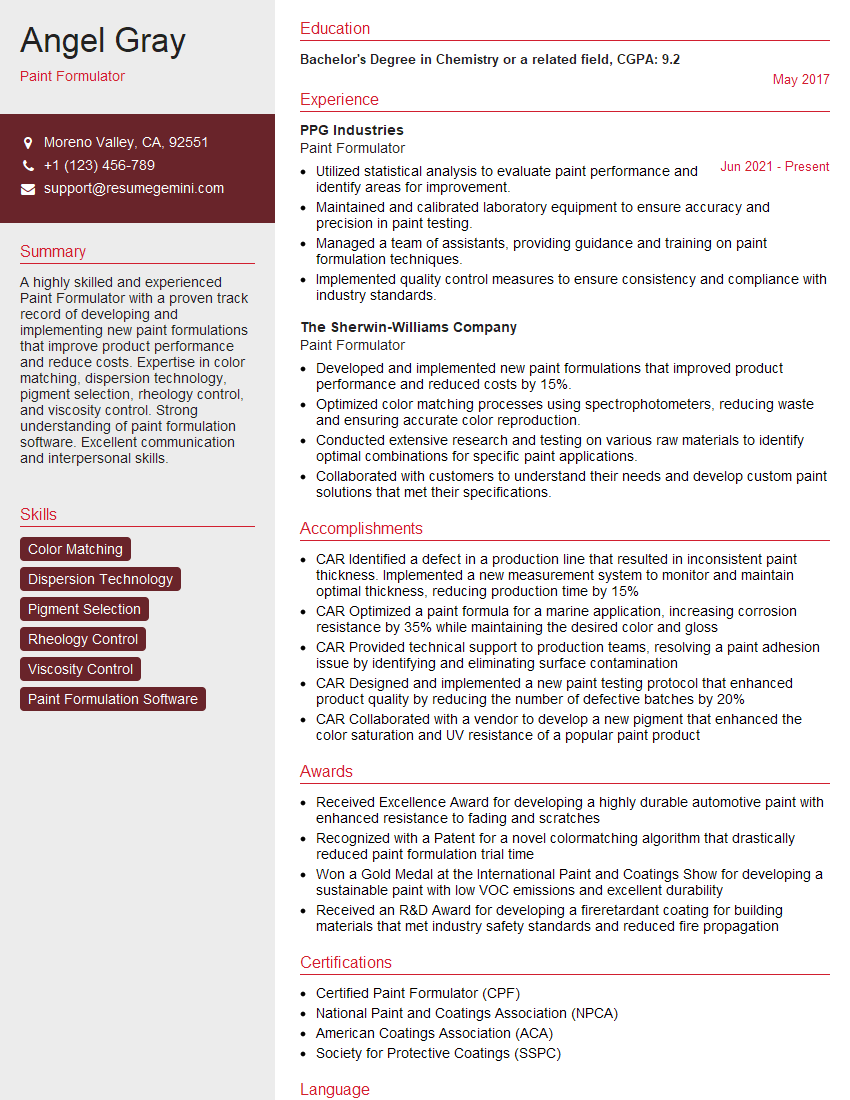
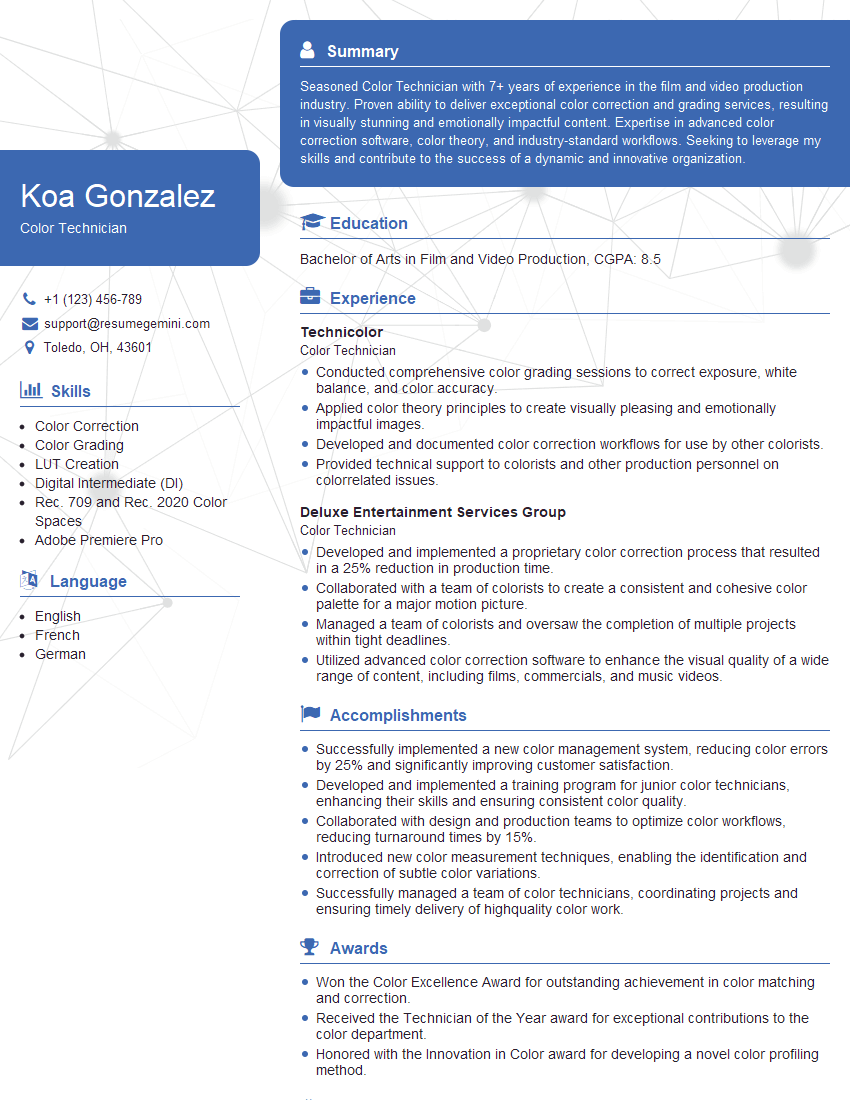
Mastering paint mixing opens doors to exciting opportunities for career advancement within the coatings industry. Whether you’re aiming for a senior mixing technician role or seeking management positions, a strong foundation in this area is crucial. To maximize your job prospects, it’s essential to create a resume that effectively showcases your skills and experience. Building an ATS-friendly resume is key to getting your application noticed. ResumeGemini is a trusted resource that can help you build a professional, impactful resume tailored to the Paint Mixing field. Examples of resumes specifically designed for Paint Mixing professionals are available to guide you.
Explore more articles
Users Rating of Our Blogs
Share Your Experience
We value your feedback! Please rate our content and share your thoughts (optional).
What Readers Say About Our Blog
Very informative content, great job.
good