The right preparation can turn an interview into an opportunity to showcase your expertise. This guide to CTP plate imaging interview questions is your ultimate resource, providing key insights and tips to help you ace your responses and stand out as a top candidate.
Questions Asked in CTP plate imaging Interview
Q 1. Explain the process of Computer-to-Plate (CTP) imaging.
Computer-to-Plate (CTP) imaging is a digital workflow in the printing industry that replaces the traditional film-based process. Instead of creating a film negative, digital image data is directly transferred to a photosensitive printing plate. This is done using an imaging device – a CTP imager – that exposes the plate to light according to the digital file. This light activates the photosensitive coating, creating the image for printing. Think of it like a high-tech, highly precise inkjet printer, but instead of ink, it’s using light to ‘print’ onto a plate.
The process typically involves several steps: First, the print job is designed and prepared digitally. The design file is then processed by a Raster Image Processor (RIP) software, which converts the file into a format the CTP imager can understand. The RIP software also performs tasks like color separation and image optimization. Finally, the RIP sends this data to the CTP imager, which exposes the plate and prepares it for printing.
For example, imagine you’re printing a colorful brochure. The design is done in software like Adobe InDesign. The InDesign file is then sent to a RIP, which processes it and sends the specific instructions for each color plate (cyan, magenta, yellow, black) to the CTP imager. The imager then exposes the individual plates, ready to be mounted on a printing press.
Q 2. What are the different types of CTP plates available?
CTP plates are broadly categorized by the type of imaging technology they use: thermal and violet. Within these categories, there are further variations based on the plate material (aluminum, polyester), the type of photosensitive coating, and the resolution they can achieve.
- Thermal CTP Plates: These plates utilize heat from a laser to expose the photosensitive layer. The heat alters the chemical properties of the coating, making it receptive to the ink or repulsive, depending on the area. They are generally less expensive per plate but may have lower resolution compared to violet plates.
- Violet CTP Plates: These plates use a violet laser to activate a photosensitive coating. Violet lasers offer higher resolution and finer detail, making them ideal for high-quality printing applications like fine art reproductions. They tend to have a longer lifespan and a broader dynamic range compared to thermal plates.
- UV CTP Plates: While less common, UV (ultraviolet) CTP plates exist, using a UV laser for exposure. They generally offer similar benefits to violet plates in terms of resolution but might have different processing requirements.
The choice of plate type depends on the specific printing requirements, such as the desired print quality, the press type, and the budget. High-volume commercial printers often opt for violet plates for their superior quality and durability, while smaller print shops might choose thermal plates due to their lower cost.
Q 3. Describe the advantages and disadvantages of thermal and violet CTP plates.
Let’s compare thermal and violet CTP plates:
| Feature | Thermal Plates | Violet Plates |
|---|---|---|
| Cost per Plate | Lower | Higher |
| Resolution | Generally lower | Generally higher |
| Image Quality | Good for many applications | Excellent for fine detail |
| Sensitivity | Higher (more susceptible to light) | Lower (more tolerant to light) |
| Plate Durability | Can be less durable | Typically more durable |
| Processing | Usually simpler | Can require more specialized processing |
Thermal Plates Advantages: Lower cost is a significant advantage. Their simpler processing can lead to faster turnaround times. They are suitable for many applications where extremely high resolution isn’t critical.
Thermal Plates Disadvantages: The lower resolution can limit detail in intricate designs. Their sensitivity to ambient light requires a controlled environment during processing. They might not be as durable, leading to potential issues with long print runs.
Violet Plates Advantages: Higher resolution leads to crisper images and finer details. Better plate durability allows for longer print runs. Less sensitive to ambient light, simplifying handling.
Violet Plates Disadvantages: Higher cost per plate. Processing can be more complex and might require specialized equipment.
Q 4. How do you troubleshoot common CTP plate imaging issues?
Troubleshooting CTP plate imaging problems requires a systematic approach. Let’s outline some common issues and solutions:
- Poor Image Quality: Check for issues with the RIP settings, including resolution, screening, and color profiles. Ensure that the original design file is of high quality and doesn’t have any corrupted data. Verify the CTP imager settings, including laser power and focusing. Inspect the plates for defects like scratches or dust.
- Streaking or Lines on the Plate: This could indicate a problem with the laser, the plate itself (damage or improperly cleaned), or the plate processing. Check the imager’s laser system and perform a thorough inspection of the plate for any visible defects.
- Ghosting or Halation: This indicates potential issues with plate exposure or processing. Check the plate’s exposure parameters and the processing chemicals. Ensure the plate is being processed correctly and the chemicals are fresh.
- Plate Defects: Examine the plates for scratches, dust, or other imperfections that can cause print inconsistencies. Proper handling and cleaning of plates are crucial to avoid defects.
- Insufficient Exposure or Overexposure: This is commonly indicated by weak or washed-out images (underexposure) or areas that are excessively dark or over-developed (overexposure). Adjust the exposure settings on the CTP imager or the RIP software.
Remember that proper cleaning and maintenance of the CTP imager and associated equipment is essential to prevent problems and prolong their lifespan.
Q 5. What are the key quality control checks performed during CTP plate imaging?
Key quality control checks during CTP plate imaging ensure consistent, high-quality print results. These checks should be performed at multiple stages:
- Pre-press Checks: Verify the digital file integrity and completeness, including correct color profiles and resolution. Review the RIP settings for accuracy and consistency.
- Plate Inspection: Before imaging, visually inspect the plates for any defects. After imaging, visually check for any irregularities on the plate surface (scratches, dust).
- Exposure Verification: Use a densitometer to measure the density of the imaged areas to confirm proper exposure. Variations from expected density can indicate exposure issues.
- Test Prints: Perform test prints using the imaged plates to assess the final print quality. Examine the test prints for sharpness, color accuracy, and any other defects.
- Dot Gain Measurement: Measure dot gain (increase in dot size during printing) using a densitometer. Excessive dot gain can affect the quality of halftones and color reproduction.
- Plate Cleaning and Handling: Ensure plates are properly cleaned and handled to prevent contamination and scratches.
Regular calibration of the CTP imager is also crucial. This calibration ensures the laser output, focus, and other parameters are within the manufacturer’s specifications, producing consistent results. Maintaining detailed records of these checks is important for tracking quality and troubleshooting any issues.
Q 6. Explain the role of RIP software in CTP workflow.
The Raster Image Processor (RIP) software is the bridge between the digital design file and the CTP imager. It plays a crucial role in converting the design file – which can be in various formats like PDF, TIFF, or PostScript – into a format understood by the CTP imager. The RIP performs many vital functions:
- Image Processing: It rasterizes vector graphics into a bitmap format, preparing them for the CTP imager.
- Color Management: The RIP handles color separation, conversion to the correct color space for the printing press, and performs color correction to ensure accuracy.
- Image Optimization: It optimizes the image for the specific printing plate and press type. This might include adjustments for screen frequency, dot gain compensation, and other image parameters to achieve optimal print quality.
- Imposition: The RIP can handle the process of arranging multiple pages onto a single printing plate (imposition) to minimize paper waste and enhance efficiency.
- Plate Preparation: It prepares the data for the CTP imager, ensuring it’s formatted appropriately and includes all the necessary information for exposure.
A properly configured RIP is vital for optimal print quality and production efficiency. Choosing a RIP with appropriate features and capabilities for your printing needs and specific plate type is critical. The RIP settings must be regularly reviewed and adjusted, depending on the printing materials being used. The RIP acts as the control center for the whole CTP workflow, impacting significantly the final print product.
Q 7. How do you ensure proper plate exposure and processing?
Proper plate exposure and processing are critical for achieving optimal print quality. Here’s how to ensure both:
- Plate Exposure: The CTP imager’s exposure settings must be calibrated and optimized for the specific type of plate being used. Parameters such as laser power, speed, and focus must be adjusted depending on the plate sensitivity and the desired image density. Consistent calibration is key to consistent results.
- Plate Processing: This step involves developing the plate to reveal the image. The processing chemicals must be fresh and properly maintained. The processing time and temperature must be precisely controlled according to the plate manufacturer’s recommendations. Any deviations can affect the image quality and plate durability.
- Environmental Control: Maintaining a controlled environment is essential, especially for thermal plates which are more sensitive to light. The imager room should be dark and free from dust and other contaminants. The processing area must also be climate-controlled to maintain consistent temperature and humidity.
- Plate Cleaning: Plates must be thoroughly cleaned after exposure and before processing. Improper cleaning can result in defects that show up on the final print.
- Regular Maintenance: Regular preventative maintenance of the CTP imager and processing equipment is vital. This includes cleaning the laser optics, checking the processing chemical levels, and verifying the accuracy of temperature and timing controls. A scheduled maintenance program prevents problems and increases the equipment’s lifespan.
Monitoring and adjusting these factors ensures accurate plate exposure, proper development, and, ultimately, high-quality printed output. Think of it as baking a cake: precise measurements and careful attention to detail in both exposure (like the oven temperature) and processing (like mixing the ingredients) are crucial for achieving a perfect result.
Q 8. What are the common causes of plate defects and how are they resolved?
Plate defects in CTP (Computer-to-Plate) imaging can significantly impact print quality. Common causes are multifaceted, stemming from issues across the entire workflow, from prepress to plate processing. Let’s examine some key culprits and their solutions:
- Image-related defects: These include low resolution, incorrect color profiles, and poor file preparation. Resolution must match the plate’s capabilities, while color profiles need to be consistent across software and hardware. Solutions involve careful file preparation using high-resolution images, proper color management using ICC profiles, and thorough preflighting of files before imaging.
- Plate material issues: This encompasses poor plate quality (scratches, imperfections), incorrect plate type for the press or ink, and improper storage. Always use high-quality plates from reputable suppliers and store them correctly (see question 3). Selecting the right plate type for the job (e.g., thermal, violet, UV) is crucial.
- Imaging device issues: This could be due to laser problems (weak output, misalignment), inconsistencies in the imaging process (temperature, humidity), or improper cleaning of the imaging device. Regularly scheduled maintenance, calibration, and careful cleaning of the imaging device are essential. If laser problems persist, professional service is required.
- Processing issues: Problems during plate processing – such as improper developer concentration, temperature, or processing time – can manifest in various defects. Following the manufacturer’s instructions meticulously is crucial. Using fresh chemicals and adhering to the recommended processing time and temperature are vital.
- Press-related defects: Sometimes, defects appear not because of the plate itself, but due to press problems (e.g., incorrect ink-water balance, worn blankets, improper pressure). These can be misdiagnosed as plate issues; close collaboration between prepress and press operators is key for accurate diagnosis.
Troubleshooting often involves a systematic approach, checking each stage of the workflow to isolate the root cause. For example, if I see a consistent defect across multiple plates, I’d first check the imaging device settings, then the plate processing, and finally the prepress files.
Q 9. Describe your experience with different CTP imaging devices (brands and models).
My experience encompasses a wide range of CTP imaging devices. I’ve worked extensively with Creo (now Kodak) platesetters, including the Kodak Magnus Q800 and Kodak Trendsetter 800 models. These systems are known for their high resolution and reliable performance. I also have experience with Agfa’s Avalon series, which offers a different approach to plate imaging. The differences are mainly in the imaging technology (thermal vs. violet lasers), processing chemistry, and software interface, but the fundamental principles remain the same—ensuring accurate image reproduction onto the plate.
Each system requires a specific understanding of its operational parameters and quirks. For instance, the Kodak Magnus prioritizes speed and throughput, while the Agfa Avalon focuses on fine detail. The practical experience allows me to adapt quickly to new systems, troubleshoot effectively, and optimize settings for specific needs.
Q 10. Explain the importance of maintaining proper plate storage conditions.
Maintaining proper plate storage conditions is critical for preserving plate quality and preventing defects. Think of it like storing fine wine – the environment drastically impacts the longevity and quality of the product. Exposure to light, humidity, and temperature fluctuations can negatively affect the plate’s sensitivity, leading to decreased image quality, increased scumming, and other print issues.
Optimal storage conditions typically involve:
- Darkness: Plates should be stored in a dark, cool, and dry place. Light exposure can degrade the photosensitive layer of the plate.
- Temperature: Consistent temperature is essential. Avoid areas prone to significant temperature fluctuations.
- Humidity: High humidity can cause condensation, leading to plate damage. Low humidity can make plates brittle. The ideal range usually falls between 40-60% relative humidity.
- Proper packaging: Store plates in their original packaging or in protective sleeves to prevent light exposure and scratches.
- Vertical storage: Store plates vertically to prevent warping.
- FIFO (First In, First Out): Rotate stock regularly to ensure older plates are used before newer ones, preventing them from degrading in storage.
Failure to maintain proper storage conditions can lead to significant waste and downtime, ultimately costing time and money.
Q 11. How do you manage color profiles and ensure accurate color reproduction in CTP imaging?
Accurate color reproduction is paramount in CTP imaging. This relies heavily on robust color management. We use ICC (International Color Consortium) profiles to ensure consistent color across the entire workflow, from design to plate output. These profiles characterize the color characteristics of each device and software involved.
The process usually starts with creating an accurate profile for the monitor used in design. This is crucial as the designer’s perception of color is the starting point. Then, we use a proofing system (often a soft proof) that simulates the final print output on a particular printing press and substrate. This helps to catch potential color shifts early in the workflow.
Finally, we use a device profile for the platesetter itself. This profile maps the digital color space to the actual color produced on the plate. The combination of monitor, soft-proof, and platesetter profiles, all linked through a color management system (CMS), allows us to achieve consistent color from initial design to the final printed piece. Regular recalibration of all devices is essential to maintain accuracy.
Q 12. What safety precautions are necessary when working with CTP chemicals and equipment?
Safety is paramount when working with CTP chemicals and equipment. CTP processing involves chemicals that can be hazardous if not handled correctly. Key safety precautions include:
- Personal Protective Equipment (PPE): Always wear appropriate PPE, including gloves, safety glasses, and a lab coat. Some chemicals may require more specialized protection, such as respirators.
- Proper ventilation: CTP processing often generates fumes. Ensure adequate ventilation in the processing area to prevent chemical exposure. Local exhaust ventilation is particularly important.
- Chemical handling: Follow the manufacturer’s instructions precisely when handling chemicals. Avoid contact with skin and eyes. Know the appropriate emergency response procedures in case of spills or accidents.
- Waste disposal: Dispose of chemicals according to local and national regulations. Never pour chemicals down the drain.
- Equipment maintenance: Regularly inspect and maintain equipment to prevent malfunctions that could lead to accidents. This includes regular checks on electrical connections, laser safety features, and proper grounding.
- Training: All personnel working with CTP equipment and chemicals should receive proper training on safe operating procedures and emergency response.
Ignoring these safety protocols can lead to serious health consequences or damage to the equipment. Safety is not just a precaution; it’s an integral part of our daily operations.
Q 13. How do you optimize CTP settings for different printing substrates?
Optimizing CTP settings for different printing substrates requires a nuanced understanding of how the substrate interacts with the imaging process and ink. Different substrates (e.g., coated paper, uncoated paper, cardboard) have varying absorption rates, surface textures, and porosity.
The settings to adjust typically include:
- Laser power: Adjusting laser power ensures sufficient exposure for different substrates. A more absorbent substrate might need higher power to achieve proper exposure.
- Imaging resolution: Higher resolution might be required for substrates that exhibit greater detail. Conversely, lowering resolution might improve speed for less demanding applications.
- Plate type: As mentioned before, selecting the right plate type (thermal, violet, UV) is crucial for compatibility with the chosen substrate and printing method.
- Processing parameters: Adjusting developer concentration, temperature, and time can compensate for substrate variations in absorption and reactivity.
- RIP settings: The RIP (Raster Image Processor) settings can be optimized to manage the dot gain and other characteristics related to the substrate.
Experience helps build a ‘mental library’ of optimized settings for different substrates. I often maintain detailed records of the settings used for each job, which facilitates efficient setup for future runs.
Q 14. Describe your experience with plate mounting and preparation for the press.
Plate mounting and preparation are the final steps before the plate reaches the press. Precision and care are essential here to avoid print problems.
The process generally involves:
- Plate inspection: A thorough inspection of the imaged plate is essential. This includes checking for any defects, scratches, or debris.
- Cleaning: Any residual processing chemicals are removed by using appropriate cleaning solutions. This helps to prevent contamination and improve plate adhesion to the mounting system.
- Mounting: The plate is mounted onto a cylinder or a plate holder using a specified adhesive. The mounting process should be consistent and even to avoid improper plate registration on the press.
- Registration: Accurate registration is crucial for color alignment and image sharpness. We use specialized tools to ensure the plate is correctly positioned and registered on the press.
- Vacuum checking: Once mounted, we ensure a proper vacuum is applied to firmly attach the plate to the mounting system, preventing any slippage during printing.
Inconsistent mounting, improper registration, or insufficient vacuum can lead to significant print defects, such as misregistration, slurring, and image instability. The meticulous nature of this process ensures smooth press operation and high-quality prints.
Q 15. Explain the concept of dot gain and how it relates to CTP imaging.
Dot gain, in the context of CTP (Computer-to-Plate) imaging, refers to the increase in the size of a printed dot compared to its size on the plate. Think of it like this: you design a tiny dot, but after the printing process, it ends up slightly larger. This happens because the ink spreads on the paper, and the plate itself might contribute to the expansion.
In CTP, understanding dot gain is crucial for achieving accurate color reproduction. If you don’t account for dot gain, your printed colors will be darker and potentially less vibrant than intended. We use sophisticated software to predict and compensate for dot gain, ensuring the final print matches the digital design. This involves creating a ‘dot gain compensation curve’ that maps the intended dot size to the expected final size. This curve is often customized for each paper stock and printing press.
For example, a 50% dot on the plate might actually print as a 60% dot due to dot gain. Without compensation, this would lead to over-saturated colors. CTP systems often incorporate software to automatically apply these compensations based on the chosen printing parameters.
Career Expert Tips:
- Ace those interviews! Prepare effectively by reviewing the Top 50 Most Common Interview Questions on ResumeGemini.
- Navigate your job search with confidence! Explore a wide range of Career Tips on ResumeGemini. Learn about common challenges and recommendations to overcome them.
- Craft the perfect resume! Master the Art of Resume Writing with ResumeGemini’s guide. Showcase your unique qualifications and achievements effectively.
- Don’t miss out on holiday savings! Build your dream resume with ResumeGemini’s ATS optimized templates.
Q 16. How do you handle file preparation and preflighting for CTP?
File preparation and preflighting are critical steps before sending files to a CTP imager. Neglecting this can lead to costly errors and production delays. My process begins with rigorous checks of the image files.
First, I verify that the file is in the correct color space (usually CMYK for print) and that the resolution is appropriate for the printing process. Then I carefully check for any embedded profiles, making sure they’re accurate and compatible. Next, a preflighting software is employed. This software meticulously scans the file for potential problems, such as missing fonts, incorrect color profiles, embedded low-resolution images, or image file corruption. It helps identify any issues before they cause costly problems. For example, a preflight check might reveal a missing font, preventing a job from being sent to the imager until the problem is fixed.
After preflighting, I perform a final visual inspection. This is a crucial step, as it allows for the detection of design flaws that might have been missed by automated checks. I also create a proof (often a soft proof using a color management system) to visually confirm that the colors will print correctly. Only after passing all these checks, the file is sent to the CTP imager.
Q 17. What is your experience with different image file formats (e.g., TIFF, PDF, JPEG)?
My experience encompasses a wide range of image file formats used in CTP workflows. TIFF is a staple, offering excellent image quality and metadata support. Its lossless compression options are ideal for preserving image integrity. PDF files are also frequently used, particularly for complex jobs with multiple elements. They’re versatile and often include embedded fonts and color profiles. While JPEG is known for its high compression, I generally avoid it for CTP workflows due to its lossy compression algorithm, which can introduce artifacts and reduce image quality, especially crucial for high-fidelity color printing.
Each format has its strengths and weaknesses. The choice depends on factors such as the complexity of the design, the desired image quality, and the capabilities of the prepress software and the CTP imager. I’m proficient in handling the nuances of each format to ensure optimal results in the CTP process.
Q 18. Explain your understanding of color management workflows in CTP.
Color management is paramount in CTP workflows. Inaccurate color reproduction can result in significant production waste and client dissatisfaction. A well-defined color management workflow begins with establishing a reliable color profile for each element in the process, from the monitor to the printer. This includes profiling the input device (scanner or monitor), the output device (CTP imager and printing press), and potentially the paper stock used.
Color management software plays a vital role in converting colors between different color spaces and applying corrections. For instance, we use software that converts RGB files (from design software) to CMYK files suitable for printing. It helps manage dot gain compensation, ensuring colors will render correctly on press. Soft proofing is another essential aspect; it allows for visual verification of the final printed output before plates are even created. This helps catch potential color discrepancies early on.
Q 19. How do you troubleshoot issues related to plate registration?
Plate registration issues, where different color plates don’t align perfectly, are a common problem in print production. Troubleshooting begins with a thorough examination of the printed sheet. I carefully inspect the misregistration to determine its nature – is it consistent across the entire sheet, or localized to certain areas? Is it a slight shift or a significant misalignment?
The causes could be multiple: Mechanical problems with the printing press (e.g., worn rollers or misaligned guides), Improper plate mounting (incorrect placement or pressure), or software-related errors (incorrect imposition or incorrect settings in the CTP RIP software). Systematic troubleshooting involves checking each element step-by-step: checking the printing press, reviewing the plate mounting procedure, then examining the CTP settings and RIP files for potential misconfigurations. A very effective troubleshooting technique is to isolate possible reasons with simple test jobs with different file settings and observe the outcome. This often helps find the main cause.
Q 20. What is your experience with different types of screening techniques?
My experience includes various screening techniques, each with its own impact on the final print’s quality. Amplitude-modulated (AM) screening, also known as frequency-modulated (FM) screening, creates smoother gradations and is less prone to moiré patterns (undesirable interference patterns). This is because AM creates dots of varying sizes rather than a fixed screen pattern. Frequency-modulated (FM) screening is a type of AM screening but typically produces a smoother tonal reproduction. Hybrid screening combines aspects of both, balancing the benefits of each method.
The choice of screening technique depends heavily on the specific project requirements, the printing press capabilities, and the desired aesthetic outcome. For example, high-resolution printing might benefit from FM screening for finer detail and smoother transitions. AM screening might be more suitable for applications where moiré is a significant concern.
Q 21. Describe your familiarity with different types of CTP imagers (e.g., thermal, violet laser).
I’m familiar with both thermal CTP and violet laser CTP imagers. Thermal CTP uses heat to expose the plate, while violet laser CTP uses a laser beam. Each technology has its advantages and disadvantages. Thermal CTP imagers are generally less expensive and easier to maintain, but they may not achieve the same level of resolution as violet laser systems. Violet laser CTP systems offer higher resolution, sharper details, and often better dynamic range. As a result, the print quality is superior, making them suitable for high-end printing jobs requiring fine detail.
The choice between thermal and violet laser CTP depends on factors such as the required print quality, budget constraints, and the overall printing workflow. I have practical experience working with both systems and am well-versed in their operational procedures and troubleshooting techniques. I understand the nuances of their respective output and the best practices for achieving optimal results with each.
Q 22. How do you ensure accurate image resolution and sharpness during CTP imaging?
Achieving accurate image resolution and sharpness in CTP (Computer-to-Plate) imaging is crucial for high-quality print output. It hinges on several factors working in harmony. Think of it like baking a cake – if one ingredient is off, the whole thing suffers.
- High-Resolution RIP (Raster Image Processor): The RIP software translates the design files into the precise instructions the CTP imager needs. A high-resolution RIP is fundamental; a lower resolution will inherently limit the detail and sharpness you can achieve, regardless of the imager’s capabilities. Imagine trying to create a detailed portrait with a low-pixel camera; the result will be blurry.
- Accurate Image Scaling and Resolution Settings: The RIP needs correct settings for the target plate resolution (dots per inch or dpi). Using the wrong dpi will lead to either a blurry image (too low) or unnecessary file sizes and processing times (too high). For example, a publication print job might require 300 dpi, whereas a simple poster might get away with 150 dpi.
- CTP Imager Calibration: Regular calibration of the CTP imager’s laser optics and imaging system is essential. Over time, the laser’s output power might drift, or the focusing mechanism might become misaligned. This is like regular tuning of a musical instrument – it keeps it in peak performance. Calibration ensures consistent exposure across the plate.
- Plate Selection: The type of CTP plate itself influences image quality. Thermal plates, for instance, may have different resolution capabilities compared to violet laser plates. Choosing the right plate for the job is important. Using a lower-resolution plate for a high-resolution job will be a limiting factor.
- Pre-press File Preparation: Before even reaching the RIP, the design file itself must be optimized for print. This includes ensuring the correct color spaces, avoiding overly complex or poorly constructed vector art, and eliminating any unnecessary file data.
By diligently managing these elements, you create a process that delivers consistently sharp and highly-resolved images onto the CTP plates, leading to superior print quality.
Q 23. Describe your troubleshooting experience with RIP software issues.
Troubleshooting RIP software issues requires a systematic approach. It’s like detective work – you need to gather clues and identify the root cause. My experience includes dealing with various issues, from simple driver problems to complex workflow conflicts.
- Error Messages: I always start by carefully reading the error messages. These are often clues to the problem’s origin. For example, a message indicating a memory allocation error might mean the job is too large for the RIP’s resources.
- Job Logs: Most RIP software maintain detailed logs. Analyzing these logs helps identify patterns or unusual events that occurred during the processing of faulty jobs. The log might reveal a specific file causing the issue or a point in the process where a crash occurred.
- Workflow Analysis: Sometimes, issues arise not within the RIP itself, but from interactions with other software in the prepress workflow (e.g., a color profile mismatch between design software and the RIP). Examining the entire workflow for potential bottlenecks or incompatibilities is key. It’s like checking the entire assembly line, not just one machine.
- Communication with Vendors: When all else fails, contacting the RIP software vendor’s technical support is crucial. They have access to advanced diagnostic tools and deep knowledge of the software’s inner workings. This is essential for complex, hard-to-diagnose issues.
One example: I once encountered a recurring job failure issue only with very large PDF files. Through log analysis, I discovered a memory leak in the RIP’s PDF rendering module. Working with the vendor, a patch was quickly rolled out, resolving the problem. I also learned the importance of always monitoring memory usage to prevent such issues in future, using available RIP tools for this.
Q 24. How do you maintain and calibrate CTP equipment?
Maintaining and calibrating CTP equipment is critical for consistent and high-quality output. Regular maintenance is like servicing a car – preventing small problems from escalating into major breakdowns.
- Daily Checks: This involves visually inspecting the machine for any signs of damage or unusual wear. Also, I check laser power readings and ensure the cooling system is functioning correctly. This is the simple, day-to-day maintenance that is crucial.
- Regular Cleaning: Dust and debris can accumulate within the imager, affecting laser performance and plate quality. Regular cleaning of critical components, following the manufacturer’s guidelines is mandatory. Think of it like cleaning the lens of a camera to get sharp, clear images.
- Calibration Procedures: Calibration involves using standardized test plates or software tools to fine-tune the imager’s settings. This ensures consistent laser exposure across the plate surface, avoiding variations in image density and sharpness. This is like balancing a scale for precision.
- Preventive Maintenance: Scheduled maintenance includes replacing parts prone to wear (e.g., rollers, vacuum pumps) according to the manufacturer’s recommendations. This ensures peak operating efficiency and extends the equipment’s lifespan.
- Documentation: Meticulous record-keeping of all maintenance activities is vital for troubleshooting and identifying patterns in equipment performance over time. This is essentially the ‘service history’ of the machine.
Ignoring these steps can lead to costly repairs, down-time and inconsistent print quality. A proactive maintenance approach guarantees efficient operation and minimal interruptions.
Q 25. Explain your experience with quality control procedures for CTP plates.
Quality control (QC) for CTP plates is a multifaceted process to ensure consistency and accuracy. It’s akin to a final inspection before a product is shipped out.
- Visual Inspection: After imaging, each plate is visually inspected for any defects, such as scratches, blemishes, or uneven exposure. This initial check helps identify obvious problems quickly. The human eye can be a surprisingly effective tool for QC.
- Densitometry: A densitometer measures the density of various areas on the plate. This ensures that the image’s tonal range is within acceptable limits. Consistent density is crucial for consistent ink coverage during printing. Think of it as ensuring every part of the cake is equally baked.
- Plate Reading: A plate reader can analyze the digital information stored on the plate, comparing it to the original file. This confirms that the plate was correctly imaged. It’s like checking if the digital image was correctly transferred to the plate.
- Test Prints: Producing test prints helps identify problems that might not be evident from plate analysis alone. It’s the final quality check before the full-scale print run. Sometimes a small issue with the plates shows up only on the printed sheets.
- Data Logging: All QC data are meticulously recorded and tracked, often using software dedicated to this purpose. This creates a history of plate quality, allowing for timely intervention if trends start to emerge.
A robust QC process minimizes printing errors, reduces waste, and safeguards the reputation of the printing facility by ensuring top-quality print jobs.
Q 26. What are the environmental considerations related to CTP plate imaging?
Environmental considerations in CTP plate imaging are crucial, impacting both equipment performance and the health of the operators.
- Temperature and Humidity: CTP imagers are sensitive to temperature and humidity fluctuations. Extreme variations can affect laser performance, plate sensitivity and potentially lead to imaging errors. Consistent temperature and humidity are crucial. This is like keeping the ingredients of a cake at the correct temperature.
- Dust Control: Dust particles in the air can contaminate the plates and imaging system, reducing image quality and causing defects. A clean and dust-free environment is vital. This is like keeping a spotless kitchen to ensure hygiene.
- Ventilation: CTP imagers use lasers and may generate ozone or other emissions. Adequate ventilation prevents build-up of harmful gases and ensures a safe working environment for operators. This is like ensuring adequate ventilation in a baking environment.
- Chemical Handling: CTP plate processing often involves chemicals. These require safe handling, storage, and disposal according to relevant regulations. This ensures operator safety and environmental protection.
- Waste Management: Spent plates and processing chemicals need to be disposed of responsibly, following environmentally friendly practices and complying with all regulations.
Ignoring these considerations can result in equipment damage, compromised image quality, and harm to operator health. A well-planned approach to environmental management is essential for a responsible and efficient CTP operation.
Q 27. How do you contribute to a team environment in a fast-paced prepress setting?
In the fast-paced prepress environment, teamwork is paramount. My approach involves proactive communication, collaboration, and a willingness to assist colleagues.
- Proactive Communication: I keep team members informed of my progress, potential delays, and any issues that might impact their work. Open communication prevents misunderstandings and delays.
- Collaborative Problem-Solving: I believe in collaborative problem-solving. When challenges arise, I actively participate in brainstorming sessions, offering my expertise and listening to the ideas of others.
- Cross-Training and Support: I’m always willing to cross-train colleagues on CTP imaging techniques and troubleshooting. Sharing knowledge ensures that the team can handle the workload efficiently, even in case of absences.
- Time Management: I prioritize tasks effectively, meeting deadlines, and ensuring efficient workflow. In a busy environment, this is crucial.
- Positive Attitude: Maintaining a positive and supportive attitude creates a harmonious and efficient work environment.
In a high-pressure setting, a team that works well together is much more efficient and resilient. My focus is on being a contributing member of that team.
Q 28. Describe a challenging CTP imaging problem you solved and how you approached it.
One challenging issue involved a sudden decrease in image sharpness across all CTP plates. The problem was intermittent and difficult to pinpoint. It was like a ghost in the machine.
My approach was systematic:
- Rule Out the Obvious: I first checked for simple issues like laser power, plate quality, and environmental factors (temperature, humidity), but found nothing amiss. This ruled out the easy solutions.
- Detailed Log Analysis: I then reviewed the CTP imager’s logs, examining the data for any anomalies. I spotted inconsistent laser pulse durations during the imaging process. This pointed towards a problem within the laser control system.
- Consult Expert Help: Since it was beyond my expertise to diagnose this internally, I contacted the manufacturer’s technical support. They remotely accessed the imager and identified a faulty component in the laser’s control circuitry.
- Component Replacement: The faulty component was replaced by a service technician, and a thorough recalibration of the system was performed.
- Preventive Measures: After the fix, I implemented additional monitoring and preventative maintenance to avoid similar issues in the future.
This experience reinforced the importance of a systematic troubleshooting approach, the value of detailed logging, and the knowledge that seeking expert assistance is sometimes necessary to solve complex technical problems. The end result was restored image quality and increased confidence in the reliability of our CTP system.
Key Topics to Learn for Your CTP Plate Imaging Interview
- CTP Plate Imaging Fundamentals: Understand the entire process, from digital file input to plate output. This includes a firm grasp of resolution, screening angles, and the impact of different file formats.
- Plate Types and Chemistry: Become familiar with various CTP plate types (e.g., thermal, violet, UV) and their respective chemistries. Know the advantages and disadvantages of each type and when to use them.
- Image Processing and Prepress Workflow: Master the steps involved in image preparation, including color management, trapping, and imposition. Be prepared to discuss your experience with various RIP software and workflow management systems.
- Troubleshooting and Maintenance: Interviewers will assess your practical experience. Be ready to discuss common issues encountered during CTP plate imaging, such as plate defects, poor image quality, and equipment malfunctions, and how you addressed them.
- Quality Control and Standards: Demonstrate your understanding of industry standards and quality control measures used to ensure consistent and high-quality plate output. Discuss your experience with densitometry, dot gain, and other relevant quality control techniques.
- Digital Asset Management (DAM): Explain how you manage and organize digital assets within a prepress environment. This could include file naming conventions, version control, and archiving strategies.
- Workflow Optimization: Be prepared to discuss strategies for optimizing the CTP plate imaging workflow to improve efficiency and reduce costs. This could include automation techniques and process improvements.
Next Steps
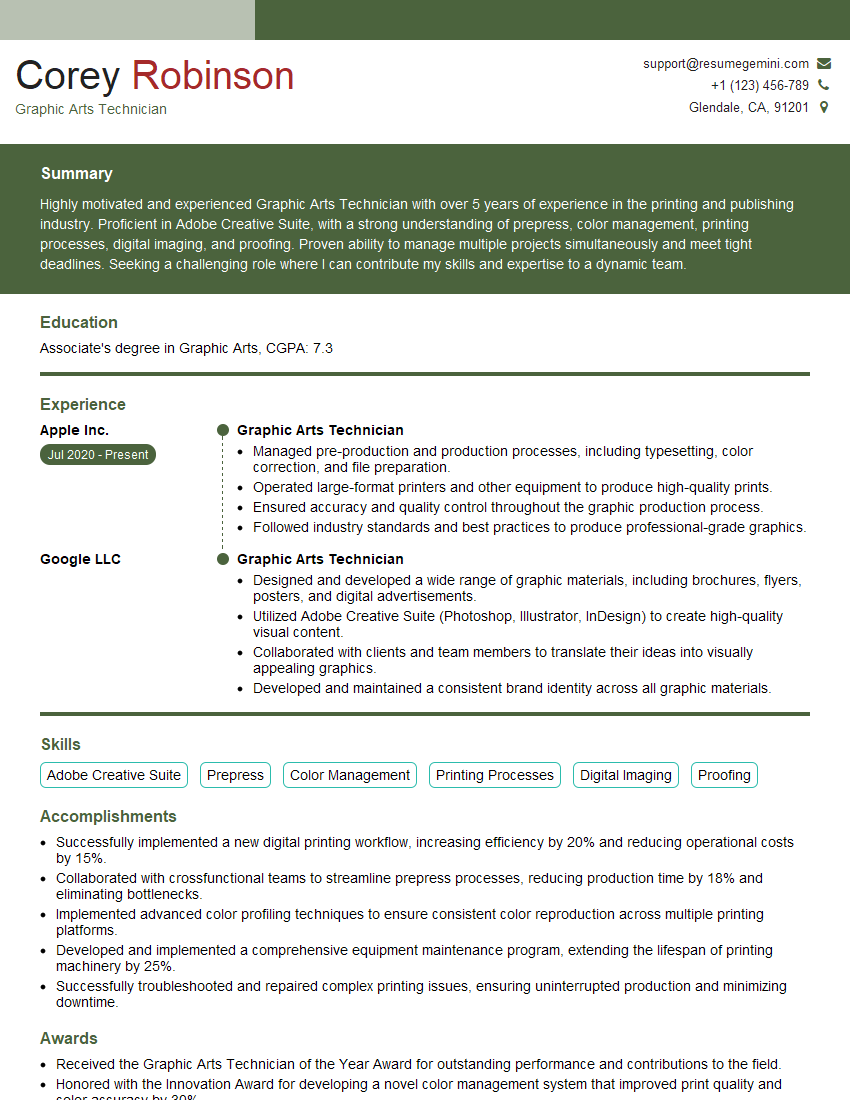
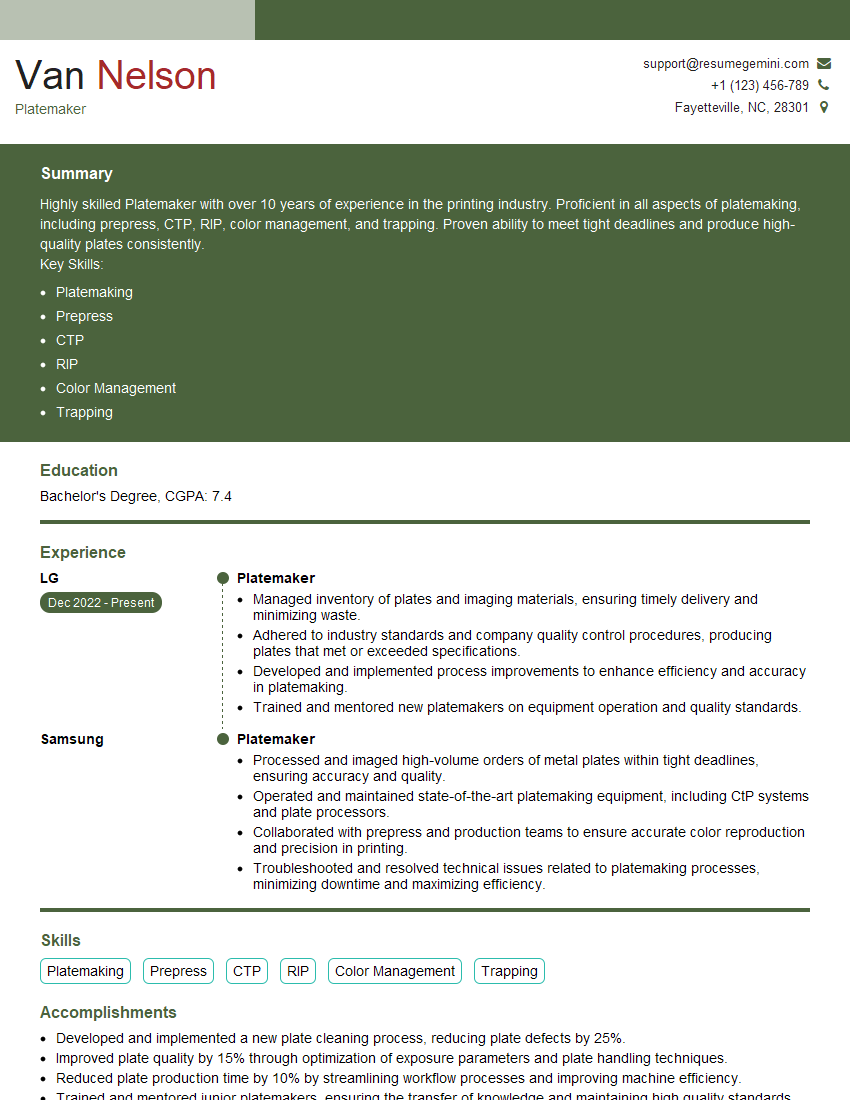
Mastering CTP plate imaging opens doors to exciting opportunities within the printing and publishing industries, offering excellent career growth potential. To maximize your job prospects, crafting a strong, ATS-friendly resume is crucial. ResumeGemini is a trusted resource that can help you build a professional and impactful resume that showcases your skills and experience effectively. Examples of resumes tailored specifically to CTP plate imaging professionals are available to help guide you. Take the next step in your career journey – build your best resume with ResumeGemini.

Explore more articles
Users Rating of Our Blogs
Share Your Experience
We value your feedback! Please rate our content and share your thoughts (optional).
What Readers Say About Our Blog
Very informative content, great job.
good