Unlock your full potential by mastering the most common Cultural Considerations interview questions. This blog offers a deep dive into the critical topics, ensuring you’re not only prepared to answer but to excel. With these insights, you’ll approach your interview with clarity and confidence.
Questions Asked in Cultural Considerations Interview
Q 1. Describe your understanding of cultural relativism and its implications in a professional setting.
Cultural relativism is the idea that a person’s beliefs, values, and practices should be understood based on that person’s own culture, rather than be judged against the criteria of another. In a professional setting, this means recognizing that what might be considered acceptable or effective behavior in one culture could be completely inappropriate or ineffective in another. For example, direct communication styles valued in some cultures might be perceived as rude or aggressive in others that prioritize indirect communication and saving face. The implication is a need for increased sensitivity and adaptability. Ignoring cultural relativism can lead to misunderstandings, conflict, and ultimately, project failure. Effective intercultural communication requires understanding and respecting these differences, not imposing one’s own cultural norms.
Q 2. How do you identify and mitigate potential cultural biases in decision-making processes?
Identifying and mitigating cultural biases requires a conscious and ongoing effort. It starts with self-awareness – recognizing our own implicit biases. We can do this through reflection, seeking feedback from diverse colleagues, and participating in diversity and inclusion training. In decision-making processes, we can use structured approaches, like utilizing diverse teams and employing checklists to ensure we consider multiple perspectives and avoid relying on stereotypes. For example, when evaluating job candidates, using standardized evaluation criteria and blind resume reviews can help mitigate unconscious biases based on name, gender, or ethnicity. Actively seeking diverse viewpoints and using data to support decisions, rather than relying on gut feelings, can further minimize bias. Furthermore, establishing clear and transparent decision-making processes ensures fairness and reduces the potential for biased outcomes.
Q 3. Explain the importance of cultural intelligence (CQ) in achieving project goals within diverse teams.
Cultural intelligence (CQ) is the ability to adapt effectively to different cultural contexts. In diverse teams, high CQ is crucial for achieving project goals because it enables team members to understand and appreciate each other’s perspectives, communication styles, and working preferences. Individuals with high CQ are better at navigating cultural differences, resolving conflicts constructively, and building strong, collaborative relationships. This leads to improved teamwork, enhanced creativity due to diverse perspectives, and ultimately, greater project success. Low CQ, on the other hand, can lead to communication breakdowns, mistrust, and ultimately, project failure. For instance, a team with high CQ will be better at adapting their meeting styles and decision-making processes to accommodate the diverse needs and preferences of its members.
Q 4. What strategies do you employ to effectively communicate across cultures, considering variations in communication styles?
Effective cross-cultural communication requires awareness of communication styles and adapting accordingly. Some cultures are direct, while others are indirect. Some value high-context communication (relying on nonverbal cues and shared understanding), while others prefer low-context communication (explicit and detailed verbal communication). My strategies include:
- Active listening: Pay close attention not only to words but also to nonverbal cues.
- Clarification: Ask clarifying questions to ensure mutual understanding.
- Patience and empathy: Allow time for communication, understanding different paces and styles.
- Cultural sensitivity training: Ongoing learning about different communication styles and cultural nuances.
- Using multiple communication channels: Employing emails, video calls, and in-person meetings to cater to different communication preferences.
Q 5. How would you address a conflict arising from cultural misunderstandings within a team?
Addressing conflicts arising from cultural misunderstandings requires a sensitive and structured approach. My steps would be:
- Identify the root cause: Carefully analyze the situation to pinpoint the cultural differences contributing to the conflict.
- Active listening and empathy: Hear all perspectives without judgment, focusing on understanding the emotional aspect.
- Facilitation: Help the parties involved communicate their perspectives clearly and constructively. Consider using a mediator if necessary.
- Find common ground: Focus on shared goals and values to bridge differences.
- Establish clear expectations and guidelines: Moving forward, agree on communication protocols and conflict resolution strategies to prevent recurrence.
Q 6. Explain how cultural differences might influence the effectiveness of various leadership styles.
Leadership styles can significantly impact effectiveness across cultures. What works well in one culture might be ineffective or even counterproductive in another. For example, a highly directive, autocratic leadership style might be acceptable in some hierarchical cultures but could be perceived as authoritarian and demotivating in cultures that value collaboration and autonomy. Participative or democratic styles tend to be more effective in cultures that emphasize consensus-building and teamwork. Transformational leadership, emphasizing vision and inspiration, can be successful across cultures but requires adapting the communication style to resonate with each cultural group. Cultural context must always be considered when selecting and applying a leadership style.
Q 7. Describe a situation where you successfully navigated a cross-cultural challenge. What was your approach?
During a project with a multinational team developing software, we encountered a significant delay due to differing interpretations of project deadlines and priorities. Some team members from a more hierarchical culture viewed deadlines as flexible, focusing on perfecting the product, whereas others from a more egalitarian, deadline-driven culture were concerned about meeting the project milestones. My approach involved:
- Open communication: I initiated a team meeting to openly discuss the differing viewpoints and the reasons behind them.
- Active listening: I ensured everyone felt heard and understood the other’s perspectives.
- Finding common ground: We identified shared goals (successful product launch) and worked collaboratively to redefine deadlines and prioritize tasks based on mutual agreement.
- Adapting the process: We implemented regular check-ins and revised our communication protocols to improve transparency and address concerns promptly.
Q 8. What are some common pitfalls to avoid when working with individuals from different cultural backgrounds?
Working across cultures is enriching but requires mindful navigation. Common pitfalls include imposing your own cultural norms, assuming similarity, misinterpreting nonverbal cues, and neglecting to adapt communication styles.
- Imposing your own norms: Thinking your way of doing things is superior or the only way can lead to misunderstandings and resentment. For example, direct communication, valued in some cultures, might be perceived as rude in others that favor indirectness.
- Assuming similarity: Believing everyone shares your cultural understanding is a recipe for conflict. What’s acceptable in your culture might be offensive elsewhere. For instance, a seemingly harmless gesture could have a completely different meaning in a different cultural context.
- Misinterpreting nonverbal cues: Body language, personal space, and eye contact all vary across cultures. A lack of eye contact, seen as disrespectful in some cultures, might signify respect or deference in others.
- Failing to adapt communication: Using jargon, idioms, or a fast speaking pace without consideration for the audience’s language skills or cultural background hinders effective communication. Consider the language proficiency and cultural context of your audience when tailoring your message.
Avoiding these pitfalls necessitates cultural sensitivity, active listening, and a willingness to learn and adapt.
Q 9. How familiar are you with Hofstede’s cultural dimensions? How would you apply this framework in a practical scenario?
Hofstede’s cultural dimensions framework is a cornerstone of cross-cultural understanding. It analyzes how cultural values influence behavior across societies. The six dimensions are: Power Distance, Individualism vs. Collectivism, Masculinity vs. Femininity, Uncertainty Avoidance, Long-Term vs. Short-Term Orientation, and Indulgence vs. Restraint.
Practical application: Imagine negotiating a business deal with a team from Japan (high power distance, collectivist culture) and another from the USA (lower power distance, individualistic). Understanding these differences helps tailor your approach. With the Japanese team, I’d emphasize hierarchical structures, group consensus, and long-term relationships. With the American team, I’d focus on individual achievements and a more direct, bottom-line-oriented communication style. Hofstede’s framework provides a roadmap to understanding potential friction points and how to proactively address them. For example, understanding the preference for indirect communication in certain high-context cultures (like Japan) can help me avoid misunderstandings by interpreting nonverbal cues more carefully and phrasing my communication in a less direct manner.
Q 10. How do you ensure inclusivity and equity in your decision-making processes?
Inclusivity and equity in decision-making require a proactive and conscious effort. I ensure this by:
- Diverse representation: Actively seeking diverse voices in the decision-making process, ensuring representation from different cultural, ethnic, and gender backgrounds.
- Structured processes: Implementing transparent and fair processes for gathering input, weighing considerations, and making choices, that explicitly consider the needs and experiences of diverse groups. This may involve using anonymous feedback mechanisms or structured group discussions.
- Bias awareness: Acknowledging my own biases and actively working to mitigate them. Regularly reviewing decisions through a lens of equity and inclusivity.
- Data-driven approaches: Using data to understand the impact of decisions on different groups. For example, tracking participation rates, satisfaction levels, and outcomes across different demographics.
- Feedback mechanisms: Establishing channels for feedback and incorporating it into future decisions. This allows for continuous improvement and adjustment based on real-world experiences.
Ultimately, creating an inclusive and equitable decision-making environment necessitates a commitment to ongoing learning, reflection, and adjustments based on feedback.
Q 11. Discuss the significance of cultural context in interpreting data and conducting research.
Cultural context profoundly impacts data interpretation and research. Ignoring it can lead to inaccurate conclusions and misleading generalizations. For example, a study on consumer preferences without considering cultural nuances might misinterpret results.
Significance: Cultural context influences how data is collected, analyzed, and understood. The same behavior might have different meanings in different cultures. Research tools themselves must be culturally appropriate; a questionnaire might be misinterpreted or even considered offensive depending on cultural norms.
Example: A study on happiness levels could yield drastically different results depending on the cultural context. In a collectivist culture, happiness may be more strongly correlated with group harmony than individual achievement, and the measurement instruments need to capture that difference.
To mitigate these challenges, researchers must engage in rigorous cultural sensitivity training, adapt methodologies to the local context, collaborate with local researchers, and critically analyze results in light of cultural norms and values.
Q 12. How do you adapt your communication style to suit different cultural audiences?
Adapting communication is crucial for effective cross-cultural interaction. I adjust my communication style by considering:
- Language: Using clear and concise language, avoiding jargon and idioms that might not be universally understood. Where appropriate, utilizing translation or interpretation services.
- Nonverbal cues: Being mindful of body language, personal space, and eye contact, adjusting my behavior to be respectful of the norms of the culture I am communicating with.
- Communication style: Adjusting my communication style based on whether the culture is high-context (relying heavily on nonverbal cues and shared understanding) or low-context (emphasizing explicit verbal communication). For high-context cultures, I would spend more time building rapport and relying on subtle cues.
- Pace and tone: Speaking at a moderate pace and using a respectful and friendly tone. Avoiding a domineering or overly assertive approach.
- Media selection: Choosing communication channels that are most appropriate for the audience. For example, using visual aids for audiences who are not fluent in the spoken language.
Adapting my communication style demonstrates respect, builds trust, and improves the chances of successfully conveying my message.
Q 13. Explain the importance of cultural awareness in marketing and advertising.
Cultural awareness is paramount in marketing and advertising. Ignoring cultural nuances can lead to disastrous campaigns that offend, alienate, or simply fail to resonate with the target audience. Successful marketing considers cultural values, beliefs, and customs.
Importance: Marketing campaigns must be tailored to the specific cultural context. What’s appealing in one culture might be completely inappropriate or ineffective in another. This includes considering language, imagery, humor, and messaging styles. For example, a color that symbolizes good luck in one culture might represent death in another. Similarly, humor that resonates with one audience might fall flat or even be offensive in another.
Example: A global brand using a slogan or imagery that is culturally insensitive can face boycotts, damage its reputation, and suffer significant financial losses. Thorough market research, cultural sensitivity training for marketing teams, and testing campaigns with focus groups from the target culture are critical to avoid these pitfalls.
Q 14. How do you assess the cultural impact of a proposed business strategy?
Assessing the cultural impact of a business strategy involves a systematic approach:
- Stakeholder analysis: Identify all stakeholders affected by the strategy (employees, customers, communities, etc.) and analyze their cultural backgrounds and values.
- Cultural audit: Conduct a thorough assessment of the cultural environment, identifying potential risks and opportunities related to the strategy. This involves researching cultural norms, beliefs, and values relevant to the target markets and operations.
- Impact assessment: Forecast the potential impact of the strategy on various cultural groups. This could include potential benefits, challenges, and unintended consequences.
- Mitigation planning: Develop strategies to mitigate any negative cultural impacts and enhance positive ones. This might involve adapting the strategy, implementing cultural sensitivity training, or engaging with community leaders.
- Monitoring and evaluation: Continuously monitor the strategy’s cultural impact and make adjustments as needed. Regularly gather feedback from stakeholders to identify any unintended consequences and adapt the approach accordingly.
By following this process, businesses can develop culturally sensitive strategies that maximize positive impacts and minimize negative ones, increasing the likelihood of success in diverse markets.
Q 15. Describe your approach to building trust and rapport with individuals from diverse cultural backgrounds.
Building trust and rapport across cultures requires a nuanced approach that goes beyond simple politeness. It’s about demonstrating genuine respect for individual differences and acknowledging the unique cultural contexts that shape people’s perspectives and behaviors. My approach is built on three pillars: active listening, empathy, and cultural humility.
Active Listening: I focus on truly understanding the other person’s perspective, even if I don’t initially agree with it. This involves paying close attention to both verbal and nonverbal cues, asking clarifying questions, and summarizing to ensure understanding. For example, in a meeting with someone from a high-context culture (where meaning is often implicit), I would be particularly mindful of nonverbal communication and unspoken messages.
Empathy: I strive to see the world from the other person’s point of view, attempting to understand their experiences and motivations within their cultural framework. This doesn’t mean condoning harmful behaviors, but rather seeking to understand the underlying reasons behind them. For example, if someone from a collectivist culture seems hesitant to voice their opinion, I would recognize that this might stem from a strong emphasis on group harmony and not necessarily a lack of ideas.
Cultural Humility: This involves acknowledging my own cultural biases and limitations, recognizing that I cannot fully understand another culture without ongoing learning and self-reflection. I openly express my willingness to learn and adapt, showing that I value their perspective and am committed to building a mutually respectful relationship. For example, I would actively seek feedback on my communication style and adjust it accordingly based on the cultural preferences of my colleagues.
Career Expert Tips:
- Ace those interviews! Prepare effectively by reviewing the Top 50 Most Common Interview Questions on ResumeGemini.
- Navigate your job search with confidence! Explore a wide range of Career Tips on ResumeGemini. Learn about common challenges and recommendations to overcome them.
- Craft the perfect resume! Master the Art of Resume Writing with ResumeGemini’s guide. Showcase your unique qualifications and achievements effectively.
- Don’t miss out on holiday savings! Build your dream resume with ResumeGemini’s ATS optimized templates.
Q 16. What are your strategies for fostering a culturally inclusive workplace environment?
Fostering a culturally inclusive workplace involves creating an environment where every employee feels valued, respected, and empowered to contribute their unique talents. My strategies include:
Diversity and Inclusion Training: Implementing comprehensive training programs that educate employees on cultural sensitivity, unconscious bias, and inclusive communication. This should go beyond basic awareness and involve practical exercises and scenarios.
Mentorship and Sponsorship Programs: Pairing employees from diverse backgrounds with mentors and sponsors who can provide guidance and support, helping them navigate the workplace and advance their careers.
Inclusive Policies and Practices: Establishing policies and procedures that are equitable and accessible to all employees, regardless of their cultural background. This includes flexible work arrangements, culturally sensitive holidays, and accessible communication channels.
Employee Resource Groups (ERGs): Supporting the formation of ERGs, which provide a space for employees from similar cultural backgrounds to connect, share experiences, and offer mutual support.
Celebrating Diversity: Actively celebrating cultural holidays and events, providing opportunities for employees to share their traditions and perspectives with colleagues. This helps build understanding and appreciation.
Open Communication and Feedback Channels: Establishing clear channels for employees to voice their concerns and provide feedback about the workplace culture. This allows for continuous improvement and ensures that all employees feel heard.
Q 17. How do you handle situations where cultural norms conflict with organizational policies?
When cultural norms clash with organizational policies, a thoughtful and respectful approach is crucial. The goal is to find a solution that respects both cultural sensitivities and the needs of the organization. My approach involves:
Understanding the Context: First, I would thoroughly investigate the situation, attempting to understand both the cultural norms at play and the specific organizational policy that is being challenged. This might involve conversations with the individuals involved, research into the relevant cultural practices, and a review of the organizational policy itself.
Open Dialogue: I would then facilitate an open and respectful dialogue between all parties involved. This would be a safe space for sharing perspectives, concerns, and potential solutions. Active listening and empathy would be essential throughout this process.
Finding Common Ground: The aim is to find common ground and explore alternative solutions that address the concerns of everyone involved. This may involve modifying the organizational policy to better accommodate cultural sensitivities, or finding creative solutions that respect both cultural norms and organizational requirements.
Documentation and Follow-up: It is crucial to document the agreed-upon solution and follow up to ensure its successful implementation. This may also involve providing additional training or support to help employees understand and adapt to the new approach.
For example, if a religious practice conflicts with a company’s dress code, a solution might involve creating reasonable accommodations that allow employees to express their faith while still meeting safety or professional standards.
Q 18. How do you ensure that training programs are culturally sensitive and inclusive?
Ensuring cultural sensitivity and inclusivity in training programs requires a multifaceted approach. It starts with designing programs that are not only relevant but also accessible and engaging for all participants, regardless of their cultural background.
Diverse Content and Examples: Training materials should include diverse examples and case studies that resonate with participants from various backgrounds. This avoids perpetuating stereotypes and ensures that the content is relevant and relatable.
Multilingual Materials: If appropriate, providing training materials in multiple languages ensures accessibility for all learners. This can significantly improve understanding and engagement.
Culturally Sensitive Delivery Methods: The training delivery method should also be considered. For example, some cultures may prefer interactive learning approaches, while others might prefer a more lecture-style format. Using diverse teaching methods can enhance engagement and understanding.
Inclusive Facilitators: Selecting culturally competent facilitators who can effectively address the needs of diverse groups is critical. Facilitators should be trained to handle cultural differences with sensitivity and respect.
Feedback Mechanisms: Incorporating feedback mechanisms allows for continuous improvement and ensures that the training remains relevant and responsive to the needs of the participants. This might include post-training surveys or focus groups.
Q 19. How would you adapt a training program to effectively address the needs of a diverse group?
Adapting a training program for a diverse group requires a deep understanding of the specific cultural needs and learning styles of the participants. This might involve:
Needs Assessment: Conducting a thorough needs assessment to understand the specific cultural needs and learning preferences of the participants. This could involve surveys, interviews, or focus groups.
Modular Design: Designing the training program with modular components that can be customized to meet the specific needs of different subgroups within the diverse group. This allows for flexibility and ensures that the content is relevant and engaging for all participants.
Multiple Delivery Methods: Offering the training program through multiple delivery methods, such as online modules, in-person workshops, or blended learning approaches. This allows participants to choose the method that best suits their learning style and cultural preferences.
Culturally Appropriate Examples and Case Studies: Using culturally appropriate examples and case studies that resonate with the diverse participants. This enhances engagement and ensures that the learning is relevant and meaningful.
Use of Technology: Leveraging technology to provide personalized learning experiences. This might involve using adaptive learning platforms that adjust the content and pace of learning based on the individual needs of the participants.
Active Participation and Collaboration: Designing activities that encourage active participation and collaboration among participants from diverse backgrounds. This promotes intercultural understanding and helps break down cultural barriers.
Q 20. How can cultural considerations enhance international business partnerships?
Cultural considerations are paramount to successful international business partnerships. Ignoring these differences can lead to misunderstandings, mistrust, and ultimately, failed ventures. A deep understanding of cultural nuances can significantly enhance partnerships by:
Improved Communication: Understanding communication styles (high-context vs. low-context, direct vs. indirect) leads to more effective and less ambiguous communication. For example, in a high-context culture, nonverbal cues are extremely important.
Stronger Relationships: Demonstrating cultural sensitivity builds trust and rapport, leading to stronger, more collaborative partnerships. This includes understanding concepts like power distance and individualism vs. collectivism.
Enhanced Negotiation: Understanding cultural negotiation styles helps to navigate the deal-making process more effectively. Some cultures are more direct and results-oriented, while others emphasize relationship building and consensus.
Increased Market Access: Tailoring products and services to meet the specific cultural needs and preferences of target markets increases market penetration and brand loyalty. Understanding local customs and traditions is key here.
Reduced Conflict: Proactive consideration of cultural differences helps to avoid potential misunderstandings and conflicts, thus ensuring smooth operations and collaboration.
Q 21. Describe a time when you successfully mediated a cultural misunderstanding.
During a project with an international team, a significant misunderstanding arose between a colleague from Japan (high-context culture) and one from Germany (low-context culture). The Japanese colleague, Mr. Tanaka, had expressed concerns about a project deliverable indirectly, through nonverbal cues and subtle hints. The German colleague, Ms. Schmidt, interpreted this as a lack of engagement and concern. This led to tension and a perceived lack of collaboration.
To mediate the situation, I first engaged in separate conversations with both individuals, actively listening to their perspectives. I helped Ms. Schmidt understand the importance of nonverbal cues in Japanese communication, and I guided Mr. Tanaka to communicate his concerns more explicitly, keeping in mind Ms. Schmidt’s communication style. I then facilitated a joint meeting where I helped them understand each other’s viewpoints and find a mutually agreeable solution. This included establishing clear communication protocols, utilizing both direct and indirect communication methods, and setting clear expectations and deadlines. The outcome was a strengthened working relationship and improved project outcomes. This experience reinforced the importance of intercultural communication skills and mediation in fostering successful collaboration across diverse teams.
Q 22. How do you stay informed about evolving cultural trends and sensitivities?
Staying abreast of evolving cultural trends and sensitivities requires a multifaceted approach. It’s not a one-time effort, but a continuous process of learning and adaptation. I utilize several strategies:
- Regularly consuming diverse media: This includes news from various international sources, podcasts featuring diverse voices, and documentaries exploring different cultural perspectives. I actively seek out content that challenges my own biases and assumptions.
- Engaging in ongoing professional development: I participate in workshops, conferences, and online courses focused on intercultural communication, diversity and inclusion, and global business practices. This ensures I’m updated on the latest research and best practices.
- Networking and mentorship: I actively build relationships with people from diverse cultural backgrounds, seeking out their insights and experiences. Mentorship programs provide valuable perspectives and guidance on navigating intercultural situations effectively.
- Monitoring social media and online discussions: While requiring critical evaluation to filter misinformation, observing conversations and trends on platforms like Twitter and relevant forums can provide real-time insights into current cultural dialogues and sensitivities.
For example, recently I noticed a shift in how certain terms are perceived across different online communities, highlighting the need for more nuanced and inclusive language in my communications.
Q 23. What resources do you utilize to deepen your understanding of cultural nuances?
To deepen my understanding of cultural nuances, I leverage a range of resources, ensuring a holistic approach that combines academic research with practical, lived experiences:
- Academic Journals and Books: Publications in anthropology, sociology, and cross-cultural psychology provide in-depth analysis of cultural behaviors, values, and communication styles. I specifically focus on research relevant to the cultures I frequently interact with.
- Cultural Competence Training Programs: These programs offer structured learning experiences, often involving simulations and case studies, to enhance practical skills in intercultural communication and conflict resolution.
- Cultural Consultants and Experts: When working on projects with significant cultural implications, I consult with experts who possess in-depth knowledge of the specific cultural context. This ensures informed decision-making and avoids potential misunderstandings.
- Immersive Experiences: Where possible, I strive to immerse myself in different cultural contexts through travel, participation in cultural events, and interactions with people from various backgrounds. This experiential learning is invaluable.
- Ethnographic Research: When undertaking projects with a strong cultural component, I employ ethnographic research methods – observing and participating in the cultural setting to gain a firsthand understanding.
For instance, when working on a project involving a Latin American community, I consulted both academic literature on Latin American communication styles and a cultural consultant who provided insights based on their lived experiences within that specific community.
Q 24. How do you leverage cultural intelligence to improve team performance?
Cultural intelligence (CQ) is crucial for improving team performance, particularly in diverse environments. I leverage my CQ by:
- Facilitating open communication: Creating a safe space where team members feel comfortable sharing their perspectives and experiences, regardless of cultural background. This involves actively listening, showing empathy, and valuing different viewpoints.
- Promoting understanding of different communication styles: Recognizing that communication styles vary significantly across cultures, and adapting my communication approach accordingly. This might involve being more direct with some cultures and more indirect with others, understanding the use of nonverbal cues and adjusting my own accordingly.
- Building trust and rapport: Establishing strong relationships based on mutual respect and understanding. This involves taking the time to get to know individual team members and their cultural backgrounds, demonstrating genuine interest in their perspectives.
- Managing conflict constructively: Employing culturally sensitive conflict resolution strategies, recognizing that conflict can be approached differently in various cultures. For instance, some cultures value direct confrontation, while others prefer mediation.
- Leveraging diverse skills and perspectives: Ensuring that the team’s diversity is seen as a strength, and that all team members’ contributions are valued and utilized effectively. This fosters creativity and innovation.
For example, in a past project, I noticed a communication breakdown between two team members from different cultural backgrounds. By facilitating a discussion that acknowledged their differing communication styles, I helped them understand each other better and improve their collaboration.
Q 25. What strategies do you employ to resolve intercultural conflicts effectively and fairly?
Resolving intercultural conflicts requires a nuanced approach that prioritizes fairness and understanding. My strategy involves:
- Active listening and empathy: Understanding each party’s perspective, acknowledging their feelings, and demonstrating empathy, even if you don’t agree with their viewpoint. This is crucial in building trust.
- Identifying cultural influences: Recognizing that cultural differences may be influencing the conflict. Are there differing communication styles, values, or expectations at play?
- Neutral facilitation: Guiding the conversation toward a mutually acceptable solution, ensuring both parties have an equal opportunity to express their concerns and participate in finding a resolution. Avoiding taking sides is vital.
- Mediation and negotiation: If needed, employing mediation techniques to help the parties find common ground and reach a compromise. This might involve exploring creative solutions that accommodate the needs of all involved.
- Seeking external support: If the conflict remains unresolved, seeking help from HR or a trained mediator with expertise in intercultural conflict resolution.
For example, I once mediated a conflict between a team member from a high-context culture and one from a low-context culture. By acknowledging their differing communication styles and helping them clarify their intentions, I facilitated a resolution that satisfied both parties.
Q 26. Explain the role of cultural considerations in risk assessment and management.
Cultural considerations are integral to risk assessment and management. Ignoring cultural nuances can lead to significant unforeseen problems. For instance:
- Misinterpretations of gestures or communication styles: A seemingly innocuous gesture in one culture could be offensive in another, leading to misunderstandings and potential conflict. Similarly, different communication styles can lead to misinterpretations of intentions.
- Differing legal frameworks and regulations: Different countries and regions have varying legal systems and business practices. Failing to understand these differences can expose organizations to legal risks and financial losses.
- Unintended cultural offense: Marketing materials, product designs, or even workplace policies that are insensitive to local cultural norms can damage reputation and alienate potential customers or employees.
- Challenges in stakeholder engagement: Effective stakeholder engagement requires understanding and respecting diverse cultural perspectives. Failure to do so can hinder project success.
Therefore, a thorough risk assessment should explicitly identify potential cultural risks and develop mitigation strategies. For example, before launching a new product in a foreign market, conducting thorough cultural research to ensure the product design and marketing materials are appropriate and culturally sensitive is essential. This is proactive risk management.
Q 27. How do you demonstrate cultural sensitivity in your written and verbal communication?
Demonstrating cultural sensitivity in communication requires conscious effort and attention to detail. In my written and verbal communication, I ensure:
- Inclusive language: Avoiding gendered, racial, or other potentially offensive terms. Using inclusive language that avoids assumptions and stereotypes.
- Culturally appropriate tone and style: Adapting my communication style to suit the cultural context. For example, directness is valued in some cultures but not others.
- Clear and concise messaging: Avoiding ambiguity or jargon that may not be understood across different cultural backgrounds.
- Visual aids: Using visuals (images, videos) that resonate with different cultures and are not culturally insensitive.
- Seeking feedback: Actively seeking feedback from individuals from diverse cultural backgrounds to ensure my messages are understood and well-received. This prevents misunderstandings.
- Translation and localization: Where necessary, translating and localizing content to ensure cultural appropriateness and accuracy.
For instance, when writing a document for an international audience, I carefully consider the use of metaphors and idioms, ensuring they are universally understood or replaced with clearer, more literal alternatives to avoid confusion. I also utilize translation services to ensure accurate and culturally appropriate rendering in the target language.
Key Topics to Learn for Cultural Considerations Interview
- Cultural Dimensions: Understanding frameworks like Hofstede’s cultural dimensions (power distance, individualism vs. collectivism, etc.) and their impact on communication and teamwork.
- Cross-Cultural Communication: Applying theoretical knowledge to practical scenarios; analyzing communication styles, recognizing potential misunderstandings, and adapting your approach for effective collaboration across cultures.
- Cultural Sensitivity & Bias: Recognizing your own cultural biases and actively working to mitigate their impact on decision-making and interactions with people from diverse backgrounds. Developing strategies for inclusive communication.
- Global Business Etiquette: Understanding the nuances of professional conduct in various cultural contexts, including greetings, meeting protocols, and negotiation styles.
- Conflict Resolution in Diverse Teams: Developing strategies for resolving conflicts effectively and respectfully within multicultural teams, considering diverse perspectives and communication styles.
- Adaptability and Flexibility: Demonstrating your ability to adjust your approach and expectations based on the cultural context and working effectively in ambiguous or unfamiliar situations.
- Ethical Considerations: Understanding and applying ethical principles in cross-cultural contexts, respecting diverse values and beliefs.
Next Steps
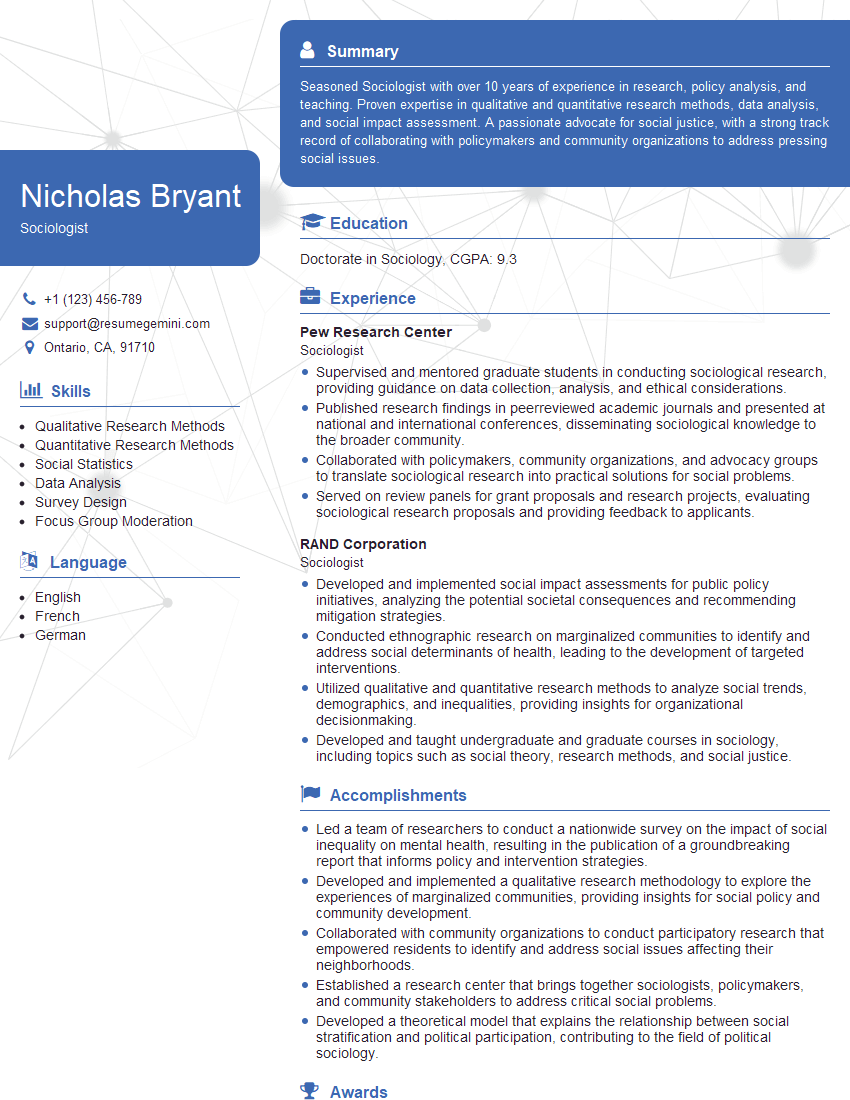
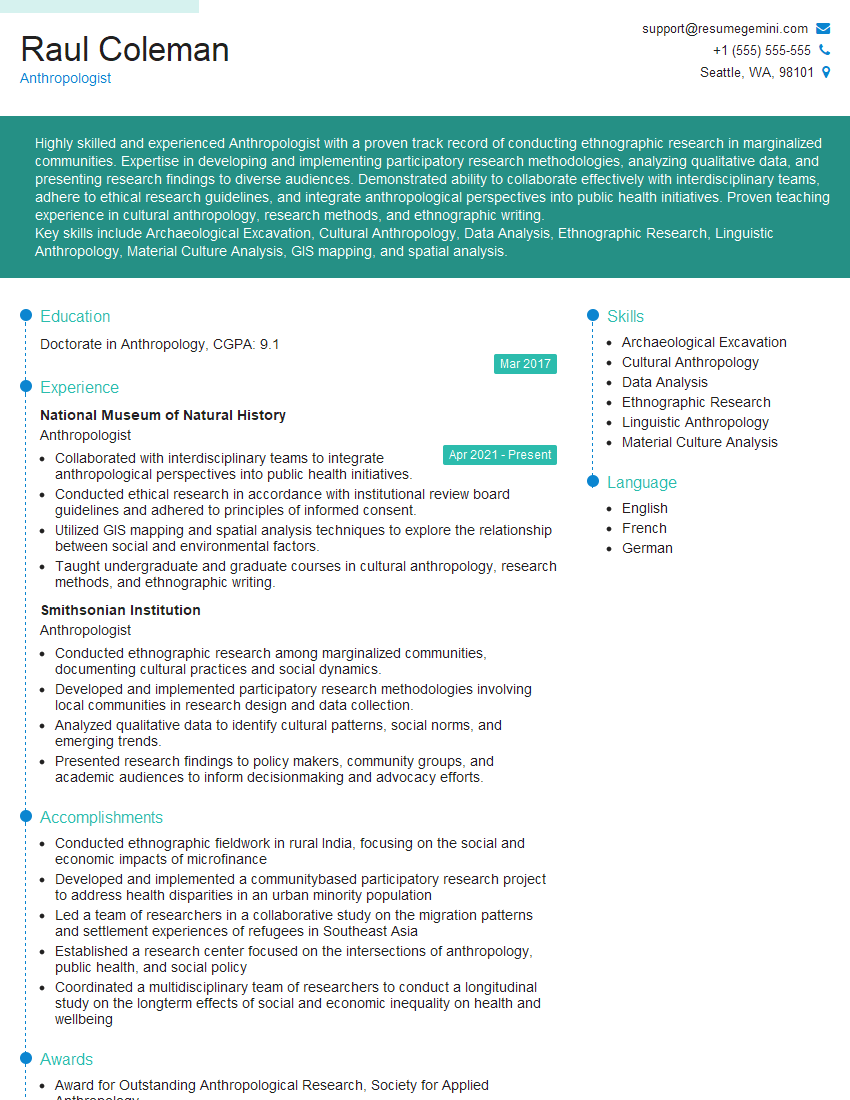
Mastering cultural considerations is crucial for career advancement in today’s globalized world. Demonstrating your understanding of diverse cultures and your ability to navigate intercultural interactions will significantly enhance your prospects in a competitive job market. To make your application stand out, focus on building an ATS-friendly resume that highlights your relevant skills and experience. ResumeGemini is a trusted resource to help you craft a professional and impactful resume tailored to your specific career goals. We provide examples of resumes tailored to showcasing expertise in Cultural Considerations to help guide you. Take the next step towards career success – build your best resume with ResumeGemini today!
Explore more articles
Users Rating of Our Blogs
Share Your Experience
We value your feedback! Please rate our content and share your thoughts (optional).
What Readers Say About Our Blog
Very informative content, great job.
good