Every successful interview starts with knowing what to expect. In this blog, we’ll take you through the top Custom Drapery interview questions, breaking them down with expert tips to help you deliver impactful answers. Step into your next interview fully prepared and ready to succeed.
Questions Asked in Custom Drapery Interview
Q 1. Explain the difference between pinch pleats and goblet pleats.
Pinch pleats and goblet pleats are two popular heading styles for draperies, each offering a distinct aesthetic. Pinch pleats create a classic, tailored look with evenly spaced, pinched folds of fabric. Goblet pleats, on the other hand, form deeper, more dramatic folds that resemble inverted cups or goblets. The difference lies primarily in the way the fabric is manipulated during the pleating process.
Pinch Pleats: These are created by carefully folding the fabric into small, even pleats, secured at the top with a heading tape or stitches. They offer a structured, formal appearance suitable for traditional and contemporary interiors alike. Think of a neatly pressed shirt – that’s the essence of a pinch pleat.
Goblet Pleats: These involve a more complex folding technique. Larger sections of fabric are gathered and shaped into deep, rounded pleats, resulting in a luxurious and opulent look. They’re often seen in grander settings or when a more dramatic effect is desired. Imagine a full, gathered skirt – that’s the effect of a goblet pleat.
The choice depends on the desired style and the overall design of the room. Pinch pleats offer a more streamlined look, while goblet pleats add a touch of drama and extravagance.
Q 2. Describe your experience with various drapery lining options and their applications.
Lining is crucial for drapery functionality and longevity. My experience encompasses a range of lining options, each chosen based on the specific needs of the project. These include:
- Standard Lining: A lightweight, inexpensive option primarily for opacity and light control. This is a great choice for basic drapery applications.
- Interlining: An additional layer added between the face fabric and lining, providing body, drape, and insulation. It’s ideal for heavier fabrics or rooms requiring better insulation against noise or temperature fluctuations. Imagine adding a layer of warmth to a coat – that’s what interlining does for drapes.
- Blackout Lining: Completely blocks light, perfect for bedrooms or media rooms. This is essential for rooms where light control is paramount.
- Thermal Lining: Offers excellent insulation, reducing energy loss through windows. This is a cost-effective and environmentally conscious option.
- Moisture-resistant lining: Protects against humidity and moisture damage, particularly beneficial in bathrooms or kitchens.
I always discuss lining options with clients, explaining the pros and cons of each to ensure the final product meets their needs and expectations. The choice often depends on the room’s purpose, the client’s budget, and the chosen fabric.
Q 3. How do you calculate the fabric requirements for a complex drapery design?
Calculating fabric for complex drapery designs requires careful consideration of several factors. It’s not just a simple matter of measuring the window; we need to account for pleats, fullness, and the design’s unique features.
My process begins with precise window measurements, including width and height. Next, I determine the desired fullness – the amount of extra fabric used to create the desired drape and pleats. Fullness is typically expressed as a multiple of the rod width (e.g., 2 times, 2.5 times). For complex designs with multiple layers or intricate patterns, I add additional fabric to account for pattern matching, waste, and any potential design adjustments during the construction process. For instance, a design with a large, repeating pattern may require more fabric to avoid wasting or mismatching pattern.
For complex designs, I often create detailed sketches and mockups to visualize the fabric layout and ensure accurate calculations. I then incorporate a waste factor (typically 10-15%) to account for cutting errors, pattern matching, and alterations. Finally, I calculate the total fabric required, ensuring I have enough to complete the project flawlessly.
Q 4. What are the common issues encountered during drapery installation, and how do you address them?
Common drapery installation issues include uneven hanging, incorrect rod placement, and difficulty with complex hardware. My approach involves proactive problem-solving to prevent and address these issues.
- Uneven Hanging: This is often due to inaccurate measurements or improper rod installation. I use laser levels to ensure the rod is perfectly straight and level. Precise measuring and careful attention to detail throughout the installation process prevent this problem.
- Incorrect Rod Placement: The rod placement significantly impacts the overall look. I always consult with the client about preferred hanging height and discuss the best rod placement for achieving the desired effect. Sometimes, adjustments need to be made on-site, so flexibility and problem-solving skills are essential.
- Complex Hardware: Some designs incorporate intricate hardware, which can present challenges. I meticulously follow the manufacturer’s instructions and carefully plan the installation process to avoid issues. If needed, I consult with the hardware supplier for support.
Thorough planning, attention to detail, and the use of the right tools are crucial for successful drapery installation. I address unforeseen issues through careful on-site assessment and problem-solving.
Q 5. Explain your process for measuring windows for custom draperies.
Accurate window measurements are the foundation of successful custom draperies. My measuring process is detailed and precise, involving these steps:
- Assess the Window: I begin by carefully examining the window type, frame style, and any obstructions (e.g., molding, trim).
- Measure the Window Frame: I measure the width of the window frame at several points, noting any discrepancies. I then measure the height of the frame at multiple points from the top to the bottom, again looking for any inconsistencies. The frame measurements are recorded.
- Measure the Window Opening: Next, I measure the window opening’s interior width and height at multiple points to account for potential irregularities.
- Measure for Inside Mount vs. Outside Mount: The chosen mounting method (inside or outside the window frame) significantly impacts measurements. I clearly note whether the client prefers one method over the other.
- Measure for Drapery Length and Stacking Space: I determine the desired length of the finished drapes, including any additional length for stacking (the space the drapes take up when pulled open). This is crucial for ensuring the drapes fall gracefully, without interference with the window or floor.
- Record All Measurements: All measurements are meticulously documented, including sketches or diagrams if needed. I double-check all measurements to ensure accuracy.
This thorough approach minimizes errors and guarantees that the finished draperies fit perfectly and function correctly. A single missed measurement can spoil an entire project, so attention to detail is key!
Q 6. Describe your experience with different drapery hardware and their suitability for various window types.
My experience with drapery hardware extends to various types, each suited for different window types and styles. The choice of hardware significantly impacts the drape’s overall look and functionality.
- Rods: These are available in various materials (wood, metal, etc.), finishes, and diameters. They are suitable for most window types and offer a versatile hanging option.
- Tracks: Tracks are ideal for wider windows or bay windows, enabling smooth, even operation. They’re especially beneficial for heavy drapes.
- Tension Rods: These are simple and inexpensive, suitable for smaller windows or temporary installations, especially when drilling is not possible. However, they are less suitable for heavier fabrics.
- Decorative Finials: The choice of finials (the decorative end caps) also contributes to the overall design scheme. I offer a wide variety of finials to match the drapes’ style and the room’s aesthetic.
For each project, I assess the window type, the fabric weight, and the client’s preferences to select the most appropriate hardware. For instance, a heavy fabric in a bay window would require a robust track system, while lightweight sheers on a small window might be suitable with a decorative tension rod. I always discuss the different options with the clients, so that the final choice aligns with both functionality and style.
Q 7. How do you handle customer requests that are outside of standard design practices?
I welcome unique client requests, even if they stray from standard design practices. My approach involves collaborative discussion and creative problem-solving.
When faced with a non-standard request, I first discuss the feasibility with the client, explaining any potential challenges and limitations. This includes technical difficulties in creating the design or potential additional costs. We work together to find solutions that meet their creative vision while maintaining practicality and quality. Sometimes, this involves suggesting alternative solutions that achieve a similar aesthetic outcome with less complexity. I also provide realistic timelines and cost estimates to manage expectations.
For example, if a client requests a very unusual fabric manipulation or a complex pleating style that deviates significantly from standard practices, I may suggest a prototype to test the feasibility and refine the design before proceeding with the full project. This minimizes risk and allows us to address potential issues proactively.
My aim is to translate the client’s vision into reality while maintaining professional standards and ensuring client satisfaction.
Q 8. What are your preferred methods for cleaning and maintaining different drapery fabrics?
Cleaning and maintaining drapery fabrics depends heavily on the material. A crucial first step is always checking the manufacturer’s care instructions. However, here are some general guidelines:
- Velvet, Silk, and delicate fabrics: These require professional dry cleaning. Attempting to clean them at home could damage the fibers, leading to discoloration or shrinkage. Regular dusting with a soft brush or vacuum cleaner with a soft brush attachment is key to preventing dust buildup.
- Linen and Cotton: These are more durable and can often be spot-cleaned with a mild detergent and water. Always test a small, inconspicuous area first. For heavier soiling, professional cleaning is recommended. Regular airing of the drapes, by opening windows and allowing for airflow, can also help.
- Polyester and other synthetics: These are usually the most durable and easiest to care for. Many can be machine-washed on a gentle cycle, but always check the care label. Vacuuming regularly is still essential.
Think of it like caring for different types of clothing; a delicate silk blouse needs a different approach than a sturdy cotton shirt. Always err on the side of caution, especially with expensive or delicate fabrics.
Q 9. How do you manage a drapery project from initial consultation to final installation?
Managing a drapery project involves a structured process. It begins with an in-home consultation where I discuss the client’s needs, style preferences, and budget. We’ll measure the windows precisely and discuss fabric options, heading styles, and hardware.
Next, I create detailed design drawings and fabric samples are presented for approval. Once the client approves the design and fabric, I order the fabric and begin the construction process. This involves meticulous cutting, sewing, and finishing. Quality control is critical at each stage.
Finally, I schedule the installation. This involves careful measuring and hanging of the drapes to ensure a perfect fit and flawless drape. I always do a final walkthrough with the client to address any questions or concerns and ensure complete satisfaction. This meticulous, step-by-step approach ensures a smooth and successful project.
Q 10. Explain your understanding of different drapery heading styles.
Drapery heading styles significantly impact the overall look and functionality of the drapes. Popular styles include:
- Pinch Pleat: Creates a classic, formal look with evenly spaced, pinched folds at the top. It adds fullness and elegance.
- Goblet Pleat: Similar to pinch pleat but with deeper, more pronounced folds, offering a more luxurious appearance.
- Box Pleat: Features neat, square folds that are particularly suited to more modern or minimalist styles.
- Ripplefold: Creates soft, flowing waves across the top of the drapes, providing a relaxed and contemporary feel.
- Tab Top: Uses fabric loops or tabs to hang the drapes, offering a casual and simple look.
The choice of heading style greatly affects the finished look, so we carefully consider the style of the room, the fabric weight, and client preferences when making a recommendation.
Q 11. Describe your experience with working with various fabrics (e.g., silk, linen, velvet).
I have extensive experience working with a wide range of fabrics. Each presents unique challenges and opportunities:
- Silk: Luxurious and delicate, requiring careful handling during cutting and sewing. It drapes beautifully but can be prone to snags and damage.
- Linen: A natural fiber with a beautiful texture. It tends to wrinkle easily, adding character but requiring careful consideration for lining and interlining.
- Velvet: Rich and heavy, ideal for creating a dramatic effect. Its pile requires special attention during handling and cleaning to prevent crushing or matting.
Understanding the characteristics of each fabric is essential for achieving the best results. For example, I might use a lining for sheer fabrics to improve opacity and add body, or choose a heavier interlining for linen to help it hang better.
Q 12. What are your strategies for managing time effectively on multiple drapery projects?
Managing multiple projects effectively requires a robust organizational system. I use project management software to track deadlines, milestones, and client communication. This allows me to prioritize tasks based on urgency and complexity.
I also schedule my time meticulously, allocating specific blocks for design, construction, and installation tasks. Clear communication with clients regarding timelines and potential delays is crucial. Regularly reviewing my schedule and adjusting as needed ensures that projects remain on track and deadlines are met.
Furthermore, I delegate tasks where appropriate, ensuring efficient use of time and resources. This could involve subcontracting certain aspects of the projects if needed.
Q 13. How do you troubleshoot issues that arise during the installation of complex drapery designs?
Troubleshooting during installation often involves problem-solving skills honed through experience. Issues can range from incorrect measurements to unforeseen structural challenges.
My approach involves careful assessment of the problem. If the drapes don’t hang correctly, I check for things like uneven rod placement, incorrect pleat spacing or insufficient fullness. If there’s a hardware issue, I’ll check the components and make any necessary adjustments or replacements. I always keep a well-stocked toolkit with various tools and replacement parts to ensure I’m prepared for any situation.
Communication with the client throughout the process is essential. Keeping them informed about any unexpected delays or changes minimizes potential frustrations and helps ensure a positive outcome. I view these challenges as opportunities to showcase my expertise and dedication to achieving the desired results.
Q 14. Describe your experience working with CAD software for drapery design.
I’m proficient in using CAD software for drapery design. This allows me to create accurate and detailed designs, including scaled drawings and fabric layouts. It also helps visualize different design options and allows for client collaboration.
Using CAD software enables me to optimize fabric usage, minimizing waste and reducing costs. It also enhances the precision of the cutting and sewing process, leading to a higher quality finished product. For complex designs or custom shapes, CAD software is invaluable. It allows me to create detailed plans that make the process of construction much easier and more accurate.
For example, I can easily experiment with different pleat styles and configurations in the software before committing to the final design. This allows for more informed decisions and eliminates costly mistakes. The ability to accurately estimate fabric requirements is another major benefit.
Q 15. How do you ensure the quality and accuracy of your work throughout the drapery process?
Ensuring quality and accuracy in custom drapery is paramount. It’s a multi-step process that begins even before the fabric is chosen. We start with meticulous measurements, using laser measuring tools for pinpoint accuracy to avoid costly mistakes later. Detailed sketches and 3D renderings are created to visualize the final product and confirm the client’s vision. This collaborative process minimizes misunderstandings. During production, we meticulously inspect each step—from cutting the fabric to sewing the seams—employing quality control checks at every stage. Finally, before installation, a final walkthrough ensures everything aligns perfectly with the design and measurements.
For example, if a client requests intricate pleats, we’ll create a sample pleat to showcase the exact look and feel, allowing for adjustments before committing to the entire project. This attention to detail minimizes rework and ensures customer satisfaction.
Career Expert Tips:
- Ace those interviews! Prepare effectively by reviewing the Top 50 Most Common Interview Questions on ResumeGemini.
- Navigate your job search with confidence! Explore a wide range of Career Tips on ResumeGemini. Learn about common challenges and recommendations to overcome them.
- Craft the perfect resume! Master the Art of Resume Writing with ResumeGemini’s guide. Showcase your unique qualifications and achievements effectively.
- Don’t miss out on holiday savings! Build your dream resume with ResumeGemini’s ATS optimized templates.
Q 16. What are your skills in pattern making for custom draperies?
Pattern making is the foundation of custom draperies. My expertise encompasses various techniques, including drafting patterns from scratch, modifying existing patterns to suit specific needs, and using computer-aided design (CAD) software for intricate designs. Understanding different fabric types and their drape is crucial for creating accurate patterns that will hang flawlessly. I’m proficient in creating patterns for various styles, such as pinch pleats, goblet pleats, grommet-top panels, and more. I also account for factors like fullness (how much fabric is used to create gathers), heading styles, and lining considerations when creating each pattern. This ensures the final drapes are not only aesthetically pleasing but also functional and long-lasting.
For instance, when working with a heavy velvet fabric, I’d adjust the pattern to account for its weight and stiffness, ensuring the pleats fall gracefully and don’t appear too stiff or forced. Similarly, a sheer fabric would require a different pattern to achieve the desired level of drape and transparency.
Q 17. How do you manage client expectations regarding timelines and budgets?
Managing client expectations is crucial for successful projects. We begin by providing a clear and detailed estimate, outlining all costs associated with materials, labor, and any potential unforeseen expenses. We then create a realistic timeline, factoring in lead times for fabric sourcing, production, and installation. Throughout the project, we maintain open communication, providing regular updates and addressing any concerns promptly. This transparency helps build trust and ensures the client remains informed every step of the way. We always strive to meet, and even exceed, expectations while maintaining honesty about any potential delays or cost adjustments that may occur.
For example, if a fabric is backordered, we’ll immediately inform the client, discuss alternative options, and adjust the timeline accordingly. This proactive communication ensures they are involved in the decision-making process and prevents unexpected surprises.
Q 18. Describe your experience in resolving customer complaints related to draperies.
Resolving customer complaints requires a calm and professional approach. My first step is always to listen carefully to the client’s concerns and empathize with their frustration. I then thoroughly investigate the issue, objectively assessing whether the problem stems from production errors, installation issues, or miscommunication. Once the cause is identified, I propose a solution, which could involve adjustments, repairs, or even a partial refund, depending on the severity of the problem. My goal is always to find a mutually agreeable solution that restores the client’s confidence and ensures they’re happy with the final result.
For instance, if a client finds a minor imperfection in the stitching, we’ll happily repair it at no extra cost. If a more significant issue arises, such as incorrect measurements, we’d take full responsibility and work diligently to rectify the problem promptly.
Q 19. Explain your knowledge of safety regulations relevant to drapery installation.
Safety is a top priority in drapery installation. I’m thoroughly familiar with OSHA (Occupational Safety and Health Administration) guidelines and local building codes concerning window treatments. This includes using proper safety equipment like ladders, harnesses, and fall protection systems when working at heights. I understand the importance of securing draperies properly to prevent falls or accidents, especially with heavy fabrics or large windows. I also take precautions to avoid damaging walls or windows during installation and always ensure the work area is clear of obstructions.
For example, when installing drapes in a high-ceilinged room, we’ll use a stable, properly secured ladder and employ fall protection measures to ensure the safety of our team members. We also consider the weight of the drapery when securing it to the hardware to prevent damage and ensure stability.
Q 20. What are your preferred tools and techniques for hanging various types of draperies?
My preferred tools and techniques vary depending on the type of drapery. For hanging rod-pocket drapes, I utilize standard curtain rods and appropriate brackets. For grommet-top drapes, I might employ a specialized grommet tool for easy installation and consistent spacing. With pleat-style drapes, I use specialized tools like a pleat maker or a measuring tape to create even and symmetrical pleats. For more complex installations, I might incorporate track systems, which require specialized tools for installation and adjustments.
I also utilize various techniques such as using shims to adjust the alignment of the rod, employing different types of hooks and rings to achieve specific looks, and utilizing specialized tools for hanging heavy drapes. I adapt my approach depending on the specific needs of the drapes and the client’s preferences.
Q 21. How do you adapt to changing customer needs and preferences during a drapery project?
Adaptability is key in the custom drapery business. Client needs and preferences change frequently, and we embrace this dynamic environment. Throughout a project, we maintain open communication and actively listen to clients’ feedback, incorporating their suggestions where appropriate. We regularly showcase new fabric samples, design ideas, and hardware options to keep our clients abreast of current trends and ensure they have a wide selection to choose from. Our flexibility allows us to make adjustments to the design, materials, or timeline as needed, always ensuring customer satisfaction and successful project completion.
For example, if a client decides mid-project to change the fabric color, we’ll immediately check availability and make the necessary changes, updating the timeline and budget accordingly. We view these adjustments as opportunities to better fulfill the client’s vision.
Q 22. Describe your experience working with different types of window treatments in addition to draperies.
My experience extends beyond draperies to encompass a wide range of window treatments. I’m proficient in working with Roman shades, cellular shades (honeycomb shades), roller shades, sheer curtains, blinds (both wood and faux wood), and shutters. Understanding the strengths and weaknesses of each type is crucial for recommending the best solution for a client’s needs and aesthetic preferences. For example, Roman shades offer a classic, tailored look, while cellular shades excel at insulation. Roller shades provide a simple, minimalist solution, and sheer curtains offer light filtering and privacy. My ability to assess the room’s purpose, light conditions, and desired level of privacy allows me to guide clients towards the most suitable option, often incorporating draperies to complement these other treatments for added elegance and light control.
- Roman Shades: Ideal for formal settings, offering a structured and elegant look.
- Cellular Shades: Excellent insulators, suitable for energy efficiency and noise reduction.
- Roller Shades: Simple, clean lines suitable for modern or minimalist designs.
- Sheer Curtains: Diffuse light while maintaining privacy; often layered with draperies.
Q 23. How familiar are you with different types of drapery tracks and their functionalities?
I’m highly familiar with various drapery tracks, each designed for specific functionalities and drapery styles. The choice of track impacts the overall look and ease of operation. Common types include:
- Standard single track: Suitable for a single layer of curtains, simple and cost-effective.
- Double track: Allows for two layers of curtains, offering greater light control and layering options (e.g., sheer curtains and heavier drapes).
- Triple track: Provides three layers for even more sophisticated light and privacy control.
- Curved track: Ideal for bay windows or unusual window shapes, allowing for a seamless, customized look.
- Motorized tracks: Offer automated opening and closing, enhancing convenience and accessibility.
Choosing the right track is critical for both functionality and aesthetics. A poorly chosen track can hinder the smooth operation of the draperies and detract from the overall design.
Q 24. Describe your experience using a sewing machine for custom drapery production.
My experience with industrial sewing machines is extensive. From basic straight stitching to complex pleating techniques, I’m comfortable operating various machines and troubleshooting any issues that may arise. I’ve worked with a variety of fabrics, from delicate silks to heavy-weight velvets, and have developed the skills to handle the unique needs of each. This includes adjusting the tension, stitch length, and needle type to achieve the perfect result. Precision is paramount in custom drapery production, and my proficiency in using a sewing machine ensures flawlessly finished seams and consistent pleats. For instance, I’ve mastered techniques like French seams for high-end projects to create incredibly clean and durable finishes.
Q 25. Explain your understanding of different interlinings and their effects on the drape of fabric.
Interlinings are fabrics placed between the facing and lining of a drapery panel. They dramatically affect the drape, body, and overall appearance of the finished product. Different interlinings provide different properties:
- Fusible interfacing: Adds structure and body, suitable for heavier fabrics that need to hold their shape.
- Cotton canvas: Provides excellent support and prevents sagging, ideal for heavy drapes and large panels.
- Silk organza: Adds subtle body and a luxurious sheen, best suited for delicate fabrics.
The choice of interlining depends entirely on the chosen fabric and the desired effect. For example, a lightweight silk would benefit from a lightweight organza interlining to add subtle body without weighing it down. In contrast, heavy velvet drapes might require a cotton canvas interlining to maintain their structure and prevent sagging.
Q 26. What is your experience with different types of curtain rods and their suitability for different designs?
The selection of curtain rods is crucial for the overall aesthetic and functionality. There’s a wide variety to choose from, each with its own characteristics:
- Wood rods: Offer a classic and traditional look, available in various styles, finishes, and diameters.
- Metal rods: Modern and sleek, available in different finishes like chrome, brass, or matte black.
- Tension rods: No drilling needed, ideal for renters or temporary installations. However, they are less suitable for heavy draperies.
- Decorative rods: Come in ornate designs and add a focal point to the window. Often used with finials at either end.
The rod selection should complement the drapery style and room décor. For instance, a minimalist design would pair well with a simple metal rod, whereas a more traditional space might benefit from a decorative wood rod.
Q 27. How would you handle a situation where fabric is damaged during installation?
Fabric damage during installation is a potential issue. My approach involves a multi-step process. First, I would assess the extent of the damage. Minor snags or tears can often be repaired discreetly. For more significant damage, I would photograph the affected area and document the circumstances. Then, I would discuss the situation with the client, presenting options such as repair, replacement of the damaged section, or a replacement of the entire panel depending on the severity and location of the damage and the client’s preference. If the damage was due to a contractor’s negligence, I would discuss resolution with them. Transparency and clear communication are key to resolving this type of issue professionally and to the client’s satisfaction.
Q 28. Describe your experience with working with designers and other contractors on larger projects.
I have significant experience collaborating with interior designers and other contractors on larger projects. Effective communication is paramount. This involves regular meetings, shared design documents, and open communication channels to ensure everyone is on the same page. I understand the importance of adhering to project timelines and budgets. I’m skilled at working within existing design plans and adapting to changes as needed. One memorable project involved collaborating with a renowned interior designer on a high-end residential project. The designer had a very specific vision, and my ability to understand and execute her design ideas seamlessly led to a successful outcome. Clear communication and professional collaboration are key to success in large-scale projects.
Key Topics to Learn for Your Custom Drapery Interview
- Fabric Selection and Properties: Understanding different fabric types (e.g., linen, silk, velvet), their drape, light filtration, and maintenance requirements. Consider how these properties impact design choices and client satisfaction.
- Measurement and Installation Techniques: Mastering accurate measuring techniques for windows and other areas requiring custom drapery. Understand the various installation methods and their suitability for different drapery styles and window types. Be prepared to discuss problem-solving scenarios, such as uneven walls or difficult window shapes.
- Design Principles and Aesthetics: Familiarity with basic design principles (e.g., color theory, balance, proportion) as they relate to drapery design. Explore different drapery styles (e.g., Roman shades, Austrian shades, panels) and their applications in various interior design contexts.
- Client Communication and Consultation: Discuss the importance of active listening, understanding client needs and preferences, and effectively communicating design options and project timelines. How do you handle challenging clients or unexpected requests?
- Project Management and Budgeting: Explain your understanding of project planning, material ordering, scheduling installations, and managing budgets effectively. How would you handle potential delays or cost overruns?
- Safety and Workplace Practices: Demonstrate your awareness of safety protocols related to handling fabrics, using measuring tools, and working at heights (if applicable). Discuss your experience working as part of a team and following company procedures.
Next Steps
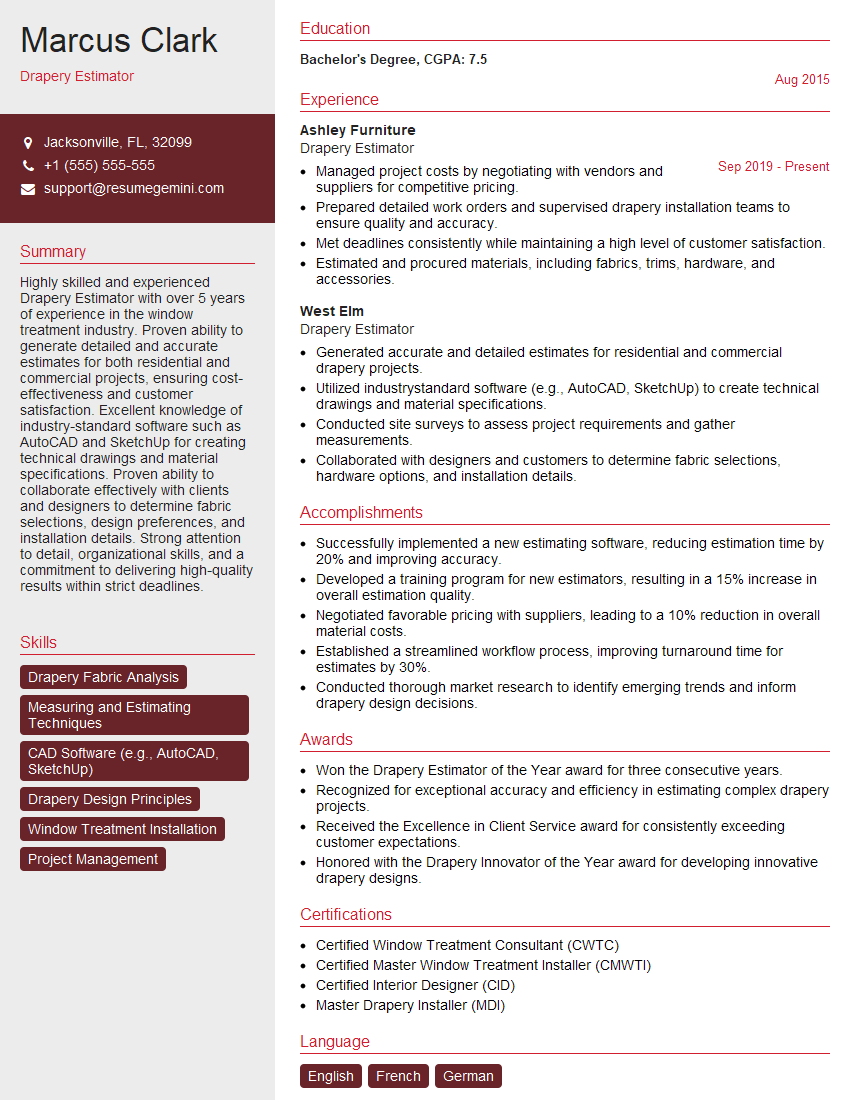
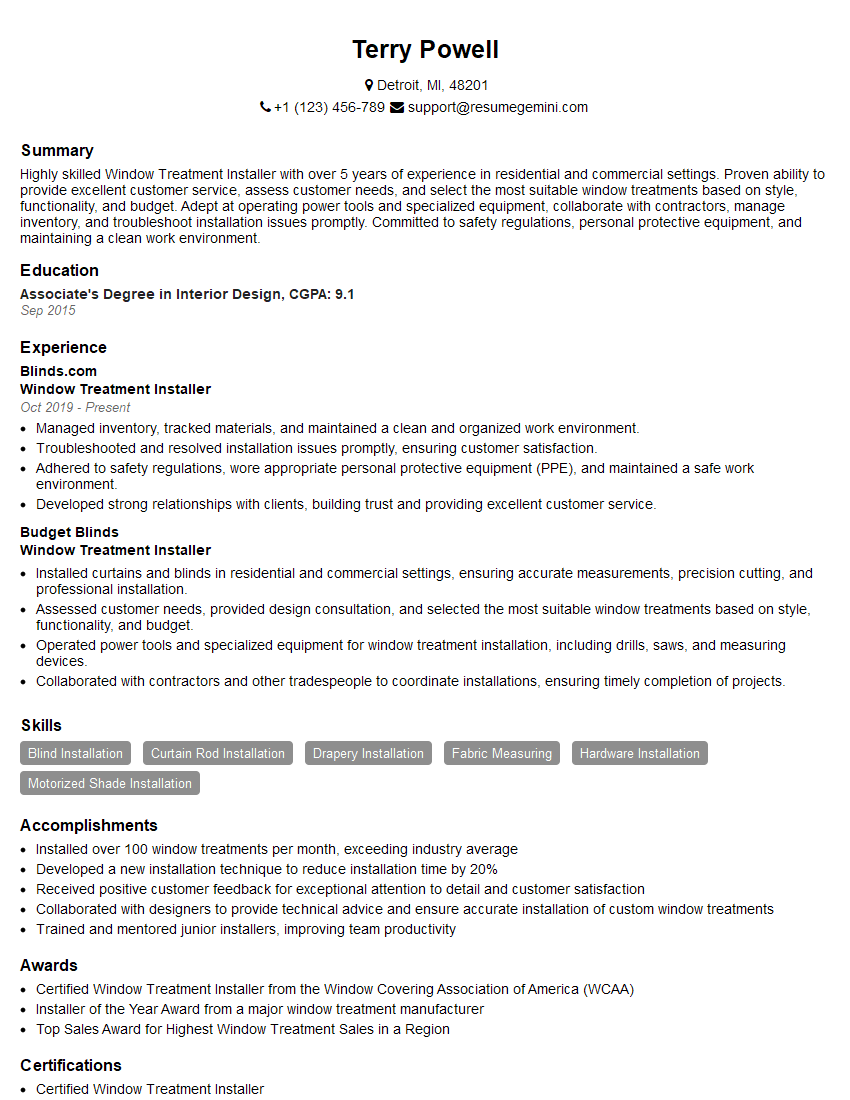
Mastering the intricacies of custom drapery opens doors to exciting career opportunities in a creative and detail-oriented field. Your expertise in design, technical skills, and client interaction will be highly valued. To significantly increase your chances of landing your dream job, create a compelling and ATS-friendly resume that showcases your skills and experience effectively. ResumeGemini is a trusted resource to help you build a professional and impactful resume that stands out. They provide examples of resumes tailored to the Custom Drapery industry, giving you a head start in crafting your application.
Explore more articles
Users Rating of Our Blogs
Share Your Experience
We value your feedback! Please rate our content and share your thoughts (optional).
What Readers Say About Our Blog
Very informative content, great job.
good