Are you ready to stand out in your next interview? Understanding and preparing for Cutting and Forming interview questions is a game-changer. In this blog, we’ve compiled key questions and expert advice to help you showcase your skills with confidence and precision. Let’s get started on your journey to acing the interview.
Questions Asked in Cutting and Forming Interview
Q 1. Explain the difference between shearing and blanking.
Shearing and blanking are both cutting processes used in sheet metal fabrication, but they differ in their purpose and the resulting product. Think of it like this: shearing is cutting a piece of metal *in two*, while blanking is cutting out a *specific shape* from a sheet.
Shearing involves cutting a sheet of metal along a straight line, often to separate it into smaller pieces. Imagine cutting a piece of paper with scissors – that’s essentially shearing. It’s used for things like cutting strips of metal or splitting a large sheet into smaller sheets. The result is two separate pieces of metal, generally with a fairly straight cut edge.
Blanking, on the other hand, is used to punch out a specific shape from a sheet. This is similar to using a cookie cutter to cut shapes out of dough. The result is the desired shape (the ‘blank’) and the remaining scrap metal. Blanking is crucial for creating individual parts like washers, gears, or other components.
The key difference lies in the final product: shearing produces two or more pieces of the same material, while blanking produces a specific shaped component and scrap material.
Q 2. Describe the various types of cutting processes (e.g., laser, water jet, plasma).
Several cutting processes are used in manufacturing, each with its own advantages and disadvantages. The choice depends on factors like material thickness, desired accuracy, and budget.
- Laser Cutting: Uses a high-powered laser beam to melt and vaporize material. It offers high precision, intricate designs, and minimal heat-affected zones, making it ideal for delicate work and thin materials. However, it can be expensive and slower for thicker materials.
- Water Jet Cutting: Employs a high-pressure stream of water mixed with an abrasive material to cut through almost any material. It is incredibly versatile, precise, and causes minimal heat damage, making it suitable for a wide range of applications, including delicate materials. The downside is it can be slower than other methods and requires specialized equipment.
- Plasma Cutting: Utilizes a high-temperature plasma arc to melt and cut through conductive materials. It’s a very fast process and suitable for thicker metals, but the cut edges might require further finishing, and it’s not as precise as laser cutting.
- Punching: Uses a press to punch out shapes from a sheet metal, it is effective for high-volume production of simple shapes but limited in the complexity of shapes.
- Shearing (as discussed above): Suitable for straight cuts and high-volume production of simple shapes.
Each process has a unique place in the manufacturing landscape, and the best choice depends on the specific project requirements.
Q 3. What safety precautions are crucial when operating cutting and forming machinery?
Safety is paramount in cutting and forming operations. Neglecting safety can lead to serious injury or even fatality. Here are some crucial precautions:
- Proper Personal Protective Equipment (PPE): Always wear safety glasses, hearing protection, gloves, and appropriate clothing. This is non-negotiable.
- Machine Guards and Safety Interlocks: Ensure all guards are in place and functional. Never bypass safety interlocks.
- Lockout/Tagout Procedures: Before performing any maintenance or adjustments, always follow proper lockout/tagout procedures to prevent accidental startup.
- Material Handling: Use proper lifting techniques to avoid injuries. Never overload machinery.
- Emergency Stop Procedures: Familiarize yourself with the location and operation of all emergency stop buttons.
- Regular Machine Maintenance: Properly maintained machines are safer machines. Regular inspections and maintenance are essential.
- Training and Competency: Only operate equipment after receiving proper training and demonstrating competency.
A thorough safety training program and adherence to established safety protocols are essential for preventing accidents.
Q 4. How do you ensure dimensional accuracy in your work?
Dimensional accuracy is critical in cutting and forming. Several methods contribute to achieving this:
- Precise Machine Calibration: Regularly calibrate and maintain cutting and forming machines to ensure accurate operation.
- Accurate Tooling: Use sharp, correctly sized tooling and dies. Worn or damaged tooling will compromise accuracy.
- Proper Material Selection: Using consistent and high-quality materials minimizes variations.
- Computer-Aided Design (CAD) and Manufacturing (CAM): Using CAD/CAM software for programming and design helps maintain precise dimensions and allows for simulations before actual cutting.
- Regular Measurement and Inspection: Regularly use measuring tools (e.g., calipers, micrometers) to verify dimensions during and after the process. This ensures early detection of inaccuracies.
- Statistical Process Control (SPC): Implementing SPC helps monitor and control the variation in dimensions.
A combination of these techniques ensures consistent, high-quality results that meet the required tolerances.
Q 5. What are the common causes of defects in sheet metal forming?
Defects in sheet metal forming can stem from various causes, often related to material properties, tooling, or the forming process itself:
- Wrinkling: Caused by insufficient tensile strength of the material or improper die design.
- Fracturing: Happens when the material is subjected to stresses beyond its tensile strength, often due to sharp bends or insufficient lubrication.
- Flanging Defects: Issues like tearing, wrinkling, or buckling during flange forming can be caused by poor material selection, inadequate clamping force, or improper tool design.
- Earing: Uneven elongation at the edges of a cup-drawn part, usually caused by anisotropic material properties or asymmetrical die design.
- Springback: Elastic recovery of the material after forming, leading to dimensional inaccuracies. This is influenced by material properties and tooling geometry.
- Surface Defects: Scratches, dents, or other surface imperfections can arise from improper handling, worn tooling, or insufficient lubrication.
Understanding these potential issues and implementing preventative measures like proper lubrication, appropriate material selection, and precise die design minimizes defects.
Q 6. Explain the process of setting up a CNC machine for a cutting operation.
Setting up a CNC machine for cutting involves several steps:
- Import the CAD file: Load the design (usually in DXF or similar format) into the CNC machine’s control system.
- Tool Selection: Select the appropriate cutting tool (e.g., laser nozzle, water jet orifice, plasma cutting torch) based on the material and desired cut quality.
- Workpiece Positioning: Securely clamp or fixture the workpiece on the machine bed, ensuring it’s properly aligned with the machine’s coordinate system.
- Toolpath Generation (CAM): Use CAM software to create the toolpath, which specifies the exact movements of the cutting tool to generate the desired cut.
- Parameter Setting: Set the cutting parameters, such as cutting speed, power, and depth of cut. These parameters are crucial for achieving the desired cut quality and efficiency, and are material-specific.
- Dry Run (Optional): Simulate the cutting process (without actually cutting) to check for potential errors in the toolpath or settings.
- Cutting Operation: Initiate the cutting operation and monitor the process closely.
- Inspection: After the cut is completed, inspect the workpiece to ensure the dimensions and quality meet the requirements.
The specific steps and parameters might vary depending on the type of CNC machine and the cutting process involved, but the overall procedure remains consistent.
Q 7. How do you interpret engineering drawings related to cutting and forming?
Interpreting engineering drawings for cutting and forming requires careful attention to detail and a thorough understanding of drafting conventions. Key elements include:
- Dimensions: Accurately measuring the dimensions of the part, including tolerances (acceptable variation).
- Tolerances: Understanding how much variation is acceptable in the final product.
- Material Specifications: Identifying the type of material to be used, as material properties significantly impact the cutting and forming process.
- Views and Projections: Interpreting multiple views (top, front, side) to fully understand the part’s geometry.
- Sections and Details: Examining detailed sections or exploded views to understand complex features.
- Notes and Specifications: Carefully reading all notes and specifications provided on the drawing to clarify any ambiguous features or specific process requirements.
- Surface Finish Requirements: Understanding the desired surface finish after the cutting and forming operation. For instance, determining whether further polishing or finishing is required.
Experience and a strong understanding of geometrical dimensioning and tolerancing (GD&T) symbols are crucial for accurately interpreting and implementing the design specifications.
Q 8. Describe your experience with different types of metal and their formability.
Formability in metal cutting and forming refers to a metal’s ability to undergo deformation without fracture. Different metals exhibit vastly different formability characteristics. My experience spans a wide range of materials, including:
- Mild Steel: Highly formable, readily bends and stretches, commonly used in automotive parts and construction. Its ductility makes it ideal for deep drawing processes.
- Stainless Steel: Offers good formability but is more prone to work hardening (becoming harder and more brittle with deformation), requiring specialized lubricants and forming techniques. Common applications include kitchenware and medical instruments.
- Aluminum: Highly formable and lightweight. Excellent for extrusion and sheet metal forming, often seen in aircraft and consumer electronics. Its softness makes it susceptible to scratching.
- Titanium: Extremely strong but difficult to form due to its high strength and low ductility. Requires specialized processes like superplastic forming and high-energy rate forming. Primarily used in aerospace applications where strength-to-weight ratio is paramount.
- Copper and Brass: Exhibit excellent formability, easily drawn into wires and shaped into complex forms. Widely used in electrical components and decorative items. Their malleability makes them easy to work with.
Understanding the specific properties of each metal – its yield strength, tensile strength, elongation, and strain hardening exponent – is crucial for selecting the appropriate forming process and parameters to avoid failures like cracking or tearing.
Q 9. What are the advantages and disadvantages of different cutting methods?
Cutting methods offer diverse advantages and disadvantages. Let’s consider a few:
- Shearing:
- Advantages: Fast, relatively inexpensive, produces clean cuts for many materials.
- Disadvantages: Can create burrs or deformed edges, limited in terms of complex shapes.
- Laser Cutting:
- Advantages: High precision, can cut intricate designs, minimal material waste, automated.
- Disadvantages: High initial investment in equipment, potential for heat-affected zones, not suitable for all materials.
- Waterjet Cutting:
- Advantages: Cuts virtually any material, no heat-affected zones, high precision.
- Disadvantages: Slower than laser cutting, higher operating costs due to abrasive usage.
- Plasma Cutting:
- Advantages: High speed, cuts thick materials effectively, relatively inexpensive.
- Disadvantages: Wider kerf (cut width) than laser cutting, can create heat-affected zones.
The best cutting method is always chosen based on material properties, required precision, production volume, and budget considerations. For instance, laser cutting might be ideal for intricate stainless steel parts, while shearing is best suited for high-volume production of simple mild steel components.
Q 10. How do you troubleshoot common problems encountered during cutting and forming?
Troubleshooting in cutting and forming often involves a systematic approach. I typically follow these steps:
- Identify the problem: Precisely define the defect (e.g., cracks, wrinkles, tears, dimensional inaccuracies).
- Analyze the process parameters: Review cutting speed, feed rate, tool geometry, lubrication, and material properties to pinpoint potential causes.
- Examine the tooling: Check for wear, damage, or incorrect tool selection. Dull cutting tools are a common culprit for surface defects.
- Assess the material: Verify the material’s quality, consistency, and suitability for the chosen process. Inconsistencies in material thickness can lead to uneven forming.
- Implement corrective actions: Based on the analysis, adjust parameters, replace tooling, or select a more appropriate process.
- Monitor and refine: Continuously monitor the process to ensure the problem is resolved and to identify any further improvements.
For example, if I encounter wrinkles in a deep-drawing operation, I might investigate factors such as insufficient blank holder force, an improper blank design, or inadequate lubrication.
Q 11. What software are you proficient in for CAD/CAM programming?
My CAD/CAM programming expertise encompasses several software packages, including:
- Mastercam: Proficient in creating and optimizing CNC programs for various cutting and forming processes, including milling, turning, and wire EDM.
- Autodesk Inventor: Experienced in 3D modeling and simulation for designing tooling and fixtures, ensuring accurate and efficient part production.
- SolidWorks: Skilled in creating detailed part and assembly models for analysis and manufacturing process planning.
- Catia: Familiar with this powerful software for complex surface modeling and generating manufacturing data.
I can use these programs to generate efficient toolpaths, simulate the forming process, and optimize parameters to reduce machining time and improve part quality. My proficiency allows me to seamlessly transition between different software depending on the project requirements.
Q 12. How do you maintain and clean cutting and forming equipment?
Maintaining and cleaning cutting and forming equipment is crucial for safety, efficiency, and part quality. My routine includes:
- Regular cleaning: Removing chips, debris, and lubricants after each use, preventing build-up and corrosion.
- Tool inspection and maintenance: Regularly checking tools for wear, damage, or misalignment. Sharpening or replacing tools as needed to maintain cutting performance and accuracy.
- Lubrication: Applying appropriate lubricants to reduce friction and wear on moving parts, extending equipment lifespan.
- Calibration and adjustment: Periodically calibrating and adjusting equipment to ensure accuracy and precision. This often involves checking laser alignment in laser cutters or press force in stamping machines.
- Preventative maintenance: Following manufacturer’s recommendations for preventative maintenance, including regular inspections and servicing of mechanical and electrical components.
This proactive approach minimizes downtime, extends the life of the equipment, and ultimately improves the consistency and quality of the finished products.
Q 13. Explain the concept of springback in sheet metal forming.
Springback is the elastic recovery of a sheet metal part after it has been formed. Think of bending a paperclip – when you release the force, it partially returns to its original shape. This phenomenon is due to the elastic deformation of the material. The amount of springback depends on several factors:
- Material properties: Higher elastic modulus means greater springback.
- Forming process: Different processes lead to varying degrees of springback. For example, bending typically results in more springback than stretching.
- Tool geometry: The radius of the die significantly impacts springback. A smaller radius leads to more springback.
- Friction: Higher friction between the tool and the workpiece reduces springback.
To compensate for springback, engineers use specialized software to simulate the process and predict the final shape. This allows them to design tooling that accounts for springback, ultimately achieving the desired final dimensions.
Q 14. Describe your experience with different types of tooling used in cutting and forming.
My experience with tooling in cutting and forming encompasses a wide variety of tools designed for different processes:
- Cutting tools: I’ve worked extensively with various types of punches and dies for shearing, laser cutting nozzles, waterjet cutting orifices, and plasma cutting torches. The selection of cutting tool depends heavily on the material thickness and desired cut quality.
- Forming tools: My experience includes various bending dies, drawing dies, embossing dies, and stamping dies. These tools are precisely engineered to create specific shapes and features in sheet metal. The choice of tooling greatly influences the final part’s accuracy and surface finish.
- Specialized tooling: I’ve also worked with tools used in more specialized processes, such as rotary draw bending, roll forming, and hydroforming, which each require unique tooling designs adapted to the specific forming method.
Proper tool selection, maintenance, and design are crucial to achieving precise and repeatable results in cutting and forming operations. Regular inspection and replacement of worn tools is necessary to ensure process stability and prevent defects.
Q 15. How do you ensure the quality of the finished product?
Ensuring the quality of a finished product in cutting and forming involves a multi-stage approach, starting from raw material inspection and continuing through every process step until final product verification. It’s like baking a cake – you need the right ingredients (material), the correct recipe (process parameters), and careful monitoring throughout (inspection).
- Raw Material Inspection: We begin by meticulously checking the raw material for defects, dimensions, and surface finish using techniques like visual inspection, gauging, and sometimes more sophisticated methods like ultrasonic testing. This ensures we start with a high-quality base.
- In-Process Control: During cutting and forming operations, regular checks are made. For example, in sheet metal bending, we use digital angle gauges to ensure the bend angle meets specifications. For laser cutting, we monitor the laser power and speed to maintain consistent cut quality.
- Dimensional Inspection: Once the parts are formed, precise measurements are taken using tools like calipers, micrometers, and coordinate measuring machines (CMMs) to ensure they meet the required tolerances. We often use statistical process control (SPC) charts to track measurements and identify potential issues before they become significant.
- Final Inspection: A final, thorough inspection is conducted to detect any surface imperfections, burrs, or dimensional errors. This often involves visual inspection, functional testing, and potentially non-destructive testing (NDT) methods such as dye penetrant testing to check for cracks.
- Documentation: Comprehensive documentation at each stage is crucial. This includes recording material specifications, process parameters, inspection results, and any corrective actions taken. This documentation provides traceability and helps in identifying root causes of defects.
For example, in a recent project involving the production of precisely formed automotive parts, we implemented a new automated gauging system that reduced our dimensional inspection time by 40% and significantly improved the consistency of our final product.
Career Expert Tips:
- Ace those interviews! Prepare effectively by reviewing the Top 50 Most Common Interview Questions on ResumeGemini.
- Navigate your job search with confidence! Explore a wide range of Career Tips on ResumeGemini. Learn about common challenges and recommendations to overcome them.
- Craft the perfect resume! Master the Art of Resume Writing with ResumeGemini’s guide. Showcase your unique qualifications and achievements effectively.
- Don’t miss out on holiday savings! Build your dream resume with ResumeGemini’s ATS optimized templates.
Q 16. What is your experience with different types of presses (e.g., hydraulic, mechanical)?
My experience encompasses a wide range of presses, both hydraulic and mechanical. Each type offers unique advantages and disadvantages depending on the application.
- Hydraulic Presses: These are known for their versatility and ability to generate very high tonnage with precise control. They’re excellent for deep drawing, forging, and forming complex shapes. I’ve worked extensively with hydraulic presses in the automotive industry, where their precision is essential for forming body panels. The programmable control systems allow for precise adjustment of tonnage and speed, optimizing the forming process.
- Mechanical Presses: These are generally simpler and often faster than hydraulic presses, particularly for high-volume production. They are well-suited for operations like blanking, punching, and bending simpler parts. I’ve used mechanical presses in the production of smaller, high-quantity items like electronic components. Their speed is crucial for achieving high production rates.
- Press Selection Considerations: The choice between hydraulic and mechanical presses depends on several factors: the material being formed, the complexity of the part, the required tonnage, the production volume, and the budget. A cost-benefit analysis helps guide this decision, considering factors such as initial investment, operating costs, and maintenance.
Q 17. How do you calculate material allowances for cutting and forming processes?
Calculating material allowances is critical to avoid material waste and ensure the finished part meets specifications. It involves accounting for several factors:
- Part Dimensions: This is the most straightforward component. We start with the final dimensions of the part.
- Cutting Allowance: This accounts for the kerf (the width of the cut created by the cutting tool). The kerf width varies depending on the cutting method (e.g., laser cutting, shearing, waterjet cutting). For example, laser cutting typically has a smaller kerf than shearing.
- Bending Allowance: For bending operations, we need to account for the elongation of the material during bending. This allowance is calculated using formulas that take into account the material’s thickness, bend radius, and bend angle. The formula can be quite intricate and often depends on material properties and bending process.
- Springback: When a material is bent, it tends to spring back slightly after the bending force is removed. This springback must be compensated for in the initial bend angle to achieve the desired final angle. Experience and material data are crucial here.
- Tolerances: We add an additional allowance to account for manufacturing tolerances, ensuring the final part falls within the acceptable range of dimensions.
The formula for bending allowance varies by bending type and material, however, a simplified version might be: Bending Allowance = (A * (r + t/2)) * tan (angle/2) , where A is the bend angle in radians, r is the inside bend radius, and t is the material thickness. The exact calculation is more complex and relies on material properties and empirical data.
For example, in a recent project involving sheet metal parts, improper calculation of bending allowance led to a significant amount of scrap. After revising our calculations and refining our process, we reduced material waste by 15%.
Q 18. Describe your experience with automated cutting and forming systems.
My experience with automated cutting and forming systems is extensive. I’ve worked with CNC (Computer Numerical Control) laser cutting machines, CNC press brakes, and robotic systems integrated with these machines. Automation brings several benefits:
- Increased Efficiency: Automated systems dramatically improve production speed and throughput.
- Improved Precision: CNC machines offer higher precision compared to manual operations, leading to more consistent part quality.
- Reduced Labor Costs: Automation reduces the need for manual labor, leading to cost savings.
- Enhanced Safety: Automated systems can handle hazardous operations safely, reducing workplace risks.
For instance, I oversaw the implementation of a fully automated system for laser cutting and press bending in a high-volume manufacturing environment. This automated system improved production efficiency by 30% and reduced scrap by 10% compared to our previous manual setup. Programming and maintenance of these systems are critical components of efficient operation. Proper training and understanding of the control systems are paramount.
Q 19. What are the different types of bending processes?
Several bending processes exist, each with its own characteristics and suitability for different materials and part geometries:
- Air Bending: The most common method, where the punch pushes the material into a die, creating a bend. It’s relatively simple and versatile.
- Bottom Bending: The material is bent against a bottom die by a punch. This method offers good control of the bend radius.
- Coining: This process uses very high pressure to form a precise shape, often with sharp corners. It’s ideal for creating intricate details.
- Roll Bending: This involves passing the material through a set of rollers, creating a gradual bend over a long length. Commonly used for creating cylindrical or conical shapes.
- V-bending: Using a V-shaped die, this bends the material sharply between the edges of the V. More appropriate for thicker materials.
The selection of the appropriate bending process depends heavily on the material properties, the required bend radius, the desired accuracy, and the production volume. For instance, air bending is great for low to medium volume production of less precise bends while coining might be needed for high-precision parts needing sharp corners, though it’s a more expensive and complex process.
Q 20. How do you select the appropriate cutting parameters for a specific material?
Selecting the appropriate cutting parameters for a specific material is crucial for achieving high-quality cuts while minimizing material waste and damage to the cutting tool. It’s a balancing act.
- Material Properties: The material’s hardness, thickness, thermal conductivity, and melting point are all key factors. For example, cutting stainless steel requires different parameters than cutting mild steel because of its higher melting point and tendency to work-harden.
- Cutting Method: The method used (laser, waterjet, plasma, shearing) dramatically impacts the required parameters. Laser cutting offers fine precision but is more sensitive to material thickness, while shearing is often faster but not as precise.
- Desired Cut Quality: The required smoothness, kerf width, and edge finish dictate the parameters. A precise cut with a smooth edge needs tighter parameter control compared to a rough cut.
- Equipment Capabilities: The cutting machine’s capabilities such as laser power, nozzle size (for plasma or waterjet), and cutting speed must be taken into account. Parameters must stay within the operational limits of the equipment.
Typically, these parameters are optimized through experimentation and using manufacturer’s guidelines. Software packages often assist in this process, simulating the cutting process and predicting the result for different parameter sets. I’ve often started with the manufacturer’s recommendations and then tweaked parameters based on test cuts, iteratively refining them to achieve the desired quality.
Q 21. Explain your understanding of tolerance and its importance in cutting and forming.
Tolerance is the permissible variation in a dimension or other characteristic of a part. In cutting and forming, maintaining tight tolerances is vital for ensuring parts fit together correctly and function as intended. Think of it as the margin of error allowed.
- Importance of Tolerance: In assembly processes, if tolerances are too loose, parts might be too large or too small, preventing proper assembly or causing malfunctions. Conversely, excessively tight tolerances can be costly, increasing production time and waste.
- Tolerance Specification: Tolerances are usually specified using either plus/minus values or unilateral values (e.g., ±0.1 mm or 10.00 +0.05 mm). Industry standards (like ISO) offer standard tolerances.
- Tolerance Control: Controlling tolerances requires precise tooling, properly calibrated equipment, and careful monitoring of the cutting and forming processes. In many cases, statistical process control (SPC) is used to monitor the process and identify variations before they become large enough to cause problems.
- Tolerance Stack-up: In complex assemblies, individual part tolerances accumulate, leading to potential problems. A careful analysis of tolerance stack-up (usually using a tolerance analysis method) is necessary for ensuring the final assembly meets requirements. This calculation is highly important for the proper functionality and accuracy of final products.
For instance, in a recent aerospace project involving complex assembly, understanding and managing tolerance stack-up was crucial for ensuring the assembled parts fit within the required limits, allowing proper functioning of the finished aerospace components.
Q 22. How do you deal with material defects discovered during the cutting and forming process?
Discovering material defects during cutting and forming is unfortunately common. My approach involves a systematic process to minimize disruption and ensure quality. First, I carefully document the defect – type, location, size, and any other relevant information – using photos and detailed notes. This is crucial for traceability and root cause analysis.
Next, depending on the severity and location of the defect, I determine the best course of action. Minor surface imperfections might be acceptable depending on the application and specifications. For instance, a small scratch on a non-critical area of a sheet metal part might be acceptable after a thorough inspection. However, significant defects like cracks, inclusions, or dimensional inconsistencies necessitate immediate action. These might require reworking the part, scrapping it, or adjusting the cutting and forming parameters to prevent future occurrences.
I then work with the quality control team to investigate the root cause. Was the defect present in the raw material? Was there a problem with the tooling? Was there a setup error? Identifying the root cause is critical to implementing preventative measures. Finally, I document all actions taken, including the corrective actions and any changes made to the process to prevent similar issues.
For example, if a consistent defect appears in a series of parts, I’d investigate the die itself for wear or damage. If the raw material is consistently below standard, I’d raise it with the supplier. The goal is continuous improvement, preventing defects before they arise.
Q 23. Describe your experience with different types of forming dies.
My experience encompasses a wide range of forming dies, from simple bending dies to complex progressive dies. I’m familiar with various die types, including:
- Bending Dies: Used for creating bends in sheet metal, these dies are relatively simple but require precise adjustments for consistent bend angles and radii.
- Punching Dies: Used to create holes or cutouts in sheet metal, requiring careful selection of punch and die sizes to prevent burring or tearing.
- Drawing Dies: Used to form cups or other deep-drawn parts from sheet metal. These dies require significant engineering to manage the complex stresses involved during forming.
- Progressive Dies: These combine multiple operations, like punching, bending, and forming, in a single die set. They are highly efficient but require more advanced setup and maintenance.
- Embossing Dies: Used to create raised or indented patterns on sheet metal.
I have hands-on experience designing, maintaining, and troubleshooting these different die types. My expertise lies in understanding the relationship between die design, material properties, and the final part quality. For instance, choosing the right die material for a high-volume production run is critical for maximizing lifespan and minimizing downtime.
Q 24. What are the common challenges in high-speed cutting operations?
High-speed cutting operations, while offering increased productivity, present unique challenges. Key among these are:
- Tool Wear: The increased speed and cutting forces lead to rapid tool wear, necessitating more frequent tool changes and potentially impacting part quality.
- Heat Generation: High-speed cutting generates significant heat, which can lead to thermal distortion of the workpiece or premature tool failure. Effective cooling systems are crucial.
- Vibration and Chatter: The higher speeds can exacerbate vibrations, leading to chatter marks on the workpiece and reduced surface finish.
- Safety Concerns: Higher speeds increase the risk of accidents and injuries, requiring stringent safety protocols and well-maintained equipment.
- Increased Material Stress: The high forces can induce more material stress, potentially leading to fractures or other defects, especially in brittle materials.
Addressing these challenges requires careful selection of cutting tools, optimized cutting parameters, robust machine maintenance, and effective safety measures. For example, using specialized cutting fluids and employing vibration damping techniques can significantly mitigate some of these issues.
Q 25. What are your skills in using measuring instruments (e.g., calipers, micrometers)?
I’m proficient in using various measuring instruments, including calipers, micrometers, dial indicators, and height gauges. My skills extend beyond simply taking measurements; I understand the importance of proper measurement techniques to ensure accuracy and repeatability. I’m well-versed in reading and interpreting the scales of these instruments and am able to identify and correct for any potential sources of error.
I regularly calibrate my tools and understand the limitations of each instrument’s accuracy. For example, I wouldn’t use a caliper to measure a part with extremely tight tolerances; a micrometer would be more appropriate. I also understand the importance of using appropriate fixtures and techniques to avoid measurement errors.
In my experience, accurate measurements are fundamental to quality control and ensuring the parts meet the specified dimensions. I am meticulous and pay close attention to detail to ensure the accuracy of my measurements.
Q 26. How do you prioritize tasks when working on multiple projects simultaneously?
When juggling multiple projects, I prioritize tasks using a combination of urgency, importance, and dependencies. I typically employ a system like the Eisenhower Matrix (urgent/important), which helps me categorize tasks and allocate my time effectively.
I begin by clearly defining the deadlines and deliverables for each project. Then, I identify tasks that are critical path items – those that directly impact the completion of other tasks. These tasks are prioritized. I also consider the potential impact of delaying a task – a delay in a critical component could stall the entire project.
I use project management tools and techniques to track my progress and ensure that deadlines are met. Communication is key; I keep stakeholders informed of my progress and any potential roadblocks. Regularly reviewing priorities allows me to adapt to changing circumstances and ensure that I’m always working on the most critical tasks first. For example, if a critical part needs to be completed urgently for assembly, this will override other tasks.
Q 27. Describe your experience with lean manufacturing principles in cutting and forming.
My experience with lean manufacturing principles in cutting and forming is extensive. I’ve been involved in implementing various lean tools and techniques to improve efficiency, reduce waste, and enhance quality. This includes:
- 5S (Sort, Set in Order, Shine, Standardize, Sustain): Implementing 5S in my work area has significantly improved organization, making it easier to find tools and materials, thus reducing downtime and improving safety.
- Kaizen (Continuous Improvement): I actively participate in Kaizen events, identifying and implementing small, incremental improvements to the cutting and forming processes. This might involve tweaking the tooling, optimizing cutting parameters, or improving workflow.
- Value Stream Mapping: I’ve been involved in value stream mapping exercises, identifying and eliminating waste in the production process. This helps to streamline operations and reduce lead times.
- Kanban: In some projects, we’ve utilized Kanban systems for managing workflow and preventing bottlenecks.
Lean manufacturing has significantly improved our productivity and reduced waste, resulting in better quality parts and lower costs. For instance, implementing a new tooling setup following a Kaizen event reduced our cycle time by 15%.
Q 28. How do you stay updated on the latest technologies and best practices in cutting and forming?
Staying updated on the latest technologies and best practices in cutting and forming is crucial in this ever-evolving field. I utilize several methods:
- Professional Associations: I’m an active member of [Name relevant professional association(s)], attending conferences and workshops to learn about new technologies and best practices.
- Industry Publications and Journals: I regularly read industry publications and journals, such as [Name relevant publications], to stay informed about the latest advancements.
- Online Resources and Webinars: I utilize online resources and attend webinars offered by equipment manufacturers and industry experts.
- Networking: I actively network with colleagues and peers in the industry to exchange knowledge and learn from their experiences.
- Manufacturer Training: I actively participate in training programs offered by equipment manufacturers to stay up-to-date on the latest technology and best practices for using their equipment.
This continuous learning approach ensures I remain at the forefront of the field, allowing me to make informed decisions, apply the best techniques, and contribute to improved efficiency and quality.
Key Topics to Learn for Cutting and Forming Interview
- Material Selection and Properties: Understanding the characteristics of various materials (metals, plastics, composites) and their suitability for different cutting and forming processes. This includes considerations like machinability, formability, and heat treatment.
- Cutting Processes: Gain a solid understanding of shearing, blanking, punching, laser cutting, waterjet cutting, and other relevant techniques. Be prepared to discuss their advantages, limitations, and applications in various industries.
- Forming Processes: Master the principles of bending, drawing, stamping, forging, rolling, and extrusion. Focus on the tooling involved, material flow, and potential defects in each process.
- Tooling and Die Design: Familiarize yourself with the design considerations for cutting and forming tools, including material selection, geometry, and wear mechanisms. Understanding tolerances and precision is crucial.
- Process Optimization: Discuss techniques for improving efficiency, reducing waste, and enhancing the quality of the final product. This includes understanding factors like speed, pressure, and temperature control.
- Safety and Quality Control: Demonstrate your knowledge of safety procedures and quality control measures within cutting and forming operations. This involves understanding common hazards and inspection methods.
- Automation and Robotics: Explore the integration of automation and robotics in modern cutting and forming processes. Understanding CNC machining, robotic welding, and automated material handling is beneficial.
- Troubleshooting and Problem Solving: Be prepared to discuss common problems encountered in cutting and forming (e.g., burrs, cracks, dimensional inaccuracies) and how to effectively troubleshoot and resolve them.
Next Steps
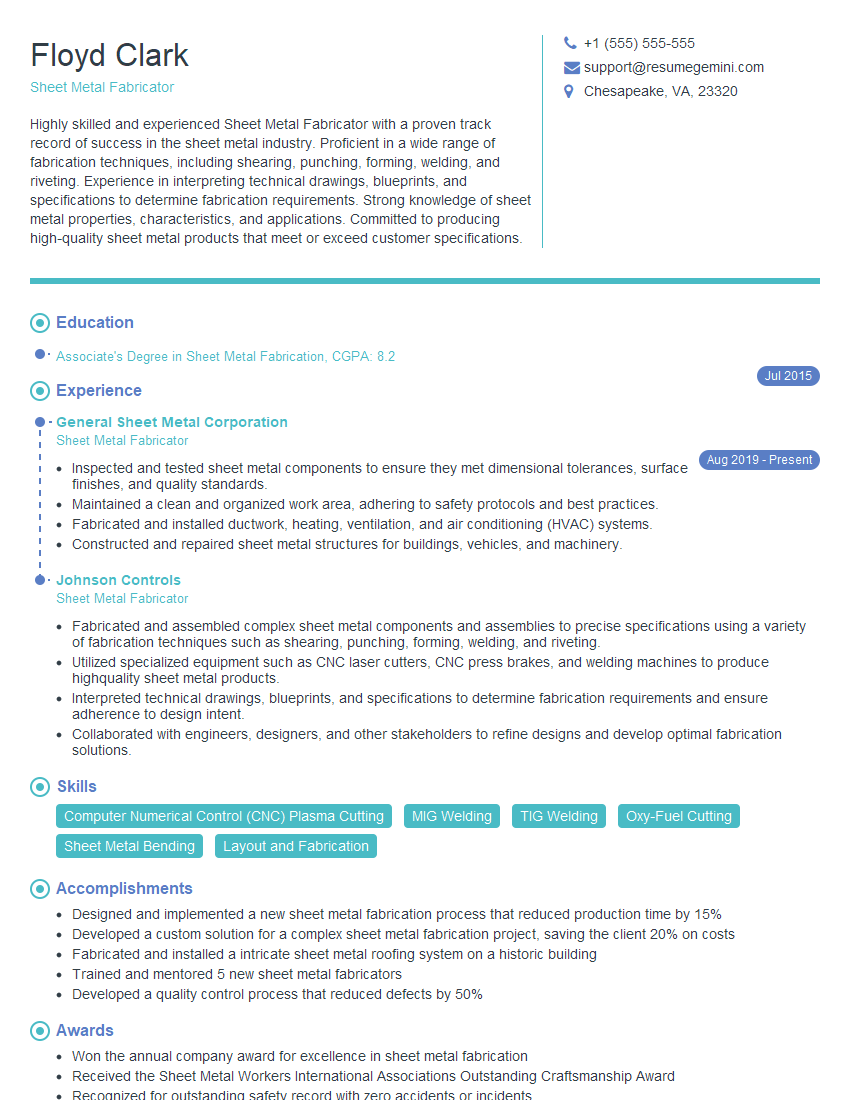
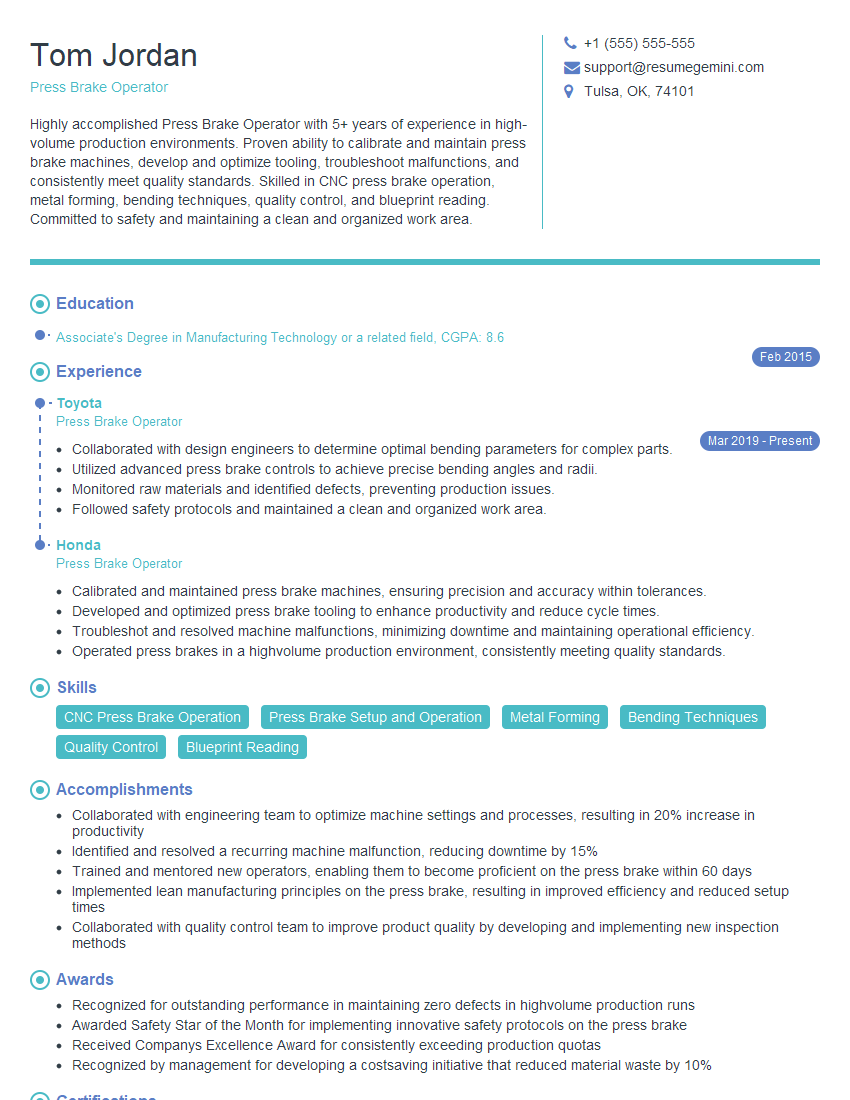
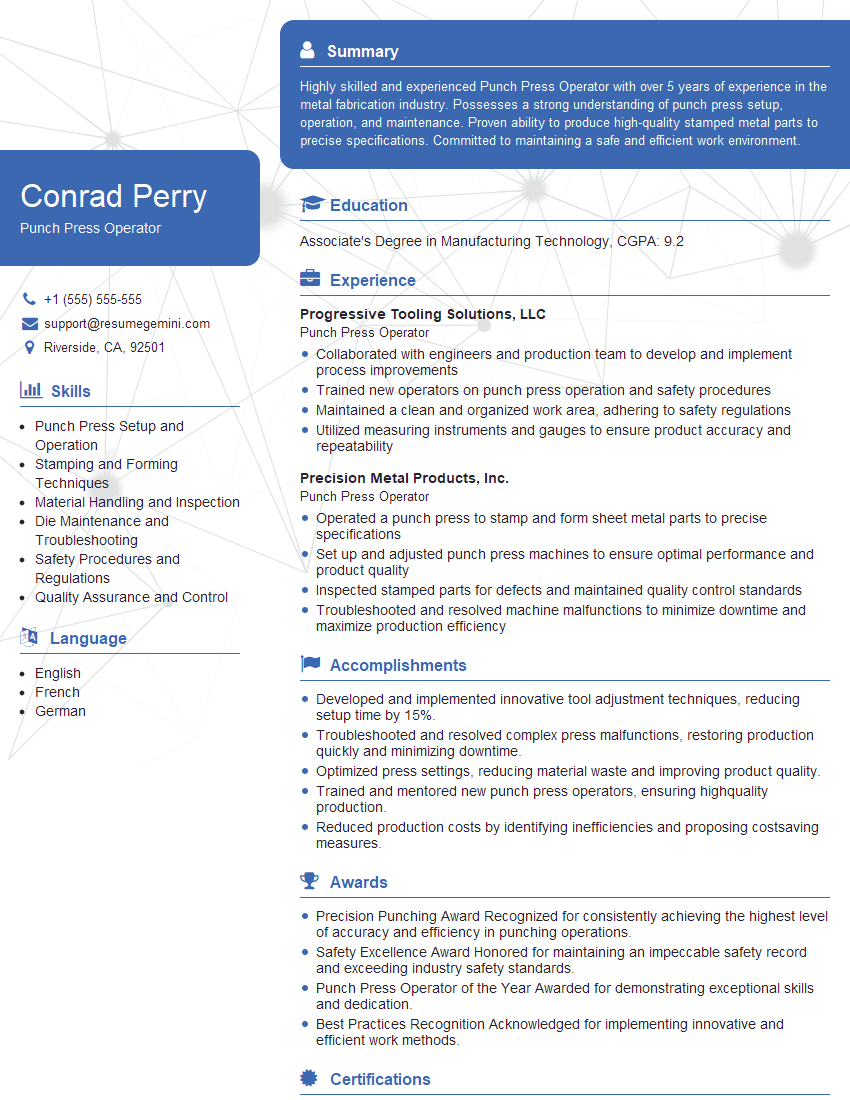
Mastering cutting and forming techniques opens doors to exciting career opportunities in manufacturing, automotive, aerospace, and many other industries. A strong understanding of these processes is highly valued by employers. To significantly boost your job prospects, create a compelling and ATS-friendly resume that highlights your skills and experience. ResumeGemini is a trusted resource that can help you build a professional resume tailored to your specific experience. Examples of resumes tailored to Cutting and Forming are available to guide you.




Explore more articles
Users Rating of Our Blogs
Share Your Experience
We value your feedback! Please rate our content and share your thoughts (optional).
What Readers Say About Our Blog
Very informative content, great job.
good