Cracking a skill-specific interview, like one for Cyber Awareness and Security, requires understanding the nuances of the role. In this blog, we present the questions you’re most likely to encounter, along with insights into how to answer them effectively. Let’s ensure you’re ready to make a strong impression.
Questions Asked in Cyber Awareness and Security Interview
Q 1. Explain the difference between symmetric and asymmetric encryption.
Symmetric and asymmetric encryption are two fundamental methods for securing data. The core difference lies in the type of keys used.
Symmetric Encryption: Uses a single, secret key to both encrypt and decrypt data. Think of it like a combination lock – you need the same key (combination) to open and close it. This is faster and more efficient than asymmetric encryption, but secure key exchange becomes a challenge. Examples include AES (Advanced Encryption Standard) and DES (Data Encryption Standard).
Asymmetric Encryption: Employs a pair of keys: a public key and a private key. The public key can be shared freely, and it’s used to encrypt data. Only the corresponding private key can decrypt it. This solves the key exchange problem, as the public key can be distributed widely without compromising security. Think of it as a mailbox with a slot (public key) where anyone can drop a letter (encrypted data), but only you have the key (private key) to open it and read the letter. RSA (Rivest-Shamir-Adleman) and ECC (Elliptic Curve Cryptography) are common examples.
In short: Symmetric encryption is like a shared secret, fast but vulnerable to key distribution issues; asymmetric encryption is like a public mailbox, slower but more secure for key management.
Q 2. Describe the CIA triad (Confidentiality, Integrity, Availability).
The CIA triad – Confidentiality, Integrity, and Availability – forms the cornerstone of information security. It represents the three core principles that must be protected to ensure data security.
- Confidentiality: Ensures that sensitive data is accessible only to authorized individuals or systems. Think of it as keeping secrets secret. Methods like encryption, access control lists, and data masking help maintain confidentiality.
- Integrity: Guarantees the accuracy and completeness of data and prevents unauthorized modification or deletion. Imagine a bank transaction – its integrity is crucial to ensure the correct amount is transferred. Hashing, digital signatures, and version control are key mechanisms to maintain data integrity.
- Availability: Ensures that data and resources are accessible to authorized users when needed. Imagine a website crashing during peak hours; this is a breach of availability. Redundancy, failover systems, and disaster recovery plans are crucial to maintain availability.
These three principles are interconnected and interdependent. A compromise in one area can affect the others. For example, a successful denial-of-service attack (DoS) compromises availability, while a data breach compromises confidentiality and potentially integrity.
Q 3. What are the common types of malware?
Malware, short for malicious software, encompasses various types of harmful programs designed to damage, disrupt, or gain unauthorized access to computer systems. Some common types include:
- Viruses: Self-replicating programs that attach themselves to other files and spread to other systems. They often require user interaction to spread.
- Worms: Self-replicating programs that spread independently across networks without needing user interaction. They can quickly consume network bandwidth.
- Trojans: Malicious programs disguised as legitimate software. They often grant attackers unauthorized access to a system.
- Ransomware: Malware that encrypts a victim’s files and demands a ransom for decryption. This can be devastating for businesses and individuals.
- Spyware: Software that secretly monitors a user’s activity and collects sensitive information.
- Adware: Software that displays unwanted advertisements.
- Rootkits: Malware that provides persistent, hidden access to a system. They are extremely difficult to detect and remove.
The landscape of malware is constantly evolving, with new and sophisticated threats emerging frequently. It’s crucial to stay updated with the latest security practices and technologies.
Q 4. What is phishing, and how can it be prevented?
Phishing is a social engineering attack where attackers attempt to deceive individuals into revealing sensitive information, such as usernames, passwords, credit card details, or social security numbers. They often disguise themselves as legitimate entities like banks, online retailers, or government agencies.
How it works: Phishing attacks typically involve deceptive emails, text messages (smishing), or websites (phishing websites) that mimic legitimate sources. These communications often contain urgent calls to action or threats to encourage immediate responses.
Prevention strategies:
- Verify the sender: Always check the email address and sender’s identity before clicking on links or opening attachments.
- Look for suspicious URLs: Be wary of misspellings in URLs or unusual domain names.
- Hover over links: Before clicking, hover your mouse over links to see the actual URL.
- Don’t trust unsolicited emails: Never provide personal information via unsolicited emails or messages.
- Use strong passwords: Employ unique and strong passwords for different online accounts.
- Enable two-factor authentication (2FA): This adds an extra layer of security to your accounts.
- Keep your software updated: Regularly update your operating system and software to patch known security vulnerabilities.
- Educate yourself and your employees: Regular security awareness training is crucial for preventing phishing attacks.
A simple example: An email pretending to be from your bank might ask you to click a link to update your account information. This link could lead to a fake website designed to steal your login credentials.
Q 5. Explain the concept of a firewall.
A firewall is a network security system that monitors and controls incoming and outgoing network traffic based on predetermined security rules. It acts as a barrier between a trusted internal network and an untrusted external network (like the internet).
How it works: Firewalls examine each network packet and determine whether it should be allowed or blocked based on rules defined by the administrator. These rules might specify allowed ports, protocols, IP addresses, or other criteria. For example, a firewall might block all incoming traffic on port 23 (Telnet), which is considered insecure.
Types of firewalls:
- Packet filtering firewalls: Examine individual packets based on headers (source/destination IP address, port number, protocol).
- Stateful inspection firewalls: Track the state of network connections and allow related packets to pass while blocking others.
- Application-level gateways (proxy firewalls): Act as intermediaries for specific applications (e.g., web traffic), filtering and inspecting traffic at a higher level.
Firewalls are crucial for protecting networks from unauthorized access, malicious traffic, and other cyber threats. They are a fundamental component of a robust security strategy.
Q 6. What is a Denial-of-Service (DoS) attack?
A Denial-of-Service (DoS) attack is a type of cyberattack where an attacker attempts to make a machine or network resource unavailable to its intended users. This is done by flooding the target with superfluous requests, thus overwhelming its capacity to handle legitimate traffic.
How it works: An attacker sends a massive amount of traffic to a target server or network. This traffic can be legitimate requests or specially crafted packets designed to overload the system. The result is that legitimate users are unable to access the resource.
Example: Imagine a website being bombarded with millions of requests from multiple sources simultaneously. The server becomes overloaded and crashes, making the website inaccessible to legitimate users.
DoS attacks can target various resources, including web servers, databases, email servers, and network devices. The severity of a DoS attack depends on the amount of traffic generated and the target’s ability to withstand the attack.
Q 7. What is a Distributed Denial-of-Service (DDoS) attack?
A Distributed Denial-of-Service (DDoS) attack is a more sophisticated and powerful version of a DoS attack. Instead of originating from a single source, a DDoS attack uses multiple compromised systems (bots) to flood the target with traffic.
How it works: The attacker first compromises numerous computers or devices (often through malware) and turns them into a botnet. This botnet is then used to launch a coordinated attack against the target, overwhelming its resources far more effectively than a single-source DoS attack.
Example: Imagine thousands of computers around the world simultaneously sending requests to a target server. The sheer volume of traffic from multiple sources makes it significantly harder to mitigate the attack.
DDoS attacks are extremely difficult to defend against due to their distributed nature and the volume of traffic generated. Mitigating them often requires specialized techniques, such as using content delivery networks (CDNs) and DDoS mitigation services.
Q 8. Describe the process of vulnerability scanning and penetration testing.
Vulnerability scanning and penetration testing are both crucial parts of a robust cybersecurity program, but they serve different purposes. Think of vulnerability scanning as a health checkup for your systems, while penetration testing is a more rigorous stress test simulating real-world attacks.
Vulnerability scanning is an automated process that uses software to identify known weaknesses in systems and applications. These scanners analyze systems for misconfigurations, outdated software, and other vulnerabilities documented in databases like the National Vulnerability Database (NVD). The scanner checks for these known issues and reports them. It’s like a doctor taking your vital signs – it identifies potential problems but doesn’t necessarily exploit them.
Penetration testing (pentesting), on the other hand, is a more active and hands-on approach. A team of security experts attempts to exploit vulnerabilities to determine the real-world impact of those weaknesses. They try to breach systems, steal data, or gain unauthorized access, much like a burglar would attempt to break into a house. This process goes beyond identifying vulnerabilities; it assesses the effectiveness of security controls in preventing or mitigating successful attacks. A penetration test provides a much deeper understanding of the organization’s security posture.
For example, a vulnerability scan might identify an outdated version of Apache running on a web server. A penetration test would then attempt to exploit the known vulnerabilities in that outdated version to see if they can gain access or compromise the server. The results help prioritize patching and system hardening efforts.
Q 9. What are the key components of an incident response plan?
A comprehensive incident response plan (IRP) is critical for handling security breaches effectively. It’s your playbook for dealing with any security incident, from a minor data breach to a large-scale cyberattack. A well-structured IRP has several key components:
- Preparation: This includes identifying assets, defining roles and responsibilities, establishing communication protocols, and creating a list of contact information for essential personnel. Think of it as assembling your emergency response team and planning the logistics.
- Identification: This phase involves detecting and confirming a security incident. It’s crucial to establish clear processes for monitoring systems and identifying suspicious activity. It’s like recognizing the early signs of a problem.
- Containment: This aims to limit the impact of the incident. Actions might include isolating affected systems, disabling accounts, or blocking malicious traffic. The goal here is to prevent further damage.
- Eradication: This stage focuses on removing the root cause of the incident. It might involve patching vulnerabilities, deleting malware, or restoring systems from backups.
- Recovery: This involves restoring systems to normal operation and taking steps to prevent future incidents. This is the rebuilding phase.
- Post-incident Activity: This includes conducting a thorough review of the incident to identify lessons learned and improve future response efforts. This is about learning from the experience and improving your defenses.
A good IRP is regularly tested and updated to ensure its effectiveness. It should be a living document, not a static document filed away on a shelf.
Q 10. Explain the importance of multi-factor authentication (MFA).
Multi-factor authentication (MFA) adds an extra layer of security beyond just a password. Think of it as requiring two or more keys to open a door, rather than just one. Instead of relying solely on something you know (your password), MFA incorporates something you have (like a security token) or something you are (biometrics like a fingerprint). This significantly strengthens authentication, making it much harder for attackers to gain unauthorized access, even if they steal your password.
Importance: MFA dramatically reduces the risk of successful attacks, even those using stolen credentials. If an attacker obtains your password, they still need to overcome the second factor – your security token, your phone, or your fingerprint. This creates a significant barrier to entry. Most significant security breaches could be prevented through the use of MFA.
Example: If you’re accessing your bank account online, a typical MFA implementation would send a one-time code to your registered mobile phone. After entering your password, you’d also need to enter this code, proving you have access to your phone.
Q 11. What are some common security protocols (e.g., TLS, SSH)?
Security protocols are essential for secure communication over networks. They define how data is encrypted, authenticated, and transmitted. Some common ones include:
- TLS (Transport Layer Security): TLS encrypts communication between a web browser and a server, protecting data like credit card information or login credentials. You see this in the “https” at the beginning of a website URL.
- SSH (Secure Shell): SSH provides a secure way to access remote computers. It encrypts all communication between your computer and the remote server, protecting your commands and data in transit. It’s crucial for managing servers remotely.
- IPsec (Internet Protocol Security): IPsec provides secure communication at the network layer. It’s frequently used for securing virtual private networks (VPNs), creating a secure tunnel for encrypted communication across public networks.
- SFTP (Secure File Transfer Protocol): SFTP allows for secure file transfer between computers over a network using SSH. It’s a safer alternative to FTP.
These protocols utilize cryptographic techniques to ensure confidentiality, integrity, and authenticity of data transmitted over networks.
Q 12. What is the difference between a virus and a worm?
While both viruses and worms are types of malware, they differ significantly in how they spread and operate:
Virus: A virus is a self-replicating program that needs a host file (like a document or executable) to spread. It typically attaches itself to other files, infecting them and spreading when those files are opened or executed. Think of a virus as needing a carrier to spread its infection, like a common cold virus needs a person to spread.
Worm: A worm is a self-replicating program that can spread independently across networks without needing a host file. It actively seeks out vulnerable systems to infect and replicate itself, often using network vulnerabilities to propagate. Think of a worm as a free-ranging pest that spreads quickly on its own.
Key Difference: The main difference lies in their method of propagation. Viruses require user interaction or the execution of an infected file, whereas worms can spread autonomously through networks, making them more dangerous.
Q 13. Explain the concept of risk assessment.
Risk assessment is the process of identifying, analyzing, and prioritizing potential threats and vulnerabilities to an organization’s assets. It’s about understanding what could go wrong, how likely it is to happen, and what the consequences would be. Think of it as a careful evaluation of your exposure to danger.
The process typically involves these steps:
- Asset Identification: Identifying all valuable assets that need protection (data, systems, physical infrastructure).
- Threat Identification: Identifying potential threats that could harm your assets (malware, natural disasters, human error).
- Vulnerability Identification: Identifying weaknesses in your security that could be exploited by threats.
- Risk Analysis: Combining the likelihood of a threat exploiting a vulnerability and the impact of the resulting incident. This often uses a risk matrix to prioritize risks.
- Risk Response: Developing strategies to mitigate, accept, transfer, or avoid identified risks. This might involve implementing security controls, purchasing insurance, or changing processes.
The output of a risk assessment helps organizations prioritize their security efforts, focusing resources on the most critical risks.
Q 14. What are some common security frameworks (e.g., NIST, ISO 27001)?
Security frameworks provide a structured approach to implementing and managing cybersecurity. They offer guidelines, best practices, and standards that help organizations build a robust and comprehensive security program.
- NIST Cybersecurity Framework (CSF): Developed by the National Institute of Standards and Technology (NIST), the CSF provides a voluntary framework for managing and reducing cybersecurity risk. It’s a flexible framework that can be adapted to various organizational sizes and industries.
- ISO 27001: This international standard specifies requirements for establishing, implementing, maintaining, and continually improving an information security management system (ISMS). It’s a widely recognized standard for achieving certification and demonstrating a commitment to information security.
- CIS Controls: The Center for Internet Security (CIS) Critical Security Controls offer a prioritized set of actions to mitigate the most prevalent and dangerous cyber threats. They are categorized based on impact and feasibility of implementation.
These frameworks provide a structured roadmap for organizations to enhance their security posture, ensuring alignment with industry best practices and regulatory requirements. Selecting the right framework depends on the organization’s size, industry, and specific needs.
Q 15. What is the role of a Security Information and Event Management (SIEM) system?
A Security Information and Event Management (SIEM) system is the central nervous system of a robust cybersecurity posture. It’s a security solution that collects and analyzes security data from various sources across an organization’s IT infrastructure. Think of it as a highly sophisticated detective, constantly monitoring for suspicious activity and providing crucial insights to security analysts.
How it works: SIEM systems collect logs and events from network devices (routers, firewalls), servers, applications, and endpoint devices (laptops, desktops). This data is then normalized and correlated to identify patterns, anomalies, and potential security threats. For example, a SIEM might detect a large number of failed login attempts from a single IP address, indicating a potential brute-force attack.
Key functionalities include:
- Log Management: Centralized storage and retrieval of security logs.
- Security Monitoring: Real-time monitoring for suspicious activities and threats.
- Threat Detection: Identifying malicious activities based on predefined rules and machine learning algorithms.
- Incident Response: Assisting in the investigation and remediation of security incidents.
- Compliance Reporting: Generating reports for compliance audits.
Real-world example: Imagine a SIEM detecting a user attempting to access sensitive data outside of normal working hours. The system could alert security personnel, allowing them to investigate the activity and prevent potential data breaches. Without a SIEM, this suspicious activity might go unnoticed until significant damage has already occurred.
Career Expert Tips:
- Ace those interviews! Prepare effectively by reviewing the Top 50 Most Common Interview Questions on ResumeGemini.
- Navigate your job search with confidence! Explore a wide range of Career Tips on ResumeGemini. Learn about common challenges and recommendations to overcome them.
- Craft the perfect resume! Master the Art of Resume Writing with ResumeGemini’s guide. Showcase your unique qualifications and achievements effectively.
- Don’t miss out on holiday savings! Build your dream resume with ResumeGemini’s ATS optimized templates.
Q 16. How do you stay up-to-date with the latest cybersecurity threats?
Staying current in cybersecurity is a continuous process, not a one-time event. It requires a multifaceted approach involving several strategies.
- Following reputable security blogs and websites: Websites like Krebs on Security, Threatpost, and Bleeping Computer offer daily updates on the latest threats and vulnerabilities.
- Participating in online communities and forums: Engaging in discussions with other security professionals on platforms like Reddit (r/cybersecurity) provides valuable insights and real-world perspectives.
- Attending webinars and conferences: Industry conferences and webinars offer opportunities to learn from experts and network with peers. This allows for in-depth learning and exposure to cutting-edge techniques.
- Reading industry publications and research papers: Keeping up with research papers and publications from organizations like SANS Institute and NIST provides a deeper understanding of the theoretical and practical aspects of security.
- Subscribing to security newsletters and alerts: Receiving regular updates from trusted sources, such as security vendors and government agencies (like CISA), helps ensure you stay informed about emerging threats.
- Participating in Capture The Flag (CTF) competitions: CTFs offer a hands-on approach to learning and applying security knowledge in a fun and competitive environment.
Essentially, it’s a blend of active learning, community engagement, and a commitment to continuous professional development.
Q 17. Describe your experience with various security tools.
My experience encompasses a wide range of security tools, categorized by their function:
- Network Security: I have extensive experience with firewalls (Palo Alto Networks, Cisco ASA), intrusion detection/prevention systems (IDS/IPS – Snort, Suricata), and network monitoring tools (SolarWinds, PRTG). I’ve used these to implement and manage network security policies, analyze network traffic, and detect and respond to security incidents.
- Endpoint Security: I’m proficient in using endpoint detection and response (EDR) solutions (CrowdStrike, Carbon Black) for monitoring and protecting individual devices, along with traditional antivirus software (McAfee, Symantec). This allows for proactive threat hunting and incident response at the endpoint level.
- Security Information and Event Management (SIEM): As mentioned previously, I have significant experience with SIEM tools like Splunk and QRadar, utilizing their capabilities for log aggregation, analysis, and incident response.
- Vulnerability Management: I’ve utilized vulnerability scanners (Nessus, OpenVAS) to identify and remediate security weaknesses in systems and applications. This involves conducting vulnerability assessments and penetration testing to proactively mitigate risk.
- Data Loss Prevention (DLP): I’m familiar with DLP tools that monitor and prevent sensitive data from leaving the organization’s network (more on this in the next question).
My experience isn’t limited to just using these tools; I also understand their underlying principles and how to effectively integrate them into a comprehensive security strategy.
Q 18. Explain your understanding of data loss prevention (DLP).
Data Loss Prevention (DLP) is a strategy and set of technologies designed to prevent sensitive data from leaving the organization’s control. It’s about safeguarding confidential information, whether it’s customer data, intellectual property, or financial records. Think of it as a highly secure vault with multiple locks and alarms protecting your most valuable assets.
Key Components:
- Data Discovery and Classification: Identifying and classifying sensitive data based on predefined policies (e.g., credit card numbers, social security numbers, etc.).
- Monitoring and Alerting: Tracking data movement and generating alerts when suspicious activity is detected (e.g., attempts to copy sensitive data to a USB drive).
- Prevention and Remediation: Blocking or preventing the unauthorized transfer of sensitive data, and providing mechanisms to remediate identified issues.
Examples of DLP techniques:
- Data encryption: Encrypting sensitive data at rest and in transit.
- Access control: Restricting access to sensitive data based on user roles and permissions.
- Network monitoring: Monitoring network traffic for unauthorized data transfers.
- Endpoint monitoring: Monitoring endpoints (laptops, desktops) for attempts to copy sensitive data to removable media.
Real-world scenario: A company using DLP might prevent an employee from emailing a spreadsheet containing customer credit card information to a personal email account. The DLP system would detect the sensitive data, flag the action as suspicious, and prevent the email from being sent.
Q 19. How would you handle a security incident?
Handling a security incident requires a structured and methodical approach. My approach follows a well-established incident response framework, such as NIST’s Cybersecurity Framework or the SANS Institute’s incident handling guide. The key phases are:
- Preparation: This involves having an incident response plan in place, including defined roles, responsibilities, and communication protocols. Regular security awareness training for employees is crucial.
- Identification: Detecting the incident—this is often where SIEM systems play a critical role. The identification phase focuses on understanding the nature and scope of the incident.
- Containment: Isolating the affected systems to prevent further damage and spread of the incident. This might involve disconnecting infected devices from the network.
- Eradication: Removing the threat from the affected systems. This may involve removing malware, patching vulnerabilities, or restoring systems from backups.
- Recovery: Restoring the affected systems to their normal operational state. This includes data restoration and system validation.
- Post-incident activity: Analyzing the incident to identify root causes and implement preventative measures to avoid similar incidents in the future. This often involves updating security policies and procedures.
A crucial element is communication: Keeping stakeholders informed throughout the process is essential, ensuring transparency and facilitating coordinated action. Incident reporting to relevant authorities, if necessary, is also vital.
Example: If a ransomware attack is detected, the immediate response would be containment (isolating the infected systems), followed by eradication (removing the malware), and then recovery (restoring data from backups). A post-incident review would analyze how the ransomware gained access and implement changes to prevent future attacks, such as improving patching processes and employee security awareness training.
Q 20. What is your experience with cloud security?
My experience with cloud security spans various aspects, from understanding the shared responsibility model to implementing security controls within different cloud environments (AWS, Azure, GCP).
Key areas of expertise include:
- Identity and Access Management (IAM): Securing access to cloud resources through proper IAM configurations, utilizing multi-factor authentication (MFA), and implementing least privilege access.
- Data Security: Implementing encryption at rest and in transit, using data loss prevention (DLP) tools to protect sensitive data stored in the cloud.
- Network Security: Configuring virtual private clouds (VPCs), firewalls, and intrusion detection/prevention systems within the cloud environment.
- Security Auditing and Monitoring: Utilizing cloud security posture management (CSPM) tools and cloud security information and event management (CSIEM) to monitor cloud environments for security threats and vulnerabilities. Regular security audits are also essential.
- Compliance: Ensuring compliance with relevant regulations and standards, such as ISO 27001, SOC 2, and HIPAA, in cloud deployments.
Shared Responsibility Model: It’s crucial to understand that security in the cloud is a shared responsibility between the cloud provider and the customer. While the provider is responsible for the security *of* the cloud, the customer is responsible for security *in* the cloud. This means that customers must actively manage their security configurations and implement appropriate security controls within their cloud environments.
Q 21. Explain your understanding of various access control models (e.g., RBAC, ABAC).
Access control models define how users and systems are granted access to resources. Different models offer various levels of granularity and flexibility.
Role-Based Access Control (RBAC): This model assigns permissions based on a user’s role within the organization. For instance, an administrator might have full access, while a regular user only has access to specific files or applications. It simplifies access management, as permissions are assigned to roles rather than individual users.
Attribute-Based Access Control (ABAC): A more granular and dynamic model than RBAC. ABAC considers multiple attributes to determine access, such as user attributes (department, location), resource attributes (sensitivity level, data type), and environmental attributes (time of day, location). This enables highly customized access control policies based on a wide range of factors.
Example:
- RBAC: A “Marketing Team” role might have access to marketing documents but not to financial data.
- ABAC: Access to a highly sensitive document might only be granted to users within the finance department, located in a secure office, during working hours.
The choice of access control model depends on the organization’s specific needs and security requirements. RBAC is simpler to implement and manage, while ABAC offers greater flexibility and control but often requires more complex configuration.
Q 22. What is your experience with security auditing?
Security auditing is the systematic examination of an organization’s security posture to identify vulnerabilities and weaknesses. My experience encompasses performing both internal and external audits, using various methodologies like NIST frameworks and ISO 27001 standards. This involves reviewing security policies, procedures, and controls; assessing the effectiveness of implemented safeguards; and identifying gaps in security measures. For instance, in a recent audit for a financial institution, I discovered a critical vulnerability in their network segmentation, allowing unauthorized access to sensitive customer data. My recommendations led to the immediate implementation of enhanced firewall rules and improved access control lists, mitigating the risk significantly.
I utilize various tools and techniques during the audit process, including vulnerability scanners, penetration testing software, and log analysis tools. I also conduct interviews with key personnel to gather information and understand the organization’s security practices. The audit culminates in a comprehensive report detailing findings, recommendations, and prioritized remediation steps. Following the audit, I often provide follow-up consultations to assist the organization in implementing the suggested improvements.
Q 23. Describe your experience with compliance regulations (e.g., GDPR, HIPAA).
My experience with compliance regulations like GDPR and HIPAA is extensive. I understand the nuances of each regulation and their implications for data protection and privacy. GDPR, for example, focuses on the rights of individuals regarding their personal data, requiring organizations to implement robust data protection measures and to obtain explicit consent for data processing. HIPAA, on the other hand, governs the protection of health information in the United States. I’ve helped numerous organizations achieve compliance by implementing the necessary technical and administrative safeguards. This includes conducting data mapping exercises, developing comprehensive data privacy policies, implementing access controls and encryption, and conducting regular risk assessments. For a healthcare provider, I developed a tailored security awareness training program that covered HIPAA compliance specifically, significantly reducing the risk of data breaches stemming from human error.
Compliance is not just about checking boxes; it’s about embedding a culture of data protection within the organization. It requires a holistic approach encompassing technical controls, policies, procedures, and employee training. Regular audits and assessments are crucial to ensure ongoing compliance.
Q 24. Explain your understanding of cryptography.
Cryptography is the art and science of secure communication in the presence of adversaries. It involves techniques for converting readable information into an unreadable format (encryption) and back again (decryption) using cryptographic keys. My understanding encompasses various cryptographic techniques, including symmetric-key cryptography (like AES), asymmetric-key cryptography (like RSA), and hashing algorithms (like SHA-256). Symmetric-key cryptography uses the same key for encryption and decryption, while asymmetric-key cryptography uses a pair of keys: a public key for encryption and a private key for decryption.
Understanding the practical application of cryptography is vital. For example, AES is frequently used to encrypt data at rest and in transit, while RSA is crucial for digital signatures and key exchange in secure communication protocols like HTTPS. Hashing algorithms are used to create one-way functions for data integrity verification – ensuring data hasn’t been tampered with. I have experience selecting appropriate cryptographic algorithms and key lengths based on the specific security requirements and the sensitivity of the data being protected. A crucial element is key management – the secure generation, storage, and rotation of cryptographic keys, which is vital for maintaining the confidentiality and integrity of data.
Q 25. What is your experience with intrusion detection systems (IDS) and intrusion prevention systems (IPS)?
Intrusion Detection Systems (IDS) and Intrusion Prevention Systems (IPS) are critical components of a robust network security architecture. An IDS passively monitors network traffic and system activity for malicious activity, generating alerts when suspicious events are detected. An IPS, on the other hand, actively intervenes to block or prevent malicious traffic. My experience involves deploying and managing both IDS and IPS solutions, configuring alerts, analyzing logs, and integrating them into a broader security information and event management (SIEM) system.
For instance, I’ve worked with Snort and Suricata (open-source IDS/IPS solutions) to detect and prevent various types of attacks, such as SQL injection, cross-site scripting (XSS), and denial-of-service (DoS) attempts. The key to effective IDS/IPS management lies in proper configuration, regular updates to signature databases, and thorough analysis of alerts to minimize false positives and ensure timely response to genuine threats. I emphasize a layered security approach where IDS/IPS works in conjunction with firewalls, access control lists, and other security controls to provide comprehensive protection.
Q 26. Explain your approach to securing a network.
Securing a network requires a multi-layered, holistic approach, focusing on people, processes, and technology. My approach starts with a thorough risk assessment to identify vulnerabilities and potential threats. This assessment considers both internal and external factors, incorporating threat modeling and vulnerability scanning. The next step involves implementing a robust set of security controls, encompassing:
- Network Segmentation: Dividing the network into smaller, isolated segments to limit the impact of a potential breach.
- Firewalls: Implementing firewalls to control network traffic and block unauthorized access.
- Access Control Lists (ACLs): Defining access rights and permissions for users and devices to restrict access to sensitive resources.
- Intrusion Detection/Prevention Systems (IDS/IPS): Monitoring network traffic and system activity for malicious behavior.
- Data Loss Prevention (DLP): Implementing tools and techniques to prevent sensitive data from leaving the network unauthorized.
- Vulnerability Management: Regularly scanning for vulnerabilities and patching systems to address identified weaknesses.
- Security Awareness Training: Educating employees about security threats and best practices.
Regular monitoring and incident response planning are essential to ensure the ongoing security of the network. This includes analyzing security logs, conducting penetration testing, and having a well-defined incident response plan to handle security incidents effectively.
Q 27. Describe your experience with security awareness training.
Security awareness training is a cornerstone of any effective cybersecurity strategy. My experience in developing and delivering such training programs is extensive. I understand that simply providing information isn’t sufficient; engaging and memorable training is crucial. My approach focuses on creating interactive and engaging sessions, tailored to the specific needs and roles of the audience. I employ a variety of methods, including scenario-based training, phishing simulations, and gamification techniques. For example, I once developed a phishing simulation for a large organization where employees received realistic phishing emails; those who clicked were given immediate feedback and access to remediation training. The program resulted in a significant reduction in successful phishing attacks.
Effective security awareness training isn’t a one-time event; it requires regular reinforcement through newsletters, reminders, and updates. The goal is to cultivate a security-conscious culture where employees are actively involved in protecting the organization’s assets. Measuring the effectiveness of the program through regular assessments and tracking incidents is also crucial to demonstrate ROI and make improvements.
Key Topics to Learn for Your Cyber Awareness and Security Interview
- Fundamental Security Concepts: Understand core principles like confidentiality, integrity, and availability (CIA triad), risk management, and the security lifecycle.
- Threat Modeling and Vulnerability Analysis: Learn to identify potential threats and vulnerabilities in systems and applications. Discuss practical application through case studies or scenarios.
- Security Policies and Procedures: Familiarize yourself with the creation, implementation, and enforcement of security policies. Be prepared to discuss best practices and compliance regulations.
- Incident Response and Handling: Understand the steps involved in responding to and managing security incidents, including containment, eradication, recovery, and post-incident activity.
- Network Security: Grasp key concepts like firewalls, intrusion detection/prevention systems (IDS/IPS), VPNs, and network segmentation. Be ready to discuss practical applications and their limitations.
- Data Security and Privacy: Discuss data loss prevention (DLP) techniques, encryption methods, and data privacy regulations (e.g., GDPR, CCPA). Be prepared to explain how to ensure data confidentiality and integrity.
- Security Awareness Training: Understand the importance of educating users about security threats and best practices. Be able to discuss effective training methods and their impact on organizational security.
- Cloud Security: Discuss cloud security models (e.g., IaaS, PaaS, SaaS), security considerations in cloud environments, and best practices for securing cloud-based applications and data.
- Problem-Solving and Critical Thinking: Prepare to discuss your approach to solving complex security challenges and your ability to think critically about potential risks and solutions. Use examples from your experience to illustrate your skills.
Next Steps
Mastering Cyber Awareness and Security is crucial for a successful and rewarding career in this rapidly evolving field. It opens doors to exciting roles with high demand and excellent growth potential. To maximize your job prospects, focus on crafting an ATS-friendly resume that highlights your skills and experience effectively. ResumeGemini is a trusted resource that can help you build a professional and impactful resume. We offer examples of resumes tailored to Cyber Awareness and Security to help guide you. Take the next step towards your dream career today!

Compliance Officer Resume Sample
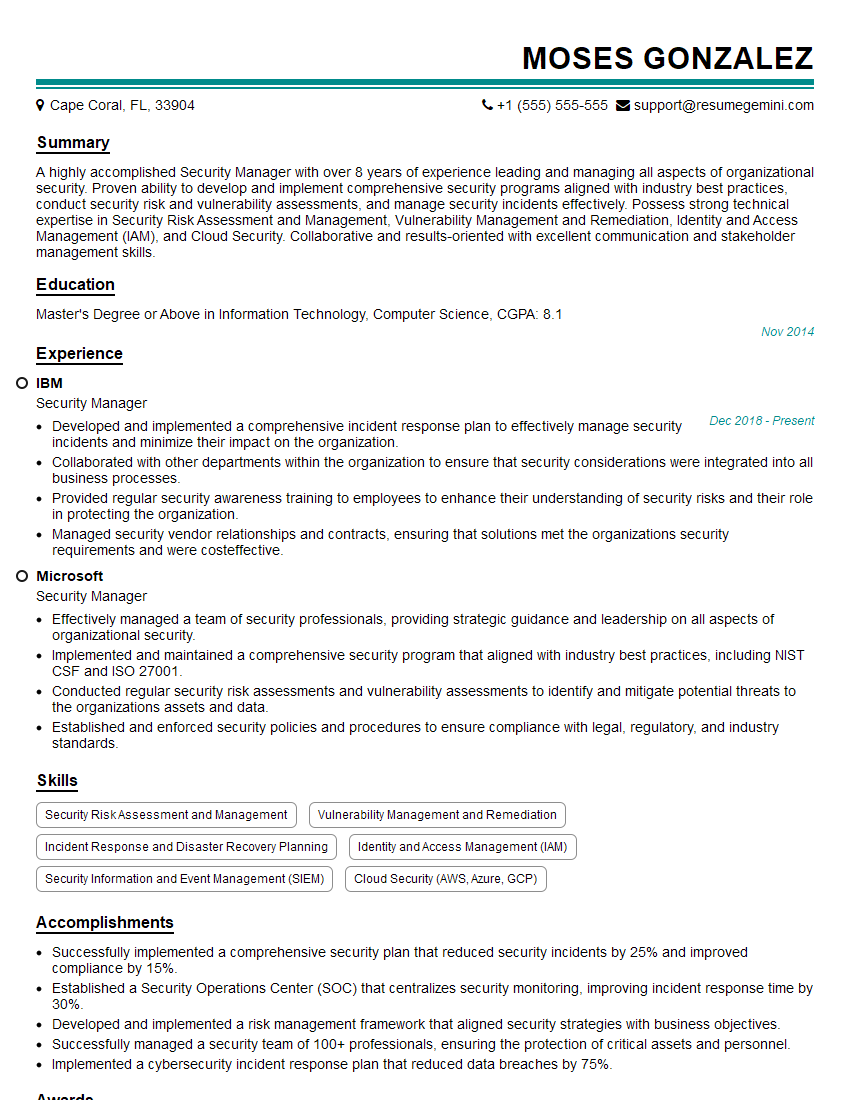
Security Manager Resume Sample

Security Administrator Resume Sample
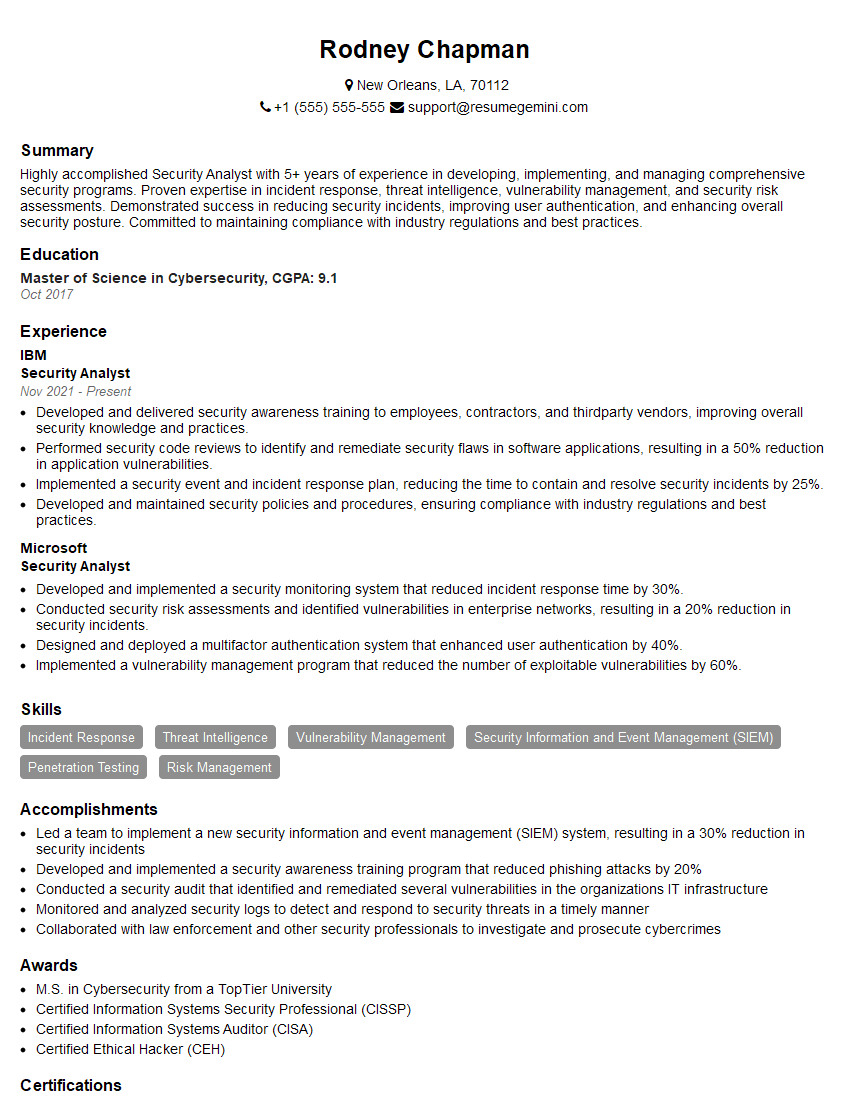
Security Analyst Resume Sample
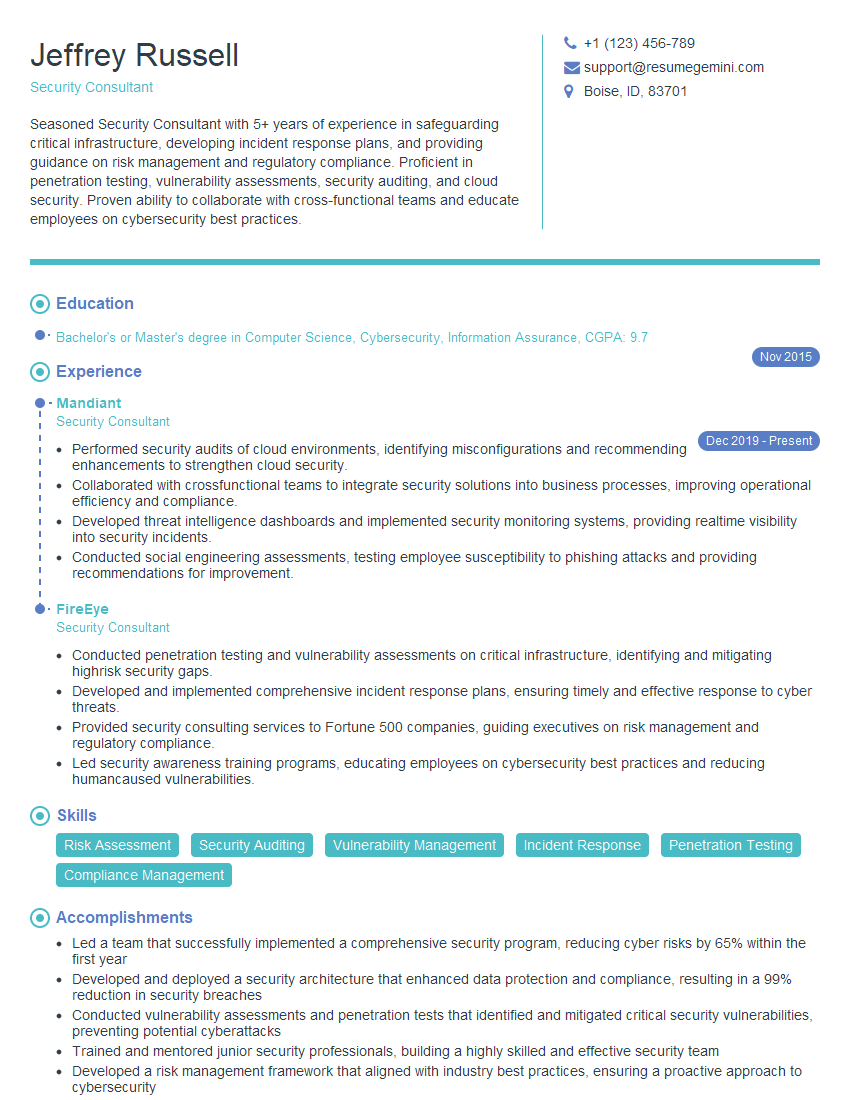
Security Consultant Resume Sample
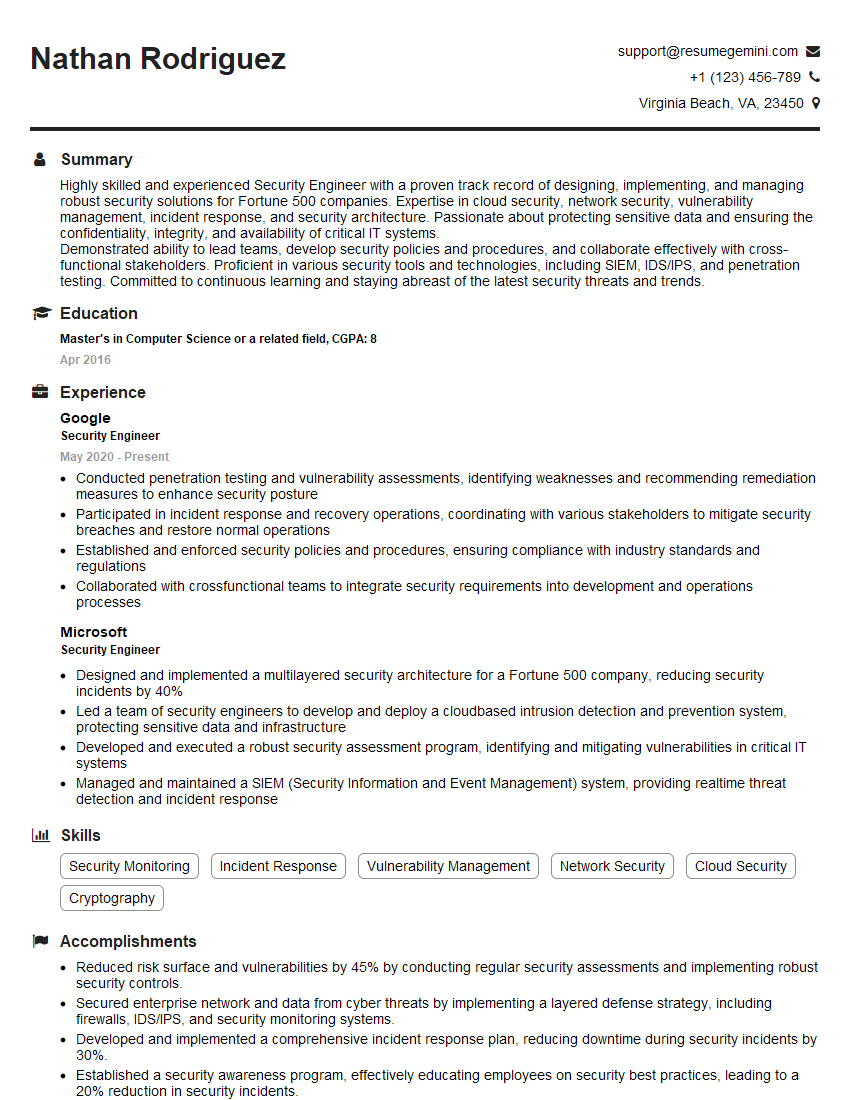
Security Engineer Resume Sample
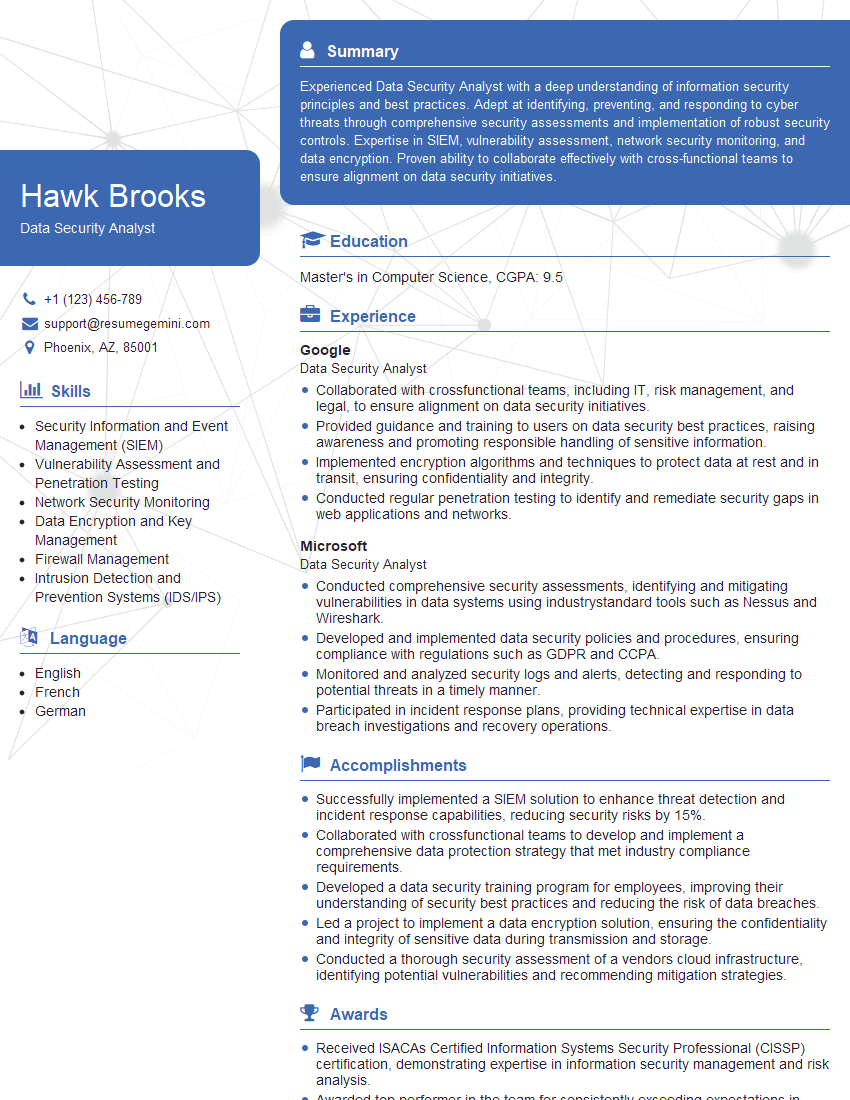
Data Security Analyst Resume Sample
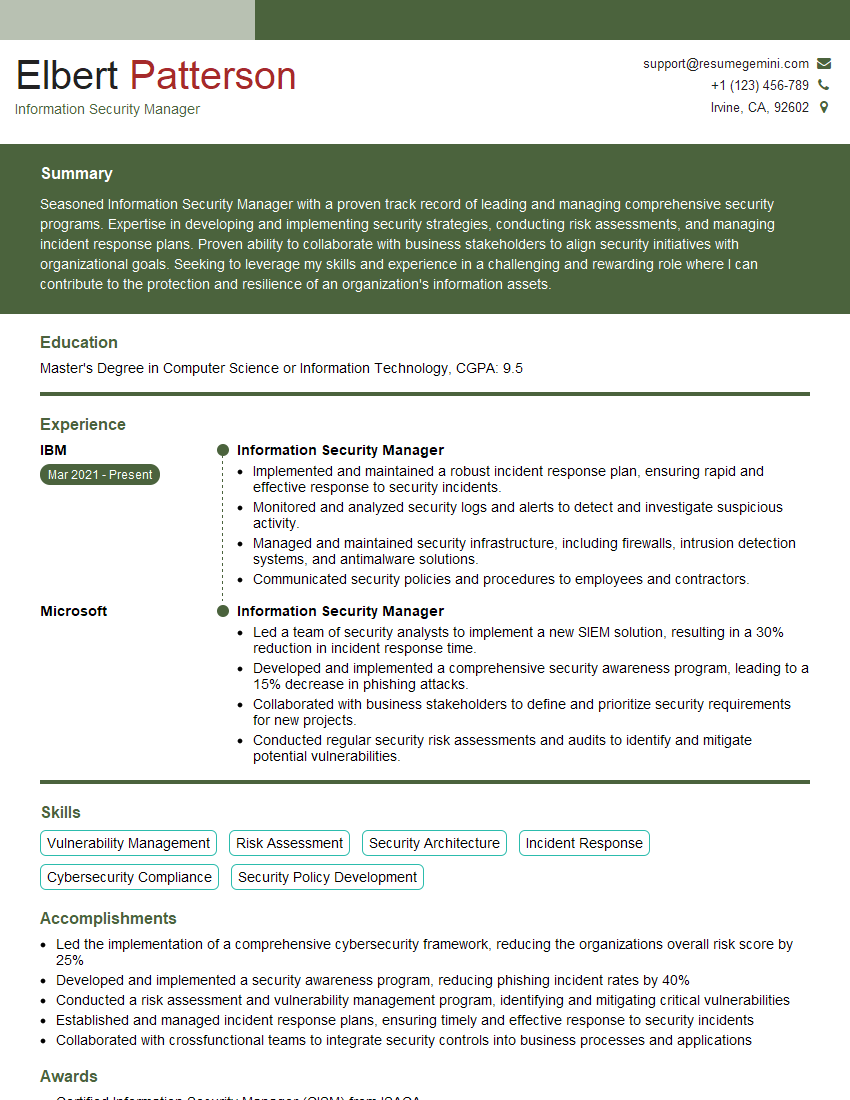
Information Security Manager Resume Sample
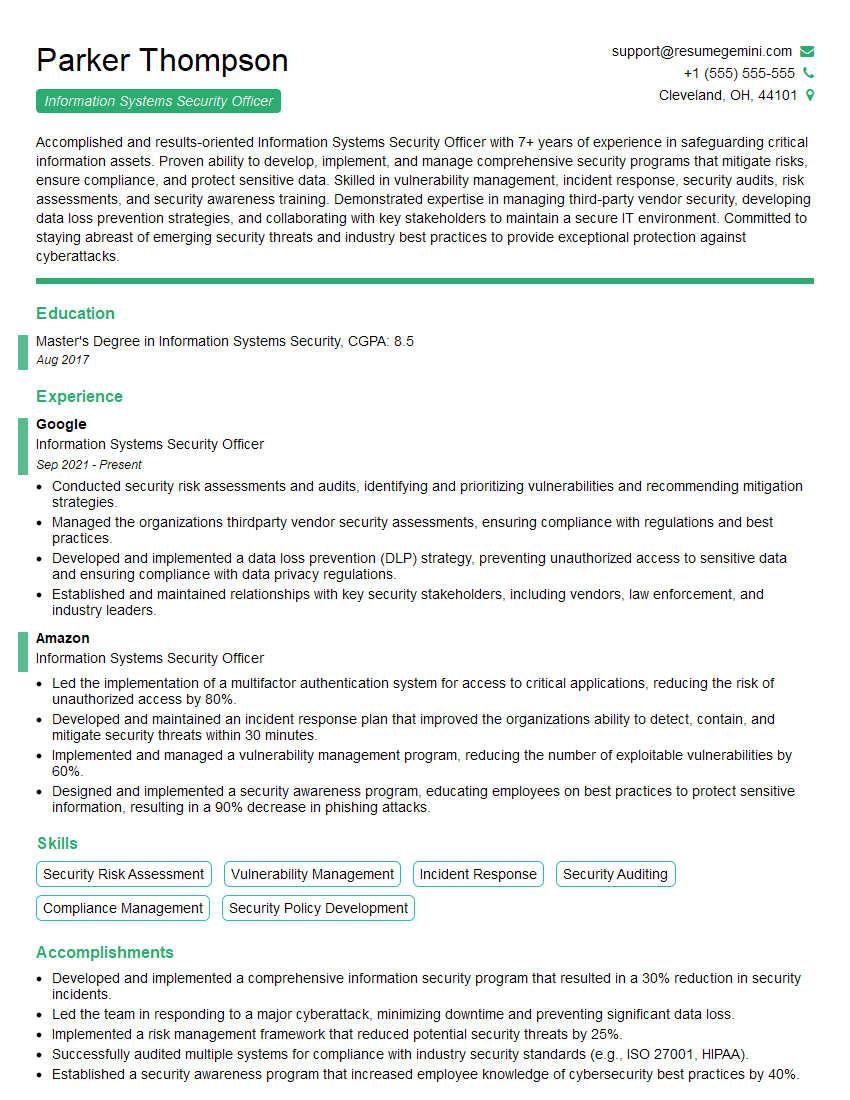
Information Systems Security Officer Resume Sample
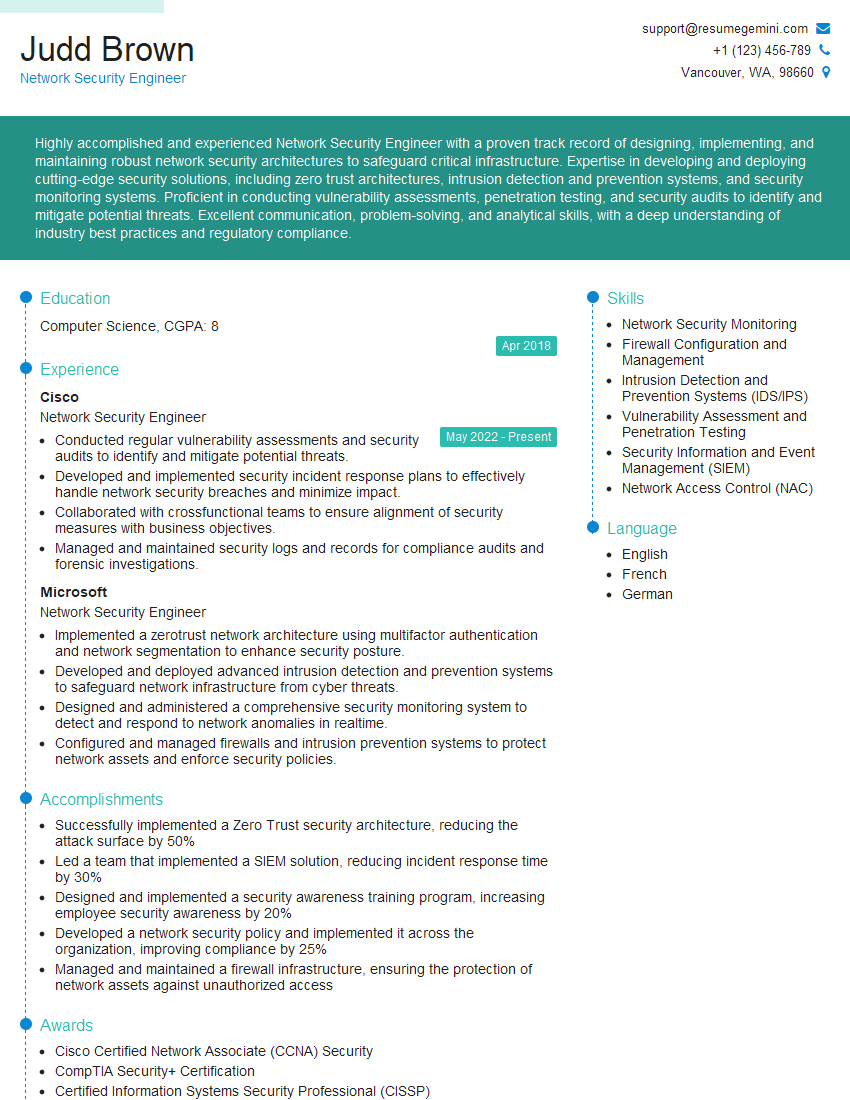
Network Security Engineer Resume Sample
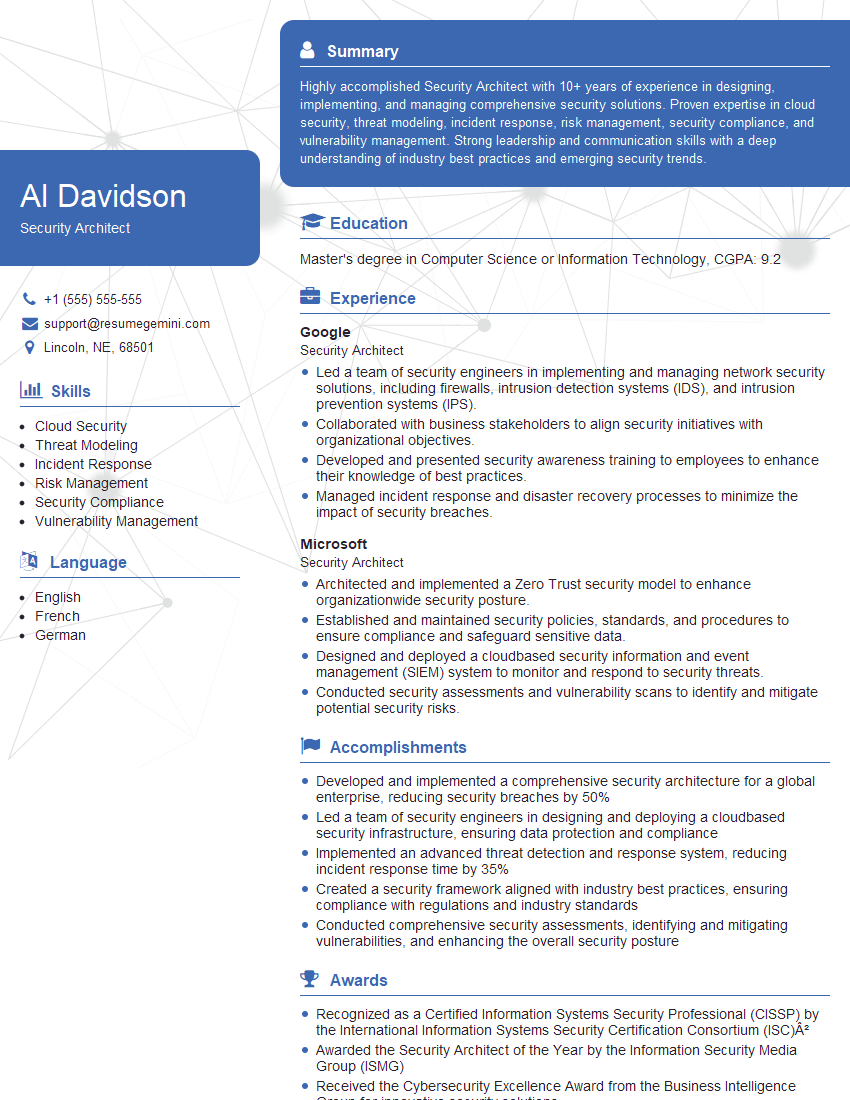
Security Architect Resume Sample

IT Security Specialist Resume Sample
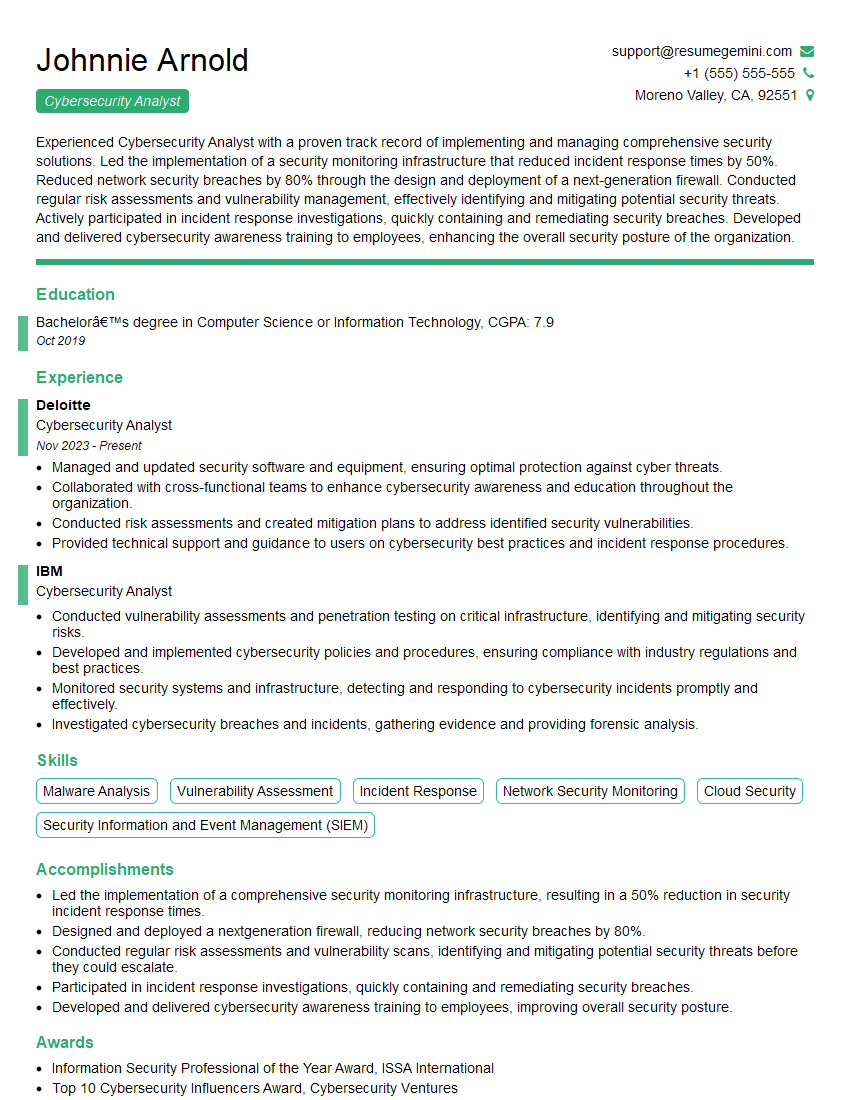
Cybersecurity Analyst Resume Sample
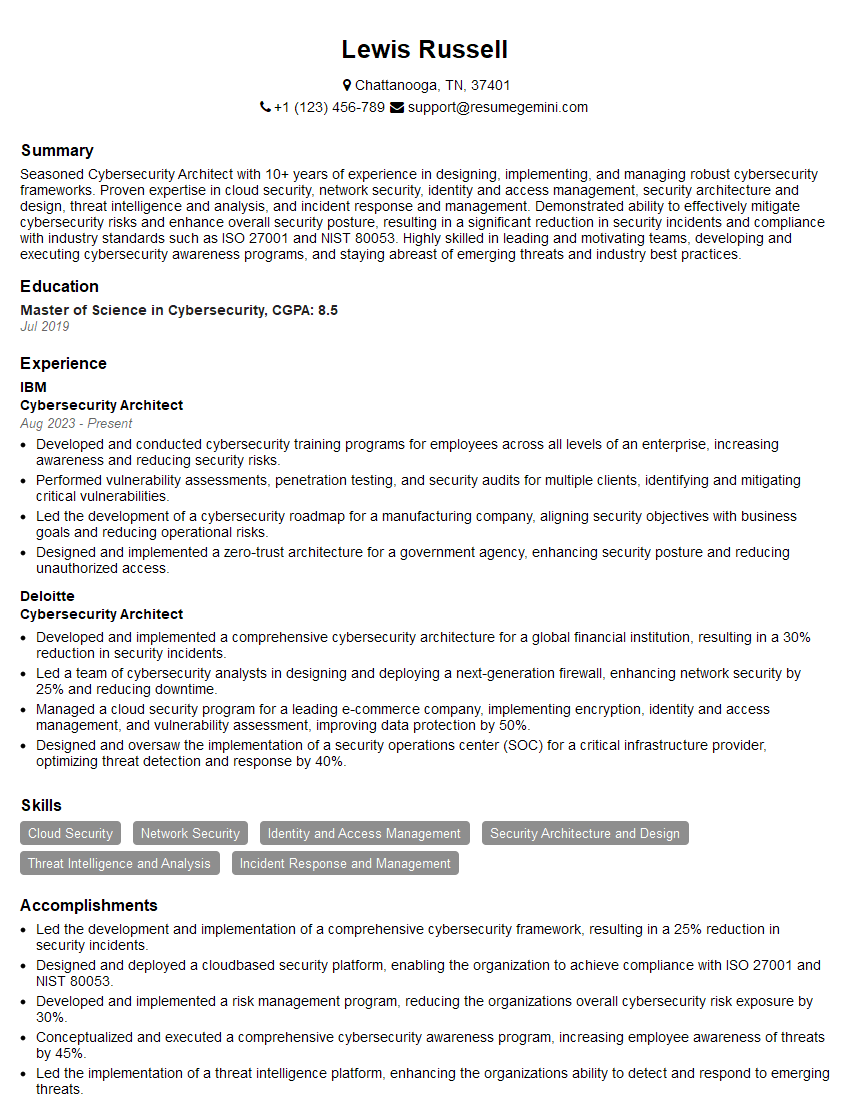
Cybersecurity Architect Resume Sample
- Compliance Officer
- Security Manager
- Security Administrator
- Security Analyst
- Security Consultant
- Security Engineer
- Data Security Analyst
- Information Security Manager
- Information Systems Security Officer
- Network Security Engineer
- Security Architect
- IT Security Specialist
- Cybersecurity Analyst
- Cybersecurity Architect
Explore more articles
Users Rating of Our Blogs
Share Your Experience
We value your feedback! Please rate our content and share your thoughts (optional).
What Readers Say About Our Blog
Very informative content, great job.
good