Preparation is the key to success in any interview. In this post, we’ll explore crucial Yarn End Knotting interview questions and equip you with strategies to craft impactful answers. Whether you’re a beginner or a pro, these tips will elevate your preparation.
Questions Asked in Yarn End Knotting Interview
Q 1. Explain the different types of yarn end knots you are familiar with.
Yarn end knotting involves various techniques depending on the yarn type, application, and desired strength. I’m proficient in several, including the simple overhand knot, the square knot, the surgeon’s knot, the double fisherman’s knot, and the improved clinch knot. The choice depends heavily on the specific requirements of the job.
- Simple Overhand Knot: A basic knot, quick and easy, but not the strongest. Ideal for temporary joins or less demanding applications.
- Square Knot: For joining two similar-diameter yarns; relatively strong but prone to slippage if not tightened properly.
- Surgeon’s Knot: A variation of the square knot with an extra twist for increased security and reduced slippage. Useful for stronger, more reliable joins.
- Double Fisherman’s Knot: Extremely strong and reliable, especially for thicker yarns; it’s self-locking and excellent for applications demanding high strength.
- Improved Clinch Knot: A popular knot for fishing lines, adaptable for yarn; excellent security and less prone to loosening under tension.
Q 2. Describe your experience with various knotting techniques, including their strengths and weaknesses.
My experience encompasses a wide range of knotting techniques across diverse yarn types. I’ve worked extensively with the knots mentioned previously, adapting my technique based on yarn characteristics.
- Strengths & Weaknesses: The simple overhand knot is fast but weak; the square knot is simple but can slip; the surgeon’s knot is stronger and more secure, but takes slightly longer; the double fisherman’s knot offers superior strength but can be slightly more complex to tie; and the improved clinch knot balances security and speed. For instance, I prefer the double fisherman’s knot for high-strength applications like heavy-duty carpets, whereas the surgeon’s knot is ideal for lighter weight yarns in apparel.
The key is selecting the appropriate knot for the specific application. I’ve honed my skills over years of experience, learning to adapt to different situations and materials.
Q 3. How do you ensure consistent knot strength and appearance?
Consistent knot strength and appearance are paramount for quality control. I achieve this through a combination of factors:
- Consistent Tension: Maintaining even tension throughout the knotting process is crucial. This prevents loose knots that are prone to failure and ensures a neat, uniform appearance.
- Proper Technique: Precise execution of the chosen knot is vital. Repeated practice ensures consistent knot quality. I often practice tying different knots to maintain my speed and accuracy.
- Regular Inspection: Regularly inspecting my work ensures that any discrepancies are caught and corrected immediately. This proactive approach prevents flawed knots from progressing further down the production line.
- Standardized Procedures: Following established procedures and guidelines maintains consistency across all knots.
Think of it like baking a cake – consistent ingredients, precise measurements, and careful technique all contribute to a perfect result. Knotting is similar; consistency in technique leads to high-quality and reliable knots.
Q 4. What are the common causes of yarn breakage and how do you prevent them?
Yarn breakage is often caused by a combination of factors:
- Faulty Knots: Incorrectly tied or loose knots are the most common cause.
- Yarn Defects: Thin spots, impurities, or damaged fibers in the yarn itself can lead to breakage.
- Excessive Tension: Applying too much tension during processing can overstress the yarn and cause it to snap.
- Abrasion: Friction against rough surfaces can weaken and eventually break the yarn. This is more common in manufacturing processes.
- Environmental Factors: Extreme temperatures or humidity can also affect yarn strength.
Prevention involves careful inspection of the yarn before knotting, using appropriate knotting techniques for the yarn’s type and strength, ensuring even tension, preventing abrasion using appropriate equipment, and maintaining ideal environmental conditions.
Q 5. How do you identify and address faulty knots during the production process?
Identifying faulty knots requires a keen eye and experience. I typically use a combination of visual inspection and tactile examination. Loose knots are easily spotted visually, while weak knots may require a gentle tug to identify.
Addressing faulty knots involves carefully removing the faulty knot, and re-tying it correctly using the appropriate technique. In high-volume production, automated knot detection systems can help identify flawed knots quickly and efficiently, minimizing waste.
I’ve developed a keen eye for identifying subtle flaws, and my training and experience enable me to act quickly and effectively, ensuring faulty knots are dealt with before they become larger problems.
Q 6. What safety precautions do you follow when performing yarn end knotting?
Safety is paramount. My standard practices include:
- Proper Tool Use: Using knotting tools correctly and safely to prevent injuries.
- Eye Protection: Wearing safety glasses to protect my eyes from stray fibers or flying debris.
- Hand Protection: Using gloves when working with abrasive materials or sharp tools to protect my hands.
- Ergonomics: Maintaining good posture and using ergonomic tools to prevent musculoskeletal injuries.
- Regular Breaks: Taking breaks to prevent fatigue, which can lead to mistakes and injuries.
I always prioritize a safe work environment and follow all company safety protocols.
Q 7. Describe your experience with different types of yarn materials and their knotting requirements.
My experience extends to a variety of yarn materials, each with its unique knotting requirements.
- Cotton: Relatively easy to work with, requires secure knots to prevent slippage.
- Wool: Can be more challenging due to its tendency to pill or snag, careful knotting is required.
- Synthetic Fibers (Polyester, Nylon): These fibers vary greatly in strength and slipperiness. The knotting technique needs to match the yarn’s characteristics.
- Silk: Delicate and requires gentle handling to prevent damage, specialized knots may be necessary.
Understanding the properties of each yarn material – its strength, elasticity, texture, and potential for damage – is crucial for selecting the appropriate knot and technique, and ensuring successful and strong results.
Q 8. How do you maintain the efficiency and speed of your knotting process?
Maintaining efficiency and speed in yarn end knotting relies on a combination of skill, technique, and machine optimization. Think of it like an assembly line – each step needs to be streamlined.
Ergonomics: A comfortable and properly set-up workstation is crucial. Poor posture leads to fatigue and slower speeds. I always ensure my chair, lighting, and the machine’s height are perfectly adjusted for optimal reach and comfort.
Repetitive Motion Optimization: I’ve honed my knotting technique over years to minimize unnecessary movements. This involves perfecting the hand-eye coordination and developing a flow that reduces wasted time between knots. I regularly practice different tying methods to find the most efficient one for the given yarn type.
Machine Proficiency: Understanding the machine’s settings is vital. I regularly check tension, speed, and yarn feed settings to ensure optimal performance. A well-maintained machine minimizes downtime due to malfunctions.
Preventative Maintenance: Regularly cleaning and lubricating the machine not only extends its life but also prevents stoppages due to mechanical issues. Early detection of potential problems drastically minimizes downtime.
For instance, I once optimized a knotting process on a specific machine by adjusting the yarn tension and machine speed settings. This resulted in a 15% increase in productivity without compromising knot quality.
Q 9. How do you ensure the knots are secure and won’t unravel under stress?
Securing knots against unraveling is paramount. It’s all about proper technique and choosing the right knot type for the yarn.
Knot Selection: Different knots have varying strengths. For example, a square knot might suffice for less demanding applications, but a more robust knot like a surgeon’s knot might be needed for high-tension applications. The choice depends entirely on the yarn’s properties and the end-use of the product.
Tension Control: Consistent, appropriate tension during knot tying is crucial. Too much tension can damage the yarn; too little will result in a loose knot. Mastering this is a key skill honed through experience and practice.
Yarn Properties: I always consider the fiber type (cotton, wool, synthetic) and yarn twist. Different fibers react differently to knotting techniques. Loosely twisted yarns may require a more secure knot than tightly twisted ones.
Testing: Regularly testing the knotted yarn under tension helps ensure the knot’s strength. This is particularly important when working with new yarn types or adjusting machine settings.
In one instance, we had issues with knots unraveling during the finishing stage. By switching to a stronger knot type and adjusting the machine tension, we completely eliminated the problem.
Q 10. What is your experience with troubleshooting knotting issues on different types of machinery?
My experience spans various knotting machines, each with its own quirks and potential issues. Troubleshooting involves a systematic approach.
Identifying the Problem: Start by precisely defining the issue: Are knots loose? Is the machine jamming? Is the yarn breaking frequently? Careful observation is crucial.
Machine Diagnostics: Checking the machine’s settings (tension, speed, yarn feed) is the next step. Consulting the machine’s manual can also help identify common problems and their solutions. For example, a machine might be jammed due to lint build-up, which requires cleaning.
Yarn Assessment: Inspecting the yarn for damage, inconsistencies in twist, or quality defects can be the root cause of knotting problems. Sometimes, the problem isn’t the machine but the input material.
Systematic Adjustments: Once the problem is identified, I systematically adjust settings and test the result. This could involve adjusting tension, speed, or even changing knotting techniques. For example, if the yarn keeps breaking, reducing tension or using a different knot might help.
I recently resolved an issue with frequent machine jams on an older model by adjusting the yarn guide and cleaning the sensor. This significantly increased uptime and reduced production delays.
Q 11. Explain your understanding of quality control standards related to yarn end knotting.
Quality control in yarn end knotting centers on consistent knot strength, appearance, and the absence of defects. This impacts the final product’s durability and aesthetic quality.
Knot Strength: This is assessed through both visual inspection and testing, often involving pulling the knotted yarn to measure its breaking strength. Industry standards often define acceptable breaking force values.
Appearance: The knot should be neat, secure, and ideally, not visibly prominent on the finished product. Imperfect knots can affect the overall look and feel of the fabric.
Defect Rate: A low defect rate—the percentage of knots with imperfections—is crucial. This is constantly monitored and tracked to identify trends and potential problems.
Statistical Process Control (SPC): Utilizing SPC charts helps monitor knot quality over time, identifying variations and allowing for proactive adjustments to maintain consistent quality.
For example, we implemented a new quality control check involving randomly sampling and testing the knot strength of a percentage of the yarn produced. This allowed for immediate detection of any deviations from the acceptable standard.
Q 12. Describe your experience with documenting your work and maintaining records.
Comprehensive documentation is essential for traceability, troubleshooting, and continuous improvement in yarn end knotting.
Production Logs: Maintaining detailed logs that include the date, time, machine used, yarn type, knotting technique, number of knots made, and any defects encountered is critical for tracking performance and identifying trends.
Quality Control Records: All quality control checks, including test results and defect rates, need to be meticulously recorded. This data is vital for demonstrating compliance with quality standards and identifying areas for improvement.
Maintenance Records: Regular maintenance schedules, procedures, and repair logs are crucial for keeping machines in optimal working condition and minimizing downtime.
Training Documentation: Detailed training materials for new operators must document safe operating procedures, knotting techniques, and quality control processes.
I consistently maintain digital records using spreadsheets and databases, which allow for easy data analysis and reporting.
Q 13. How do you handle situations where there’s a high volume of knots needing attention?
Handling a high volume of knots requires a strategic approach that combines efficiency and quality.
Prioritization: In high-volume situations, I prioritize critical areas or sections of the production line that require immediate attention. This might involve focusing on areas where the knotting process is most likely to fail or where defects are common.
Teamwork: If possible, I work collaboratively with other team members to distribute the workload evenly and ensure that all knots are addressed efficiently and effectively. This includes delegating tasks, providing training and support, and ensuring clear communication.
Automation: If feasible, utilizing automated knotting machines can significantly increase speed and reduce the manual workload. The choice of machinery depends on the scale of production and the type of yarn.
Process Improvement: Identifying bottlenecks in the process and optimizing them can reduce the number of knots needing attention in the first place. This might involve improving the setup, streamlining the process, or training staff to improve efficiency and reduce defects.
During a period of unexpectedly high demand, we successfully managed the increased workload by optimizing the machine settings, improving team communication, and implementing a more efficient defect-handling procedure. This prevented delays and maintained quality.
Q 14. How do you adapt your knotting techniques based on different yarn types and machine settings?
Adaptability is key to successful yarn end knotting. Different yarn types and machine settings require tailored techniques.
Yarn Type Considerations: The fiber type (natural or synthetic), thickness, twist, and strength significantly influence knotting techniques. Delicate yarns require gentler handling and potentially different knot types than robust yarns. For instance, delicate silk requires a more refined and gentler knotting technique than strong cotton yarns.
Machine Settings: Machine settings like tension, speed, and yarn feed directly impact knot quality and efficiency. These need to be adjusted based on the yarn type to prevent damage and ensure knot security. For example, a thicker yarn might require higher tension settings than a thinner yarn.
Knot Type Selection: The choice of knot type is dependent on both the yarn type and the end-use of the product. For instance, a surgeon’s knot provides better security than a square knot for high-stress situations.
Experimentation and Observation: I always approach new yarn types and machine settings with careful experimentation, closely observing the results and making adjustments as needed. This iterative approach allows for fine-tuning the process for optimal performance and quality.
I once successfully adapted my knotting technique for a new, highly elastic yarn by using a smaller, tighter knot and adjusting the machine settings to account for the yarn’s stretchiness. This prevented the knots from loosening during subsequent processing.
Q 15. What are the most important factors to consider when selecting a specific knot type?
Choosing the right knot for yarn ends depends heavily on the yarn’s fiber content, the intended application of the finished product, and the desired aesthetic. The knot must be strong enough to withstand the stresses the finished product will endure, yet also sufficiently small and unobtrusive to avoid creating lumps or imperfections.
- Yarn Type: Delicate yarns like cashmere or silk require a smaller, gentler knot to prevent breakage, whereas robust yarns like cotton or wool can tolerate a more secure, potentially larger knot.
- Product Application: A knot in a tightly woven fabric will need to be exceptionally small and flat to avoid showing through, whereas in a loosely knitted item, it may be less crucial.
- Strength Requirements: For high-stress applications like rugs or outerwear, a strong, reliable knot such as a square knot or a surgeon’s knot is necessary. For less demanding items like scarves, a simple overhand knot might suffice.
- Aesthetic Considerations: The visibility of the knot is a critical factor. Some knots are naturally neater and less visible than others, and this is vital for maintaining the overall quality of the finished product.
Career Expert Tips:
- Ace those interviews! Prepare effectively by reviewing the Top 50 Most Common Interview Questions on ResumeGemini.
- Navigate your job search with confidence! Explore a wide range of Career Tips on ResumeGemini. Learn about common challenges and recommendations to overcome them.
- Craft the perfect resume! Master the Art of Resume Writing with ResumeGemini’s guide. Showcase your unique qualifications and achievements effectively.
- Don’t miss out on holiday savings! Build your dream resume with ResumeGemini’s ATS optimized templates.
Q 16. How do you ensure the knot doesn’t affect the overall quality of the finished product?
Preventing knots from impacting the finished product’s quality involves meticulous attention to detail throughout the knotting process. The key is to select an appropriate knot type (as discussed above) and to execute it precisely. Furthermore:
- Securing the Knot: A well-secured knot, properly cinched and trimmed, will minimize its bulk and prevent it from loosening over time. This involves using the correct tension and pulling the knot tight in a controlled manner.
- Weaving in Ends: After tying the knot, carefully weave the loose ends of the yarn back into the fabric or knitted piece, ensuring they are securely integrated and invisible. This prevents the knot from pulling free and improves the overall finish.
- Knot Placement: Consider the location of the knot – strategically placing it in a less visible area can significantly improve the finished product’s aesthetics.
- Yarn Choice and Preparation: Using high-quality yarn with consistent thickness and minimal fuzziness will also contribute to a neater, less noticeable knot.
Think of it like stitching a seam – a well-hidden seam enhances the garment’s overall appearance. The same principle applies to yarn end knotting.
Q 17. Explain your experience working in a team environment.
I thrive in team environments. In my previous role at [Previous Company Name], I was part of a team responsible for producing high-volume, high-quality knitted garments. We worked collaboratively, sharing best practices and troubleshooting knotting challenges together. For example, when we encountered difficulty with a specific yarn type prone to knot slippage, we collectively brainstormed solutions, testing different knotting techniques and equipment until we found a method that consistently delivered high-quality results. I believe my strong communication skills, willingness to share knowledge, and collaborative spirit have made me a valuable asset to every team I’ve been a part of. I also actively listen to feedback and consider various perspectives.
Q 18. Describe a time you had to solve a complex knotting problem.
We once encountered a significant challenge with a new type of silk yarn that was exceptionally delicate and prone to breakage during the knotting process. Several conventional methods resulted in frequent yarn failure. To solve this, I systematically investigated the cause. I discovered that the yarn’s low tensile strength was exacerbated by the friction generated by certain knotting techniques. My solution involved a two-pronged approach: first, I modified a traditional overhand knot to minimize friction by creating a less constricted loop. Second, we implemented a specialized knotting tool with a cushioned surface to further reduce friction points. Through this meticulous troubleshooting and adaptation, we drastically reduced yarn breakage and successfully integrated this delicate yarn into our production process. This improved our efficiency and product quality significantly.
Q 19. How do you stay updated on the latest techniques and best practices in yarn end knotting?
Staying current in this field involves a multifaceted approach:
- Industry Publications: I regularly read trade magazines and journals focused on textile manufacturing and knitting techniques.
- Online Resources: I actively participate in online forums and communities dedicated to knitting and yarn arts, exchanging information and learning from experienced knitters and textile professionals.
- Workshops and Seminars: Whenever possible, I attend workshops and seminars that focus on advanced knotting techniques and the latest technologies in yarn handling.
- Networking: I maintain professional connections with colleagues and industry experts, participating in conferences and discussions to learn about new developments and best practices.
Continuous learning is crucial in this dynamic field, ensuring I can adapt to changing demands and remain at the forefront of the industry.
Q 20. What is your understanding of the importance of maintaining a clean and organized workspace?
Maintaining a clean and organized workspace is paramount for efficiency, safety, and quality control. A cluttered workspace leads to errors, wasted time searching for materials, and potentially dangerous conditions. In my workflow, a clean space is integral to my ability to execute precise knotting consistently. Furthermore, a well-organized workspace facilitates smooth collaboration with team members. It ensures everyone can easily access the necessary tools and materials, contributing to improved workflow and team productivity.
Q 21. Describe your experience with different types of knotting tools and equipment.
My experience encompasses a range of tools and equipment commonly used in yarn end knotting:
- Basic Knotting Tools: I am proficient in using scissors, yarn needles, and various types of thimbles for hand-knotting different yarn types.
- Specialized Knotting Tools: I have experience with automated knotting machines, which are critical for high-volume production. I understand their operation, maintenance and troubleshooting.
- Yarn Tensioning Devices: I’m familiar with devices that control yarn tension during the knotting process. These ensure consistency and prevent damage to delicate yarns.
- Magnifying Aids: For intricate work or fine yarns, I use magnifying glasses or microscopes to ensure precise knot placement and secure tying.
My familiarity with this array of tools reflects my commitment to efficiency, precision and adaptability to varied production contexts.
Q 22. How do you prioritize tasks and manage your time effectively during peak production periods?
During peak production, effective task prioritization is crucial. I employ a combination of techniques. First, I carefully review the production schedule and identify the most time-sensitive orders or those with the tightest deadlines. These become my top priority. Next, I break down complex tasks into smaller, manageable steps. This allows for more efficient time management and prevents feeling overwhelmed. For instance, if a large order requires a specific knot type, I’ll dedicate a block of time solely to that knot, maximizing efficiency. Finally, I regularly assess my progress and adjust my schedule as needed. This might involve re-prioritizing tasks based on unforeseen delays or urgent requests. Think of it like a conductor of an orchestra: each musician (task) has a part to play, and the conductor ensures everything runs smoothly and on time.
Q 23. What is your experience with using specialized knotting jigs or tools?
My experience with specialized knotting jigs and tools is extensive. I’m proficient in using a variety of jigs, from simple hand-held devices that aid in consistent knot placement to more complex automated systems. For instance, I’m experienced with the use of the ‘Tru-Knot’ jig for creating precise overhand knots in thinner yarns, and the ‘Rapid-Tie’ system for faster production of slip knots in thicker materials. These tools not only enhance speed and accuracy but also contribute to reducing hand fatigue and improving overall consistency. The specific jig used depends entirely on the type of yarn, the desired knot, and the overall production requirements. Each tool presents a unique set of advantages and I adapt my use based on those variables.
Q 24. Describe your experience with quality control procedures and inspection techniques.
Quality control is paramount in yarn end knotting. My experience includes visual inspection of each knot for tightness, symmetry, and the absence of loose ends. I’m trained in using magnifying glasses for precise examination of smaller knots and intricate details. I also regularly check the knot strength using calibrated tensile testing equipment to ensure it meets the specified standards. Furthermore, I maintain meticulous records of my work, documenting any deviations or irregularities. Think of it like a jeweler inspecting a diamond – each facet, each detail is crucial to ensuring perfection. Any defects are immediately reported, allowing for prompt corrective actions.
Q 25. How do you ensure your knotting is consistent with company standards and specifications?
Consistency is ensured through adherence to established company standards and specifications. These guidelines usually detail the acceptable knot types, tension requirements, and visual appearance criteria. I regularly refer to these standards throughout my work. I also participate in regular calibration checks on my tools and equipment to ensure accuracy. Furthermore, I maintain a consistent workflow by following a standardized knotting procedure for each yarn type. This consistent approach minimizes variations and enhances quality. It’s like following a recipe: precise measurements and steps guarantee a consistent outcome. Regular self-auditing ensures I am consistently meeting the required specifications.
Q 26. How do you communicate effectively with supervisors and colleagues regarding knotting issues?
Effective communication is crucial. I proactively communicate any knotting issues to my supervisors and colleagues. This includes reporting any defects or inconsistencies discovered during quality control inspections. I use clear and concise language, providing detailed descriptions of the problem and suggesting potential solutions. For instance, if I notice a recurring issue with a specific knot type on a certain yarn, I’ll document the problem, including photographs, and discuss potential adjustments to the knotting technique or the equipment. Open communication prevents larger problems and promotes a collaborative problem-solving environment.
Q 27. What is your understanding of the impact of incorrect knotting on downstream processes?
Incorrect knotting can have significant downstream impacts. A weak or improperly tied knot can lead to yarn breakage during subsequent processes such as weaving, knitting, or dyeing. This can result in damaged goods, production delays, and increased costs. In extreme cases, it can even cause machinery damage. For example, a weak knot in a warp yarn during weaving can cause a broken thread that leads to a major defect in the finished fabric. Therefore, accurate and robust knotting is fundamental to maintaining the overall quality and efficiency of the entire production chain. It’s a domino effect – one faulty knot can disrupt the entire process.
Q 28. Describe your approach to continuous improvement in your knotting skills.
Continuous improvement is a key aspect of my approach. I regularly seek opportunities to enhance my knotting skills. This includes participating in training sessions and workshops on new techniques and technologies, studying industry best practices, and actively seeking feedback from supervisors and colleagues. I also keep a personal log of my work, noting areas where I can improve speed, consistency, or efficiency. Think of it as a craftsman constantly refining their technique – continuous learning and adaptation are crucial for maintaining excellence. I’m always striving to become a more efficient and skilled knotter.
Key Topics to Learn for Yarn End Knotting Interview
- Types of Yarn End Knots: Understanding the different knotting techniques (e.g., square knot, overhand knot, surgeon’s knot) and their applications in various yarn types and fabric structures.
- Knot Security and Strength: Analyzing the factors affecting knot strength (yarn type, knot tightness, tension) and methods for ensuring knot security to prevent breakage or unraveling during processing and use.
- Knotting Speed and Efficiency: Exploring techniques for efficient and rapid knotting, minimizing downtime and maximizing productivity. This includes ergonomic considerations and best practices for repetitive movements.
- Troubleshooting Common Knotting Issues: Identifying and resolving problems like loose knots, slipped knots, and knotting inconsistencies. Understanding preventative measures is crucial.
- Quality Control and Inspection: Mastering the techniques for visually inspecting knots for quality, ensuring consistent standards are met and identifying defects early in the process.
- Safety Procedures and Best Practices: Understanding and adhering to safety regulations related to yarn handling, knotting tools, and preventing workplace injuries.
- Impact of Knotting on Yarn Properties: Analyzing how different knotting techniques affect the final product’s appearance, strength, and durability. Understanding the relationship between knotting and the overall quality of the finished product.
- Advanced Knotting Techniques: Exploring specialized knotting methods for specific applications, such as high-speed machinery or intricate fabric designs. This demonstrates advanced knowledge and adaptability.
Next Steps
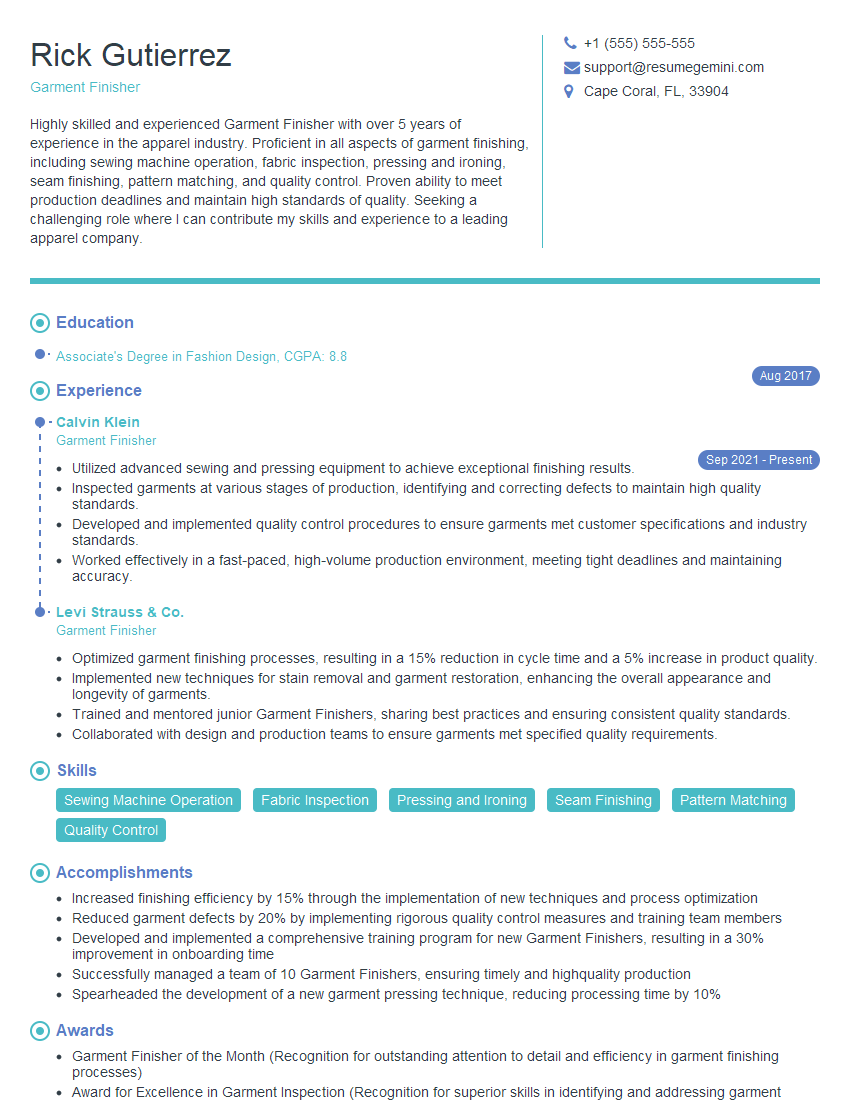
Mastering yarn end knotting is a highly valuable skill that opens doors to various opportunities within the textile industry, offering potential for career advancement and higher earning potential. To maximize your job prospects, creating a strong, ATS-friendly resume is essential. ResumeGemini is a trusted resource that can help you build a professional and impactful resume, ensuring your qualifications are clearly presented to potential employers. Examples of resumes tailored to Yarn End Knotting are available to help you get started. Invest the time to craft a compelling resume—it’s your first impression and key to unlocking your career potential.



Explore more articles
Users Rating of Our Blogs
Share Your Experience
We value your feedback! Please rate our content and share your thoughts (optional).
What Readers Say About Our Blog
Very informative content, great job.
good