Interviews are opportunities to demonstrate your expertise, and this guide is here to help you shine. Explore the essential Cybersecurity Analytics interview questions that employers frequently ask, paired with strategies for crafting responses that set you apart from the competition.
Questions Asked in Cybersecurity Analytics Interview
Q 1. Explain the difference between intrusion detection and intrusion prevention systems.
Intrusion Detection Systems (IDS) and Intrusion Prevention Systems (IPS) are both crucial components of a robust cybersecurity architecture, but they differ fundamentally in their approach to threats. Think of an IDS as a security guard who observes suspicious activity and raises an alarm, while an IPS is a security guard with the authority to actively stop the threat.
An IDS passively monitors network traffic and system activities for malicious patterns. When it detects a potential intrusion, it generates an alert, notifying security personnel. It doesn’t actively block or prevent the intrusion; it simply reports it. This allows for analysis and response, but the threat might have already caused damage.
An IPS, on the other hand, actively prevents intrusions. Once a threat is identified, an IPS takes action, such as blocking malicious traffic, resetting connections, or isolating infected systems. It’s a proactive measure designed to mitigate the impact of attacks before they fully unfold. Think of it as a firewall on steroids, able to analyze the content of traffic and make more informed decisions based on its signature database and behavioral analysis.
In short: IDS detects, IPS prevents. They often work in tandem, with the IDS providing initial detection and the IPS offering real-time protection.
Q 2. Describe your experience with SIEM tools (e.g., Splunk, QRadar, LogRhythm).
I have extensive experience working with several SIEM tools, including Splunk, QRadar, and LogRhythm. My experience spans from initial configuration and data onboarding to developing custom dashboards, creating complex searches and alerts, and performing advanced threat hunting activities.
In my previous role, I used Splunk to analyze large volumes of security logs, identify anomalies, and correlate events across different systems. For instance, I developed a Splunk dashboard that visualized real-time security events, helping us proactively identify and respond to potential breaches. I leveraged Splunk’s powerful search processing language (SPL) to create custom alerts and reports based on specific security criteria, such as failed login attempts or unusual data transfers.
With QRadar, I focused on its threat intelligence capabilities. I integrated threat feeds and leveraged QRadar’s advanced analytics to identify sophisticated attacks that might have otherwise gone unnoticed. I found its risk scoring capabilities incredibly useful for prioritizing alerts.
LogRhythm was employed for its strong focus on compliance and its robust audit trail functionality. I used it to ensure our systems met regulatory requirements and to thoroughly investigate security incidents, ensuring thorough documentation for auditing and reporting purposes.
Across all these tools, my experience includes not only using pre-built features but also designing custom solutions, including developing custom parsers and correlations to adapt the SIEM to our evolving needs. This often involved integrating various security data sources, such as firewalls, IDS/IPS, and endpoint detection and response (EDR) systems, into a unified view.
Q 3. How do you identify and prioritize security alerts?
Identifying and prioritizing security alerts is a critical aspect of incident response. I use a multi-faceted approach based on severity, source, and potential impact.
- Severity: This considers the criticality of the alert. High-severity alerts, like a ransomware attack or a successful privilege escalation, require immediate attention. I usually use a scoring system that takes into account factors like the vulnerability exploited, the number of systems affected and the potential damage.
- Source: Understanding the source of the alert helps determine its reliability. An alert from a well-trusted system like a dedicated IPS might require quicker action than an alert from a less reliable source. False positives are common, and evaluating the source helps prioritize those alerts that are likely true positives.
- Potential Impact: This evaluates the possible consequences of the alert. A potential data breach, for example, is far more serious than a minor network outage. I use risk assessment frameworks to quantify this impact. Here business context is crucial; a system holding personal data is more critical than a development server.
I often employ a combination of automated processes and manual review. Automated systems prioritize alerts based on pre-defined rules, while manual review helps to filter out false positives and better assess the context of alerts that might require a more nuanced approach.
For example, a SIEM might generate hundreds of alerts daily. Automating the process of prioritizing those alerts based on severity (critical, high, medium, low) and impact (data loss, system outage, etc.) helps focus immediate attention on the most pressing incidents. Manual review allows experienced security analysts to evaluate contextual information and look for relationships between seemingly unrelated events.
Q 4. What are the common types of cyber threats you’ve encountered?
Throughout my career, I’ve encountered a wide range of cyber threats. Some of the most common include:
- Phishing attacks: These remain extremely prevalent, exploiting human psychology to trick users into revealing sensitive information or installing malware. I’ve seen numerous instances where seemingly legitimate emails lead to credential theft or malware infections.
- Malware infections: Ransomware, Trojans, viruses, and worms are all common threats. These can encrypt data, steal sensitive information, or disrupt operations. Recent incidents have highlighted the increasing sophistication and targeting of these attacks.
- Denial-of-service (DoS) attacks: These attempts to overwhelm systems with traffic, rendering them unavailable to legitimate users. Distributed denial-of-service (DDoS) attacks, leveraging botnets, pose a significant threat to businesses of all sizes.
- SQL injection attacks: Targeting vulnerabilities in database applications, these attacks can allow unauthorized access to sensitive data. These often involve exploiting poorly written code to inject malicious SQL commands.
- Insider threats: Malicious or negligent employees can pose a significant risk. These threats can be difficult to detect and often require a combination of technical and human factors to mitigate.
- Advanced Persistent Threats (APTs): These are sophisticated, long-term attacks often sponsored by nation-states or organized crime. They are designed to remain undetected for extended periods, often compromising sensitive information and intellectual property.
The landscape is constantly evolving, with new threats emerging regularly. Staying up-to-date on the latest threat intelligence is crucial for effective cybersecurity.
Q 5. Describe your experience with threat hunting methodologies.
Threat hunting is a proactive approach to cybersecurity, involving actively searching for threats rather than passively waiting for alerts. My threat hunting methodologies involve a combination of techniques and tools:
- Hypothesis-driven hunting: I start with a specific hypothesis about potential threats based on threat intelligence, industry trends, or observed anomalies. For example, I might hypothesize that a specific type of malware is targeting our systems based on recent reports of similar attacks on other organizations.
- Data analysis and correlation: I utilize SIEM tools and other security data sources to identify unusual patterns or behaviors that could indicate a compromise. This often involves correlating data from multiple sources to identify patterns that might not be apparent from a single source.
- Vulnerability assessments: Regular vulnerability scans help identify potential weaknesses in our systems that attackers could exploit. I then prioritize remediation based on the severity and potential impact of each vulnerability.
- Threat intelligence: I leverage threat intelligence feeds and reports to stay informed of the latest threats and vulnerabilities. This helps me refine my hunting strategies and focus my efforts on the most relevant threats.
A recent threat hunting engagement involved investigating unusual network activity originating from within our internal network. By correlating data from our SIEM, firewall logs, and EDR tools, I was able to identify a compromised workstation that was exfiltrating data. This proactive approach allowed us to contain the threat before significant damage was done.
Q 6. Explain your understanding of the MITRE ATT&CK framework.
The MITRE ATT&CK framework is a globally-accessible knowledge base of adversary tactics and techniques based on real-world observations. It provides a structured way to understand and categorize adversary behavior. It’s essentially a catalog of how attackers operate, providing a common language for security professionals.
The framework organizes techniques into tactics, such as reconnaissance, initial access, execution, persistence, privilege escalation, defense evasion, credential access, discovery, lateral movement, collection, command and control, and exfiltration. Each technique is then further detailed, providing specific examples and associated mitigations.
I use the MITRE ATT&CK framework in several ways:
- Threat modeling: I use it to identify potential attack paths and vulnerabilities in our systems. This helps us prioritize security controls and resources.
- Incident response: The framework provides a structured approach to analyzing security incidents and determining the adversary’s tactics and techniques. This helps with containment and remediation efforts.
- Threat hunting: It guides my threat hunting efforts by allowing me to focus on specific tactics and techniques that are likely to be used by attackers. This allows for more efficient and targeted hunting efforts.
- Security awareness training: I use simplified versions of the framework to train employees about common attack techniques and how to mitigate them. This helps to increase overall security awareness within the organization.
By understanding the adversary’s playbook, as outlined in the MITRE ATT&CK framework, we can improve our defenses and become more proactive in identifying and mitigating threats.
Q 7. How do you correlate data from multiple security sources?
Correlating data from multiple security sources is crucial for comprehensive threat detection and response. This often involves integrating data from various security tools, such as firewalls, IDS/IPS, SIEMs, EDR solutions, and threat intelligence feeds.
My approach typically involves several steps:
- Data normalization: This involves transforming data from different sources into a consistent format. This is critical because different tools use different schemas and data formats. Tools like the SIEM assist in this process.
- Data enrichment: This involves adding context to the data by integrating it with external sources, such as threat intelligence feeds. This helps identify potentially malicious activity that might otherwise be overlooked.
- Alert correlation: This involves identifying relationships between alerts from different sources. For example, a failed login attempt from a compromised account might be correlated with unusual network activity from the same IP address. SIEMs are particularly useful here.
- Timeline creation: I often create timelines to visualize the sequence of events. This allows for better understanding of attack patterns and helps to identify the root cause of an incident.
- Use of security information and event management (SIEM): SIEM solutions are designed specifically for this purpose. They ingest logs from numerous sources, perform correlation, and generate alerts based on predefined rules and advanced analytics. The ability to build custom rules and correlations within the SIEM is extremely important to address unique organization needs.
For instance, I might correlate data from a firewall (showing unauthorized access attempts), an IDS (detecting malicious traffic), and a user login database (indicating unusual login activity from a specific account). This combined analysis allows me to establish a comprehensive picture of a potential attack and significantly improve my ability to respond effectively.
Q 8. How do you investigate security incidents?
Investigating security incidents is a systematic process that involves several key steps. Think of it like solving a detective mystery – you need to gather evidence, analyze it, and draw conclusions to identify the root cause and remediation steps.
Identify the incident: This involves recognizing an anomaly – unusual login attempts, a system crash, a data breach notification, etc. Early detection is crucial.
Contain the damage: Isolate affected systems or accounts to prevent further compromise. This might involve disconnecting a compromised server from the network or blocking suspicious IP addresses.
Eradicate the threat: This is where we remove the root cause of the incident. This could involve removing malware, patching vulnerabilities, or resetting compromised accounts.
Recover the system: Restore affected systems and data from backups. We need to ensure everything is back to a functional state.
Post-incident activity: This involves lessons learned, improving security posture, updating incident response plans, and documenting the whole process.
For example, if we detect unusual network traffic originating from a specific workstation, we’d first isolate that workstation from the network, then analyze its logs for malicious activity (e.g., malware communications), and finally, reinstall the operating system from a clean backup.
Q 9. What are your experience with different log analysis tools?
My experience encompasses a variety of log analysis tools, each suited for different tasks and data sources. I’m proficient with tools like Splunk, ELK stack (Elasticsearch, Logstash, Kibana), and QRadar.
Splunk excels at high-volume log ingestion and complex searches, making it ideal for large enterprise environments. Its powerful search language allows for sophisticated pattern detection and correlation of events.
ELK stack offers a more flexible and open-source alternative, suitable for customizing and integrating with existing infrastructure. Kibana’s visualization capabilities are particularly strong.
QRadar is a security information and event management (SIEM) platform specializing in threat detection and incident response. Its built-in threat intelligence feeds and automated response capabilities are valuable assets.
Choosing the right tool depends on the organization’s size, budget, and specific security needs. For instance, a smaller organization might opt for the cost-effective ELK stack, while a large enterprise would benefit from Splunk’s scalability and features.
Q 10. What is your experience with scripting languages (Python, PowerShell) for security automation?
I’m proficient in both Python and PowerShell, leveraging them extensively for security automation. These languages allow for creating scripts to automate repetitive tasks, enhancing efficiency and reducing human error.
Python is my preferred language for its versatility and vast libraries. I’ve used it to create scripts for log parsing, vulnerability scanning, threat intelligence integration, and automating incident response procedures. For example, I’ve built a script that automatically analyzes system logs for suspicious activities and generates alerts based on predefined rules.
PowerShell is ideal for automating tasks within Windows environments. I’ve used it to manage user accounts, configure security settings, and perform system audits. I’ve also created scripts to automate malware analysis processes, enhancing speed and accuracy.
# Example Python snippet for checking file integrity: import hashlib def check_file_integrity(filepath, expected_hash): hasher = hashlib.md5() with open(filepath, 'rb') as file: while True: chunk = file.read(4096) if not chunk: break hasher.update(chunk) calculated_hash = hasher.hexdigest() return calculated_hash == expected_hashQ 11. Describe your experience with data visualization and reporting in security contexts.
Data visualization and reporting are crucial for effectively communicating security findings and trends. I utilize various tools and techniques to create clear and concise reports.
Tools: I’m experienced with Tableau, Power BI, and Kibana for creating dashboards and reports. These tools allow me to visualize complex data, like security alerts, network traffic patterns, and vulnerability assessments, in an easily digestible format.
Techniques: I utilize various chart types (bar charts, pie charts, line graphs, heatmaps) to represent data effectively, depending on the specific insights I want to communicate. Key metrics are highlighted to make the reports actionable.
For example, a dashboard showing the number of security alerts over time, categorized by severity, can help identify trends and potential vulnerabilities that need to be addressed. Another report might highlight the top vulnerabilities found during a vulnerability scan, aiding prioritization of patching efforts.
Q 12. How familiar are you with different security frameworks (NIST, ISO 27001)?
I have a strong understanding of various security frameworks, including NIST Cybersecurity Framework and ISO 27001.
NIST Cybersecurity Framework: I understand its five functions (Identify, Protect, Detect, Respond, Recover) and how they can be implemented to improve an organization’s cybersecurity posture. I’ve used the framework to assess organizational security maturity and guide the development of security policies and procedures.
ISO 27001: I’m familiar with its requirements for establishing, implementing, maintaining, and continually improving an information security management system (ISMS). I understand the importance of risk assessment, risk treatment, and compliance with relevant regulations and standards.
These frameworks provide valuable guidance for creating and improving security programs. Understanding their principles helps create a robust and effective security posture. For instance, using NIST’s framework to guide incident response planning helps establish a standardized and effective approach to handling security incidents.
Q 13. How do you handle false positives in security alerts?
False positives are a common challenge in security monitoring. They represent alerts that signal a potential threat but are actually benign events. Managing them efficiently is crucial to avoid alert fatigue and ensure that genuine threats are not overlooked.
Fine-tuning alert rules: Refining alert rules to be more specific can reduce false positives. This may involve adjusting thresholds, adding more specific criteria, or using more advanced detection techniques.
Contextual analysis: Analyzing the context of an alert is crucial. This involves examining related events and log entries to determine if the alert is indeed a genuine threat or a false positive.
Threat intelligence: Integrating threat intelligence feeds can help filter out known false positives. Threat intelligence platforms often provide lists of benign indicators that can be used to exclude them from alerts.
Automation: Automating the process of investigating and filtering alerts using scripting can significantly reduce the burden on security analysts.
For example, an alert triggered by a high volume of login attempts from a single IP address might initially appear suspicious. However, if that IP address belongs to a legitimate user who works remotely, the alert can be marked as a false positive after careful investigation.
Q 14. Explain your experience with incident response processes.
My experience with incident response processes aligns closely with established best practices and frameworks, such as NIST’s Cybersecurity Framework. It involves a structured approach to handling security incidents from initial detection to recovery and post-incident activity.
Preparation: Having a well-defined incident response plan that outlines roles, responsibilities, and procedures is essential.
Detection and Analysis: Using security monitoring tools to detect incidents and analyzing logs to determine the scope and impact.
Containment: Isolating affected systems to prevent further damage.
Eradication: Removing malware, patching vulnerabilities, and addressing the root cause.
Recovery: Restoring systems and data from backups, and returning to normal operations.
Post-incident Activity: Documenting the incident, conducting a thorough analysis to identify root causes and weaknesses, and implementing corrective measures to prevent recurrence.
In a real-world scenario, I’ve managed an incident involving a ransomware attack. Following the incident response plan, we contained the attack by isolating affected servers, analyzed the attack vector, and restored data from backups. Post-incident, we implemented multi-factor authentication and enhanced our security awareness training.
Q 15. What is your experience with malware analysis techniques?
Malware analysis involves dissecting malicious software to understand its behavior, capabilities, and origins. My experience encompasses both static and dynamic analysis techniques. Static analysis involves examining the malware without executing it, using tools like disassemblers (like IDA Pro) and debuggers to inspect code, identify strings, and look for suspicious functions. For instance, I once analyzed a piece of ransomware by disassembling its executable to identify the encryption algorithm used and the location where the encryption key was stored. This allowed us to understand how it operated and develop a decryption tool. Dynamic analysis, on the other hand, involves running the malware in a controlled environment (like a sandbox) to observe its behavior, network connections, and registry modifications. I’ve used sandboxes like Cuckoo Sandbox to analyze malware samples, capturing network traffic and system call logs to identify its malicious actions. This helped us trace the command-and-control server and understand the malware’s communication patterns.
Furthermore, I am proficient in identifying various malware families, including viruses, worms, Trojans, ransomware, and rootkits, and employing techniques like behavioral analysis and signature matching to classify and categorize them. My experience extends to reverse engineering techniques, allowing me to understand the underlying logic of malware and potentially develop countermeasures.
Career Expert Tips:
- Ace those interviews! Prepare effectively by reviewing the Top 50 Most Common Interview Questions on ResumeGemini.
- Navigate your job search with confidence! Explore a wide range of Career Tips on ResumeGemini. Learn about common challenges and recommendations to overcome them.
- Craft the perfect resume! Master the Art of Resume Writing with ResumeGemini’s guide. Showcase your unique qualifications and achievements effectively.
- Don’t miss out on holiday savings! Build your dream resume with ResumeGemini’s ATS optimized templates.
Q 16. How do you stay up-to-date with the latest cybersecurity threats and vulnerabilities?
Staying current in cybersecurity is paramount. I utilize a multi-faceted approach. Firstly, I actively subscribe to reputable threat intelligence feeds from organizations like SANS Institute, NIST, and CERT. These feeds provide timely information on emerging threats, vulnerabilities, and attack vectors. Secondly, I regularly attend industry conferences and webinars, engaging with fellow professionals and experts. For example, attending Black Hat and RSA conferences allows me to learn directly from researchers and practitioners about the latest discoveries and techniques. Thirdly, I leverage online resources such as security blogs, podcasts, and research papers from academic institutions and security vendors. Finally, I participate in Capture The Flag (CTF) competitions to test and enhance my practical skills against real-world scenarios and stay abreast of new attack techniques. This constant learning keeps my skills sharp and enables me to proactively address new challenges.
Q 17. Describe your understanding of network protocols and their security implications.
A deep understanding of network protocols is crucial for cybersecurity. Protocols like TCP/IP, UDP, HTTP, DNS, and SMTP form the foundation of internet communication, and their vulnerabilities can be exploited by attackers. For example, a lack of proper authentication and encryption in HTTP can lead to man-in-the-middle attacks where an attacker intercepts sensitive data. Similarly, weaknesses in DNS can result in DNS poisoning or cache manipulation, redirecting users to malicious websites. I understand how these protocols work at various layers (network, transport, application) and the security implications related to each. This understanding allows me to analyze network traffic, identify anomalous patterns, and detect potential intrusions. I’m also familiar with newer protocols and their security features, such as HTTPS for secure web communication, and the security considerations surrounding IPv6.
Moreover, I possess a practical understanding of how firewalls, intrusion detection/prevention systems (IDS/IPS), and VPNs interact with these protocols to enhance security. My experience includes configuring and managing these security systems to effectively filter and monitor network traffic, minimizing the attack surface.
Q 18. Explain your experience with vulnerability scanning and penetration testing tools.
I have extensive experience with vulnerability scanning and penetration testing tools. For vulnerability scanning, I regularly use tools like Nessus, OpenVAS, and QualysGuard to identify known vulnerabilities in systems and applications. These tools automate the process of scanning for known weaknesses, providing a comprehensive report of identified vulnerabilities. For instance, a Nessus scan might reveal outdated software versions or misconfigured services that could be exploited by attackers. I know how to interpret the results, prioritize critical vulnerabilities based on severity and exploitability, and provide recommendations for remediation.
In terms of penetration testing, I’ve used tools like Metasploit, Burp Suite, and Nmap. Metasploit provides a framework for exploiting vulnerabilities and simulating real-world attacks. Burp Suite aids in web application penetration testing, while Nmap helps map network infrastructure and identify open ports. For example, I’ve conducted penetration tests by using Metasploit modules to exploit SQL injection vulnerabilities in web applications. The entire process, from initial reconnaissance to reporting, is documented and communicated in a clear and actionable manner to the stakeholders.
Q 19. How do you assess the risk associated with a security vulnerability?
Assessing the risk associated with a security vulnerability involves a multi-step process. First, I determine the vulnerability’s severity, considering factors like the potential impact (confidentiality, integrity, availability), exploitability (ease of exploitation), and prevalence (number of systems affected). This often involves consulting vulnerability databases like the Common Vulnerabilities and Exposures (CVE) database and using scoring systems like CVSS (Common Vulnerability Scoring System). Second, I identify the assets that are vulnerable. For instance, a vulnerability in a web server impacts the confidentiality and integrity of the data stored on that server. Third, I analyze the likelihood of exploitation, considering factors like the attacker’s capability, motivation, and the presence of mitigating controls. Finally, I combine these factors to determine the overall risk. A high severity vulnerability with high exploitability and high likelihood of exploitation presents a critical risk, demanding immediate remediation.
For example, a critical vulnerability in a database server holding sensitive customer data presents a much higher risk than a low-severity vulnerability in a less critical system. This risk assessment informs the prioritization of remediation efforts, ensuring that the most critical vulnerabilities are addressed first.
Q 20. How do you communicate technical security information to non-technical audiences?
Communicating technical security information to non-technical audiences requires careful consideration. I avoid technical jargon and instead use clear, concise language and analogies. For example, instead of saying “The system is experiencing a denial-of-service attack,” I might say, “Imagine a restaurant being overwhelmed by too many customers, preventing other customers from ordering. That’s similar to what is happening with our system; it’s overloaded and can’t function properly.” I also use visuals like charts and diagrams to illustrate complex concepts and prioritize the impact on the business rather than the technical details.
I tailor my communication style to the audience’s level of understanding and ensure that the information is relevant and actionable. This involves providing clear recommendations for what needs to be done and why, without overwhelming them with technical details. I frequently use storytelling to illustrate points and make complex information easier to grasp, ensuring the audience understands the ‘so what’ of the technical issue.
Q 21. Describe your experience with security monitoring and incident response tools.
My experience with security monitoring and incident response tools is extensive. I’m proficient in using Security Information and Event Management (SIEM) systems like Splunk and QRadar to collect and analyze security logs from various sources. These systems allow us to detect anomalies and potential security incidents. For instance, a sudden surge in failed login attempts from a specific IP address might indicate a brute-force attack. I also utilize network monitoring tools like Wireshark to capture and analyze network traffic, identifying malicious activities such as data exfiltration or malware communication. Furthermore, I’m skilled in using endpoint detection and response (EDR) solutions to monitor endpoint activity and detect malicious behavior on individual systems.
In incident response, I follow established frameworks like NIST Cybersecurity Framework, focusing on containment, eradication, recovery, and post-incident activity. This includes identifying the root cause, documenting the incident, and implementing preventive measures to prevent similar incidents in the future. I’ve participated in numerous incident response exercises and real-world incidents, enhancing my proficiency in handling various types of security breaches effectively and efficiently.
Q 22. Explain your experience with data analytics and statistical methods used in cybersecurity.
My experience with data analytics in cybersecurity centers around leveraging statistical methods to detect anomalies and predict potential threats. I’m proficient in using techniques like time series analysis to identify unusual patterns in network traffic, such as sudden spikes in connections to a specific IP address, which could indicate a DDoS attack.
I also extensively use machine learning algorithms, specifically supervised learning (e.g., classification) for threat detection and unsupervised learning (e.g., clustering) for anomaly detection. For instance, I’ve built models using Support Vector Machines (SVMs) to classify malicious versus benign emails based on features like sender address, subject line, and email content. I’ve also used k-means clustering to group similar network events, aiding in identifying potential attack vectors. Finally, I’m adept at statistical hypothesis testing, allowing me to validate assumptions and measure the significance of detected anomalies. For example, I’ve used chi-squared tests to determine the statistical significance of the difference in traffic patterns before and after a suspected attack.
My work involves extensive use of tools like Python with libraries such as Pandas, NumPy, Scikit-learn, and statistical software such as R. I am comfortable visualizing data using tools like Tableau and Power BI to effectively communicate findings to both technical and non-technical audiences.
Q 23. What are your experience with cloud security tools and practices?
My experience with cloud security tools and practices is substantial. I’ve worked extensively with various cloud providers, including AWS, Azure, and GCP, implementing and managing security controls within their respective environments. This includes configuring security groups, network ACLs, and VPCs to segment networks and control access. I’m familiar with Identity and Access Management (IAM) best practices, including the principle of least privilege and multi-factor authentication (MFA) to secure access to cloud resources.
I’ve used cloud-native security tools like AWS Security Hub, Azure Security Center, and GCP Security Command Center to monitor for vulnerabilities and threats. I’m also experienced in implementing and managing cloud security information and event management (SIEM) systems like Splunk, QRadar, or Azure Sentinel to collect, analyze, and correlate security logs from various cloud services. Moreover, I understand the importance of cloud security posture management (CSPM) and have experience leveraging tools to assess and improve the security posture of our cloud deployments.
A recent project involved migrating a client’s on-premise infrastructure to AWS. We implemented a robust security strategy using AWS’s security services to ensure a secure and compliant migration. This involved rigorous testing and validation of the new cloud-based security infrastructure.
Q 24. How familiar are you with different security auditing and compliance regulations?
My understanding of security auditing and compliance regulations is comprehensive. I’m familiar with frameworks like ISO 27001, NIST Cybersecurity Framework, SOC 2, HIPAA, PCI DSS, and GDPR. I understand the requirements of each standard and have practical experience in conducting audits and assessments to ensure compliance.
For instance, I’ve assisted organizations in achieving SOC 2 compliance by implementing robust security controls around data access, security awareness training, and incident response planning. I understand how to map controls to specific regulations and how to document evidence to demonstrate compliance. This includes performing vulnerability assessments, penetration testing, and security audits to identify gaps and ensure that security controls are functioning effectively.
I also have experience with developing and implementing security policies and procedures aligned with these regulations, ensuring they are readily understood and implemented by staff. Staying updated on regulatory changes is critical, and I actively engage in professional development to maintain my expertise in this field.
Q 25. Describe your experience with security architecture design principles.
My experience encompasses the design and implementation of secure architectures based on various principles, such as defense in depth, least privilege, separation of concerns, and fail-safe defaults. I understand the importance of building secure systems from the ground up, incorporating security considerations at every stage of the design process.
I’ve designed secure networks utilizing firewalls, intrusion detection/prevention systems (IDS/IPS), and virtual private networks (VPNs) to protect sensitive data. I understand the concepts of zero trust architecture and its importance in today’s distributed environments. I’m also proficient in designing secure applications, incorporating secure coding practices, authentication, authorization, and data encryption to protect against vulnerabilities.
For example, I worked on a project to design a secure architecture for a new e-commerce platform. This involved implementing robust authentication mechanisms, securing database access, and implementing measures to protect against common web application attacks such as SQL injection and cross-site scripting (XSS).
Q 26. Explain your approach to analyzing large datasets to identify security threats.
Analyzing large datasets to identify security threats requires a structured and efficient approach. My methodology typically involves several key steps:
- Data Ingestion and Preprocessing: I begin by gathering data from various sources like security logs, network traffic, and endpoint activity. This data is then cleaned, transformed, and prepared for analysis. This may include parsing log files, handling missing data, and normalizing different data formats.
- Feature Engineering: I create meaningful features from the raw data that can be used to build predictive models. This might include creating aggregate metrics (e.g., average session duration), calculating statistical features (e.g., standard deviation of network traffic), or extracting temporal features (e.g., time of day).
- Anomaly Detection: I apply various anomaly detection techniques, both statistical and machine learning-based. This might involve using methods like k-means clustering to identify outliers in network traffic patterns or applying time series decomposition to detect unusual variations in system activity.
- Threat Classification: Once anomalies are detected, I investigate their nature to determine if they represent actual security threats. This involves correlating anomalies with known threat indicators, performing further analysis to understand the root cause and impact.
- Visualization and Reporting: I present my findings through clear visualizations (e.g., dashboards, charts) and detailed reports that help stakeholders understand the identified threats and their potential impact.
My tools of choice often include Python with libraries like Pandas, Scikit-learn and Elasticsearch for data processing and analysis, and visualization tools like Tableau and Grafana.
Q 27. How would you handle a critical security incident?
Handling a critical security incident requires a swift and organized response. My approach follows a well-defined incident response plan, typically based on the NIST Cybersecurity Framework or similar guidelines. The process involves several key phases:
- Preparation: This phase involves establishing clear incident response procedures, designating roles and responsibilities, and performing regular training and drills.
- Identification: This is where the incident is detected, often through security monitoring tools or alerts from employees. The nature and scope of the incident need to be determined.
- Containment: The immediate priority is to contain the incident to prevent further damage. This might involve isolating affected systems, blocking malicious IP addresses, or temporarily disabling services.
- Eradication: Once contained, the next step is to remove the root cause of the incident. This may involve patching vulnerabilities, removing malware, or resetting compromised accounts.
- Recovery: Systems are restored to a functional state, data is recovered, and services are brought back online.
- Lessons Learned: A post-incident review is crucial to identify the weaknesses exploited by the attack and implement improvements to the security posture.
Communication throughout the entire process is key, both internally within the team and externally to stakeholders, including law enforcement if necessary.
Q 28. What is your experience with security automation and orchestration tools?
I have extensive experience with security automation and orchestration tools, recognizing their vital role in improving efficiency and effectiveness of security operations. I’ve worked with various tools, including Ansible, Chef, Puppet for configuration management and automation of security tasks such as patching and vulnerability remediation.
For orchestration, I’m familiar with platforms like Splunk SOAR, Palo Alto Networks Cortex XSOAR, and ServiceNow. These platforms allow for the automation of incident response procedures, threat hunting, and vulnerability management. I understand the importance of integrating these tools with SIEM systems for improved threat detection and response capabilities. Using these tools, I’ve automated repetitive tasks like vulnerability scanning, malware analysis, and incident triage, freeing up security analysts to focus on more complex investigations.
A recent project involved automating the deployment of security controls on new cloud instances using Ansible. This significantly reduced the time and effort required to provision secure cloud resources, ensuring consistent security across our cloud environment.
Key Topics to Learn for Cybersecurity Analytics Interview
- Data Sources & Collection: Understanding various sources like SIEMs, firewalls, and endpoint detection tools, and methods for data ingestion and normalization.
- Data Analysis Techniques: Applying statistical analysis, machine learning algorithms (e.g., anomaly detection, classification), and data visualization techniques to identify security threats.
- Threat Intelligence & Hunting: Utilizing threat intelligence feeds, conducting proactive threat hunting, and correlating security events to identify sophisticated attacks.
- Security Information and Event Management (SIEM): Working with SIEM platforms, configuring alerts, and performing log analysis for incident response and security monitoring.
- Incident Response & Forensics: Understanding the incident response lifecycle, performing digital forensics investigations, and utilizing various tools for evidence collection and analysis.
- Cloud Security Analytics: Analyzing cloud logs, identifying security vulnerabilities in cloud environments, and implementing security monitoring solutions in cloud platforms (AWS, Azure, GCP).
- Security Automation & Orchestration (SAO): Automating security tasks, integrating security tools, and utilizing orchestration platforms for efficient security operations.
- Network Security Analytics: Analyzing network traffic, identifying malicious activity, and utilizing network monitoring tools for security incident detection.
- Data Visualization & Reporting: Creating dashboards and reports to communicate security findings effectively to technical and non-technical audiences.
- Ethical Considerations & Compliance: Understanding legal and ethical implications of cybersecurity analytics and adhering to relevant compliance standards (e.g., GDPR, HIPAA).
Next Steps
Mastering Cybersecurity Analytics opens doors to exciting and impactful careers, offering high demand and excellent growth potential. To significantly boost your job prospects, crafting a compelling and ATS-friendly resume is crucial. ResumeGemini can help you build a professional resume that highlights your skills and experience effectively. Leverage ResumeGemini’s tools and resources, including examples of resumes tailored to Cybersecurity Analytics, to create a document that showcases your qualifications and gets you noticed by recruiters. Investing time in a strong resume is an investment in your future success.
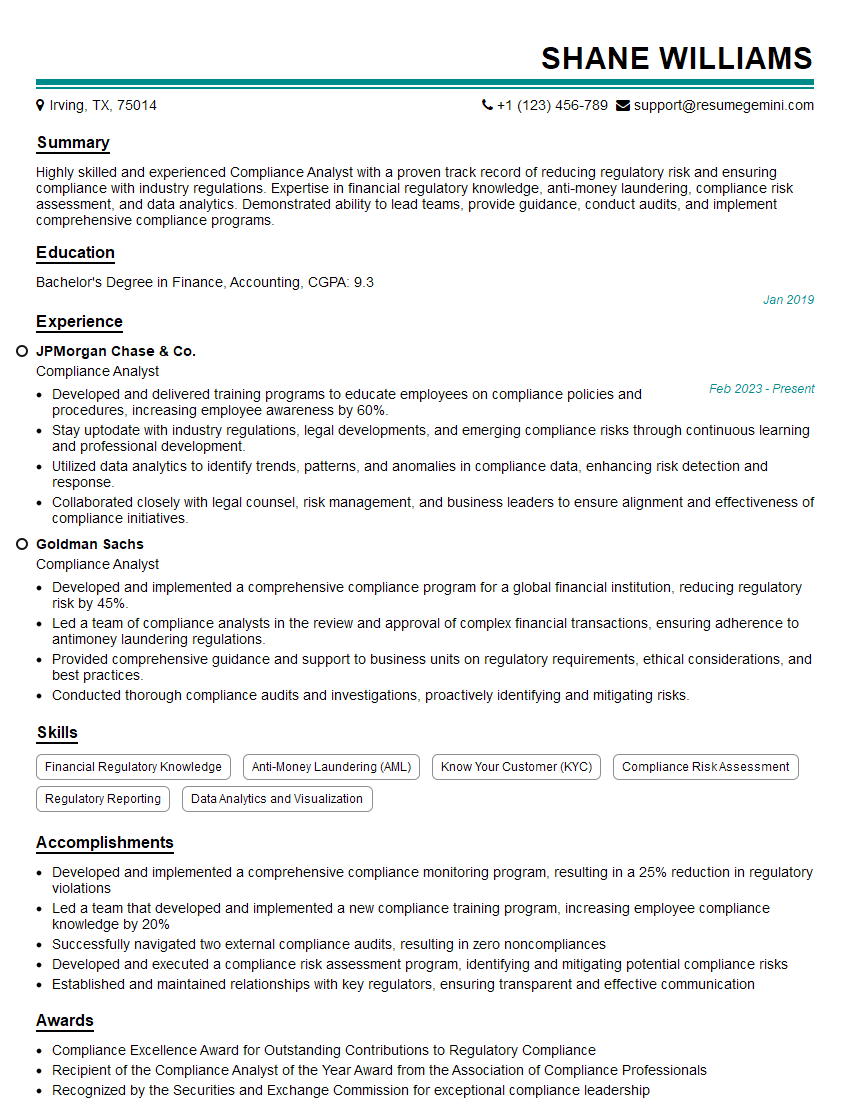
Compliance Analyst Resume Sample
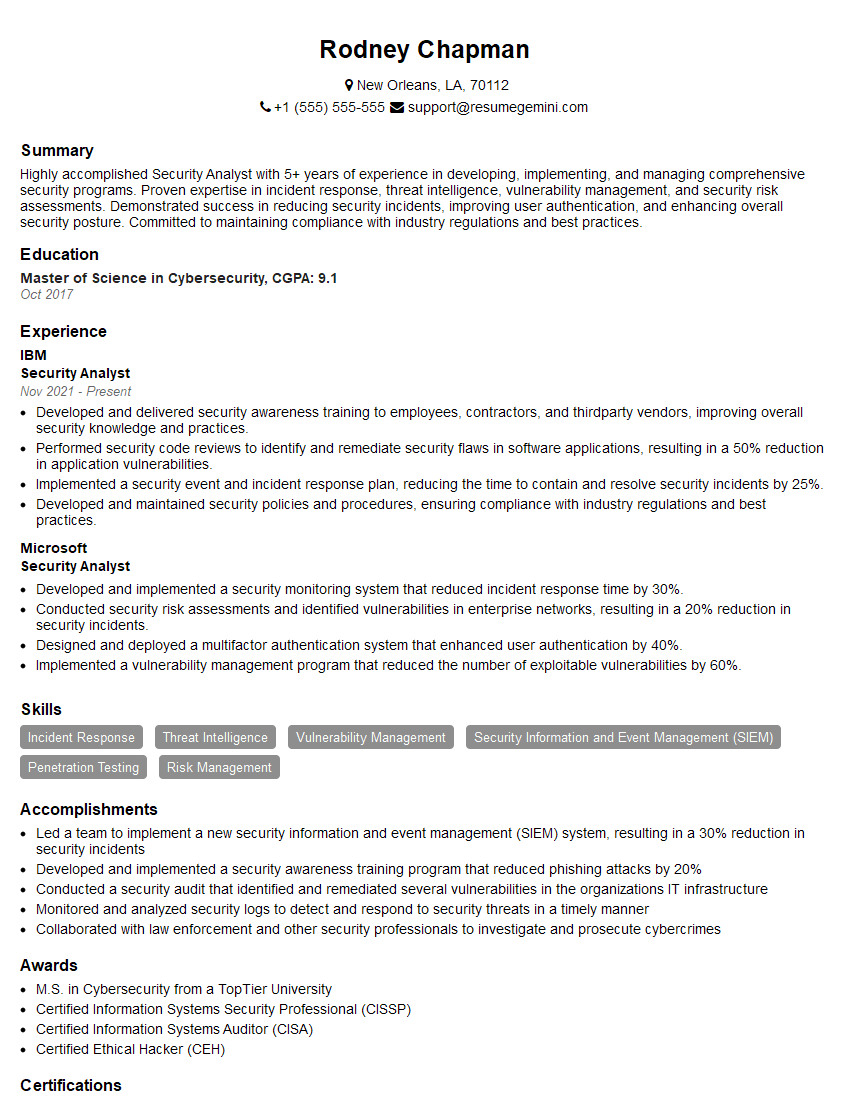
Security Analyst Resume Sample
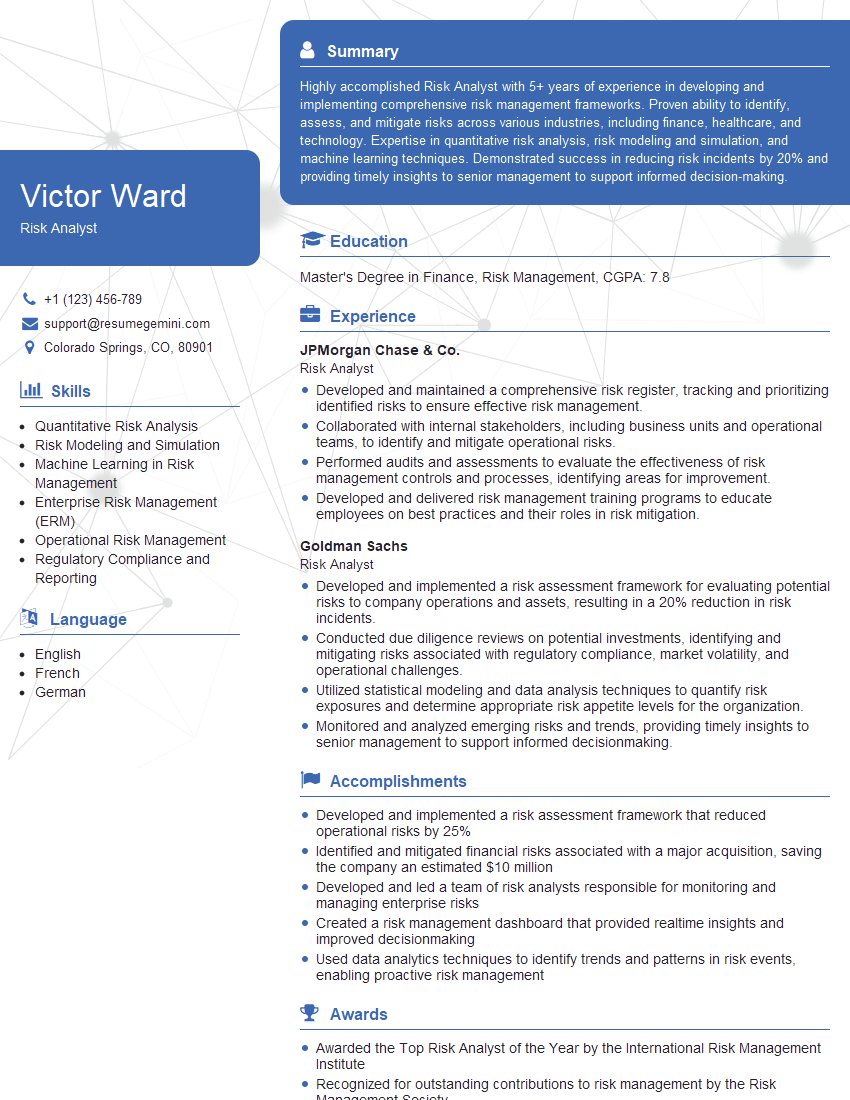
Risk Analyst Resume Sample
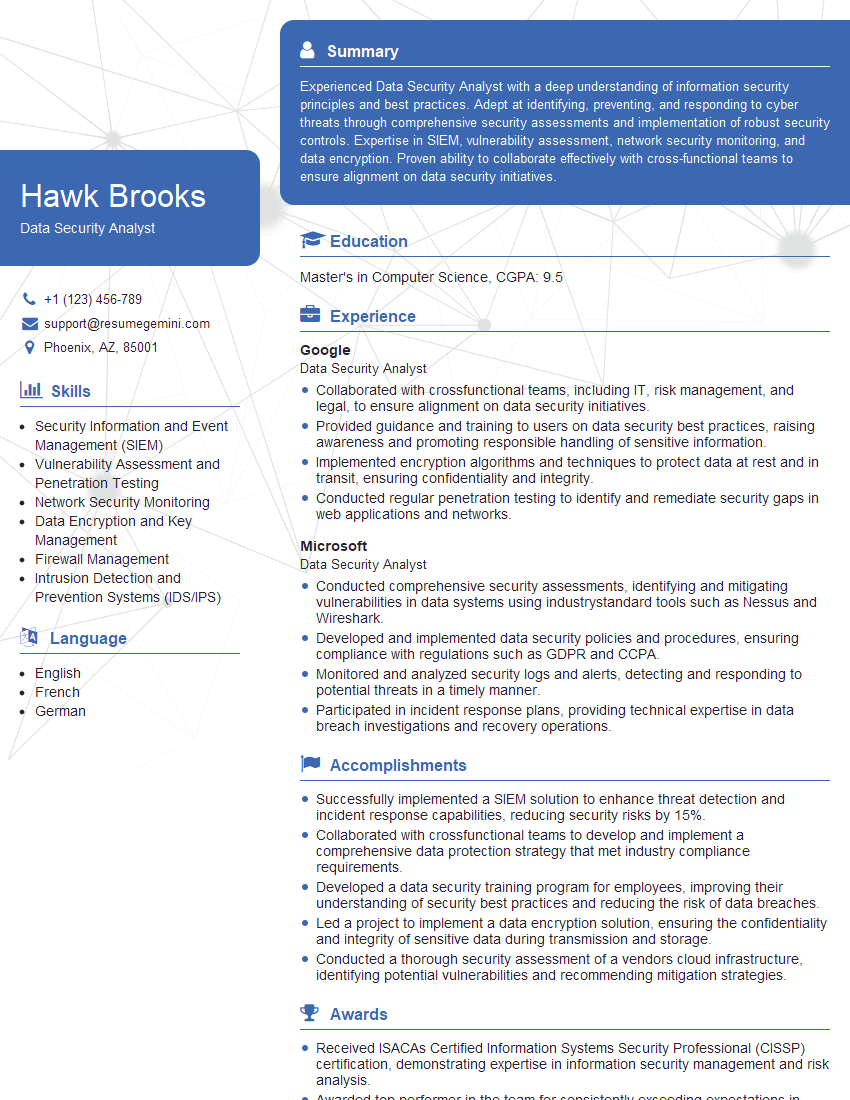
Data Security Analyst Resume Sample
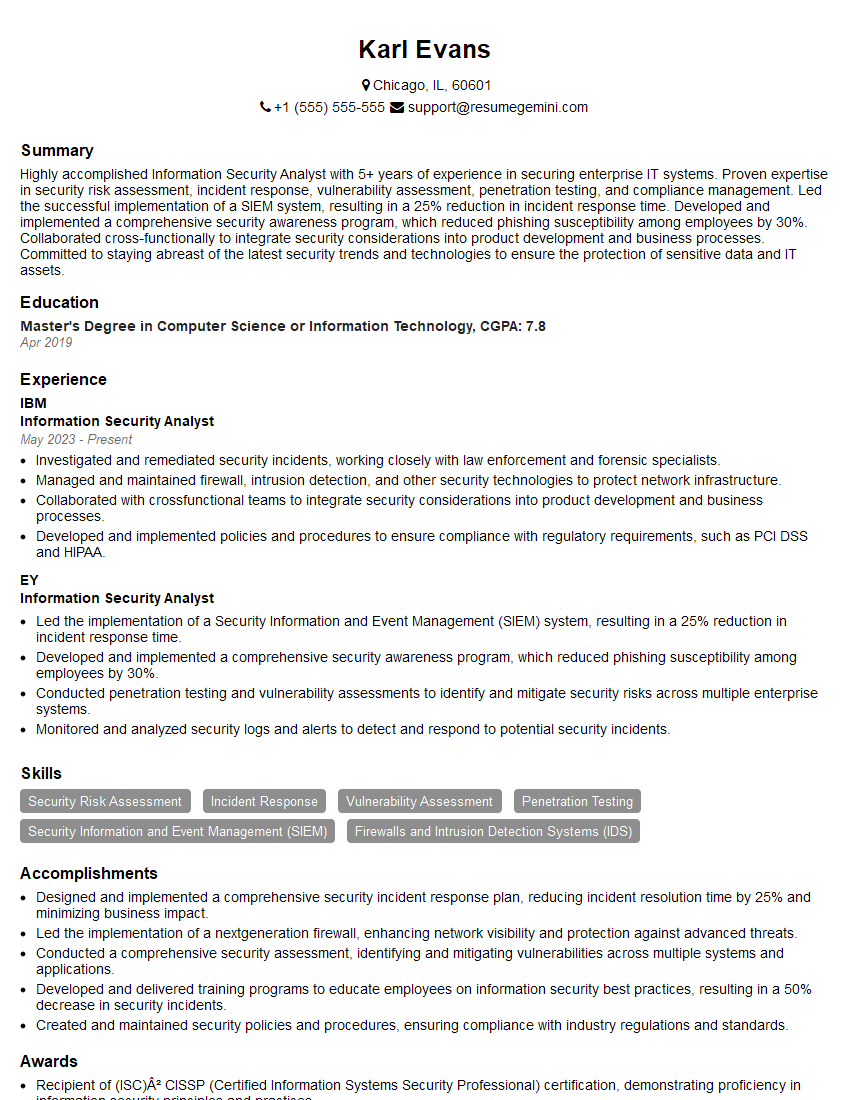
Information Security Analyst Resume Sample
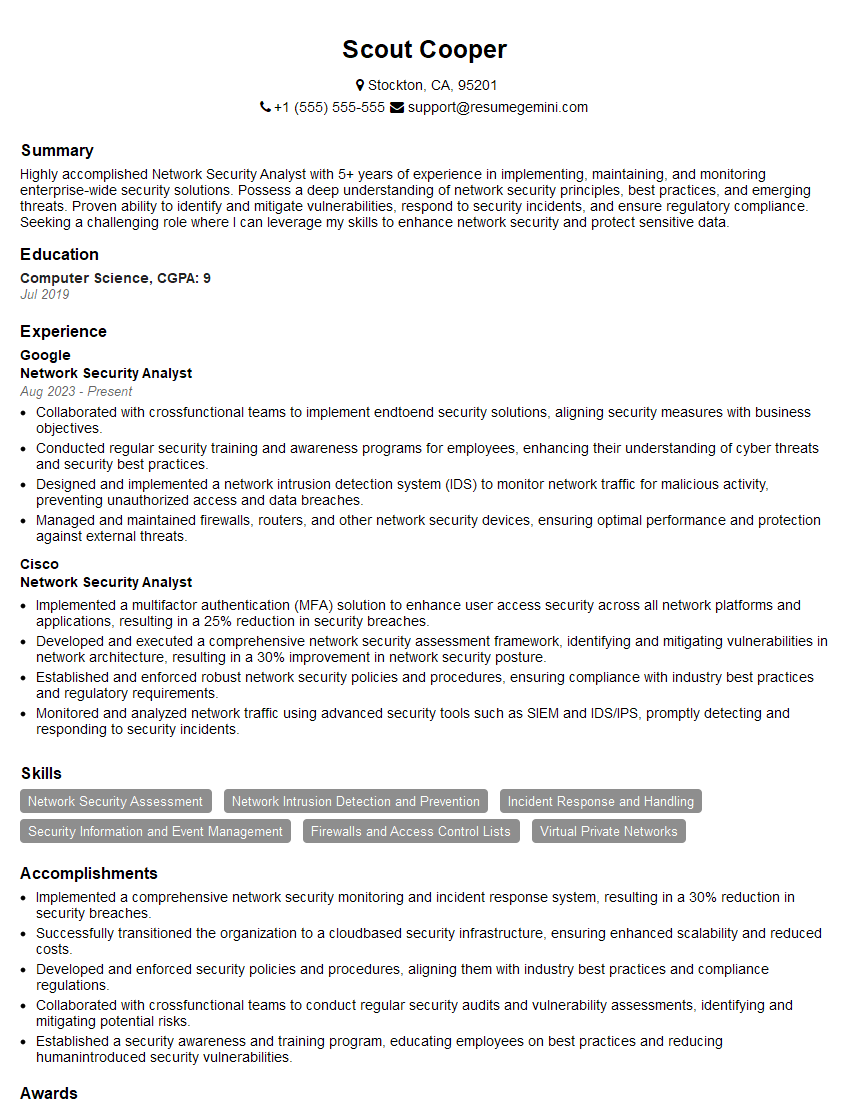
Network Security Analyst Resume Sample
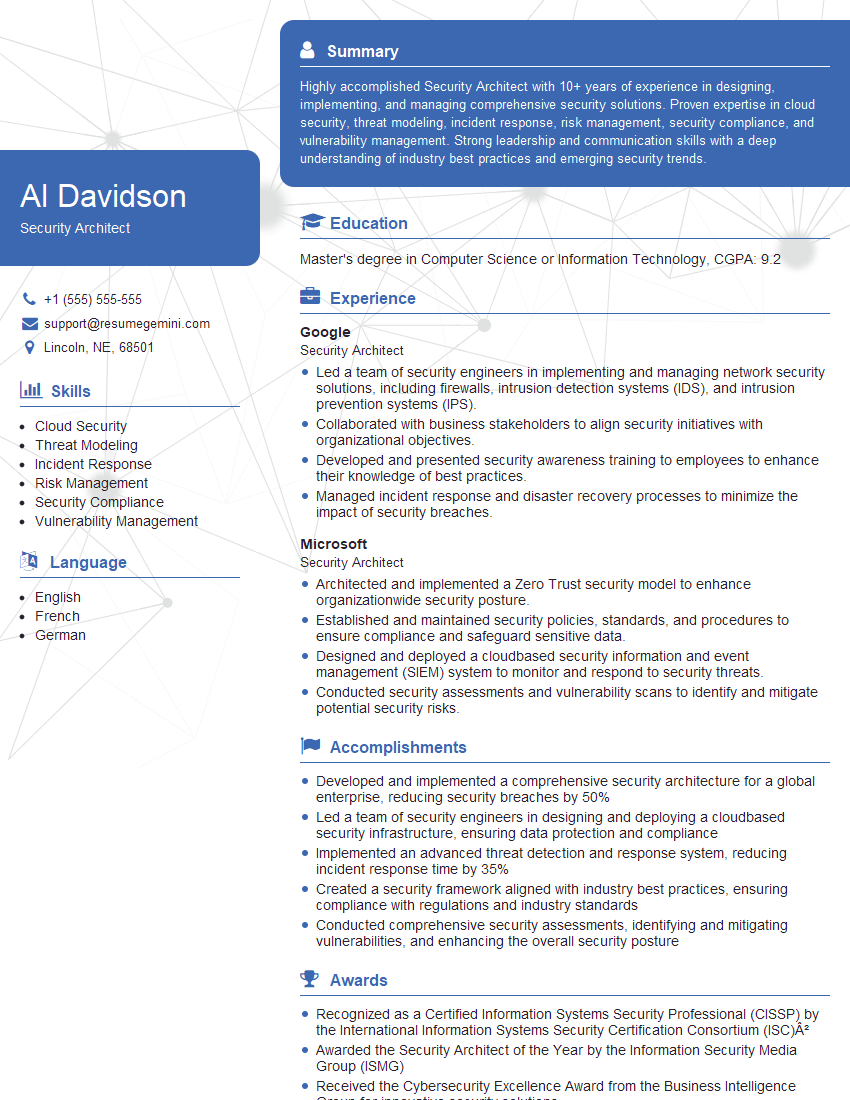
Security Architect Resume Sample
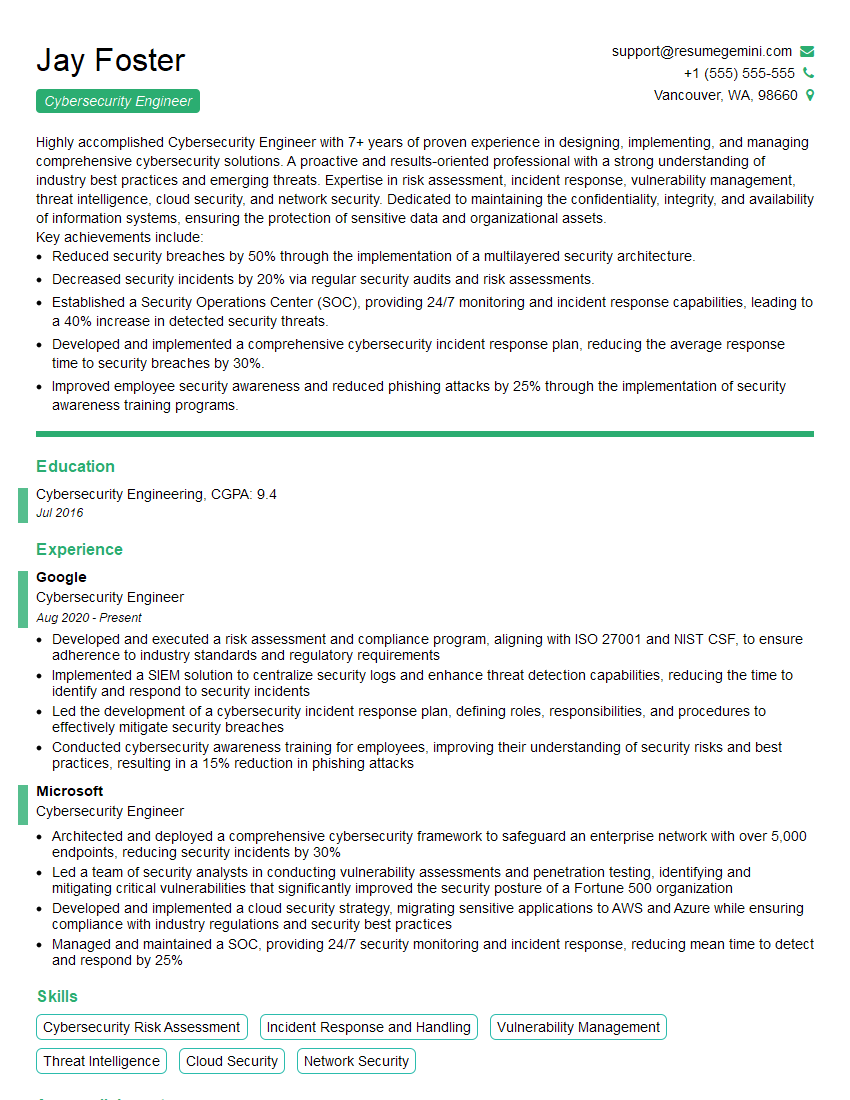
Cybersecurity Engineer Resume Sample
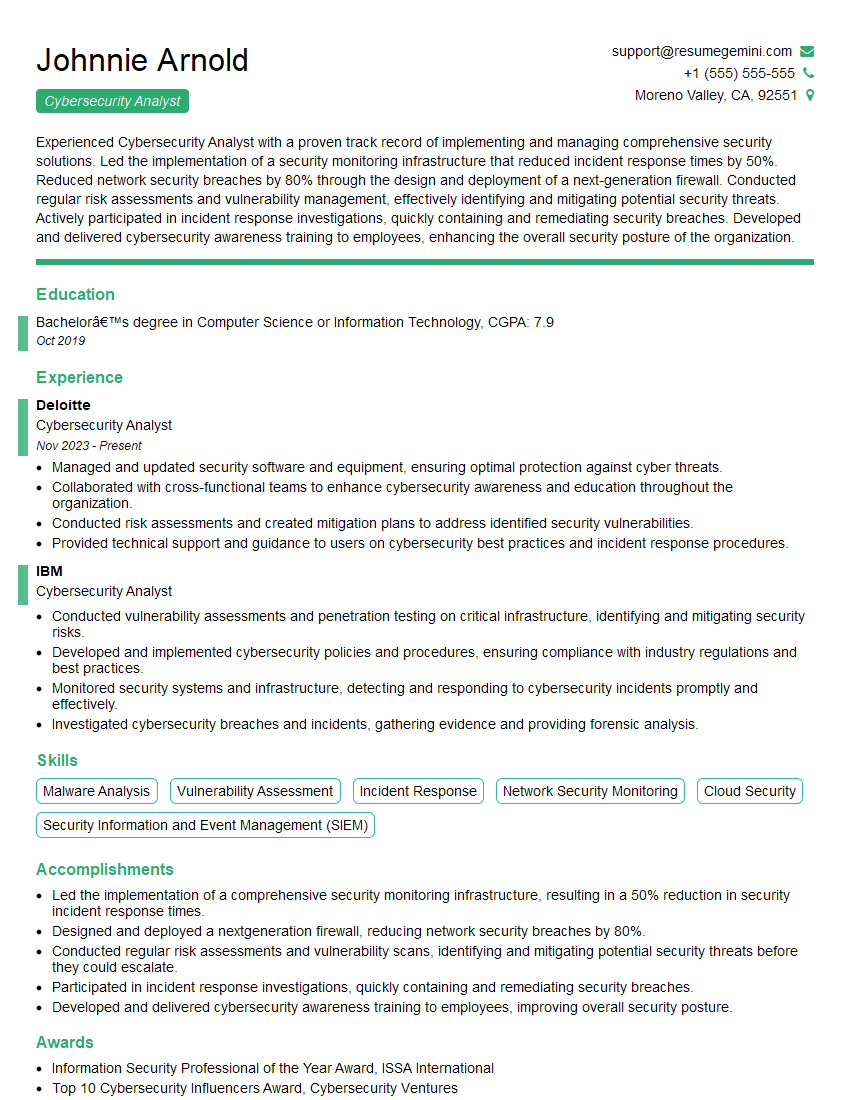
Cybersecurity Analyst Resume Sample
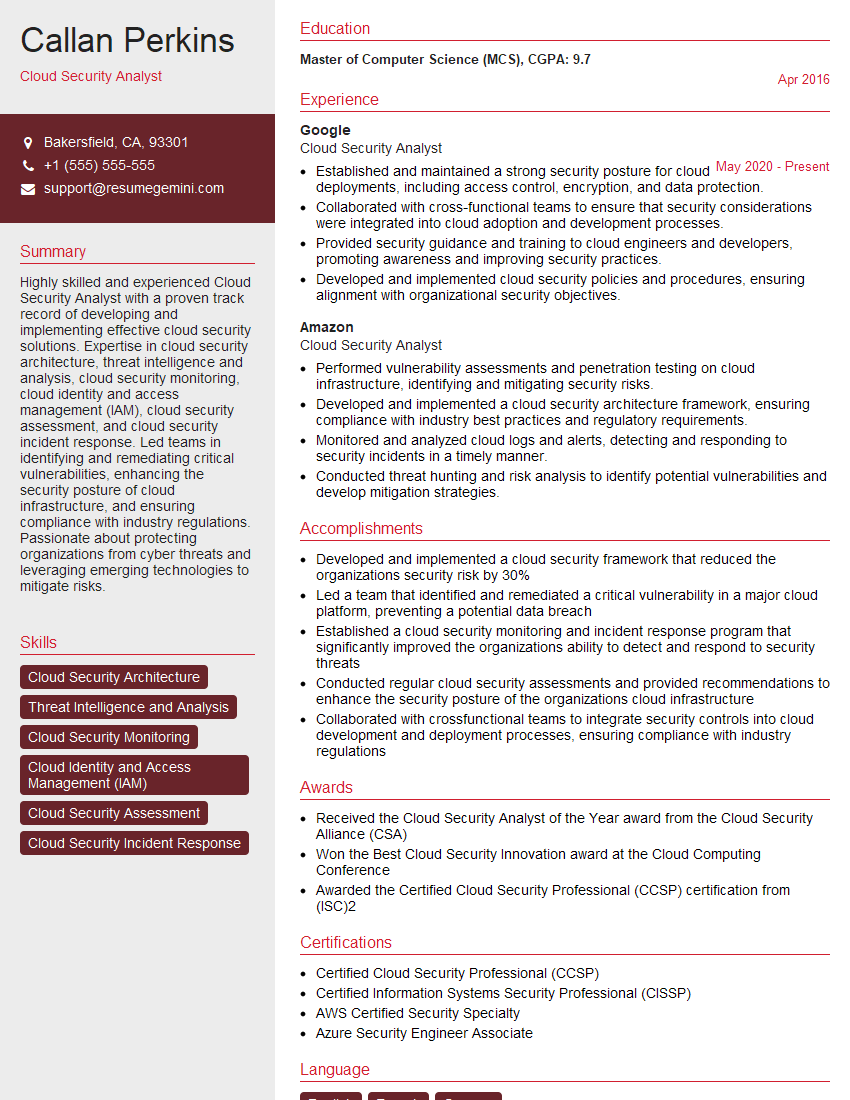
Cloud Security Analyst Resume Sample
Explore more articles
Users Rating of Our Blogs
Share Your Experience
We value your feedback! Please rate our content and share your thoughts (optional).
What Readers Say About Our Blog
Very informative content, great job.
good