Interviews are more than just a Q&A session—they’re a chance to prove your worth. This blog dives into essential Cybersecurity Policy and Procedures interview questions and expert tips to help you align your answers with what hiring managers are looking for. Start preparing to shine!
Questions Asked in Cybersecurity Policy and Procedures Interview
Q 1. Explain the difference between a security policy and a security procedure.
Think of a security policy as the ‘what’ and a security procedure as the ‘how.’ A security policy defines the organization’s overall security goals, rules, and principles. It’s the high-level strategic document that sets the tone for security. A security procedure, on the other hand, provides the step-by-step instructions on how to achieve those goals. It’s the tactical guide that translates policy into action.
Example: A security policy might state that all employees must use strong passwords. A corresponding security procedure would detail the specific password complexity requirements (length, character types), how passwords should be stored (never written down), and the process for password resets.
- Policy: All sensitive data must be encrypted.
- Procedure: Step 1: Identify sensitive data. Step 2: Use encryption tool X. Step 3: Regularly update encryption keys.
Q 2. Describe the NIST Cybersecurity Framework.
The NIST Cybersecurity Framework (CSF) is a voluntary framework developed by the National Institute of Standards and Technology to help organizations manage and reduce their cybersecurity risks. It’s not a set of regulations, but rather a flexible guide that can be adapted to different sizes and types of organizations.
It’s structured around five core functions:
- Identify: Understanding your assets, data, and systems.
- Protect: Developing safeguards to limit or contain the impact of a cybersecurity event.
- Detect: Identifying the occurrence of a cybersecurity event.
- Respond: Taking action regarding a detected cybersecurity event.
- Recover: Restoring any capabilities or services that were impaired due to a cybersecurity event.
Each function has sub-categories that provide more specific guidance. The beauty of the NIST CSF lies in its flexibility. Organizations can tailor it to their specific needs and maturity level, using it as a roadmap for continuous improvement.
Q 3. What are the key components of a strong cybersecurity policy?
A strong cybersecurity policy needs several key components to be effective:
- Scope and Purpose: Clearly defines what the policy covers and why it’s necessary.
- Roles and Responsibilities: Specifies who is responsible for implementing and enforcing the policy.
- Acceptable Use: Outlines acceptable behavior regarding technology and data usage.
- Data Security and Privacy: Addresses how sensitive data is handled, stored, and protected (e.g., encryption, access controls).
- Incident Response: Describes the steps to take in case of a security breach.
- Password Management: Sets clear guidelines for password creation, storage, and regular changes.
- Access Control: Defines how access to systems and data is granted and managed (e.g., least privilege).
- Security Awareness Training: Specifies requirements for employee training on cybersecurity best practices.
- Enforcement and Penalties: Clearly states the consequences of violating the policy.
- Regular Review and Updates: Ensures the policy remains relevant and effective over time.
Q 4. How would you ensure compliance with industry regulations like GDPR or HIPAA?
Ensuring compliance with regulations like GDPR and HIPAA requires a multifaceted approach. It’s not just about having policies, but about implementing and demonstrating adherence.
- Risk Assessment: Identify the data you hold, who has access, and the risks associated.
- Policy Development: Create policies aligned with the specific requirements of GDPR or HIPAA.
- Data Mapping and Inventory: Document all data assets, their location, and sensitivity.
- Data Protection Controls: Implement technical and organizational measures to protect data (encryption, access controls, data loss prevention).
- Employee Training: Educate employees on data protection best practices and their responsibilities.
- Incident Response Plan: Develop a plan for handling data breaches, including notification procedures.
- Auditing and Monitoring: Regularly audit systems and processes to ensure ongoing compliance.
- Documentation: Maintain comprehensive records of all data protection activities.
- Data Subject Rights: Ensure individuals’ rights are respected (e.g., right to access, rectification, erasure).
For GDPR, this means focusing on consent, data minimization, and data breaches notification. For HIPAA, the emphasis is on patient privacy and security of Protected Health Information (PHI).
Q 5. Explain the importance of regular security audits and assessments.
Regular security audits and assessments are crucial for identifying vulnerabilities and ensuring that your security posture is effective. Think of them as a health checkup for your organization’s cybersecurity.
Benefits include:
- Identifying vulnerabilities: Audits pinpoint weaknesses in your systems and processes before they can be exploited.
- Ensuring compliance: Demonstrates adherence to industry regulations and internal policies.
- Improving security awareness: Highlights areas for improvement and reinforces best practices.
- Reducing risks: Proactive identification and remediation of vulnerabilities significantly reduces the likelihood of breaches.
- Demonstrating due diligence: Provides evidence that your organization is taking reasonable steps to protect its assets.
Different types of audits exist, including penetration testing, vulnerability scanning, and compliance audits, each serving a specific purpose.
Q 6. What are some common vulnerabilities and how can policies mitigate them?
Common vulnerabilities include:
- SQL Injection: Malicious code injected into SQL queries to manipulate databases.
- Cross-Site Scripting (XSS): Injecting client-side scripts into websites to steal user data.
- Phishing: Tricking users into revealing sensitive information through deceptive emails or websites.
- Denial-of-Service (DoS): Overwhelming a system with traffic to make it unavailable.
- Weak Passwords: Easily guessable passwords that are simple to crack.
Policies can mitigate these vulnerabilities by:
- Input validation: Sanitizing user inputs to prevent SQL injection.
- Output encoding: Protecting against XSS attacks by properly encoding outputs.
- Security awareness training: Educating users about phishing attempts.
- Network security controls: Implementing firewalls and intrusion detection systems to protect against DoS attacks.
- Password policies: Enforcing strong password complexity and regular changes.
Policies provide the framework; technology and training reinforce the protection.
Q 7. Describe your experience with developing and implementing security policies.
Throughout my career, I’ve been involved in developing and implementing security policies for various organizations, ranging from small businesses to large enterprises. My approach typically involves:
- Needs Assessment: Understanding the organization’s risk profile, regulatory requirements, and technological landscape.
- Policy Drafting: Creating clear, concise, and legally sound policies.
- Stakeholder Engagement: Working with various teams (IT, legal, compliance) to ensure buy-in and collaboration.
- Implementation: Developing procedures, training materials, and technical controls.
- Monitoring and Review: Regularly assessing the effectiveness of the policies and making necessary adjustments.
For example, in a previous role, I led the development of a comprehensive data security policy that addressed GDPR compliance, including data mapping, access controls, and breach notification procedures. This involved significant stakeholder collaboration and the implementation of new technical controls. The result was improved data security and demonstrable compliance.
Q 8. How do you ensure that security policies are understood and followed by employees?
Ensuring employees understand and follow security policies requires a multi-faceted approach that goes beyond simply distributing a document. It’s about fostering a security-conscious culture.
- Comprehensive Training: Regular, interactive training sessions are crucial. These shouldn’t be dry lectures; instead, they should use scenarios, quizzes, and hands-on exercises to reinforce key concepts. For example, a simulated phishing attack can vividly demonstrate the importance of email security awareness.
- Clear and Concise Policies: Policies must be written in plain language, avoiding technical jargon. They should be easily accessible and regularly updated to reflect changes in technology and threats.
- Regular Communication: Security awareness campaigns, newsletters, or even short video messages can keep security top-of-mind. Highlighting recent threats or successful security measures within the company helps to build buy-in.
- Management Buy-in: Leaders must actively champion security policies and demonstrate their commitment by following them themselves. This sets the tone from the top and encourages employees to do the same.
- Feedback Mechanisms: Provide channels for employees to ask questions or raise concerns about policies. This demonstrates openness and encourages compliance.
- Consequences and Accountability: While training is key, there must be consequences for violations to ensure that policies are taken seriously. This should be clearly outlined in the policies themselves.
Think of it like teaching children to cross the street safely. You wouldn’t just hand them a pamphlet; you’d show them, practice with them, and reiterate the importance until it becomes second nature. Security policy enforcement is similar – it requires ongoing engagement and reinforcement.
Q 9. How would you handle a situation where a policy is being violated?
Handling a policy violation requires a measured and consistent response, focusing on both remediation and prevention.
- Investigation: First, thoroughly investigate the incident to determine the extent of the violation, the cause, and any potential impact. Gather all relevant evidence.
- Remediation: Take immediate steps to mitigate the impact of the violation. This might involve disabling accounts, isolating affected systems, or restoring data from backups.
- Disciplinary Action: Depending on the severity of the violation and company policy, appropriate disciplinary action may be taken. This could range from a verbal warning to termination of employment. Consistency in applying disciplinary actions is paramount.
- Policy Review: Analyze the incident to identify weaknesses in existing policies or procedures. Were there gaps in training? Were the policies unclear? Use this as an opportunity to improve the security posture.
- Reporting and Documentation: Maintain thorough documentation of the entire incident, including the investigation, remediation steps, and disciplinary actions taken. This documentation is critical for future incident response and audits.
For instance, if an employee is found to be using a weak password, the response might be mandatory password reset training followed by a monitoring period. If the same employee violates a data handling policy, more serious consequences, such as suspension, are warranted. Transparency and fairness throughout the process are crucial.
Q 10. Explain the concept of least privilege access.
The principle of least privilege access dictates that users and processes should only have the minimum access rights necessary to perform their assigned tasks. It’s a fundamental security best practice that significantly reduces the impact of security breaches.
Imagine a scenario where a junior employee has full administrative access to the company’s servers. If their account is compromised, the attacker gains complete control, causing extensive damage. However, if the employee only has the necessary access to perform their daily tasks (e.g., read access to specific files), a compromise would have significantly less impact.
Applying least privilege involves careful role-based access control (RBAC). Each user or process should be assigned a specific role with only the permissions required for that role. This limits the potential damage caused by a security breach, whether intentional or accidental. Example: A database administrator might only have access to the database, without the ability to modify network configurations.
Q 11. What is the role of risk assessment in developing security policies?
Risk assessment is the cornerstone of effective security policy development. It involves identifying, analyzing, and prioritizing potential threats and vulnerabilities to determine the likelihood and potential impact of a security breach. This provides the necessary foundation for tailoring security policies to address the most significant risks.
- Identify Assets: First, identify critical assets and systems. What data or resources are most valuable to the organization?
- Identify Threats: What are the potential threats to these assets? This includes both internal and external threats, such as malware, insider attacks, or natural disasters.
- Assess Vulnerabilities: What weaknesses exist that could allow these threats to exploit the assets? This might involve outdated software, weak passwords, or insufficient network security.
- Determine Likelihood and Impact: Estimate the likelihood of each threat exploiting a vulnerability and the potential impact if it does. This is often expressed quantitatively (e.g., a risk score).
- Develop Mitigation Strategies: Based on the risk assessment, prioritize security controls and develop policies to mitigate the most significant risks.
For example, a risk assessment might reveal that a particular type of malware poses a high risk to the company’s financial data. As a result, security policies related to anti-malware software, employee training on phishing attacks, and data backups would be prioritized.
Q 12. How do you balance security with usability?
Balancing security and usability is a constant challenge. Overly restrictive security measures can frustrate users and lead to workarounds that undermine security. The goal is to find a balance that provides adequate security without significantly hindering productivity.
- User-centric Design: Involve users in the design and implementation of security measures. Their feedback can help identify areas where usability can be improved without compromising security.
- Multi-Factor Authentication (MFA): MFA provides a strong security layer without significantly impacting usability. It adds an extra layer of verification, but its benefits outweigh the minor inconvenience.
- Principle of Least Privilege: As discussed earlier, this ensures users only have access to what they need, enhancing security without unnecessarily restricting functionality.
- Clear Communication: Explain the reasons behind security measures to users. When they understand the ‘why’, they are more likely to accept the ‘how’.
- Phased Rollouts: Implement new security measures gradually, allowing users to adjust and providing support during the transition. A phased rollout minimizes disruption and allows for adjustments based on user feedback.
For example, implementing strong password policies might initially seem inconvenient, but users will appreciate the protection against account breaches. A well-designed system with clear guidelines and helpful messaging will ease the transition, fostering user acceptance and increasing security.
Q 13. Describe your experience with security incident response plans.
My experience with security incident response plans (SIRPs) involves developing, testing, and executing them across various organizational settings. I’ve been involved in:
- Developing SIRPs: I have created comprehensive SIRPs that align with industry best practices (like NIST Cybersecurity Framework) and address various threat scenarios, including malware attacks, phishing campaigns, and data breaches.
- Tabletop Exercises and Simulations: Regularly conducted tabletop exercises to test the effectiveness of the SIRP and identify areas for improvement. These exercises simulate real-world scenarios, allowing teams to practice their response procedures.
- Incident Response: I have participated in numerous real-world incident response activities, coordinating with various teams (IT, legal, public relations) to contain, eradicate, and recover from security incidents. This includes forensic analysis, data recovery, and post-incident reporting.
- Post-Incident Analysis: Critically reviewed past incidents to identify areas where the SIRP can be improved, focusing on efficiency, effectiveness, and communication.
- Training and Awareness: Developed and delivered training to teams on the use and execution of the SIRP.
One significant incident involved a ransomware attack. Our well-rehearsed SIRP allowed us to quickly isolate affected systems, prevent further spread, and restore data from backups minimizing business disruption. This demonstrated the critical role of a well-defined and tested SIRP.
Q 14. How do you measure the effectiveness of your cybersecurity policies?
Measuring the effectiveness of cybersecurity policies requires a multi-pronged approach combining quantitative and qualitative metrics.
- Security Audits and Assessments: Regular audits and vulnerability scans help identify weaknesses and assess compliance with security policies.
- Incident Response Metrics: Track the number and types of security incidents, the time it takes to contain and resolve incidents, and the resulting impact on the organization. A decrease in these metrics often indicates policy effectiveness.
- User Behavior Analytics: Monitor user activity to detect anomalies and potential security violations. This helps identify areas where training or policy adjustments are needed.
- Compliance Reporting: Track compliance with relevant regulations and industry standards. This ensures that the policies are meeting the required legal and regulatory obligations.
- Employee Surveys and Feedback: Gather feedback from employees to assess the usability and effectiveness of security policies. This helps identify areas where improvement is needed.
- Key Risk Indicators (KRIs): Establish KRIs to continuously monitor the effectiveness of the policies in addressing identified risks. For instance, tracking the success rate of phishing awareness training can indicate improved employee awareness.
By combining these quantitative and qualitative metrics, you gain a holistic view of the effectiveness of your cybersecurity policies, allowing for continuous improvement and enhanced organizational security.
Q 15. Explain your understanding of data loss prevention (DLP).
Data Loss Prevention (DLP) is a strategy and set of technologies designed to prevent sensitive data from leaving an organization’s control. Think of it as a security perimeter, but for your data, not just your network. It involves identifying, monitoring, and protecting confidential information wherever it resides – whether on laptops, servers, in the cloud, or even in transit. A strong DLP program uses a multi-layered approach.
- Identification: This involves using various techniques to pinpoint sensitive data, such as keyword matching, data pattern recognition, and even machine learning to identify anomalies. For instance, a DLP system might be configured to flag documents containing credit card numbers or social security numbers.
- Monitoring: Once identified, the DLP system monitors the movement and access of this data. This could involve tracking who accessed a file, when, and what actions they took. It also monitors data leaving the organization through various channels like email, cloud storage, or removable media.
- Prevention: If a DLP system detects a potential data breach, it takes action to prevent the data loss. This could range from blocking the transmission of an email containing sensitive information to alerting the security team for further investigation. Actions could include blocking access, quarantining the data, or encrypting it.
In a real-world scenario, I’ve helped a financial institution implement DLP to prevent the unauthorized disclosure of customer financial data. We used a combination of network-based and endpoint-based DLP solutions, integrated with their existing security information and event management (SIEM) system, to provide comprehensive monitoring and protection.
Career Expert Tips:
- Ace those interviews! Prepare effectively by reviewing the Top 50 Most Common Interview Questions on ResumeGemini.
- Navigate your job search with confidence! Explore a wide range of Career Tips on ResumeGemini. Learn about common challenges and recommendations to overcome them.
- Craft the perfect resume! Master the Art of Resume Writing with ResumeGemini’s guide. Showcase your unique qualifications and achievements effectively.
- Don’t miss out on holiday savings! Build your dream resume with ResumeGemini’s ATS optimized templates.
Q 16. What is the importance of security awareness training?
Security awareness training is paramount because even the strongest technical security controls are useless if employees are unaware of or ignore security risks. It’s about cultivating a security-conscious culture within an organization. Effective training empowers employees to be the first line of defense against threats like phishing attacks, malware, and social engineering.
- Reduces Human Error: A significant percentage of security breaches are caused by human error – clicking on malicious links, falling for phishing scams, or using weak passwords. Training dramatically reduces these risks.
- Promotes Best Practices: Training instills best practices for password management, data handling, and recognizing potential threats. Employees learn to identify suspicious emails, websites, and attachments.
- Enhances Incident Response: Trained employees know how to report security incidents and follow established procedures, which accelerates the response and minimizes damage.
Imagine a scenario where an employee receives a phishing email. With proper training, they’ll recognize the red flags (e.g., suspicious sender address, grammatical errors, urgent requests) and won’t click on the malicious link. Without training, they might fall victim, leading to a potential breach.
Q 17. How do you stay up-to-date with the latest cybersecurity threats and best practices?
Staying up-to-date in cybersecurity is a continuous process. It requires a multifaceted approach.
- Industry Publications and Newsletters: I regularly subscribe to leading cybersecurity publications (like KrebsOnSecurity) and newsletters from vendors and organizations like SANS Institute to stay informed about emerging threats and best practices.
- Security Conferences and Webinars: Attending industry conferences and webinars provides invaluable insights into the latest threats, technologies, and regulations. This offers opportunities for networking and learning from leading experts.
- Threat Intelligence Feeds: I leverage threat intelligence feeds from various sources to proactively identify and mitigate potential risks. These feeds provide real-time information on emerging threats and vulnerabilities.
- Certifications and Continuing Education: Maintaining relevant certifications (like CISSP, CISM) ensures I stay current with industry standards and best practices. I also actively seek out training courses and workshops to expand my skillset.
For example, recently I attended a conference that focused on AI-driven threats and learned about new techniques used to detect and respond to these evolving attacks. This knowledge directly informed our organization’s security strategy.
Q 18. Describe your experience with vulnerability management.
Vulnerability management is a critical process for identifying and mitigating security weaknesses in systems and applications. My approach involves a systematic and iterative process.
- Vulnerability Scanning: Regularly conducting automated vulnerability scans using tools like Nessus or OpenVAS to identify potential weaknesses. This provides a comprehensive overview of the security posture of our systems.
- Penetration Testing: Conducting penetration tests, both internal and external, to simulate real-world attacks and assess the effectiveness of our security controls. This allows us to discover vulnerabilities that automated scans might miss.
- Risk Assessment: Prioritizing vulnerabilities based on their severity and potential impact. This helps to focus remediation efforts on the most critical issues.
- Remediation and Patching: Working with IT teams to implement fixes and patches to address identified vulnerabilities. This includes not just patching software but also addressing configuration issues.
- Monitoring and Reporting: Continuously monitoring the effectiveness of our remediation efforts and reporting on the overall security posture of the organization. This uses dashboards to provide transparency on progress and identify any recurring issues.
In a recent project, I led a vulnerability management initiative that significantly reduced the organization’s attack surface. We implemented a robust vulnerability scanning program, prioritized high-risk vulnerabilities, and collaborated with the IT team to remediate them quickly and effectively.
Q 19. How do you handle conflicts between different security policies?
Conflicts between security policies are inevitable, especially in larger organizations with various departments and systems. Resolution requires a structured approach.
- Identify the Conflict: Clearly define the conflicting policies and the specific points of disagreement. Document the specific issues clearly, providing relevant sections of each policy.
- Assess the Impact: Evaluate the potential impact of each policy on the organization’s security posture and business operations. This helps prioritize which policy needs to be adjusted.
- Consult Stakeholders: Engage relevant stakeholders, including IT, legal, compliance, and business units, to gather input and perspectives. Understanding the needs and concerns of each department is vital.
- Prioritize and Negotiate: Based on the impact assessment and stakeholder input, prioritize which policy needs to take precedence. This may involve negotiation and compromise to find a solution that balances security and operational needs.
- Document the Resolution: Clearly document the resolution, including any changes made to the conflicting policies. This ensures everyone is aware of the revised policies and avoids future conflicts. Version control is key.
For example, I once encountered a conflict between a policy requiring strong passwords and a policy requiring easy-to-remember passwords for helpdesk access. Through stakeholder engagement, we revised the helpdesk policy to use multi-factor authentication instead, addressing the security concerns without compromising usability.
Q 20. What is your approach to documenting security policies and procedures?
Documenting security policies and procedures is crucial for ensuring consistency, compliance, and effective security management. My approach focuses on clarity, accessibility, and maintainability.
- Clear and Concise Language: Policies and procedures should be written in clear, concise language, avoiding technical jargon where possible. They should be easily understandable by all employees.
- Version Control: Employ a version control system to track changes and revisions to the documents. This ensures that everyone is working with the most up-to-date versions.
- Regular Reviews and Updates: Policies and procedures should be reviewed and updated regularly to reflect changes in technology, threats, and business needs. Yearly reviews at minimum are essential.
- Centralized Repository: Maintain a centralized repository for all security documents, making them easily accessible to all employees. This could be a shared drive, a wiki, or a dedicated document management system.
- Training and Awareness: Ensure that employees receive training on the security policies and procedures and understand their responsibilities.
I use a wiki-based system for our security documentation which allows for easy collaboration, version control, and searchability. This ensures that the policies remain up-to-date and easily accessible to all employees.
Q 21. Describe your experience with penetration testing and vulnerability assessments.
Penetration testing and vulnerability assessments are complementary activities used to identify security weaknesses. Vulnerability assessments are like a health check-up, providing a broad overview of potential problems. Penetration testing is more like a stress test, simulating real-world attacks to see how well systems hold up.
- Vulnerability Assessments: I use automated tools to scan systems for known vulnerabilities. This identifies potential weaknesses in software, configurations, and network devices. These scans provide a list of potential issues, ranked by severity.
- Penetration Testing: This involves simulating attacks to exploit vulnerabilities and assess the impact on the system. It’s a more hands-on approach that identifies vulnerabilities that automated scans may miss. Ethical hackers are employed, following specific rules of engagement.
- Reporting: Both activities produce detailed reports that document findings, including the severity of vulnerabilities, their potential impact, and recommendations for remediation.
In one engagement, we used a combination of vulnerability assessments and penetration testing to identify critical vulnerabilities in a client’s web application. The vulnerability assessment highlighted several potential weaknesses, but the penetration test successfully exploited one of them, demonstrating a significant security risk. This led to immediate remediation and prevented a potential data breach.
Q 22. Explain your understanding of access control models (e.g., RBAC, ABAC).
Access control models define how users and systems are granted permissions to access resources. Key models include Role-Based Access Control (RBAC) and Attribute-Based Access Control (ABAC).
RBAC assigns permissions based on roles. For example, a ‘Sales Manager’ role might have access to customer data and sales reports, while a ‘Data Analyst’ role might have access to the same data but with different permissions (like the ability to perform analysis but not modify records). This simplifies administration as you manage permissions at the role level, not individually for each user. If a user changes roles, their access is automatically updated.
ABAC is more granular and dynamic. It grants access based on attributes of the user, the resource, and the environment. Imagine a system where access to a specific file is granted only if the user is in the ‘Finance’ department, the file is marked as ‘Confidential,’ and the access attempt originates from a company-approved IP address. This provides much finer control and is particularly useful in complex environments.
In practice, I’ve used RBAC extensively in large enterprise environments, defining roles and assigning permissions using tools like Active Directory. For more complex scenarios with sensitive data, we incorporated elements of ABAC to refine access control, often leveraging policy engines for dynamic authorization decisions.
Q 23. How do you ensure the confidentiality, integrity, and availability of data?
Ensuring data Confidentiality, Integrity, and Availability (CIA triad) is fundamental to cybersecurity. Think of it like protecting a valuable painting:
- Confidentiality: This is like keeping the painting locked in a vault, accessible only to authorized individuals. We achieve this through encryption, access controls (RBAC/ABAC), and data loss prevention (DLP) measures.
- Integrity: This ensures the painting remains unaltered and authentic. We use checksums, digital signatures, version control, and input validation to maintain data integrity. This prevents unauthorized modifications or corruption.
- Availability: This means the painting is accessible when needed by those authorized to view it. We ensure this through redundant systems, backups, disaster recovery plans, and robust infrastructure.
In a practical context, I’ve implemented various measures to protect sensitive data, including encrypting data at rest and in transit, using intrusion detection systems to identify and prevent unauthorized access, and regularly backing up data to offsite locations.
Q 24. What are some common security frameworks and standards (e.g., ISO 27001)?
Numerous security frameworks and standards guide organizations in establishing and maintaining a robust security posture. Some prominent examples include:
- ISO 27001: An internationally recognized standard for information security management systems (ISMS). It provides a framework for establishing, implementing, maintaining, and continually improving an ISMS. It’s a comprehensive standard covering various aspects, from risk assessment to incident management.
- NIST Cybersecurity Framework: Developed by the National Institute of Standards and Technology (NIST) in the US, this framework provides a flexible approach to managing cybersecurity risk. It’s widely adopted across industries and focuses on five core functions: Identify, Protect, Detect, Respond, and Recover.
- CIS Controls: The Center for Internet Security (CIS) publishes a set of prioritized controls designed to secure IT systems. They are categorized into three levels based on impact and offer actionable recommendations for improving security.
My experience has involved implementing and auditing against ISO 27001, ensuring compliance with its requirements and developing policies and procedures to align with its best practices. I’ve also used the NIST Cybersecurity Framework as a guiding principle for risk management and incident response planning.
Q 25. Explain your experience with security information and event management (SIEM).
Security Information and Event Management (SIEM) systems are crucial for collecting, analyzing, and correlating security logs from various sources to detect and respond to security threats. My experience with SIEM includes deploying and managing SIEM solutions like Splunk and QRadar. This involves configuring the systems to collect relevant logs from network devices, servers, and applications, defining alerts for suspicious activities, and developing dashboards to visualize security data.
I’ve used SIEM systems to:
- Identify security incidents: By correlating events, we can detect patterns indicative of attacks such as malware infections or unauthorized access attempts.
- Investigate security incidents: SIEM provides the necessary information to trace the events leading to an incident, enabling faster incident response.
- Generate security reports: SIEM data provides insights into the security posture of the organization, enabling informed decisions regarding security investments and improvements.
A recent example involved using Splunk to identify a series of failed login attempts from unusual geographical locations. This alerted us to a potential brute-force attack, and we were able to take immediate steps to mitigate the risk.
Q 26. How do you handle the communication of security incidents?
Effective communication during a security incident is critical for a swift and organized response. My approach involves a structured communication plan, encompassing:
- Internal Communication: Immediate notification of the incident response team and relevant stakeholders, providing clear and concise updates. This is crucial for coordinating actions and assigning responsibilities. Regular updates maintain transparency throughout the incident handling process.
- External Communication: Communication with affected parties (customers, partners) is often required depending on the nature of the incident and any potential impact on them. This requires careful consideration, adhering to legal and regulatory requirements and company communication protocols. It may involve public statements or notifications.
- Documentation: Maintaining a detailed record of all communication, including timing, recipients, and content. This is essential for incident reporting, investigations, and post-incident analysis.
In a previous role, we implemented a standardized communication template and escalation procedures to ensure consistent and timely communication during security incidents, regardless of the severity.
Q 27. How do you prioritize security risks and vulnerabilities?
Prioritizing security risks and vulnerabilities requires a systematic approach. I typically employ a risk assessment framework incorporating the following steps:
- Identify Assets: Determine all critical assets, including hardware, software, data, and intellectual property.
- Identify Threats: Identify potential threats that could exploit vulnerabilities (e.g., malware, phishing attacks, insider threats).
- Identify Vulnerabilities: Assess the weaknesses in systems and processes that could be exploited by threats (e.g., outdated software, weak passwords).
- Determine Likelihood and Impact: Assign a probability (likelihood) to each threat and estimate its potential impact (financial, reputational, operational).
- Calculate Risk: Multiply the likelihood and impact to determine the overall risk level.
- Prioritize Risks: Prioritize risks based on their calculated risk level, focusing on the highest risks first. This often involves a risk matrix.
- Implement Mitigation Strategies: Develop and implement strategies to reduce or eliminate the identified risks (e.g., patching vulnerabilities, implementing security controls).
This methodical approach ensures that resources are allocated effectively to address the most critical security risks, ensuring a cost-effective and focused approach to risk management.
Q 28. Describe your experience with implementing multi-factor authentication (MFA).
Multi-Factor Authentication (MFA) significantly enhances security by requiring users to provide multiple forms of authentication before gaining access. My experience implementing MFA has included deploying various solutions, such as:
- Time-based One-Time Passwords (TOTP): Using applications like Google Authenticator or Authy to generate dynamic codes that change periodically.
- Hardware Tokens: Using physical devices that generate one-time passwords.
- Push Notifications: Sending push notifications to users’ mobile devices for authentication.
- Biometrics: Integrating biometric authentication methods like fingerprint or facial recognition.
During implementation, it’s crucial to consider user experience. We aim to strike a balance between enhanced security and ease of use. Proper training and communication to users are also vital to ensure adoption and minimize disruption. We often start with high-risk accounts (administrative accounts) before gradually extending MFA implementation across the organization.
In one project, we successfully rolled out TOTP-based MFA across our entire workforce, leading to a noticeable reduction in successful phishing attacks.
Key Topics to Learn for Cybersecurity Policy and Procedures Interview
- Policy Development & Implementation: Understanding the lifecycle of creating, implementing, and updating cybersecurity policies, including risk assessment methodologies and regulatory compliance (e.g., GDPR, HIPAA).
- Incident Response Planning & Management: Developing and executing incident response plans, including containment, eradication, recovery, and post-incident activity. Practical application involves simulating incident response scenarios and analyzing case studies.
- Access Control & Privileged Access Management (PAM): Exploring different access control models (e.g., RBAC, ABAC), implementing strong authentication methods, and managing privileged user accounts to minimize risk.
- Security Awareness Training & Education: Understanding the importance of user education in mitigating security risks and designing effective training programs to address phishing, social engineering, and other common threats.
- Data Security & Privacy: Deep dive into data classification, encryption techniques, data loss prevention (DLP) strategies, and compliance with data privacy regulations.
- Vulnerability Management & Penetration Testing: Understanding vulnerability assessment methodologies, penetration testing techniques, and the remediation process to improve overall security posture. Practical application includes analyzing vulnerability scan reports and understanding mitigation strategies.
- Auditing & Compliance: Familiarizing yourself with security audits, compliance frameworks (e.g., ISO 27001, NIST Cybersecurity Framework), and the importance of maintaining audit trails.
- Risk Management & Assessment: Understanding different risk assessment methodologies (e.g., qualitative vs. quantitative) and applying them to real-world scenarios. This includes identifying, analyzing, and mitigating potential threats.
Next Steps
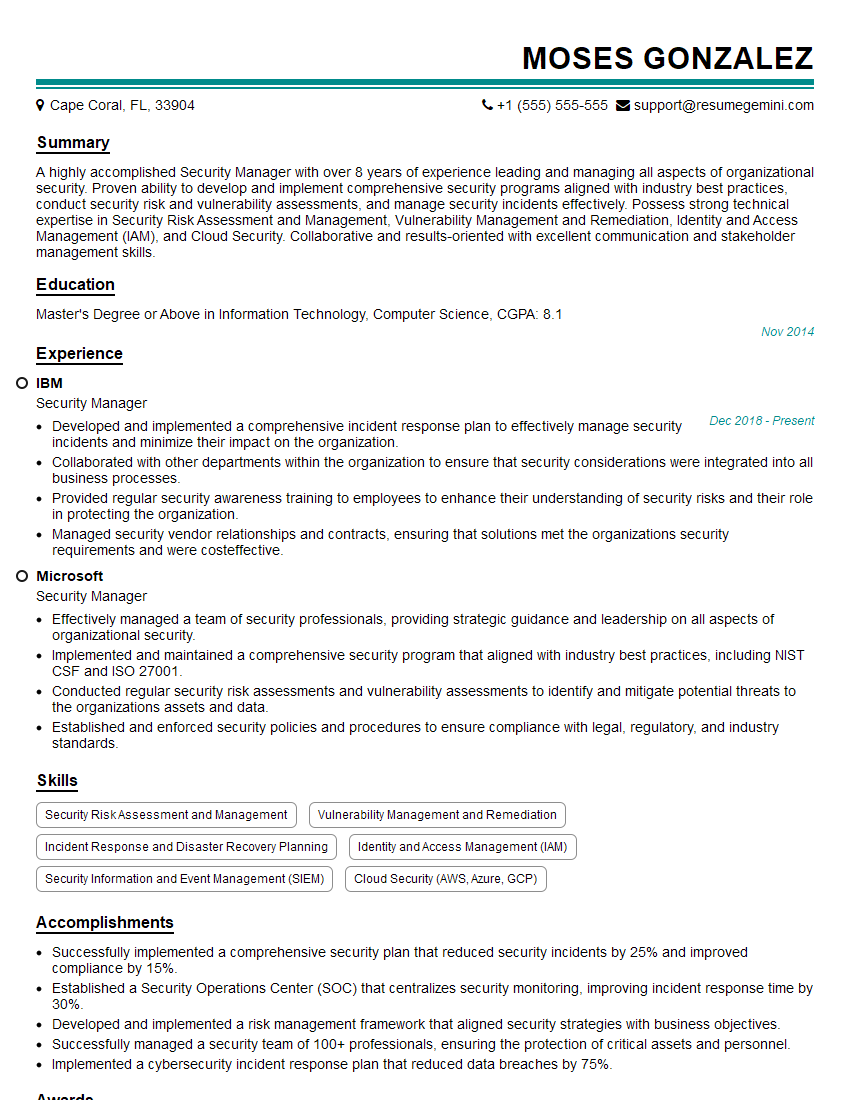
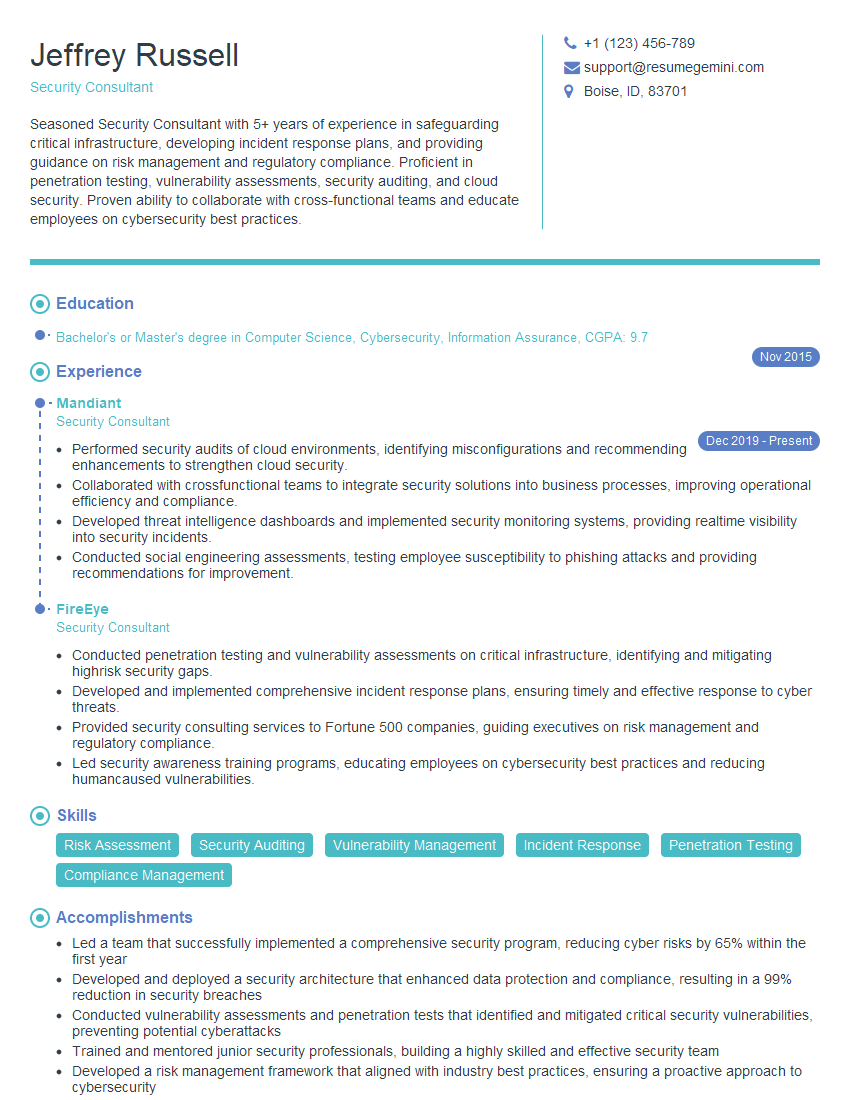
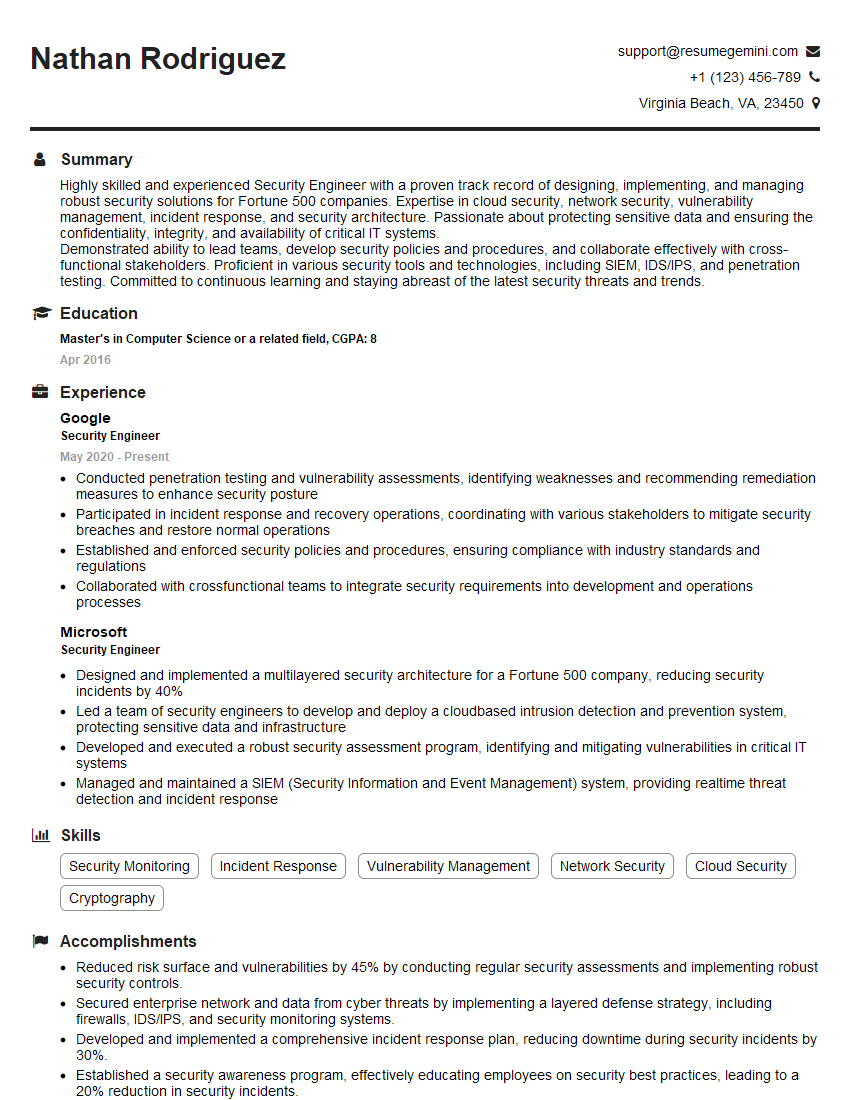
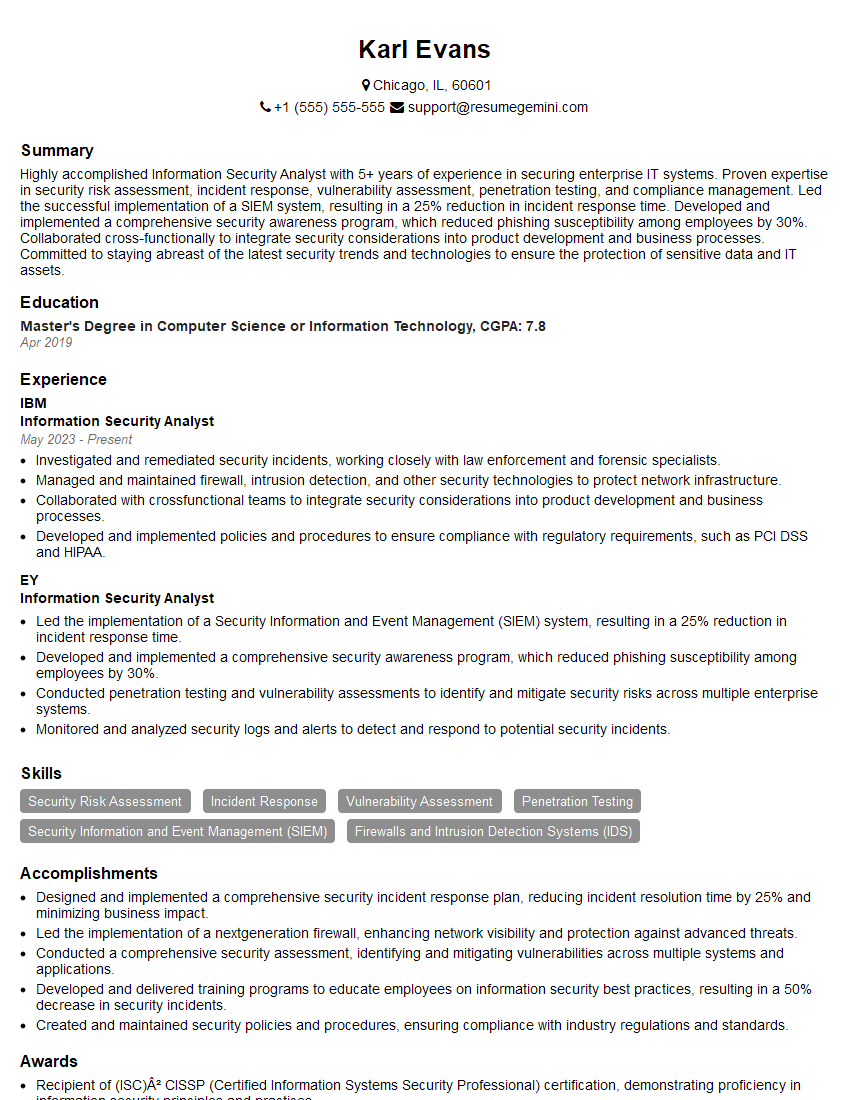
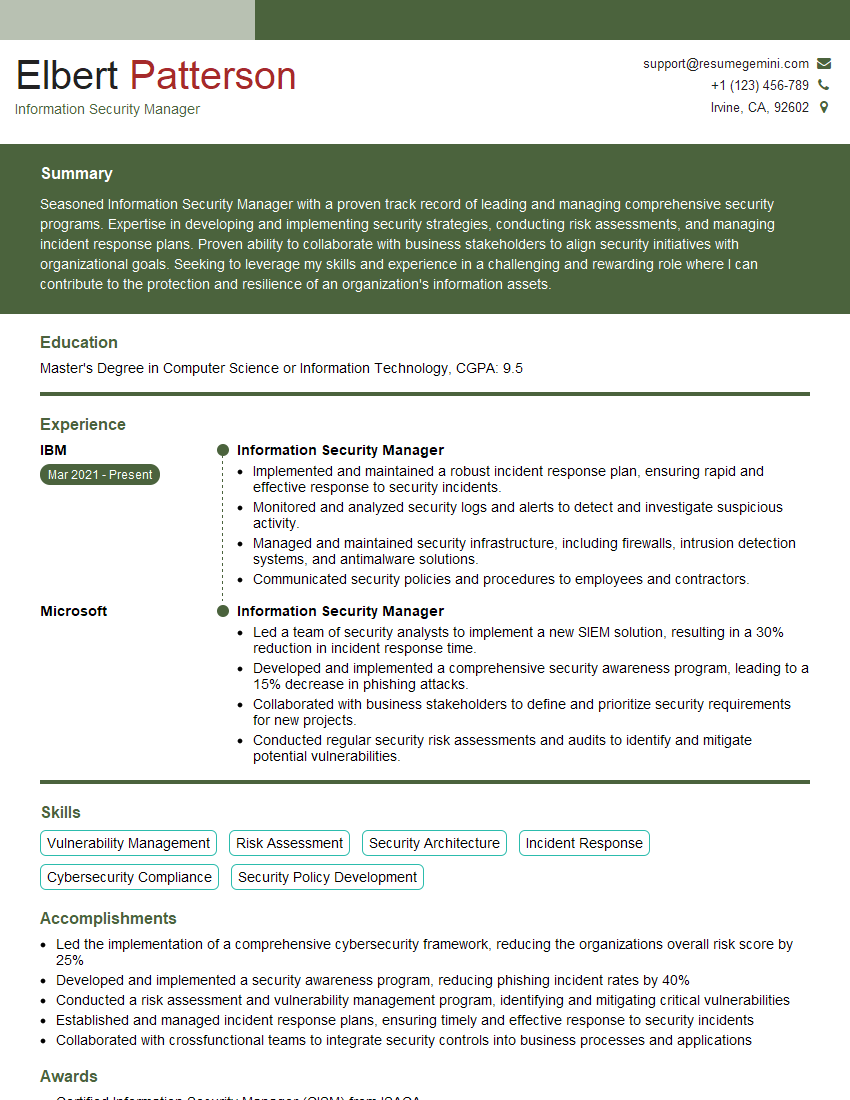
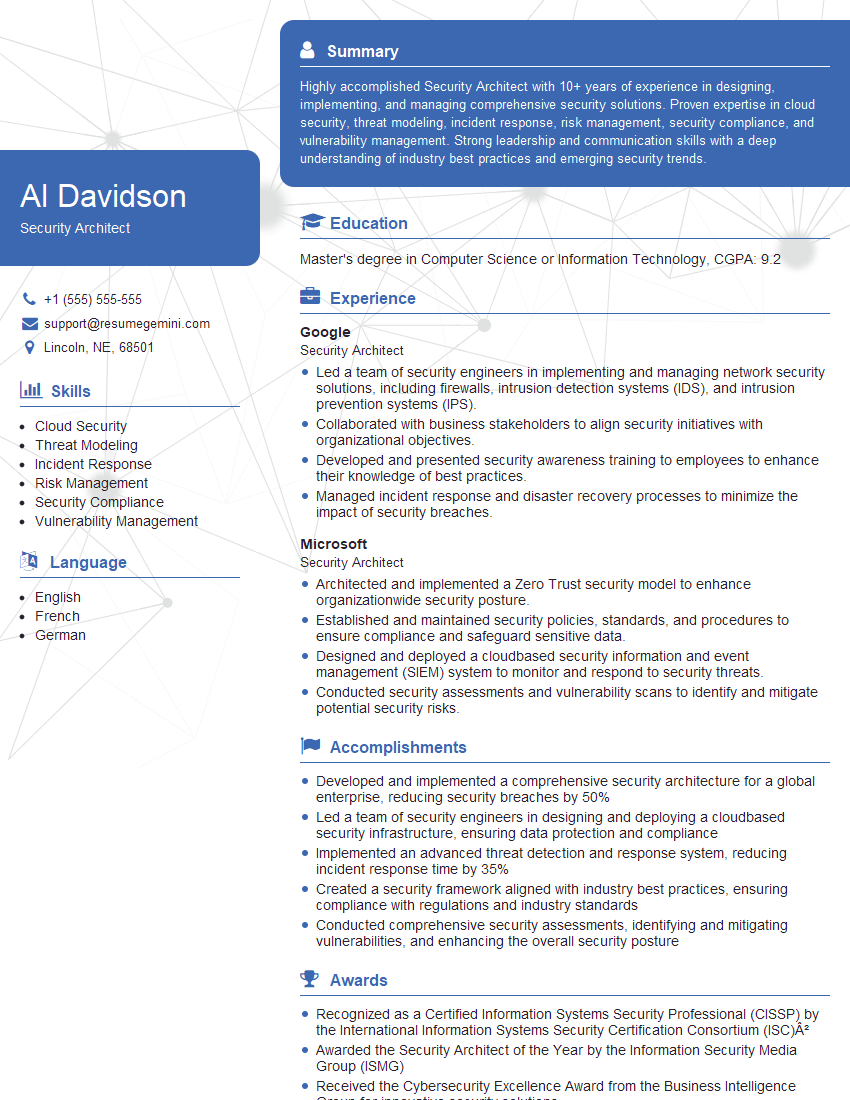
Mastering Cybersecurity Policy and Procedures is crucial for career advancement in this rapidly evolving field. A strong understanding of these concepts demonstrates your ability to contribute meaningfully to an organization’s security posture and protect valuable assets. To significantly boost your job prospects, create a compelling and ATS-friendly resume that highlights your relevant skills and experience. ResumeGemini is a trusted resource to help you build a professional and impactful resume. We provide examples of resumes tailored to Cybersecurity Policy and Procedures to guide you through the process, ensuring your application stands out.
Explore more articles
Users Rating of Our Blogs
Share Your Experience
We value your feedback! Please rate our content and share your thoughts (optional).
What Readers Say About Our Blog
Very informative content, great job.
good