The thought of an interview can be nerve-wracking, but the right preparation can make all the difference. Explore this comprehensive guide to Data Analysis and Audience Engagement interview questions and gain the confidence you need to showcase your abilities and secure the role.
Questions Asked in Data Analysis and Audience Engagement Interview
Q 1. Explain the difference between descriptive, predictive, and prescriptive analytics.
The three types of analytics – descriptive, predictive, and prescriptive – represent a progression in data analysis sophistication. Think of it as moving from understanding the past, to anticipating the future, to actively influencing it.
Descriptive Analytics: This is the most basic level, focusing on summarizing and describing past data. It answers the question: “What happened?” Examples include calculating average sales, identifying top-performing products, or creating charts showing website traffic over time. It’s like looking in a rearview mirror to see where you’ve been.
Predictive Analytics: This goes beyond describing the past to forecasting future outcomes. It answers: “What might happen?” Techniques like machine learning algorithms are used to analyze historical data and identify patterns to predict future events, such as customer churn, stock prices, or demand for a product. Think of it as looking through a windshield to anticipate what’s ahead.
Prescriptive Analytics: This is the most advanced type, focusing on recommending actions to optimize outcomes. It answers: “What should we do?” Prescriptive analytics utilizes predictive models and optimization techniques to suggest the best course of action. For example, it might recommend optimal pricing strategies, suggest inventory adjustments to minimize waste, or personalize marketing campaigns for maximum engagement. This is like having a GPS guiding you to your destination.
Q 2. How do you handle missing data in a dataset?
Handling missing data is crucial for maintaining data integrity and accuracy. Ignoring it can lead to biased results and flawed conclusions. The best approach depends on the nature and extent of the missing data, as well as the specific analytical technique being used. Here’s a breakdown of common strategies:
Deletion: This involves removing rows or columns with missing values. Listwise deletion removes entire rows with any missing data, while pairwise deletion uses available data for each analysis. It’s simple but can lead to significant data loss if missing values are widespread.
Imputation: This involves replacing missing values with estimated values. Common methods include using the mean, median, or mode of the available data for that variable (simple imputation). More sophisticated techniques include k-nearest neighbors (KNN) imputation, which uses the values of similar data points to estimate missing values, or multiple imputation, which creates multiple plausible imputed datasets to account for uncertainty.
Model-Based Imputation: This involves building a predictive model to estimate the missing values. For example, you could use regression analysis to predict missing values based on other variables in the dataset.
Choosing the right method requires careful consideration. For example, if missing data is random, simple imputation might suffice. However, if there’s a pattern to the missing data (e.g., missing values are more common for a specific demographic), more sophisticated methods like KNN or model-based imputation are preferred to avoid bias.
Q 3. What are some common data visualization techniques, and when would you use each?
Data visualization is crucial for communicating insights effectively. The choice of technique depends on the type of data and the message you want to convey.
Bar charts: Ideal for comparing categorical data, showing the frequency or magnitude of different categories. For example, comparing sales across different regions.
Line charts: Best for displaying trends and changes over time. For example, showing website traffic over a year.
Scatter plots: Useful for exploring the relationship between two continuous variables. For example, showing the correlation between advertising spend and sales.
Pie charts: Effective for showing the proportion of different categories within a whole. For example, showing the market share of different brands.
Histograms: Display the distribution of a single continuous variable. For example, showing the distribution of customer ages.
Heatmaps: Show the magnitude of a variable across a matrix, often used for visualizing correlation matrices or geographic data.
Effective data visualization requires careful consideration of factors such as color palettes, labels, and overall design to ensure clarity and avoid misleading interpretations.
Q 4. Describe your experience with A/B testing.
A/B testing is a cornerstone of data-driven decision-making, particularly in audience engagement. I’ve extensively used A/B testing to optimize website design, email marketing campaigns, and social media content.
For example, in a recent project optimizing email open rates, we A/B tested two subject lines: one using a more formal tone and one using a more casual tone. We tracked the open rates for each version, and the data clearly indicated a significant preference for the casual subject line, leading to a substantial increase in open rates and ultimately, conversion rates.
The process typically involves:
Defining a hypothesis: What do you want to test? (e.g., Will a different call-to-action button increase click-through rates?)
Creating variations: Design multiple versions of the element you’re testing.
Implementing the test: Use a testing platform to randomly assign users to different versions.
Analyzing the results: Use statistical tests to determine if the differences in performance are statistically significant.
It’s important to ensure sufficient sample size and control for confounding variables to obtain reliable results.
Q 5. How do you measure the success of an audience engagement campaign?
Measuring the success of an audience engagement campaign requires a multi-faceted approach, going beyond simple metrics like reach or impressions. Success hinges on achieving the campaign’s specific objectives.
We need to define clear, measurable goals upfront. For example, are we aiming to increase brand awareness, drive website traffic, generate leads, or boost sales? Then, we select the appropriate metrics to track progress against those goals.
Key metrics might include:
Website Traffic: Unique visitors, bounce rate, time on site, pages per visit.
Social Media Engagement: Likes, shares, comments, retweets, mentions.
Lead Generation: Number of leads generated, conversion rate from leads to customers.
Sales: Revenue generated, conversion rate from visitors to purchasers.
Brand Sentiment: Tracking positive, negative, and neutral sentiment expressed towards the brand online.
Ultimately, success is judged by whether the campaign achieved its predefined objectives within budget and timelines.
Q 6. What are some key performance indicators (KPIs) you track for audience engagement?
Key Performance Indicators (KPIs) for audience engagement vary depending on the campaign goals but typically include a mix of quantitative and qualitative metrics. Here are some examples:
Engagement Rate: The percentage of the audience that interacts with the content (likes, comments, shares, clicks).
Click-Through Rate (CTR): The percentage of people who clicked on a link or call-to-action.
Conversion Rate: The percentage of people who completed a desired action (e.g., made a purchase, signed up for a newsletter).
Average Session Duration: The average amount of time users spend on a website or app.
Bounce Rate: The percentage of visitors who leave a website after viewing only one page.
Customer Lifetime Value (CLTV): The predicted revenue generated by a customer over their entire relationship with the brand.
Net Promoter Score (NPS): A measure of customer loyalty and satisfaction.
Tracking these KPIs provides insights into campaign performance and identifies areas for improvement.
Q 7. How do you segment an audience for targeted marketing efforts?
Audience segmentation is critical for creating targeted marketing campaigns that resonate with specific groups. It’s about dividing a broad audience into smaller, more homogeneous segments based on shared characteristics. This allows for more personalized messaging and improved campaign effectiveness.
Segmentation can be based on various factors:
Demographic: Age, gender, location, income, education.
Behavioral: Website activity, purchase history, engagement with marketing materials.
Psychographic: Lifestyle, interests, values, attitudes.
Geographic: Country, region, city, zip code.
For example, an e-commerce company might segment its audience into:
High-value customers: Those who have made frequent purchases and have a high average order value.
New customers: Those who have recently made their first purchase.
Inactive customers: Those who haven’t made a purchase in a while.
By understanding these segments, the company can tailor its marketing messages and offers to resonate with each group’s needs and preferences, leading to higher engagement and conversion rates.
Q 8. What is your experience with SQL and data manipulation?
SQL is the cornerstone of my data manipulation skills. I’ve extensively used it across various projects to extract, transform, and load (ETL) data from diverse sources, including relational databases like MySQL, PostgreSQL, and SQL Server. My experience encompasses writing complex queries involving joins, subqueries, window functions, and common table expressions (CTEs) to efficiently retrieve and manipulate data. For instance, in a recent project analyzing customer behavior, I used CTEs to recursively traverse a hierarchical customer data structure to calculate lifetime value, significantly improving query efficiency compared to using multiple self-joins.
Beyond basic SELECT statements, I’m proficient in using SQL’s data manipulation capabilities like INSERT, UPDATE, and DELETE to modify data within the database. I also have experience optimizing queries using indexing and query analysis tools to ensure optimal performance, even with large datasets. I’m comfortable working with both structured and semi-structured data, adapting my SQL techniques to the specific data format.
Q 9. How do you interpret and communicate data findings to non-technical audiences?
Communicating data findings effectively to non-technical audiences is crucial. My approach involves translating complex technical analyses into clear, concise, and engaging narratives. I avoid jargon and technical terms whenever possible, instead relying on visual aids like charts, graphs, and dashboards to illustrate key findings. Think of it like telling a story; the data provides the plot, and I shape it into a compelling narrative that resonates with the audience.
For example, instead of saying “the conversion rate increased by 15% due to a statistically significant improvement in click-through rates from targeted advertising campaigns,” I might say, “Our targeted ads were a big success! We saw a 15% jump in customers completing the purchase process, which is shown here on this chart [pointing to a clear bar chart]. This is mainly because of the higher number of people clicking on our ads.” I always tailor my communication style to the specific audience and their level of technical understanding.
Q 10. Describe your experience with data analysis tools (e.g., Excel, R, Python, Tableau).
My data analysis toolkit is quite diverse. Excel is my go-to for quick data exploration, cleaning, and creating simple visualizations. For more advanced statistical modeling and data manipulation, I rely heavily on Python, utilizing libraries like Pandas, NumPy, and Scikit-learn. Pandas allows for efficient data manipulation and cleaning, NumPy provides powerful numerical computation capabilities, and Scikit-learn offers a wide range of machine learning algorithms. I’ve also used R for statistical analysis, particularly when dealing with more complex statistical models. Finally, Tableau is indispensable for creating interactive and compelling data visualizations for presentations and reports.
In a recent project, I used Python’s Pandas library to clean and preprocess a large customer dataset, then employed Scikit-learn to build a predictive model to identify high-value customers. The results were then visually represented in Tableau, creating an easy-to-understand dashboard for stakeholders.
Q 11. How do you identify trends and patterns in data?
Identifying trends and patterns in data requires a combination of exploratory data analysis (EDA) techniques and a keen eye for detail. I start by summarizing the data using descriptive statistics (mean, median, standard deviation) to get a general overview. Then, I use visualization tools like histograms, scatter plots, and box plots to identify potential patterns visually. For time-series data, I look for seasonality, trends, and cyclical patterns.
Furthermore, I leverage correlation analysis to understand relationships between different variables. For example, a strong positive correlation between marketing spend and sales revenue might suggest a direct relationship. Advanced techniques like clustering and dimensionality reduction can be utilized for identifying hidden patterns in large, high-dimensional datasets. In essence, I combine quantitative and qualitative analysis to provide a comprehensive understanding of the data’s underlying structure.
Q 12. Explain your approach to data cleaning and preprocessing.
Data cleaning and preprocessing is a critical step that significantly impacts the accuracy and reliability of the final analysis. My approach is systematic and involves several key steps:
- Handling Missing Values: I carefully examine the nature of missing data. Is it missing completely at random (MCAR), missing at random (MAR), or missing not at random (MNAR)? Different imputation techniques (e.g., mean imputation, k-nearest neighbors) are applied based on the nature of the missingness.
- Outlier Detection and Treatment: I use box plots, scatter plots, and statistical methods (e.g., IQR method) to identify outliers. Depending on the context, outliers might be removed, transformed (e.g., using logarithmic transformation), or kept as they might represent legitimate data points.
- Data Transformation: I often transform variables to improve model performance or to meet assumptions of statistical tests. This might include scaling variables (e.g., standardization, normalization), creating dummy variables for categorical data, or applying logarithmic or square root transformations.
- Data Consistency and Validation: I check for inconsistencies in data formats, spelling errors, and duplicate entries. Data validation rules are implemented to ensure the data meets certain criteria before analysis.
Throughout this process, I document each step meticulously, ensuring reproducibility and transparency.
Q 13. How do you ensure data accuracy and reliability?
Data accuracy and reliability are paramount. My approach centers around several key strategies:
- Source Verification: I always verify the credibility and reliability of the data sources. This involves checking the data collection methods, assessing potential biases, and understanding the limitations of the data.
- Data Validation: I implement rigorous data validation checks throughout the data processing pipeline. This includes using automated scripts and manual reviews to detect and correct errors.
- Cross-Validation: Whenever possible, I use multiple data sources to cross-validate findings. This reduces reliance on a single source and increases confidence in the results.
- Documentation: Comprehensive documentation of the data cleaning and preprocessing steps is essential for ensuring transparency and reproducibility. This includes documenting the rationale behind decisions related to handling missing data, outliers, and data transformations.
By meticulously following these steps, I strive to maintain the highest level of data quality and integrity.
Q 14. What is your experience with statistical analysis techniques?
My experience with statistical analysis techniques is extensive. I’m proficient in both descriptive and inferential statistics. Descriptive statistics, like calculating means, medians, and standard deviations, give me a basic understanding of the data. Inferential statistics, however, allow me to draw conclusions about a population based on a sample. I routinely employ techniques such as:
- Hypothesis Testing: t-tests, ANOVA, chi-square tests to determine if there are statistically significant differences between groups or relationships between variables.
- Regression Analysis: Linear regression, logistic regression, and multiple regression to model relationships between variables and make predictions.
- Correlation Analysis: Pearson and Spearman correlation to assess the strength and direction of relationships between variables.
- Time Series Analysis: ARIMA modeling, exponential smoothing for forecasting and identifying trends in time-series data.
I select the appropriate statistical method based on the research question, data type, and assumptions of the test. I am also well-versed in interpreting the results of these analyses and communicating them effectively to both technical and non-technical audiences.
Q 15. How do you use data to inform marketing decisions?
Data-driven marketing decisions are crucial for success. Instead of relying on gut feelings, we leverage data to understand our audience, measure campaign effectiveness, and optimize strategies. This involves a multi-step process:
- Define Objectives: Clearly state what you want to achieve (e.g., increase website traffic, boost conversions). This guides data collection and analysis.
- Data Collection: Gather relevant data from various sources like website analytics (Google Analytics), CRM systems, social media platforms, and marketing automation tools.
- Data Analysis: Use tools and techniques (e.g., statistical modeling, A/B testing) to identify trends, patterns, and insights within the data. For example, analyzing website heatmaps reveals areas users engage with most, guiding website optimization.
- Actionable Insights: Translate data insights into actionable strategies. If data shows a specific ad campaign underperforms, we adjust targeting, messaging, or creative assets.
- Measurement & Iteration: Continuously monitor the impact of your marketing decisions, refine strategies based on performance data, and iterate to achieve optimal results.
For instance, if data shows a higher conversion rate from mobile users, we could allocate a larger budget towards mobile advertising.
Career Expert Tips:
- Ace those interviews! Prepare effectively by reviewing the Top 50 Most Common Interview Questions on ResumeGemini.
- Navigate your job search with confidence! Explore a wide range of Career Tips on ResumeGemini. Learn about common challenges and recommendations to overcome them.
- Craft the perfect resume! Master the Art of Resume Writing with ResumeGemini’s guide. Showcase your unique qualifications and achievements effectively.
- Don’t miss out on holiday savings! Build your dream resume with ResumeGemini’s ATS optimized templates.
Q 16. Describe your experience with social media analytics.
I have extensive experience with social media analytics, using platforms like Facebook Insights, Twitter Analytics, and Instagram Insights. My work involves:
- Tracking Key Metrics: Analyzing metrics such as reach, engagement (likes, comments, shares), website clicks, conversions, and brand mentions.
- Audience Segmentation: Identifying key audience demographics, interests, and behaviors to tailor content and advertising.
- Competitive Analysis: Benchmarking against competitors to understand their strategies, content performance, and audience engagement.
- Campaign Performance Measurement: Assessing the ROI of social media campaigns by tracking conversions and attributing them to specific initiatives.
- Sentiment Analysis: Utilizing tools to gauge public opinion towards the brand or products on social media, allowing for proactive crisis management and reputation building.
For example, using Facebook Insights, I helped a client identify their most engaged audience segments based on demographics and interests, enabling them to create hyper-targeted ad campaigns resulting in a 30% increase in conversion rates.
Q 17. How do you measure customer lifetime value (CLTV)?
Customer Lifetime Value (CLTV) predicts the total revenue a customer will generate throughout their relationship with a business. There are several methods to calculate CLTV, but a common approach is:
CLTV = Average Purchase Value x Average Purchase Frequency x Average Customer Lifespan
Let’s break it down:
- Average Purchase Value (APV): The average amount a customer spends per transaction.
- Average Purchase Frequency (APF): The average number of times a customer purchases from your business in a given period (e.g., monthly, annually).
- Average Customer Lifespan (ACL): The average length of time a customer remains a paying customer.
Example: If APV = $50, APF = 4 times per year, and ACL = 5 years, then CLTV = $50 x 4 x 5 = $1000. This means a single customer is projected to generate $1000 in revenue over their lifetime. More sophisticated models can incorporate factors like customer churn and discount rates for a more precise calculation.
Q 18. What is your approach to identifying and addressing audience pain points?
Identifying and addressing audience pain points is key to building strong customer relationships and increasing engagement. My approach is multifaceted:
- Customer Feedback Collection: Utilizing surveys, feedback forms, reviews, and social media listening to understand customer challenges and frustrations.
- Data Analysis: Analyzing website analytics, CRM data, and support tickets to pinpoint recurring issues and common pain points.
- User Interviews & Focus Groups: Conducting qualitative research to delve deeper into customer experiences and gather in-depth insights.
- Competitor Analysis: Studying competitor offerings and identifying areas where they excel or fall short in addressing customer needs.
- Solution Development: Creating solutions that directly address the identified pain points. This could involve product improvements, new features, enhanced customer support, or targeted marketing messages.
For example, through customer surveys, we discovered many users struggled with a specific feature on our website. We redesigned the feature based on the feedback, resulting in a significant reduction in customer support tickets and an improvement in user satisfaction.
Q 19. How do you use data to optimize user experience?
Data plays a critical role in optimizing user experience (UX). By analyzing user behavior and preferences, we can improve website design, content, and functionality to enhance user satisfaction and engagement.
- Website Analytics: Using tools like Google Analytics to track metrics like bounce rate, time on page, conversion rates, and user flows to identify areas for improvement.
- A/B Testing: Experimenting with different versions of web pages or features (e.g., different button colors, layouts) to see which performs better based on user interactions.
- Heatmaps & Scroll Maps: Visualizing user behavior on a webpage to understand where users click, scroll, and engage, informing design decisions.
- User Feedback: Collecting and analyzing user feedback through surveys, feedback forms, and user interviews to gain insights into their experience.
- Personalization: Using data to tailor content and recommendations to individual users based on their browsing history and preferences.
For example, analyzing heatmaps revealed that a crucial call-to-action button was poorly placed on a landing page. After repositioning the button, conversion rates increased significantly.
Q 20. How do you stay current with the latest trends in data analysis and audience engagement?
Staying up-to-date in the rapidly evolving fields of data analysis and audience engagement is crucial. My strategies include:
- Industry Publications & Blogs: Following leading publications and blogs in marketing, analytics, and technology to stay informed about new trends and best practices.
- Conferences & Webinars: Attending industry conferences and webinars to learn from experts and network with professionals in the field.
- Online Courses & Certifications: Continuously expanding my knowledge and skills through online courses and professional certifications in data analytics and marketing.
- Professional Networks: Engaging with professional networks and communities (e.g., LinkedIn groups) to share insights and learn from others.
- Experimentation & Practice: Experimenting with new tools and techniques and applying them in real-world projects to gain hands-on experience.
I believe continuous learning is essential to remain competitive and adapt to the ever-changing landscape of data analysis and audience engagement.
Q 21. Describe a time you had to analyze a complex dataset to solve a problem.
In a previous role, I was tasked with analyzing a large dataset containing customer purchase history, website activity, and social media interactions to identify patterns and predict future customer behavior. The dataset was complex, with missing data and inconsistencies. My approach involved:
- Data Cleaning & Preprocessing: Addressing missing values, handling outliers, and transforming data into a consistent format. This involved using techniques like imputation and data standardization.
- Exploratory Data Analysis (EDA): Visualizing the data to identify trends, patterns, and relationships between variables. This involved creating histograms, scatter plots, and correlation matrices.
- Feature Engineering: Creating new features from existing ones to improve model performance. For example, I created a customer segmentation feature based on purchase frequency and value.
- Model Selection & Training: Exploring different machine learning models (e.g., regression, clustering) to predict customer behavior, selecting the best model based on performance metrics.
- Model Evaluation & Interpretation: Assessing the accuracy and reliability of the chosen model and explaining the results in a clear and concise manner to stakeholders.
Through this analysis, we identified several key customer segments with distinct purchasing behaviors, enabling us to create targeted marketing campaigns and improve customer retention.
Q 22. How do you identify and prioritize audience segments for engagement?
Identifying and prioritizing audience segments for engagement is crucial for effective marketing. It’s like tailoring a suit – you wouldn’t use the same pattern for everyone! We need to understand our audience’s needs, preferences, and behaviors to create targeted campaigns.
My approach involves a multi-step process:
- Data Collection and Analysis: I begin by gathering data from various sources, including website analytics (Google Analytics), CRM systems, social media platforms, and surveys. This data helps paint a picture of our audience’s demographics, interests, online behavior, and purchase history.
- Segmentation: Using this data, I segment the audience based on relevant criteria. This could include demographics (age, location, gender), behavioral data (website activity, purchase history, email engagement), or psychographics (interests, values, lifestyle). For example, I might segment a fashion brand’s audience into ‘budget-conscious millennials,’ ‘luxury-loving professionals,’ and ‘eco-conscious shoppers.’ Each segment has unique needs and responds differently to marketing messages.
- Prioritization: I prioritize segments based on factors like their potential value, engagement level, and responsiveness to past campaigns. Segments with high engagement and conversion rates are usually prioritized. A robust ROI (Return on Investment) analysis guides this process.
- Persona Development: For each key segment, I develop detailed buyer personas – fictional representations of ideal customers within that segment. These personas help us understand their motivations, pain points, and communication preferences, enabling us to craft highly targeted and resonant messages.
For instance, in a previous role, we identified a high-value segment of ‘tech-savvy professionals’ who were highly engaged with our social media content. By prioritizing them, we focused our efforts on creating more advanced technical webinars and engaging content tailored to their interests, leading to a significant increase in lead generation.
Q 23. What is your experience with marketing automation tools?
I have extensive experience with various marketing automation tools, including HubSpot, Marketo, and Pardot. My expertise extends beyond simply using these tools; I understand how to leverage them strategically to streamline marketing workflows, improve efficiency, and enhance customer engagement.
My experience encompasses:
- Lead nurturing workflows: Designing automated email sequences to engage leads at different stages of the sales funnel. This involves segmenting leads based on their behavior and tailoring email content to their specific needs and interests.
- Campaign management: Creating and managing complex marketing campaigns, automating tasks such as email sending, social media posting, and lead scoring.
- Data integration and reporting: Integrating marketing automation tools with CRM systems and other data sources to gain a comprehensive view of customer interactions and campaign performance.
- Personalization: Using marketing automation to personalize email messages and website content based on customer data. This includes dynamic content insertion and personalized recommendations.
For example, using HubSpot, I designed a multi-stage email nurture campaign that resulted in a 25% increase in qualified leads. The automation eliminated manual effort, ensured consistent messaging, and personalized the customer journey based on their interactions with our content.
Q 24. How do you leverage data to personalize the customer experience?
Data is the cornerstone of personalized customer experience. It’s about moving beyond generic marketing and creating tailored interactions that resonate with individual customers. Imagine walking into a store where the staff already knows your name and your favorite products – that’s the goal of personalization.
My approach involves:
- Data collection and analysis: Gathering data from various touchpoints, including website activity, purchase history, customer service interactions, and social media engagement.
- Customer segmentation: Dividing customers into segments based on their shared characteristics and behaviors.
- Personalized recommendations: Using data to suggest relevant products or services to individual customers. This could involve using recommendation engines or simply sending targeted email campaigns.
- Targeted messaging: Tailoring marketing messages to resonate with specific customer segments. This might involve using different language, imagery, or calls to action.
- Personalized website experiences: Creating dynamic website content that adapts based on the visitor’s characteristics and preferences.
For instance, I once worked with an e-commerce company to implement personalized product recommendations based on past purchases and browsing history. This resulted in a 15% increase in average order value and a boost in customer satisfaction.
Q 25. Describe your approach to building relationships with stakeholders.
Building strong relationships with stakeholders is paramount for successful data analysis and audience engagement. It’s about fostering trust, transparency, and open communication. I approach this by:
- Active listening: Understanding stakeholder needs, concerns, and priorities. I ensure I understand their goals and challenges before proposing solutions.
- Clear and concise communication: Presenting data findings in a clear, concise, and easily understandable manner, avoiding technical jargon where possible.
- Regular updates and feedback loops: Providing regular updates on project progress and seeking feedback from stakeholders throughout the process.
- Collaboration and teamwork: Working collaboratively with stakeholders to ensure everyone is aligned on goals and objectives.
- Building rapport: Developing strong relationships built on trust and mutual respect.
For example, when working on a large-scale marketing campaign, I held regular meetings with stakeholders from various departments to ensure everyone was informed about the progress and provided opportunities for feedback. This collaborative approach ensured buy-in from all stakeholders and led to a successful campaign.
Q 26. How do you handle conflicting data or ambiguous results?
Conflicting data and ambiguous results are common challenges in data analysis. It requires a systematic and critical approach. I address these challenges by:
- Data validation and verification: Checking the accuracy and reliability of the data sources and using multiple data sources to verify findings.
- Root cause analysis: Investigating the reasons behind conflicting data or ambiguous results, looking for potential errors, biases, or limitations in the data.
- Sensitivity analysis: Testing the robustness of the results to changes in assumptions or data inputs.
- Data visualization: Using charts and graphs to explore data patterns and identify potential anomalies.
- Consultations and collaboration: Discussing conflicting data or ambiguous results with colleagues and stakeholders to gain different perspectives and insights.
In one case, conflicting sales data from two different systems highlighted a data integration issue. By meticulously investigating the data sources and conducting root cause analysis, we identified a data entry error that was resolved, leading to improved accuracy and informed decision-making.
Q 27. What is your experience with data governance and compliance?
Data governance and compliance are crucial aspects of my work. I’m well-versed in data privacy regulations like GDPR and CCPA. My experience includes:
- Data security: Implementing measures to protect data from unauthorized access, use, disclosure, disruption, modification, or destruction.
- Data quality: Ensuring data accuracy, completeness, consistency, timeliness, and validity.
- Data privacy: Complying with relevant data privacy regulations and protecting the privacy of individuals.
- Data governance policies: Developing and implementing data governance policies and procedures to ensure data quality and compliance.
- Data audits: Conducting regular data audits to identify and address any data quality or compliance issues.
For example, before launching a new marketing campaign involving customer data, I ensured compliance with GDPR by implementing appropriate consent mechanisms and data processing procedures. This proactive approach prevented potential legal issues and maintained customer trust.
Q 28. How would you design a campaign to increase audience engagement on social media?
Designing a social media campaign to increase audience engagement requires a multi-faceted approach. It’s about creating valuable, relevant, and engaging content that resonates with your target audience. I’d follow these steps:
- Audience research: Conduct thorough research to understand your target audience’s demographics, interests, and behavior on social media. What platforms do they use? What kind of content do they engage with?
- Content strategy: Develop a content calendar that includes a variety of content formats, such as videos, images, stories, and live streams. The content should be valuable, informative, entertaining, and relevant to your audience.
- Platform-specific strategies: Tailor your content to each platform. For example, use short, engaging videos for TikTok and more detailed articles for LinkedIn.
- Community engagement: Encourage interaction by responding to comments, asking questions, and running contests or giveaways.
- Paid social media advertising: Utilize paid advertising to reach a wider audience and boost your organic reach.
- Analytics and optimization: Track key metrics, such as engagement rate, reach, and website traffic, to measure campaign success and make adjustments as needed.
For example, a campaign for a food blog might involve creating visually appealing food photos and videos, running recipe contests, and using targeted ads to reach foodies on Instagram and Facebook. Regular monitoring of engagement would help optimize content and ad targeting for maximum impact.
Key Topics to Learn for Data Analysis and Audience Engagement Interview
- Data Collection & Cleaning: Understanding various data sources (e.g., social media, CRM, web analytics), data cleaning techniques (handling missing values, outliers), and data transformation methods.
- Descriptive & Inferential Statistics: Applying statistical methods to summarize and interpret data, including measures of central tendency, dispersion, and hypothesis testing. Practical application: Analyzing website traffic patterns to identify trends and areas for improvement.
- Data Visualization: Creating compelling visualizations (charts, graphs, dashboards) to communicate insights effectively. Practical application: Presenting key performance indicators (KPIs) to stakeholders.
- Audience Segmentation & Targeting: Utilizing data to identify and categorize audience segments based on demographics, behavior, and preferences. Practical application: Developing targeted marketing campaigns.
- Engagement Metrics & Analysis: Understanding key metrics such as engagement rate, click-through rate, conversion rate, and using them to measure campaign effectiveness and identify areas for optimization.
- A/B Testing & Experimentation: Designing and conducting A/B tests to compare different approaches and optimize engagement strategies. Practical application: Testing different ad creatives to maximize click-through rates.
- Predictive Modeling (Optional): For more senior roles, familiarity with predictive modeling techniques (e.g., regression, classification) to forecast future audience behavior.
- Reporting & Communication: Effectively communicating data insights to both technical and non-technical audiences through clear and concise reports and presentations.
- Data Privacy & Ethics: Understanding data privacy regulations and ethical considerations when handling user data.
Next Steps
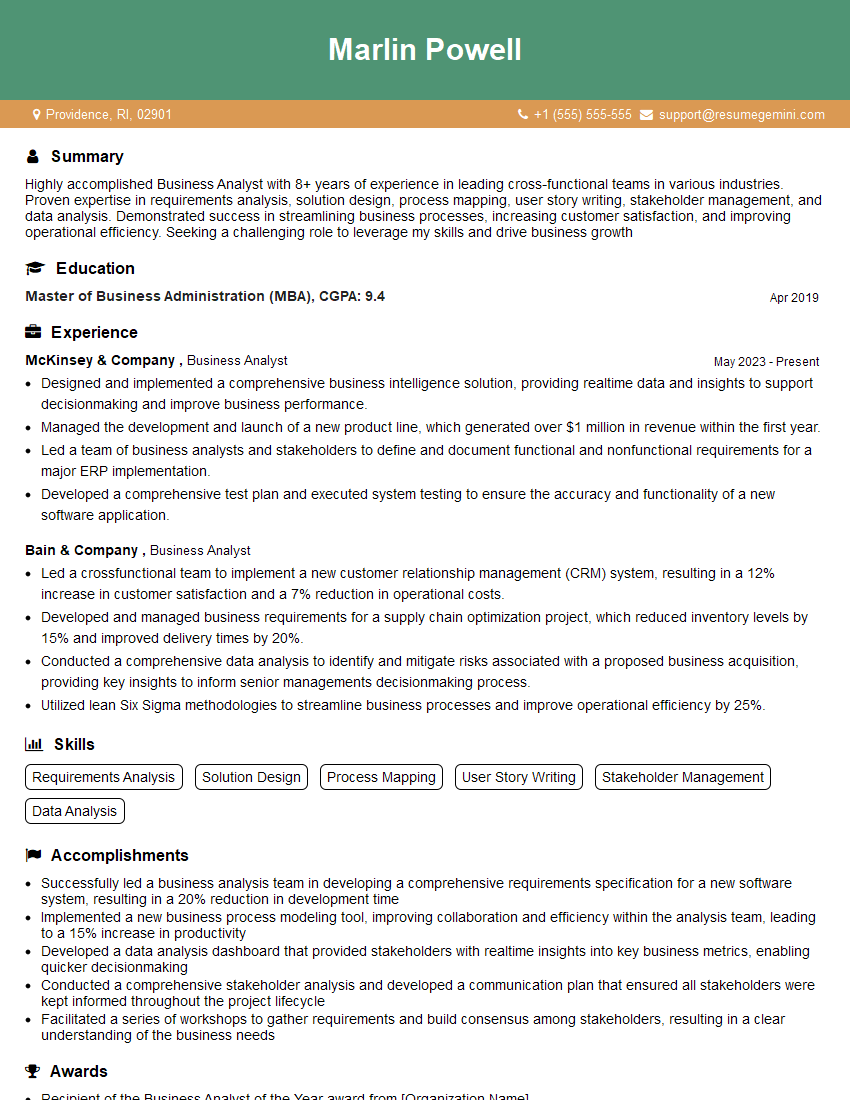
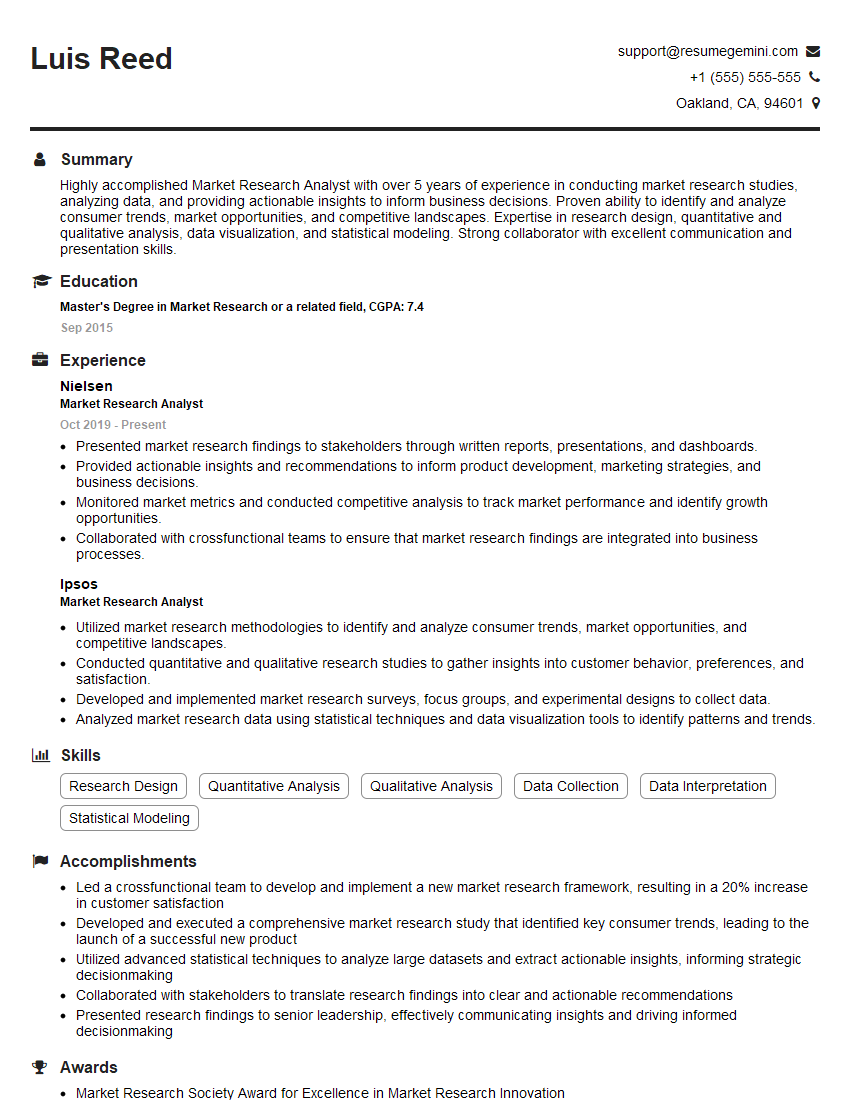
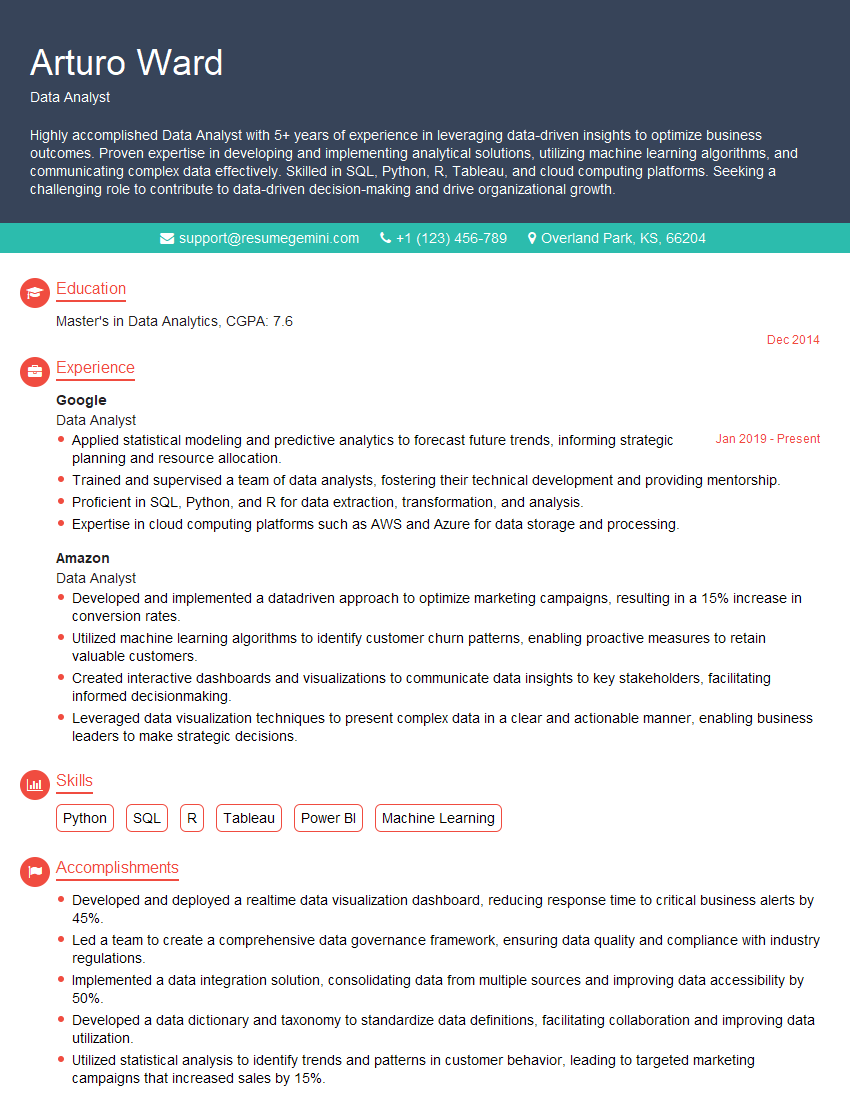
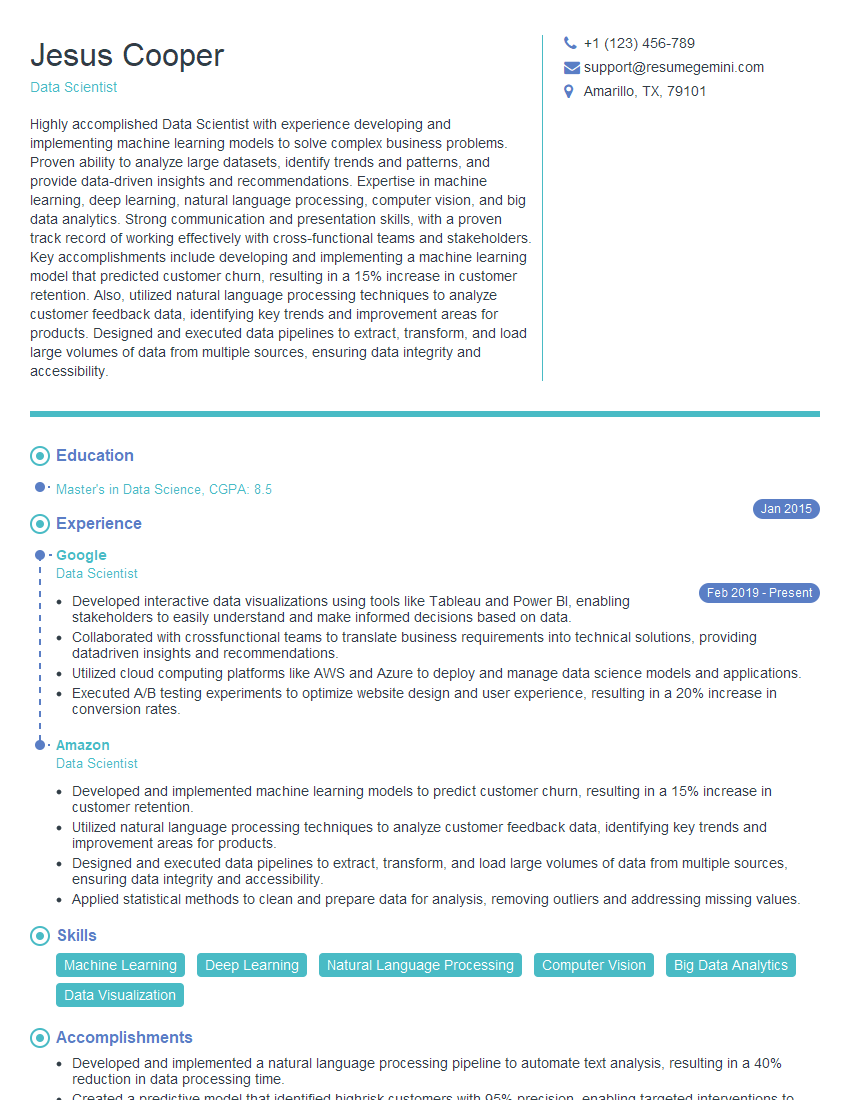
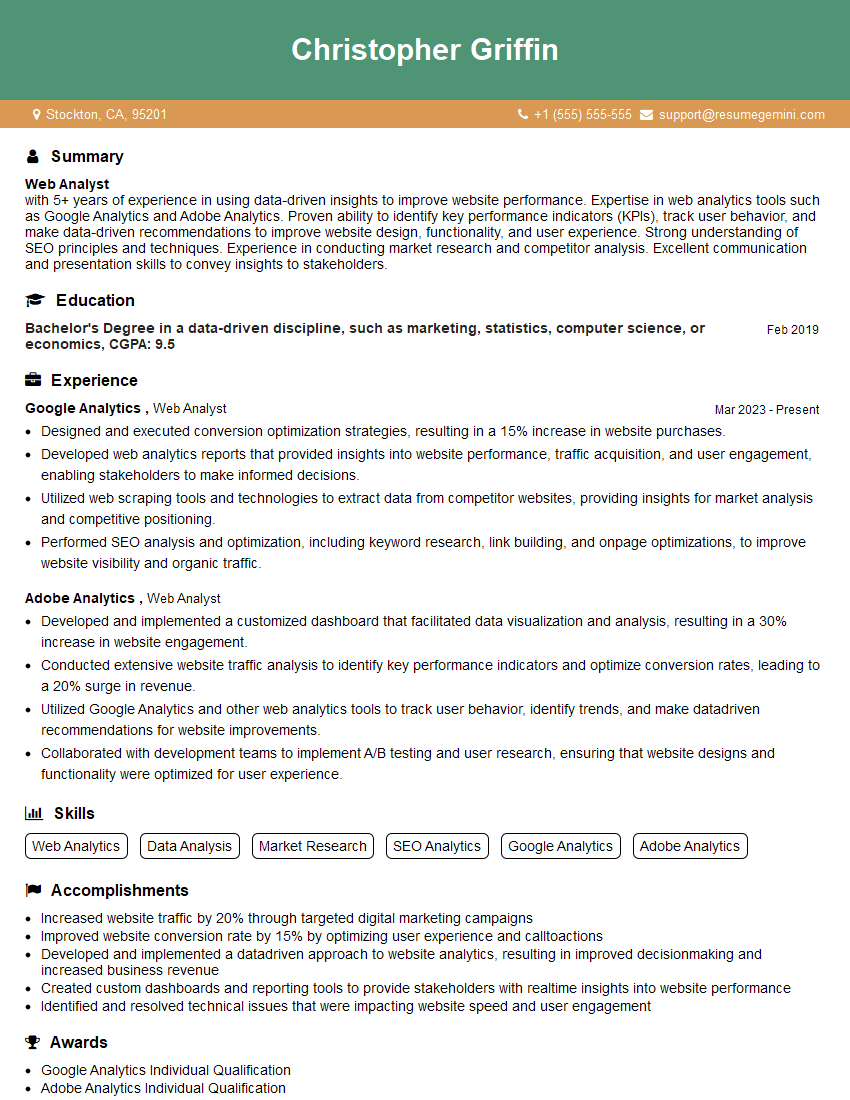
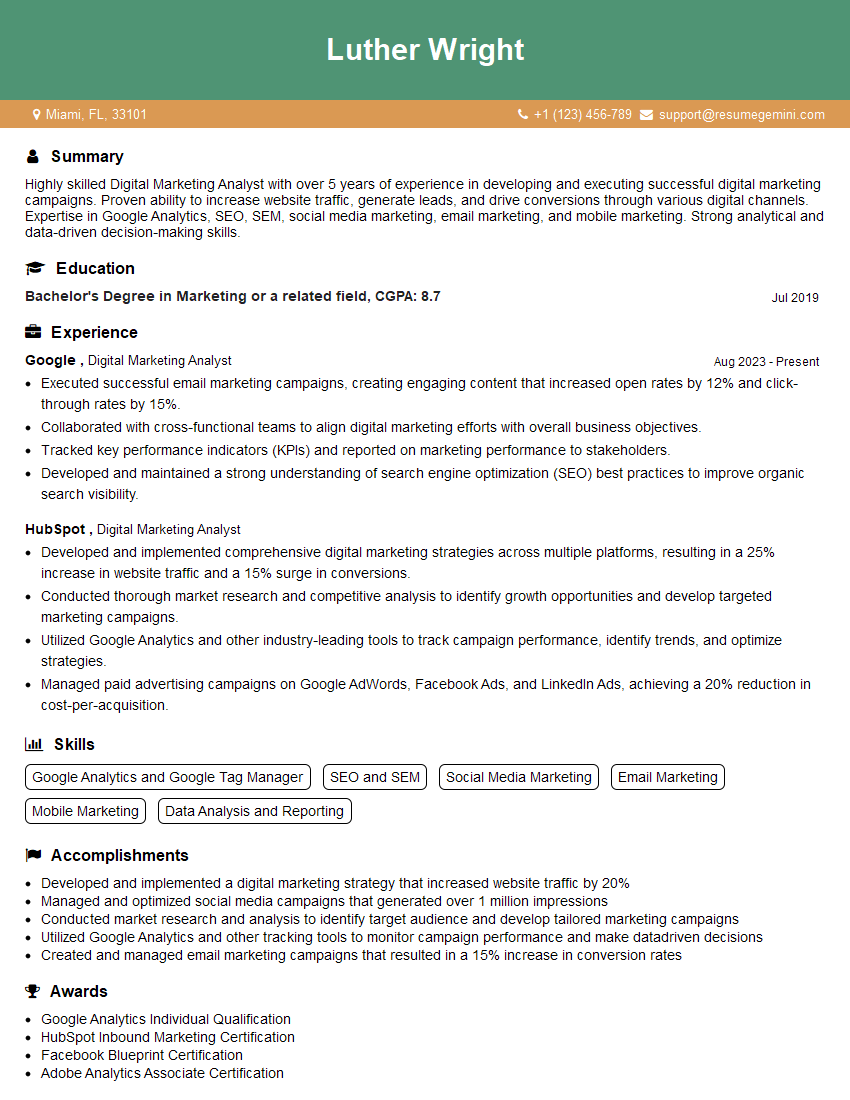
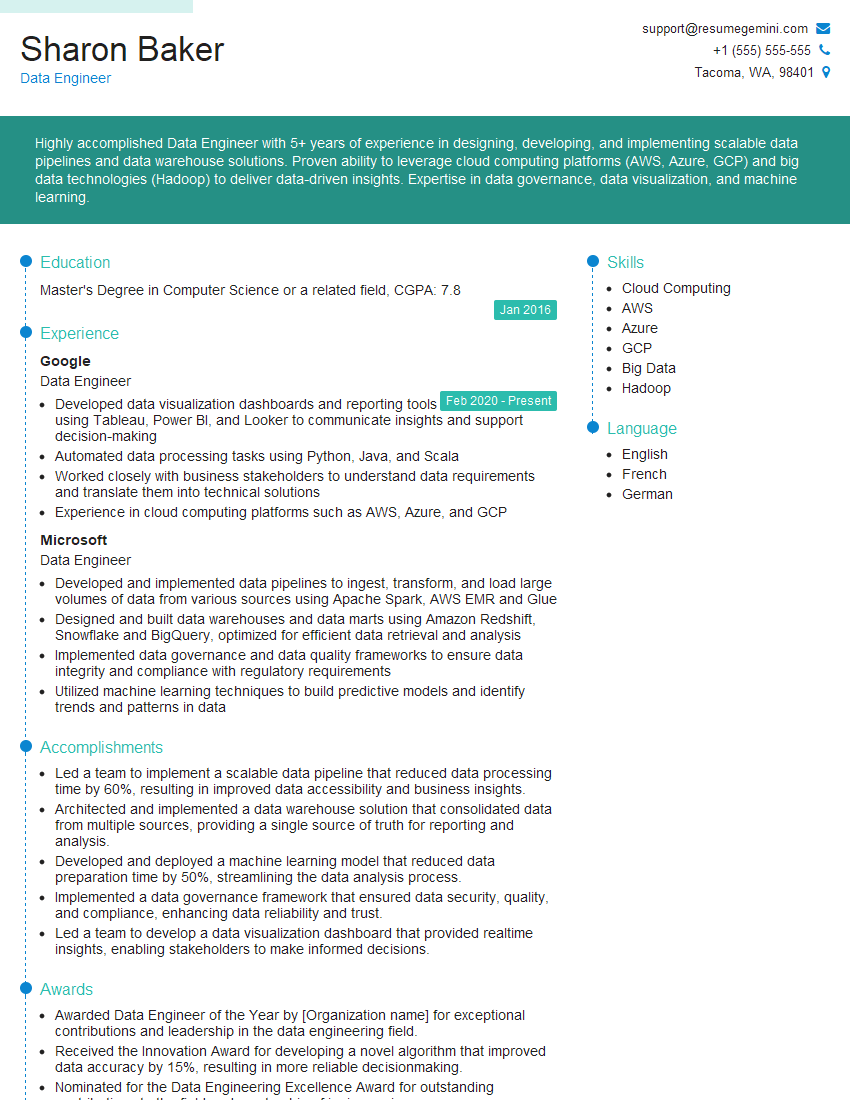
Mastering Data Analysis and Audience Engagement is crucial for career advancement in today’s data-driven world. These skills are highly sought after across various industries, leading to increased job opportunities and higher earning potential. To maximize your chances of landing your dream role, it’s vital to present your skills effectively. Building an ATS-friendly resume is key to getting your application noticed by recruiters. We strongly recommend leveraging ResumeGemini to craft a compelling and optimized resume that highlights your unique qualifications. ResumeGemini provides excellent examples of resumes tailored to Data Analysis and Audience Engagement roles, helping you showcase your expertise in the best possible light.

Explore more articles
Users Rating of Our Blogs
Share Your Experience
We value your feedback! Please rate our content and share your thoughts (optional).
What Readers Say About Our Blog
Very informative content, great job.
good