Interviews are more than just a Q&A session—they’re a chance to prove your worth. This blog dives into essential Deep Diving interview questions and expert tips to help you align your answers with what hiring managers are looking for. Start preparing to shine!
Questions Asked in Deep Diving Interview
Q 1. Describe your experience with different diving techniques (e.g., surface supplied, scuba, mixed gas).
My diving experience encompasses a wide range of techniques, starting with recreational SCUBA (Self-Contained Underwater Breathing Apparatus) diving, which formed the foundation of my understanding of underwater environments and buoyancy control. I’ve progressed to more advanced techniques, including mixed-gas diving, where I’ve utilized different gas blends like trimix (oxygen, helium, and nitrogen) and nitrox (oxygen and nitrogen) to manage decompression obligations at significant depths. This involved rigorous training and certification in advanced gas blending and decompression procedures. Furthermore, I’ve extensive experience with surface-supplied diving, working with both closed-circuit and open-circuit systems. Surface-supplied diving offers advantages in terms of extended bottom times and reduced risk of gas supply issues, which I’ve experienced firsthand during complex underwater tasks such as underwater welding and pipeline inspections.
- SCUBA: Ideal for recreational and relatively shallow dives. I’ve conducted hundreds of dives using this method, focusing on proper buoyancy control and navigation.
- Mixed Gas: Essential for technical dives exceeding recreational limits. I have a strong understanding of gas partial pressures and their impact on the human body at depth, allowing me to plan and execute dives safely using appropriate gas mixtures.
- Surface Supplied: Used extensively for commercial diving and complex underwater operations. I’m proficient in handling umbilicals and maintaining communication and gas supply throughout the dive.
Q 2. Explain the principles of decompression and how it relates to dive planning.
Decompression is the process of gradually reducing the partial pressure of inert gases (primarily nitrogen) dissolved in the body’s tissues during ascent from a dive. As we descend, increased pressure forces more gas into our tissues. If we ascend too quickly, these gases can form bubbles, leading to decompression sickness (DCS), also known as ‘the bends’.
Dive planning revolves around managing decompression. Factors considered include dive depth, duration, and the ascent rate. Dive tables or dive computers calculate the decompression stops required to allow sufficient time for the inert gases to be safely eliminated from the body. The underlying principle is Henry’s Law, which states that the amount of gas dissolved in a liquid is proportional to the partial pressure of that gas above the liquid. In diving, this means more gas dissolves at greater depth, requiring longer decompression stops to prevent bubble formation.
For example, a deep dive requiring decompression might necessitate several stops at specified depths for certain durations before a final ascent to the surface. Failure to adhere to a calculated decompression plan dramatically increases the risk of DCS.
Q 3. What are the limitations of scuba diving compared to surface-supplied diving?
Scuba diving, while versatile, has limitations compared to surface-supplied diving, primarily concerning bottom time and gas supply. Scuba divers are limited by the amount of gas carried in their cylinders, restricting their bottom time and operational range. Surface-supplied diving offers an essentially unlimited gas supply, allowing for significantly longer bottom times and the ability to undertake much more extensive and demanding tasks. Furthermore, surface-supplied diving allows for continuous communication with the surface team, enhancing safety and coordination. In emergency situations, immediate support and gas supply can be provided. Scuba diving relies on the diver’s independent management of their gas supply and emergency procedures.
Think of it like comparing a small, single-person sailboat to a large, fully crewed ship. The sailboat has maneuverability and flexibility, but the ship is equipped to travel farther, carry more supplies, and withstand harsher conditions.
Q 4. Describe your experience with different types of diving equipment and their maintenance.
My experience with diving equipment spans a wide range, from basic scuba gear to specialized commercial diving equipment. I’m familiar with various regulator types (e.g., diaphragm, piston), buoyancy compensators (BCs), dive computers, underwater lighting, and underwater communication systems. In surface-supplied diving, I’m proficient with full face masks, diving suits (dry and wet), and umbilical systems. Maintaining equipment is crucial. Regular inspections, cleaning, and servicing are essential to prevent malfunctions that could compromise safety. This includes checks of O-rings, valves, and pressure gauges, as well as proper storage to avoid damage and corrosion. I follow strict maintenance protocols according to manufacturer recommendations and industry best practices. For example, after each dive, I thoroughly rinse all equipment with fresh water to remove salt and other corrosive elements.
Q 5. How do you identify and respond to different types of diving emergencies?
Identifying and responding to diving emergencies requires swift action and a systematic approach. Common emergencies include equipment malfunctions (e.g., regulator free-flow, BC inflation failure), running low on air, entanglement, and decompression sickness. My training encompasses emergency ascent techniques, buddy rescue procedures, and the use of emergency equipment, such as surface marker buoys (SMBs) and emergency oxygen kits.
In a low-air situation, for instance, I’d immediately signal my buddy, execute a controlled ascent following established procedures, and make surface contact. If a buddy experiences an equipment malfunction, I’d provide assistance using my backup equipment or alternative methods, before initiating the appropriate rescue or emergency ascent. Recognition of DCS symptoms (see question 7) mandates immediate ascent, oxygen administration (if available), and prompt medical attention. Training simulations regularly rehearse these emergency protocols in various scenarios. Each diver’s reaction must be tailored based on the specific context of the emergency, and prioritizing a safe return to the surface is the utmost priority.
Q 6. Explain the importance of pre-dive checks and procedures.
Pre-dive checks and procedures are paramount to safety. They are non-negotiable steps ensuring all equipment functions correctly, and that the dive plan aligns with environmental conditions and the diver’s physical and mental state. Pre-dive checks include verifying air supply, regulator function, BC inflation/deflation, equipment seals, and the overall functionality of communication systems. Reviewing the dive plan ensures everyone understands the objectives, procedures, and contingency plans. Consideration of environmental conditions (weather, currents, visibility) is essential. A thorough pre-dive briefing, with each member confirming their understanding, is crucial to mitigate potential issues. This includes confirming buddy checks and evaluating any potential hazards present on the dive site.
Think of it like pre-flight checks for an airplane: A meticulous process ensuring everything is in optimal condition before takeoff. The same care and attention must be given to diving equipment to prevent accidents.
Q 7. What are the signs and symptoms of decompression sickness and how are they treated?
Decompression sickness (DCS) manifests in various ways, from mild symptoms like joint pain (the bends) and fatigue to severe neurological problems such as paralysis and loss of consciousness. Other symptoms can include skin rashes, breathing difficulties, and dizziness. The severity of DCS depends on several factors, including the depth and duration of the dive, the rate of ascent, and individual susceptibility.
Treatment involves recompression therapy in a hyperbaric chamber, where the diver is exposed to increased pressure to force dissolved gases back into solution and reduce bubble size. High-flow oxygen administration is also vital to speed up the body’s natural elimination of nitrogen. Immediate medical attention is critical if DCS symptoms appear, as prompt treatment significantly improves the prognosis. Early identification and treatment are essential for minimizing long-term complications, as DCS can have potentially life-altering consequences if untreated.
Q 8. How do you manage your air consumption during a dive?
Air consumption management is paramount in diving; it’s essentially budgeting your lifeline. It’s not just about how much air you have, but how you use it. The rate at which you consume air depends on several factors: your depth, your exertion level, your breathing pattern, and even the type of regulator you use.
I always start by planning my dive meticulously. This includes considering the depth, the duration, the anticipated workload (e.g., carrying equipment, navigating challenging currents), and the environmental conditions. Based on this, I estimate my air consumption using dive tables or dive computers, adding a safety margin. During the dive, I regularly monitor my air pressure gauge, aiming for a consistent breathing rate and avoiding unnecessary exertion. For example, if I’m working on a complex task, I might take short breaks to conserve air, or I might adjust my dive plan if the conditions change unexpectedly.
I also practice controlled breathing techniques, focusing on slow, deep breaths to maximize oxygen uptake and minimize unnecessary gas consumption. Think of it like pacing yourself during a marathon; a steady, consistent pace gets you to the finish line, while sprinting exhausts you quickly. This mindful approach to breathing is crucial for safe and efficient dives.
Q 9. Describe your experience with underwater communication systems.
Underwater communication is essential for team coordination and safety. I’ve extensive experience with various systems, ranging from simple hand signals to sophisticated underwater communication devices. Hand signals form the foundation – universally recognized gestures for indicating ascent, descent, problems with equipment, or pointing out interesting marine life. These are crucial for visual communication even when other methods are used.
For more complex tasks or in low-visibility situations, we rely on underwater communication devices. These can include acoustic communication systems (like underwater telephones) which transmit sound waves through the water, or surface-supplied diving systems that allow communication via a hose connection to the surface. I’ve used these extensively during offshore projects where constant communication with the surface support team was vital for safety and efficiency. The choice of system always depends on factors such as water depth, visibility, and the complexity of the tasks being undertaken.
Q 10. Explain the importance of buoyancy control and how you achieve it.
Buoyancy control is fundamental for safe and efficient diving. It’s the art of maintaining neutral buoyancy – neither sinking nor floating – allowing for effortless movement and precise positioning underwater. Poor buoyancy control leads to excessive energy expenditure and can endanger the diver and the marine environment.
I achieve precise buoyancy control through the proper use of a buoyancy compensator device (BCD) and careful weight adjustment. Before every dive, I meticulously adjust my weight to achieve near-neutral buoyancy at a specified depth. During the dive, I finely adjust the air in my BCD to maintain that neutral buoyancy. This involves adding or releasing air to compensate for changes in depth, suit compression, and equipment configuration. Think of it as constantly balancing a scale; you’re constantly making small adjustments to stay perfectly balanced. This skill is honed through practice and attention to detail, ensuring a smooth and controlled dive.
Q 11. How do you navigate underwater using different methods?
Underwater navigation is a critical skill demanding both planning and execution. It’s not just about finding your way; it’s about doing so safely and efficiently, avoiding hazards, and ensuring a timely return. I employ a variety of methods depending on the environment and mission parameters.
In familiar territory, I often use visual landmarks like rock formations or distinct features of the seabed to navigate. For more challenging dives, I might use a compass and depth gauge, along with a planned route charted before the dive. For larger areas and longer dives, I may use an underwater GPS, or even a compass and measuring tape along with predetermined directions and distances. Understanding currents and water movement is also vital for effective navigation; planning dives with potential currents in mind allows the diver to manage any unexpected changes.
Finally, I regularly employ the ‘kick-and-gliding’ technique, combining short bursts of fin propulsion with periods of gliding to minimize energy expenditure and improve navigation efficiency, especially in low-visibility environments.
Q 12. Describe your experience with underwater welding or cutting techniques.
My experience with underwater welding and cutting is extensive, primarily involving hyperbaric welding techniques for offshore structures and pipeline repairs. These techniques require specialized training, equipment, and a high level of precision and safety awareness. I’m proficient in both wet and dry welding techniques.
Wet welding involves working underwater directly with the tools and materials. It’s challenging due to reduced visibility, the need for specialized electrodes, and the potential for water interference. Dry welding, on the other hand, is carried out within a protective bell or chamber, which provides better visibility and working conditions but involves more elaborate setup and logistics. Regardless of technique, maintaining a stable working environment is essential for safe and high-quality results. It’s crucial to have a proper understanding of the welding process, the materials involved, and the safety procedures needed before attempting underwater welding or cutting.
Q 13. What are the safety procedures for working with underwater tools and equipment?
Safety is paramount when working with underwater tools and equipment. Every dive, every task, begins with a thorough risk assessment. We utilize specialized equipment designed for underwater operation, rigorously inspected and maintained. This includes ensuring all equipment is properly rated for the depth and conditions, having redundant systems wherever possible, and employing appropriate safety measures.
Pre-dive checks are mandatory, validating equipment functionality and safety mechanisms. During the dive, we maintain constant communication with surface support, reporting any issues or changes in conditions. Emergency procedures, including ascent strategies and contingency plans, are carefully planned and practiced to ensure a safe and efficient response to unforeseen situations. Additionally, we follow strict guidelines regarding tool handling, preventing accidental damage to the environment or equipment and adhering to safety regulations for pressure vessels and equipment operating under pressure.
Q 14. How do you maintain situational awareness during a dive?
Maintaining situational awareness is critical for diver safety. This involves constantly monitoring your surroundings, your equipment, your air supply, and the status of your dive team. It’s a combination of anticipation and response.
I achieve this by regularly scanning my surroundings, visually checking for hazards, paying attention to currents, and maintaining awareness of the positions of my team members. I constantly monitor my instruments (pressure gauge, depth gauge, compass), ensuring my air supply is adequate and my equipment is functioning correctly. Communication with my dive buddies is essential to share observations and potential threats. Additionally, developing a mental checklist for safety critical points, which are checked at regular intervals, aids awareness. This vigilant approach helps anticipate potential problems and react effectively to any changes in the dive environment.
Q 15. Explain your understanding of dive tables and dive computers.
Dive tables and dive computers are both crucial tools for managing dive profiles and ensuring diver safety, but they operate differently. Dive tables are essentially charts that use a simplified model to calculate safe dive times based on depth and decompression stops. They account for the nitrogen build-up in the body during a dive and the time required to safely off-gas this nitrogen during ascent. They’re a tried-and-true method, particularly useful in situations without access to technology or as a backup.
Dive computers, on the other hand, are sophisticated electronic devices that use more complex algorithms to monitor the diver’s depth, time, and ascent rate, calculating real-time decompression needs. They consider factors dive tables often simplify, such as water temperature and the diver’s activity level. This results in a more personalized and often less conservative dive profile. For instance, a dive computer might allow for a longer bottom time at a given depth compared to a dive table, assuming other conditions are favorable.
Think of it this way: dive tables are like a basic roadmap, providing a general guideline for a safe journey. Dive computers are like a GPS, offering a more precise and dynamic route, constantly adjusting based on real-time conditions.
- Dive Tables: Simpler, less expensive, reliant on pre-calculated data, require manual calculations.
- Dive Computers: More complex algorithms, personalized profiles, real-time monitoring, more expensive, require battery power and regular maintenance.
Career Expert Tips:
- Ace those interviews! Prepare effectively by reviewing the Top 50 Most Common Interview Questions on ResumeGemini.
- Navigate your job search with confidence! Explore a wide range of Career Tips on ResumeGemini. Learn about common challenges and recommendations to overcome them.
- Craft the perfect resume! Master the Art of Resume Writing with ResumeGemini’s guide. Showcase your unique qualifications and achievements effectively.
- Don’t miss out on holiday savings! Build your dream resume with ResumeGemini’s ATS optimized templates.
Q 16. How do you manage risk and identify potential hazards during a dive?
Risk management in diving is paramount. It’s a process that begins long before entering the water and continues throughout the dive and beyond. My approach involves a multi-layered strategy:
- Pre-dive planning: This includes thorough site analysis, checking weather conditions, evaluating the dive profile, and ensuring proper equipment function. We conduct a detailed briefing, discussing potential hazards like strong currents, low visibility, entanglement hazards, or potential wildlife encounters specific to that site. For example, if diving in a wreck, we’d assess the structural integrity and potential for trapped gear or unstable sections.
- Buddy system: I always dive with a qualified buddy, maintaining constant visual and physical contact. This ensures a secondary source of support in case of equipment failure or emergency.
- Situational awareness: Throughout the dive, constant awareness of surroundings is crucial. This includes checking air pressure regularly, monitoring the depth, and remaining attentive to changes in visibility, currents, and any unusual observations. For example, I might notice a change in water temperature that could indicate a thermocline, a potential hazard for navigation and thermal stress.
- Contingency planning: We establish pre-determined procedures for handling potential problems, such as equipment malfunction, diver distress, or unexpected environmental changes. This might involve pre-arranged ascent plans or communication signals.
- Post-dive procedures: After the dive, we debrief, evaluating the dive, identifying any areas for improvement, and reporting any incidents or observations.
Identifying potential hazards is an ongoing process. It leverages experience, training, and a proactive attitude. A risk assessment matrix, though not always formally used, is essentially what we’re performing in our minds, weighing the likelihood and impact of different potential hazards.
Q 17. Describe your experience working in a team environment during a dive.
Teamwork is essential in deep diving. I have extensive experience working in teams of varying sizes, from two-person buddy teams to larger groups involved in technical or commercial dives. Effective teamwork relies on clear communication, trust, and shared responsibility.
In one particular instance, we were conducting a multi-day survey of a submerged cave system. The team comprised a dive supervisor, three divers, a surface support team, and a safety diver. Clear communication via underwater signals and post-dive debriefs was vital. One diver had a minor equipment malfunction, and the immediate and effective response of the team, guided by the dive supervisor’s experience and clear instructions, ensured a safe resolution without escalating the situation. We practiced proactive communication, routinely checking on each other and maintaining continuous situational awareness, ensuring that everyone remained within safe parameters.
Effective teamwork involves:
- Pre-dive briefing: Establishing roles, responsibilities, communication protocols, and emergency procedures.
- Dive execution: Maintaining constant communication, providing mutual support, and reacting effectively to unexpected events.
- Post-dive debrief: Analyzing the dive, identifying areas for improvement, and celebrating success.
Q 18. How do you handle stressful situations during a dive?
Stressful situations in diving demand a calm, controlled response. My training emphasizes maintaining composure under pressure. The key is to follow established procedures, utilize problem-solving skills, and trust in the training. Panic is the enemy, and avoiding it requires prior planning and consistent practice.
In one instance, my buddy experienced an equipment malfunction mid-dive, resulting in rapid air consumption. Instead of panicking, we immediately implemented our pre-planned emergency ascent procedure. We switched to our backup regulators, ascended slowly, making planned decompression stops, and communicated our situation clearly to the surface team. This demonstrates the importance of comprehensive planning, consistent training, and the value of a calm and focused approach in high-pressure circumstances. Practicing emergency scenarios beforehand proved invaluable in this situation.
My response to stress in diving involves:
- Assess the situation: Quickly identify the problem.
- Implement pre-planned procedures: Utilize practiced emergency protocols.
- Communicate: Clearly signal or communicate the situation to the buddy and/or surface support.
- Maintain composure: Avoid panic and act methodically.
Q 19. What is your experience with different types of underwater environments?
My experience encompasses a range of underwater environments. I’ve dived in open ocean, including deep-sea dives, as well as in confined spaces such as caves and wrecks. Each environment presents unique challenges. Open ocean dives demand exceptional navigation skills, while cave diving necessitates exceptional navigation and awareness of potential dangers like low visibility and restricted escape routes.
I’ve worked in both temperate and tropical waters, each presenting different visibility conditions, currents, and marine life encounters. For example, diving in cold water requires different equipment and strategies compared to warm water, such as the use of drysuits and thermal protection. Wrecks can involve navigating complex structural environments, requiring the use of specialized techniques and equipment. Each environment necessitates adapting to specific challenges and applying appropriate training and procedures.
Q 20. How do you plan and execute a complex diving operation?
Planning and executing a complex diving operation involves meticulous preparation and teamwork. The process typically includes:
- Defining objectives: Clearly stating the purpose and goals of the dive operation.
- Risk assessment: Identifying and mitigating potential hazards.
- Resource allocation: Gathering the necessary personnel, equipment, and support systems.
- Dive planning: Developing detailed dive profiles, including depth, bottom time, decompression stops, and contingency plans.
- Team briefing: Communicating the plan to the team and ensuring everyone understands their roles and responsibilities.
- Dive execution: Following the plan closely, maintaining communication, and adapting as needed.
- Post-dive analysis: Debriefing to evaluate the operation’s success, identify areas for improvement, and learn from any incidents.
For instance, a complex operation might involve the recovery of a large object from a significant depth. This requires extensive planning, considering factors such as lift bags, specialized equipment, and multiple divers with specific roles, including a dedicated safety diver. The entire operation needs to be meticulously orchestrated and flawlessly executed to ensure success and, more importantly, the safety of all involved.
Q 21. What are the regulatory requirements for deep diving in your area of operation?
(Note: Regulatory requirements vary significantly by location. The following is a general overview and should not be considered legal advice. Always consult the specific regulations for your area of operation.)
Deep diving is heavily regulated to ensure diver safety and environmental protection. These regulations often include:
- Licensing and certification: Divers must hold appropriate certifications demonstrating competence and training for the specific types of dives being conducted.
- Medical fitness: Divers must undergo regular medical examinations to ensure their fitness for diving.
- Equipment standards: Specific standards apply to diving equipment regarding its maintenance, inspection, and testing.
- Dive planning and procedures: Regulations typically cover the requirements for dive planning, including the use of dive tables or computers, decompression procedures, and emergency protocols.
- Environmental protection: Regulations often restrict or prohibit actions that could harm the environment, including disturbing marine life or damaging underwater structures.
- Reporting requirements: Incidents or accidents must be reported to the relevant authorities.
Failure to comply with these regulations can result in penalties including fines and suspension or revocation of diving licenses. It is the diver’s responsibility to familiarize themselves with and adhere to all applicable regulations.
Q 22. Explain your understanding of hyperbaric chambers and their use in diving emergencies.
Hyperbaric chambers are pressurized environments used to treat decompression sickness (DCS), also known as ‘the bends,’ and other diving-related illnesses. They work by increasing the ambient pressure around the patient, forcing dissolved nitrogen back into solution in the blood, reducing the formation of gas bubbles that cause DCS.
In a diving emergency, a diver suffering from DCS would be placed inside the chamber. The pressure inside is gradually increased to a therapeutic level, often several times atmospheric pressure. This process allows the dissolved nitrogen to re-enter the bloodstream and be safely eliminated via respiration. After a period of recompression, the pressure is gradually decreased, allowing for a controlled release of the gas. The entire process is carefully monitored by trained medical personnel.
For instance, if a diver ascends too quickly from a deep dive, they might experience joint pain, paralysis, or breathing difficulties, symptoms of DCS. Immediate recompression in a hyperbaric chamber is crucial in mitigating these effects and preventing long-term damage or even death.
Q 23. Describe your experience with underwater inspection and repair techniques.
My experience with underwater inspection and repair encompasses a wide range of techniques, from visual inspections using underwater cameras and remotely operated vehicles (ROVs) to complex underwater welding and cutting operations. I’m proficient in using various non-destructive testing (NDT) methods such as ultrasonic thickness gauging and magnetic particle inspection to assess structural integrity. I’ve worked on projects involving offshore platforms, pipelines, and ship hulls, requiring diverse skills and equipment.
For example, I was once involved in a project to inspect and repair a corroded section of an underwater pipeline. Using an ROV equipped with a high-definition camera and manipulator arms, we carefully examined the damage. We then used a specialized underwater welding technique to apply a protective patch, ensuring the pipeline’s structural integrity was restored and its operational life extended. This required careful planning, precise execution, and meticulous adherence to safety protocols.
Q 24. How do you ensure the safety and well-being of your dive team?
Ensuring the safety and well-being of my dive team is paramount. This involves meticulous planning, rigorous adherence to safety protocols, and continuous monitoring during each dive. Before every dive, we conduct thorough equipment checks, briefing sessions covering potential hazards and contingency plans, and confirm that each diver’s certifications and experience are appropriate for the planned dive. During the dive, we use buddy systems, maintain constant communication, and monitor dive profiles carefully to avoid decompression sickness.
We also prioritize emergency preparedness. The team is well-trained in emergency response procedures, and we carry appropriate safety equipment including redundant communication systems, emergency ascent devices, and first-aid kits. Post-dive, we debrief to identify areas for improvement and ensure the well-being of each diver.
For instance, if a diver experiences difficulty during a dive, we have established protocols to manage that situation. It could involve an emergency ascent, the use of a decompression chamber, or assistance from surface support. Our communication system ensures immediate contact with surface personnel for timely intervention.
Q 25. What are your strengths and weaknesses as a deep sea diver?
My strengths as a deep-sea diver include extensive experience in various diving techniques, a strong understanding of diving physics and physiology, excellent problem-solving skills under pressure, and a proven ability to work effectively as part of a team. I’m adept at handling complex situations and maintaining composure even in challenging environments. I am also meticulous about safety procedures, consistently prioritizing the well-being of myself and my team.
My weakness, if I had to identify one, is my perfectionism. I am sometimes overly critical of my own performance, which could be seen as a potential drawback. However, I’m working on mitigating this by prioritizing effective problem-solving and teamwork over self-criticism.
Q 26. Describe a time you had to problem-solve during a dive.
During an underwater inspection of a submerged oil platform, a crucial piece of equipment—an underwater cutting tool—malfunctioned. We were halfway through a critical repair and losing valuable time. The problem was that the hydraulic line supplying the tool had become entangled in a piece of debris.
My initial response was to assess the situation calmly, considering all possible solutions. Simply trying to force the line free risked further damage. Instead, I organized the team to carefully examine the situation and work to free the line without further entanglement or damage. This included utilizing a secondary cutting tool to carefully cut away the obstructing debris. Through collaborative effort and careful maneuvering, we successfully freed the line, repaired the equipment, and completed the inspection with minimal further delay.
Q 27. How do you stay updated on new technologies and advancements in deep diving?
Staying updated on advancements in deep diving is crucial for maintaining proficiency and ensuring safety. I achieve this through several methods. I actively participate in professional organizations such as the Association of Diving Contractors (ADC) and attend industry conferences and workshops to learn about the latest techniques and technologies. I regularly read peer-reviewed journals and industry publications to keep abreast of the latest research findings and best practices.
Additionally, I maintain a network of contacts within the diving community, engaging in discussions and exchanging information with other experienced divers and experts. Furthermore, I regularly review and update my own knowledge and skills through continuing education courses and certifications, ensuring that my practices are always aligned with the latest safety standards and technological improvements. This commitment to ongoing learning is essential for maintaining my expertise and providing the highest quality of service.
Q 28. What are your salary expectations for this deep diving position?
My salary expectations are commensurate with my experience and qualifications. Considering my extensive experience in deep-sea diving, including expertise in underwater inspection, repair, and emergency response, as well as my commitment to safety and continuous professional development, I am seeking a competitive salary within the range of [Insert Salary Range Here]. I am open to discussing this further, taking into account the specifics of this position and the company’s compensation structure.
Key Topics to Learn for Deep Diving Interview
- Data Modeling and Schema Design: Understanding how to structure data for efficient querying and analysis is crucial. Consider various database models and their applications.
- Query Optimization and Performance Tuning: Learn how to write efficient SQL queries and optimize database performance for large datasets. Explore indexing strategies and query plan analysis.
- Data Extraction, Transformation, and Loading (ETL): Mastering ETL processes is key to preparing data for analysis. Understand different ETL tools and techniques.
- Data Warehousing and Data Lake Concepts: Grasp the differences between data warehouses and data lakes, and when to use each approach for optimal data management.
- Data Cleaning and Preprocessing: Explore techniques for handling missing data, outliers, and inconsistencies to ensure data quality and accuracy.
- Data Security and Access Control: Understand best practices for securing sensitive data and implementing appropriate access control mechanisms.
- Version Control and Collaboration: Familiarize yourself with using Git or similar tools for collaborative data projects.
- Problem-Solving and Analytical Skills: Demonstrate your ability to approach complex data problems methodically and communicate your solutions effectively. Practice breaking down large problems into smaller, manageable tasks.
Next Steps
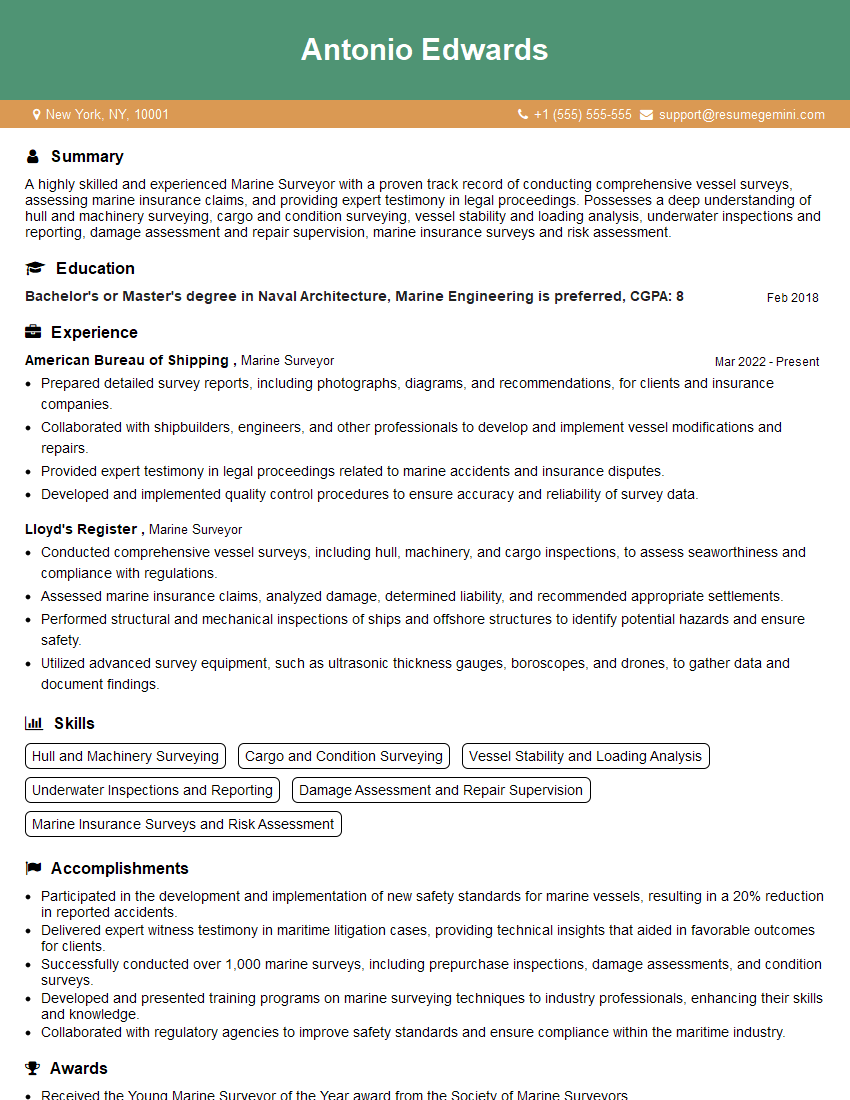
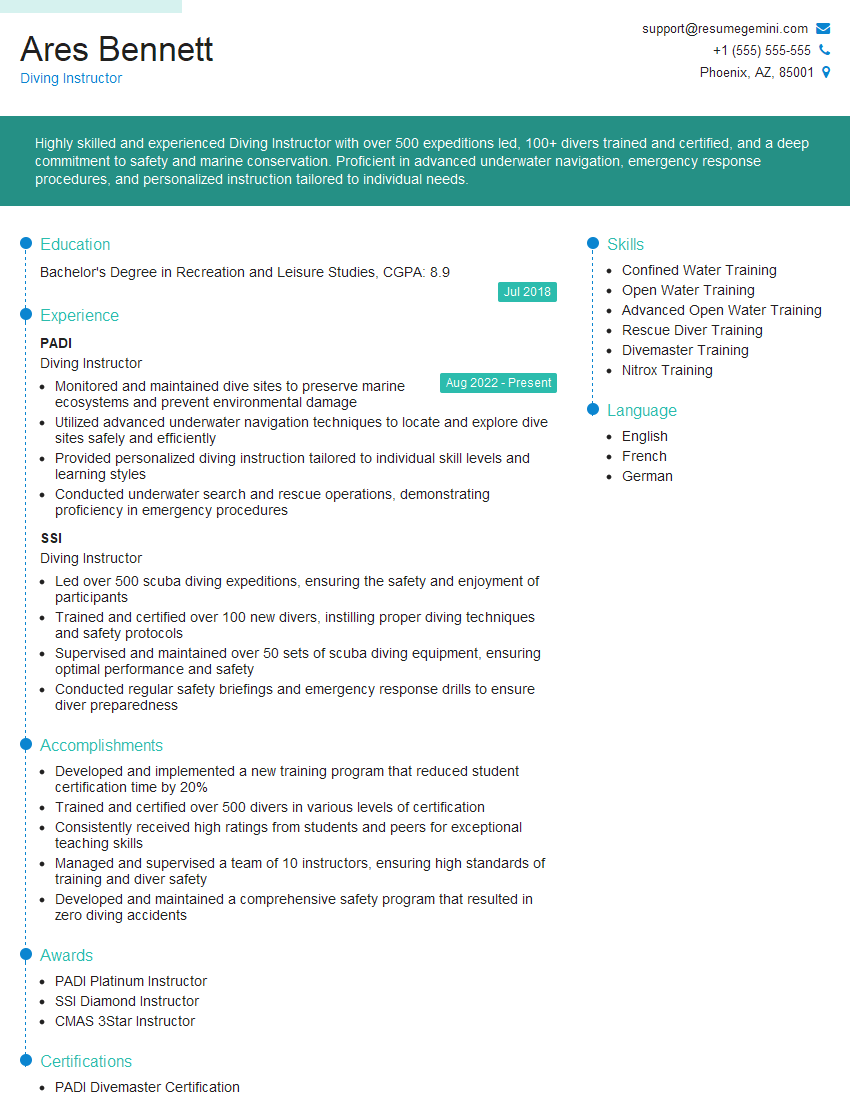
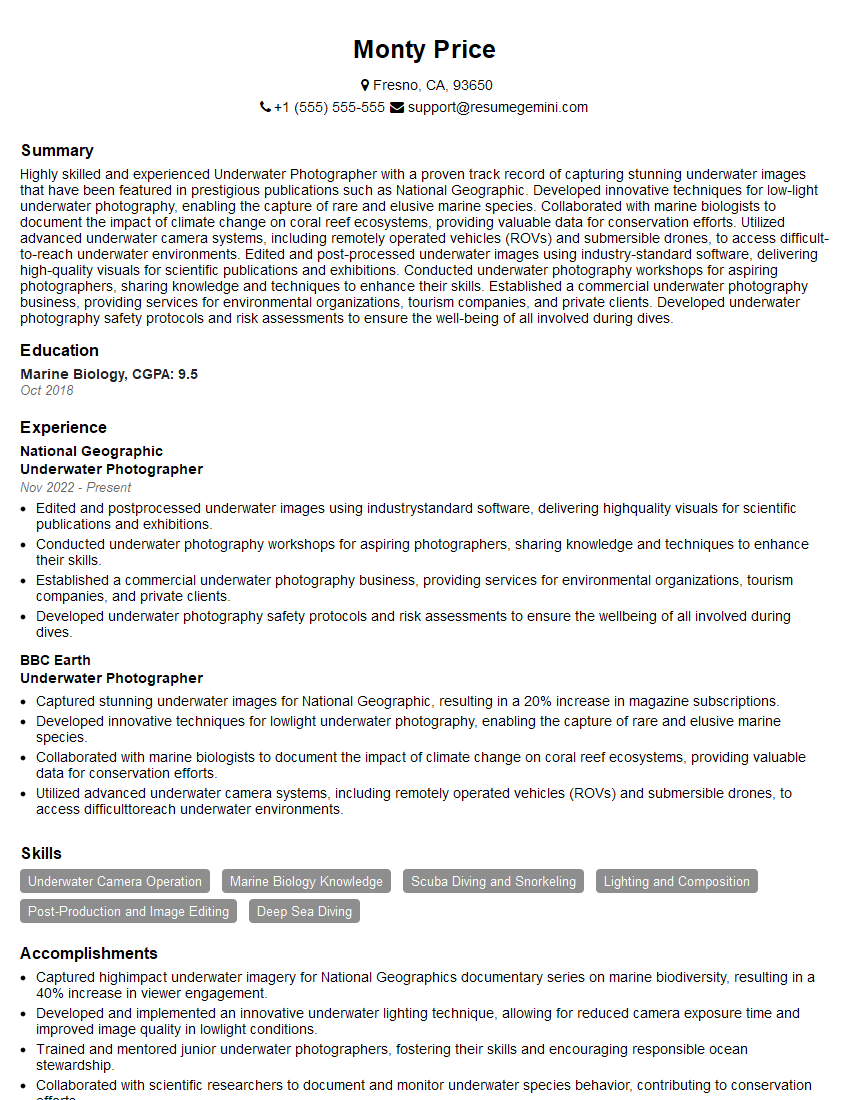
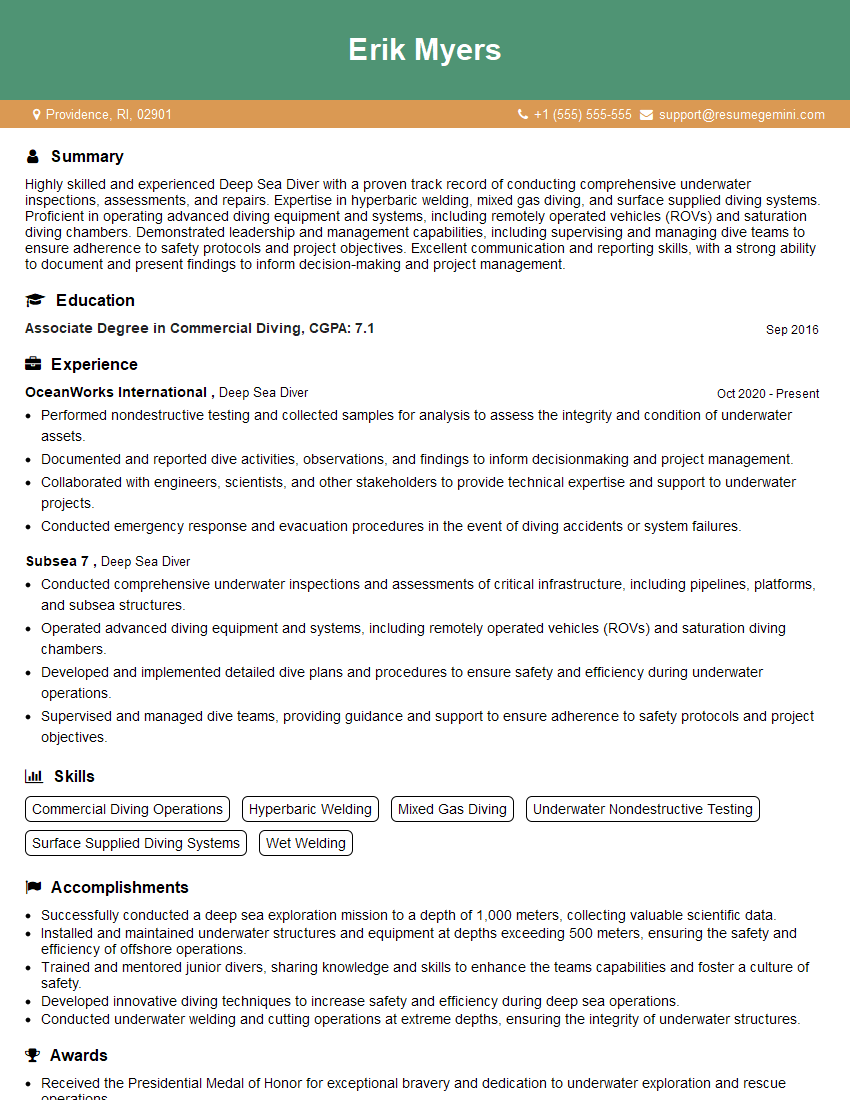
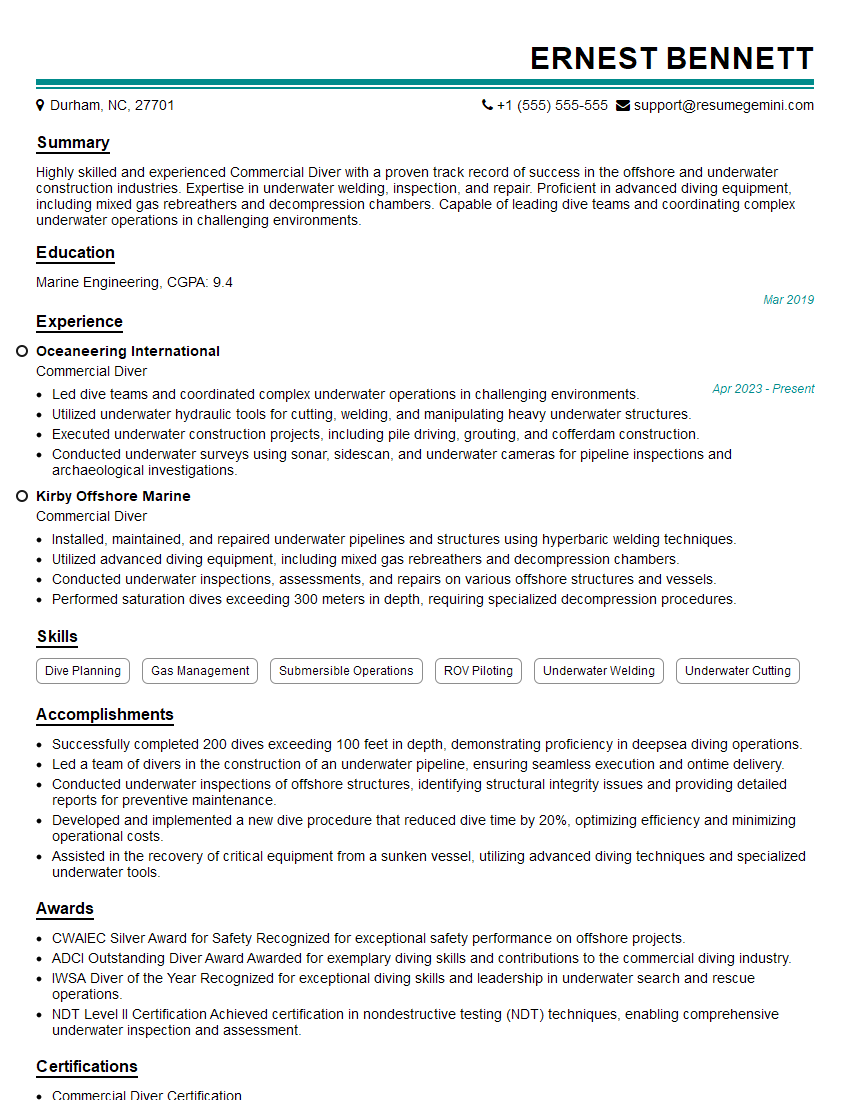
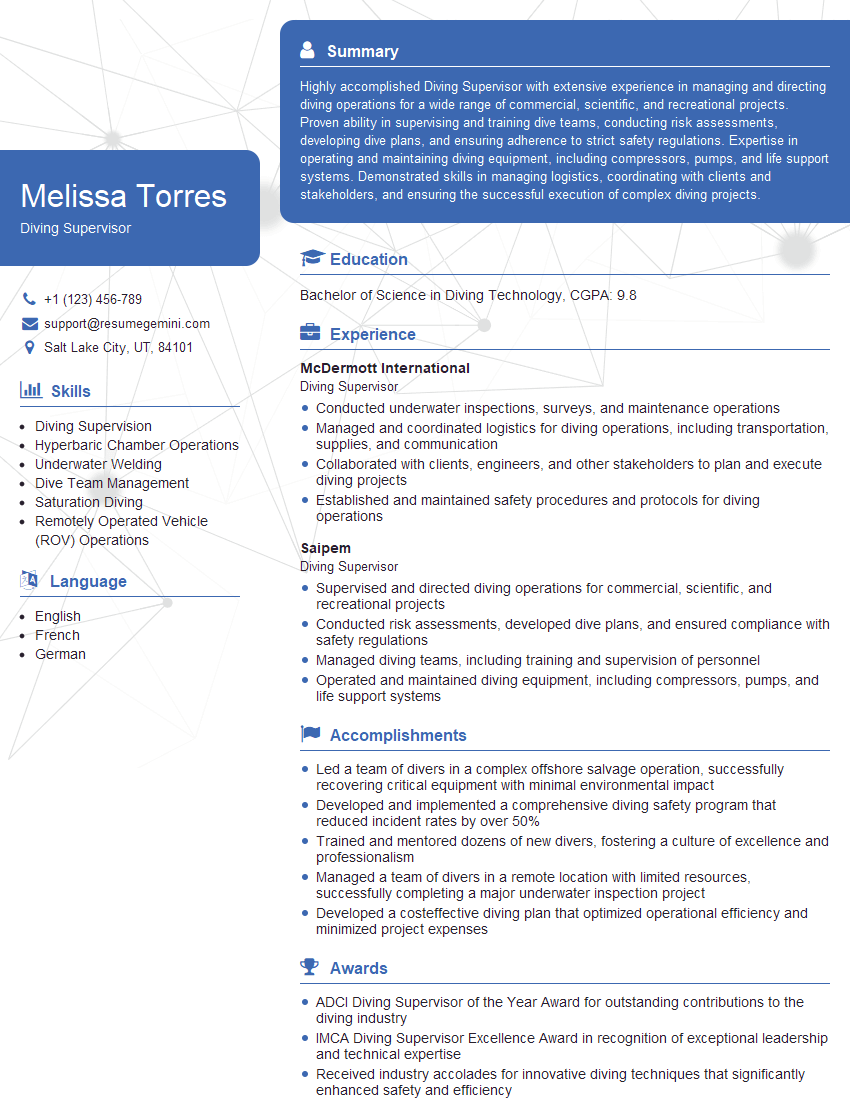
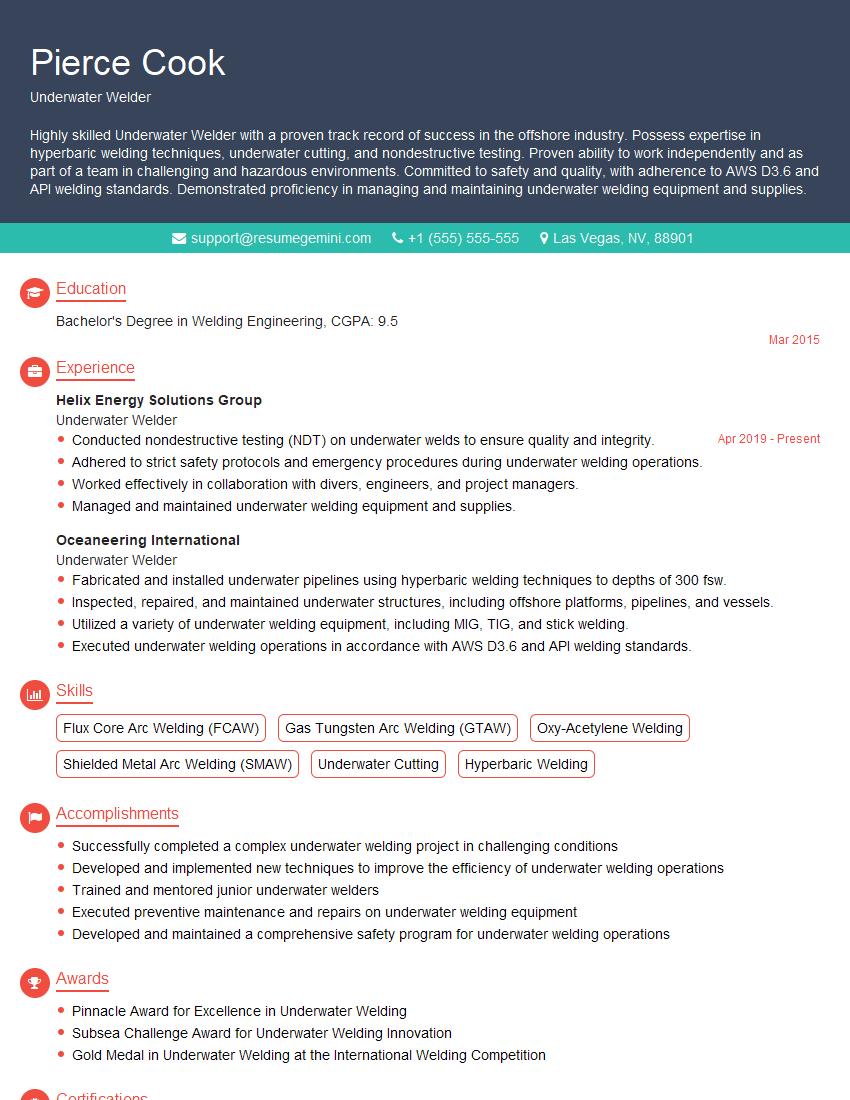
Mastering Deep Diving skills is essential for career advancement in today’s data-driven world. These skills are highly sought after and can open doors to exciting opportunities in various industries. To maximize your job prospects, creating a compelling and ATS-friendly resume is crucial. ResumeGemini can help you build a professional and effective resume tailored to showcase your Deep Diving expertise. We provide examples of resumes specifically designed for Deep Diving roles to help you get started. Take the next step towards your dream career today!
Explore more articles
Users Rating of Our Blogs
Share Your Experience
We value your feedback! Please rate our content and share your thoughts (optional).
What Readers Say About Our Blog
Very informative content, great job.
good