Interviews are more than just a Q&A session—they’re a chance to prove your worth. This blog dives into essential Yarn Spooling interview questions and expert tips to help you align your answers with what hiring managers are looking for. Start preparing to shine!
Questions Asked in Yarn Spooling Interview
Q 1. Describe the different types of yarn spooling machines.
Yarn spooling machines come in various types, categorized primarily by their winding mechanism and production capacity. Here are some key distinctions:
- Spindle type: These are the most common, using individual spindles to wind yarn onto spools or bobbins. They range from simple, single-spindle hand-operated machines to highly automated, multi-spindle units capable of spooling thousands of spools simultaneously. The speed and precision vary widely.
- Cheese type: These machines wind yarn onto conical spools, creating a ‘cheese’ shape, which is advantageous for certain applications. They are often found in the production of finer yarns where consistent package build is crucial. Precision control of yarn tension is vital here.
- Drum type: These machines wind yarn onto larger cylindrical drums. They are typically used for bulk winding or when a large quantity of yarn is needed per package. Tension management is a major consideration here to avoid yarn breakage or uneven package density.
- Automatic versus Manual: Manual machines require constant operator attention, while automated machines use sensors and controls for unattended operation. Automated systems offer significantly higher throughput but come with increased complexity and maintenance requirements.
The choice of machine depends heavily on the type of yarn, the desired spool size and shape, production volume, and budget.
Q 2. Explain the process of yarn spooling, from raw material to finished product.
The yarn spooling process begins with raw material – typically a yarn package from spinning. Let’s break it down:
- Yarn Package Preparation: The initial yarn package (e.g., a cone or bobbin) is prepared. This might involve inspecting for defects and ensuring the yarn is properly wound to prevent tangling.
- Feeding the Machine: The yarn package is carefully mounted onto the spooling machine’s feeding mechanism. The machine’s tension control system is calibrated for the specific yarn type and desired winding parameters.
- Winding Process: The yarn is unwound from the initial package and guided onto the new spool or bobbin. The machine precisely controls the winding speed, tension, and the even distribution of the yarn across the spool to avoid loose or tight areas. This process varies according to the type of spooler.
- Package Building: The yarn is carefully wound to create a stable and uniform package. The desired package shape (e.g., cylindrical, conical) is determined by the type of spooler and the needs of the next processing stage.
- Quality Control Checks: Throughout the process, automated and manual checks ensure the package is free from defects, the yarn tension is consistent, and the overall quality meets the required standards.
- Finished Product: The resulting neatly wound spool or bobbin of yarn is removed from the machine and prepared for packaging or shipment. This might involve packaging multiple spools into larger containers.
Each step requires careful attention to detail to ensure the highest yarn quality and consistency.
Q 3. What are the common causes of yarn breakage during spooling?
Yarn breakage during spooling is a common problem, often stemming from several factors:
- Insufficient or Uneven Yarn Tension: Too much tension can snap the yarn, while too little can lead to slippage and tangling, ultimately causing breaks. This is affected by factors like the yarn’s strength and the spool’s speed.
- Yarn Defects: Weak areas, neps (small entangled fibers), or other imperfections in the yarn itself can cause breaks during the winding process.
- Poor Winding Parameters: Incorrect settings on the spooling machine, such as excessive winding speed or improper traverse (the back-and-forth motion of the yarn across the spool), contribute to yarn breakage.
- Machine Malfunction: Problems with the machine’s components, such as worn guide rollers or faulty sensors, can disrupt the winding process and lead to breaks.
- Environmental Factors: High humidity or static electricity can affect yarn properties and increase the likelihood of breakage.
Careful attention to machine maintenance, proper yarn handling, and optimized winding parameters are vital in minimizing these issues.
Q 4. How do you identify and troubleshoot problems with yarn tension during spooling?
Troubleshooting yarn tension issues requires a systematic approach. Here’s a breakdown:
- Observe the Problem: Carefully note where and when breaks or uneven tension occur. This helps pinpoint the source of the problem.
- Check Machine Settings: Verify the tension settings on the spooling machine. Adjust them as needed based on the yarn type and desired winding parameters. Modern machines often have digital displays to help manage these aspects.
- Inspect Yarn Quality: Examine the yarn for defects such as weak areas or neps that could contribute to breakage. A quality test might be needed if significant defects are found.
- Examine Machine Components: Inspect rollers, guides, and other components for wear, damage, or misalignment. These might cause uneven tension or friction, breaking the yarn.
- Test Yarn Tension: Employ a tension meter to measure the yarn tension at various points in the process. Comparing the measured tension to the set tension allows precise control and problem diagnosis.
- Adjust Traverse and Winding Speed: Incorrect traverse and winding speed can create uneven tension. Adjusting these parameters, often with the machine’s interface, can greatly mitigate issues.
Troubleshooting yarn tension is an iterative process. You may need to repeat the steps, making small adjustments and observing their effect on the yarn spooling.
Q 5. Describe your experience with different types of yarn (e.g., cotton, polyester, silk).
My experience encompasses various yarn types, including cotton, polyester, silk, and blends. Each has unique characteristics that affect spooling:
- Cotton: Cotton yarn can be relatively strong but susceptible to breakage due to its natural fiber variability. Proper tension control is crucial to avoid breaks. The fiber’s natural absorbency can also affect the spooling process in humid environments.
- Polyester: Polyester is a synthetic fiber offering high strength and elasticity. It’s usually less prone to breakage than cotton, but can be affected by static electricity. Spooling machines need to be equipped to control static charges to prevent issues.
- Silk: Silk is a delicate natural fiber demanding meticulous spooling. Low tension and careful handling are essential to avoid damage. The sensitivity to moisture requires controlled environmental conditions.
Understanding these differences is crucial for optimizing the spooling process for each yarn type. I’ve worked on projects requiring very fine silk, to high-volume production spooling of industrial polyester yarns, adapting my approach based on the yarn characteristics. The key is to adapt the settings to manage the yarn’s unique properties.
Q 6. What are the key quality control checks performed during yarn spooling?
Key quality control checks during yarn spooling include:
- Yarn Strength and Elongation: Regular testing ensures the yarn meets the specified strength and elongation requirements, avoiding weak points that cause breaks.
- Package Appearance: The final package should be uniform, free of defects like loose or tight areas, and have the correct dimensions. Visual inspection is often supplemented with automated package analysis systems.
- Yarn Tension: Monitoring yarn tension throughout the spooling process, as already mentioned, is vital. This ensures consistency and reduces the risk of breakage.
- Number of Breaks: Tracking the number of yarn breaks during spooling helps identify potential problems with the yarn, machine settings, or environmental conditions.
- Yarn Count and Linear Density: Checking the yarn’s count (number of fibers) and linear density confirms its conformity to the required specifications.
- Package Density: This check ensures optimal packing efficiency within the constraints of the spool or bobbin.
These checks, often a combination of automated sensors and visual inspections, ensure the final product meets the required quality standards and is ready for downstream processes.
Q 7. How do you ensure consistent yarn tension throughout the spooling process?
Consistent yarn tension is paramount for high-quality spooling. Several strategies are used:
- Precise Tension Control Systems: Modern spooling machines employ advanced tension control systems, often incorporating sensors and feedback mechanisms to maintain constant tension throughout the winding process. These include systems that constantly monitor yarn tension and automatically adjust the winding speed to keep tension consistent.
- Proper Machine Calibration: Regular calibration of the spooling machine ensures accurate tension settings and prevents inconsistencies caused by machine wear or drift.
- Optimal Winding Parameters: Careful selection of winding parameters, including speed and traverse, helps maintain even tension across the spool and prevents build-up of stress in the yarn.
- Yarn Pre-treatment: Treating the yarn before spooling can minimize variations in tension. This may involve methods such as pre-stretching to reduce elasticity differences. Some high-end systems incorporate pre-tensioning units to standardize the yarn before it gets to the spooling head.
- Environmental Control: Controlling factors like temperature and humidity can prevent yarn variations that affect tension. Consistent environmental conditions can ensure that the yarn characteristics remain stable during the spooling process.
Combining these strategies ensures consistent yarn tension, resulting in high-quality spools and minimizing yarn breakage.
Q 8. What are the safety precautions you take when operating spooling machinery?
Safety is paramount in yarn spooling. Before operating any machinery, I always ensure I’m wearing appropriate personal protective equipment (PPE), including safety glasses, gloves, and closed-toe shoes. Loose clothing and jewelry are avoided to prevent entanglement. I thoroughly inspect the machine for any damage or loose parts before starting, checking things like the tension mechanism, the winding guides, and the braking system. During operation, I maintain a safe distance from moving parts and never attempt to adjust anything while the machine is running. Regular cleaning of the machine and the immediate work area is vital to prevent trips and falls. Finally, I understand and adhere to all company safety protocols and emergency procedures.
For example, I once noticed a slightly frayed power cord on a spooler. Instead of continuing to operate it, I immediately reported the issue and ensured the machine was taken offline for repair before resuming work. This prevented a potential electrical hazard.
Q 9. Explain your experience with preventative maintenance on spooling equipment.
Preventative maintenance is crucial for optimal spooling efficiency and to avoid costly downtime. My approach involves a daily, weekly, and monthly schedule. Daily checks include inspecting the yarn path for obstructions, lubricating moving parts, and verifying tension settings. Weekly, I perform a more thorough examination, checking for wear and tear on components like the spindle bearings, the winding heads, and the braking system. Monthly, I perform more in-depth cleaning and lubrication, checking all safety devices. I also keep detailed maintenance logs documenting all inspections, repairs, and part replacements.
For instance, I noticed a slight vibration in one of the spooling machines during a weekly inspection. Further investigation revealed a loose bearing. By addressing this early, I prevented a potential breakdown and the associated production delays.
Q 10. How do you handle and resolve yarn snarls or tangles during the spooling process?
Yarn snarls and tangles are a common occurrence. My approach is systematic. First, I carefully stop the machine and isolate the affected area. I then use a specialized tool, like a yarn pick or a blunt-ended needle, to gently disentangle the yarn without causing further damage. If the tangle is severe, I might have to carefully unwind a portion of the yarn, separating the snarled sections, and then carefully re-feed the yarn into the spooling process. I always prioritize a slow and meticulous approach to avoid breaking the yarn or damaging the spooling mechanism. I also analyze what caused the tangle, whether it was inconsistent yarn feeding, faulty tension, or a defect in the yarn itself, to prevent future occurrences.
Think of it like untangling a very delicate set of headphones – patience and precision are key to restoring functionality and avoiding breakage.
Q 11. Describe your experience with different types of spools and bobbins.
My experience encompasses various spool and bobbin types, each suited to specific yarn characteristics and applications. I’m familiar with paper cones, plastic cones, and various types of bobbins. Paper cones are often used for finer yarns, offering good release properties but are prone to damage from moisture. Plastic cones are more durable and resistant to moisture but can sometimes introduce static. Bobbins vary in size and design, with some specialized for high-speed winding and others optimized for specific knitting or weaving machines.
For example, I’ve worked with high-speed precision bobbins designed for use with industrial knitting machines demanding consistent yarn tension and high winding speeds, as well as large paper cones used for carpet yarns where volume is paramount.
Q 12. What are the different types of yarn defects you can identify during spooling?
Identifying yarn defects is a critical part of spooling. I can identify several common defects: neps (small knots or entangled fibers), slubs (thick places in the yarn), thin places, breaks, and color variations. I also look for inconsistencies in yarn twist and tension. The detection process involves careful visual inspection during and after spooling, sometimes aided by magnification. I’m also trained to recognize defects indicative of problems upstream in the yarn manufacturing process, which I can then report to help prevent future issues.
For example, a consistent pattern of thin places might suggest a problem with the spinning process, requiring immediate investigation and corrective action.
Q 13. How do you manage production targets and deadlines in a yarn spooling environment?
Meeting production targets and deadlines requires efficient planning and execution. I start by understanding the daily production requirements, considering factors such as yarn type, spool size, and machine capabilities. I prioritize tasks based on urgency and the required production volume. Continuous monitoring of the spooling process allows for prompt adjustments to maintain pace. Regular communication with supervisors and the team facilitates efficient problem-solving and ensures any delays are addressed quickly. I use production tracking software to monitor progress and identify potential bottlenecks.
Imagine it’s like running a marathon—steady pace, mindful adjustments to challenges, and effective communication to ensure you cross the finish line on time.
Q 14. How do you maintain accurate records of yarn spooling operations?
Maintaining accurate records is essential for traceability and quality control. I typically use a combination of digital and paper-based systems. Each spool or bobbin is labeled with relevant information such as yarn type, lot number, date of spooling, and operator ID. I input this information into a computer system, often a Manufacturing Execution System (MES), creating a detailed production log. This system tracks production quantities, machine downtime, and any detected yarn defects. I ensure data integrity and regularly back up the information. Paper records serve as backup and provide a hard copy of the information, complying with both internal and external quality control requirements.
This system of detailed records facilitates quality control, efficient inventory management, and thorough traceability in the event of any issues.
Q 15. Explain your experience with using computerized spooling systems.
My experience with computerized spooling systems spans over eight years, encompassing various systems from leading manufacturers. I’m proficient in operating and maintaining systems with features such as automated tension control, precise winding parameters, and real-time monitoring of yarn quality. For instance, in my previous role at TextileTech, I was instrumental in transitioning our spooling operation from a largely manual process to a fully automated system using the latest ‘SmartSpooler 5000’ technology. This involved extensive training on the system’s software and hardware, troubleshooting initial integration challenges, and ultimately increasing our production efficiency by 35%.
I’m familiar with different software interfaces, capable of configuring parameters like winding speed, package build-up, and doffing cycles to optimize for various yarn types and customer specifications. I understand the importance of data analysis provided by these systems and regularly utilize that information for preventative maintenance and process improvements.
Career Expert Tips:
- Ace those interviews! Prepare effectively by reviewing the Top 50 Most Common Interview Questions on ResumeGemini.
- Navigate your job search with confidence! Explore a wide range of Career Tips on ResumeGemini. Learn about common challenges and recommendations to overcome them.
- Craft the perfect resume! Master the Art of Resume Writing with ResumeGemini’s guide. Showcase your unique qualifications and achievements effectively.
- Don’t miss out on holiday savings! Build your dream resume with ResumeGemini’s ATS optimized templates.
Q 16. What is your experience with troubleshooting electrical or mechanical issues on spooling machines?
Troubleshooting electrical and mechanical issues on spooling machines is a significant part of my expertise. My approach is systematic and rooted in a deep understanding of the machines’ mechanics and electronics. I start with a visual inspection, checking for obvious issues like broken belts, loose connections, or frayed wires. Then, I’ll move to more advanced diagnostics using multimeters, amp meters, and other specialized tools to pinpoint the source of the problem.
For example, during a recent incident where a spooler repeatedly stopped due to a seemingly random power surge, I systematically checked all the electrical components, including the motor control unit, power supply, and wiring harness. After careful testing, I identified a faulty capacitor in the motor control unit causing the surges. Replacing it immediately resolved the problem, minimizing production downtime. I also possess experience in basic mechanical repairs such as replacing bearings, gears, and drive shafts, and can diagnose issues with sensors and automated controls.
Q 17. How do you contribute to a safe and efficient work environment in the spooling department?
Safety and efficiency are paramount in my approach to spooling. I actively contribute to a safe environment by adhering strictly to all safety protocols, including wearing appropriate PPE (Personal Protective Equipment), regularly inspecting machinery for potential hazards, and promptly reporting any unsafe conditions. I lead by example and encourage my colleagues to prioritize safety as well. We conduct regular safety training sessions focusing on proper machine operation, lockout/tagout procedures, and hazard recognition.
To enhance efficiency, I focus on optimizing workflows, eliminating bottlenecks, and ensuring that all spooling equipment is properly maintained. This includes preventative maintenance schedules, streamlined material handling, and effective communication with other departments to ensure a smooth flow of materials and information.
For instance, I implemented a color-coded system for identifying and storing different yarn types, significantly reducing the time spent searching for the correct yarn, improving both safety and efficiency.
Q 18. Describe your experience with optimizing the spooling process for efficiency and quality.
My experience in optimizing the spooling process involves a multifaceted approach that includes fine-tuning machine parameters, implementing lean manufacturing principles, and leveraging data analytics. I work to achieve the optimal balance between production speed, yarn quality, and minimal waste. Optimizing the winding tension is crucial for this; incorrect tension can lead to yarn breakage, uneven packages, and ultimately, reduced quality.
In a previous role, we significantly reduced spooling times by analyzing the machine’s data logs to identify areas for improvement. This revealed that minor adjustments to the acceleration and deceleration profiles of the winding mechanism led to a 10% increase in output without compromising yarn quality. We also implemented a system for regularly monitoring and analyzing key performance indicators (KPIs) like spooling speed, yarn breakage rate, and package uniformity, enabling us to proactively address potential issues.
Q 19. What are your preferred methods for detecting and correcting yarn inconsistencies?
Detecting and correcting yarn inconsistencies requires a keen eye and a systematic approach. I utilize a combination of visual inspection, automated quality control systems, and statistical process control (SPC) techniques. Visual inspection helps identify obvious defects like slubs, neps, or broken ends. Automated systems, like those integrated into many modern spoolers, continuously monitor yarn parameters such as tension, diameter, and evenness, providing real-time feedback.
SPC charts are invaluable for tracking trends and identifying potential problems before they lead to significant quality issues. By carefully analyzing these charts, I can identify patterns and predict potential inconsistencies. If inconsistencies are detected, the cause is thoroughly investigated, whether it’s a problem with the yarn itself, the spooling machine’s settings, or even environmental factors such as humidity.
For example, a consistently higher breakage rate on one spooler might indicate worn-out components, while a sudden increase in yarn unevenness could point to a problem in the spinning process upstream. Addressing the root cause is vital, preventing further defects and maintaining high quality standards.
Q 20. How familiar are you with different types of winding methods (e.g., parallel, universal)?
I’m very familiar with various winding methods, including parallel winding, universal winding, and their variations. Parallel winding is ideal for producing packages with a consistent diameter and is often used for fine yarns, while universal winding offers greater flexibility and can produce various package shapes and sizes, often suitable for coarser yarns or specific customer requirements. Understanding the strengths and limitations of each method is crucial for selecting the appropriate technique for a given yarn and application.
My experience includes setting up and operating machines utilizing different winding styles, adjusting parameters to optimize package density, build-up, and overall quality. The selection of the winding method often depends on factors like the yarn count, diameter, and the intended end-use of the yarn. Understanding the interplay of these factors allows for efficient and effective spooling.
Q 21. Explain your experience working with different yarn counts and diameters.
My experience encompasses a wide range of yarn counts and diameters, from very fine yarns used in delicate fabrics to heavier yarns for more robust textiles. Working with different yarn counts requires adjusting various parameters on the spooling machines, such as winding speed, tension, and package size. Thinner yarns demand more delicate handling and precise control to prevent breakage, while thicker yarns may require adjustments to prevent excessive stress on the machine.
The diameter of the yarn also plays a crucial role in the spooling process. Different diameter yarns necessitate different winding patterns and tension settings to achieve optimal package density and uniformity. I have a thorough understanding of how these variables impact the overall quality and efficiency of the spooling process and adapt my approach accordingly. I have worked on projects involving various yarn materials, including cotton, polyester, nylon, and blends, each requiring specialized handling and processing.
Q 22. How do you ensure the accurate labeling and packaging of spooled yarn?
Accurate labeling and packaging are crucial for traceability and quality control in yarn spooling. We use a multi-step process to ensure accuracy. First, each spool is clearly labeled with a unique identification number, the yarn type, weight, and date of spooling. This information is generated by our production tracking system and printed on a durable label resistant to wear and tear. Second, spools are grouped according to their specifications and carefully placed into boxes or onto pallets. We use dividers to prevent spools from rubbing against each other and causing damage. Finally, the packaging is clearly marked with the same information as the individual spools, and any special handling instructions are prominently displayed. This rigorous system minimizes errors and ensures smooth downstream processing.
For example, a batch of 100% cotton yarn might be labelled with a batch number like ‘COT-231026-A’, indicating cotton, the date (October 26, 2023), and batch ‘A’. This allows for easy identification and tracking throughout the supply chain should any issues arise.
Q 23. How do you maintain a clean and organized work area in a high-production spooling environment?
Maintaining a clean and organized workspace in a high-production spooling environment is paramount for efficiency, safety, and quality. We implement several strategies. First, we establish a 5S system (Sort, Set in Order, Shine, Standardize, Sustain). This involves regularly clearing away unnecessary items, organizing tools and materials in designated areas, keeping the equipment clean, standardizing processes, and maintaining these practices continuously. Second, we use color-coded bins for different yarn types and waste materials. This makes it easier to identify and manage materials, reducing the risk of cross-contamination or mix-ups. Third, we schedule regular cleaning breaks throughout the day to prevent build-up of lint and yarn scraps. This helps prevent equipment malfunctions and keeps the area safe for workers.
Regular training on safety and cleanliness procedures ensures that all team members understand and adhere to the standards. We also track cleaning performance using checklists to improve our efficiency and identify any potential problems.
Q 24. What are your experiences with using different types of software or systems for production tracking?
I have extensive experience using various software and systems for production tracking in yarn spooling. In my previous role, we used a bespoke system developed in-house that tracked every stage of the spooling process, from raw material input to finished product packaging. The system included modules for inventory management, quality control, and production scheduling. We also implemented a real-time monitoring system that allowed us to identify and address potential bottlenecks immediately. More recently, I worked with a cloud-based ERP system which integrated seamlessly with our spooling machines, automating data capture and providing comprehensive reporting and analytics. This improved accuracy and efficiency significantly.
The experience with different systems has highlighted the importance of choosing software that aligns with specific business needs and integrates well with existing equipment. Choosing the right system is crucial for maximizing efficiency and minimizing human error.
Q 25. Describe a situation where you had to solve a complex problem related to yarn spooling.
One challenging situation I faced involved a consistent breakage of high-tenacity yarn during the spooling process. The yarn was prone to snapping, resulting in significant production downtime and material waste. Initially, we suspected a problem with the yarn itself. However, after systematic investigation, which included checking the yarn supplier’s quality certificate, analyzing the tension settings on the spooling machines, and inspecting the guides and rollers for wear and tear, we discovered the root cause was a combination of factors. The tension settings were slightly too high, causing excessive stress on the yarn. Furthermore, some of the guides were slightly misaligned, further exacerbating the problem.
We addressed the issue by adjusting the tension settings, replacing the damaged guides, and implementing a more rigorous inspection procedure for the guides and rollers. Following these corrective actions, the yarn breakage rate reduced significantly, improving overall production efficiency and reducing material waste. This experience taught me the importance of thorough troubleshooting, involving multiple factors, and using a systematic approach to solving complex problems.
Q 26. How do you prioritize tasks and manage your time effectively in a fast-paced spooling operation?
Effective task prioritization and time management are essential in a fast-paced spooling operation. I use a combination of techniques, including prioritizing tasks based on urgency and importance using the Eisenhower Matrix (Urgent/Important). I also break down large tasks into smaller, manageable steps, which allows me to make progress even during peak demand. In addition, I utilize visual management tools, such as Kanban boards, to track progress and identify bottlenecks. These tools enable me to allocate my time effectively, ensuring urgent orders are completed on time without sacrificing the quality of other tasks. Regularly reviewing my schedule and adjusting it as needed ensures flexibility and responsiveness to changing demands. Proactive planning and communication with the team are crucial in maintaining a smooth workflow.
Q 27. How do you adapt to changes in production schedules or requirements?
Adaptability is key in a dynamic production environment. When changes occur in production schedules or requirements, I first thoroughly review the changes to fully understand their implications. Then, I communicate openly with my team, ensuring everyone is aware of the adjustments and their roles in implementing them. We collaborate to find the most efficient way to meet the revised requirements, potentially involving re-prioritization of tasks, adjusting machine settings, or reallocating personnel. I leverage my understanding of the spooling process and our production capacity to develop a realistic plan, making sure to factor in potential challenges. Regular updates and progress reviews ensure smooth execution and minimize disruption.
For instance, a sudden surge in demand for a specific yarn type might necessitate adjusting machine settings to increase production speed while maintaining quality. This requires close coordination with the maintenance team and careful monitoring to prevent machine wear and tear.
Q 28. Describe your understanding of the importance of maintaining consistent yarn quality.
Maintaining consistent yarn quality is paramount for the success of any yarn manufacturing operation. Inconsistency can lead to customer complaints, production stoppages, and significant financial losses. Consistent quality is achieved through several key factors. First, using high-quality raw materials is fundamental. Second, rigorous quality control procedures throughout the spooling process are crucial, including regular checks on yarn tension, twist, and evenness. Regular calibration of spooling machines and preventative maintenance also contribute to consistent output. Finally, thorough staff training on quality control procedures ensures that all team members understand their roles in maintaining standards. This systematic approach guarantees consistent yarn quality which ultimately leads to customer satisfaction and brand reputation.
Key Topics to Learn for Yarn Spooling Interview
- Yarn Types and Properties: Understanding different yarn types (e.g., cotton, polyester, blends), their characteristics (strength, elasticity, texture), and how these impact spooling processes.
- Spooling Machines and Equipment: Familiarity with various spooling machine types, their functionalities, and maintenance procedures. This includes understanding the mechanical aspects and automation involved.
- Spooling Processes and Techniques: Mastering the different spooling methods (e.g., parallel winding, precision winding), their applications, and the factors influencing yarn quality and efficiency.
- Quality Control and Testing: Knowledge of quality control measures throughout the spooling process, including tension control, package uniformity checks, and defect identification. This also encompasses understanding relevant testing standards.
- Troubleshooting and Problem-Solving: Developing the ability to diagnose and resolve common issues encountered during spooling, such as yarn breakage, package defects, and machine malfunctions. This includes practical problem-solving skills and analytical thinking.
- Safety Procedures and Regulations: Understanding and adhering to relevant safety protocols and regulations related to operating spooling machinery and handling yarn. This is critical for a safe and productive work environment.
- Production Optimization and Efficiency: Knowledge of techniques to optimize spooling processes for maximum efficiency, minimizing waste, and maximizing output while maintaining quality. This includes understanding production metrics and continuous improvement methodologies.
Next Steps
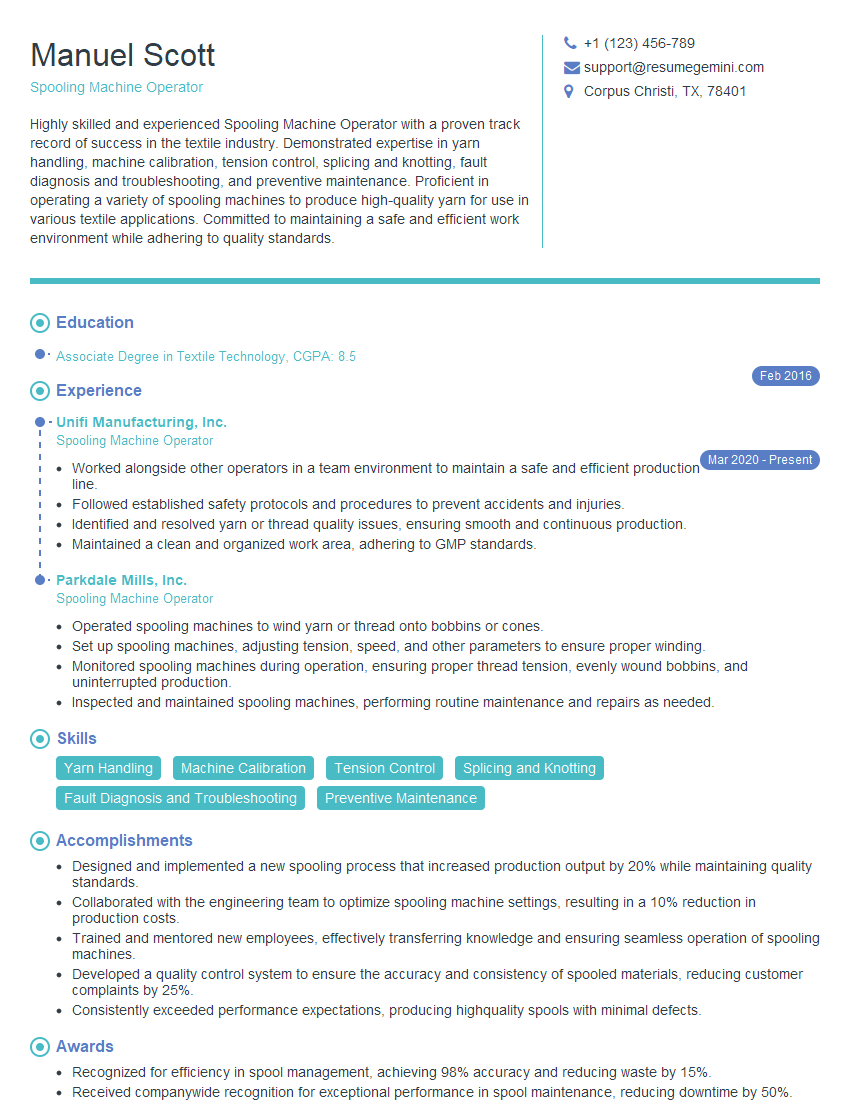
Mastering Yarn Spooling opens doors to rewarding careers in the textile industry, offering opportunities for growth and specialization. A strong resume is crucial for showcasing your skills and experience to potential employers. To maximize your chances, create an ATS-friendly resume that highlights your achievements and qualifications effectively. We recommend using ResumeGemini, a trusted resource, to build a professional and impactful resume. Examples of resumes tailored to Yarn Spooling are available to guide you in crafting the perfect application.


Explore more articles
Users Rating of Our Blogs
Share Your Experience
We value your feedback! Please rate our content and share your thoughts (optional).
What Readers Say About Our Blog
Very informative content, great job.
good