Feeling uncertain about what to expect in your upcoming interview? We’ve got you covered! This blog highlights the most important Defect Prevention and Analysis interview questions and provides actionable advice to help you stand out as the ideal candidate. Let’s pave the way for your success.
Questions Asked in Defect Prevention and Analysis Interview
Q 1. Explain the difference between defect prevention and defect detection.
Defect prevention focuses on proactively stopping defects from occurring in the first place, while defect detection focuses on finding defects after they’ve been introduced. Think of it like this: prevention is putting a fence around your garden to keep rabbits out, while detection is finding the rabbits that have already hopped in and removing them. Prevention is more cost-effective and efficient in the long run.
Defect Prevention involves activities like thorough requirements gathering, robust design reviews, code inspections, and implementing coding standards. It’s about building quality into the software from the very beginning. Examples include using static analysis tools to identify potential coding issues early, or employing pair programming to catch errors during the development process itself.
Defect Detection relies on testing methods like unit testing, integration testing, system testing, and user acceptance testing (UAT) to identify and report defects after the code is written. It’s a reactive approach, identifying problems after they’ve occurred. Examples include functional testing to ensure the software meets specified requirements or performance testing to identify bottlenecks.
Q 2. Describe your experience with various defect tracking tools (e.g., Jira, Bugzilla).
I have extensive experience with several defect tracking tools, most notably Jira and Bugzilla. Jira is a highly versatile and popular tool known for its flexible workflow management and customization options. I’ve used it extensively to manage sprints, track issues, and generate reports on various project metrics. I’m proficient in configuring workflows, creating custom fields, and using JQL (Jira Query Language) for advanced searching and reporting. I’ve utilized its scrum and Kanban boards effectively to improve team collaboration and transparency.
Bugzilla, on the other hand, is a powerful and robust open-source tool, particularly valuable for its robust reporting capabilities and customization. I’ve found it extremely useful in large-scale projects where detailed tracking and analysis of defects are critical. I’m familiar with its various functionalities such as bug reporting, assigning issues, and generating reports for trend analysis. I appreciate its ability to manage a high volume of defects efficiently.
My experience extends beyond just using these tools; I understand the importance of selecting the right tool for the specific project needs and training team members on its effective use. A poorly configured or utilized defect tracking system can hinder rather than help the development process.
Q 3. How do you prioritize defects?
Prioritizing defects requires a structured approach. I typically employ a multi-faceted strategy that considers several key factors. The most critical element is the severity of the defect – how significantly does it impact the system’s functionality or user experience? A critical defect causing system crashes takes precedence over a minor cosmetic issue. Secondly, the priority depends on the defect’s impact on the business – does it directly affect revenue, security, or a critical business process? A security vulnerability, for instance, would be higher priority than a minor usability flaw.
I also consider the urgency of the fix – when does the defect need to be addressed? If a defect impacts a critical feature and a major release is imminent, it’ll have a higher priority. Furthermore, the frequency of occurrence of the defect matters. A defect that repeatedly affects users needs immediate attention. Finally, the effort required to fix the defect plays a role. Some defects might require extensive rework, while others can be easily addressed. I typically use a matrix considering Severity, Priority, and Urgency to prioritize effectively.
Q 4. What is your approach to root cause analysis for software defects?
My approach to root cause analysis (RCA) is based on structured methodologies like the 5 Whys and Fishbone diagrams. The 5 Whys involves repeatedly asking “Why?” to drill down to the underlying causes of a defect. It’s a simple yet effective method for uncovering the root of the problem. For example, if a program crashes, I might ask:
- Why did the program crash? (Insufficient memory)
- Why was there insufficient memory? (Memory leak)
- Why was there a memory leak? (Incorrect resource management)
- Why was the resource management incorrect? (Lack of coding standards)
- Why were coding standards not followed? (Insufficient training)
Fishbone diagrams, also known as Ishikawa diagrams, provide a visual representation of potential causes categorized into different areas like people, methods, machines, materials, environment, and measurements. This allows for a more comprehensive analysis by considering various factors that might contribute to the defect.
Beyond these techniques, I leverage my understanding of the software architecture and development process to identify contributing factors. Thorough code review, examining logs, and using debugging tools are all crucial in pinpointing the precise root cause. The objective is not just to fix the immediate symptom but to prevent similar defects in the future.
Q 5. Explain the Pareto principle (80/20 rule) and its application in defect analysis.
The Pareto principle, or 80/20 rule, suggests that 80% of effects come from 20% of causes. In defect analysis, this translates to the observation that a small percentage of defects often account for a significant portion of the problems. For example, 20% of modules might contain 80% of the total defects. This principle is incredibly valuable because it helps focus resources on the most impactful areas.
Applying the Pareto principle in defect analysis involves identifying that critical 20% of defects. By analyzing defect data, such as defect reports, severity levels, and modules affected, we can pinpoint the most problematic areas. Once identified, we can concentrate our prevention and improvement efforts on these high-impact areas. This targeted approach is significantly more efficient than trying to address all defects equally. It allows for better resource allocation and a more significant impact on overall software quality.
Q 6. Describe a time you identified a critical defect before it reached production.
During the development of a critical financial application, I noticed a potential concurrency issue in a module responsible for transaction processing. While unit tests hadn’t yet revealed the problem, my understanding of multi-threaded programming and the system’s architecture made me suspect a race condition under high load. I designed and ran a specific integration test that simulated concurrent access to the module. The test successfully replicated the issue, exposing a scenario that could have led to data corruption and financial losses in production.
This early detection prevented a major incident. The defect was addressed before the release, averting potential business disruption and reputational damage. The experience reinforced the importance of proactive testing and thorough understanding of the system’s design and potential vulnerabilities. It also highlighted the value of going beyond standard test cases to consider edge cases and potential problem areas proactively.
Q 7. How do you use metrics to track and improve software quality?
Metrics are essential for tracking and improving software quality. I use several key metrics to monitor defect trends and identify areas needing improvement. These include:
- Defect Density: The number of defects per lines of code (LOC) or per function point, providing an indication of the quality of the code base.
- Defect Severity Distribution: Tracks the number and type of defects according to their severity (critical, major, minor). This informs us about the overall risk profile of the system.
- Mean Time To Resolution (MTTR): The average time taken to fix a defect, indicating team efficiency and effectiveness in defect resolution.
- Defect Removal Efficiency (DRE): Measures the percentage of defects detected and removed during various testing stages, evaluating the effectiveness of testing strategies.
- Code Coverage: Measures the percentage of code that has been executed by test cases, indicating test completeness.
By regularly monitoring these metrics, I can identify trends, pinpoint areas of weakness, and track the effectiveness of implemented improvements. This data-driven approach enables continuous quality improvement. For example, a rising defect density might indicate a need for improved coding practices or more rigorous code reviews. A high MTTR could highlight the need for enhanced developer skills or more effective troubleshooting procedures.
Q 8. Explain your experience with different testing methodologies (e.g., Agile, Waterfall).
My experience spans both Agile and Waterfall methodologies. In Agile, I’ve been deeply involved in sprint planning, daily stand-ups, and sprint retrospectives, focusing on continuous testing and integration. This iterative approach allows for early defect detection and quicker feedback loops. I’m proficient in various Agile testing techniques, such as Test-Driven Development (TDD) and Behavior-Driven Development (BDD), where tests are written before code, ensuring functionality meets requirements. For example, in a recent project using Scrum, we incorporated daily automated test runs to quickly identify regressions introduced by new code.
In Waterfall projects, my focus shifted towards comprehensive test planning and execution during dedicated testing phases. This involved creating detailed test plans, designing test cases, executing tests, and reporting defects. A key aspect was rigorous documentation, which was crucial for traceability and auditability in this more structured approach. For instance, in a large-scale Waterfall project, I led the creation of a comprehensive test suite that ensured 98% test coverage before deployment. The experience honed my skills in managing larger test efforts and documenting processes meticulously.
Q 9. What is your experience with static and dynamic code analysis tools?
I have extensive experience with both static and dynamic code analysis tools. Static analysis tools, such as SonarQube and FindBugs, allow for the examination of code without actually executing it. These tools identify potential issues like coding standard violations, security vulnerabilities, and potential bugs early in the development lifecycle. I’ve used SonarQube to identify numerous potential NullPointerExceptions before runtime, saving significant debugging time.
Dynamic analysis tools, on the other hand, analyze the code during runtime. Tools like Valgrind and memory debuggers help find runtime errors such as memory leaks and segmentation faults. For example, during performance testing, I used a dynamic analysis tool to pinpoint a memory leak that was causing performance degradation under heavy load. Combining both static and dynamic analysis provides a more comprehensive approach to identifying defects.
Q 10. How do you handle conflicting priorities between speed and quality?
Balancing speed and quality is a constant challenge, but I approach it by prioritizing risk. Instead of blindly prioritizing speed, I identify the critical functionalities and areas with higher risk of failure. We then focus testing efforts on these areas, ensuring they are thoroughly tested, even if it means slightly delaying other aspects.
Using risk-based testing, I’ve successfully mitigated potential major issues by allocating more resources to high-risk areas. For instance, in a project with a tight deadline, we focused testing on the core functionalities, releasing a Minimum Viable Product (MVP) first and then iteratively adding features with subsequent testing phases. This approach ensured we delivered a stable core product within the deadline while improving quality iteratively.
Q 11. Describe your experience with test automation frameworks (e.g., Selenium, Appium).
I’m proficient in several test automation frameworks, including Selenium and Appium. Selenium is my go-to tool for automating web application testing, allowing me to create robust and reusable test scripts. I’ve used it extensively to automate regression testing and functional testing, ensuring consistent test execution and identifying regressions quickly. For example, I developed a Selenium framework that automated over 80% of our web application’s regression tests, significantly reducing testing time and increasing efficiency.
Appium, on the other hand, is invaluable for mobile application testing, providing cross-platform compatibility. I’ve used it to test applications on both Android and iOS devices, ensuring consistent functionality across platforms. For example, I utilized Appium to automate UI testing for a mobile banking app, significantly speeding up the release cycle and enhancing the user experience.
Q 12. How do you ensure test coverage in your testing strategy?
Ensuring test coverage is crucial for building high-quality software. My strategy involves using a combination of techniques. First, I start with requirement analysis, mapping each requirement to corresponding test cases. This ensures all requirements are adequately covered. Then, I use code coverage tools to measure the percentage of code executed during testing. I aim for high code coverage, but it’s important to remember that high code coverage doesn’t automatically equate to high quality. I also use risk-based testing to focus testing efforts on the critical parts of the application.
Furthermore, I use various testing types, including unit, integration, system, and user acceptance testing (UAT), to cover different aspects of the application. I create test cases that cover different scenarios, including positive and negative testing, boundary value analysis, and equivalence partitioning, to ensure thorough coverage. Regular review of test cases and coverage analysis ensures that the strategy adapts to evolving requirements and identifies any gaps. Using a combination of approaches results in robust test coverage and higher confidence in the software quality.
Q 13. What are some common causes of defects in software development?
Defects stem from various sources. Poor requirements are a major contributor, leading to misunderstandings between developers and stakeholders. Inadequate design, including insufficient consideration of error handling and edge cases, frequently results in defects. Coding errors, such as logical errors, syntax errors, and off-by-one errors, are common sources of defects. Poor communication among team members can also lead to integration issues and unexpected behaviors.
Other factors include insufficient testing, leading to undetected defects; rushed development timelines, forcing developers to compromise quality for speed; and lack of proper code reviews, allowing defects to slip through the cracks. Finally, changes to existing code without proper testing can introduce new defects, highlighting the importance of regression testing. Understanding these causes allows for proactive measures, such as improved requirements gathering, better design practices, and enhanced testing strategies.
Q 14. How do you collaborate with developers to resolve defects?
Collaborating with developers is key to resolving defects effectively. I approach this through clear and concise communication. When reporting a defect, I provide detailed information, including steps to reproduce the defect, expected behavior, actual behavior, screenshots, and logs. I avoid blaming and focus on providing constructive feedback, clearly outlining the problem’s impact on the system.
I actively participate in defect triage meetings, discussing defect prioritization and assigning them to the appropriate developers. I follow up on the status of defect fixes, and verify the fixes to ensure the issue is indeed resolved. My goal is to foster a collaborative environment where developers and testers work together to improve the quality of the product. Regular communication and open dialogue contribute significantly to faster defect resolution.
Q 15. Describe your experience using risk-based testing.
Risk-based testing prioritizes testing efforts based on the potential impact and likelihood of defects. Instead of testing everything equally, we focus on the areas most likely to cause significant problems. This is done by identifying high-risk areas – features with complex logic, those crucial to the system’s functionality, or parts with a history of defects – and allocating more testing resources accordingly.
For example, in a banking application, the transaction processing module is a high-risk area. We’d dedicate significantly more testing time and resources to ensure its reliability compared to a less critical module like user profile management. We use techniques like risk assessment matrices to quantitatively assess risks, assigning severity and probability scores to different parts of the system. This allows us to prioritize testing and optimize resource allocation for maximum impact.
In my experience, I’ve used risk-based testing on several projects, including a large e-commerce platform where we prioritized testing the payment gateway and inventory management systems due to their higher risk profile. This strategic approach allowed us to identify and resolve critical defects early in the process, preventing major issues in production.
Career Expert Tips:
- Ace those interviews! Prepare effectively by reviewing the Top 50 Most Common Interview Questions on ResumeGemini.
- Navigate your job search with confidence! Explore a wide range of Career Tips on ResumeGemini. Learn about common challenges and recommendations to overcome them.
- Craft the perfect resume! Master the Art of Resume Writing with ResumeGemini’s guide. Showcase your unique qualifications and achievements effectively.
- Don’t miss out on holiday savings! Build your dream resume with ResumeGemini’s ATS optimized templates.
Q 16. How do you measure the effectiveness of your defect prevention efforts?
Measuring the effectiveness of defect prevention is crucial for continuous improvement. We employ several metrics to assess our success. A primary metric is the reduction in the number of defects found in testing and production. We track this over time, comparing trends across different releases or sprints. Another important metric is the defect density – the number of defects per lines of code or per function point. A decrease in defect density indicates improved code quality.
Beyond quantitative metrics, we also analyze the types of defects found. Recurring patterns suggest weaknesses in our processes or training. For example, a recurring issue with database connections might indicate a need for better database design training or more robust testing of database interactions. We also measure the cost of resolving defects, aiming to reduce both the number and cost of defects found later in the development cycle. A successful defect prevention program should lead to a downward trend in all these metrics.
Q 17. What are some common challenges in defect prevention and how do you overcome them?
Common challenges in defect prevention include:
- Lack of developer buy-in: Developers might see defect prevention as an added burden rather than a value-add.
- Inadequate training and resources: Without proper training and tools, developers may lack the skills to effectively write high-quality code.
- Time constraints and pressure to deliver quickly: The desire for rapid releases often compromises thorough testing and defect prevention practices.
- Poorly defined requirements: Ambiguous requirements lead to misunderstandings and subsequent defects.
- Inadequate communication and collaboration: Lack of communication between developers, testers, and stakeholders creates silos and hinders effective defect prevention.
To overcome these, we utilize various strategies: We foster a culture of quality through training, regular code reviews, and peer programming. We empower developers to take ownership of quality by providing them with the necessary tools and resources. We also advocate for realistic project timelines, prioritizing quality over unrealistic speed. We implement strong requirements gathering and documentation processes and promote open communication through regular meetings, shared platforms, and collaborative tools. Early and frequent feedback loops are also essential.
Q 18. How do you handle situations where deadlines are tight and quality is compromised?
When faced with tight deadlines and potential quality compromises, I prioritize a risk-based approach. We conduct a thorough risk assessment, identifying critical features and functionalities most vulnerable to defects. We then focus our testing efforts on these areas, accepting a higher risk on less critical parts of the system. This allows us to release a version with acceptable risks within the constrained timeline. Communication with stakeholders is key; transparent reporting on the identified risks and any trade-offs is crucial to build consensus and manage expectations. In such scenarios, technical debt management becomes incredibly important; we carefully document the accepted risks and create a plan for addressing them in future iterations.
We use techniques like focused testing and prioritize critical bug fixes. We might also consider automated regression tests to ensure that fixing one bug doesn’t introduce others. Ultimately, transparency and proactive communication are essential for mitigating the consequences of tight deadlines.
Q 19. Explain your understanding of software development lifecycles (SDLC).
Software Development Life Cycles (SDLCs) are frameworks that define the stages involved in developing and deploying software. There are many models, each with its own strengths and weaknesses. Some common models include:
- Waterfall: A linear sequential approach where each phase must be completed before the next begins.
- Agile (Scrum, Kanban): Iterative and incremental approaches focused on flexibility and collaboration.
- DevOps: Focuses on automating and integrating the processes between software development and IT operations.
My experience encompasses working within both Waterfall and Agile environments. Understanding the specific SDLC being used is critical for effective defect prevention. For example, in Agile, defect prevention is integrated throughout each sprint, while in Waterfall, it’s often concentrated in dedicated testing phases. Regardless of the model, a strong emphasis on early testing, continuous integration, and regular code reviews is vital for proactive defect prevention.
Q 20. What are your preferred methods for documenting defects?
My preferred methods for documenting defects involve using a standardized bug tracking system, such as Jira or Bugzilla. This ensures consistency and facilitates collaboration. Each defect report includes detailed information, including:
- Summary: A concise description of the defect.
- Steps to reproduce: Clear instructions on how to replicate the defect.
- Expected result: The intended behavior.
- Actual result: The observed behavior.
- Severity: The impact of the defect (critical, major, minor).
- Priority: Urgency of fixing the defect (high, medium, low).
- Attachments: Screenshots, logs, or other relevant files.
Clear and concise documentation is vital for effective defect resolution and tracking. Using a consistent format across projects simplifies tracking trends and identifying patterns.
Q 21. Describe your experience with performance testing and analysis.
Performance testing and analysis is a critical aspect of ensuring software quality. My experience encompasses various performance testing techniques, including load testing, stress testing, and endurance testing. I utilize tools like JMeter and LoadRunner to simulate realistic user loads and identify performance bottlenecks. Analysis involves examining response times, resource utilization (CPU, memory, network), and error rates. This helps us pinpoint performance issues, such as slow database queries or inefficient algorithms. For example, I worked on a project where performance testing revealed a significant bottleneck in the database due to inefficient queries. By optimizing those queries, we significantly improved the application’s response times.
Performance analysis also involves identifying potential scaling issues. Understanding how the system performs under different load conditions allows us to proactively address potential issues and ensures the system can handle increasing user traffic. The findings are meticulously documented, including detailed performance metrics and recommendations for optimization.
Q 22. How do you conduct code reviews to prevent defects?
Effective code reviews are crucial for preventing defects. My approach involves a combination of strategies focusing on both the technical aspects of the code and the collaborative process. I start by clearly defining the review objectives – what are we looking for? This might include adherence to coding standards, security vulnerabilities, potential bugs, and overall code clarity and maintainability.
Then, I utilize a checklist to ensure consistent and thorough reviews. This checklist covers aspects like:
- Correctness: Does the code fulfill its intended purpose accurately?
- Readability: Is the code easy to understand and follow?
- Efficiency: Is the code optimized for performance?
- Security: Are there any potential security vulnerabilities?
- Maintainability: Is the code well-structured and easy to modify in the future?
- Testability: Is the code designed in a way that facilitates testing?
I also encourage a collaborative environment during code reviews. Instead of simply pointing out errors, I focus on explaining the reasoning behind my suggestions and guiding the author toward better solutions. We discuss different approaches, weigh trade-offs, and learn from each other. I believe that the goal is not just to find bugs but to foster a shared understanding of best practices and improve the overall quality of the codebase. For example, if I see a section of code prone to null pointer exceptions, I wouldn’t just mark it as a defect but explain how to handle null values effectively, maybe using optional types or null checks, and then discuss alternative approaches that could make the code more robust.
Q 23. How do you contribute to a culture of quality in a software development team?
Cultivating a culture of quality is a continuous process that requires a multifaceted approach. It starts with leadership commitment—demonstrating that quality is a priority, not an afterthought. This commitment needs to be visibly demonstrated through resource allocation, setting clear expectations, and celebrating successes. Beyond leadership, team members play a crucial role.
I contribute by actively promoting these practices:
- Championing best practices: I actively promote the use of coding standards, design patterns, and testing methodologies within the team. This includes leading by example and sharing my knowledge through training and mentoring.
- Fostering collaboration: I encourage open communication, knowledge sharing, and pair programming. Collaborative code reviews, as discussed earlier, are instrumental in this regard.
- Embracing continuous improvement: We regularly hold retrospectives to identify areas for improvement in our processes and tools. This iterative feedback loop helps us refine our workflows and prevent recurring issues.
- Promoting ownership and responsibility: Encouraging developers to take ownership of their code’s quality is critical. This means empowering them to write unit tests, participate in code reviews, and proactively identify and resolve issues.
- Using appropriate tools: Implementing tools for static code analysis, automated testing, and defect tracking is essential. These tools provide objective measurements and help automate the quality assurance process. For example, SonarQube for static code analysis or Jira for defect tracking.
Ultimately, building a culture of quality is about shifting the mindset from ‘defect fixing’ to ‘defect prevention’. It’s about making quality an integral part of every stage of the development lifecycle.
Q 24. Explain your experience with different types of testing (unit, integration, system, etc.)
My experience encompasses various testing methodologies, each serving a different purpose in ensuring software quality. These are typically used in a layered approach.
- Unit Testing: I have extensive experience writing unit tests using frameworks like JUnit and pytest. These tests focus on individual components or modules of the code, verifying their functionality in isolation. For example, a unit test might verify that a specific function correctly calculates a value or performs a specific action.
- Integration Testing: This involves testing the interaction between different modules or components to ensure they work together seamlessly. I often use mock objects or stubs to simulate the behavior of dependent components, making the tests more isolated and reliable. This helps identify issues arising from the interactions between units.
- System Testing: This tests the entire system as a whole, verifying that all components integrate and function correctly as per the requirements. System tests often involve scenarios that mimic real-world user interactions. I’m proficient in designing and executing both functional and non-functional tests at this level.
- Regression Testing: This is crucial for ensuring that new code changes don’t introduce bugs into existing functionality. I utilize automated regression test suites to efficiently retest the system after every code change.
- Performance Testing: I have experience conducting performance tests, such as load and stress tests, to assess the system’s ability to handle various levels of concurrent users and data volumes. I use tools like JMeter for this purpose.
The choice of testing methodology depends on the project’s context and requirements. A well-defined test strategy outlines the necessary testing levels and their coverage to ensure complete quality verification.
Q 25. Describe your experience with test data management.
Effective test data management is crucial for reliable testing. Poorly managed test data can lead to inaccurate results and unreliable testing. My experience involves several key aspects:
- Data Creation: I’m proficient in generating realistic test data, often using tools and techniques such as data generators, scripting, and database manipulation. The key is to create a data set that comprehensively covers all possible scenarios and edge cases.
- Data Masking: To protect sensitive data, I employ data masking techniques to anonymize or pseudonymize personal or confidential information while maintaining the data’s structural integrity for testing purposes.
- Data Subsetting: I frequently utilize data subsetting to create smaller, more manageable datasets that are suitable for specific tests. This reduces test execution time and resources while ensuring representative data coverage.
- Data Refreshment: Keeping test data up-to-date is vital. I implement strategies for regular data refreshment to reflect changes in the production data and ensure the test environment mirrors the production environment closely.
- Data Versioning: Tracking changes to test data is important for reproducibility and debugging. I use version control systems or dedicated data management tools to track changes and allow rollback if necessary.
For example, if testing a financial application, I would carefully manage test data to cover various transaction types, account balances, and currency conversions, while ensuring compliance with data privacy regulations.
Q 26. How do you stay up-to-date with the latest trends and technologies in QA?
Staying current in the QA field requires a proactive approach. I utilize several methods to keep abreast of the latest trends and technologies:
- Following industry publications and blogs: I regularly read industry publications like ‘Better Software’ magazine, follow reputable blogs and online forums, and participate in relevant online communities to stay informed about emerging trends and best practices.
- Attending conferences and workshops: Conferences provide valuable opportunities to network with other professionals and learn about cutting-edge technologies and methodologies. Attending conferences like ‘SeleniumConf’ or ‘Test Automation University’ are valuable.
- Participating in online courses and training programs: Many online platforms offer courses on various QA technologies and methodologies. I leverage these platforms to deepen my knowledge and develop expertise in specific areas, such as AI in testing or specific testing tools.
- Experimenting with new tools and technologies: Hands-on experience is invaluable. I actively explore new testing frameworks, tools, and techniques to assess their suitability for specific projects and contexts.
- Networking with peers: Sharing knowledge and discussing challenges with other QA professionals through online groups, in-person meetups, or professional organizations provides valuable insights and perspectives.
This continuous learning approach helps me adapt to the ever-evolving landscape of QA and remain at the forefront of the profession.
Q 27. What are some key metrics you use to track the quality of your work?
Tracking key metrics is essential for measuring the effectiveness of my work and identifying areas for improvement. The specific metrics used vary depending on the project’s context but generally include:
- Defect Density: This measures the number of defects found per unit of code. A lower defect density indicates higher code quality.
- Defect Severity: Categorizing defects by severity (critical, major, minor) helps prioritize bug fixes and focus on resolving the most critical issues first.
- Test Coverage: This indicates the percentage of the codebase covered by tests. High test coverage provides more confidence in the system’s reliability.
- Test Execution Time: Tracking test execution time helps identify bottlenecks and areas for optimization in the testing process.
- Mean Time To Resolution (MTTR): This metric measures the average time taken to resolve a defect. Lower MTTR indicates efficient defect resolution processes.
- Escape Rate: The number of defects that make it to production. Lower escape rates demonstrate a more effective prevention and testing process.
By regularly monitoring these metrics and analyzing trends, I can identify areas needing improvement, optimize testing strategies, and demonstrate the overall impact of my contributions to software quality.
Q 28. How would you improve the defect prevention process in a given scenario?
Improving a defect prevention process requires a systematic approach. To effectively address this, I would follow a structured process:
- Analyze Existing Processes: The first step is to thoroughly analyze the current defect prevention process. This involves reviewing defect reports, identifying common defect types, and understanding the stages of the software development lifecycle (SDLC) where defects are most frequently introduced. Identifying bottlenecks and areas needing improvement is vital.
- Identify Root Causes: Once the data is gathered, root cause analysis techniques like the ‘5 Whys’ or Fishbone diagrams can be used to identify the underlying causes of defects. It’s crucial to go beyond surface-level observations and identify the systemic issues contributing to the problem.
- Implement Preventative Measures: Based on the root cause analysis, specific preventative measures can be implemented. This might involve improving coding standards, enhancing code reviews, introducing static code analysis tools, implementing more rigorous testing strategies, or improving developer training.
- Monitor and Evaluate: After implementing preventative measures, it is important to closely monitor their effectiveness. This involves tracking key metrics (as discussed earlier) to assess if the implemented changes have reduced the number and severity of defects. Continuous monitoring allows for iterative refinements of the process.
- Continuous Improvement: The defect prevention process should be a continuous improvement cycle. Regularly reviewing the process and adapting it to changing circumstances and feedback will optimize its effectiveness. Retrospectives should be conducted to analyze the ongoing success of the implemented measures.
For example, if the analysis reveals a high number of defects related to database interactions, the solution might involve introducing more comprehensive database testing, improving data access layer coding standards, and providing developers with training on secure database programming techniques.
Key Topics to Learn for Defect Prevention and Analysis Interview
- Understanding Defect Life Cycle: Learn the stages of a defect’s lifecycle, from identification to closure, and how to effectively manage each stage. This includes understanding defect reporting, triage, and resolution processes.
- Defect Prevention Strategies: Explore proactive methods for preventing defects, such as code reviews, static analysis, unit testing, and design reviews. Be prepared to discuss their practical application and effectiveness in different software development methodologies (Agile, Waterfall, etc.).
- Root Cause Analysis Techniques: Master various techniques like the 5 Whys, Fishbone diagrams, and Pareto analysis to effectively pinpoint the root causes of defects. Be ready to discuss real-world examples of applying these techniques.
- Metrics and Reporting: Understand key metrics used to track defect rates, severity, and resolution times. Practice explaining how these metrics inform decision-making and improve the overall development process.
- Defect Tracking and Management Tools: Familiarize yourself with popular defect tracking tools (e.g., Jira, Bugzilla) and their functionalities. Be prepared to discuss your experience using these tools or your ability to quickly adapt to new ones.
- Software Testing Methodologies: Demonstrate a strong understanding of different software testing approaches (e.g., black-box, white-box, integration testing) and their roles in defect prevention and detection.
- Communication and Collaboration: Highlight your skills in effectively communicating technical information to both technical and non-technical audiences, and collaborating with cross-functional teams to resolve defects.
Next Steps
Mastering Defect Prevention and Analysis is crucial for advancing your career in software development and quality assurance. It showcases your ability to contribute to building robust and reliable software products. To significantly boost your job prospects, creating an ATS-friendly resume is essential. ResumeGemini is a trusted resource that can help you build a professional and effective resume tailored to highlight your skills and experience. We provide examples of resumes tailored to Defect Prevention and Analysis to guide you through the process. Take this opportunity to refine your resume and present yourself as the ideal candidate for your dream role.
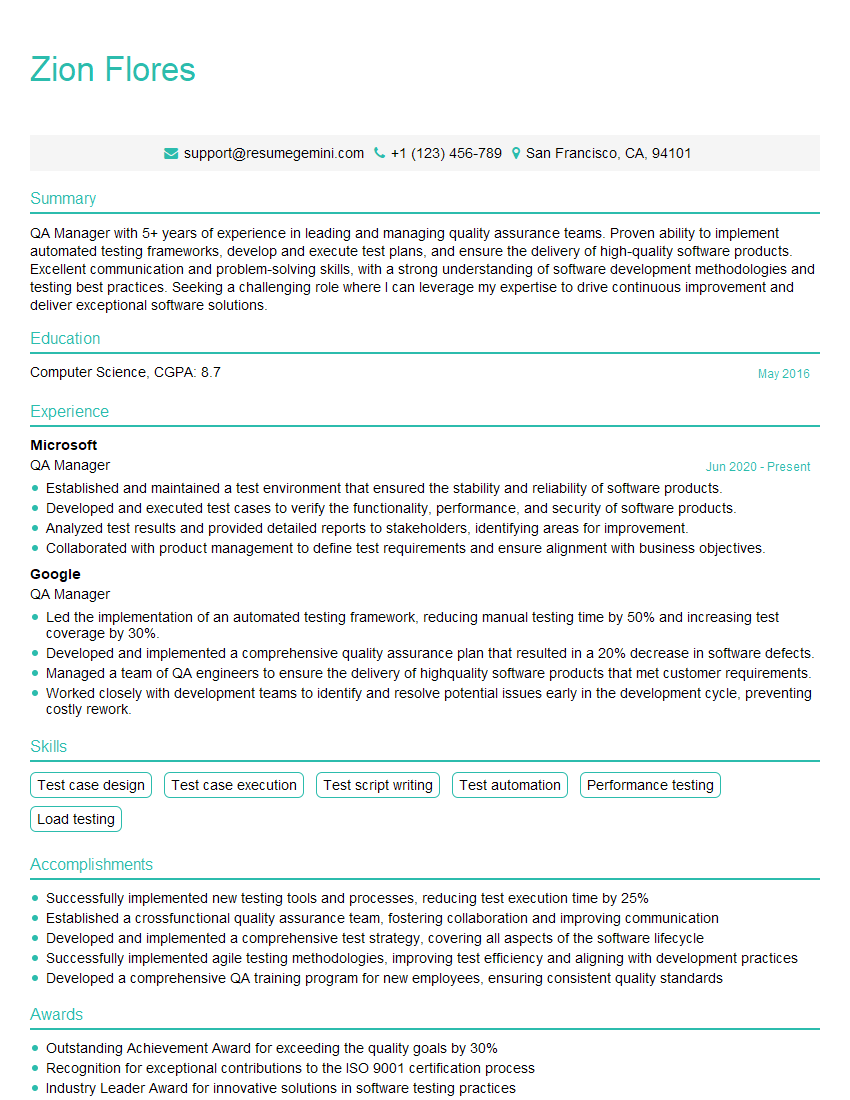
QA Manager Resume Sample
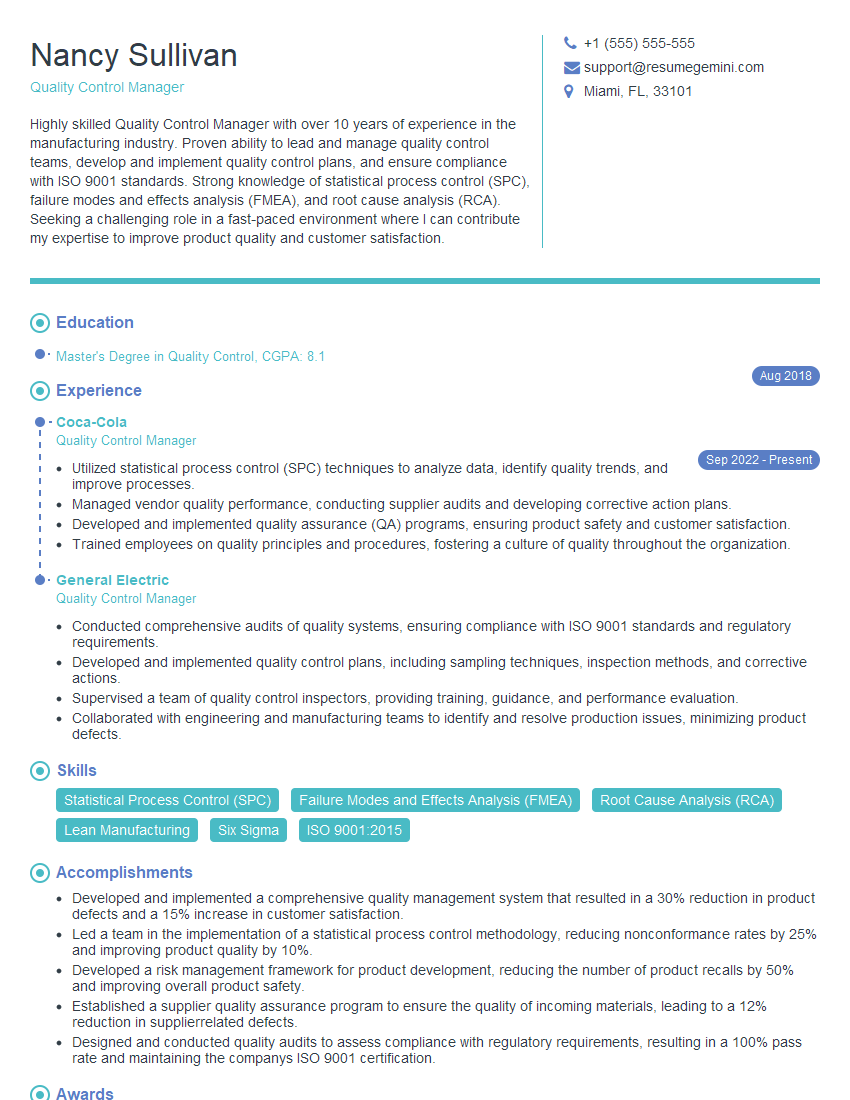
Quality Control Manager Resume Sample
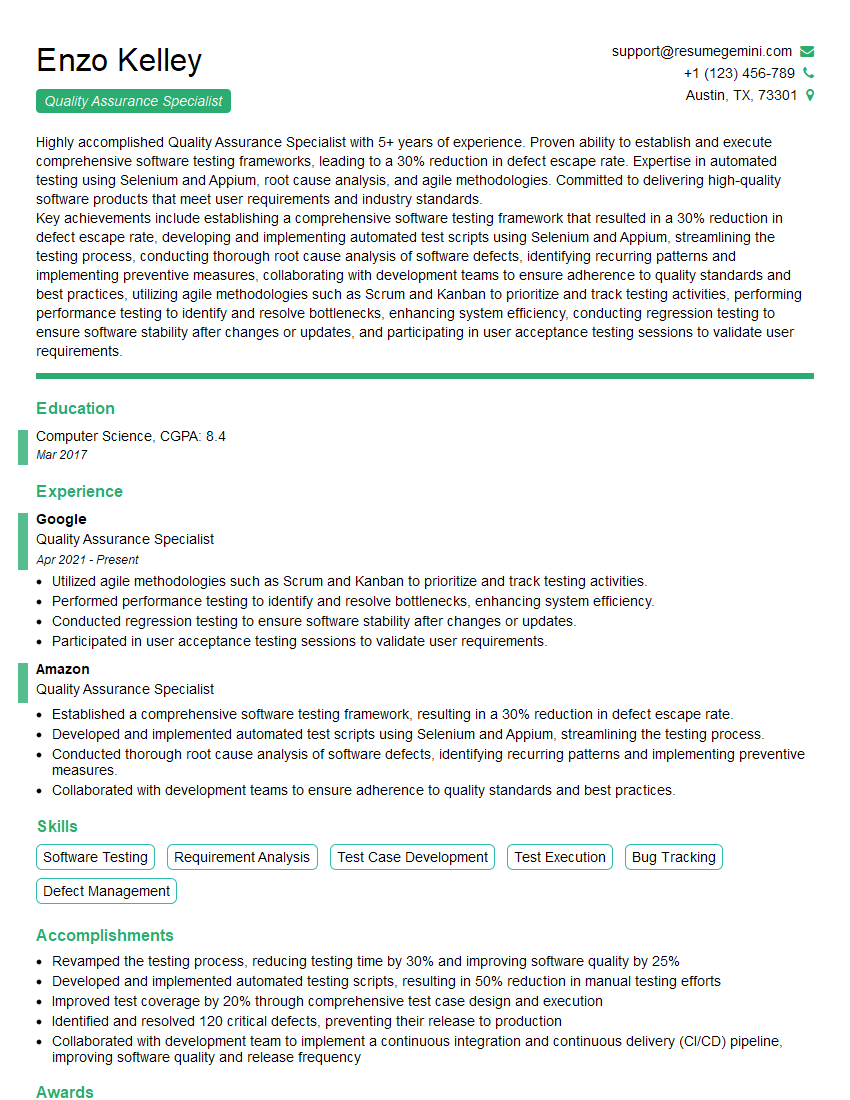
Quality Assurance Specialist Resume Sample
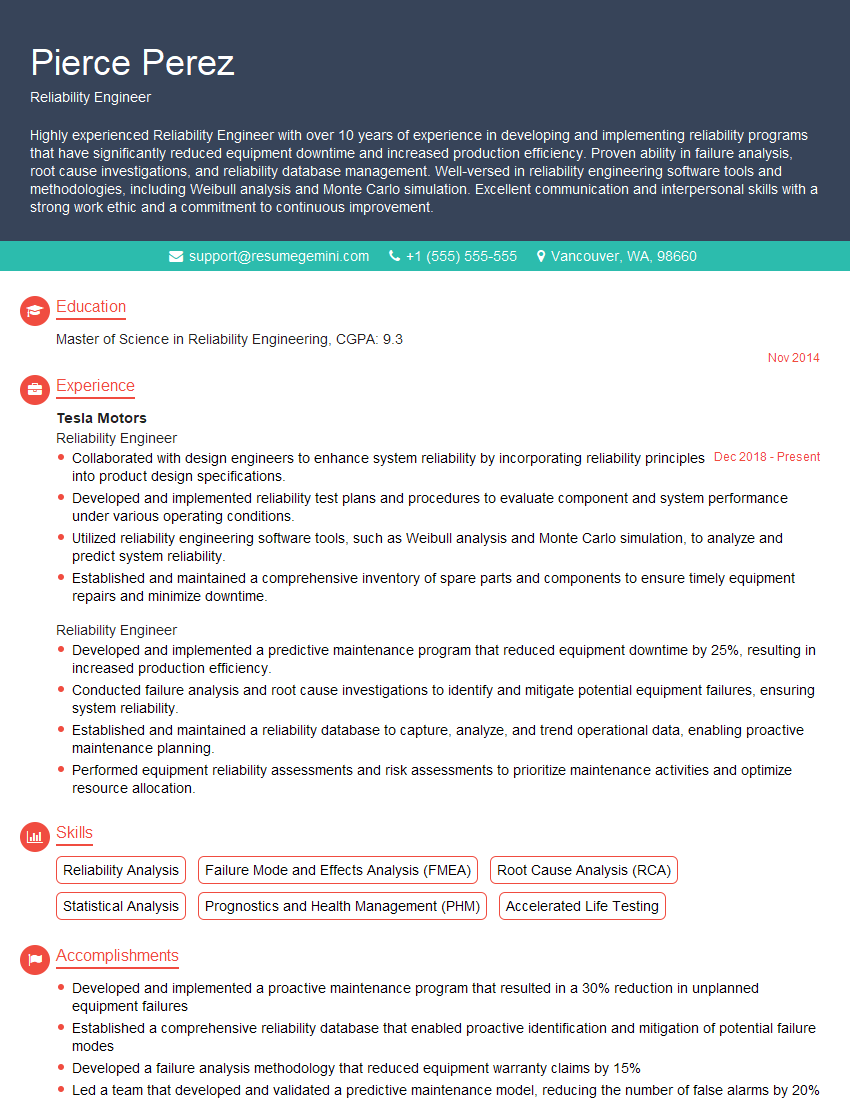
Reliability Engineer Resume Sample
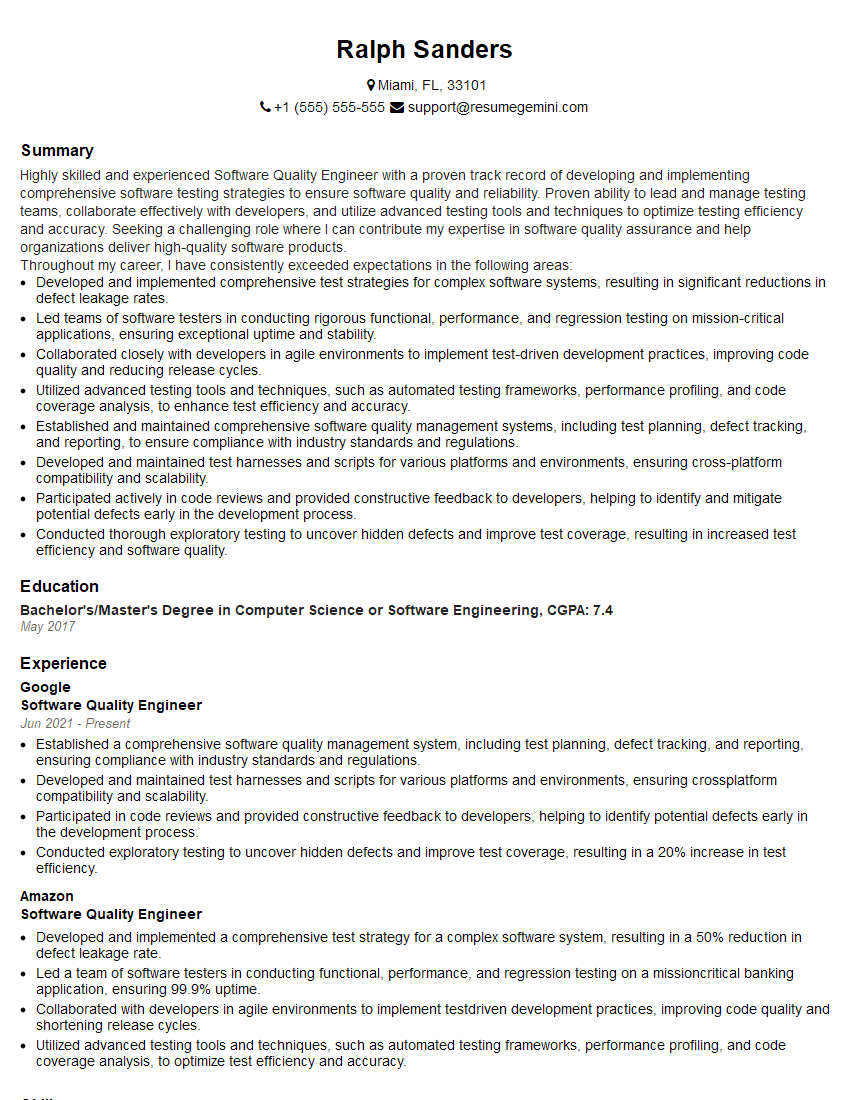
Software Quality Engineer Resume Sample

Software Tester Resume Sample
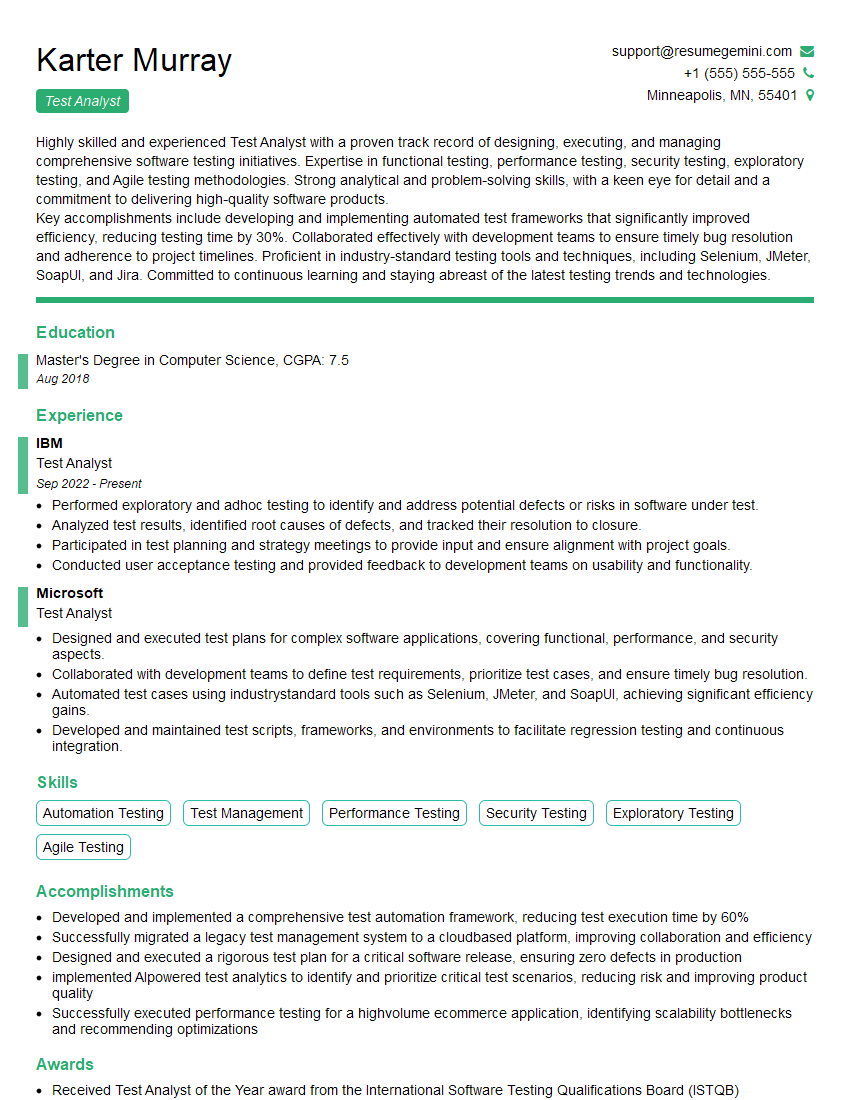
Test Analyst Resume Sample
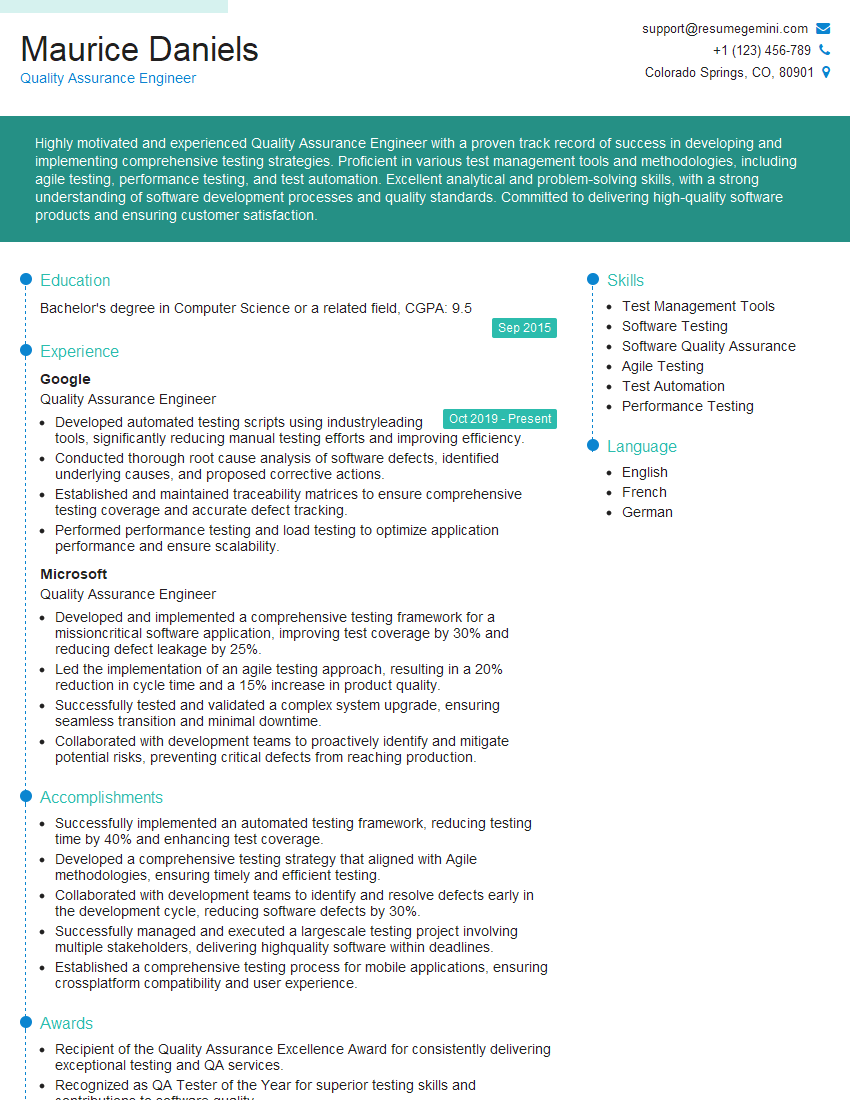
Quality Assurance Engineer Resume Sample
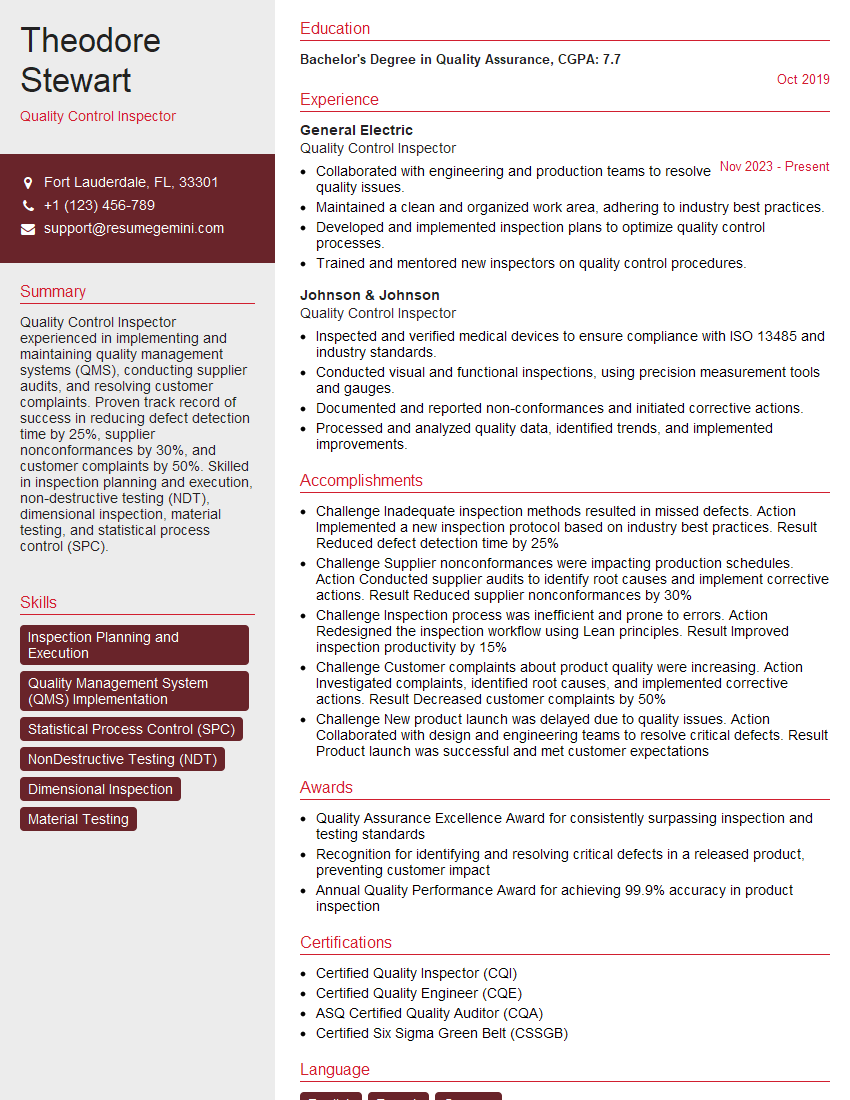
Quality Control Inspector Resume Sample
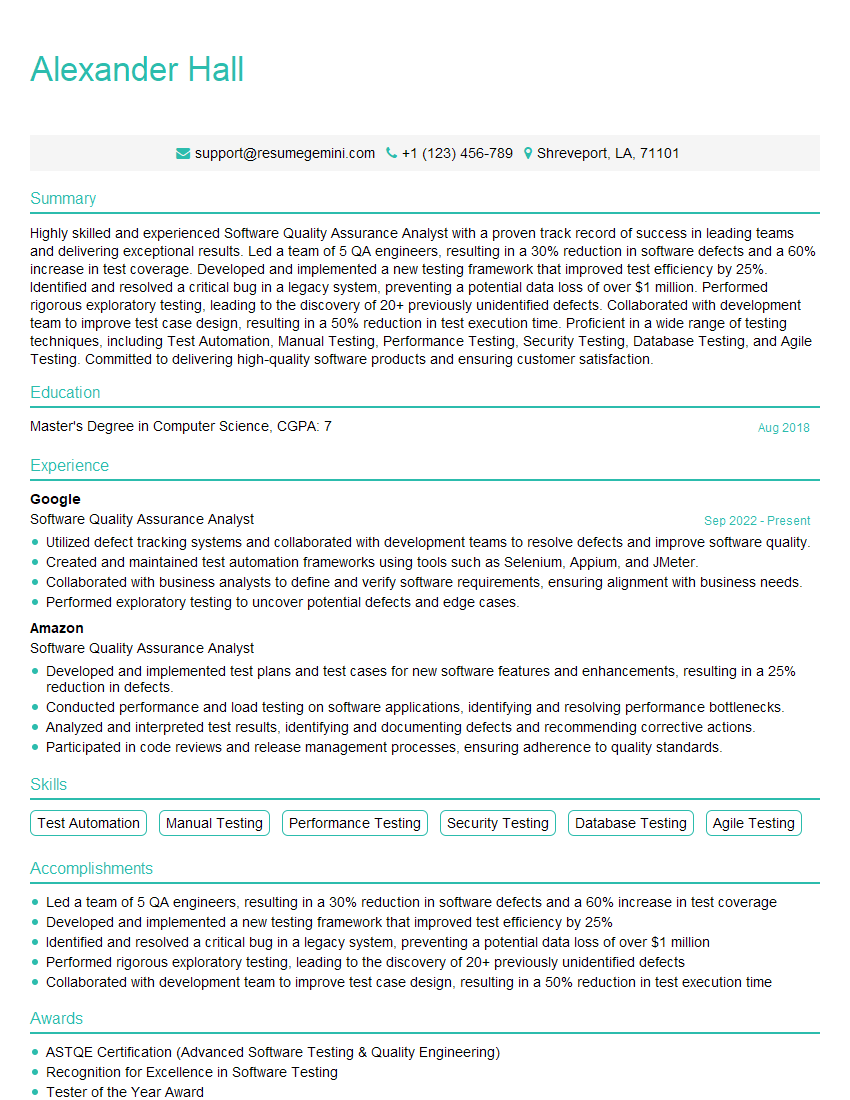
Software Quality Assurance Analyst Resume Sample
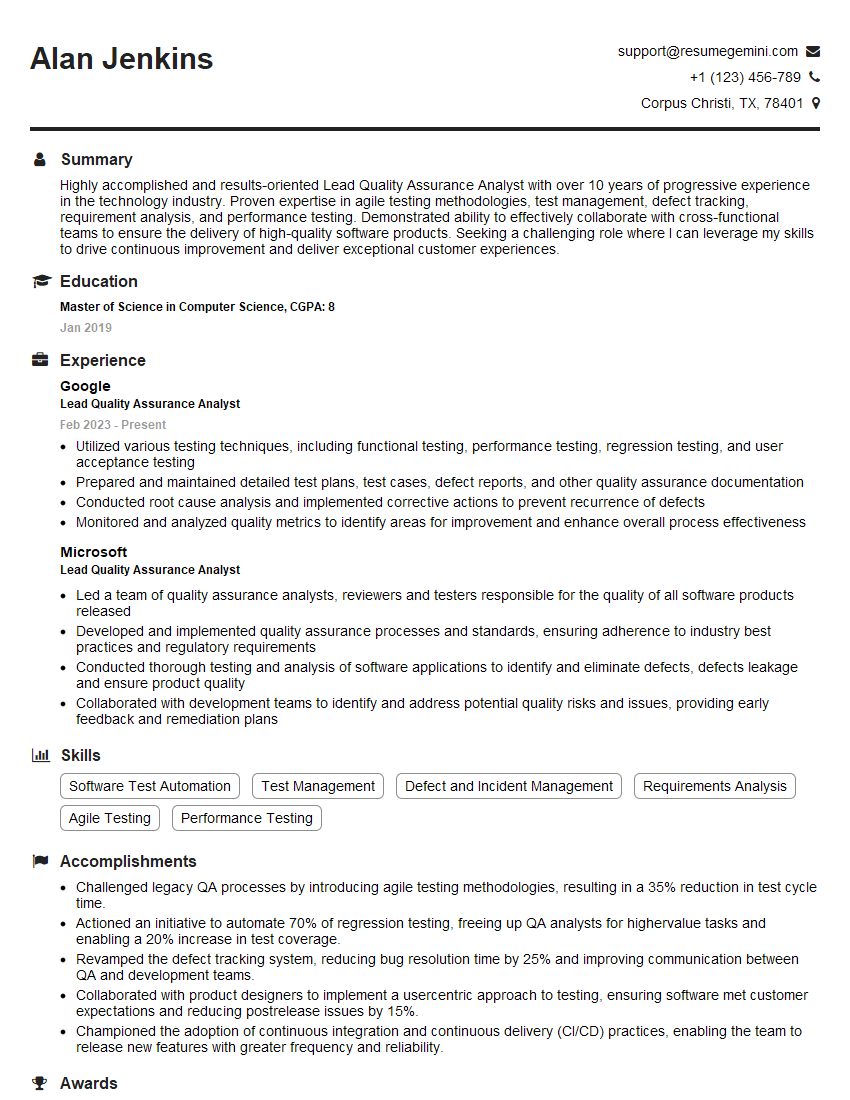
Lead Quality Assurance Analyst Resume Sample
Explore more articles
Users Rating of Our Blogs
Share Your Experience
We value your feedback! Please rate our content and share your thoughts (optional).
What Readers Say About Our Blog
Very informative content, great job.
good