Are you ready to stand out in your next interview? Understanding and preparing for Defective PCB Identification interview questions is a game-changer. In this blog, we’ve compiled key questions and expert advice to help you showcase your skills with confidence and precision. Let’s get started on your journey to acing the interview.
Questions Asked in Defective PCB Identification Interview
Q 1. Describe your experience identifying defective PCBs.
My experience in identifying defective PCBs spans over 10 years, encompassing diverse projects from consumer electronics to industrial control systems. I’ve worked with a wide range of PCBs, from simple single-layer boards to complex multi-layer designs. My expertise includes both troubleshooting faulty boards in the field and performing quality control inspections during the manufacturing process. I’m proficient in using various diagnostic tools and techniques, enabling me to quickly pinpoint the root cause of failures. For example, I once identified a hairline crack in a trace on a high-voltage power supply PCB that was causing intermittent power outages, a problem easily missed without careful visual inspection and the right equipment. This highlights the need for both systematic analysis and a keen eye for detail.
Q 2. What are the common visual defects found on PCBs?
Common visual defects on PCBs are often the easiest to identify initially and can point toward underlying problems. These include:
- Component damage: Cracked or broken components, burnt resistors or capacitors, damaged solder joints (cold solder joints, bridging, excess solder).
- Trace defects: Open circuits (broken traces), shorts (traces touching unintentionally), delamination (separation of layers).
- Solder bridge: Excess solder forming unintended electrical connections between adjacent pads.
- Component placement errors: Incorrectly placed or oriented components.
- Physical damage: Scratches, cracks, or dents on the PCB itself.
- Corrosion: Greenish discoloration indicating corrosion of the copper traces.
Identifying these visual defects is the first crucial step in PCB diagnostics, often indicating the area to probe further with more sophisticated equipment.
Q 3. Explain the process you follow to diagnose a faulty PCB.
My process for diagnosing a faulty PCB is systematic and involves these key steps:
- Visual Inspection: A thorough visual examination using a magnifying glass and good lighting is the first step. This helps identify any obvious physical defects mentioned previously.
- Functional Testing: Testing the board within its intended application or using a specialized tester to pinpoint the area of malfunction. This provides crucial information on what part of the board isn’t working properly.
- Schematic Review: Reviewing the PCB schematic to understand the circuit’s functionality, component interconnections, and signal flow. This allows for informed decision-making during the investigation.
- Multimeter Testing: Using a multimeter to measure voltages, resistances, and continuity to verify circuit operation and identify any short circuits, open circuits, or incorrect voltage levels. (Further detailed in the next answer)
- Advanced Testing (if needed): If the problem remains elusive, further tests like in-circuit testing, X-ray inspection, or thermal imaging might be used. This often relies on specialized equipment.
- Documentation: Carefully document all findings, including visual observations, test results, and troubleshooting steps. This is critical for issue tracking and communication.
Q 4. How do you use a multimeter to troubleshoot a PCB?
A multimeter is an invaluable tool for PCB troubleshooting. I utilize its various functions to diagnose a variety of issues. For example:
- Continuity Testing: I check for open or short circuits by measuring resistance across traces or components. A low resistance indicates a short circuit, while an infinite resistance suggests an open circuit.
Example: Measuring the resistance across a trace; a reading of 0 ohms indicates a short, while a reading of OL (overload) shows an open circuit. - Voltage Measurement: I measure voltages at various points in the circuit to verify if components receive the correct operating voltage. Unexpected voltages indicate potential problems like incorrect component values or faulty connections.
- Resistance Measurement: Measuring resistance values of components (resistors, etc.) to verify that they are within their specified tolerance range.
- Diode Testing: Checking the forward and reverse bias voltage of diodes to confirm their functionality.
Safety precautions are paramount. Always disconnect the PCB from power before applying any multimeter measurements to prevent electrical shock and equipment damage. I also ensure the proper selection of measurement ranges to avoid damaging the multimeter.
Q 5. What are some common causes of PCB failures?
PCB failures stem from a multitude of causes. Some of the most common are:
- Component Failure: Individual components like capacitors, resistors, or integrated circuits can fail due to age, overheating, or manufacturing defects. Electrolytic capacitors are particularly prone to failure over time.
- Environmental Factors: Exposure to moisture, extreme temperatures, or vibrations can cause corrosion, cracking, or physical damage to the PCB and its components.
- Design Flaws: Poor PCB design can lead to inadequate heat dissipation, signal integrity issues, or susceptibility to electromagnetic interference (EMI).
- Manufacturing Defects: Errors during PCB manufacturing, such as improper soldering, damaged traces, or incorrect component placement, can also lead to failures.
- Overcurrent/Overvoltage: Exceeding the current or voltage ratings of components can cause immediate failure or gradual degradation.
- Mechanical Stress: Physical stress or impacts can damage traces or components.
Understanding these causes is crucial for implementing preventative measures and ensuring reliable PCB operation.
Q 6. Describe your experience with different PCB inspection methods (e.g., visual, automated optical inspection (AOI), X-ray inspection).
My experience encompasses a variety of PCB inspection methods. Visual inspection is always the starting point, providing a quick overview of the board. However, more sophisticated methods are often necessary for in-depth analysis:
- Automated Optical Inspection (AOI): AOI systems use cameras and image processing software to automatically detect defects like solder bridging, missing components, or open circuits. They significantly speed up the inspection process, especially for high-volume manufacturing.
- X-ray Inspection: X-ray inspection is used to detect internal defects such as hidden shorts, delamination issues within multi-layer boards, or improperly soldered components underneath surface-mount devices. It’s essential for identifying defects invisible to the naked eye or AOI.
The choice of inspection method depends on factors like the complexity of the PCB, the required level of detail, and cost constraints. Often, a combination of techniques is employed for optimal results. For instance, visual inspection might be followed by AOI for high-throughput applications, and X-ray inspection might be used for critical components.
Q 7. How do you document your findings when identifying a defective PCB?
Documentation of findings is a critical aspect of PCB defect identification and forms the foundation for effective troubleshooting and preventative measures. My documentation process usually includes:
- Detailed photographs: High-resolution images of the defective area, highlighting the specific defect.
- Schematic markings: Clearly identifying the affected components or traces on a copy of the PCB schematic.
- Test results: Recording all multimeter readings, in-circuit test results, and any other relevant test data.
- Description of the defect: A concise description of the defect type, its location, and suspected cause.
- Troubleshooting steps: A chronological log of the troubleshooting steps taken, including the outcomes of each step.
- Root cause analysis: A summary of the identified root cause of the defect.
- Recommended corrective actions: Suggestions for repair or preventative measures.
This comprehensive documentation ensures clear communication, facilitates future troubleshooting of similar issues, and aids in continuous improvement of the manufacturing or design process.
Q 8. Explain your experience with different types of soldering defects.
Soldering defects are a frequent cause of PCB failures. My experience encompasses a wide range, from the most common to more subtle issues. Common defects include:
- Cold solder joints: These occur when insufficient heat is applied during soldering, resulting in a weak, unreliable connection. They often appear dull and lack the characteristic shiny, concave meniscus of a good solder joint. I’ve encountered these often in high-volume manufacturing where inconsistencies in the reflow oven profile can lead to a batch of cold solder joints.
- Solder bridges: Excess solder connecting two or more adjacent pads. This creates unintended short circuits. I once tracked down a intermittent fault on a complex audio board to a microscopic solder bridge between two closely spaced pins – almost invisible to the naked eye.
- Insufficient solder: The opposite of a cold joint; here, there isn’t enough solder to ensure a reliable connection. This can lead to intermittent failures or complete opens. I’ve seen this happen due to improper stencil design or insufficient solder paste during the SMT process.
- Tombstoning: Components standing upright instead of laying flat due to unequal solder wicking. This indicates issues with the solder paste application or reflow profile.
- Head-in-pillow: Similar to tombstoning, this involves one lead of a component being soldered properly while the other is not. Again, this points to problems with the reflow process or component placement.
Identifying these defects requires a combination of visual inspection using magnification, and sometimes X-ray inspection to see hidden defects underneath components. Understanding the soldering process is crucial for effective diagnosis.
Q 9. What is the difference between surface mount technology (SMT) and through-hole technology (THT)?
Surface Mount Technology (SMT) and Through-Hole Technology (THT) are two fundamental methods for mounting components onto PCBs. The key difference lies in how components are connected:
- SMT: Components are placed directly onto the surface of the PCB and soldered using a reflow process. This allows for higher component density and smaller board sizes. Think of the tiny components on your smartphone – they are almost all SMT.
- THT: Components have leads that pass through holes in the PCB and are soldered on the opposite side. This method is generally more robust but less dense. You often see this style in older electronics or in applications requiring exceptionally high reliability.
The choice between SMT and THT depends on factors such as component size, required density, cost, and the application’s robustness requirements. Many PCBs use a combination of both technologies.
Q 10. Describe your experience with PCB repair techniques.
My PCB repair experience ranges from simple component replacement to more complex techniques involving trace repair and rework.
- Component level repair: This is the most common, involving removing and replacing faulty components. I use a hot air rework station for SMT components and a soldering iron for through-hole components. Careful attention is paid to avoiding further damage during the process.
- Trace repair: For broken or damaged traces, I employ techniques such as using conductive epoxy or jumper wires to restore connectivity. The choice depends on the severity of the damage and the accessibility of the trace.
- Layer repair: In severe cases involving internal layer damage, this might involve complex multi-layer repair or, in some instances, PCB replacement if repair is not feasible.
- Reballing: A specialized technique used to repair BGA (Ball Grid Array) packages. It involves removing the old solder balls and applying new ones. This requires precision equipment and expertise. I’ve used this technique successfully on several high-end motherboards with failing CPUs or GPUs.
Effective PCB repair requires not only technical skill but also meticulous attention to detail. Accurate diagnosis of the root cause is essential to ensure a lasting repair.
Q 11. How do you determine the root cause of a recurring PCB failure?
Identifying the root cause of recurring PCB failures is critical for preventing future issues. My approach is systematic and data-driven:
- Gather data: Document all failure symptoms, including environmental conditions, usage patterns and any error messages.
- Visual inspection: Carefully examine the PCB for any obvious defects, such as damaged components or traces. Magnification is essential.
- Testing: Perform in-circuit testing (ICT) to pinpoint faulty components. Use multimeters, oscilloscopes, and logic analyzers to measure signals and identify anomalies.
- Component-level analysis: Isolate suspected faulty components for further analysis, testing functionality with bench equipment.
- Environmental analysis: Consider environmental stress factors like temperature, humidity, and vibration, as these can influence component lifespan and reliability.
- Statistical analysis: If dealing with multiple failed PCBs, statistical analysis of failure patterns can reveal underlying trends or manufacturing defects.
- Root cause analysis (RCA): Employ tools like a 5 Whys analysis to systematically investigate the underlying cause of the failure.
By systematically investigating the failure, rather than just replacing components, we can prevent the same issue from reoccurring.
Q 12. What are some common component failure modes?
Component failure modes vary widely depending on the component type and operating conditions. Some common modes include:
- Open circuits: A complete break in the electrical path. Often caused by physical damage, corrosion, or thermal stress.
- Short circuits: An unintended electrical connection between two points. This is often caused by manufacturing defects, physical damage, or degradation of insulating materials.
- Electrolytic capacitor failure: Leakage, bulging, or explosion are typical signs. This often results from excessive ripple current or exceeding voltage ratings.
- Resistor failure: Resistors can drift out of their specified value or fail completely due to overheating or voltage spikes.
- Diode failure: Diodes can fail due to reverse-voltage breakdown or excessive current.
- Transistor failure: Transistors can suffer from junction breakdown, thermal runaway, or degradation over time.
- Integrated circuit failure: ICs can fail due to various reasons, including internal shorts, open circuits, or degradation of the semiconductor material.
Understanding these common failure modes aids in diagnostics and prevents recurrence.
Q 13. What is a JTAG and how is it used for troubleshooting?
JTAG (Joint Test Action Group) is a standardized debugging interface widely used in electronic systems. It allows access to internal registers and memory locations of microcontrollers and other integrated circuits. This is vital for troubleshooting.
In PCB troubleshooting, JTAG is invaluable for:
- Debugging firmware: Stepping through code, setting breakpoints, and inspecting variables allows identification of software bugs.
- Reading memory contents: This helps to check the state of system variables and identify potential causes of failure.
- Accessing internal registers: Checking the status of various peripherals and checking the integrity of registers.
- Boundary scan testing: This technique can be used to check connections within the PCB, even to components deep inside an enclosure, without needing access to each individual pin.
For example, if a system is exhibiting unusual behavior, I might use JTAG to examine the contents of memory or registers to find unexpected values or inconsistent states, which can provide clues as to the source of the malfunction. A JTAG programmer and appropriate software are needed for this technique.
Q 14. Explain your experience using a logic analyzer or oscilloscope.
Logic analyzers and oscilloscopes are essential tools in my troubleshooting arsenal. They provide different perspectives on the PCB’s signals.
- Oscilloscope: An oscilloscope displays the waveform of analog signals over time. This is essential for examining voltage levels, signal timing, and the presence of noise or distortion. I often use it to examine the clock signal on a processor, or the voltage levels on a power rail to spot inconsistencies. It helps me to visualize signal integrity problems.
- Logic analyzer: A logic analyzer captures the digital signals, showing the sequence of bits, logic states (high/low). This allows a detailed analysis of digital communication protocols and sequences of operations. I use it extensively when investigating problems with SPI, I2C, or other digital interfaces to check timing sequences and data integrity.
For instance, if a serial communication link is failing, the logic analyzer would allow me to capture the transmitted and received data, identifying any errors or inconsistencies in the communication protocol. The oscilloscope would complement this by checking for noise or signal degradation within the analog components of the link.
Q 15. What is ESD and how do you prevent it during PCB testing?
ESD, or Electrostatic Discharge, is a sudden flow of electricity between two objects with different electrical potentials. Think of it like a tiny lightning bolt. In PCB testing, this can be devastating, instantly frying sensitive components. To prevent ESD, we employ a multi-layered approach:
- Proper Grounding: All workstations and equipment are grounded using anti-static mats and wrist straps connected to a common ground point. This ensures a consistent electrical potential, preventing the buildup of static charge.
- Anti-static Packaging: PCBs and components are stored and transported in anti-static bags and containers. These materials help to dissipate any accumulated static electricity.
- Ionizers: Ionizers are used in the workspace to neutralize the air, preventing the buildup of static charges. They release both positive and negative ions, balancing the electrical field.
- Handling Procedures: Strict handling procedures are followed, such as avoiding unnecessary touching of components and using grounding straps even before touching a PCB. We handle PCBs by the edges whenever possible.
- Controlled Environment: The testing environment itself is carefully controlled with appropriate humidity to mitigate electrostatic buildup.
For instance, I once witnessed a colleague accidentally discharging static electricity onto a newly assembled PCB, instantly causing multiple components to fail. This highlights the critical need for meticulous ESD prevention techniques.
Career Expert Tips:
- Ace those interviews! Prepare effectively by reviewing the Top 50 Most Common Interview Questions on ResumeGemini.
- Navigate your job search with confidence! Explore a wide range of Career Tips on ResumeGemini. Learn about common challenges and recommendations to overcome them.
- Craft the perfect resume! Master the Art of Resume Writing with ResumeGemini’s guide. Showcase your unique qualifications and achievements effectively.
- Don’t miss out on holiday savings! Build your dream resume with ResumeGemini’s ATS optimized templates.
Q 16. What safety precautions do you take when working with PCBs?
Safety is paramount when working with PCBs. My safety precautions include:
- Eye Protection: Always wearing safety glasses to protect against flying debris during soldering or desoldering processes.
- Proper Ventilation: Ensuring adequate ventilation when working with soldering fumes or cleaning agents to avoid inhaling harmful substances. This often involves using fume extractors.
- Handling Sharp Objects: Exercising caution when handling sharp tools, like cutters or probes, to avoid injuries.
- Disposal of Materials: Following proper procedures for disposing of hazardous materials, such as solder and cleaning solvents. We strictly adhere to local environmental regulations.
- ESD Precautions (as detailed above): Prevention of ESD damage to protect both the PCBs and myself.
- Appropriate Clothing: Wearing clothing that does not present a fire hazard or that could become entangled in equipment.
A recent incident involved a component overheating during testing. Thanks to using appropriate heat-resistant gloves, I was able to handle the hot component safely and without injury. This emphasizes the importance of proactively managing potential hazards.
Q 17. Describe your experience with different types of PCB materials and their properties.
My experience encompasses various PCB materials, each with distinct properties:
- FR-4 (Flame Retardant 4): This is the most common substrate material. It’s known for its good balance of mechanical strength, thermal resistance, and cost-effectiveness. However, it has limitations in high-frequency applications.
- High-Frequency Materials (e.g., Rogers, Taconic): These materials offer lower dielectric loss and are crucial for high-speed digital and RF applications where signal integrity is paramount. They are significantly more expensive than FR-4.
- Ceramic PCBs: Used for high-temperature or high-power applications, where exceptional thermal conductivity is needed. They are very rigid and brittle.
- Flexible PCBs: Ideal for applications requiring bendability or conformity to curved surfaces, such as wearable electronics. The choice of flex material greatly impacts durability and performance.
For example, I worked on a project requiring a high-frequency PCB for a 5G modem. We opted for Rogers 4003C material due to its superior dielectric properties, ensuring minimal signal loss and excellent impedance control.
Q 18. How do you interpret datasheets to identify component specifications?
Datasheets are the bible for component specifications. Interpreting them requires careful attention to detail and a methodical approach. I typically focus on the following key sections:
- Electrical Characteristics: This section lists key parameters like voltage ratings, current ratings, power dissipation, operating temperature range, and capacitance/inductance values.
- Mechanical Specifications: This defines the physical dimensions, weight, packaging type, and mounting requirements.
- Environmental Specifications: This provides information on operating temperature range, humidity tolerance, and resistance to shock and vibration.
- Packaging Information: This section includes the quantity per package and specific packaging details.
For instance, when designing a power supply, I would carefully scrutinize the datasheet of a specific transistor to check its maximum current and voltage ratings to make sure it can handle the required power levels without exceeding its limits. Misinterpreting a datasheet can lead to catastrophic failures.
Q 19. What is impedance matching and why is it important in PCB design?
Impedance matching is the process of designing a circuit so that the impedance at the output of one stage matches the input impedance of the next stage. Think of it like connecting two pipes of different diameters – if they don’t match, you’ll have a bottleneck and lose a lot of flow. In PCB design, impedance mismatches cause signal reflections, leading to signal degradation and loss of data integrity, especially at high frequencies. This can result in signal attenuation and noise. Proper impedance matching ensures efficient power transfer and prevents signal reflections, maximizing performance.
We achieve impedance matching using controlled trace widths, lengths, and dielectric materials on the PCB. Software tools like circuit simulators help analyze and optimize the impedance. For example, a high-speed digital signal transmission line on a PCB often needs 50-ohm impedance matching to minimize reflections and maintain signal integrity.
Q 20. How do you handle a situation where a PCB repair is beyond your expertise?
If a PCB repair is beyond my expertise, I follow a clear protocol:
- Thorough Documentation: First, I thoroughly document the problem, including visual observations, test results, and any previous repair attempts.
- Escalation: I escalate the issue to a senior engineer or specialist with the necessary experience. This often involves providing all the documentation and making the PCB available for inspection.
- Collaboration: I collaborate with the specialist to understand the repair strategy and learn from their expertise.
- External Resources: If the repair requires specialized equipment or expertise not available internally, I will identify and engage with a reputable external repair service.
My primary goal is to ensure the repair is performed correctly and efficiently, minimizing downtime and maintaining the integrity of the device.
Q 21. Describe your experience with PCB design software and tools.
I have extensive experience with several PCB design software and tools:
- Altium Designer: Proficient in schematic capture, PCB layout, and simulation features. I’ve used it for many complex projects, including high-speed digital designs and embedded systems.
- Eagle PCB: Familiar with this software’s capabilities for designing smaller to medium-sized PCBs.
- KiCad: Experienced with this open-source alternative, particularly valuable for prototyping and simpler designs.
- Simulation Tools (e.g., LTSpice, HFSS): I regularly use these for simulating circuit performance, signal integrity, and electromagnetic interference (EMI) analysis before manufacturing.
My skills in these tools allow me to efficiently design robust and reliable PCBs, optimizing for cost, performance, and manufacturability. For example, using Altium Designer’s simulation tools, I was able to identify and correct a potential EMI issue on a recent PCB design, before it ever went into production.
Q 22. What are your experience with different types of PCB testing equipment?
My experience with PCB testing equipment is extensive, encompassing a wide range of instruments. I’m proficient in using automated optical inspection (AOI) systems for identifying surface-mount component placement errors, solder defects, and opens/shorts. I’m also well-versed in using flying probe testers for in-circuit testing (ICT), which provides quick fault detection. My experience also extends to boundary scan testing (JTAG) for identifying deeper circuit faults that might not be detectable through ICT alone. Furthermore, I regularly utilize multi-meter and oscilloscopes for targeted investigations of specific components or signals. I am experienced with both benchtop and automated testing equipment, understanding the strengths and limitations of each type.
For example, I once used AOI to identify a batch of PCBs with incorrectly oriented capacitors – a seemingly small error that would have had serious consequences if undetected. Using the ICT system afterwards confirmed the finding.
I am also familiar with thermal imaging cameras for identifying overheated components, hinting at potential short circuits or design flaws. This provides a visual, non-invasive method for identifying problems.
Q 23. Explain your familiarity with IPC standards related to PCB assembly.
My familiarity with IPC standards related to PCB assembly is comprehensive. I regularly refer to standards such as IPC-A-610 (Acceptability of Electronic Assemblies) and IPC-6012 (Qualification and Performance of Printed Boards) to ensure the quality and reliability of PCBs. These standards provide guidelines for everything from component placement tolerances to solder joint quality. I use these standards not only for inspection and acceptance testing but also as a benchmark during the design and manufacturing processes to prevent defects from occurring in the first place.
Understanding IPC standards allows me to clearly communicate about defect severity with engineers and manufacturers. For instance, a solder joint classified as a Class 3 defect (unacceptable) according to IPC-A-610 requires immediate attention and corrective action, unlike a Class 1 defect which might be acceptable under specific circumstances. This consistent framework prevents miscommunication and ensures consistent quality control.
Q 24. How would you approach debugging a noisy digital signal on a PCB?
Debugging a noisy digital signal on a PCB involves a systematic approach. The first step is isolating the source of the noise. I would use an oscilloscope to carefully examine the signal at various points along the trace, paying close attention to amplitude, frequency, and timing characteristics. This often involves using probes to capture signals at different points on the PCB and comparing them to the expected signal.
Common sources of noise include poorly routed traces (resulting in electromagnetic interference or EMI), inadequate grounding, and capacitive or inductive coupling between components or traces. Once the source is identified, I’d apply appropriate countermeasures. This might involve adding bypass capacitors to reduce high-frequency noise, shielding susceptible components to minimize EMI, improving grounding techniques, or rerouting traces to minimize crosstalk.
Consider a scenario with a noisy clock signal. Using the oscilloscope I might find that the noise is occurring primarily at a particular frequency, suggesting a possible external interference source. By identifying the frequency and using a spectrum analyzer, I can then narrow down the potential sources of this interference, allowing me to address them using better shielding or filtering techniques.
Q 25. Describe your approach to identifying and correcting short circuits or open circuits on a PCB.
Identifying and correcting short circuits or open circuits involves a combination of visual inspection and electrical testing. I would start with a thorough visual examination using a microscope to identify any obvious shorts (e.g., solder bridges) or opens (e.g., cracked traces or broken components). A multimeter is instrumental in confirming the suspected issues. For short circuits, I would measure the resistance between suspected nodes—a low or zero resistance reading confirms a short. For open circuits, an infinite resistance reading indicates a break in the circuit.
The next steps depend on the nature of the defect. A solder bridge can often be easily removed using a hot air station or a soldering iron. A cracked trace may require repair using conductive epoxy or a wire jumper. A broken component needs replacement, followed by resoldering. Following repair, I would thoroughly retest the PCB to ensure that the defect has been successfully corrected and that no new issues have been introduced.
For instance, if I suspect a short between two adjacent traces, I’d carefully inspect the area with a microscope and measure the resistance between the traces using a multimeter. If a short is confirmed, I’d remove the excess solder causing the short using a fine-tipped soldering iron and retest. In case of an open circuit I might use a multimeter, and if there is no continuity, I would attempt repairs, potentially replacing a component or bridging with a fine wire if the failure is related to a broken trace.
Q 26. How do you handle a situation where a PCB test fails unexpectedly?
An unexpected PCB test failure requires a methodical approach. I start by reviewing the test results meticulously, focusing on which specific tests failed and the failure modes. This involves analyzing the failure data from the automated test equipment. Then, I would cross-reference these findings with the PCB’s schematic and design documentation.
Next, I perform targeted investigations based on the failure modes. If multiple tests failed unexpectedly, I might suspect a common underlying cause, like a faulty power supply or a bad connection in the test fixture. If a specific section of the board repeatedly fails, it points toward a localized problem. I use techniques like visual inspection, component testing, and signal tracing to pinpoint the source of the failure. In case of a failure in an area that appears visually sound, I use a multimeter to check for continuity, opens and shorts. I might use specialized equipment such as a logic analyzer or spectrum analyzer to check for more sophisticated signal integrity problems.
Documenting each step is crucial. This includes detailed descriptions of observations, measurements, and corrective actions taken. Thorough documentation helps in identifying and resolving future similar failures and enables efficient troubleshooting.
Q 27. How familiar are you with different PCB manufacturing processes?
My familiarity with PCB manufacturing processes is extensive, ranging from the design stage to final testing. I understand the different methods used for fabricating PCBs, including subtractive etching, additive processes, and hybrid techniques. I’m aware of various surface mount and through-hole component placement techniques, including reflow soldering, wave soldering, and selective soldering. I understand the role of various materials in PCB manufacturing and their impact on reliability, such as the type of substrate, copper thickness, and the finish applied to the copper. This holistic understanding is critical for effective troubleshooting and preventing manufacturing defects.
For instance, I understand how improper reflow soldering profiles can lead to solder bridging or tombstoning issues, and how incorrect component placement or insufficient clearance can affect the board’s functionality. Understanding these processes allows for more effective communication with manufacturers to prevent these types of issues.
Q 28. How do you prioritize defects found during PCB inspection?
Prioritizing defects during PCB inspection is crucial for efficient troubleshooting and cost-effective repairs. I employ a risk-based approach, considering the severity of the defect and its potential impact on functionality and safety.
My prioritization typically follows this hierarchy:
- Critical Defects: These are defects that cause complete PCB failure or pose a significant safety hazard (e.g., a short circuit that could lead to overheating or fire, a missing component critical for functionality).
- Major Defects: These are defects that significantly impact the PCB’s performance or reliability, but don’t cause complete failure (e.g., a poorly soldered joint likely to fail soon, an incorrectly oriented component affecting functionality).
- Minor Defects: These defects are cosmetic or have a negligible impact on performance (e.g., minor solder spatter, slight misalignment of a component that doesn’t affect functionality).
Prioritization isn’t purely about severity; it also considers the cost and effort of repair. A minor defect might be prioritized over a major one if fixing the major defect involves significant rework or redesign. A well-documented and prioritized defect list helps streamline the repair process and ensures that the most critical issues are addressed first.
Key Topics to Learn for Defective PCB Identification Interview
- Visual Inspection Techniques: Mastering the art of identifying defects through visual examination, including magnification tools and lighting techniques. Practical application: Analyzing PCBs under a microscope to detect micro-cracks or solder bridges.
- Testing and Measurement Methods: Understanding the application of various testing equipment (e.g., multimeters, oscilloscopes) to diagnose electrical faults and component failures. Practical application: Using a multimeter to check for shorts or open circuits on a PCB.
- Component-Level Diagnostics: Identifying faulty components through systematic testing and analysis, including understanding component datasheets and specifications. Practical application: Troubleshooting a malfunctioning integrated circuit by checking its voltage levels and signal integrity.
- Soldering and Rework Techniques: Understanding proper soldering techniques and their impact on PCB integrity. Recognizing and correcting soldering defects. Practical application: Identifying cold solder joints and performing rework to restore connections.
- PCB Design and Manufacturing Processes: Familiarity with PCB manufacturing processes to understand potential points of failure and their causes. Practical application: Identifying defects resulting from improper etching or component placement during manufacturing.
- Troubleshooting Strategies and Root Cause Analysis: Developing a systematic approach to identifying and resolving PCB defects, including root cause analysis techniques. Practical application: Utilizing a flowchart or decision tree to isolate the source of a failure in a complex circuit.
- Documentation and Reporting: Accurately documenting findings, testing procedures, and corrective actions. Practical application: Creating clear and concise reports detailing defective PCB identification and repair procedures.
Next Steps
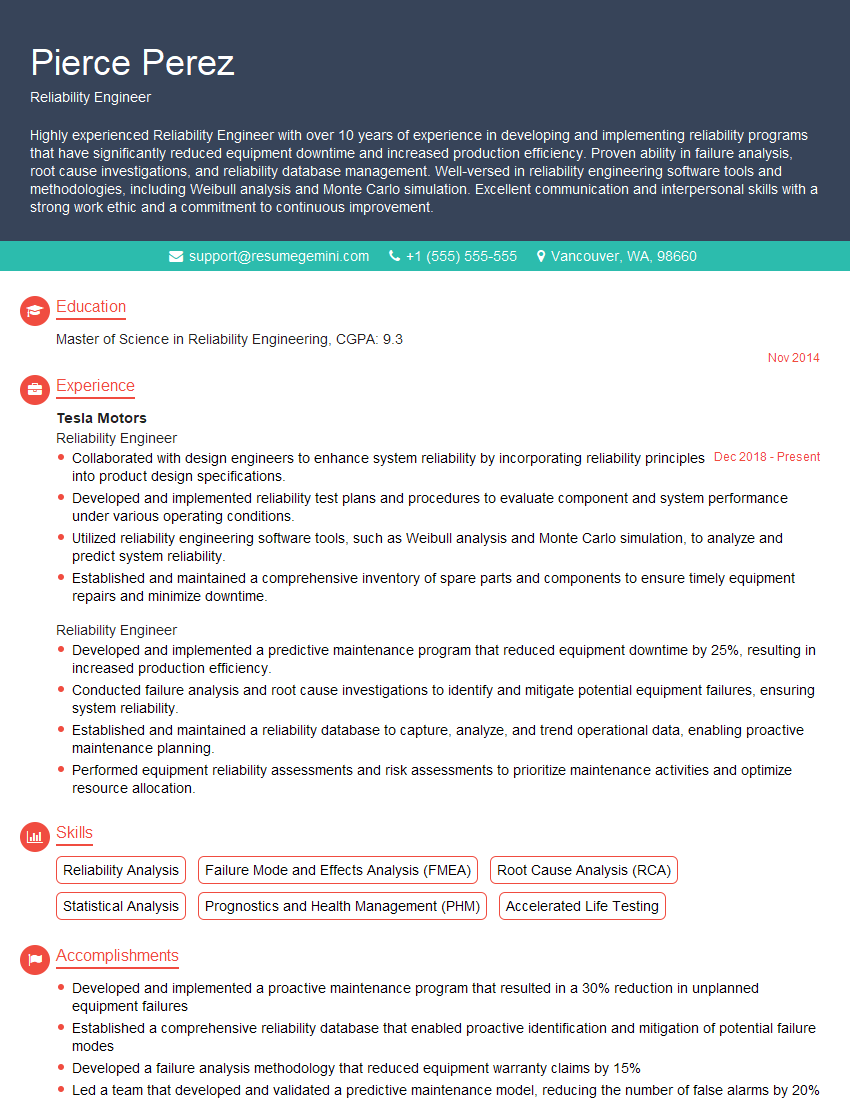
Mastering Defective PCB Identification is crucial for career advancement in electronics manufacturing, repair, and quality control. A strong understanding of these techniques demonstrates valuable problem-solving skills and technical expertise highly sought after by employers. To significantly boost your job prospects, focus on crafting an ATS-friendly resume that highlights your skills and experience effectively. ResumeGemini is a trusted resource that can help you create a professional and impactful resume tailored to the specific requirements of Defective PCB Identification roles. Examples of resumes tailored to this field are available within ResumeGemini to help guide you. Take the next step towards your dream career today!


Explore more articles
Users Rating of Our Blogs
Share Your Experience
We value your feedback! Please rate our content and share your thoughts (optional).
What Readers Say About Our Blog
Very informative content, great job.
good