Feeling uncertain about what to expect in your upcoming interview? We’ve got you covered! This blog highlights the most important Defensive Maneuvers interview questions and provides actionable advice to help you stand out as the ideal candidate. Let’s pave the way for your success.
Questions Asked in Defensive Maneuvers Interview
Q 1. Explain the concept of layered security and provide examples.
Layered security, also known as defense in depth, is a security strategy where multiple layers of protection are implemented to safeguard assets. Think of it like a castle with multiple walls and defenses – even if one layer is breached, others remain to protect the core. Each layer adds an extra hurdle for attackers to overcome, increasing the overall security posture significantly.
- Example 1: Network Security: A typical network might have a firewall (first layer) controlling access, intrusion detection systems (IDS) and intrusion prevention systems (IPS) (second layer) monitoring for malicious activity, and endpoint protection software (third layer) on individual computers.
- Example 2: Physical Security: A facility could employ perimeter fencing (first layer), security guards (second layer), and access control systems (third layer) like keycard readers to restrict access.
- Example 3: Data Security: Protecting sensitive data can involve data encryption at rest (first layer), access control lists (ACLs) (second layer) limiting who can access it, and regular data backups (third layer) as a recovery mechanism.
The strength of layered security lies in its redundancy. If one layer fails, others are in place to mitigate the risk. It forces attackers to expend more resources and time, increasing the likelihood of detection and failure.
Q 2. Describe different types of defensive maneuvers used in physical security.
Defensive maneuvers in physical security aim to deter, detect, and delay unauthorized access or actions. These maneuvers are often combined for maximum effectiveness.
- Perimeter Security: This encompasses fences, walls, gates, lighting, and landscaping designed to create a visible barrier and deter unauthorized entry. Thorny bushes or strategically placed lighting are examples of passive deterrents.
- Access Control: This involves restricting access to specific areas based on authorization. Methods include keycard systems, biometric scanners, security guards, and visitor management systems. Requiring multiple forms of authentication adds an extra layer of security.
- Surveillance: CCTV cameras, motion detectors, and alarm systems actively monitor the area and detect suspicious activities. Real-time monitoring and recording allow for rapid response and investigation.
- Response Procedures: This involves having established protocols for handling security incidents, including procedures for contacting emergency services and coordinating security personnel responses. Regular drills prepare personnel for real-world events.
Effective physical security uses a combination of these approaches, tailored to the specific risks and vulnerabilities of a given location. A high-security facility might employ all these methods, whereas a smaller business may prioritize a few key elements.
Q 3. What are the key principles of risk assessment and mitigation?
Risk assessment and mitigation are intertwined processes aimed at identifying potential threats, analyzing their likelihood and impact, and developing strategies to reduce their risk.
- Risk Assessment: This involves systematically identifying potential threats (e.g., cyberattacks, natural disasters, human error), assessing their likelihood of occurrence (probability), and estimating the potential impact (severity) if they materialize. This is often done using a risk matrix, categorizing risks by severity and probability.
- Risk Mitigation: Once risks are identified and assessed, mitigation strategies are developed to reduce their likelihood or impact. These strategies can involve technical controls (firewalls, encryption), administrative controls (security policies, training), or physical controls (access restrictions, security guards).
A key principle is to prioritize risks based on their likelihood and impact. High-likelihood, high-impact risks require immediate attention, while low-likelihood, low-impact risks can be addressed later. Regular review and updates to the risk assessment are crucial, as threats and vulnerabilities change over time.
Q 4. How would you assess and prioritize security threats?
Assessing and prioritizing security threats involves a structured approach that considers various factors. I typically follow a process combining qualitative and quantitative analysis.
- Threat Identification: Begin by identifying potential threats through various methods such as vulnerability scanning, threat intelligence feeds, and analysis of past incidents.
- Vulnerability Assessment: Determine existing vulnerabilities that could be exploited by identified threats. This involves network scans, penetration testing, and security audits.
- Risk Analysis: Evaluate the likelihood and impact of each threat exploiting each vulnerability. A risk matrix is a helpful tool for visualizing this.
- Prioritization: Rank threats based on their risk level (likelihood x impact). High-risk threats warrant immediate attention and resources. Consider factors like potential financial loss, reputational damage, and legal consequences.
- Mitigation Planning: Develop and implement mitigation strategies to reduce the likelihood or impact of high-risk threats.
Prioritization is crucial due to limited resources. Focusing on high-impact, high-likelihood threats ensures maximum protection with the available budget and personnel. The entire process is iterative, requiring regular review and updates as new threats emerge or vulnerabilities are discovered.
Q 5. Explain your understanding of threat modeling and its application.
Threat modeling is a proactive security process used to identify potential threats and vulnerabilities in a system before they are exploited. It’s like a ‘security design review’ conducted before building a system.
The process typically involves:
- Define the system: Clearly identify the system’s boundaries, components, and data flows.
- Identify threats: Brainstorm potential threats that could target the system, using techniques such as STRIDE (Spoofing, Tampering, Repudiation, Information disclosure, Denial of service, Elevation of privilege).
- Identify vulnerabilities: Assess the system’s components and processes for vulnerabilities that could be exploited by identified threats.
- Assess risk: Evaluate the likelihood and impact of each threat exploiting each vulnerability.
- Develop mitigation strategies: Design and implement controls to reduce the risk posed by identified threats and vulnerabilities.
Threat modeling is applied at various stages of the software development lifecycle (SDLC), from design to implementation and deployment. It’s a crucial component of secure development practices. By identifying and mitigating threats early, organizations can significantly reduce their security risk and prevent costly breaches.
Q 6. Describe your experience with incident response procedures.
My experience with incident response procedures involves a structured approach based on established frameworks like NIST Cybersecurity Framework. A typical response involves these key stages:
- Preparation: This crucial phase involves developing an incident response plan, defining roles and responsibilities, establishing communication channels, and regularly testing the plan. We also ensure that systems are appropriately configured to collect logs and enable forensics.
- Identification: This involves detecting and confirming a security incident, often through monitoring tools, alerts, or user reports.
- Containment: Isolate the affected system or network to prevent further damage or spread. This might involve disconnecting a compromised machine or shutting down affected services.
- Eradication: Remove the threat and restore the system to a secure state. This can involve deleting malware, patching vulnerabilities, and resetting passwords.
- Recovery: Restore affected systems and data to their normal operational state. This often includes restoring backups and verifying system integrity.
- Post-incident Activity: This involves reviewing the incident, identifying lessons learned, updating security policies and procedures to prevent future incidents, and documenting everything for compliance and auditing.
In my experience, effective incident response requires a well-defined plan, clear communication, and a calm and methodical approach. Rapid and decisive action in the initial stages is critical to minimizing the impact of the incident.
Q 7. What are common vulnerabilities in network security and how can they be mitigated?
Network security vulnerabilities are plentiful, but some are more common than others:
- SQL Injection: Attackers inject malicious SQL code into web forms to manipulate database queries, potentially gaining unauthorized access to data. Mitigation: Use parameterized queries, input validation, and output encoding.
- Cross-Site Scripting (XSS): Attackers inject malicious scripts into websites to steal user data or hijack sessions. Mitigation: Input validation, output encoding, and using a web application firewall (WAF).
- Denial-of-Service (DoS) attacks: Attackers flood a network or server with traffic, making it unavailable to legitimate users. Mitigation: Implement rate limiting, use intrusion prevention systems (IPS), and employ distributed denial-of-service (DDoS) mitigation services.
- Man-in-the-Middle (MITM) attacks: Attackers intercept communication between two parties, eavesdropping or manipulating data. Mitigation: Use strong encryption (TLS/SSL), verify digital certificates, and use VPNs.
- Weak Passwords: Easy-to-guess passwords are a major entry point for attackers. Mitigation: Enforce strong password policies, use password managers, and encourage multi-factor authentication (MFA).
Mitigating these vulnerabilities requires a multi-layered approach, including technical controls (firewalls, intrusion detection systems), administrative controls (security policies, training), and physical controls (access restrictions). Regular security audits and penetration testing can also help identify and address vulnerabilities before they are exploited.
Q 8. How do you handle a security breach or incident?
Handling a security breach requires a swift, methodical response. Think of it like a fire – you need to contain the flames (the breach) before it spreads and causes irreparable damage. My approach follows a well-defined incident response plan, typically encompassing these phases:
- Preparation: This involves establishing clear incident response procedures, defining roles and responsibilities, and pre-configuring tools for analysis and containment (e.g., network monitoring, forensic software).
- Identification: Detecting the breach using intrusion detection systems, security information and event management (SIEM) tools, or employee reports. This phase requires meticulous analysis of logs and system behavior to pinpoint the source and extent of the compromise.
- Containment: Isolating affected systems to prevent further damage. This may involve disconnecting servers from the network, blocking malicious IP addresses, or disabling compromised accounts. The goal is to limit the impact and prevent data exfiltration.
- Eradication: Removing the threat completely from the affected systems. This often includes reinstalling software, patching vulnerabilities, and performing malware scans. We might use specialized forensic tools to analyze the compromised systems for rootkits and other persistent threats.
- Recovery: Restoring affected systems and data from backups. We ensure the integrity and availability of services, often leveraging redundant systems and disaster recovery plans.
- Post-Incident Activity: Reviewing the incident to identify weaknesses in security posture and implementing corrective actions. A comprehensive post-mortem analysis helps prevent similar breaches in the future. This often involves updating security policies, conducting security awareness training, and implementing new security controls.
For example, in a past incident involving a phishing attack, we quickly isolated affected accounts, quarantined the malicious email, and implemented multi-factor authentication to prevent future attacks. Our post-incident analysis led to the development of enhanced phishing awareness training for employees.
Q 9. Explain your knowledge of cybersecurity frameworks (e.g., NIST, ISO 27001).
Cybersecurity frameworks provide a structured approach to managing information security risks. I have extensive experience with both NIST Cybersecurity Framework and ISO 27001.
NIST Cybersecurity Framework (CSF): This framework offers a flexible and adaptable approach to managing cybersecurity risk. It focuses on five core functions: Identify, Protect, Detect, Respond, and Recover. Each function has sub-categories providing detailed guidance on implementing cybersecurity controls. I often use the CSF to assess an organization’s current security posture and identify gaps in their controls. It’s particularly useful for aligning security efforts with business objectives.
ISO 27001: This international standard specifies requirements for establishing, implementing, maintaining, and continually improving an information security management system (ISMS). It is more prescriptive than the NIST CSF, requiring organizations to establish a comprehensive ISMS that addresses a wide range of security controls, from risk assessment and policy management to incident management and access control. ISO 27001 certification demonstrates a commitment to information security and can be a significant competitive advantage.
The key difference is that NIST CSF is a guidance document, while ISO 27001 is a certification standard. Often, organizations use both—the CSF to guide implementation and ISO 27001 to provide a structured framework and benchmark for achieving a certain level of maturity.
Q 10. What are your preferred methods for conducting security audits?
My preferred methods for conducting security audits involve a multi-faceted approach combining automated tools with manual verification.
- Vulnerability Scanning: Using automated tools to identify known vulnerabilities in systems and applications (e.g., Nessus, OpenVAS). This provides a baseline understanding of potential weaknesses.
- Penetration Testing: Simulating real-world attacks to identify exploitable vulnerabilities. This goes beyond vulnerability scanning by actively attempting to compromise systems. Ethical hacking, performed from a defensive standpoint, is an important part of this.
- Configuration Reviews: Manually reviewing system and application configurations to ensure they adhere to security best practices. This often involves checking access controls, firewall rules, and other security settings.
- Policy and Procedure Reviews: Evaluating security policies and procedures to ensure they are comprehensive, up-to-date, and effectively implemented. This includes reviewing access control policies, incident response plans, and data security policies.
- Social Engineering Assessments: Testing the organization’s resistance to social engineering attacks (e.g., phishing, pretexting). This helps identify vulnerabilities in employee awareness and training.
For instance, during an audit for a financial institution, we combined automated vulnerability scanning with manual penetration testing to identify a critical vulnerability in their web application. This allowed us to recommend specific fixes and strengthen their overall security posture.
Q 11. How do you stay updated on the latest security threats and vulnerabilities?
Staying updated on the latest security threats and vulnerabilities is crucial. I utilize a multi-pronged strategy:
- Threat Intelligence Feeds: Subscribing to reputable threat intelligence feeds (e.g., from security vendors or government agencies) that provide information on emerging threats, malware, and vulnerabilities.
- Security Newsletters and Blogs: Regularly reading security newsletters, blogs, and publications from reputable sources (e.g., KrebsOnSecurity, SANS Institute). This keeps me abreast of current events and emerging trends in the cybersecurity landscape.
- Security Conferences and Webinars: Attending security conferences and webinars to learn from experts and network with other professionals. This allows for direct engagement with the latest research and advancements.
- Vulnerability Databases: Regularly checking vulnerability databases (e.g., CVE, NVD) to identify newly discovered vulnerabilities that may affect our systems.
- Participation in Security Communities: Engaging in online security communities and forums to share information and discuss emerging threats. This offers a collaborative platform for insights and solutions.
For example, recently, following a threat intelligence report about a new ransomware variant, I immediately checked our systems for potential vulnerabilities and implemented necessary updates to prevent compromise.
Q 12. Describe your experience with penetration testing or ethical hacking (defensive perspective).
My experience with penetration testing focuses on the defensive perspective, using the attacker’s mindset to identify and remediate weaknesses. This involves a systematic approach to assess vulnerabilities from the outside in, emulating the techniques of malicious actors.
Black Box Testing: Conducting penetration testing with limited or no prior knowledge of the target system. This simulates a real-world attack scenario, where an attacker has no inside information.
White Box Testing: Conducting penetration testing with full knowledge of the target system. This allows for a more thorough assessment of vulnerabilities and is often used for internal audits or specific system assessments.
Grey Box Testing: Conducting penetration testing with partial knowledge of the target system. This simulates a scenario where the attacker has gained some level of access or information.
During penetration testing, I utilize various tools and techniques, including network scanning, vulnerability analysis, social engineering simulation, and exploitation of identified vulnerabilities. The goal isn’t to cause damage, but to identify and document weaknesses to provide actionable remediation recommendations. I always adhere to strict ethical guidelines and obtain explicit permission before conducting any penetration testing.
For instance, in a recent engagement, we identified a vulnerability in a web application that allowed for unauthorized access to sensitive data. We documented the vulnerability, its potential impact, and provided detailed steps for remediation. The client successfully patched the vulnerability, strengthening their security posture.
Q 13. Explain your understanding of data loss prevention (DLP) measures.
Data Loss Prevention (DLP) measures aim to prevent sensitive data from leaving the organization’s control. This involves a multi-layered approach that includes technical, administrative, and physical controls.
- Data Classification and Inventory: Identifying and classifying sensitive data based on its confidentiality, integrity, and availability (CIA) requirements. This helps prioritize protection efforts.
- Access Control: Restricting access to sensitive data based on the principle of least privilege. Only authorized personnel should have access to sensitive information.
- Data Encryption: Encrypting sensitive data both in transit and at rest. This protects data from unauthorized access even if a breach occurs.
- Data Loss Prevention (DLP) Tools: Implementing DLP tools that monitor data movement and prevent sensitive data from leaving the organization without authorization. These tools can scan emails, files, and network traffic for sensitive data.
- Security Awareness Training: Educating employees about the importance of data security and best practices for handling sensitive information. This helps prevent human error, a major cause of data breaches.
- Regular Audits and Monitoring: Regularly auditing systems and monitoring data access to identify and address potential vulnerabilities. This ensures that DLP measures are effective.
For example, in a healthcare setting, we implemented strict access controls, data encryption, and DLP tools to prevent the unauthorized disclosure of patient health information. This included monitoring email traffic for protected health information (PHI) and blocking attempts to transmit PHI to unauthorized recipients.
Q 14. How would you implement a security awareness training program?
Implementing a security awareness training program requires a multi-faceted approach that fosters a culture of security within the organization. Think of it as building a strong immune system for your organization – it’s about continuous education and reinforcement.
- Needs Assessment: Identifying the specific security risks and vulnerabilities relevant to the organization and its employees. This helps tailor the training to specific needs.
- Program Development: Creating a comprehensive training program that covers a range of topics, including phishing awareness, password security, social engineering, and data protection. The training should be engaging and relevant to employees’ daily tasks.
- Delivery Methods: Using a variety of delivery methods, such as online modules, interactive workshops, and simulated phishing exercises. This caters to different learning styles and maintains engagement.
- Regular Updates: Regularly updating the training program to reflect current threats and best practices. The security landscape is constantly evolving, so training needs to adapt.
- Assessment and Measurement: Regularly assessing the effectiveness of the training program through quizzes, simulations, and feedback mechanisms. This helps to measure the impact and improve future training sessions.
- Enforcement and Accountability: Creating a culture of accountability by setting clear expectations and consequences for security violations. This underscores the importance of the training.
For example, I once implemented a program that included interactive phishing simulations, engaging videos, and regular knowledge checks. This approach significantly improved employee awareness and reduced the number of successful phishing attacks.
Q 15. What are the key components of a business continuity and disaster recovery plan?
A robust Business Continuity and Disaster Recovery (BCDR) plan is crucial for organizational resilience. It’s essentially a roadmap outlining how a business will continue operating during and after a disruptive event, be it a natural disaster, cyberattack, or other unforeseen circumstances. Key components include:
- Risk Assessment: Identifying potential threats and vulnerabilities impacting the business. This involves analyzing everything from power outages to ransomware attacks.
- Business Impact Analysis (BIA): Determining the potential impact of disruptions on different business functions. This helps prioritize critical systems and data.
- Recovery Strategies: Defining how to restore critical business functions. This might involve using backup systems, cloud services, or alternate facilities.
- Recovery Time Objectives (RTOs) and Recovery Point Objectives (RPOs): Setting targets for how quickly systems must be restored (RTO) and how much data loss is acceptable (RPO). For instance, a financial institution might have a much lower RTO and RPO than a small retail store.
- Communication Plan: Establishing clear communication channels to keep stakeholders informed during and after a disruption. This ensures everyone knows their roles and responsibilities.
- Testing and Training: Regularly testing the plan through drills and simulations to identify weaknesses and ensure effectiveness. This also provides valuable training for staff.
- Documentation: Maintaining comprehensive documentation of the plan, including contact information, procedures, and system details.
For example, imagine a hospital facing a power outage. Their BCDR plan should detail how they’ll maintain critical life support systems, patient records, and communication with staff and family members. Regular testing ensures this plan works effectively in a real-world emergency.
Career Expert Tips:
- Ace those interviews! Prepare effectively by reviewing the Top 50 Most Common Interview Questions on ResumeGemini.
- Navigate your job search with confidence! Explore a wide range of Career Tips on ResumeGemini. Learn about common challenges and recommendations to overcome them.
- Craft the perfect resume! Master the Art of Resume Writing with ResumeGemini’s guide. Showcase your unique qualifications and achievements effectively.
- Don’t miss out on holiday savings! Build your dream resume with ResumeGemini’s ATS optimized templates.
Q 16. Describe your experience with vulnerability scanning and analysis.
My experience with vulnerability scanning and analysis is extensive. I’ve utilized various tools, including Nessus, OpenVAS, and QualysGuard, to conduct both internal and external scans. I am proficient in interpreting scan results, prioritizing vulnerabilities based on severity and exploitability, and coordinating remediation efforts with relevant teams. I don’t just identify vulnerabilities; I delve into their root causes to prevent future occurrences. For instance, during a recent engagement, a vulnerability scan revealed numerous outdated versions of software on several servers. Instead of simply recommending updates, I analyzed the reasons for the delay – lack of change management procedures and insufficient resources – and collaborated with IT to implement improvements in these processes.
My analysis goes beyond the technical. I consider the business context, prioritizing vulnerabilities that could have the greatest impact on the organization’s operations or sensitive data. For example, a vulnerability affecting a customer database would be prioritized higher than one affecting an internal intranet site.
Q 17. How would you respond to a phishing attack or social engineering attempt?
Responding to a phishing attack or social engineering attempt requires a multi-layered approach. The first step is suspicion; if something feels off – an unexpected email, a request for personal information, an unusual link – I would be highly cautious. I would never click on suspicious links or open attachments from unknown senders. Instead, I would independently verify the sender’s identity through official channels (e.g., calling the organization directly using a known number).
If I suspect a phishing attempt, I would immediately report it to the security team. For social engineering attempts, I’d politely decline any requests for sensitive information and document the interaction, noting the details of the attempt. In my previous role, we handled a sophisticated phishing campaign where attackers impersonated executives. My immediate suspicion and reporting prevented a major data breach. Effective training and awareness programs are paramount in mitigating the impact of these attacks.
Q 18. What are the differences between preventive, detective, and corrective security controls?
Security controls are mechanisms used to reduce risks to information assets. They are categorized into three main types:
- Preventive Controls: These controls aim to prevent security incidents from occurring in the first place. Examples include firewalls, intrusion detection systems (IDS), access control lists (ACLs), and strong passwords. Think of them as the security guards preventing unauthorized entry.
- Detective Controls: These controls are designed to detect security incidents that have already occurred. Examples include security information and event management (SIEM) systems, log monitoring, intrusion detection systems (IDS), and security cameras. They act as the security cameras and alarm systems.
- Corrective Controls: These controls aim to mitigate the impact of security incidents after they have occurred. Examples include incident response plans, data recovery procedures, and backup systems. These are the emergency responders cleaning up after the breach.
A layered approach incorporating all three types is essential for comprehensive security. For example, a firewall (preventive) might block malicious traffic, but a SIEM (detective) can monitor network activity for suspicious patterns even if something gets through. A data backup (corrective) will help restore lost data if a breach occurs.
Q 19. Explain your understanding of access control and authentication methods.
Access control is the process of restricting access to sensitive information and resources based on predefined rules. Authentication is the process of verifying the identity of a user or device. These two work together to ensure only authorized users or devices can access specific information or resources.
Common authentication methods include passwords, multi-factor authentication (MFA), biometrics (fingerprints, facial recognition), and smart cards. MFA, requiring multiple forms of verification, is significantly stronger than password-only authentication. Access control methods can range from simple ACLs to more complex Role-Based Access Control (RBAC) and Attribute-Based Access Control (ABAC). RBAC assigns permissions based on roles, streamlining management. ABAC allows for granular control based on various attributes like user location, time, and device type. Imagine a hospital system – doctors need access to patient records, but nurses might only need access to specific data. RBAC ensures each user has only the necessary permissions.
Q 20. How do you prioritize security projects and initiatives?
Prioritizing security projects and initiatives requires a risk-based approach. I utilize a framework that considers several key factors:
- Likelihood of occurrence: How likely is the threat to materialize?
- Potential impact: What are the potential consequences if the threat occurs (financial loss, data breach, reputational damage)?
- Cost of remediation: How much will it cost to mitigate or eliminate the risk?
- Regulatory compliance: Are there any legal or regulatory requirements that need to be addressed?
I typically use a risk matrix to visually represent these factors and prioritize projects based on their overall risk score. Projects with high likelihood and high impact are prioritized over those with low likelihood and low impact. I also consider the business context, ensuring alignment with organizational goals and available resources. For instance, patching a critical vulnerability affecting a key system will always take precedence over a less critical vulnerability in a secondary system.
Q 21. Describe your experience with security information and event management (SIEM) systems.
I have significant experience with SIEM systems, including Splunk, QRadar, and LogRhythm. I’m proficient in configuring these systems to collect, analyze, and correlate security logs from various sources, such as firewalls, IDS/IPS, servers, and endpoints. I use SIEMs to detect anomalies, identify potential security incidents, and generate reports for management. My expertise extends to developing custom dashboards and alerts based on specific organizational needs.
For example, I once used a SIEM to detect a series of unusual login attempts originating from an unfamiliar geographic location. This early detection allowed us to swiftly respond, preventing a potential breach. Beyond incident detection, SIEMs provide invaluable insights into security posture, enabling proactive risk management and identifying weaknesses that require attention. They are crucial for complying with industry regulations like GDPR and HIPAA.
Q 22. How would you develop a security policy for an organization?
Developing a robust security policy requires a multi-faceted approach. It’s not just a document; it’s a living, breathing guide that reflects the organization’s risk appetite and operational realities. I would start by identifying all assets – hardware, software, data, and intellectual property – and assessing the associated risks. This involves understanding potential threats (e.g., malware, phishing, insider threats) and their potential impact on the organization.
Next, I’d define acceptable use policies, access control measures, and incident response procedures. These policies should be clear, concise, and easily understood by all employees. For example, a strong password policy, coupled with multi-factor authentication, is crucial. Access should be granted based on the principle of least privilege, meaning users only have access to the data and systems necessary for their job functions. A well-defined incident response plan outlines steps to take when a security incident occurs, minimizing damage and recovery time. Regular training and awareness programs are critical to keep employees informed about security best practices and the organization’s policies.
Finally, the policy should be regularly reviewed and updated to adapt to evolving threats and organizational changes. This iterative process ensures the policy remains relevant and effective.
- Risk Assessment: A structured process to identify, analyze, and prioritize potential threats and vulnerabilities.
- Policy Definition: Clear, concise statements outlining acceptable use, access control, and data handling procedures.
- Implementation and Training: Ensuring policies are understood and followed through effective communication and training.
- Monitoring and Review: Continuous monitoring and periodic reviews to ensure the policy remains relevant and effective.
Q 23. Explain your understanding of cryptography and its role in security.
Cryptography is the practice and study of techniques for secure communication in the presence of adversarial behavior. It’s the foundation of many security measures, ensuring confidentiality, integrity, and authenticity of data. Think of it as the art of secret writing, but vastly more sophisticated.
Confidentiality means only authorized parties can access the information. This is achieved through encryption, transforming readable data (plaintext) into an unreadable format (ciphertext). Integrity ensures data hasn’t been tampered with during transit or storage. This often involves using cryptographic hash functions, which produce a unique ‘fingerprint’ of the data. Any alteration results in a different fingerprint. Authenticity verifies the identity of the sender and ensures the message hasn’t been forged. Digital signatures, employing asymmetric cryptography, play a key role here.
In practice, cryptography is used everywhere, from securing online transactions (SSL/TLS) to protecting sensitive data at rest (database encryption) and in transit (VPN). For example, when you visit a secure website, the padlock icon in your browser indicates that SSL/TLS is encrypting your communication.
Q 24. How do you ensure compliance with relevant security regulations and standards?
Compliance with security regulations and standards is paramount. This involves understanding the applicable regulations (e.g., GDPR, HIPAA, PCI DSS) relevant to the organization’s industry and operations. I would first conduct a thorough gap analysis to identify areas where the organization’s current practices fall short of regulatory requirements. This might involve reviewing existing policies, procedures, and technologies.
Next, I’d develop a comprehensive compliance program. This includes implementing necessary controls, documenting processes, and establishing a system for monitoring and reporting compliance. Regular audits, both internal and external, are crucial to verify compliance and identify areas for improvement. Employee training is key to ensure everyone understands their responsibilities and adheres to the regulations. Finally, incident management procedures should be in place to handle potential breaches or non-compliance issues promptly and effectively. Failing to comply with regulations can result in significant financial penalties, reputational damage, and legal repercussions.
Q 25. Describe your experience with security monitoring and alerting systems.
I have extensive experience with various security monitoring and alerting systems, including SIEM (Security Information and Event Management) solutions like Splunk and QRadar, and network monitoring tools like Wireshark and SolarWinds. These systems collect and analyze security logs from diverse sources, such as firewalls, intrusion detection systems, and servers. They allow for real-time monitoring of network traffic and system activity, identifying suspicious events and potential security breaches.
A critical aspect is configuring effective alerting mechanisms. These alerts should be tailored to the organization’s risk profile, ensuring that security personnel receive timely notifications of significant events. False positives should be minimized through careful tuning and correlation of events. Incident response processes should be integrated with the monitoring systems, enabling a rapid and coordinated response to security incidents. The data collected by these systems can also be used for trend analysis, enabling proactive identification of emerging threats and vulnerabilities.
For example, I’ve used Splunk to create dashboards visualizing key security metrics and alerts, enabling rapid identification and response to security incidents. The system also allows for automated investigation of suspicious activities based on pre-defined rules and anomaly detection.
Q 26. What metrics would you use to measure the effectiveness of security measures?
Measuring the effectiveness of security measures requires a combination of quantitative and qualitative metrics. Quantitative metrics include:
- Mean Time To Detect (MTTD): The average time it takes to detect a security incident.
- Mean Time To Respond (MTTR): The average time it takes to respond to a security incident.
- Number of security incidents: Tracking the frequency of security incidents over time.
- False positive rate: The percentage of alerts that are not actual security incidents.
- System uptime: Measures the availability of critical systems.
Qualitative metrics include:
- Employee satisfaction with security awareness training: Measures the effectiveness of training programs.
- Effectiveness of security awareness campaigns: Gauges the impact of security awareness initiatives.
- Overall risk posture: A holistic assessment of the organization’s security risk.
These metrics provide a comprehensive picture of the security posture and help identify areas for improvement. Regularly reviewing and analyzing these metrics is crucial for continuous improvement of security programs.
Q 27. Explain your understanding of different types of intrusion detection systems (IDS).
Intrusion Detection Systems (IDS) are security tools that monitor network traffic and system activity for malicious activity. There are several types:
- Network-based IDS (NIDS): These monitor network traffic passing through a specific point in the network. They analyze packet headers and payload data to detect suspicious patterns. Think of them as network sentinels, observing all traffic flowing by.
- Host-based IDS (HIDS): These monitor the activity on a single host or server. They analyze system logs, file system activity, and process behavior. They are like security guards within each computer, monitoring internal processes.
- Signature-based IDS: These use a database of known attack signatures (patterns of malicious activity) to detect intrusions. They are effective against known attacks, but may miss novel or zero-day exploits. They are like having a catalog of known criminals.
- Anomaly-based IDS: These detect intrusions by identifying deviations from established baselines of normal system behavior. They are more effective against unknown attacks but can generate more false positives. They are more like profile-based detectives, focusing on unusual behavior.
The choice of IDS depends on the specific needs and resources of the organization. Many organizations use a combination of NIDS and HIDS for comprehensive security coverage.
Q 28. How would you design a secure network architecture?
Designing a secure network architecture involves implementing a layered approach, employing multiple security controls to protect against various threats. The design should consider the principle of least privilege, defense in depth, and segmentation.
Layering: This involves using multiple security controls at different layers of the network. For example, firewalls at the network perimeter, intrusion detection systems within the network, and endpoint protection on individual devices. This ensures that if one layer fails, others can still provide protection.
Defense in Depth: This means implementing multiple security controls to protect critical assets. Even if an attacker breaches one control, others are in place to prevent further damage. This is like building a castle with multiple walls and fortifications.
Segmentation: This involves dividing the network into smaller, isolated segments. This limits the impact of a security breach, preventing attackers from moving laterally across the network. Think of it as compartmentalizing your assets, so if one area is compromised, the damage is contained.
Other considerations: Strong authentication and authorization mechanisms, regular security assessments and penetration testing, and comprehensive incident response planning are also critical components of a secure network architecture. Virtual Private Networks (VPNs) and data encryption are vital for securing remote access and data in transit. The architecture should be flexible and scalable to accommodate future growth and changes in the organization’s needs.
Key Topics to Learn for Defensive Maneuvers Interview
- Risk Assessment and Mitigation: Understanding how to identify potential threats and develop strategies to minimize risks in various driving scenarios.
- Space Management: Mastering techniques for maintaining a safe following distance, utilizing proper lane positioning, and creating a protective buffer zone around your vehicle.
- Emergency Maneuvers: Developing proficiency in executing safe and effective responses to sudden hazards, including evasive steering, braking, and controlled stops.
- Vehicle Dynamics: Understanding how vehicle weight, speed, and tire conditions affect handling and braking performance during defensive driving maneuvers.
- Defensive Driving Techniques: Applying proactive strategies like scanning the environment, anticipating potential hazards, and adjusting driving behaviors to minimize risks.
- Adverse Weather Conditions: Adapting driving techniques for challenging conditions such as rain, snow, fog, and low light, emphasizing safety and control.
- Driver Behavior and Communication: Recognizing and responding appropriately to other drivers’ actions, utilizing effective communication techniques, and maintaining situational awareness.
- Legal and Regulatory Compliance: Understanding relevant traffic laws, regulations, and best practices related to defensive driving and emergency response procedures.
- Practical Application: Prepare real-world scenarios and practice applying your knowledge through simulations or case studies. Consider how to articulate your decision-making process during high-pressure situations.
Next Steps
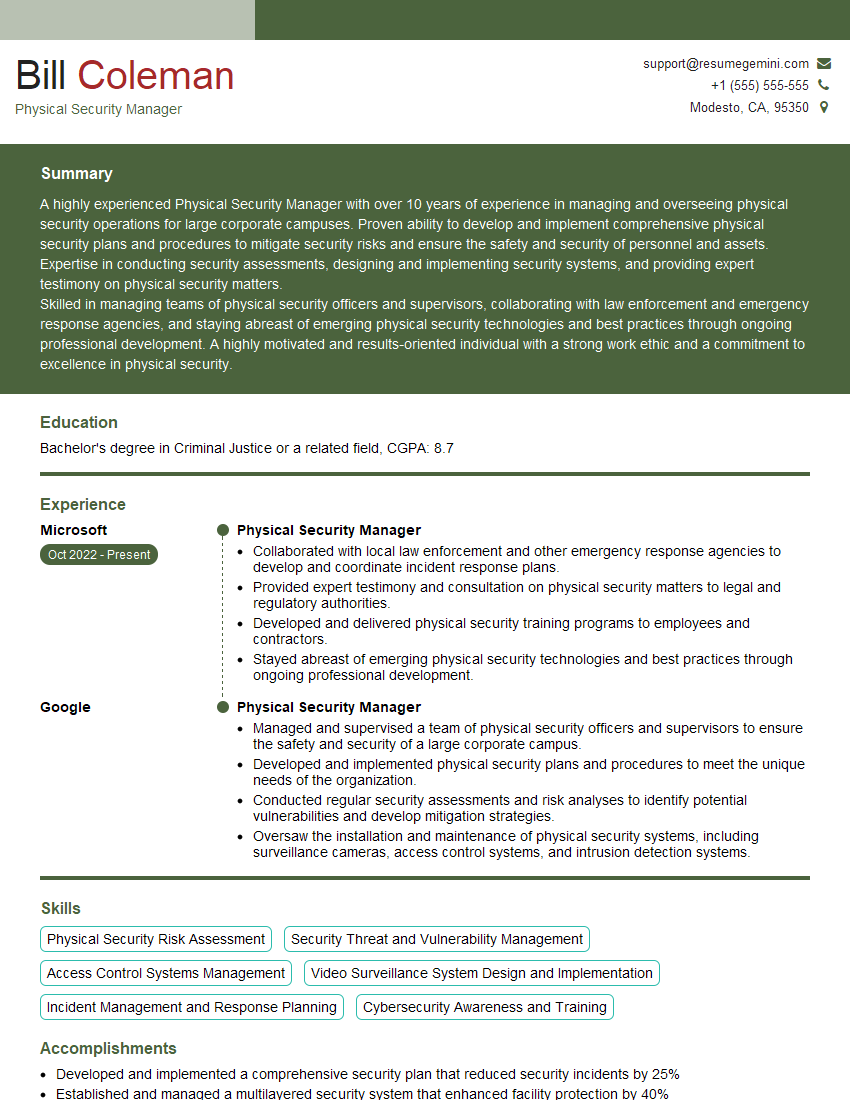
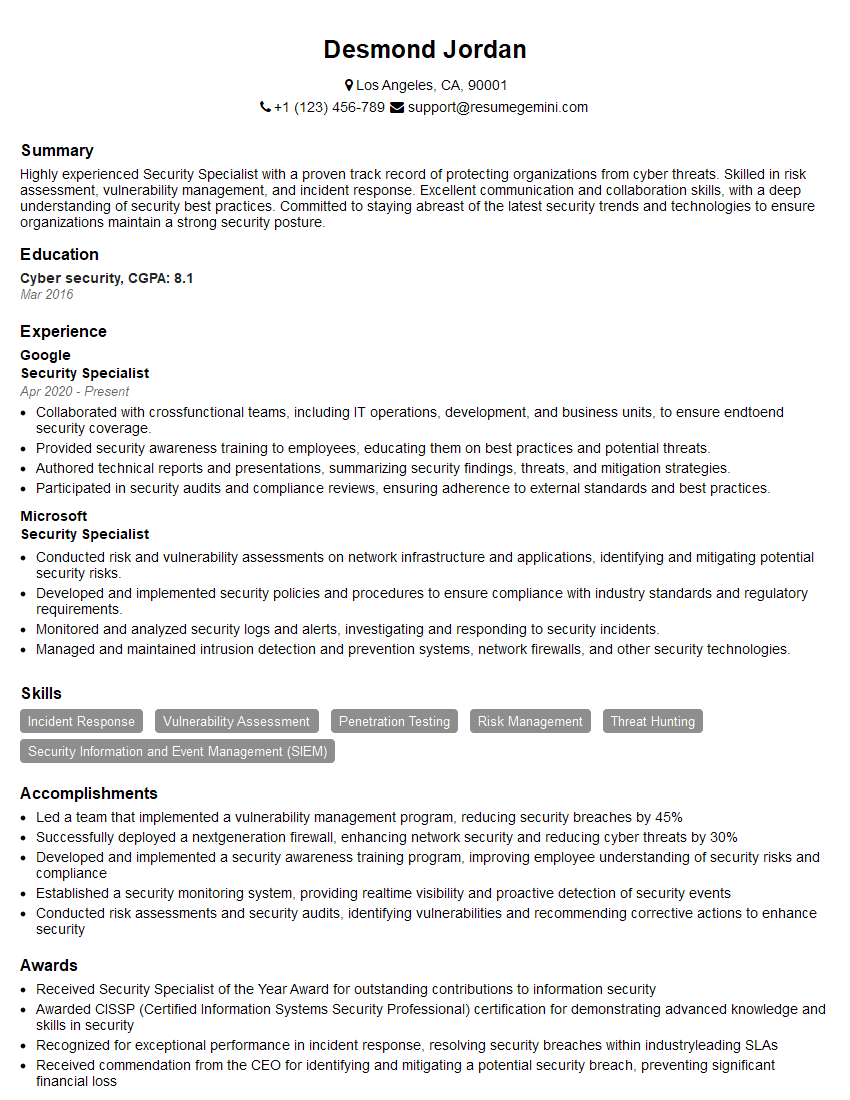
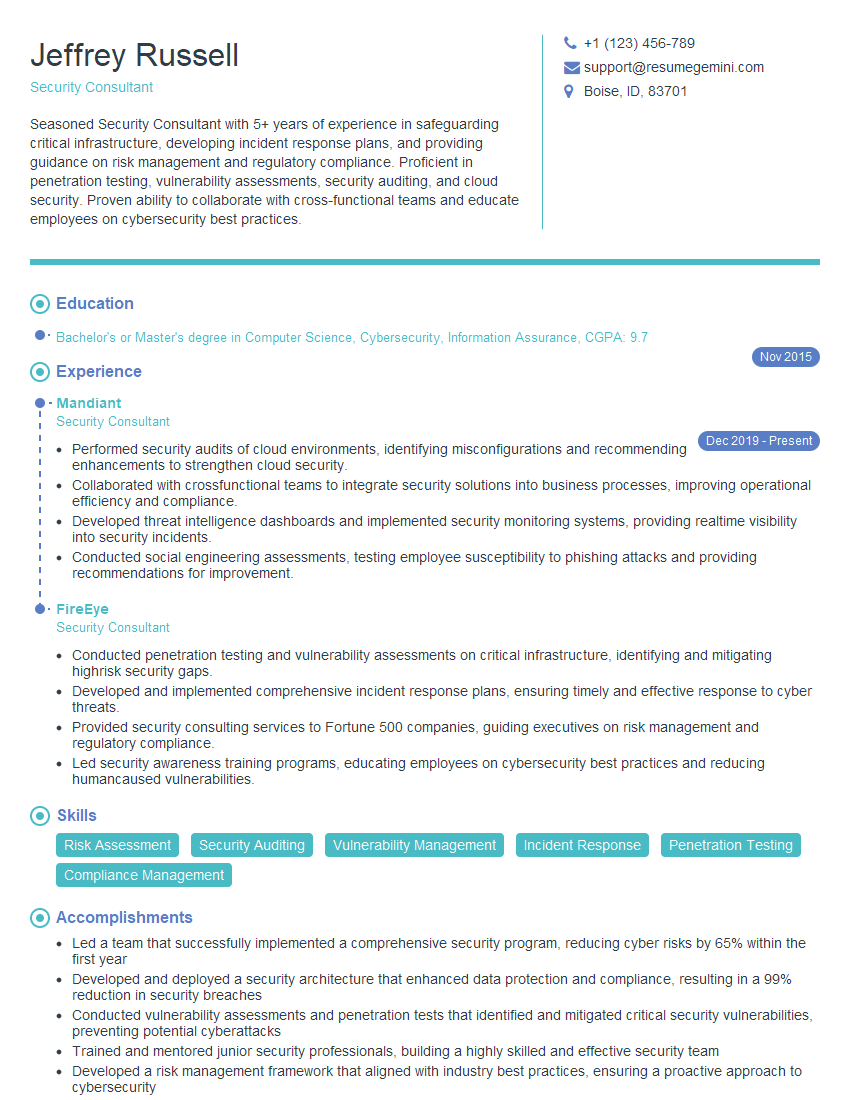
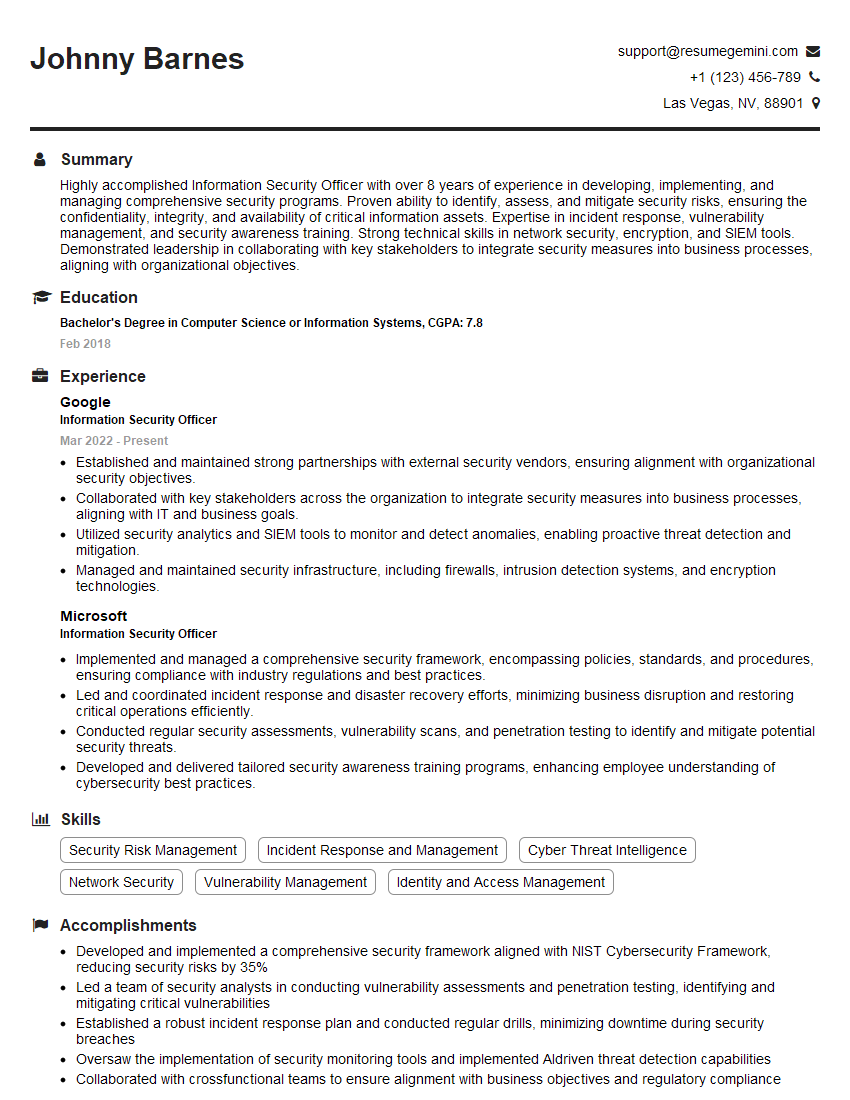
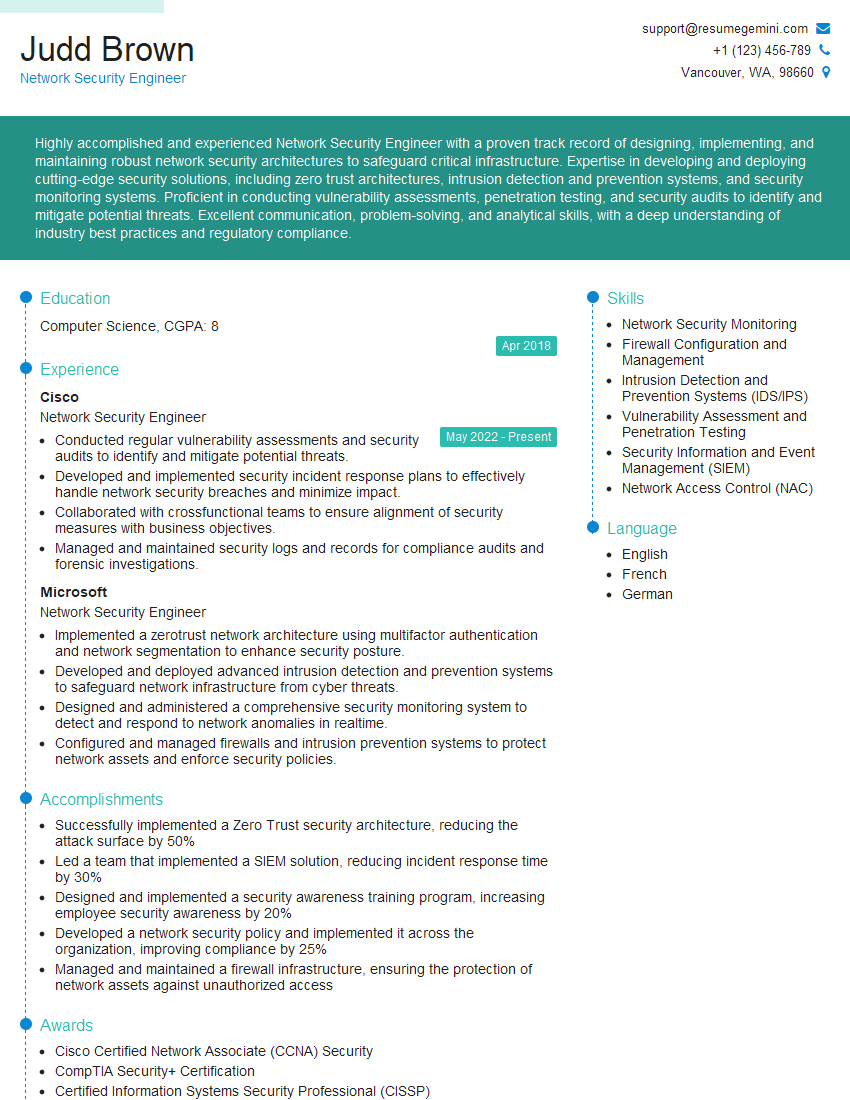
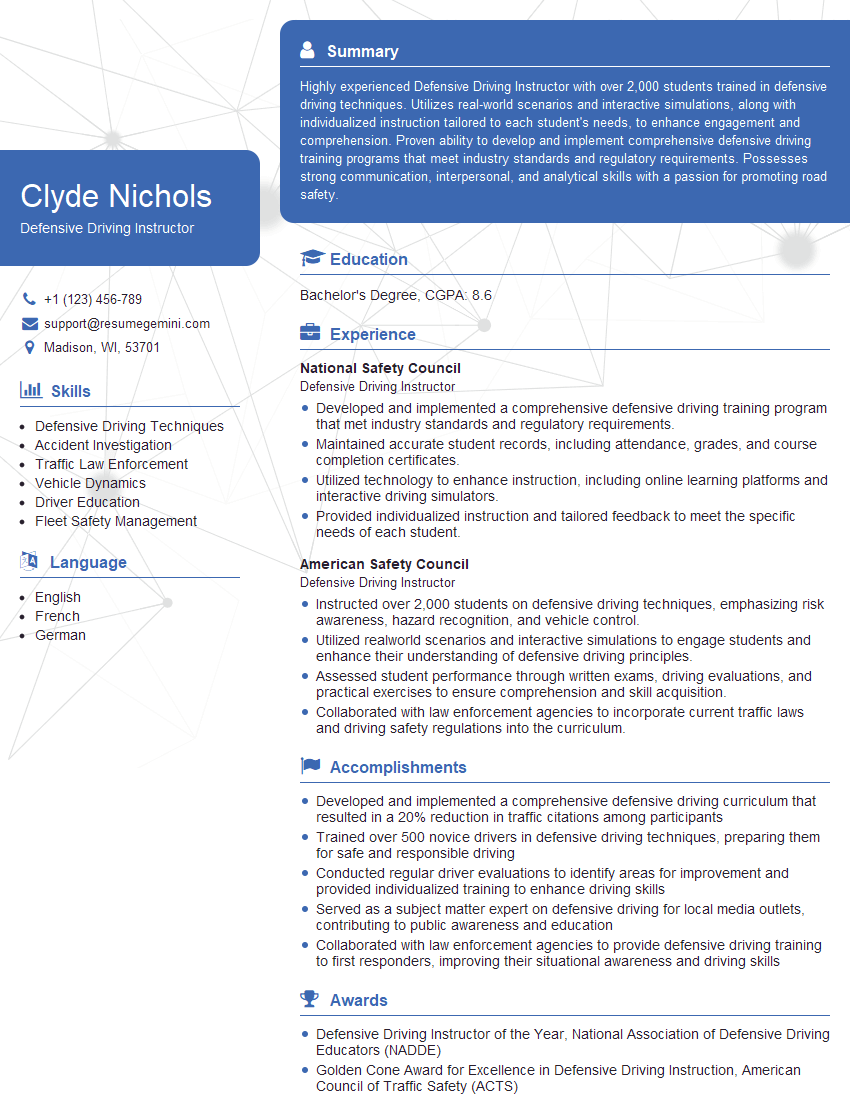
Mastering Defensive Maneuvers significantly enhances your safety and skillset, making you a more valuable and desirable candidate in any role requiring safe and responsible driving. To boost your job prospects, create a resume that highlights these crucial skills in a way Applicant Tracking Systems (ATS) can easily recognize. ResumeGemini is a trusted resource that can help you craft a professional and effective resume, ensuring your qualifications shine. Examples of resumes tailored to Defensive Maneuvers expertise are available within ResumeGemini, helping you showcase your abilities to potential employers.
Explore more articles
Users Rating of Our Blogs
Share Your Experience
We value your feedback! Please rate our content and share your thoughts (optional).
What Readers Say About Our Blog
Very informative content, great job.
good