The right preparation can turn an interview into an opportunity to showcase your expertise. This guide to Derrick Erection interview questions is your ultimate resource, providing key insights and tips to help you ace your responses and stand out as a top candidate.
Questions Asked in Derrick Erection Interview
Q 1. Describe your experience with different types of derricks.
My experience encompasses a wide range of derrick types, from simple gin poles used for smaller lifts to complex, guyed derricks employed in heavy construction and oil & gas operations. I’ve worked with:
- Gin poles: Simple, manually operated derricks ideal for smaller lifts on construction sites. I’ve used these extensively for placing beams and other materials during building renovations.
- Guyed derricks: These require extensive rigging and are used for larger capacity lifts. My experience includes erecting and operating guyed derricks for lifting heavy equipment onto offshore platforms and for large-scale industrial projects. I’m familiar with calculating guy tension and ensuring stability under various load conditions.
- Stiffleg derricks: These utilize stiff legs for stability instead of guys, offering advantages in confined spaces. I’ve overseen the erection and operation of stiffleg derricks in urban construction projects where space was limited.
- Truck-mounted derricks: Mobile and versatile, these are frequently used in utility work and smaller construction projects. I’ve operated and maintained numerous truck-mounted derricks, ensuring they met all safety and operational standards.
My proficiency extends beyond just the type of derrick to include various load capacities and operational environments.
Q 2. Explain the process of derrick assembly and disassembly.
Derrick assembly and disassembly is a meticulous process requiring careful planning and execution. The steps generally involve:
- Planning and Preparation: This includes reviewing the derrick’s assembly manual, confirming the site is suitable, and ensuring all necessary equipment and personnel are available. We’ll conduct thorough site surveys for obstructions and potential hazards.
- Foundation Preparation: A stable foundation is crucial. This might involve creating a concrete base or using cribbing for a level and stable platform. Proper ground bearing capacity is essential.
- Mast Erection: This involves carefully raising the mast using appropriate lifting equipment. The process is often sequential, section by section, with each section securely bolted before raising the next.
- Boom Assembly: Attaching and securing the boom to the mast follows established safety procedures, with careful attention paid to pin alignment and locking mechanisms.
- Guyline Installation (for guyed derricks): Guy lines are meticulously positioned and tensioned, critical for derrick stability. Tension is often checked with load cells to ensure proper settings. This also includes the installation of anchors and securing of guy lines.
- Hoisting Mechanism Installation: Installing the hoisting drum and associated equipment, often including a safety brake system. Rigging of the load block is also an essential part of this phase.
- Testing and Inspection: Before any lifting takes place, a thorough inspection ensures proper assembly and safe operational readiness.
- Disassembly: Disassembly is the reverse of assembly, done in a controlled manner. Guy lines are released first, followed by careful dismantling of the boom, mast, and other components, ensuring that all steps follow safety regulations.
Each step is crucial, and any deviation can compromise safety. We always use checklists and adhere to manufacturer’s instructions.
Q 3. What safety procedures do you follow during derrick erection?
Safety is paramount in derrick erection. We follow a rigorous protocol encompassing:
- Pre-Erection Site Survey: Identifying hazards, like overhead power lines, underground utilities, and unstable ground.
- Risk Assessment: A thorough evaluation of potential hazards and implementation of control measures. This involves using a Job Safety Analysis (JSA).
- Permit-to-Work System: Ensuring all required permits and approvals are in place before commencing work.
- Personal Protective Equipment (PPE): Mandatory use of hard hats, safety glasses, high-visibility clothing, and appropriate footwear. Fall protection harnesses are necessary for heights.
- Rigging Inspections: Careful inspection of all rigging hardware, including shackles, slings, and wire ropes, before, during, and after use, for damage or wear. This includes testing before load application.
- Emergency Procedures: Establishing clear communication channels and emergency response plans in case of accidents or equipment failure. This includes having a spotter and communication devices.
- Regular Training and Competency Assessment: Ensuring all personnel involved are properly trained and competent to perform their assigned tasks.
Safety is not just a checklist; it’s a mindset ingrained in every aspect of our work.
Q 4. How do you ensure the stability of a derrick during erection?
Ensuring derrick stability during erection involves several key strategies:
- Proper Foundation: A solid, level foundation is crucial. The ground bearing capacity must be sufficient for the derrick’s weight and the anticipated load.
- Accurate Guyline Tension (for guyed derricks): Precise tensioning of the guy lines using calibrated tensioning devices is critical to counteract the overturning moment caused by the load. Load cells are employed to ensure correct tension.
- Proper Mast Plumbness: Ensuring the mast is perfectly vertical using levels and plumb bobs. Deviations can significantly affect stability.
- Load Calculations: Accurately calculating the loads and forces acting on the derrick. This includes the weight of the derrick, the lifted load, and wind forces. Software and hand calculations are both commonly used.
- Ground Conditions: Careful assessment of ground conditions to ensure it can withstand the loads. This might involve soil testing and analysis.
- Redundancy: In many cases, redundant safety systems such as multiple guy lines or safety locks are incorporated to ensure that even in the event of component failure the entire structure will be safe.
These methods help to create a stable and safe working environment during derrick erection. Neglecting any of these aspects increases the risks significantly.
Q 5. What are the common causes of derrick erection accidents and how can they be prevented?
Common causes of derrick erection accidents include:
- Inadequate Planning and Risk Assessment: Failure to properly assess potential hazards and implement control measures.
- Improper Rigging Techniques: Incorrect use of slings, shackles, and other rigging hardware, leading to load failure or structural damage.
- Insufficient Foundation: A weak or uneven foundation can lead to derrick instability and collapse.
- Improper Guyline Tension: Insufficient or uneven guy line tension can cause instability and lead to collapse, especially in guyed derricks.
- Incorrect Load Calculations: Overestimating derrick capacity can lead to overloading and failure.
- Lack of Proper Training and Supervision: Inexperienced or inadequately trained personnel are more likely to make mistakes. Lack of supervision can also lead to unsafe practices.
- Weather Conditions: Strong winds or adverse weather conditions can impact derrick stability.
Prevention involves meticulous planning, adherence to safety procedures, proper training of personnel, regular inspections of equipment and thorough risk assessment before, during, and after the erection process. Regular maintenance of the equipment is crucial.
Q 6. Explain your experience with load calculations and weight distribution during derrick erection.
Load calculations and weight distribution are critical for ensuring the safety and stability of a derrick. My experience involves using both manual calculations and specialized software to determine:
- Maximum Allowable Load (MAL): The maximum load the derrick can safely lift, considering the boom length, angle, and derrick design. This is dependent on the specific derrick.
- Center of Gravity (CG): Precisely locating the CG of the load to ensure even weight distribution and minimize stress on the derrick structure. Incorrect CG can lead to tipping or structural damage.
- Wind Load Calculations: Determining the effects of wind on the derrick and adjusting the MAL accordingly, using wind speed and direction data.
- Stress Analysis: Evaluating the stresses and strains on various derrick components under different load conditions, to help optimize operational parameters and minimize risk of component failure. This is particularly crucial for complex structures.
- Load Charts and Diagrams: Using these charts to verify that the intended lift stays within safe operating limits. Load charts for derricks provide weight limits for various boom angles and radii.
I’m proficient in using both traditional engineering formulas and specialized software to perform these calculations accurately, ensuring that every lift remains within safe parameters.
Q 7. Describe your experience with different types of lifting equipment used in derrick erection.
My experience encompasses a variety of lifting equipment used in derrick erection, including:
- Mobile Cranes: These are frequently used for lifting heavy derrick components into place, especially larger sections of the mast and boom.
- Forklifts: Used for transporting and positioning lighter components, such as guy line anchors and smaller structural members.
- Hoisting Winches and Drums: Essential for raising the mast and boom sections and for the operation of the derrick itself after erection.
- Load Cells: Used to accurately measure the load being lifted and to ensure that the weight is evenly distributed.
- Shackles, Slings, and Wire Ropes: Essential rigging equipment for connecting the load to the derrick. Regular inspection of this equipment is crucial for safety.
- Hydraulic Jacks: Used for fine-tuning the positioning of derrick components and for making adjustments during erection.
Proper selection and maintenance of lifting equipment is critical to ensure the safety and efficiency of the derrick erection process. All equipment is meticulously inspected before use.
Q 8. How do you inspect and maintain derrick components?
Inspecting and maintaining derrick components is crucial for safe and efficient operation. It’s a multi-step process involving visual checks, detailed examinations, and potentially non-destructive testing.
- Visual Inspection: This is the first step, covering all visible components for signs of wear, tear, corrosion, cracks, or damage. We check the mast sections, boom, guys, sheaves, drums, and all rigging components for any abnormalities. This includes checking for proper lubrication and securing of all bolts and fasteners.
- Detailed Examination: This involves closer scrutiny of potentially problematic areas identified during the visual inspection. We use measuring tools to verify dimensions and clearances, ensuring everything is within the manufacturer’s specifications. This might involve checking the condition of the wire ropes using a rope tester, evaluating the wear on sheaves, or inspecting the condition of the brakes.
- Non-Destructive Testing (NDT): For critical components, especially after significant use or potential damage, NDT methods like magnetic particle inspection or ultrasonic testing might be employed to detect internal flaws not visible to the naked eye. This ensures structural integrity and prevents catastrophic failure.
- Maintenance: Maintenance includes regular lubrication of moving parts, tightening of bolts, replacing worn components, and repainting to prevent corrosion. A detailed log is meticulously maintained, recording all inspections, maintenance activities, and any necessary repairs.
For example, during a recent project, a visual inspection revealed slight fraying on one of the wire ropes. This led to a detailed examination confirming the need for replacement, preventing a potential accident. Regular, thorough inspections are not just a safety measure, they’re crucial for preventing costly downtime and repairs.
Q 9. What are the different types of derrick foundations and their applications?
Derrick foundations are critical for stability and safety. The type of foundation chosen depends heavily on the soil conditions, derrick size, and operational loads.
- Spread Footings: These are simple and cost-effective, suitable for relatively stable soil conditions. They consist of multiple large footings distributing the derrick’s weight over a larger area. They’re often used for smaller derricks.
- Pile Foundations: Used in soft or unstable soils, pile foundations drive piles deep into the ground to transfer the load to a more stable stratum. They are stronger and more suitable for larger, heavier derricks.
- Caissons: Caissons are large, hollow structures sunk into the ground, providing a very stable foundation, especially in challenging soil conditions. They’re often used for extremely large derricks or in areas with high water tables.
- Mat Foundations: These consist of a large concrete slab that distributes the load over a wide area. They’re ideal for very large derricks or when the soil is particularly unstable.
Choosing the right foundation is crucial. For instance, using spread footings on soft soil could lead to settlement and instability, potentially causing a catastrophic derrick failure. Therefore, a thorough geotechnical investigation is always necessary before selecting a foundation type.
Q 10. How do you handle unexpected challenges during derrick erection?
Unexpected challenges are inevitable during derrick erection. Effective handling involves a combination of preparedness, problem-solving skills, and clear communication.
- Contingency Planning: We always develop a detailed contingency plan anticipating potential problems, such as adverse weather, equipment malfunction, or unexpected soil conditions. This plan outlines alternative solutions and procedures.
- Problem Diagnosis: When a problem arises, the first step is accurate diagnosis. This involves careful observation, data collection, and potentially expert consultation.
- Resourcefulness: Finding creative solutions often requires thinking outside the box. This might involve modifying procedures, improvising with available tools, or seeking assistance from other specialists.
- Safety First: Safety remains paramount. Any solution must prioritize the safety of personnel and equipment, even if it means delaying the project.
For example, during one erection, strong, unexpected winds threatened to delay the operation. Our contingency plan kicked in – we adjusted the rigging and implemented extra safety measures. The project was slightly delayed but completed safely and successfully.
Q 11. Explain your knowledge of relevant safety regulations and standards for derrick erection.
Safety is the cornerstone of derrick erection. We adhere strictly to relevant regulations and standards, including OSHA (Occupational Safety and Health Administration) guidelines and API (American Petroleum Institute) standards, depending on the location and industry.
- Risk Assessments: Before any operation, thorough risk assessments are carried out, identifying potential hazards and outlining mitigation strategies. This process involves the entire team.
- Permit-to-Work Systems: These systems ensure that all necessary approvals and safety checks are in place before work commences. They are mandatory in our operations.
- Personal Protective Equipment (PPE): All personnel are required to wear appropriate PPE, including hard hats, safety glasses, harnesses, and fall protection equipment. This is non-negotiable.
- Emergency Response Plans: We have clearly defined emergency response plans, including evacuation procedures and communication protocols, ready to be implemented in case of any accident.
Ignoring safety regulations can lead to severe accidents, injuries, and costly legal repercussions. Compliance is not optional; it’s an integral part of our process.
Q 12. Describe your experience with working at heights and fall protection measures.
Working at heights is inherent in derrick erection. Extensive experience and rigorous adherence to fall protection protocols are critical.
- Harness and Lanyard Systems: We utilize full-body harnesses and engineered fall arrest systems, ensuring proper anchorage points and regular inspections of all equipment. This is crucial for preventing falls.
- Fall Protection Training: All personnel undergo thorough training on fall protection procedures, including proper harness fitting, anchor point selection, and emergency procedures. Regular refresher courses are mandatory.
- Scaffolding and Elevated Platforms: Wherever possible, we use scaffolding and elevated work platforms to minimize the need for working at significant heights.
- Rescue Plans: Rescue plans are integral to our high-altitude work. They involve specialized equipment and trained personnel for swift and effective rescue in case of a fall.
In one instance, a team member’s lanyard became entangled. Our well-rehearsed rescue plan was activated immediately, preventing a serious incident. Regular training and rigorous adherence to safety protocols are what kept everyone safe.
Q 13. How do you communicate effectively with your team during derrick erection?
Effective communication is crucial for a successful and safe derrick erection.
- Pre-Erection Briefings: Before starting, we hold detailed briefings outlining the plan, safety procedures, roles and responsibilities, and communication protocols. This sets the stage for a seamless operation.
- Hand Signals and Radio Communication: Clear and consistent hand signals are used to guide crane operations, especially in noisy environments. Two-way radios facilitate seamless communication between team members across the site.
- Regular Check-ins: Throughout the erection, regular check-ins ensure everyone is aware of progress, potential challenges, and any necessary adjustments. This prevents misunderstandings and maintains safety.
- Post-Erection Debriefings: After completion, we hold debriefing sessions to discuss successes, identify areas for improvement, and learn from any issues encountered. This continual improvement is key.
For instance, using clear hand signals during critical lifting operations prevents miscommunication that could have serious consequences. Open communication fosters trust and efficiency within the team.
Q 14. Describe your problem-solving skills related to derrick erection challenges.
Problem-solving is a daily occurrence in derrick erection.
- Systematic Approach: We employ a structured approach to problem-solving, starting with clearly defining the problem, gathering data, brainstorming potential solutions, evaluating options, implementing the chosen solution, and finally reviewing the outcome. This methodical approach ensures effective solutions.
- Root Cause Analysis: It’s crucial to identify the root cause of a problem, not just the symptoms. This prevents similar issues from recurring. We use techniques like the “5 Whys” to dig deeper.
- Collaboration and Expertise: When facing complex problems, we leverage the expertise of multiple team members and consult with specialists to find the most effective and safe solution.
- Documentation and Lessons Learned: All problems encountered and their solutions are meticulously documented to serve as lessons learned for future projects.
During one project, we encountered unexpected soil conditions that threatened stability. By employing a collaborative problem-solving approach, combining engineering expertise with on-site observations, we successfully modified the foundation to ensure the derrick’s stability and safety.
Q 15. How do you manage time effectively during derrick erection operations?
Effective time management during derrick erection is crucial for safety and efficiency. It involves meticulous planning and coordination. We start with a detailed schedule, breaking down the erection process into smaller, manageable tasks with assigned timelines and responsible parties. This schedule incorporates potential delays, accounting for weather conditions and equipment availability. Regular progress meetings, often daily, allow us to monitor the timeline, identify potential bottlenecks, and make adjustments as needed. We utilize critical path analysis to pinpoint tasks critical to the overall timeline and prioritize their completion. Think of it like a well-orchestrated symphony – each instrument (crew member, equipment) plays its part at the right time to create a harmonious and efficient operation.
For example, on a recent project, we anticipated potential delays due to inclement weather. By proactively adjusting the schedule and securing backup equipment, we successfully mitigated delays and completed the erection on time.
Career Expert Tips:
- Ace those interviews! Prepare effectively by reviewing the Top 50 Most Common Interview Questions on ResumeGemini.
- Navigate your job search with confidence! Explore a wide range of Career Tips on ResumeGemini. Learn about common challenges and recommendations to overcome them.
- Craft the perfect resume! Master the Art of Resume Writing with ResumeGemini’s guide. Showcase your unique qualifications and achievements effectively.
- Don’t miss out on holiday savings! Build your dream resume with ResumeGemini’s ATS optimized templates.
Q 16. What are your experience with different types of Derrick components?
My experience encompasses a wide range of derrick components, including masts, booms, winches, sheaves, blocks, and foundation systems. I’m familiar with various materials used in their construction, such as steel alloys with different strength grades, and understand the impact of material selection on derrick performance and lifespan. I’ve worked with derricks ranging from smaller, portable units used in relatively straightforward operations to larger, more complex derricks employed in demanding offshore environments. This includes experience with both guyed derricks and self-standing derricks, each with its unique structural design and operational considerations. Understanding the nuances of each component and their interaction within the overall system is paramount for safe and efficient operation.
Q 17. What are the critical factors to consider when selecting the right derrick for a specific job?
Selecting the right derrick is a critical decision impacting project safety, cost, and efficiency. The key factors to consider include:
- Lifting Capacity: The derrick’s maximum load capacity must exceed the heaviest load to be lifted, incorporating safety factors.
- Boom Length and Reach: This determines the derrick’s operational range and its ability to reach various locations within the worksite.
- Foundation Type and Soil Conditions: The derrick’s foundation must be designed to withstand the loads and stresses imposed during operation, considering the specific soil conditions of the site.
- Derrick Type: The choice between a guyed derrick (supported by guy wires) or a self-standing derrick depends on site constraints, stability requirements, and the nature of the operation.
- Environmental Factors: Wind speed, temperature, and other environmental conditions significantly influence derrick stability and operation. The selected derrick should be designed to withstand these conditions.
For instance, a large offshore platform construction would require a robust self-standing derrick with a high lifting capacity and extensive reach, while a smaller onshore project might suffice with a less complex guyed derrick.
Q 18. Explain your understanding of load charts and their importance in derrick erection.
Load charts are essential documents that illustrate a derrick’s safe working load limits under various configurations (boom angle, radius, etc.). They are crucial for safe operation and prevent overloading. These charts provide a graphical representation of the maximum permissible loads for different boom positions and radii. Before any lift, we meticulously consult the load chart to ensure that the planned lift falls within the derrick’s safe operating limits. Failure to adhere to the load chart can lead to catastrophic equipment failure, potentially resulting in serious injury or death.
Think of it as a speed limit for the derrick. Just as exceeding a speed limit on a highway is dangerous, overloading a derrick beyond its rated capacity is equally hazardous.
Q 19. How familiar are you with various types of Derrick foundation designs?
I have extensive experience with various derrick foundation designs, including:
- Spread Footings: Commonly used for smaller derricks on stable ground.
- Pile Foundations: Employed in areas with soft or unstable soil conditions to transfer loads to deeper, more stable layers.
- Mat Foundations: Large, reinforced concrete slabs providing a stable base for heavier derricks.
- Caissons: Used in water or very soft soil, providing a robust and stable foundation.
The selection of the appropriate foundation depends on the derrick’s size, load capacity, and the geotechnical characteristics of the site. A thorough geotechnical investigation is crucial before selecting a foundation design to ensure its stability and long-term integrity.
Q 20. Describe your experience with using specific derrick erection equipment, e.g., cranes, winches.
My experience with derrick erection equipment includes various cranes (e.g., crawler cranes, mobile cranes) and winches of different capacities. I’m proficient in the safe operation and maintenance of these equipment types. This includes understanding their capabilities and limitations, performing pre-operational checks, and ensuring compliance with all safety regulations. Proper rigging techniques and load handling procedures are critical to the safety of the erection process. I am skilled in selecting the appropriate crane or winch based on the specific task, ensuring that it is properly positioned and its capacity is sufficient for the intended lift.
For example, when erecting a large derrick, we would utilize a powerful crawler crane to lift the heavier components, while smaller winches may be used for the finer adjustments and positioning.
Q 21. What is your experience with troubleshooting mechanical issues on a derrick?
Troubleshooting mechanical issues on a derrick requires a systematic approach, combining practical experience with a strong understanding of the derrick’s mechanical systems. I begin by identifying the symptoms of the malfunction, which could include unusual noises, reduced performance, or complete failure. A thorough visual inspection is followed by checking hydraulic systems, looking for leaks, and verifying the correct operation of the hydraulic pump and valves. I then move to examining the mechanical components, looking for wear, tear, or damage to components such as sheaves, blocks, and pins. Electrical systems are also checked to rule out any electrical issues. Documentation of the problem and the steps taken to resolve it is critical. A key element is knowing when to consult specialized technicians for more complex repairs.
In one instance, a sudden decrease in lifting capacity was diagnosed as a worn brake lining on one of the winches. Replacing the brake lining quickly and efficiently restored the derrick’s operational capability, preventing further delays.
Q 22. How do you ensure the derrick is properly aligned and leveled during erection?
Ensuring proper alignment and leveling during derrick erection is paramount for safety and operational efficiency. We use a multi-pronged approach, starting with meticulous pre-planning. This includes studying the site’s topography and soil conditions, identifying potential obstacles, and creating a detailed erection plan. During the erection process itself, we employ several tools and techniques.
- Precise Surveying: High-precision laser levels and theodolites are used to establish reference points and monitor the derrick’s alignment throughout the process. Any deviation from the planned position is immediately addressed.
- Base Plate Preparation: The derrick’s base plate must be perfectly level and firmly seated on a stable foundation. This often involves extensive ground preparation, including excavation, compaction, and the use of leveling screws or shims under the base plate.
- Continuous Monitoring: Alignment and level are continuously checked throughout each stage of the erection. This involves repeated surveys and visual inspections by experienced crew members. Any adjustments are made promptly to prevent significant deviations.
- Plumb Bobs and Leveling Instruments: These traditional tools provide essential checks of verticality and horizontality.
For instance, on a recent project in challenging terrain, we used a combination of GPS surveying and laser levels to ensure the derrick was precisely positioned and perfectly plumb even with significant ground slope. This meticulous approach minimized potential issues later in the project.
Q 23. What are the key differences between onshore and offshore derrick erection procedures?
Onshore and offshore derrick erection differ significantly due to environmental challenges and logistical constraints. Onshore erection generally involves a more straightforward process with easier access to equipment and personnel. Offshore erection, however, is far more complex.
- Accessibility: Offshore operations demand specialized equipment like jack-up barges, craneships, and heavy-lift vessels for transportation and placement of derrick components.
- Environmental Factors: Offshore weather conditions, sea state, and currents pose significant risks and require rigorous safety planning and contingency measures. Onshore erection is more susceptible to weather delays but less hazardous in terms of sea conditions.
- Safety Protocols: Offshore erection necessitates stricter safety protocols due to the hazardous marine environment, including detailed risk assessments, emergency response plans, and specialized safety equipment. Onshore safety is important but less complicated.
- Regulations: Offshore projects are subject to stringent maritime regulations and environmental impact assessments. Onshore regulations are also relevant, but generally less stringent.
Imagine the difference between building a tower in a field versus on an oil platform in the middle of the ocean. The latter requires specialized vessels, rigorous safety protocols, and careful consideration of weather patterns—a dramatic increase in complexity.
Q 24. How do you manage potential conflicts with other crews during derrick erection?
Managing conflicts between crews during derrick erection involves proactive communication, clear roles and responsibilities, and adherence to established safety procedures. We start by holding pre-job briefings to clearly outline tasks, schedules, and potential conflict areas. This includes designating clear work zones and establishing communication channels.
- Detailed Scheduling: A well-defined schedule helps prevent overlapping activities and resource conflicts.
- Regular Communication: Daily meetings and open communication lines allow for timely resolution of emerging issues.
- Clear Roles and Responsibilities: Each crew’s roles and responsibilities should be explicitly defined to avoid confusion and duplication of efforts.
- Safety Procedures: Emphasizing safety procedures ensures that all crews understand and follow established protocols, minimizing risks.
For instance, on one project, we had to coordinate the derrick erection crew with the pipeline installation crew. By carefully planning their activities, establishing clear communication channels, and implementing a system of permits for accessing the work area, we avoided any significant delays or accidents. Effective communication is key.
Q 25. What are your experience with pre-commissioning and commissioning of a derrick?
My experience in pre-commissioning and commissioning derricks encompasses comprehensive inspections, testing, and documentation. Pre-commissioning involves a thorough review of all components for damage or defects and verification that all systems are correctly installed and wired. Commissioning involves systematic testing of all derrick systems, including hoisting mechanisms, braking systems, and safety interlocks, under both simulated and actual load conditions. This ensures proper functionality and adherence to safety regulations.
- Visual Inspection: Checking for physical damage and proper alignment of all components.
- Functional Testing: Testing each system individually to confirm correct operation and load-bearing capacity.
- Load Testing: Performing load tests under controlled conditions, often exceeding the derrick’s rated capacity to ensure structural integrity. This is done incrementally.
- Documentation: Maintaining detailed records of all inspections, tests, and results. This documentation is essential for compliance and future maintenance.
During a recent commissioning, we discovered a minor defect in a hoisting mechanism during a functional test. This early detection saved significant time and resources by addressing the issue before full operations commenced. It highlights the importance of thorough commissioning.
Q 26. Describe your knowledge of the different types of Derrick systems.
I am familiar with various derrick systems, each with unique applications and capabilities.
- Guyed Derrick: A tall, freestanding structure stabilized by guy wires anchored to the ground. It’s common for onshore drilling rigs.
- Mast Derrick: A simpler design commonly used in smaller operations and typically found on smaller drilling platforms, often with less lifting capacity than a guyed derrick.
- Subsea Derrick: These are specialized derricks used for offshore operations, allowing for drilling and lifting operations from underwater platforms. They are very complex and highly specialized.
- Cranes (used as derricks): Various crane types can be adapted for derrick functions, offering flexibility depending on the load requirements and site conditions.
The choice of derrick system depends on factors like load capacity, site accessibility, and operational requirements. For example, a guyed derrick is ideal for large onshore operations due to its high lifting capacity, while a mast derrick might be sufficient for smaller, less demanding projects.
Q 27. How do you handle adverse weather conditions during derrick erection?
Adverse weather conditions significantly impact derrick erection, requiring careful planning, robust safety protocols, and potentially halting operations until conditions improve. This involves strict adherence to weather forecasts and contingency planning.
- Weather Monitoring: Continuous monitoring of weather reports and wind speed, rain, and visibility conditions.
- Wind Speed Limits: Strict adherence to wind speed limits outlined in the erection plan and manufacturers’ specifications. Exceeding limits can severely damage equipment.
- Work Stoppages: Immediate cessation of operations when weather conditions exceed safety thresholds.
- Securement of Equipment: Securing all equipment and materials to prevent damage from wind or rain.
During one offshore project, strong winds forced us to temporarily halt the derrick erection. By securing all equipment and waiting for the wind speeds to subside, we avoided any potential accidents or damage. Safety always comes first. In many cases, delaying operations temporarily is the most cost-effective and safe option.
Q 28. Explain your understanding of the environmental impact of derrick erection and mitigation strategies.
Derrick erection has environmental impacts, including habitat disruption, noise pollution, and potential for soil erosion and water contamination. Mitigation strategies are crucial to minimize these effects.
- Environmental Impact Assessment: Conducting a thorough environmental impact assessment before initiating the project identifies potential risks and allows for proactive mitigation.
- Habitat Preservation: Implementing measures to protect local flora and fauna, such as creating buffer zones, minimizing ground disturbance, and using erosion control techniques.
- Noise Control: Employing noise reduction techniques such as using quieter equipment, sound barriers, and limiting operation hours.
- Waste Management: Implementing robust waste management plans for construction debris, including recycling and proper disposal.
- Water Pollution Prevention: Using spill prevention measures and containment systems to prevent contamination of water sources.
For example, in a recent project, we implemented a plan that included planting native vegetation after the erection to help restore the site’s ecology and minimize the overall impact on the environment. Sustainable practices are becoming increasingly important.
Key Topics to Learn for Derrick Erection Interview
- Derrick Design and Engineering: Understanding the principles behind derrick design, including structural analysis, load calculations, and material selection. Consider the impact of different environmental factors.
- Derrick Assembly and Disassembly Procedures: Familiarize yourself with safe and efficient methods for assembling and disassembling derricks, adhering to industry best practices and safety regulations. This includes understanding rigging techniques and load management.
- Derrick Maintenance and Inspection: Learn about routine maintenance schedules, preventative measures, and inspection protocols to ensure the longevity and safety of derrick equipment. Understanding common failure points is crucial.
- Hydraulic and Mechanical Systems: Gain a strong understanding of the hydraulic and mechanical systems within derricks, including troubleshooting common issues and performing basic repairs. Knowledge of schematics and diagrams is essential.
- Safety Regulations and Compliance: Deeply understand all relevant safety regulations and compliance standards pertaining to derrick operation and maintenance. This is paramount for any role in this field.
- Problem-Solving and Troubleshooting: Develop your skills in identifying, analyzing, and resolving problems related to derrick operation and maintenance. Be prepared to discuss your approach to complex technical challenges.
- Project Management and Coordination: If the role involves project management, familiarize yourself with project planning, scheduling, resource allocation, and risk management techniques as applied to derrick erection projects.
Next Steps
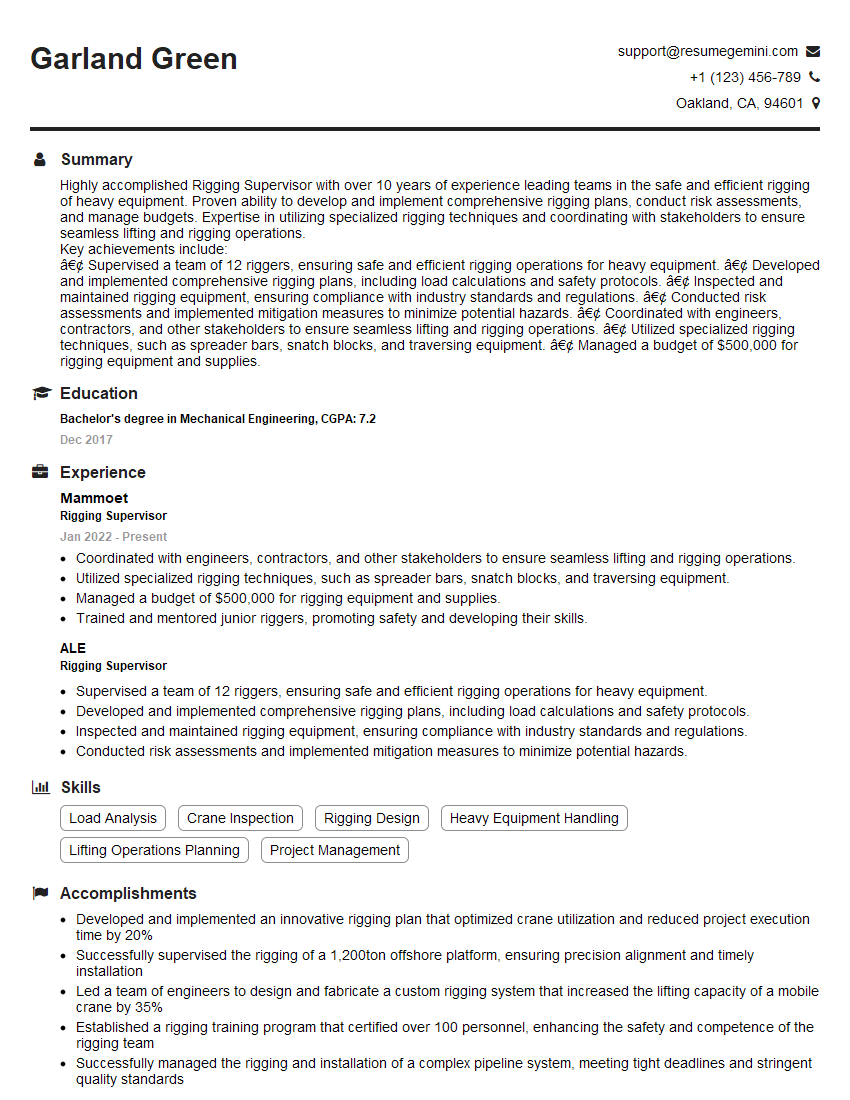
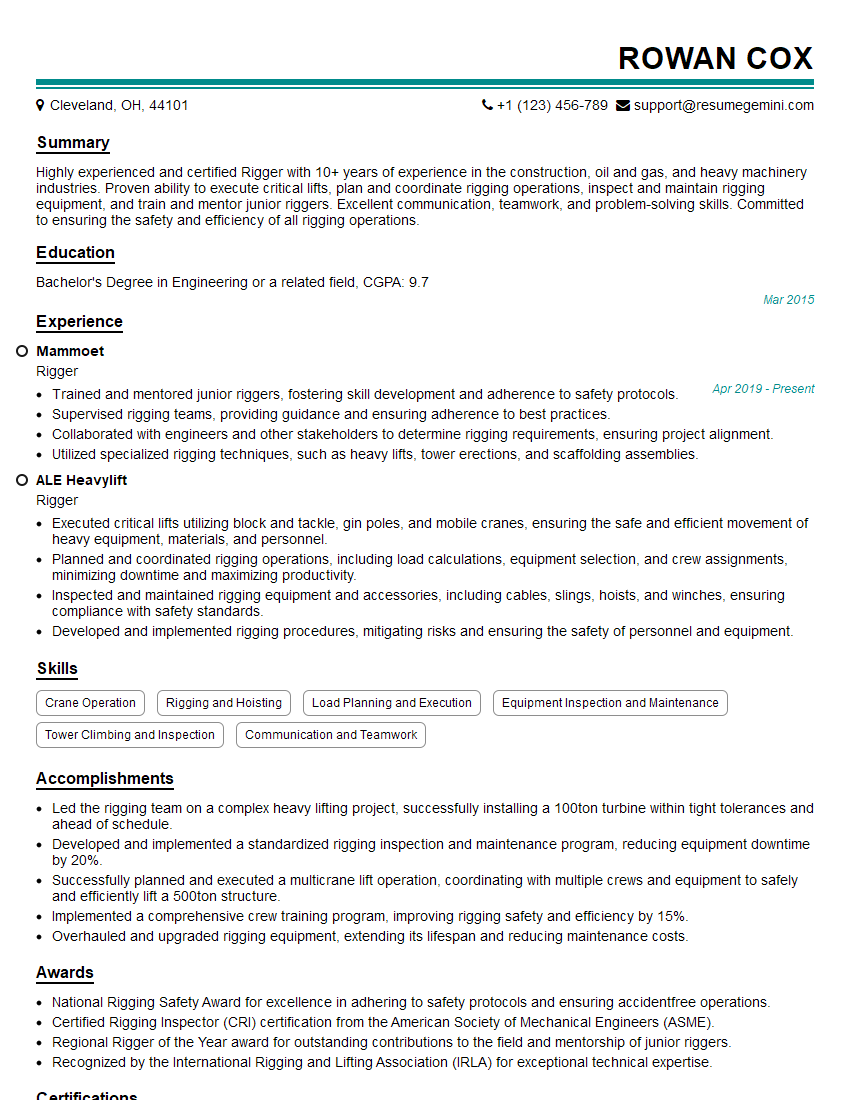
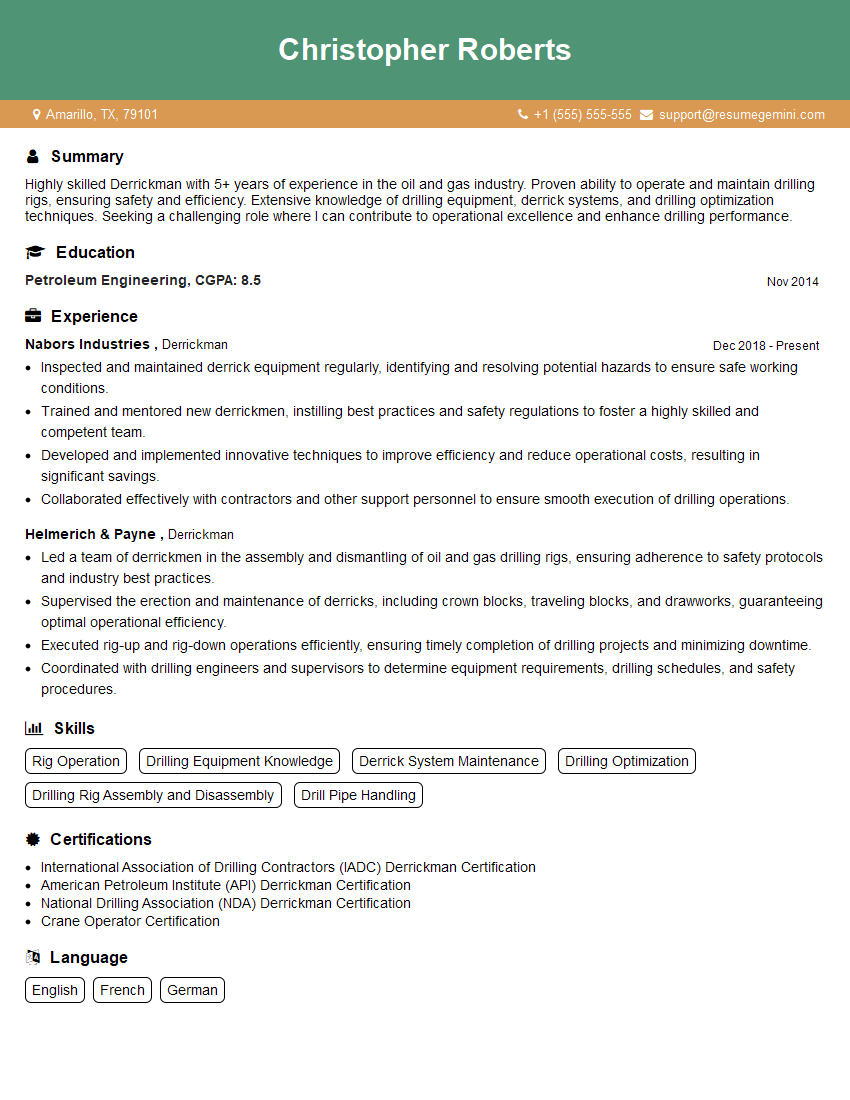
Mastering the intricacies of Derrick Erection opens doors to exciting career opportunities within the energy, construction, and heavy lifting industries. It demonstrates a high level of technical expertise and commitment to safety. To maximize your chances of landing your dream job, crafting an ATS-friendly resume is crucial. ResumeGemini is a trusted resource that can help you build a professional and impactful resume, designed to catch the attention of recruiters. Examples of resumes tailored to Derrick Erection are available to help guide you. Take the next step in your career journey today!

Explore more articles
Users Rating of Our Blogs
Share Your Experience
We value your feedback! Please rate our content and share your thoughts (optional).
What Readers Say About Our Blog
Very informative content, great job.
good