The right preparation can turn an interview into an opportunity to showcase your expertise. This guide to Derrick Work Planning interview questions is your ultimate resource, providing key insights and tips to help you ace your responses and stand out as a top candidate.
Questions Asked in Derrick Work Planning Interview
Q 1. Explain the process of planning a derrick setup for a specific well site.
Planning a derrick setup begins with a thorough site assessment. We need to consider factors like well location, terrain, access roads, available space for the derrick and associated equipment, and potential obstructions. Next, we determine the specific derrick type and capacity needed based on the well’s depth, anticipated weight of equipment, and the planned operations. A detailed rigging plan is then developed, specifying the placement of the derrick, the positioning of the crown block and traveling block, the configuration of the hoisting system (including the use of auxiliary lines), and the location of all support equipment. This plan also includes detailed calculations to ensure stability and safe working loads throughout the operation. For instance, if we’re working on a challenging location with uneven terrain, we’d likely incorporate additional measures like ground leveling or extra support structures to guarantee the derrick’s stability. Finally, we conduct a risk assessment, identifying and mitigating potential hazards associated with the setup and operation.
Think of it like building a house: you wouldn’t start construction without blueprints and a thorough understanding of the terrain and foundation. Similarly, a meticulous derrick setup plan is essential for a safe and efficient drilling operation.
Q 2. Describe different types of derricks and their applications.
Derrick types are primarily categorized by their design and material. Common types include:
- Mast derricks: These are simpler, portable structures typically made of steel or wood, suitable for shallower wells or smaller operations. They’re cost-effective but have lower load capacities.
- Guyed mast derricks: These use guy wires for support, increasing stability and load capacity compared to simple mast derricks, making them suitable for medium-depth wells.
- Standard derricks: These are taller, sturdier structures made of steel, often found in larger drilling operations. They offer high load capacities and are designed for deeper wells.
- Subsea derricks: Used for offshore operations, these are specialized derricks adapted to withstand harsh marine environments.
The choice of derrick depends on various factors, including the well’s depth, location (onshore or offshore), anticipated loads, and budget constraints. For example, a deepwater offshore well would require a robust subsea derrick capable of withstanding extreme conditions, whereas a shallow onshore well might only need a simpler mast derrick.
Q 3. How do you calculate the load capacity of a derrick?
Calculating a derrick’s load capacity involves considering several factors and using specific engineering formulas. It’s not a simple calculation, and it’s crucial to use the manufacturer’s specifications as a starting point. The capacity is determined by the structural strength of the derrick itself, the hoisting system (including the strength of the cables and sheaves), and the stability of the base. We consider things like the derrick’s height, the material properties of its components, and safety factors to account for unforeseen circumstances. The load capacity is often expressed as a Safe Working Load (SWL), which is significantly lower than the derrick’s ultimate breaking strength. Moreover, the effective load capacity will be influenced by the configuration of the derrick, meaning the position of the load relative to the derrick’s center of gravity.
There isn’t a single formula, as the calculations are complex and involve specialized engineering software and considerations. It’s absolutely crucial to rely on qualified engineers and adhere to industry standards and regulations for accurate load capacity determination. Ignoring proper calculations can lead to catastrophic failures.
Q 4. What safety procedures are crucial during derrick operations?
Safety is paramount in derrick operations. Crucial procedures include:
- Pre-lift inspections: Thorough checks of all equipment and rigging before each lift.
- Proper rigging techniques: Using appropriate slings, shackles, and other lifting gear, ensuring correct hitching and load distribution.
- Designated personnel: Clear roles and responsibilities, with qualified riggers and signal persons.
- Emergency response plan: Established procedures for dealing with emergencies, including equipment failure and accidents.
- Clear communication: Effective communication between all personnel involved in the lift.
- Lockout/Tagout procedures: Ensuring that all equipment is properly secured before maintenance or repair.
- Personal Protective Equipment (PPE): Mandatory use of appropriate PPE, including hard hats, safety glasses, and high-visibility clothing.
A failure in any of these aspects can lead to severe accidents. Regular training and drills are vital to ensure everyone understands and follows these procedures.
Q 5. How do you ensure compliance with relevant safety regulations?
Compliance with safety regulations is achieved through a multi-faceted approach. This includes adhering to industry standards (like API standards for drilling equipment), obtaining necessary permits and licenses, maintaining detailed records of inspections and maintenance, and providing regular training to personnel. Regular audits and inspections are crucial to identify and address any potential non-compliance issues. We also need to stay updated on any changes or revisions to the regulations. Companies must implement a comprehensive safety management system, with clearly defined roles, responsibilities, and reporting procedures to ensure that all activities comply with legal and industry best practices. Failure to comply can result in hefty fines, operational shutdowns, and potential legal repercussions, not to mention the risk of serious injury or death.
Q 6. Explain the importance of pre-lift inspections.
Pre-lift inspections are critical for preventing accidents. They involve a thorough visual examination of all components involved in the lift, including the derrick structure, hoisting equipment (cables, sheaves, blocks), rigging hardware (shackles, slings, hooks), and the load itself. This includes checking for any signs of wear, damage, or defects. We are looking for anything that could compromise the structural integrity or safe operation of the system. A detailed checklist is usually followed to ensure no aspect is overlooked. Think of it as a pilot performing pre-flight checks – a seemingly small oversight could have catastrophic consequences.
The documentation of these inspections is also vital, providing a clear record of the equipment’s condition before each lift. This is essential for tracing any issues should an accident occur.
Q 7. What are the common causes of derrick accidents and how can they be prevented?
Common causes of derrick accidents include:
- Equipment failure: Wear and tear, inadequate maintenance, or use of faulty equipment.
- Improper rigging: Incorrect hitching, inadequate slings or shackles, overloaded equipment.
- Human error: Lack of training, poor communication, disregard for safety procedures.
- Environmental factors: Adverse weather conditions, unstable ground.
- Inadequate planning: Insufficient risk assessment, lack of proper planning.
Prevention strategies focus on mitigating these causes. This involves regular maintenance, thorough inspections, rigorous training programs for personnel, adherence to safety procedures, and the implementation of robust risk management systems. Investing in high-quality equipment and ensuring that it’s properly maintained is also crucial. Additionally, a strong safety culture within the organization is critical – employees must be empowered to identify and report hazards without fear of reprisal.
Q 8. How do you handle a derrick malfunction during operation?
Handling a derrick malfunction during operation requires a calm, systematic approach prioritizing safety. The first step is to immediately cease all operations and secure the load. This involves engaging the derrick’s braking system and ensuring the load is stable. Next, a thorough assessment of the malfunction is crucial. This might involve visually inspecting the derrick for any visible damage, checking hydraulic fluid levels, and listening for unusual sounds. Depending on the nature of the malfunction, the next steps might involve troubleshooting based on the derrick’s operating manual, contacting a qualified technician, or potentially implementing emergency procedures. For example, if a hydraulic line ruptures, shutting down the system and calling for a repair crew is paramount. If a wire rope shows signs of significant wear or damage, it must be replaced before further operations. Safety is the absolute priority; any doubt should always result in halting operations and calling for expert assistance.
Imagine a scenario where the derrick’s hoisting mechanism jams mid-lift. Immediate action to prevent load slippage is essential, followed by a careful investigation to determine the cause (e.g., a jammed gear, a faulty motor component). Only after addressing the root cause and ensuring the derrick’s safe operation can operations resume.
Q 9. Describe your experience with different types of rigging equipment.
My experience encompasses a wide range of rigging equipment, including various types of wire ropes, slings (chain, wire rope, and synthetic), shackles, hooks, and other lifting accessories. I’m proficient in selecting the appropriate rigging components for different loads and working conditions, considering factors such as load weight, size, shape, and environmental factors (e.g., temperature, corrosive environments). I’m familiar with different types of wire rope constructions (e.g., 6×19, 6×36) and their respective strengths and applications. I have practical experience with load testing and inspection of rigging equipment to ensure its safe operation. For example, I’ve worked extensively with Crosby shackles and wire rope slings, ensuring they are properly inspected and rated for the intended load. I understand the importance of regularly inspecting rigging equipment for wear and tear, adhering to industry safety standards and best practices.
Q 10. Explain the process of rigging and unrigging heavy loads using a derrick.
Rigging and unrigging heavy loads with a derrick is a multi-step process demanding precision and safety. First, a thorough pre-lift planning phase is necessary, including load calculations to determine the necessary rigging configuration and derrick capacity. This includes selecting the appropriate rigging equipment and ensuring the derrick is positioned correctly. The load is then carefully attached to the rigging, ensuring that the slings are properly positioned to distribute the load evenly. The derrick operator then slowly raises the load, maintaining constant communication with the ground crew. During the lift, the operator monitors the load’s movement and makes any necessary adjustments to maintain stability. Unrigging involves reversing the process, slowly lowering the load and carefully removing the rigging components. Throughout the entire process, close communication and coordination between the derrick operator and ground crew are paramount.
For instance, consider lifting a large transformer. The pre-lift planning would involve calculating the transformer’s weight and dimensions, selecting appropriately rated slings and hooks, and determining the derrick’s optimal position for safe and efficient lifting. During the lift, the derrick operator would use the derrick controls to smoothly raise the transformer, monitoring its movement and making subtle adjustments to prevent swinging or tilting. Unrigging would involve gently lowering the transformer and carefully detaching the slings and hooks.
Q 11. How do you manage risk during complex derrick operations?
Managing risk during complex derrick operations involves a multifaceted approach emphasizing proactive measures. This begins with a thorough risk assessment identifying potential hazards, such as equipment failure, environmental conditions (wind, rain), and human error. A detailed lifting plan is then developed, outlining the procedures and safety precautions to mitigate identified risks. This plan is communicated clearly to all involved personnel. Throughout the operation, regular inspections of equipment and close monitoring of weather conditions are essential. Emergency procedures must be in place and clearly understood by all team members. Proper training and competency verification of all personnel are crucial. In addition, using appropriate personal protective equipment (PPE) and adhering to strict safety protocols further reduce risks. For example, a pre-lift meeting ensures everyone is aware of the plan, responsibilities, and emergency procedures. A system of regular communication between the ground crew and the derrick operator allows for immediate responses to any unforeseen circumstances.
Q 12. Describe your experience with load charts and load calculations.
My experience with load charts and load calculations is extensive. I’m proficient in interpreting manufacturer’s load charts for derricks and rigging equipment. I can accurately calculate loads using appropriate formulas and considering factors like load weight, center of gravity, rigging angles, and derrick configuration. This ensures that the derrick and rigging components are appropriately selected and used within their safe working limits. I understand the importance of using safety factors to account for uncertainties and potential variations in load conditions. For example, I’ve used load charts and calculations to determine the appropriate sling angles and derrick boom configurations for various lifting tasks, ensuring safe and efficient lifting procedures are followed. I’m also familiar with software that aids in these calculations, enhancing accuracy and efficiency.
Q 13. How do you communicate effectively with the derrick crew?
Effective communication with the derrick crew is crucial for safe and efficient operations. I utilize a clear, concise, and unambiguous communication style, ensuring that all instructions are understood without any room for misinterpretation. I use a combination of verbal communication (clear hand signals and verbal commands) and written communication (pre-lift plans and checklists) to ensure everyone is on the same page. I establish a culture of open communication, encouraging team members to voice concerns or observations without hesitation. Active listening is equally important to address concerns and ensure instructions are understood. Using standardized terminology and clear hand signals minimizes the risk of miscommunication. This approach fosters a strong team dynamic, promoting safety and efficiency.
Q 14. What are the different types of Derrick Hooks and their uses?
Derrick hooks come in various types, each suited for specific applications. Common types include:
- Standard Hooks: These are general-purpose hooks suitable for many lifting tasks. They are relatively simple in design but should be inspected regularly for wear and tear.
- Clevis Hooks: These have a clevis (a U-shaped pin) for easy attachment to slings or other rigging components. They are frequently used with chain slings.
- Grab Hooks: Designed for handling irregularly shaped objects or those without readily available lifting points. These are often used to pick up scrap metal or other unusual objects.
- Safety Hooks: Include a latch or locking mechanism to prevent accidental slippage of the load. They are preferred for critical lifts and offer an extra layer of safety.
The choice of hook depends on factors such as load type, weight, and handling requirements. It’s critical to always use the appropriate hook for the task at hand, ensuring that its working load limit is not exceeded. Using the wrong type of hook could lead to serious accidents.
Q 15. Explain the procedures for performing a crown block inspection.
Inspecting a crown block is crucial for safe derrick operations. It’s essentially a thorough visual examination and, where necessary, a hands-on check of its components to identify any wear, damage, or potential hazards.
- Visual Inspection: Start by carefully examining the sheaves (pulleys) for cracks, deformation, or excessive wear on the grooves. Look for any signs of corrosion, especially in the presence of saltwater or harsh chemicals. Check the pins and bushings for wear or damage. Examine the entire block structure for any signs of bending, twisting, or misalignment.
- Functional Check: Gently rotate each sheave to check for smooth operation and free movement. Listen for any unusual noises like grinding or squeaking that might indicate bearing problems. Check for any play or looseness in the pins and bushings.
- Documentation: All findings, including any minor imperfections, should be meticulously documented. Photographs can be extremely helpful. This record provides a history of the crown block’s condition and aids in proactive maintenance planning.
- Example: During a recent inspection, I noticed a slight crack on one of the sheaves. While not immediately critical, it was documented, and the crown block was flagged for closer monitoring and potential replacement in the near future. This prevented a potentially catastrophic failure later.
Remember, a thorough crown block inspection isn’t just about finding major problems; it’s about preventing them.
Career Expert Tips:
- Ace those interviews! Prepare effectively by reviewing the Top 50 Most Common Interview Questions on ResumeGemini.
- Navigate your job search with confidence! Explore a wide range of Career Tips on ResumeGemini. Learn about common challenges and recommendations to overcome them.
- Craft the perfect resume! Master the Art of Resume Writing with ResumeGemini’s guide. Showcase your unique qualifications and achievements effectively.
- Don’t miss out on holiday savings! Build your dream resume with ResumeGemini’s ATS optimized templates.
Q 16. What are the main components of a Derrick System?
A derrick system comprises several key components working in concert to achieve a safe and efficient lift. Think of it like a sophisticated machine with many interdependent parts.
- Mast: The tall, vertical structure providing support for the entire system. Its stability is paramount.
- Derrick Base/Foundation: Provides a stable and secure platform for the entire derrick, transferring the load to the ground.
- Crown Block: A system of sheaves (pulleys) at the top of the mast, redirecting the load.
- Traveling Block (Hook Block): The moving block carrying the load, attached to the hoisting line.
- Winch: Provides the power to hoist and lower the load. The heart of the lifting operation.
- Swivel: Allows the hook block to rotate freely, preventing twisting of the hoisting line.
- Guylines/Derrick Guys: Supporting cables extending from the mast to anchor points, ensuring the stability of the derrick structure.
- Rigging Hardware: Includes shackles, hooks, slings, and other load-bearing components. Selecting the right components is crucial for safety.
Understanding the function of each component is crucial for proper operation and maintenance.
Q 17. What are the different types of Derrick foundations?
The choice of derrick foundation significantly impacts the stability and safety of the operation. It’s crucial to select a foundation appropriate for the load and ground conditions.
- Concrete Foundations: These offer excellent stability and load-bearing capacity. They are ideal for heavy-duty derricks and are usually designed with specific calculations considering soil conditions.
- Steel Pile Foundations: Used when soil conditions are weak or unstable. Piles are driven deep into the ground, providing a solid base even in challenging terrains.
- Spread Footings: Consist of a large concrete base spreading the load over a wide area. This is a simpler and less expensive option for lighter derricks.
- Combination Foundations: Often employ a combination of techniques, depending on the specific site requirements and soil characteristics.
Selecting the right foundation is a critical engineering consideration, and mistakes can be catastrophic.
Q 18. How do you select appropriate rigging hardware for a given lift?
Selecting the correct rigging hardware is critical for safety and the success of any lift. It involves a meticulous process of evaluation and calculation.
- Load Capacity: This is the most crucial factor. The chosen hardware must have a working load limit (WLL) significantly higher than the anticipated load. Always use a safety factor (typically 5:1).
- Material Compatibility: The hardware material must be compatible with the load and environment. For instance, using galvanized steel for outdoor use is important.
- Hardware Condition: Before any lift, inspect all rigging for damage, wear, corrosion, or other defects. Damaged hardware should be immediately replaced.
- Appropriate Type: Select appropriate hardware for the specific application. For instance, using the right type of sling (e.g., chain, wire rope, synthetic) for the shape and weight of the load.
- Calculations: In many cases, detailed calculations are necessary to ensure the chosen rigging system can handle the load and the specific geometry of the lift. Software packages can greatly assist.
Example: For a 10-ton load, we might use rigging with a WLL of at least 50 tons. We would choose shackles, slings, and hooks of that capacity, with careful attention to material and condition.
Q 19. Explain the concept of load balancing in derrick operations.
Load balancing in derrick operations is critical for ensuring a stable and controlled lift. It’s about distributing the weight evenly to prevent stress on any single component.
Imagine trying to lift a heavy object with a single rope – it’s likely to swing dangerously. Load balancing is like using multiple ropes to distribute the weight safely and prevent any undue strain. This is achieved through proper rigging techniques, considering factors like the load’s center of gravity and the arrangement of the slings or chains.
Incorrect load balancing can lead to:
- Unstable lifts: The load might swing or tilt dangerously.
- Overstressed components: Excessive load on a single element of the rigging can cause failure.
- Damage to equipment or materials: An unbalanced lift can damage both the load and the derrick.
Load balancing calculations and simulations are often part of derrick planning for complex lifts. Techniques involve using multiple lifting points strategically placed to counteract the load’s center of gravity.
Q 20. How do you handle unforeseen challenges during a derrick operation?
Unforeseen challenges are inevitable in derrick operations. A calm, methodical approach, coupled with good communication, is crucial. My approach involves:
- Immediate Assessment: Quickly assess the nature of the problem and its potential impact on safety and the operation. This might involve additional inspection of the equipment or review of the lift plan.
- Communication: Clearly communicate the situation to the team and any relevant stakeholders. This ensures everyone is aware of the developing situation.
- Problem Solving: Systematically work through potential solutions, focusing on the most effective and safest option. This might involve making temporary adjustments to the rigging, seeking expert advice, or halting the operation.
- Documentation: Meticulously document all aspects of the incident, including the nature of the challenge, the actions taken, and the outcomes. This aids in future incident avoidance and risk mitigation.
- Root Cause Analysis: After the situation is resolved, conduct a root cause analysis to identify why the challenge occurred and to implement preventative measures to minimize the likelihood of recurrence.
Example: Once, we encountered unexpectedly strong winds during a lift. We immediately halted the operation, communicated the situation to the team, secured the load, and resumed only after the winds subsided and a safety review was conducted.
Q 21. Describe your experience with different types of derrick winches.
My experience encompasses a variety of derrick winches, each with its own strengths and weaknesses.
- Electric Winches: These are common, offering precise control and relatively high speeds. They are particularly suitable for lighter to medium-duty lifting and require a reliable power source.
- Hydraulic Winches: Offer high power-to-weight ratios and are excellent for heavy-duty lifting. They need a hydraulic power unit and are often preferred for their smooth operation and precise control, especially at lower speeds.
- Mechanical Winches (Hand-Operated): Though less common in larger operations, they provide a backup power source in emergency scenarios. They offer simplicity, requiring minimal maintenance but are typically only suitable for lighter loads.
- Pneumatic Winches: Used in environments where compressed air is readily available. They provide a powerful and relatively easily maintained lifting solution.
Selecting the appropriate winch depends greatly on the specific requirements of the lift, including the load capacity, lifting speed, and the available power source. For heavy, slow lifts, hydraulic winches are often the preferred choice. For lighter loads and quick operations, electric winches usually suffice.
Q 22. What are the limitations of using a derrick?
Derricks, while powerful tools for lifting heavy equipment, have inherent limitations. Their capacity is finite, determined by the derrick’s design and the strength of its components. Exceeding this capacity can lead to catastrophic failure. Another limitation is their reach; they have a limited operational radius, restricting the area within which equipment can be moved. Furthermore, derricks are generally less maneuverable than cranes, making precise positioning of loads more challenging. Finally, setup and dismantling of a derrick are time-consuming and labor-intensive, adding to overall operational costs and down time.
For example, a derrick designed for 50 tons cannot lift 60 tons, regardless of the urgency. Similarly, if a load needs to be precisely placed within a narrow gap beyond the derrick’s reach, it would be impossible to use the derrick without supplementary equipment.
Q 23. What are the environmental considerations when planning derrick operations?
Environmental considerations in derrick planning are crucial. We must prioritize minimizing the impact on soil, water, and air. This involves careful site selection to avoid environmentally sensitive areas. Pre-planning for soil stabilization and erosion control is paramount, especially in challenging terrain or during inclement weather. The use of environmentally friendly lubricants and fuels is mandatory to minimize pollution. Furthermore, noise pollution must be managed through mitigation strategies such as scheduling operations during permissible hours and using noise dampeners. A detailed environmental impact assessment is often required before commencing operations.
For instance, choosing a location that is away from water bodies prevents potential spills from contaminating the water. Using absorbent booms during operations would further protect the environment in the event of an accidental spill.
Q 24. How do you maintain accurate records of derrick operations?
Maintaining accurate records of derrick operations is vital for safety, compliance, and efficiency. This includes a comprehensive log of each lift, noting the date, time, weight of the load, height lifted, location, and personnel involved. Pre-lift inspections, maintenance schedules, and any repairs or modifications must be meticulously documented. This documentation often leverages digital systems, such as computerized maintenance management systems (CMMS), to track equipment history and streamline reporting. Regular audits of these records ensure their accuracy and consistency, adhering to industry best practices and regulatory requirements. This rigorous record-keeping helps identify potential problems and track performance, facilitating improved decision-making and risk mitigation.
For example, a spreadsheet tracking each lift’s date, time, weight, and personnel details, along with signed-off pre-lift inspection reports, aids in maintaining a complete audit trail.
Q 25. What is your experience with computerized derrick control systems?
My experience with computerized derrick control systems is extensive. I’m proficient in using systems that provide real-time monitoring of load weight, height, and position, enhancing safety and precision. These systems often include features like load moment indicators (LMIs) and automated safety shutoff systems, significantly reducing the risk of accidents. I understand the importance of data logging capabilities within these systems, which allows for detailed analysis of operational data to optimize performance and identify areas for improvement. Furthermore, I’m familiar with the integration of these systems with other equipment management software, facilitating seamless data flow and improved efficiency.
For instance, I have experience using a system that displays the load weight, hook height, and boom angle in real-time, along with an audible warning if the load exceeds the derrick’s safe working load.
Q 26. Explain the role of a Derrickman in a well servicing operation.
A Derrickman plays a crucial role in well servicing operations. Their primary responsibility is the safe and efficient operation of the derrick and associated equipment. This includes rigging, hoisting, and lowering equipment and materials. The Derrickman must be proficient in signaling, ensuring clear communication between the crane operator and ground crew. They are also responsible for conducting regular inspections, identifying potential hazards, and maintaining the derrick according to safety regulations. A crucial aspect of their role is adhering to all safety procedures and ensuring compliance with regulatory standards. Their expertise is essential for the safe and successful completion of well servicing activities.
For example, a Derrickman’s precise signaling is crucial when installing or removing a wellhead, ensuring the smooth and safe handling of this critical equipment.
Q 27. How do you prepare a derrick for transportation and relocation?
Preparing a derrick for transportation and relocation is a complex process requiring meticulous planning and execution. It begins with a thorough disassembly, carefully documenting the removal of each component. All components must be cleaned and inspected for damage before packaging. Proper packaging is crucial to prevent damage during transport. Heavy-duty straps, padding, and specialized containers are often necessary. The weight and dimensions of each component must be accurately calculated to ensure safe and legal transportation. Detailed documentation of the disassembly process and component locations is essential for efficient reassembly at the new location. Transporting the derrick requires specialized equipment and adherence to all relevant transportation regulations.
For example, using a detailed checklist and numbered tags for each component helps in accurately assembling the derrick at the new site and avoiding potential damage.
Q 28. Describe your experience with troubleshooting and repair of derrick components.
My experience in troubleshooting and repairing derrick components is extensive. I am proficient in diagnosing mechanical, hydraulic, and electrical problems. I use a systematic approach, starting with visual inspections to identify potential issues. This often involves checking for wear and tear, leaks, and loose connections. Following the initial inspection, more in-depth diagnostic tools may be needed, such as pressure gauges or electrical testing equipment. I have experience repairing various components, from replacing worn-out sheaves and cables to repairing hydraulic systems. Safety is paramount, and all repairs are performed according to manufacturer’s specifications and safety regulations. Thorough documentation of all repairs is maintained.
For example, I recently resolved a situation where a hydraulic leak was causing the derrick to operate erratically. Through systematic troubleshooting, the faulty hydraulic seal was identified and replaced, restoring the derrick to its optimal operational state.
Key Topics to Learn for Derrick Work Planning Interview
- Fundamentals of Derrick Work Planning: Understanding the core principles and methodologies behind efficient derrick operations.
- Risk Assessment and Mitigation: Applying risk assessment techniques to derrick operations and developing strategies for mitigating potential hazards.
- Derrick Equipment Knowledge: Demonstrating familiarity with various derrick components, their functionalities, and maintenance procedures.
- Operational Procedures and Safety Regulations: Understanding and adhering to relevant industry safety standards and operational protocols.
- Load Calculations and Weight Management: Performing accurate load calculations and ensuring safe weight distribution during derrick operations.
- Troubleshooting and Problem-Solving: Demonstrating the ability to identify and resolve common issues that may arise during derrick operations.
- Teamwork and Communication: Highlighting experience in collaborative environments and effective communication within a team setting.
- Data Analysis and Reporting: Understanding how to collect, analyze, and present data related to derrick operations.
- Environmental Considerations: Demonstrating awareness of environmental regulations and best practices related to derrick operations.
Next Steps
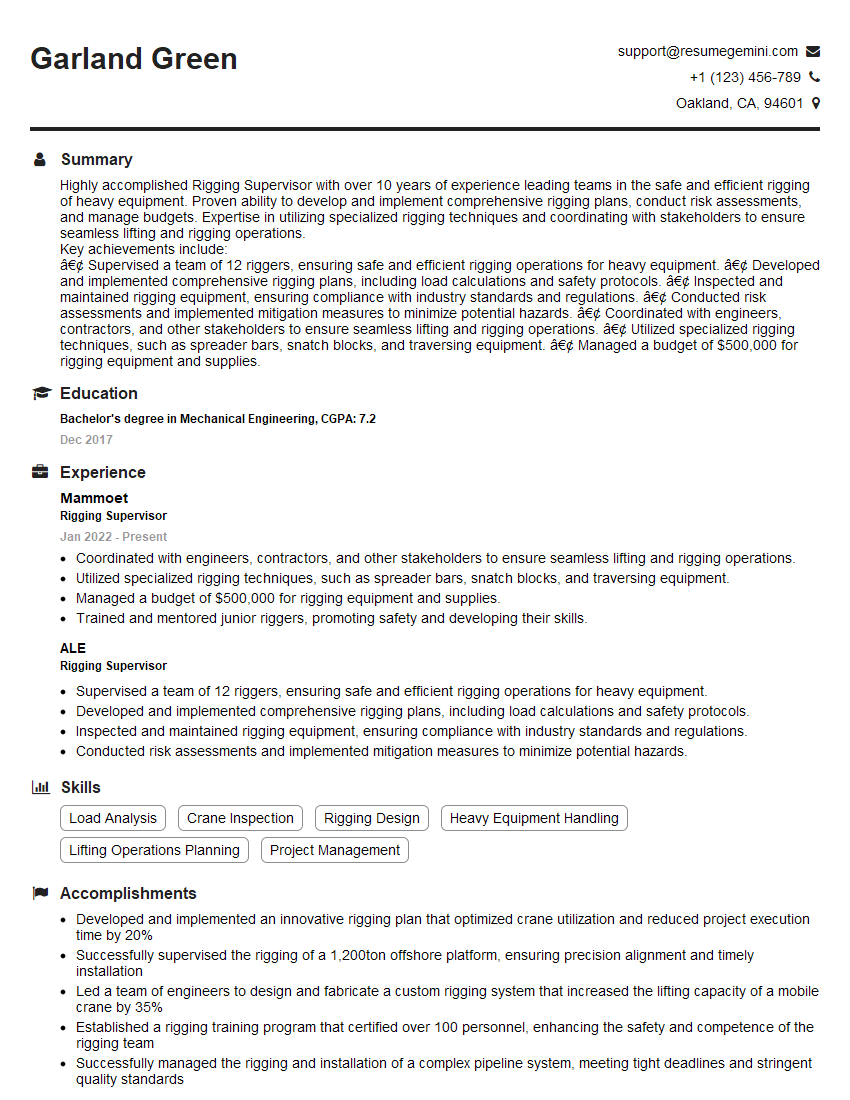
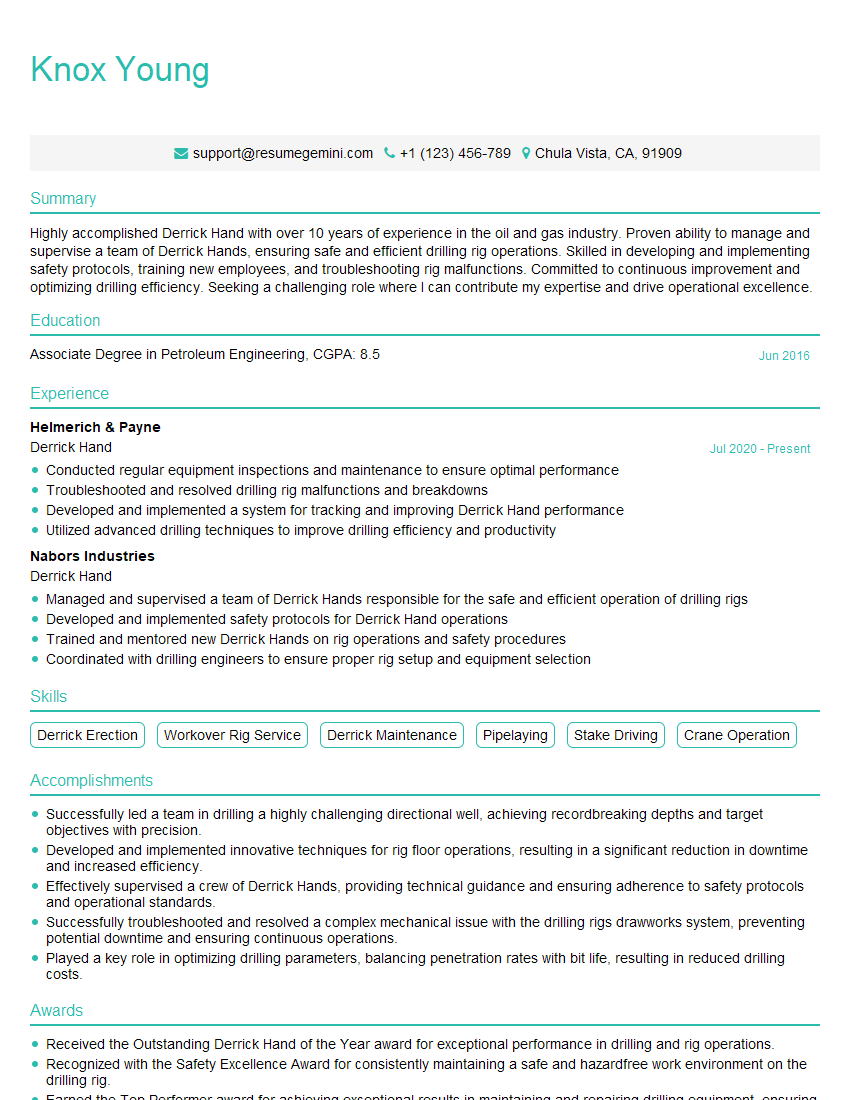
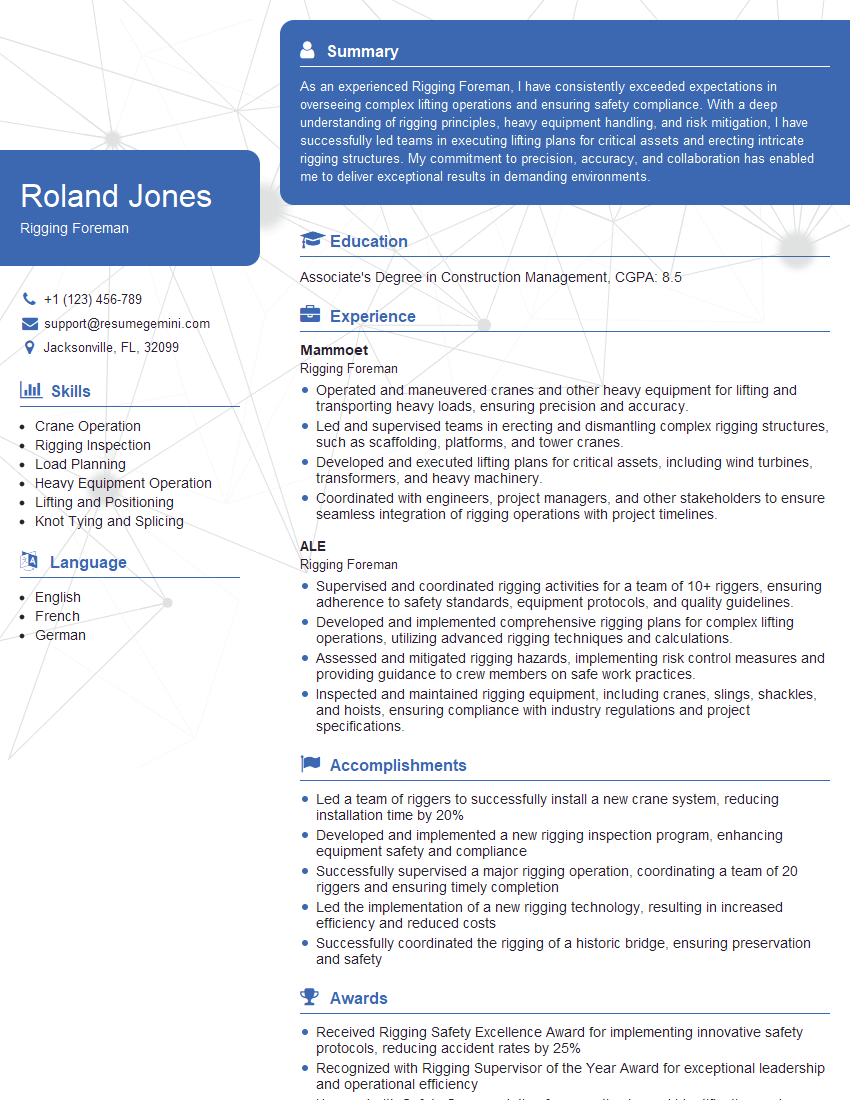
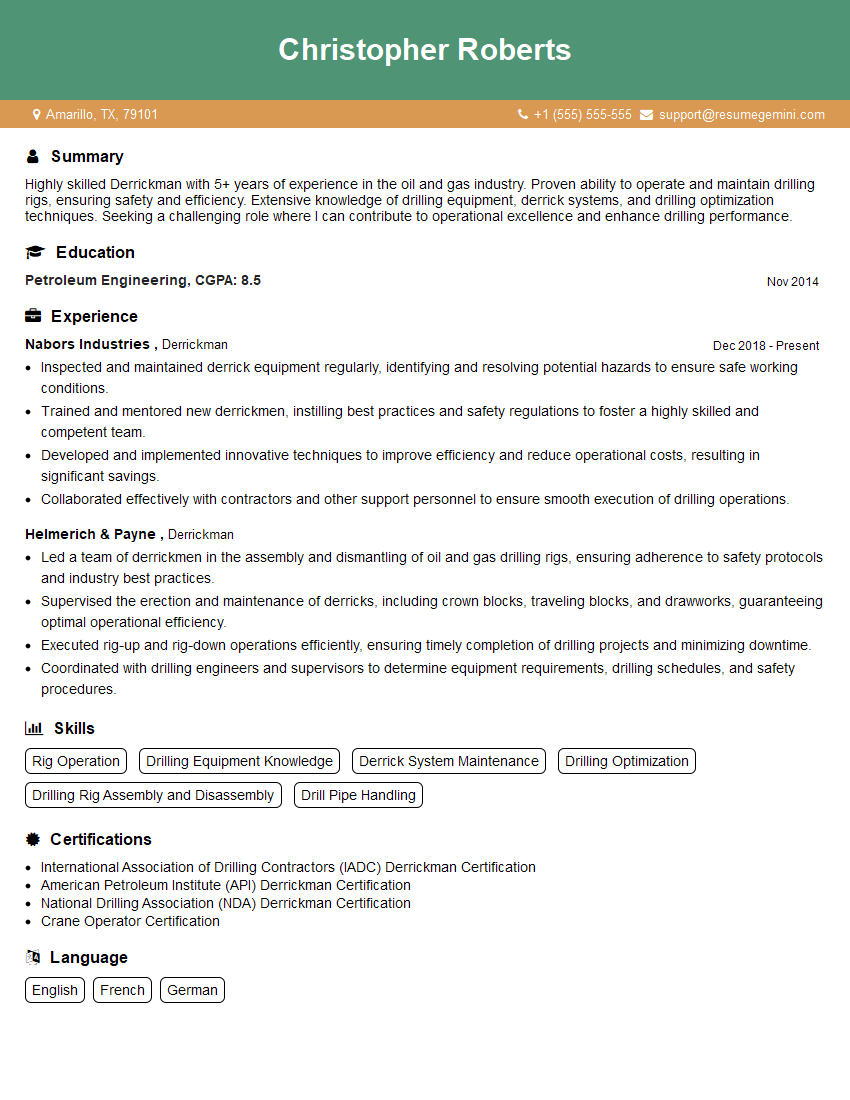
Mastering Derrick Work Planning is crucial for career advancement in the oil and gas industry, offering opportunities for increased responsibility and higher earning potential. A strong understanding of these principles demonstrates your commitment to safety and efficiency, highly valued attributes in this field. To maximize your job prospects, create an ATS-friendly resume that showcases your skills and experience effectively. ResumeGemini is a trusted resource that can help you build a professional and compelling resume tailored to the specific requirements of Derrick Work Planning roles. Examples of resumes tailored to Derrick Work Planning are available to guide you in crafting your own.
Explore more articles
Users Rating of Our Blogs
Share Your Experience
We value your feedback! Please rate our content and share your thoughts (optional).
What Readers Say About Our Blog
Very informative content, great job.
good