Feeling uncertain about what to expect in your upcoming interview? We’ve got you covered! This blog highlights the most important Design and Optimization of Engineering Systems interview questions and provides actionable advice to help you stand out as the ideal candidate. Let’s pave the way for your success.
Questions Asked in Design and Optimization of Engineering Systems Interview
Q 1. Explain the difference between local and global optimization.
Local optimization finds the best solution within a limited search space, like finding the lowest point in a valley without considering the surrounding mountains. Global optimization, on the other hand, aims to find the absolute best solution across the entire search space, even if it means exploring seemingly unfavorable areas initially. Think of finding the lowest point on an entire planet – you need to consider all the valleys to find the absolute lowest point, not just the one nearest to your starting location.
For example, imagine optimizing the fuel efficiency of a car. A local optimization approach might tweak only the engine parameters while keeping the aerodynamics fixed. A global optimization might simultaneously optimize both engine parameters and aerodynamic design, potentially leading to significantly better fuel efficiency overall, even if the initial adjustments to the aerodynamics seem counterintuitive.
Q 2. Describe your experience with different optimization algorithms (e.g., genetic algorithms, gradient descent).
I have extensive experience with various optimization algorithms. Gradient descent is a workhorse for differentiable objective functions. It iteratively updates parameters by moving along the negative gradient, essentially descending the error surface. I’ve used it successfully in optimizing neural networks, particularly for image recognition tasks. For example, when training a convolutional neural network, the backpropagation algorithm is essentially a sophisticated form of gradient descent.
Genetic algorithms (GAs), on the other hand, are particularly effective for non-differentiable and complex problems. They mimic natural selection, evolving a population of potential solutions over generations. I’ve applied GAs to structural optimization problems, where finding the optimal shape or material composition for a bridge under various stress constraints is crucial. GAs excels at escaping local optima that can trap gradient-based methods.
I’m also familiar with simulated annealing, a probabilistic technique inspired by the annealing process in metallurgy, and particle swarm optimization, which models the social behavior of bird flocking or fish schooling to find optimal solutions. The choice of algorithm depends heavily on the nature of the problem; for example, the smoothness of the objective function, the presence of constraints, and the computational resources available.
Q 3. How do you handle constraints during the optimization process?
Handling constraints is a critical aspect of optimization. There are several methods, and the best approach depends on the type and complexity of the constraints. For equality constraints (e.g., x + y = 10), techniques like the method of Lagrange multipliers can be used. This introduces Lagrange multipliers as additional variables to incorporate the constraints into the objective function.
For inequality constraints (e.g., x ≤ 5), penalty functions are frequently employed. These add a penalty term to the objective function when the constraint is violated. The severity of the penalty is adjusted to balance feasibility with optimality. Barrier methods, which add a barrier to the feasible region, preventing the algorithm from leaving it, are another effective approach. The choice often depends on the characteristics of the problem and computational efficiency; for instance, penalty functions are often easier to implement but can be less efficient than barrier methods.
In practice, I frequently use constraint handling techniques built into optimization software packages. These packages often provide sophisticated algorithms that efficiently handle various constraint types, allowing me to focus more on problem definition and interpretation.
Q 4. What are some common design methodologies you’ve used?
I’ve used several design methodologies, often in combination. Taguchi methods are excellent for robust design, minimizing the effects of process variations on product performance. I’ve applied this to design a more resilient sensor that could withstand environmental fluctuations.
Design of Experiments (DOE) is crucial for efficiently exploring the design space and understanding the interactions between design parameters. This is particularly useful when dealing with many variables. For instance, in optimizing the geometry of an aircraft wing, a well-planned DOE can help identify the most important parameters and reduce the number of costly simulations required.
Six Sigma methodologies provide a structured framework for quality improvement and process optimization. I’ve used this for reducing manufacturing defects in a high-precision component assembly line. In essence, my approach is to tailor the methodology to the specific project’s needs and constraints.
Q 5. Explain your experience with Finite Element Analysis (FEA) or Computational Fluid Dynamics (CFD).
I have extensive experience with both Finite Element Analysis (FEA) and Computational Fluid Dynamics (CFD). FEA is a powerful tool for analyzing stress, strain, and displacement in structures. I’ve used FEA to optimize the design of a bridge, ensuring it can withstand expected loads while minimizing material usage. The results from FEA are often integrated directly into the optimization loop, using the FEA software output as feedback to the optimization algorithm.
CFD, on the other hand, simulates fluid flow and heat transfer. I’ve used CFD to optimize the design of a cooling system for an electronic device, ensuring efficient heat dissipation while minimizing energy consumption and maximizing performance. Similarly, CFD results can be used as input to an optimization process, optimizing parameters like fan speed or heat sink design to enhance cooling.
Integrating FEA and CFD into the optimization process allows for realistic and comprehensive design exploration. This is because the optimization process is informed by real-world physics, improving the quality and reliability of the final designs.
Q 6. How do you validate your optimization results?
Validating optimization results is crucial. I typically employ a multi-faceted approach. First, I examine the convergence of the optimization algorithm, ensuring it’s reached a stable solution and hasn’t simply stopped prematurely. Second, I perform sensitivity analysis to understand how the optimal solution changes with small variations in input parameters or constraints. This helps to assess the robustness of the solution.
Further, I validate the results using physical experiments or high-fidelity simulations whenever possible. For example, after optimizing the design of a component using FEA and an optimization algorithm, I’d typically create a prototype and test it in a physical laboratory setting. The discrepancies between the predicted and actual performance provide valuable insights and feedback for further refinement. Finally, documentation of the entire process, including assumptions, limitations, and validation steps, is essential for reproducibility and ensuring the integrity of the results.
Q 7. Describe a time you had to optimize a complex system under tight deadlines.
I once had to optimize the design of a complex robotic arm for a manufacturing application under extremely tight deadlines. The initial design was inefficient and prone to vibrations. We used a combination of gradient-based optimization and genetic algorithms. The gradient-based methods were effective for fine-tuning the design after an initial solution was found using genetic algorithms.
To meet the deadline, we adopted a parallel computing strategy, running multiple simulations concurrently across a high-performance computing cluster. We also streamlined the FEA process, focusing on the most critical areas of the design and employing simplified models where appropriate without sacrificing accuracy. By employing these efficient strategies and closely monitoring progress, we successfully optimized the robotic arm design, significantly improving performance and reducing production time, thereby meeting the tight deadlines.
Q 8. What software tools are you proficient in for design and optimization?
My proficiency in design and optimization software spans a range of tools, each suited to different aspects of the process. For CAD modeling and simulation, I’m highly experienced with SolidWorks and Autodesk Inventor. These allow me to create detailed 3D models and perform analyses like finite element analysis (FEA) to understand stress, strain, and deflection under various loads. For optimization algorithms and scripting, I rely heavily on MATLAB and Python, utilizing libraries like SciPy and Optuna. These are crucial for implementing algorithms like genetic algorithms, simulated annealing, and gradient-based optimization. Finally, I’m familiar with specialized software like ANSYS for more advanced simulations, and OpenMDAO for complex multidisciplinary design optimization (MDO) problems.
For example, in a recent project designing a lightweight yet strong bicycle frame, I used SolidWorks to model the frame, ANSYS to perform FEA to identify stress hotspots, and then employed Python with SciPy to optimize the frame’s geometry for minimum weight while meeting strength constraints.
Q 9. How do you handle uncertainty and variability in your design and optimization work?
Uncertainty and variability are inherent in engineering design. I address them through robust design techniques. This involves incorporating probabilistic models of uncertain parameters into the optimization process. For instance, instead of using fixed values for material properties or loads, I’d use probability distributions (e.g., normal, uniform) that reflect the inherent variability. Then, I’d employ optimization algorithms that can handle these uncertainties, such as stochastic optimization or reliability-based design optimization (RBDO). RBDO explicitly targets a desired reliability level (e.g., 99% probability of no failure) while optimizing the design. Monte Carlo simulations are frequently used to estimate the probability of failure given the probabilistic model and the designed system. This helps to quantify the robustness of the design against variations.
Imagine designing a bridge. The strength of the materials, the weight of the traffic, and environmental factors (wind, temperature) are all subject to variation. RBDO helps ensure the bridge is strong enough to handle variations in these factors with a very high probability of success.
Q 10. Explain your understanding of Design of Experiments (DOE).
Design of Experiments (DOE) is a structured approach to systematically investigating the impact of various design parameters on a system’s performance. It’s about efficiently collecting data to understand which factors are most influential and how they interact. Instead of randomly testing different combinations, DOE uses statistical methods to select a smaller, carefully planned set of experiments. Common DOE techniques include full factorial designs (testing all combinations), fractional factorial designs (testing a subset of combinations), and response surface methodology (RSM) which uses a regression model to approximate the system’s response. The choice depends on the number of factors, the available resources, and the desired level of detail. Analysis of the results allows us to identify significant factors and their interactions and create a model to predict the system’s behavior.
In practice, I might use a fractional factorial design to optimize the settings of a manufacturing process with many parameters. This allows me to quickly identify the most critical parameters affecting the quality of the product, without having to perform exhaustive testing.
Q 11. How do you balance competing design objectives?
Balancing competing design objectives is a core aspect of optimization. Rarely is there a single, perfect solution; often, we face trade-offs. For example, we might want a product to be lightweight, strong, and inexpensive – but these are often conflicting goals. Several techniques help address this. One is multi-objective optimization (discussed further below). Another is to use weighted objectives where each objective is assigned a weight reflecting its relative importance. This converts the multi-objective problem into a single-objective one. The weights are often determined subjectively or through sensitivity analysis. Alternatively, you can use constraint-based optimization, converting some objectives into constraints (e.g., ‘weight must be less than X’). The selection of the best method depends on the complexity of the problem and the relative importance of the objectives. A Pareto front analysis helps visualize trade-offs between objectives.
For instance, in designing an airplane, minimizing weight improves fuel efficiency but might compromise structural integrity. We balance these by carefully defining weights for each objective within an optimization algorithm or by using constraints to ensure structural integrity remains above a specific threshold.
Q 12. Describe your experience with multi-objective optimization.
Multi-objective optimization deals with problems where we have multiple, often conflicting, objectives to optimize simultaneously. Instead of finding a single ‘best’ solution, it aims to identify a set of Pareto optimal solutions. A Pareto optimal solution is one where you can’t improve one objective without worsening another. These solutions represent the trade-off space. Common algorithms include genetic algorithms (which are well-suited to handle non-convex problems), NSGA-II (Non-dominated Sorting Genetic Algorithm II), and weighted sum method. The choice of algorithm depends heavily on the characteristics of the objective functions and the complexity of the problem. The final decision often comes from a visualization of the Pareto front, aided by decision-making tools and discussions with stakeholders. The result is not a single solution but a set of optimal compromises that helps guide the final design selection.
In designing a car, we might want to maximize fuel economy and minimize emissions while also maximizing acceleration and passenger comfort. Multi-objective optimization will provide a set of designs that represent different trade-offs among these objectives; the designer can then choose the solution that best suits their needs and preferences.
Q 13. What are some common challenges in design optimization, and how have you overcome them?
Common challenges in design optimization include:
- High dimensionality: Many design parameters make optimization computationally expensive and difficult to visualize.
- Non-convexity: The objective function might have multiple local optima, making it hard to find the global optimum.
- Computational cost: Simulations, especially FEA, can be time-consuming, limiting the number of iterations possible in optimization.
- Handling constraints: Ensuring that the design satisfies all constraints (e.g., stress limits, size limits) can be challenging.
- Noisy or uncertain data: Variability in input parameters and measurement errors can affect the accuracy of the optimization results.
I’ve addressed these through techniques such as:
- Dimensionality reduction: Using Principal Component Analysis (PCA) or other techniques to reduce the number of design variables.
- Surrogate modeling: Creating approximations of computationally expensive simulations using techniques like Kriging or radial basis functions to speed up the optimization process.
- Global optimization algorithms: Employing algorithms like genetic algorithms or simulated annealing to escape local optima.
- Constraint handling techniques: Using penalty functions or other methods to incorporate constraints into the optimization formulation.
- Robust optimization techniques: As discussed previously, using methods like RBDO to handle uncertainty.
Q 14. Explain your understanding of sensitivity analysis.
Sensitivity analysis is used to assess the impact of changes in input parameters on the output or objective function. It helps identify which parameters have the most significant influence on the system’s performance and hence which deserve the most attention during the design process. This helps focus resources on the most critical factors and can simplify the optimization problem by identifying parameters that can be fixed or neglected. Methods include one-at-a-time (OAT) analysis which is simple but can miss interactions, and variance-based methods like Sobol indices, which are more sophisticated and capture interactions. Finite difference methods can also be applied, especially if analytical derivatives are unavailable.
For example, in designing a heat exchanger, a sensitivity analysis would help us determine which parameters (e.g., flow rate, temperature difference, material properties) have the most significant impact on the heat transfer efficiency. This information can then be used to focus optimization efforts on those critical parameters, improving efficiency and reducing the overall design time.
Q 15. How do you ensure the robustness of your optimized designs?
Ensuring robustness in optimized designs is crucial for real-world applications. It means the design performs reliably even under unexpected variations in operating conditions, manufacturing tolerances, or material properties. This isn’t achieved by simply finding the optimal point in a design space; it requires a proactive approach.
- Robust Optimization Techniques: Instead of focusing solely on nominal conditions, I employ robust optimization methods like Taguchi methods or Monte Carlo simulations. These techniques allow me to explore the design space considering variations in input parameters and identify designs that are less sensitive to these uncertainties. For example, in designing a bridge, I’d consider variations in material strength, wind load, and temperature to ensure it remains structurally sound under various conditions.
- Sensitivity Analysis: A crucial step involves performing sensitivity analysis. This identifies which design parameters have the most significant impact on performance. This allows for targeted improvements, focusing efforts on areas most prone to impacting robustness. Imagine optimizing an engine. Sensitivity analysis might reveal that the fuel injector design is most sensitive to performance. We would then focus on robust design solutions for that component.
- Design for Six Sigma (DFSS): I frequently utilize DFSS principles which focus on minimizing variability and defects throughout the design process. This method utilizes statistical techniques to predict and reduce the impact of variations, ultimately leading to a more robust design.
- Experimental Verification: Finally, robust design isn’t solely theoretical. Testing and verification are critical. Physical prototypes or simulations under realistic operating conditions help validate the robustness of the design in practice.
Career Expert Tips:
- Ace those interviews! Prepare effectively by reviewing the Top 50 Most Common Interview Questions on ResumeGemini.
- Navigate your job search with confidence! Explore a wide range of Career Tips on ResumeGemini. Learn about common challenges and recommendations to overcome them.
- Craft the perfect resume! Master the Art of Resume Writing with ResumeGemini’s guide. Showcase your unique qualifications and achievements effectively.
- Don’t miss out on holiday savings! Build your dream resume with ResumeGemini’s ATS optimized templates.
Q 16. How do you incorporate sustainability considerations into your designs?
Sustainability is no longer a ‘nice-to-have’ but a core design requirement. Integrating sustainable practices involves considering the entire lifecycle of the product – from material extraction to end-of-life disposal. My approach is multi-faceted:
- Material Selection: I prioritize using recycled materials, bio-based materials, or materials with low environmental impact. Life Cycle Assessment (LCA) tools are invaluable in comparing the environmental footprints of different materials.
- Energy Efficiency: Designing for energy efficiency is paramount. This includes optimizing for lower energy consumption during operation, manufacturing, and transportation. For example, designing a building with superior insulation reduces ongoing energy consumption.
- Waste Reduction: Minimizing material waste during manufacturing is vital. Techniques like design for manufacturing and assembly (DFMA) are employed to reduce material usage, simplify assembly, and minimize scrap. A modular design, for instance, allows for easier repair and replacement, extending product life.
- Circular Economy Principles: I strive to design for product longevity, repairability, and recyclability, aligning with circular economy principles. This reduces reliance on virgin materials and minimizes landfill waste.
- Carbon Footprint Analysis: Calculating and reducing the carbon footprint of a design is essential. This involves considering emissions from manufacturing, transportation, and operation. This analysis provides a clear picture of where to focus improvement efforts.
Q 17. Describe your experience with model-based systems engineering (MBSE).
Model-Based Systems Engineering (MBSE) is a transformative approach to engineering that uses models to define, design, analyze, verify, and validate systems. My experience with MBSE includes using tools like SysML (Systems Modeling Language) to create system models that capture functional, structural, and behavioral aspects of complex systems.
In a recent project involving the design of an autonomous vehicle, we used MBSE to develop a comprehensive system model that included all aspects, from sensor data fusion to control algorithms. This enabled us to:
- Early Problem Detection: Identify potential system-level issues early in the design process, avoiding costly rework later on. We identified a crucial communication bottleneck between the sensor system and control system during early model simulation.
- Improved Collaboration: Facilitate better collaboration among different engineering disciplines by providing a shared understanding of the system. Engineers from mechanical, electrical, and software disciplines could effectively interact using the common model.
- Enhanced Traceability: Maintain traceability between requirements, design decisions, and verification activities. This provides strong evidence and improves confidence in system validation.
- System-Level Optimization: Analyze system-level trade-offs and optimize the design based on various performance criteria. For example, we simulated various sensor configurations and algorithms to find the optimal balance between accuracy, cost, and power consumption.
Q 18. What are your preferred methods for visualizing and communicating design and optimization results?
Effective visualization and communication of design and optimization results are crucial for conveying insights to diverse stakeholders. I employ a multi-faceted approach:
- Interactive Dashboards: I utilize tools to create interactive dashboards that allow stakeholders to explore results dynamically. These dashboards can visualize design parameters, objective functions, and constraints, empowering users to understand trade-offs.
- 3D Visualization: For complex geometries, 3D models and visualizations are indispensable. This allows for a clear and intuitive understanding of the final design and its key features. CAD software is extensively used for this purpose.
- Graphs and Charts: For quantitative data, I leverage graphs and charts (scatter plots, Pareto charts, etc.) to clearly illustrate trends, sensitivities, and relationships between design variables and performance indicators.
- Animations and Simulations: Animations and simulations can effectively communicate dynamic behavior and system performance, conveying complex concepts in a more accessible manner.
- Reports and Presentations: Concise and well-structured reports and presentations summarize key findings and recommendations, ensuring clear and effective communication with all stakeholders.
The choice of visualization method depends heavily on the audience and the specific information to be conveyed. For technical experts, more detailed visualizations might be appropriate, whereas for management, a concise summary with key performance indicators is more effective.
Q 19. Explain your experience with different types of simulation software.
My experience spans a wide range of simulation software, including:
- Finite Element Analysis (FEA) Software: ANSYS, ABAQUS, and COMSOL are frequently used for structural, thermal, and fluid flow simulations. I am proficient in using these tools to model and analyze complex geometries and loading conditions.
- Computational Fluid Dynamics (CFD) Software: Fluent and OpenFOAM are valuable tools for simulating fluid flow and heat transfer phenomena in various engineering systems. I’ve used these to optimize designs for aerodynamics, cooling, and other fluid-related aspects.
- System Simulation Software: MATLAB/Simulink and Modelica are used to model and simulate complex dynamic systems, including mechanical, electrical, and control systems. These help in understanding system behavior and identifying potential problems before physical prototyping.
- Multiphysics Simulation Software: COMSOL provides the ability to couple different physics domains, allowing for more realistic simulations that consider interactions between various physical phenomena.
The choice of software depends heavily on the nature of the problem. For example, FEA might be used for stress analysis of a component, while CFD could be used for aerodynamic optimization of a vehicle. System simulation tools are often employed for comprehensive system-level analysis. I am adept at selecting the most appropriate tools for the task at hand.
Q 20. How do you manage the trade-offs between performance, cost, and manufacturability?
Managing the trade-offs between performance, cost, and manufacturability is a critical aspect of engineering design. This often involves making difficult compromises; there’s rarely a perfect solution that optimizes all three simultaneously.
My approach involves a structured process:
- Define Clear Objectives and Constraints: The first step is to clearly define the performance targets, cost limits, and manufacturing constraints. This forms the basis for making informed decisions.
- Multi-Objective Optimization: Employing multi-objective optimization techniques allows for exploring the design space and identifying the Pareto front – the set of optimal solutions that represent trade-offs between different objectives. This avoids making suboptimal compromises based on limited insight.
- Design of Experiments (DOE): DOE helps to efficiently explore the design space and identify the most significant factors affecting performance, cost, and manufacturability. This enables targeted improvements with reduced computational effort.
- Value Engineering: Value engineering helps identify areas where cost can be reduced without significantly sacrificing performance. This might involve exploring alternative materials, simplifying designs, or optimizing manufacturing processes.
- Decision-Making Framework: A formal decision-making framework – often involving weighted scoring systems or other prioritization methods – helps evaluate and select the best compromise solution based on the relative importance of different objectives. This ensures transparency and accountability.
In essence, it’s a careful balancing act requiring both quantitative analysis and engineering judgment.
Q 21. Describe a time you identified and corrected a flaw in an existing design.
During a project involving the design of a high-speed robotic arm, we encountered a resonance issue that caused vibrations and reduced accuracy at high speeds. The initial design, optimized purely for speed, neglected potential resonances.
The flaw was identified through a combination of:
- Modal Analysis: Performing modal analysis using FEA software revealed several resonant frequencies that coincided with the arm’s operational speed range.
- Experimental Validation: Initial prototype testing confirmed the existence of excessive vibrations at these frequencies.
- Design Modification: We addressed this by implementing several design changes: Modifying the arm’s geometry to shift resonant frequencies outside of the operational range; using damping materials to reduce vibration amplitudes; and optimizing the control system to actively compensate for residual vibrations.
The corrective actions significantly improved the arm’s performance, eliminating the resonance issue and ensuring the accuracy and reliability of the system. This experience reinforced the importance of comprehensive analysis and testing throughout the design process to identify and resolve potential problems early.
Q 22. How do you collaborate with cross-functional teams during the design process?
Effective collaboration in cross-functional teams is crucial for successful design optimization. My approach involves proactive communication, active listening, and a focus on shared goals. I believe in establishing clear communication channels early on, utilizing tools like shared online project management platforms and regular meetings.
For instance, in a recent project designing a new HVAC system, I worked with manufacturing engineers to understand production constraints, cost analysts to define budget limits, and marketing personnel to incorporate customer needs. This cross-functional approach allowed us to design a system that was not only technically sound but also manufacturable, affordable, and met market demands.
I also prioritize building strong relationships with team members. Trust and mutual respect are essential for open dialogue and the free exchange of ideas, leading to more innovative and robust solutions. Regular check-ins and open forums help address concerns proactively, avoiding misunderstandings and delays.
Q 23. What is your experience with design reviews and feedback incorporation?
Design reviews are an integral part of my design process. I see them not as a judgment but as an opportunity for improvement. My experience includes conducting and participating in both formal and informal reviews, employing various methods like walkthroughs, inspections, and simulations.
I prioritize constructive feedback, focusing on both the positive aspects and areas for enhancement. I actively listen to comments, asking clarifying questions to fully understand perspectives. I document all feedback meticulously, and use a structured approach to track and incorporate suggestions, prioritizing changes based on impact and feasibility. For example, in a past project involving the design of a robotic arm, a design review highlighted a potential weakness in the joint mechanism. The feedback led to a significant redesign, improving the arm’s overall robustness and reliability.
I firmly believe that incorporating feedback is crucial for iterative design improvement and ensures that the final product is well-tested and meets specifications.
Q 24. Explain your understanding of risk management in design optimization.
Risk management is paramount in design optimization. It’s not about eliminating risk entirely—that’s often impossible—but about identifying, assessing, and mitigating potential problems proactively. My approach involves a structured process starting with a thorough Failure Mode and Effects Analysis (FMEA). This involves identifying potential failure modes in the system, assessing their severity, likelihood of occurrence, and detectability.
For example, in designing a bridge, we would consider potential failure modes like material fatigue, extreme weather events, and overloading. For each failure mode, we would determine its severity (e.g., catastrophic collapse, minor damage), its probability of occurrence, and the likelihood of detecting the issue before failure. Based on this assessment, we prioritize mitigation strategies, which could range from using higher-strength materials to implementing redundant safety systems.
Risk management is iterative. Throughout the design process, we reassess risks based on new information and incorporate updated mitigation strategies. This continuous monitoring helps ensure that the final design is not only optimal but also safe and reliable.
Q 25. Describe your familiarity with different types of optimization problems (linear, nonlinear, integer).
My experience encompasses a wide range of optimization problems.
- Linear Programming (LP): LP deals with optimizing a linear objective function subject to linear constraints. It’s useful for problems with well-defined linear relationships, such as resource allocation or production planning. I’ve used LP solvers like Simplex and interior-point methods to optimize material usage in manufacturing processes.
- Nonlinear Programming (NLP): NLP tackles problems with nonlinear objective functions or constraints. These problems are often more challenging to solve but are essential for realistic engineering scenarios where relationships are often complex and non-linear. I have extensive experience using gradient-based methods and evolutionary algorithms to solve NLP problems in areas such as aerodynamic design and control system optimization.
- Integer Programming (IP): IP involves integer decision variables, often representing discrete choices. Examples include selecting optimal locations for facilities or designing digital circuits. I have used branch-and-bound and cutting-plane methods to solve IP problems related to scheduling and logistics.
The choice of optimization technique depends heavily on the problem’s specific characteristics, including the nature of the objective function and constraints, the size of the problem, and the desired solution accuracy. I am proficient in selecting and applying appropriate algorithms based on the problem at hand.
Q 26. How do you determine the appropriate level of detail for a simulation model?
Determining the appropriate level of detail for a simulation model is a crucial decision that balances accuracy and computational cost. An overly detailed model can be computationally expensive and time-consuming, while an overly simplified model may not capture the essential physics and lead to inaccurate results.
My approach involves a phased approach. I start with a simplified model to understand the overall system behavior and identify key parameters. Then, I iteratively increase the model’s complexity by adding more detail, focusing on areas that significantly impact the design’s performance. For example, when simulating fluid flow, I might start with a simplified model neglecting turbulence, and then gradually incorporate more complex turbulence models if necessary.
I use model verification and validation techniques to ensure that the model accurately represents the real-world system. This involves comparing model predictions to experimental data and theoretical analyses. Ultimately, the appropriate level of detail is determined by the trade-off between accuracy, computational resources, and the project’s timeline and budget.
Q 27. What is your experience with statistical process control (SPC)?
Statistical Process Control (SPC) is a crucial tool for monitoring and improving the quality of processes. My experience involves applying SPC techniques to analyze manufacturing processes, identifying sources of variation, and implementing control charts to detect process shifts.
I’m proficient in using various control charts, including X-bar and R charts, p-charts, and c-charts, depending on the type of data being analyzed. I also understand the importance of capability analysis to assess the process’s ability to meet specifications. For example, in a previous project, we used SPC to monitor the dimensional accuracy of a manufactured component. By analyzing control charts, we identified a shift in the process mean, indicating a problem with the manufacturing equipment. This early detection allowed for timely intervention, preventing the production of defective parts.
Beyond the application of charts, I also have experience in designing and implementing process improvements using techniques like Design of Experiments (DOE) to reduce process variability and enhance the overall process capability.
Q 28. Describe your approach to troubleshooting complex systems.
Troubleshooting complex systems requires a systematic and methodical approach. My strategy involves a structured process of observation, hypothesis formation, testing, and iteration.
I begin by carefully observing the system’s behavior, collecting data, and identifying the specific problem. This often involves reviewing system logs, monitoring sensor readings, and conducting visual inspections. Next, I formulate hypotheses about the root cause of the problem, considering factors such as component failures, software bugs, or environmental influences.
I then design and conduct experiments to test these hypotheses, using a process of elimination to narrow down the possibilities. This might involve replacing suspected faulty components, modifying software settings, or changing environmental conditions. Finally, I iterate on this process, refining my hypotheses and tests until the root cause is identified and resolved. If necessary, I utilize simulation models to replicate the system’s behavior and aid in identifying the root cause in a controlled environment. This structured approach, combined with strong analytical skills and experience across various engineering domains, enables me to effectively troubleshoot even the most challenging systems.
Key Topics to Learn for Design and Optimization of Engineering Systems Interview
Ace your interview by mastering these core concepts. Remember, practical application and problem-solving skills are key!
- System Modeling and Simulation: Understanding different modeling techniques (e.g., finite element analysis, system dynamics) and their application to various engineering systems. Focus on interpreting simulation results and identifying areas for improvement.
- Optimization Algorithms: Familiarity with various optimization techniques (e.g., linear programming, genetic algorithms, gradient descent) and their application in optimizing system design parameters for performance, cost, or sustainability.
- Design for Manufacturing and Assembly (DFMA): Understanding principles of DFMA and how they impact the design and manufacturing process, leading to cost reduction and improved efficiency.
- Statistical Analysis and Design of Experiments (DOE): Applying statistical methods to analyze experimental data, identify significant factors, and optimize system performance. This includes understanding concepts like ANOVA and regression analysis.
- Reliability and Robustness: Analyzing system reliability and incorporating robustness in the design process to minimize failures and ensure consistent performance under varying conditions.
- Sustainability and Lifecycle Assessment: Incorporating environmental considerations into the design process, including material selection, energy efficiency, and waste reduction throughout the product lifecycle.
- Case Studies and Practical Examples: Prepare examples from your projects or coursework showcasing your ability to apply these concepts to real-world engineering challenges. Focus on your problem-solving process and results.
Next Steps
Mastering Design and Optimization of Engineering Systems significantly enhances your career prospects, opening doors to challenging and rewarding roles. A well-crafted resume is your first step towards securing your dream job. Make sure your resume is ATS-friendly to maximize its visibility to recruiters.
To create a compelling and effective resume, we highly recommend using ResumeGemini. ResumeGemini provides a user-friendly platform to build professional resumes, and offers examples tailored to the Design and Optimization of Engineering Systems field. This will significantly strengthen your application and increase your chances of interview success.
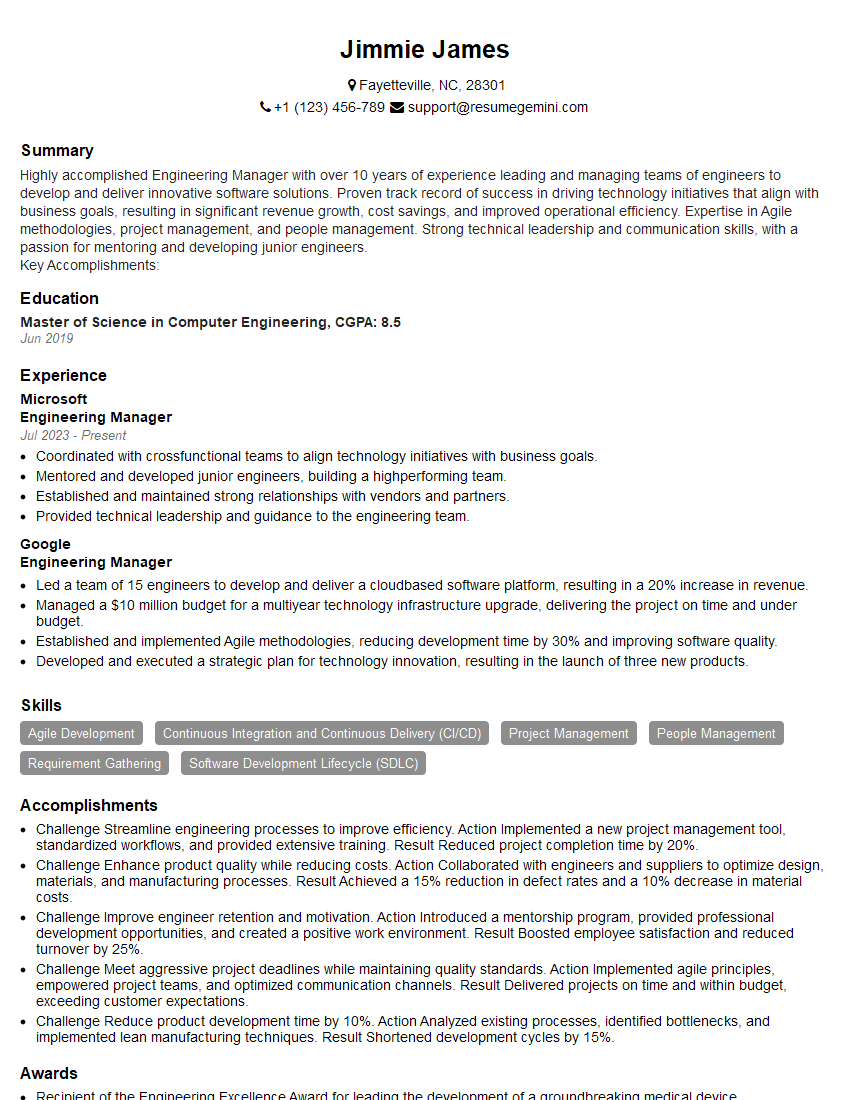
Engineering Manager Resume Sample
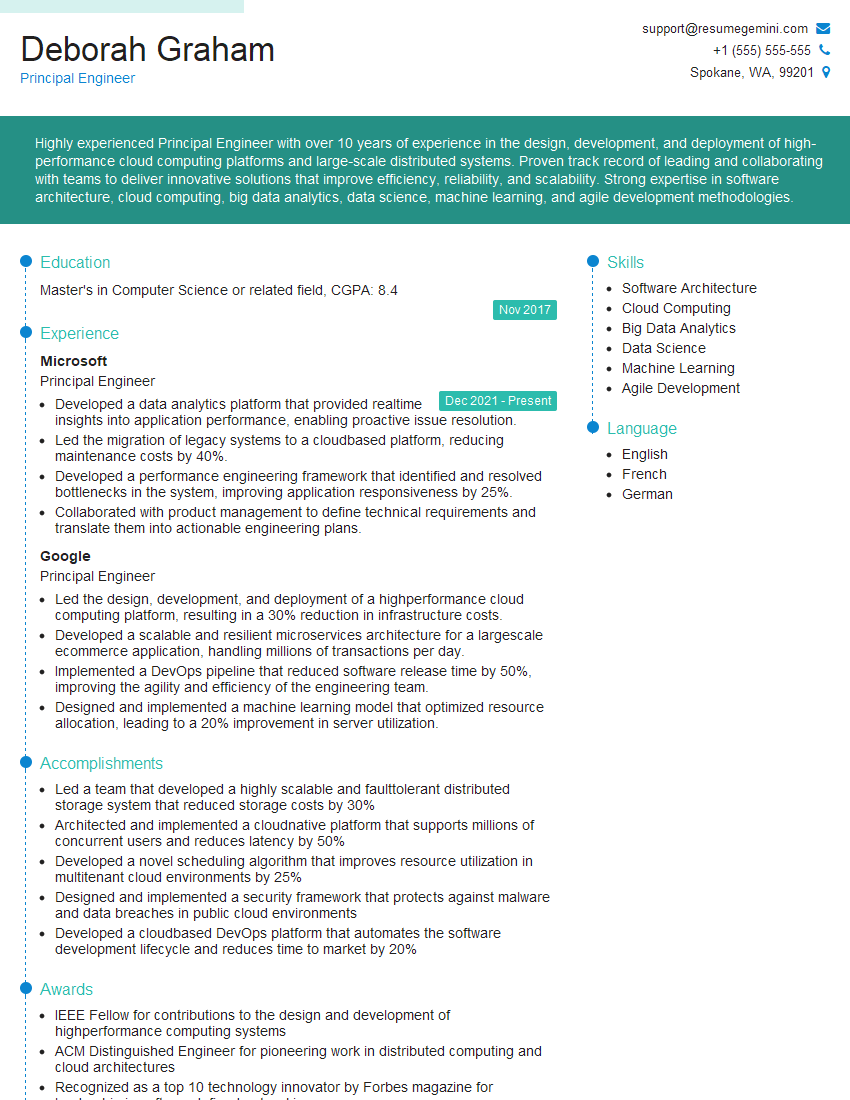
Principal Engineer Resume Sample
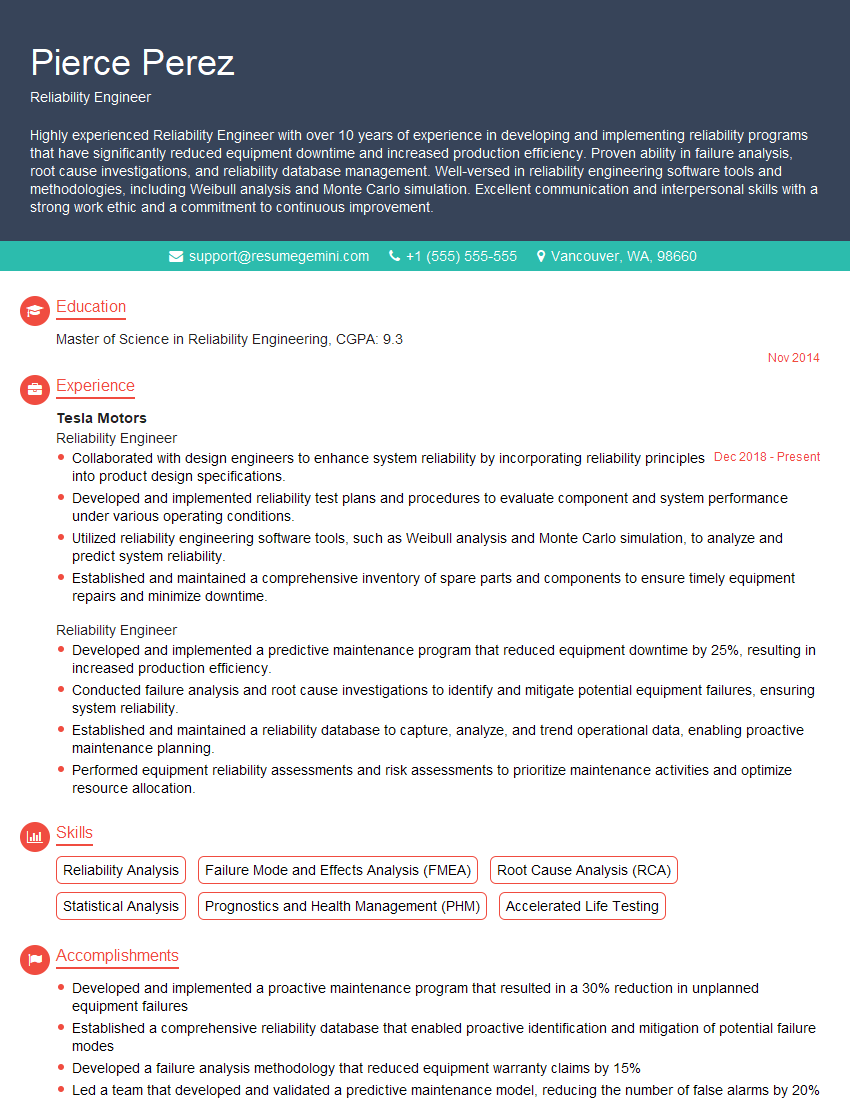
Reliability Engineer Resume Sample
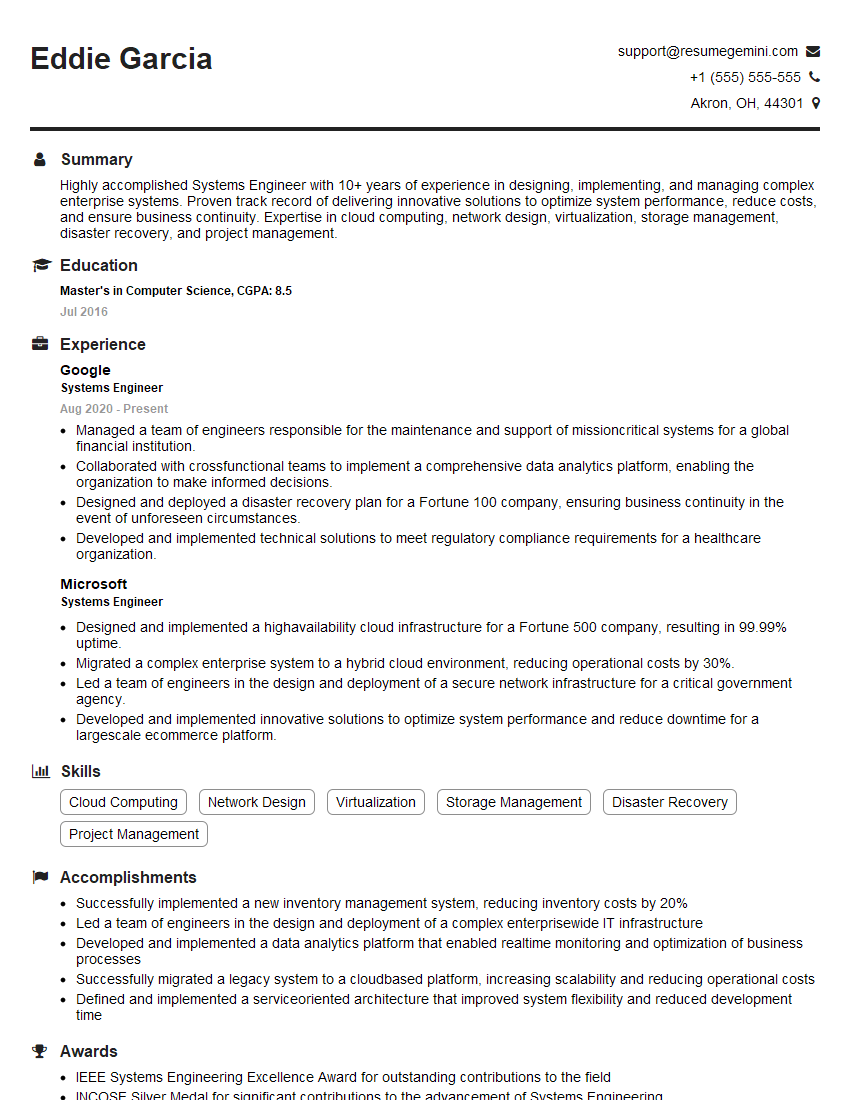
Systems Engineer Resume Sample
Automation Engineer Resume Sample
Test Engineer Resume Sample
Product Development Engineer Resume Sample
Research Engineer Resume Sample
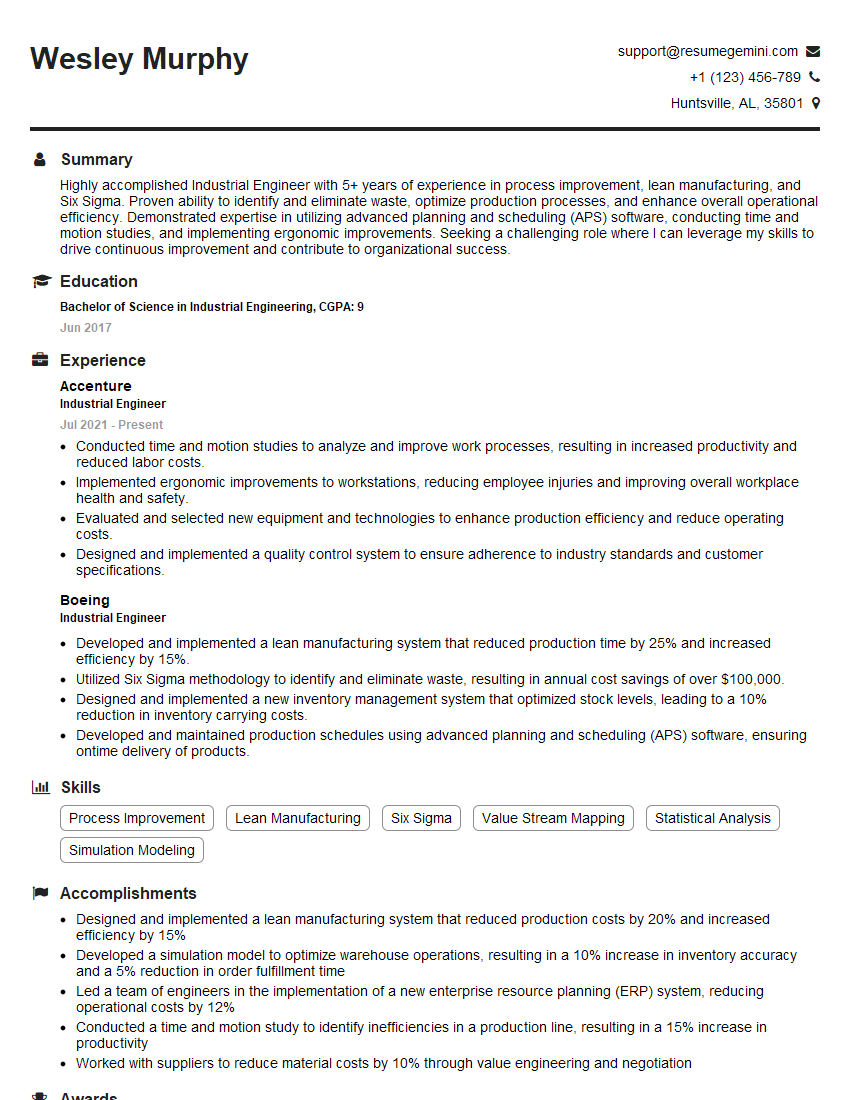
Industrial Engineer Resume Sample
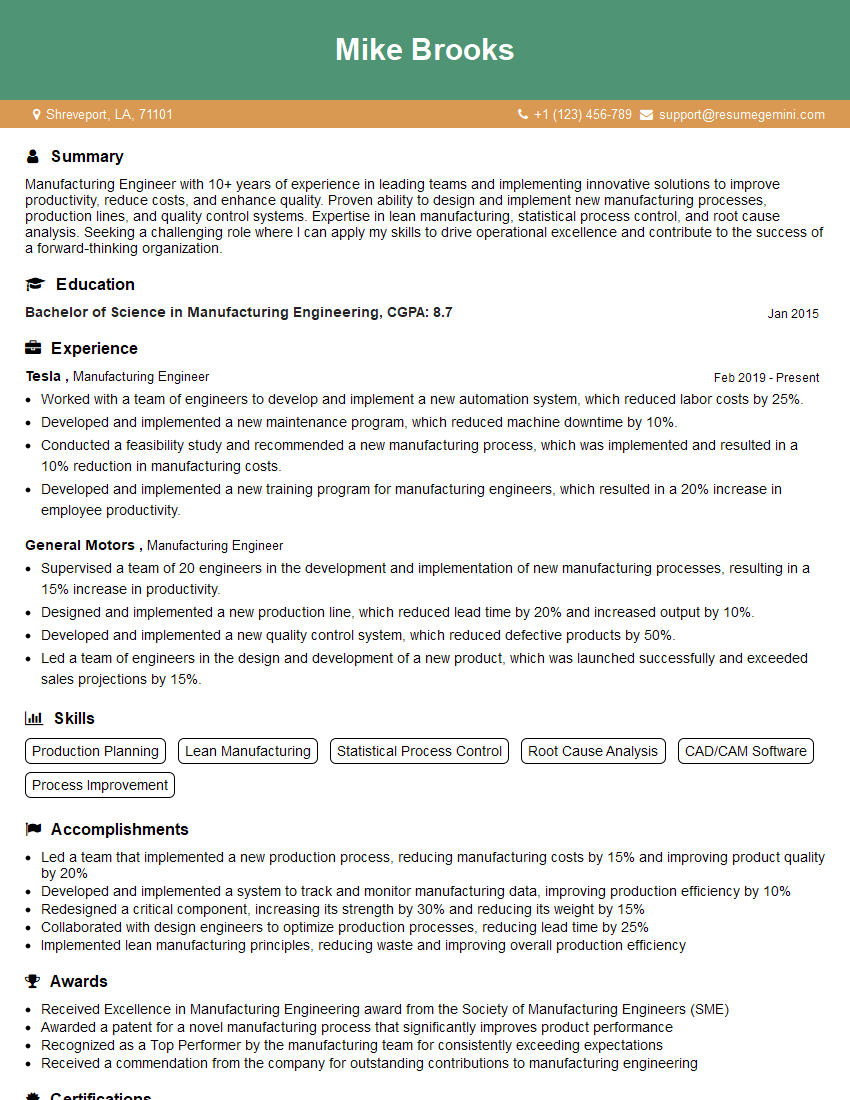
Manufacturing Engineer Resume Sample
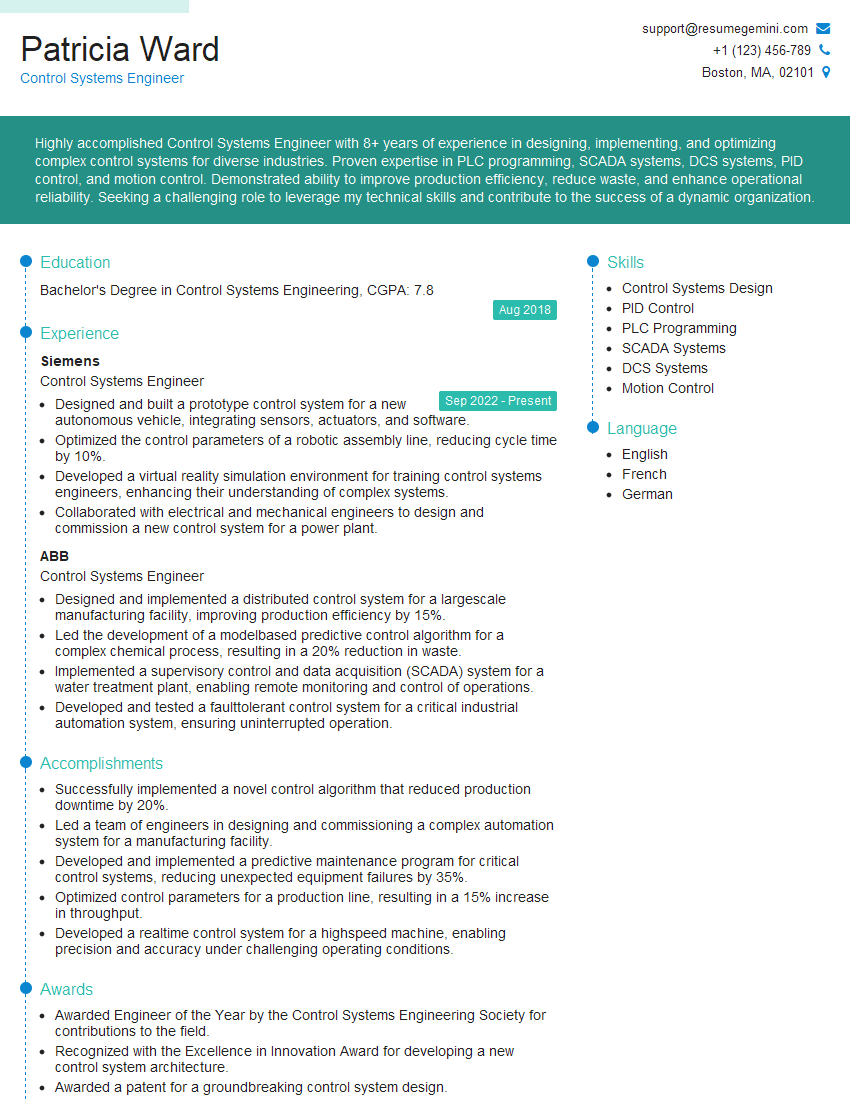
Control Systems Engineer Resume Sample
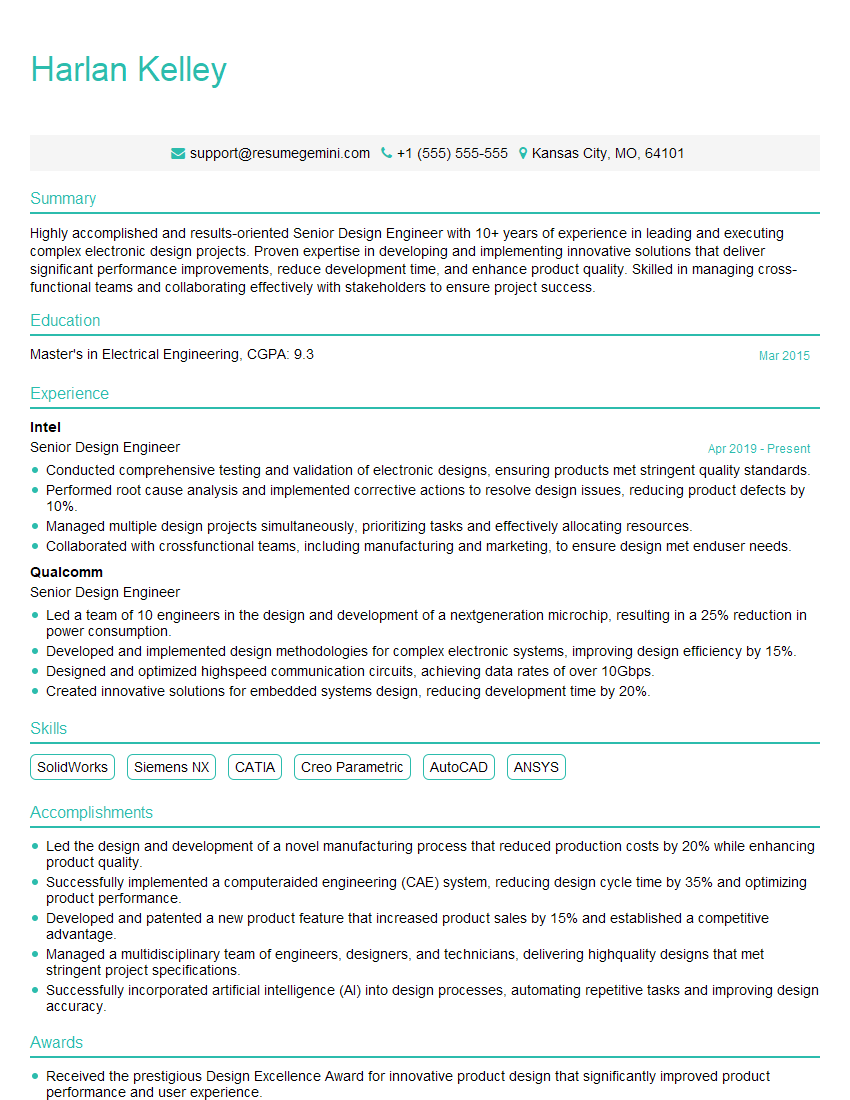
Senior Design Engineer Resume Sample
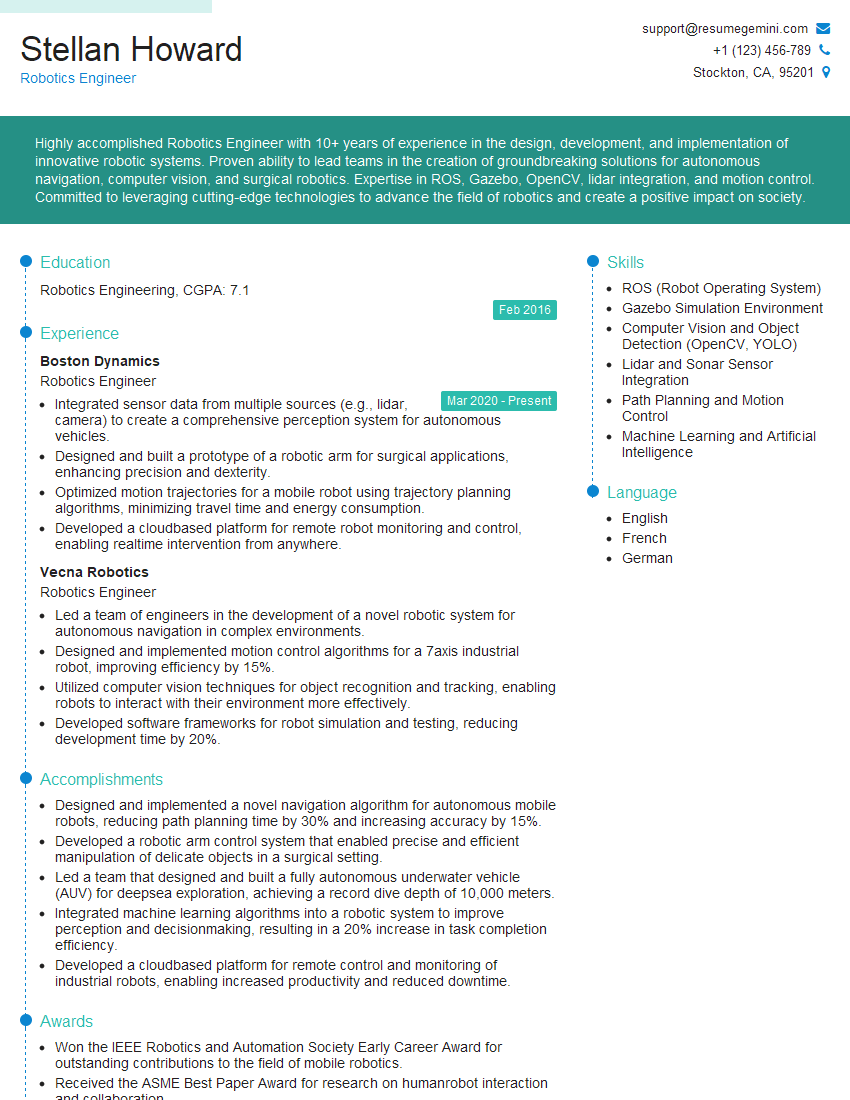
Robotics Engineer Resume Sample
Explore more articles
Users Rating of Our Blogs
Share Your Experience
We value your feedback! Please rate our content and share your thoughts (optional).
What Readers Say About Our Blog
Very informative content, great job.
good