Preparation is the key to success in any interview. In this post, we’ll explore crucial DesignSpark Mechanical interview questions and equip you with strategies to craft impactful answers. Whether you’re a beginner or a pro, these tips will elevate your preparation.
Questions Asked in DesignSpark Mechanical Interview
Q 1. Explain your experience using DesignSpark Mechanical for 3D modeling.
My experience with DesignSpark Mechanical spans several years and encompasses a wide range of projects, from simple component design to complex assemblies. I’m comfortable utilizing its intuitive interface to create, modify, and manage 3D models efficiently. I’ve used it for everything from designing custom enclosures for electronics projects to creating detailed models for mechanical parts in various industries. For example, I recently used DesignSpark Mechanical to model a custom bracket for a client’s robotic arm, utilizing its sketching tools and features to create precise geometry. The software’s ease of use and powerful features allow for rapid prototyping and iterative design.
Q 2. Describe your proficiency in creating assemblies and parts within DesignSpark Mechanical.
I possess a high level of proficiency in creating both parts and assemblies within DesignSpark Mechanical. Creating parts involves utilizing various sketching tools to define 2D profiles, which are then extruded, revolved, or used to create other 3D features. I’m skilled in using features such as fillets, chamfers, holes, and patterns to add detail and realism. Assembly creation leverages DesignSpark Mechanical’s robust constraint management system (which I’ll detail further in the next answer) to accurately position and relate parts. I regularly create complex assemblies with dozens of individual components, ensuring proper mating and interference checks. For instance, I designed a complete gear assembly, including the housing, shaft, gears, and bearings, accurately modeling the interactions between each part using constraints. I am also familiar with techniques for managing large assemblies efficiently, such as using component suppression and layers to improve performance.
Q 3. How familiar are you with DesignSpark Mechanical’s constraint management system?
DesignSpark Mechanical’s constraint management system is a crucial aspect of effective 3D modeling, and I am very familiar with its use. Constraints define relationships between parts in an assembly, ensuring accurate positioning and movement. I understand and regularly use all constraint types, including mate constraints (e.g., concentric, flush, parallel), insert constraints, and distance constraints. The system allows for flexible and precise assembly creation. For example, I use constraints to accurately position screws in a housing, ensuring that they align perfectly with their corresponding holes. I also know how to properly manage constraint conflicts and understand how to utilize under-constrained and over-constrained situations to my advantage in design. Troubleshooting constraint issues is a routine part of my workflow.
Q 4. Explain your experience with DesignSpark Mechanical’s rendering and visualization tools.
DesignSpark Mechanical offers several rendering and visualization tools that I use extensively to present my designs effectively. I routinely use the built-in rendering capabilities to create realistic images and animations of my models. This is vital for client presentations and to help visualize the finished product. These visuals help communicate design intent and identify potential issues early in the design process. I am adept at adjusting lighting, materials, and camera angles to produce high-quality renderings. Furthermore, I am familiar with exporting the models in various formats (like STEP or STL) for use in other visualization or rendering applications if needed for high-end presentations or animations.
Q 5. How would you troubleshoot a common error encountered during DesignSpark Mechanical usage?
One common error in DesignSpark Mechanical is encountering constraint conflicts when assembling parts. This typically occurs when attempting to over-constrain a part or when constraints are contradictory. My troubleshooting strategy involves the following steps:
- Identify the conflicting constraints: DesignSpark Mechanical often highlights conflicting constraints in the design tree.
- Analyze the constraints: Carefully examine the constraints to identify inconsistencies or redundancy.
- Simplify the assembly: Temporarily remove some constraints to isolate the source of the conflict.
- Adjust or remove constraints: Based on the analysis, adjust or remove conflicting constraints to resolve the issue.
- Check for geometric issues: Verify that the geometry of the parts is correct and that there are no errors that might contribute to the conflict.
- Rebuild the assembly: Sometimes simply rebuilding the assembly can resolve transient constraint errors.
Q 6. Describe your experience with DesignSpark Mechanical’s simulation features.
While DesignSpark Mechanical’s simulation capabilities are not as extensive as dedicated FEA software, I have experience using its built-in simulation tools for basic analyses, such as static stress and deflection. I’ve used this to perform basic stress analysis on simple parts, to validate designs before proceeding to more detailed analysis with specialized software if needed. I understand the limitations of these tools and know when it’s appropriate to utilize them and when to employ more advanced analysis software for complex designs. For example, I’ve used the simulation features to check for potential stress concentrations in a bracket design, identifying potential areas for improvement before manufacturing. This gives a quick validation for simple parts in the early stages of design and helps to avoid more extensive simulation steps.
Q 7. How proficient are you in importing and exporting files in various formats within DesignSpark Mechanical?
I’m proficient in importing and exporting files in various formats, including STEP, IGES, STL, and several others supported by DesignSpark Mechanical. This is crucial for collaborating with other engineers and manufacturers who may be using different CAD software. I regularly import reference models from other sources for integration into my assemblies. For example, I’ve imported STEP files of purchased components to ensure accurate integration into my designs. Conversely, I frequently export my designs in STL format for 3D printing and in STEP format for sharing with manufacturing partners or other CAD systems.
Q 8. Explain your workflow for creating detailed engineering drawings using DesignSpark Mechanical.
My workflow for creating detailed engineering drawings in DesignSpark Mechanical is highly iterative and focuses on clarity and accuracy. It begins with a well-defined design concept, followed by meticulous modeling. I always start with a strong understanding of the project requirements, including dimensions, tolerances, and material specifications.
- Modeling Phase: I build the 3D model using DesignSpark Mechanical’s intuitive interface, paying close attention to detail and utilizing features like constraints and relations to ensure accurate geometry. For example, if designing a gear, I would use the built-in gear creation tools to ensure precise tooth profiles and dimensions.
- Feature-based Modeling: I heavily rely on DesignSpark Mechanical’s feature-based modeling approach. This allows for easy modifications and version control. Changes to one feature automatically update related components, significantly reducing design errors and saving time.
- Drawing Creation: Once the 3D model is finalized, I generate 2D drawings using DesignSpark Mechanical’s drawing tools. I strategically select views to clearly show all necessary dimensions, annotations, and tolerances. I ensure that dimensions are unambiguous and conform to relevant standards (like ISO or ANSI).
- Annotation and Detailing: I meticulously add all necessary annotations, including dimensions, tolerances, material specifications, surface finishes, and other relevant information. I use leader lines and balloons to clearly link annotations to the appropriate features on the drawing. I always aim for a clean, uncluttered drawing that’s easy to understand.
- Review and Iteration: Before finalizing the drawings, I conduct a thorough review to identify and correct any errors or inconsistencies. This may involve checking dimensions, tolerances, and annotations against the 3D model and the original design specifications. I might also seek feedback from colleagues to ensure clarity and completeness.
This structured approach ensures that the final engineering drawings are accurate, complete, and ready for manufacturing or further design iterations.
Q 9. How familiar are you with DesignSpark Mechanical’s sheet metal capabilities?
I’m very familiar with DesignSpark Mechanical’s sheet metal capabilities. I’ve extensively used its tools to design various sheet metal components, from simple brackets to complex enclosures. The software’s ability to handle features like flanges, bends, and different sheet metal gauges is a significant asset.
- Unfold/Flat Pattern Generation: I regularly utilize the software’s automatic unfolding feature to generate flat patterns for manufacturing. This significantly simplifies the manufacturing process and reduces the risk of errors.
- Bend Deduction: I’m proficient in accurately setting bend radii and K-factors to achieve precise bend angles during the unfolding process. This is crucial for ensuring that the final manufactured part meets the design specifications.
- Material Selection: I leverage the software’s library of materials to select appropriate sheet metal types and thicknesses based on the design requirements and manufacturing constraints. For example, I would carefully consider material properties like tensile strength and yield strength when designing a component subject to stress.
- Advanced Features: I have experience using more advanced features such as using different bend allowances and custom bend tables to accommodate unique material properties or manufacturing processes.
My understanding extends beyond simple parts; I can handle complex sheet metal assemblies, managing interactions between different components and ensuring proper clearances.
Q 10. Describe your experience using DesignSpark Mechanical for design verification and validation.
Design verification and validation are critical aspects of my design process within DesignSpark Mechanical. I employ several strategies to ensure the design meets its intended purpose and performs as expected.
- Finite Element Analysis (FEA) Integration: While DesignSpark Mechanical itself doesn’t have built-in FEA, I utilize its export capabilities to transfer the model to external FEA software for stress analysis and other simulations. This allows me to verify the structural integrity and predict the performance of the design under various load conditions.
- Motion Simulation: For mechanisms and moving parts, I perform motion simulations (often using external software integrated with DesignSpark Mechanical’s export functionality) to ensure proper functioning and identify potential interference or kinematic issues.
- Tolerance Analysis: I incorporate tolerance analysis into my design process to account for manufacturing variations and ensure the final product functions within acceptable limits. I make use of DesignSpark Mechanical’s dimensional annotation tools to clearly specify tolerances.
- Virtual Prototyping: I use DesignSpark Mechanical’s rendering capabilities to create realistic visualizations of the design, allowing for early identification of potential aesthetic or ergonomic issues.
- Prototyping and Testing: While not strictly a DesignSpark Mechanical feature, I always advocate for physical prototyping and testing to validate the design’s performance in real-world conditions. This step is crucial for confirming simulations and identifying unexpected issues.
Through a combination of these methods, I ensure a robust and reliable design before proceeding to manufacturing.
Q 11. How would you manage large and complex assemblies in DesignSpark Mechanical?
Managing large and complex assemblies in DesignSpark Mechanical requires a strategic approach to maintain performance and organization. My strategies include:
- Component Organization: I employ a hierarchical structure for assemblies, breaking down large assemblies into smaller, manageable sub-assemblies. This makes it easier to manage, modify, and troubleshoot individual components without affecting the entire assembly.
- Lightweight Components: I utilize simplified representations of components where appropriate. For example, using simplified geometry for components that are far away from the area of focus can significantly improve performance.
- Component Grouping: I use DesignSpark Mechanical’s component grouping features to logically organize and manage components within the assembly. This enhances overall model organization and simplifies the selection and manipulation of components.
- Effective Use of Constraints: Precisely defined constraints between components are crucial in maintaining assembly stability and performance. Over-constraining should be avoided, as this can cause conflicts and slow down the software.
- Regular Saves and Backups: Working with large assemblies necessitates frequent saving and backing up of the project to prevent data loss and maintain version control. I typically save incremental changes to ensure that I can always revert to a previous stable version if needed.
By systematically applying these techniques, I can effectively manage complex assemblies in DesignSpark Mechanical, ensuring efficient design and preventing performance issues.
Q 12. Explain your experience with DesignSpark Mechanical’s collaboration features.
DesignSpark Mechanical’s collaboration features are limited compared to dedicated CAD platforms with robust cloud collaboration features. However, I’ve used the software’s export capabilities to facilitate collaboration.
- File Sharing: I typically share DesignSpark Mechanical files (typically in .dsm format, or exported as STEP or other neutral formats) through shared network drives or cloud storage platforms. This allows team members to access and review the design.
- Version Control: While DesignSpark Mechanical doesn’t have built-in version control, I utilize external version control systems (like Git) to track changes and manage different revisions of the design files.
- External Collaboration Tools: To enhance communication and facilitate discussions around design changes, I use other tools such as project management software, email, or video conferencing to coordinate with team members.
While direct, integrated collaboration within DesignSpark Mechanical itself is minimal, a well-structured workflow using external tools can effectively support collaborative design efforts.
Q 13. How would you optimize a DesignSpark Mechanical model for manufacturing?
Optimizing a DesignSpark Mechanical model for manufacturing involves considering several key factors throughout the design process.
- Design for Manufacturing (DFM): I apply DFM principles from the initial design stages. This includes simplifying geometry, avoiding complex features that are difficult to manufacture, and selecting readily available materials. For example, I would avoid features requiring complex machining operations unless absolutely necessary.
- Tolerance Analysis: Proper tolerance analysis ensures that the design can be manufactured within acceptable variations. Overly tight tolerances can drive up costs and make manufacturing difficult.
- Material Selection: Choosing appropriate manufacturing-friendly materials is crucial. I consider factors like material availability, machinability, and cost when selecting materials. The material choice significantly impacts the manufacturing process and cost.
- Part Consolidation: When feasible, I aim to consolidate multiple parts into a single component to reduce assembly time and cost. DesignSpark Mechanical’s features allow for exploring these options.
- Feature Simplification: Complex features often add cost and manufacturing complexity. I strive to simplify the model’s geometry as much as possible without compromising functionality. This includes minimizing the number of features, using standard shapes whenever possible.
By consistently applying these principles throughout the design process, I can create models that are not only functional but also optimized for efficient and cost-effective manufacturing.
Q 14. Describe your knowledge of DesignSpark Mechanical’s design standards and best practices.
My knowledge of DesignSpark Mechanical’s design standards and best practices encompasses several key areas.
- Geometric Dimensioning and Tolerancing (GD&T): I’m proficient in applying GD&T principles to clearly communicate dimensional and geometric tolerances on the drawings. This ensures that the manufactured part meets the specified requirements.
- Drafting Standards: I adhere to relevant drafting standards (like ISO or ANSI) when creating engineering drawings. This ensures consistency and clarity across projects.
- Naming Conventions: I follow consistent naming conventions for files and components to maintain order and avoid confusion, especially in larger projects.
- File Management: I maintain a well-organized file structure, utilizing folders and subfolders to logically group design files and associated documentation.
- Data Integrity: I prioritize data integrity by regularly saving my work, creating backups, and maintaining version control. This prevents data loss and allows easy recovery from errors.
- Collaboration Practices: I follow best practices for collaboration, utilizing shared drives or cloud storage, and version control systems to facilitate teamwork and avoid conflicts.
By adhering to these standards and best practices, I ensure the creation of high-quality, accurate, and easily understandable designs in DesignSpark Mechanical.
Q 15. How would you approach creating a parametric model in DesignSpark Mechanical?
Creating parametric models in DesignSpark Mechanical is all about defining relationships between design features, allowing for easy modification and iteration. Think of it like a recipe: you define the ingredients (parameters like dimensions and angles) and the steps (features like extrudes and revolves), and the software automatically builds the model based on these instructions. Changes to the parameters automatically update the entire design.
For example, let’s say I’m designing a simple box. Instead of manually inputting dimensions, I’d define parameters like length, width, and height. The box’s features (extruded faces) would be linked to these parameters. If I decide to increase the length parameter, the entire box stretches accordingly, maintaining the defined relationships. This is incredibly powerful for exploring design variations and ensuring consistency.
My approach starts with identifying the key design parameters. Then, I build the model using features, carefully linking each feature to the appropriate parameters. Finally, I thoroughly test the model by modifying parameters to ensure everything behaves as expected. This iterative process guarantees a robust and flexible parametric model.
Career Expert Tips:
- Ace those interviews! Prepare effectively by reviewing the Top 50 Most Common Interview Questions on ResumeGemini.
- Navigate your job search with confidence! Explore a wide range of Career Tips on ResumeGemini. Learn about common challenges and recommendations to overcome them.
- Craft the perfect resume! Master the Art of Resume Writing with ResumeGemini’s guide. Showcase your unique qualifications and achievements effectively.
- Don’t miss out on holiday savings! Build your dream resume with ResumeGemini’s ATS optimized templates.
Q 16. Explain your experience with DesignSpark Mechanical’s data management tools.
DesignSpark Mechanical’s data management is straightforward yet effective, particularly for individual users or small teams. The software allows for creating projects, organizing files within those projects, and easily saving different versions of a design. This is comparable to using a well-organized folder system on your computer, but within the software itself.
I regularly utilize the project management features to keep my work organized. This includes creating separate projects for different clients or design phases. Within each project, I use descriptive file names to track design iterations and variations. The ability to quickly locate specific files and revisions is crucial for efficient workflow. Although it doesn’t have the advanced features of dedicated PDM systems, it’s perfectly adequate for the needs of many projects.
Q 17. How would you handle version control in a collaborative DesignSpark Mechanical project?
For collaborative projects in DesignSpark Mechanical, version control relies heavily on good communication and a well-defined workflow. While DesignSpark Mechanical doesn’t have built-in version control like Git, we can effectively manage revisions using a combination of techniques. One successful strategy is implementing a naming convention for file saves that includes revision numbers (e.g., PartName_RevA.dsm, PartName_RevB.dsm) and maintaining a shared network drive or cloud storage.
Furthermore, clear communication is key. We would establish a system for checking out files, making revisions, and checking them back in. This could involve using a shared spreadsheet or a dedicated communication platform to track who’s working on what and avoid conflicts. Using a cloud storage solution with version history would also offer a simple backup and history management method.
Q 18. Describe your experience integrating DesignSpark Mechanical with other software packages.
My experience integrating DesignSpark Mechanical involves primarily its export capabilities. I often export models as STEP or IGES files for use in other software packages like SolidWorks or Fusion 360 for more advanced simulations or rendering. The compatibility with these standard formats ensures a seamless exchange of data.
I’ve also integrated DesignSpark Mechanical with PCB design software, using its export features to create accurate enclosures for electronic components. This allows me to quickly visualize and verify the fit between the electronic components and their housing. The simple interface and straightforward export functionality have proven invaluable for efficient project workflows.
Q 19. How familiar are you with DesignSpark Mechanical’s API?
My familiarity with DesignSpark Mechanical’s API is limited. While I understand its existence and potential for automation and customization, I haven’t had the opportunity to extensively use it in my work. However, I am quick to learn and confident that I could leverage its functionality if required for a specific task. The potential for automation through scripting is appealing, particularly for repetitive tasks in model generation or data extraction.
Q 20. What are the limitations of DesignSpark Mechanical, and how would you work around them?
DesignSpark Mechanical, while a powerful tool, has certain limitations. One notable constraint is its lack of advanced simulation capabilities compared to dedicated FEA software. However, for basic structural analysis, the built-in tools are often sufficient. For more detailed simulations, I export the model to a dedicated FEA package.
Another limitation is the somewhat restricted feature set when compared to professional-grade CAD software. This is offset by its simplicity and ease of use. In scenarios requiring very complex features or surfacing techniques, I might need to utilize alternative software. For most of my projects, however, DesignSpark Mechanical’s capabilities have been more than adequate.
Q 21. Compare and contrast DesignSpark Mechanical with other 3D CAD software.
Compared to professional-grade CAD software like SolidWorks or Autodesk Inventor, DesignSpark Mechanical is significantly more user-friendly and accessible. Its intuitive interface makes it quicker to learn, particularly for users with limited CAD experience. This makes it a great choice for quick prototyping and simpler designs. However, it lacks the extensive feature set and advanced capabilities found in these professional packages.
Compared to simpler CAD software like Tinkercad or Fusion 360’s free version, DesignSpark Mechanical provides more advanced features and a more robust design environment. Fusion 360’s free version offers some more advanced features but can be more complex to master. DesignSpark excels in its balance between user-friendliness and capabilities, making it an ideal choice for many engineers and hobbyists.
Q 22. Describe a challenging DesignSpark Mechanical project you’ve completed and how you overcame the challenges.
One challenging project involved designing a complex enclosure for a custom electronics assembly. The challenge lay in integrating multiple components with varying thermal requirements and tight space constraints within a robust, aesthetically pleasing design. The initial design, created using simpler modeling techniques, resulted in interference issues and suboptimal heat dissipation.
To overcome these challenges, I leveraged DesignSpark Mechanical’s advanced features. I employed parametric modeling extensively, defining key dimensions as variables. This allowed for iterative design changes and easy optimization. For thermal management, I utilized DesignSpark Mechanical’s analysis tools to simulate airflow and temperature distribution, identifying hotspots and making adjustments to the enclosure’s geometry and ventilation. Finally, I meticulously checked for interference using DesignSpark Mechanical’s assembly features, ensuring all components fit perfectly. The final design met all specifications, significantly reducing development time and iterations.
Q 23. Explain your understanding of tolerance analysis within the context of DesignSpark Mechanical.
Tolerance analysis in DesignSpark Mechanical is crucial for ensuring that parts manufactured according to specified tolerances will assemble correctly and function as intended. DesignSpark Mechanical doesn’t directly offer dedicated tolerance analysis tools like some higher-end CAD software, but it allows you to incorporate tolerance data into your model to simulate potential variations.
This is achieved by defining dimensional tolerances directly within the part design. For example, you might specify a diameter as ’10 ± 0.1 mm’. While DesignSpark Mechanical won’t automatically calculate all possible combinations of tolerances, the designer must manually consider worst-case scenarios. This might involve creating multiple models representing the extreme limits of each tolerance, ensuring assembly clearance even with maximal deviations. The use of parametric modeling is highly beneficial here, as you can quickly change parameters to explore various tolerance combinations.
This manual approach ensures the designer carefully considers the impact of each tolerance, promoting a deeper understanding of the design’s sensitivity to manufacturing variations. It’s a crucial step in preventing costly design flaws during production.
Q 24. How would you use DesignSpark Mechanical to create a bill of materials (BOM)?
DesignSpark Mechanical doesn’t have a built-in, automated BOM generation like some other CAD software. However, you can efficiently create a BOM using the software’s features in conjunction with a spreadsheet program like Excel or a dedicated BOM management tool.
My approach involves creating a structured parts list within the assembly. This usually includes information like part number, description, quantity, and material. I then export the assembly’s component information into a CSV or text file. This data is easily imported into a spreadsheet where the additional information needed to complete the BOM (like vendor information, cost, etc.) can be added. This manual approach offers flexibility and allows precise control over the final BOM’s content and format.
Q 25. How familiar are you with different DesignSpark Mechanical add-ins and extensions?
I’m familiar with several DesignSpark Mechanical add-ins and extensions, though their availability can depend on the version of the software. While not as extensive as some commercial CAD packages, DesignSpark Mechanical offers some useful extensions. For example, I’ve used extensions to enhance the visualization capabilities, allowing for improved rendering and image quality. I’ve also explored extensions that provide integration with other software, streamlining workflows.
My approach is to actively search for and evaluate relevant extensions when a specific need arises. I always thoroughly test any new extension in a non-critical project before incorporating it into a major design to avoid potential compatibility issues or workflow disruptions.
Q 26. Explain your experience with DesignSpark Mechanical’s different analysis tools (e.g., stress analysis).
DesignSpark Mechanical provides basic stress analysis capabilities, primarily focused on finite element analysis (FEA). This allows for evaluating stress and strain in components under different load conditions. While not as sophisticated as dedicated FEA software packages, it’s sufficient for many preliminary design analyses. I’ve used it extensively for simpler designs to assess the structural integrity of parts, identifying potential weak points before prototyping.
For more complex analyses, requiring more advanced simulations like non-linear material behavior or complex boundary conditions, I would utilize dedicated FEA software. DesignSpark Mechanical’s results provide a good starting point and can guide decisions on further, more detailed analysis using other software.
For example, in a previous project involving a bracket design, DesignSpark Mechanical’s stress analysis helped me identify a critical area of high stress, allowing me to reinforce the design and avoid potential failure.
Q 27. How would you ensure the accuracy and quality of your DesignSpark Mechanical models?
Ensuring accuracy and quality in DesignSpark Mechanical models requires a multi-pronged approach. First, meticulous attention to detail is paramount. This includes accurately defining dimensions, constraints, and relationships between parts. I regularly check for model errors, such as overlapping geometry or missing features. I also employ DesignSpark Mechanical’s various verification tools, like checking for geometric inconsistencies and validating the design.
Secondly, utilizing parametric modeling wherever possible enhances accuracy and allows for easy design iteration and updates. This reduces the chance of manual errors and inconsistencies across revisions. Thirdly, regular model backups and version control are essential to prevent data loss. Lastly, and critically, independent verification of the model is performed. This can involve peer reviews or independent analysis, where another engineer reviews the design and validates the model’s accuracy and suitability for its intended purpose.
Q 28. Describe your process for creating and managing design revisions in DesignSpark Mechanical.
My process for creating and managing design revisions in DesignSpark Mechanical starts with implementing a clear version control strategy. This involves naming conventions that incorporate revision numbers (e.g., `PartName_RevA`, `PartName_RevB`). Each revision includes a detailed description of the changes implemented. This could be a simple note within the file’s properties or, ideally, using a dedicated version control system.
Regularly saving the design at various stages with descriptive filenames is critical. For more complex projects, an external version control system (like Git) could be used for better tracking and collaboration. This allows for easy retrieval of previous versions if needed and promotes a collaborative design process. By consistently following a revision control system, I ensure traceability, accountability, and a reliable design history.
Key Topics to Learn for DesignSpark Mechanical Interview
- Part Design: Understanding the fundamental tools for creating 3D models, including features like extrude, revolve, and sweep. Practice creating complex parts from scratch and modifying existing designs.
- Assembly Design: Mastering the techniques for assembling multiple parts into functional assemblies. Focus on constraints, mates, and managing component relationships for robust designs.
- Sketching Fundamentals: Solid sketching skills are crucial. Practice creating accurate and constrained sketches, understanding geometric constraints and their application in model creation.
- Simulation & Analysis: Familiarize yourself with DesignSpark Mechanical’s simulation capabilities, even at a basic level. Understanding stress analysis and simple simulations will demonstrate your understanding of design implications.
- Material Selection & Properties: Learn how to select appropriate materials for your designs based on their properties and understand how material choices impact simulation results.
- Design for Manufacturing (DFM): Consider the manufacturing process during the design phase. Understand how design choices impact manufacturability and cost.
- File Management & Collaboration: Learn how to efficiently manage files and potentially collaborate on projects within the DesignSpark Mechanical environment.
- Advanced Features (Optional): Explore advanced features like sheet metal design, weldments, or surfacing depending on your experience level and the specific job requirements.
- Problem-Solving & Troubleshooting: Develop your ability to troubleshoot design issues and identify potential problems proactively. This demonstrates practical application and critical thinking.
Next Steps
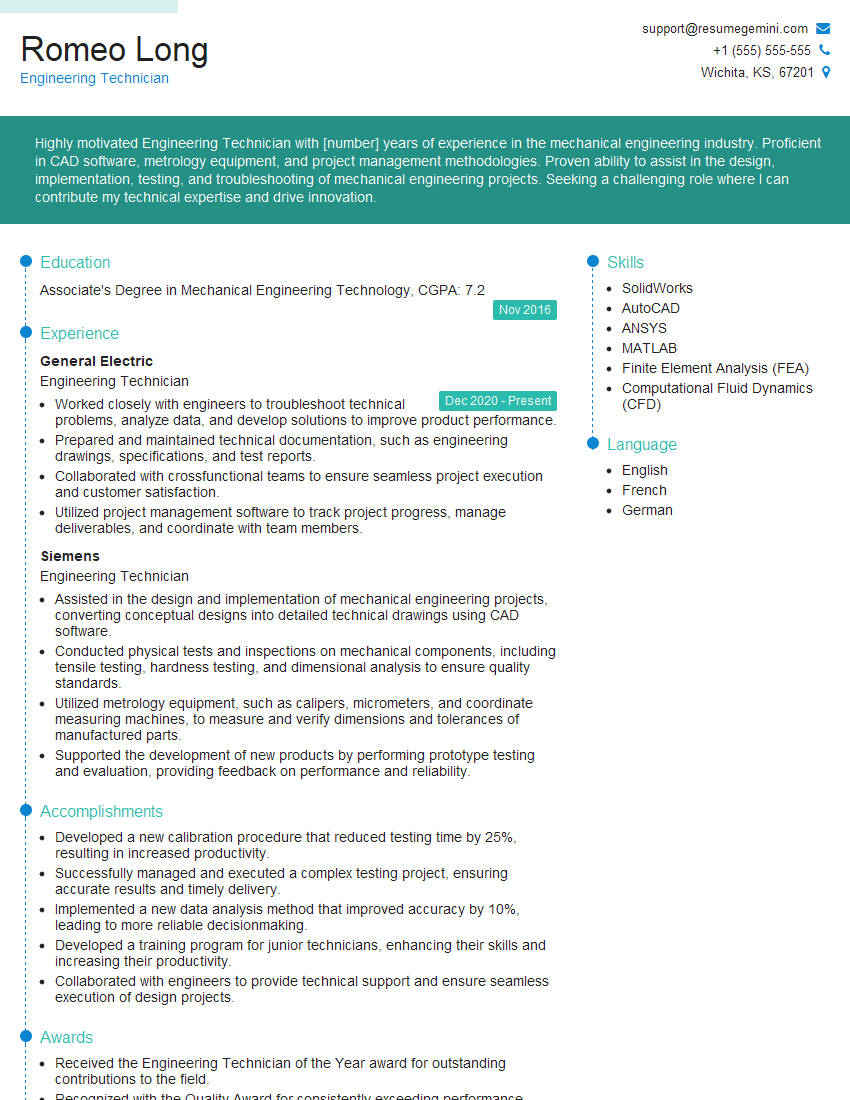
Mastering DesignSpark Mechanical significantly enhances your marketability in engineering and design roles. It demonstrates practical skills and a commitment to utilizing industry-standard software. To maximize your job prospects, create an ATS-friendly resume that highlights your DesignSpark Mechanical expertise. ResumeGemini is a trusted resource for building professional, impactful resumes. They provide examples of resumes tailored to DesignSpark Mechanical to help you create a compelling application.
Explore more articles
Users Rating of Our Blogs
Share Your Experience
We value your feedback! Please rate our content and share your thoughts (optional).
What Readers Say About Our Blog
Very informative content, great job.
good