Interviews are more than just a Q&A session—they’re a chance to prove your worth. This blog dives into essential Diesel Generator Repair and Maintenance interview questions and expert tips to help you align your answers with what hiring managers are looking for. Start preparing to shine!
Questions Asked in Diesel Generator Repair and Maintenance Interview
Q 1. Explain the four-stroke cycle of a diesel engine.
The four-stroke cycle is the fundamental operating principle of most diesel engines. Think of it as four distinct piston movements, each accomplishing a specific task in the combustion process. These are: Intake, Compression, Power, and Exhaust.
- Intake Stroke: The piston moves downwards, drawing in a mixture of air into the cylinder. This is similar to taking a deep breath.
- Compression Stroke: The piston moves upwards, compressing the air to a very high pressure and temperature. This is like squeezing a balloon – the air gets hotter and smaller.
- Power Stroke: Fuel is injected into the hot, compressed air, causing it to ignite spontaneously (due to the high temperature and pressure). This rapid expansion forces the piston downwards, generating power. This is the engine’s ‘work’ phase – the powerful push that drives the crankshaft.
- Exhaust Stroke: The piston moves upwards, pushing the exhaust gases out of the cylinder through the exhaust valve. This is like exhaling after a deep breath.
These four strokes repeat continuously for each cylinder, resulting in the engine’s rotational power. The precise timing of these strokes is critical and controlled by the camshaft.
Q 2. Describe the function of a diesel generator’s governor.
The governor in a diesel generator is a crucial component responsible for maintaining a constant engine speed despite varying loads. Imagine you’re driving a car uphill – you need more power, so you press the accelerator. The governor does something similar for the diesel engine.
It senses the engine’s speed and adjusts the fuel supply accordingly. If the load increases (e.g., more electrical appliances are switched on), the governor automatically increases the fuel flow to maintain the set speed. Conversely, if the load decreases, it reduces the fuel flow to prevent overspeeding. This ensures stable operation and prevents damage to the engine and connected equipment.
Different types of governors exist, including mechanical, hydraulic, and electronic governors, each offering varying degrees of precision and responsiveness. Modern generators often employ electronic governors for enhanced control and efficiency.
Q 3. What are the common causes of diesel generator overheating?
Diesel generator overheating is a serious issue that can lead to significant damage. Common causes include:
- Insufficient Cooling: This is the most frequent cause. Problems like clogged radiators, low coolant levels, a faulty cooling fan, or a malfunctioning thermostat can all lead to overheating.
- Air Leaks in the Cooling System: Air pockets trapped in the system prevent efficient heat transfer.
- Blocked Exhaust System: A restricted exhaust system prevents efficient removal of hot gases, causing excessive heat buildup in the engine.
- Overloading: Running the generator beyond its rated capacity forces it to work harder, generating more heat than it can dissipate.
- Low Lubrication: Insufficient oil leads to increased friction and heat generation within the engine.
- Faulty Engine Components: Problems with the engine’s internal components, such as piston rings or bearings, can also cause overheating.
Regular inspection and maintenance of the cooling system are essential to prevent overheating.
Q 4. How do you troubleshoot a diesel generator that won’t start?
Troubleshooting a diesel generator that won’t start requires a systematic approach. It’s like solving a puzzle, where each step helps narrow down the possibilities.
- Check the Battery: Test the battery voltage and ensure it’s adequately charged. A weak battery is a common cause of starting problems.
- Verify Fuel Supply: Check the fuel tank level, the fuel lines for blockages, and the fuel filter for contamination. A lack of fuel or a clogged fuel system prevents the engine from running.
- Inspect the Starting System: Check the starter motor for proper operation, and ensure the starter solenoid is engaging correctly. A faulty starter motor will prevent the engine from cranking.
- Examine the Air Intake System: Make sure the air intake system is clean and free of obstructions. Restricted airflow can impede combustion.
- Check the Engine’s Electrical System: Inspect wiring, fuses, and other electrical components for damage or loose connections.
- Verify the Stop Solenoid: Make sure the stop solenoid is not accidentally engaged, preventing the engine from starting.
If the problem persists after checking these areas, further investigation, possibly involving specialized diagnostic tools, may be necessary.
Q 5. Explain the process of performing a preventative maintenance check on a diesel generator.
Preventative maintenance is crucial for ensuring the longevity and reliable operation of a diesel generator. A regular check-up is like a health check for your generator.
- Visual Inspection: Check for any visible damage, leaks, or loose connections.
- Fluid Levels: Check engine oil, coolant, and fuel levels. Ensure they are within the manufacturer’s specified ranges.
- Battery Check: Test the battery voltage and check for corrosion on terminals. A weak battery can lead to starting problems.
- Filter Changes: Replace the fuel, air, and oil filters according to the manufacturer’s recommended intervals.
- Belt Tension: Check the tension of drive belts and replace if necessary.
- Lubrication: Lubricate moving parts as recommended in the maintenance manual.
- Load Bank Testing: Periodically test the generator under load to assess its performance and identify potential issues.
Maintaining a detailed log of all maintenance activities is important for tracking the generator’s health and predicting potential problems.
Q 6. What are the safety precautions you would take when working on a diesel generator?
Safety is paramount when working on a diesel generator. Never compromise on safety procedures, no matter how experienced you are.
- Lockout/Tagout (LOTO): Always implement LOTO procedures to prevent accidental starting of the generator. This involves isolating the power supply and applying physical locks to prevent unauthorized access.
- Personal Protective Equipment (PPE): Wear appropriate PPE, including safety glasses, gloves, hearing protection, and sturdy work boots. Diesel fumes are toxic and can cause serious health problems. Good ventilation is essential.
- Fire Safety: Be aware of potential fire hazards. Keep a fire extinguisher nearby and know how to use it.
- Proper Ventilation: Work in a well-ventilated area to avoid inhaling hazardous fumes.
- Hot Surfaces: Be mindful of hot surfaces on the engine and exhaust system. Allow the engine to cool down before performing any maintenance.
- Electrical Safety: Exercise caution when working with electrical components. Turn off the generator and disconnect the power supply before performing any electrical work.
Always refer to the manufacturer’s safety manual for specific guidelines and recommendations.
Q 7. How do you test the battery and charging system of a diesel generator?
Testing the battery and charging system ensures the generator has a reliable power source for starting and operation.
- Battery Voltage Test: Use a voltmeter to measure the battery’s voltage. A fully charged battery should read around 12.6 volts (for a 12-volt battery). A lower voltage indicates a weak battery.
- Battery Load Test: A load test simulates the demand placed on the battery during starting. It determines the battery’s ability to deliver current under load.
- Charging System Test: With the engine running, measure the voltage at the battery terminals. The voltage should be slightly higher than the battery’s resting voltage (e.g., 13.8-14.5 volts for a 12-volt system). A lower voltage suggests a problem with the charging system (alternator or voltage regulator).
- Visual Inspection: Inspect the battery for physical damage, corrosion on terminals, and secure connections. Clean any corrosion and ensure tight connections.
Regular testing of the battery and charging system is crucial for preventing unexpected downtime and ensuring reliable generator operation.
Q 8. What are the common types of diesel generator fuel systems?
Diesel generator fuel systems vary, but common types include:
- Mechanical Fuel Injection Systems: These use a fuel pump, injection pump, and injectors to precisely meter and deliver fuel under high pressure. They’re reliable but require more maintenance. Think of it like a very precise water pump system in your house, ensuring the right amount of water gets to every faucet.
- Electronic Fuel Injection Systems (EFI): These systems use electronic control units (ECUs) to monitor and adjust fuel delivery based on engine parameters, leading to better fuel efficiency and emissions control. This is similar to a smart irrigation system that adjusts water delivery based on soil moisture levels.
- Unit Injectors: These combine the injection pump and injector into one unit per cylinder, simplifying the system and potentially improving reliability. It’s like having a mini-pump directly at each faucet.
The choice of system depends on factors like engine size, required power output, and emission standards.
Q 9. Explain the function of the diesel generator’s alternator.
The alternator in a diesel generator is the heart of power generation. It’s a rotating machine that converts mechanical energy from the diesel engine into electrical energy. This happens through electromagnetic induction – the spinning magnetic field within the alternator induces an electric current in the stator windings. This current is then rectified to produce direct current (DC) or further processed into alternating current (AC) to power various loads.
Think of it like a bicycle dynamo; the spinning wheel (engine) turns a magnet which creates electricity in the light (alternator).
The alternator’s key function is to provide a stable and reliable source of power based on the engine’s rotational speed. It’s responsible for generating the voltage and current needed for the generator to perform its task.
Q 10. Describe the different types of diesel engine lubrication systems.
Diesel engine lubrication systems are critical for preventing wear and tear. Common types include:
- Wet Sump System: The oil is stored in a sump (bottom of the crankcase) and circulated by a pump. This is the most common type, simple and cost-effective.
- Dry Sump System: The oil is stored in a separate tank and is pumped to the engine and back. It offers better oil control and can handle higher engine speeds and more extreme conditions, typically used in high-performance applications.
Regardless of the type, the system’s primary function is to reduce friction, remove heat, and keep engine components clean. A well-maintained lubrication system is essential for the engine’s longevity, similar to how regular oil changes in a car keep its engine running smoothly.
Q 11. How do you diagnose and repair a faulty fuel injector?
Diagnosing a faulty fuel injector involves a systematic approach:
- Symptom Analysis: Observe the engine’s performance; rough running, poor starting, smoke, misfires, etc., point towards specific injectors.
- Compression Test: Low compression can indicate a faulty injector or other engine problems, which must be ruled out first.
- Leak Down Test: This test checks for leaks in the injector or seals.
- Injector Flow Test: Using specialized equipment, measure the fuel flow rate of each injector to identify anomalies.
- Injector Pop Test: This checks if the injector opens and closes properly.
Repair usually involves cleaning, replacing worn parts, or replacing the entire injector. A skilled technician uses specialized tools to ensure precise installation and calibration.
For example, if an injector is clogged, it may need ultrasonic cleaning or replacement. If the spray pattern is incorrect, it could need adjustment or replacement.
Q 12. How do you interpret a diesel generator’s performance data?
Interpreting a diesel generator’s performance data is crucial for preventative maintenance and troubleshooting. Data commonly includes:
- Engine Load: Percentage of the generator’s maximum capacity in use.
- Engine Speed (RPM): Indicates whether the engine is running at its optimal speed.
- Voltage and Current: Show the electrical output of the generator. Significant deviations can indicate problems.
- Frequency: Maintaining the correct frequency (e.g., 50 Hz or 60 Hz) is crucial for powering sensitive equipment.
- Exhaust Temperature: High temperatures can indicate overheating or combustion problems.
- Fuel Consumption: Helps monitor efficiency and detect potential issues.
Deviations from the normal operating parameters often indicate a problem needing attention. For example, consistently high exhaust temperature could signal a cooling system problem. Regular monitoring and analysis using the generator’s control panel or data logging systems are essential for efficient operation and preventative maintenance.
Q 13. What are the common causes of excessive exhaust smoke in a diesel generator?
Excessive exhaust smoke in a diesel generator is a common indicator of problems. Common causes include:
- Incorrect Fuel-Air Mixture: Too much fuel relative to air causes black smoke (rich mixture). Conversely, blue smoke can indicate burning oil.
- Faulty Fuel Injectors: Leaking or clogged injectors can lead to irregular fuel injection, resulting in increased smoke.
- Worn Piston Rings or Cylinder Liner: This can allow combustion gases to leak into the crankcase, leading to blue smoke.
- Turbocharger Issues: A malfunctioning turbocharger can affect the air intake and result in smoke.
- Air Filter Restriction: A clogged air filter reduces air intake, leading to incomplete combustion and smoke.
Diagnosing the cause often involves a combination of visual inspection, performance data analysis, and engine diagnostics. Addressing these issues promptly is important for both engine health and environmental concerns.
Q 14. Describe the process of changing the oil and filters in a diesel generator.
Changing the oil and filters in a diesel generator is a fundamental maintenance procedure, best performed according to the manufacturer’s recommendations. Here’s a general process:
- Safety First: Ensure the generator is completely shut down and cooled down. Disconnect the power source and lock it out to prevent accidental starting.
- Prepare Tools and Materials: Gather the correct type and quantity of new oil, new oil filter, new fuel filter (if applicable), oil filter wrench, drain pan, rags, and funnel.
- Drain the Oil: Locate the oil drain plug, place the drain pan underneath, and carefully loosen and remove the plug. Allow the oil to drain completely.
- Replace the Oil Filter: Loosen and remove the old oil filter, slightly lubricate the gasket of the new filter, and install it securely.
- Replace the Fuel Filter (if necessary): Follow the manufacturer’s instructions for changing the fuel filter, often involving bleeding air from the system.
- Replace the Oil Drain Plug: Tighten the oil drain plug securely.
- Add New Oil: Use a funnel to add the correct amount of new oil as specified in the manual.
- Check the Oil Level: Use the dipstick to check the oil level and add more if needed.
- Start the Generator: Let the generator run briefly to ensure proper oil circulation. Verify the oil pressure.
- Check for Leaks: Inspect for any oil leaks around the drain plug and filter.
Proper disposal of used oil and filters is crucial. It’s vital to always refer to the specific generator’s maintenance manual for detailed instructions and safety precautions.
Q 15. What are the signs of a worn-out piston ring?
Worn piston rings are a common problem in diesel generators, leading to decreased engine performance and increased emissions. Several signs indicate their wear. Think of piston rings as seals; when they wear, they lose their ability to effectively seal the combustion chamber.
- Excessive blue smoke from the exhaust: This is a classic sign. The blue color comes from unburnt engine oil leaking past the worn rings into the combustion chamber. The more blue smoke, the worse the wear.
- Reduced engine compression: Worn rings allow combustion gases to escape past the pistons, resulting in lower compression pressure. This can be measured with a compression tester – a crucial tool for any diesel mechanic.
- Increased oil consumption: As mentioned, oil leaks past the worn rings. You’ll notice a significant drop in oil level between oil changes.
- Loss of power and performance: The engine struggles to generate its rated power due to the loss of compression and inefficient combustion.
- Rough running engine: The engine may run unevenly or misfire, particularly noticeable under load.
For example, imagine a bicycle tire with a worn-out tube. Air escapes, reducing performance. Similarly, worn piston rings allow gases and oil to escape, leading to all the issues above. Replacing them is crucial for restoring engine health.
Career Expert Tips:
- Ace those interviews! Prepare effectively by reviewing the Top 50 Most Common Interview Questions on ResumeGemini.
- Navigate your job search with confidence! Explore a wide range of Career Tips on ResumeGemini. Learn about common challenges and recommendations to overcome them.
- Craft the perfect resume! Master the Art of Resume Writing with ResumeGemini’s guide. Showcase your unique qualifications and achievements effectively.
- Don’t miss out on holiday savings! Build your dream resume with ResumeGemini’s ATS optimized templates.
Q 16. How do you troubleshoot a diesel generator that is producing low voltage?
Low voltage output from a diesel generator is a serious issue, potentially damaging connected equipment. Troubleshooting requires a systematic approach. First, ensure the generator is properly loaded and that the connected load isn’t exceeding the generator’s capacity.
- Check the voltage regulator: This crucial component maintains stable voltage output. A faulty regulator is a common culprit for low voltage. Inspect it for any physical damage and test its functionality according to the manufacturer’s specifications.
- Inspect the wiring and connections: Loose or corroded connections in the generator’s wiring system can cause voltage drops. Check all terminals and connections for tightness and corrosion. Clean and tighten as needed.
- Verify the excitation system: The excitation system provides the magnetic field for the generator. Problems here will lead to low voltage output. Test the exciter’s output voltage and current.
- Test the diesel engine’s performance: Low engine speed or insufficient fuel delivery can affect the generator’s output. Check the engine speed and fuel supply.
- Check the brushes and slip rings (in brush-type alternators): Worn or damaged brushes can impede current flow leading to voltage drop. Inspect for wear and replace if necessary.
For instance, imagine a water pump with a partially blocked pipe. The pressure will be lower. Similarly, any restriction in the electrical path of a generator will reduce its voltage output.
Q 17. Explain the importance of regular air filter maintenance.
Regular air filter maintenance is paramount for the longevity and efficiency of a diesel generator. The air filter prevents dust, dirt, and other contaminants from entering the engine’s combustion chamber. Think of it as the engine’s lungs – keeping them clean is crucial for optimal health.
- Reduced engine wear: Contaminants can cause abrasive wear on internal engine components like cylinders and piston rings, leading to premature engine failure.
- Improved fuel efficiency: A clean filter ensures the engine receives a proper air-fuel mixture, maximizing fuel economy. A clogged filter restricts airflow, leading to inefficient combustion and higher fuel consumption.
- Increased engine power output: Clean air allows for efficient combustion, resulting in higher power output. A clogged filter restricts airflow, leading to a power reduction.
- Reduced emissions: Efficient combustion reduces harmful emissions. Restricted airflow from a dirty filter leads to incomplete combustion and increased emissions.
- Extended engine life: Preventing dirt and dust from entering the engine significantly prolongs its lifespan.
Imagine trying to breathe through a dirty mask. It’s difficult, and you might not get enough oxygen. The same applies to an engine; a clogged air filter hinders the engine’s ability to breathe properly.
Q 18. How do you troubleshoot a diesel generator that is consuming excessive fuel?
Excessive fuel consumption in a diesel generator points to inefficiencies within the engine. This isn’t just a cost issue; it can indicate serious mechanical problems. To solve this, we must systematically investigate the potential causes.
- Check the fuel injection system: Incorrect fuel injection timing, leaks in the injectors, or worn injector nozzles can lead to excessive fuel consumption. This requires specialized tools and knowledge to test and adjust.
- Inspect the air intake system: A restricted air filter or other intake system blockage will cause a rich fuel mixture, leading to increased fuel consumption and potentially damaging the engine.
- Examine the engine compression: Low compression due to worn piston rings or valve problems will lead to inefficient combustion and increased fuel use. A compression test is essential.
- Assess the engine’s mechanical condition: Worn bearings, piston rings, and other mechanical components increase friction and internal losses, leading to more fuel being used for the same power output.
- Evaluate the governor: A faulty governor may cause the engine to run at a higher speed than necessary, resulting in increased fuel consumption.
Imagine driving a car with flat tires. You need much more fuel to cover the same distance. Similarly, any mechanical inefficiency in the diesel generator will lead to increased fuel consumption.
Q 19. Describe the different types of diesel generator cooling systems.
Diesel generators utilize various cooling systems to manage the high temperatures generated during operation. These systems are crucial to prevent overheating, which can cause severe damage.
- Air-cooled systems: These systems use fans to circulate air around the engine block and cylinder heads. They are simpler and less expensive but less efficient than liquid-cooled systems, typically suitable for smaller generators.
- Liquid-cooled systems: These are the most common systems for larger generators. They use a coolant (usually water or a mixture of water and antifreeze) circulated through the engine block and radiator. A water pump circulates the coolant, and a radiator dissipates the heat. This offers better cooling efficiency.
- Closed-loop liquid-cooled systems: Similar to liquid-cooled systems, but the coolant is contained within a sealed loop. This eliminates the need for a radiator cap and reduces the risk of coolant loss.
Think of the human body. We sweat to regulate temperature. Similarly, the cooling system is vital for regulating the temperature of the diesel generator engine, preventing damage and ensuring reliable operation.
Q 20. Explain the function of the diesel generator’s starter motor.
The starter motor is the muscle that gets the diesel engine moving. It’s an electric motor that engages the engine’s flywheel to crank it up and initiate the combustion process. Imagine it as the initial push needed to start a heavy machine.
When you turn the key or push the start button, electricity flows to the starter motor, causing it to rotate. The starter motor’s gear meshes with the engine’s flywheel, turning the crankshaft and starting the pistons moving. Once the engine starts and achieves self-sustaining combustion, the starter motor disengages automatically. A faulty starter motor can manifest in various ways, including the engine failing to turn over, making a clicking sound, or exhibiting slow cranking speed. Regular inspection, including checking connections and the battery, is crucial for maintaining its proper function.
Q 21. What are the safety procedures for handling diesel fuel?
Diesel fuel is a flammable and hazardous material, requiring careful handling to prevent accidents and injuries. Safety is paramount.
- Proper storage: Diesel fuel should be stored in approved containers, away from ignition sources like open flames and sparks, in a well-ventilated area.
- Spill prevention: Use proper dispensing techniques to minimize the risk of spills. Have absorbent materials readily available to clean up any spills immediately.
- Personal protective equipment (PPE): Wear appropriate PPE, including gloves and eye protection, when handling diesel fuel. Diesel fuel can irritate skin and eyes.
- Ventilation: Ensure adequate ventilation when working with diesel fuel to prevent the buildup of harmful fumes. Diesel exhaust fumes are toxic.
- No smoking: Smoking should be strictly prohibited in areas where diesel fuel is handled or stored.
- Grounding: When transferring diesel fuel, ensure both the source and receiving containers are properly grounded to prevent static electricity buildup, which can cause ignition.
Think of handling diesel fuel like handling gasoline – it needs respect and careful treatment. Ignoring safety procedures can lead to fires, explosions, or serious health consequences.
Q 22. How do you troubleshoot a diesel generator that is making unusual noises?
Troubleshooting unusual noises in a diesel generator requires a systematic approach. Think of it like listening to a car engine – different sounds indicate different problems. First, we need to identify the nature of the noise: is it a knocking, a squealing, a grinding, or a rumbling? The location of the sound is also crucial. Is it coming from the engine itself, the alternator, the cooling system, or the exhaust?
- Knocking: Often indicates low lubricating oil pressure, worn bearings, or piston problems. We’d check the oil level and pressure, then investigate the engine internals if necessary.
- Squealing: Could be a problem with the alternator belt, a failing bearing in the alternator or other rotating components. We’d visually inspect belts for wear and tension, check bearing play, and listen carefully to pinpoint the source.
- Grinding: Usually points to severe wear in gears or bearings – a serious issue requiring immediate attention and likely engine disassembly.
- Rumbling: Can signify an imbalance in the rotating components of the engine, perhaps a loose or damaged flywheel or a misalignment of the engine mounts. We’d check for vibration and misalignment, possibly using vibration analysis tools.
After pinpointing the source and type of noise, we use diagnostic tools like pressure gauges, temperature sensors, and vibration analyzers to isolate the specific problem. Experience helps in recognizing common noise patterns associated with particular faults. For example, a rhythmic knocking could indicate a connecting rod problem, which is a major engine overhaul. A high-pitched squeal often points to a belt issue, which is relatively easier to fix.
Q 23. What are the different types of diesel generator control panels?
Diesel generator control panels vary significantly in complexity depending on the generator’s size and application. They range from simple, basic panels to sophisticated, automated systems. Here are a few common types:
- Basic Control Panel: This type typically includes on/off switches, emergency stop buttons, and basic instrumentation like voltage and frequency meters. They’re suitable for smaller, less critical applications.
- Advanced Control Panel: These offer more features like automatic start/stop capabilities, remote monitoring, data logging, and protection systems (over-speed, over-current, low oil pressure). They’re generally found in larger generators or those requiring reliable operation.
- PLC-Based Control Panel: Programmable Logic Controllers (PLCs) provide advanced control and automation capabilities, enabling complex sequencing, alarm management, and integration with other systems. These are used in high-reliability applications requiring precise control and monitoring.
- Digital Control Panels: These panels utilize digital displays and interfaces, providing clear and concise information to the operator. They often include sophisticated diagnostic features and fault indication systems.
The choice of control panel depends heavily on the specific requirements of the application and the desired level of automation and monitoring.
Q 24. Explain the importance of load testing a diesel generator.
Load testing a diesel generator is crucial for verifying its ability to meet its rated power output and identifying any potential problems before they become critical. Think of it as a fitness test for the generator. It simulates real-world operating conditions, allowing us to assess its performance and identify weaknesses.
During a load test, we gradually increase the load on the generator until it reaches its rated capacity. We then monitor various parameters such as voltage, current, frequency, temperature, and fuel consumption. Any deviations from the expected values indicate potential problems. For example, a significant voltage drop under load might suggest a problem with the alternator, while excessive temperature rise might indicate a cooling system issue.
The benefits of load testing are numerous: It helps ensure the generator’s reliability, identifies potential maintenance needs, validates its performance against specifications, and allows for fine-tuning of the generator’s settings for optimal efficiency. It’s a preventative maintenance task that can save you from unexpected downtime and costly repairs down the road.
Q 25. How do you perform a compression test on a diesel engine?
Performing a compression test on a diesel engine helps assess the condition of the cylinders and piston rings. It measures the pressure the engine can build up within each cylinder during the compression stroke. Low compression indicates a problem with the cylinder, piston rings, valves, or head gasket.
The process usually involves:
- Disconnecting the fuel supply: This prevents fuel from interfering with the compression test.
- Removing the glow plugs (for glow plug engines): This ensures accurate pressure readings.
- Using a compression tester: This tool is screwed into the cylinder’s spark plug hole (or glow plug hole).
- Cranking the engine: The engine is cranked several times until a peak pressure reading is obtained for each cylinder. The reading should be consistent across all cylinders, and meet factory specifications.
- Recording and comparing readings: The pressure readings for each cylinder are recorded and compared. Any significant differences among the cylinders indicate problems that need further investigation.
A significant drop in compression in one cylinder could point towards worn piston rings, a damaged piston, or a blown head gasket. Consistent low compression across all cylinders might suggest issues with valve timing or other internal engine problems.
Q 26. Describe the process of synchronizing two diesel generators.
Synchronizing two diesel generators is a critical process that involves bringing them to the same frequency, voltage, and phase angle before connecting them in parallel. This ensures a smooth and safe transition of load sharing between the generators. Think of it like merging two lanes of traffic – you need to match speed and position before safely joining.
The process typically involves:
- Preparation: Both generators should be running at their rated speed and voltage, and their control panels should be configured for synchronization.
- Frequency Matching: The frequency of both generators must be made identical using the generator’s speed control.
- Voltage Matching: The voltage of both generators must be brought to the same level.
- Phase Angle Matching: This is the most crucial part. A synchronoscope (or digital synchronizer) is used to monitor the phase angle difference between the two generators. The generators must be in phase (or near phase) before parallel operation.
- Closing the Synchronizing Switch (or breaker): Once all parameters are matched, the synchronizing switch is closed, connecting the two generators in parallel.
- Load Sharing: The load is then gradually transferred between the generators, ensuring balanced power distribution.
Improper synchronization can lead to large current surges, causing damage to the generators and connected equipment. It’s a delicate process that requires skill and precision.
Q 27. What are the common causes of diesel generator vibration?
Diesel generator vibration is a common problem that can be caused by various factors. Excessive vibration not only damages the generator itself but also creates noise and can affect the surrounding environment.
- Engine Imbalance: An unbalanced rotating mass, like an improperly weighted flywheel or a misaligned crankshaft, is a major cause of vibration.
- Foundation Problems: A poorly designed or damaged foundation can amplify vibrations.
- Misalignment: Misalignment between the engine and the alternator or other connected components increases vibration.
- Worn Bearings: Worn or damaged bearings will result in uneven rotational forces and increased vibration.
- Loose Fasteners: Loose bolts or other fasteners can lead to increased vibration and potential damage.
- Resonance: The generator’s natural frequency can resonate with the engine’s vibration frequency, magnifying the problem.
Diagnosing the cause of vibration involves visual inspection, vibration analysis using specialized equipment, and careful listening. Solving the issue might require balancing the rotating components, correcting alignment, replacing worn bearings, tightening fasteners, and/or modifying the generator’s foundation.
Q 28. What are the environmental considerations associated with diesel generator operation?
Diesel generators, while crucial for power generation, have significant environmental implications. Their operation involves the emission of greenhouse gases and pollutants, which contribute to air and noise pollution.
- Air Pollution: Diesel engines emit various pollutants such as nitrogen oxides (NOx), particulate matter (PM), carbon monoxide (CO), and unburnt hydrocarbons. These contribute to smog, acid rain, and respiratory problems.
- Greenhouse Gas Emissions: Diesel generators are a source of carbon dioxide (CO2), a major greenhouse gas that contributes to climate change.
- Noise Pollution: The operation of diesel generators can produce significant noise pollution, especially in residential areas. This can affect the health and well-being of people nearby.
- Fuel Consumption: Diesel generators require a significant amount of fuel, leading to the depletion of natural resources.
Mitigation strategies include using low-emission diesel fuel, employing advanced emission control technologies (like selective catalytic reduction – SCR), implementing noise reduction measures (like enclosures or acoustic barriers), and optimizing generator operation for maximum efficiency. Proper maintenance also plays a crucial role in reducing emissions and environmental impact.
Key Topics to Learn for Diesel Generator Repair and Maintenance Interview
- Diesel Engine Fundamentals: Understanding the four-stroke cycle, fuel injection systems (common rail, unit injectors), lubrication systems, and cooling systems. Practical application: Diagnosing engine misfires or low compression.
- Generator Components and Operation: Familiarization with alternators, voltage regulators, and control systems. Practical application: Troubleshooting voltage fluctuations or frequency issues.
- Electrical Systems: Knowledge of AC/DC principles, wiring diagrams, and troubleshooting electrical faults. Practical application: Repairing faulty wiring or replacing damaged components.
- Preventative Maintenance Schedules: Understanding the importance of routine maintenance tasks like oil changes, filter replacements, and component inspections. Practical application: Developing and implementing a preventative maintenance plan.
- Troubleshooting and Diagnostics: Developing skills in using diagnostic tools, interpreting error codes, and identifying faulty components. Practical application: Isolating the root cause of generator malfunctions.
- Safety Procedures: Understanding and adhering to safety protocols when working with high voltage, heavy machinery, and hazardous materials. Practical application: Performing lockout/tagout procedures.
- Emission Control Systems: Knowledge of emission control technologies and their maintenance. Practical application: Troubleshooting exhaust emission issues.
- Engine Performance Optimization: Understanding factors affecting engine efficiency and methods to improve performance. Practical application: Adjusting engine settings for optimal fuel consumption.
Next Steps
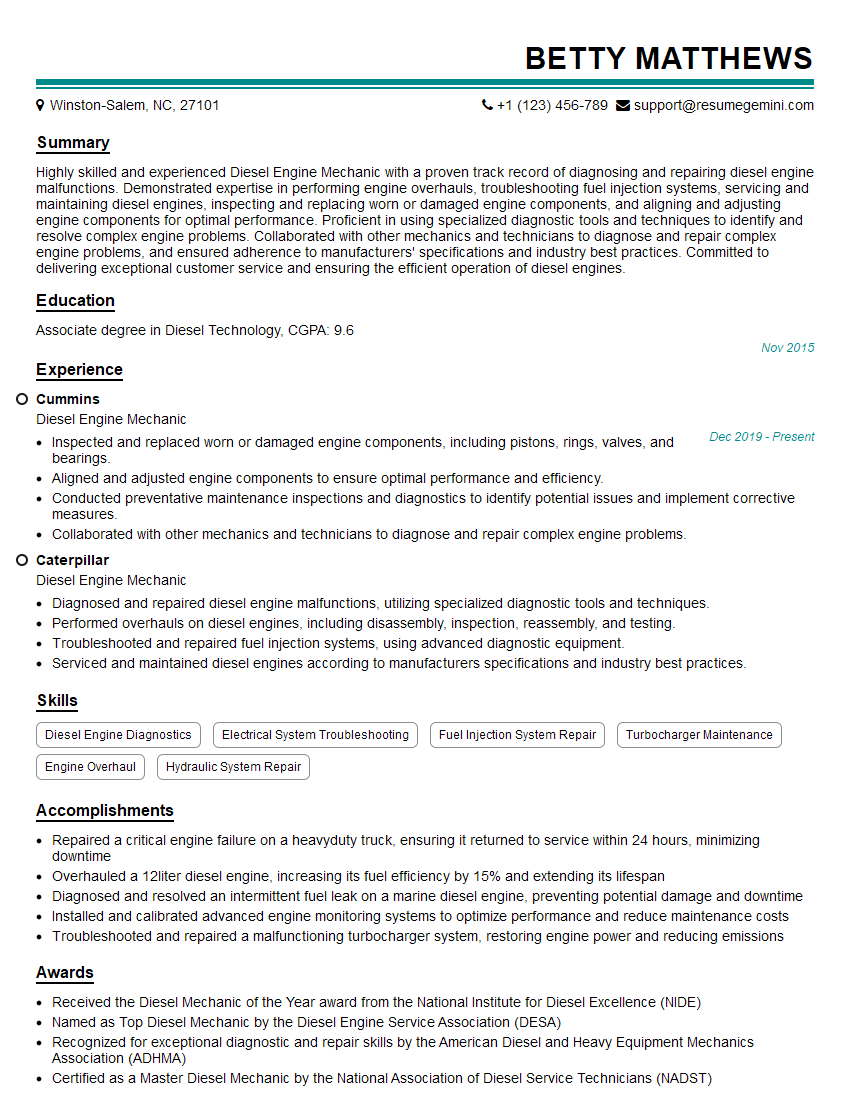
Mastering Diesel Generator Repair and Maintenance opens doors to rewarding careers with excellent growth potential. This specialized skillset is highly sought after in industries ranging from power generation to healthcare. To maximize your job prospects, invest in creating a strong, ATS-friendly resume that highlights your expertise. ResumeGemini is a trusted resource to help you build a professional and impactful resume that showcases your skills and experience effectively. Examples of resumes tailored to Diesel Generator Repair and Maintenance are available to help guide you. Take the next step toward your dream career today!
Explore more articles
Users Rating of Our Blogs
Share Your Experience
We value your feedback! Please rate our content and share your thoughts (optional).
What Readers Say About Our Blog
Very informative content, great job.
good