Are you ready to stand out in your next interview? Understanding and preparing for Diesel Mechanics interview questions is a game-changer. In this blog, we’ve compiled key questions and expert advice to help you showcase your skills with confidence and precision. Let’s get started on your journey to acing the interview.
Questions Asked in Diesel Mechanics Interview
Q 1. Explain the four-stroke cycle in a diesel engine.
The four-stroke cycle is the fundamental process by which a diesel engine converts fuel into mechanical energy. Think of it as four distinct steps, each involving the piston moving up or down in the cylinder. Let’s break it down:
- Intake Stroke: The piston moves down, drawing fresh air into the cylinder. Imagine a syringe pulling air in. The intake valve is open, and the exhaust valve is closed.
- Compression Stroke: The piston moves up, compressing the air to a very high temperature and pressure. This is crucial; the heat generated is what ignites the fuel. It’s like compressing a bicycle pump – the air gets hot.
- Power Stroke: Fuel is injected into the highly compressed, hot air. The heat ignites the fuel, causing a rapid expansion of gases that pushes the piston down. This downward force is what creates power to turn the crankshaft. Think of a tiny explosion providing the force.
- Exhaust Stroke: The piston moves up again, pushing the spent gases out of the cylinder through the open exhaust valve. The intake valve is closed. This is like clearing out the syringe after use.
These four strokes repeat continuously, each powered by the previous one, creating the engine’s rotational power.
Q 2. Describe the function of a turbocharger.
A turbocharger is essentially a forced induction system that uses exhaust gases to drive a turbine, which in turn compresses more air into the engine’s cylinders. This increased air intake allows for more fuel to be burned, resulting in a significant boost in power and efficiency. Imagine blowing air into a balloon – the more air, the bigger and more powerful the balloon (engine).
Here’s how it works:
- Exhaust gases: The hot exhaust gases from the engine flow through the turbocharger’s turbine, spinning its blades.
- Turbine drives compressor: The spinning turbine drives a compressor wheel connected to it.
- Compressor forces air: The compressor forces more air into the intake manifold.
- Increased power: More air and fuel result in a more powerful combustion event.
Turbochargers are common in modern diesel engines due to their ability to improve both power output and fuel economy.
Q 3. How does an EGR system work and what are its benefits and drawbacks?
The Exhaust Gas Recirculation (EGR) system is designed to reduce nitrogen oxide (NOx) emissions from diesel engines. It does this by recirculating a portion of the exhaust gas back into the intake manifold, thereby reducing combustion temperatures. Lower temperatures mean less NOx is formed.
How it works: The EGR valve controls the amount of exhaust gas that is recirculated. A sensor monitors the exhaust gas and the engine control unit (ECU) adjusts the EGR valve to maintain optimal levels.
Benefits:
- Reduced NOx emissions, meeting stricter environmental regulations.
Drawbacks:
- Can slightly reduce engine power and fuel efficiency, as less oxygen is available for combustion.
- Increased soot accumulation in the engine due to the recirculated exhaust.
- Potential for EGR valve clogging, requiring maintenance and cleaning.
It’s a trade-off – slightly reduced performance for significantly lower emissions. The benefits outweigh the drawbacks in terms of environmental impact.
Q 4. What are the common causes of excessive diesel exhaust?
Excessive diesel exhaust, often characterized by black or white smoke, can stem from several issues. The color of the smoke often gives clues about the problem:
- Black smoke: Typically indicates excessive fuel injection, due to a faulty injector pump, injectors themselves, or issues with the engine’s fuel control system. The engine is essentially running rich – too much fuel and not enough air.
- White smoke: Usually signifies coolant leakage into the cylinders. This can be caused by a cracked cylinder head, blown head gasket, or faulty coolant system.
- Blue smoke: Suggests burning engine oil, commonly due to worn piston rings, valve stem seals, or a damaged turbocharger.
Beyond smoke color, other causes include clogged air filters (restricting air intake), problems with the turbocharger (reducing air intake), and faulty EGR systems.
Q 5. Explain the purpose and operation of a diesel particulate filter (DPF).
A Diesel Particulate Filter (DPF) is a crucial component in modern diesel engines, designed to trap and remove soot particles (particulate matter or PM) from the exhaust gases. This significantly reduces particulate emissions.
How it operates: Soot particles are trapped within the DPF’s porous ceramic structure. As the filter fills with soot, it needs to be regenerated, which involves burning off the trapped soot. This can occur passively (through high exhaust temperatures) or actively (through injection of fuel into the DPF).
Purpose: The main purpose is to drastically reduce harmful particulate matter emissions that contribute to air pollution and health problems.
Issues: DPFs can become clogged if not properly regenerated, leading to reduced engine performance, increased exhaust backpressure, and potentially engine damage. Regular maintenance and timely regeneration are crucial.
Q 6. How do you diagnose a no-start condition in a diesel engine?
Diagnosing a no-start condition in a diesel engine is a systematic process. Here’s a step-by-step approach:
- Check the obvious: Ensure the fuel tank has fuel, the batteries are charged, and the glow plugs (if applicable) are functioning properly.
- Fuel system check: Verify fuel is reaching the injectors. Check the fuel filter for blockages and inspect the fuel lines for leaks or damage.
- Compression test: Low compression can prevent starting. A compression test measures the pressure in each cylinder during the compression stroke. Low readings pinpoint failing cylinders.
- Starter motor test: Check the starter motor for proper engagement and operation. It could be faulty or its connections may be poor.
- Battery and electrical system: A weak battery or problems in the engine’s electrical system can prevent the engine from cranking.
- Engine control module (ECM): Check the ECM and its wiring for potential faults using diagnostic equipment. A faulty ECM can prevent engine start.
It’s a process of elimination. Often, a combination of these checks helps to isolate the exact problem.
Q 7. Describe the process of troubleshooting a low compression issue.
Troubleshooting low compression involves pinpointing the source of the leak in the combustion chamber. It’s typically caused by worn piston rings, valve problems, or head gasket failures.
The process:
- Compression test: Perform a compression test to determine which cylinders have low compression. This isolates the problem area.
- Leak-down test: A leak-down test provides more detailed information. It involves pressurizing a cylinder and listening for air escaping past the piston rings, valves, or head gasket.
- Visual inspection: Once the problem cylinder is identified, visually inspect the cylinder head, valves, and piston rings for wear, damage, or carbon buildup.
- Cylinder head removal: In some cases, removing the cylinder head is necessary to inspect and repair valve seats, valves, and the head gasket.
- Engine disassembly: Severe cases might require more extensive engine disassembly to replace piston rings or repair other internal components.
Remember safety precautions when working on an engine; always disconnect the battery before starting any work.
Q 8. What are the different types of diesel fuel injectors and how do they work?
Diesel fuel injectors are responsible for precisely metering and atomizing fuel into the combustion chamber of a diesel engine. There are several types, each with its own advantages and disadvantages:
- Unit Injectors: These are self-contained units integrated into the cylinder head. They combine the fuel pump, injector nozzle, and control valve into a single component. They’re known for their simplicity, reliability, and precise fuel delivery, but are generally more expensive to replace individually.
- Common Rail Injectors: These are the most common type in modern diesel engines. A high-pressure fuel rail supplies fuel to multiple injectors, allowing for precise control of injection timing and pressure. This results in improved fuel efficiency, reduced emissions, and quieter operation. Think of it like a water sprinkler system with individual nozzles controlled by a central pump.
- Distributor Pump Injectors: These systems use a single, high-pressure distributor pump to sequentially supply fuel to individual injectors. While simpler than common rail systems, they generally offer less precise control over injection parameters.
- Individual Pump Injectors: Each cylinder has its own fuel pump that directly feeds the injector. They offer good control but can be more complex and less efficient than common rail systems.
In general, all injectors work by using high pressure to force fuel through a tiny nozzle, creating a fine spray that mixes efficiently with air in the cylinder for combustion. The precise timing and duration of the injection process are critical to efficient and clean engine operation.
Q 9. Explain the function of a fuel pump in a diesel system.
The fuel pump’s primary function is to draw diesel fuel from the tank and deliver it to the injectors at the high pressure required for atomization. This pressure can range from several thousand to over 30,000 PSI in modern common rail systems! Diesel engines need this high pressure because the fuel doesn’t ignite using a spark plug; it ignites by compression heat.
There are various types of diesel fuel pumps:
- Lift pumps: These low-pressure pumps initially transfer fuel from the tank to the main fuel pump.
- Injection pumps (or distributor pumps): These are high-pressure pumps that meter and deliver fuel to the injectors at the correct timing and pressure.
- Common rail pumps: These pumps build extremely high pressure in the common rail system. This system precisely regulates fuel delivery to each injector individually.
A malfunctioning fuel pump can lead to poor engine performance, difficulty starting, and potentially engine damage. Regular maintenance, including filter changes and pressure checks, is crucial for ensuring optimal fuel pump operation.
Q 10. How do you perform a cylinder leak-down test?
A cylinder leak-down test assesses the condition of the engine’s cylinders and valves by measuring the amount of compressed air that escapes past the piston rings or valves. It’s a valuable diagnostic tool to pinpoint issues like worn piston rings, damaged valves, or cracked cylinder heads.
- Disconnect the spark plugs (or glow plugs in a diesel) and fuel injectors. This ensures that there are no obstructions in the cylinder and that air pressure won’t damage anything.
- Connect the leak-down tester to the cylinder’s spark plug (or glow plug) hole. Ensure a tight seal.
- Slowly introduce compressed air into the cylinder. The pressure gauge on the tester will indicate the amount of air retained. A significant drop in pressure quickly indicates leakage.
- Listen for air escaping. Leaks can often be heard escaping through the crankcase breather, exhaust pipe, intake manifold, or even the engine’s cooling system. This gives you an idea of the source of the leakage.
- Repeat the procedure for each cylinder. This allows for comparison between cylinders and helps pinpoint the location of any problems.
Using a leak-down tester requires experience and proper tools. Always consult the manufacturer’s specifications for the correct air pressure to use. The results are compared against acceptable leak-down values for that specific engine model. For example, more than 20% leakage can point to major problems like worn piston rings requiring immediate attention.
Q 11. Describe the procedures for changing a diesel engine oil and filter.
Changing the oil and filter in a diesel engine is a routine maintenance procedure vital to engine longevity. Here’s a step-by-step guide:
- Warm up the engine: Run the engine for a few minutes to warm the oil, making it flow more easily.
- Position the vehicle: Secure the vehicle on a level surface. If working under the vehicle, use jack stands for safety. Never work under a vehicle supported only by a jack!
- Locate the oil drain plug and filter: Consult your engine’s service manual for precise locations.
- Drain the oil: Place a drain pan beneath the oil drain plug, and carefully remove the plug. Let the oil drain completely.
- Remove the oil filter: Use an oil filter wrench to loosen and remove the old filter. Be prepared for some oil spillage; use absorbent rags.
- Install the new filter: Lubricate the rubber gasket on the new filter with fresh oil and screw it on by hand until snug. Tighten it slightly more with the filter wrench according to the manufacturer’s instructions. Avoid over-tightening.
- Replace the drain plug: Reinstall the oil drain plug, tightening it to the manufacturer’s recommended torque specification. Using a torque wrench is crucial to prevent damage.
- Add new oil: Use the correct type and quantity of oil as specified in your engine’s service manual. Check the oil level with the dipstick, and add more oil as needed.
- Run the engine: Run the engine for a few minutes to circulate the new oil. Check for leaks around the drain plug and filter.
- Check the oil level again: After the engine has run for a few minutes and has cooled down, check and adjust the oil level as necessary.
Remember to dispose of the used oil properly, according to your local regulations.
Q 12. How do you inspect and maintain a diesel engine’s cooling system?
Regular inspection and maintenance of a diesel engine’s cooling system are crucial to prevent overheating, which can lead to catastrophic engine damage. Here’s how to approach it:
- Inspect coolant level: Check the coolant level in the expansion tank regularly. Low coolant levels indicate a leak somewhere in the system.
- Check for leaks: Visually inspect the radiator, hoses, water pump, and engine block for any signs of coolant leaks. Look for discoloration, stains, or wetness.
- Pressure test the cooling system: This identifies small leaks that may not be immediately visible. A pressure tester applies pressure to the system, revealing leaks as pressure drops.
- Inspect the radiator: Check the radiator for damage, corrosion, or clogging. A clogged radiator reduces cooling efficiency.
- Inspect the fan: Ensure the cooling fan is functioning correctly and engaging properly when the engine gets warm.
- Inspect the thermostat: A faulty thermostat can prevent the engine from reaching optimal operating temperature or cause it to overheat. Replace a faulty thermostat.
- Flush and refill the cooling system: Periodically flush the cooling system to remove old coolant, debris, and scale buildup. Use a suitable coolant designed for diesel engines, and mix it with water according to the manufacturer’s specifications.
Regular maintenance, including coolant changes, prevents corrosion and ensures efficient heat dissipation. Remember that using the wrong type of coolant can cause significant damage to the cooling system and the engine.
Q 13. What are the common problems associated with diesel fuel systems?
Diesel fuel systems, due to their high-pressure operation and reliance on precise metering, are prone to several common problems:
- Fuel contamination: Water or other contaminants in the fuel can clog filters, damage injectors, and lead to poor engine performance. Regular fuel filter changes are essential.
- Clogged fuel filters: Restricted fuel flow reduces engine power and can damage the fuel pump or injectors. Filters should be changed according to the manufacturer’s recommended intervals.
- Injector problems: Injectors are sensitive components prone to wear, clogging, or leakage. Symptoms include poor starting, rough running, and smoke.
- Fuel pump failure: Fuel pumps can wear out, develop leaks, or suffer from internal damage. This leads to reduced fuel pressure and impaired engine operation.
- Air in the fuel system: Air bubbles in the fuel lines can disrupt fuel flow and cause engine stalling or poor performance. Bleeding the fuel system may be required.
- Fuel leaks: Leaks in fuel lines, fittings, or the tank can lead to fuel loss and fire hazards. Careful inspections are vital.
Regular maintenance, including fuel filter changes, careful fuel handling, and regular inspections, helps mitigate many of these issues. Early detection of problems through regular monitoring and preventative maintenance can save significant time and expense in the long run.
Q 14. Explain the operation of a diesel engine’s lubrication system.
The lubrication system in a diesel engine is critical for reducing friction, wear, and heat in moving parts. It delivers clean, properly-lubricated oil to all crucial components.
A typical diesel engine lubrication system consists of:
- Oil pan: This reservoir holds the engine oil.
- Oil pump: This pump draws oil from the pan and delivers it under pressure to various engine components.
- Oil filter: This removes contaminants from the oil, extending its life and protecting engine parts.
- Oil galleries and passages: These channels distribute the oil throughout the engine.
- Oil jets (sometimes): These spray oil directly onto critical components like piston skirts and connecting rod bearings.
- Oil cooler (often): This helps regulate the oil temperature, particularly in high-performance or heavy-duty applications.
The oil lubricates engine components such as bearings, piston rings, camshafts, and cylinder walls, reducing wear, minimizing friction, and dissipating heat. A well-maintained lubrication system, with regular oil changes and filter replacements, significantly contributes to the engine’s lifespan and performance.
A poorly functioning lubrication system can result in premature engine wear, overheating, and eventual failure. Regular monitoring of oil level, condition, and pressure is therefore crucial.
Q 15. How do you diagnose and repair a faulty glow plug system?
Diagnosing a faulty glow plug system begins with understanding its function: glow plugs preheat the combustion chambers in cold weather, allowing for easier starting. A faulty system leads to hard starting or no starting in cold conditions. Diagnosis involves several steps:
- Visual Inspection: Check the glow plugs themselves for physical damage (cracked ceramic tips, broken wires). Look for corrosion or loose connections.
- Testing with a Multimeter: Disconnect the glow plug wires and use a multimeter to check for continuity (a closed circuit indicating a good glow plug) and resistance (comparing the measured resistance against the manufacturer’s specification). A glow plug with an open circuit is faulty.
- Testing with a Glow Plug Tester: A dedicated glow plug tester accurately measures the resistance and provides a definitive indication of whether each plug is working properly.
- Checking the Glow Plug Relay and Control Module: Using a multimeter, test the relay’s coil and contacts for proper operation. Similarly, check the control module’s voltage and output signals using a scan tool. A faulty relay or control module can prevent the glow plugs from functioning correctly, even if the plugs themselves are good.
- Checking the Wiring Harness: Inspect the wiring harness for any breaks, shorts, or chafing. A damaged harness can interrupt the power supply to the glow plugs.
Repair involves replacing faulty glow plugs, relays, control modules, or repairing damaged wiring as needed. Always remember to consult a wiring diagram and follow manufacturer specifications for proper installation and torque values. For example, using the incorrect torque can damage the glow plug or its surrounding components.
Career Expert Tips:
- Ace those interviews! Prepare effectively by reviewing the Top 50 Most Common Interview Questions on ResumeGemini.
- Navigate your job search with confidence! Explore a wide range of Career Tips on ResumeGemini. Learn about common challenges and recommendations to overcome them.
- Craft the perfect resume! Master the Art of Resume Writing with ResumeGemini’s guide. Showcase your unique qualifications and achievements effectively.
- Don’t miss out on holiday savings! Build your dream resume with ResumeGemini’s ATS optimized templates.
Q 16. Describe the differences between wet and dry cylinder sleeves.
The key difference between wet and dry cylinder liners lies in how they are cooled and lubricated. Both are used in diesel engines to provide a durable, wear-resistant inner surface for the pistons.
- Wet cylinder liners are directly cooled by the engine coolant, which circulates within a water jacket surrounding the liner. They’re also lubricated by the engine oil, which helps prevent wear and scoring. This system is common in many heavy-duty diesel applications, offering excellent heat dissipation. Think of it like a well-lubricated, constantly-cooled sleeve.
- Dry cylinder liners are not directly cooled by the engine coolant. Instead, they rely on the engine oil for both lubrication and cooling. The cylinder liner is pressed into the engine block, often with a special sealing ring to prevent coolant leakage. They are lighter weight and can sometimes simplify engine block construction, but generally offer less cooling capacity than wet liners.
Choosing between wet and dry liners is a design consideration that balances cooling efficiency, weight, cost, and maintenance requirements. Wet liners offer superior cooling but may require more complex manufacturing. In a high-performance application requiring maximal cooling, wet liners are the preferred option. Conversely, where weight minimization is key, a dry liner might be selected, although engine oil temperature must be more closely managed.
Q 17. What safety precautions should be taken when working on diesel engines?
Safety is paramount when working on diesel engines. High pressures, moving parts, and hot surfaces pose significant risks. Here’s a breakdown of essential precautions:
- Personal Protective Equipment (PPE): Always wear safety glasses, gloves, and hearing protection. Use a respirator or dust mask when working with abrasive materials or dealing with potential exposure to harmful fumes.
- Lockout/Tagout Procedures: Before commencing any work, disconnect the battery’s negative terminal to prevent accidental starting. Implement lockout/tagout procedures on all hydraulic and pneumatic systems to prevent unexpected movement of equipment.
- Proper Lifting Techniques: Heavy components in diesel engines require proper lifting techniques. Use appropriate lifting equipment such as engine hoist, and utilize assistance when required to prevent injury.
- Handling Fluids and Chemicals: Properly handle engine oil, coolant, and diesel fuel. Use absorbent material to clean up spills, and dispose of fluids appropriately according to local regulations.
- Hot Surfaces: Diesel engines generate a lot of heat. Allow the engine to cool down sufficiently before working on any components to prevent burns.
- High-Pressure Systems: Diesel fuel injection systems operate at very high pressures. Release pressure before disconnecting components; otherwise, injury from high-pressure fuel injection is possible.
- Compressed Air: Be aware of potential dangers of compressed air – always use caution to avoid injury.
Following these safety protocols isn’t just about avoiding injury; it’s about ensuring that you can focus on the repair task without distraction or risk. A methodical and safe approach contributes to accuracy and efficacy of repair.
Q 18. Explain the process of diagnosing and repairing a faulty starter motor.
Diagnosing a faulty starter motor typically involves a process of elimination to pinpoint the exact cause of the failure.
- Verify Battery Power: Check the battery voltage using a multimeter to ensure sufficient power. Low battery voltage will hinder starter operation. A weak battery can result in slow cranking or no cranking at all.
- Inspect Starter Wiring: Carefully inspect the wiring from the battery to the starter motor. Look for loose connections, corroded terminals, or broken wires. A simple loose wire or a corroded connection can prevent the starter from functioning.
- Check the Starter Solenoid: The solenoid is an electromagnetic switch that engages the starter motor. Listen for a clicking sound when attempting to start the engine. A clicking sound with no cranking usually indicates a problem with the solenoid or low battery voltage.
- Test the Starter Motor: A multimeter can be used to test the starter motor’s windings and connections for continuity and resistance.
- Visual Inspection: Visually check the starter motor itself for any signs of physical damage, such as bent components or damaged gear teeth.
Repair involves replacing faulty components such as the solenoid, starter motor, or repairing damaged wiring. For instance, replacing the starter is a relatively straightforward task involving disconnecting the wiring and mounting bolts, but it’s crucial to pay attention to proper torque values and wiring connections to prevent future issues. When repairing, always refer to the service manual for your specific engine model to ensure correct procedures.
Q 19. How do you interpret diesel engine diagnostic trouble codes (DTCs)?
Diesel engine diagnostic trouble codes (DTCs) are numerical codes stored in the engine’s control module (ECM). These codes indicate specific problems detected by the ECM. Interpretation requires a scan tool capable of reading and clearing DTCs. Each DTC has a specific meaning based on the manufacturer’s documentation. For instance, the code P0234 might indicate a turbocharger boost pressure sensor malfunction.
The interpretation process typically involves:
- Obtaining the DTC: Use a scan tool connected to the engine’s diagnostic port to retrieve the stored DTCs. Many tools display the code description, along with further details such as freeze frame data, which may provide clues as to under what conditions the code was set.
- Consulting a DTC Lookup Table: Consult the vehicle’s repair manual or online resources (always verify reliability of online resources) to find the definition of each code. This will give you an indication of the system area that is generating a problem.
- Further Diagnosis: Once you have an understanding of the code, you need to perform further diagnostics. This could involve checking relevant sensors, performing electrical tests with a multimeter, and checking mechanical aspects. For example, if a fuel pressure sensor is giving a fault, you would measure the actual fuel pressure to check if it matches the sensor’s readings.
- Clearing the DTC: Once the issue is resolved, the DTC needs to be cleared using the scan tool. A failed DTC clear suggests a persistent fault.
Accurate interpretation of DTCs is essential for efficient troubleshooting and repair, significantly reducing unnecessary replacement of components.
Q 20. What tools and equipment are commonly used in diesel engine repair?
Diesel engine repair requires a range of specialized tools and equipment:
- Scan Tool: Used to read and clear DTCs, access live data, and perform various diagnostics.
- Multimeter: Essential for testing electrical circuits, verifying battery voltage, and checking component resistance.
- Torque Wrench: Crucial for tightening bolts and fasteners to the correct specification, preventing damage to engine components.
- Engine Hoist: Facilitates safe removal and installation of heavy engine components.
- Various Wrenches and Sockets: Required for disassembling and reassembling engine components.
- Fuel Injection Tester: Allows measurement of fuel injection pressure and quantity.
- Compression Tester: Used to measure the compression in each cylinder, indicating the overall health of the engine.
- Glow Plug Tester: Checks the operation of glow plugs.
- Specialised Pullers: For removing components such as flywheel or harmonic balancer.
- Hydraulic Press: Used for installing and removing cylinder liners.
The selection of tools needed will vary depending on the specific repair being performed, but this is a good representation of commonly used equipment. Access to a well-equipped workshop is essential for efficient diesel engine repair.
Q 21. Describe your experience with different types of diesel fuel injection systems.
My experience encompasses several types of diesel fuel injection systems, each with its own characteristics and challenges:
- In-line (distributor) pump systems: These are simpler, mechanically-driven systems where a single pump distributes fuel to each injector. They are generally robust and easy to maintain but lack the precision of electronic systems. I have worked on older agricultural tractors and trucks with these systems. Troubleshooting often involves mechanical adjustments or pump rebuilds.
- Unit injector systems: Each injector has its own pump integrated into it. This improves injection timing accuracy, but repairing faulty injectors can be expensive because they are generally non-serviceable and require complete replacement. Commonly found on smaller diesel engines.
- Common rail systems: A high-pressure pump supplies fuel to a common rail, from which individual injectors draw fuel under electronic control. This offers high precision and efficiency, with precise control of injection timing and pressure for improved emission control. However, these systems can be more complex to diagnose and repair. I worked on diagnostic cases including faulty sensors and high-pressure leaks. Advanced diagnostic tools are necessary to handle faults within this system.
- Pump-line-nozzle systems: These are high-pressure systems utilizing individual plunger pumps for each cylinder; quite often used in high-output heavy-duty applications. These systems require significant technical knowledge to diagnose and repair issues related to individual pump timing and fuel delivery.
Understanding the specific characteristics of each system is crucial for accurate diagnosis and repair. For example, high-pressure leaks in a common rail system will show very differently than a faulty injector in a unit injector system.
Q 22. How do you perform a compression test on a diesel engine?
A compression test measures the pressure within each cylinder of a diesel engine as the piston compresses the air. This test is crucial for diagnosing problems related to worn piston rings, damaged cylinder heads, or valve issues. It’s like checking the ‘oomph’ each cylinder has before combustion. A low compression reading in one or more cylinders points to a problem requiring attention.
To perform a compression test, you’ll need a compression tester, which is a gauge that screws into the glow plug or injector hole. Here’s the step-by-step process:
- Disconnect the battery’s negative terminal for safety.
- Remove the glow plugs (or injectors, depending on the engine design).
- Install the compression tester into the glow plug hole.
- Have someone crank the engine over for several seconds until the gauge stops rising. Note the reading for each cylinder.
- Record the reading for each cylinder. Compare these readings to the manufacturer’s specifications. Consistent readings across all cylinders are ideal.
- Reinstall the glow plugs (or injectors).
- Reconnect the battery.
Variations in readings indicate potential issues. For instance, consistently low readings across all cylinders might suggest a problem with the engine’s overall condition, perhaps a worn-out engine. In contrast, low readings in just one or two cylinders indicate localized issues like worn piston rings or a blown head gasket in that specific cylinder.
Q 23. What is the importance of proper engine timing in a diesel engine?
Proper engine timing is absolutely critical in a diesel engine. Diesel engines rely on precise timing of fuel injection relative to piston position. It’s the choreography of combustion; everything depends on perfect timing. Incorrect timing leads to inefficient combustion, reduced power, increased emissions, and potential engine damage. Think of it like a perfectly orchestrated symphony; if one instrument is off, the whole piece sounds terrible.
The injection pump precisely meters and times the fuel delivery. If the timing is off, the fuel might ignite too early (pre-ignition) or too late (after-ignition), resulting in decreased efficiency and increased wear. Pre-ignition can cause knocking and excessive heat, potentially leading to piston damage, while delayed ignition results in a rough running engine and incomplete combustion.
Maintaining correct timing is essential for optimal engine performance, fuel economy, and longevity. The process involves adjusting the fuel injection pump timing according to the manufacturer’s specifications. This often requires specialized tools and a good understanding of the engine’s fuel system.
Q 24. Explain your experience with preventative maintenance on diesel engines.
Preventative maintenance is the cornerstone of keeping diesel engines running smoothly and efficiently. My experience encompasses a wide range of tasks, from routine inspections to more involved maintenance procedures. I’ve worked on everything from light-duty pickups to heavy-duty trucks and construction equipment.
- Oil changes: Regular oil and filter changes are paramount, using the correct oil viscosity for the operating conditions and application. This prevents premature wear on engine components. I always meticulously check the oil level and condition before performing an oil change. I have even found instances where a seemingly minor oil leak evolved into a major problem if left unaddressed.
- Fuel filter changes: Diesel fuel often contains contaminants that can clog fuel filters. Regularly replacing filters ensures clean fuel reaches the injectors. I often see neglected fuel filters causing significant issues, from decreased power to complete engine shutdowns.
- Air filter changes: Clean air is crucial for optimal combustion and prolonging engine life. Neglecting air filter maintenance leads to increased wear and tear on engine components. I always ensure that the correct filter is used according to the engine’s specifications.
- Cooling system maintenance: Regular coolant flushes and inspections are crucial for preventing overheating, a major cause of diesel engine damage. I’ve seen many instances where a neglected cooling system led to catastrophic engine failure, costing thousands in repairs.
My approach to preventative maintenance is proactive and data-driven. I always document the work performed and the readings I take to track the engine’s health over time. This allows for more accurate predictions about potential future repairs or maintenance needs.
Q 25. Describe your experience with repairing diesel engine transmissions.
My experience with diesel engine transmissions covers a wide spectrum of repairs and overhauls. It’s a complex system, so diagnosing the problem accurately is key.
I’ve worked on both manual and automatic transmissions, dealing with issues ranging from simple fluid leaks to complete overhauls. This includes:
- Diagnosing transmission problems: This involves assessing symptoms like rough shifting, slipping gears, whining noises, or complete transmission failure.
- Fluid and filter changes: Replacing transmission fluid and filters is a routine procedure, but using the correct fluid type and paying attention to fill levels is critical.
- Clutch repairs (Manual): This ranges from replacing clutch discs and pressure plates to fixing hydraulic issues within the clutch system. This includes troubleshooting hydraulic leaks and adjusting clutch engagement properly.
- Overhauls: In cases of extensive damage, I’ve performed complete transmission overhauls, involving disassembly, cleaning, inspection, repair or replacement of worn or damaged components, and reassembly.
- Torque converter issues (Automatic): Diagnosing and repairing issues such as lock-up problems or internal failures within the torque converter requires specialized tools and expertise.
I always prioritize correct diagnosis before starting any repair. Jumping to conclusions can lead to unnecessary work and expense. For example, a seemingly simple fluid leak might be a symptom of a much larger internal problem.
Q 26. What is your experience with different types of diesel engine air filters?
Diesel engines use a variety of air filters designed to remove contaminants from the intake air. The choice of filter depends largely on the engine’s application and the environment in which it operates. The goal is always to prevent dust, dirt, and other airborne particles from entering the engine and causing damage.
- Paper element filters: These are the most common type, offering a good balance of filtration efficiency and cost-effectiveness. They are easily replaced and are generally suitable for most applications.
- Oil-bath filters: These filters use an oil bath to trap contaminants, offering excellent filtration, especially in dusty environments. They require regular cleaning and oil replenishment. They’re heavier duty and better suited for more demanding conditions.
- Cyclone separators: These use centrifugal force to separate larger particles from the intake air. Often used in conjunction with a secondary filter, they provide pre-filtration, extending the life of the main filter. This is common in larger industrial applications.
- High-efficiency particulate air (HEPA) filters: These offer superior filtration, removing very fine particles. They’re typically used in very clean environments or situations where extremely fine filtration is needed.
Selecting the right air filter is crucial. A filter that’s too restrictive can reduce engine power, while a filter that doesn’t provide sufficient filtration can lead to premature wear and tear on engine components.
Q 27. How familiar are you with emission control systems on diesel engines?
Emission control systems in diesel engines are becoming increasingly sophisticated. My familiarity includes a broad range of technologies designed to reduce harmful emissions like particulate matter (PM) and nitrogen oxides (NOx).
- Exhaust Gas Recirculation (EGR): This system recirculates a portion of exhaust gases back into the combustion chamber, lowering combustion temperatures and reducing NOx formation. I’ve experienced troubleshooting issues like clogged EGR valves and faulty sensors.
- Diesel Particulate Filters (DPF): DPFs trap soot particles from the exhaust, reducing PM emissions. Regular cleaning or replacement is essential to prevent clogging. I’ve dealt extensively with DPF regeneration issues and the consequences of neglecting maintenance.
- Selective Catalytic Reduction (SCR): This system injects a reducing agent (typically diesel exhaust fluid or DEF) into the exhaust stream to chemically convert NOx into harmless nitrogen and water. Understanding the DEF system’s components and troubleshooting issues like DEF tank leaks and injector malfunctions is vital.
- Diesel Oxidation Catalysts (DOC): These catalysts oxidize hydrocarbons and carbon monoxide in the exhaust, improving air quality. Often paired with other emission control systems, these are crucial in reducing harmful emissions.
Modern diesel emission control systems are complex and require specialized diagnostic tools and knowledge for effective troubleshooting and repair. I use manufacturer’s diagnostic software to accurately identify and solve problems within these systems.
Q 28. Describe your experience troubleshooting and repairing diesel engine electrical systems.
Troubleshooting and repairing diesel engine electrical systems requires a systematic approach and a solid understanding of electrical principles. Diesel engines rely heavily on electronics for fuel injection, engine management, and other critical functions. A malfunction can bring the entire system to a standstill.
My experience encompasses a broad range of diagnostics and repairs, including:
- Wiring harness issues: Identifying and repairing damaged wires, shorts, or open circuits within the extensive wiring harnesses common in diesel engines. This often involves tracing wires, testing continuity, and performing repairs.
- Sensor diagnostics: Diagnosing faulty sensors, such as crankshaft position sensors, camshaft position sensors, and fuel pressure sensors, and replacing them with correct parts. I frequently use diagnostic scanners to test sensor outputs and identify malfunctioning components.
- ECU diagnostics: Troubleshooting problems with the Engine Control Unit (ECU) using diagnostic scanners and software. This can involve reading fault codes, analyzing data streams, and programming ECUs when necessary.
- Starting system issues: Diagnosing and repairing problems with the starting system, including starter motors, batteries, and associated wiring. This might include testing battery voltage, starter current draw and integrity of starter solenoids.
- Alternator and charging system issues: Diagnosing and repairing faulty alternators and related charging system components. This involves measuring voltage and amperage outputs to determine malfunctioning components.
My approach to diagnosing electrical issues always begins with a systematic check of the entire system, considering all possible causes. I use diagnostic tools to help pinpoint the problem efficiently and accurately to minimize downtime.
Key Topics to Learn for Your Diesel Mechanics Interview
- Diesel Engine Fundamentals: Understanding the four-stroke cycle, combustion process, and various diesel engine types (e.g., inline, V, rotary). Be prepared to discuss the differences and applications of each.
- Fuel Systems: Mastering the intricacies of fuel injection systems (common rail, unit injectors), fuel pumps, injectors, and troubleshooting fuel-related issues. Think about practical scenarios involving fuel delivery and pressure regulation.
- Lubrication Systems: Explain the importance of proper lubrication, different types of oil, and how to diagnose lubrication system problems. Consider how oil viscosity and operating temperature impact engine performance.
- Cooling Systems: Discuss the function of cooling systems, common components (radiators, water pumps, thermostats), and how to identify and repair cooling system leaks or malfunctions. Be ready to discuss different cooling system designs.
- Electrical Systems: Understand the role of the electrical system in starting, charging, and controlling engine functions. Be familiar with common electrical components (alternators, starters, sensors) and diagnostic techniques.
- Emissions Control Systems: Demonstrate knowledge of emissions regulations and the components involved in reducing emissions (EGR, DPF, SCR). Be ready to explain their function and potential problems.
- Diagnostics and Troubleshooting: Highlight your experience using diagnostic tools (scanners, multimeters) to identify and solve engine problems. Practice explaining your systematic approach to troubleshooting.
- Safety Procedures: Emphasize your commitment to safety and your familiarity with proper workshop practices and safety regulations.
- Maintenance and Repair: Describe your experience performing routine maintenance tasks (oil changes, filter replacements) and complex repairs on various diesel engine components.
Next Steps
Mastering diesel mechanics opens doors to a rewarding and stable career with excellent growth potential. The demand for skilled diesel mechanics remains high across various industries. To maximize your job prospects, creating a strong, ATS-friendly resume is crucial. ResumeGemini is a trusted resource that can help you build a professional resume that showcases your skills and experience effectively. They provide examples of resumes tailored specifically for Diesel Mechanics positions, ensuring your application stands out from the competition. Take the next step and craft a compelling resume that reflects your expertise.
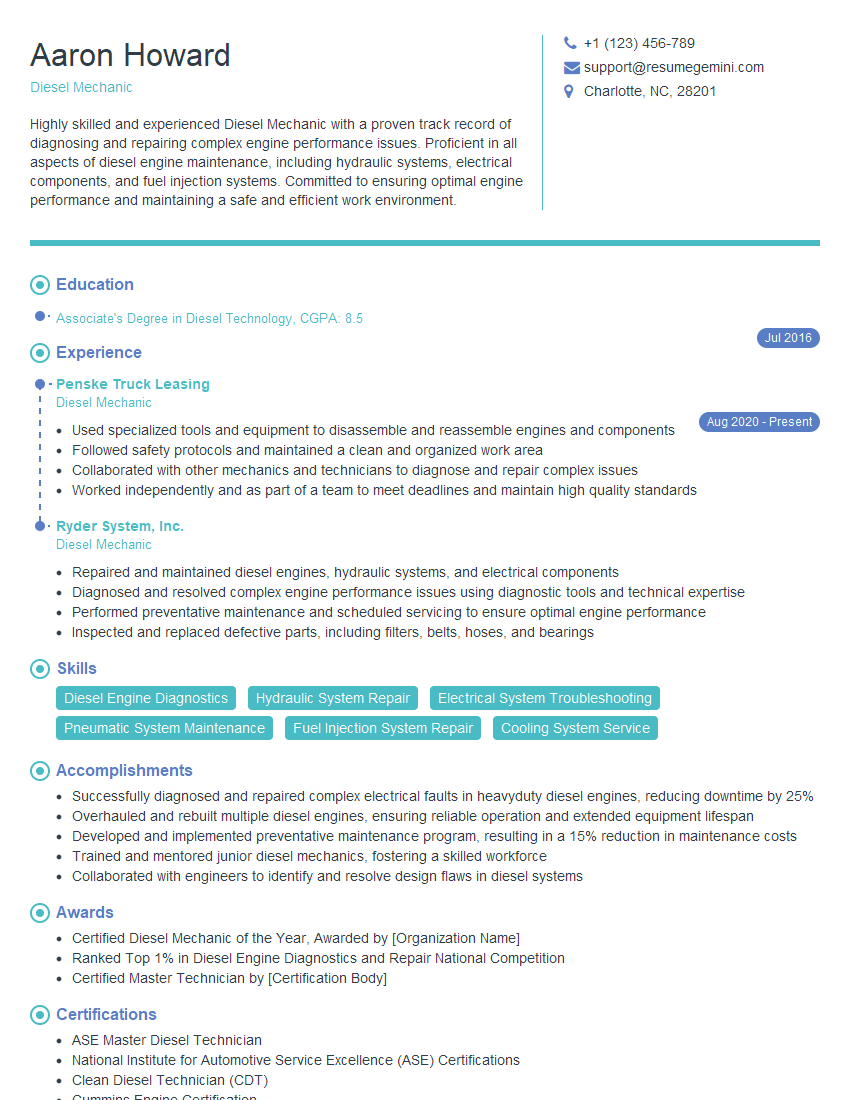
Diesel Mechanic Resume Sample
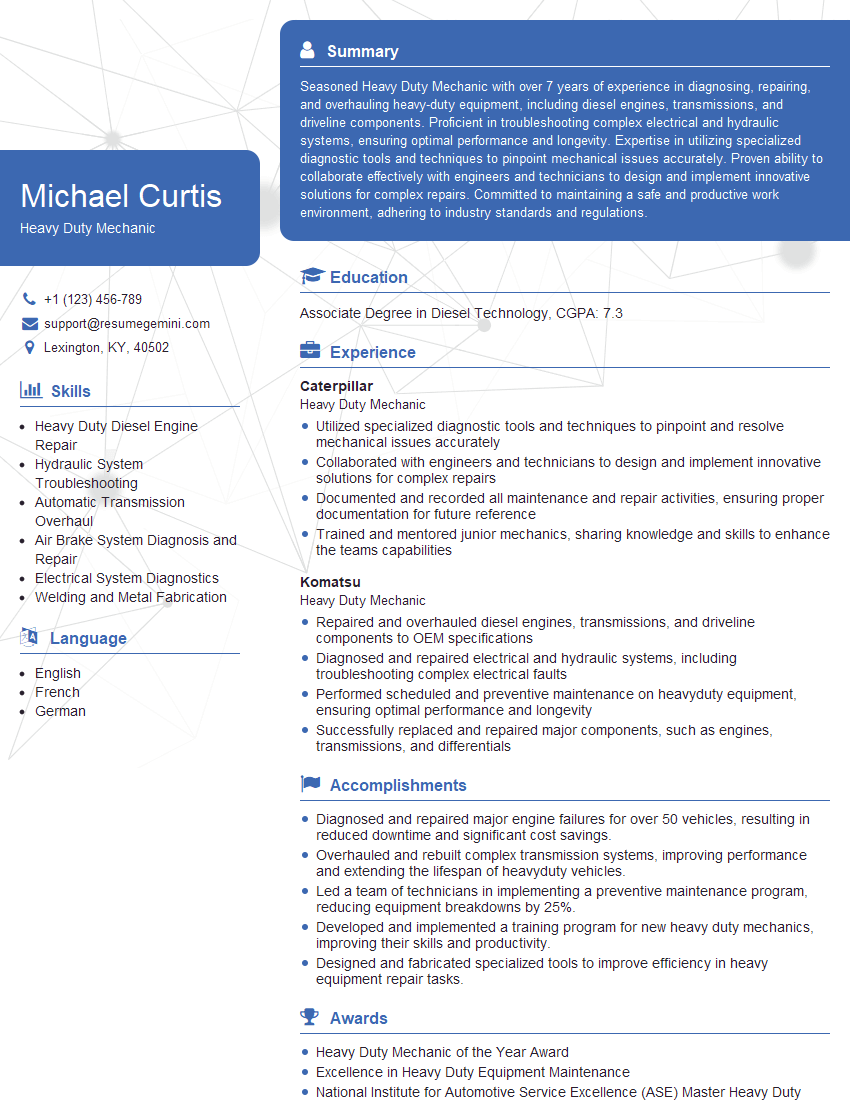
Heavy Duty Mechanic Resume Sample
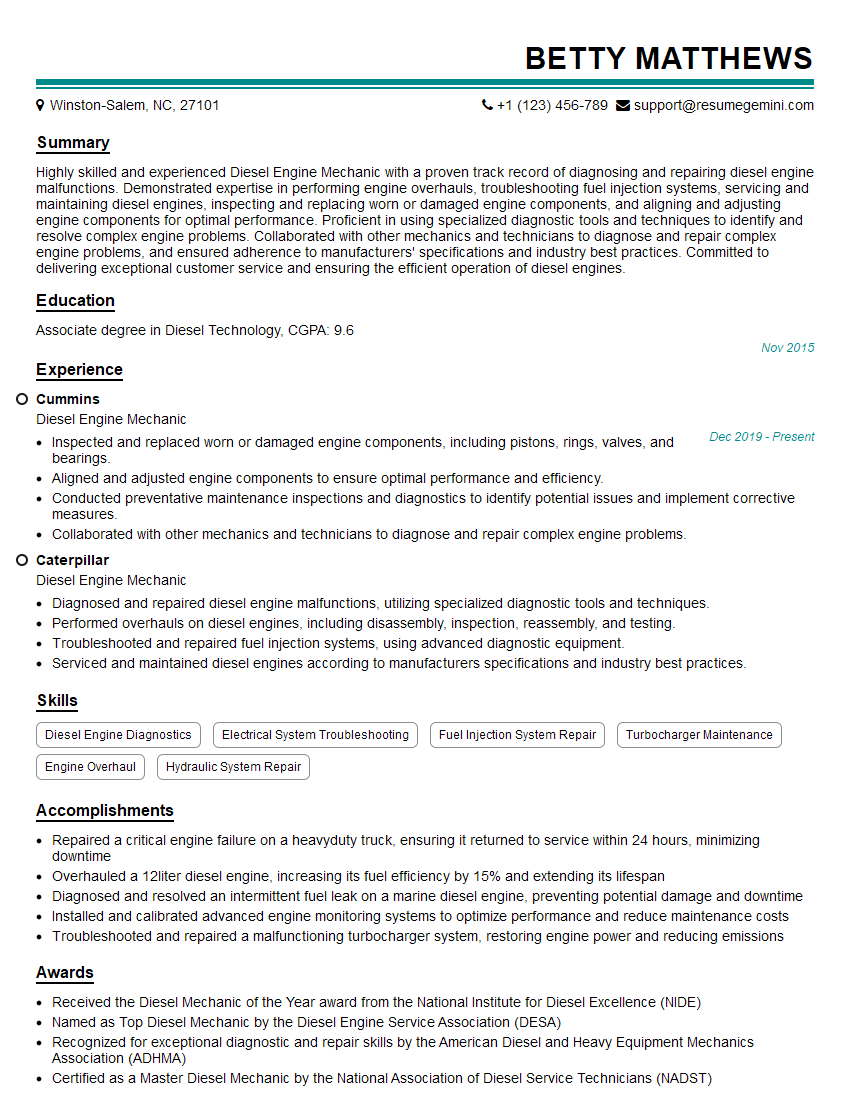
Diesel Engine Mechanic Resume Sample
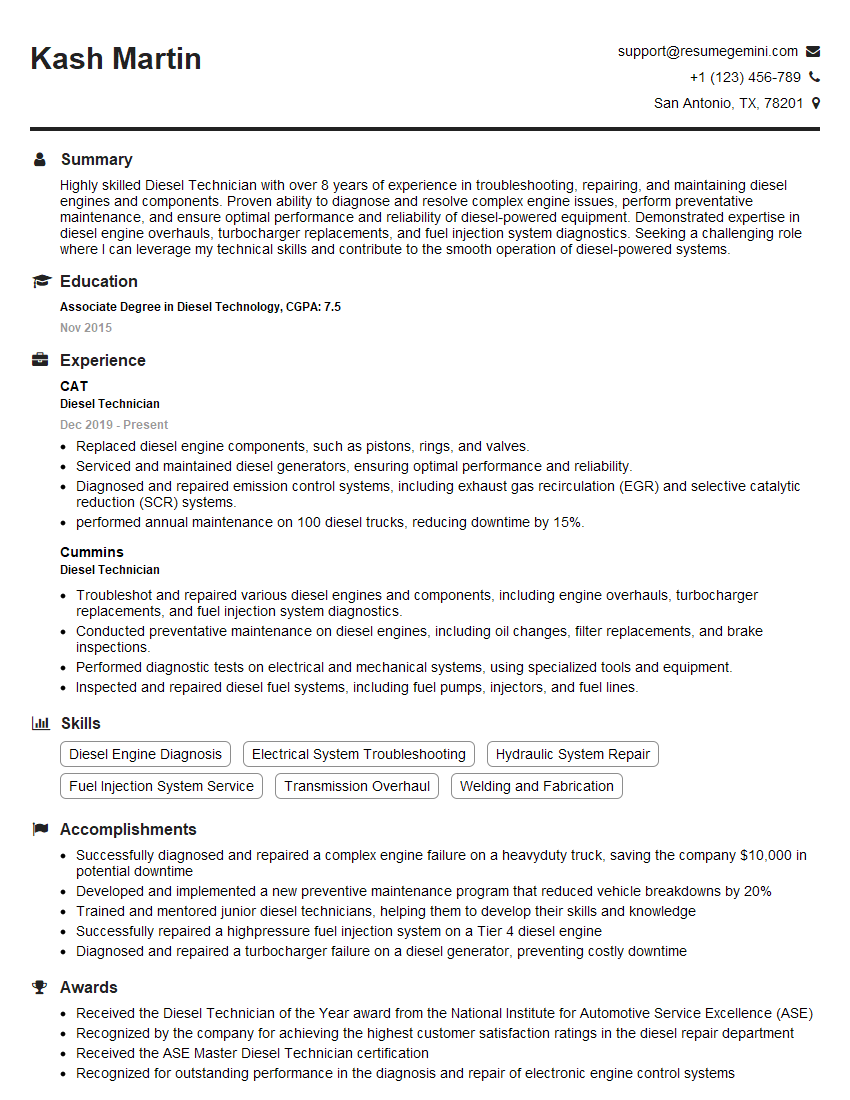
Diesel Technician Resume Sample
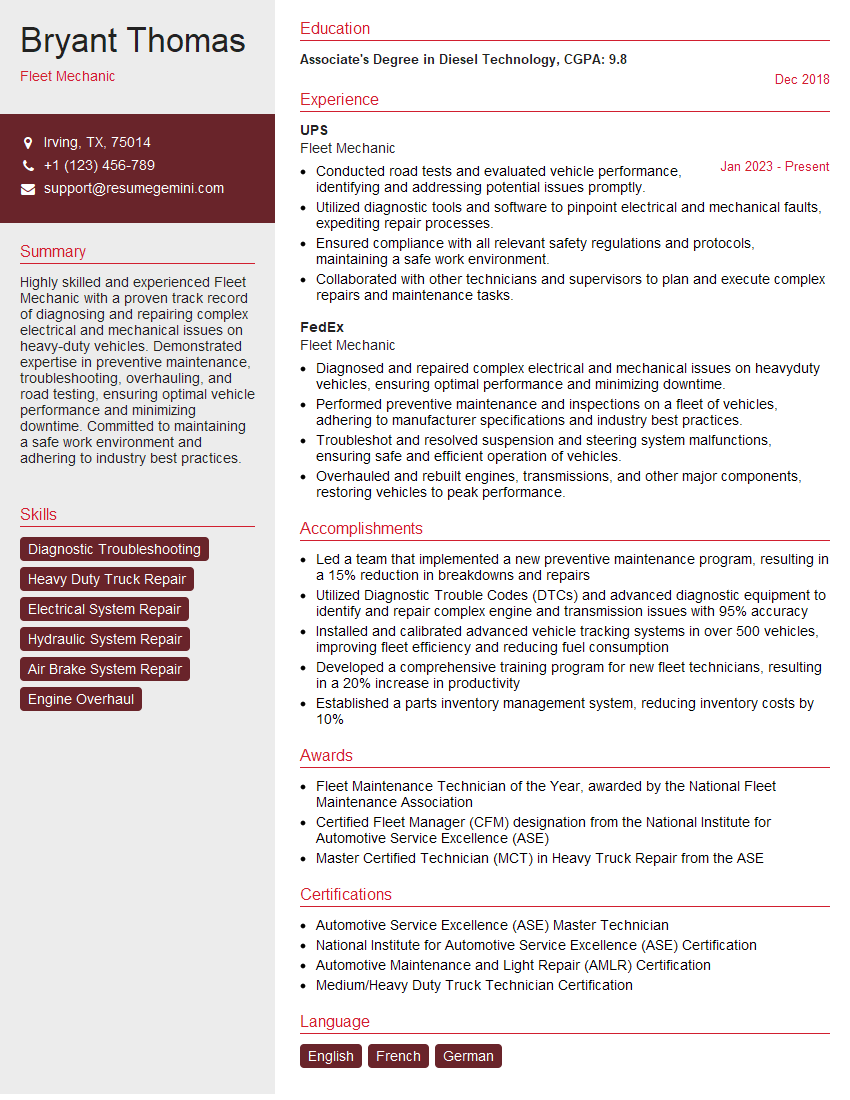
Fleet Mechanic Resume Sample

Marine Diesel Mechanic Resume Sample
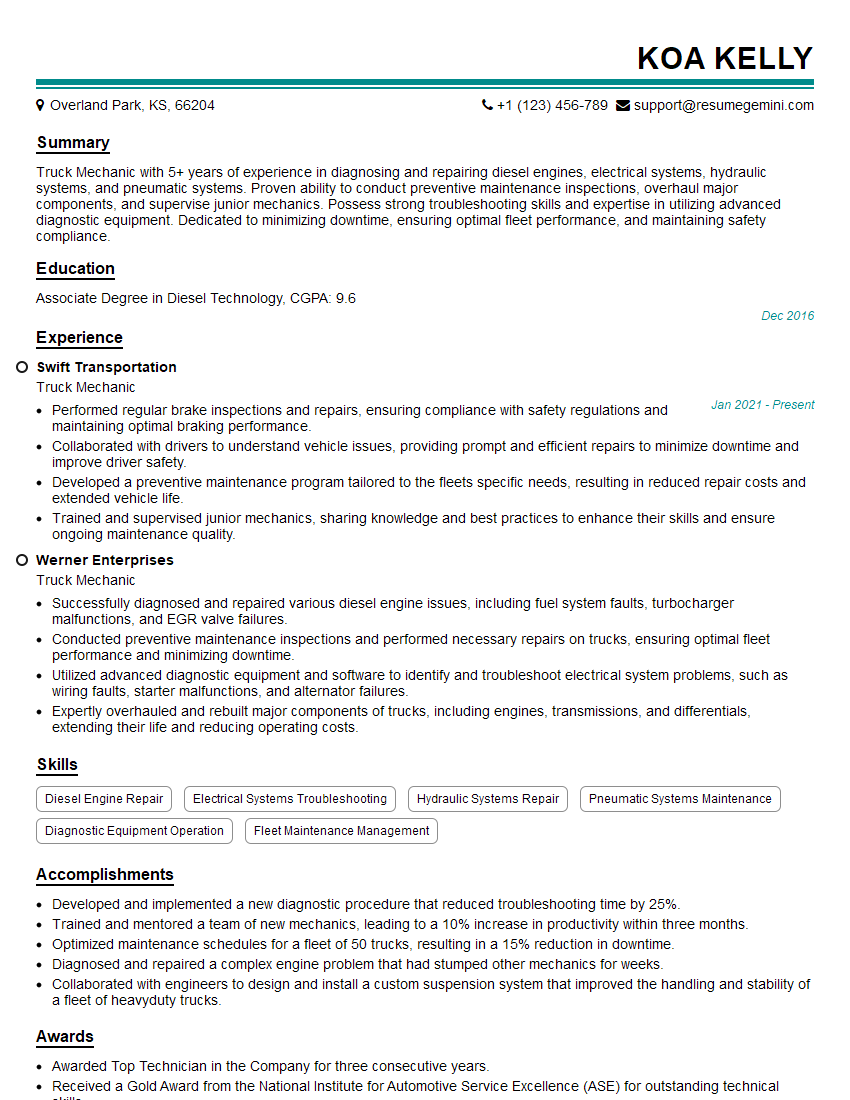
Truck Mechanic Resume Sample
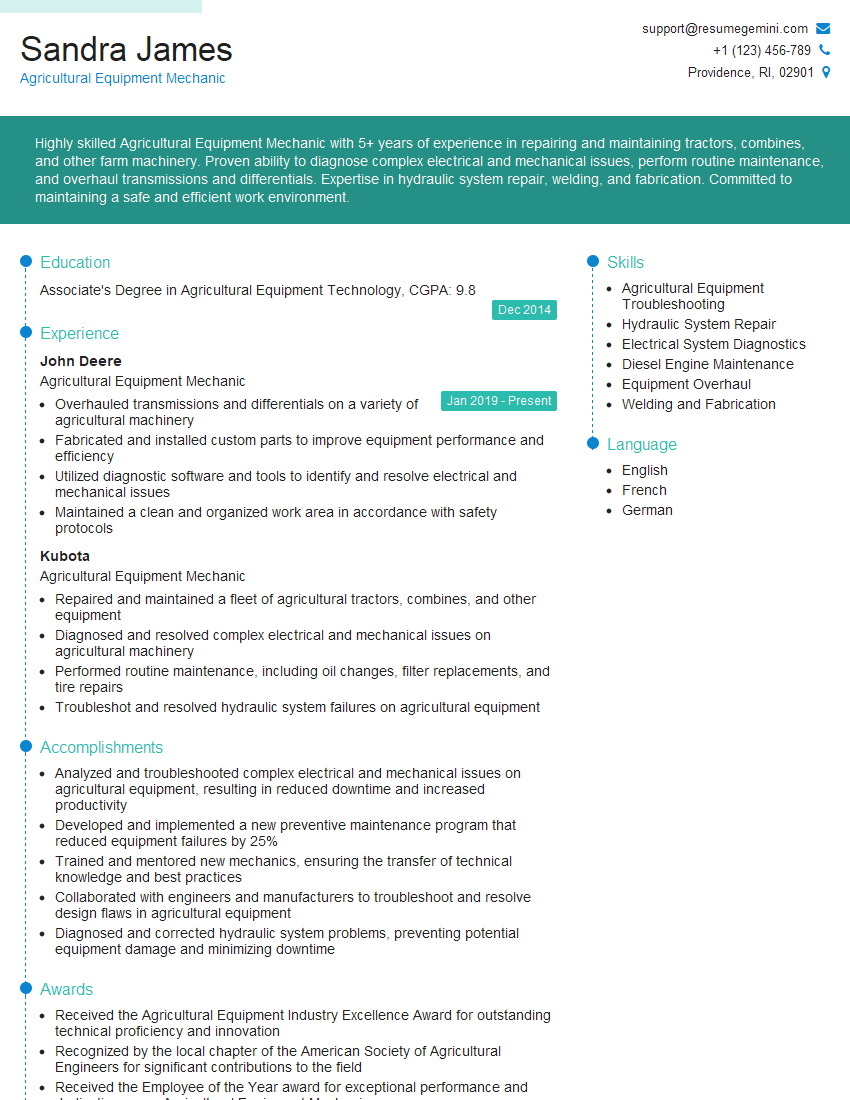
Agricultural Equipment Mechanic Resume Sample
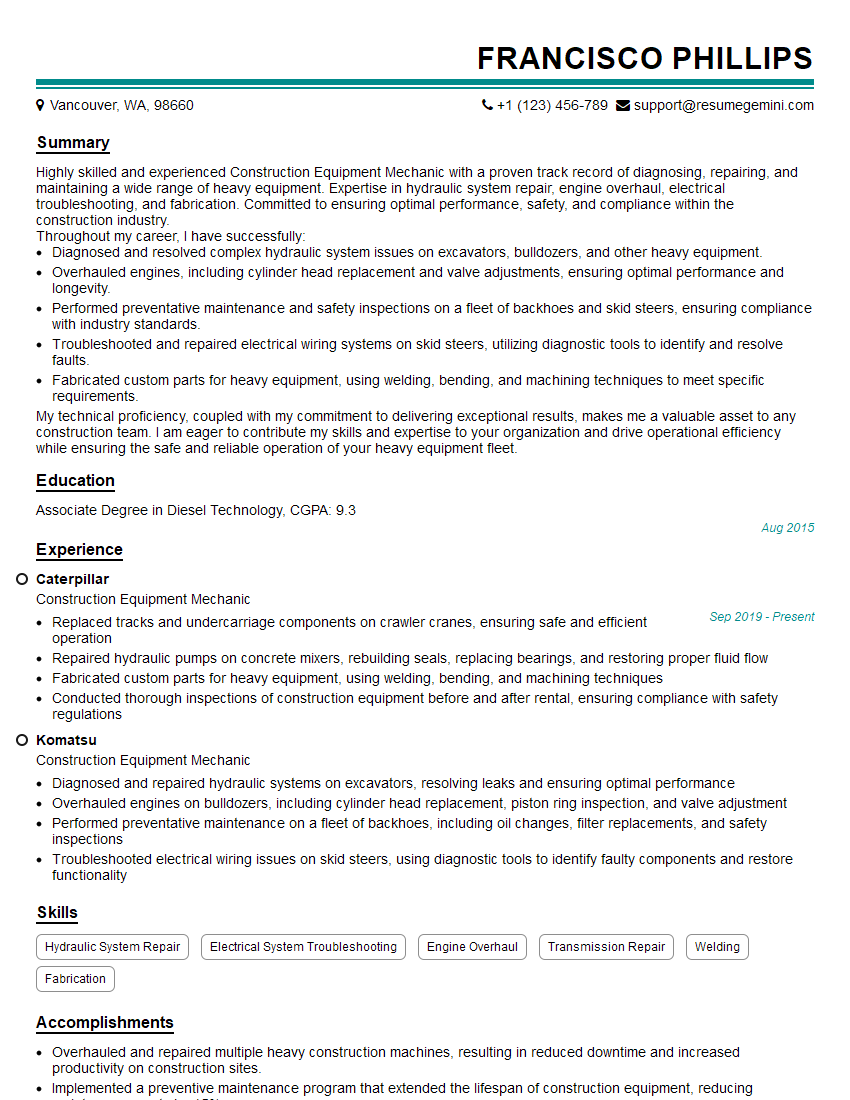
Construction Equipment Mechanic Resume Sample
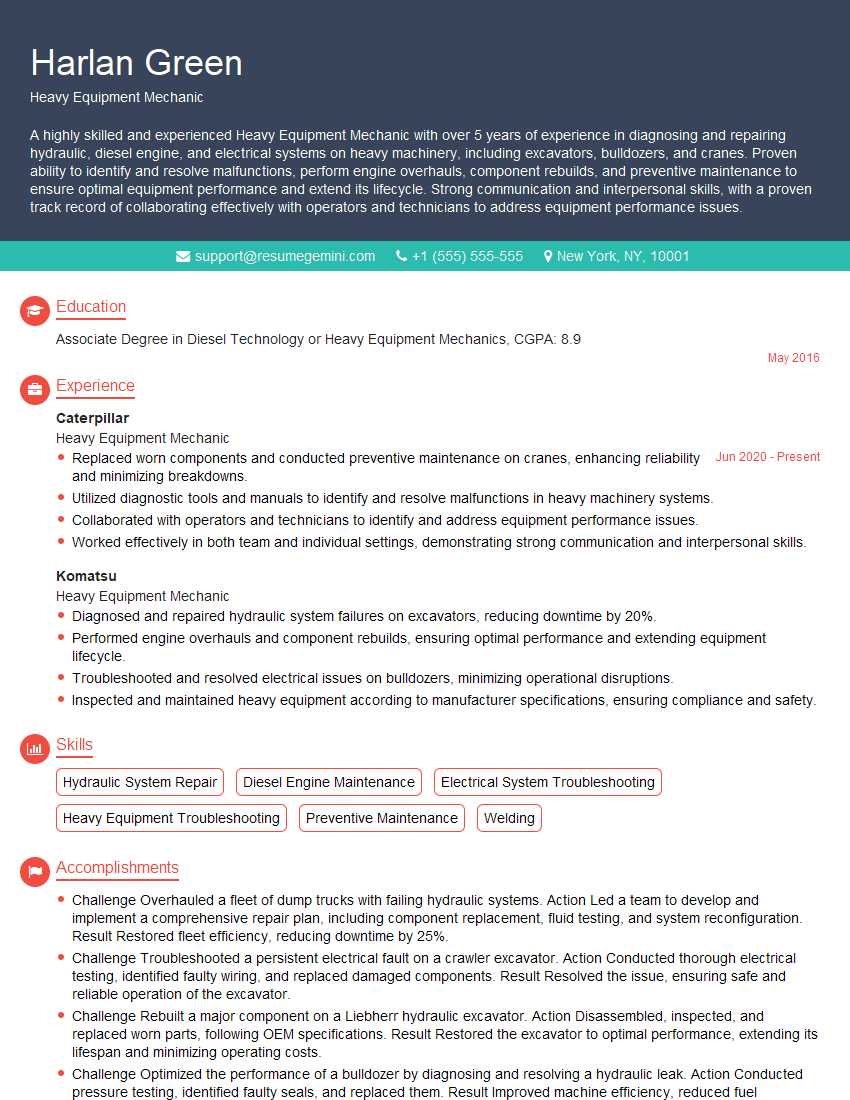
Heavy Equipment Mechanic Resume Sample
Explore more articles
Users Rating of Our Blogs
Share Your Experience
We value your feedback! Please rate our content and share your thoughts (optional).
What Readers Say About Our Blog
Very informative content, great job.
good