The right preparation can turn an interview into an opportunity to showcase your expertise. This guide to Digital Bindery interview questions is your ultimate resource, providing key insights and tips to help you ace your responses and stand out as a top candidate.
Questions Asked in Digital Bindery Interview
Q 1. Explain the difference between perfect binding and saddle stitching.
Perfect binding and saddle stitching are two common bookbinding methods, but they differ significantly in their construction and suitability for different projects. Think of it like this: perfect binding is like a paperback novel, while saddle stitching is more like a magazine.
Perfect Binding: This method involves gluing the edges of a block of pages together to create a smooth spine. The pages are then adhered to a cover. It’s ideal for books with a higher page count (typically over 48 pages) because it creates a durable, flat-opening book. Think of your favorite paperback novel – chances are it’s perfect bound. The process involves preparing the pages (often using a three-knife trimmer for precise cuts), applying adhesive to the spine, and then applying pressure to create a strong bond. The cover is then wrapped around this glued block.
Saddle Stitching: This simpler method involves folding pages in half and then using wire staples to fasten them through the spine. It’s best suited for documents with a lower page count (generally under 48 pages), like brochures or magazines, because the pages can’t lie completely flat. It’s a quick and cost-effective binding solution, but the spine is not as robust as perfect binding, and the book won’t lay as flat.
Q 2. Describe your experience with various binding methods (e.g., wire-O, spiral, thermal).
My experience encompasses a wide range of binding methods, each with its own strengths and weaknesses. I’ve extensively worked with:
- Wire-O Binding: Excellent for documents that need to lay flat, such as calendars or notebooks. The wire coils allow for 360-degree rotation, making it easy to turn pages. I’ve handled projects ranging from custom-designed notebooks to marketing materials requiring a high degree of flexibility.
- Spiral Binding (Coil Binding): Similar to Wire-O, but uses a plastic coil instead of metal. It’s a more economical option, and the plastic coils are less likely to snag. I’ve used this extensively for reports, presentations, and student projects that required frequent page turning.
- Thermal Binding: This method uses heat to melt a glue that binds the pages together. It creates a clean, professional look and is suitable for documents with a variety of page counts. I’ve utilized this method for producing high-quality reports and manuals, particularly those requiring a sleek, professional appearance.
I’m adept at selecting the appropriate binding method based on factors such as page count, budget, desired aesthetic, and the intended use of the final product. For instance, a high-page-count textbook would benefit from perfect binding, while a low-page-count promotional leaflet would be better suited to saddle stitching.
Q 3. What are the common issues encountered in digital bindery operations and how do you troubleshoot them?
Common issues in digital bindery operations often stem from paper jams, misaligned cuts, or improper adhesive application. Troubleshooting involves a systematic approach:
- Paper Jams: These can be caused by humidity affecting the paper, incorrect paper feeding, or obstructions in the machine. I address this by checking the paper path for obstructions, adjusting paper guides, and ensuring the proper humidity levels in the bindery.
- Misaligned Cuts: This can result in uneven pages or covers, affecting the overall presentation. I resolve this by checking the blade alignment, making sure the paper is properly fed, and calibrating the cutting machine using test runs.
- Improper Adhesive Application: Too little adhesive results in weak binding, while too much leads to messy results and possible machine malfunction. I address this by regularly inspecting and adjusting adhesive levels and checking for proper nozzle functionality, and ensuring the adhesive is correctly applied.
Effective troubleshooting involves careful observation, understanding the machine’s mechanics, and having a systematic approach to eliminate potential causes. In some cases, consultation with equipment manufacturers may be necessary for complex issues.
Q 4. How do you ensure the quality and consistency of bound products?
Maintaining quality and consistency involves a multi-faceted approach:
- Regular Machine Maintenance: Preventive maintenance, including cleaning and lubrication, is crucial to prevent malfunctions and ensure consistent performance.
- Quality Control Checks: Regular checks throughout the process, including examining cuts, binding quality, and cover alignment, identify and correct issues before they become widespread problems.
- Standard Operating Procedures (SOPs): Clearly defined SOPs ensure that every step is performed consistently, reducing variability and enhancing quality.
- Operator Training: Well-trained operators are essential for consistent, high-quality output. Regular training keeps them updated on best practices and new technologies.
I approach quality control as an ongoing process, not just a final check. By anticipating potential problems and building in quality checks throughout the workflow, we can ensure consistently high-quality bound products.
Q 5. Describe your experience with different types of paper and their suitability for various binding methods.
Paper selection is crucial for successful binding. Different papers have varying thicknesses, textures, and finishes, influencing their suitability for different binding methods.
- Perfect Binding: Requires paper that can withstand the gluing process and hold its shape. Heavier papers generally work well. Coated papers can look very professional but might be challenging to glue.
- Saddle Stitching: Works well with a wide variety of paper weights, as long as the paper isn’t too thick to easily fold and staple. Light to medium weight papers are commonly used.
- Wire-O and Spiral Binding: These methods can handle heavier paper stock, but the holes punched for the binding mechanism need to be considered. Paper that’s too thin might tear easily.
- Thermal Binding: Generally performs best with papers that readily absorb the thermal adhesive, while too thick a stock may not be fully bonded.
My experience has taught me to carefully consider the paper weight, finish, and type when selecting the appropriate binding method. I often collaborate with clients to choose the ideal paper for their specific needs and binding preferences.
Q 6. What safety precautions do you follow when operating bindery equipment?
Safety is paramount in bindery operations. My adherence to safety protocols includes:
- Proper Training: Thorough training on the operation of all bindery equipment, including safety procedures and emergency shut-off protocols.
- Personal Protective Equipment (PPE): Consistent use of safety glasses, gloves, and other appropriate PPE to prevent injuries from sharp objects or chemicals.
- Machine Guards: Ensuring that all machine guards are in place and functioning correctly to prevent accidental contact with moving parts.
- Regular Inspections: Routine inspections of equipment to identify and address potential safety hazards.
- Emergency Procedures: Familiarity with and adherence to established emergency procedures in the event of accidents or equipment malfunctions.
I treat safety as a non-negotiable aspect of my work, proactively addressing potential risks and adhering to the highest safety standards.
Q 7. How do you manage workflow efficiency in a high-volume bindery environment?
Managing workflow efficiency in a high-volume bindery environment requires a combination of planning, automation, and process optimization.
- Job Prioritization: Efficient scheduling and prioritization of jobs based on deadlines and complexity.
- Automation: Utilizing automated equipment whenever possible to reduce manual labor and increase throughput.
- Lean Principles: Implementing lean manufacturing principles to identify and eliminate waste in the production process.
- Process Mapping: Regular review and optimization of workflow processes to identify bottlenecks and improve efficiency.
- Teamwork: Effective communication and collaboration among the bindery team to ensure smooth workflow and quick problem resolution.
In a fast-paced bindery, efficient workflow is key to meeting deadlines and maintaining quality. My approach involves a proactive and adaptable strategy, constantly monitoring processes and making adjustments as needed to maximize output and efficiency.
Q 8. Explain your experience with pre-flighting and quality checks before binding.
Preflighting and quality checks are crucial before binding to ensure a flawless final product. Think of it like a pre-flight checklist for an airplane – you wouldn’t take off without it! My process involves a multi-step verification: First, I meticulously review the digital files for any errors such as missing pages, incorrect pagination, or low-resolution images. This often involves using specialized software like Acrobat Pro to check for inconsistencies and potential problems. Secondly, I conduct a physical inspection of the printed sheets, checking for any print defects like smudges, color mismatches, or misaligned text. Finally, I perform a test bind on a small sample to identify any potential issues with the chosen binding method before processing the entire batch. For example, I once caught a subtle misalignment in the page layout during preflighting that would have resulted in significant problems during perfect binding.
Q 9. How familiar are you with different finishing techniques, such as die-cutting or embossing?
I’m highly proficient in various finishing techniques. Die-cutting, for example, allows for intricate shapes and designs, like creating custom boxes or unique promotional materials. I have experience operating both manual and automated die-cutting machines, ensuring precise cuts and minimizing waste. Embossing, on the other hand, adds a three-dimensional texture, enhancing the visual appeal and tactile quality of the finished product. I’m familiar with both blind embossing (no ink) and registered embossing (with ink). I’ve worked on projects ranging from embossed business cards to complex book covers with intricate designs. Other techniques I’m comfortable with include foil stamping, UV coating, and varnishing, all of which enhance the final product’s appearance and durability.
Q 10. Describe your experience with automated bindery systems.
My experience with automated bindery systems is extensive. I’m comfortable operating and maintaining high-speed booklet makers, perfect binders, saddle stitchers, and other automated equipment. For instance, I’ve worked extensively with Muller Martini systems, mastering their programming and troubleshooting capabilities. Understanding the nuances of these systems is vital for optimizing production speed, minimizing downtime, and producing high-quality results. I’m not just a user; I understand the underlying mechanics and can perform preventative maintenance, improving overall efficiency and reducing potential disruptions. For example, knowing when to replace specific parts based on usage and anticipating potential problems prevents costly breakdowns during peak production periods.
Q 11. How do you handle unexpected equipment malfunctions or breakdowns?
Equipment malfunctions are inevitable in any high-volume production environment. My approach is proactive rather than reactive. First, I’ll attempt basic troubleshooting based on my understanding of the machine. This may involve checking power connections, clearing jams, or reviewing operational logs for error codes. If the issue is beyond my immediate expertise, I have a well-established protocol. This involves contacting the equipment manufacturer’s support team, consulting detailed manuals, or reaching out to experienced colleagues within the bindery for assistance. Prioritizing safety is key, and I will always ensure the machine is powered down and secured before attempting any repair or maintenance. I document all malfunctions and repairs meticulously, using this data to identify potential patterns and improve preventative maintenance strategies.
Q 12. How do you maintain accurate inventory of binding materials?
Accurate inventory management is paramount for efficient bindery operations. We utilize a combination of physical inventory checks and digital inventory management systems. This helps us track the quantity of materials on hand (e.g., different types of covers, adhesives, thread, etc.), monitor usage rates, and anticipate potential shortages. This enables timely ordering and prevents production delays. For example, our digital system automatically generates purchase orders when stock levels fall below a predefined threshold. We also conduct regular cycle counts to verify the accuracy of our inventory records against physical stock. This helps catch discrepancies early and improve the accuracy of our inventory data.
Q 13. What is your experience with different types of finishing glues and adhesives?
My experience encompasses a wide range of finishing glues and adhesives, including PUR (Polyurethane Reactive), EVA (Ethylene Vinyl Acetate), and hot melt adhesives. Each adhesive has its own properties and applications. PUR, for example, offers superior strength and flexibility, ideal for perfect binding demanding books or publications. EVA is more cost-effective and suitable for less demanding applications. Understanding the properties of each adhesive is essential for selecting the right one for the job. I consider factors such as the type of paper, binding method, and desired durability when making this decision. Incorrect adhesive selection can lead to poor binding, page slippage, or even damage to the equipment.
Q 14. How do you ensure accurate collation and gathering of pages before binding?
Accurate collation and gathering are fundamental to the binding process. Errors here can lead to significant rework and wasted materials. We employ various methods to ensure accuracy, including automated collation systems and manual checks. Automated systems use sensors and mechanisms to verify the sequence of pages, minimizing the risk of errors. However, manual checks are always crucial, especially for smaller or more complex projects. We regularly train our staff on proper collation techniques and employ quality control measures at each stage of the process to identify and correct any errors early on. Imagine a deck of cards—it would be difficult to play a game if the cards were shuffled incorrectly, and similarly, a miscollated book is frustrating for both the printer and the reader.
Q 15. Describe your experience with troubleshooting paper jams and misfeeds.
Troubleshooting paper jams and misfeeds in a digital bindery requires a systematic approach. It’s not just about fixing the immediate problem; it’s about understanding the root cause to prevent recurrence. My process begins with a visual inspection – carefully checking for obstructions like staples, debris, or folded sheets. Then, I’ll consult the machine’s manual for troubleshooting guides specific to the error codes displayed.
- Common Jam Locations: Paper jams frequently occur at rollers, feeders, and the output tray. I’ve learned to systematically check these areas first, carefully removing any jammed paper without tearing it, to avoid further damage.
- Misfeed Diagnosis: Misfeeds, where paper doesn’t feed correctly, are often caused by issues with paper quality (too thick, too thin, damp), incorrect paper settings in the machine, or problems with the feeder rollers. I carefully check the paper type against machine settings and adjust accordingly. I might also clean the rollers to ensure proper grip.
- Preventive Maintenance: Regularly cleaning the machine, including rollers and sensors, is crucial. This significantly reduces the frequency of jams and misfeeds. I always ensure this is done according to the manufacturer’s specifications.
For example, I once resolved a recurring misfeed on a high-speed booklet maker by noticing the feeder rollers were slightly worn. Replacing them solved the problem completely.
Career Expert Tips:
- Ace those interviews! Prepare effectively by reviewing the Top 50 Most Common Interview Questions on ResumeGemini.
- Navigate your job search with confidence! Explore a wide range of Career Tips on ResumeGemini. Learn about common challenges and recommendations to overcome them.
- Craft the perfect resume! Master the Art of Resume Writing with ResumeGemini’s guide. Showcase your unique qualifications and achievements effectively.
- Don’t miss out on holiday savings! Build your dream resume with ResumeGemini’s ATS optimized templates.
Q 16. How familiar are you with using different types of cutting and trimming equipment?
My experience encompasses a wide range of cutting and trimming equipment, from basic guillotines to sophisticated automated cutters. I’m proficient with various types, including:
- Guillotines: I’m skilled in operating both manual and automated guillotines, ensuring precise cuts and safe operation. I understand the importance of blade sharpness and proper clamping for accurate results.
- Three-Knife Trimmers: I’m familiar with these machines, understanding their capabilities for trimming multiple stacks simultaneously and the need for precise setup to achieve consistent results.
- Automated Cutters: I have experience with programmable cutters, capable of complex cutting patterns and high-volume production. This includes setting up cutting programs and monitoring machine performance.
I prioritize safety above all else when using this equipment and always follow strict safety procedures. For example, I always ensure the blade is properly secured and never attempt to adjust it while the machine is running. I’m also well-versed in blade maintenance and replacement to ensure consistent, clean cuts.
Q 17. What is your experience with using different bindery software and systems?
My experience with bindery software and systems is extensive. I’m proficient with various prepress and workflow software, including those used for imposition, job ticketing, and production tracking. I can confidently use these programs to:
- Imposition Software: Create efficient imposition layouts for various binding methods, minimizing waste and maximizing throughput.
- Job Ticketing Systems: Manage jobs from order entry through to completion, tracking progress and ensuring timely delivery.
- MIS (Management Information Systems): Monitor production metrics, generate reports, and identify areas for improvement in efficiency and cost control. This helps us optimize workflow and make data-driven decisions.
I’m adept at learning new software and integrating it into existing workflows. My experience includes working with both standalone bindery software and integrated systems that connect with prepress and print management software.
Q 18. How do you prioritize tasks in a fast-paced bindery environment?
Prioritizing tasks in a fast-paced bindery environment requires a combination of skill and planning. My approach is based on a few key principles:
- Urgency and Deadline: I prioritize jobs with the tightest deadlines first. This ensures timely delivery and minimizes potential delays.
- Job Complexity: Jobs requiring specialized equipment or techniques are prioritized based on available resources and scheduling constraints.
- Job Size: Larger jobs that consume significant machine time are scheduled to optimize machine utilization and minimize downtime.
- Communication: Constant communication with team members is critical to ensure smooth workflow and to handle any unforeseen issues or emergencies.
I often use Kanban boards or similar visual management tools to track progress and identify potential bottlenecks. This provides a clear overview of tasks and allows for efficient adjustments.
Q 19. How do you manage and maintain the cleanliness and organization of your work area?
Maintaining a clean and organized workspace is paramount in a bindery. It’s essential for efficiency, safety, and quality. My approach involves:
- Regular Cleaning: I regularly clean my work area, removing debris, paper scraps, and any other potential hazards. This includes cleaning machines according to manufacturer guidelines.
- Organized Storage: I maintain a system for storing tools, supplies, and finished products, keeping everything neatly arranged and easily accessible. This prevents unnecessary searching and wasted time.
- Preventive Maintenance: I proactively address any potential issues with machines or tools before they become major problems.
- 5S Methodology: I try to incorporate aspects of the 5S methodology (Sort, Set in Order, Shine, Standardize, Sustain) to maintain a consistently clean and organized workspace.
A clean workspace not only prevents accidents but also improves workflow, reduces errors, and enhances the overall quality of the finished product.
Q 20. Explain your understanding of color management within the bindery process.
Color management in bindery might not seem as critical as in prepress or printing, but it’s still important, particularly for projects involving specialty papers or cover stock. It’s essential to ensure color consistency between the printed pages and the cover. My understanding involves:
- Substrate Consideration: Different paper types and finishes affect color appearance. Understanding how a specific paper will impact color is vital. I consult color charts and profiles for specific paper stocks.
- Matching Covers: When binding documents with covers, I need to ensure color matching between the cover and the inside pages. This requires careful color calibration and proofing.
- Lighting Consistency: Ensuring consistent lighting conditions when inspecting color is crucial to avoid discrepancies. This is done under standardized lighting conditions.
While bindery doesn’t involve color correction in the same way as prepress, awareness of color variations due to substrates is vital for achieving visually appealing and consistent final products.
Q 21. How do you handle customer requests or special binding requirements?
Handling customer requests and special binding requirements is a key aspect of my role. My approach involves:
- Clear Communication: I always ensure I thoroughly understand the customer’s needs, asking clarifying questions to avoid any misunderstandings.
- Feasibility Assessment: I assess the feasibility of the requested binding method, considering the materials, equipment, and time constraints.
- Alternative Solutions: If a specific requirement is not feasible, I propose alternative solutions that meet the customer’s needs while remaining practical.
- Prototyping: For complex or unusual binding requests, I might create a prototype to ensure the final product meets the customer’s expectations.
For example, I once received a request for a unique Japanese binding technique. After researching the method and ensuring we had the necessary materials, I successfully completed the project, exceeding the customer’s expectations and expanding our bindery’s capabilities. Building that rapport with clients is key to my success.
Q 22. What is your experience with different types of covers and cover materials?
My experience with various cover types and materials is extensive, encompassing a wide range from standard paperboard to more specialized options like linen, leatherette, and even plastic-coated substrates. I’m familiar with the properties of each, understanding their impact on the final product’s durability, aesthetic appeal, and cost-effectiveness. For instance, I’ve worked extensively with different weights and finishes of paperboard – from lightweight options suitable for brochures to thicker, more robust boards ideal for hardcover books. With linen covers, I understand the importance of proper adhesive selection to ensure a strong bond and prevent delamination. Similarly, with leatherette, the focus is on achieving a smooth, consistent finish, while plastic-coated covers often require specialized finishing techniques to avoid imperfections.
- Paperboard: I’ve worked with various weights (e.g., 80lb, 100lb, 12pt), finishes (e.g., matte, gloss, UV coating), and textures.
- Linen: Experienced in handling both traditional linen and synthetic alternatives, focusing on achieving a high-quality, durable binding.
- Leatherette: Proficient in selecting appropriate adhesives and techniques for a clean, wrinkle-free finish.
- Plastic-coated substrates: Skilled in managing potential challenges like bubbling or uneven coating during the binding process.
Choosing the right cover material is crucial; it depends on the project’s intended use, budget, and aesthetic requirements. My expertise allows me to advise clients on the best choice for their specific needs, ensuring a high-quality and visually appealing end product.
Q 23. How do you measure the productivity and efficiency of the bindery processes?
Measuring bindery productivity and efficiency requires a multifaceted approach. I typically use a combination of Key Performance Indicators (KPIs) to track our progress. These include:
- Units Produced per Hour (UPH): This is a fundamental measure, calculating the number of books, brochures, or other products bound per hour per machine or operator. Tracking UPH helps identify bottlenecks and areas for improvement.
- Throughput Time: This measures the total time a job takes to move through the entire bindery process, from receiving materials to final packaging. Reducing throughput time improves overall efficiency.
- Waste Rate: This KPI tracks the amount of wasted materials (paper, covers, etc.) relative to the total produced. Minimizing waste is crucial for profitability and environmental responsibility. I often employ techniques like careful job planning, accurate cutting, and precise machine setup to decrease waste.
- Defect Rate: This measure assesses the percentage of finished products containing defects like misaligned covers, improperly folded pages, or poor adhesive bonding. A low defect rate points to a well-managed and efficient process.
- Machine Uptime: This tracks the percentage of time a machine is actively producing, factoring in downtime for maintenance, repairs, or operator breaks. High uptime suggests efficient maintenance and operator management.
By regularly monitoring these KPIs, identifying trends, and implementing corrective actions, I contribute to a continuously improving bindery workflow. For example, a sudden drop in UPH might indicate a need for machine maintenance or operator retraining.
Q 24. Describe a time you had to solve a complex bindery problem. What was your approach?
In a previous role, we faced a challenge with a large-scale book printing project where the chosen cover material (a textured linen) was proving exceptionally difficult to adhere to the text block. The adhesive we initially used consistently failed, resulting in high defect rates and significant delays. My approach was systematic:
- Problem Definition: I meticulously documented the issues, including the specific type of adhesive used, the environmental conditions during the binding process (temperature, humidity), and the nature of the defects (e.g., delamination, weak adhesion).
- Root Cause Analysis: I investigated potential causes, including improper adhesive application, insufficient drying time, and the material properties of both the linen and the text block. We tested different surface treatments for the linen to assess their effect on adhesion.
- Solution Development and Testing: We experimented with several different types of adhesives, varying their application methods and drying times. We carefully monitored the results at each stage of the experiment.
- Implementation and Monitoring: Once a suitable adhesive was identified and a reliable process developed, we implemented it on a small test run before scaling up to the entire project. Continuous monitoring ensured consistent adhesion throughout the remaining production.
The solution involved a combination of switching to a more aggressive, yet still safe, adhesive and adjusting our drying process. This experience highlighted the importance of methodical problem-solving and the necessity of rigorous testing in the bindery process.
Q 25. How do you stay up-to-date with the latest technologies and trends in digital bindery?
Staying updated in the dynamic field of digital bindery requires proactive engagement with industry resources. I consistently utilize several methods:
- Industry Publications and Websites: I regularly read trade magazines and visit websites dedicated to print finishing and bookbinding. This provides insights into the latest technologies, materials, and industry best practices.
- Trade Shows and Conferences: Attending industry events allows me to network with other professionals and witness demonstrations of new equipment and software firsthand. I actively participate in workshops and seminars offered at these conferences.
- Professional Organizations: I maintain membership in relevant professional associations, benefiting from access to educational resources, networking opportunities, and industry news.
- Online Courses and Webinars: I take advantage of online learning platforms that offer courses and webinars on digital bindery techniques, software, and new technologies.
- Vendor Partnerships: Maintaining close relationships with suppliers of bindery equipment and materials keeps me informed about the latest product developments and innovations.
This multifaceted approach ensures I remain current with advancements and can effectively implement improvements in my workplace. Continuous learning is crucial for success in this ever-evolving field.
Q 26. What are your strengths and weaknesses in relation to digital bindery operations?
My strengths in digital bindery operations include my deep understanding of various binding methods (perfect binding, saddle stitching, wire-o, etc.), my proficiency in operating and maintaining different bindery equipment, and my strong problem-solving abilities. I also excel at streamlining workflows, optimizing processes for efficiency, and ensuring high-quality output. I am adept at training staff on proper procedures and maintaining safety standards.
One area I’m continually working to improve is my expertise in the newest automated systems. While I am familiar with their functionality, hands-on experience with cutting-edge automation systems would be valuable in further enhancing my skills. I am actively seeking opportunities to expand my knowledge in this domain through training and collaborative projects.
Q 27. What are your salary expectations?
My salary expectations are in line with my experience and the requirements of this position. I am open to discussing a competitive compensation package based on the full details of the role and the company’s compensation structure. I’m more interested in a challenging and rewarding role than simply focusing on a specific number.
Q 28. Why are you interested in this specific Digital Bindery position?
I am highly interested in this Digital Bindery position due to several factors. Firstly, [Company Name]’s reputation for high-quality work and innovative approach to print finishing aligns perfectly with my professional values and aspirations. Secondly, the opportunity to work with [mention specific equipment, software, or technologies mentioned in the job description] is particularly exciting, as it would allow me to enhance my skills and contribute to a cutting-edge operation. Finally, the opportunity to be part of a dynamic team focused on excellence in digital bindery is a compelling aspect of this position. I believe my skills and experience would be a valuable asset to your team and I am eager to contribute to your continued success.
Key Topics to Learn for a Digital Bindery Interview
- Workflow and Automation: Understanding the digital workflow from pre-press to final product, including automation tools and software integrations. Consider the practical applications in streamlining processes and increasing efficiency.
- File Formats and Conversions: Mastering common file formats used in digital bindery (PDF, TIFF, etc.) and their conversion processes. Explore challenges related to file compatibility and resolution issues, and how to troubleshoot them.
- Finishing Techniques: Become familiar with various digital finishing techniques like cutting, creasing, folding, and binding. Understand the practical implications of each technique on the final product’s quality and aesthetic appeal.
- Print Production and Quality Control: Explore the principles of color management and quality control in digital printing. Develop problem-solving skills related to color discrepancies, print defects, and ensuring consistent output.
- Software and Technology: Familiarize yourself with industry-standard software and technologies used in digital bindery operations. This could include pre-press software, digital printing equipment controllers, and finishing machine interfaces.
- Project Management and Communication: Understand the importance of effective project management in a digital bindery environment, including client communication, scheduling, and meeting deadlines. Develop skills in problem-solving and collaborating with teams.
Next Steps
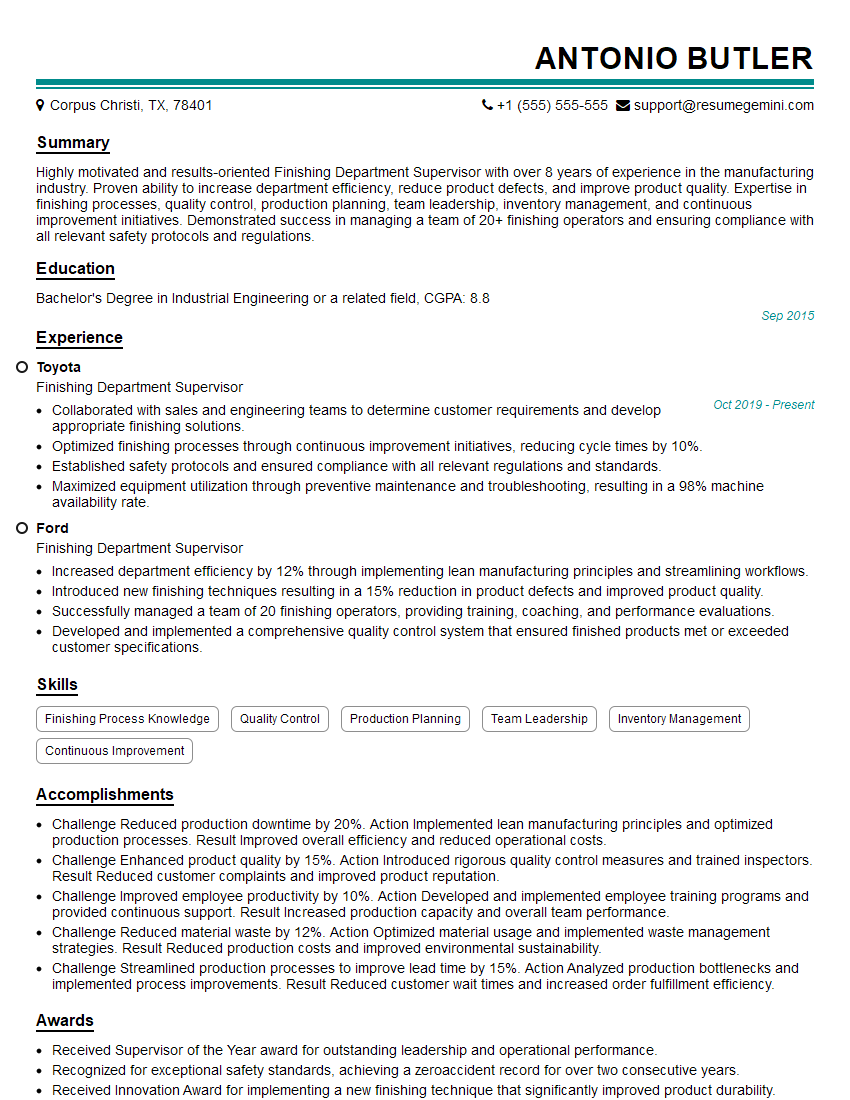
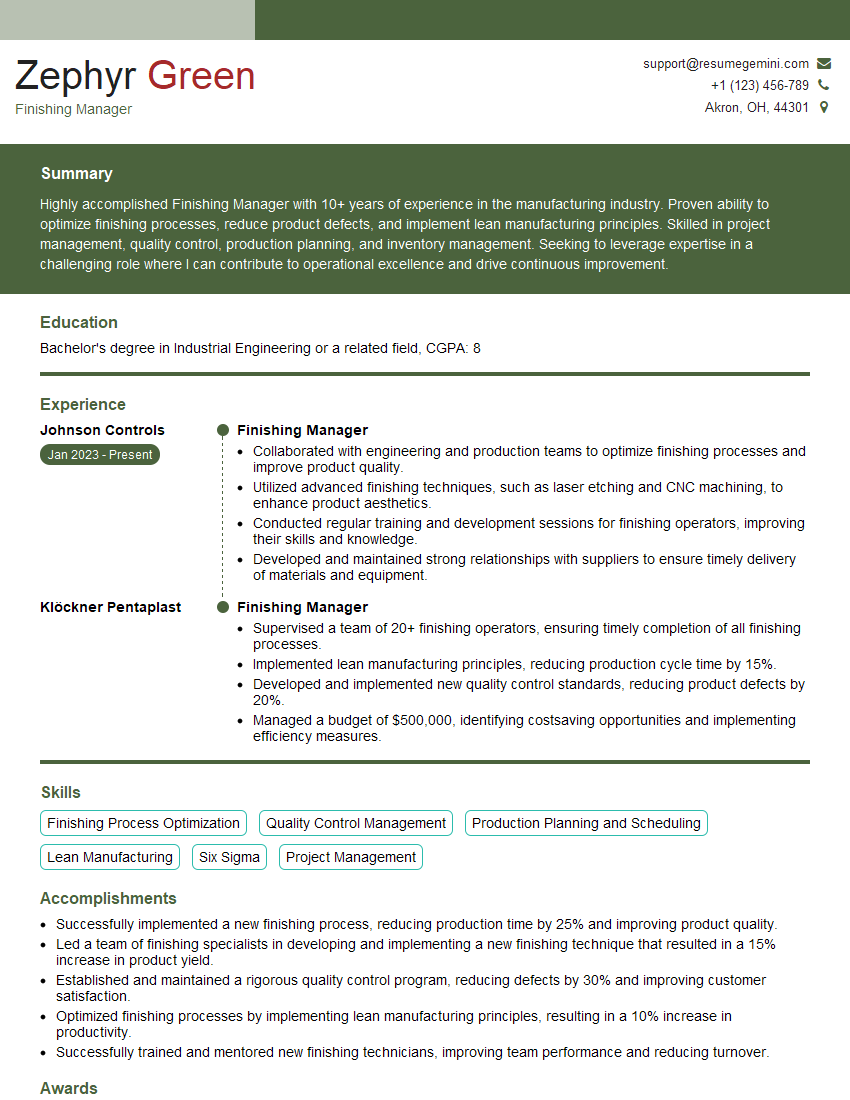
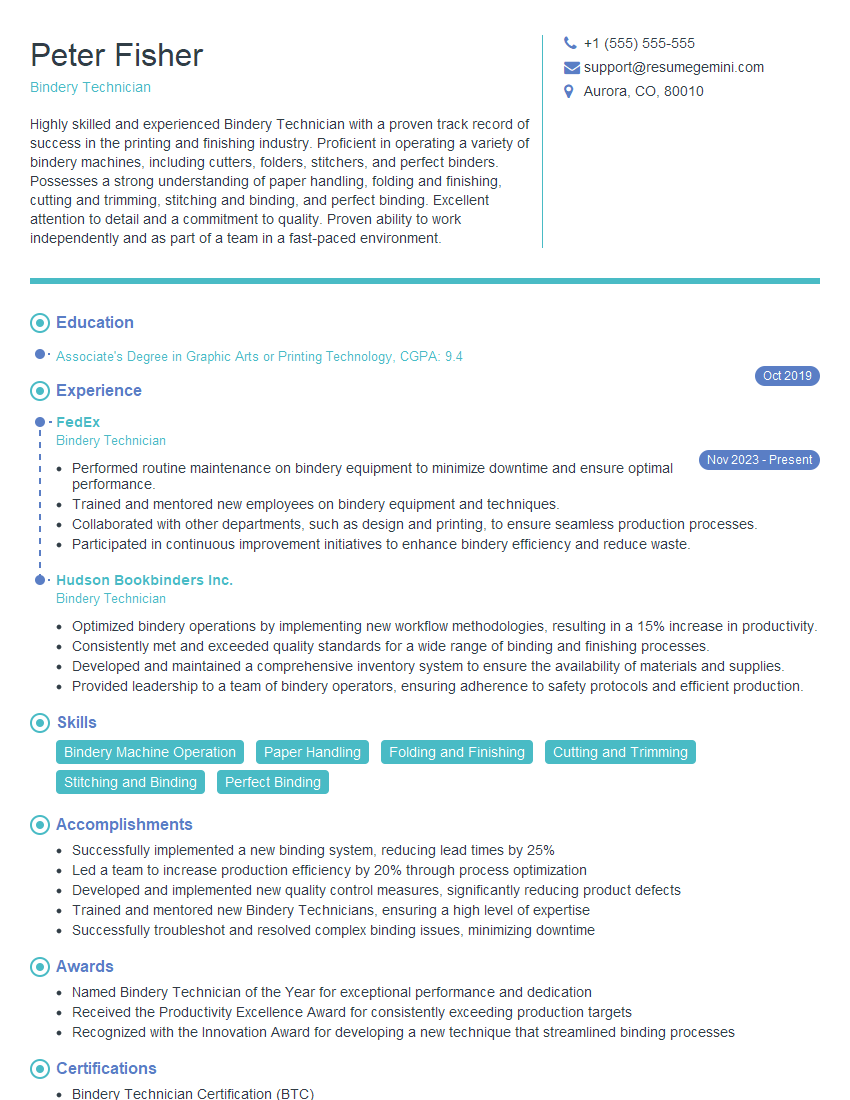
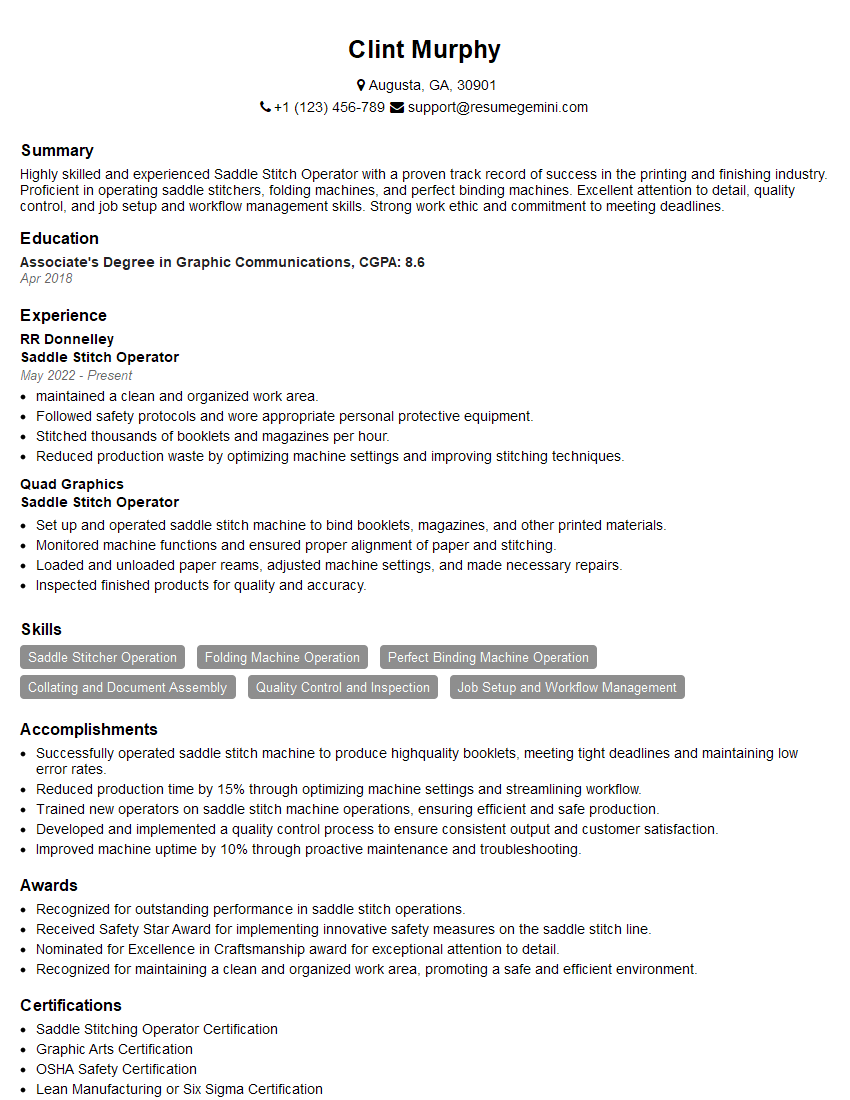
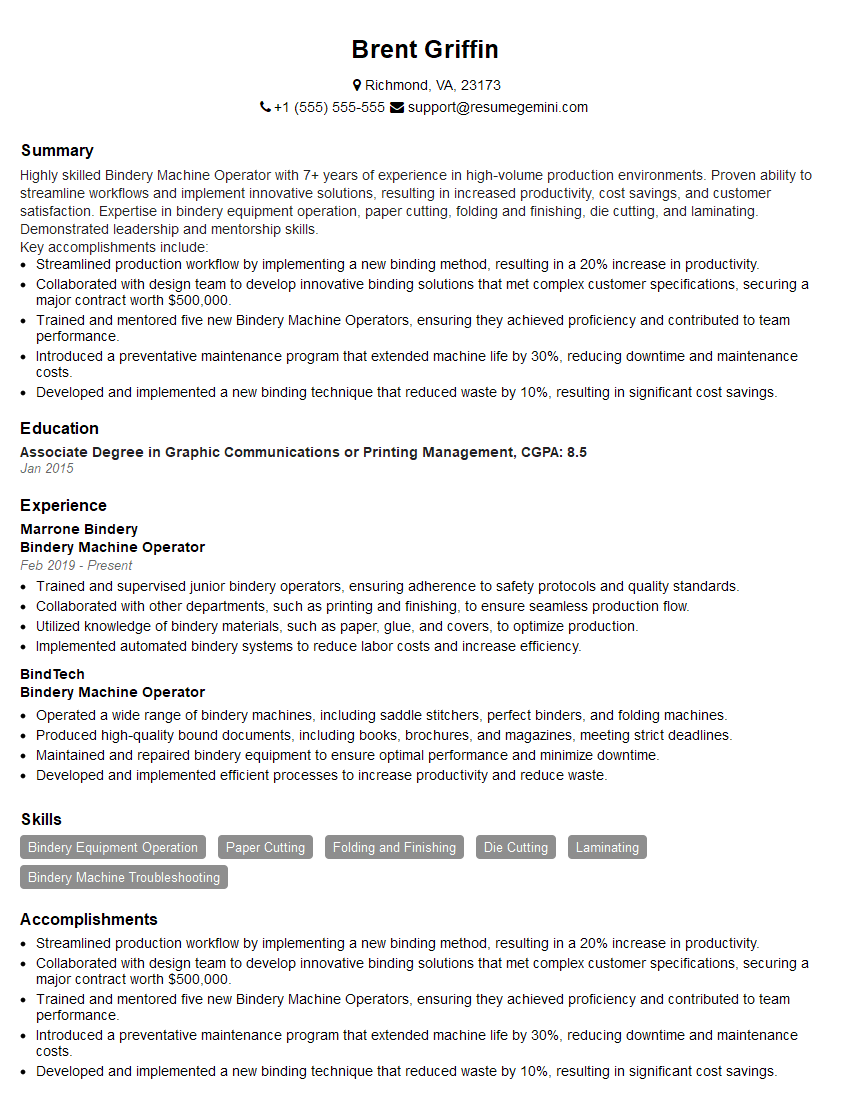
Mastering digital bindery skills significantly enhances your career prospects in the print and publishing industry, opening doors to diverse and challenging roles. To maximize your job search success, focus on creating a strong, ATS-friendly resume that highlights your skills and experience effectively. ResumeGemini is a trusted resource that can help you build a professional and impactful resume tailored to the specific requirements of Digital Bindery roles. Examples of resumes tailored to Digital Bindery positions are available to help guide your resume development.
Explore more articles
Users Rating of Our Blogs
Share Your Experience
We value your feedback! Please rate our content and share your thoughts (optional).
What Readers Say About Our Blog
Very informative content, great job.
good