Interviews are more than just a Q&A session—they’re a chance to prove your worth. This blog dives into essential Boilers interview questions and expert tips to help you align your answers with what hiring managers are looking for. Start preparing to shine!
Questions Asked in Boilers Interview
Q 1. Explain the different types of boilers.
Boilers are classified in various ways, primarily based on their design, heat source, and application. Here are some key categories:
- Fire-tube boilers: Hot gases pass through tubes surrounded by water. These are typically simpler and less expensive, often found in smaller applications.
- Water-tube boilers: Water flows through tubes surrounded by hot gases. These are generally more efficient and capable of handling higher pressures and capacities, common in larger industrial settings.
- Based on Heat Source: Boilers can be fueled by various sources including natural gas, fuel oil, coal, biomass, electricity (electric boilers), or even waste heat from industrial processes.
- Based on Pressure: Boilers operate at different pressures, categorized as low-pressure (typically under 15 psi), medium-pressure (15-150 psi), and high-pressure (above 150 psi). The pressure rating dictates the design and safety features.
- Specific Types: Examples include Scotch Marine boilers (a type of fire-tube boiler), Babcock & Wilcox boilers (a common water-tube design), and packaged boilers (pre-assembled units often using natural gas).
The choice of boiler type depends heavily on factors like the required steam capacity, fuel availability, budget, and space constraints.
Q 2. Describe the working principle of a fire-tube boiler.
In a fire-tube boiler, hot combustion gases are produced by burning fuel in a furnace. These gases are then passed through a series of tubes that run the length of the boiler shell. The tubes are surrounded by water. As the hot gases travel through the tubes, they transfer their heat to the surrounding water, raising its temperature and eventually converting it to steam.
Think of it like this: the tubes act as a radiator, with the hot gases being the heat source and the water absorbing that heat. The steam generated is then collected and used for various purposes, such as heating buildings or driving turbines.
The spent gases, significantly cooler now, exit the boiler through a stack or chimney. The process continues continuously as long as fuel is supplied and combustion is maintained.
Q 3. What is the difference between a water-tube and fire-tube boiler?
The primary difference between water-tube and fire-tube boilers lies in how the water and hot gases flow.
- Fire-tube boilers: Hot gases travel *through* tubes surrounded by water.
- Water-tube boilers: Water travels *through* tubes surrounded by hot gases.
This seemingly simple difference leads to significant variations in their characteristics:
- Pressure and Capacity: Water-tube boilers can handle much higher pressures and larger steam capacities because the water is contained within smaller tubes, offering greater strength and resistance to pressure. Fire-tube boilers are limited in pressure due to the large volume of water in the shell.
- Efficiency: Water-tube boilers generally offer better efficiency as the heat transfer is more efficient due to the greater surface area of the tubes in contact with the hot gases.
- Maintenance: Fire-tube boilers are often easier and less expensive to maintain, while water-tube boilers require more specialized expertise and maintenance procedures.
- Size and Cost: For smaller applications, fire-tube boilers are often more economical and compact. Large-scale operations frequently favor water-tube boilers, despite higher initial costs.
Imagine a radiator again; a fire-tube boiler is like a single, large radiator, while a water-tube boiler is like many smaller radiators working together, allowing for more control and greater capacity.
Q 4. How does a boiler’s water level control system work?
A boiler’s water level control system ensures that the boiler always maintains the correct water level. This is crucial for safe and efficient operation, preventing overheating (low water) and flooding (high water). The system typically involves:
- Water Level Indicators: These show the current water level in the boiler. Common types include glass gauges (sight glasses), remote indicators, and electronic level sensors.
- Feedwater Pump: This pump continuously feeds water into the boiler to replenish water lost as steam.
- Feedwater Control Valve: This valve regulates the flow of feedwater into the boiler, maintaining the desired water level. It can be manually operated or automatically controlled by a level controller.
- Low-Water Fuel Cut-off: This safety device automatically shuts off the fuel supply if the water level falls below a safe minimum. This prevents overheating and potential damage to the boiler.
- High-Water Alarm: This alarm sounds if the water level rises above a safe maximum, alerting operators to a potential problem.
Many modern systems use advanced control technologies like programmable logic controllers (PLCs) to precisely maintain the water level, optimizing efficiency and safety.
Q 5. Explain the importance of boiler water treatment.
Boiler water treatment is essential for preventing scale formation, corrosion, and other problems that can severely impact boiler efficiency, lifespan, and safety. Untreated water contains impurities like dissolved minerals, solids, and gases that can cause significant issues:
- Scale Formation: Dissolved minerals precipitate out of solution, forming a hard crust on heat transfer surfaces. Scale reduces heat transfer efficiency, leading to higher fuel consumption and potential overheating.
- Corrosion: Dissolved oxygen and other impurities in the water can lead to corrosion of boiler metal, weakening the boiler and potentially causing leaks or failures.
- Foaming and Priming: Dissolved solids can cause foaming (excessive bubble formation) and priming (water carryover with steam), which contaminates the steam used in processes.
Treatment typically involves processes like chemical softening, filtration, deaeration (removal of dissolved oxygen), and the addition of chemicals to control pH and prevent corrosion. Regular water testing is crucial to monitor the effectiveness of the treatment program.
Q 6. Describe the process of boiler blowdown.
Boiler blowdown is the process of periodically removing some of the boiler water from the boiler. This is done to control the concentration of dissolved solids and impurities in the boiler water. Over time, as water evaporates and becomes steam, the concentration of these impurities increases. This can lead to scale formation, corrosion and other problems.
There are two main types of blowdown:
- Surface Blowdown: This removes accumulated sludge and suspended solids from the surface of the water. It’s a continuous or intermittent process involving a small amount of water.
- Bottom Blowdown: This is a more aggressive process that removes concentrated solids that settle at the bottom of the boiler. It is typically done less frequently but removes a significant volume of water.
The frequency and amount of blowdown depend on factors such as the boiler’s operating conditions, the quality of the feedwater, and the type of boiler. Proper blowdown management is a key aspect of boiler maintenance.
Q 7. What are the common causes of boiler scale formation?
Boiler scale formation is primarily caused by the presence of dissolved minerals in the boiler water, specifically hardness minerals like calcium and magnesium. These minerals precipitate out of solution as the water heats up, forming hard deposits on the boiler’s heat transfer surfaces.
Several factors contribute to scale formation:
- High Water Hardness: Water with a high concentration of dissolved calcium and magnesium is the main culprit.
- High Operating Temperature and Pressure: These conditions accelerate the precipitation of minerals.
- High pH: A high pH can increase the rate of scale formation.
- Lack of Water Treatment: Without proper water treatment to soften the water and remove impurities, scale formation is almost inevitable.
- Concentration of Solids: Insufficient blowdown allows the concentration of dissolved solids to increase, leading to more scale formation.
Understanding these factors is crucial for implementing effective water treatment strategies to prevent or minimize scale formation and maintain optimal boiler operation.
Q 8. How do you identify and address boiler leaks?
Identifying and addressing boiler leaks requires a systematic approach. First, we need to pinpoint the leak’s location. This often involves visual inspection, looking for signs of water stains, dripping, or steam escaping. We might use tools like pressure gauges to identify pressure drops in specific sections of the boiler system. Listening for unusual hissing sounds can also be helpful.
Once the leak is located, the repair method depends on its severity and location. Small leaks in accessible areas might be fixed with specialized patching compounds or by tightening loose fittings. Larger leaks or those in hard-to-reach areas might require more extensive repairs, potentially involving replacing damaged pipes or sections of the boiler. In critical situations, temporary measures like clamping might be used to stem the leak until a permanent repair can be undertaken. It’s crucial to ensure the boiler is depressurized and cooled down before any repair work begins to avoid injury from scalding steam or hot water.
For instance, I once worked on a boiler where a minor leak was detected near a valve. A simple tightening of the valve resolved the issue. However, another instance involved a significant crack in a boiler pipe, necessitating the replacement of that section of piping after depressurizing and cooling the system.
Q 9. Explain the safety procedures for boiler operation.
Boiler operation safety is paramount. Procedures typically include regular inspections of pressure gauges, safety valves, water levels, and fuel lines. Operators should be trained to identify and respond to unusual noises, temperature fluctuations, or pressure changes. They need to understand the boiler’s control systems and how to shut down the boiler safely in case of emergencies.
Crucially, all personnel should wear appropriate personal protective equipment (PPE), including heat-resistant gloves, safety glasses, and possibly respirators, depending on the situation and potential hazards like chemical exposure from fuel sources. Lockout/Tagout procedures must be strictly followed before any maintenance or repair work. This ensures the boiler is completely isolated from its power source, preventing accidental activation.
Regular safety training and drills are essential to ensure everyone on the team knows the proper emergency procedures. Emergency shutdown procedures should be prominently displayed near the boiler, and regular drills reinforce the team’s responsiveness in critical situations. Think of it like fire drills – the more practice, the better prepared everyone is.
Q 10. What are the different types of boiler fuel?
Boilers can utilize various fuels. The most common include:
- Natural Gas: A clean-burning, widely available fuel.
- Fuel Oil: A liquid fuel, ranging from light to heavy grades. The choice depends on the boiler’s design and operating conditions.
- Coal: A solid fuel, typically used in larger industrial boilers. It’s a less efficient and more polluting option compared to gas or oil.
- Biomass: Organic matter such as wood chips, agricultural residues, or dedicated energy crops. It’s a renewable fuel source but requires specialized handling and combustion systems.
- Electricity: Used in electric boilers, which heat water through electrical resistance.
The selection of fuel depends on factors such as cost, availability, environmental regulations, and the boiler’s capacity and design. For example, a small commercial building might use natural gas for its boiler, while a large power plant may utilize coal or biomass for larger-scale steam generation.
Q 11. Describe the process of boiler combustion.
Boiler combustion is a controlled process where fuel is burned to produce heat. The process begins with the fuel (gas, oil, or solid) being introduced into a combustion chamber. Here, it mixes with air (containing oxygen) in specific proportions. A spark or pilot flame ignites the mixture, initiating a controlled chemical reaction that releases heat energy.
This heat energy raises the temperature of water circulating within the boiler, turning it into steam. The steam is then used for various applications, like heating buildings, generating electricity, or driving industrial processes. The efficiency of combustion depends on factors like the fuel-air ratio, the temperature of the combustion chamber, and the design of the burner. Incomplete combustion can lead to the formation of harmful byproducts like carbon monoxide, requiring meticulous control and regular monitoring of exhaust gases.
For instance, a well-tuned natural gas boiler will efficiently burn the fuel, resulting in minimal emissions and high steam production. Conversely, a poorly maintained coal boiler might produce significant amounts of soot and pollutants due to improper air-fuel mixing or inadequate combustion temperature.
Q 12. How do you monitor boiler efficiency?
Monitoring boiler efficiency is crucial for cost optimization and environmental responsibility. Several methods are used, including:
- Measuring Fuel Consumption: Tracking the amount of fuel consumed per unit of heat output provides a direct indication of efficiency.
- Analyzing Stack Emissions: Analyzing the composition of flue gases reveals the completeness of combustion and the presence of unburned fuel or pollutants. This helps identify areas for improvement.
- Thermal Efficiency Calculations: These calculations, often performed using specialized software, compare the heat input to the heat output, providing a quantitative measure of efficiency.
- Regular Inspections and Maintenance: A well-maintained boiler operates at peak efficiency. Regular checks help identify and rectify potential issues that reduce performance.
For example, a boiler’s efficiency can be significantly improved by regular cleaning of heat exchanger surfaces, which can become fouled with deposits over time, reducing heat transfer. Optimizing the fuel-air ratio is another crucial aspect of improving boiler efficiency.
Q 13. What are the common boiler malfunctions and how are they diagnosed?
Common boiler malfunctions and their diagnosis include:
- Low Water Level: Often indicated by low pressure and unusual noises. Causes include leaks, insufficient water feed, or faulty level sensors. Diagnosis involves checking water level, pressure gauges, and feed pump operations.
- Scale Buildup: Mineral deposits reduce heat transfer efficiency. Identified through reduced efficiency and visual inspection of heat exchanger surfaces. Solution: regular chemical cleaning.
- Burner Malfunction: Can lead to incomplete combustion or flame failure. Diagnosed by observing the flame and checking fuel supply, igniter, and controls. Solution: repair or replacement of faulty components.
- Safety Valve Leakage: Indicated by steam or water leakage from the safety valve. Requires inspection and adjustment or replacement of the valve.
- Corrosion: Detected through visual inspection or using non-destructive testing methods. Requires repair or replacement of corroded components.
Diagnosing malfunctions often requires a combination of visual inspection, using diagnostic tools like pressure gauges and thermometers, and analyzing operating data. In complex cases, professional expertise is essential.
Q 14. Explain the role of safety valves in boiler operation.
Safety valves play a critical role in preventing boiler explosions by relieving excess pressure. They are pressure-relief devices designed to automatically open when the boiler pressure exceeds a preset limit. This prevents the boiler from reaching dangerously high pressures that could cause catastrophic failure.
The safety valve’s setting is critical and must be regularly inspected and tested to ensure it operates correctly. The valve should be regularly lifted manually to verify its free movement and to ensure it’s not blocked or stuck. Regular testing is crucial for maintaining the boiler’s safe operating conditions, and any malfunctioning safety valve should be addressed immediately.
Think of it as a pressure release valve in a car’s cooling system—it prevents the system from exceeding a safe pressure limit, protecting the engine. Similarly, the boiler’s safety valve protects the entire system from potentially destructive pressure buildup.
Q 15. Describe the importance of boiler pressure gauges.
Boiler pressure gauges are absolutely critical for safe and efficient boiler operation. They provide a continuous visual indication of the steam pressure inside the boiler. This is paramount because excessive pressure can lead to catastrophic boiler explosions, while insufficient pressure hinders the boiler’s ability to perform its intended function. Think of it like a car’s speedometer – you need to know your speed to drive safely and effectively. The gauge allows operators to monitor pressure, ensuring it remains within the safe operating limits specified by the manufacturer. Different gauges may incorporate additional features, such as pressure switches that trigger alarms or automatic safety systems when pressure exceeds predefined thresholds.
For instance, imagine a large industrial boiler supplying steam to a factory. A malfunctioning or inaccurate pressure gauge could lead to a significant safety hazard. Similarly, in a smaller-scale application like a heating boiler in a building, an incorrect pressure reading could lead to inefficiencies or system damage.
Career Expert Tips:
- Ace those interviews! Prepare effectively by reviewing the Top 50 Most Common Interview Questions on ResumeGemini.
- Navigate your job search with confidence! Explore a wide range of Career Tips on ResumeGemini. Learn about common challenges and recommendations to overcome them.
- Craft the perfect resume! Master the Art of Resume Writing with ResumeGemini’s guide. Showcase your unique qualifications and achievements effectively.
- Don’t miss out on holiday savings! Build your dream resume with ResumeGemini’s ATS optimized templates.
Q 16. How often should boiler inspections be conducted?
The frequency of boiler inspections depends heavily on several factors, including the boiler’s size, type, operating pressure, age, and the specific regulations in your location. However, a general guideline suggests annual inspections at a minimum. More frequent inspections, potentially even monthly or quarterly, might be necessary for high-pressure boilers or those operating continuously in demanding industrial settings. These inspections usually involve a thorough visual examination, pressure testing, and potentially non-destructive testing methods to identify potential weaknesses or corrosion before they become serious problems. Think of it as a regular checkup for your boiler, preventing minor issues from escalating into costly repairs or dangerous situations.
For example, a small commercial boiler in a restaurant might only need an annual inspection, whereas a large power plant boiler would necessitate far more frequent and rigorous inspections by certified professionals.
Q 17. What are the key components of a boiler control system?
A boiler control system is essential for safe and efficient operation. Its key components work together to maintain optimal boiler performance and prevent unsafe conditions. These components typically include:
- Burner Management System: Controls the fuel supply and ignition sequence, ensuring efficient combustion and preventing flameouts.
- Pressure Controls: Maintains steam pressure within safe operating limits by regulating fuel input and controlling safety valves.
- Water Level Controls: Monitors and controls the water level within the boiler to prevent low-water conditions, which can lead to overheating and damage.
- Temperature Controls: Regulates the steam temperature to meet the demands of the application. This is especially crucial in processes requiring specific steam temperatures.
- Safety Devices: Includes pressure relief valves, high-water level alarms, low-water fuel cutoff switches, flame failure safeguards – these are essential for preventing accidents and protecting personnel and equipment.
- Supervisory Control and Data Acquisition (SCADA) Systems: In larger installations, these systems provide centralized monitoring and control of various parameters, including pressure, temperature, and water level, often with remote access capabilities.
Consider a hospital using a boiler for heating and sterilization. The control system ensures consistent steam supply for sterilization while safeguarding against overpressure or low water levels that could compromise patient safety.
Q 18. Explain the principles of boiler feedwater treatment.
Boiler feedwater treatment is crucial because impurities in the water can lead to scaling, corrosion, and foaming within the boiler, significantly reducing efficiency and lifespan. The treatment process aims to remove or neutralize these impurities. This involves several steps:
- Pre-treatment: This often involves filtration to remove suspended solids, and chemical treatment (like softening) to reduce hardness (calcium and magnesium ions).
- Oxygen Scavenging: Dissolved oxygen in the feedwater is highly corrosive; oxygen scavengers (like hydrazine or sodium sulfite) are added to remove it.
- pH Adjustment: Maintaining the correct pH level prevents corrosion and scaling. Acids or alkalis might be added to achieve the optimal pH.
- Chemical Treatment: Various chemicals are added to control corrosion and prevent the formation of deposits. The specific chemicals will depend on the water’s composition and the boiler’s type.
Think of it like cleaning your house regularly. Neglecting feedwater treatment is like never cleaning your house; over time, it accumulates dirt and grime, making it less efficient and prone to damage.
Q 19. How do you maintain optimal boiler water chemistry?
Maintaining optimal boiler water chemistry is crucial for preventing scaling, corrosion, and other problems that can severely impact the boiler’s performance and longevity. This involves regular monitoring and adjustments based on test results. Key parameters include:
- pH: Regularly checking and adjusting the pH using appropriate chemicals to maintain the ideal range.
- Dissolved Oxygen: Maintaining low levels of dissolved oxygen through the addition of oxygen scavengers.
- Conductivity: Monitoring conductivity to determine the total dissolved solids in the water. High conductivity indicates potential scaling problems.
- Silica: Monitoring silica levels, as high levels can lead to the formation of deposits.
- Hydrazine/Sulfite: Monitoring the concentration of oxygen scavengers to ensure adequate protection against corrosion.
Regular water testing and analysis, often using test kits or sending samples to a laboratory, are vital components of this maintenance process. Think of it like a doctor checking your health; regular checkups prevent small problems from becoming large ones.
Q 20. Describe the procedure for starting up a boiler.
Starting up a boiler is a multi-step procedure that prioritizes safety. The specific steps vary depending on the boiler type, but general principles include:
- Inspect the boiler: Thoroughly check for any visible damage, leaks, or obstructions.
- Check water level: Ensure sufficient water is in the boiler.
- Open vents and drains: Allow air and water to escape before starting the system.
- Start the fuel system: Light the burner (if applicable) and monitor the flame.
- Monitor pressure and temperature: Gradually increase pressure and temperature as the boiler warms up, following manufacturer’s guidelines.
- Check safety devices: Ensure all safety devices (pressure relief valves, low-water fuel cut-off, etc.) are functioning properly.
- Load the boiler: Once operating temperature and pressure are reached, gradually increase the steam demand.
Improper startup procedures can cause boiler damage or create hazardous conditions. Always adhere to the manufacturer’s operating instructions and safety guidelines.
Q 21. Describe the procedure for shutting down a boiler.
Shutting down a boiler also requires a systematic approach to ensure safety and prevent damage. The process typically involves:
- Reduce steam demand: Gradually reduce the load on the boiler to allow it to cool down slowly.
- Stop fuel supply: Turn off the fuel supply once the steam demand is low.
- Monitor pressure and temperature: Allow the pressure and temperature to decrease gradually. Never rapidly cool down the boiler.
- Close vents and drains (when appropriate): Ensure no air enters and the boiler remains sealed as it cools.
- Drain the boiler (if necessary): Once the boiler is cool enough, drain the water to prevent corrosion.
- Clean and inspect the boiler: Inspect the boiler for any damage or issues that need attention.
Rapidly cooling down a boiler can cause thermal shock, leading to cracking and other damage. Always follow the manufacturer’s guidelines for safe shutdown procedures.
Q 22. What are the environmental regulations related to boiler emissions?
Environmental regulations concerning boiler emissions are stringent and vary depending on location and boiler type. They primarily aim to minimize pollutants like nitrogen oxides (NOx), sulfur oxides (SOx), particulate matter (PM), and carbon monoxide (CO). These regulations often involve emission limits, specified in parts per million (ppm) or milligrams per cubic meter (mg/m³), and require regular monitoring and reporting.
For example, the US Environmental Protection Agency (EPA) sets standards under the Clean Air Act, while the European Union has similar directives. These standards often mandate the use of emission control technologies like selective catalytic reduction (SCR) for NOx reduction and low-NOx burners for improved combustion efficiency. Failure to comply can result in significant penalties, including fines and operational shutdowns. A crucial aspect is obtaining and maintaining the necessary permits and licenses to operate a boiler legally and within environmental compliance. The specific regulations are complex and require regular updates to remain compliant with evolving environmental legislation.
Q 23. How do you handle boiler emergencies?
Handling boiler emergencies requires a swift, systematic approach prioritizing safety. My procedure begins with immediate isolation of the problem – this may involve shutting down the boiler, isolating fuel supply, and initiating emergency venting as necessary. The next step is to assess the situation: what triggered the emergency, what’s the extent of the damage, and are there any immediate safety hazards? Simultaneously, I would ensure the safety of personnel, evacuating the area if needed and ensuring emergency services are alerted if necessary.
Once the immediate danger is mitigated, a detailed investigation begins, pinpointing the root cause. This could involve examining pressure gauges, temperature readings, and logbooks to identify malfunctions. Depending on the issue’s severity, repairs might involve simple adjustments or require extensive overhaul. Throughout the process, detailed documentation is crucial, including a chronological record of events, repairs undertaken, and any safety measures implemented. Post-emergency analysis allows preventative maintenance strategies to be implemented to mitigate similar incidents in the future. Think of it like this: just like a fire drill prepares you for a real fire, regular training and emergency drills ensure everyone reacts efficiently and safely in a boiler emergency.
Q 24. What are the different types of boiler testing?
Boiler testing encompasses various procedures to ensure safe and efficient operation. These tests can be broadly categorized into:
- Visual Inspection: A thorough visual examination of the boiler and its associated components, checking for corrosion, leaks, cracks, and any signs of damage. This is the most basic but essential test.
- Pressure Testing: A hydrostatic test involves filling the boiler with water under pressure to detect leaks and weak points in the pressure vessel. This is usually done after major repairs or inspections.
- Operational Testing: This involves checking the boiler’s performance under normal operating conditions, monitoring parameters like pressure, temperature, and fuel consumption to ensure optimal efficiency. This can also include smoke tests to identify leaks.
- Emission Testing: Measuring the levels of pollutants emitted by the boiler, such as NOx, SOx, CO, and PM, to ensure compliance with environmental regulations. Special instruments like gas analyzers are crucial for this.
- Non-Destructive Testing (NDT): Advanced techniques such as ultrasonic testing, radiographic testing, and magnetic particle inspection are used to detect internal flaws without damaging the boiler components. These are typically used for critical components like boiler tubes and pressure vessels.
The frequency of these tests depends on boiler type, size, age, and operational conditions. Regulations often mandate minimum testing requirements.
Q 25. Explain the importance of boiler logbooks.
Boiler logbooks are essential for maintaining a comprehensive record of a boiler’s operational history. They serve as a crucial tool for tracking performance, scheduling maintenance, and ensuring safety and compliance. These logs document all relevant information, including operational parameters (pressure, temperature, fuel consumption), maintenance activities (cleaning, inspections, repairs), and any incidents or irregularities observed.
The importance lies in several aspects:Predictive Maintenance: By analyzing trends in the logbook data, potential problems can be identified before they escalate into major failures, minimizing downtime and costly repairs. Compliance: Logbooks provide evidence of adherence to regulatory requirements and safety standards. Troubleshooting: In case of malfunctions, detailed records enable faster and more efficient troubleshooting by providing a history of the boiler’s operation. Safety: Accurate documentation of safety checks and procedures helps ensure the safe operation of the boiler. In essence, a well-maintained logbook is like a detailed medical history for the boiler, providing a comprehensive picture of its health and performance over time. It’s a critical tool for responsible boiler management.
Q 26. What are the common causes of boiler tube failure?
Boiler tube failures are a serious concern that can lead to significant damage and downtime. Several factors contribute to these failures, including:
- Overheating: Excessive heat can weaken the metal, causing it to deform, bulge, or rupture. This can be caused by insufficient water flow, scale buildup, or burner malfunctions.
- Corrosion: Chemical reactions between water and the metal cause corrosion, thinning the tube walls and eventually leading to failure. Different types of corrosion (e.g., pitting, stress corrosion cracking) exist and each has different causes.
- Erosion: The constant flow of water and steam can cause erosion, wearing down the tube’s inner surface. This is particularly prevalent in areas with high velocity water flow.
- Scale Buildup: Deposits of minerals in the water (scale) form an insulating layer on the tube’s inner surface. This reduces heat transfer, leading to overheating and potential failure.
- Water Hammer: A sudden surge of water in the boiler tubes can create significant stress, potentially leading to cracks or rupture. This can be due to sudden valve closure or other system upsets.
- Fatigue: Repeated thermal cycling (heating and cooling) can cause fatigue in the metal, leading to micro-cracks that eventually propagate, causing failure.
Identifying the root cause of the failure through careful examination is crucial for implementing preventative measures and avoiding future incidents.
Q 27. How do you calculate boiler efficiency?
Boiler efficiency refers to how effectively the boiler converts the energy in the fuel into usable heat for the intended purpose. It’s typically expressed as a percentage. The most common method for calculating boiler efficiency is based on the energy input and output:
Efficiency (%) = (Heat Output / Heat Input) x 100
Heat Output: This is the amount of heat actually transferred to the water or steam. This can be measured using various instruments such as flow meters and temperature sensors.
Heat Input: This is the energy content of the fuel consumed, usually determined from the fuel’s calorific value (the amount of heat released per unit mass of fuel) and the amount of fuel used.
Example: If a boiler consumes 100,000 BTU of fuel and produces 80,000 BTU of heat, its efficiency is (80,000 / 100,000) x 100 = 80%. Higher efficiency means less fuel is wasted, leading to cost savings and reduced environmental impact. Factors affecting boiler efficiency include boiler design, maintenance, operating conditions, and the quality of fuel used.
Q 28. Describe your experience with boiler maintenance and repairs.
Throughout my career, I’ve been extensively involved in various aspects of boiler maintenance and repair, working with diverse boiler types and sizes. My experience includes:
- Preventative Maintenance: Regular inspections, cleaning, and servicing of boilers to prevent major breakdowns. This includes tasks like cleaning boiler tubes, checking safety valves, and inspecting burner components. I’ve developed and implemented preventative maintenance schedules based on manufacturers’ recommendations and operational history.
- Corrective Maintenance: Diagnosing and repairing boiler malfunctions, ranging from minor issues like leaky valves to major repairs such as tube replacements and burner overhauls. I’ve employed diagnostic techniques like pressure testing, thermal imaging, and gas analysis to pinpoint problems accurately.
- Overhauls: Conducting complete overhauls of boilers, including major component replacement, cleaning, and testing to extend their operational lifespan. This process involves careful planning, coordination, and meticulous execution to ensure the boiler’s safe and efficient return to operation.
- Modernization: Working on projects to upgrade existing boilers with improved technologies to enhance efficiency, reduce emissions, and improve safety. This often involves integrating new control systems and emission control devices.
I’ve worked on both small industrial boilers and large utility boilers, gaining hands-on expertise in diverse situations. I’m proficient in troubleshooting and repairing various boiler components, including burners, pumps, controls, and safety systems. My approach prioritizes safety and efficiency while adhering to all relevant standards and regulations. A recent project involved upgrading a legacy boiler system with an advanced control system, significantly improving its efficiency and reducing energy consumption by 15%.
Key Topics to Learn for Boilers Interview
- Boiler Types and Applications: Understand the different types of boilers (fire-tube, water-tube, etc.) and their suitability for various industrial and commercial applications. Consider the advantages and disadvantages of each type.
- Thermodynamics of Steam Generation: Grasp the fundamental principles of heat transfer, thermodynamics, and fluid mechanics as they relate to steam generation within a boiler system. Be prepared to discuss efficiency and energy conservation.
- Boiler Operation and Control Systems: Familiarize yourself with the operational aspects of boilers, including start-up, shutdown procedures, safety mechanisms, and the role of automated control systems in maintaining optimal performance and preventing malfunctions.
- Boiler Maintenance and Troubleshooting: Understand common boiler maintenance practices, preventative measures, and troubleshooting techniques for identifying and resolving operational issues. Discuss the importance of regular inspections and safety protocols.
- Boiler Efficiency and Optimization: Explore methods for optimizing boiler efficiency, including combustion optimization, water treatment, and energy recovery systems. Be able to discuss the economic and environmental benefits of efficient boiler operation.
- Boiler Safety and Regulations: Demonstrate knowledge of relevant safety regulations and codes of practice related to boiler operation and maintenance. Discuss the importance of safety procedures and risk mitigation strategies.
- Water Treatment and Chemistry: Understand the importance of water treatment in preventing scaling, corrosion, and other issues that can impact boiler efficiency and lifespan. Be familiar with common water treatment methods and their effectiveness.
- Emission Control and Environmental Compliance: Discuss environmental regulations related to boiler emissions and the technologies used to minimize pollutants. Be able to discuss the impact of boiler operation on the environment.
Next Steps
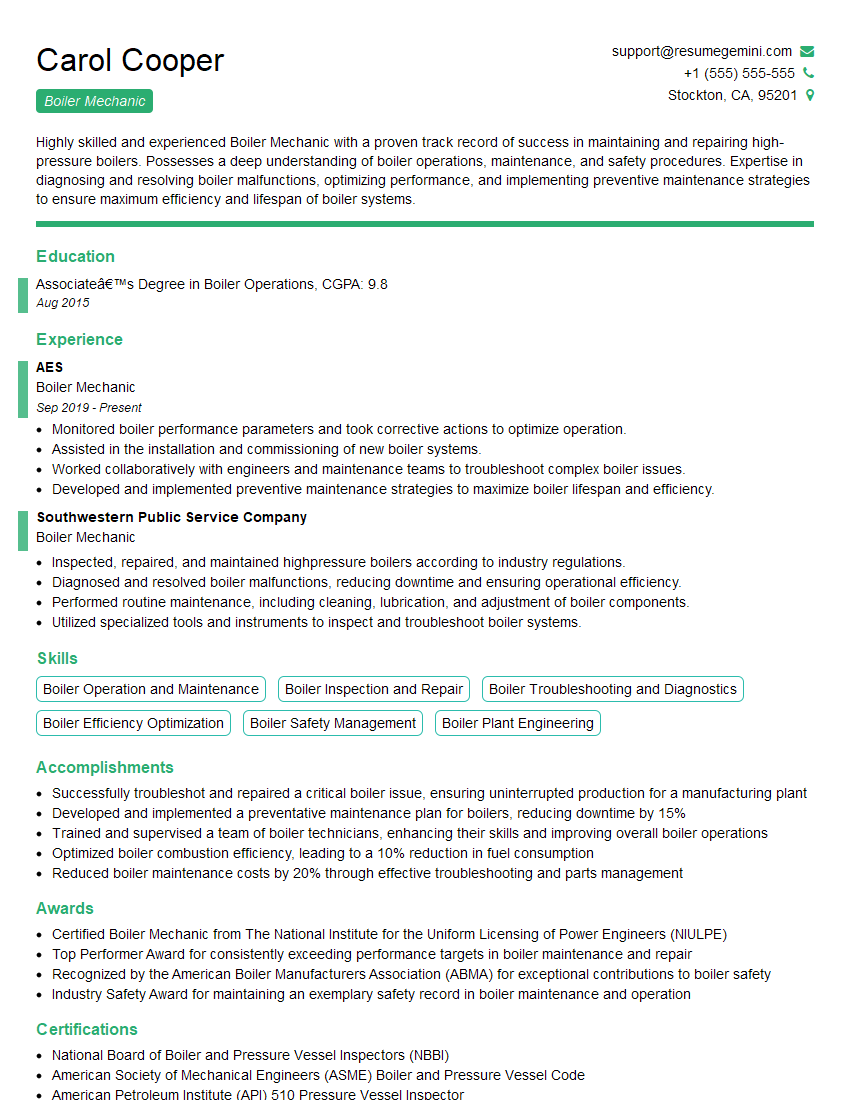
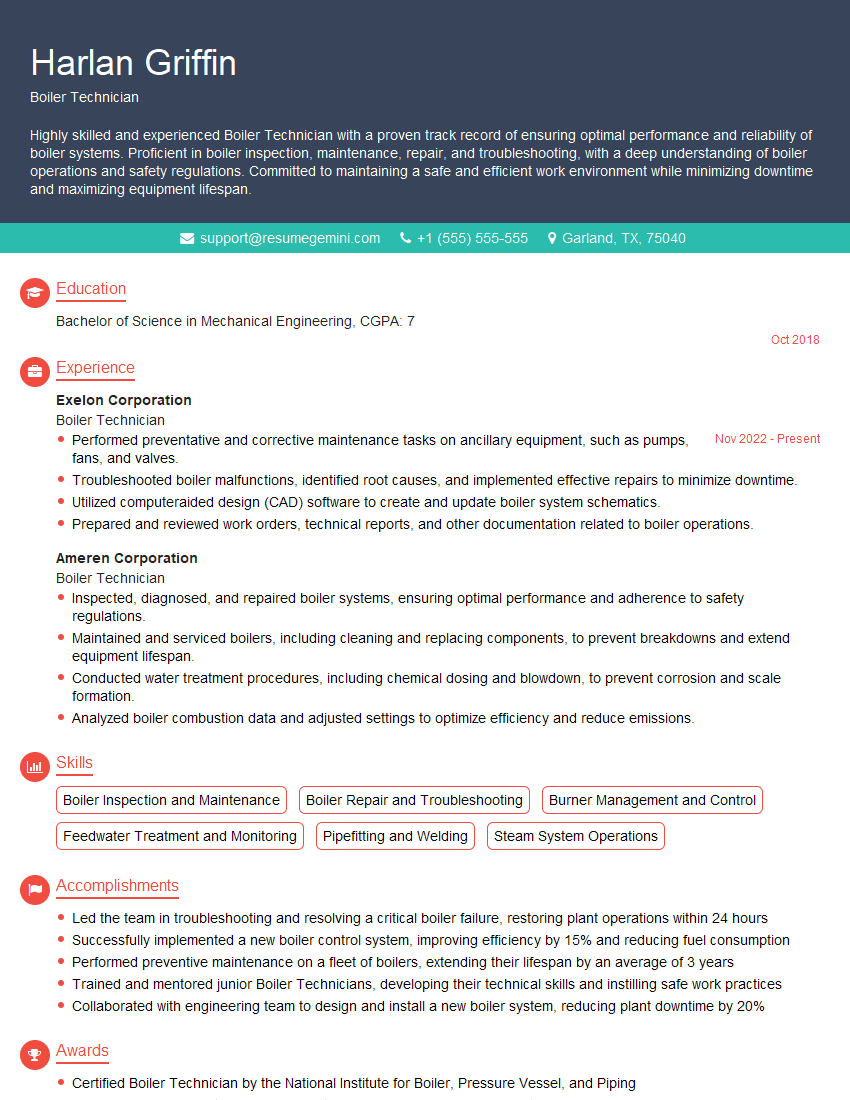
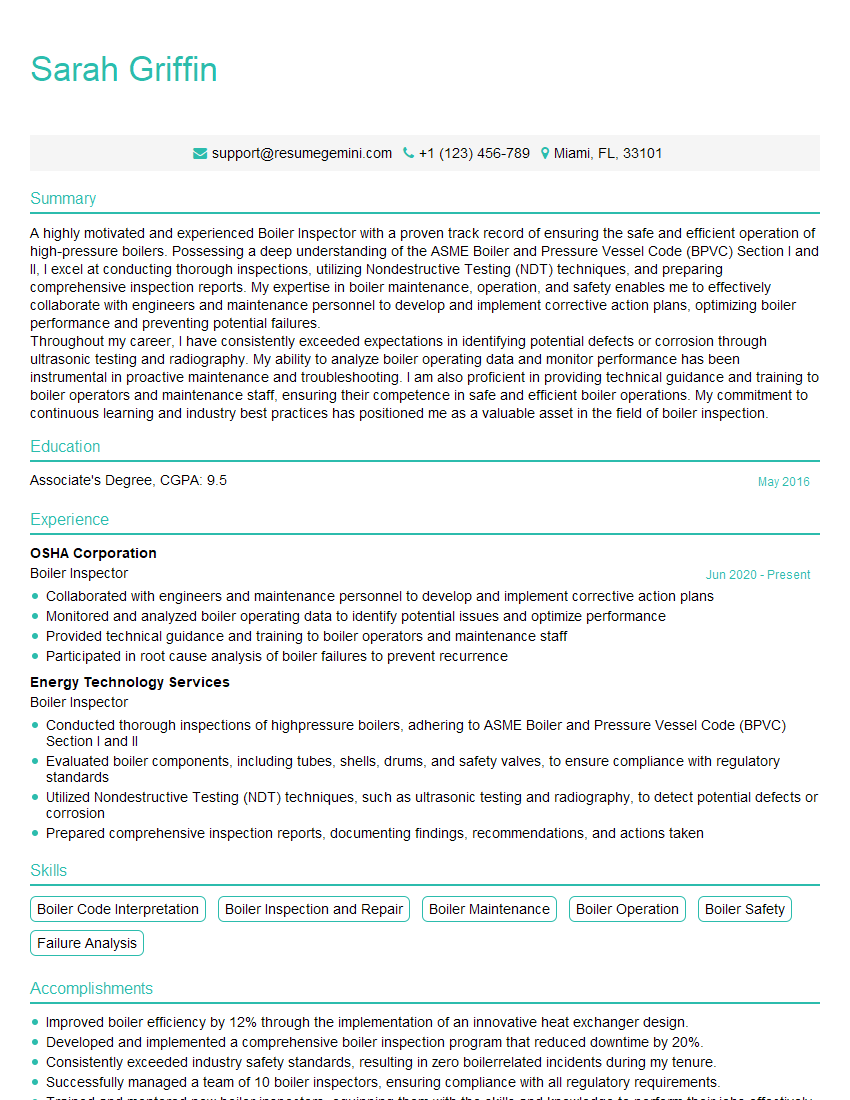
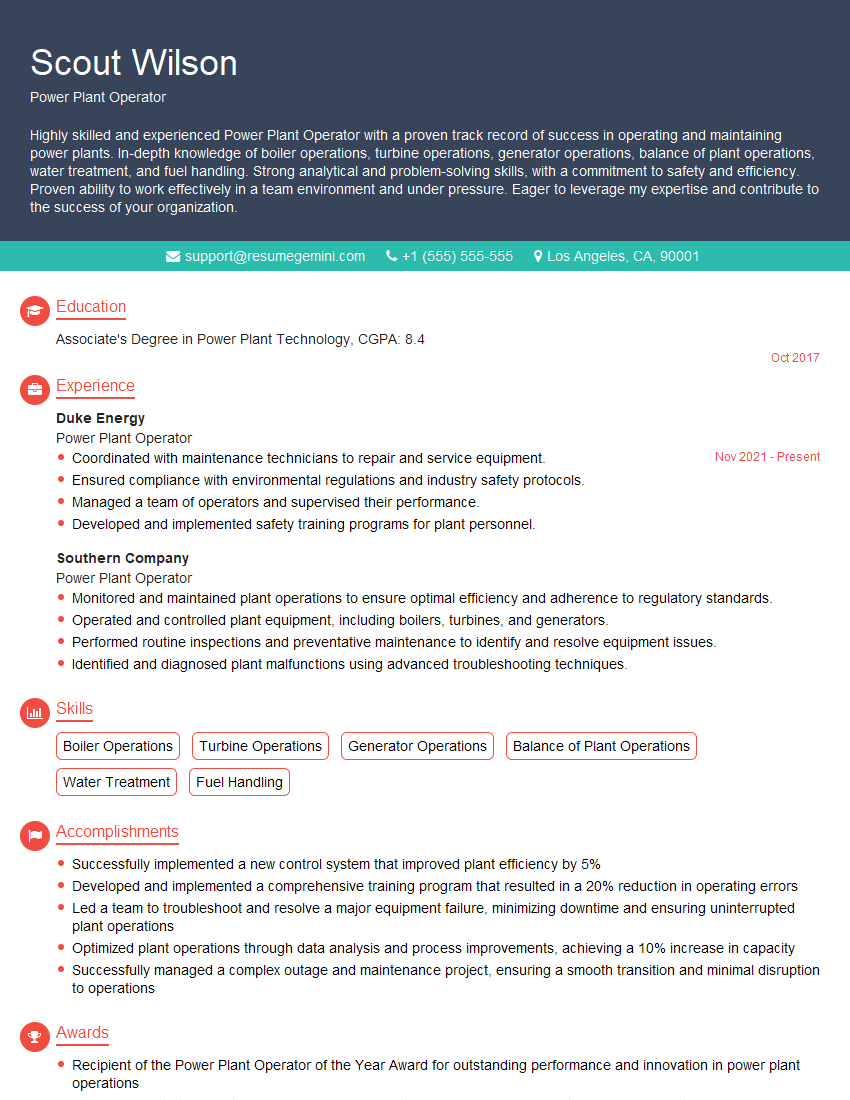
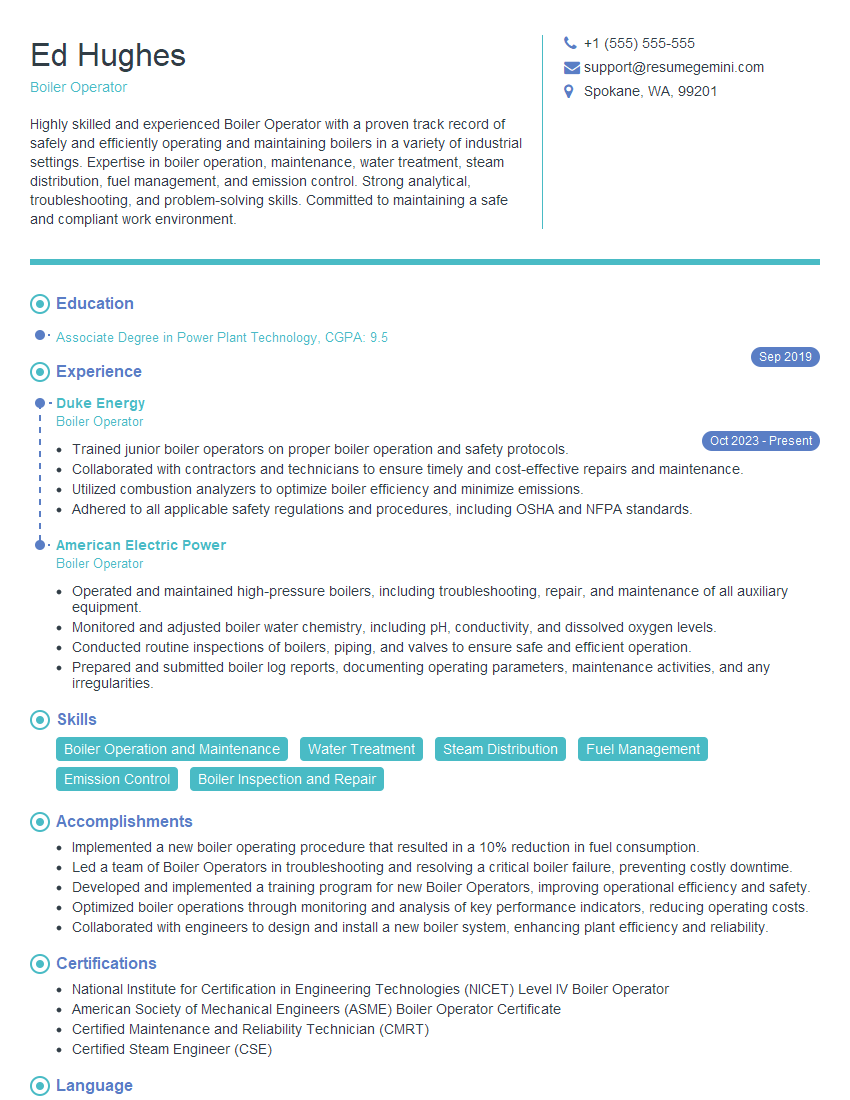
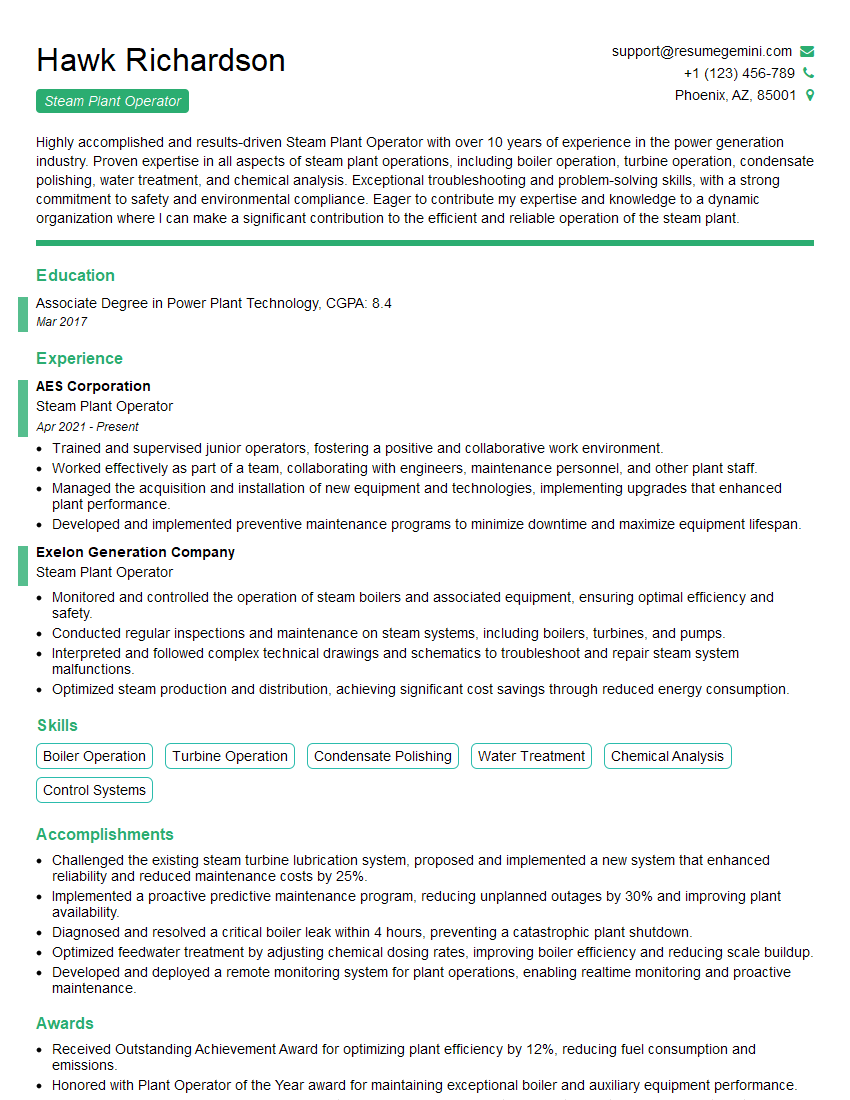
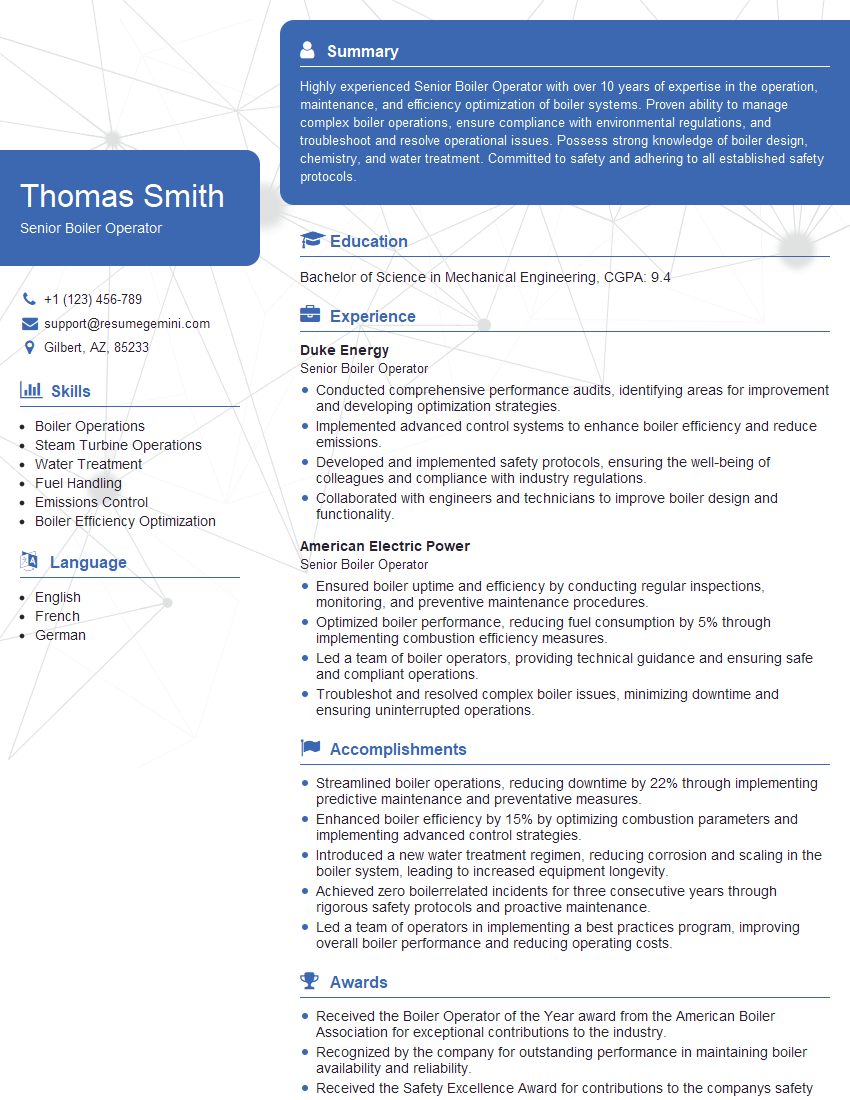
Mastering the intricacies of boiler systems is crucial for a successful and rewarding career in the power generation, industrial processing, or HVAC sectors. A strong understanding of these concepts will significantly enhance your job prospects and open doors to exciting opportunities. To maximize your chances of landing your dream job, focus on creating an ATS-friendly resume that highlights your skills and experience effectively. We highly recommend using ResumeGemini, a trusted resource for building professional resumes. ResumeGemini offers valuable tools and resources to help you craft a compelling resume, and examples of resumes tailored to the Boilers field are available to guide you.
Explore more articles
Users Rating of Our Blogs
Share Your Experience
We value your feedback! Please rate our content and share your thoughts (optional).
What Readers Say About Our Blog
Very informative content, great job.
good