Are you ready to stand out in your next interview? Understanding and preparing for Digital Campaign Management interview questions is a game-changer. In this blog, we’ve compiled key questions and expert advice to help you showcase your skills with confidence and precision. Let’s get started on your journey to acing the interview.
Questions Asked in Digital Campaign Management Interview
Q 1. Explain your experience with A/B testing in digital campaigns.
A/B testing is a cornerstone of effective digital campaign management. It’s a systematic approach to comparing two versions of a campaign element – be it a headline, image, call-to-action button, or even the entire email – to determine which performs better. This helps optimize campaigns for maximum impact.
In my experience, I’ve used A/B testing extensively across various platforms. For example, when optimizing email campaigns for a client selling cosmetics, we tested different subject lines to see which drove the highest open rates. We tested versions emphasizing a discount against versions focusing on a new product launch. The results clearly showed a preference for subject lines highlighting a limited-time offer, significantly boosting our conversion rate. Another project involved testing different ad creatives for a social media campaign; we found that videos outperformed static images by a considerable margin. Crucially, A/B testing isn’t a one-off activity. It’s an iterative process. We constantly analyze the data, refine our hypotheses, and conduct further tests to continuously improve performance. A robust A/B testing strategy requires careful planning, precise execution, and a statistically significant sample size to ensure reliable results.
Q 2. Describe your process for developing a digital marketing strategy.
Developing a successful digital marketing strategy is a multi-step process requiring a deep understanding of the target audience, business goals, and the competitive landscape. My process typically involves the following steps:
- Defining Objectives and KPIs: First, I work closely with the client to clearly define their goals. What are they hoping to achieve? Increased brand awareness? Lead generation? Sales? We then establish Key Performance Indicators (KPIs) to measure the success of the campaign. These could include website traffic, conversion rates, customer acquisition cost, or return on investment (ROI).
- Audience Research: Understanding the target audience is paramount. We conduct thorough research to define their demographics, psychographics, online behavior, and pain points. This informs the messaging, channel selection, and content creation.
- Competitive Analysis: Analyzing competitors’ strategies allows us to identify opportunities and differentiate our approach. This includes examining their marketing channels, messaging, and overall performance.
- Channel Strategy: Based on the audience research and competitive analysis, we select the most effective marketing channels. This might include SEO, SEM, social media marketing, email marketing, or paid advertising on platforms like Google Ads or social media.
- Content Creation: High-quality, engaging content is crucial. This includes blog posts, website copy, social media updates, videos, and infographics, all tailored to resonate with the target audience.
- Campaign Implementation and Monitoring: We meticulously implement the campaign, using the chosen channels and content. Throughout the campaign, we monitor the KPIs and make necessary adjustments to optimize performance. This is where A/B testing comes into play.
- Reporting and Analysis: Finally, we present comprehensive reports detailing campaign performance, ROI, and insights for future optimization.
Q 3. How do you measure the ROI of a digital marketing campaign?
Measuring the ROI of a digital marketing campaign is crucial to demonstrate its effectiveness and justify further investment. It involves calculating the return generated from the investment made in the campaign. This is not a simple equation, and it varies depending on the campaign objective.
For example, if the goal is lead generation, we would calculate the ROI by dividing the revenue generated from the leads by the cost of the campaign. If the objective is brand awareness, measuring ROI is more complex and may involve tracking metrics like website traffic, social media engagement, and brand mentions. A common formula is: (Revenue Generated - Campaign Cost) / Campaign Cost * 100%. However, this needs to be adapted depending on the specific campaign objectives. It is important to consider both direct and indirect revenue generated, as well as the lifetime value of a customer. We should also attribute revenue accurately to specific channels to understand which are performing best. This often requires sophisticated attribution modeling.
Q 4. What are your preferred tools for managing and analyzing digital campaigns?
My preferred tools for managing and analyzing digital campaigns depend on the specific needs of the project, but some of my go-to tools include:
- Google Analytics: This is a cornerstone for website analytics, tracking website traffic, user behavior, and conversion rates.
- Google Ads: For managing paid search campaigns, providing detailed performance data and optimization capabilities.
- Google Search Console: Essential for monitoring website SEO performance and identifying technical issues.
- Social media platform analytics dashboards (Facebook Ads Manager, Twitter Analytics, etc.): These offer insights into social media campaign performance.
- Email marketing platforms (Mailchimp, Constant Contact, etc.): These tools provide email campaign management and performance tracking.
- Data visualization tools (Tableau, Data Studio): These help create insightful dashboards and reports to effectively communicate campaign performance.
- A/B testing platforms (Optimizely, VWO): These platforms facilitate the efficient running and analysis of A/B tests.
The selection of tools is always strategic and tailored to the specific project goals and budget.
Q 5. Explain your understanding of SEO and SEM best practices.
SEO (Search Engine Optimization) and SEM (Search Engine Marketing) are crucial for driving organic and paid traffic to websites. SEO focuses on optimizing website content and structure to improve its ranking in organic search results. SEM involves paid advertising on search engines.
SEO Best Practices: Include keyword research, on-page optimization (title tags, meta descriptions, header tags, etc.), off-page optimization (link building), technical SEO (website speed, mobile-friendliness, sitemap), and content marketing (creating high-quality, relevant content).
SEM Best Practices: Include keyword research, ad copywriting, ad group structuring, bidding strategies (cost-per-click, cost-per-thousand impressions), and campaign monitoring and optimization. Effective SEM requires understanding different match types (broad, phrase, exact), quality score, and negative keywords.
Successfully integrating SEO and SEM strategies creates a synergistic effect, maximizing reach and visibility.
Q 6. How do you stay updated on the latest trends in digital marketing?
Staying updated on the ever-evolving digital marketing landscape is essential. I employ several strategies to remain current:
- Industry Publications and Blogs: I regularly read industry publications such as Search Engine Journal, MarketingProfs, and Neil Patel’s blog, keeping abreast of the latest trends and best practices.
- Conferences and Webinars: Attending industry conferences and webinars allows me to network with other professionals and learn from expert speakers.
- Online Courses and Certifications: Continuously enhancing my skills through online courses and certifications helps me stay ahead of the curve. Platforms like Coursera and Udemy offer valuable resources.
- Following Industry Influencers: Engaging with thought leaders on social media and other platforms provides valuable insights and perspectives.
- Experimentation and Data Analysis: I actively experiment with new techniques and technologies, analyzing the data to assess their effectiveness.
Continuous learning is fundamental in this field; the digital landscape is constantly changing, and staying informed is critical to maintaining expertise.
Q 7. Describe your experience with different social media marketing platforms.
I have extensive experience managing social media marketing campaigns across various platforms, adapting strategies to the unique characteristics of each.
- Facebook: I leverage Facebook’s extensive targeting options, engaging content formats (videos, images, carousels), and robust advertising platform to reach specific demographics and drive conversions.
- Instagram: I focus on visually appealing content, utilizing Instagram Stories, Reels, and influencer marketing to engage the platform’s highly visual audience.
- Twitter: I utilize Twitter for real-time engagement, news dissemination, and customer service, employing targeted advertising to reach relevant audiences.
- LinkedIn: I tailor content to a professional audience, focusing on thought leadership, industry news, and B2B lead generation.
- TikTok: I leverage trending audio, creative video formats, and challenges to capture the attention of TikTok’s younger demographic.
A successful social media strategy requires understanding the nuances of each platform, creating targeted content, and consistently monitoring and optimizing campaigns for maximum engagement and ROI.
Q 8. How do you handle budget allocation in a digital campaign?
Budget allocation in a digital campaign is crucial for maximizing ROI. It’s not a one-size-fits-all approach; it depends heavily on the campaign goals, target audience, and available resources. I typically start with a clear understanding of the campaign’s objectives – are we aiming for brand awareness, lead generation, or direct sales? This dictates the channels we prioritize.
For example, if brand awareness is the primary goal, a larger portion of the budget might be allocated to social media advertising and influencer marketing. Conversely, if we’re focused on direct sales, we may invest more heavily in paid search (PPC) and retargeting campaigns.
I use a data-driven approach, analyzing historical campaign performance data and market trends to inform my budget allocation. A/B testing different budget splits across channels helps refine the strategy over time. Regular monitoring and adjustments are essential – we might reallocate budget from underperforming channels to those showing promising results.
Finally, contingency planning is key. A portion of the budget should always be reserved for unexpected opportunities or challenges. This could involve reacting to a competitor’s campaign or capitalizing on a trending topic.
Q 9. What strategies do you use to improve conversion rates?
Improving conversion rates requires a multifaceted approach, focusing on optimizing various aspects of the user journey. I start by analyzing the existing conversion funnel to identify pain points. This involves using website analytics tools like Google Analytics to understand where users are dropping off. Are they abandoning their shopping carts? Not filling out forms? Not clicking the call-to-action button?
Once the bottlenecks are identified, I implement strategies to address them. These strategies can include:
- A/B testing different call-to-action buttons – Experimenting with different button copy, colors, and placement can significantly impact click-through rates.
- Optimizing website design and user experience (UX) – Ensuring the website is easy to navigate, loads quickly, and provides a seamless user experience is paramount.
- Personalizing the user experience – Tailoring website content and messaging based on user behavior and demographics can increase engagement and conversions.
- Implementing retargeting campaigns – Retargeting users who have previously interacted with the website or brand can significantly improve conversion rates.
- Offering incentives – Providing discounts, free shipping, or other incentives can encourage users to complete the conversion.
For instance, in a recent e-commerce campaign, we identified a high cart abandonment rate. By implementing a targeted email sequence reminding users of abandoned carts and offering a small discount, we saw a significant increase in completed purchases.
Q 10. How do you target specific demographics using digital advertising?
Targeting specific demographics in digital advertising is crucial for maximizing the impact of a campaign and improving ROI. Most major advertising platforms offer robust targeting options based on various demographic factors. I leverage these features extensively.
For example, on platforms like Facebook and Google Ads, we can target audiences based on:
- Age and gender: Reaching specific age groups and genders relevant to our product or service.
- Location: Geotargeting allows focusing on specific geographic areas, down to the zip code level.
- Interests and behaviors: Targeting users based on their demonstrated interests (e.g., hobbies, online behavior) and purchase history (often available through third-party data).
- Income and education: For higher-priced products, this allows for more precise targeting.
- Relationship status: Useful for targeting specific demographics for specific products or services.
- Parental status: Relevant for products and services geared towards parents.
We can also combine these targeting options to create highly specific audience segments. For example, we might target women aged 25-40 living in urban areas with an interest in fitness and healthy living. This ensures that our ad spend is reaching the most relevant audience, leading to higher engagement and conversion rates. Constant monitoring and adjustment of targeting parameters are necessary to maintain effectiveness.
Q 11. What metrics do you find most important to track in a digital campaign?
The most important metrics to track in a digital campaign depend heavily on the campaign’s objectives. However, some key metrics are consistently relevant.
For brand awareness campaigns:
- Reach and impressions: How many unique users saw the ad.
- Brand mentions and social engagement: Tracking brand mentions across social media and other platforms.
For lead generation campaigns:
- Cost per lead (CPL): The cost of acquiring a single lead.
- Conversion rate: The percentage of users who completed the desired action (e.g., filling out a form).
- Lead quality: Assessing the relevance and potential of generated leads.
For sales-focused campaigns:
- Return on ad spend (ROAS): The revenue generated for every dollar spent on advertising.
- Conversion rate: The percentage of users who made a purchase.
- Average order value (AOV): The average amount spent per purchase.
Across all campaign types:
- Click-through rate (CTR): The percentage of users who clicked on the ad.
- Website traffic: The number of visits to the website from the campaign.
- Bounce rate: The percentage of users who leave the website after viewing only one page.
Regularly monitoring these metrics provides valuable insights into campaign performance and allows for necessary adjustments to optimize results.
Q 12. Describe your experience with email marketing automation.
I have extensive experience with email marketing automation using platforms like Mailchimp, Constant Contact, and Marketo. Automation significantly improves efficiency and effectiveness. I utilize it to create personalized email sequences based on user behavior and engagement.
For example, I might set up a welcome series for new subscribers, nurturing them with valuable content and gradually introducing them to our products or services. I also create automated email workflows for abandoned carts, triggered by user actions on an e-commerce site. This sequence reminds users of items left in their carts and often includes incentives to encourage purchase completion.
Furthermore, segmentation is key. I utilize automation to segment subscribers based on demographics, purchase history, and website interactions, ensuring that each email is relevant and targeted. A/B testing subject lines, email content, and sending times helps to continually optimize campaign performance. The data generated from these campaigns helps inform future strategies.
Finally, proper list hygiene is essential. I implement mechanisms to remove inactive subscribers, helping maintain deliverability and ensuring emails are reaching engaged users only.
Q 13. How do you handle campaign setbacks or unexpected challenges?
Setbacks and unexpected challenges are inevitable in digital campaign management. My approach is to remain calm, analyze the situation, and develop a structured response. I begin by identifying the root cause of the problem. Was it a technical glitch, a change in algorithm, or an unforeseen market shift?
Once the cause is determined, I gather data to assess the impact of the setback. How many users were affected? What is the financial impact? This allows for a focused approach to addressing the problem. Then, I develop a contingency plan. This involves identifying and implementing corrective actions to mitigate further damage and restore campaign performance.
For instance, if a sudden drop in CTR is noticed due to an algorithm change, we might need to adjust our ad creatives or targeting parameters. If a technical issue affects website functionality, we might need to coordinate with the IT team to resolve it quickly. Transparency and clear communication with stakeholders are critical throughout this process.
Post-incident analysis is crucial for learning from mistakes. We document the challenge, our response, and the lessons learned to prevent similar setbacks in the future.
Q 14. How do you manage multiple digital campaigns concurrently?
Managing multiple digital campaigns concurrently requires meticulous planning and organization. I utilize project management tools like Asana or Trello to track tasks, deadlines, and progress across all campaigns. Each campaign is treated as a separate project with clearly defined goals, timelines, and budget allocations.
I delegate tasks effectively to team members and ensure clear roles and responsibilities are established. Regular team meetings are held to discuss progress, address challenges, and coordinate efforts. Reporting and analytics dashboards provide a holistic view of all campaigns, allowing for quick identification of any performance issues.
Prioritization is essential. High-priority campaigns that are critical for business objectives receive focused attention and resources. Lower-priority campaigns may be given less immediate attention but are still regularly monitored. This ensures that resources are allocated effectively and prevents burnout.
Automation tools play a significant role in managing multiple campaigns. Automating repetitive tasks such as reporting, ad scheduling, and email workflows frees up time to focus on strategy and optimization. Continuous improvement is a core principle, ensuring that processes are refined and optimized over time to increase efficiency and effectiveness.
Q 15. Explain your experience with using marketing analytics dashboards.
Marketing analytics dashboards are crucial for monitoring the performance of digital campaigns in real-time. I have extensive experience using various dashboards, including Google Analytics, Google Data Studio, and custom-built solutions. My proficiency extends beyond simply viewing data; I understand how to build effective dashboards, choosing the right KPIs (Key Performance Indicators) and visualizations to quickly identify trends and areas for improvement. For example, in a recent campaign, a custom dashboard highlighted a significant drop in conversion rates from a specific traffic source, allowing us to promptly investigate and address the issue.
I’m adept at using segmentation within these dashboards to analyze performance across different demographics, geographic locations, and user behaviors. This granular view is essential for identifying which segments are responding well and which require further optimization. I also leverage these dashboards to track campaign ROI (Return on Investment) and other key financial metrics.
Career Expert Tips:
- Ace those interviews! Prepare effectively by reviewing the Top 50 Most Common Interview Questions on ResumeGemini.
- Navigate your job search with confidence! Explore a wide range of Career Tips on ResumeGemini. Learn about common challenges and recommendations to overcome them.
- Craft the perfect resume! Master the Art of Resume Writing with ResumeGemini’s guide. Showcase your unique qualifications and achievements effectively.
- Don’t miss out on holiday savings! Build your dream resume with ResumeGemini’s ATS optimized templates.
Q 16. What is your approach to analyzing campaign performance data?
My approach to analyzing campaign performance data is a structured, multi-step process. First, I define clear objectives and KPIs aligned with the campaign goals. This could include metrics like website traffic, engagement rates, conversion rates, and cost-per-acquisition (CPA).
- Data Collection: I meticulously gather data from various sources, including the marketing analytics dashboards mentioned earlier, CRM systems, and potentially third-party tools.
- Data Cleaning and Validation: Before analysis, I ensure data accuracy and consistency, addressing any inconsistencies or outliers.
- Trend Analysis: I analyze trends over time to identify patterns, successes, and areas needing improvement. This might involve comparing performance across different time periods or comparing the performance of different channels.
- Attribution Modeling: This step (discussed further in question 6) is vital for understanding which marketing touchpoints contribute most to conversions.
- Reporting and Recommendations: Finally, I synthesize my findings into clear, actionable reports with data-driven recommendations for optimization.
For example, if a social media campaign shows low engagement despite high reach, I’d delve into the content itself, the targeting parameters, and the overall campaign messaging to understand the root cause and suggest improvements.
Q 17. How do you collaborate with other marketing teams (e.g., content, sales)?
Collaboration is key to successful digital campaigns. I actively work with content, sales, and other marketing teams using a multifaceted approach.
- Regular Meetings: Scheduled meetings ensure open communication and alignment on campaign goals, timelines, and deliverables.
- Shared Platforms: Using collaborative tools like project management software (e.g., Asana, Trello) or shared documents (e.g., Google Docs) fosters transparency and keeps everyone informed.
- Feedback Loops: I actively solicit feedback from other teams and incorporate their insights into the campaign strategy and execution. This ensures alignment with overall business objectives and brand messaging.
- Data Sharing: Sharing relevant campaign data with other teams allows them to understand performance and make informed decisions. For example, providing sales with lead generation data from a campaign helps them prioritize their outreach effectively.
A recent campaign involved close collaboration with the content team. Their insights on audience preferences helped shape the creative assets, resulting in significantly higher engagement rates than anticipated.
Q 18. How do you ensure the quality and consistency of your campaigns?
Maintaining campaign quality and consistency is paramount. My strategy involves a combination of proactive measures and rigorous quality checks.
- Brand Guidelines: Strict adherence to brand guidelines for messaging, tone, and visuals ensures brand consistency across all campaign channels.
- Style Guides: Comprehensive style guides for content creation and design guarantee consistent messaging and visual elements.
- Template Creation: Using templates for ad creatives, email marketing, and social media posts helps maintain a consistent look and feel.
- Quality Assurance (QA) Process: Before campaign launch, a thorough QA process involves multiple team members reviewing all campaign materials to identify and correct any errors or inconsistencies.
- A/B Testing: Continuously A/B testing different versions of campaign elements helps identify which variations perform better and maintain optimal campaign performance.
For example, using a standardized template for email marketing ensures consistent branding and formatting across all our email campaigns, enhancing brand recognition and overall customer experience.
Q 19. Describe a time you had to pivot a digital campaign strategy.
In a recent lead generation campaign targeting a specific demographic, we initially focused on a highly targeted Facebook ad campaign. However, after two weeks, we saw low engagement and a high cost-per-lead. We quickly realized our initial targeting was too narrow, excluding a significant portion of our potential audience.
We pivoted the strategy by broadening our targeting criteria to include related interests and demographics. We also diversified our channels, incorporating LinkedIn advertising and targeted content marketing on relevant industry blogs. We also A/B tested different ad creatives to determine which resonated better with the wider audience. This adjustment resulted in a significant increase in leads at a lower cost-per-lead, demonstrating our ability to adapt quickly based on performance data.
Q 20. What is your experience with attribution modeling?
Attribution modeling is crucial for understanding which marketing touchpoints contribute most to conversions. It’s not a simple question of assigning credit to the last click. I’m experienced with various attribution models, including:
- Last-Click Attribution: Simple but often inaccurate, assigning all credit to the last click before conversion.
- First-Click Attribution: Assigns all credit to the first touchpoint.
- Linear Attribution: Distributes credit evenly across all touchpoints.
- Time Decay Attribution: Gives more weight to touchpoints closer to the conversion.
- Position-Based Attribution: Assigns more weight to the first and last touchpoints.
- Algorithmic Attribution (e.g., Data-Driven Attribution in Google Ads): Uses machine learning to determine the optimal weighting of each touchpoint based on historical data.
The choice of model depends on the specific campaign goals and the nature of the customer journey. I often use a combination of models to gain a more comprehensive understanding of the impact of different marketing activities. Understanding attribution allows for more efficient resource allocation and optimized marketing spend.
Q 21. How do you optimize campaigns based on data insights?
Campaign optimization is an iterative process driven by data insights. My approach involves a cycle of analysis, optimization, and monitoring.
- Identify Key Areas for Improvement: Reviewing campaign performance data, I pinpoint areas where improvements can be made. This could include low click-through rates, high bounce rates, or low conversion rates from specific channels.
- Develop Hypotheses: Based on the identified areas for improvement, I develop hypotheses about potential solutions. For example, if the click-through rate is low, it might be due to poor ad copy or targeting.
- Test and Iterate: I implement changes based on my hypotheses and rigorously test them. This often involves A/B testing different variations of ad creatives, landing pages, or targeting parameters.
- Monitor Results: I closely monitor the results of the implemented changes to assess their effectiveness. This involves tracking key metrics and identifying any unintended consequences.
- Refine and Repeat: Based on the results, I refine the campaign strategy and repeat the optimization cycle until the desired results are achieved. This iterative process ensures continuous improvement.
For instance, if A/B testing reveals that a particular ad creative significantly improves click-through rates, I’ll implement that creative across all relevant channels. This data-driven approach ensures that campaigns are constantly being refined to maximize their effectiveness.
Q 22. What experience do you have with various bidding strategies (e.g., CPC, CPM)?
Bidding strategies are the heart of any successful digital campaign. They determine how much you’re willing to pay for an ad interaction. I have extensive experience with Cost-Per-Click (CPC) and Cost-Per-Mille (CPM), and have also worked with more advanced strategies like Target CPA (Cost-Per-Acquisition) and Enhanced CPC.
CPC, or cost-per-click, is straightforward: you pay only when someone clicks your ad. This is great for driving targeted traffic to your website. For example, I once managed a CPC campaign for a small e-commerce business. By carefully selecting keywords and utilizing negative keywords, we were able to achieve a low cost-per-acquisition and a high return on ad spend.
CPM, or cost-per-mille (thousand impressions), means you pay for every 1,000 times your ad is shown. This is useful for building brand awareness and reaching a broad audience. In a recent project for a large corporation, we used a CPM campaign to increase brand recall before a product launch. We carefully targeted specific demographics and tracked impressions to ensure maximum reach.
Beyond the basics, I’m adept at leveraging automated bidding strategies, constantly monitoring performance, and adjusting bids based on real-time data to optimize campaign ROI. I always tailor the bidding strategy to the specific campaign goals and target audience.
Q 23. How do you use analytics to inform future campaign strategies?
Analytics are the compass guiding my campaign strategies. I use data-driven insights to understand what’s working, what’s not, and how to improve performance. My process typically involves these steps:
- Data Collection: I leverage platforms like Google Analytics, Google Ads, and social media analytics dashboards to collect comprehensive data on website traffic, user behavior, conversion rates, and campaign performance.
- Key Metric Analysis: I focus on crucial metrics like click-through rate (CTR), conversion rate, cost-per-acquisition (CPA), return on ad spend (ROAS), and bounce rate. Understanding these metrics helps pinpoint areas for improvement.
- A/B Testing: I regularly run A/B tests on different ad creatives, landing pages, and targeting parameters to determine the most effective elements. This allows for continuous optimization.
- Attribution Modeling: I use various attribution models to understand how different touchpoints contribute to conversions, helping make informed decisions about budget allocation across channels.
- Reporting and Refinement: I prepare regular reports summarizing campaign performance, highlighting key findings, and outlining strategic recommendations for future campaigns based on the data analysis. This iterative process ensures continuous improvement.
For example, if analytics show a high bounce rate on a specific landing page, I’d investigate the reason and optimize the page content, design, or calls to action. If a specific keyword is performing poorly, I’d analyze why and either optimize the ad copy or remove the keyword altogether.
Q 24. What is your experience with different types of digital advertising (e.g., display, video)?
I have extensive experience across the digital advertising landscape, encompassing display, video, social media, and search advertising. Each channel demands a different approach:
- Display Advertising: I leverage the visual impact of display ads to build brand awareness and drive traffic through targeted placements on websites and apps. I focus on creating engaging visuals and compelling ad copy to capture attention.
- Video Advertising: Video ads are a powerful tool for storytelling and emotional connection. I create compelling video content tailored to each platform (YouTube, social media, etc.), focusing on achieving specific objectives such as brand awareness or lead generation.
- Social Media Advertising: Social media platforms offer highly targeted advertising options, allowing for granular segmentation based on demographics, interests, and behavior. I develop tailored ad creatives and messaging to resonate with each platform’s unique user base.
- Search Advertising (Google Ads, etc.): Search ads are essential for driving highly qualified leads directly to your website. My strategy focuses on keyword research, effective ad copy, and continuous optimization based on performance data.
I often use a multi-channel approach, combining various advertising types for a holistic and comprehensive marketing strategy, ensuring we reach the right audience at the right time with the right message.
Q 25. Describe your experience with keyword research and selection.
Keyword research is the foundation of any successful search engine marketing (SEM) campaign. My approach is methodical and data-driven:
- Brainstorming and Competitor Analysis: I begin by brainstorming relevant keywords related to the client’s products or services, examining what keywords competitors are ranking for.
- Keyword Research Tools: I utilize tools like Google Keyword Planner, Ahrefs, SEMrush, and Moz Keyword Explorer to identify high-volume, low-competition keywords with strong search intent.
- Long-Tail Keyword Targeting: I prioritize long-tail keywords (more specific phrases) because they often have lower competition and higher conversion rates. For example, instead of just ‘shoes’, I might target ‘best running shoes for women with flat feet’.
- Keyword Mapping: I map keywords to specific landing pages to ensure that searchers land on the most relevant page for their search query.
- Negative Keyword Implementation: I carefully identify and implement negative keywords to exclude irrelevant searches and improve ad relevance.
I continuously monitor keyword performance and adapt my strategy as needed. This iterative process helps to maximize ROI and drive high-quality traffic.
Q 26. How do you manage and track campaign budgets and expenses?
Budget management is crucial for maximizing ROI. I employ a combination of strategies:
- Setting Clear Budget Allocations: I work closely with clients to establish a realistic budget and allocate funds effectively across different campaigns and channels.
- Budget Tracking and Reporting: I use campaign management platforms to track spending in real-time, generating regular reports that show budget utilization against projected targets.
- Automated Bidding and Budget Optimization: I utilize automated bidding strategies to optimize spending based on performance data, ensuring that budgets are utilized efficiently and effectively.
- Performance Monitoring and Adjustments: I continuously monitor campaign performance and make adjustments to budget allocation based on the data. Underperforming campaigns might have their budgets reduced, while high-performing campaigns may receive additional funding.
- Reconciliation and Financial Reporting: I ensure accurate reconciliation of campaign spending with financial records, providing detailed reports to clients on a regular basis.
This structured approach ensures transparency and accountability, allowing for proactive adjustments to optimize campaign performance and stay within budgetary constraints.
Q 27. Explain your experience with landing page optimization.
Landing page optimization is critical for converting website visitors into leads or customers. It’s about aligning the ad message with the landing page experience to ensure a seamless transition.
My approach is data-driven and iterative:
- A/B Testing: I consistently run A/B tests on various elements of landing pages, such as headlines, calls to action, forms, and images, to identify the most effective variations. I use tools that facilitate this process.
- User Experience (UX) Optimization: I ensure the landing page is user-friendly, easy to navigate, and visually appealing. This includes focusing on page load speed, clear messaging, and a simple, intuitive design.
- Conversion Rate Optimization (CRO): I analyze data to identify areas for improvement in the conversion process, focusing on streamlining the path to conversion (e.g., simplifying the form filling process).
- Mobile Optimization: I make sure the landing page is responsive and optimized for various devices, ensuring a consistent experience across different screens.
- Analytics Integration: I integrate analytics tools to track key metrics, such as conversion rates, bounce rates, and time on page, to monitor the effectiveness of optimization efforts.
For instance, if A/B testing reveals a lower conversion rate for a certain headline, we’d replace it with a version that performs better. This continuous cycle of improvement ensures that landing pages are constantly evolving to maximize conversions.
Q 28. What is your understanding of different marketing funnels and their stages?
Understanding marketing funnels is crucial for effective campaign planning. The funnel visually represents the customer journey, from initial awareness to final purchase (or desired action). It typically consists of several stages:
- Awareness: This stage focuses on building brand awareness and generating interest. Techniques include content marketing, social media marketing, and display advertising.
- Interest: At this point, potential customers have shown interest and are seeking more information. Content marketing (blog posts, ebooks, webinars) and targeted advertising play a critical role.
- Decision: Potential customers are evaluating options and deciding whether to make a purchase or take the desired action. This stage often involves comparing options and reading reviews.
- Action: This is the stage where the customer takes the desired action, such as making a purchase, signing up for a newsletter, or requesting a demo. Effective calls to action are essential here.
- Retention/Loyalty: This final stage involves retaining customers and fostering loyalty. This could involve loyalty programs, email marketing, and personalized offers.
I tailor my campaign strategies to target each stage of the funnel, ensuring that the right message is delivered at the right time. For example, I might use broad reach campaigns to generate awareness at the top of the funnel and then employ more targeted campaigns to nurture leads and drive conversions at the bottom of the funnel.
Key Topics to Learn for Your Digital Campaign Management Interview
- Campaign Strategy & Planning: Understanding the client’s goals, target audience, and developing a comprehensive strategy encompassing channel selection, budgeting, and KPI definition. Practical application includes creating a sample campaign plan for a hypothetical client.
- Channel Selection & Optimization: Choosing the right digital channels (SEO, SEM, Social Media, Email, etc.) based on audience behavior and campaign objectives. This involves understanding the strengths and weaknesses of each channel and optimizing performance through A/B testing and data analysis.
- Digital Advertising (SEM & Social): Mastering paid advertising platforms like Google Ads and various social media ad managers. Practical application includes understanding campaign structures, bidding strategies, and audience targeting techniques. Explore different ad formats and their effective uses.
- Search Engine Optimization (SEO): Understanding on-page and off-page optimization techniques to improve organic search rankings. Practical application includes keyword research, content optimization, link building strategies, and technical SEO considerations.
- Analytics & Reporting: Proficiency in using analytics tools (Google Analytics, etc.) to track campaign performance, identify areas for improvement, and report on key metrics (ROI, CTR, conversion rates). This includes interpreting data and drawing actionable insights.
- Content Marketing & Strategy: Developing and implementing content strategies that align with campaign goals and resonate with the target audience. Understand different content formats and their application across various digital channels.
- Budget Management & ROI: Understanding budgeting processes, allocating resources effectively across channels, and demonstrating a clear understanding of ROI calculation and optimization.
- Data-Driven Decision Making: Highlight your ability to analyze data, identify trends, and make data-informed decisions to optimize campaign performance. Demonstrate your problem-solving skills by providing examples of how you’ve used data to overcome challenges.
Next Steps
Mastering Digital Campaign Management is crucial for a thriving career in today’s competitive digital landscape. It opens doors to exciting roles with high earning potential and significant influence on business growth. To maximize your job prospects, create an ATS-friendly resume that highlights your skills and experience effectively. We highly recommend using ResumeGemini to build a professional and impactful resume that catches the recruiter’s eye. ResumeGemini provides examples of resumes tailored to Digital Campaign Management roles to help guide you through the process. Invest the time to craft a compelling resume – it’s your first impression and a key step to landing your dream job.
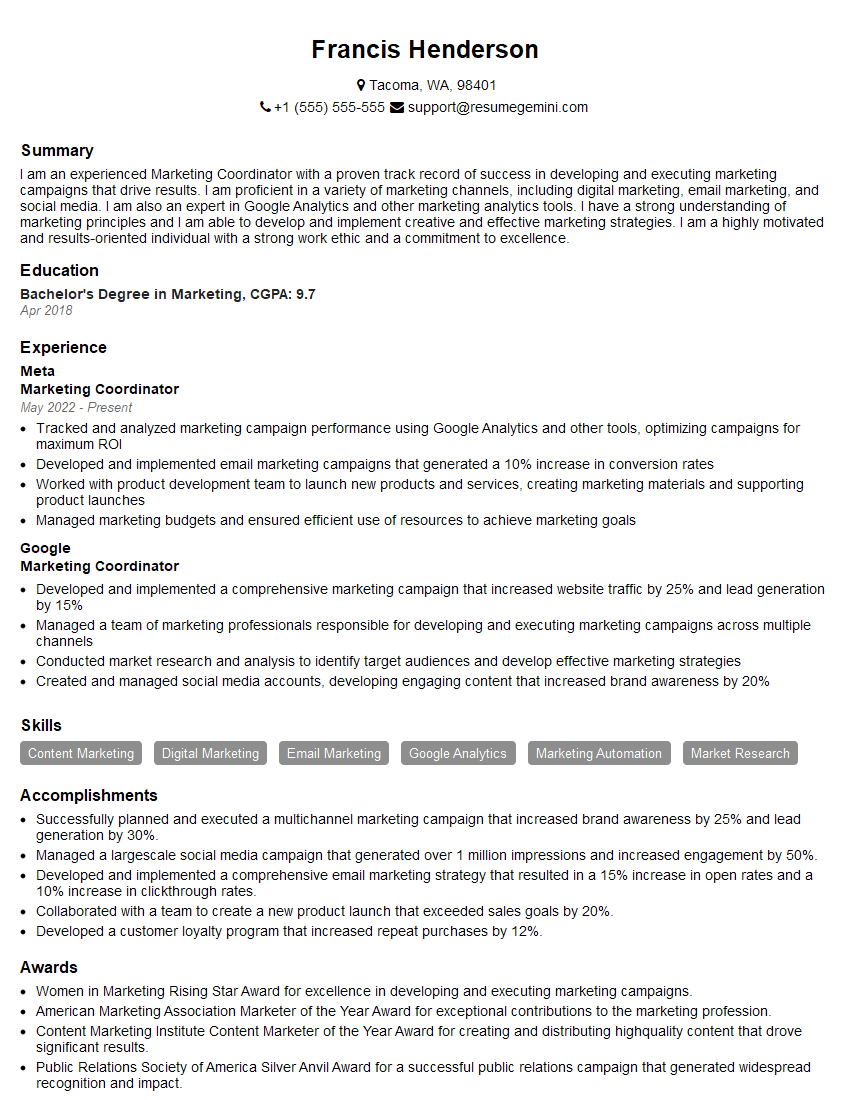
Marketing Coordinator Resume Sample
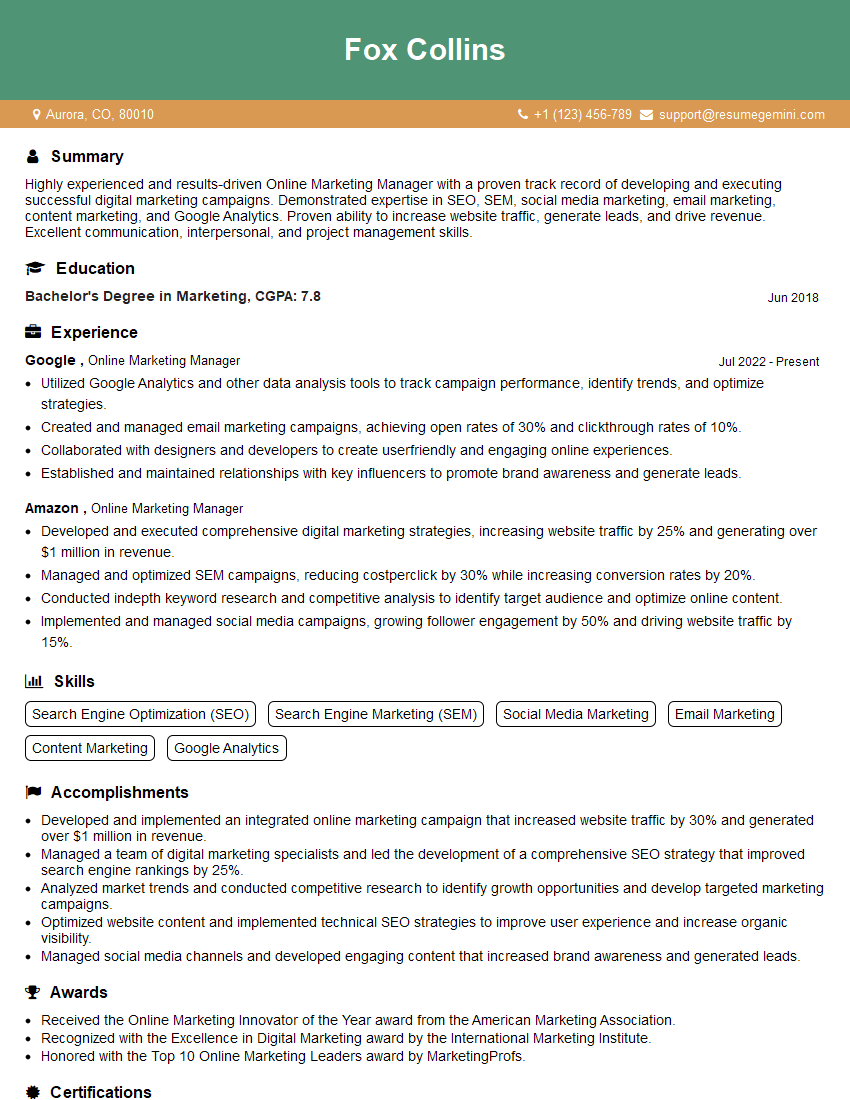
Online Marketing Manager Resume Sample
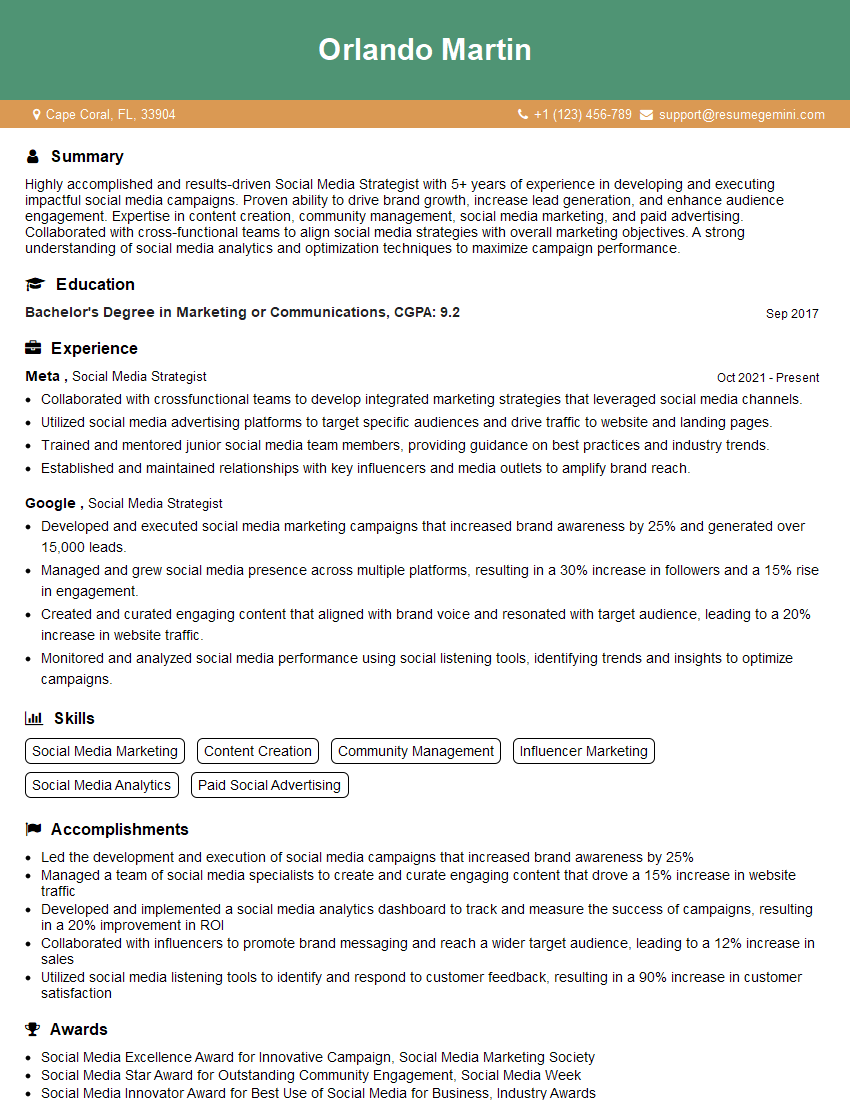
Social Media Strategist Resume Sample

Growth Hacker Resume Sample
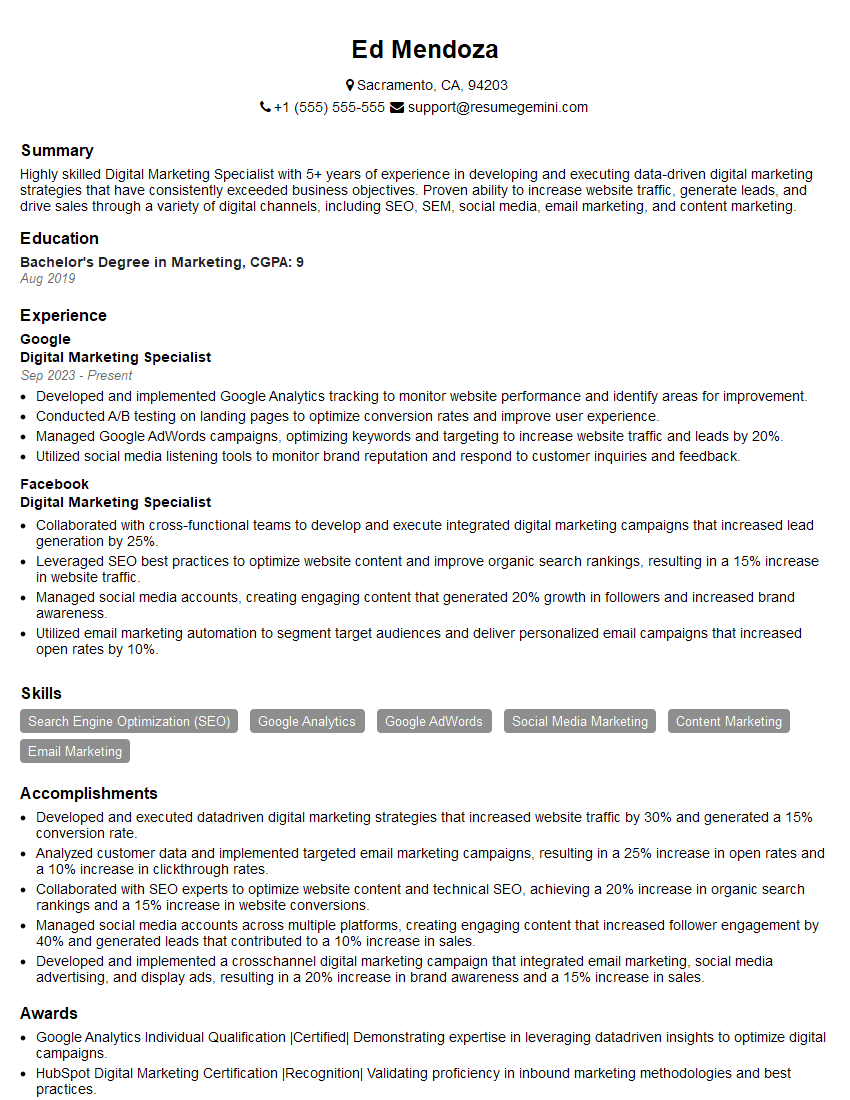
Digital Marketing Specialist Resume Sample
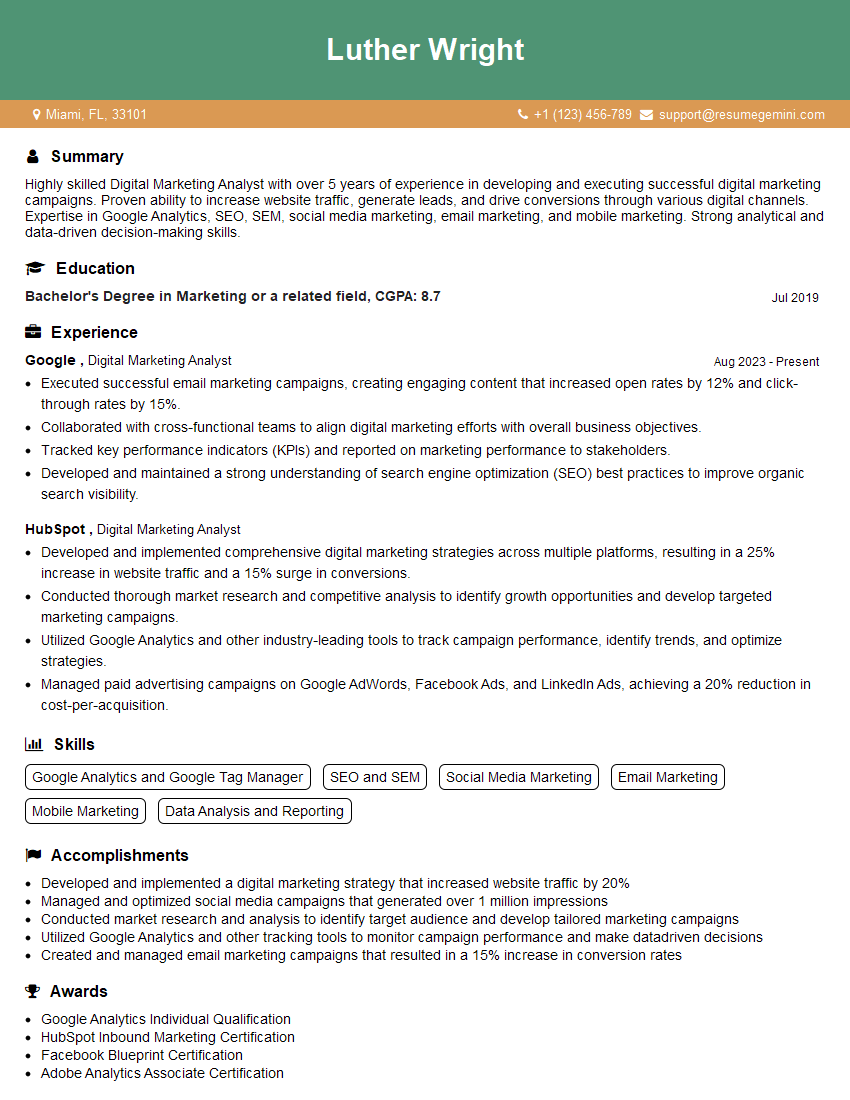
Digital Marketing Analyst Resume Sample
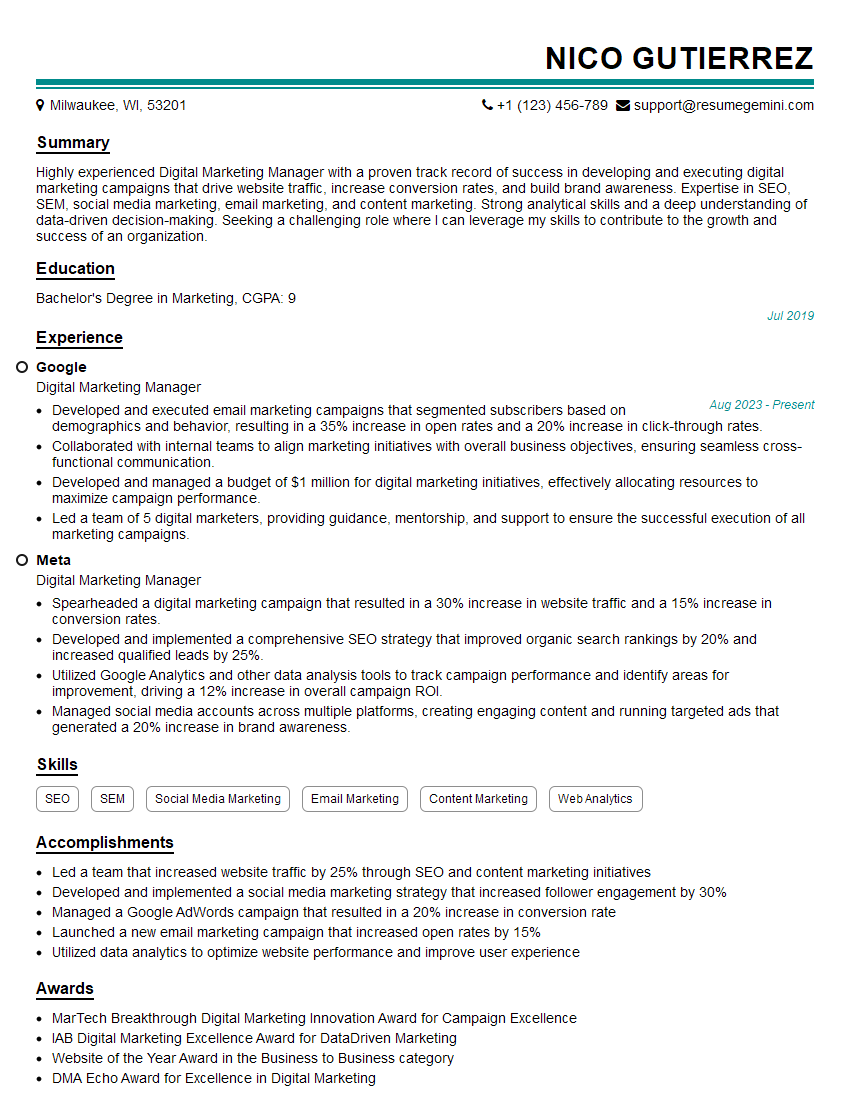
Digital Marketing Manager Resume Sample
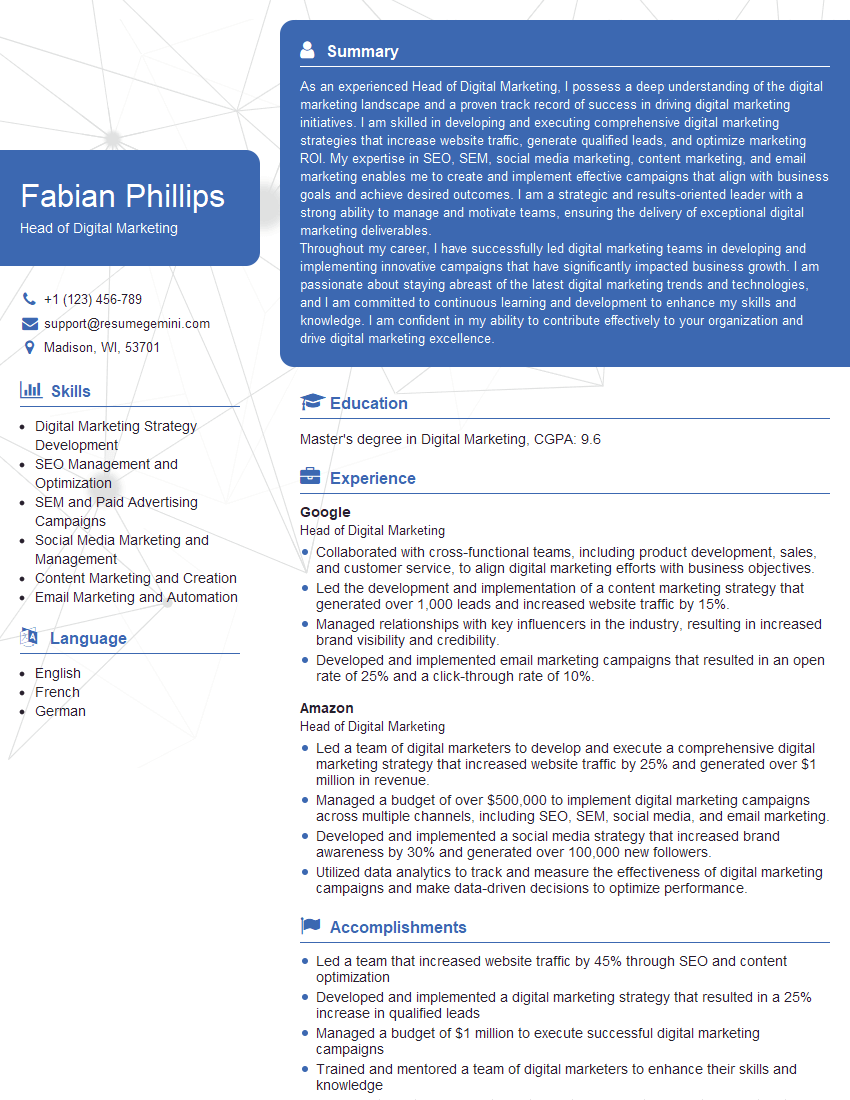
Head of Digital Marketing Resume Sample
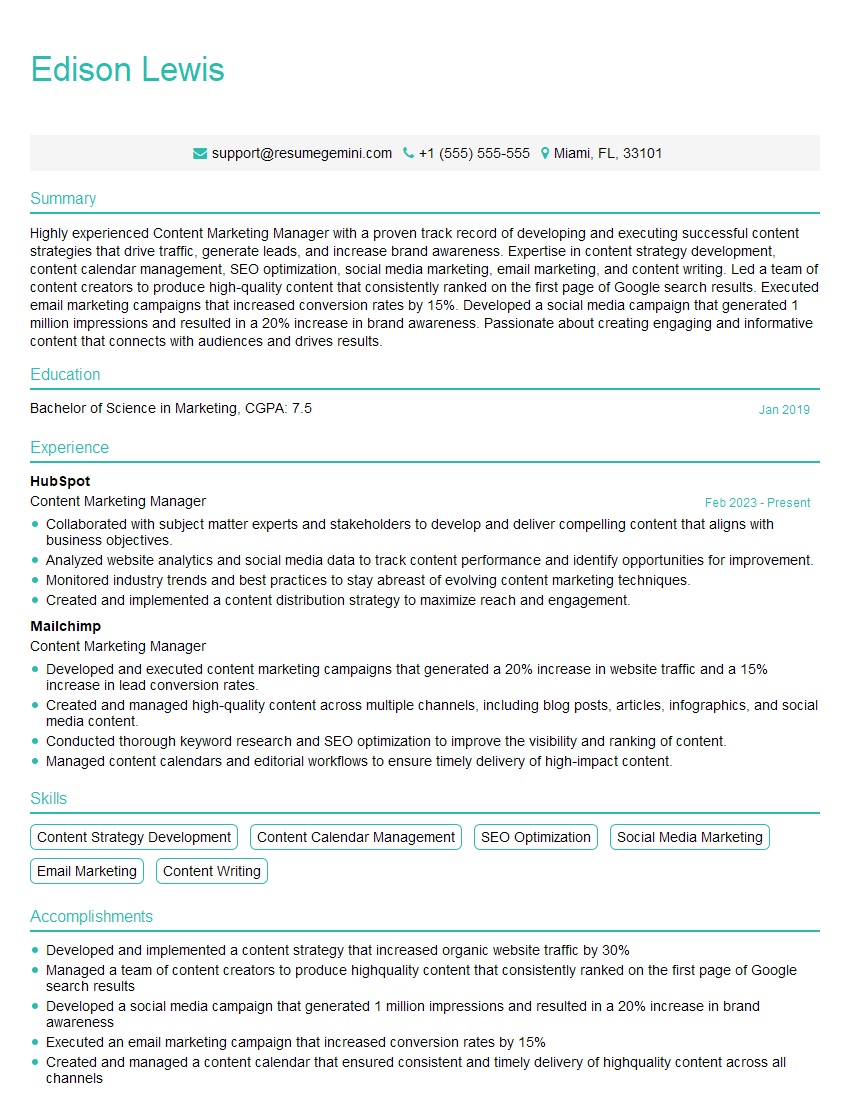
Content Marketing Manager Resume Sample

Social Media Marketing Manager Resume Sample
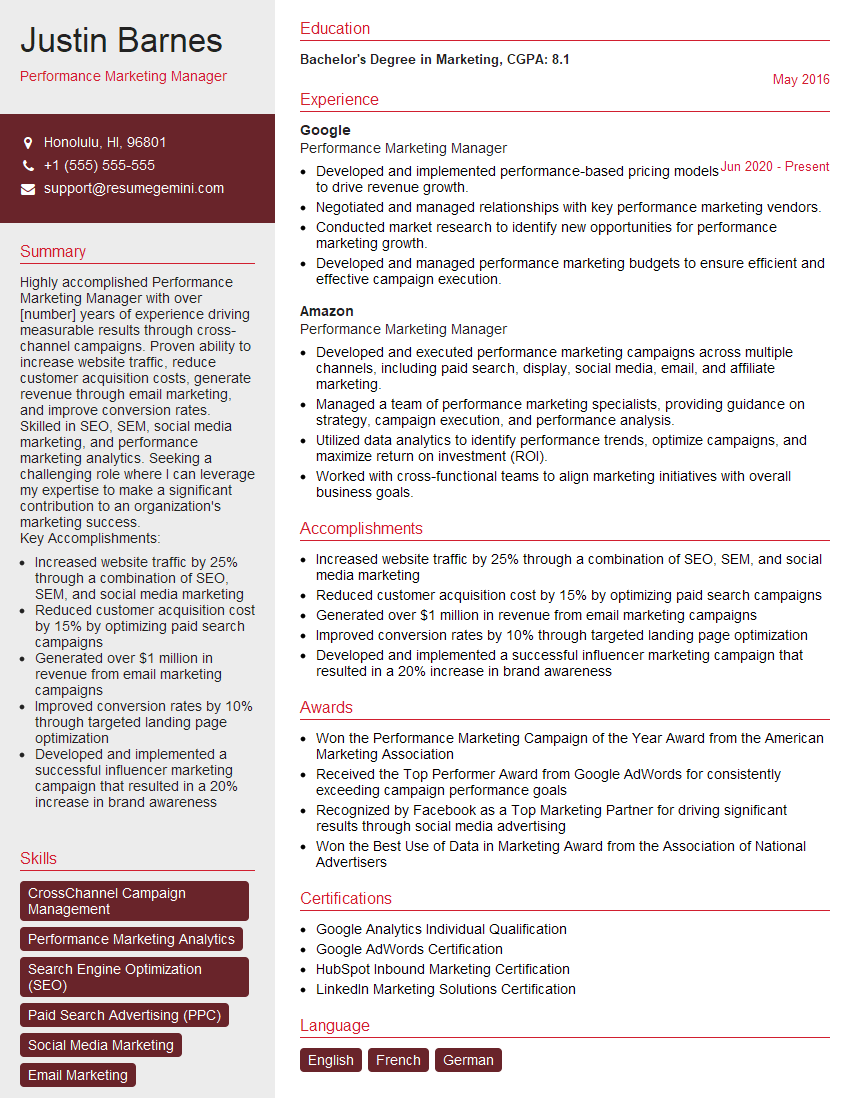
Performance Marketing Manager Resume Sample
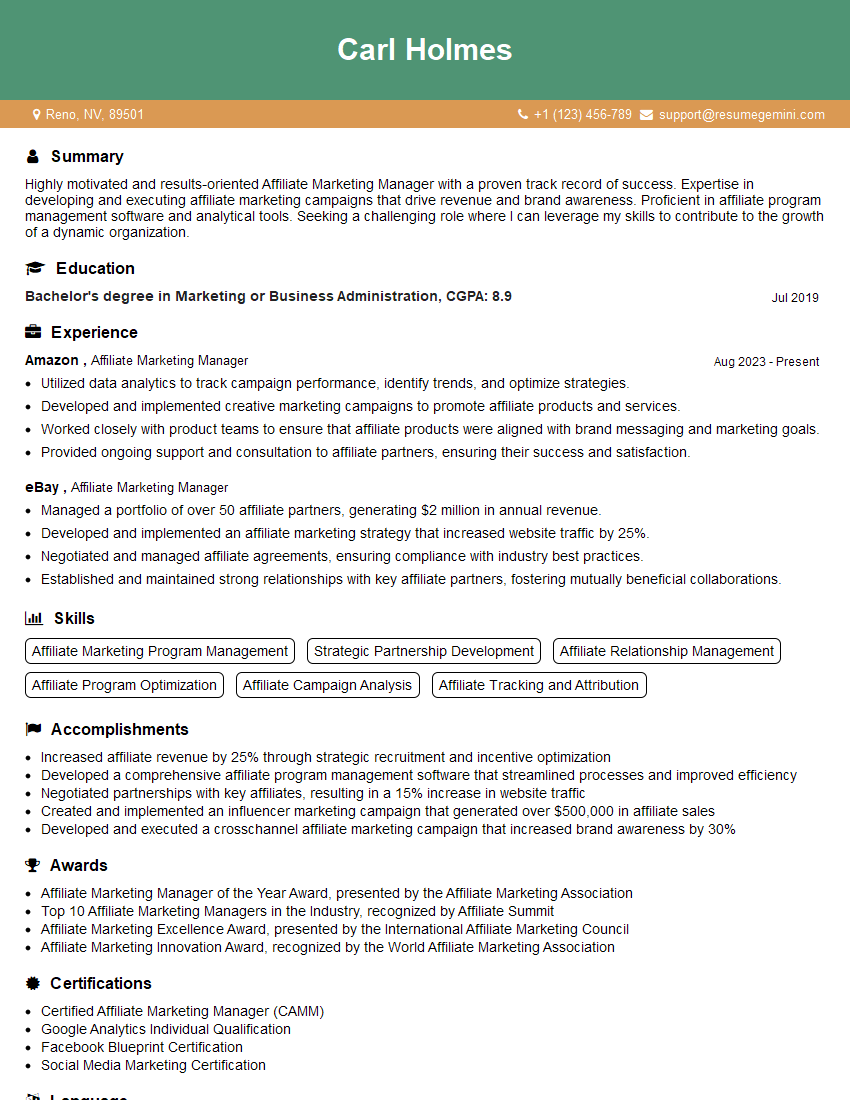
Affiliate Marketing Manager Resume Sample
- Marketing Coordinator
- Online Marketing Manager
- Social Media Strategist
- Growth Hacker
- Digital Marketing Specialist
- Digital Marketing Analyst
- Digital Marketing Manager
- Head of Digital Marketing
- Content Marketing Manager
- Social Media Marketing Manager
- Performance Marketing Manager
- Affiliate Marketing Manager
Explore more articles
Users Rating of Our Blogs
Share Your Experience
We value your feedback! Please rate our content and share your thoughts (optional).
What Readers Say About Our Blog
Very informative content, great job.
good