Cracking a skill-specific interview, like one for Water and Soil Management, requires understanding the nuances of the role. In this blog, we present the questions you’re most likely to encounter, along with insights into how to answer them effectively. Let’s ensure you’re ready to make a strong impression.
Questions Asked in Water and Soil Management Interview
Q 1. Explain the water cycle and its key components.
The water cycle is the continuous movement of water on, above, and below the surface of the Earth. Think of it as a giant, never-ending loop. It’s driven by solar energy and involves several key components:
- Evaporation: The sun’s heat turns liquid water (from oceans, lakes, rivers, and even soil) into water vapor, which rises into the atmosphere.
- Transpiration: Plants also release water vapor into the atmosphere through their leaves – a process similar to sweating in humans.
- Condensation: As the water vapor rises, it cools and condenses, forming clouds. Think of it like the moisture forming on a cold glass on a hot day.
- Precipitation: When the clouds become saturated, water falls back to Earth as rain, snow, sleet, or hail.
- Infiltration: A portion of the precipitation soaks into the ground, replenishing groundwater supplies and providing moisture for plants.
- Runoff: The remaining water flows over the land surface, eventually making its way into rivers, lakes, and oceans, completing the cycle.
Understanding the water cycle is crucial for managing water resources effectively. For instance, knowing the typical rainfall patterns in a region helps in designing irrigation systems or predicting potential droughts.
Q 2. Describe different types of soil erosion and their causes.
Soil erosion is the detachment and movement of soil particles by natural forces like wind and water, or by human activities. Different types include:
- Sheet erosion: A relatively uniform removal of topsoil, like a sheet of paper being peeled away. This often happens on gently sloping land after heavy rain.
- Rill erosion: The formation of small channels or rills on the soil surface due to concentrated runoff. Imagine tiny streams carving paths in the soil.
- Gully erosion: More severe than rill erosion, involving the formation of deep, wide channels or gullies. These are often irreversible and can drastically alter landscapes.
- Wind erosion: The detachment and transport of soil particles by wind. This is particularly common in dry, arid regions or areas with sparse vegetation.
Causes of soil erosion vary, but key factors include:
- Rainfall intensity and frequency: High-intensity rainfall can lead to increased runoff and erosion.
- Slope steepness: Steeper slopes accelerate runoff and increase the erosive force of water.
- Soil type and structure: Loose, sandy soils are more susceptible to erosion than cohesive, clay soils.
- Vegetation cover: Lack of vegetation exposes the soil to the erosive forces of wind and water.
- Human activities: Deforestation, overgrazing, and improper farming practices significantly contribute to soil erosion.
For example, unsustainable agricultural practices in the Dust Bowl era of the 1930s led to catastrophic soil erosion and dust storms.
Q 3. What are the main factors affecting soil fertility?
Soil fertility refers to the soil’s capacity to supply essential nutrients for plant growth. Several factors significantly influence it:
- Organic matter: Decomposing plant and animal matter improves soil structure, water retention, and nutrient availability. Think of it as providing a buffet of nutrients for plants.
- Nutrient content: The presence of essential macronutrients (nitrogen, phosphorus, potassium) and micronutrients (iron, zinc, manganese) is vital for healthy plant growth.
- Soil pH: The acidity or alkalinity of the soil affects nutrient availability. Most plants thrive in a slightly acidic to neutral pH range.
- Soil texture: The proportion of sand, silt, and clay influences water retention, aeration, and root penetration. A balanced mix is usually ideal.
- Soil structure: The arrangement of soil particles into aggregates (clumps) affects aeration, drainage, and root growth. A well-structured soil is crumbly and porous.
- Soil organisms: Bacteria, fungi, and other soil organisms play crucial roles in nutrient cycling and decomposition.
- Climate: Temperature and rainfall affect nutrient mineralization and leaching.
For example, adding compost to soil increases its organic matter content, thereby enhancing fertility. Conversely, excessive irrigation can lead to nutrient leaching, reducing soil fertility.
Q 4. How do you assess the quality of groundwater?
Assessing groundwater quality involves analyzing its physical, chemical, and biological properties. This typically includes:
- Physical parameters: Measuring temperature, turbidity (cloudiness), color, odor, and taste.
- Chemical parameters: Determining the concentrations of various dissolved substances, such as major ions (calcium, magnesium, sodium, chloride, sulfate), nutrients (nitrate, phosphate), and trace elements (heavy metals like lead, arsenic, mercury).
- Biological parameters: Assessing the presence of bacteria, viruses, and other microorganisms that could indicate contamination.
Methods for assessing groundwater quality include:
- Sampling: Collecting groundwater samples from wells or monitoring wells at various depths.
- Laboratory analysis: Using standard analytical techniques to determine the concentration of various parameters in the samples.
- Field measurements: Using portable instruments to measure certain parameters in the field, such as pH, conductivity, and dissolved oxygen.
The specific parameters analyzed depend on the potential sources of contamination in the area and the intended use of the groundwater. For example, if groundwater is being considered for drinking water, stricter standards are applied, focusing on parameters like bacteria and nitrate levels.
Q 5. Explain the principles of irrigation scheduling.
Irrigation scheduling involves determining the optimal timing and amount of irrigation water to apply to crops. The goal is to provide enough water to meet crop needs without over-irrigating, which can lead to water waste, nutrient leaching, and soil salinization.
Principles of effective irrigation scheduling:
- Crop water requirements: Determining the amount of water a specific crop needs at different growth stages. This often involves using crop coefficients and evapotranspiration data.
- Soil moisture monitoring: Assessing the soil’s water content using methods like soil moisture sensors, tensiometers, or gravimetric sampling. This helps determine when irrigation is needed.
- Weather forecasting: Considering weather data (temperature, rainfall, humidity, wind speed) to predict evapotranspiration rates and adjust irrigation schedules accordingly.
- Irrigation efficiency: Choosing appropriate irrigation methods (drip, sprinkler, furrow) and managing them efficiently to minimize water loss.
- Root zone depth: Understanding the depth of the crop’s root system to determine the volume of soil that needs to be irrigated.
For example, using a soil moisture sensor allows for precise scheduling, avoiding unnecessary irrigation and saving water and resources. Implementing efficient irrigation techniques, such as drip irrigation, also helps to minimize losses.
Q 6. Discuss various methods for soil conservation.
Soil conservation aims to protect soil resources from erosion and degradation. Methods include:
- Contour farming: Planting crops along the contours of slopes, reducing runoff and erosion. Imagine creating terraces on a hill to slow down water flow.
- Terracing: Creating level platforms or terraces on slopes to reduce the slope gradient and runoff velocity.
- Strip cropping: Alternating rows of crops with different erosion resistance. For example, alternating corn (high erosion risk) with alfalfa (low erosion risk).
- Cover cropping: Planting crops that cover the soil during fallow periods, protecting it from erosion and improving soil fertility.
- No-till farming: Minimizing soil disturbance during planting, reducing erosion and improving soil structure. This preserves the soil’s protective layer.
- Agroforestry: Integrating trees and shrubs into agricultural systems, providing shade, windbreaks, and enhancing soil stability.
- Windbreaks: Planting rows of trees or shrubs to reduce wind erosion.
- Reforestation: Replanting forests in degraded areas to protect soil and enhance water infiltration.
The most effective approach often involves a combination of these methods, tailored to the specific site conditions and land use.
Q 7. What are the common water pollutants and their impacts?
Water pollution involves the contamination of water bodies with harmful substances, degrading water quality and harming aquatic life. Common pollutants and their impacts include:
- Nutrients (nitrogen and phosphorus): From agricultural runoff and sewage, causing eutrophication (excessive algae growth) and oxygen depletion in water bodies, leading to dead zones.
- Pathogens (bacteria, viruses): From sewage and animal waste, causing waterborne diseases in humans and animals.
- Heavy metals (lead, mercury, cadmium): From industrial discharge and mining activities, accumulating in aquatic organisms and entering the food chain, posing health risks to humans.
- Pesticides and herbicides: From agricultural runoff, harming aquatic life and potentially contaminating drinking water.
- Oil and grease: From industrial discharge, spills, and vehicle runoff, harming aquatic life and creating aesthetic problems.
- Sediment: From erosion and construction sites, reducing water clarity, clogging waterways, and harming aquatic habitats.
- Plastics and other debris: From improper waste disposal, polluting water bodies, harming aquatic life through entanglement and ingestion.
The impacts of these pollutants can be devastating, affecting human health, ecosystem functioning, and economic activities that depend on clean water. For example, the Great Pacific Garbage Patch is a stark reminder of the impact of plastic pollution on marine ecosystems.
Q 8. Describe different water treatment processes.
Water treatment involves a series of processes to remove impurities and make water safe for human consumption and other uses. These processes can vary depending on the source water quality and intended use. Common steps include:
- Screening/filtration: Removes large debris like leaves and sticks. Think of it like straining pasta – you remove the larger pieces before further processing.
- Coagulation and Flocculation: Chemicals are added to clump together smaller particles, making them easier to remove. Imagine adding glue to sand particles so they stick together into larger clumps.
- Sedimentation: These clumps settle out of the water in large tanks due to gravity. This is like letting the sand settle at the bottom of a glass of muddy water.
- Filtration: Water is passed through filters (sand, gravel, or charcoal) to remove remaining suspended solids. Think of it like using a coffee filter to remove coffee grounds from your brew.
- Disinfection: Chemicals like chlorine or UV light are used to kill harmful bacteria and viruses. This is the final step to ensure the water is safe to drink.
For example, a municipal water treatment plant might use all these steps, while a smaller, household system might only employ filtration and disinfection.
Q 9. How do you manage stormwater runoff?
Stormwater runoff management aims to control the flow of rainwater that doesn’t soak into the ground, preventing flooding, erosion, and water pollution. Effective management involves a multi-pronged approach:
- Green infrastructure: Utilizing natural systems like rain gardens, bioswales (vegetated channels), and permeable pavements to absorb and filter stormwater. Imagine creating small ponds or ditches filled with plants to absorb rainwater instead of letting it run off directly into a storm drain.
- Improved drainage systems: Upgrading existing drainage infrastructure to handle larger volumes of water. This could involve installing larger pipes or improving the slope of gutters.
- Retention and detention ponds: These constructed ponds temporarily store stormwater, allowing it to slowly infiltrate the ground or be released gradually into the drainage system. Think of them as temporary reservoirs for stormwater.
- Public awareness campaigns: Educating the public about responsible practices like reducing impervious surfaces (e.g., concrete), proper waste disposal, and water conservation. This is crucial to get community involvement.
For instance, a city might implement a green infrastructure plan, replacing some paved areas with permeable materials, and simultaneously investing in improved storm drains.
Q 10. Explain the concept of watershed management.
Watershed management is a holistic approach to managing the entire area of land that drains into a specific body of water (river, lake, or ocean). It considers the interconnectedness of water, soil, and other natural resources within this area. The goal is to protect water quality, prevent flooding, and sustain the ecosystem.
A successful watershed management plan typically involves:
- Identifying key stakeholders: This includes local communities, farmers, industries, and government agencies. They all play a role.
- Assessing the watershed’s condition: Evaluating water quality, soil health, land use, and other factors that affect the watershed’s health.
- Developing strategies for conservation and restoration: Implementing measures to reduce pollution, improve water quality, and protect natural habitats.
- Monitoring and evaluation: Tracking the effectiveness of implemented strategies and making adjustments as needed.
For example, a watershed management plan might include measures to control agricultural runoff, restore riparian zones (vegetation along riverbanks), and implement regulations to limit industrial pollution.
Q 11. What are the benefits and limitations of drip irrigation?
Drip irrigation is a water-efficient method that delivers water directly to plant roots through a network of tubes and emitters. It offers several benefits:
- Water conservation: Minimizes water waste by delivering water directly to where it’s needed. This is much more efficient than traditional flood irrigation.
- Improved water use efficiency: Plants receive water directly at their roots, reducing evaporation and runoff.
- Reduced weed growth: Soil surface remains dry, inhibiting weed growth.
- Improved crop yields: Consistent water supply promotes healthy growth and increased yields.
However, there are limitations:
- High initial cost: Installing a drip irrigation system can be expensive.
- Clogging: Emitters can clog with sediment or debris, requiring regular maintenance.
- Not suitable for all crops: Not ideal for crops that need deep watering or large amounts of water.
- Vulnerability to damage: The tubing and emitters are susceptible to damage from rodents or harsh weather conditions.
For example, drip irrigation is well-suited for vineyards, orchards, and vegetable gardens, while it might not be as effective for large-scale field crops like wheat.
Q 12. Discuss the role of GIS in water resource management.
Geographic Information Systems (GIS) are powerful tools for managing water resources. They integrate various spatial data (maps, satellite imagery, sensor data) to provide a comprehensive view of a water system.
GIS applications in water resource management include:
- Mapping water resources: Creating maps of rivers, lakes, aquifers, and other water bodies to understand their distribution and extent.
- Modeling water flow: Simulating water movement through a watershed to predict flooding or drought conditions.
- Assessing water quality: Analyzing water quality data to identify pollution sources and monitor changes over time.
- Managing water infrastructure: Tracking the location and condition of water pipes, dams, and other infrastructure.
- Planning water projects: Evaluating the feasibility and impact of new water projects, such as dams or irrigation systems.
For instance, GIS can help identify areas vulnerable to flooding, optimize the location of new water wells, or monitor the effectiveness of a water conservation program. The integration of various datasets allows for informed decision-making.
Q 13. How do you interpret soil maps and surveys?
Soil maps and surveys provide critical information about soil properties, including texture, structure, drainage, and nutrient content. Interpreting these requires understanding the symbols and classifications used.
Soil maps typically depict different soil series (groups of soils with similar characteristics) using distinct colors and symbols. Surveys provide detailed descriptions of each soil series’ characteristics, including:
- Texture: The proportion of sand, silt, and clay, which determines water holding capacity and drainage.
- Structure: How soil particles are arranged, affecting aeration and root penetration.
- Drainage: How well water drains through the soil, indicating suitability for different crops.
- Nutrient content: The amounts of essential nutrients like nitrogen, phosphorus, and potassium.
For example, a soil map might show areas with poorly drained clay soils in blue, while well-drained sandy loam soils might be shown in yellow. The accompanying survey will give specific information on each soil type’s suitability for various agricultural uses.
Q 14. Explain the process of soil sampling and analysis.
Soil sampling and analysis is crucial for determining soil properties and guiding land management decisions. The process involves:
- Planning the sampling strategy: Determining the number and location of samples based on the field’s size, variability, and objectives of the analysis.
- Collecting soil samples: Using appropriate tools (e.g., augers, shovels) to collect representative samples from different locations. A composite sample (multiple samples mixed) is typically analyzed for general soil properties.
- Preparing samples for analysis: Air-drying the samples and grinding them to a uniform particle size.
- Analyzing samples: Sending the samples to a laboratory for analysis of various properties like pH, nutrient content, texture, organic matter content and potentially contaminants. The type of analysis depends on the intended use of the data.
- Interpreting results: Using the results to make informed decisions about soil management practices, such as fertilization, irrigation, or remediation strategies.
For example, a farmer might conduct soil sampling to determine the nutrient levels and adjust fertilizer application accordingly. Similarly, a construction project might involve soil testing to assess its bearing capacity and identify any potential contamination.
Q 15. Describe different methods for measuring soil moisture.
Measuring soil moisture is crucial for efficient irrigation and crop management. Several methods exist, ranging from simple to sophisticated techniques. These methods can be broadly classified into direct and indirect measurements.
Direct Methods: These methods directly measure the water content within the soil. Gravimetric methods involve weighing a soil sample before and after drying in an oven to determine the mass of water. This is accurate but time-consuming. Volumetric methods involve extracting a known volume of soil and determining the water content. Time Domain Reflectometry (TDR) uses electromagnetic pulses to measure the dielectric constant of the soil, which is directly related to water content. TDR is fast and relatively accurate but requires specialized equipment.
Indirect Methods: These methods infer soil moisture from other measurable parameters. Tensiometers measure the soil water tension (suction), providing an indication of the soil water availability to plants. These are relatively simple and inexpensive but are limited by their range of measurement. Capacitance probes measure the dielectric constant of the soil, similar to TDR but usually at a single point, providing a localized reading. Neutron probes use radioactive sources to measure soil moisture, providing a large sampling volume, but require specialized training and licensing. Finally, remote sensing techniques using satellite imagery or aerial photography can provide large-scale estimates of soil moisture.
Choosing the appropriate method depends on factors such as accuracy requirements, budget, spatial scale, and the type of soil.
Career Expert Tips:
- Ace those interviews! Prepare effectively by reviewing the Top 50 Most Common Interview Questions on ResumeGemini.
- Navigate your job search with confidence! Explore a wide range of Career Tips on ResumeGemini. Learn about common challenges and recommendations to overcome them.
- Craft the perfect resume! Master the Art of Resume Writing with ResumeGemini’s guide. Showcase your unique qualifications and achievements effectively.
- Don’t miss out on holiday savings! Build your dream resume with ResumeGemini’s ATS optimized templates.
Q 16. How do you assess the impact of climate change on water resources?
Climate change significantly impacts water resources, primarily through altered precipitation patterns, increased evaporation, and changes in snowmelt. Assessing this impact requires a multi-faceted approach.
Changes in Precipitation: Increased intensity and frequency of rainfall can lead to more runoff and less infiltration, reducing groundwater recharge. Conversely, prolonged droughts can severely deplete surface and groundwater resources. Analyzing historical rainfall data and climate model projections are essential to understand these trends.
Increased Evaporation: Higher temperatures lead to increased evaporation from water bodies and soil surfaces, reducing water availability. This effect is amplified in arid and semi-arid regions. We can analyze evapotranspiration rates using weather data and land surface models.
Changes in Snowmelt: Warmer temperatures can cause earlier snowmelt, leading to altered streamflow patterns and potentially reduced water availability during dry seasons. Monitoring snowpack levels and analyzing snowmelt models help us understand these dynamics.
Sea Level Rise: Rising sea levels can lead to saltwater intrusion into coastal aquifers, contaminating freshwater sources and reducing their usability. This requires careful monitoring of coastal aquifers and assessing the risk of saltwater intrusion.
A comprehensive assessment involves integrating hydrological modeling, climate projections, and statistical analysis to project future water availability and potential impacts on various sectors, such as agriculture and water supply.
Q 17. What are the key challenges in managing water scarcity?
Managing water scarcity presents significant challenges globally. These challenges are intertwined and often exacerbate each other.
Population Growth and Demand: Rising populations increase water demand for domestic, agricultural, and industrial uses, straining limited resources.
Climate Change: As previously discussed, altered precipitation patterns and increased evaporation intensify water scarcity, particularly in already water-stressed regions.
Inefficient Water Use: Water-intensive agriculture, outdated irrigation systems, and leaky water infrastructure contribute to significant water losses.
Pollution: Industrial discharge, agricultural runoff, and untreated sewage contaminate water sources, reducing their availability and increasing treatment costs. This can lead to health problems.
Water Governance and Management: Lack of effective water management policies, inadequate infrastructure, and conflicts over water resources further complicate the situation.
Addressing these challenges requires integrated water resource management strategies that consider both supply and demand-side measures, such as promoting water conservation, investing in efficient irrigation technologies, and implementing strict pollution control regulations.
Q 18. Explain the principles of sustainable water management.
Sustainable water management aims to meet present water needs without compromising the ability of future generations to meet their own needs. It’s built on several key principles:
Integrated Water Resource Management (IWRM): This holistic approach considers all aspects of water resources, including their quantity, quality, and ecological functions. It emphasizes stakeholder participation and collaboration to ensure equitable and sustainable water allocation.
Water Conservation and Efficiency: Reducing water consumption through technological improvements (e.g., drip irrigation), behavioral changes (e.g., water-saving appliances), and improved water pricing mechanisms is crucial.
Protection of Water Quality: Minimizing pollution through strict regulations, improved wastewater treatment, and responsible land management is essential to maintain the quality of water sources.
Groundwater Management: Sustainable groundwater extraction requires careful monitoring of groundwater levels and implementing strategies to avoid over-extraction and land subsidence.
Ecosystem Conservation: Maintaining the health of watersheds and aquatic ecosystems is vital for water quality and ecological balance. This can be done by protecting riparian zones and wetlands.
Public Participation and Education: Engaging communities in water management decisions and educating the public about water conservation and responsible water use are critical components of sustainable water management.
Successfully implementing these principles requires strong political will, robust governance structures, and public awareness.
Q 19. Describe different methods for improving soil drainage.
Improving soil drainage involves increasing the soil’s ability to transmit water. Several methods are available, depending on the soil type and the severity of the drainage problem.
Subsurface Drainage: This involves installing drainage pipes below the soil surface to collect and remove excess water. These pipes can be perforated or solid, and their spacing depends on the soil type and drainage requirements. This is particularly effective in heavy clay soils.
Surface Drainage: This involves creating channels or ditches on the soil surface to collect and divert surface runoff. This method is often used in conjunction with subsurface drainage.
Soil Amendment: Adding organic matter, such as compost or manure, to the soil can improve its structure and increase its porosity, thereby improving drainage. This is particularly effective in compact soils.
Tilling: Breaking up compacted soil layers through tillage can improve water infiltration and drainage. However, this should be done carefully to avoid soil erosion.
Contour Farming: Planting crops along the contours of the land can reduce surface runoff and erosion, promoting better water infiltration.
Terracing: Creating level platforms on sloping land reduces erosion and improves water infiltration.
The choice of method depends on several factors, including the severity of the drainage problem, soil type, topography, and cost considerations. Often, a combination of methods is employed for optimal results. For example, a farmer in a clay soil area might use subsurface drainage pipes in combination with the addition of organic matter to improve soil structure.
Q 20. How do you design a water distribution system?
Designing a water distribution system involves a systematic process ensuring efficient and reliable water delivery to consumers. It considers several critical factors:
Demand Assessment: This involves estimating the current and future water demand from various sectors (domestic, industrial, agricultural).
Source Selection: Identifying suitable water sources (surface water, groundwater) considering availability, quality, and sustainability.
Network Design: This includes determining the optimal layout of pipelines, pumps, reservoirs, and other components to ensure adequate water pressure and flow throughout the system.
Hydraulic Modeling: Using specialized software to simulate the flow of water through the network, ensuring adequate pressure and flow under different demand scenarios.
Material Selection: Choosing appropriate materials for pipes and other components based on cost, durability, and water quality considerations.
Pumping System Design: Determining the number, size, and location of pumps to ensure adequate pressure throughout the system.
Treatment and Storage: Designing water treatment facilities to meet water quality standards and storage facilities to meet peak demand.
Monitoring and Control: Incorporating monitoring and control systems to manage water flow, pressure, and quality.
The design process often involves iterative simulations and adjustments to optimize the system’s performance and cost-effectiveness. For instance, a system serving a rapidly growing urban area would require a more sophisticated design, possibly with multiple interconnected reservoirs and pumping stations, compared to a simpler system for a small rural community.
Q 21. What are the environmental regulations related to water discharge?
Environmental regulations governing water discharge vary significantly depending on the location and the type of discharge. However, common themes include protecting water quality and aquatic life. Key regulations often address:
Water Quality Standards: These set limits on the concentration of pollutants in discharged water. These standards often vary depending on the designated use of the receiving water body (e.g., drinking water supply, recreation, aquatic life support).
Effluent Discharge Permits: These permits are typically required for facilities discharging wastewater. The permits specify allowable pollutant limits, monitoring requirements, and other conditions to protect water quality. Failure to comply can lead to significant penalties.
Stormwater Management: Regulations address the management of stormwater runoff to prevent pollution from entering waterways. This might involve implementing best management practices (BMPs) such as retention ponds or filtration systems.
Hazardous Waste Discharge: Strict regulations govern the discharge of hazardous substances, requiring specialized treatment and disposal methods.
Thermal Pollution: Regulations might limit the discharge of heated water into waterways, preventing damage to aquatic organisms.
Specific regulations are typically enforced by environmental protection agencies at national, regional, or local levels. Examples include the Clean Water Act in the United States, the Water Framework Directive in Europe, and similar legislation in other countries. These regulations are designed to protect public health and the environment and often involve regular monitoring and enforcement mechanisms.
Q 22. Discuss the impact of agricultural practices on water quality.
Agricultural practices significantly impact water quality, often negatively. Runoff from fields carries fertilizers, pesticides, herbicides, animal waste, and soil into nearby water bodies. This pollution leads to eutrophication (excessive nutrient enrichment), harming aquatic life. Pesticides can directly poison fish and other organisms, while herbicides can disrupt aquatic plant communities. Animal waste introduces pathogens, increasing the risk of waterborne diseases. Soil erosion contributes to sedimentation, clouding the water and harming aquatic habitats. For example, intensive monoculture farming, while maximizing yield, often leads to higher fertilizer use and greater runoff, resulting in polluted streams and rivers. Sustainable farming practices, such as cover cropping, crop rotation, and no-till farming, help mitigate these effects by reducing soil erosion and fertilizer runoff.
Imagine a farm using excessive nitrogen fertilizer. Rain washes this fertilizer into a nearby river. The excess nitrogen fuels algal blooms, consuming oxygen and creating ‘dead zones’ where aquatic life cannot survive. This illustrates how seemingly isolated agricultural practices can have widespread ecological consequences. Implementing integrated pest management (IPM) strategies and precision agriculture technologies can further reduce the negative impacts on water quality by targeting pesticide and fertilizer application more efficiently.
Q 23. Explain the concept of aquifer recharge.
Aquifer recharge is the process by which water percolates down through the soil and replenishes groundwater aquifers. Think of aquifers as underground reservoirs of water stored in permeable rock and soil formations. Recharge is crucial for maintaining groundwater levels and ensuring a sustainable supply of freshwater. Several factors influence recharge rates, including rainfall intensity and duration, soil type, land use, and vegetation cover. Highly permeable soils, such as sandy soils, allow for faster recharge rates compared to less permeable soils like clay. Areas with dense vegetation generally have higher recharge rates because plants help intercept rainfall and reduce surface runoff. Conversely, urbanization and paved surfaces significantly reduce recharge rates by preventing water from infiltrating into the ground.
For example, a forested area will typically have a higher recharge rate than a paved parking lot. The trees and leaf litter help slow down the rainfall, allowing it to soak into the ground. In contrast, the impervious surface of the parking lot prevents infiltration, resulting in more surface runoff. Managed aquifer recharge (MAR) techniques are employed to artificially enhance recharge rates, often involving the controlled infiltration of treated wastewater or surface water into aquifers.
Q 24. How do you manage saltwater intrusion in coastal areas?
Saltwater intrusion in coastal areas is a serious threat to freshwater resources. It occurs when saltwater from the ocean moves into freshwater aquifers, contaminating the water supply. This is often exacerbated by over-extraction of groundwater, lowering the water table and creating a pressure gradient that draws saltwater inland. Management strategies focus on preventing excessive groundwater withdrawal and enhancing the natural barriers between saltwater and freshwater. This can involve constructing barriers, such as subsurface dams, to physically impede saltwater movement. Controlled aquifer recharge using freshwater can help push back the saltwater wedge. Sustainable water management practices, reducing reliance on groundwater, are also critical.
Imagine a coastal community relying heavily on groundwater for drinking water. Years of excessive pumping lower the water table, allowing saltwater to intrude. The solution could involve a combination of reducing groundwater extraction, implementing managed aquifer recharge with treated wastewater, and perhaps even building a subsurface barrier to contain the saltwater.
Q 25. Describe different types of soil remediation techniques.
Soil remediation techniques aim to clean up contaminated soil, restoring its health and functionality. The specific technique chosen depends on the nature and extent of the contamination. Phytoremediation uses plants to absorb or break down pollutants. Bioremediation employs microorganisms to degrade contaminants. In-situ chemical oxidation involves injecting chemicals into the soil to break down pollutants. Ex-situ remediation involves removing the contaminated soil and treating it elsewhere. This can involve thermal desorption (heating to volatilize contaminants) or soil washing (removing contaminants using water). Landfarming involves spreading contaminated soil on the surface and allowing natural processes to break it down. The choice of technique often involves a risk assessment and cost-benefit analysis.
For example, a site contaminated with petroleum hydrocarbons might be treated using bioremediation, where microorganisms are introduced to break down the pollutants. A site with heavy metals might require ex-situ remediation, involving excavation and treatment of the contaminated soil.
Q 26. What are the key considerations for designing a sustainable irrigation system?
Designing a sustainable irrigation system requires careful consideration of several factors. Water efficiency is paramount. This can be achieved through the use of efficient irrigation methods, such as drip irrigation or micro-sprinklers, which deliver water directly to the plant roots, minimizing evaporation and runoff. Water sources must be evaluated, considering their sustainability and long-term availability. Soil type and crop water requirements must be taken into account to optimize irrigation scheduling. Monitoring and feedback systems are essential to ensure efficient water use and prevent over-irrigation. Incorporating water harvesting techniques, like rainwater collection, can supplement water sources and improve system resilience. Regular maintenance is crucial to ensure the long-term efficiency and sustainability of the system.
Imagine designing an irrigation system for a vineyard in a semi-arid region. Drip irrigation would be a more efficient choice than flood irrigation, minimizing water waste and optimizing water use for the vines. Regular monitoring of soil moisture levels would help prevent over-irrigation and ensure efficient water use. Incorporating rainwater harvesting from the vineyard roof would supplement the irrigation water supply.
Q 27. How do you evaluate the effectiveness of a soil conservation program?
Evaluating the effectiveness of a soil conservation program requires a multi-faceted approach. Quantitative methods include measuring soil erosion rates using erosion pins or sediment traps. Changes in soil organic matter content, water infiltration rates, and nutrient levels can be assessed through soil sampling and analysis. Remote sensing techniques, such as satellite imagery, can be used to monitor changes in vegetation cover and land use. Qualitative methods involve interviewing farmers and community members to gather their perceptions and experiences with the program. Indicators such as changes in farming practices and farmer adoption rates are also valuable measures. A combination of quantitative and qualitative data provides a comprehensive evaluation of the program’s success in achieving its objectives.
For instance, a soil conservation program aimed at reducing erosion might be evaluated by measuring changes in sediment yield in nearby streams. A decrease in sediment yield would indicate success. Qualitative data gathered from farmers regarding their adoption of conservation practices would also provide valuable insights into the effectiveness of the program.
Key Topics to Learn for Water and Soil Management Interview
- Hydrology and Water Resources: Understanding hydrological cycles, water budgeting, and the impact of climate change on water availability. Practical application: analyzing rainfall data to predict runoff and erosion.
- Soil Physics and Chemistry: Exploring soil texture, structure, porosity, and their influence on water infiltration and retention. Practical application: designing irrigation systems based on soil properties.
- Soil Erosion and Conservation: Identifying causes of soil erosion (wind and water), and implementing effective conservation practices like contour plowing and terracing. Practical application: assessing erosion risk and recommending mitigation strategies.
- Water Quality Management: Understanding nutrient cycling, pollution sources (agricultural runoff, industrial discharge), and water treatment technologies. Practical application: developing strategies for reducing agricultural non-point source pollution.
- Irrigation and Drainage Systems: Designing efficient irrigation systems (drip, sprinkler) and drainage systems to manage excess water. Practical application: evaluating the effectiveness of different irrigation methods.
- Sustainable Land Management Practices: Exploring techniques for improving soil health, such as cover cropping, no-till farming, and agroforestry. Practical application: developing a sustainable land management plan for a specific agricultural area.
- GIS and Remote Sensing Applications: Utilizing geospatial technologies for monitoring soil moisture, water resources, and land cover changes. Practical application: creating maps to visualize water availability and soil erosion risk.
- Water Rights and Policy: Understanding legal frameworks and policies governing water use and allocation. Practical application: analyzing the implications of water policy changes on agricultural practices.
Next Steps
Mastering Water and Soil Management opens doors to rewarding careers with significant impact on environmental sustainability and food security. A strong resume is crucial for showcasing your skills and experience to potential employers. Building an ATS-friendly resume is key to getting your application noticed. We highly recommend using ResumeGemini to create a professional and impactful resume that highlights your qualifications effectively. ResumeGemini provides examples of resumes tailored to Water and Soil Management to help you get started. Take the next step towards your dream career – build your best resume today!
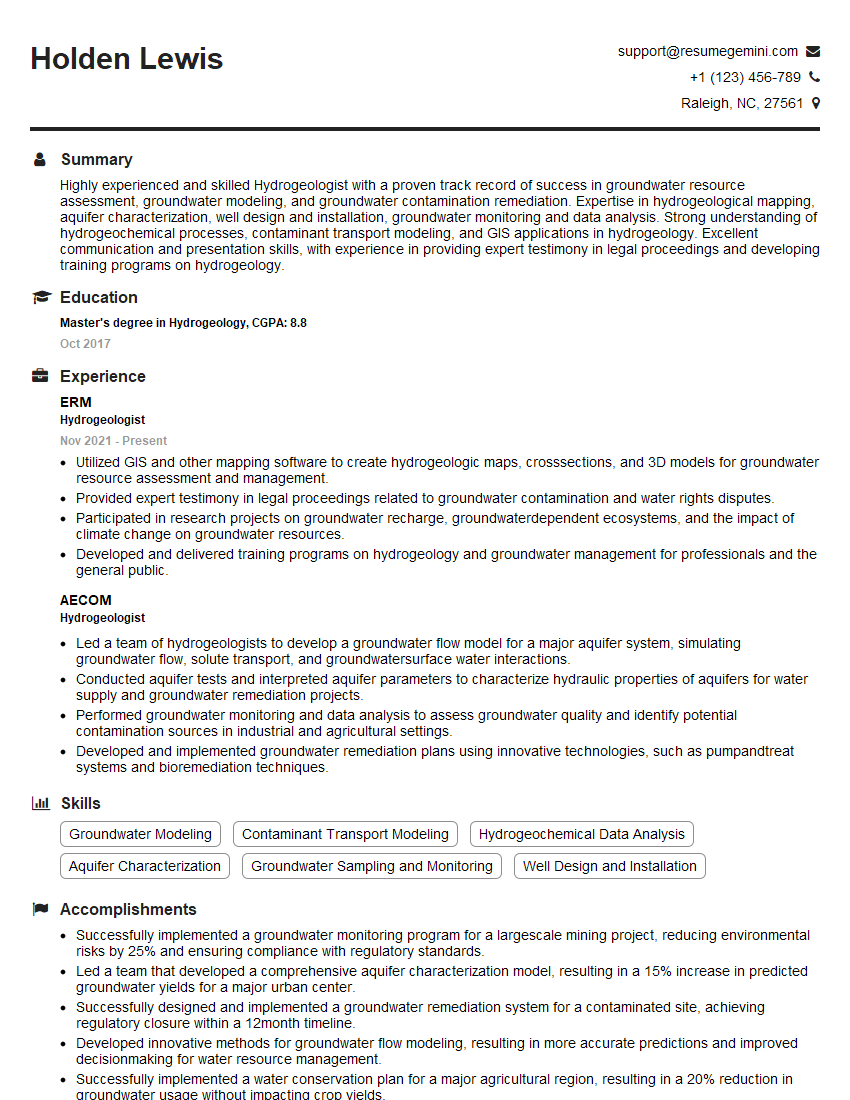
Hydrogeologist Resume Sample
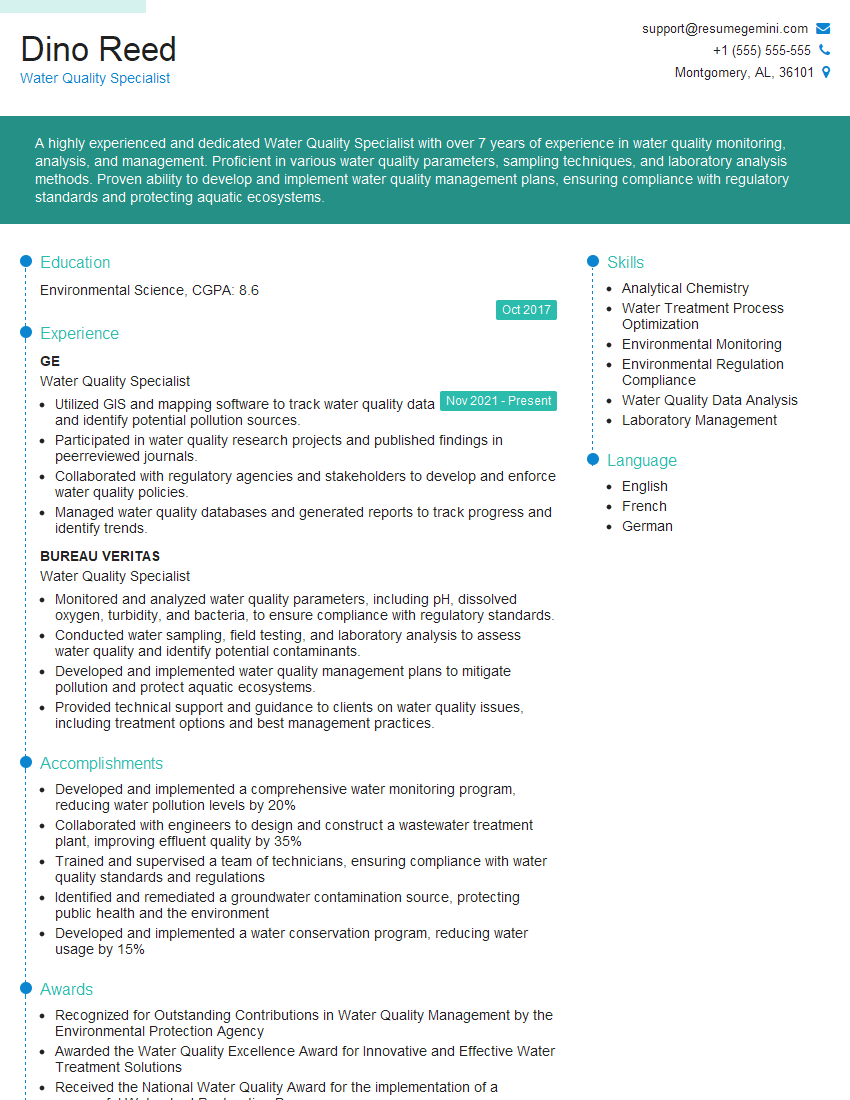
Water Quality Specialist Resume Sample
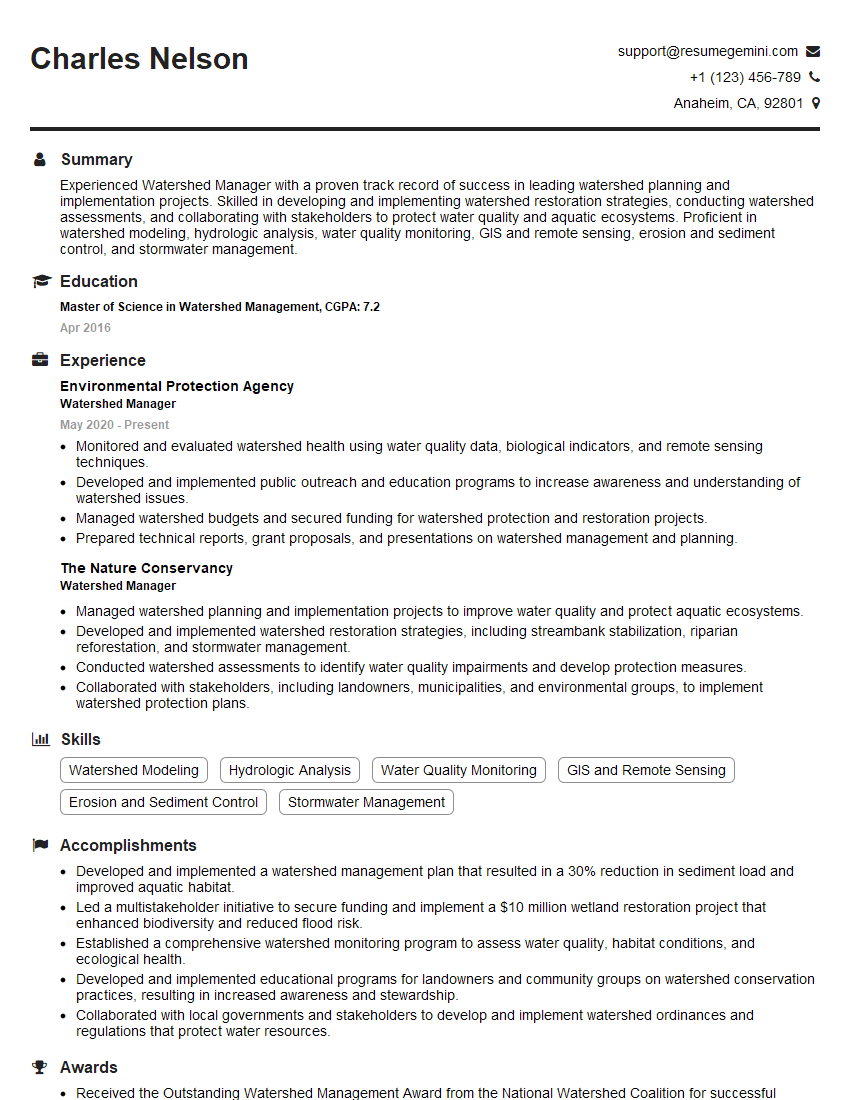
Watershed Manager Resume Sample

Environmental Remediation Specialist Resume Sample
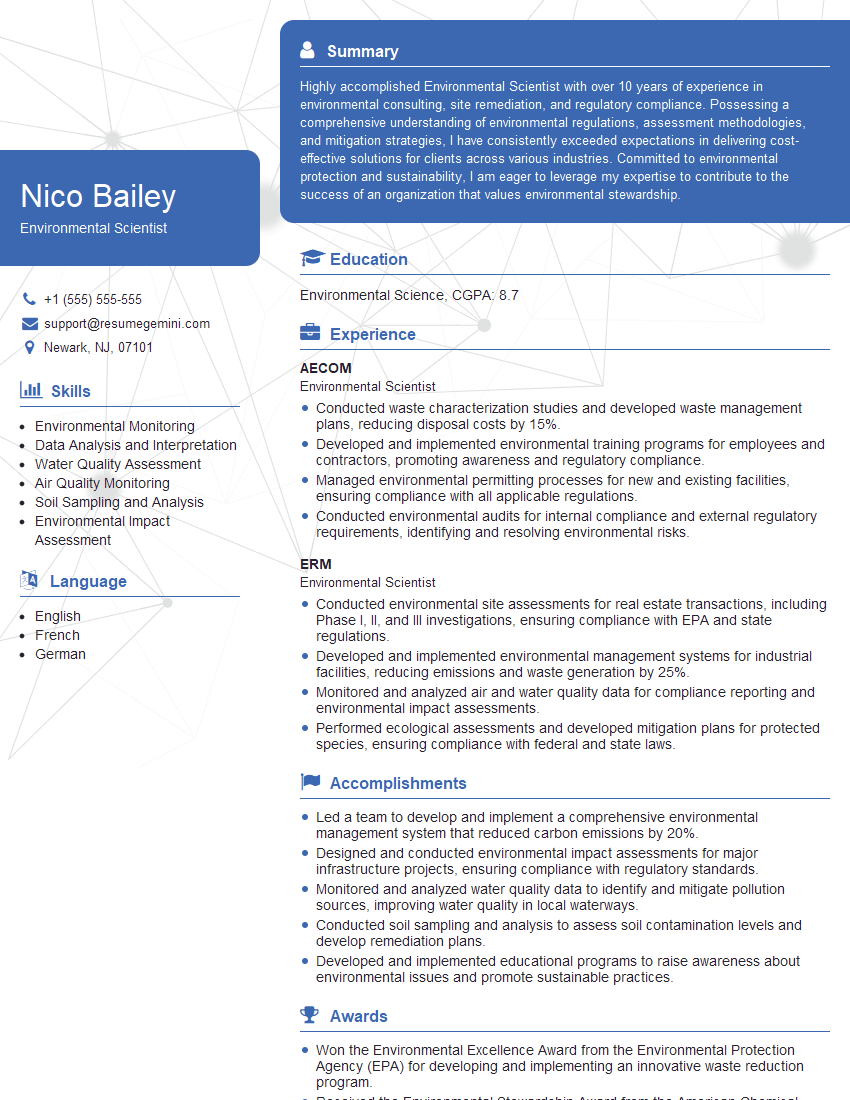
Environmental Scientist Resume Sample

Sustainability Consultant Resume Sample
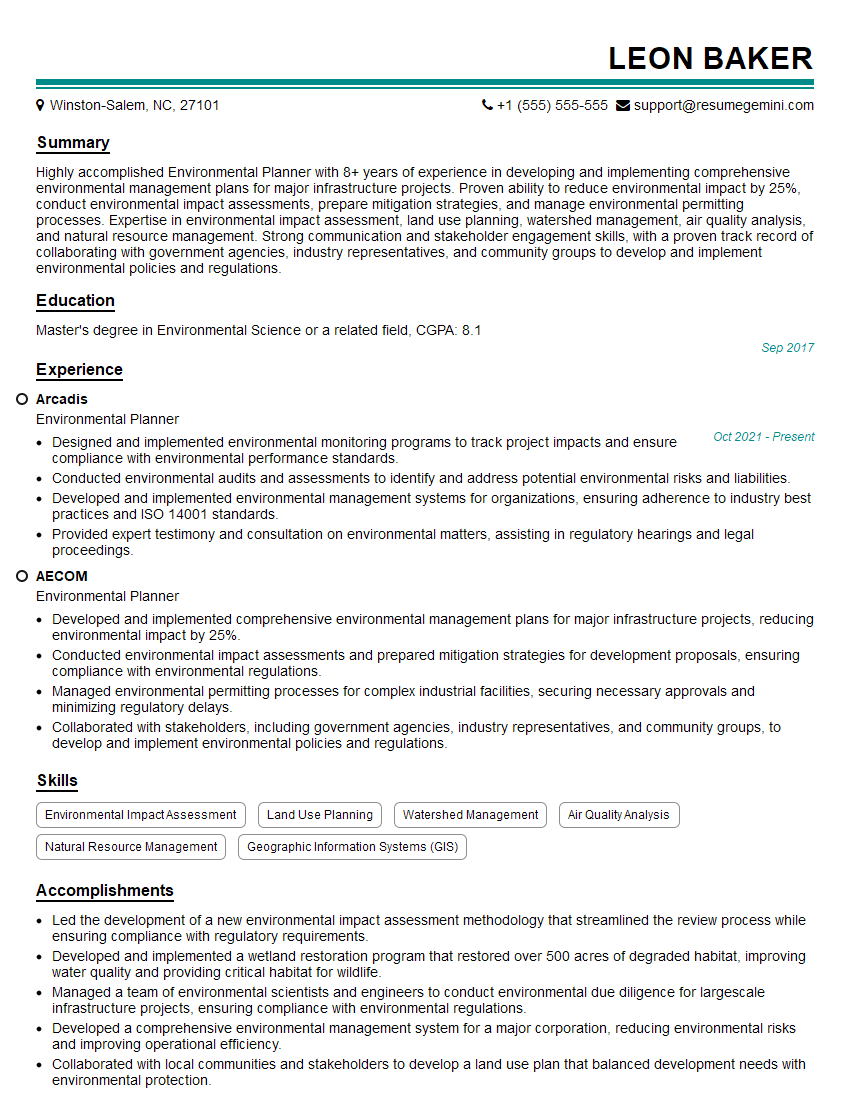
Environmental Planner Resume Sample
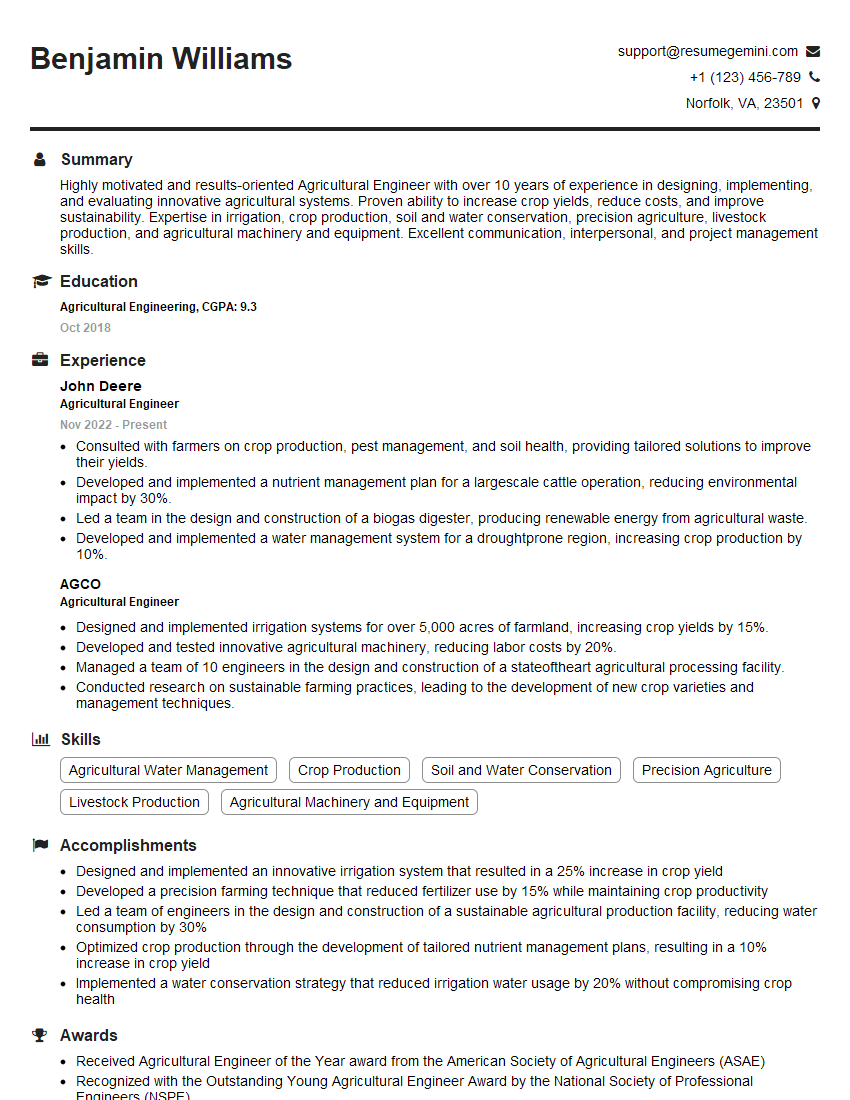
Agricultural Engineer Resume Sample

Drainage Engineer Resume Sample

Geotechnical Engineer Resume Sample
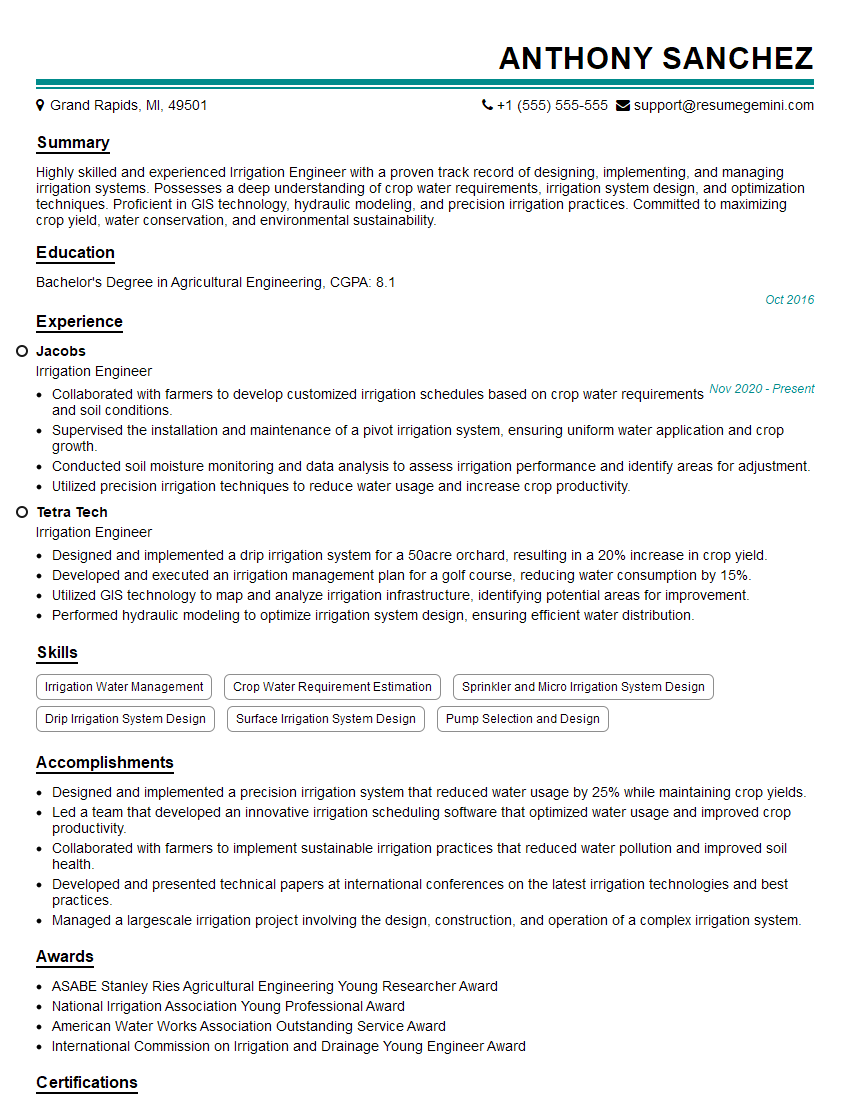
Irrigation Engineer Resume Sample
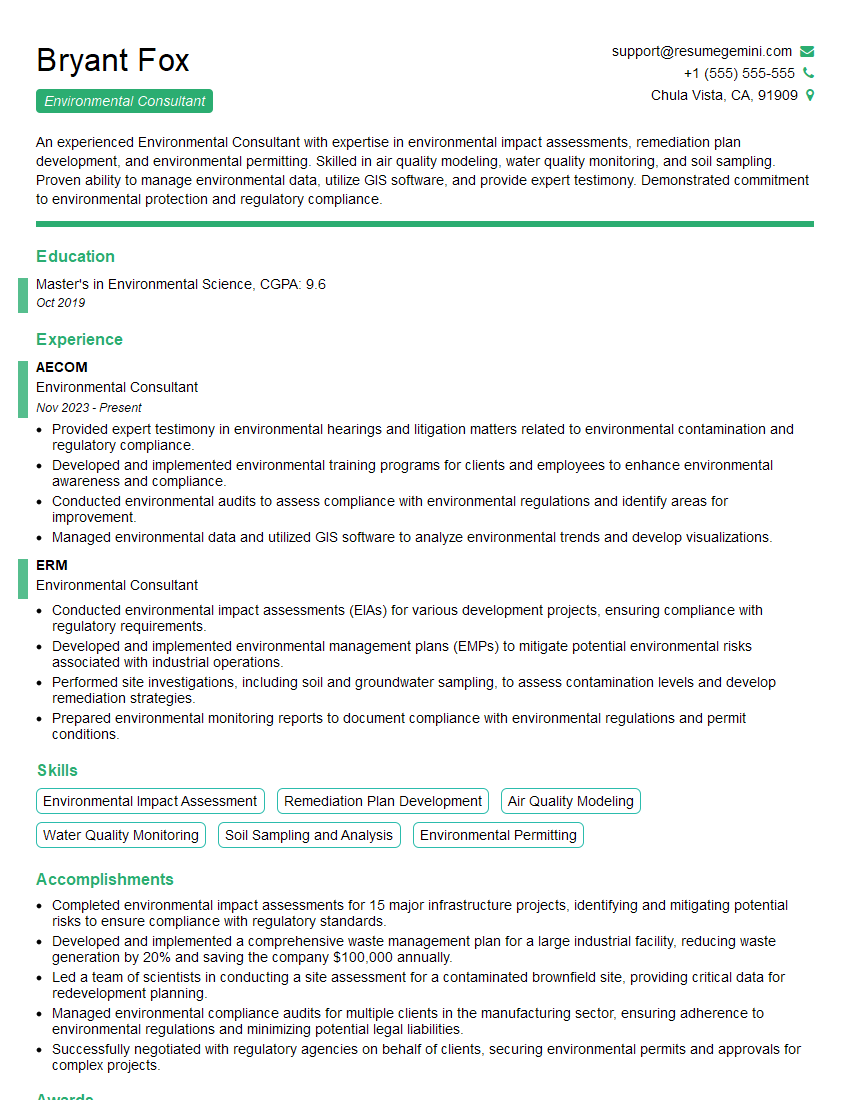
Environmental Consultant Resume Sample
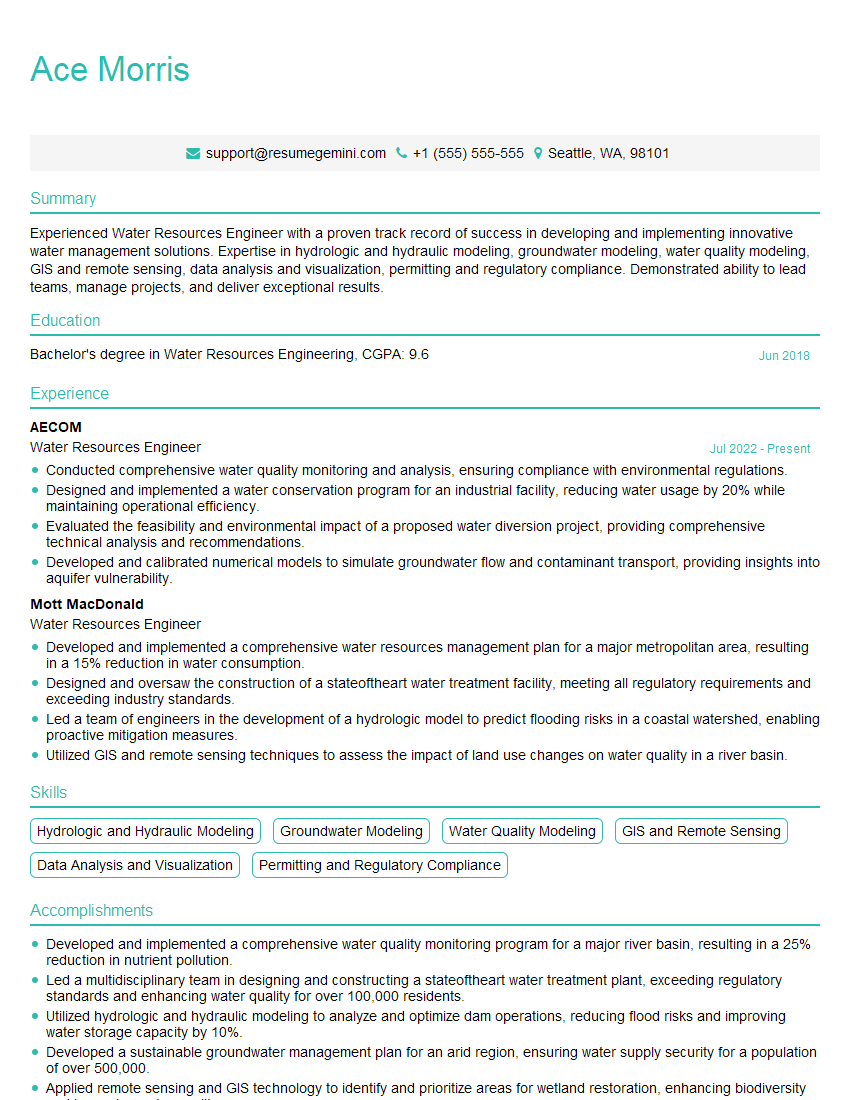
Water Resources Engineer Resume Sample

Soil Scientist Resume Sample

Soil Conservationist Resume Sample

Land Use Planner Resume Sample
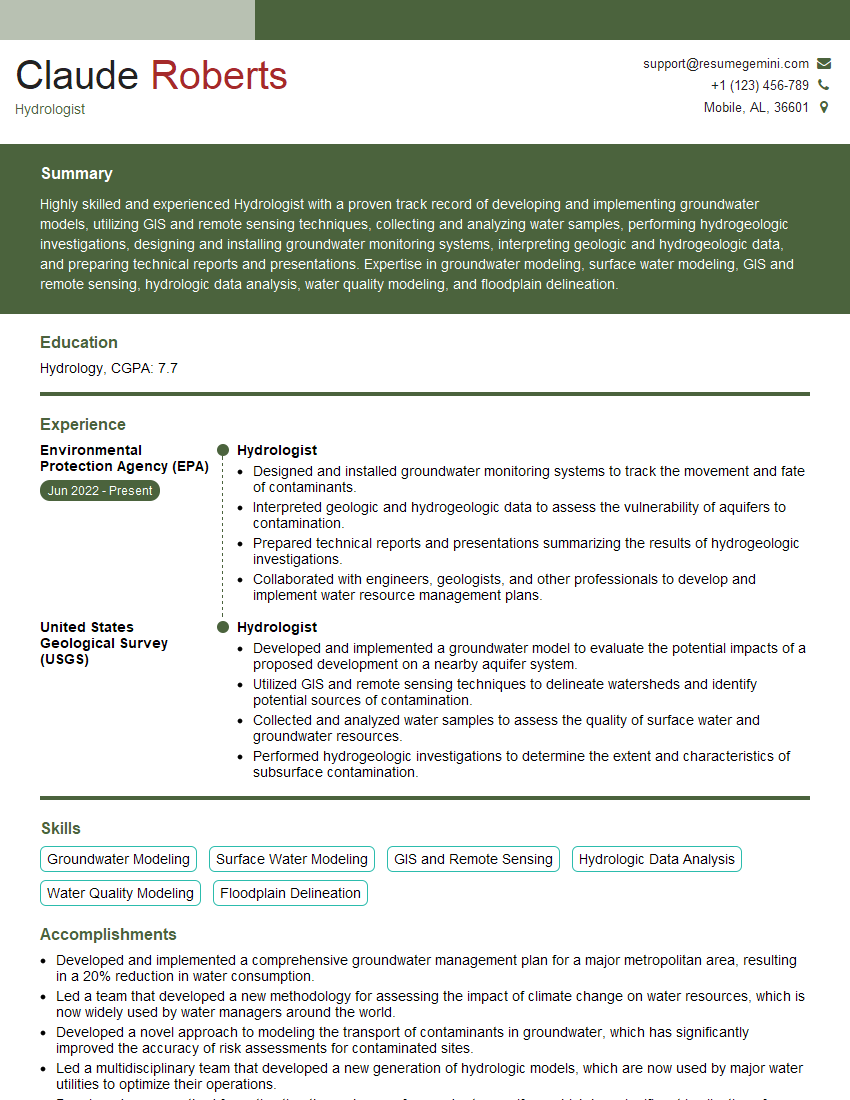
Hydrologist Resume Sample
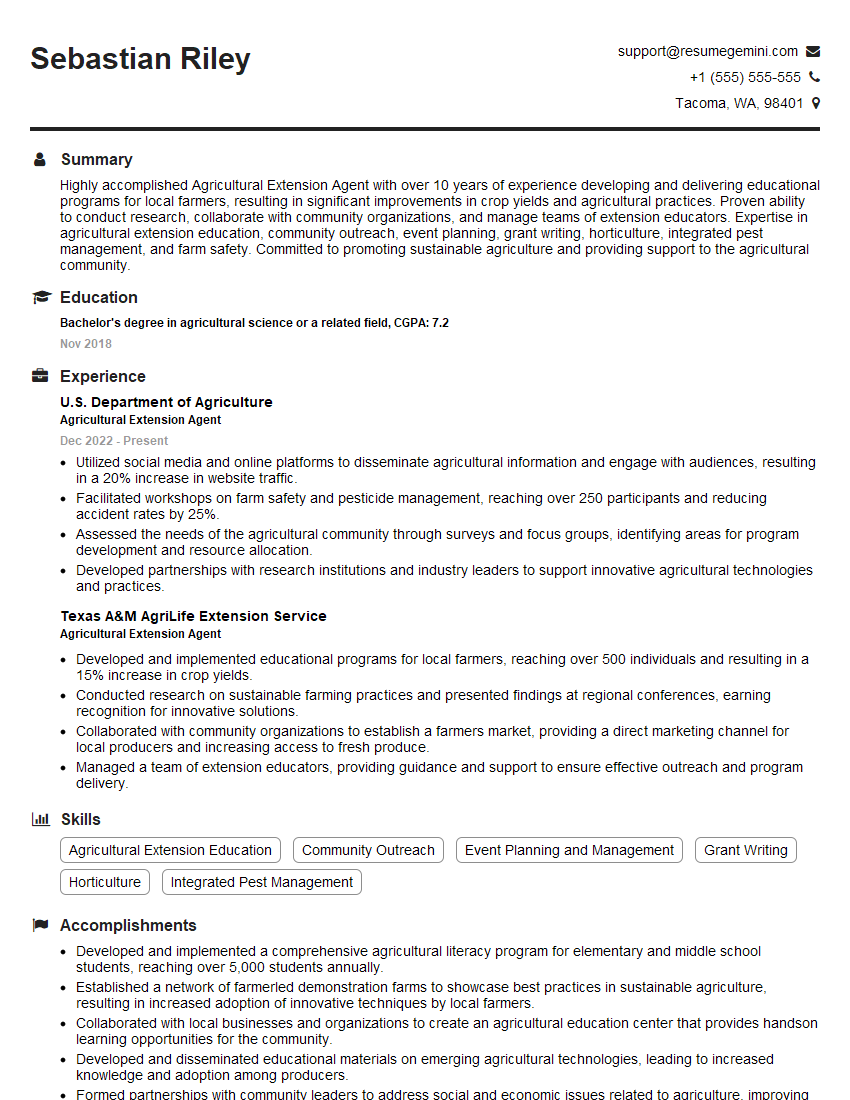
Agricultural Extension Agent Resume Sample

Irrigation Technician Resume Sample
- Hydrogeologist
- Water Quality Specialist
- Watershed Manager
- Environmental Remediation Specialist
- Environmental Scientist
- Sustainability Consultant
- Environmental Planner
- Agricultural Engineer
- Drainage Engineer
- Geotechnical Engineer
- Irrigation Engineer
- Environmental Consultant
- Water Resources Engineer
- Soil Scientist
- Soil Conservationist
- Land Use Planner
- Hydrologist
- Agricultural Extension Agent
- Irrigation Technician
Explore more articles
Users Rating of Our Blogs
Share Your Experience
We value your feedback! Please rate our content and share your thoughts (optional).
What Readers Say About Our Blog
Very informative content, great job.
good