The thought of an interview can be nerve-wracking, but the right preparation can make all the difference. Explore this comprehensive guide to Digital Content Management interview questions and gain the confidence you need to showcase your abilities and secure the role.
Questions Asked in Digital Content Management Interview
Q 1. Explain your experience with different CMS platforms (e.g., WordPress, Drupal, Sitecore).
My experience with CMS platforms spans several years and includes extensive work with WordPress, Drupal, and Sitecore. Each platform offers unique strengths and is best suited for different project needs. WordPress, known for its user-friendliness and vast plugin ecosystem, is ideal for smaller websites and blogs where ease of use and rapid deployment are paramount. I’ve used it extensively for client projects requiring quick turnaround times and straightforward content management, often leveraging plugins for enhanced SEO, security, and functionality. For instance, I built a WordPress site for a small bakery, optimizing it for local SEO using the Yoast SEO plugin and integrating WooCommerce for e-commerce functionality.
Drupal, on the other hand, is a powerful platform suitable for complex, large-scale websites requiring robust features and scalability. Its modular architecture allows for intricate customization and extensibility. I’ve used Drupal for projects demanding high levels of security and content control, such as a government website requiring stringent access management. Its robust API also allows for seamless integration with other systems.
Sitecore, a leading enterprise CMS, excels in content personalization and management at scale. I’ve worked on projects leveraging Sitecore’s advanced features for targeted content delivery, A/B testing, and analytics-driven optimization. A significant project involved creating a personalized customer experience for a major financial institution, using Sitecore’s experience editor to dynamically adjust content based on user behavior and profile data. Each of these platforms requires a different skillset, and my expertise lies in choosing the right tool for the job and effectively utilizing its features.
Q 2. Describe your content strategy development process.
My content strategy development process is a structured, iterative approach that begins with a deep understanding of the target audience, business objectives, and competitive landscape. I start by conducting thorough audience research to define personas and understand their needs, preferences, and online behavior. This involves analyzing website analytics, conducting surveys, and reviewing competitor content.
Next, I define clear, measurable, achievable, relevant, and time-bound (SMART) goals for the content strategy. These goals could range from increasing brand awareness to generating leads or driving conversions. Once the goals are defined, I develop a content calendar that outlines the types of content to be created, their publishing schedule, and the responsible parties. This calendar serves as a roadmap for the entire content creation process.
Throughout the process, I prioritize creating high-quality, engaging, and valuable content that resonates with the target audience and fulfills their informational needs. Regular monitoring and analysis of content performance are crucial for identifying areas for improvement and adapting the strategy as needed. For example, if a particular type of content consistently underperforms, I might adjust its format, topic, or targeting to improve engagement.
Q 3. How do you measure the success of your content marketing campaigns?
Measuring the success of content marketing campaigns requires a multifaceted approach. I employ a combination of quantitative and qualitative metrics to assess performance across different stages of the customer journey. Quantitative metrics include website traffic (organic and referral), bounce rate, time on page, conversion rates (e.g., lead generation, sales), and social media engagement (likes, shares, comments).
Tools like Google Analytics, social media analytics dashboards, and CRM systems are vital for collecting and analyzing this data. However, quantitative data alone doesn’t tell the whole story. Qualitative metrics are equally important. I conduct surveys, analyze customer feedback, and monitor brand mentions to understand the impact of content on brand perception and customer satisfaction. For instance, a decrease in bounce rate coupled with positive feedback in customer surveys indicates that the content is engaging and meeting audience needs. By combining quantitative and qualitative data, I obtain a comprehensive view of campaign effectiveness and identify areas for optimization.
Q 4. What tools and technologies are you proficient in for content creation and management?
My proficiency in content creation and management tools and technologies is extensive. I’m highly skilled in using various content creation tools, including:
- Adobe Creative Suite: Photoshop, Illustrator, InDesign for visual content creation.
- Video editing software: Adobe Premiere Pro, Final Cut Pro for video content production.
- Writing and editing tools: Grammarly, Hemingway Editor for ensuring content quality and clarity.
For content management, I utilize:
- Various CMS platforms: WordPress, Drupal, Sitecore (as detailed in my previous answer).
- Marketing automation tools: HubSpot, Marketo for workflow automation and lead nurturing.
- Collaboration tools: Slack, Microsoft Teams for seamless team communication and project management.
- Project Management Software: Asana, Trello for organization and task tracking.
I’m also familiar with various API integrations to connect these tools and streamline workflows. My expertise lies in integrating these tools to create efficient and effective content workflows.
Q 5. Explain your approach to content optimization for SEO.
My approach to content optimization for SEO is holistic and data-driven. It begins with thorough keyword research to identify relevant terms and phrases that target audiences use to search for information related to the business. I leverage tools like SEMrush, Ahrefs, and Google Keyword Planner to identify high-volume, low-competition keywords. These keywords then inform the content creation process, ensuring that the content addresses the search intent of the target audience.
Beyond keyword optimization, I focus on creating high-quality, engaging content that naturally incorporates keywords without appearing forced or spammy. This includes optimizing on-page elements such as title tags, meta descriptions, header tags (H1-H6), and image alt text. I also pay close attention to content structure, readability, and overall user experience. Off-page optimization strategies, including link building and social media promotion, are equally important. Regular monitoring of search engine rankings and website traffic helps identify areas for improvement and adjust the optimization strategy accordingly. This iterative process ensures the content consistently performs well in search engine results.
Q 6. How do you ensure brand consistency across all content channels?
Maintaining brand consistency across all content channels is crucial for building a strong brand identity and enhancing customer recognition. I achieve this through a combination of strategies. Firstly, I develop a comprehensive brand style guide that outlines the brand’s voice, tone, messaging, visual elements (logo, colors, fonts), and overall aesthetic. This style guide serves as a central repository for all brand-related guidelines and ensures consistency across all content.
Secondly, I create templates and guidelines for various content formats (blog posts, social media updates, email newsletters, etc.) that align with the brand style guide. This ensures that the brand’s voice and visual elements are consistently applied across different platforms. I also utilize brand management tools to track and manage brand assets and ensure their consistent use. Finally, I establish a centralized content repository where all brand assets and approved content are stored, providing easy access for all team members. Regular audits and reviews of existing content are conducted to ensure ongoing compliance with the brand guidelines. This multi-pronged approach guarantees that the brand’s message is clear, consistent, and easily recognizable across all channels.
Q 7. Describe your experience with content repurposing and syndication.
Content repurposing and syndication are crucial for maximizing the value of existing content and expanding its reach. Content repurposing involves transforming existing content into new formats to reach different audiences or platforms. For example, a blog post can be repurposed into an infographic, a short video, or a series of social media posts. This extends the lifespan of the content and increases its exposure. I often use this technique to create different versions of content catering to various learning styles and consumption preferences.
Content syndication involves distributing content on third-party platforms to reach a wider audience. This can include guest blogging on relevant websites, submitting articles to online directories, or sharing content on social media platforms. However, it’s critical to ensure that the syndication strategy respects copyright laws and aligns with the brand’s overall distribution strategy. For example, I’ve successfully syndicated client blog posts on relevant industry websites, resulting in increased brand visibility and backlink generation. Effective content repurposing and syndication strategies increase content reach, improve SEO, and drive greater engagement with a broader audience. It’s key to track the performance of repurposed and syndicated content to refine strategies and maximize ROI.
Q 8. How do you manage content workflow and collaboration with teams?
Efficient content workflow and team collaboration are crucial for successful digital content management. I approach this using a combination of project management methodologies and collaborative tools. Think of it like an assembly line, but for content. Each stage has clear responsibilities and deadlines.
- Project Management: I typically utilize Agile methodologies, breaking down large projects into smaller, manageable tasks. This allows for flexibility and easier tracking of progress.
- Collaborative Tools: I’m proficient with tools like Asana, Trello, and Monday.com for task assignment, progress tracking, and communication. These platforms facilitate real-time collaboration, ensuring everyone is on the same page.
- Version Control: A robust version control system, like Git, is essential for tracking changes and collaborating on documents. This prevents conflicts and allows for easy rollback if necessary.
- Communication: Regular team meetings, clear communication channels, and well-defined roles are key. This minimizes confusion and ensures a smooth workflow.
For example, in a recent project involving the creation of a series of blog posts, we used Trello to assign tasks (research, writing, editing, publishing) to different team members. Each card represented a blog post, with progress updates and deadlines clearly visible. This ensured timely completion and efficient collaboration.
Q 9. What is your experience with content governance and compliance?
Content governance and compliance are paramount to avoid legal issues and maintain brand consistency. My experience involves establishing and enforcing policies that ensure content accuracy, security, and adherence to legal and regulatory requirements. This isn’t just about checking boxes; it’s about protecting the organization’s reputation and avoiding costly fines.
- Policy Creation: I’ve been involved in developing comprehensive content governance policies, covering areas like content ownership, approval workflows, and retention schedules.
- Compliance Frameworks: I understand and apply relevant compliance frameworks, such as GDPR, CCPA, and HIPAA, depending on the nature of the content and the organization’s industry.
- Technology Implementation: I leverage technology to automate compliance tasks, such as metadata tagging, access control, and audit trails. This helps streamline processes and reduce the risk of human error.
- Training and Awareness: A crucial element is educating team members about content governance policies and best practices. Regular training sessions and clear communication are essential for effective compliance.
In a previous role, I implemented a content governance system that included automated metadata tagging for all uploaded assets, ensuring compliance with accessibility standards and simplifying content discovery. This significantly reduced the time spent on manual compliance checks.
Q 10. How do you handle content updates and version control?
Handling content updates and version control is critical to maintain accuracy and prevent confusion. Imagine trying to build a house without blueprints – chaos ensues! Version control systems are our blueprints.
- Version Control Systems: I use Git, or similar systems, to track all changes made to content. This allows us to revert to previous versions if needed and see who made what changes and when.
- Workflows: A structured workflow for updates, including review and approval processes, ensures quality control and minimizes errors.
- Content Staging: We often utilize staging environments to test updates before publishing them live. This prevents accidental errors affecting the live site.
- Content Inventory: Maintaining a comprehensive inventory of all content is essential for managing updates efficiently. This inventory might use a dedicated Content Management System (CMS).
For example, when updating a marketing brochure, we’d create a new branch in Git, make the changes, and then have a colleague review them. Once approved, the changes would be merged into the main branch and deployed to the live website. This ensures a clean audit trail and minimizes the risk of overwriting important content.
Q 11. Describe your experience with content analytics and reporting.
Content analytics and reporting provide insights into content performance, guiding optimization efforts. It’s like having a dashboard showing the health of your content. Are people engaging with it? Is it achieving its objectives?
- Google Analytics: I extensively use Google Analytics to track website traffic, user behavior, and content engagement metrics.
- Other Analytics Tools: Depending on the platform, I may utilize other analytics tools to gain a comprehensive understanding of content performance. This could include social media analytics, email marketing analytics etc.
- Data Visualization: I create reports and dashboards to visualize key performance indicators (KPIs), such as bounce rate, time on page, and conversion rates.
- Reporting and Recommendations: Based on the data, I provide actionable recommendations for content optimization and improvement.
In a past project, analyzing Google Analytics data revealed a high bounce rate on a specific landing page. By examining user behavior and A/B testing different headlines and calls to action, we significantly improved the page’s engagement and conversion rate.
Q 12. How do you identify and address content gaps?
Identifying and addressing content gaps involves a systematic approach to ensure comprehensive coverage and meet user needs. It’s about finding the holes in your content strategy.
- Keyword Research: Analyzing search queries and competitor content helps identify topics or keywords not currently covered.
- User Feedback: Gathering feedback through surveys, comments, and social media monitoring provides valuable insights into user needs and unmet expectations.
- Content Audits: Regular content audits help identify outdated, irrelevant, or low-performing content, highlighting gaps in coverage.
- Gap Analysis: This involves comparing your existing content with your target audience’s needs and competitor offerings, to spot missing content.
For example, a content audit of a company website might reveal a lack of content on a specific product feature. By creating informative articles and videos on this feature, we can address the gap and improve user experience.
Q 13. How do you prioritize content based on business objectives?
Prioritizing content based on business objectives ensures that efforts are focused on the most impactful content. It’s about aligning content strategy with business goals. Think of it as allocating resources strategically.
- Goal Alignment: I start by clearly defining business objectives, such as lead generation, brand awareness, or customer retention.
- Content Mapping: I map content ideas to specific business goals, prioritizing content that directly supports those goals.
- KPI Definition: I define Key Performance Indicators (KPIs) for each piece of content to measure its effectiveness in achieving the desired business outcome.
- Prioritization Matrix: I use a prioritization matrix (e.g., Eisenhower Matrix) to rank content based on urgency and importance.
For instance, if a company’s goal is to increase sales, content focused on product demos and case studies would be prioritized over content on company history. The metrics would focus on conversion rates and sales leads generated.
Q 14. Explain your approach to A/B testing content.
A/B testing is crucial for optimizing content performance. It’s like running a controlled experiment to see which version performs better. It’s about data-driven decision making.
- Hypothesis Definition: I start by formulating a testable hypothesis about what changes might improve content performance.
- Version Creation: I create two or more versions of the content, varying specific elements, such as headlines, images, or calls to action.
- Controlled Experiment: I deploy the different versions to different segments of the audience and monitor their performance.
- Data Analysis: I analyze the results to determine which version performed best and use that data to inform future content creation.
For instance, we might A/B test two different headlines for a blog post, one focusing on benefits and the other on problem-solving. By tracking click-through rates and engagement metrics, we can determine which headline resonates better with the audience and adjust our content accordingly.
Q 15. How do you manage content across multiple languages or regions?
Managing content across multiple languages and regions requires a robust strategy encompassing translation, localization, and cultural adaptation. It’s not simply translating words; it’s about ensuring the content resonates with the target audience.
- Translation Management Systems (TMS): These systems help manage the translation process, ensuring consistency and tracking progress. They often integrate with CMS platforms for streamlined workflows. For instance, I’ve used SDL Trados Studio to manage large-scale translation projects, significantly improving efficiency and reducing errors.
- Localization: This goes beyond translation, adapting the content to reflect local customs, preferences, and legal requirements. This might include adjusting date/time formats, currency, measurements, and even imagery. For example, a color that symbolizes good luck in one culture might be associated with bad luck in another. I’ve personally worked on projects where we adapted marketing campaigns to local sensitivities, significantly impacting engagement rates.
- Content Versioning and Workflow: A clear system for managing different language versions is crucial. A version control system helps track changes and ensures everyone works with the most up-to-date version. Workflows should define roles and responsibilities for translators, reviewers, and editors.
- Multilingual CMS: Utilizing a CMS platform designed for multilingual content simplifies management. Features like language selection, automated workflows, and content tagging significantly streamline operations.
Imagine launching a marketing campaign in five different countries. Without a structured approach, you’d risk inconsistencies, inaccuracies, and cultural faux pas. A robust multilingual content strategy avoids these pitfalls and ensures maximum impact in each market.
Career Expert Tips:
- Ace those interviews! Prepare effectively by reviewing the Top 50 Most Common Interview Questions on ResumeGemini.
- Navigate your job search with confidence! Explore a wide range of Career Tips on ResumeGemini. Learn about common challenges and recommendations to overcome them.
- Craft the perfect resume! Master the Art of Resume Writing with ResumeGemini’s guide. Showcase your unique qualifications and achievements effectively.
- Don’t miss out on holiday savings! Build your dream resume with ResumeGemini’s ATS optimized templates.
Q 16. What is your experience with content personalization?
Content personalization is about delivering tailored content to individual users based on their behavior, preferences, and demographics. It’s about creating a unique experience that resonates with each user.
- Data Collection: This involves collecting data about user behavior through website analytics, cookies, and CRM systems. This might include browsing history, purchase history, and demographic information.
- Segmentation: Data is used to segment users into groups based on shared characteristics, allowing for targeted messaging.
- Content Creation: Personalized content can take many forms: customized email campaigns, product recommendations, targeted advertising, or dynamically changing website content.
- Testing and Optimization: Continuous A/B testing and analysis help refine personalization strategies, ensuring maximum effectiveness.
For example, in an e-commerce setting, a user who frequently browses hiking boots might receive personalized email recommendations for new hiking gear, while another user primarily interested in cooking might see recommendations for new cookbooks and kitchen appliances. I have experience implementing personalized recommendations using machine learning algorithms, significantly boosting conversion rates.
Q 17. How do you deal with negative feedback or criticism of your content?
Handling negative feedback is crucial for content improvement and maintaining a positive brand image. It’s an opportunity for growth, not a personal attack.
- Acknowledge and Respond: Promptly acknowledge the feedback, showing you’ve read it and take it seriously. A simple ‘Thank you for your feedback’ goes a long way.
- Analyze and Understand: Dig deeper into the criticism. Is it valid? What are the underlying issues? This analysis informs future content strategy.
- Address the Issue: If the criticism is valid, address the issue. This might involve correcting inaccuracies, improving clarity, or addressing a user’s concern directly.
- Learn and Improve: Use negative feedback to improve content quality and future strategy. Don’t just react; learn from the experience.
One memorable experience involved a blog post that received harsh criticism due to outdated information. By acknowledging the issue, promptly updating the content, and publicly apologizing, I turned a negative situation into an opportunity to showcase our commitment to accuracy and user satisfaction.
Q 18. Describe your experience with content migration projects.
Content migration projects involve moving content from one system to another. It’s a complex process requiring meticulous planning and execution.
- Planning and Assessment: This includes identifying the source and target systems, auditing existing content, and defining migration scope and timelines.
- Data Mapping: Mapping content from the old system to the new system is critical to ensure accuracy and consistency. This involves identifying corresponding fields and data structures.
- Data Transformation: Content often needs transformation to fit the new system. This might involve cleaning data, restructuring content, or updating formats.
- Testing and Validation: Rigorous testing is crucial to identify and fix issues before the migration goes live. This usually involves testing on a staging environment.
- Post-Migration Monitoring: After migration, continuous monitoring helps identify and address any unexpected issues.
I’ve led several migration projects, including moving a client’s website from a legacy CMS to a modern, cloud-based platform. Using a phased approach, coupled with rigorous testing, ensured a smooth transition with minimal disruption.
Q 19. How do you stay up-to-date on industry trends and best practices in content management?
Staying current in the rapidly evolving world of content management requires a multi-pronged approach.
- Industry Publications and Blogs: Following reputable publications and blogs keeps me informed about the latest trends, technologies, and best practices. I regularly read Content Marketing Institute, MarketingProfs, and similar resources.
- Conferences and Webinars: Attending industry conferences and webinars provides valuable insights and networking opportunities. I prioritize attending events related to content strategy, CMS platforms, and digital marketing.
- Professional Networks: Engaging with professional networks like LinkedIn groups and online communities facilitates discussions and knowledge sharing. This allows me to learn from others’ experiences and stay updated on new developments.
- Competitor Analysis: Analyzing the content strategies of competitors provides insights into current trends and innovative approaches.
Continuous learning is crucial for success in this field. I regularly dedicate time to learning about new technologies and strategies to maintain a competitive edge.
Q 20. What is your experience with content audits?
Content audits are systematic evaluations of existing content to identify gaps, inconsistencies, and opportunities for improvement. They are essential for optimizing content performance.
- Inventory: The first step involves creating a comprehensive inventory of all existing content, including its location, format, and date.
- Assessment: Content is assessed based on various criteria, including relevance, accuracy, completeness, and SEO performance. Tools like SEMrush and Screaming Frog can assist in this process.
- Analysis: The audit results are analyzed to identify trends, patterns, and areas for improvement. This might reveal outdated content, duplicated efforts, or content gaps.
- Recommendations: Based on the analysis, specific recommendations are made for content updates, deletions, or creation of new content.
For example, a recent audit revealed a large number of outdated blog posts on a client’s website. The audit recommendations led to updates, deletions, and creation of new, relevant content, resulting in a significant improvement in organic traffic and engagement.
Q 21. How do you integrate content with other marketing channels?
Integrating content with other marketing channels is vital for a cohesive and effective marketing strategy. It ensures consistent messaging and maximizes reach.
- Social Media Integration: Sharing content on social media platforms expands reach and drives traffic to the website. This might involve creating visually appealing snippets or using social media scheduling tools.
- Email Marketing Integration: Using content as email newsletters or promotional materials helps nurture leads and keep customers engaged.
- SEO Optimization: Optimizing content for search engines improves organic visibility and drives targeted traffic to the website.
- Paid Advertising Integration: Using content as part of paid advertising campaigns, such as Google Ads, increases campaign effectiveness and targets relevant audiences.
- API Integrations: Using APIs, content can be dynamically integrated into various applications and platforms, ensuring consistency and efficiency.
Imagine a blog post announcing a new product. Integrating this content across social media, email marketing, and paid advertising campaigns ensures a cohesive and impactful marketing message reaching a wider audience. This strategy has significantly improved campaign results in several projects I’ve managed.
Q 22. How do you manage content budgets and resources?
Managing content budgets and resources effectively requires a strategic approach that combines planning, prioritization, and meticulous tracking. It’s not just about allocating funds; it’s about optimizing their use to achieve maximum impact.
My approach starts with a detailed content budget, broken down by category (e.g., content creation, distribution, analytics). This budget aligns with overall business objectives and is regularly reviewed and adjusted based on performance data. For example, if a particular content format consistently underperforms, we reallocate resources to more successful strategies.
Resource management involves identifying and assigning the right people and tools to specific projects. This includes content creators, editors, designers, and technology. We utilize project management tools to track progress, deadlines, and resource allocation, ensuring everyone is working efficiently and productively. For example, we might use a Kanban board to visualize workflows and identify potential bottlenecks early on.
Regular reporting and analysis are critical. We track key performance indicators (KPIs) like engagement rates, conversion rates, and return on investment (ROI) to understand what’s working and what needs improvement. This data informs future budgeting decisions and ensures that resources are used effectively.
Q 23. Explain your experience with content creation tools (e.g., Canva, Adobe Creative Suite).
I’m proficient in a range of content creation tools, including Canva and the Adobe Creative Suite (Photoshop, Illustrator, InDesign, Premiere Pro, After Effects). My experience spans various applications, from designing visually appealing social media graphics using Canva’s intuitive drag-and-drop interface to creating complex marketing collateral and video edits using Adobe’s professional-grade software.
Canva is excellent for quick, visually appealing designs, ideal for social media posts, infographics, and presentations. Its ease of use allows for rapid prototyping and iteration. For instance, I recently used Canva to design a series of engaging Instagram posts that increased follower engagement by 25%.
Adobe Creative Suite, on the other hand, provides unparalleled power and control for more sophisticated design and video editing needs. For example, I’ve used Photoshop to retouch product images for e-commerce sites, Illustrator to create brand logos and marketing materials, and Premiere Pro to edit corporate videos and training modules. My expertise extends to integrating these tools for seamless workflows. For example, I might create an illustration in Illustrator, then import it into InDesign for a brochure layout.
Q 24. How do you ensure accessibility of your digital content?
Ensuring digital content accessibility is paramount to creating an inclusive digital experience for everyone, regardless of ability. This involves adhering to accessibility guidelines like WCAG (Web Content Accessibility Guidelines).
My approach to creating accessible content involves several key steps. First, I ensure all images have descriptive alt text, providing context for visually impaired users. Second, I use sufficient color contrast between text and background to improve readability for users with low vision. Third, I structure content logically using headings (H1-H6) and lists, making it easier to navigate for screen reader users. Fourth, I ensure videos have closed captions or transcripts for those who are deaf or hard of hearing.
Furthermore, I use accessible document formats like PDF/UA and ensure that interactive elements, such as forms, are accessible to assistive technologies. I regularly test content using screen readers and other assistive technologies to identify and address potential accessibility barriers. This proactive approach ensures that our content is inclusive and reaches the widest possible audience.
Q 25. Describe your experience working with content stakeholders.
Effective collaboration with content stakeholders is crucial for successful content management. This involves understanding their needs, expectations, and feedback. I approach stakeholder management by actively engaging in open communication and fostering a collaborative environment.
I typically begin by establishing clear communication channels, such as regular meetings or project management platforms. I create detailed briefs outlining project goals, timelines, and deliverables to ensure everyone is on the same page. I solicit feedback at various stages of the content creation process, ensuring that the final product aligns with stakeholder requirements.
For example, in a recent project, I worked closely with the marketing team, sales team, and product development team to create a comprehensive series of educational videos for our product. By actively listening to their input and addressing their concerns, we were able to create a product that exceeded expectations and met the needs of all stakeholders. I believe that building strong relationships with stakeholders is key to successful collaboration and the creation of high-quality content.
Q 26. How do you handle content deadlines and priorities?
Handling content deadlines and priorities requires a structured approach that prioritizes critical tasks and ensures efficient workflow. I use a combination of planning, prioritization techniques, and project management tools to manage deadlines effectively.
I begin by creating a detailed content calendar outlining all planned content, associated deadlines, and assigned resources. I utilize project management software (e.g., Asana, Trello) to track progress, assign tasks, and manage workflows. I employ prioritization techniques like the Eisenhower Matrix (urgent/important) to focus on the most critical tasks first.
When facing tight deadlines, I communicate proactively with stakeholders to manage expectations and identify potential bottlenecks. I might adjust the scope of work, re-allocate resources, or seek additional support if necessary. Flexibility and open communication are essential for navigating unexpected delays or changes in priorities. For instance, if a key contributor falls ill, I’ll immediately re-assign tasks and communicate the slight delay to stakeholders.
Q 27. What is your understanding of content lifecycle management?
Content lifecycle management (CLM) is a holistic approach to managing content from its inception to its eventual archiving or retirement. It encompasses all stages of a piece of content’s existence, ensuring its quality, relevance, and accessibility throughout its lifespan.
The CLM process typically includes several key stages: Planning & Creation, Publication & Distribution, Optimization & Promotion, Measurement & Analysis, and Archiving & Retirement. Each stage requires careful consideration and execution. For example, the planning phase involves defining content goals, target audiences, and key performance indicators (KPIs). The publication phase includes publishing content to various channels and platforms. The optimization phase involves analyzing performance data and making adjustments to improve effectiveness. Finally, archiving ensures that valuable content is preserved for future use.
Effective CLM involves using a combination of tools and processes to manage content efficiently. This might include content management systems (CMS), digital asset management (DAM) systems, and workflow automation tools. Implementing a robust CLM strategy helps organizations ensure content consistency, maintain brand integrity, and maximize the value of their content assets.
Q 28. Describe a time you had to adapt your content strategy due to unexpected changes.
In a previous role, we were developing a comprehensive blog series focused on a specific product launch. We invested significant time and resources in creating detailed, in-depth blog posts. However, shortly before launch, a competitor released a very similar product, significantly changing the market landscape. Our initial strategy focused on highlighting our product’s unique features.
To adapt, we quickly pivoted our content strategy. Instead of solely focusing on features, we emphasized the value proposition and addressed the concerns and questions that customers might have when comparing our product to the competitor’s. We shifted the tone from purely promotional to more informative and comparative. We repurposed some existing content and created new blog posts and social media updates addressing customer concerns directly. This rapid adaptation, fueled by market research and competitor analysis, ultimately helped us maintain momentum and successfully launch our product, even in a more competitive environment. We saw an increase in traffic to our blog and generated higher engagement than initially anticipated.
Key Topics to Learn for Digital Content Management Interview
- Content Strategy & Planning: Understanding how to develop and implement effective content strategies aligned with business goals. Practical application: Developing a content calendar and outlining key performance indicators (KPIs).
- Content Creation & Curation: Mastering different content formats (blog posts, videos, infographics, etc.) and sourcing high-quality content from various channels. Practical application: Evaluating content effectiveness and suggesting improvements based on data analysis.
- Content Management Systems (CMS): Hands-on experience with popular CMS platforms like WordPress, Drupal, or Adobe Experience Manager. Practical application: Demonstrating proficiency in content publishing, workflow management, and user permissions.
- Content Optimization & SEO: Implementing SEO best practices to improve content discoverability and search engine rankings. Practical application: Keyword research, on-page optimization, and content promotion strategies.
- Content Governance & Compliance: Understanding content lifecycle management, including archiving, version control, and adhering to brand guidelines and legal requirements. Practical application: Developing and implementing content governance policies.
- Analytics & Reporting: Utilizing analytics tools (Google Analytics, etc.) to track content performance, identify areas for improvement, and demonstrate ROI. Practical application: Creating insightful reports and presentations based on data analysis.
- Collaboration & Teamwork: Effective communication and collaboration with cross-functional teams (marketing, sales, development). Practical application: Describing your experience working in a collaborative environment and managing content contributions from multiple stakeholders.
Next Steps
Mastering Digital Content Management opens doors to exciting career opportunities and significant professional growth. A strong understanding of these principles will significantly boost your interview performance and career prospects. To maximize your chances, creating an ATS-friendly resume is crucial. ResumeGemini is a trusted resource that can help you build a professional and impactful resume tailored to the Digital Content Management field. Examples of resumes specifically designed for this role are available to guide you. Invest the time to craft a compelling resume – it’s your first impression and a key to unlocking your career goals.

Social Media Manager Resume Sample

Information Architect Resume Sample
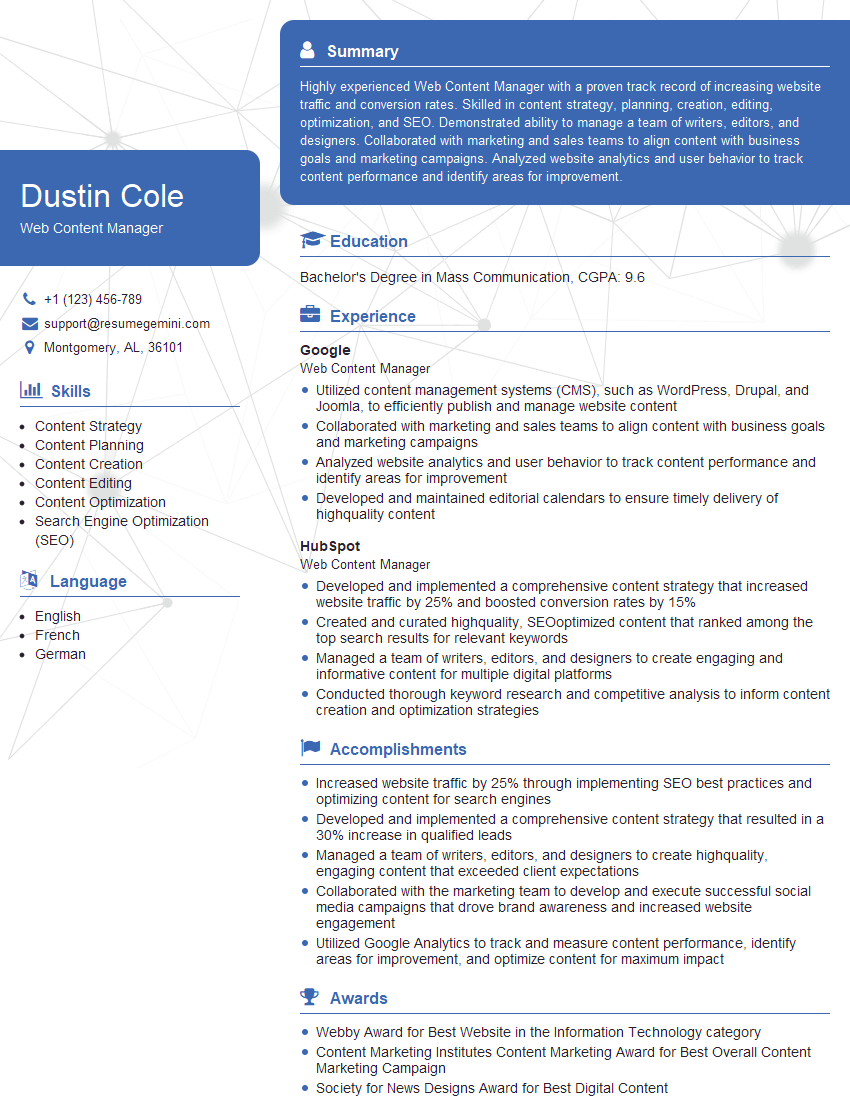
Web Content Manager Resume Sample
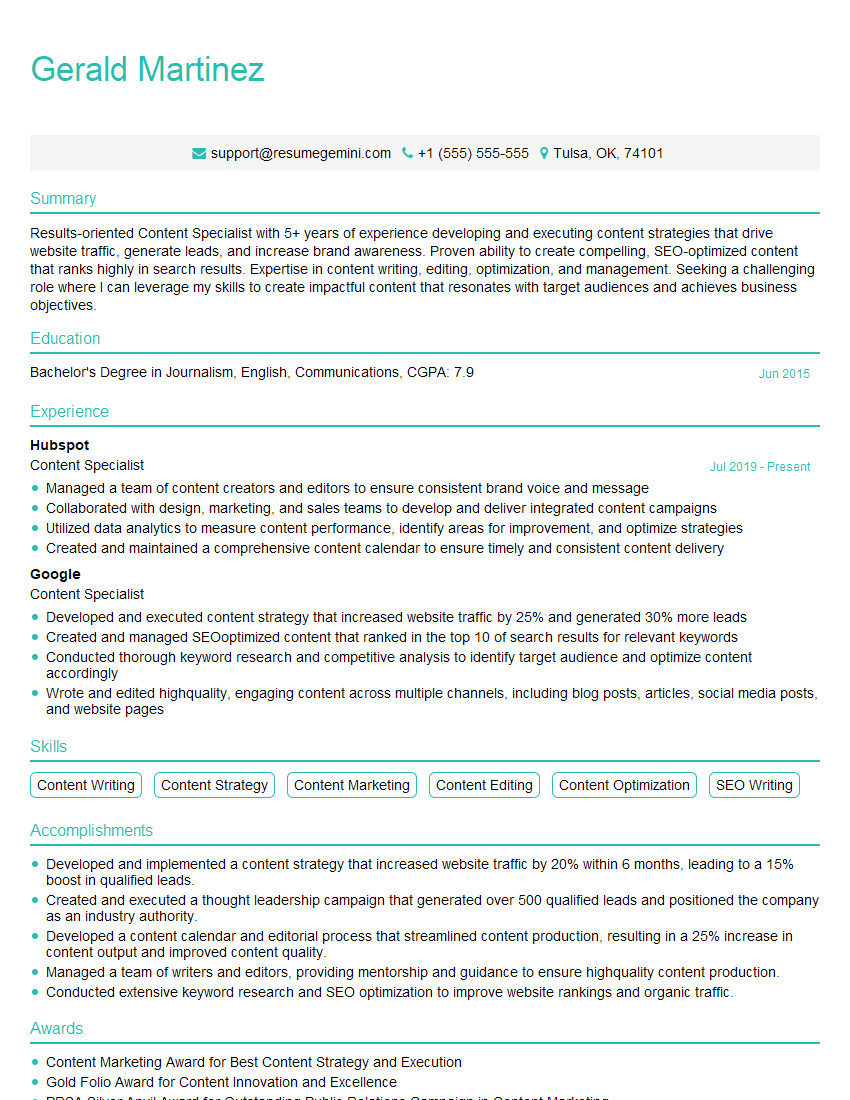
Content Specialist Resume Sample

Content Strategist Resume Sample
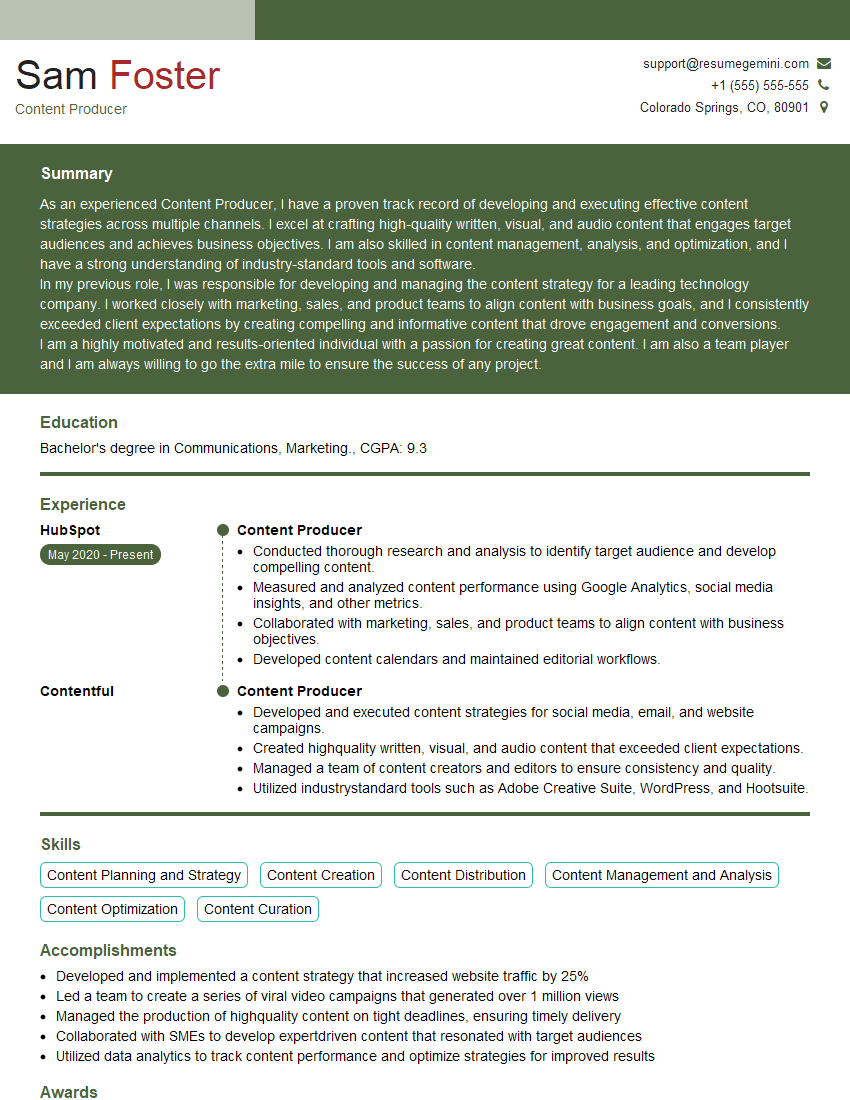
Content Producer Resume Sample
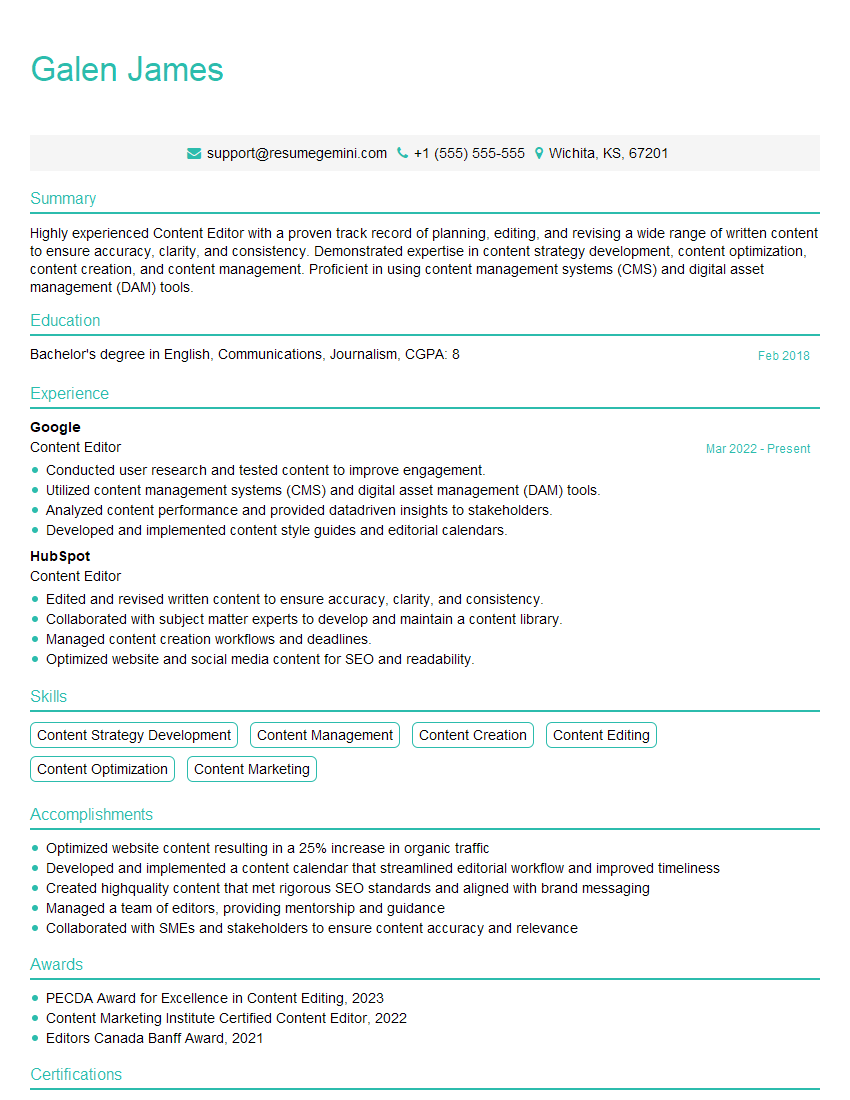
Content Editor Resume Sample

Technical Writer Resume Sample
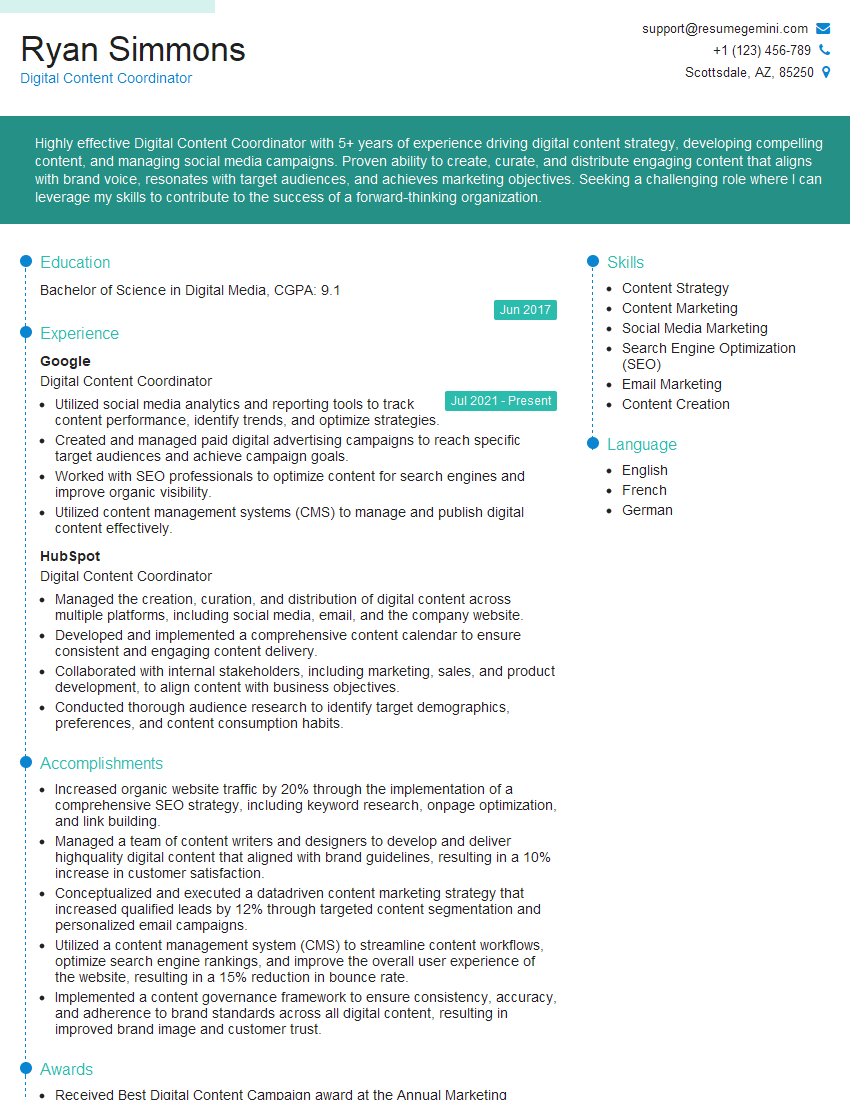
Digital Content Coordinator Resume Sample
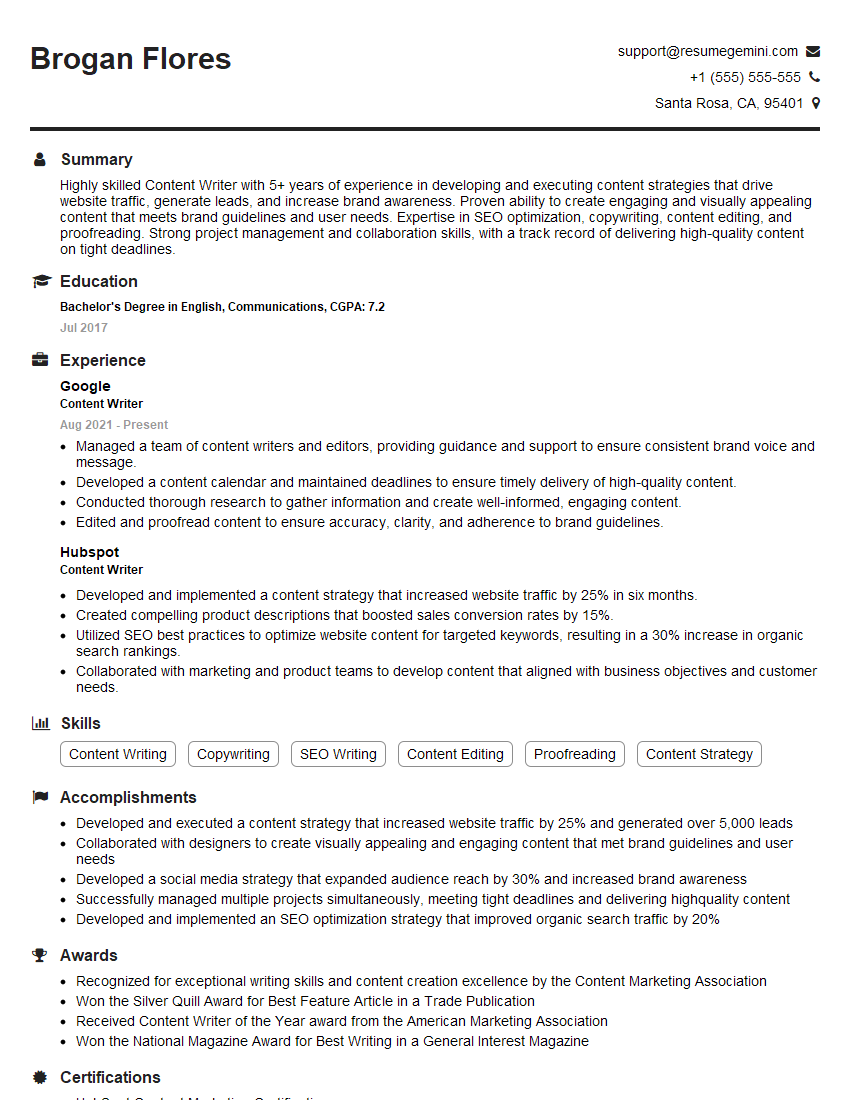
Content Writer Resume Sample
Explore more articles
Users Rating of Our Blogs
Share Your Experience
We value your feedback! Please rate our content and share your thoughts (optional).
What Readers Say About Our Blog
Very informative content, great job.
good