Interviews are more than just a Q&A session—they’re a chance to prove your worth. This blog dives into essential Dimensional Quality Inspection interview questions and expert tips to help you align your answers with what hiring managers are looking for. Start preparing to shine!
Questions Asked in Dimensional Quality Inspection Interview
Q 1. Explain the difference between accuracy and precision in dimensional measurements.
Accuracy and precision are crucial concepts in dimensional measurement, often confused but distinct. Accuracy refers to how close a measurement is to the true value. Think of it like aiming for the bullseye on a dartboard – a high accuracy measurement lands close to the center. Precision, on the other hand, refers to how close repeated measurements are to each other. High precision means your measurements consistently cluster together, regardless of whether they’re close to the true value. You could have high precision but low accuracy (all darts grouped tightly, but far from the bullseye) or high accuracy but low precision (darts scattered around the bullseye, but averaging near the center). In dimensional metrology, both are essential for reliable results; we aim for both high accuracy and high precision.
Example: Imagine measuring a 10mm diameter shaft. A highly accurate measurement might be 10.002mm, while a precise but inaccurate measurement might consistently yield 9.95mm, showing a systematic error.
Q 2. Describe your experience with Coordinate Measuring Machines (CMMs).
I have extensive experience operating and programming various Coordinate Measuring Machines (CMMs), including both touch-trigger and laser scanning types. My experience encompasses all phases, from initial setup and calibration to complex part inspection and reporting. I’m proficient in using various CMM software packages, including [mention specific software, e.g., PC-DMIS, CALYPSO]. I’ve worked on projects involving complex geometries and tight tolerances, requiring meticulous planning and execution. For example, I was involved in a project requiring the inspection of turbine blades with tolerances down to 2 microns, demanding a comprehensive understanding of CMM capabilities and error compensation techniques. This involved creating custom probing strategies and developing detailed inspection reports to meet stringent quality standards.
Beyond routine inspections, I have experience in developing and optimizing CMM measurement routines to improve efficiency and accuracy. This includes developing custom macros to automate repetitive tasks and implementing statistical process control (SPC) to monitor measurement variation over time.
Q 3. What are the common types of dimensional measurement errors?
Dimensional measurement errors can stem from various sources. They broadly fall into two categories: systematic errors and random errors.
- Systematic Errors: These are consistent and repeatable errors that influence all measurements in a similar manner. Examples include:
- Calibration Errors: Incorrectly calibrated instruments lead to consistently biased measurements.
- Environmental Errors: Temperature, humidity, and vibration can affect the accuracy of measurements.
- Geometric Errors: Imperfections in the workpiece or measuring instrument (e.g., misalignment).
- Operator Errors: Consistent mistakes made by the operator during measurement.
- Random Errors: These errors are unpredictable and vary from measurement to measurement. They are usually due to:
- Instrument Limitations: The inherent limitations of the measuring instrument itself.
- Human Variability: Slight differences in the way measurements are taken by different operators.
Understanding the source of errors is crucial for effective error reduction and minimizing measurement uncertainty.
Q 4. How do you handle discrepancies between measured values and specifications?
Discrepancies between measured values and specifications require a systematic investigation. The first step is to verify the accuracy and precision of the measurement process itself. This involves checking the calibration of the measuring instruments and assessing the influence of environmental factors. Next, I thoroughly examine the measurement process, looking for potential systematic or random errors. If the error is attributable to measurement uncertainty, I would consider expanding the sample size to get a better statistical representation of the population. However, if the discrepancy persists and is significant, it indicates a potential problem with the manufacturing process.
I would then document the findings meticulously, including all measurement data, analysis, and potential sources of error. Based on the analysis, I will suggest corrective actions – which might involve adjusting the manufacturing process, re-calibrating equipment, or implementing improved quality control measures. A root cause analysis is often conducted to prevent recurrence.
Q 5. Explain your understanding of statistical process control (SPC) in dimensional inspection.
Statistical Process Control (SPC) plays a vital role in dimensional inspection by providing a framework for monitoring and controlling the variation in a manufacturing process. In dimensional inspection, SPC uses control charts to track key measurements over time. These charts, often based on data collected from samples of parts, visually represent the process’s stability and capability. By monitoring control charts, we can quickly identify trends or shifts indicating a potential problem in the manufacturing process, allowing for timely interventions. Commonly used control charts include X-bar and R charts for mean and range, and X-bar and S charts for mean and standard deviation.
Example: Using an X-bar and R chart to monitor the diameter of a shaft, we can establish control limits. If data points consistently fall outside these limits, it signals a loss of control and might indicate a need for machine adjustment or material change.
Q 6. Describe your experience with different measurement instruments (e.g., calipers, micrometers, height gauges).
I am proficient in using a wide range of measurement instruments, from basic tools like vernier calipers and micrometers to more sophisticated instruments like height gauges and optical comparators. My experience includes selecting the appropriate instrument for the specific measurement task, understanding the limitations of each instrument, and applying proper measurement techniques to ensure accurate and reliable results. For example, I know that using a micrometer for measuring the thickness of a thin sheet requires special care to avoid damaging the sheet or applying uneven pressure.
Furthermore, I understand the importance of regular calibration and maintenance to maintain the accuracy and reliability of measurement instruments. I have personally conducted calibrations and implemented preventative maintenance schedules for various instruments in our shop. The knowledge and experience extend to utilizing optical instruments for surface texture and contour analysis.
Q 7. How do you determine the appropriate sampling plan for a dimensional inspection?
Determining the appropriate sampling plan for a dimensional inspection involves several considerations, including the acceptable level of quality, the cost of inspection, and the risks associated with accepting non-conforming parts. I typically use statistical sampling methods, such as those defined in standards like ISO 2859, to determine the sample size and acceptance criteria. The choice of sampling plan depends on various factors:
- Acceptance Quality Limit (AQL): The maximum percentage of defective items that is still considered acceptable.
- Inspection Level: The level of inspection rigor (e.g., Level II, representing a balance of cost and thoroughness).
- Lot Size: The total number of items in the batch being inspected.
- Process Capability: The inherent variability of the manufacturing process.
I often use sampling tables or statistical software to determine the appropriate sample size and acceptance criteria based on these factors. This ensures that the inspection effort is both efficient and effective in identifying potential quality problems.
Q 8. Explain your experience with GD&T (Geometric Dimensioning and Tolerancing).
GD&T, or Geometric Dimensioning and Tolerancing, is a symbolic language used on engineering drawings to define the size, form, orientation, location, and runout of features. It goes beyond simple plus/minus tolerances by specifying the permissible variation of geometric characteristics. My experience encompasses interpreting and applying GD&T symbols such as position, perpendicularity, flatness, and circularity to ensure parts meet design specifications. I’ve extensively used GD&T in the inspection of complex aerospace components, where precise alignment and form are critical for functionality and safety. For instance, I was involved in a project inspecting turbine blades where the precise location and orientation of mounting holes, as defined by GD&T, were paramount to prevent imbalances and potential catastrophic failure. Understanding and applying GD&T ensures that inspections are comprehensive and prevent misinterpretations of drawing requirements, leading to improved quality and reduced rework.
I’m proficient in using GD&T for both inspection planning and execution, including the use of CMM (Coordinate Measuring Machine) programming to ensure the measurement strategy accurately reflects the GD&T callouts on the part drawings. This involves selecting appropriate measurement probes and developing inspection routines to capture the relevant geometric data.
Q 9. How do you identify and document non-conformances during an inspection?
Identifying and documenting non-conformances is a crucial step in quality control. My process begins with a thorough comparison of the inspected part against the engineering drawing and specifications. Any deviation from the defined tolerances or GD&T requirements is noted as a non-conformance. I meticulously document each non-conformance using a standardized reporting system, which typically includes:
- Part Number and Serial Number: Ensuring unique identification of the inspected part.
- Feature Name and Location: Precisely specifying the location of the non-conformance.
- Type of Non-Conformance: Describing the nature of the defect (e.g., dimension out of tolerance, surface roughness issue).
- Measured Value and Tolerance: Providing the actual measured value and the acceptable range.
- Deviation from Specification: Quantifying the magnitude of the non-conformance.
- Supporting Evidence: Including photographs, CMM reports, or other relevant documentation.
- Inspector’s Signature and Date: Maintaining accountability.
For instance, if a hole is found to be out of its specified position, I would document the X, Y, and Z deviations from the nominal location, supported by the CMM inspection report showing the actual measured coordinates. This detailed documentation is vital for tracking defects, identifying root causes, and implementing corrective actions.
Q 10. Describe your experience with using different CMM software packages.
My experience spans several CMM software packages including PC-DMIS, PolyWorks, and Calypso. Each package offers unique capabilities, but my proficiency lies in leveraging their strengths for specific tasks. For example, PC-DMIS is excellent for its robust programming capabilities and extensive library of measurement routines, making it ideal for complex parts with intricate GD&T requirements. PolyWorks, with its powerful reverse engineering capabilities, is useful when dealing with parts that lack detailed CAD models. Calypso shines in its user-friendly interface and statistical process control features, facilitating streamlined data analysis. I am comfortable adapting my approach based on the specific needs of the project and the software available. In practice, this often involves selecting the best tool for the job – for high volume repetitive measurements I might favour Calypso for its speed and efficiency, while for complex one-off parts requiring sophisticated programming PC-DMIS would be preferred.
Q 11. What are your preferred methods for analyzing dimensional measurement data?
Analyzing dimensional measurement data requires a systematic approach. My preferred methods involve utilizing the software’s built-in statistical analysis tools, creating histograms and control charts to identify trends and outliers. I also perform capability studies (e.g., Cpk analysis) to assess the process capability in meeting the specified tolerances. Beyond the software, I visually inspect the data for unusual patterns or anomalies that might indicate measurement errors or process issues. For example, a sudden shift in the average measurement might suggest a tooling problem or a change in the manufacturing process. Furthermore, I utilize statistical software packages such as Minitab or JMP for more advanced analysis, especially when dealing with large datasets or complex experimental designs. This combined approach ensures a comprehensive understanding of the dimensional characteristics of the parts and helps identify potential areas for improvement.
Q 12. How do you ensure the accuracy and traceability of your measurement equipment?
Ensuring accuracy and traceability of measurement equipment is paramount. We maintain a rigorous calibration program using certified standards traceable to national or international standards organizations (like NIST). Each CMM undergoes regular calibration checks according to a predefined schedule, documented with calibration certificates. The calibration process verifies the accuracy of the machine’s spatial measurements and ensures that any deviations are within acceptable limits. We employ a robust system for managing calibration data, including a database tracking calibration dates, results, and any corrective actions taken. Furthermore, we utilize artefact standards, such as gauge blocks and spheres, to monitor the CMM’s performance between calibrations and detect any potential drift or degradation. This proactive approach maintains the integrity of our measurements and guarantees the reliability of our inspection data.
Q 13. Describe a situation where you had to troubleshoot a dimensional measurement issue.
During the inspection of a batch of precision machined gears, we encountered inconsistencies in the measured tooth thickness. Initial measurements showed some gears exceeding the upper tolerance limit. We first suspected a problem with the CMM probe or its calibration but after a careful recalibration and a check against reference standards, the issue persisted. We systematically investigated the following: We re-examined the CMM program to ensure the measurement strategy was accurate and the probe was correctly configured. Then we carefully reviewed the gear manufacturing process, including the tooling and machining parameters. We found that a slight variation in the cutting tool had led to the inconsistencies. The problem was resolved by replacing the suspect cutting tool and re-inspecting the affected gears, demonstrating the importance of a systematic troubleshooting approach that considers both the measurement system and the manufacturing process.
Q 14. How do you manage and prioritize multiple inspection tasks?
Managing and prioritizing multiple inspection tasks requires a structured approach. I typically utilize a task management system, either digital or physical, that includes details of each inspection, due dates, and priorities. I prioritize tasks based on several factors including urgency (e.g., critical parts for immediate production), impact (e.g., potential safety implications of defective parts), and resource availability (e.g., scheduling CMM time). This often involves coordinating with other departments, such as production, to ensure that the inspection schedule aligns with the production flow. The use of a prioritized task list helps to maintain efficiency and avoid bottlenecks, and to ensure all critical inspections are completed on time and to the required standards. Prioritization also involves assessing the potential risk associated with any delays – for instance, high-risk parts requiring immediate inspection will be moved up the priority list.
Q 15. What is your experience with different inspection techniques (e.g., visual, tactile, automated)?
My experience with dimensional inspection techniques spans a wide range, encompassing visual, tactile, and automated methods. Visual inspection, the most basic, involves using sight to assess dimensions and surface finish. This is often the first step, identifying obvious defects before more precise measurements are taken. I’ve used this extensively for detecting cracks, scratches, or misalignments on parts ranging from small electronic components to larger automotive castings. Tactile inspection involves using tools like calipers, micrometers, and height gauges for precise measurements. This method allows for greater accuracy than visual inspection alone, and I’m proficient in using a variety of these tools, understanding their limitations and calibrations. Finally, automated inspection involves using coordinate measuring machines (CMMs), optical scanners, and other advanced technologies for high-throughput, high-precision measurements. I’m experienced in programming and operating CMMs, including the generation of inspection plans and the interpretation of complex measurement data, significantly increasing efficiency and reducing human error. For instance, I’ve used automated inspection to ensure the dimensional accuracy of thousands of precision-engineered parts in a single day, a task impossible with manual techniques alone.
Career Expert Tips:
- Ace those interviews! Prepare effectively by reviewing the Top 50 Most Common Interview Questions on ResumeGemini.
- Navigate your job search with confidence! Explore a wide range of Career Tips on ResumeGemini. Learn about common challenges and recommendations to overcome them.
- Craft the perfect resume! Master the Art of Resume Writing with ResumeGemini’s guide. Showcase your unique qualifications and achievements effectively.
- Don’t miss out on holiday savings! Build your dream resume with ResumeGemini’s ATS optimized templates.
Q 16. Explain your understanding of root cause analysis in relation to dimensional inspection.
Root cause analysis (RCA) in dimensional inspection is crucial for preventing recurring defects. When a part fails dimensional inspection, it’s not enough to simply reject it; we need to understand *why* it failed. My approach typically involves using a structured methodology like the ‘5 Whys’ to systematically drill down to the underlying cause. For example, if a part is consistently out of tolerance in its length, asking ‘why’ repeatedly might reveal that the cutting tool is worn, which is due to insufficient tool maintenance, resulting from a lack of training for machine operators. This allows us to address the problem at its source, rather than just treating the symptoms. Other methods like fishbone diagrams and fault tree analysis are also utilized depending on the complexity of the problem. Ultimately, effective RCA in dimensional inspection leads to process improvements, reduced scrap rates, and improved product quality.
Q 17. How do you communicate inspection results effectively to different stakeholders?
Effective communication of inspection results is paramount. I tailor my communication style to the audience. For example, when communicating with engineering, I provide detailed reports including specific measurements, statistical analysis (e.g., Cp, Cpk), and potential root causes. My reports often include visuals like charts and graphs to easily convey complex data. With management, I focus on high-level summaries, emphasizing key performance indicators (KPIs) such as defect rates and process capability. For operators on the production floor, the communication is more practical and action-oriented, focusing on the immediate steps needed to rectify the problem. Clarity, conciseness, and the use of appropriate visuals are crucial, regardless of the audience. For instance, I once used a simple bar chart to clearly demonstrate to management the significant improvement in dimensional accuracy achieved after implementing a new machining process, securing funding for further improvements.
Q 18. Describe your experience with creating and maintaining inspection reports.
My experience in creating and maintaining inspection reports is extensive. I utilize various software systems, including both dedicated metrology software and general-purpose spreadsheet programs, to generate comprehensive reports. A typical report includes a clear identification of the part, the inspection date, the methods used, the measured dimensions, a comparison to specifications (including tolerances), a summary of findings (e.g., pass/fail status), and any recommendations. Data is always meticulously documented and backed up to maintain traceability. I’m familiar with various reporting formats and can customize reports according to specific client requirements. Furthermore, I’m adept at using statistical process control (SPC) charts to monitor process stability and identify potential issues before they escalate. Maintaining a structured archive ensures that data is easily retrievable for analysis and auditing purposes, facilitating continuous improvement initiatives.
Q 19. What are the key quality standards relevant to dimensional inspection (e.g., ISO 9001)?
Several key quality standards are relevant to dimensional inspection. ISO 9001 is a fundamental standard that provides a framework for quality management systems, ensuring consistent product quality. Within this framework, dimensional inspection plays a crucial role in verifying conformance to specifications. Other relevant standards include ISO 10012, which focuses specifically on measurement management systems, outlining requirements for calibration, traceability, and competence. ASME Y14.5 is a crucial standard defining geometric dimensioning and tolerancing (GD&T), which provides a standardized language for communicating dimensional requirements on engineering drawings. Understanding and applying these standards ensures that our inspection processes are robust, reliable, and compliant, building trust with our clients and adhering to best practices in the industry.
Q 20. Explain your understanding of tolerance analysis.
Tolerance analysis is the process of determining the allowable variation in dimensions of a part while ensuring its proper function. It involves understanding how individual tolerances on different features combine to affect the overall assembly and performance. This is crucial because manufacturing processes inherently introduce variability. I’m proficient in using various techniques for tolerance analysis, including worst-case analysis (WCA), statistical tolerance analysis (STA), and Monte Carlo simulation. WCA is a conservative approach that assumes all tolerances stack up in the worst possible combination, while STA uses statistical distributions to provide a more realistic estimation of variation. Monte Carlo simulation utilizes repeated random sampling to model the combined effects of multiple tolerances. The choice of technique depends on the complexity of the assembly and the level of risk tolerance. A thorough tolerance analysis is critical in designing manufacturable parts that meet functional requirements.
Q 21. How do you handle challenging or ambiguous specifications?
Handling ambiguous specifications requires a systematic approach. My first step is to clarify the intent of the specification with the engineering team. This often involves reviewing the design drawings, engaging in discussions to understand the functional requirements, and asking clarifying questions. If the ambiguity remains, I document the uncertainty and propose alternative interpretations, outlining the implications of each. Using GD&T symbols and clear communication help minimize the ambiguity. Sometimes, additional measurement techniques might be required to provide sufficient evidence to support a specific interpretation. It’s essential to maintain complete and transparent documentation of any assumptions made or uncertainties encountered, providing a clear audit trail for subsequent reviews. In short, my approach centers on clear communication, thorough documentation, and a proactive attitude to resolve ambiguity before it impacts product quality or decision-making.
Q 22. Describe your experience with using different types of fixturing for dimensional inspection.
Fixturing is crucial for accurate and repeatable dimensional inspection. The type of fixture depends heavily on the part’s geometry, material, and the inspection method. My experience encompasses a wide range, from simple, manually-operated fixtures for small parts to complex, CNC-controlled fixtures for large, intricate assemblies.
Simple V-blocks and Angle Plates: Used for basic parts with simple geometries, ensuring consistent part orientation during measurements with CMMs (Coordinate Measuring Machines) or other instruments. For example, I’ve used these for inspecting the dimensions of machined blocks and simple shafts.
Dedicated Fixtures: These are designed specifically for a particular part or family of parts. They incorporate features like locating pins, clamping mechanisms, and datum references to precisely position the part. I was involved in designing and implementing such a fixture for a complex automotive component, improving inspection consistency and reducing measurement time by 40%.
Magnetic Fixtures: Ideal for ferromagnetic materials, these offer quick and easy part fixturing. However, care must be taken to ensure the magnetic force doesn’t distort the part. I utilized these effectively when inspecting sheet metal components.
Vacuum Fixtures: Provide secure part holding without marring the surface, particularly useful for delicate or highly finished parts. These were employed when inspecting large, thin plastic panels.
Choosing the right fixture is a balance between cost, speed, accuracy, and the specific requirements of the inspection process. A poorly designed fixture can lead to inaccurate measurements and wasted time.
Q 23. What is your experience with laser scanning or optical measuring systems?
I have extensive experience with both laser scanning and optical measuring systems, employing them for various applications, from reverse engineering to high-precision dimensional control. Laser scanning offers the advantage of rapidly acquiring large amounts of data on complex geometries, enabling the creation of highly accurate 3D models. I’ve used this extensively for quality control of free-form surfaces on automotive body panels.
Optical measuring systems, such as vision systems and structured light scanners, provide high-accuracy measurements, especially for smaller parts with intricate features. I’ve used these to verify the dimensions of micro-machined components and printed circuit boards. Specifically, I have worked with:
Faros Laser Scanner: Used for large-scale 3D scanning applications, often for reverse engineering or generating inspection reports.
Keyence Vision System: Excellent for high-speed automated inspection of smaller parts on a production line.
GOM ATOS system: High precision optical coordinate measuring machine particularly suitable for complex shapes and surface analysis.
The selection depends on the part’s size, complexity, material, and the required level of accuracy and speed. Data processing and analysis are crucial steps in both techniques, requiring proficiency in software like Polyworks or Geomagic.
Q 24. How do you ensure the safety of yourself and others during the inspection process?
Safety is paramount in dimensional inspection. My approach is based on a comprehensive understanding of potential hazards and the implementation of stringent safety protocols. This includes:
Proper Use of Equipment: Thorough training and adherence to manufacturer guidelines for all equipment, including CMMs, laser scanners, and measuring instruments. Regular maintenance and calibration are also vital.
Personal Protective Equipment (PPE): Consistent use of appropriate PPE such as safety glasses, gloves, and hearing protection, depending on the specific task and equipment being used. This is especially crucial when working with lasers or other potentially hazardous equipment.
Safe Work Practices: Maintaining a clean and organized workspace free of obstructions, following established procedures for handling parts and tools, and ensuring proper machine guarding are critical. Lifting heavy parts should always be done with proper lifting techniques or with appropriate machinery.
Emergency Procedures: Familiarity with emergency procedures, including the location of emergency shut-off switches and communication systems. Conducting regular safety briefings and drills improves preparedness.
Risk Assessment: Conducting regular risk assessments for each inspection process to identify potential hazards and implement preventative measures. This includes understanding specific risks associated with the materials being handled, such as chemical hazards or sharp edges.
I believe a proactive approach to safety, emphasizing both individual responsibility and collective vigilance, is essential to creating a safe and productive work environment.
Q 25. Describe a time you had to make a difficult decision related to quality control.
In a previous role, we discovered a significant dimensional deviation in a batch of critical engine components during final inspection. The deviation was barely outside the specified tolerance, but it could potentially compromise performance and safety. The decision was whether to reject the entire batch – a costly and disruptive action – or implement a corrective action plan to rework the affected parts. Rejecting the batch would have significant financial implications and potentially missed deadlines.
After careful consideration involving collaboration with engineering and production, we opted for a corrective action plan which involved a precise rework process, verified by rigorous re-inspection using CMMs. This involved extra time and cost, but it avoided the larger financial and logistical problems of rejecting the entire batch. Through robust documentation and follow-up checks, we ensured the problem was fully addressed and prevented recurrence. The successful outcome underscored the importance of a data-driven decision-making process, coupled with clear communication and teamwork.
Q 26. How do you stay updated with the latest advancements in dimensional measurement technology?
Keeping up with advancements in dimensional measurement technology is crucial for maintaining my expertise. I employ several strategies:
Professional Organizations: Active membership in organizations like ASQ (American Society for Quality) and attending conferences and workshops provides exposure to the latest developments and networking opportunities.
Trade Publications and Journals: Regularly reading industry publications such as Quality Progress and Quality Engineering, along with peer-reviewed journals, keeps me informed about new technologies and best practices.
Vendor Training and Webinars: Participating in training sessions and webinars offered by equipment manufacturers keeps me updated on specific technologies and software.
Online Resources: Utilizing online resources, such as industry websites and forums, provides access to the latest information, case studies, and technological discussions.
Continuous learning is essential to remaining competitive in this rapidly evolving field, ensuring that I apply the most effective and efficient techniques.
Q 27. What are your salary expectations for this role?
My salary expectations for this role are in the range of $85,000 to $105,000 per year, commensurate with my experience and expertise in dimensional quality inspection. This range reflects my extensive experience in various inspection methods, my proven track record in problem-solving, and my commitment to continuous professional development. I’m confident that my skills and experience will significantly contribute to your company’s success.
Key Topics to Learn for Dimensional Quality Inspection Interview
- Measurement Techniques: Understanding various measurement tools (calipers, micrometers, CMMs, etc.) and their applications in different scenarios. Mastering the principles of precision and accuracy in measurement.
- Statistical Process Control (SPC): Applying SPC charts (e.g., control charts, histograms) to analyze dimensional data, identify trends, and implement corrective actions. Understanding process capability indices (Cpk, Ppk).
- Geometric Dimensioning and Tolerancing (GD&T): Interpreting GD&T symbols and specifications on engineering drawings. Applying GD&T principles to ensure parts meet design requirements.
- Calibration and Traceability: Understanding the importance of instrument calibration and maintaining traceability to national standards. Knowing procedures for calibration verification and record-keeping.
- Dimensional Inspection Methods: Familiarizing yourself with various inspection methods, including manual inspection, automated inspection, and coordinate measuring machine (CMM) programming and operation. Understanding the advantages and limitations of each.
- Problem-Solving and Root Cause Analysis: Developing skills in identifying the root causes of dimensional discrepancies. Applying methodologies like 5 Whys or Fishbone diagrams to resolve quality issues.
- Quality Management Systems (QMS): Understanding the role of dimensional inspection within a broader QMS framework (e.g., ISO 9001). Knowing your role in compliance and continuous improvement.
- Data Analysis and Reporting: Effectively presenting dimensional inspection data through clear reports and visualizations. Using data to inform decisions and drive process improvements.
Next Steps
Mastering Dimensional Quality Inspection opens doors to exciting career opportunities with significant growth potential in manufacturing, engineering, and quality assurance. To maximize your chances of landing your dream job, create a strong, ATS-friendly resume that highlights your skills and experience effectively. ResumeGemini is a trusted resource to help you build a professional resume that stands out. We offer examples of resumes tailored specifically to Dimensional Quality Inspection to give you a head start. Invest the time to craft a compelling resume—it’s your first impression and a critical step in securing your next role.
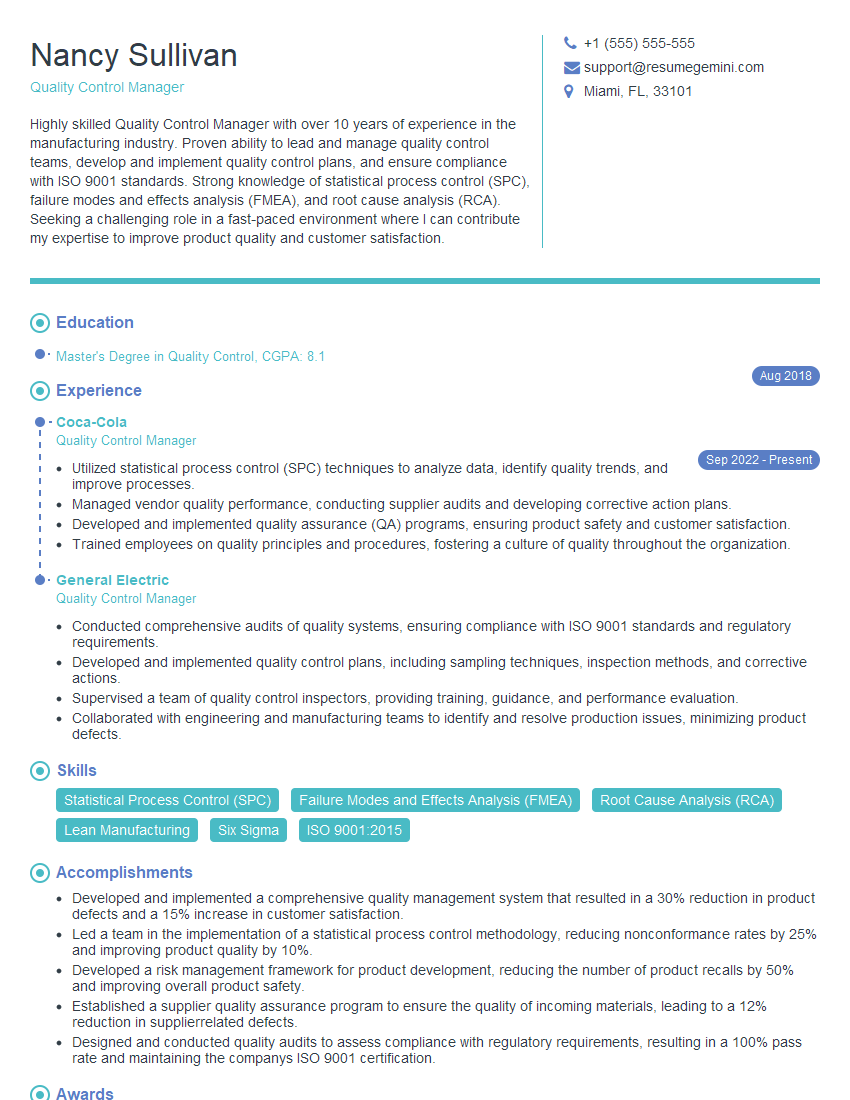
Quality Control Manager Resume Sample
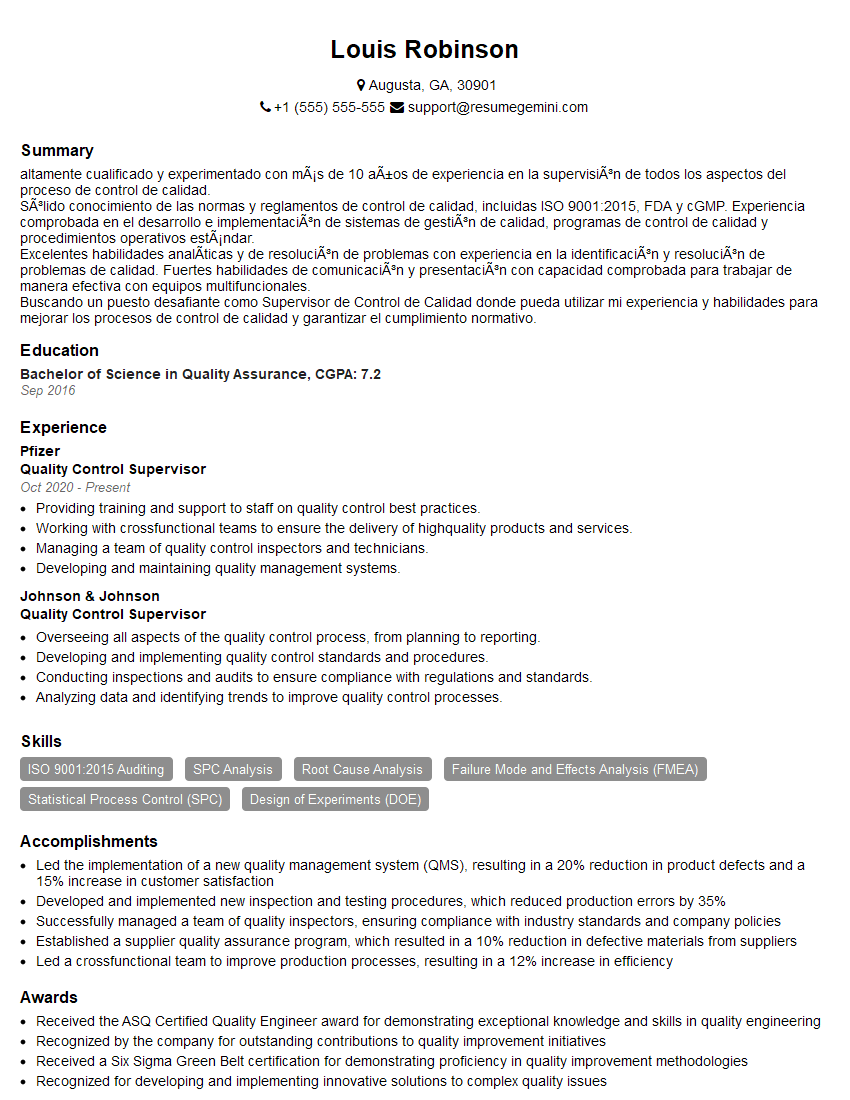
Quality Control Supervisor Resume Sample
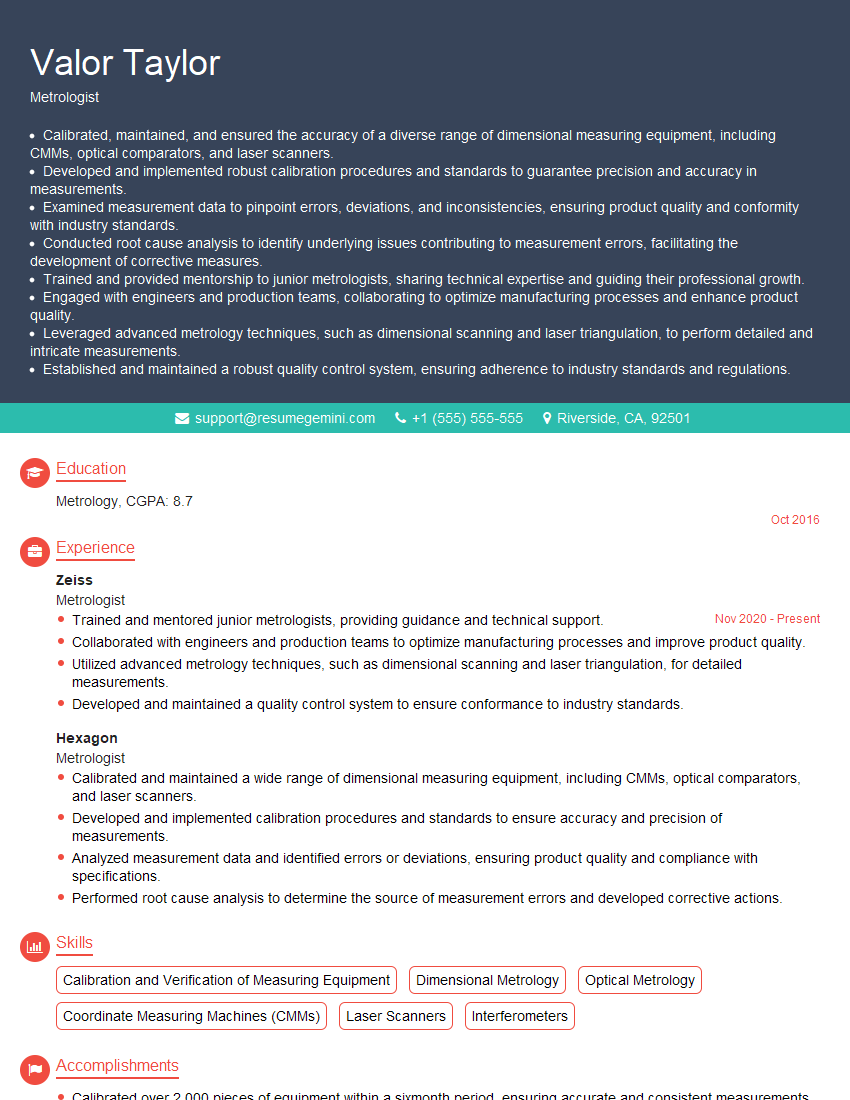
Metrologist Resume Sample

Quality Assurance Technician Resume Sample
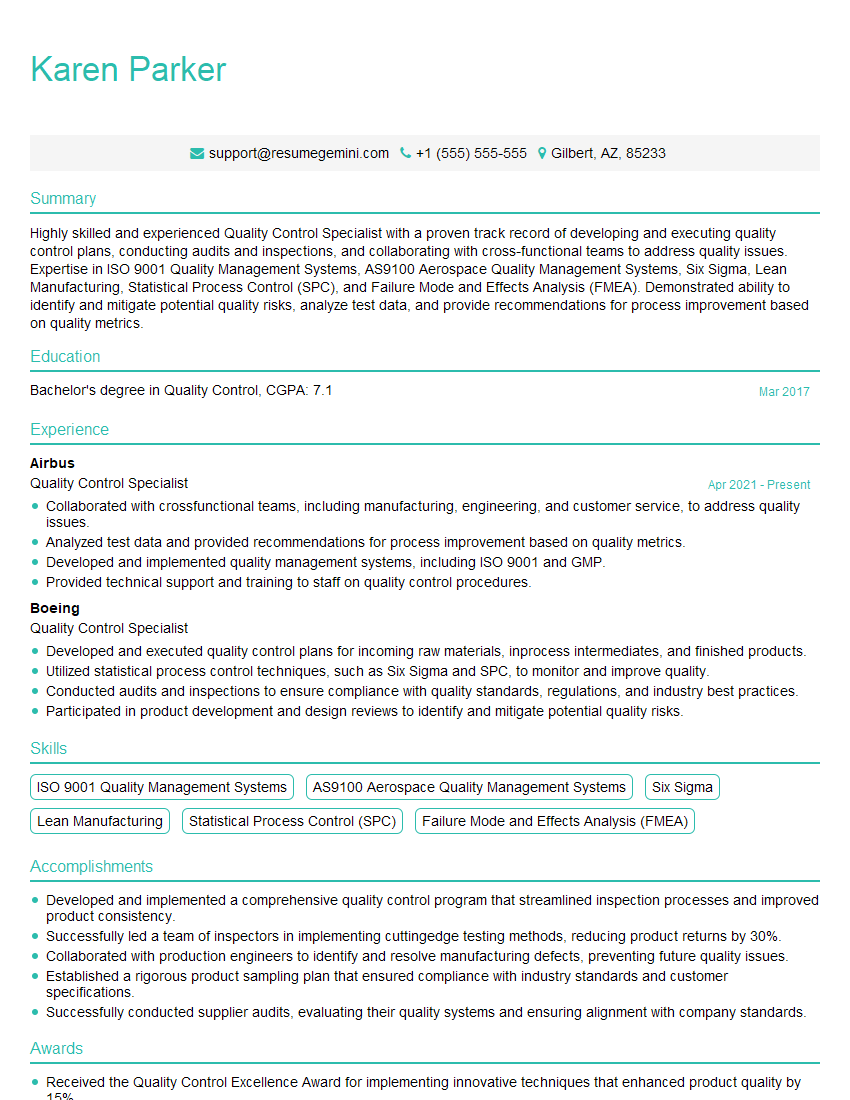
Quality Control Specialist Resume Sample

Quality Assurance Engineer Resume Sample
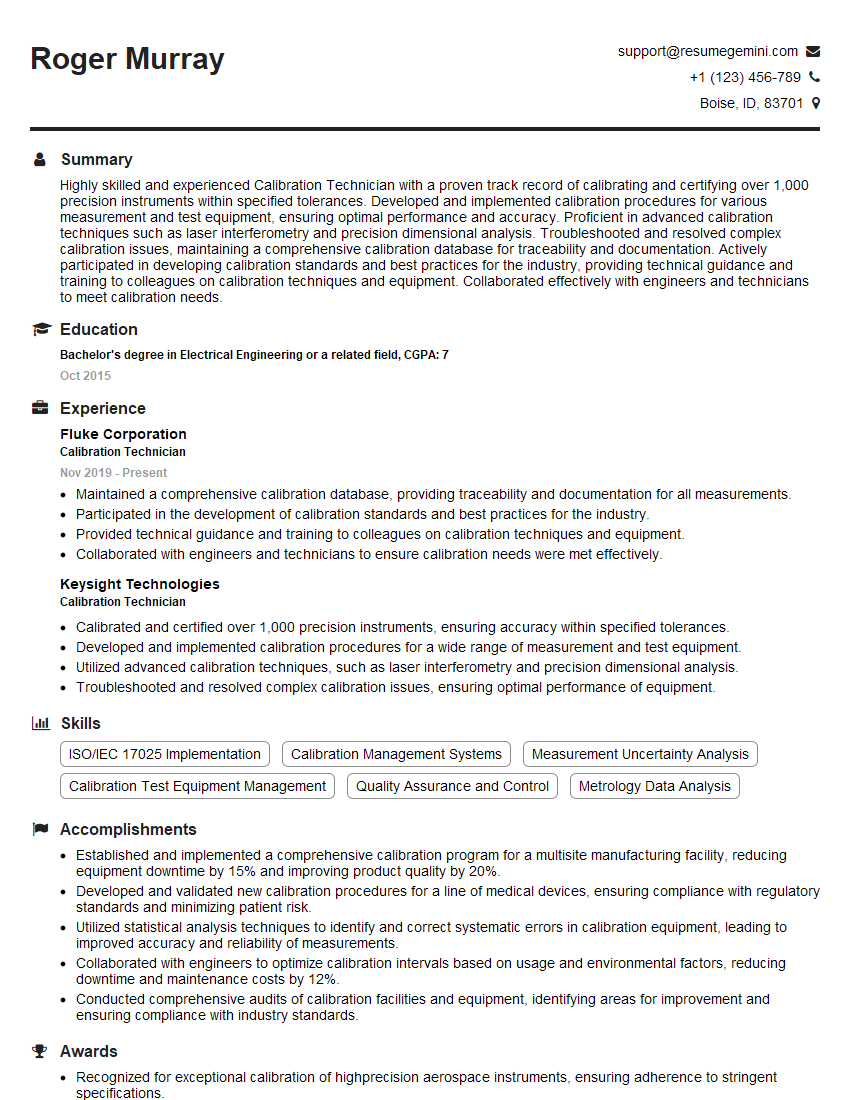
Calibration Technician Resume Sample
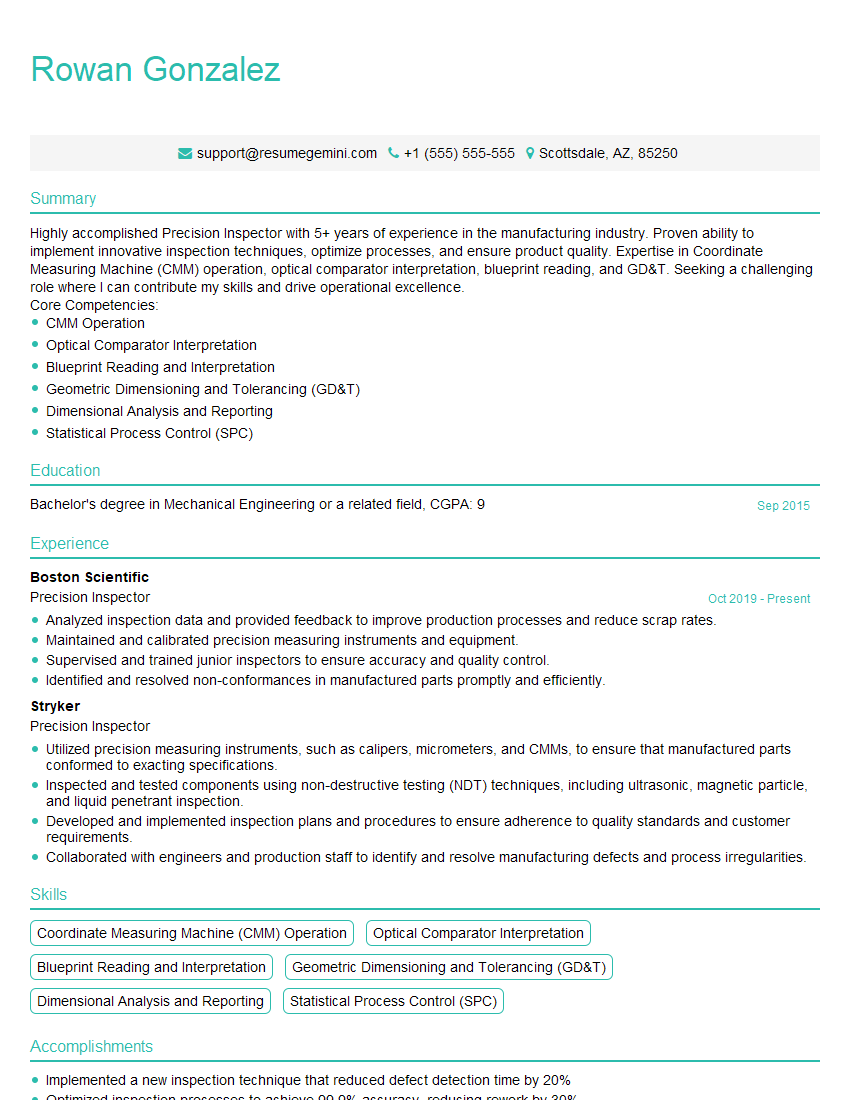
Precision Inspector Resume Sample

Quality Control Inspector Resume Sample
Explore more articles
Users Rating of Our Blogs
Share Your Experience
We value your feedback! Please rate our content and share your thoughts (optional).
What Readers Say About Our Blog
Very informative content, great job.
good