Interviews are opportunities to demonstrate your expertise, and this guide is here to help you shine. Explore the essential Human Intelligence Analysis interview questions that employers frequently ask, paired with strategies for crafting responses that set you apart from the competition.
Questions Asked in Human Intelligence Analysis Interview
Q 1. Explain the difference between HUMINT, OSINT, and SIGINT.
HUMINT, OSINT, and SIGINT represent three distinct types of intelligence gathering. Think of them as different avenues to gather information, each with its own strengths and weaknesses.
- HUMINT (Human Intelligence): This involves collecting information from people. This could be through interviews, informants, undercover operations, or even casual conversations. It’s like detective work, relying on human interaction and relationships.
- OSINT (Open-Source Intelligence): This focuses on publicly available information. This includes news articles, social media posts, government reports, academic papers, and even commercial satellite imagery. It’s like being a skilled researcher, piecing together a puzzle from publicly accessible pieces.
- SIGINT (Signals Intelligence): This is the interception and analysis of electronic signals. This covers communications (like phone calls, emails, or radio transmissions), radar signals, and other electronic emissions. Think of it as listening in on conversations or monitoring electronic activity without the target’s knowledge.
The key difference lies in the *source* of the information. HUMINT relies on humans, OSINT on publicly available data, and SIGINT on intercepted signals. Often, these three types of intelligence are used together to create a complete picture.
Q 2. Describe the process of conducting a human intelligence source operation.
Conducting a human intelligence source operation is a meticulous process that demands careful planning and execution. It begins with identifying a potential source who possesses valuable information. This might involve networking, developing rapport, and assessing the individual’s trustworthiness and access to information.
- Source Recruitment: Building trust is crucial. This involves understanding the source’s motivations, concerns, and potential vulnerabilities. Establishing a relationship takes time, patience, and demonstrating genuine interest.
- Handling and Debriefing: Once a relationship is established, careful debriefing sessions are conducted to extract information. This necessitates careful questioning techniques, ensuring the information is accurately recorded and the source is treated with respect and consideration.
- Security Measures: Protecting the source’s identity and maintaining operational security are paramount. This includes using secure communication channels, minimizing the risk of exposure, and establishing clear operational guidelines.
- Assessment and Verification: After acquiring information, rigorous analysis and verification is vital. This might involve corroborating the information with other sources or through independent verification methods.
- Source Management: Ongoing management of the source is essential. This includes maintaining contact, assessing the continued value of the information they provide, and managing risks.
For example, imagine needing information on a specific criminal organization. We might recruit someone from within that organization, build rapport, and carefully extract details about their activities, operations, and members. Every step requires rigorous planning, risk assessment and adherence to strict protocols.
Q 3. How do you assess the credibility and reliability of a human intelligence source?
Assessing the credibility and reliability of a human intelligence source is vital to avoid misinformation. It requires a thorough evaluation of several factors.
- Source Motivation: Understanding *why* the source is providing information is critical. Are they motivated by money, ideology, revenge, or a desire for recognition? Understanding the motivation impacts the reliability of the information.
- Track Record: Past performance is a significant indicator. Has the source provided accurate information in the past? This requires diligent record-keeping and analysis of previous intelligence reports.
- Information Corroboration: Does the information align with other intelligence? Independent verification is essential. Does the information align with open-source intelligence or other HUMINT sources?
- Bias and Personal Interests: Everyone has biases and personal interests. How might these affect their perspective and the information they provide? Critical analysis is key in recognizing potential distortions.
- Psychological Assessment: In some cases, psychological profiling or assessment might be necessary to understand the source’s personality, vulnerabilities, and potential for deception. This is particularly relevant for high-stakes operations.
Imagine a source claiming the location of a weapons cache. We wouldn’t rely solely on this. We would verify with other intelligence sources, analyze the source’s motivations and track record, and cross-reference the information to build a comprehensive picture and assess the validity of the claim.
Q 4. What are the ethical considerations involved in human intelligence collection?
Ethical considerations in human intelligence collection are paramount and must guide every aspect of the operation. The potential for abuse necessitates strict adherence to ethical guidelines.
- Privacy and Consent: Protecting individual privacy and obtaining informed consent whenever possible are critical. The collection and use of personal information must align with legal and ethical standards.
- Coercion and Deception: Using coercion or deception must be carefully considered and justified. It should only be employed when absolutely necessary and in compliance with legal and ethical frameworks. Minimizing harm to individuals is crucial.
- Transparency and Accountability: There should be transparency and accountability within intelligence agencies. This ensures operations are conducted in an ethical manner and are subject to oversight and review.
- Data Security and Protection: The sensitive nature of human intelligence necessitates robust data security and protection measures to prevent misuse and unauthorized access.
- International Law and Human Rights: Intelligence operations must always comply with international law and respect human rights. This includes avoiding activities that violate international human rights conventions.
For instance, using torture to obtain information is ethically unacceptable and violates international law. Ethical decision-making requires careful consideration of the potential consequences and adherence to a strict code of conduct.
Q 5. Explain the concept of ‘tradecraft’ in human intelligence.
Tradecraft in human intelligence refers to the specialized skills and techniques used to collect, analyze, and handle intelligence information discreetly and effectively. It encompasses a wide range of practices, all aimed at maximizing effectiveness while minimizing risks.
- Surveillance and Observation: This includes techniques for discreetly observing targets, gathering information without detection, and employing counter-surveillance measures.
- Elicitation: The art of skillfully extracting information from sources through subtle questioning, observation and building rapport.
- Concealment and Camouflage: Techniques for disguising identities, maintaining secrecy, and protecting sources.
- Communication Security: Using secure communication channels to protect intelligence information and avoid interception.
- Handling Compromised Agents: Procedures for managing situations where an agent’s cover is blown.
Think of it as a set of sophisticated tools and strategies. A seasoned HUMINT officer might use specific questioning techniques to elicit information from a source, employing nonverbal communication skills and carefully choosing their words to maximize their effectiveness.
Q 6. How do you handle conflicting information from multiple human intelligence sources?
Handling conflicting information from multiple human intelligence sources requires careful analysis and triangulation. It’s not simply a matter of choosing one source over another.
- Source Evaluation: Re-evaluate the credibility and reliability of each source, considering their motivations, track records, and potential biases.
- Information Corroboration: Look for common threads or points of convergence between sources. Do multiple sources confirm certain details independently?
- Bias Identification: Consider the potential biases of each source and how they might influence their reporting.
- Data Triangulation: Use other forms of intelligence (OSINT, SIGINT) to cross-reference the information and seek external verification.
- Contextual Analysis: Consider the overall context and background information to assess the plausibility of each source’s report. Does it make sense given what we already know?
- Statistical Analysis (where applicable): If dealing with quantitative data, apply appropriate statistical methods to identify outliers and inconsistencies.
Ultimately, the goal is to synthesize the information from multiple sources to develop a more complete and accurate understanding of the situation. This might involve acknowledging the uncertainties and uncertainties within the intelligence picture.
Q 7. Describe your experience with intelligence reporting and briefings.
My experience with intelligence reporting and briefings spans [Number] years, during which I’ve crafted numerous reports and delivered briefings to various levels of leadership. I’ve honed skills in concisely presenting complex information, tailoring my communication style to the audience’s understanding, and visually representing findings using charts, graphs, and maps.
I’ve prepared reports covering a wide range of topics including [mention some areas of expertise, e.g., transnational crime, political instability, cybersecurity threats], always prioritizing clarity, accuracy, and objectivity. My briefings have included detailed analysis, risk assessments, and strategic recommendations, consistently maintaining a high standard of professionalism and confidentiality. I’m proficient in using different reporting formats and communication technologies to ensure timely and effective dissemination of intelligence findings.
I regularly practiced incorporating feedback into subsequent reports and presentations, leading to improvement in content and clarity. I’m also adept at anticipating questions and addressing potential challenges or concerns that the intelligence may raise. Through these experiences, I have become highly proficient in effectively communicating intelligence to decision-makers at all levels.
Q 8. How do you prioritize information gathered from human intelligence sources?
Prioritizing human intelligence (HUMINT) information requires a systematic approach that considers several factors. Think of it like a triage system in a hospital – you need to address the most critical cases first. We use a framework that prioritizes information based on its timeliness, relevance, credibility, and completeness (TRCC).
- Timeliness: How current is the information? Information about an imminent threat needs immediate attention.
- Relevance: Does the information relate directly to the intelligence requirement? We filter out information that’s interesting but not crucial to our objective.
- Credibility: How trustworthy is the source? We assess the source’s track record, motivations, and potential biases. A known reliable source trumps an anonymous tip, for example.
- Completeness: How much information do we have? Incomplete data may still be valuable but needs further investigation to fill the gaps. We might have a piece of a puzzle, but need other pieces to form a complete picture.
Using the TRCC framework, we create a weighted scoring system for each piece of information, allowing for a clear prioritization of what needs immediate action and what can wait for further analysis. For instance, a highly credible source providing timely information on an imminent attack would be prioritized over less credible, older, or less relevant information, even if the latter is more complete.
Q 9. What techniques do you use to elicit information from a reluctant source?
Eliciting information from a reluctant source requires patience, rapport-building, and a deep understanding of human psychology. It’s not about interrogation; it’s about building trust. Techniques I use include:
- Building Rapport: Establishing a connection with the source is crucial. This might involve finding common ground, showing empathy, and actively listening to their concerns.
- Active Listening and Mirroring: Carefully listening to their responses and mirroring their body language (subtly) can help establish a sense of connection and trust.
- Strategic Questioning: Avoid leading questions. Instead, use open-ended questions that encourage the source to provide more detailed information. For example, instead of asking ‘Did you see the suspect?’, I might ask ‘What can you tell me about the people you saw in the area?’
- Incentives and Motivation: Offering incentives (where ethically and legally permissible) or appealing to their sense of duty, patriotism, or self-preservation can motivate them to cooperate.
- Understanding their Motivation: Why are they reluctant? Is it fear, distrust, or something else? Addressing their underlying concerns is key.
I once worked with a reluctant witness who was afraid of retribution. By assuring their anonymity and emphasizing the importance of their testimony for solving a serious crime, I was able to gain their trust and obtain crucial information. It’s a delicate dance – building trust while maintaining professional boundaries is key.
Q 10. How do you maintain operational security during human intelligence operations?
Maintaining operational security (OPSEC) during HUMINT operations is paramount. A breach can compromise sources, operations, and even lives. My approach centers around several key principles:
- Need-to-Know Basis: Information is shared only with those who absolutely require it for their specific roles.
- Secure Communication Channels: Using encrypted communication methods ensures that sensitive information is not intercepted.
- Compartmentalization: Breaking down operations into smaller, independent compartments limits the damage if one part is compromised.
- Source Protection: Implementing strict protocols to protect the identity and safety of sources is critical, including using cover stories, code names, and secure meeting locations.
- Counter-Surveillance Awareness: Being aware of potential surveillance and taking countermeasures is crucial. This could include varying routes, meeting times, and communication methods.
- Regular Security Reviews: Conducting regular reviews of security protocols to identify and address any potential vulnerabilities.
For example, in a covert operation, we would never use easily traceable communication methods like personal cell phones. We would employ secure messaging platforms and carefully vet all communication channels before use. Protecting sources often requires significant creativity and resourcefulness. Every aspect is carefully planned to minimize the risk of exposure.
Q 11. Describe your experience with data analysis and interpretation related to human intelligence.
My experience with data analysis and interpretation related to HUMINT involves integrating qualitative and quantitative data to draw meaningful conclusions. This often includes:
- Data Triangulation: Comparing information from multiple sources to verify its accuracy and completeness. This helps eliminate biases and identify inconsistencies.
- Pattern Recognition: Identifying recurring themes, relationships, and trends within the data to generate insights and hypotheses.
- Network Analysis: Mapping relationships between individuals and groups to understand power structures, communication flows, and potential collaborators.
- Link Analysis: Identifying connections between seemingly disparate pieces of information to build a holistic understanding of events or situations.
- Statistical Analysis (where applicable): Applying statistical methods to large datasets to identify trends and outliers.
For example, in one case, we analyzed communications intercepts, witness testimonies, and financial records to identify a smuggling ring. The combination of these data sources allowed us to map the network of individuals involved and ultimately disrupt the operation. The ability to synthesize diverse data types and create a coherent narrative is a crucial aspect of HUMINT analysis.
Q 12. How do you identify and mitigate risks associated with human intelligence operations?
Identifying and mitigating risks in HUMINT operations is an ongoing process requiring continuous assessment and adaptation. We use a risk management framework that involves:
- Risk Assessment: Identifying potential threats to sources, operations, and personnel before, during, and after an operation. This includes considering physical threats, legal issues, and ethical implications.
- Risk Mitigation: Developing and implementing strategies to reduce or eliminate identified risks. This might involve changing operational procedures, enhancing security protocols, or providing additional support to sources.
- Contingency Planning: Developing plans to address unexpected events or emergencies. This could include procedures for handling compromised sources or unexpected disruptions.
- Damage Control: Having plans in place to minimize the damage if a security breach occurs. This might involve implementing damage control strategies, such as minimizing the impact on sources or operations.
- Debriefing and Lessons Learned: After an operation, we conduct thorough debriefings to identify lessons learned and improve future operations. This includes reviewing what worked well, what could be improved, and refining our risk management strategies.
For instance, if we identify a source at high risk of exposure, we may implement a relocation plan or provide enhanced security measures. Continuous risk assessment and adaptation are critical for successful HUMINT operations.
Q 13. Explain your understanding of different human intelligence collection methods.
HUMINT collection methods encompass a variety of techniques, each with its own strengths and weaknesses. Some common methods include:
- Open Source Intelligence (OSINT): Gathering information from publicly available sources, such as news articles, social media, and government websites.
- Direct Collection: Obtaining information directly from a human source through interviews, interrogations, or surveillance.
- Covert Surveillance: Surveillance conducted without the knowledge of the subject.
- Undercover Operations: Employing agents who infiltrate organizations or groups to gather information.
- Debriefing: Interviewing individuals who have relevant information after an event.
- Source Recruitment: Identifying and developing relationships with potential sources of information.
- Elicitation: Indirectly extracting information from individuals.
The choice of method depends on factors such as the nature of the intelligence requirement, the availability of resources, and the level of risk involved. A combination of methods is often employed to obtain a more complete picture. For example, OSINT might provide background information which informs decisions about source recruitment and direct collection methods.
Q 14. How do you manage and protect sensitive information obtained through human intelligence?
Managing and protecting sensitive HUMINT information requires adhering to strict procedures and guidelines. This includes:
- Data Classification: Categorizing information based on its sensitivity level (e.g., top secret, secret, confidential). This dictates the level of security required.
- Secure Storage: Storing sensitive information in secure databases and physical locations with restricted access.
- Access Control: Limiting access to sensitive information only to authorized personnel on a strict need-to-know basis.
- Data Encryption: Using encryption techniques to protect information both at rest and in transit.
- Data Destruction: Implementing secure methods for destroying sensitive information when it is no longer needed.
- Compliance with Laws and Regulations: Adhering to all relevant laws and regulations regarding the handling and protection of sensitive information.
We also employ rigorous auditing and monitoring procedures to track access to sensitive data and identify any potential breaches. Data breaches in HUMINT can have severe consequences, so vigilance and meticulous record-keeping are critical. Everything from physical security to digital security is rigorously controlled.
Q 15. What software or tools are you familiar with for analyzing human intelligence data?
My experience encompasses a wide range of software and tools used in Human Intelligence (HUMINT) analysis. These tools fall broadly into categories for data management, analysis, and visualization. For data management, I’m proficient with databases like SQL Server and Oracle to store and manage large volumes of HUMINT data, ensuring data integrity and accessibility. For analysis, I utilize tools such as Palantir Gotham (for its network analysis capabilities), various open-source intelligence (OSINT) tools for collecting and processing publicly available information, and specialized software for geospatial analysis like ArcGIS, which is crucial for understanding location-based intelligence. Finally, for visualization, I use tools like Tableau and Power BI to create compelling charts and graphs that effectively communicate complex patterns and insights derived from the data to non-technical stakeholders.
Beyond these specific tools, my proficiency extends to various analytical techniques like network analysis, social network analysis (SNA), and statistical modeling, which are applied across various platforms based on the specific needs of the analysis. The choice of tools always depends on the specific HUMINT data, the analytical tasks, and the resources available.
Career Expert Tips:
- Ace those interviews! Prepare effectively by reviewing the Top 50 Most Common Interview Questions on ResumeGemini.
- Navigate your job search with confidence! Explore a wide range of Career Tips on ResumeGemini. Learn about common challenges and recommendations to overcome them.
- Craft the perfect resume! Master the Art of Resume Writing with ResumeGemini’s guide. Showcase your unique qualifications and achievements effectively.
- Don’t miss out on holiday savings! Build your dream resume with ResumeGemini’s ATS optimized templates.
Q 16. Describe a time you had to make a critical decision based on incomplete human intelligence information.
During a counter-terrorism operation, we received fragmented information about a potential attack. Intelligence suggested a possible target, but the timing and the precise method remained unclear. Some reports indicated a bomb, others suggested a coordinated assault. The source reliability varied greatly, some information coming from a proven, reliable informant, others from less reliable sources. We lacked a comprehensive picture.
My decision was to prioritize defensive measures across all potential targets, acknowledging the uncertainty. This meant allocating resources for enhanced security at multiple locations, rather than focusing solely on the most likely target based on incomplete data. This approach, while resource-intensive, mitigated the risk of a catastrophic event even with the incomplete intelligence. The operation highlighted the importance of risk management in HUMINT, where a false negative (failing to identify a threat) is far more costly than a false positive (responding to a non-existent threat). Fortunately, the precautionary measures proved effective; no attacks occurred. This incident taught me the importance of incorporating uncertainty into decision-making when dealing with incomplete HUMINT.
Q 17. How do you ensure the accuracy and validity of human intelligence reports?
Ensuring the accuracy and validity of HUMINT reports is paramount. My approach involves a multi-layered process. First, source evaluation is critical. This includes assessing the source’s motivation, reliability, and potential biases. I use established methodologies, such as the CIA’s source evaluation model, to categorize sources into distinct reliability levels. This helps to weight information appropriately.
Second, corroboration is essential. I always look for multiple, independent sources to confirm the same information. Discrepancies between sources necessitate further investigation to determine the accuracy of competing claims. This often involves triangulation – using different methods and sources to validate the information.
Third, contextualization is crucial. I analyze the information within its broader geopolitical, social, and cultural context. This helps identify potential biases or misinterpretations.
Finally, documentation is meticulously maintained for transparency and accountability. Every source, every method, and every analytical step is meticulously recorded to allow for review and scrutiny.
Q 18. What are some common challenges in human intelligence analysis?
HUMINT analysis presents several unique challenges. Information gaps are common, as information is often incomplete, fragmented, or delayed. Source reliability is another major issue; sources may be biased, unreliable, or deliberately deceptive. Bias can also infiltrate the analysis itself; analysts might unconsciously interpret data to fit pre-existing beliefs. Cultural understanding is critical, and misinterpretations due to cultural differences can significantly impact the analysis. Finally, the time-sensitivity of some HUMINT means that decisions must sometimes be made with incomplete information under considerable time pressure.
Q 19. How do you adapt your analysis to different cultural contexts?
Adapting to different cultural contexts is crucial for effective HUMINT analysis. This requires a multifaceted approach. First, I leverage cultural awareness training and research to understand the nuances of the specific culture in question. This includes understanding social norms, communication styles, and power dynamics. Second, I rely on cultural experts, such as anthropologists or linguists, to validate interpretations and identify potential cultural biases in the data. Third, I actively look for cultural markers in the HUMINT – elements such as language, expressions, and behaviors – to enhance the accuracy of my analysis.
For example, understanding the concept of ‘face’ in East Asian cultures can significantly impact the interpretation of communications. Ignoring such cultural subtleties can lead to misinterpretations and erroneous conclusions. This sensitivity towards cultural nuances is integral to reliable HUMINT analysis.
Q 20. How do you collaborate effectively with other intelligence analysts?
Effective collaboration is at the heart of HUMINT. I actively participate in collaborative efforts, utilizing various methods. We use shared online platforms for information sharing and collaboration, ensuring data accessibility for the team. Regular briefings and meetings facilitate open communication and exchange of ideas. Active listening and constructive feedback are crucial components of our collaborative process. I maintain a respectful and inclusive environment to encourage open discussion and diverse perspectives, recognizing that different analytical skills and backgrounds provide a richer understanding of the intelligence.
Furthermore, I believe in clear communication of analysis, using visual aids and concise summaries to ensure colleagues from diverse backgrounds can quickly grasp the key findings. Openly acknowledging uncertainties and limitations in the analysis fosters trust and transparency within the team.
Q 21. Describe your experience in identifying patterns and trends from human intelligence data.
Identifying patterns and trends in HUMINT is a core skill. I employ a variety of methods, including network analysis to map relationships between individuals or groups, and social network analysis (SNA) to examine the structure and dynamics of social networks. I also use statistical methods to identify correlations and patterns within large datasets. For example, by analyzing communication patterns, I may identify key individuals within a network or pinpoint emerging trends in extremist group activity.
One example involved identifying a pattern of seemingly innocuous online communications that, when analyzed through SNA, revealed a previously undetected recruitment network for a terrorist organization. The patterns identified enabled preventative measures to be put in place.
These techniques aren’t merely about finding correlations but also about understanding the underlying mechanisms driving those patterns. That understanding is key to developing accurate predictions and informing effective action.
Q 22. How do you use human intelligence to inform strategic decision-making?
Human intelligence (HUMINT) is crucial for informing strategic decision-making by providing unique insights unavailable through other means. It offers a direct line to the intentions, capabilities, and vulnerabilities of individuals, groups, or organizations. We use HUMINT to paint a comprehensive picture of the situation, going beyond data points to understand the ‘why’ behind events.
For example, consider a potential geopolitical crisis. Open-source intelligence might reveal troop movements, but HUMINT from a well-placed source could reveal the actual political motivations behind these movements, the leadership’s internal debates, and their likely next steps. This deeper understanding is invaluable in crafting effective policy responses. This is done through a rigorous process of:
- Data Collection: Gathering information from various human sources, carefully vetting their reliability.
- Analysis: Interpreting the data within its context, identifying patterns, and making inferences.
- Dissemination: Clearly and concisely presenting findings to decision-makers, emphasizing the implications for strategic objectives.
- Feedback Loop: Monitoring the effectiveness of decisions based on HUMINT and refining future intelligence efforts based on outcomes.
In essence, HUMINT provides the human dimension – the emotional, political, and social factors – that often dictate outcomes. It moves beyond simple facts to a more nuanced understanding of complex situations, directly impacting the effectiveness of strategic decisions.
Q 23. How do you evaluate the potential impact of misinformation on human intelligence gathering?
Misinformation poses a significant threat to HUMINT gathering by creating a fog of uncertainty and undermining trust in sources. It can lead to inaccurate assessments, flawed strategic decisions, and wasted resources. We mitigate this risk through several key strategies:
- Source Vetting: Rigorous vetting processes are crucial. This includes assessing the source’s motivation, biases, access to information, and past reliability. We use multiple independent sources to corroborate information and identify potential discrepancies.
- Information Triangulation: Comparing information from different sources to identify patterns and inconsistencies. This helps isolate misinformation and discern credible information. For example, if three independent sources provide similar information, it strengthens its credibility.
- Open-Source Intelligence (OSINT) Cross-Referencing: Utilizing OSINT to verify or refute information received from human sources. Openly available information can provide context and help identify disinformation campaigns.
- Technical Verification: Employing technical means like geolocation verification or metadata analysis to corroborate information, such as examining the origin and timeline of photos or videos.
- Training and Awareness: Ongoing training for HUMINT analysts to recognize common disinformation tactics and propaganda techniques is essential. This includes understanding cognitive biases that can make us vulnerable to misinformation.
Dealing with misinformation is an ongoing challenge requiring adaptability and a commitment to critical thinking and meticulous verification.
Q 24. Explain the process of verifying information received from a human intelligence source.
Verifying HUMINT is a multi-step process that prioritizes accuracy and reliability. It’s not just about confirming facts; it’s about understanding the context and the source’s credibility.
- Assess Source Credibility: Evaluate the source’s background, motivations, access to information, and past performance. Is this a reliable source with a history of providing accurate intelligence, or are they known for exaggeration or misinformation?
- Corroborate Information: Seek corroboration from multiple independent sources. If several unrelated sources report the same information, it increases the likelihood of accuracy. Discrepancies between sources should be carefully analyzed.
- Analyze Context: Place the information within its broader context. Does it align with other known facts? Does it fit logically within the bigger picture? Out-of-context information can be misleading.
- Employ Technical Verification: When possible, use technical means such as geolocation analysis, image verification, or digital forensics to authenticate the information received.
- Document the Verification Process: Meticulously document all sources, methods, and conclusions to maintain transparency and enable future review. This is vital for accountability and to learn from past experiences.
The verification process is iterative. As new information becomes available, the initial assessment might be refined, leading to a more accurate and comprehensive understanding. This continuous process ensures that the intelligence produced is reliable and actionable.
Q 25. What is your experience with debriefing human intelligence sources?
Debriefing HUMINT sources is a critical skill requiring a blend of rapport-building, active listening, and careful questioning. The goal is to extract as much accurate and relevant information as possible while maintaining the source’s safety and cooperation.
My experience includes conducting debriefs in diverse settings, from formal interviews in secure locations to more informal conversations in less structured environments. Key aspects of my approach include:
- Building Rapport: Establishing trust with the source is paramount. This involves creating a safe and non-judgmental environment, actively listening to their concerns, and respecting their perspectives.
- Structured Questioning: Utilizing a mix of open-ended and closed-ended questions to guide the conversation while allowing the source to provide detailed information.
- Active Listening: Paying close attention to both verbal and non-verbal cues. Body language and tone of voice can often reveal hidden information or inconsistencies.
- Note-Taking and Documentation: Maintaining detailed and accurate records of the debriefing, including the date, time, location, and key details discussed.
- Follow-up: Maintaining contact with the source as needed, ensuring their safety and continued cooperation.
Successful debriefing relies on adapting to the individual source and the specific circumstances. It’s a skill honed through experience and continuous learning, emphasizing ethical considerations and the safety of the source.
Q 26. How do you handle pressure and deadlines in a fast-paced intelligence environment?
The intelligence environment is often fast-paced and demanding, requiring the ability to manage pressure and meet tight deadlines effectively. My approach involves several key strategies:
- Prioritization: Identifying the most critical tasks and focusing on them first. This involves assessing the urgency and importance of each task and allocating resources accordingly.
- Time Management: Utilizing effective time management techniques such as task breakdown, scheduling, and prioritization to manage workload effectively.
- Teamwork: Collaborating effectively with colleagues to share the workload and leverage collective expertise. This includes delegating tasks when appropriate and providing support to team members.
- Stress Management: Employing stress reduction techniques such as mindfulness, exercise, and maintaining a healthy work-life balance to prevent burnout and maintain effectiveness under pressure.
- Adaptability: Remaining flexible and adaptable to changing priorities and unexpected events. This involves responding effectively to shifting deadlines and unforeseen challenges.
Successfully navigating a high-pressure environment requires a combination of organizational skills, effective teamwork, and self-care strategies. It’s about prioritizing, delegating, and maintaining a calm and focused approach even amidst demanding circumstances.
Q 27. Describe your experience in using human intelligence to support law enforcement or national security objectives.
My experience in using HUMINT to support law enforcement and national security objectives has spanned several years and involved various roles and projects. I’ve been involved in:
- Counterterrorism investigations: Gathering intelligence on terrorist networks, their plans, and their support systems. This involved identifying and recruiting human sources, conducting debriefings, and analyzing the information gathered to support ongoing investigations.
- Criminal investigations: Providing intelligence support to law enforcement agencies investigating organized crime, drug trafficking, and other serious crimes. This required building relationships with informants and leveraging HUMINT to build criminal cases.
- National security assessments: Assessing threats to national security through the analysis of HUMINT, identifying potential vulnerabilities, and making recommendations for mitigating those risks.
In each of these roles, the ethical considerations and legal frameworks guiding HUMINT collection and analysis were paramount. Maintaining the confidentiality and safety of sources, ensuring compliance with relevant regulations, and adhering to strict ethical standards were essential. Success in these roles relies on strong analytical skills, meticulous attention to detail, and a commitment to ethical conduct.
Examples of specific successes are confidential due to national security concerns, but suffice to say that HUMINT was instrumental in several cases that resulted in successful prosecutions and the disruption of criminal and terrorist activities.
Key Topics to Learn for Human Intelligence Analysis Interview
- Information Gathering and Assessment: Understanding various intelligence gathering methods (open-source, human sources, signals intelligence), evaluating source credibility, and handling incomplete or contradictory information.
- Analytical Techniques: Mastering analytical frameworks like the intelligence cycle, applying critical thinking and problem-solving skills to analyze complex data sets, and drawing logical conclusions from incomplete information.
- Threat Assessment and Risk Management: Identifying and assessing potential threats, evaluating risks, and developing mitigation strategies based on intelligence findings. This includes understanding different threat actors and their motivations.
- Report Writing and Presentation: Structuring clear, concise, and persuasive intelligence reports; effectively communicating findings to diverse audiences; and presenting complex information in a digestible format.
- Ethical Considerations: Understanding and applying ethical principles relevant to intelligence analysis, including issues of privacy, confidentiality, and the responsible use of information.
- Data Analysis and Visualization: Utilizing tools and techniques to visualize and analyze large datasets; identifying patterns and trends; and communicating insights effectively using charts, graphs, and other visual aids.
- Geopolitical Context: Understanding the political, social, and economic factors that influence intelligence analysis, and incorporating this context into assessments and predictions.
Next Steps
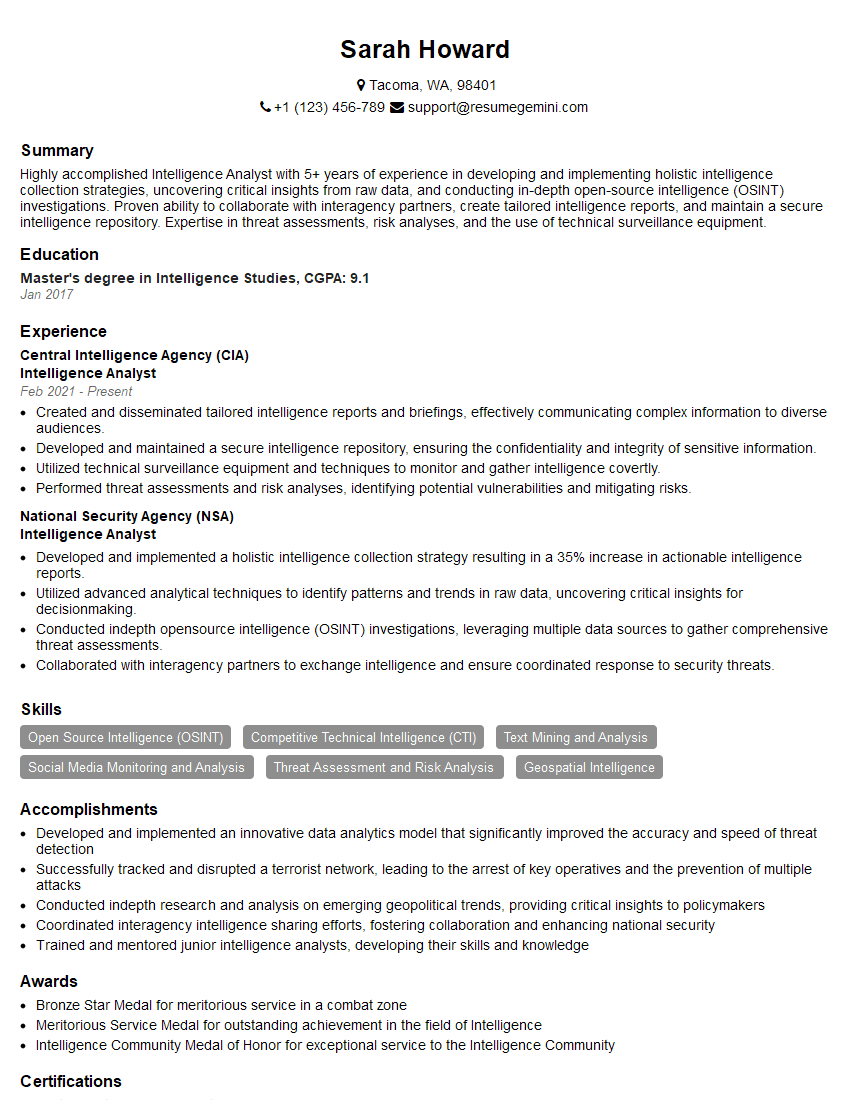
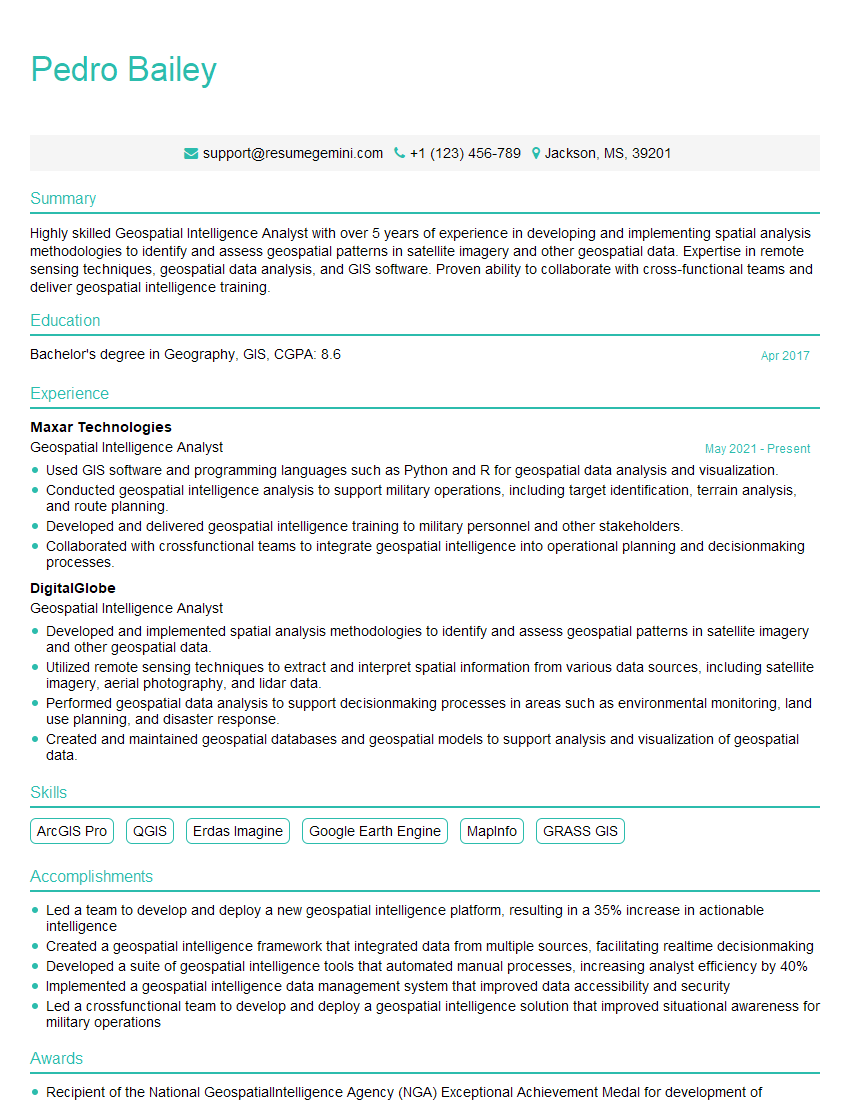
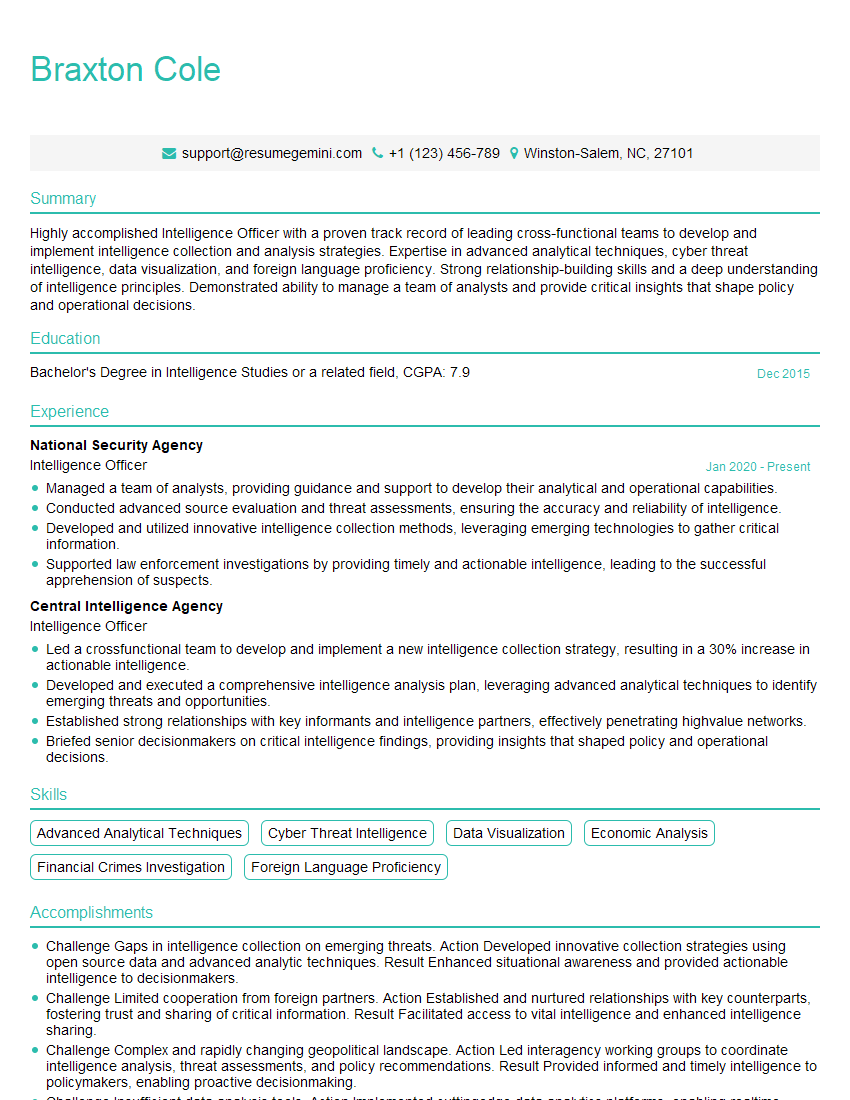
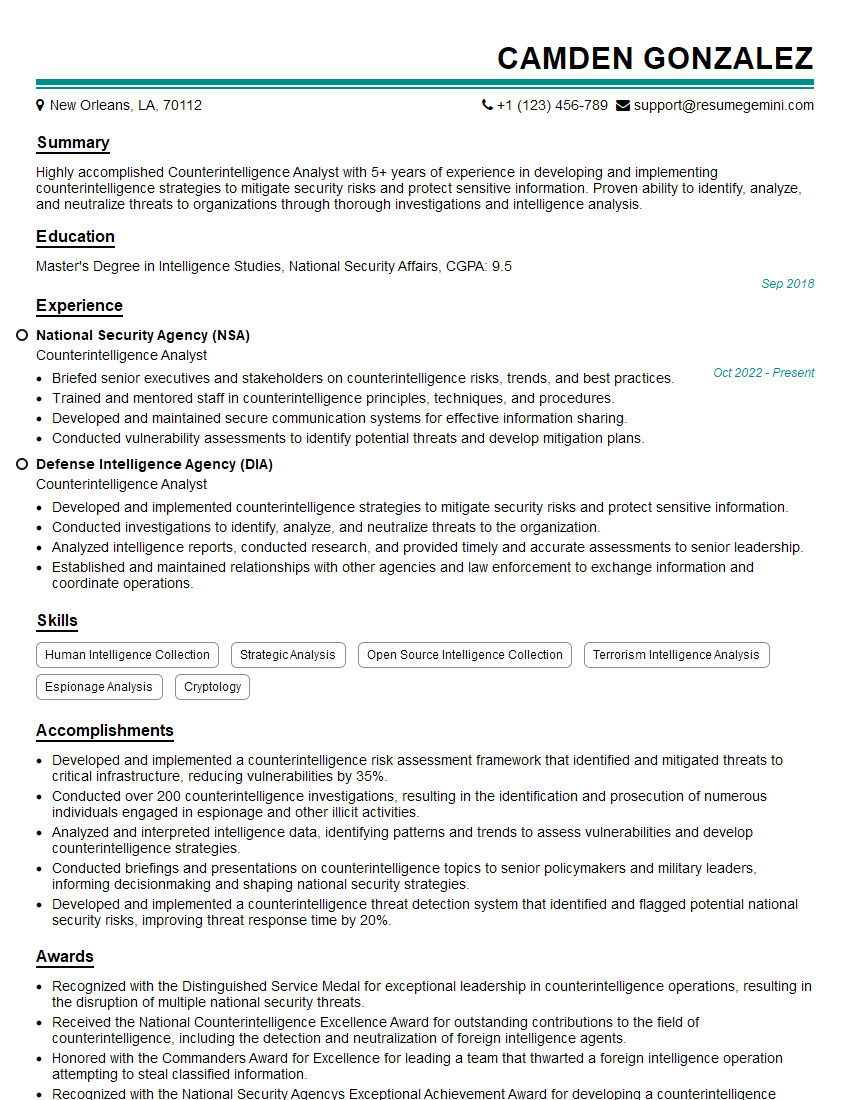
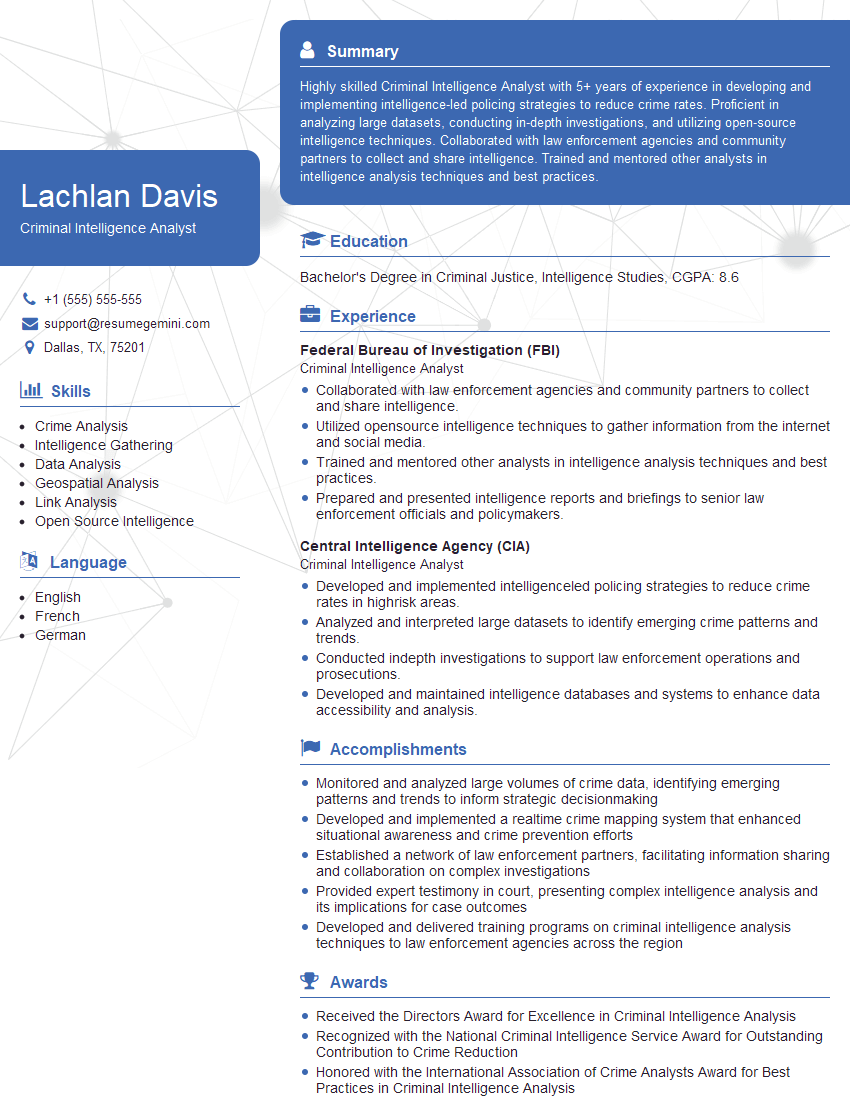
Mastering Human Intelligence Analysis opens doors to exciting and impactful careers, offering opportunities for growth and significant contributions to national security or private sector organizations. To maximize your job prospects, it’s crucial to craft a compelling and ATS-friendly resume that showcases your skills and experience. ResumeGemini is a trusted resource to help you build a professional resume that stands out from the competition. We provide examples of resumes tailored to Human Intelligence Analysis to guide you in creating a standout application. Take the next step towards your dream career – build your best resume with ResumeGemini today!
Explore more articles
Users Rating of Our Blogs
Share Your Experience
We value your feedback! Please rate our content and share your thoughts (optional).
What Readers Say About Our Blog
Very informative content, great job.
good