Every successful interview starts with knowing what to expect. In this blog, we’ll take you through the top Directional Survey Quality Control interview questions, breaking them down with expert tips to help you deliver impactful answers. Step into your next interview fully prepared and ready to succeed.
Questions Asked in Directional Survey Quality Control Interview
Q 1. Explain the different types of directional surveys used in drilling operations.
Directional surveys are crucial in guiding the trajectory of a wellbore during drilling. Several methods exist, each offering unique advantages depending on the well’s complexity and the available technology. The main types include:
- Single-Shot Surveys: These provide a single measurement of inclination and azimuth at a specific depth. They are simpler and quicker but less accurate for complex well paths.
- Continuous Surveys: These continuously measure inclination and azimuth while drilling, providing a much denser dataset. Examples include gyroscopic and magnetic surveys, offering high resolution data for precise wellbore placement.
- Measurement While Drilling (MWD) Surveys: These are real-time surveys conducted using tools integrated into the bottom-hole assembly (BHA). They provide immediate feedback, allowing for adjustments during drilling. This ensures the well stays on target and helps prevent costly deviations.
- Logging While Drilling (LWD) Surveys: This technique uses sensors embedded in the drill string to collect formation data alongside directional data. This combined data gives a richer understanding of both the well path and the surrounding geology, making it highly valuable for reservoir characterization.
The choice of method depends on factors such as budget, the required accuracy, the complexity of the well design, and the real-time feedback needs.
Q 2. Describe the process of planning a directional drilling survey.
Planning a directional drilling survey involves a methodical approach to ensure the wellbore reaches its target efficiently and safely. It’s like planning a road trip – you need a map, directions, and contingency plans. The process typically includes:
- Defining the Target: Precise coordinates (latitude, longitude, and TVD – True Vertical Depth) of the well’s intended target are established.
- Creating a Trajectory Plan: This involves designing the optimal path to reach the target, considering factors like geological formations, drilling limitations, and potential obstacles. Software is used to model different trajectory profiles (e.g., build-and-hold, constant build).
- Selecting Survey Tools and Methods: The choice depends on the well’s complexity and the required accuracy. Factors considered include the type of survey (MWD, LWD, single-shot), the tool’s accuracy and range, and data transmission methods.
- Establishing Survey Intervals: The frequency of measurements is determined based on the planned trajectory and the expected rate of change in inclination and azimuth. More frequent surveys are generally required for complex well paths.
- Risk Assessment and Contingency Planning: Potential problems (e.g., wellbore instability, equipment failure) are identified, and mitigation strategies are developed. This might involve having backup survey tools or alternative trajectory plans.
The entire plan is documented, approved, and used as a reference during the drilling operation. Regular comparisons between planned and actual survey data are made during the drilling process to ensure the well stays on track.
Q 3. What are the key quality control parameters for a directional survey?
Maintaining high-quality directional surveys requires meticulous attention to several parameters. Think of it like baking a cake – every ingredient matters for a perfect result. Key parameters include:
- Accuracy: The closeness of the measured data to the true wellbore trajectory. This is often expressed as a positional uncertainty and depends on the survey method and tool used.
- Precision: The reproducibility of measurements. Repeated measurements should yield similar results, showing the consistency of the data acquisition process.
- Data Completeness: A comprehensive dataset is essential. Missing or incomplete data can lead to inaccurate interpretations and affect the overall quality.
- Data Consistency: The data should show a smooth and consistent trajectory without unexpected jumps or inconsistencies. Anomalies could signal issues with the survey tool or data processing.
- Calibration: Regular calibration of survey tools is critical to ensure their accuracy and reliability. This is particularly important for magnetic and gyroscopic sensors, which can drift over time.
- Redundancy: Using multiple survey methods or tools can help to cross-validate the data and detect errors. This redundancy provides a safeguard against potential inaccuracies from a single data source.
Continuous monitoring of these parameters is crucial for ensuring high-quality surveys and minimizing uncertainties in wellbore placement.
Q 4. How do you identify and mitigate potential sources of error in directional surveys?
Errors in directional surveys can arise from various sources. Identifying and mitigating these requires a systematic approach. Common sources of error include:
- Tool Errors: Malfunctions or inaccuracies in the survey tool itself (e.g., sensor drift, magnetic interference).
- Environmental Factors: Magnetic anomalies in the formation, temperature variations, and high-angle drilling can affect the accuracy of certain survey tools.
- Measurement Errors: Human errors during data acquisition, processing, or interpretation can lead to inaccuracies.
- Software Errors: Bugs or limitations in the survey processing software can affect the final results.
Mitigation strategies include:
- Regular Tool Calibration and Maintenance: Minimizes tool-related errors.
- Using Multiple Survey Methods: Cross-validation helps identify anomalies.
- Careful Data Processing and Quality Control: Checks for inconsistencies and errors.
- Proper Environmental Correction Techniques: Accounts for known environmental influences.
- Training and Expertise: Well-trained personnel are essential to minimize human errors.
A proactive approach to error identification and mitigation is key to ensuring reliable and accurate directional surveys.
Q 5. What software packages are you familiar with for processing and analyzing directional survey data?
I am proficient in several software packages for processing and analyzing directional survey data. These include:
- WellCAD: A comprehensive suite offering survey processing, trajectory design, and visualization capabilities.
- Compass: Another popular package known for its accuracy and range of features.
- DecisionSpace: This integrated platform provides functionalities for various aspects of well planning and data management, including advanced directional survey analysis.
My experience also extends to using specialized modules within larger reservoir simulation and well planning platforms that integrate directional survey data processing.
Q 6. Explain the concept of Minimum Curvature method for survey calculations.
The Minimum Curvature method is a widely used technique for calculating the wellbore trajectory from a series of measured survey points. Imagine trying to connect a series of dots on a map smoothly – this is what the Minimum Curvature method does for directional survey data. It calculates the most likely path between survey points by minimizing the overall curvature of the wellbore. This minimizes the likelihood of abrupt changes in the well trajectory, resulting in a smoother and more realistic representation of the well path.
Mathematically, it uses a numerical integration technique to solve a differential equation that describes the shape of the curve. It’s an iterative process, starting from the first survey point and progressively adding the subsequent points to build the trajectory. The method considers both the inclination and azimuth at each survey point and calculates the radius of curvature at every point along the well path to minimize overall curvature.
The Minimum Curvature method is preferred for its ability to provide a smooth and accurate representation of the well trajectory, especially for complex wells with many survey points.
Q 7. How do you interpret directional survey data to ensure wellbore placement accuracy?
Interpreting directional survey data involves carefully analyzing the processed data to ensure the wellbore is accurately placed and meets the planned trajectory. This involves:
- Visual Inspection: Plotting the survey data on various graphs (e.g., profile plots, 3D plots) allows for a quick visual check for anomalies or unexpected deviations from the planned path.
- Quantitative Analysis: Analyzing key parameters like TVD, measured depth (MD), inclination, and azimuth to quantify the deviation from the planned trajectory. This helps determine if the well is on target and identify the extent of any deviations.
- Error Analysis: Assessing the uncertainties associated with the survey data. This involves considering the accuracy of the survey tools and the potential impact of environmental factors.
- Comparison with Planned Trajectory: Comparing the measured data with the planned trajectory to identify any discrepancies. This may highlight areas where corrective actions might be needed during drilling.
- Geological Correlation: Integrating the survey data with geological information (e.g., formation tops, faults) helps to assess the well’s position relative to geological features, potentially uncovering any unexpected contacts or issues.
By combining visual inspection with quantitative analysis and error assessment, one can accurately interpret the data, ensure that the well is placed as intended, and understand the potential risks and uncertainties associated with the wellbore placement.
Q 8. Discuss the importance of real-time monitoring of directional surveys.
Real-time monitoring of directional surveys is crucial for several reasons. Think of it like navigating a ship – you wouldn’t want to only check your position after several days at sea! Continuous monitoring allows for immediate detection and correction of any deviations from the planned wellbore trajectory. This proactive approach prevents costly and time-consuming remedial actions later.
- Improved Accuracy: Real-time data allows for immediate identification of tool malfunctions or unexpected formations, leading to adjustments that maintain accuracy.
- Reduced Non-Productive Time: By identifying problems early, we avoid the need for lengthy and expensive interventions further down the well.
- Enhanced Safety: Real-time monitoring can help prevent potential hazards, such as encountering unexpected formations or losing the wellbore.
- Cost Savings: Preventing costly remedial work and reducing non-productive time directly translates into significant cost savings for the project.
For example, during a recent project, real-time monitoring alerted us to a significant drift from the planned trajectory due to unexpected hard formations. We immediately adjusted the drilling parameters, preventing the well from hitting an unwanted formation and saving considerable time and resources.
Q 9. What are the common causes of survey discrepancies and how are they resolved?
Survey discrepancies arise from various sources, some related to tool limitations, others to environmental factors. Common causes include:
- Tool Errors: Malfunctioning sensors, calibration issues, or tool drift can lead to inaccurate measurements.
- Environmental Factors: Magnetic interference from nearby metallic objects or variations in the earth’s magnetic field can affect magnetic survey tools.
- Data Processing Errors: Mistakes in data processing, incorrect input parameters, or software glitches can also introduce discrepancies.
- Human Error: Incorrect tool deployment, data entry mistakes, or misinterpretation of survey data can cause issues.
Resolution strategies vary depending on the cause. For instance, if a tool malfunction is suspected, a thorough tool check and recalibration are required. If magnetic interference is detected, we might employ alternative surveying techniques such as gyro-based surveys. Data processing errors need careful review and correction. In cases of human error, a rigorous quality control process is needed to minimize future mistakes. Sometimes, a re-survey is necessary to resolve significant discrepancies.
Q 10. How do you handle data inconsistencies or outliers in directional survey data?
Data inconsistencies and outliers pose a significant challenge in directional surveying. They can arise from various sources, including sensor noise, tool malfunctions, and environmental effects. Handling them requires a systematic approach.
- Data Validation: We begin by carefully examining the raw data for obvious errors or inconsistencies. This often involves visual inspection of plots and identifying unusual jumps or spikes in the data.
- Statistical Analysis: Statistical methods like outlier detection algorithms can identify data points that significantly deviate from the norm. For example, a simple 3-sigma rule might be applied.
- Data Smoothing: Techniques like moving averages can smooth out minor fluctuations and noise in the data. However, we must use this carefully to avoid masking real changes in the trajectory.
- Expert Judgement: Based on the geological context and knowledge of the surveying tools, we make informed decisions about whether to reject or correct outliers. This often involves referring to other data sources and comparing them with the survey results.
- Re-survey: In cases of severe data inconsistencies that cannot be resolved through other methods, a re-survey of the well section might be necessary.
It’s crucial to document all decisions made during this process to maintain the integrity and transparency of the data.
Q 11. Describe your experience in using various downhole tools for directional surveying.
My experience spans a wide range of downhole directional surveying tools, including various types of MWD (Measurement While Drilling) and LWD (Logging While Drilling) tools. I have extensive experience with both wireline and memory tools, working with both magnetic and gyroscopic systems. I am familiar with various manufacturers and their specific capabilities, allowing me to select the most appropriate tool for a given wellbore environment and project goals.
For example, in a recent horizontal well project, we used an advanced MWD system equipped with a high-resolution gyro and an accurate inclination sensor. This system provided real-time data to accurately steer the wellbore through complex formations, maximizing reservoir contact. In another instance, when dealing with highly deviated wells with challenging magnetic interference, I successfully used a highly accurate gyro-based survey system.
Q 12. Explain your understanding of Magnetic, Gyro, and Inertial survey tools.
Directional survey tools measure wellbore inclination and azimuth (direction). Each tool has its strengths and weaknesses:
- Magnetic Tools: These measure the earth’s magnetic field to determine the wellbore orientation. They are relatively inexpensive and widely used, but susceptible to magnetic interference from nearby metallic objects, especially in older wells that have been completed with steel casings. Accuracy can also be affected by magnetic field variations and the Earth’s magnetic dip angle.
- Gyro Tools: These utilize gyroscopes to measure the wellbore orientation independently of the earth’s magnetic field. This makes them highly accurate in areas with significant magnetic interference. However, they are generally more expensive than magnetic tools. Different types exist, including free gyros and MEMS (Microelectromechanical systems) gyros, each with varying precision and cost.
- Inertial Survey Tools: These tools combine gyroscopes with accelerometers to measure both orientation and acceleration, providing continuous data on wellbore trajectory. This allows for higher accuracy and better data density, especially in complex wellbore profiles. However, they can be more prone to accumulated errors over long survey intervals, which need to be corrected using proper techniques.
The choice of tool often involves a trade-off between cost, accuracy, and operational constraints. In some cases, a combination of tools is used to achieve optimal results.
Q 13. What is the significance of wellbore trajectory in reservoir management?
Wellbore trajectory is paramount in reservoir management. The precise path of the well dictates how effectively the reservoir can be accessed and produced.
- Reservoir Contact: An optimally designed trajectory maximizes the well’s contact with the productive zones within the reservoir, leading to increased hydrocarbon recovery.
- Placement of Completions: The trajectory directly influences where perforations are placed in the casing, impacting the efficiency of production from different reservoir layers.
- Well Interference: Precise trajectory planning prevents wellbore interference and conflicts between multiple wells, optimizing reservoir drainage patterns.
- Reservoir Characterization: Precise well placement allows for targeted data acquisition during logging operations, improving the understanding of the reservoir properties and its heterogeneity.
For example, a horizontal well with a carefully planned trajectory can access a much larger area of the reservoir than a vertical well. Similarly, precise placement of multiple wells using directional drilling can lead to efficient drainage patterns and improved production.
Q 14. How do you ensure the accuracy and reliability of the directional survey data?
Ensuring accuracy and reliability of directional survey data requires a multi-faceted approach.
- Pre-Survey Planning: Meticulous planning is crucial, including defining objectives, selecting appropriate tools, and considering potential environmental factors.
- Rigorous Tool Calibration and Testing: Before deployment, tools should be thoroughly calibrated and tested to confirm they are functioning properly.
- Real-Time Monitoring and QC: Continuous monitoring of the data during the survey is crucial for early detection of problems. Regular quality checks should be performed.
- Data Processing and Validation: Rigorous data processing methods and validation procedures help detect and correct errors.
- Independent Verification: Using independent software or methods to verify processed data improves confidence in the results.
- Documentation: Thorough documentation of all aspects of the survey, including procedures, data, and corrections, ensures transparency and traceability.
By combining these methods, we can significantly enhance the accuracy and reliability of directional survey data, minimizing the risks associated with poor wellbore placement and maximizing the effectiveness of reservoir management.
Q 15. Describe your experience with different types of survey calculation software.
My experience encompasses a wide range of directional survey calculation software, from industry-standard packages like Compass, and Landmark’s DecisionSpace to specialized tools for specific drilling scenarios. I’m proficient in using these programs to process raw survey data, perform various calculations (minimum curvature, balanced tangential, etc.), and generate comprehensive reports. This includes importing data from different measurement-while-drilling (MWD) tools, resolving discrepancies, and ensuring data integrity. For instance, in one project involving a highly deviated well, I utilized Compass’s advanced algorithms to accurately model the well path and predict future trajectory, which proved crucial in optimizing the drilling plan and preventing potential complications. I am also comfortable with using standalone software such as GeoSteering or similar packages for real-time survey analysis and wellbore placement optimization during drilling operations.
Beyond the software itself, I’m skilled in understanding the underlying mathematical principles and assumptions inherent in each calculation method. This allows me to critically evaluate the results, identify potential errors, and select the most appropriate method based on specific well conditions and data quality. This critical thinking is key to ensuring accurate well placement.
Career Expert Tips:
- Ace those interviews! Prepare effectively by reviewing the Top 50 Most Common Interview Questions on ResumeGemini.
- Navigate your job search with confidence! Explore a wide range of Career Tips on ResumeGemini. Learn about common challenges and recommendations to overcome them.
- Craft the perfect resume! Master the Art of Resume Writing with ResumeGemini’s guide. Showcase your unique qualifications and achievements effectively.
- Don’t miss out on holiday savings! Build your dream resume with ResumeGemini’s ATS optimized templates.
Q 16. How do you manage data quality in a high-pressure drilling environment?
Managing data quality in a high-pressure drilling environment demands a proactive and multi-layered approach. It starts with rigorous pre-job planning, including a thorough review of the MWD tool’s specifications, calibration procedures, and data transmission protocols. During drilling, real-time monitoring of the survey data is paramount. I employ techniques like outlier detection and data validation using statistical methods to identify anomalies and potential errors. For example, comparing survey data from different tools or using redundancy checks can help identify inconsistencies. If an anomaly is detected, a detailed investigation is conducted to determine its root cause – was it a spurious signal, a tool malfunction, or an issue with data transmission? Addressing these issues promptly minimizes errors and improves the reliability of the final survey report.
Furthermore, we often utilize a combination of techniques, including redundancy in tool deployment for crucial sections and regular calibration checks, in high-pressure scenarios. The high pressures involved can impact the sensors, and using multiple tools improves confidence in the data. Post-job analysis involves thorough verification of the processed data against known geological formations and drilling parameters. This multi-stage process helps ensure data integrity and accuracy even under challenging conditions.
Q 17. What is your experience with quality control procedures in directional surveying?
My experience in directional surveying QC is extensive. It follows a structured methodology, starting with the initial data validation (checking for data gaps, inconsistencies, and outliers as mentioned earlier). Next, I thoroughly review the survey calculations, comparing results from different methods to identify potential discrepancies. This includes verifying the accuracy of parameters used in the calculations, such as tool face angles and inclination readings. A critical part of my QC involves assessing the impact of various sources of error, including tool drift, magnetic interference, and environmental factors, on the overall accuracy of the survey.
Visual inspection is an important step. I carefully examine the plotted well path to detect any unusual deviations or inconsistencies that might not be apparent in numerical data. I then compare the actual well path against the planned trajectory, identifying any deviations and determining their potential impact on the project’s objectives. Finally, I document all findings, including corrections made, and prepare a detailed QC report that summarizes the process and its findings. This thorough review process significantly improves the reliability and accuracy of directional survey data.
Q 18. How do you interpret a directional survey report?
Interpreting a directional survey report involves a systematic approach. I begin by reviewing the header information, ensuring all relevant details – well name, date, tool type, and calculation method – are accurately documented. I then examine the tabular data, checking for consistency in the measured parameters (inclination, azimuth, tool face, measured depth) and calculated parameters (inclination, azimuth, TVD, MD, N/S, E/W). A careful review of the calculated parameters including TVD (True Vertical Depth), MD (Measured Depth), and coordinates is necessary to ensure accurate well placement.
The graphical representation of the well path is equally crucial. I look for any unexpected deviations or anomalies in the trajectory, correlating them with any geological data available. For example, sudden changes in inclination could indicate a geological formation change or a problem with the drilling tools. Furthermore, I compare the actual path with the planned trajectory to assess the success of the drilling operation and to identify any areas that may require further investigation or corrective actions. A key part of the interpretation process is contextualizing the data with drilling parameters, geological information and the overall well plan.
Q 19. Explain the concept of build rate and turn rate in directional drilling.
In directional drilling, build rate and turn rate are crucial parameters that describe the rate of change in the wellbore trajectory. Build rate refers to the rate at which the wellbore inclination increases, typically measured in degrees per 100 feet (or meters) of measured depth. A higher build rate indicates a faster increase in inclination. Think of it like the steepness of a hill – a high build rate means a very steep climb.
Turn rate, on the other hand, refers to the rate at which the wellbore azimuth changes, usually expressed in degrees per 100 feet (or meters) of measured depth. This is the rate at which the wellbore direction changes horizontally. Imagine you’re walking – the turn rate would indicate how quickly you’re changing your heading. Both build and turn rates are critical for planning and executing successful directional wells, ensuring the well stays within the desired tolerance and reaches its target location.
Q 20. How do you assess the impact of wellbore deviation on drilling operations?
Wellbore deviation significantly impacts drilling operations in several ways. Excessive deviation can lead to increased drilling time and costs due to the need for additional drilling effort to reach the target. It can also increase the risk of wellbore instability, resulting in potential well control issues and stuck pipe incidents. This is because deviated wells can intersect unexpected geological formations or stress zones, leading to wellbore instability. Furthermore, complex wellbore trajectories may result in challenges during casing operations and completion stages, potentially requiring specialized tools and techniques.
Accurate directional surveys are essential for mitigating these risks. The survey data informs decisions related to drilling parameters (e.g., weight on bit, rotary speed) and steering strategies, allowing for adjustments to maintain the desired trajectory. By predicting wellbore deviation, operators can proactively address potential challenges and optimize drilling plans for improved efficiency and safety.
Q 21. Discuss your experience in dealing with complex wellbore geometries.
My experience includes handling various complex wellbore geometries, such as S-shaped wells, multilateral wells, and highly deviated wells with significant changes in inclination and azimuth. In such cases, traditional survey calculation methods may not be sufficient, and I utilize advanced modeling techniques to accurately represent the wellbore trajectory. For instance, I often employ minimum curvature or balanced tangential methods to calculate the well path, methods better suited to the challenges of complex geometries.
Dealing with these geometries requires a deeper understanding of the limitations of different survey tools and calculation methods. A thorough QC process is critical to ensure accuracy. Visualizing the well path using 3D modeling software is crucial for identifying potential conflicts and planning subsequent operations (casing, completion). These projects demand a thorough understanding of wellbore stability and the interaction between the drilling tools and the surrounding rock formations. In essence, managing complex wellbore geometries needs a blend of sophisticated software, rigorous QC practices, and a strong understanding of the underlying physics and geological factors involved.
Q 22. Describe your experience in conducting post-well survey analysis.
Post-well survey analysis is a crucial step in verifying the accuracy of the drilled wellbore trajectory against the planned path. It involves a detailed review of all directional survey data gathered throughout the drilling process, including measurements from various tools like Magnetic, Gyro, and MWD/LWD systems. My experience encompasses using specialized software to process and analyze this raw data, identifying potential discrepancies, and generating comprehensive reports. This involves checking for data quality issues like spurious measurements or tool malfunction, and applying appropriate corrections and quality control measures.
For instance, I recently analyzed a well where initial interpretation suggested a significant deviation from the planned trajectory. Through meticulous data analysis and comparison with other downhole data like caliper logs, I identified a period of suspected tool malfunction. Recalculating the trajectory after removing this problematic data segment brought the final well path within acceptable tolerances. The analysis also included a detailed assessment of the uncertainty in the survey data, using statistical methods to quantify the accuracy of our final trajectory.
Q 23. How do you handle discrepancies between planned and actual wellbore trajectories?
Discrepancies between planned and actual wellbore trajectories are common and can arise from various factors including tool errors, formation changes, and unforeseen geological challenges. Handling these discrepancies requires a systematic approach. First, we thoroughly investigate the cause – was there a known issue with the survey tools? Were there any significant geological surprises like unexpected faults or high-angle formations? Did the drilling parameters deviate from the plan?
After determining the cause, we evaluate the significance of the deviation. Small discrepancies might be acceptable, depending on the well’s purpose and operational tolerances. Larger deviations, however, may necessitate corrective measures. This might involve adjusting the drilling plan in real-time using advanced steering tools or conducting further survey runs to improve data accuracy. Finally, a thorough report documenting the discrepancy, its cause, and the corrective actions taken is essential for future planning and operational improvements.
For example, in one project, an unexpected fault caused a significant deviation. By analyzing the downhole data and the fault’s geological properties we could predict a likely path for the fault and adjust the trajectory to mitigate the impact. Post-analysis helped us refine our geological models and improve future well planning in that field.
Q 24. How do you communicate technical findings from directional surveys to non-technical personnel?
Communicating technical findings to non-technical personnel requires a clear, concise, and visual approach. Jargon should be avoided, and complex data should be presented using simple graphs and charts. Instead of discussing ‘minimum curvature algorithms’, I’d explain the well path’s overall shape in terms of its alignment with the target zone.
I often use analogies to help clarify complex concepts. For instance, I might compare a wellbore trajectory to a road map, highlighting the planned route versus the actual path driven. Visual tools, like 3D models of the wellbore and its surroundings, are incredibly effective in showing the overall picture. Furthermore, I focus on the implications of the survey results for the project’s objectives, rather than getting bogged down in technical details. Was the target successfully reached? Were any costs incurred due to deviations? Focusing on these key aspects helps to keep the communication relevant and impactful.
Q 25. Describe your experience with wellsite reporting and documentation procedures.
Wellsite reporting and documentation are crucial for maintaining accurate records and ensuring regulatory compliance. My experience includes meticulous logging of all survey data, including tool calibrations, measurement readings, and any operational issues encountered. This data is typically recorded in dedicated wellsite databases and integrated with other drilling parameters, such as mud weights, RPMs, and torque. The reports I generate include daily summaries of the well’s progress, including a visual representation of the trajectory, a comparison against the planned path, and any significant deviations or challenges encountered.
Furthermore, I adhere strictly to company and regulatory requirements for data storage, backup, and retrieval. For example, I ensure data is backed up to multiple redundant systems to prevent data loss. All reports are meticulously reviewed for accuracy and completeness before being submitted. I am proficient in using various reporting software and wellsite data management systems.
Q 26. What are the limitations of different directional surveying methods?
Different directional surveying methods have inherent limitations that impact the accuracy and reliability of the data. For example, magnetic survey tools are susceptible to magnetic interference from the earth’s magnetic field and nearby ferrous materials, leading to potential errors, especially in areas with strong magnetic anomalies. Gyroscopic survey tools are not as susceptible to magnetic interference but have limitations in accuracy when encountering strong doglegs or rapid changes in inclination.
MWD/LWD (Measurement While Drilling/Logging While Drilling) systems offer high accuracy and real-time data but can be more expensive and require specialized equipment. In addition, these tools can be prone to signal loss or tool failure. The choice of surveying method depends on factors like well conditions, cost constraints, and required accuracy. Understanding the limitations of each method is critical for proper data interpretation and quality control.
Q 27. Explain your experience with integrating directional survey data with other drilling data.
Integrating directional survey data with other drilling data, such as formation evaluation logs (gamma ray, resistivity, porosity), pressure measurements, and drilling parameters, provides a holistic understanding of the wellbore and its surrounding geology. This integration allows for a more comprehensive interpretation of the subsurface, leading to better reservoir characterization and improved well planning. I’ve routinely integrated directional survey data with formation evaluation logs to correlate the well trajectory with specific geological formations, assisting in reservoir evaluation and identifying potential drilling hazards.
For example, combining directional survey data with caliper logs can identify washouts or zones of instability in the wellbore. Combining it with pressure data can help define pressure boundaries and help in identifying potential risks associated with pressure changes. This integrated approach significantly improves the quality of our well analysis and has been instrumental in making informed decisions regarding completion strategies and production optimization.
Q 28. How do you stay updated with the latest technologies and advancements in directional surveying?
Staying updated with the latest technologies and advancements in directional surveying is paramount. I actively participate in industry conferences and workshops, attend webinars, and read relevant technical publications and journals. I’m also involved in professional societies focused on drilling and wellbore engineering. This ensures I’m familiar with the latest advancements in measurement technologies, data processing algorithms, and survey interpretation techniques.
Further, I regularly review the latest software updates provided by our directional survey software vendors. Hands-on experience with new tools and software is also key. By participating in training courses and working on projects that involve new technologies, I maintain my proficiency and expertise in the ever-evolving field of directional surveying.
Key Topics to Learn for Directional Survey Quality Control Interview
- Fundamentals of Directional Surveying: Understanding different survey methods (MWD, LWD), their principles, limitations, and applications.
- Data Acquisition and Processing: Familiarize yourself with data acquisition procedures, quality checks during and after data acquisition, and common data processing software and techniques.
- Error Detection and Correction: Learn to identify and analyze various sources of error (e.g., toolface errors, magnetic interference, measurement noise), and apply appropriate correction methods.
- Quality Control Metrics and Standards: Understand industry standards and best practices for quality control in directional surveying, including tolerance limits and reporting procedures.
- Statistical Analysis and Interpretation: Develop your skills in using statistical methods to analyze survey data, assess data quality, and identify potential issues.
- Reporting and Documentation: Understand the importance of clear, concise, and accurate reporting of survey data and quality control results.
- Software Proficiency: Demonstrate familiarity with relevant software packages used for directional survey processing and quality control (mention specific software if appropriate to your experience).
- Practical Problem Solving: Be prepared to discuss scenarios where you’ve had to identify and resolve quality control issues in directional surveys. Focus on your approach and problem-solving methodology.
- Wellbore Trajectory Analysis: Demonstrate your understanding of wellbore trajectory planning, and how quality control impacts wellbore placement and operational efficiency.
Next Steps
Mastering Directional Survey Quality Control opens doors to exciting career advancements, offering opportunities for increased responsibility, higher earning potential, and greater influence on project outcomes. A strong resume is key to showcasing your skills and experience effectively. Crafting an ATS-friendly resume is crucial to getting your application noticed. To build a compelling and effective resume that highlights your expertise in Directional Survey Quality Control, we recommend using ResumeGemini. ResumeGemini provides tools and resources to help you create a professional resume that stands out. Examples of resumes tailored to Directional Survey Quality Control are available to guide you.

Project Engineer Resume Sample

Reservoir Engineer Resume Sample

Field Engineer Resume Sample

Operations Engineer Resume Sample

Completion Engineer Resume Sample
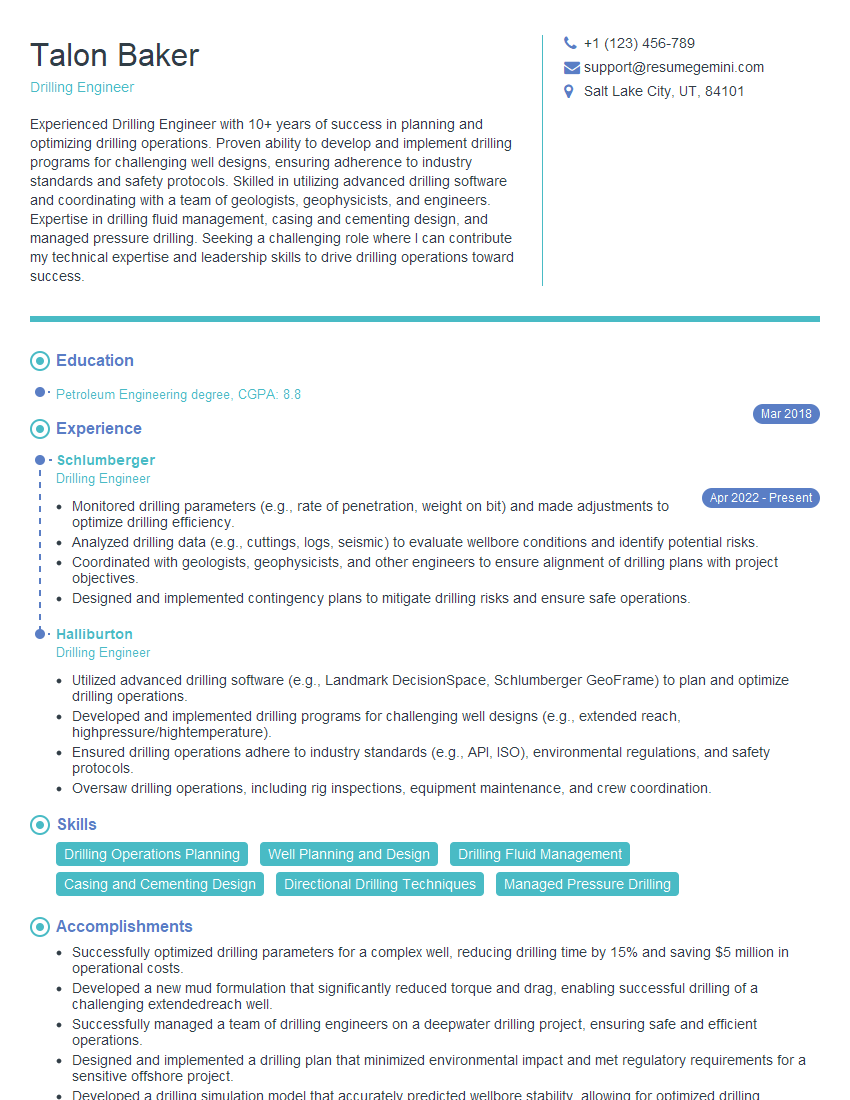
Drilling Engineer Resume Sample

Mud Engineer Resume Sample

Petroleum Engineer Resume Sample

Drilling Supervisor Resume Sample
Explore more articles
Users Rating of Our Blogs
Share Your Experience
We value your feedback! Please rate our content and share your thoughts (optional).
What Readers Say About Our Blog
Very informative content, great job.
good