Cracking a skill-specific interview, like one for Discovery and Inventory Management, requires understanding the nuances of the role. In this blog, we present the questions you’re most likely to encounter, along with insights into how to answer them effectively. Let’s ensure you’re ready to make a strong impression.
Questions Asked in Discovery and Inventory Management Interview
Q 1. Explain the difference between perpetual and periodic inventory systems.
The core difference between perpetual and periodic inventory systems lies in how frequently inventory levels are updated. Think of it like this: a perpetual system is like constantly monitoring your bank account balance – every transaction is recorded immediately. A periodic system is like checking your bank statement only once a month – you get a snapshot of your balance at a specific point in time, but you don’t know the exact balance in between.
In a perpetual inventory system, inventory levels are tracked continuously. Every time an item is added or removed, the system is updated. This provides real-time visibility into stock levels, allowing for better forecasting and order management. Businesses using point-of-sale (POS) systems often employ perpetual inventory systems.
A periodic inventory system updates inventory levels at fixed intervals (e.g., monthly, quarterly). This involves a physical count of all inventory at the end of the period to reconcile with records. It’s simpler to implement but offers less real-time insight and increases the risk of stockouts or overstocking.
- Perpetual: Real-time updates, better accuracy, more expensive to implement.
- Periodic: Periodic updates, less accurate, less expensive to implement.
Q 2. Describe your experience with inventory management software.
Throughout my career, I’ve had extensive experience with various inventory management software, including enterprise resource planning (ERP) systems like SAP and Oracle, and dedicated inventory management solutions such as Fishbowl Inventory and Cin7. My experience spans from implementing and configuring these systems to training users and optimizing workflows. For example, in my previous role at Acme Corp, I led the implementation of Fishbowl Inventory, which dramatically improved our accuracy in tracking inventory levels, reduced stockouts, and streamlined the ordering process. We integrated it with our existing accounting software, automating previously manual tasks and freeing up staff time for other value-added activities. I am proficient in using these systems to generate reports, track KPIs, and manage inventory across multiple locations and warehouses.
My expertise extends beyond basic data entry. I understand the nuances of configuring different settings within the software to match specific business needs, such as setting up inventory alerts, defining different costing methods (FIFO, LIFO, weighted average), and customizing reporting dashboards. I’m also adept at troubleshooting system issues and integrating inventory management software with other business systems.
Q 3. How do you handle inventory discrepancies?
Handling inventory discrepancies requires a systematic approach. The first step is to identify the discrepancy – is there a shortage or surplus? This often involves comparing physical inventory counts with system records. Then, we investigate the root cause. Possible causes include data entry errors, theft, damage, or inaccurate tracking of inventory movements.
My approach involves:
- Thorough investigation: A detailed recount of the affected inventory is essential. We may need to review purchase orders, sales orders, and internal transfer documents to identify any inconsistencies.
- Root cause analysis: Once the discrepancy is confirmed, I delve into the reasons behind it. This may involve interviewing staff, checking security footage (in cases of suspected theft), and reviewing inventory management procedures.
- Corrective actions: Based on the root cause analysis, I implement corrective actions. This could include retraining staff on inventory procedures, improving data entry controls, enhancing security measures, or addressing potential issues within the inventory management system itself.
- Documentation: All discrepancies, investigations, and corrective actions are meticulously documented to prevent recurrence and maintain audit trails.
For instance, in a previous project, we discovered a significant discrepancy due to a faulty barcode scanner. By replacing the scanner and retraining staff on proper scanning procedures, we eliminated the issue and improved inventory accuracy.
Q 4. What are some common inventory control methods?
Effective inventory control relies on a combination of methods. Here are some common ones:
- First-In, First-Out (FIFO): This method assumes that the oldest inventory items are sold first. It helps minimize waste due to spoilage or obsolescence.
- Last-In, First-Out (LIFO): This method assumes that the newest inventory items are sold first. It can be advantageous during periods of inflation.
- Weighted Average Cost: This method calculates the average cost of inventory items over a specific period.
- Just-in-Time (JIT): This focuses on receiving inventory only when needed, minimizing storage costs and reducing waste.
- Economic Order Quantity (EOQ): This model calculates the optimal order quantity to minimize inventory holding and ordering costs.
- Safety Stock: Maintaining a buffer stock to account for unexpected demand fluctuations or supply chain disruptions.
- Two-Bin System: A simple method using two bins for each item – one for immediate use and one as a reorder point.
The best method depends on the specific needs of the business, the nature of the inventory, and other factors.
Q 5. What is ABC analysis and how is it used in inventory management?
ABC analysis is an inventory management technique that categorizes inventory items based on their value and consumption. Imagine a pie chart: a small percentage of your items account for a large portion of your inventory value. That’s the ‘A’ category. ABC analysis helps you prioritize your management efforts.
- A-items: High-value items representing a small percentage of total items but a large percentage of the total inventory value (e.g., 20% of items account for 80% of the value). These require close monitoring and tight control.
- B-items: Medium-value items representing a moderate percentage of both total items and total value. These require moderate control.
- C-items: Low-value items representing a large percentage of total items but a small percentage of total value. These require minimal control.
By classifying inventory using ABC analysis, businesses can allocate resources effectively. More attention is given to managing A-items, while less critical C-items receive less scrutiny, saving time and resources.
Q 6. How do you calculate inventory turnover rate?
The inventory turnover rate measures how efficiently a company sells its inventory over a period. It indicates how quickly inventory is converted into sales. A higher turnover rate generally suggests better efficiency.
The formula is:
Inventory Turnover Rate = Cost of Goods Sold / Average Inventory
Where:
- Cost of Goods Sold (COGS): The direct costs associated with producing goods sold during a period.
- Average Inventory: The average value of inventory held during the period. This is calculated as (Beginning Inventory + Ending Inventory) / 2.
For example, if COGS is $100,000 and average inventory is $25,000, then the inventory turnover rate is 4 (100,000 / 25,000). This indicates that the company sells and replaces its inventory four times a year.
Q 7. What are the key performance indicators (KPIs) you monitor in inventory management?
Several KPIs are crucial for monitoring inventory management performance. These provide insights into efficiency, accuracy, and profitability.
- Inventory Turnover Rate: As discussed earlier, this shows how quickly inventory is sold.
- Inventory Holding Costs: This includes storage costs, insurance, taxes, and the cost of capital tied up in inventory.
- Stockout Rate: The percentage of times an item is out of stock when demanded.
- Inventory Accuracy: The percentage of inventory records that match the physical inventory count.
- Order Fulfillment Rate: The percentage of orders fulfilled on time and in full.
- Lead Time: The time it takes to receive inventory from suppliers.
- Gross Profit Margin: The profitability of sales after deducting the cost of goods sold.
By tracking these KPIs, businesses can identify areas for improvement and optimize their inventory management strategies to maximize efficiency and profitability.
Q 8. Describe your experience with cycle counting.
Cycle counting is a key inventory management technique that involves regularly counting a subset of inventory items instead of performing a complete physical inventory count. Instead of shutting down operations for a full inventory count, which can be costly and disruptive, cycle counting allows for continuous verification of inventory accuracy. It improves the accuracy of your inventory records over time by identifying discrepancies early and minimizing the impact of counting errors.
In my previous role at Acme Corp, we implemented a cycle counting system based on ABC analysis. A items (high-value, high-volume) were counted weekly, B items (medium-value, medium-volume) bi-weekly, and C items (low-value, low-volume) monthly. This prioritized our counting efforts on the most critical inventory items. We used barcode scanners and mobile devices to streamline the process and upload data directly into our inventory management system. We also developed a detailed counting schedule, assigning responsibilities to different team members and incorporating regular training to ensure consistent counting procedures. This allowed us to identify and rectify discrepancies swiftly, minimizing stockouts and overstocking.
Q 9. Explain the concept of safety stock and how it’s determined.
Safety stock is the extra inventory a business holds to buffer against unexpected variations in demand or lead time. Think of it as an insurance policy for your inventory. It ensures you can continue to meet customer orders even if your supplier experiences delays or if demand suddenly spikes. The level of safety stock is crucial – too little leaves you vulnerable to stockouts, while too much ties up capital and incurs storage costs.
Determining safety stock involves considering several factors. These include the variability of demand (how much demand fluctuates), the lead time (how long it takes to replenish inventory), and the desired service level (the probability of meeting customer demand). Statistical methods, such as calculating the standard deviation of demand and lead time, are commonly used. For instance, if historical data shows significant demand fluctuations, you’ll need higher safety stock to mitigate the risk of running out of inventory. Software tools often provide safety stock calculations, requiring as input, historical data on demand and lead times.
Q 10. How do you manage obsolete or slow-moving inventory?
Managing obsolete or slow-moving inventory is vital for maintaining profitability and efficient warehouse space. These items represent tied-up capital and increased storage costs with little or no return. My approach involves a multi-pronged strategy.
- Identification: Regularly reviewing inventory reports to identify items that haven’t moved in a defined period (e.g., six months, one year). This often requires analyzing sales data and forecasting future demand.
- Disposition: Exploring options for disposing of obsolete inventory, including:
- Discounts and promotions: Offering deep discounts to clear out stock.
- Liquidation sales: Selling to liquidators or auction houses.
- Recycling or disposal: Properly disposing of items that are no longer usable or sellable.
- Prevention: Implementing measures to prevent obsolescence in the first place. This includes careful demand forecasting, efficient purchasing practices, and regular review of product lifecycles. For example, having a clear process for end-of-life product management.
In a past role, we successfully reduced slow-moving inventory by 20% through targeted promotional campaigns and working closely with suppliers to return some items.
Q 11. What is the Economic Order Quantity (EOQ) model and how do you apply it?
The Economic Order Quantity (EOQ) model is a mathematical formula used to determine the optimal order quantity that minimizes the total inventory costs. These costs include ordering costs (e.g., administrative costs, shipping fees) and holding costs (e.g., storage, insurance, obsolescence). The EOQ finds the sweet spot where the sum of these costs is at its minimum.
The formula is:
EOQ = √[(2DS)/H]Where:
- D = Annual demand
- S = Ordering cost per order
- H = Holding cost per unit per year
Applying the EOQ model requires accurate data on annual demand, ordering costs, and holding costs. Once these values are determined, the formula calculates the optimal order quantity. It’s important to understand that the EOQ model is a simplification, and factors like bulk discounts, storage capacity, and demand variability can influence the actual optimal order quantity.
For instance, if a company has high ordering costs and low holding costs, the EOQ will suggest larger order quantities to reduce the number of orders. Conversely, if ordering costs are low and holding costs are high, the EOQ will favor smaller, more frequent orders to reduce storage costs.
Q 12. Describe your experience with demand forecasting.
Demand forecasting is the process of predicting future customer demand for a product or service. Accurate demand forecasting is critical for effective inventory management, allowing businesses to optimize inventory levels, avoid stockouts, and minimize waste.
My experience with demand forecasting includes using a variety of methods. These include:
- Time series analysis: Using historical sales data to identify trends and patterns. This can involve techniques like moving averages, exponential smoothing, and ARIMA modeling.
- Causal forecasting: Considering external factors that might influence demand, such as economic conditions, seasonality, marketing campaigns, and competitor actions.
- Qualitative forecasting: Incorporating expert opinions and market research to refine forecasts. This could include surveys, focus groups, or sales force composite methods.
In my previous role, we combined quantitative (time series) and qualitative forecasting methods to improve the accuracy of our demand forecasts. We used software tools to perform the analysis and regularly reviewed our forecasts to incorporate new data and insights. This approach consistently resulted in reduced inventory holding costs and improved order fulfillment rates.
Q 13. How do you ensure data accuracy in your inventory management system?
Data accuracy is paramount in inventory management. Inaccurate data leads to incorrect decisions, stockouts, and ultimately, lost revenue. Ensuring data accuracy requires a multifaceted approach.
- Regular cycle counting: As discussed earlier, this helps identify and correct discrepancies in inventory records.
- Automated data capture: Using barcode scanners, RFID tags, and other technologies to automate data entry and reduce manual errors.
- Data validation: Implementing checks and balances to ensure data integrity. This includes data entry validation rules, automated checks for inconsistencies, and regular audits of inventory data.
- System integration: Integrating inventory management systems with other systems, such as point-of-sale (POS) and enterprise resource planning (ERP) systems, to create a single source of truth and eliminate data silos.
- Employee training: Providing thorough training to employees on proper inventory handling procedures and data entry techniques.
At one company I worked for, we implemented a system of regular audits and cross-checking of data from different sources (e.g., physical counts, POS data, purchase orders). This significantly improved data accuracy and built trust in the inventory data used for decision-making.
Q 14. What are some common challenges in inventory management, and how have you overcome them?
Inventory management presents several challenges. Some common ones include:
- Demand variability: Predicting demand accurately can be difficult, especially for new products or seasonal items. This can lead to overstocking or stockouts.
- Lead time uncertainty: Delays in receiving shipments from suppliers can disrupt inventory levels and impact customer service.
- Data accuracy issues: As previously mentioned, inaccurate data can lead to incorrect decisions and operational inefficiencies.
- Storage space limitations: Limited warehouse space can restrict the amount of inventory that can be held.
- Obsolescence and spoilage: Perishable or short-life-cycle products can become obsolete or spoil before they’re sold.
I’ve tackled these challenges through a combination of strategies. For demand variability, I’ve used sophisticated forecasting techniques, combined with safety stock calculations. To deal with lead time uncertainty, I’ve worked closely with suppliers to improve communication and build strong relationships. Data accuracy is addressed through robust processes and technologies as outlined above. For storage limitations, I’ve explored solutions like improved warehouse layout, outsourcing storage, or implementing just-in-time inventory management techniques. Finally, careful product lifecycle management and efficient disposition strategies are crucial for dealing with obsolete and perishable items.
Q 15. How do you integrate inventory management with other business processes?
Integrating inventory management with other business processes is crucial for efficient operations. It’s not just about tracking stock; it’s about making inventory data actionable across the entire organization. This involves seamless data flow and collaborative workflows.
Sales and Marketing: Real-time inventory visibility allows sales teams to accurately quote lead times and avoid overselling. Marketing can tailor campaigns based on product availability and demand forecasts.
Procurement: Inventory levels trigger automated purchase orders, preventing stockouts and optimizing purchasing decisions based on accurate demand prediction. This prevents overstocking and minimizes carrying costs. For example, a low stock alert for a specific part could automatically generate a purchase order to the supplier.
Production/Manufacturing: In manufacturing, inventory management is integrated with production planning, ensuring sufficient raw materials are available for timely production and minimizing disruptions due to shortages. This often involves Material Requirements Planning (MRP) systems.
Finance: Inventory data is essential for accurate cost accounting, including valuation of inventory (FIFO, LIFO, weighted average), cost of goods sold (COGS) calculations, and financial reporting. This ensures financial statements accurately reflect the true value of inventory assets.
Think of it like a well-oiled machine: each part (department) works in harmony, with information flowing smoothly between them. A poorly integrated system, on the other hand, leads to inefficiencies, inaccuracies, and ultimately, lost revenue.
Career Expert Tips:
- Ace those interviews! Prepare effectively by reviewing the Top 50 Most Common Interview Questions on ResumeGemini.
- Navigate your job search with confidence! Explore a wide range of Career Tips on ResumeGemini. Learn about common challenges and recommendations to overcome them.
- Craft the perfect resume! Master the Art of Resume Writing with ResumeGemini’s guide. Showcase your unique qualifications and achievements effectively.
- Don’t miss out on holiday savings! Build your dream resume with ResumeGemini’s ATS optimized templates.
Q 16. Explain your understanding of RFID or barcode technology in inventory management.
RFID (Radio-Frequency Identification) and barcode technologies are instrumental in automating inventory tracking and improving accuracy. Barcodes provide basic item identification, while RFID offers a more advanced, automated solution.
Barcodes: Each item has a unique barcode that’s scanned using a barcode reader. This is relatively inexpensive but requires line-of-sight and manual scanning, limiting speed and efficiency in large-scale operations.
RFID: RFID tags contain microchips that emit radio waves containing unique identifiers. RFID readers can scan multiple tags simultaneously without line-of-sight, offering significant advantages in speed and accuracy, particularly for tracking pallets or large quantities of items. This technology is particularly beneficial in scenarios like warehouse management where quick and accurate inventory counts are crucial.
Imagine a clothing retailer: using barcodes, a staff member has to manually scan each item individually. With RFID, they can simply wave a reader over a pallet of shirts to instantly count and track all items.
The choice between barcode and RFID depends on factors like budget, volume of items, and the level of automation desired. Often, a hybrid approach utilizing both technologies might be the most effective solution.
Q 17. How do you prioritize inventory tasks during peak seasons or unexpected events?
Prioritizing inventory tasks during peak seasons or unexpected events requires a structured approach. A common method is to utilize a prioritization matrix, considering both urgency and impact.
Prioritization Matrix:
High Urgency, High Impact: Addressing immediate stockouts of high-demand products to prevent lost sales and customer dissatisfaction. For example, during the holiday season, ensuring sufficient stock of popular gifts.
High Urgency, Low Impact: Dealing with minor stock discrepancies or addressing issues with less popular items. This might involve correcting minor data errors or resolving a small stock discrepancy.
Low Urgency, High Impact: Implementing long-term solutions like improving forecasting accuracy to prevent future stockouts. This would involve analyzing historical sales data to improve demand forecasting models.
Low Urgency, Low Impact: Tasks like inventory optimization projects or internal process improvements. Examples include reorganizing a warehouse or implementing new inventory management software.
Flexibility is also key. During unexpected disruptions (like supply chain issues), the prioritization matrix may need to be adjusted dynamically. Regular communication and collaboration with other departments are crucial to ensure everyone understands the priorities and works towards common goals.
Q 18. What methods do you use to improve inventory visibility?
Improving inventory visibility requires a multi-pronged approach combining technology, processes, and collaboration.
Real-time inventory tracking systems: Utilizing software solutions that provide up-to-the-minute data on inventory levels, location, and movement. This could include Warehouse Management Systems (WMS) and Enterprise Resource Planning (ERP) systems.
Data analytics and reporting: Using data to identify trends, predict demand, and proactively manage inventory levels. This might involve implementing dashboards that provide key inventory metrics, such as stock turnover rates and inventory holding costs.
Regular cycle counting: Performing frequent physical counts of inventory to verify accuracy of the system data. This helps identify discrepancies early and prevents larger problems from developing.
Centralized inventory database: Ensuring all inventory data is stored in a single, accessible database across the organization. This eliminates data silos and provides a single source of truth.
Barcode or RFID technology: As previously discussed, these technologies automate data capture and improve accuracy.
Think of it like having a clear, up-to-the-minute picture of your inventory, allowing you to make informed decisions and respond swiftly to any changes.
Q 19. How do you identify and address root causes of inventory issues?
Identifying and addressing root causes of inventory issues involves a systematic approach, often using techniques like the ‘5 Whys’ or root cause analysis.
Steps to Identify Root Causes:
Define the problem: Clearly state the inventory issue, such as excessive stockouts, high inventory carrying costs, or inaccurate inventory data.
Gather data: Collect relevant data, such as sales figures, inventory records, supplier delivery times, and customer feedback.
Analyze the data: Identify patterns and potential root causes. Tools like Pareto charts can be helpful to visualize which factors have the greatest impact.
Use root cause analysis techniques: Apply methods like the ‘5 Whys’ (repeatedly asking ‘why’ to drill down to the core cause) or fishbone diagrams to identify the underlying reasons behind the problem.
Develop and implement solutions: Based on the root cause analysis, implement corrective actions to address the problem. This may involve process improvements, system upgrades, or changes to supplier relationships.
Monitor and evaluate: Track the effectiveness of the implemented solutions and make adjustments as needed. Regular monitoring helps ensure that the implemented changes are effective in the long run.
For example, frequent stockouts of a particular product might be traced back to inaccurate demand forecasting, leading to improvements in the forecasting model.
Q 20. Describe your experience using different inventory valuation methods (FIFO, LIFO, weighted average).
Inventory valuation methods determine the cost of goods sold (COGS) and the value of ending inventory. The choice of method impacts financial statements and tax liabilities.
FIFO (First-In, First-Out): Assumes the oldest inventory is sold first. This method is suitable when inventory items have a short shelf life or are subject to obsolescence. In times of inflation, FIFO results in a higher COGS and lower net income.
LIFO (Last-In, First-Out): Assumes the newest inventory is sold first. LIFO is useful when inventory costs are increasing, resulting in a higher COGS and lower net income. However, LIFO is not allowed under IFRS (International Financial Reporting Standards).
Weighted Average Cost: Calculates the average cost of all inventory items. This method is simpler than FIFO and LIFO and is appropriate when inventory items are homogenous and not easily identifiable individually.
I have extensive experience using all three methods in various contexts. The selection of the appropriate method depends on the industry, specific inventory characteristics, and accounting standards.
For example, a grocery store might use FIFO for perishable goods like dairy products to ensure that older items are sold before they expire. A manufacturing company with consistent inventory costs might use the weighted average method for simplicity.
Q 21. How do you collaborate with other departments (e.g., procurement, sales) on inventory management?
Collaboration with other departments is paramount for effective inventory management. It’s not a siloed activity; it requires a cross-functional approach.
Procurement: Regular communication ensures that sufficient inventory is ordered to meet demand while minimizing excess stock. This might involve joint demand forecasting and shared inventory data.
Sales: Real-time inventory visibility allows sales teams to provide accurate delivery estimates and avoid overselling. Close collaboration helps align sales forecasts with inventory planning.
Finance: Providing accurate inventory data for cost accounting, financial reporting, and budgeting. This includes working with finance to determine the most appropriate inventory valuation method.
Operations/Logistics: Coordinating inventory movements, tracking shipments, and managing warehouse space. This would involve coordinating warehousing and transportation logistics to ensure efficient flow of goods.
Effective collaboration involves regular meetings, shared data platforms, and clearly defined roles and responsibilities. This ensures that everyone is working from the same information and toward common objectives. Open communication and a shared understanding of goals are crucial to build a collaborative and efficient inventory management system.
Q 22. What is your experience with inventory optimization techniques?
Inventory optimization is all about finding the sweet spot – holding just enough inventory to meet demand without tying up too much capital. It’s a balancing act between minimizing storage costs, preventing stockouts, and avoiding excess inventory that can become obsolete or damaged. My experience encompasses several key techniques:
- Economic Order Quantity (EOQ): This classic model helps determine the optimal order quantity to minimize the total cost of inventory, considering ordering costs and holding costs. For example, in my previous role at a manufacturing plant, we used EOQ to optimize the ordering of raw materials, reducing our annual inventory costs by 15%. We modeled it using a simple formula considering demand, ordering costs and holding costs per unit.
- Just-in-Time (JIT) Inventory: This approach minimizes inventory by receiving materials only when needed for production. I’ve implemented JIT successfully in a fast-paced electronics assembly environment, significantly reducing warehouse space requirements and minimizing waste. The key to success was close collaboration with suppliers and precise demand forecasting.
- Safety Stock Optimization: This involves calculating the appropriate buffer stock to account for demand variability and lead time uncertainty. I’ve employed statistical forecasting methods, such as moving averages and exponential smoothing, to determine optimal safety stock levels, reducing stockouts while avoiding unnecessary excess inventory.
- ABC Analysis: This method categorizes inventory items based on their value and consumption. High-value items (A) receive more attention and tighter control, while low-value items (C) are managed with simpler methods. This approach allows for efficient resource allocation, focusing management efforts where they are most effective.
I’m proficient in using both manual calculation and specialized software like ERP systems to implement and monitor these techniques.
Q 23. How do you ensure compliance with inventory regulations?
Compliance with inventory regulations is critical for avoiding penalties, maintaining a good reputation, and ensuring business continuity. My approach involves a multi-faceted strategy:
- Staying Updated on Regulations: I actively monitor changes in relevant regulations, such as those pertaining to food safety (e.g., FDA regulations), hazardous materials (e.g., OSHA regulations), and industry-specific standards.
- Implementing Robust Tracking Systems: This includes using barcodes, RFID tags, or other tracking mechanisms to accurately monitor inventory movement, location, and expiration dates. Data integrity is vital to maintaining compliance.
- Regular Audits and Inspections: I conduct or participate in regular audits and inspections to identify any discrepancies or non-compliance issues. This often includes internal audits and preparedness for external regulatory audits.
- Documentation and Record Keeping: Meticulous documentation is crucial. We maintain detailed records of inventory receipts, movements, and disposals, ensuring traceability and accountability. This is critical for demonstrating compliance during inspections.
- Employee Training: I ensure all relevant personnel receive proper training on inventory management procedures and relevant regulations. This includes understanding proper handling, storage, and disposal procedures.
In one instance, I helped a pharmaceutical company implement a new inventory management system that fully complied with FDA’s Good Manufacturing Practices (GMP) guidelines, resulting in a successful regulatory audit.
Q 24. Describe your experience with implementing or improving inventory management processes.
I’ve been involved in numerous projects focused on improving inventory management processes. My approach usually involves:
- Process Mapping: First, I thoroughly analyze the existing process flow, identifying bottlenecks, inefficiencies, and areas for improvement. Tools like flowcharts and value stream mapping are employed to visually represent the process.
- Data Analysis: Analyzing historical inventory data to understand demand patterns, lead times, and stockout rates helps inform process optimization. This step often uses statistical analysis and forecasting tools.
- System Implementation or Upgrade: This may involve implementing a new inventory management system (ERP, WMS), upgrading existing software, or improving data entry processes. Proper user training is a crucial element.
- Automation: Automating tasks such as ordering, receiving, and stock transfers reduces manual errors and improves efficiency. Examples include integrating inventory systems with production planning and purchasing systems.
- Continuous Improvement: Implementing a system for ongoing monitoring and improvement, like Kaizen events, to continuously optimize the process and address any emerging challenges.
For instance, in a previous role, I led a project to implement a new Warehouse Management System (WMS) that reduced order fulfillment time by 30% and improved inventory accuracy by 15%.
Q 25. How do you use data analysis to drive inventory management decisions?
Data analysis is the cornerstone of effective inventory management. I leverage various techniques to drive informed decisions:
- Demand Forecasting: I use time series analysis (e.g., moving averages, exponential smoothing, ARIMA models) to predict future demand. This helps optimize inventory levels and prevent stockouts or excess inventory.
- ABC Analysis and Inventory Classification: Analyzing sales data, inventory turnover, and profitability to categorize items based on their value and importance allows for targeted inventory control strategies.
- Lead Time Analysis: Analyzing lead times from suppliers allows for accurate safety stock calculations and prevents disruptions in production due to delays.
- Stockout Analysis: Identifying the root causes of stockouts helps to improve forecasting accuracy, optimize safety stock levels, and improve supplier relationships.
- Inventory Turnover Ratio and other KPIs: Tracking Key Performance Indicators (KPIs) like inventory turnover ratio, carrying costs, and stockout rates provides insights into the effectiveness of inventory management strategies and allows for process improvements.
I typically use tools like Excel, specialized statistical software, and business intelligence dashboards to visualize and analyze data, ensuring data-driven decisions are made to optimize inventory levels and reduce costs. For instance, through analyzing sales data, I identified a seasonal demand pattern, allowing us to proactively increase inventory levels during peak periods, resulting in a significant reduction in lost sales due to stockouts.
Q 26. What is your experience with lean manufacturing principles in relation to inventory?
Lean manufacturing principles, focused on eliminating waste and maximizing value, are highly relevant to inventory management. My experience demonstrates the synergy between the two:
- Just-in-Time (JIT) Inventory: As mentioned earlier, JIT is a core lean principle that minimizes inventory by synchronizing production with demand. This reduces waste from obsolete or excess inventory and frees up capital.
- Kanban Systems: Visual signaling systems that manage inventory flow between stages of production. This ensures only necessary materials are produced or moved at each stage.
- 5S Methodology: Organizing and maintaining a clean and efficient warehouse space improves inventory visibility and accuracy, making it easier to manage inventory effectively.
- Value Stream Mapping: Identifying and eliminating waste in the entire inventory management process, from procurement to delivery. This can involve streamlining processes, improving supplier relationships, and optimizing storage practices.
- Kaizen Events: Regularly scheduled events to continuously improve inventory management processes. These events focus on small, incremental improvements to achieve larger gains over time.
In one project, I helped a company implement a Kanban system for managing raw materials, reducing lead times and inventory holding costs by 10%.
Q 27. How would you handle a situation where a critical inventory item is unexpectedly low in stock?
Discovering a critical inventory item unexpectedly low in stock requires a swift and decisive response. Here’s a structured approach:
- Immediate Assessment: First, determine the extent of the shortage, the impact on operations, and the root cause of the low stock. Is it a forecasting error, a supplier issue, or a problem with internal processes?
- Emergency Procurement: If possible, immediately procure the item from an alternative supplier, even if it means paying a premium. Speed is crucial in this scenario. Explore options like expedited shipping or emergency stock transfers from other locations.
- Production Adjustments: If the shortage affects production, consider adjusting production schedules to minimize disruption. This might involve prioritizing production of items that don’t depend on the low-stock item or temporarily halting production of specific products.
- Customer Communication: If the shortage impacts customer orders, immediately communicate with affected customers, offering alternatives, revised delivery dates, or partial shipments to manage expectations and maintain relationships.
- Root Cause Analysis: Once the immediate crisis is managed, conduct a thorough root cause analysis to prevent similar situations in the future. This should involve reviewing forecasting models, supplier relationships, and internal processes. Improvements can then be implemented in forecasting accuracy, safety stock calculation, or supply chain diversification.
- Process Improvement Implementation: Based on the root cause analysis, implement corrective actions. This may involve revising forecasting methods, strengthening relationships with suppliers, improving inventory tracking accuracy, or implementing buffer stock policies.
For example, in a previous scenario, we experienced an unexpected shortage of a key component due to a supplier delay. By immediately procuring from an alternative supplier and adjusting the production schedule, we minimized the impact on customers and implemented a new supplier diversification strategy to mitigate future risks.
Key Topics to Learn for Discovery and Inventory Management Interview
- Data Acquisition & Cleansing: Understanding various data sources (e.g., ERP systems, spreadsheets, APIs), data validation techniques, and methods for handling incomplete or inaccurate data. Practical application: Designing a data pipeline for efficient inventory data ingestion and cleaning.
- Inventory Tracking & Control Methods: Exploring different inventory management systems (e.g., FIFO, LIFO, weighted average cost), and their impact on financial reporting and operational efficiency. Practical application: Analyzing the cost-effectiveness of different inventory tracking methods for a specific business scenario.
- Demand Forecasting & Planning: Mastering forecasting techniques (e.g., moving average, exponential smoothing) and their application in optimizing inventory levels. Practical application: Developing a forecasting model to predict future demand based on historical sales data and market trends.
- Inventory Optimization Techniques: Understanding concepts like Economic Order Quantity (EOQ), safety stock, and reorder points. Practical application: Calculating optimal inventory levels to minimize storage costs while ensuring sufficient stock to meet demand.
- Inventory Analysis & Reporting: Interpreting key inventory metrics (e.g., inventory turnover, days of inventory on hand) and generating insightful reports for decision-making. Practical application: Creating dashboards to visualize inventory performance and identify areas for improvement.
- Technology in Inventory Management: Familiarity with inventory management software, RFID technology, and warehouse management systems (WMS). Practical application: Evaluating different inventory management technologies for a specific business need.
- Problem-Solving & Analytical Skills: Demonstrating the ability to identify and solve inventory-related problems using analytical skills and data-driven approaches. Practical application: Analyzing root causes of inventory discrepancies and proposing solutions to prevent future occurrences.
Next Steps
Mastering Discovery and Inventory Management is crucial for career advancement in supply chain, operations, and logistics. These skills are highly sought after, and demonstrating proficiency will significantly boost your job prospects. To increase your chances of landing your dream role, it’s essential to create an ATS-friendly resume that effectively highlights your qualifications. ResumeGemini is a trusted resource to help you build a professional and impactful resume. We provide examples of resumes tailored to Discovery and Inventory Management to guide you through the process and help you present your skills in the best possible light.

Operations Manager Resume Sample
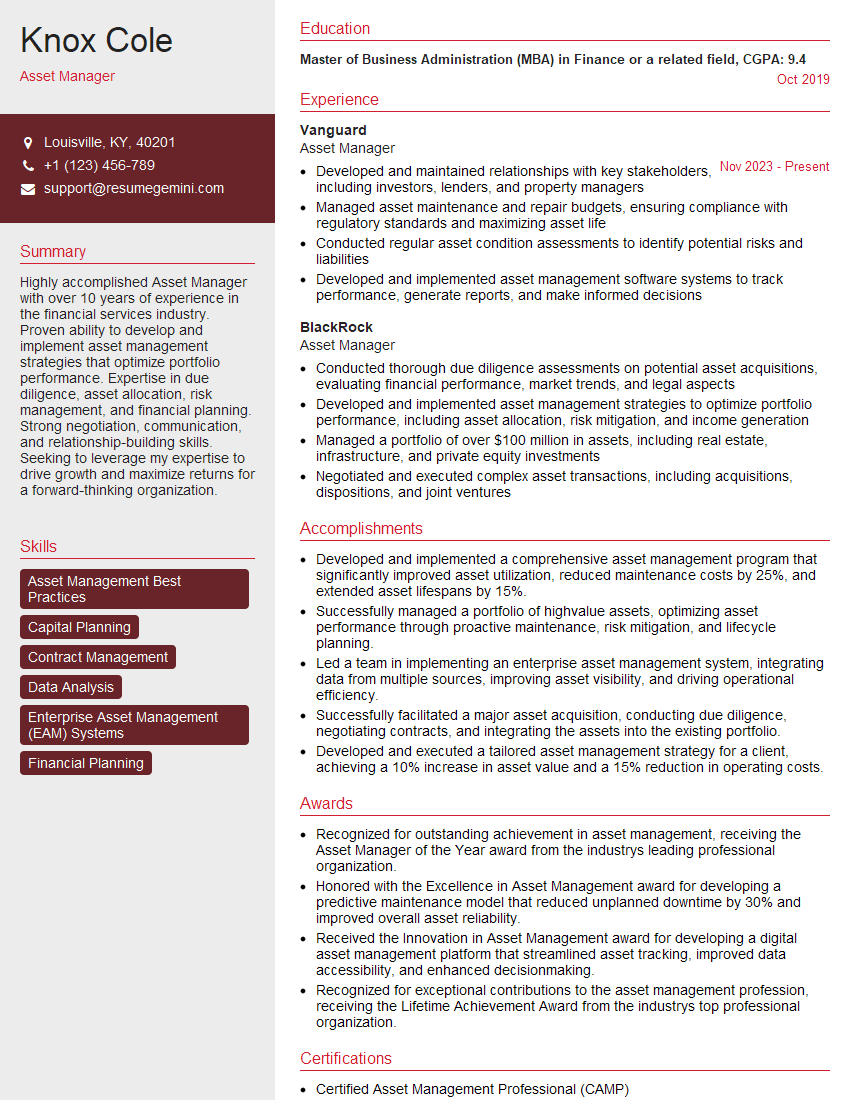
Asset Manager Resume Sample
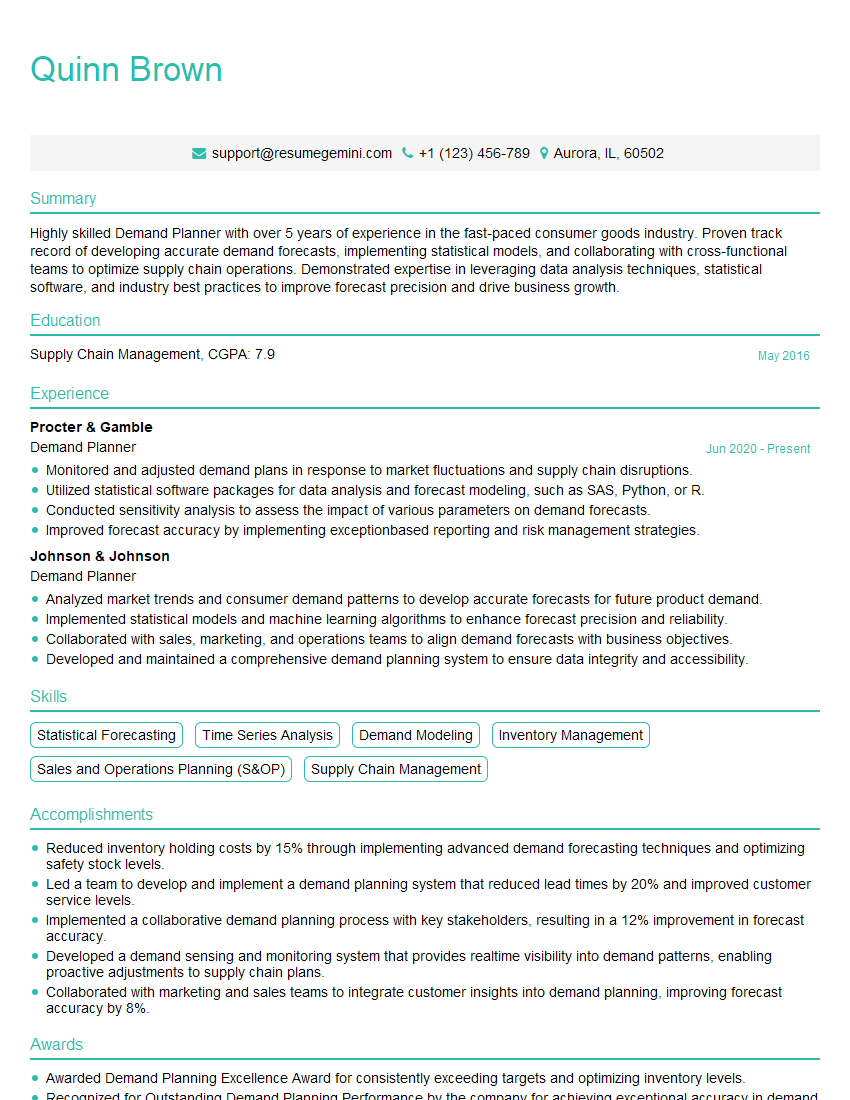
Demand Planner Resume Sample
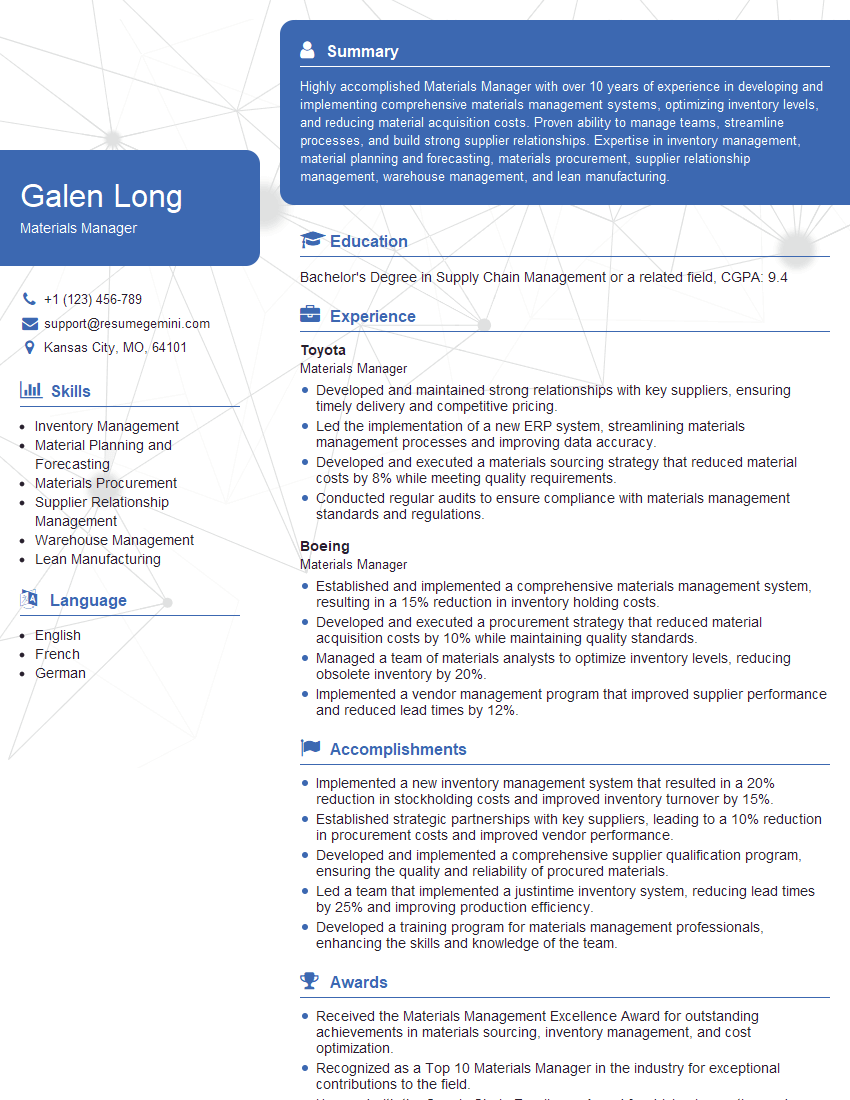
Materials Manager Resume Sample

Procurement Manager Resume Sample
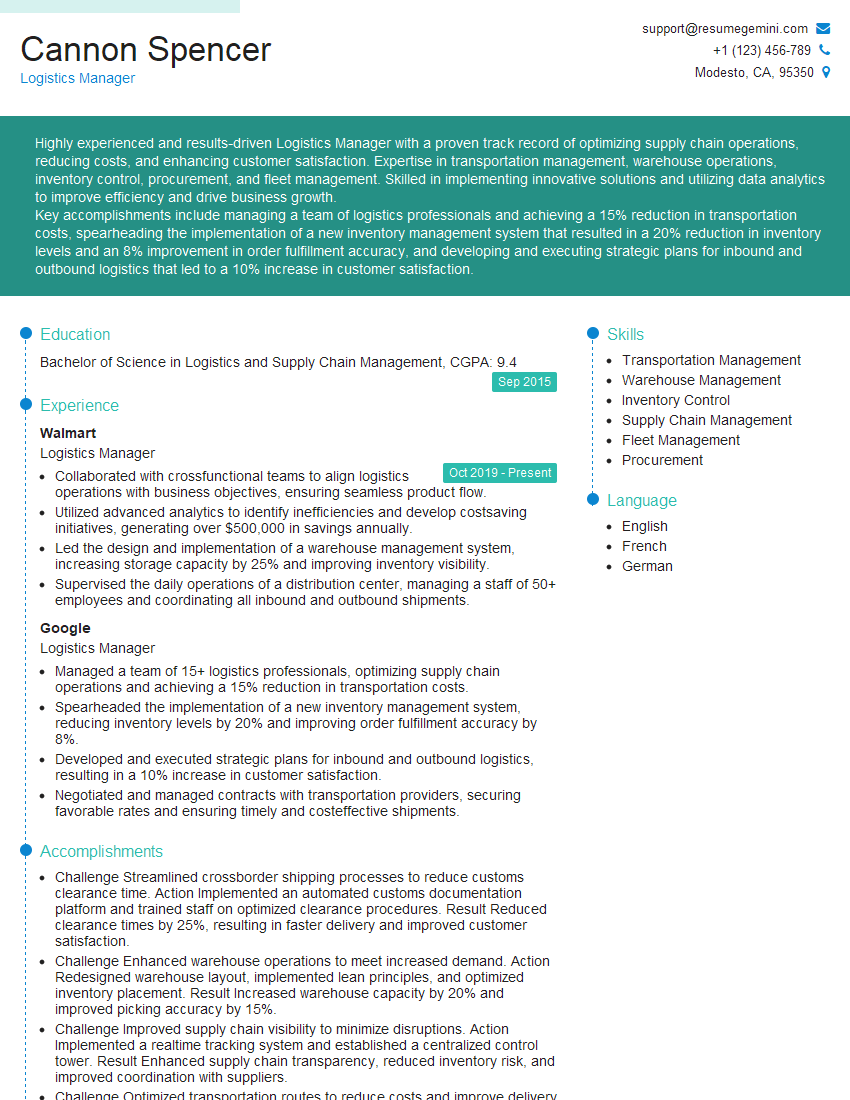
Logistics Manager Resume Sample
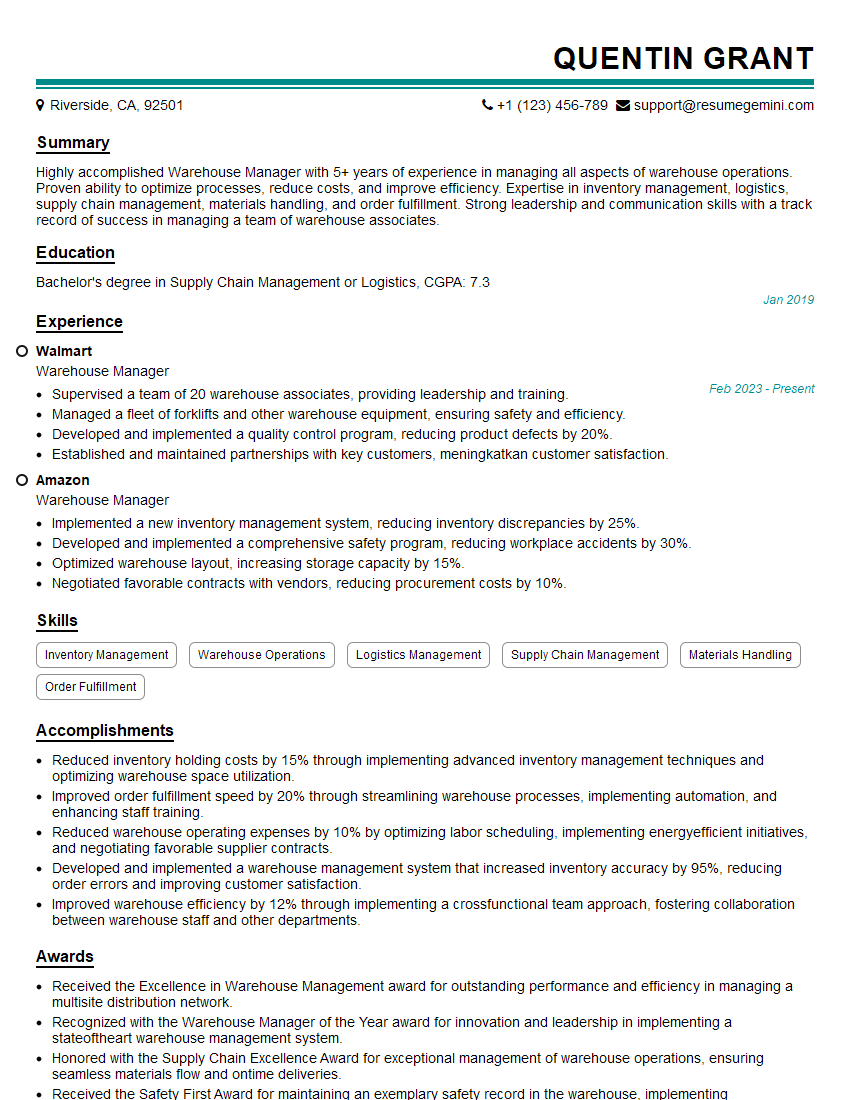
Warehouse Manager Resume Sample
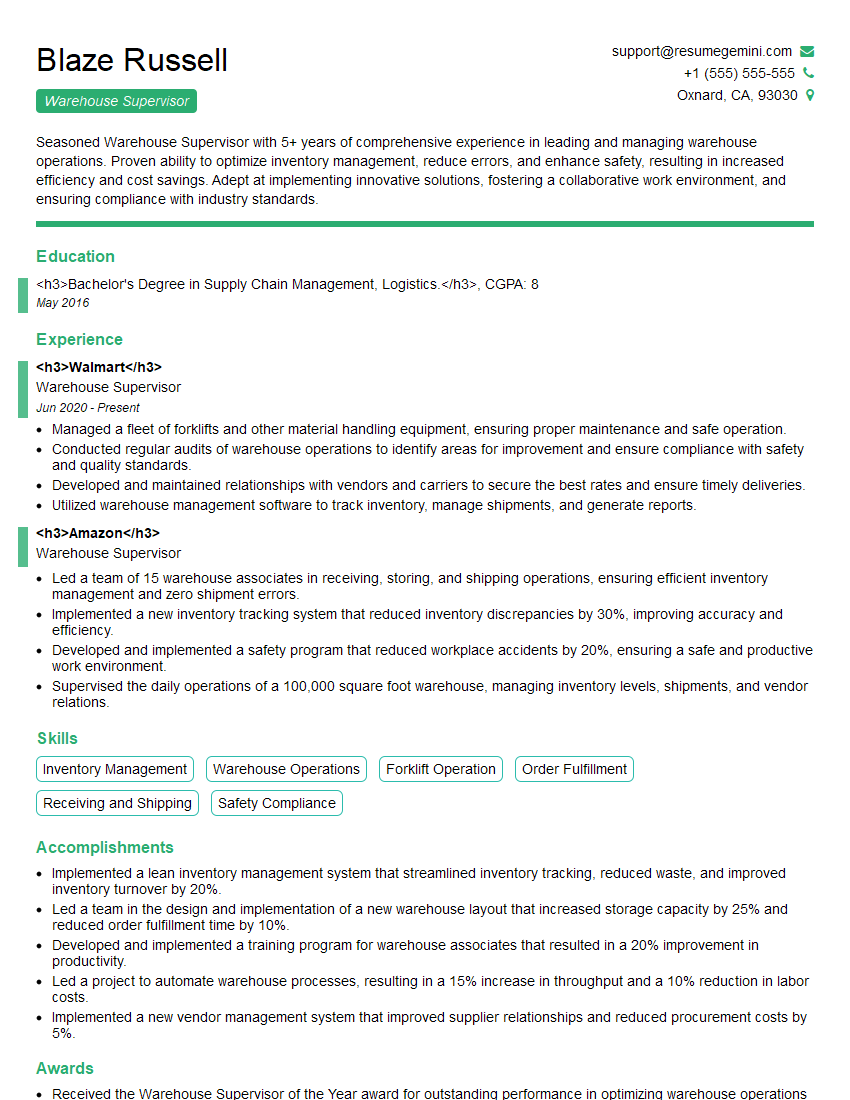
Warehouse Supervisor Resume Sample
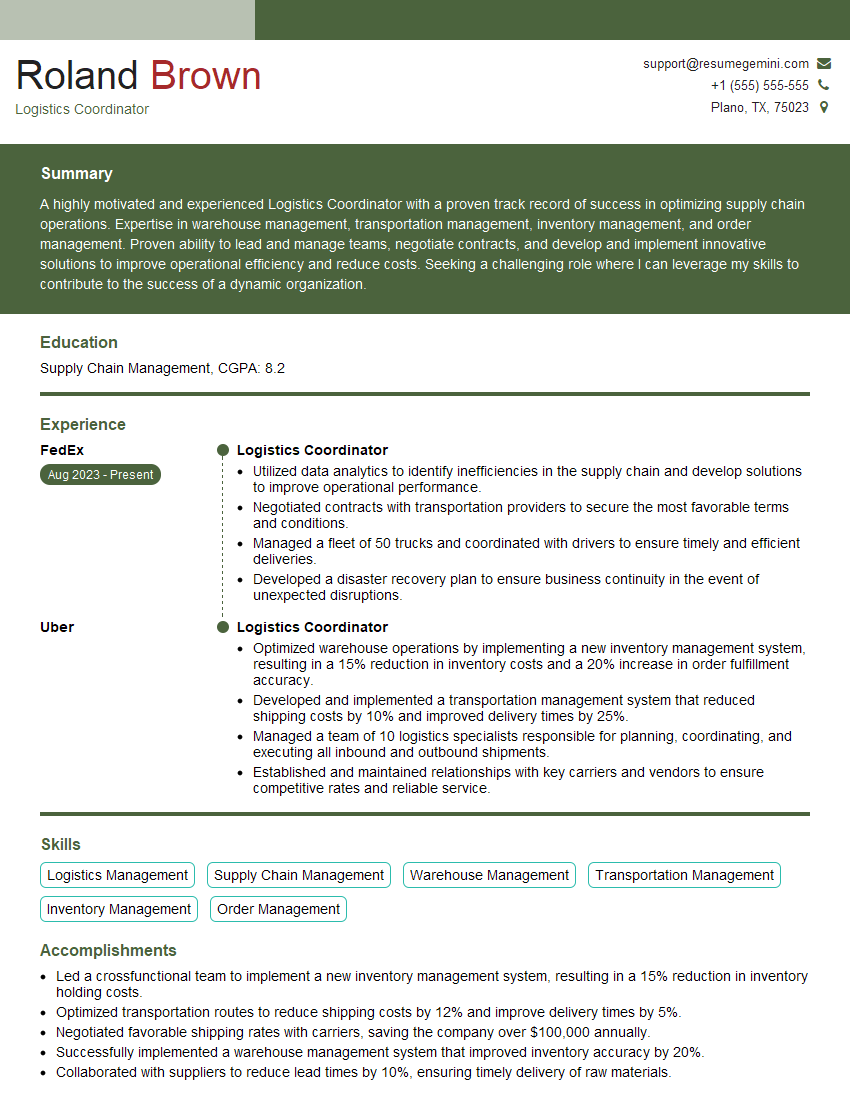
Logistics Coordinator Resume Sample
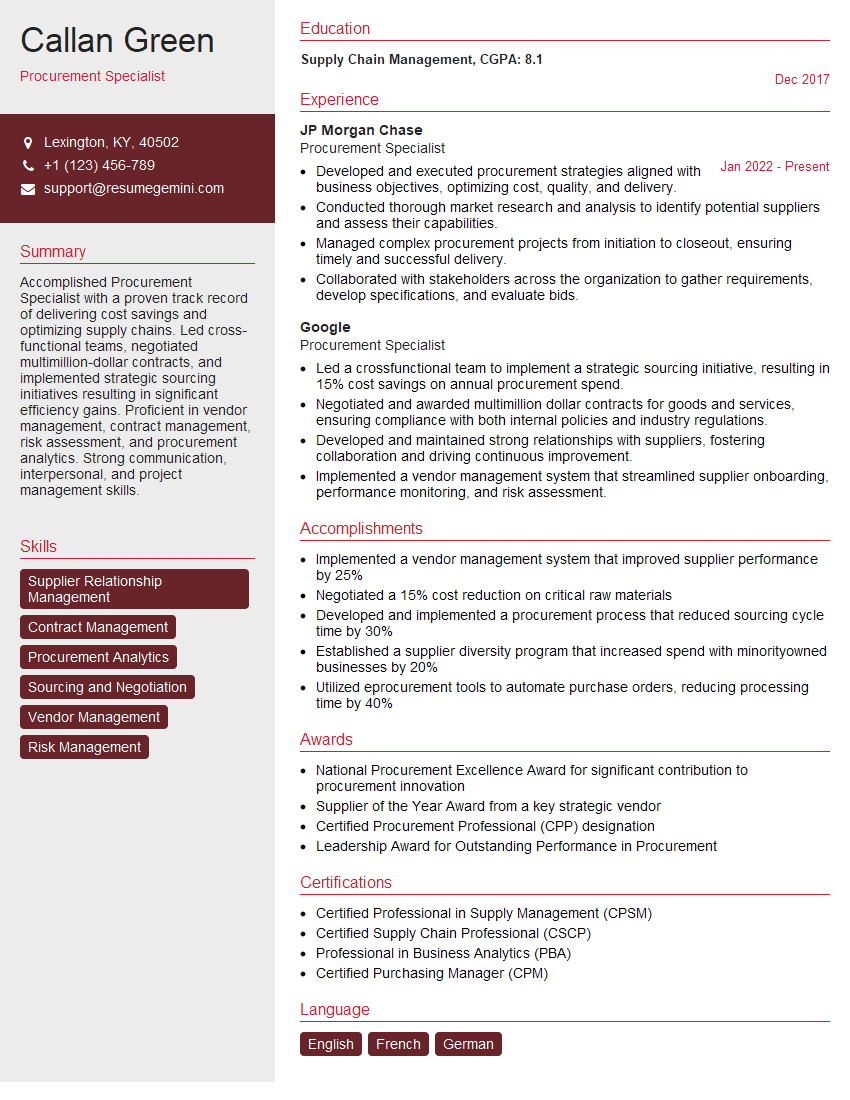
Procurement Specialist Resume Sample
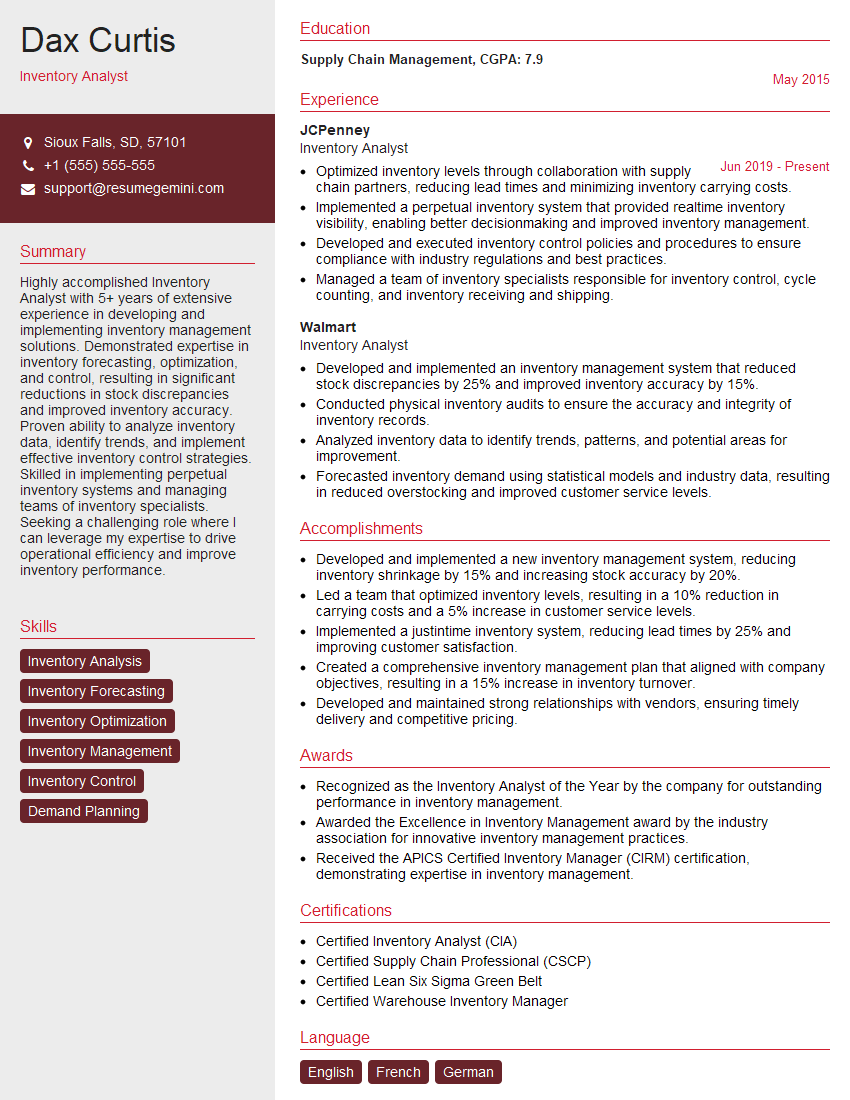
Inventory Analyst Resume Sample
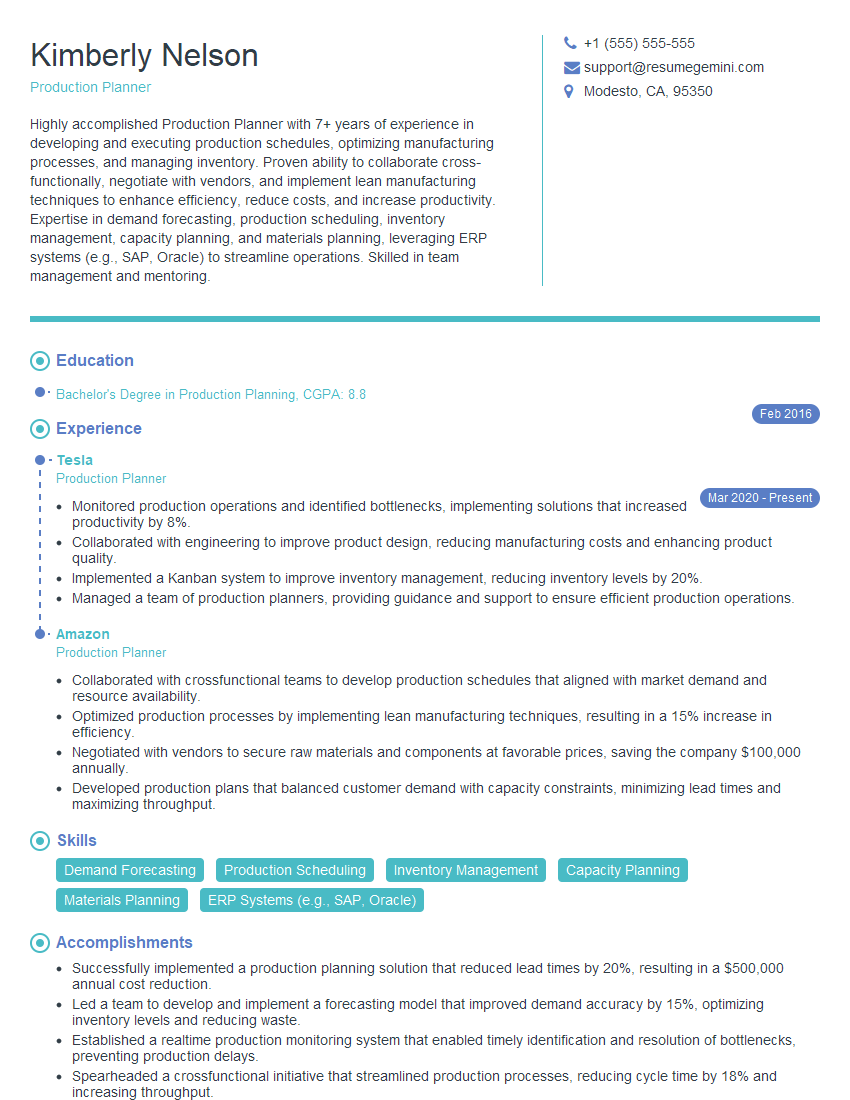
Production Planner Resume Sample
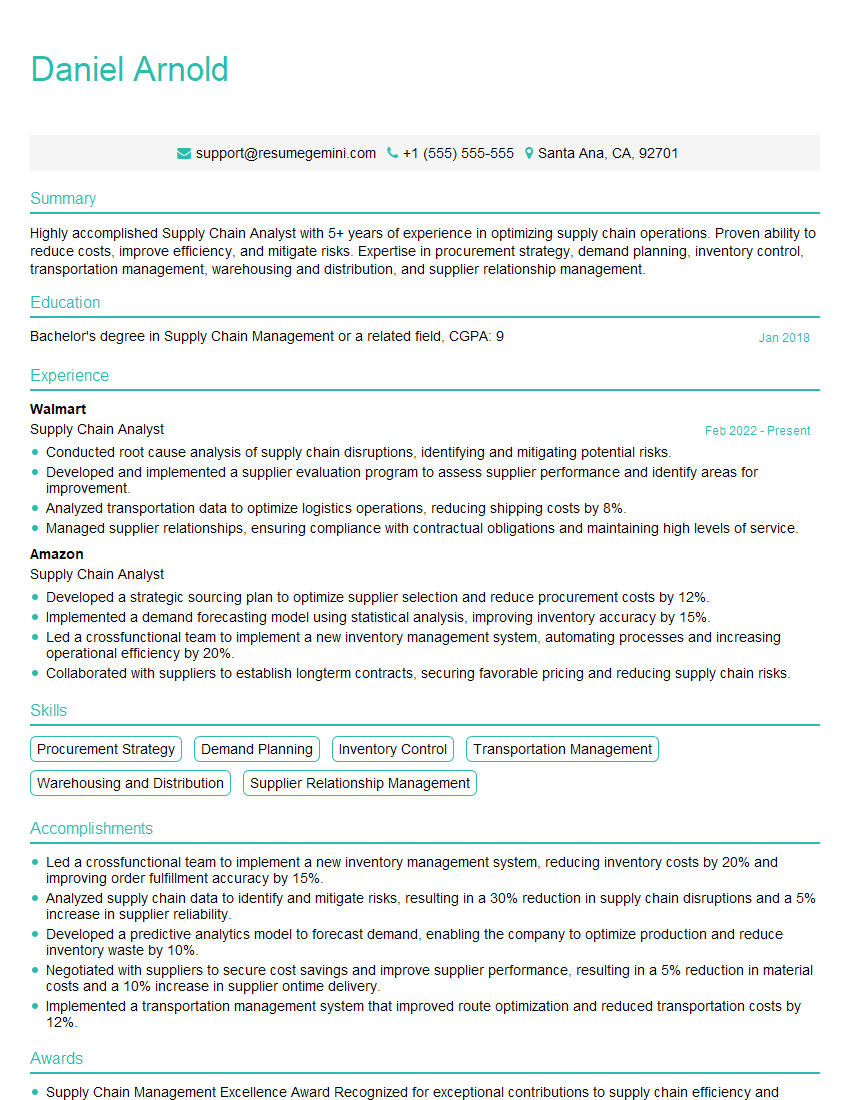
Supply Chain Analyst Resume Sample
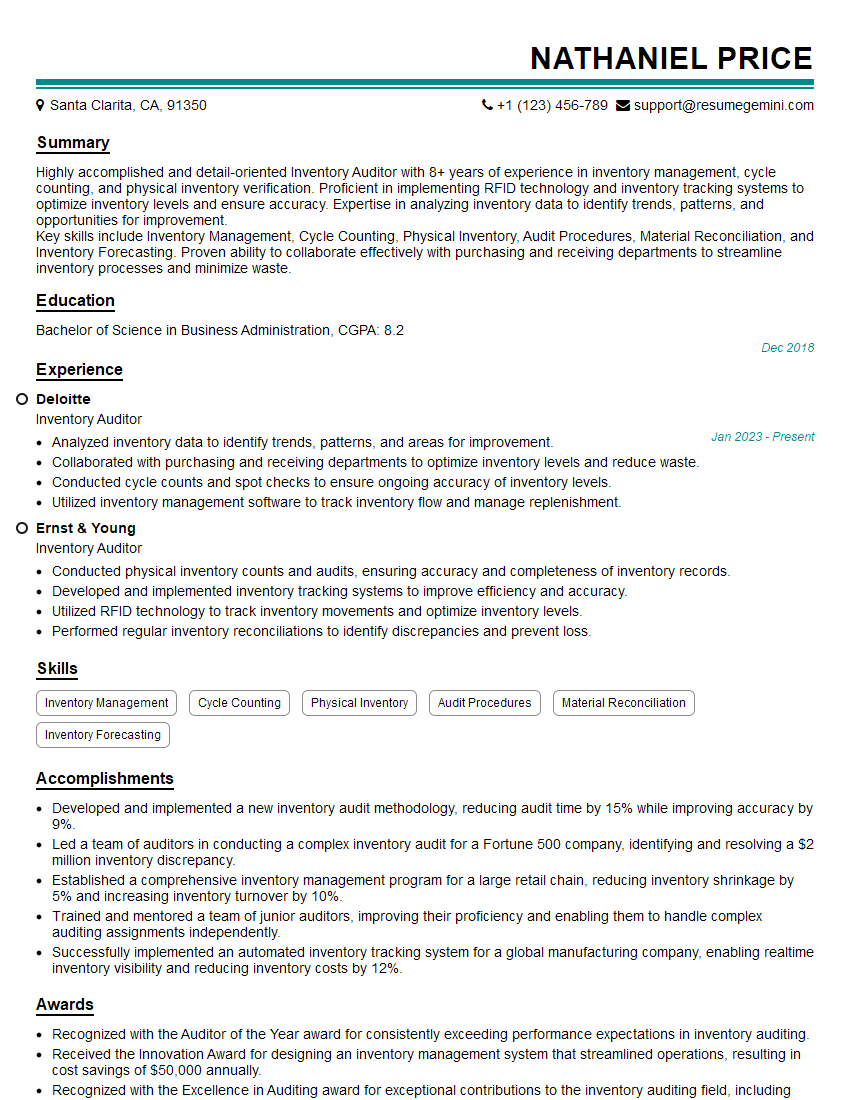
Inventory Auditor Resume Sample
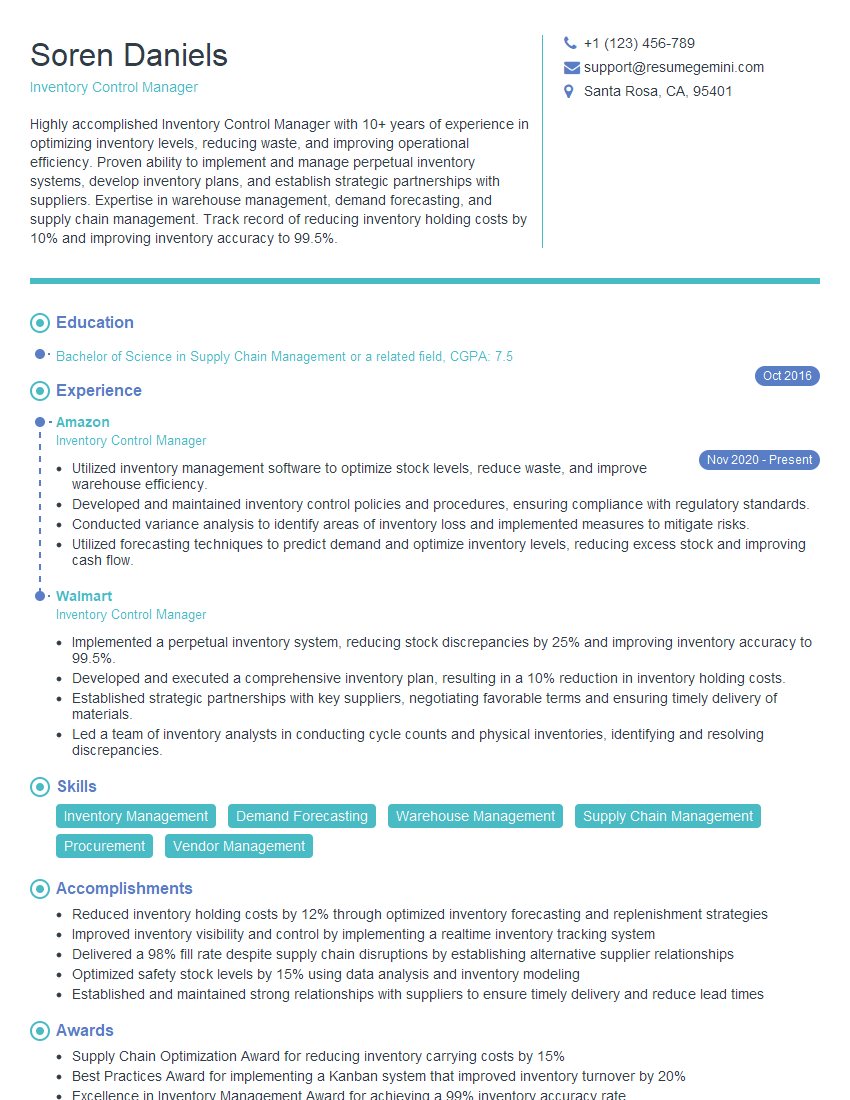
Inventory Control Manager Resume Sample
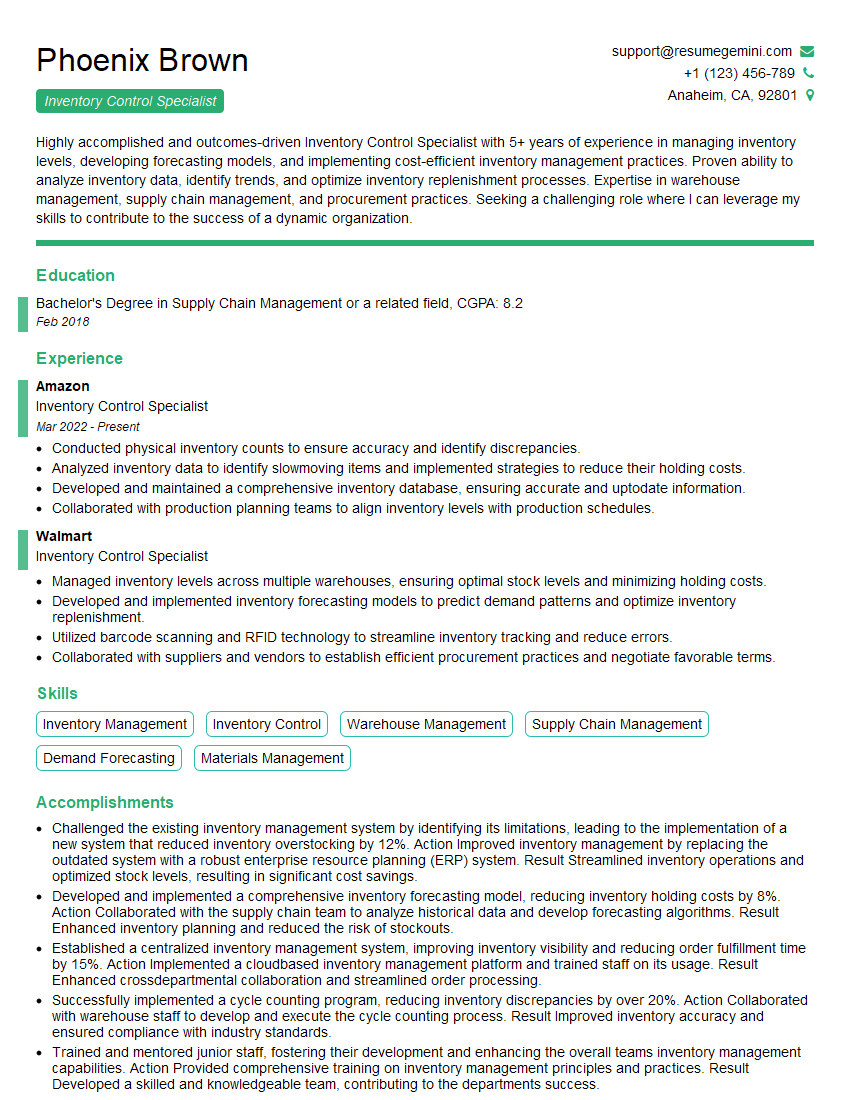
Inventory Control Specialist Resume Sample
- Operations Manager
- Asset Manager
- Demand Planner
- Materials Manager
- Procurement Manager
- Logistics Manager
- Warehouse Manager
- Warehouse Supervisor
- Logistics Coordinator
- Procurement Specialist
- Inventory Analyst
- Production Planner
- Supply Chain Analyst
- Inventory Auditor
- Inventory Control Manager
- Inventory Control Specialist
Explore more articles
Users Rating of Our Blogs
Share Your Experience
We value your feedback! Please rate our content and share your thoughts (optional).
What Readers Say About Our Blog
Very informative content, great job.
good