Are you ready to stand out in your next interview? Understanding and preparing for Dock Handling interview questions is a game-changer. In this blog, we’ve compiled key questions and expert advice to help you showcase your skills with confidence and precision. Let’s get started on your journey to acing the interview.
Questions Asked in Dock Handling Interview
Q 1. Describe your experience with different types of dock equipment (forklifts, pallet jacks, etc.).
My experience with dock equipment is extensive, encompassing a wide range of machinery crucial for efficient warehouse operations. I’m proficient in operating various forklift types – from counterbalance and reach trucks to order pickers and sit-down rider forklifts. My skills extend to using pallet jacks, both manual and electric, for moving smaller loads or within tighter spaces where larger equipment isn’t suitable. I understand the nuances of each machine’s operation, including safety protocols, load capacity limitations, and maintenance requirements. For example, I’ve successfully utilized reach trucks to maximize vertical space in high-bay warehouses, significantly improving storage efficiency. Similarly, I’ve managed the safe and efficient movement of fragile goods using specialized pallet jacks with shock-absorbing features. Furthermore, my experience includes troubleshooting minor mechanical issues and knowing when to call for professional maintenance.
Q 2. Explain your understanding of dock safety procedures and regulations.
Dock safety is paramount in my approach to warehouse management. I am intimately familiar with OSHA regulations and industry best practices, prioritizing the well-being of myself and my team above all else. This includes meticulous adherence to procedures like pre-shift equipment inspections, utilizing appropriate personal protective equipment (PPE) – such as safety shoes, high-visibility vests, and gloves – and ensuring proper training for all personnel using the equipment. I’ve implemented and enforced a strict no-bystander zone around operating equipment and created visual cues, like floor markings, to delineate designated pedestrian and vehicle pathways. We regularly conduct safety training sessions covering topics such as safe lifting techniques, emergency procedures, and hazard identification. For instance, we simulate emergency situations to ensure everyone knows how to respond appropriately to a forklift malfunction or a dropped pallet.
Q 3. How do you ensure efficient loading and unloading processes?
Efficient loading and unloading hinges on meticulous planning and coordination. My approach begins with optimizing the layout of the dock area and utilizing efficient loading strategies, like cross-docking where appropriate. This minimizes unnecessary movement and maximizes throughput. I also leverage technology, using Warehouse Management Systems (WMS) to streamline processes, track shipments, and allocate resources effectively. Proper communication with drivers and receiving teams is vital. For example, I’ve implemented a system of pre-arranged delivery slots and clear communication channels to avoid congestion and delays. Furthermore, I continuously analyze operational data to identify bottlenecks and areas for improvement. This includes tracking loading/unloading times, analyzing traffic flow patterns, and adjusting our procedures as needed to boost efficiency. A real-world example is how I reduced unloading time by 15% by implementing a new dock scheduling system that optimized truck arrival times.
Q 4. What methods do you use to prevent damage to goods during handling?
Preventing damage to goods is a top priority. My strategies include proper load securing techniques using appropriate straps, shrink wrap, and dunnage to prevent shifting during transit. This also extends to selecting the right equipment for the job; fragile items require careful handling and potentially specialized equipment. We use protective padding and cushioning materials to safeguard delicate products. Additionally, environmental factors such as temperature and humidity are considered, especially when dealing with temperature-sensitive goods. We maintain a clean and organized dock area to minimize the risk of damage caused by accidental collisions or falls. Regular equipment maintenance is vital to ensure reliable operation and minimize the risk of mechanical failure. For example, I’ve implemented a system of visual inspections for incoming shipments, flagging any damage before it enters the warehouse. This proactive approach significantly reduces claims and improves customer satisfaction.
Q 5. Describe your experience with inventory management in a dock environment.
My experience with inventory management in a dock environment involves the use of sophisticated WMS systems to accurately track incoming and outgoing goods. Real-time tracking provides visibility into inventory levels, allowing us to optimize storage and ensure efficient order fulfillment. We use barcode scanning and RFID technology to enhance accuracy and minimize manual data entry errors. Cycle counting and regular stock audits are crucial to maintaining inventory accuracy. We also employ a first-in, first-out (FIFO) inventory management system to prevent spoilage of perishable goods. I’ve developed processes for managing discrepancies between physical inventory and system records, quickly identifying and resolving any discrepancies. Data analysis from our WMS helps in predicting future demand and optimizing stock levels, leading to cost savings and improved efficiency. For instance, by implementing a more robust inventory tracking system, we reduced stockouts by 20%.
Q 6. How do you manage different types of freight (oversized, fragile, hazardous)?
Handling diverse freight requires specialized knowledge and procedures. Oversized items require careful planning and potentially the use of specialized equipment like forklifts with extended masts or cranes. Fragile goods necessitate extra care, including protective packaging and gentle handling. We use specialized equipment and techniques to move these items safely. Hazardous materials demand strict adherence to regulatory guidelines, including proper labeling, storage, and handling protocols. Designated areas for hazardous materials, specific training for personnel handling them, and adherence to relevant safety data sheets (SDS) are crucial. We meticulously document all handling procedures for hazardous materials to ensure compliance. For example, we have separate dedicated zones for storing and handling hazardous goods, with clear signage and safety protocols to ensure the safety of personnel and the prevention of accidents.
Q 7. How familiar are you with different shipping documentation and procedures?
I’m highly familiar with various shipping documentation and procedures. This includes understanding bills of lading, packing lists, commercial invoices, certificates of origin, and other relevant documentation. I know how to verify the accuracy of documentation against the physical shipment and identify any discrepancies. I’m proficient in using different transportation modes and their associated documentation requirements. I’m also aware of customs regulations and procedures for international shipments. My experience involves managing and tracking documentation throughout the entire shipping process, from receiving to dispatch. Accurate documentation is essential for smooth logistics and resolving any potential issues. For example, my experience includes successfully navigating customs procedures for international shipments, ensuring timely and compliant delivery of goods.
Q 8. How do you prioritize tasks in a high-volume dock environment?
Prioritizing tasks in a high-volume dock environment requires a strategic approach that balances urgency, importance, and resource allocation. Think of it like air traffic control – you need to manage multiple incoming and outgoing ‘flights’ (deliveries and shipments) smoothly and efficiently.
My approach involves a multi-pronged strategy:
- Utilizing a Dock Management System (DMS): A DMS allows for real-time tracking of inbound and outbound shipments, enabling prioritization based on factors such as delivery deadlines, product perishability, and pre-arranged appointments. This helps us visualize the entire workflow and identify potential bottlenecks.
- Employing a Prioritization Matrix: I use a matrix that considers both urgency (how soon the task needs to be completed) and importance (the impact of delaying the task). This helps classify tasks as high-priority, medium-priority, and low-priority, guiding resource allocation accordingly.
- Communicating Effectively: Clear communication with drivers, warehouse staff, and receiving departments is crucial. This involves regularly updating everyone on the schedule and any changes, ensuring everyone is on the same page and can adapt to shifting priorities.
- Utilizing Cross-Training: A flexible team capable of handling multiple tasks is essential. Cross-training ensures that if one area faces a backlog, other team members can assist, mitigating delays.
For example, during peak season, we might prioritize shipments with imminent deadlines or perishable goods, while less time-sensitive shipments can be handled later. This dynamic approach ensures efficient throughput while preventing unnecessary delays or product spoilage.
Q 9. What is your experience with dock scheduling and optimization?
My experience with dock scheduling and optimization involves leveraging technology and proven methodologies to maximize efficiency and minimize downtime. Effective dock scheduling is akin to orchestrating a symphony – every instrument (resource) must play its part at the right time to create a harmonious whole.
I have extensively used various scheduling software and have implemented several optimization strategies:
- Appointment Scheduling: Implementing a robust appointment system for inbound and outbound shipments reduces congestion and improves predictability, allowing for optimized resource allocation.
- Route Optimization: Utilizing software to optimize loading and unloading sequences minimizes the distance traveled by forklifts and other equipment, saving time and resources.
- Labor Forecasting: By analyzing historical data, I predict labor requirements for different periods, ensuring sufficient staffing levels to meet demands without unnecessary overhead.
- Real-time Monitoring: Continuous monitoring of dock activities allows for proactive identification and resolution of potential bottlenecks, preventing delays and ensuring smooth operations.
In a previous role, we implemented a new scheduling system that reduced our average dock-to-stock time by 15% by optimizing loading sequences and streamlining the receiving process. This translated to significant cost savings and improved customer satisfaction.
Q 10. Explain your approach to problem-solving in a fast-paced dock setting.
Problem-solving in a fast-paced dock environment requires a structured approach that combines quick thinking with decisive action. It’s like being a firefighter – you need to assess the situation rapidly, formulate a plan, and execute it efficiently.
My approach follows these steps:
- Identify the Problem: Accurately assess the situation. Is it a equipment malfunction, a staffing shortage, an unexpected delay, or something else?
- Gather Information: Collect data relevant to the problem. Talk to involved personnel, check records, and review relevant documentation.
- Develop Solutions: Brainstorm several potential solutions, considering their feasibility and potential impact.
- Select and Implement: Choose the best solution based on the available resources and time constraints and implement it quickly and decisively.
- Monitor and Evaluate: Monitor the effectiveness of the chosen solution and make adjustments as needed. Document lessons learned to improve future response.
For instance, if a forklift malfunctions, I would immediately assess the severity of the problem. If it’s a minor issue, I might have a technician repair it while reassigning tasks to other forklifts. If it’s a major failure, I’d arrange for a replacement forklift while re-prioritizing tasks to minimize disruption.
Q 11. How do you maintain accurate records of goods received and shipped?
Maintaining accurate records of goods received and shipped is paramount for inventory management, financial reporting, and regulatory compliance. Think of it as maintaining a meticulously organized ledger – every transaction needs to be accurately recorded and accounted for.
My strategy includes:
- Utilizing a Warehouse Management System (WMS): A WMS provides real-time tracking of goods, automatically updating inventory levels upon receipt and shipment. This minimizes manual data entry and reduces the risk of errors.
- Implementing a Double-Check System: We employ a double-check system where one person scans the items and another verifies the accuracy of the scan against the paperwork. This ensures data accuracy.
- Regular Reconciliation: Periodic reconciliation of physical inventory against system records helps identify and correct any discrepancies early on.
- Barcode and RFID Technology: Using barcode or RFID scanners streamlines the process of tracking goods, minimizing human error and increasing efficiency.
- Proper Documentation: Maintaining detailed and well-organized documentation for all inbound and outbound shipments, including bills of lading, packing slips, and proof of delivery.
For example, every incoming shipment undergoes a detailed inspection, and all relevant data (item number, quantity, condition) is meticulously entered into the WMS. This ensures that our inventory records accurately reflect the actual stock levels.
Q 12. Describe your experience with warehouse management systems (WMS).
My experience with Warehouse Management Systems (WMS) spans several years, encompassing implementation, configuration, and day-to-day utilization. A WMS is the central nervous system of a modern warehouse, directing the flow of goods and information.
I am proficient in various WMS functionalities, including:
- Inventory Management: Tracking and managing inventory levels, including receiving, putaway, picking, and shipping.
- Order Management: Processing and managing orders from receipt to fulfillment.
- Dock Scheduling: Optimizing dock operations through automated scheduling and tracking of inbound and outbound shipments.
- Reporting and Analytics: Generating reports on key performance indicators (KPIs) to identify areas for improvement.
- Integration with other systems: Connecting the WMS with other enterprise systems such as ERP and TMS to ensure seamless data flow.
I’ve worked with several WMS platforms, including [WMS Platform Name 1] and [WMS Platform Name 2], and have successfully implemented and customized them to meet specific business requirements. My experience also includes training warehouse personnel on the effective use of the WMS.
Q 13. How do you handle unexpected delays or disruptions in the dock operations?
Handling unexpected delays or disruptions requires a proactive and flexible approach. Think of it as navigating a storm at sea – you need to adjust your course to avoid hazards and reach your destination safely.
My strategy involves:
- Communication: Immediately communicate the delay or disruption to all relevant parties – customers, drivers, warehouse staff, and management – to manage expectations and prevent unnecessary panic.
- Problem Assessment: Quickly assess the root cause of the delay or disruption. Is it due to traffic congestion, equipment malfunction, or unforeseen circumstances?
- Contingency Planning: Implement contingency plans developed in advance to mitigate the impact of such disruptions. This might include rerouting shipments or reassigning tasks.
- Collaboration: Collaborate with all stakeholders to find a solution. This may involve negotiating with carriers, re-prioritizing tasks, or seeking alternative solutions.
- Documentation: Thoroughly document the nature of the delay or disruption, the actions taken to resolve it, and the lessons learned to prevent similar incidents in the future.
For example, if a severe snowstorm causes significant traffic delays, I would immediately contact all affected parties, re-prioritize urgent shipments, and explore alternative transportation options to ensure timely delivery of critical goods.
Q 14. How do you ensure compliance with all relevant safety regulations and company policies?
Ensuring compliance with safety regulations and company policies is non-negotiable. It’s about creating a safe and productive work environment for everyone involved. This is similar to following a building code – essential for structural integrity and safety.
My approach focuses on:
- Regular Safety Training: Conducting regular safety training sessions for all dock personnel to reinforce safe operating procedures and address potential hazards.
- Compliance Audits: Performing regular audits to ensure compliance with all relevant safety regulations and company policies.
- Hazard Identification and Mitigation: Identifying and mitigating potential hazards in the dock area, such as obstructed walkways, damaged equipment, and poor lighting.
- Proper Equipment Maintenance: Ensuring all equipment, including forklifts, pallet jacks, and conveyor systems, is properly maintained and regularly inspected.
- Personal Protective Equipment (PPE): Ensuring all employees use appropriate PPE, including safety shoes, gloves, and high-visibility vests.
- Incident Reporting and Investigation: Establishing a clear system for reporting and investigating all workplace incidents to prevent recurrence.
We actively promote a safety-first culture where reporting hazards and near misses is encouraged without fear of reprisal. This ensures a safe and productive working environment for everyone.
Q 15. What is your experience with using handheld scanners and other dock technology?
Handheld scanners are indispensable in modern dock operations, significantly improving efficiency and accuracy. My experience encompasses using various models, from basic barcode scanners to more advanced devices with RFID capabilities. I’m proficient in using these scanners for tasks such as receiving, putaway, picking, and shipping. For example, I’ve used scanners to verify incoming shipments against purchase orders, ensuring accuracy and minimizing discrepancies. This reduces the time spent on manual reconciliation and helps to prevent errors that could delay shipments or lead to stock inaccuracies. Furthermore, I’m familiar with integrating scanner data with Warehouse Management Systems (WMS) for real-time inventory tracking and reporting. This provides valuable insights into dock performance and helps in identifying areas for improvement.
Beyond scanners, I have experience with other dock technologies like dock levelers, which ensure safe and efficient loading and unloading, and yard management systems (YMS) that optimize trailer placement and movement, minimizing congestion and improving turnaround times. I’ve even worked with systems that utilize automated guided vehicles (AGVs) for internal material handling, boosting productivity and reducing reliance on manual labor.
Career Expert Tips:
- Ace those interviews! Prepare effectively by reviewing the Top 50 Most Common Interview Questions on ResumeGemini.
- Navigate your job search with confidence! Explore a wide range of Career Tips on ResumeGemini. Learn about common challenges and recommendations to overcome them.
- Craft the perfect resume! Master the Art of Resume Writing with ResumeGemini’s guide. Showcase your unique qualifications and achievements effectively.
- Don’t miss out on holiday savings! Build your dream resume with ResumeGemini’s ATS optimized templates.
Q 16. Describe your experience with managing a team of dockworkers.
Managing a team of dockworkers requires a blend of strong leadership, communication, and operational expertise. My approach centers around clear delegation, consistent training, and fostering a collaborative environment. I’ve successfully led teams of up to 20 dockworkers, consistently exceeding targets for on-time delivery and minimizing errors. I achieve this by clearly defining roles and responsibilities, providing regular feedback and coaching, and recognizing individual contributions. For instance, I implemented a system where workers are cross-trained on various tasks, increasing flexibility and reducing reliance on individual specialists. In situations where productivity faltered, I’ve successfully addressed the issues through open communication, understanding the root causes (whether it be equipment malfunction, training gaps, or process inefficiencies), and collaborating with the team to develop effective solutions.
Beyond operational efficiency, I prioritize safety. Regular safety briefings, training on proper lifting techniques, and ensuring the use of appropriate safety equipment are paramount. Building a positive and supportive team environment improves morale and reduces turnover, which is essential for maintaining operational consistency and efficiency.
Q 17. How do you communicate effectively with drivers, warehouse staff, and other stakeholders?
Effective communication is crucial in dock operations. My strategy involves using a multi-faceted approach tailored to the specific audience. With drivers, I emphasize clear and concise instructions regarding dock procedures, ensuring they understand loading/unloading requirements and any special handling instructions. This often involves using clear visual aids and standardized documentation. Clear communication reduces delays and avoids misunderstandings that can lead to damaged goods or delays. For instance, I’ve used standardized checklists for drivers to confirm the accuracy of their delivery manifests, improving efficiency and accountability.
With warehouse staff, communication focuses on coordination and real-time updates. I use a combination of verbal communication, internal messaging systems, and whiteboards to provide updates on incoming and outgoing shipments. This keeps everyone informed and ensures a smooth workflow. With other stakeholders, such as management, I provide regular reports on key performance indicators (KPIs) and any potential issues, ensuring transparency and proactive problem-solving. I believe in proactive, open communication to prevent problems before they escalate.
Q 18. What are the key performance indicators (KPIs) you track in dock operations?
Key Performance Indicators (KPIs) are critical for measuring the effectiveness of dock operations. The KPIs I routinely track include:
- On-time delivery rate: Percentage of shipments delivered within the scheduled timeframe.
- Dock-to-stock cycle time: Time taken from goods arriving at the dock to being put away in the warehouse.
- Order fulfillment accuracy: Percentage of orders accurately fulfilled without errors.
- Dock utilization rate: Efficiency of dock space utilization.
- Driver turnaround time: Time taken for a driver to complete loading or unloading and depart.
- Number of incidents/accidents: Tracking safety performance.
- Inventory accuracy: Degree of accuracy in stock counts.
Regular monitoring of these KPIs provides insights into operational performance, identifies bottlenecks, and allows for data-driven decision-making to improve efficiency and reduce costs.
Q 19. How do you identify and address bottlenecks in the dock workflow?
Identifying and addressing bottlenecks requires a systematic approach. I typically start by observing the dock workflow to identify areas where delays frequently occur. This might involve analyzing the KPIs mentioned earlier or simply observing the physical flow of goods and people. Once a bottleneck is identified, I investigate its root cause. This often involves collecting data on process times, equipment downtime, and staff availability. For example, a bottleneck could be caused by insufficient dock space, inadequate equipment, inefficient loading/unloading procedures, or lack of staff.
Addressing the bottleneck might involve implementing process improvements, such as optimizing loading sequences or introducing new equipment. It could also involve addressing training deficiencies or improving communication protocols. For example, if the bottleneck is due to slow unloading, I might investigate whether the drivers are properly trained on the unloading procedures, whether the unloading equipment is functioning optimally, or whether there are enough dockworkers assigned to handle the volume of deliveries. Continuous monitoring and adjustments are necessary to maintain a smooth workflow.
Q 20. How do you ensure the security of goods on the dock?
Ensuring the security of goods on the dock is paramount. My approach involves a multi-layered security system combining physical security measures with procedural controls. Physical security includes secure fencing, lighting, and surveillance cameras covering all areas of the dock. Access control is critical, limiting entry to authorized personnel only via keycard or biometric systems. Regular security patrols further enhance protection.
Procedural controls include rigorous inventory management, regular stock checks, and clear accountability for goods throughout the handling process. All inbound and outbound shipments are meticulously documented, and discrepancies are immediately investigated. Designated secure areas for high-value or sensitive goods further enhance security. Finally, we conduct regular security audits and training sessions for all dock personnel to reinforce security protocols and awareness.
Q 21. What are your strategies for preventing theft or loss of goods?
Preventing theft or loss necessitates a proactive approach that combines security measures with employee training and accountability. Strategies include:
- Strict inventory control: Regular stock checks, accurate documentation, and reconciliation processes minimize the chances of discrepancies.
- Clear accountability: Assigning clear responsibility for goods at each stage of handling.
- Employee background checks and training: Thorough background checks on all employees, combined with regular training on security procedures.
- Surveillance systems: CCTV cameras provide visual monitoring and deter theft.
- Access control: Limiting access to authorized personnel only.
- Secure storage: Designated secure areas for high-value goods.
- Regular security audits: Identifying weaknesses and improving security protocols.
- Reporting mechanisms: Encouraging employees to report any suspicious activity.
By implementing a comprehensive strategy encompassing physical security, procedural controls, and employee engagement, we can significantly reduce the risk of theft or loss.
Q 22. How do you conduct regular inspections of dock equipment and facilities?
Regular dock equipment and facility inspections are crucial for safety, efficiency, and regulatory compliance. My approach is systematic and involves a combination of daily checks and more thorough periodic inspections.
- Daily Checks: Dockworkers perform visual inspections at the start of each shift, checking for obvious hazards like spills, damaged equipment (forklifts, loading docks, etc.), and potential obstructions. They report any issues immediately to their supervisor.
- Weekly Inspections: A more detailed inspection is conducted weekly, covering aspects like the functionality of loading dock levelers, the condition of dock seals and shelters, and the overall cleanliness of the area. This often involves using checklists to ensure nothing is overlooked.
- Monthly/Quarterly Inspections: These comprehensive inspections involve a thorough examination of all equipment, including load-bearing capacity checks on docks and ramps, electrical systems checks for forklifts, and hydraulic system checks. We might bring in specialized technicians for certain components.
- Annual Inspections: These are often conducted by external professionals and are more in-depth, encompassing structural integrity checks of the building and its support structures, fire safety systems, and any other regulatory requirements. Documentation is meticulously maintained for all inspections.
Think of it like maintaining a car – daily checks prevent minor issues from becoming major problems, while regular servicing ensures long-term reliability and safety.
Q 23. Describe your experience with handling returns and damaged goods.
Handling returns and damaged goods requires a methodical process to minimize losses and maintain inventory accuracy. My experience includes implementing and managing systems for receiving, inspecting, and processing returned or damaged goods.
- Designated Receiving Area: We have a dedicated area for processing returns, separate from the main receiving dock, to prevent contamination and confusion.
- Detailed Inspection: Each returned or damaged item undergoes a thorough inspection to determine the cause of damage (e.g., shipping damage, manufacturing defect, customer misuse) and its condition. Detailed documentation is crucial.
- Inventory Management: The system updates inventory records accordingly, reflecting the return or disposal of damaged goods. This ensures accurate stock levels and informs purchasing decisions.
- Disposition: Depending on the cause and extent of the damage, the goods may be repaired, returned to the supplier, recycled, or disposed of according to company policy and environmental regulations.
- Customer Communication: For customer returns, clear communication is vital. We update the customer on the status of their return and any associated refunds or replacements.
For example, once we had a large shipment of returned electronics. By carefully inspecting each item and documenting the issues, we were able to categorize the damage, negotiate refunds from the shipping carrier for damage-in-transit, and identify a potential manufacturing defect that was addressed with the supplier.
Q 24. How do you maintain a clean and organized dock environment?
Maintaining a clean and organized dock environment is paramount for safety, efficiency, and productivity. This involves a multi-faceted approach.
- 5S Methodology: We utilize the 5S methodology (Sort, Set in Order, Shine, Standardize, Sustain) to ensure a consistent and organized workspace. This promotes efficiency and reduces the risk of accidents.
- Regular Cleaning Schedule: A scheduled cleaning process is in place, including sweeping, mopping, and removing debris daily. More thorough cleaning, including power washing, is performed weekly or as needed.
- Designated Storage Areas: Clearly marked storage areas for materials, equipment, and supplies prevent clutter and optimize space usage.
- Proper Waste Disposal: Clear guidelines and designated areas for different types of waste (recyclable, hazardous, etc.) ensure proper disposal and compliance with environmental regulations.
- Employee Training and Accountability: Dockworkers are trained on proper cleaning and organization procedures, and held accountable for maintaining a clean and safe workspace.
Think of it like a well-organized kitchen – a clean and organized space allows for smoother workflow and prevents accidents.
Q 25. What is your experience with different types of loading and unloading techniques?
My experience encompasses a range of loading and unloading techniques, tailored to the specific goods and transportation mode. This includes:
- Forklift Operation: Safe and efficient operation of forklifts for palletized goods, paying close attention to load stability and weight limits.
- Hand-Jack Operation: Using hand-jacks for smaller or less easily palletized items, ensuring proper lifting techniques to prevent injuries.
- Pallet Jack Operation: Using pallet jacks for efficient movement of pallets within the dock area.
- Conveyors and Automated Systems: Experience with various conveyor systems and automated loading/unloading equipment, optimizing their use to increase efficiency.
- Manual Loading/Unloading: Efficiently loading and unloading goods manually where necessary, prioritizing safety and proper lifting techniques.
Choosing the right technique depends on factors such as the weight, size, fragility, and quantity of the goods, as well as the availability of equipment. For instance, fragile goods require careful manual handling, while large volumes of palletized goods are best handled with forklifts and conveyors.
Q 26. Explain your understanding of different types of transportation modes (truck, rail, etc.).
Understanding different transportation modes is vital for effective dock management. My experience includes working with:
- Truck Transportation: This is the most common mode, involving various truck types (e.g., flatbeds, vans, refrigerated trucks) and coordinating deliveries and pickups.
- Rail Transportation: Working with rail transport involves coordinating the loading and unloading of goods onto and off rail cars, often requiring specialized equipment and procedures. Safety protocols are paramount in this environment.
- Intermodal Transportation: This involves the transfer of goods between different modes of transport (e.g., truck to rail, rail to ship). Efficient coordination and tracking are essential.
Each mode has its own set of requirements and considerations regarding documentation, scheduling, and safety procedures. For example, rail transport necessitates precise timing to avoid delays and ensure efficient train operations.
Q 27. How do you deal with conflict or disagreements among dockworkers?
Conflict resolution is a key skill for dock supervisors. My approach emphasizes open communication, fairness, and a focus on finding mutually agreeable solutions.
- Active Listening: I start by listening carefully to each party’s perspective, understanding their concerns and grievances without interrupting.
- Facilitation: I create a safe space for open and honest dialogue, guiding the conversation towards finding a common ground.
- Mediation: If necessary, I act as a mediator, helping the parties reach a mutually acceptable agreement.
- Fairness and Consistency: I ensure consistent application of company policies and procedures, treating everyone fairly and impartially.
- Documentation: All conflicts and resolutions are documented to ensure transparency and prevent future issues.
A recent example involved a disagreement between two dockworkers regarding workload distribution. By facilitating a discussion and clarifying expectations, I helped them resolve the conflict and improve teamwork.
Q 28. Describe a time you had to resolve a challenging situation in the dock environment.
One challenging situation involved a sudden power outage during a critical shipment. We had a large refrigerated truck with perishable goods scheduled for immediate departure.
Problem: The power outage disabled our loading dock levelers, making loading impossible, and risked spoilage of the temperature-sensitive goods.
Solution: I quickly assessed the situation and implemented the following steps:
- Emergency Power: We immediately switched to our backup generator to maintain the refrigeration unit in the truck.
- Manual Loading: We organized the team to manually load the goods using hand jacks and pallet jacks, prioritizing the most time-sensitive items.
- Communication: I communicated the delay to the client and the transportation company, providing updates on our progress and ensuring transparency.
- Post-Outage Review: After the situation was resolved, we conducted a thorough review of our emergency procedures, identifying areas for improvement and reinforcing our protocols.
Through quick thinking, teamwork, and clear communication, we successfully mitigated the impact of the power outage and prevented significant losses.
Key Topics to Learn for Dock Handling Interview
- Safety Procedures and Regulations: Understanding and applying relevant safety protocols, including hazard identification, risk assessment, and the use of personal protective equipment (PPE).
- Cargo Handling Techniques: Practical knowledge of various cargo types (containers, bulk goods, etc.), their handling specifics, and appropriate equipment usage (forklifts, cranes, etc.). This includes understanding load securing and weight distribution.
- Dock Operations and Logistics: Familiarity with the workflow of a dock, including receiving, loading, unloading, and storage procedures. Understanding of inventory management and efficient space utilization is crucial.
- Equipment Operation and Maintenance: Demonstrate knowledge of operating relevant machinery safely and efficiently, including basic troubleshooting and maintenance procedures. Knowing the limitations and capabilities of each piece of equipment is vital.
- Communication and Teamwork: Highlight your ability to communicate effectively with colleagues, supervisors, and drivers. Emphasize your teamwork skills and experience working in a fast-paced environment.
- Inventory Management and Tracking: Demonstrate understanding of inventory control systems, documentation processes (e.g., bill of lading), and accurate record-keeping.
- Problem-Solving and Decision-Making: Prepare examples showcasing your ability to identify and resolve issues efficiently and safely under pressure, such as dealing with unexpected delays or damaged goods.
Next Steps
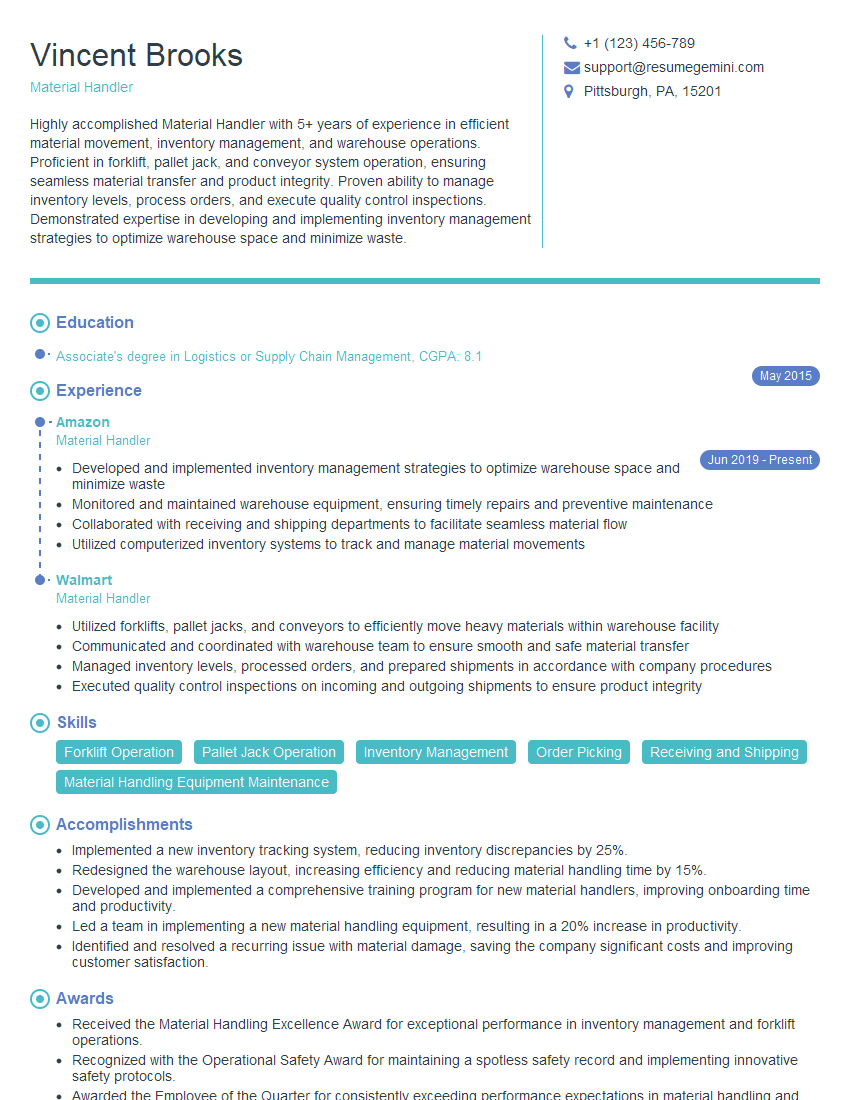
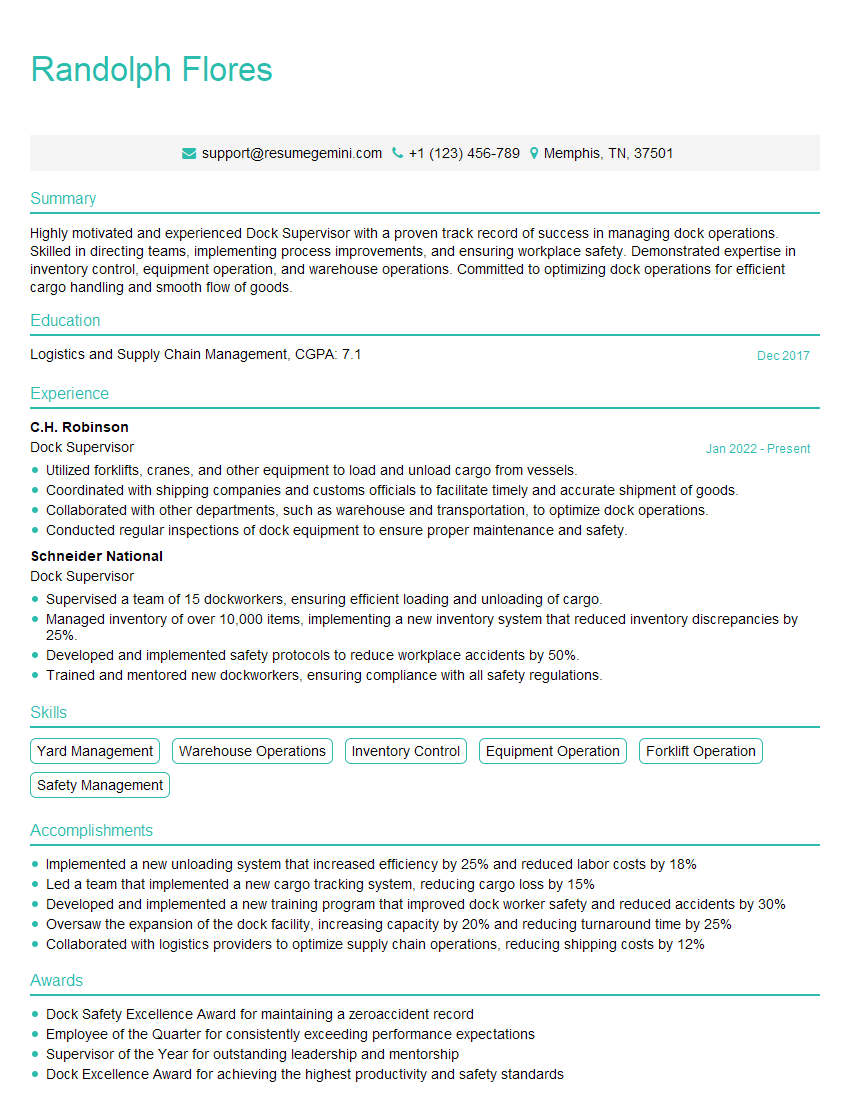
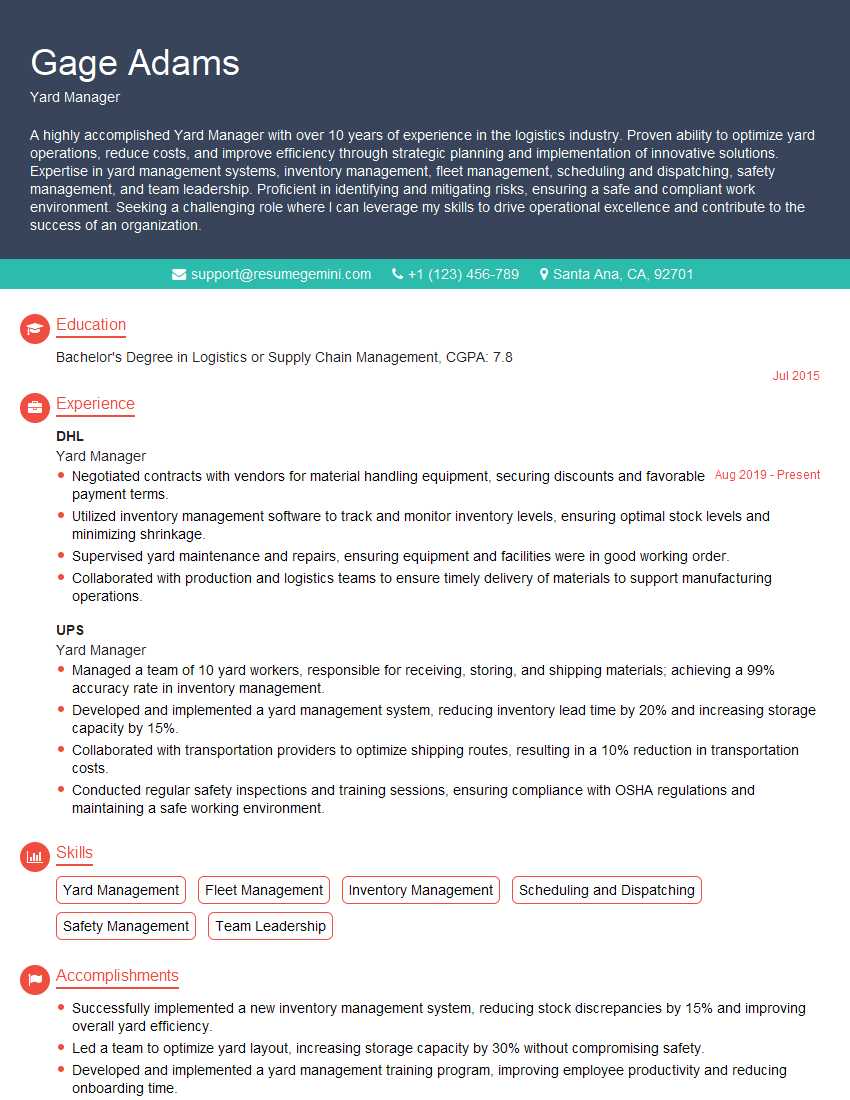
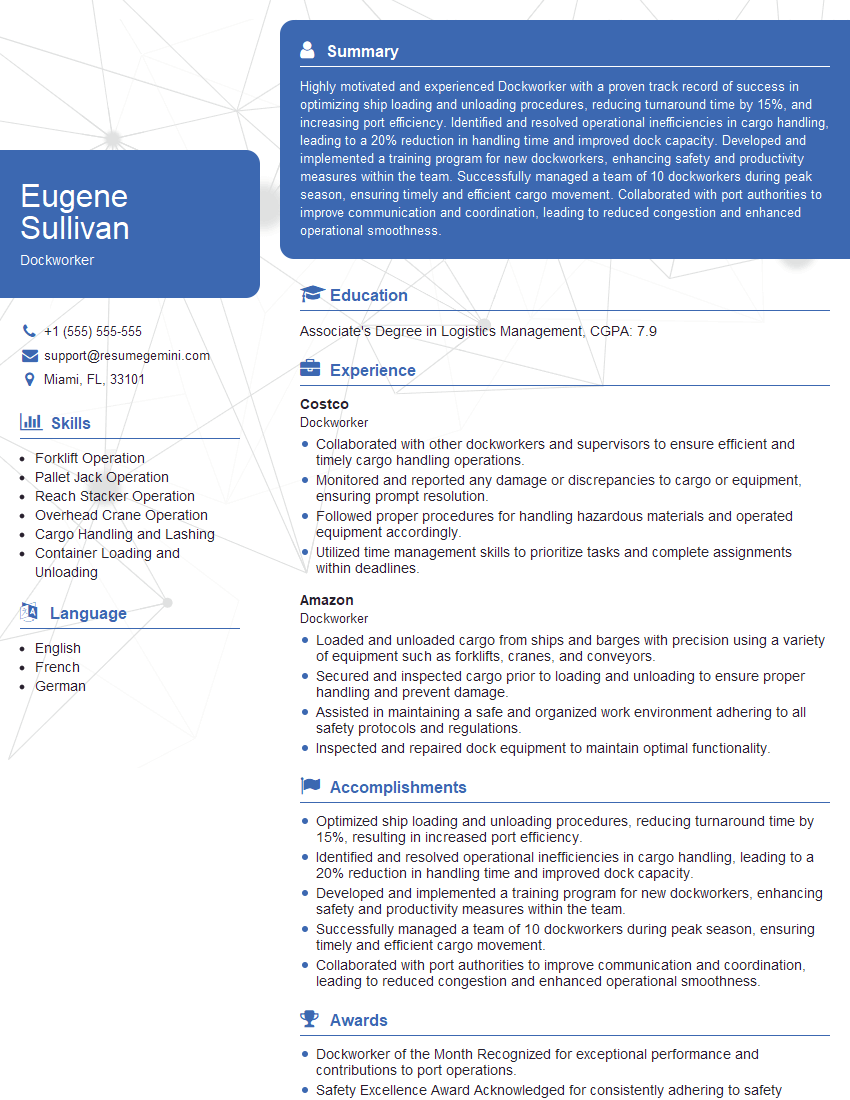
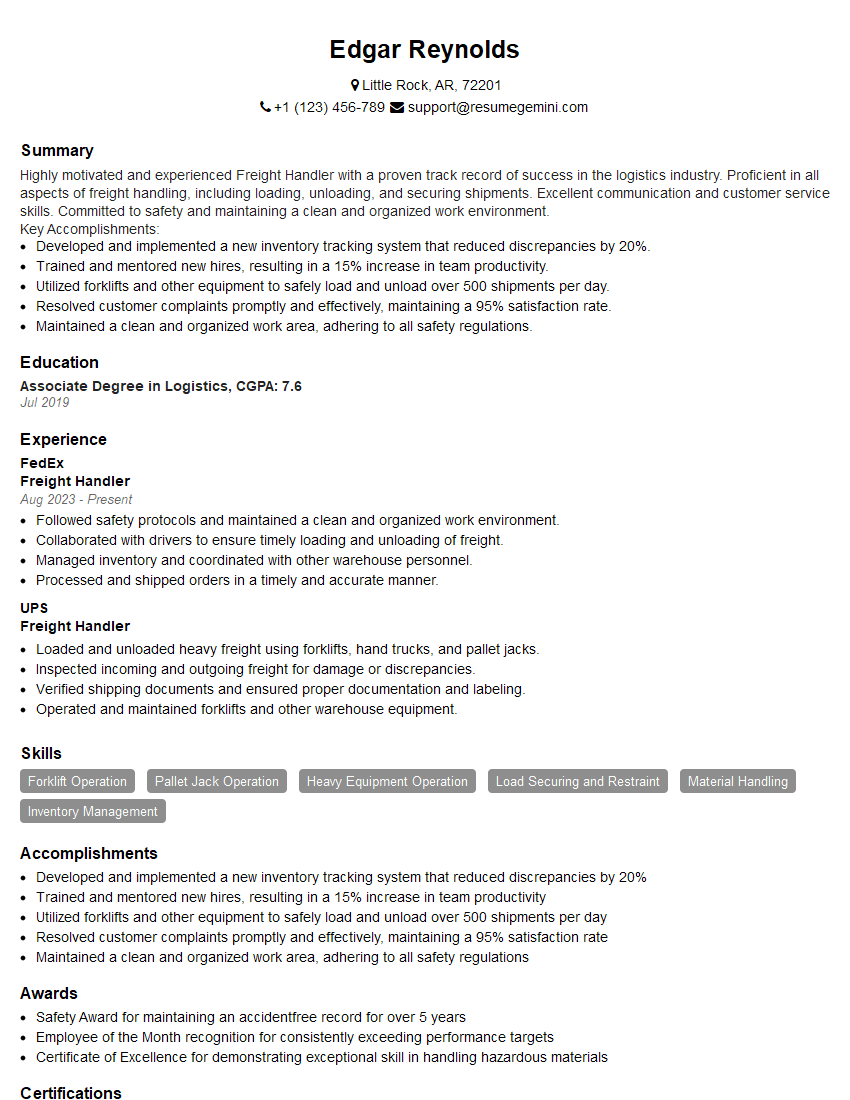
Mastering dock handling skills opens doors to a rewarding career with excellent growth potential within logistics and supply chain management. To increase your chances of landing your dream job, it’s crucial to create a resume that grabs the attention of Applicant Tracking Systems (ATS) and hiring managers. Building a strong, ATS-friendly resume is key to showcasing your skills and experience effectively. We highly recommend using ResumeGemini to craft a professional and compelling resume. ResumeGemini provides tools and resources to build a winning resume, and we offer examples of resumes tailored to the Dock Handling field to help guide you.
Explore more articles
Users Rating of Our Blogs
Share Your Experience
We value your feedback! Please rate our content and share your thoughts (optional).
What Readers Say About Our Blog
Very informative content, great job.
good