Interviews are opportunities to demonstrate your expertise, and this guide is here to help you shine. Explore the essential Dock Management and Scheduling interview questions that employers frequently ask, paired with strategies for crafting responses that set you apart from the competition.
Questions Asked in Dock Management and Scheduling Interview
Q 1. Explain your experience with various dock scheduling software.
My experience with dock scheduling software spans several leading platforms. I’ve worked extensively with systems like DockMaster, Blue Yonder (formerly JDA), and Manhattan Associates’ warehouse management systems (WMS). Each system offers unique strengths; for instance, DockMaster excels in real-time visibility and appointment scheduling, while Blue Yonder provides robust optimization capabilities for complex scenarios. Manhattan Associates’ WMS integrates seamlessly with our existing ERP, providing a centralized view of inventory, orders, and dock operations. My experience includes not only using these systems but also configuring them, customizing reports, and training users. For example, at my previous role, I spearheaded the implementation of Blue Yonder’s optimization module, leading to a 15% reduction in dock dwell time within the first quarter. This involved careful analysis of current processes, configuration of the software to reflect our specific needs (like truck sizes and product handling times), and intensive training for the dock team.
Q 2. Describe your process for optimizing dock operations efficiency.
Optimizing dock operations efficiency hinges on a multi-pronged approach. It starts with data-driven analysis to understand current bottlenecks. This includes analyzing dwell times, truck turnaround times, and labor utilization. Think of it like diagnosing a patient – you need the right data to find the right cure. Then, I focus on strategic improvements across several key areas:
- Appointment Scheduling: Implementing a robust appointment system reduces congestion and waiting times. This often involves integrating with transportation management systems (TMS) for better coordination.
- Dock Layout Optimization: Analyzing the physical layout of the dock to ensure efficient flow of goods and minimize unnecessary movement. This might include rearranging doors or implementing a cross-docking strategy.
- Labor Management: Efficiently assigning dockworkers to tasks based on their skills and experience. Utilizing technology like handheld scanners to track tasks and improve accountability.
- Technology Integration: Leveraging WMS and TMS integration to provide real-time visibility and data-driven decision making.
- Process Standardization: Developing and implementing standardized operating procedures for receiving, loading, and unloading to ensure consistency and reduce errors.
For example, at one company, we implemented a new appointment system that reduced average truck waiting time from 45 minutes to 15 minutes, leading to significant cost savings and improved carrier relationships.
Q 3. How do you handle unexpected delays or disruptions in the dock schedule?
Unexpected delays require a flexible and responsive approach. My process involves:
- Immediate Assessment: Quickly identifying the cause of the delay (e.g., equipment malfunction, late arrival, damaged goods).
- Communication: Immediately communicating the delay to all relevant parties – carriers, customers, and internal teams.
- Replanning and Prioritization: Adjusting the schedule to minimize the impact of the delay. This may involve prioritizing urgent orders or reallocating resources.
- Root Cause Analysis: After the immediate issue is resolved, conducting a thorough root cause analysis to prevent future occurrences. This might involve reviewing safety procedures, maintenance schedules, or communication protocols.
- Documentation: Thoroughly documenting the incident, including the cause, impact, and corrective actions taken.
Imagine a scenario where a crucial piece of loading equipment breaks down. My response would be immediate: first, reroute affected loads to other available docks; second, communicate with carriers; third, arrange for urgent repair while simultaneously launching an investigation into the root cause of the equipment failure to prevent similar incidents in the future.
Q 4. What metrics do you use to track and measure dock performance?
Several key metrics help track and measure dock performance. These are regularly monitored and analyzed to identify areas for improvement:
- Dock-to-Stock Time: The time it takes for goods to move from the dock to storage.
- Truck Turnaround Time: The time a truck spends at the dock, from arrival to departure.
- Dwell Time: The time a trailer occupies a dock door.
- Order Fulfillment Rate: The percentage of orders fulfilled on time and without errors.
- Labor Productivity: The amount of work completed per labor hour.
- On-Time Delivery Rate: Percentage of shipments delivered as scheduled.
- Dock Door Utilization: Percentage of dock doors in use at any given time.
These metrics are tracked using a combination of WMS data, manual data entry, and performance reports generated from our dock scheduling software. Regular reporting and analysis of these metrics allow us to identify trends and proactively address issues that might impact efficiency.
Q 5. How do you manage peak season demands on dock operations?
Managing peak season demands requires proactive planning and resource allocation. My approach involves:
- Forecasting: Accurate forecasting of order volume to anticipate peak demand and plan accordingly.
- Resource Planning: Securing additional resources, such as temporary labor, equipment rentals, and even potentially additional warehouse space if required.
- Process Optimization: Refining existing processes to maximize efficiency during peak periods. This may involve streamlining workflows, optimizing routes, or implementing overtime schedules.
- Communication: Open communication with carriers and customers to set realistic expectations and manage potential delays.
- Contingency Planning: Developing plans to handle potential disruptions or unforeseen issues during peak seasons.
For example, during last year’s peak season, we successfully managed a 30% increase in order volume by implementing a flexible staffing model, proactively securing additional equipment, and improving communication with our carrier network. This allowed us to maintain on-time delivery rates despite the increased demand.
Q 6. Explain your experience with different types of loading and unloading equipment.
My experience encompasses a wide range of loading and unloading equipment, including:
- Forklifts: Various types, including counterbalanced, reach trucks, and order pickers, with expertise in their safe operation and maintenance.
- Conveyors: Roller conveyors, belt conveyors, and other automated systems for efficient material handling.
- Dock Levelers: Ensuring safe and efficient loading and unloading at varying truck heights.
- Strapping Equipment: Using various strapping techniques to secure loads for transport.
- Pallet Jacks: Manual and powered pallet jacks for moving pallets within the dock area.
I’m familiar with the operational requirements and safety protocols associated with each type of equipment. This includes regular maintenance schedules, operator training, and adherence to safety regulations. For example, I implemented a new forklift maintenance program that reduced equipment downtime by 20% and improved operator safety.
Q 7. How do you ensure safety compliance within the dock environment?
Safety compliance is paramount in dock operations. My approach emphasizes a proactive and multi-layered strategy:
- Training: Regular safety training for all dockworkers covering topics such as forklift operation, proper lifting techniques, hazard identification, and emergency procedures.
- Equipment Maintenance: Implementing a rigorous equipment maintenance program to prevent malfunctions and ensure safe operation.
- Environmental Controls: Maintaining a clean and organized dock environment to reduce the risk of slips, trips, and falls.
- Personal Protective Equipment (PPE): Ensuring all dockworkers have and use appropriate PPE, such as safety shoes, gloves, and high-visibility vests.
- Incident Reporting and Investigation: Implementing a robust incident reporting and investigation system to identify root causes and prevent future occurrences.
- Compliance Audits: Regularly conducting safety audits to ensure compliance with all relevant regulations and standards.
Safety is not just a checklist; it’s a culture. At my previous company, we implemented a peer-to-peer safety observation program, where employees were empowered to identify and report potential hazards, leading to a significant reduction in workplace accidents.
Q 8. Describe your experience with warehouse management systems (WMS).
Warehouse Management Systems (WMS) are the backbone of efficient warehouse operations. My experience spans over ten years, encompassing implementation, configuration, and daily management of various WMS platforms, including Oracle, SAP, and Manhattan Associates. I’ve worked with both cloud-based and on-premises systems. A key aspect of my expertise lies in integrating WMS with other systems, such as Transportation Management Systems (TMS) and Enterprise Resource Planning (ERP) systems, to create a seamless flow of information across the entire supply chain. For instance, in a previous role, I successfully implemented a new WMS that reduced order fulfillment time by 20% and improved inventory accuracy by 15%, directly impacting operational efficiency and reducing costs.
My experience extends beyond basic data entry and reporting; I’m proficient in configuring advanced WMS functionalities, such as slotting optimization, wave picking, and labor management. I understand how to leverage WMS data for reporting and analysis, identifying bottlenecks and areas for improvement. For example, by analyzing WMS data on picking times, we identified a slow-moving product that needed to be relocated for faster access, leading to a significant increase in productivity.
Q 9. How do you prioritize different shipments based on delivery deadlines and priorities?
Prioritizing shipments is crucial for maintaining on-time delivery and customer satisfaction. I use a multi-faceted approach, combining automated prioritization rules within the WMS with manual intervention where needed. The system automatically prioritizes based on factors like delivery deadlines (e.g., expedited orders, next-day delivery), customer priority levels, and shipment size/weight. We utilize a system where orders are assigned priority codes (e.g., A, B, C, with A being highest), and the dock scheduling software dynamically adjusts the loading sequence accordingly.
However, automated rules aren’t always sufficient. Manual intervention might be necessary for time-sensitive, high-value shipments or those with special handling requirements. For instance, we might manually bump an order ahead if there’s a risk of missing a crucial delivery deadline due to unforeseen circumstances like traffic delays. Transparency is key, so we use a clear dashboard that displays the priority of each shipment, allowing for constant monitoring and adjustment.
Q 10. How do you manage driver check-in and check-out procedures?
Efficient driver check-in and check-out procedures are paramount for maintaining dock security and operational efficiency. We typically use a combination of electronic logging systems integrated with our WMS and physical documentation. Upon arrival, drivers present their identification and delivery paperwork. The system verifies their credentials and assigns a dock door. We use barcode scanners to track the loading and unloading process ensuring data integrity.
The system automatically generates paperwork, and after confirming the delivery, we capture the driver’s signature electronically for both confirmation of delivery and a record of the completion of the operation. This ensures accuracy, minimizes paperwork, and strengthens security by creating an auditable trail. We also employ security measures such as CCTV surveillance and access control systems to maintain a safe and secure dock environment.
Q 11. What is your experience with carrier selection and negotiation?
Carrier selection and negotiation are critical for controlling transportation costs and maintaining service levels. My approach involves a combination of quantitative analysis and negotiation skills. I use historical data on on-time delivery, damage rates, and cost per shipment to evaluate carriers’ performance. We develop Key Performance Indicators (KPIs) to track carrier performance, providing a basis for negotiation.
Before negotiating, I carefully research market rates and gather information from various sources such as industry benchmarks and carrier websites. Then, I engage in constructive negotiations with carriers, focusing on achieving mutually beneficial agreements. For instance, by negotiating volume discounts with our primary carrier, we achieved a 10% reduction in shipping costs while maintaining consistent service levels.
Q 12. How do you handle damaged or lost goods during dock operations?
Handling damaged or lost goods requires a meticulous process to minimize losses and ensure customer satisfaction. Upon discovery, we immediately document the damage or loss, including detailed descriptions, photos, and the quantities involved. This information is recorded in the WMS and a damage report is generated. We carefully review the documentation to determine the cause of damage or loss (e.g., internal handling issues, carrier negligence). This forms the basis for claims against the carrier or for internal process improvement.
Based on our investigation we resolve the issue. This might involve replacing damaged goods, issuing credits, or initiating a claim with the responsible party. Customer communication is crucial throughout this process. We keep customers informed of the situation and the steps taken to resolve it. We also regularly review and adjust our dock procedures to proactively prevent future incidents.
Q 13. Explain your experience with inventory management within the dock environment.
Inventory management within the dock environment is crucial for smooth operations and prevents stock-outs or overstocking. We use cycle counting and regular inventory checks to maintain accuracy. The WMS plays a key role by providing real-time visibility into inventory levels at the dock and providing alerts for low stock items. We integrate the WMS with our receiving and shipping processes, ensuring accurate updates with every transaction.
Real-time inventory visibility helps us optimize space allocation and streamline picking processes. We’ve implemented a ‘first-in, first-out’ (FIFO) system to manage perishable goods, preventing spoilage. For example, a weekly review of slow-moving items allows us to adjust storage locations and potentially initiate promotional activities to improve turnover.
Q 14. How do you ensure accurate documentation of all dock activities?
Accurate documentation of all dock activities is essential for compliance, traceability, and efficient operations. We leverage electronic logging systems integrated with our WMS. All activities, from driver check-in to shipment departures, are recorded electronically, creating an auditable trail. Data captured includes timestamps, driver identification, shipment details, quantity received or shipped, and any incidents that occurred.
We utilize barcode scanners and RFID technology to enhance data accuracy and reduce manual data entry. Regular data audits ensure data integrity. Furthermore, we maintain a system of physical documentation for backup and in case of system failures. This meticulous documentation process is vital for addressing potential disputes, improving operational efficiency and for meeting regulatory compliance requirements.
Q 15. How do you resolve conflicts between different stakeholders involved in dock operations?
Resolving stakeholder conflicts in dock operations requires a proactive, collaborative approach focusing on clear communication and mutual understanding. Think of it like conducting an orchestra – each instrument (stakeholder) has a vital role, and harmony requires skillful coordination.
My strategy involves:
- Regular Meetings: Establishing a forum for open dialogue between carriers, shippers, warehouse staff, and dockworkers to air concerns and proactively address potential conflicts.
- Prioritization Matrix: Developing a system to prioritize conflicting demands based on factors like delivery deadlines, product sensitivity, and contractual obligations. This helps to objectively determine the most efficient course of action.
- Mediation and Negotiation: Facilitating discussions to find common ground. This often involves compromising on schedules or procedures to accommodate everyone’s needs, while ensuring safety and efficiency are not compromised.
- Data-Driven Decision Making: Utilizing dock performance data to identify bottlenecks and areas of frequent conflict. This allows for data-based solutions, rather than relying on subjective opinions.
- Escalation Protocol: Establishing a clear process for escalating unresolved conflicts to upper management, ensuring a fair and timely resolution.
For example, in one instance, a conflict arose between a carrier with a tight delivery schedule and a warehouse experiencing unexpected delays due to equipment malfunction. Through collaborative meetings and data analysis, we rescheduled the carrier’s delivery and implemented preventative maintenance to mitigate future disruptions, achieving a win-win situation.
Career Expert Tips:
- Ace those interviews! Prepare effectively by reviewing the Top 50 Most Common Interview Questions on ResumeGemini.
- Navigate your job search with confidence! Explore a wide range of Career Tips on ResumeGemini. Learn about common challenges and recommendations to overcome them.
- Craft the perfect resume! Master the Art of Resume Writing with ResumeGemini’s guide. Showcase your unique qualifications and achievements effectively.
- Don’t miss out on holiday savings! Build your dream resume with ResumeGemini’s ATS optimized templates.
Q 16. Describe your experience with implementing and managing dock improvement projects.
My experience encompasses the entire lifecycle of dock improvement projects, from initial assessment and planning to implementation and ongoing evaluation. I’ve successfully led projects focused on enhancing efficiency, safety, and sustainability.
In one project, we implemented a new Warehouse Management System (WMS) integrated with a Transportation Management System (TMS). This reduced loading times by 20% by optimizing dock scheduling and resource allocation. The project involved:
- Needs Assessment: Identifying bottlenecks and inefficiencies through observation, data analysis (dwell time, truck turn times), and stakeholder feedback.
- Solution Design: Evaluating various technologies and strategies – from new equipment (e.g., automated guided vehicles, improved dock levelers) to software solutions and process re-engineering.
- Implementation: Overseeing the installation, integration, and testing of new systems, including extensive training for personnel.
- Monitoring and Evaluation: Tracking key performance indicators (KPIs) like truck turn time, order accuracy, and labor productivity to measure project success and make necessary adjustments.
Another project focused on improving dock safety, including implementing improved lighting, reorganizing the dock layout for better traffic flow, and providing mandatory safety training, leading to a significant reduction in accidents.
Q 17. How do you utilize data analytics to improve dock operations?
Data analytics is crucial for optimizing dock operations. It’s like having a crystal ball that allows you to anticipate issues and make data-driven decisions to improve efficiency and reduce costs.
I utilize data analytics in the following ways:
- Real-time Monitoring: Tracking KPIs such as truck arrival times, unloading times, dwell times, and order accuracy through a Dock Management System (DMS). This provides insights into real-time performance and allows for immediate responses to potential issues.
- Predictive Modeling: Analyzing historical data to forecast future demand, identify peak periods, and optimize resource allocation. This enables proactive scheduling and prevents congestion.
- Root Cause Analysis: Investigating incidents and delays to identify underlying causes. This is done using statistical methods and data visualization to identify patterns and improve processes.
- Performance Benchmarking: Comparing performance against industry standards and best practices to identify areas for improvement. This could involve comparing cycle times to industry averages or analyzing the utilization rate of dock equipment.
For example, by analyzing historical data on truck arrival times, we were able to identify patterns of late arrivals during peak hours. This led to adjustments in appointment scheduling and communication strategies, significantly reducing congestion and improving overall efficiency.
Q 18. Explain your understanding of dock scheduling techniques like appointment scheduling.
Dock scheduling techniques, such as appointment scheduling, are essential for optimizing dock operations and minimizing congestion. Think of it as a well-orchestrated symphony, where each truck arrives at the designated time and the entire process flows smoothly.
Appointment scheduling involves pre-allocating specific time slots for trucks to arrive at the dock. This reduces waiting times, improves driver satisfaction, and optimizes resource utilization. Effective implementation requires:
- Accurate Forecasting: Predicting the volume of inbound and outbound shipments to optimize appointment slots.
- Communication: Clearly communicating scheduled appointments to carriers and providing real-time updates as needed.
- Flexibility: Building flexibility into the schedule to account for unexpected delays or changes in shipment volumes. This may involve creating buffer time between appointments or having a contingency plan for last-minute changes.
- Technology: Utilizing scheduling software and Transportation Management Systems (TMS) to streamline appointment management.
We often employ a combination of appointment scheduling, dynamic scheduling, and advanced algorithms that factor in real-time data, such as traffic conditions, to further optimize arrival times. This allows us to fine-tune the schedule, minimize delays, and maximize the efficiency of our dock operations.
Q 19. How do you communicate effectively with dockworkers, drivers, and other stakeholders?
Effective communication is the cornerstone of successful dock operations. It’s crucial to communicate clearly and consistently with all stakeholders – dockworkers, drivers, and management – to ensure everyone is on the same page.
My approach involves:
- Clear and Concise Messaging: Using simple, direct language to avoid ambiguity. This is especially important for instructions related to safety and operational procedures.
- Multiple Communication Channels: Utilizing a variety of channels, including email, text messaging, and dock management systems, to reach all stakeholders.
- Regular Feedback Sessions: Providing opportunities for feedback and addressing concerns from dockworkers and drivers. This could involve regular meetings, surveys or informal feedback sessions.
- Training and Education: Ensuring all stakeholders are adequately trained on operational procedures and safety protocols. This improves compliance and reduces the likelihood of communication breakdowns.
- Active Listening: Truly hearing and understanding the concerns of all stakeholders. This shows respect and fosters trust, leading to better cooperation.
I always make sure information is disseminated clearly and efficiently, using visual aids or simplified instructions where necessary. For example, we’ve used visual cues like color-coded signs to improve efficiency and safety on the dock.
Q 20. How do you handle complaints or issues related to dock operations?
Handling complaints and issues related to dock operations requires a systematic approach that prioritizes prompt resolution and customer satisfaction. This involves a combination of empathy, problem-solving skills, and adherence to established protocols.
My approach consists of:
- Prompt Acknowledgement: Acknowledging the complaint immediately and assuring the person that their concerns are being taken seriously. This could involve a quick phone call or email.
- Thorough Investigation: Conducting a thorough investigation to understand the root cause of the issue. This often involves reviewing relevant documentation, speaking with involved parties and potentially reviewing video footage.
- Solution Development: Developing a solution based on the findings of the investigation. This could involve addressing operational procedures, rectifying equipment issues, or providing necessary training.
- Communication of Resolution: Clearly communicating the solution and resolution steps to the individual with the complaint. This builds trust and confidence.
- Follow-up: Following up with the person who filed the complaint to ensure their satisfaction with the resolution. This shows that you are committed to ongoing improvement.
For example, if a driver complains about excessive wait times, we would investigate possible causes, such as congestion, equipment malfunction, or process inefficiencies, then implement solutions, such as improved scheduling or process adjustments, and communicate these steps to the driver.
Q 21. What is your experience with different types of transportation modes (truck, rail, etc.)?
My experience encompasses a wide range of transportation modes, including truck, rail, and intermodal transport. Understanding the nuances of each mode is crucial for efficient dock management.
Specifically, I’ve worked extensively with:
- Truck Transportation: Managing the scheduling, receiving, and dispatching of trucks, optimizing dock space utilization, and ensuring compliance with safety regulations.
- Rail Transportation: Coordinating with railway companies for railcar scheduling, managing the loading and unloading of railcars, and optimizing rail-truck transfers at intermodal facilities.
- Intermodal Transportation: Managing the seamless transfer of goods between different transportation modes, such as truck and rail, requiring careful coordination of schedules and minimizing delays during transitions.
Each mode presents unique challenges. For instance, rail transport involves longer lead times and stricter scheduling requirements, while truck transport requires real-time tracking and efficient communication with drivers. Understanding these differences allows for effective planning and management to minimize delays and optimize costs across all modes.
Q 22. How do you manage the allocation of dock space and resources?
Dock space allocation is a complex balancing act, akin to orchestrating a busy airport. It requires a sophisticated system to ensure efficient use of limited resources. We use a combination of techniques including:
- Advanced Scheduling Software: This allows us to visualize dock schedules, factoring in arrival times, unloading/loading times, truck sizes, and specific product requirements. For example, we might prioritize shipments with tight deadlines or perishable goods.
- Real-time Tracking: Knowing the exact location and status of each truck allows for dynamic adjustments to the schedule. If a truck is delayed, we can re-allocate space to minimize downtime.
- Dock Assignment Rules: We establish clear rules for assigning docks based on factors like product type (hazmat, refrigerated), truck size, and customer priority. This prevents conflicts and ensures smooth operations.
- Capacity Planning: We regularly analyze historical data and projected volumes to optimize dock space. This might involve investing in additional docks or implementing more efficient unloading/loading practices.
Ultimately, effective allocation requires a blend of technology, planning, and flexible real-time decision-making. It’s like conducting a symphony – every instrument (truck, dock, worker) must play its part in harmony.
Q 23. How do you ensure compliance with all relevant regulations and standards?
Compliance is paramount in dock operations. We adhere to a rigorous framework encompassing various regulations and standards, including:
- OSHA (Occupational Safety and Health Administration): We maintain a safe working environment, implementing safety protocols for forklift operation, proper lifting techniques, and emergency procedures. Regular safety training is mandatory.
- DOT (Department of Transportation): We strictly adhere to regulations concerning hazardous materials handling, driver hours-of-service, and vehicle maintenance.
- Environmental Regulations: We implement procedures to minimize environmental impact, such as proper waste disposal and minimizing emissions from idling trucks.
- Company-Specific Policies: We maintain a clear set of internal policies and procedures covering all aspects of dock operations, ensuring consistency and accountability.
Regular audits and inspections, both internal and external, help us ensure continuous compliance. We document everything meticulously, which provides a trail of evidence demonstrating our adherence to these regulations.
Q 24. What are some common challenges faced in dock management and how do you overcome them?
Dock management presents unique challenges. Some common ones include:
- Unexpected Delays: Traffic congestion, equipment malfunctions, or unforeseen issues with shipments can disrupt the entire schedule. We mitigate this through robust contingency planning and real-time communication.
- Labor Shortages: Finding and retaining skilled dockworkers can be difficult. We address this through competitive compensation, comprehensive training, and fostering a positive work environment.
- Inefficient Processes: Outdated equipment or inefficient workflows can lead to bottlenecks and delays. We continuously evaluate and improve our processes, looking for opportunities to streamline operations using technology and optimized workflows.
- Security Concerns: Protecting goods and equipment from theft or damage is crucial. We implement security measures such as surveillance systems, access control, and thorough inventory management.
Overcoming these challenges requires a proactive approach – investing in technology, developing strong teams, and embracing continuous improvement. We also utilize data analysis to pinpoint areas for improvement, implementing solutions based on factual evidence, not just gut feeling.
Q 25. Describe your problem-solving approach when dealing with unexpected dock issues.
My problem-solving approach is systematic and data-driven. When unexpected issues arise, I follow these steps:
- Assessment: First, I quickly assess the situation, gathering all relevant information. What happened? What’s the impact? Who’s involved?
- Prioritization: I prioritize the issue based on its severity and impact. A blocked dock is a higher priority than a minor equipment malfunction.
- Solution Development: I brainstorm solutions, considering both short-term fixes and long-term preventative measures. I involve the team in this process, drawing on their expertise and experience.
- Implementation: We implement the chosen solution, ensuring clear communication and coordination among all involved parties.
- Post-Incident Review: After the issue is resolved, we conduct a thorough review. What went wrong? What could have been done better? This helps us improve our processes and prevent similar issues in the future.
This structured approach ensures a swift, efficient response, minimizing disruption and maintaining operational efficiency.
Q 26. How do you foster a positive and productive work environment within the dock team?
A positive and productive work environment is essential for a successful dock operation. I foster this by:
- Open Communication: I encourage open communication, ensuring everyone feels comfortable expressing concerns or ideas. Regular team meetings are a key part of this.
- Recognition and Rewards: I acknowledge and appreciate the hard work and dedication of the team, recognizing outstanding performance and contributions.
- Training and Development: I invest in ongoing training and development to enhance skills and provide opportunities for career growth. This includes both technical training on equipment and soft skills development.
- Team Building Activities: I organize team-building activities to strengthen relationships and boost morale.
- Safety First Culture: Prioritizing safety and providing a secure working environment is fundamental. This builds trust and confidence.
By creating a supportive and respectful environment, I encourage collaboration, ownership, and commitment, resulting in a highly effective and motivated team.
Q 27. Explain your experience with budgeting and cost control for dock operations.
Budgeting and cost control are critical in dock operations. My experience includes:
- Developing Budgets: I work closely with management to create accurate and realistic budgets, forecasting costs for labor, equipment maintenance, utilities, and supplies.
- Cost Monitoring: I track actual costs against the budget, identifying any variances and investigating their causes. This allows for timely corrective actions.
- Efficiency Improvements: I actively look for opportunities to reduce costs while maintaining service levels. This might involve negotiating better rates with suppliers, optimizing routes, or improving equipment utilization.
- Data Analysis: I use data analysis to identify cost drivers and areas for improvement. For example, analyzing labor costs per shipment can highlight potential inefficiencies.
- Return on Investment (ROI): I assess the ROI of investments in new equipment or technologies, ensuring that they align with budget constraints and strategic goals.
My approach is focused on both short-term cost savings and long-term cost efficiency, optimizing resource allocation to maximize return.
Q 28. How do you stay updated on industry best practices in dock management and scheduling?
Staying updated on industry best practices is crucial in this dynamic field. I achieve this through:
- Industry Publications: I regularly read trade magazines and journals focused on logistics and supply chain management, staying informed on new technologies, techniques, and regulations.
- Conferences and Workshops: I attend industry conferences and workshops to network with other professionals and learn about best practices from leading experts.
- Professional Organizations: Membership in professional organizations provides access to valuable resources, publications, and networking opportunities.
- Online Resources: I utilize online resources, such as industry websites and webinars, to stay abreast of current trends and innovations.
- Benchmarking: I regularly benchmark our operations against industry leaders, identifying opportunities for improvement and best practices to adopt.
Continuous learning and adaptation are essential for maintaining a competitive edge in dock management and scheduling. I am committed to lifelong learning to stay ahead of the curve.
Key Topics to Learn for Dock Management and Scheduling Interview
- Dock Operations Optimization: Understanding workflow analysis, process improvement techniques (Lean, Six Sigma), and the impact on efficiency and cost reduction. Practical application: Analyzing current dock operations to identify bottlenecks and propose solutions for improved turnaround times.
- Yard Management Systems (YMS): Familiarity with different YMS software and their functionalities (e.g., gate management, appointment scheduling, tracking). Practical application: Demonstrating knowledge of how a YMS integrates with other warehouse management systems (WMS) and transportation management systems (TMS).
- Labor Management and Resource Allocation: Strategies for efficient workforce scheduling, considering peak demands, labor costs, and employee skill sets. Practical application: Developing a staffing plan that optimizes labor utilization while meeting operational needs.
- Safety and Compliance: Understanding and adhering to relevant safety regulations and best practices in dock operations (e.g., OSHA regulations). Practical application: Designing safety protocols to minimize risks associated with loading, unloading, and equipment operation.
- Transportation Planning and Coordination: Knowledge of carrier selection, load optimization, and route planning to ensure timely delivery and pickup of goods. Practical application: Developing strategies for managing inbound and outbound shipments efficiently.
- Performance Measurement and Reporting: Utilizing key performance indicators (KPIs) to track efficiency, productivity, and cost. Practical application: Analyzing data from YMS and other systems to identify areas for improvement and track progress.
- Problem-Solving and Decision-Making: Applying analytical skills to diagnose and resolve operational challenges, such as equipment malfunctions, unexpected delays, and labor shortages. Practical application: Developing contingency plans to address potential disruptions in dock operations.
Next Steps
Mastering Dock Management and Scheduling opens doors to rewarding and challenging careers within logistics and supply chain management, offering opportunities for advancement and increased earning potential. A strong, ATS-friendly resume is crucial for showcasing your skills and experience effectively to potential employers. To significantly improve your chances of landing your dream job, we encourage you to leverage the power of ResumeGemini. ResumeGemini is a trusted resource that provides the tools and templates to create a professional and compelling resume. Examples of resumes tailored specifically for Dock Management and Scheduling positions are available to guide you. Take the next step in your career journey – build a standout resume with ResumeGemini today!

Operations Manager Resume Sample

Supply Chain Manager Resume Sample
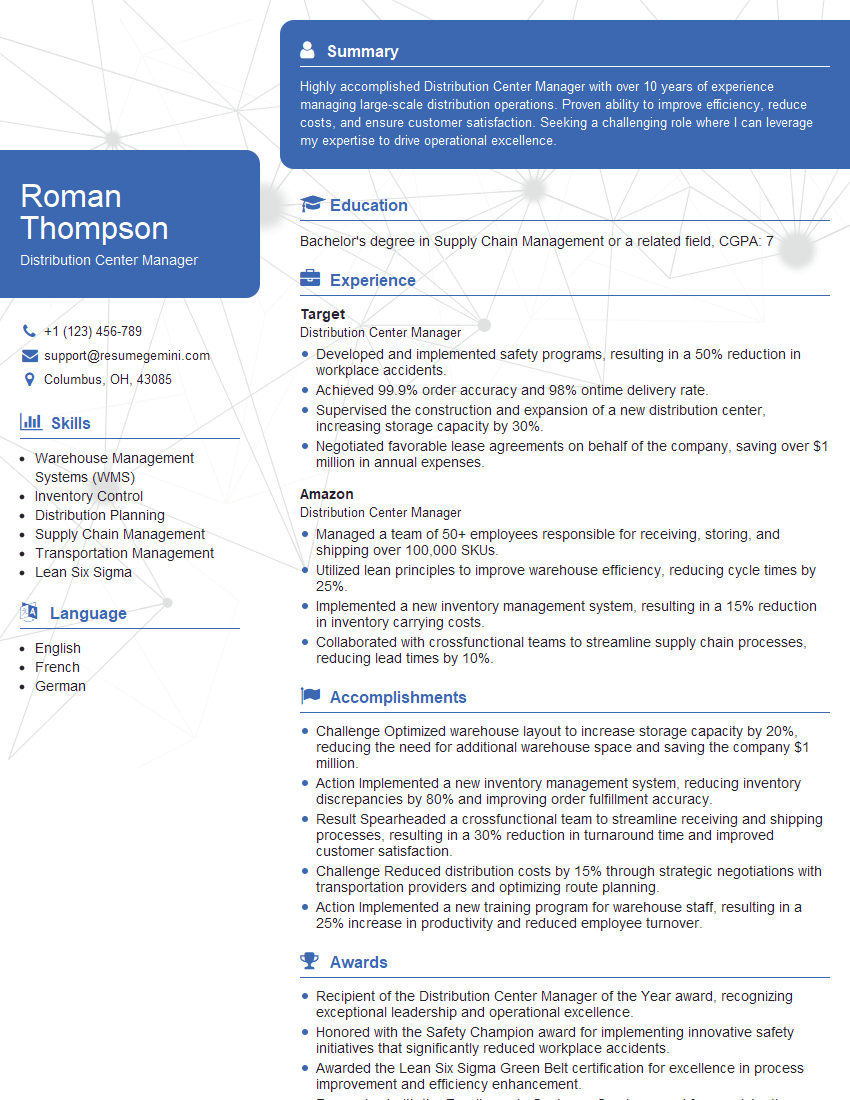
Distribution Center Manager Resume Sample
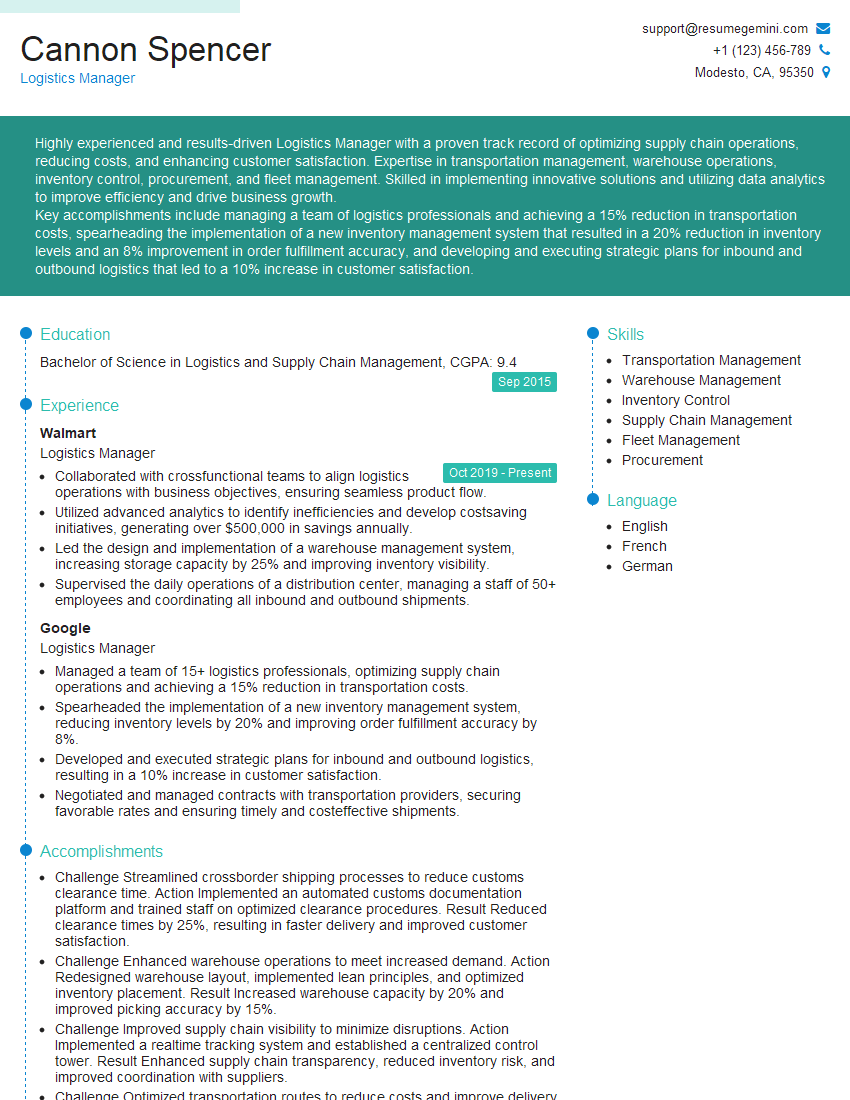
Logistics Manager Resume Sample
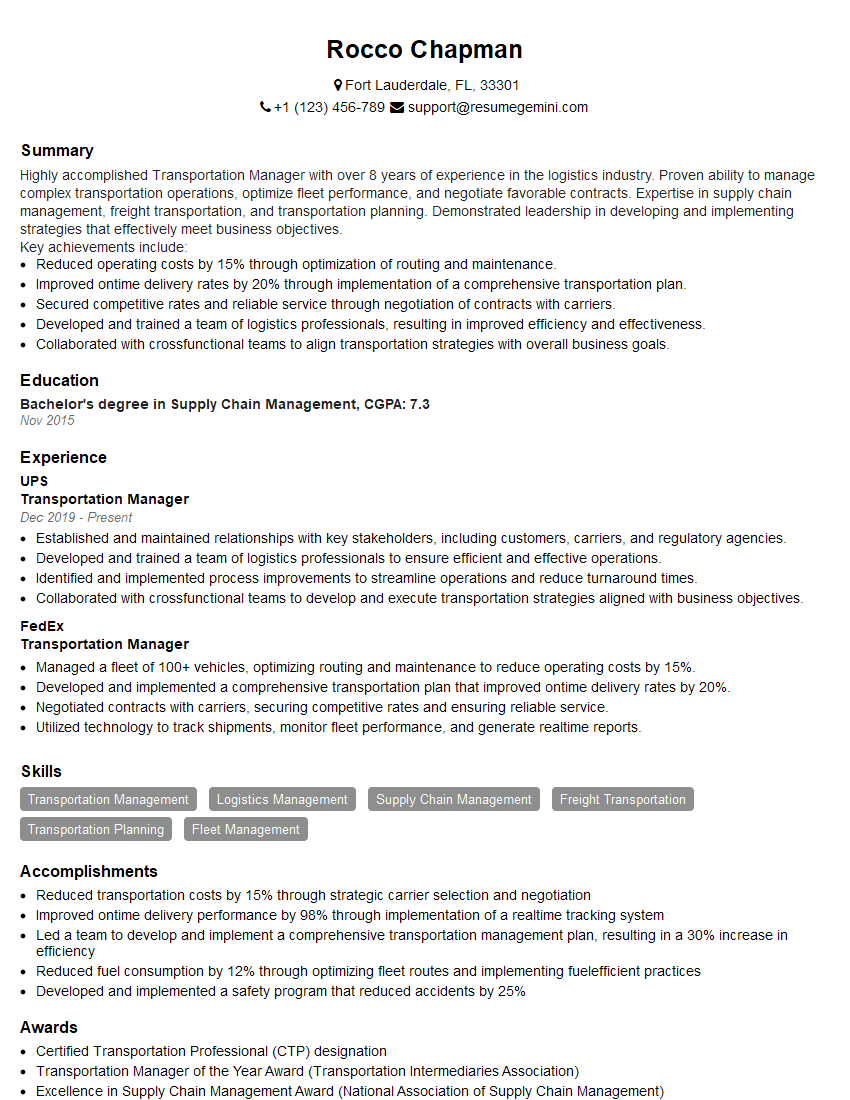
Transportation Manager Resume Sample
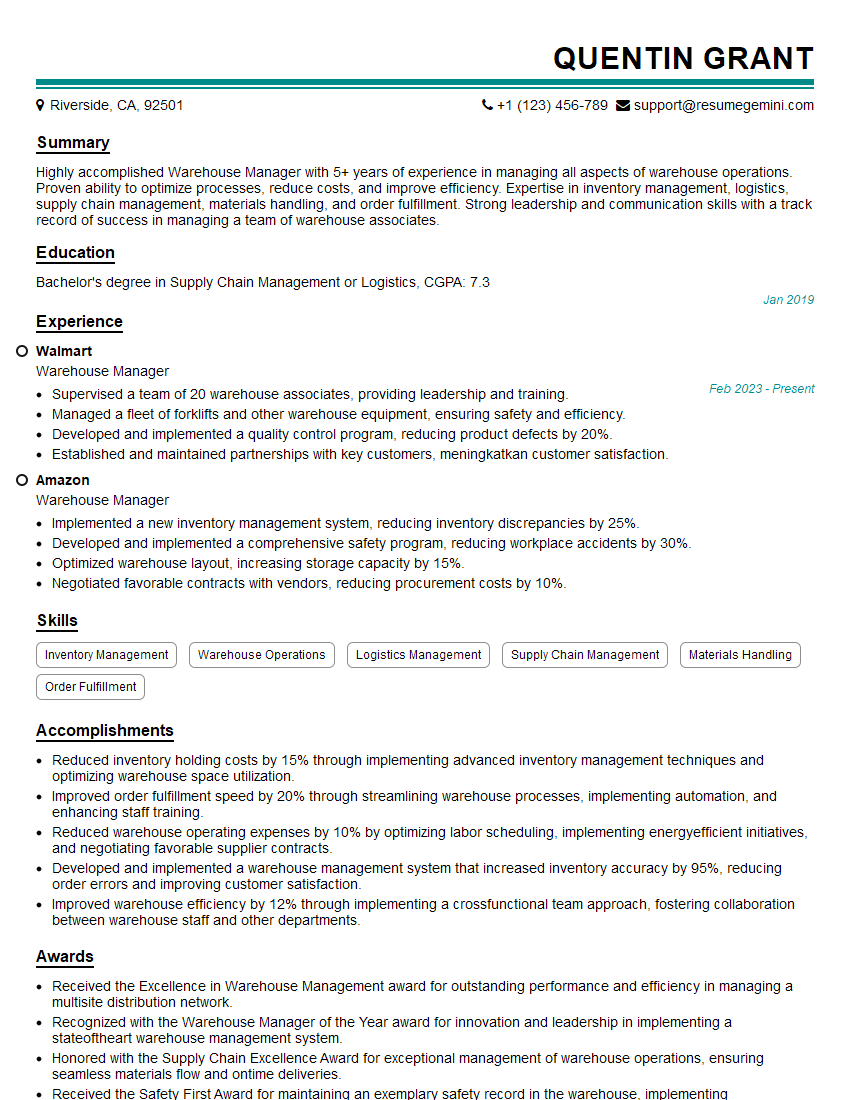
Warehouse Manager Resume Sample
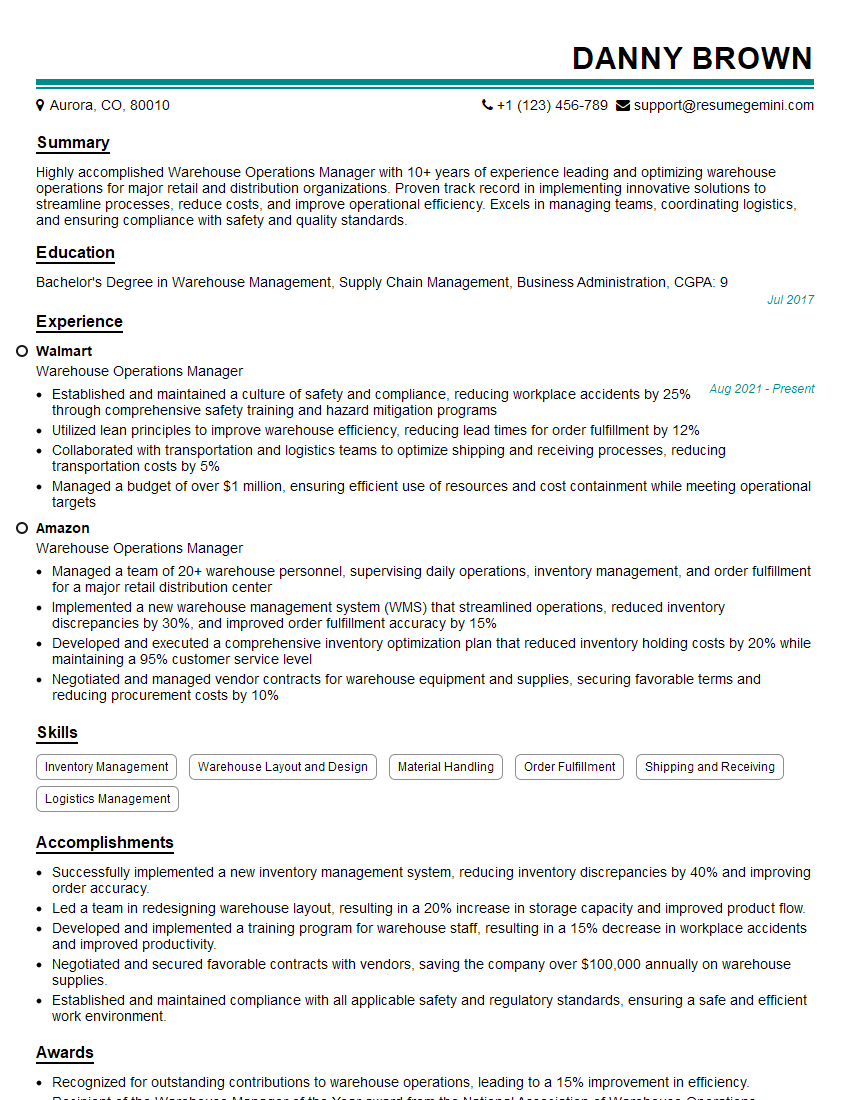
Warehouse Operations Manager Resume Sample
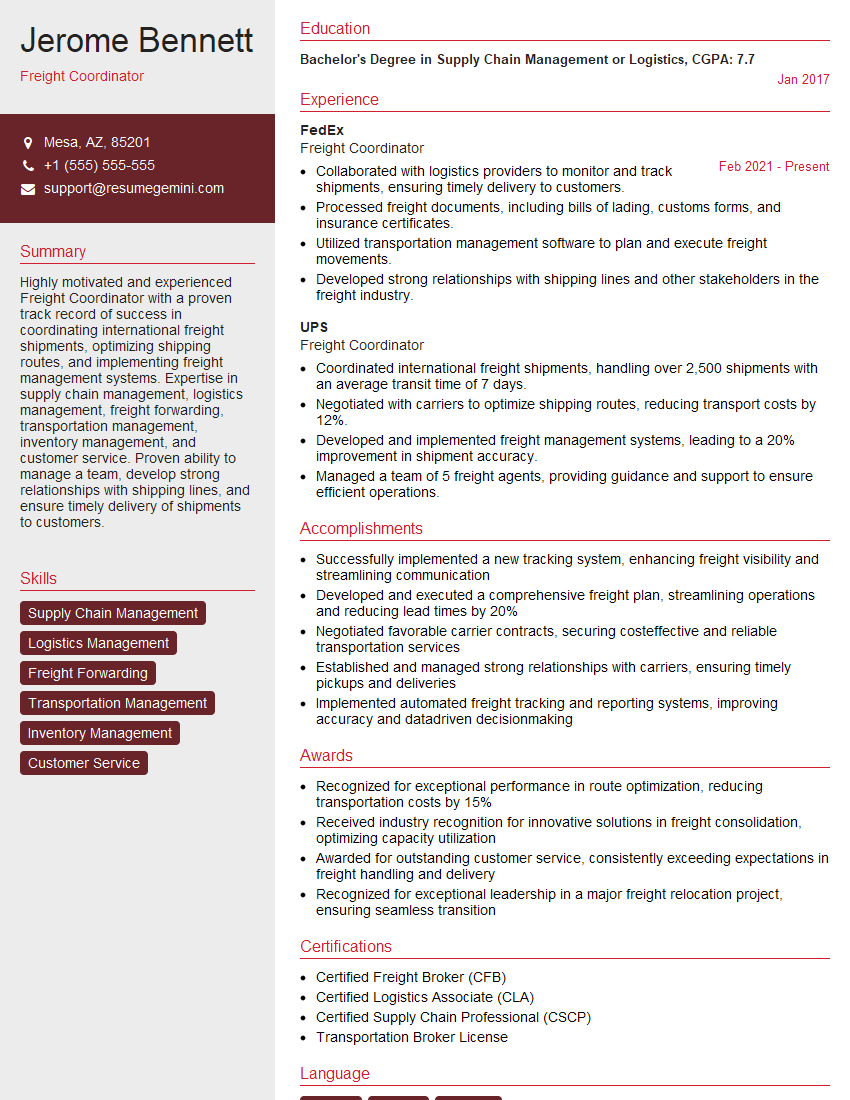
Freight Coordinator Resume Sample
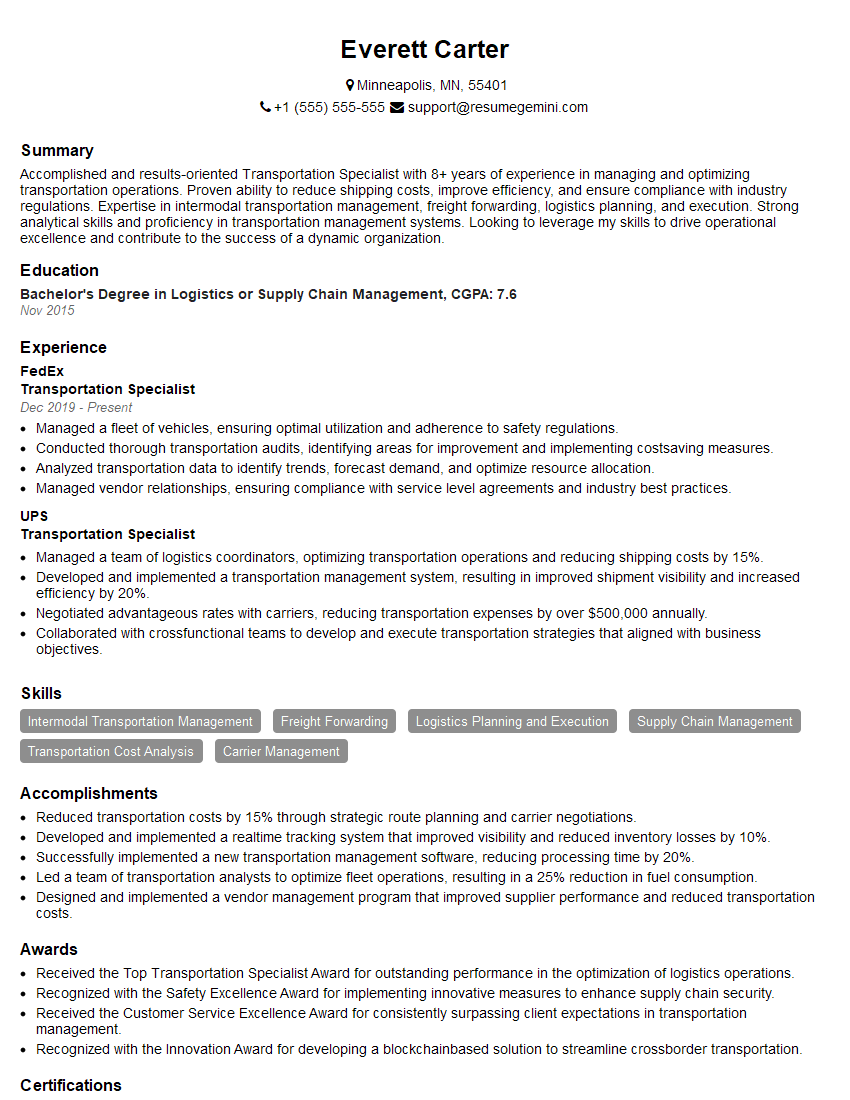
Transportation Specialist Resume Sample
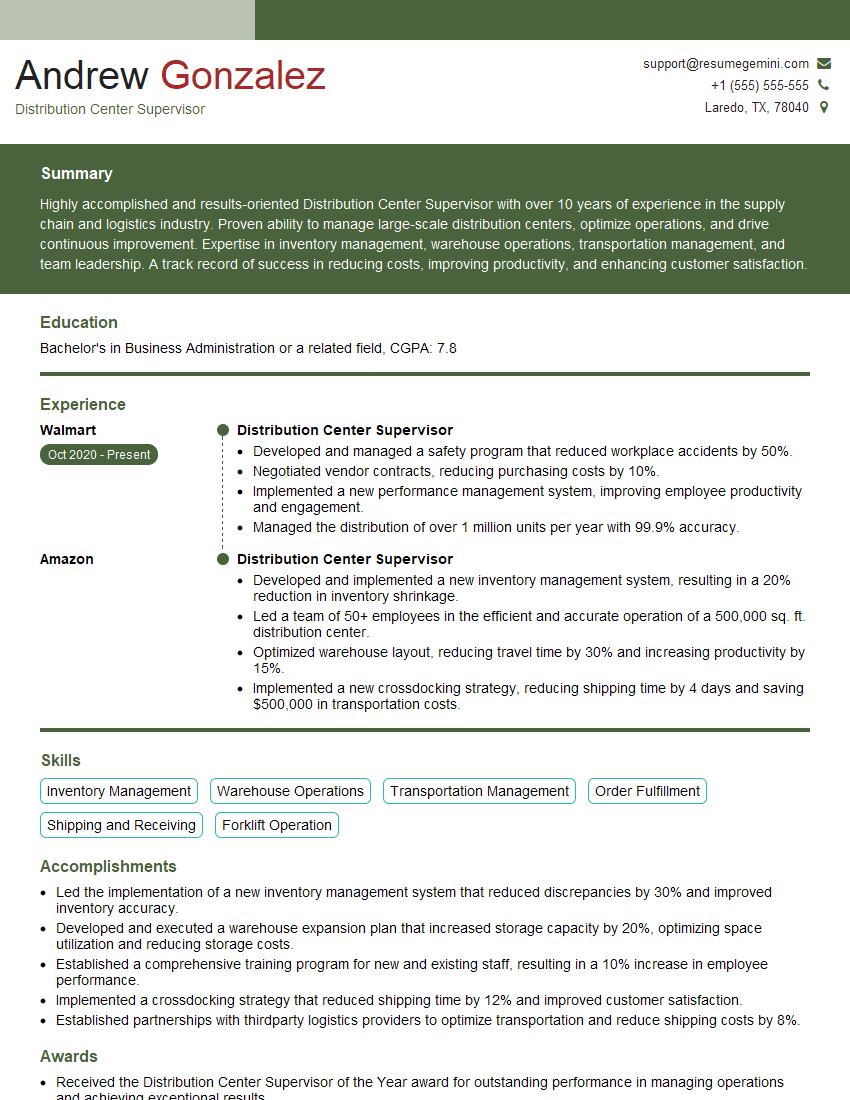
Distribution Center Supervisor Resume Sample
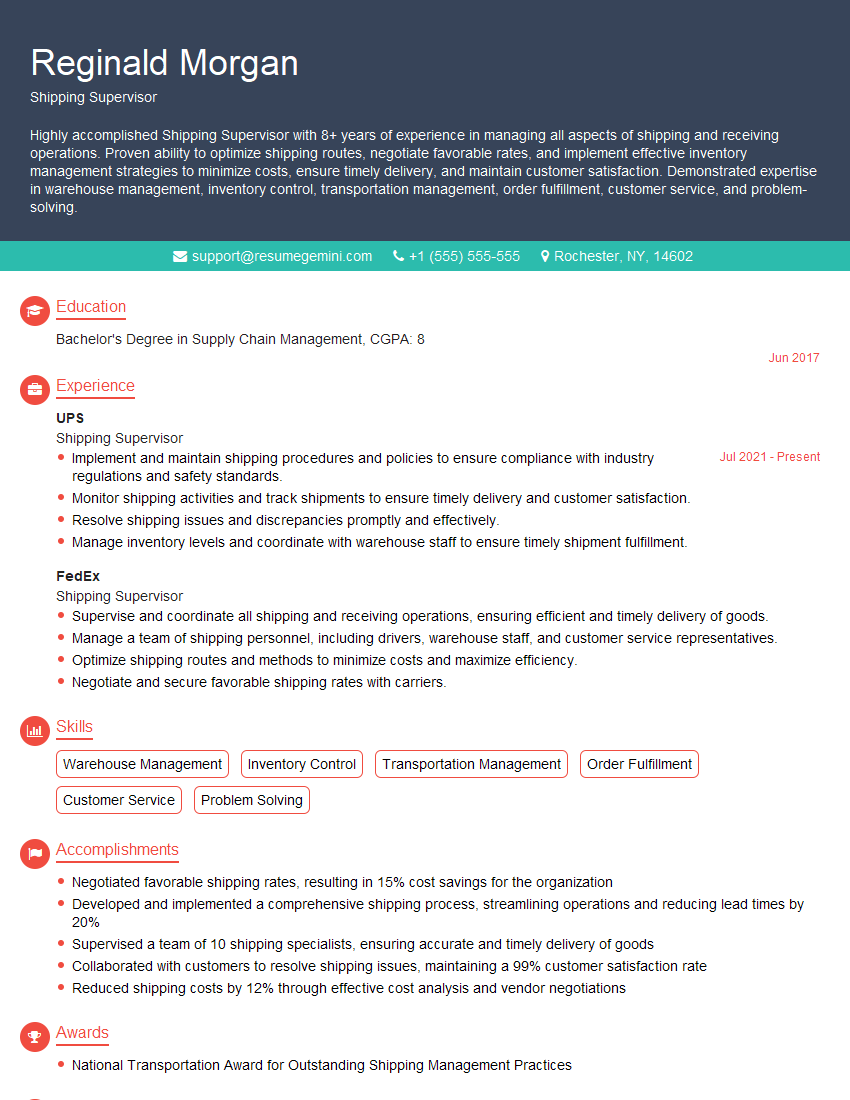
Shipping Supervisor Resume Sample
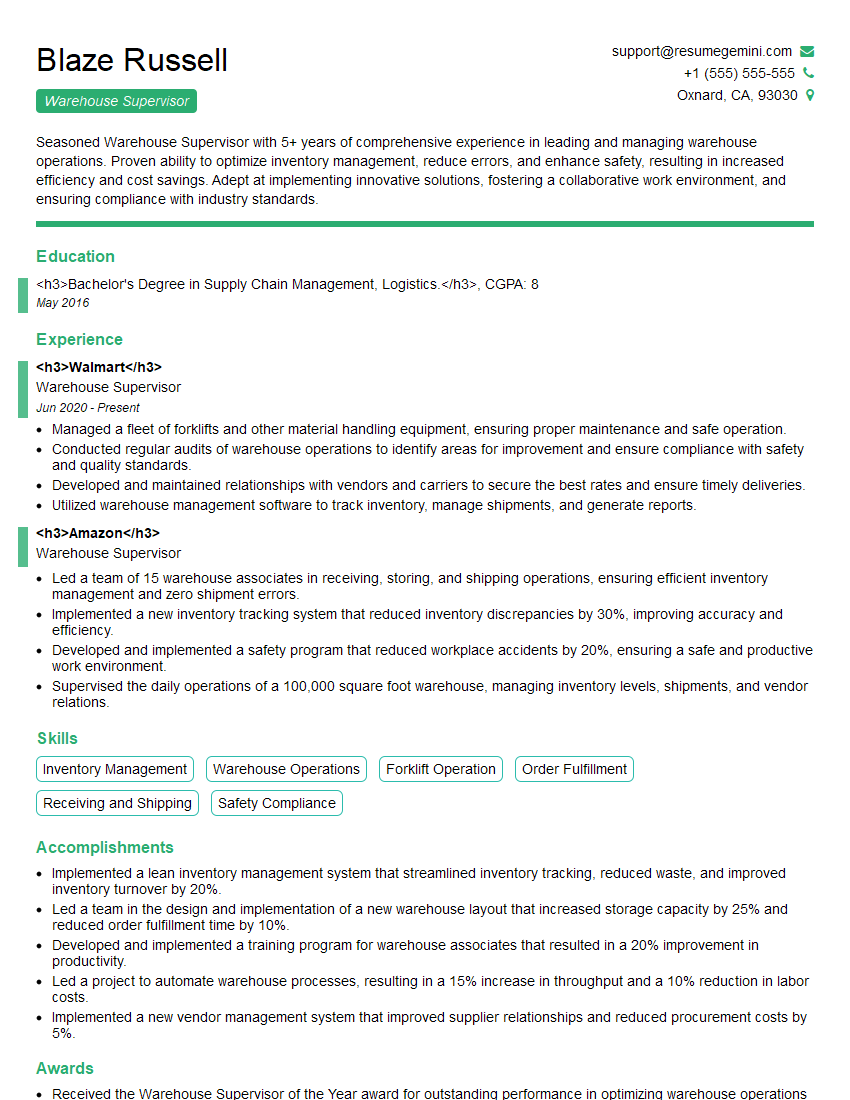
Warehouse Supervisor Resume Sample
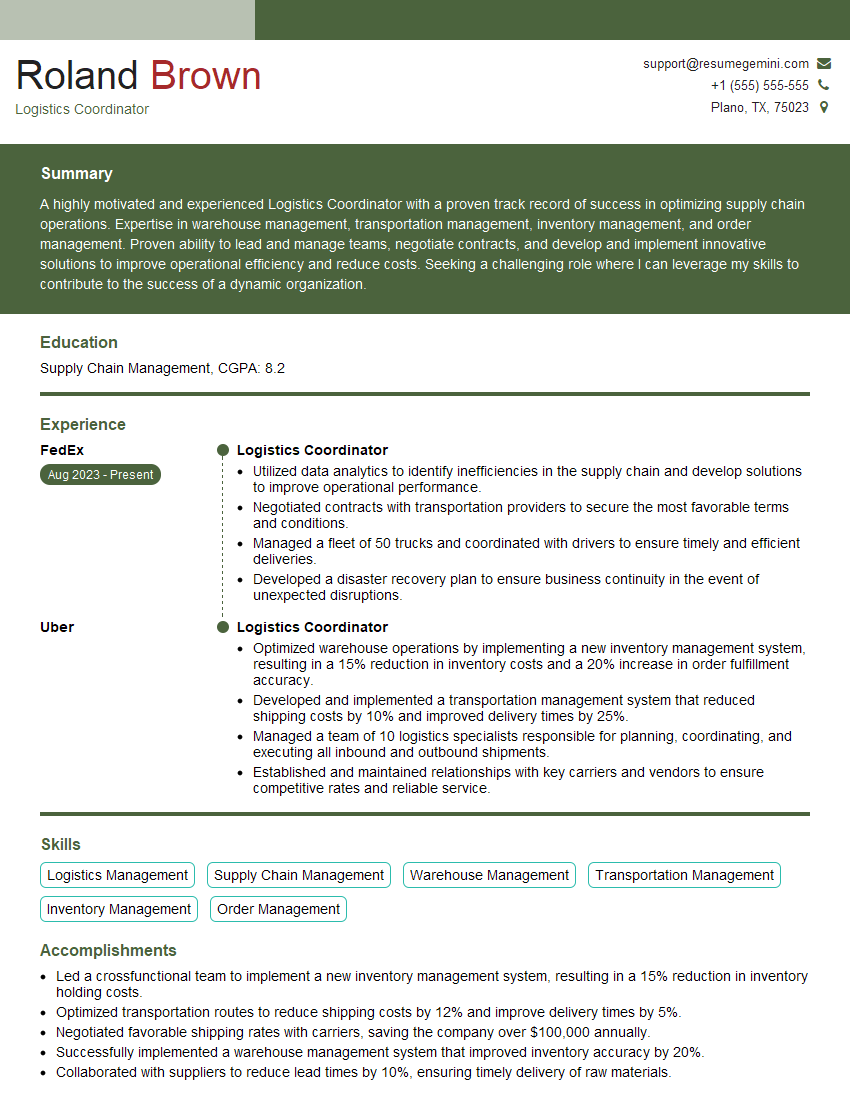
Logistics Coordinator Resume Sample
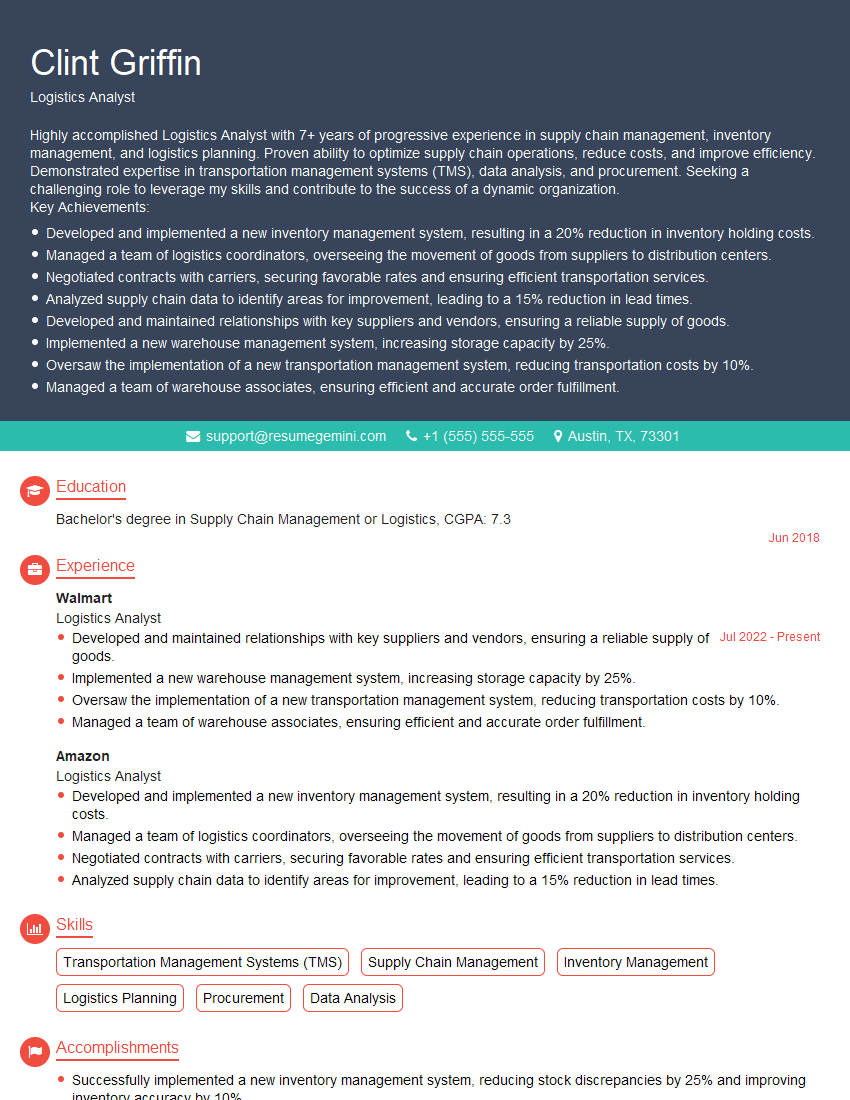
Logistics Analyst Resume Sample
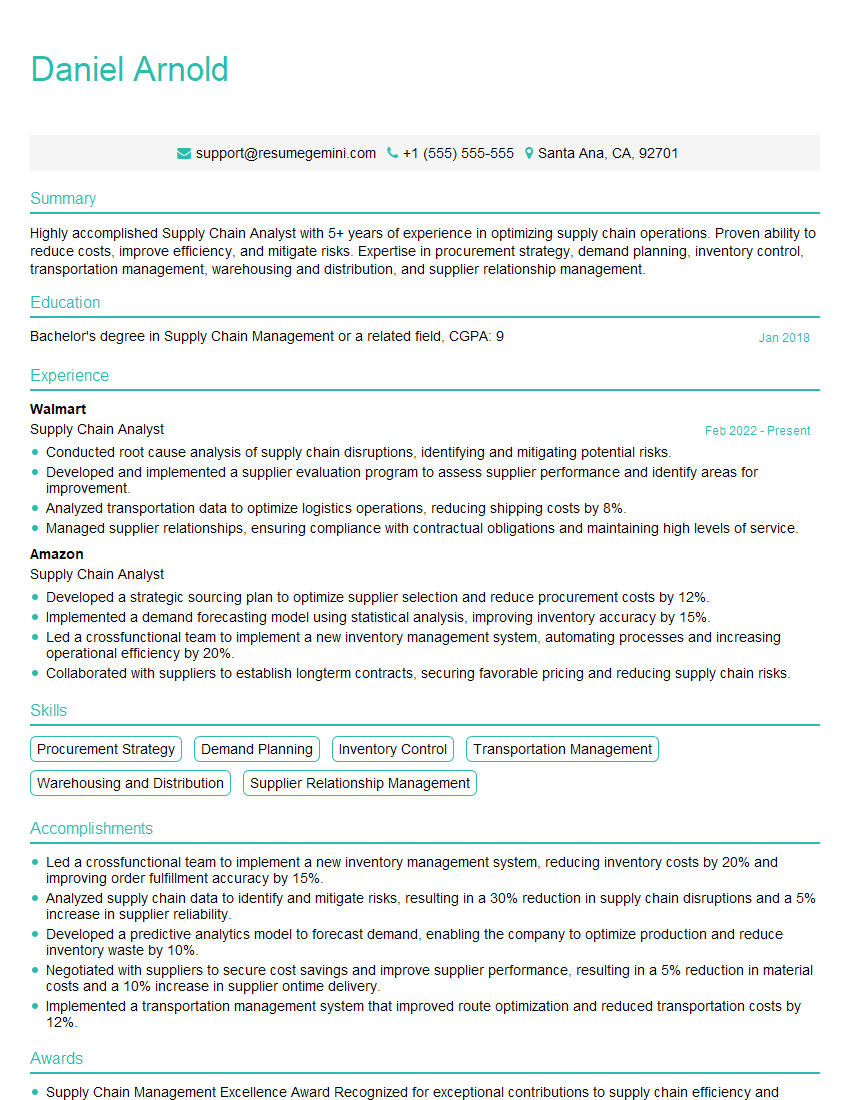
Supply Chain Analyst Resume Sample
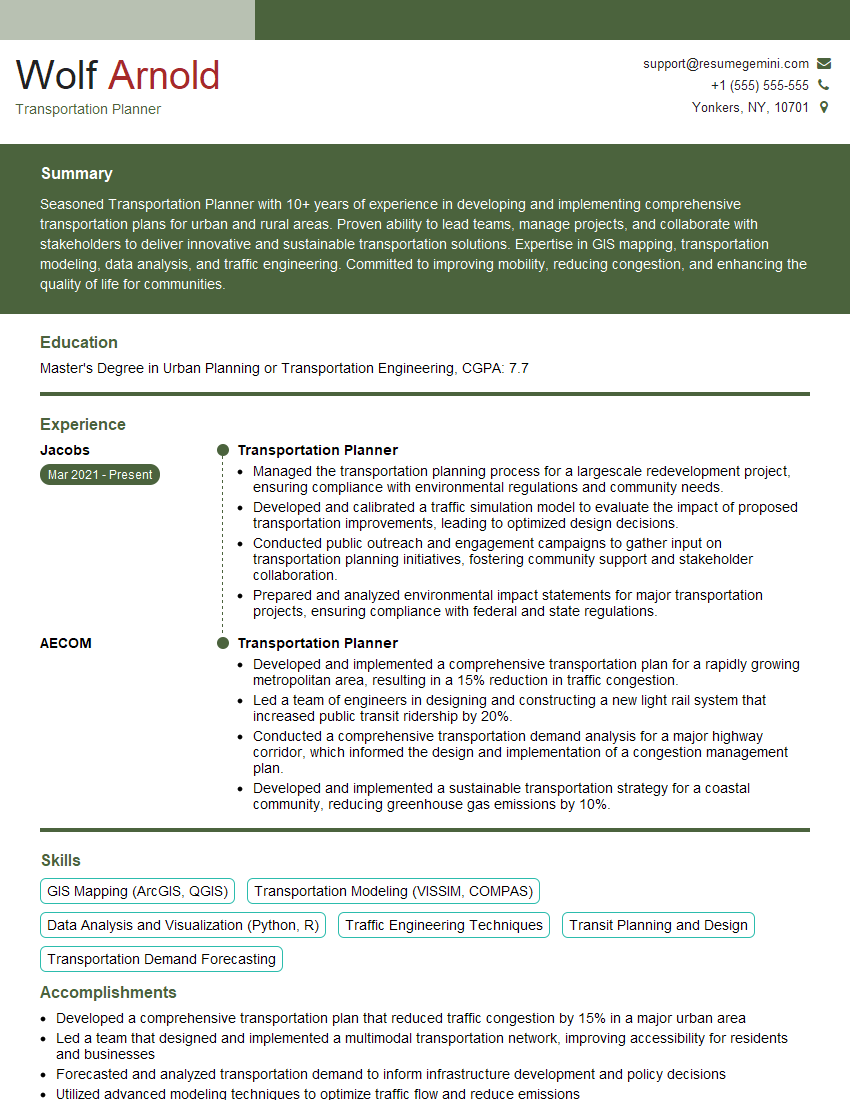
Transportation Planner Resume Sample
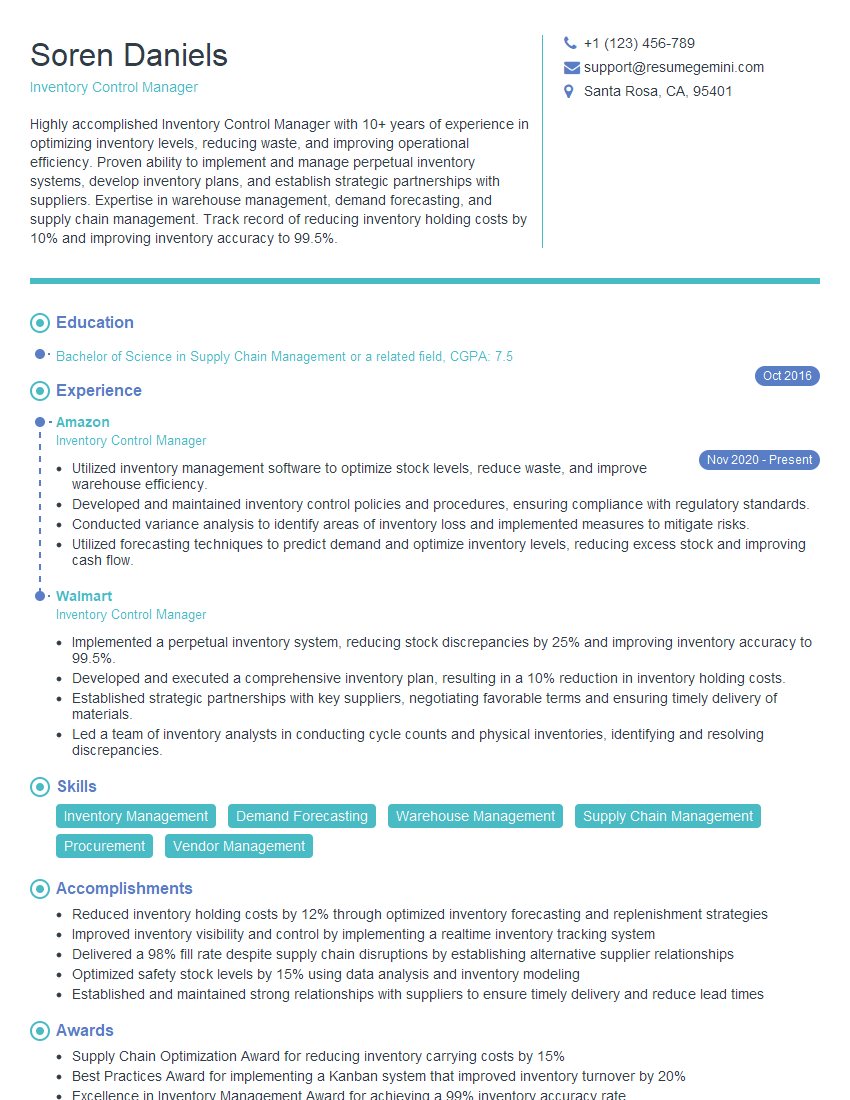
Inventory Control Manager Resume Sample
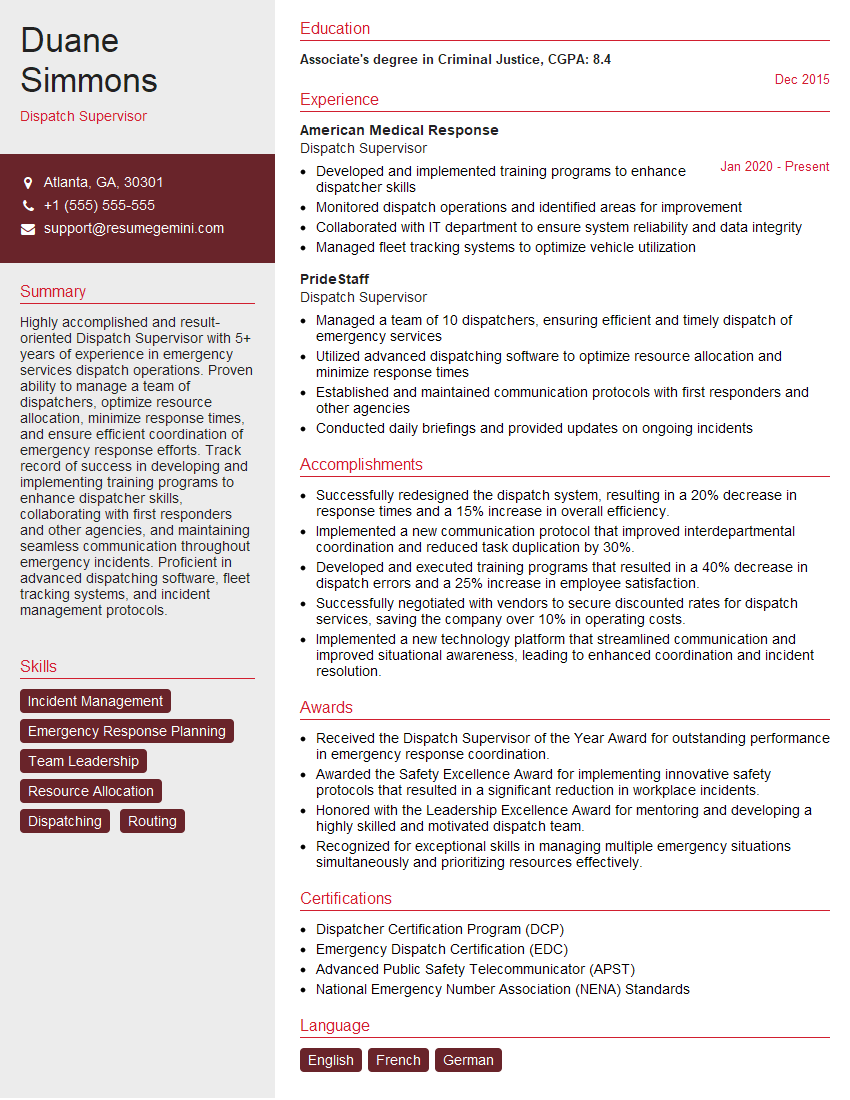
Dispatch Supervisor Resume Sample
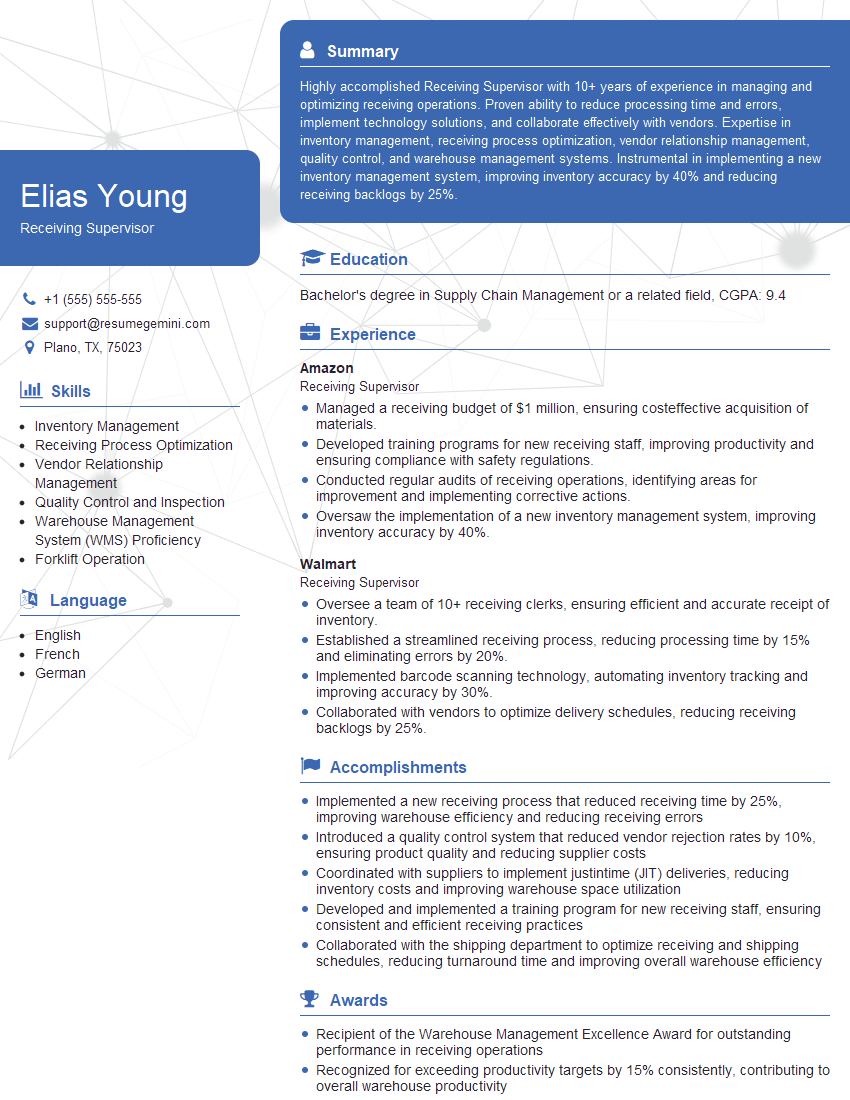
Receiving Supervisor Resume Sample
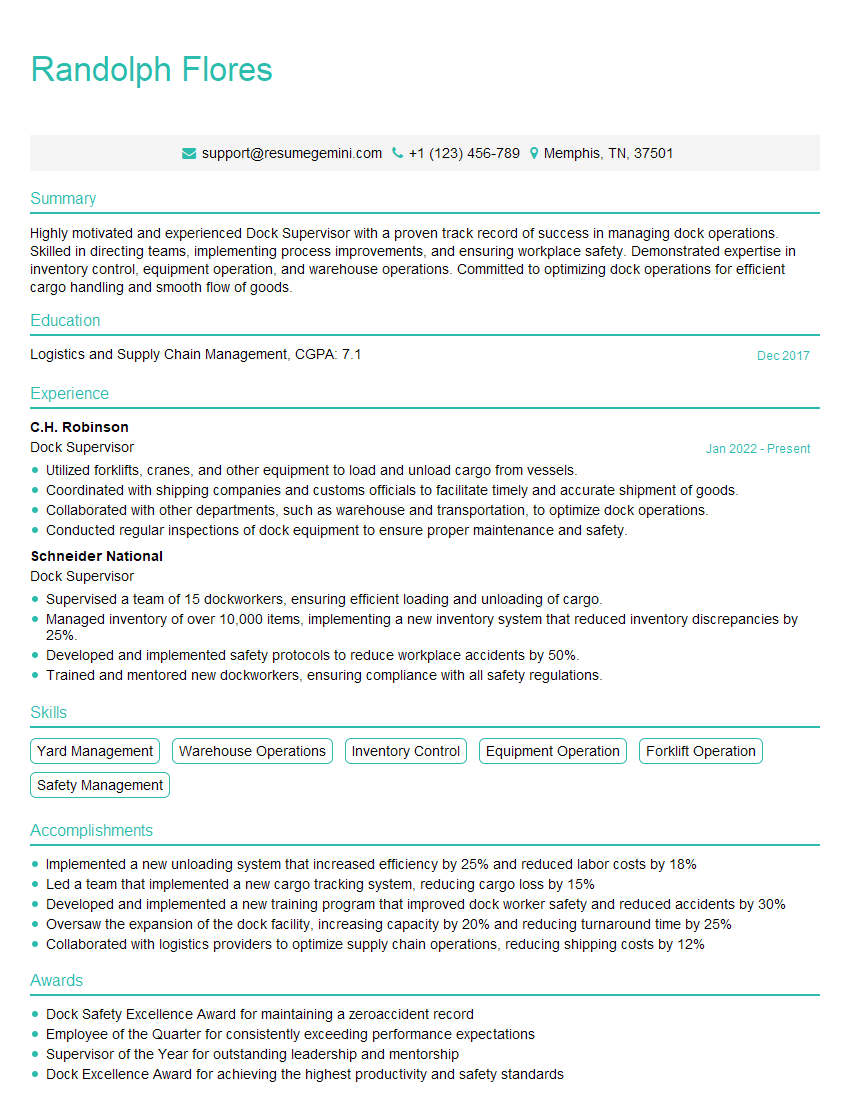
Dock Supervisor Resume Sample
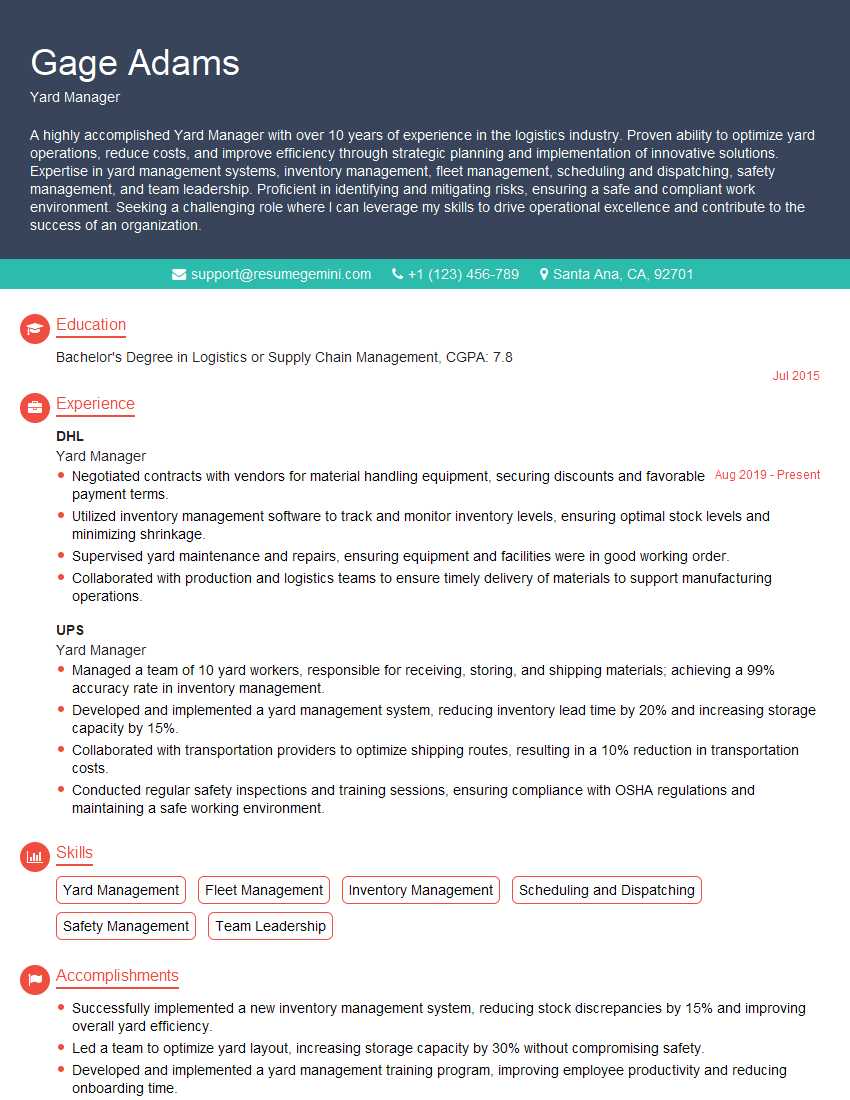
Yard Manager Resume Sample
- Operations Manager
- Supply Chain Manager
- Distribution Center Manager
- Logistics Manager
- Transportation Manager
- Warehouse Manager
- Warehouse Operations Manager
- Freight Coordinator
- Transportation Specialist
- Distribution Center Supervisor
- Shipping Supervisor
- Warehouse Supervisor
- Logistics Coordinator
- Logistics Analyst
- Supply Chain Analyst
- Transportation Planner
- Inventory Control Manager
- Dispatch Supervisor
- Receiving Supervisor
- Dock Supervisor
- Yard Manager
Explore more articles
Users Rating of Our Blogs
Share Your Experience
We value your feedback! Please rate our content and share your thoughts (optional).
What Readers Say About Our Blog
Very informative content, great job.
good