Every successful interview starts with knowing what to expect. In this blog, we’ll take you through the top Driving a Company Vehicle interview questions, breaking them down with expert tips to help you deliver impactful answers. Step into your next interview fully prepared and ready to succeed.
Questions Asked in Driving a Company Vehicle Interview
Q 1. What is your experience driving company vehicles?
I have over seven years of experience driving company vehicles, ranging from small sedans to larger cargo vans. This experience encompasses daily commutes, long-distance travel, and deliveries, consistently prioritizing safety and efficiency. I’ve always maintained a clean driving record and a meticulous approach to vehicle upkeep.
Q 2. What types of company vehicles have you operated?
My experience spans a variety of company vehicles. I’ve driven compact cars like the Toyota Corolla for shorter, city-based trips, mid-size sedans such as the Honda Accord for longer journeys involving client visits, and larger cargo vans, like the Ford Transit, for transporting equipment and materials to various job sites. This diverse experience has equipped me with the skills to handle various vehicle types and driving conditions.
Q 3. Describe your experience with vehicle maintenance and reporting.
Vehicle maintenance and reporting are crucial aspects of my driving responsibilities. I regularly check tire pressure, fluid levels (oil, coolant, windshield washer fluid), and ensure the vehicle’s overall condition. I promptly report any issues, no matter how minor, through the company’s designated channels, usually a digital reporting system. For example, if I notice a strange noise, I’ll document it with details like the sound, when it occurs (e.g., acceleration, braking), and the mileage. This proactive approach prevents minor problems from escalating into major repairs and ensures the vehicle remains in optimal condition.
Q 4. How do you ensure the safety of yourself and others while driving a company vehicle?
Ensuring safety is my top priority. I always adhere to traffic laws, maintain a safe following distance, and avoid distractions like cell phone use. Before each trip, I perform a quick vehicle inspection to check lights, wipers, and mirrors. I also adjust my driving to suit weather conditions, slowing down in rain or snow. Furthermore, I prioritize defensive driving techniques, anticipating potential hazards and reacting proactively. I consider myself a responsible and cautious driver, always prioritizing the safety of myself and others on the road. For instance, I always use my turn signals well in advance of any maneuver and carefully check my blind spots before changing lanes.
Q 5. What is your experience with navigation systems and route planning?
I’m proficient with various navigation systems, including GPS apps like Google Maps and in-dash navigation units. I’m adept at route planning, considering traffic conditions, construction zones, and alternative routes. Before embarking on a long journey, I typically plan the route in advance, considering factors such as distance, expected travel time, and potential delays. I regularly check for traffic updates during my trips and adjust my route if necessary. This ensures timely arrival and efficient use of company resources. I am also familiar with using offline maps for areas with poor cell service.
Q 6. How familiar are you with relevant traffic laws and regulations?
I have a thorough understanding of all relevant traffic laws and regulations, including speed limits, right-of-way rules, and parking regulations. I stay updated on any changes to these laws and regulations, often through online resources and company-provided training materials. I am fully licensed and have a clean driving record. Compliance with traffic laws is not just a legal requirement but a crucial part of maintaining road safety.
Q 7. Have you ever been involved in an accident while driving a company vehicle? If so, explain.
Yes, I was involved in a minor fender bender three years ago while driving a company vehicle. Another driver failed to yield at a stop sign, resulting in a collision causing minimal damage to both vehicles. I immediately reported the incident to my supervisor and followed company protocol, exchanging information with the other driver and contacting the appropriate authorities. The incident was documented through an insurance claim, and I learned valuable lessons about being even more vigilant and defensive in my driving, especially at intersections.
Q 8. How do you handle challenging driving conditions (e.g., heavy traffic, inclement weather)?
Handling challenging driving conditions requires a proactive and defensive approach. My strategy centers around anticipating potential hazards and adjusting my driving accordingly. In heavy traffic, I maintain a safe following distance, avoid abrupt braking or acceleration, and use my mirrors frequently to monitor surrounding vehicles. I’m adept at navigating congested areas efficiently, choosing routes that minimize stops and delays. In inclement weather, I reduce my speed significantly, increase following distance even further, and use my headlights, even during the day, to increase visibility. I’m familiar with different driving techniques for various weather conditions, such as using lower gears on slippery surfaces for better control. For example, during a heavy snowstorm last year, I successfully navigated a particularly treacherous mountain pass by driving slowly and deliberately, allowing ample braking distance, and avoiding any unnecessary lane changes.
Essentially, I prioritize situational awareness and adapt my driving style to the specific challenges presented. This includes being prepared for unexpected events, such as sudden stops or lane changes by other drivers.
Q 9. How do you manage your time effectively while driving for work?
Effective time management while driving for work involves meticulous planning and execution. Before embarking on a journey, I carefully review my route, considering traffic patterns, potential delays, and delivery schedules. I utilize navigation apps and real-time traffic updates to identify the most efficient routes and adjust my plans as needed. I also incorporate buffer time into my schedule to account for unexpected delays, such as traffic jams or unforeseen road closures. Furthermore, I utilize hands-free devices for communication whenever possible, allowing me to keep my focus on the road. For instance, if I know a particular route is prone to congestion during rush hour, I’ll adjust my departure time to avoid it entirely.
Q 10. How do you prioritize safety while meeting deadlines?
Prioritizing safety while meeting deadlines is a paramount concern. I firmly believe that safety should never be compromised, regardless of time constraints. My approach is to always adhere to traffic laws, maintain a safe speed, and never drive while fatigued or distracted. I proactively check vehicle conditions before every trip, ensuring everything is in working order. If I feel pressured to rush, I immediately communicate with my dispatcher or supervisor to explain the situation and request assistance or an adjustment to the schedule. I’d rather arrive late safely than arrive on time at the risk of an accident. For example, on one occasion I was running slightly behind schedule but encountered some heavy fog. I immediately slowed down, prioritizing safety over meeting the strict deadline, and successfully arrived without any incident.
Q 11. Describe your experience with loading and unloading cargo.
My experience with loading and unloading cargo includes securing and protecting goods during transportation to prevent damage or loss. I’m familiar with various loading techniques, including proper weight distribution to ensure the vehicle’s stability. I’m skilled in using appropriate equipment like hand trucks and pallet jacks and know how to correctly secure loads using straps and other safety equipment. I understand the importance of following proper procedures for both loading and unloading to ensure safety for myself and others. I’ve worked with a variety of cargo, from small packages to large, heavy equipment. In one particular instance, I was responsible for loading a shipment of fragile glassware. By using padding and careful placement, I successfully delivered the entire shipment without a single breakage.
Q 12. Are you comfortable with long driving hours?
Yes, I am comfortable with long driving hours. However, I understand the importance of taking regular breaks to avoid fatigue. I adhere strictly to regulations concerning driving hours and rest periods. Before embarking on a long trip, I ensure I am well-rested and plan for adequate breaks along the route. I also utilize strategies to stay alert, such as listening to engaging podcasts or audio books. I understand that driver fatigue is a major safety concern, and I prioritize my well-being and the safety of others by taking the necessary precautions.
Q 13. How do you maintain a clean and organized vehicle?
Maintaining a clean and organized vehicle is crucial for both safety and professionalism. I regularly clean the interior and exterior of the vehicle, removing any debris, trash, or spills. I also ensure that any cargo or equipment is properly stored and secured to avoid shifting during transport and to ensure easy access. A clean and organized vehicle improves efficiency and allows for quick and easy access to necessary items. I firmly believe a well-maintained vehicle reflects professionalism.
Q 14. What is your experience with vehicle inspections and documentation?
I have extensive experience with vehicle inspections and documentation. I conduct pre-trip inspections before each journey, checking fluid levels (oil, coolant, brake fluid), tire pressure, lights, wipers, and overall vehicle condition. I meticulously record these inspections in the appropriate logbook and maintain accurate documentation of any repairs or maintenance performed on the vehicle. I understand the importance of complying with all relevant regulations and reporting any issues promptly to ensure vehicle safety and compliance. This diligent approach ensures that the vehicle remains in optimal working condition, minimizing potential breakdowns and maximizing safety.
Q 15. What is your experience with using GPS or navigation systems?
I’m highly proficient in using GPS and navigation systems. My experience spans various platforms, including in-dash systems, smartphone apps like Google Maps and Waze, and dedicated trucking navigation devices. I understand how to input addresses accurately, utilize various route options (fastest, shortest, avoiding tolls), and interpret real-time traffic updates to optimize my route. I’m also adept at utilizing features like setting arrival time alerts, finding points of interest (like rest stops or fuel stations), and re-routing effectively in case of unexpected road closures or traffic incidents. For instance, during a recent delivery, an unexpected accident closed a major highway. My familiarity with alternative routes using my GPS, combined with real-time traffic information, allowed me to quickly find a suitable detour, ensuring timely delivery without significant delays.
Career Expert Tips:
- Ace those interviews! Prepare effectively by reviewing the Top 50 Most Common Interview Questions on ResumeGemini.
- Navigate your job search with confidence! Explore a wide range of Career Tips on ResumeGemini. Learn about common challenges and recommendations to overcome them.
- Craft the perfect resume! Master the Art of Resume Writing with ResumeGemini’s guide. Showcase your unique qualifications and achievements effectively.
- Don’t miss out on holiday savings! Build your dream resume with ResumeGemini’s ATS optimized templates.
Q 16. How do you handle unexpected delays or route changes?
Unexpected delays are a reality in driving. My approach involves a combination of proactive planning and reactive problem-solving. Firstly, I always build buffer time into my schedule to account for potential unforeseen circumstances. When delays arise—traffic congestion, accidents, or mechanical issues—I immediately assess the situation. I utilize my GPS to explore alternative routes and contact dispatch immediately to inform them of the delay and provide an estimated time of arrival (ETA). I clearly communicate the reason for the delay and the proposed solution. For example, if I encounter heavy traffic, I’ll inform dispatch and suggest a slight rerouting based on real-time traffic information from my GPS. Open communication is key to mitigating the impact of these unforeseen events.
Q 17. How do you communicate effectively with dispatchers or supervisors?
Effective communication with dispatchers and supervisors is crucial for efficiency and safety. I maintain clear and concise communication, providing regular updates on my location, ETA, and any issues encountered. I use professional language, avoiding jargon, and actively listen to their instructions. I confirm all instructions to avoid misunderstandings. For example, before starting a delivery, I’ll confirm the address, any special instructions, and expected time window with the dispatcher. If I have questions or concerns, I ask them clearly and directly. I also make sure to promptly relay any information about unexpected delays or potential problems. This proactive and respectful approach ensures smooth operations and minimizes potential disruptions.
Q 18. How do you manage stress while driving for work?
Driving for work can be stressful. I manage stress by prioritizing safety, planning efficiently, and practicing self-care. I ensure I’m well-rested before each shift, maintaining a healthy lifestyle that supports alertness and concentration. I anticipate potential stressors, like peak traffic hours, and adjust my schedule to minimize their impact. I also practice relaxation techniques, like deep breathing exercises, to manage stress in the moment. Additionally, I maintain a positive attitude, focusing on solutions rather than dwelling on problems. Taking short breaks during long drives and listening to calming music also helps me stay focused and prevent burnout.
Q 19. How do you ensure the security of company property while driving?
The security of company property is a top priority. I ensure the vehicle is locked at all times when unattended and parked in secure locations. I’m vigilant about my surroundings, avoiding high-crime areas whenever possible. I report any suspicious activity or damage to the vehicle immediately to my supervisor. I also follow company protocols regarding cargo security, ensuring that all deliveries are handled responsibly and secured appropriately. For instance, I always check the vehicle for any damage before and after each trip and immediately report anything unusual. This proactive approach helps prevent theft or damage and ensures the company’s assets remain safe.
Q 20. What is your experience with fuel management and efficiency?
Fuel management and efficiency are critical aspects of my driving responsibilities. I practice fuel-efficient driving techniques, such as maintaining a consistent speed, avoiding harsh acceleration and braking, and planning routes to minimize idling. I also monitor tire pressure regularly, as under-inflated tires significantly reduce fuel efficiency. I understand the importance of regular vehicle maintenance to ensure optimal fuel economy. I report any issues affecting fuel consumption to the appropriate personnel immediately. For example, I always aim to accelerate smoothly and brake gradually to avoid unnecessary fuel consumption. Regularly checking my tire pressure also ensures optimal fuel efficiency and vehicle longevity.
Q 21. How do you handle customer interactions while driving a company vehicle?
Customer interactions while driving a company vehicle require professionalism and courtesy. I maintain a polite and respectful demeanor, even in challenging situations. I clearly communicate delivery updates and any potential delays to customers. I follow company protocols for handling customer inquiries and complaints, ensuring that I record all relevant information accurately. If a customer has a complaint, I listen attentively and escalate the issue to the appropriate personnel if I can’t immediately resolve it. For example, I always confirm the delivery details with the customer upon arrival and get their signature. In case of any issue, I remain calm, listen to the customer’s concern and try to resolve it efficiently and politely, while following the company’s established protocol for handling customer complaints.
Q 22. What is your familiarity with various types of delivery systems?
My familiarity with delivery systems is extensive, encompassing various methods and technologies. I’ve experience with direct delivery to customers, utilizing a mix of handheld GPS devices and paper route sheets. I’m also proficient with more sophisticated systems involving route optimization software, barcode scanners, and electronic proof-of-delivery (POD) systems. For example, in my previous role, I utilized a system that integrated with our company’s ERP (Enterprise Resource Planning) system for real-time tracking and delivery updates. This allowed for immediate feedback to customers and efficient management of our delivery schedule. I’m also comfortable with different vehicle types; from vans and trucks for larger loads to smaller cars or motorcycles for more accessible locations. The choice of delivery system depends heavily on the specific requirements of each delivery and the infrastructure available.
Q 23. What is your understanding of company vehicle policies and procedures?
My understanding of company vehicle policies and procedures is comprehensive. I meticulously adhere to all safety regulations, including regular vehicle inspections, adhering to speed limits, and following all traffic laws. I’m fully aware of the importance of maintaining a clean driving record and understand the consequences of violations. For instance, I’m familiar with procedures for reporting accidents, documenting vehicle maintenance, and following protocols for fuel usage and expense reports. I am also well-versed in the company’s policies regarding personal use of company vehicles, ensuring adherence to all guidelines to avoid any conflicts of interest or legal issues. In short, I treat company vehicles with the same respect and care that I’d give my own.
Q 24. What are your strategies for preventing accidents?
My strategies for preventing accidents are multifaceted and proactive. They begin with a strong foundation of defensive driving techniques, prioritizing awareness of my surroundings at all times. This includes maintaining a safe following distance, checking blind spots frequently, and anticipating potential hazards. I regularly conduct pre-trip inspections of the vehicle, checking tires, lights, and fluids to ensure the vehicle is in optimal condition. Additionally, I avoid distractions such as using my phone or eating while driving. Planning routes in advance and being familiar with them reduces the likelihood of getting lost or making sudden maneuvers. I also prioritize rest and ensure I am well-rested before embarking on any long journey. Ultimately, safety is my top priority, and I am constantly assessing and mitigating potential risks.
Q 25. How do you stay alert and focused during long drives?
Staying alert and focused during long drives requires a multi-pronged approach. Firstly, I ensure I’m well-rested before starting any lengthy journey. I also incorporate regular breaks into my schedule, getting out of the vehicle to stretch and walk around every couple of hours. Listening to engaging podcasts or audiobooks helps maintain alertness, but I avoid music that’s too stimulating. I also stay hydrated by drinking plenty of water throughout the day. If I feel fatigued, I will pull over to a safe location and rest until I am fully alert and capable of driving safely. Safety is paramount, and I won’t compromise it for the sake of expediency.
Q 26. What is your experience with using a two-way radio or other communication devices?
I have extensive experience using two-way radios and other communication devices in various professional settings. I’m adept at using these tools to communicate efficiently and effectively with dispatch, colleagues, and customers. I understand the importance of clear and concise communication, using standardized terminology and protocols to ensure messages are understood correctly. For example, in my previous role, I used a two-way radio to coordinate deliveries with other drivers, report traffic incidents, and request assistance if needed. I am comfortable operating various communication systems and am quick to learn and adapt to new technologies.
Q 27. Describe your experience with completing delivery paperwork accurately.
Accuracy in completing delivery paperwork is crucial, and I take this responsibility very seriously. I double-check all information, including customer addresses, delivery details, and signatures, before submitting the paperwork. I ensure all necessary documentation is properly filled out and that any discrepancies are promptly reported and resolved. I’m meticulous and organized, and I understand the consequences of errors. In my previous position, I maintained a 100% accuracy rate in completing delivery documentation, highlighting my commitment to precision and attention to detail.
Q 28. What are your salary expectations for this position?
My salary expectations are commensurate with my experience and skills, and I am open to discussing a competitive compensation package that reflects the value I bring to your company. I have researched the industry standard for similar roles and believe a salary in the range of [Insert Salary Range] would be appropriate, but I am flexible and willing to negotiate based on the specifics of the role and benefits offered.
Key Topics to Learn for Driving a Company Vehicle Interview
- Vehicle Safety and Maintenance: Understanding basic vehicle checks (tires, fluids, lights), recognizing potential mechanical issues, and knowing when to report problems. Practical application: Describing your experience performing pre-trip inspections or addressing minor maintenance needs.
- Defensive Driving Techniques: Mastering safe driving practices like maintaining a safe following distance, anticipating potential hazards, and reacting appropriately to unexpected situations. Practical application: Explaining how you’ve applied defensive driving strategies in challenging conditions (e.g., heavy traffic, adverse weather).
- Company Policies and Procedures: Familiarizing yourself with the company’s specific rules regarding vehicle use, reporting accidents, and handling vehicle-related incidents. Practical application: Demonstrating your ability to follow rules and regulations diligently.
- Route Planning and Navigation: Understanding efficient route planning, using GPS and mapping applications effectively, and navigating unfamiliar territories safely. Practical application: Describing your experience in planning routes for deliveries or long-distance travel.
- Legal Compliance: Understanding and adhering to all relevant traffic laws, regulations, and company policies related to driving a company vehicle. Practical application: Demonstrating a thorough understanding of driving regulations and your commitment to safe and legal driving practices.
- Accident Reporting and Procedures: Knowing the proper steps to take in the event of an accident, including reporting procedures to your supervisor and insurance company. Practical application: Explaining your understanding of accident reporting protocols and your ability to remain calm and collected in stressful situations.
Next Steps
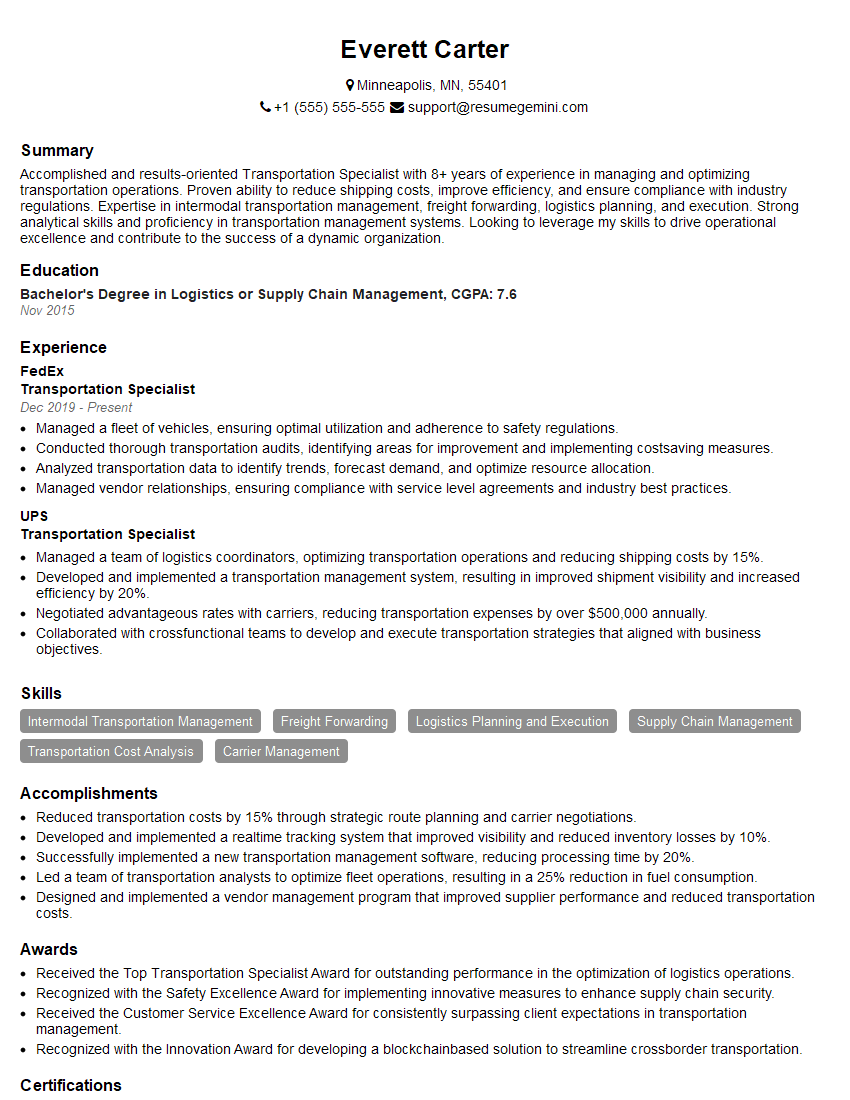
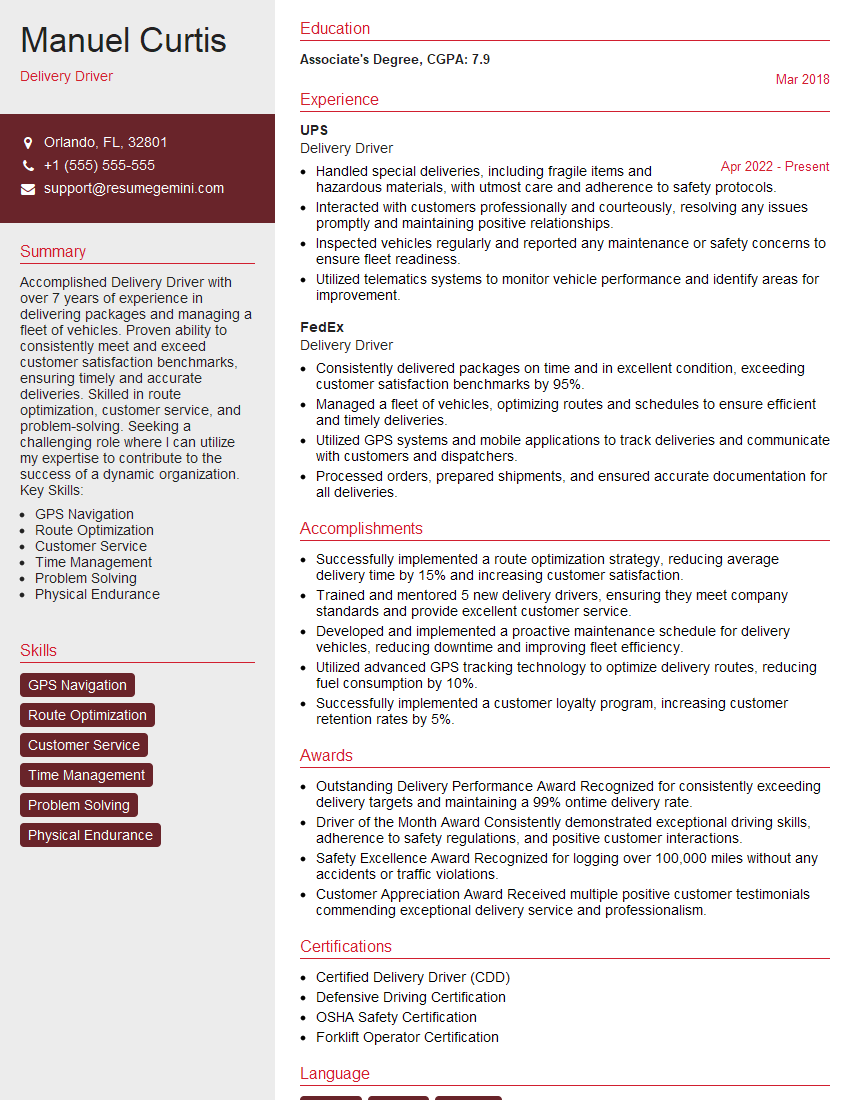
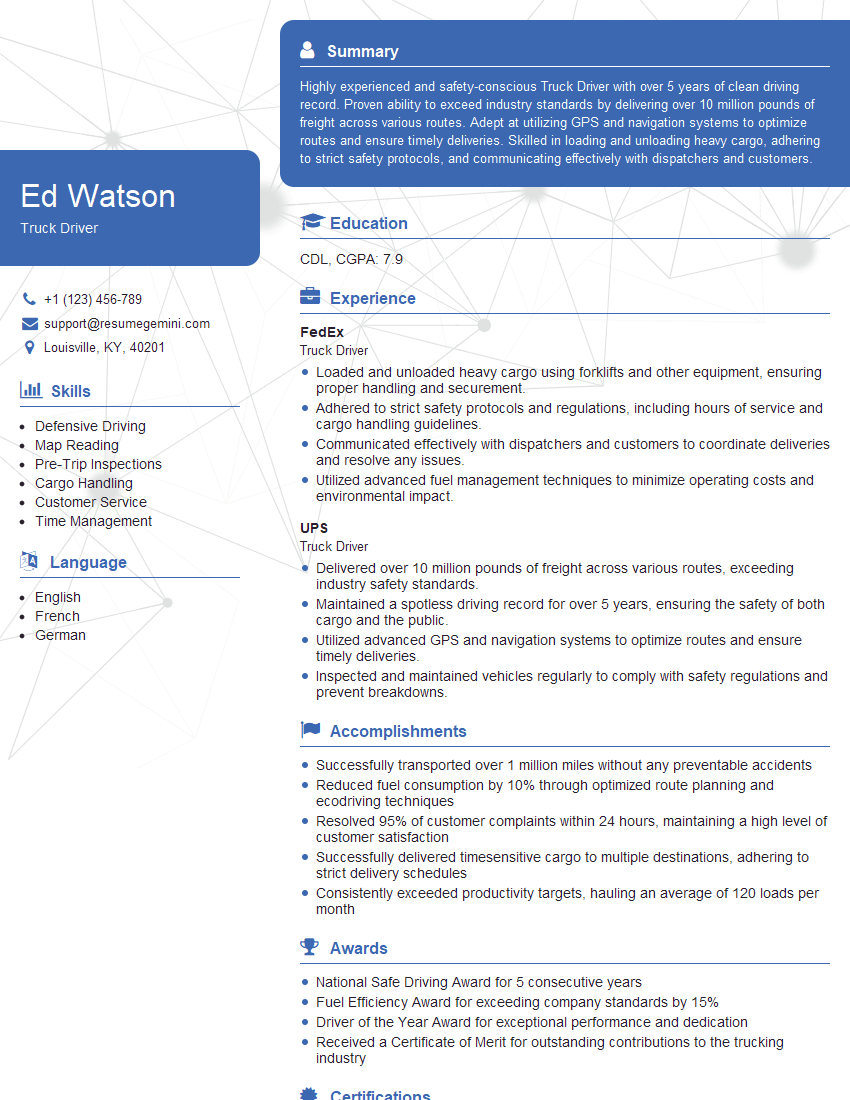
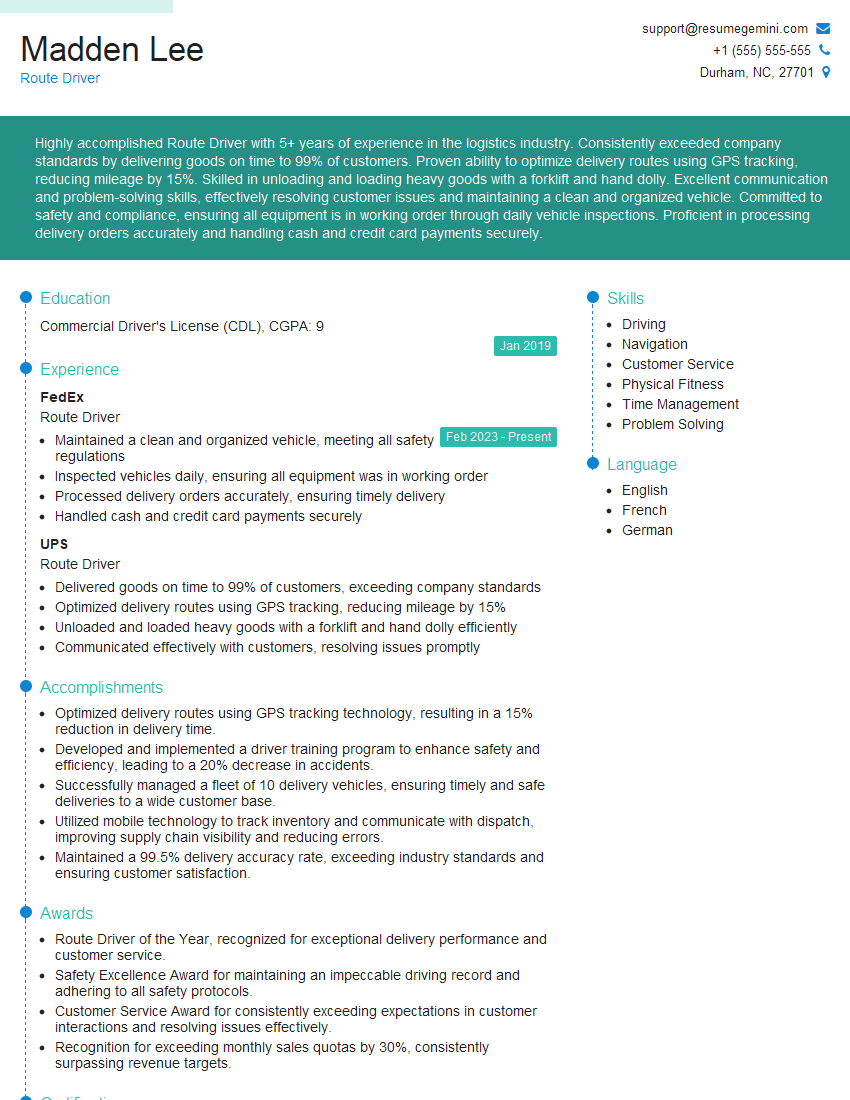
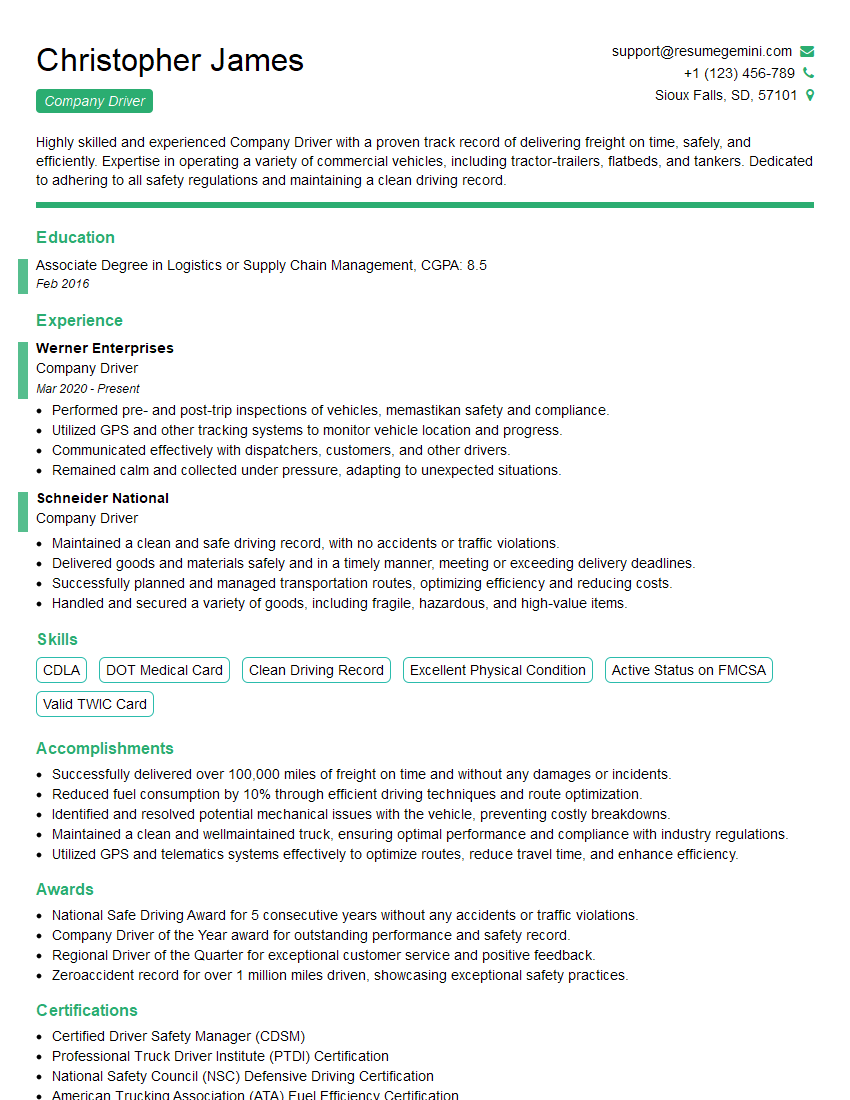
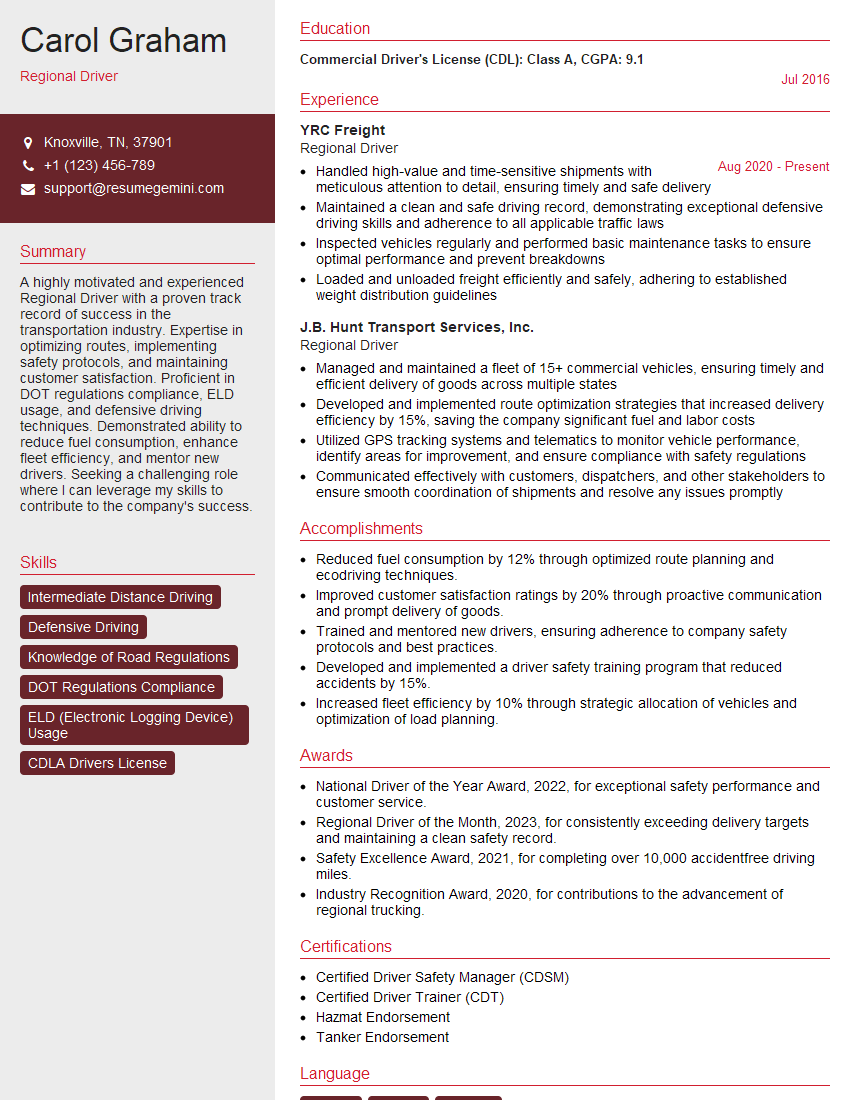
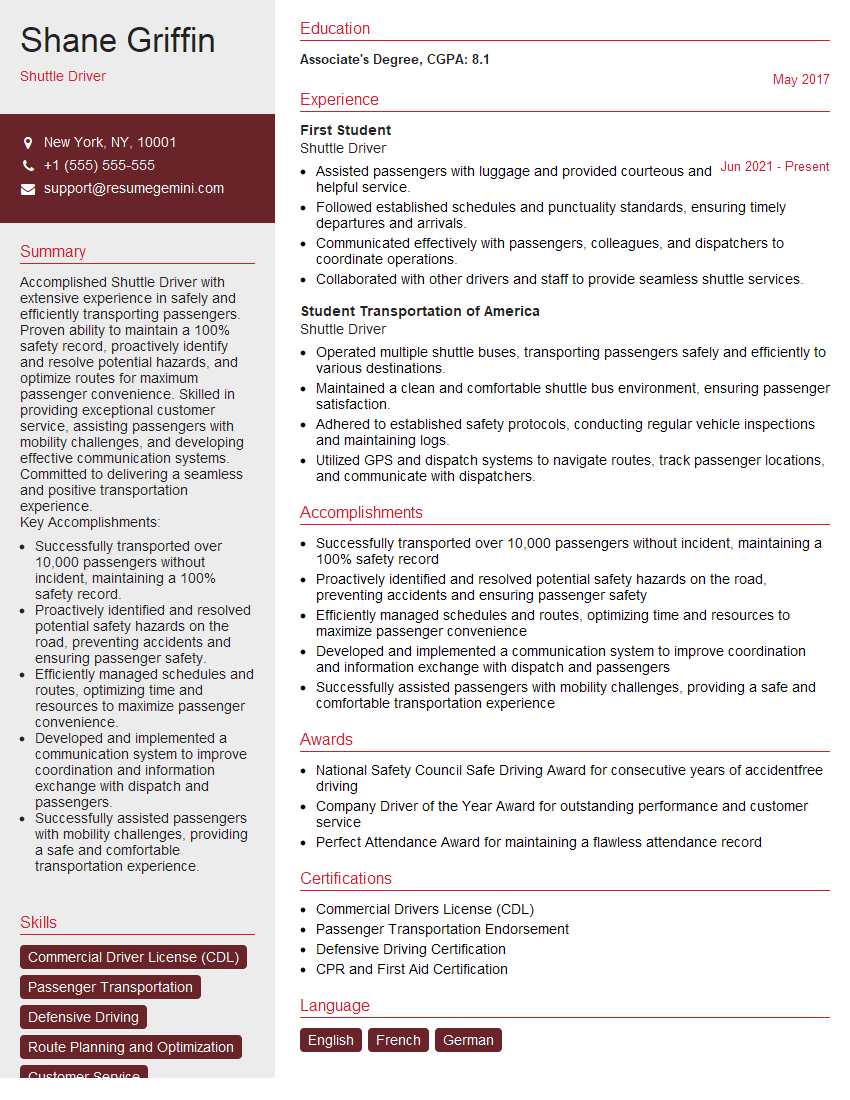
Mastering the art of driving a company vehicle demonstrates responsibility, professionalism, and attention to detail – valuable assets that significantly enhance your career prospects. A strong resume is your key to unlocking these opportunities. Creating an ATS-friendly resume that highlights your relevant skills and experience is crucial for getting noticed by potential employers. We highly recommend using ResumeGemini to build a professional and effective resume. ResumeGemini provides tools and resources to help you craft a compelling narrative that showcases your abilities. Examples of resumes tailored to Driving a Company Vehicle are available to further guide you.


Explore more articles
Users Rating of Our Blogs
Share Your Experience
We value your feedback! Please rate our content and share your thoughts (optional).
What Readers Say About Our Blog
Very informative content, great job.
good