The thought of an interview can be nerve-wracking, but the right preparation can make all the difference. Explore this comprehensive guide to Driving Safety Culture interview questions and gain the confidence you need to showcase your abilities and secure the role.
Questions Asked in Driving Safety Culture Interview
Q 1. Describe your experience implementing a driver safety program.
Implementing a driver safety program is a multi-faceted process requiring careful planning and execution. It begins with a thorough needs assessment – identifying the specific risks within the organization. For example, a delivery company might focus on speeding and aggressive driving, while a long-haul trucking firm would also consider driver fatigue.
Following the assessment, I develop a tailored program encompassing policy updates, training modules (both classroom and online), and ongoing monitoring. In one instance, I worked with a logistics company experiencing a high rate of accidents due to distracted driving. We implemented a comprehensive program that included mandatory cell phone usage policies, hands-on simulations demonstrating the dangers of distracted driving, and a reward system for safe driving practices. The program resulted in a 30% reduction in accidents within six months.
Crucially, successful implementation involves strong leadership buy-in and consistent communication throughout the organization. Employees need to understand the ‘why’ behind the program and feel supported in their efforts to drive safely.
Q 2. How do you measure the effectiveness of a driver safety program?
Measuring the effectiveness of a driver safety program involves a combination of quantitative and qualitative data. Key quantitative metrics include:
- Accident frequency and severity: A reduction in the number and severity of accidents is a primary indicator of success.
- Near-miss incidents: Tracking near-misses helps identify potential hazards before they lead to accidents.
- Vehicle maintenance and repair costs: Improved driving habits often translate to lower maintenance costs.
- Driver violation rates: Monitoring speeding tickets, and other driving violations offers insights into driver behavior.
Qualitative data, gathered through surveys, interviews, and focus groups, provide valuable insights into driver perceptions, attitudes, and training effectiveness. For instance, we might conduct anonymous surveys to understand driver compliance with new policies or assess their satisfaction with the training received.
By combining these data points, we can gain a holistic understanding of the program’s impact and identify areas for improvement.
Q 3. What are the key elements of a successful driving safety culture?
A successful driving safety culture is built on several key pillars:
- Leadership commitment: Leaders must visibly champion safety, demonstrating that it’s a top priority.
- Clear policies and procedures: Comprehensive policies, consistently enforced, provide a framework for safe driving practices.
- Effective training: Regular, relevant training keeps drivers updated on best practices and addresses emerging risks.
- Open communication: A culture of open communication encourages drivers to report near-misses and concerns without fear of retribution.
- Employee engagement and participation: Involving drivers in the development and implementation of safety initiatives fosters ownership and accountability.
- Performance-based rewards and recognition: Acknowledging and rewarding safe driving behaviors reinforces positive habits.
- Technology and data-driven insights: Utilizing telematics and driver performance monitoring systems provides objective data for improvement.
Think of it like building a strong foundation for a house; each element is crucial for overall stability and strength. A weak link in any of these areas can compromise the entire safety culture.
Q 4. Explain your approach to investigating and analyzing driving accidents.
Investigating and analyzing driving accidents requires a systematic approach. I utilize a structured process that includes:
- Immediate response and securing the scene: Ensuring the safety of all involved and preserving evidence.
- Data collection: Gathering information from multiple sources, including police reports, driver statements, vehicle data recorders (black boxes), and witness accounts.
- Reconstruction: Using available data to reconstruct the accident sequence, identifying contributing factors.
- Root cause analysis: Determining the underlying causes of the accident, going beyond immediate factors to understand systemic issues.
- Corrective actions: Implementing measures to prevent similar accidents in the future, which could include retraining, policy changes, or equipment upgrades.
- Documentation: Maintaining a detailed record of the investigation process and findings.
For example, if an accident involved a fatigued driver, the investigation would explore factors like scheduling practices, driver rest breaks, and the effectiveness of fatigue management training.
Q 5. How do you identify high-risk drivers and implement corrective actions?
Identifying high-risk drivers relies on a combination of data analysis and behavioral observation. Telematics data, for example, can reveal patterns of speeding, harsh braking, or excessive idling. This data, combined with accident history and driving violation records, helps identify individuals who consistently exhibit risky behaviors.
Corrective actions can include:
- Targeted training: Providing specific training to address identified weaknesses.
- Coaching and mentoring: Pairing high-risk drivers with experienced mentors for guidance and support.
- Performance improvement plans: Establishing clear goals and timelines for improvement, with regular monitoring.
- Vehicle restrictions: Restricting access to certain vehicles or routes, depending on the nature of the risk.
- Disciplinary actions: In severe cases, disciplinary actions may be necessary, up to and including termination.
It’s crucial to approach this process fairly and supportively, ensuring drivers understand the rationale for the interventions and are provided with the resources to improve their driving performance.
Q 6. What driver training programs are you familiar with?
I’m familiar with a wide range of driver training programs, including:
- Defensive driving courses: These programs teach drivers techniques to anticipate and avoid hazardous situations.
- Fleet safety training: Tailored programs designed for specific fleet operations, addressing unique risks associated with particular industries (e.g., hazardous materials transport).
- Driver distraction awareness training: Focusing on the dangers of distracted driving and strategies for minimizing risks.
- Fatigue management training: Educating drivers on the effects of fatigue and how to manage it effectively.
- Advanced driver assistance systems (ADAS) training: Training on the use and limitations of advanced safety technologies like lane departure warnings and automatic emergency braking.
- Online and blended learning programs: Leveraging technology to deliver engaging and accessible training.
The best program depends on the specific needs of the organization and the identified risks. I tailor training programs to ensure they are relevant, engaging, and effective in improving driver behavior.
Q 7. Describe your experience with driver performance monitoring systems.
My experience with driver performance monitoring systems (DPMS) encompasses both the implementation and analysis of data from various telematics solutions. These systems use GPS tracking, accelerometers, and other sensors to collect data on driver behavior, including speed, acceleration, braking, and idling. This data provides valuable insights into driving habits and helps identify high-risk behaviors.
I’ve worked with systems that provide real-time alerts for risky driving events, allowing for immediate intervention. Data analysis tools allow for the identification of trends and patterns, enabling proactive interventions and the development of targeted training programs. For example, analyzing data from a DPMS might reveal a cluster of speeding incidents on a particular route, prompting an investigation into potential road hazards or driver training needs. Privacy concerns are always addressed when implementing such systems, ensuring compliance with all relevant regulations and protecting driver confidentiality.
Q 8. How do you ensure compliance with relevant driving safety regulations?
Ensuring compliance with driving safety regulations involves a multi-pronged approach focusing on proactive measures, reactive responses, and continuous improvement. It starts with a thorough understanding of all applicable laws, company policies, and industry best practices. This understanding informs the development of clear, concise, and accessible driver training materials and regular safety audits.
- Proactive Measures: This includes providing comprehensive driver training that covers all relevant regulations, conducting regular vehicle inspections to ensure they meet safety standards, and implementing robust driver qualification and monitoring systems (e.g., using telematics to track driving behavior). We might use a checklist for pre-trip inspections, and then compare that against data from the vehicle’s onboard diagnostics.
- Reactive Responses: When violations occur, a clear disciplinary process must be in place, ranging from counseling and retraining to more serious consequences like suspension or termination, depending on the severity of the infraction. Thorough accident investigations are crucial to identify root causes and prevent recurrence.
- Continuous Improvement: Regularly reviewing safety data, including accident reports and near-miss incidents, is key to identifying areas for improvement in our safety procedures. This might involve revising training materials, updating policies, or adopting new technologies to enhance safety. We constantly look for ways to streamline our processes and reinforce safe driving habits.
Q 9. What are some common causes of driving accidents and how can they be mitigated?
Common causes of driving accidents are multifaceted, often stemming from a combination of factors. They can be broadly categorized into human error, vehicle malfunction, and environmental conditions.
- Human Error: This accounts for the vast majority of accidents. Examples include distracted driving (cell phone use, eating, etc.), drowsy driving, speeding, impaired driving (alcohol or drugs), failing to yield, and improper lane changes. These are often preventable through driver education, awareness campaigns, and enforcement of traffic laws. For example, implementing a policy that prohibits the use of cell phones while driving except for hands-free devices is a simple, impactful change.
- Vehicle Malfunction: Mechanical failures like brake problems, tire blowouts, or steering issues can contribute to accidents. Regular vehicle maintenance and inspections can mitigate this risk. A robust vehicle maintenance schedule with clearly defined inspection procedures helps us stay ahead of potential problems.
- Environmental Conditions: Adverse weather such as rain, snow, or fog can significantly reduce visibility and traction, increasing the likelihood of accidents. Driver training should equip drivers to handle these conditions safely, and we should adjust driving schedules or routes as needed.
Mitigation involves a layered approach: improving driver training, enforcing regulations, implementing vehicle maintenance programs, and adapting driving strategies to environmental conditions. Technology also plays a significant role, as we’ll discuss later.
Q 10. How do you communicate driving safety information to drivers?
Effective communication of driving safety information requires a multi-channel approach tailored to the drivers’ needs and preferences.
- Training Sessions: In-person or online training provides a structured learning environment. We use interactive exercises, case studies, and videos to engage drivers and reinforce learning. We focus on real-world scenarios that are relatable to drivers.
- Safety Newsletters & Emails: Regular updates keep drivers informed about new regulations, safety tips, and accident statistics. We keep the language simple and direct to ensure comprehension.
- Safety Meetings & Briefings: Regular meetings allow for two-way communication, addressing concerns and reinforcing safe driving practices. This creates an opportunity to foster open communication between drivers and management.
- Visual Aids & Posters: Strategically placed posters and visual reminders in the workplace help reinforce key safety messages. Simple infographics highlighting key safety statistics are very effective.
- Technology-Based Communication: Utilizing apps, online portals, and telematics systems allows for real-time feedback and communication of safety alerts and updates. We can use push notifications to communicate critical safety information promptly.
Q 11. How would you handle a situation where a driver refuses to comply with safety regulations?
Dealing with a driver who refuses to comply with safety regulations requires a structured and documented approach that prioritizes safety.
- Verbal Warning & Counseling: The first step is to address the issue calmly and professionally, understanding the reasons behind the non-compliance. This could involve a one-on-one meeting to understand their perspective and explain the importance of adhering to safety regulations.
- Written Warning & Retraining: If the behavior continues, a formal written warning outlining the violation and the consequences of repeated non-compliance should be issued, along with mandatory retraining.
- Suspension or Termination: For repeated or serious violations, suspension or termination may be necessary to ensure the safety of the driver and others. Documentation of the entire process is crucial.
Throughout this process, maintaining clear communication and documentation is vital. This ensures consistency, fairness, and protection for both the company and the driver. It’s important to adhere to all relevant labor laws and company policies. Sometimes an external mediator can help facilitate a resolution, and we’ve found that to be useful in some situations.
Q 12. Describe your experience with developing and delivering safety training programs.
My experience in developing and delivering safety training programs spans over [Number] years, encompassing various roles and settings. I’ve been involved in designing and implementing training programs for [Specific types of drivers/industries].
- Needs Assessment: I begin by conducting thorough needs assessments to understand the existing knowledge and skill gaps, identifying specific hazards and risks associated with the driving tasks.
- Curriculum Development: Based on the needs assessment, I develop comprehensive training programs that incorporate various learning modalities, including interactive sessions, scenario-based exercises, and case studies. I often incorporate real-world examples from past accidents or near-misses.
- Delivery & Evaluation: I utilize a variety of methods to deliver training, including instructor-led classroom sessions, online modules, and blended learning approaches. Post-training evaluations are essential to assess the effectiveness of the program and make adjustments for continuous improvement. We use both subjective and objective assessments, including written tests and practical driving evaluations.
- Technology Integration: I’ve successfully integrated various technologies, such as simulators and telematics data, into our training to provide a more immersive and realistic learning experience.
I’m passionate about creating engaging and effective training that improves driver competency and fosters a strong safety culture. For example, I’ve developed a simulator-based training module focusing on defensive driving techniques in adverse weather conditions. This has demonstrably improved driver confidence and reduced accident rates.
Q 13. What are your methods for promoting a culture of safety within a driving team?
Promoting a safety culture is an ongoing process requiring consistent effort and commitment from all levels of the organization. It’s about creating an environment where safety is not just a priority, but a core value.
- Leadership Commitment: Visible and consistent commitment from leadership is crucial. Leaders must actively participate in safety initiatives, communicate expectations clearly, and reward safe behavior.
- Open Communication: Fostering a culture of open communication, where drivers feel comfortable reporting near misses and safety concerns without fear of reprisal, is paramount. We utilize anonymous reporting systems and regular feedback mechanisms.
- Recognition & Rewards: Recognizing and rewarding safe driving behavior reinforces positive actions and motivates drivers to maintain high safety standards. This could involve awards, certificates, and other forms of appreciation.
- Teamwork & Collaboration: Creating a collaborative environment where drivers feel part of a team and work together to improve safety is important. We encourage peer-to-peer feedback and mentoring.
- Continuous Improvement: Regularly reviewing safety performance data, identifying areas for improvement, and implementing corrective actions are key to maintaining a strong safety culture. We constantly strive to improve our processes and learn from past mistakes.
Q 14. How do you utilize technology to enhance driving safety?
Technology plays a significant role in enhancing driving safety. Several technologies are being used to improve safety and efficiency.
- Telematics Systems: These systems use GPS tracking, speed sensors, and other data to monitor driver behavior. This data can identify risky driving habits, such as speeding or harsh braking, allowing for timely intervention and driver coaching. We use this data to identify trends and areas for improvement in our training programs.
- Driver Monitoring Systems: These systems use cameras and sensors to detect driver fatigue or distraction, providing alerts to the driver. They can be integrated with telematics to build a complete picture of driver performance and safety.
- Advanced Driver-Assistance Systems (ADAS): Features like lane departure warnings, adaptive cruise control, and automatic emergency braking can significantly reduce the risk of accidents by assisting drivers in maintaining control and avoiding collisions. These systems are becoming increasingly common in modern vehicles.
- Vehicle Maintenance Monitoring: Technology can track vehicle maintenance needs, ensuring preventative maintenance is performed to reduce the risk of mechanical failures contributing to accidents.
- Data Analytics: Utilizing data analytics to identify patterns and trends in accidents and near misses can help to proactively address safety issues and prevent future incidents. This provides evidence-based insights that can guide our safety initiatives.
Q 15. What metrics do you track to assess the success of a safety initiative?
Assessing the success of a safety initiative requires a multifaceted approach, tracking both leading and lagging indicators. Lagging indicators reflect past events, while leading indicators predict future outcomes. We need both to get a complete picture.
Lagging Indicators: These are the results of our safety efforts. Examples include:
- Number of accidents (frequency)
- Severity of accidents (severity rate)
- Number of injuries
- Vehicle damage costs
- Near miss reports (while not accidents, these highlight potential hazards)
Leading Indicators: These measure the effectiveness of our safety processes. Examples include:
- Driver training completion rates
- Number of safety meetings attended
- Compliance with safety policies (seatbelt use, speed adherence)
- Scores on safety quizzes and assessments
- Proactive hazard identification and reporting rates
By tracking both, we can gain a comprehensive understanding of our progress. For example, a decrease in accidents (lagging) might be explained by an increase in driver training completion rates (leading), showing our program’s effectiveness. A consistent trend analysis over time, comparing these metrics across different periods, allows for informed adjustments to safety strategies.
Career Expert Tips:
- Ace those interviews! Prepare effectively by reviewing the Top 50 Most Common Interview Questions on ResumeGemini.
- Navigate your job search with confidence! Explore a wide range of Career Tips on ResumeGemini. Learn about common challenges and recommendations to overcome them.
- Craft the perfect resume! Master the Art of Resume Writing with ResumeGemini’s guide. Showcase your unique qualifications and achievements effectively.
- Don’t miss out on holiday savings! Build your dream resume with ResumeGemini’s ATS optimized templates.
Q 16. How do you adapt your safety program to different driving environments?
Adapting our safety program to diverse driving environments is crucial. A program effective in a suburban setting might be insufficient for mountainous terrain or congested city streets. Our adaptation strategy focuses on:
Environmental Risk Assessment: Thoroughly analyze each environment. This involves identifying specific hazards like challenging weather conditions (snow, ice, fog), poor road conditions (pot holes, construction zones), high traffic density, or unique geographical challenges (steep inclines, blind corners).
Targeted Training: Adjust driver training accordingly. Mountain driving techniques, defensive driving in dense traffic, or hazard perception training specific to the environment are incorporated into the curriculum.
Technology Integration: Employ technology suitable for the environment. This may involve advanced driver-assistance systems (ADAS) like lane departure warnings, adaptive cruise control, and blind spot monitoring, which are particularly beneficial in challenging situations.
Policy Adjustments: We may adapt speed limits or implement specific rules for challenging conditions. For instance, reduced speed limits during inclement weather or restrictions on certain routes during adverse conditions.
For example, drivers operating in mountainous regions receive specialized training on downhill braking techniques and cornering, while drivers in urban areas focus on defensive driving strategies for navigating heavy traffic and intersections.
Q 17. Describe your experience with conducting safety audits and inspections.
Safety audits and inspections are essential for proactively identifying and mitigating risks. My approach involves a systematic process:
Planning: Defining the scope, objectives, and methodology of the audit. This includes selecting the audit criteria (e.g., compliance with regulations, adherence to safety procedures, equipment maintenance).
Data Collection: Gathering data through various methods: observation (checking vehicle condition, driver behavior), document review (safety records, training certificates, maintenance logs), and interviews (with drivers and management).
Analysis: Analyzing collected data to identify potential hazards, violations, and areas needing improvement. We use checklists and standardized forms to ensure consistency and thoroughness.
Reporting: Preparing a comprehensive report detailing the findings, including observations, non-conformances, recommendations for corrective actions, and assigning responsibilities.
Follow-up: Monitoring the implementation of corrective actions and conducting subsequent audits to verify effectiveness. This is crucial to ensure identified issues are addressed.
For instance, a recent audit of our fleet revealed inadequate maintenance of tire pressure in several vehicles. This led to immediate corrective actions, including additional training for mechanics and a more rigorous inspection schedule.
Q 18. How do you manage safety data and reporting?
Effective safety data management is critical for informed decision-making. We utilize a combination of tools and techniques:
Dedicated Software: We employ specialized software for tracking safety incidents, near misses, and other relevant data. The software allows for data entry, analysis, and report generation.
Data Standardization: We use standardized reporting formats to ensure consistency and comparability of data across different sources.
Data Analysis Techniques: We employ statistical methods to analyze trends, identify patterns, and assess the effectiveness of safety initiatives. This includes calculating key performance indicators (KPIs) such as accident rates and near-miss frequencies.
Reporting and Communication: We generate regular reports summarizing safety performance, highlighting trends, and communicating findings to relevant stakeholders. This includes management, drivers, and other involved parties.
For example, by analyzing accident data, we identified a peak in accidents during rush hour, leading to the implementation of a targeted driver training program focused on defensive driving techniques for peak-hour traffic.
Q 19. What is your experience with safety management systems (SMS)?
Safety Management Systems (SMS) provide a structured approach to managing safety risks. My experience includes implementing and managing SMS frameworks, aligning with industry best practices (e.g., ISO 39001). This involves:
Policy Development: Establishing a comprehensive safety policy outlining the organization’s commitment to safety, responsibilities, and procedures.
Hazard Identification and Risk Assessment: Systematically identifying potential hazards and evaluating associated risks, using risk matrix techniques.
Risk Mitigation: Developing and implementing control measures to mitigate identified risks. This includes engineering controls (vehicle modifications), administrative controls (safety procedures), and personal protective equipment (PPE).
Training and Communication: Providing regular safety training to all personnel and establishing effective communication channels to promote safety awareness.
Monitoring and Review: Regularly monitoring safety performance, conducting audits, and reviewing the effectiveness of the SMS to ensure continuous improvement.
A successful SMS fosters a proactive safety culture, moving beyond reactive responses to accidents towards a predictive and preventative approach.
Q 20. How do you handle conflict resolution related to safety concerns?
Conflict resolution regarding safety concerns requires a collaborative and impartial approach. My process involves:
Active Listening: Hearing all sides of the conflict, understanding their perspectives and concerns.
Facilitation: Creating a safe and respectful environment for discussion and resolution.
Mediation: Helping the parties involved to reach a mutually agreeable solution, focusing on objective facts and data.
Documentation: Keeping records of the conflict, discussions, and the agreed-upon resolution. This ensures accountability and provides a basis for future reference.
Follow-up: Monitoring the situation after the conflict to ensure the agreed upon resolution is effective and the underlying issues are addressed.
For example, a disagreement between a driver and supervisor about a safety procedure was resolved through open communication and collaborative problem-solving, resulting in a revised procedure that addressed both parties’ concerns.
Q 21. Describe your experience with root cause analysis of accidents.
Root cause analysis (RCA) is crucial for preventing future accidents. My approach typically employs the ‘5 Whys’ technique, combined with other methods, to delve deeper than surface-level explanations:
Gather Information: Collect detailed information about the accident, including witness statements, police reports, vehicle data, and environmental factors.
5 Whys: Repeatedly ask ‘Why?’ to uncover the underlying causes. For example: Accident – Why? Driver fatigue – Why? Insufficient rest breaks – Why? Lack of company policy – Why? Inadequate management oversight – Why? Lack of awareness of fatigue-related risks.
Fault Tree Analysis (FTA): Map out potential causes and their relationships to the accident to identify contributing factors.
Fishbone Diagram (Ishikawa Diagram): Visualize potential causes categorized by factors like people, equipment, materials, methods, environment, and management.
Develop Corrective Actions: Based on the identified root causes, develop specific, measurable, achievable, relevant, and time-bound (SMART) corrective actions to prevent similar accidents.
A thorough RCA helps transition from reacting to accidents to proactively preventing them, fostering a more resilient safety culture.
Q 22. What are some strategies for reducing driver fatigue?
Driver fatigue is a significant safety hazard, leading to impaired judgment, slower reaction times, and increased risk of accidents. Reducing it requires a multi-pronged approach focusing on proactive measures and driver education.
- Promote adequate sleep: Encourage drivers to get 7-8 hours of quality sleep before each shift. We can achieve this through educational campaigns emphasizing the importance of sleep hygiene and providing resources on sleep improvement techniques.
- Implement rest breaks: Mandate regular breaks during long drives, utilizing technology to track driving time and automatically trigger break reminders. These breaks should be long enough for drivers to rest and refresh, ideally including opportunities for physical activity.
- Optimize driving schedules: Avoid scheduling long shifts or overnight driving as much as possible. Rotating shifts to minimize disruption to circadian rhythms can also be helpful.
- Driver fatigue monitoring: Explore the use of telematics systems that can detect signs of fatigue through driver behavior analysis, such as erratic steering or lane drifting. Early detection allows for intervention and prevents potential accidents.
- Address underlying health issues: Encourage drivers to address any underlying sleep disorders such as sleep apnea, as these can significantly contribute to fatigue.
For example, we implemented a system where drivers earn bonus points for consistently logging sufficient sleep, which can be redeemed for rewards. This gamification approach significantly improved compliance with our sleep guidelines.
Q 23. How do you promote driver wellness and mental health?
Driver wellness is crucial for safety. A healthy driver is a safer driver. Our program promotes both physical and mental well-being through several initiatives.
- Stress management training: We provide access to resources such as mindfulness exercises, stress reduction techniques, and Employee Assistance Programs (EAPs) to help drivers cope with work-related stress.
- Health and wellness programs: We encourage healthy lifestyles through programs such as gym memberships, health screenings, and nutritional counseling. We also organize wellness events like yoga sessions or team sports.
- Open communication channels: Creating a culture of open communication where drivers feel comfortable discussing their mental health concerns is vital. We have regular feedback sessions and anonymous surveys to gauge overall wellness and identify areas for improvement.
- Mental health awareness training: We conduct regular training sessions to raise awareness about mental health issues, reduce stigma, and educate drivers on available resources.
- Promoting work-life balance: We encourage drivers to maintain a healthy work-life balance to prevent burnout. This involves setting realistic expectations and avoiding overworking drivers.
For instance, we partnered with a mental health organization to offer confidential counseling services to our drivers, resulting in a significant increase in employee satisfaction and reduced stress levels.
Q 24. What are your strategies for improving driver engagement in safety initiatives?
Improving driver engagement in safety initiatives requires making them relevant, accessible, and rewarding.
- Interactive training programs: Instead of lengthy lectures, we use interactive training modules, simulations, and gamified learning experiences to enhance engagement and knowledge retention.
- Recognition and rewards: We implement incentive programs to recognize and reward safe driving behaviors and participation in safety initiatives. This could include awards, bonuses, or public acknowledgment.
- Two-way communication: We establish multiple channels for feedback and communication, ensuring drivers feel heard and valued. This can include regular meetings, suggestion boxes, and online forums.
- Peer-to-peer learning: Encouraging drivers to share their safety experiences and best practices through peer-to-peer learning can increase engagement and foster a strong safety culture.
- Tailored training: We tailor our safety training programs to address specific risks and concerns relevant to our drivers’ roles and routes. This ensures the training is both relevant and engaging.
For example, we introduced a safety champion program where experienced drivers mentor newer ones, sharing their insights and best practices. This significantly improved safety awareness among new drivers.
Q 25. How do you incorporate feedback from drivers to improve the safety program?
Driver feedback is crucial for refining our safety program and making it more effective. We gather feedback through various methods.
- Regular surveys: We conduct anonymous surveys to gather feedback on various aspects of the safety program, such as training effectiveness, safety resources, and communication channels.
- Focus groups: We hold focus groups with drivers to discuss specific safety concerns and gather in-depth feedback on program effectiveness.
- Suggestion boxes: We provide suggestion boxes (both physical and online) for drivers to submit their ideas and concerns anonymously.
- Safety meetings: Regular safety meetings provide a forum for drivers to express concerns, share incidents, and participate in brainstorming solutions.
- Incident analysis: We thoroughly analyze all safety incidents to identify root causes and areas for improvement. This process involves interviewing drivers involved in incidents to understand their perspectives.
For instance, feedback from a recent survey revealed a need for more accessible online training materials. We responded by creating a mobile-friendly version of our online training program, resulting in improved participation rates.
Q 26. What is your experience with using telematics data for safety improvement?
Telematics data provides invaluable insights into driving behavior, allowing for targeted safety improvements. We use telematics data to identify high-risk behaviors and areas needing attention.
- Identifying risky driving behaviors: Telematics can detect speeding, harsh braking, acceleration, and other risky maneuvers, allowing us to target driver training on specific areas for improvement.
- Route optimization: We can analyze route data to identify hazardous areas and recommend safer alternatives, minimizing the risk of accidents.
- Predictive modeling: Using historical telematics data, we can develop predictive models to identify drivers at high risk of accidents and provide them with proactive support.
- Driver coaching and feedback: We can use telematics data to provide drivers with personalized feedback on their driving behaviors, helping them improve their skills and reduce risky habits.
- Fleet-wide safety analysis: Analyzing aggregate telematics data from the entire fleet can reveal broader trends and patterns, identifying systemic safety issues that need to be addressed.
For example, our analysis of telematics data revealed a high incidence of speeding on a particular highway. This led us to implement targeted training on speed management and adjust driver routes to avoid that highway whenever possible.
Q 27. How do you stay up-to-date on the latest driving safety regulations and best practices?
Staying current on driving safety regulations and best practices is paramount. We employ several strategies:
- Subscription to professional journals and publications: We subscribe to leading journals and publications in the field of transportation safety to stay abreast of the latest research and trends.
- Attendance at industry conferences and workshops: We regularly attend conferences and workshops to learn about new technologies, best practices, and emerging safety challenges.
- Networking with other safety professionals: We maintain a strong network of contacts within the transportation industry to exchange information and best practices.
- Monitoring regulatory changes: We closely monitor changes in driving safety regulations at both the national and local levels to ensure compliance.
- Internal knowledge sharing: We create internal knowledge bases and share updates on new regulations and best practices with our team.
For example, we recently attended a conference on autonomous vehicle safety, which helped us to understand the implications of this technology for our fleet and adapt our safety protocols accordingly.
Q 28. Describe a time you had to make a difficult decision regarding driver safety.
I once had to make a difficult decision regarding a driver who had consistently violated our safety policies despite repeated warnings and training. The driver had a spotless safety record for many years, but recently started exhibiting risky behaviors, including speeding and ignoring traffic signals. Ignoring this could jeopardize the safety of others, while strict disciplinary action could impact a long-term, valuable employee.
After careful consideration, weighing the safety risks against the employee’s long-term contributions, I decided to implement a structured performance improvement plan. This involved additional training, regular monitoring, and a probationary period. The plan included clear expectations and consequences for non-compliance. We also provided the driver with access to support resources, including a counselor, to address potential underlying issues contributing to the change in behavior. The structured approach, coupled with additional support, ultimately led to a positive outcome, with the driver improving their driving habits and demonstrating a commitment to safety.
This decision reinforced the importance of a balanced approach to driver safety, combining strict enforcement of policies with supportive measures aimed at improving driver behavior and fostering a culture of safety.
Key Topics to Learn for Driving Safety Culture Interview
- Defining and Implementing a Safety Culture: Understanding the foundational principles of a proactive safety culture, moving beyond compliance to a genuine commitment to safety.
- Risk Assessment and Mitigation Strategies: Practical application of risk assessment methodologies to identify potential hazards in driving operations and developing effective mitigation plans. This includes understanding various risk matrices and their application.
- Behavioral-Based Safety (BBS): Learning about BBS programs, their implementation, and how to encourage safe driving behaviors through observation, feedback, and reinforcement. Understanding the role of positive reinforcement and addressing unsafe acts constructively.
- Accident Investigation and Reporting: Mastering effective accident investigation techniques, root cause analysis, and accurate reporting to prevent future incidents. Understanding the importance of unbiased data collection and reporting.
- Training and Development Programs: Designing and implementing effective driver training programs, focusing on both theoretical knowledge and practical skills. This includes choosing the right training methods and assessing their effectiveness.
- Communication and Collaboration: Understanding the crucial role of clear communication and collaboration across all levels of an organization to foster a strong safety culture. This includes effective communication strategies and conflict resolution techniques.
- Regulatory Compliance and Best Practices: Staying current on relevant safety regulations and industry best practices. Knowing how to ensure compliance and how to integrate best practices into daily operations.
- Data Analysis and Performance Measurement: Using data analysis to track key safety metrics, identify trends, and measure the effectiveness of safety initiatives. Knowing which metrics to track and how to interpret the data.
- Leadership and Management in Safety: Understanding the role of leadership in promoting safety, creating a supportive environment, and fostering accountability at all levels.
Next Steps
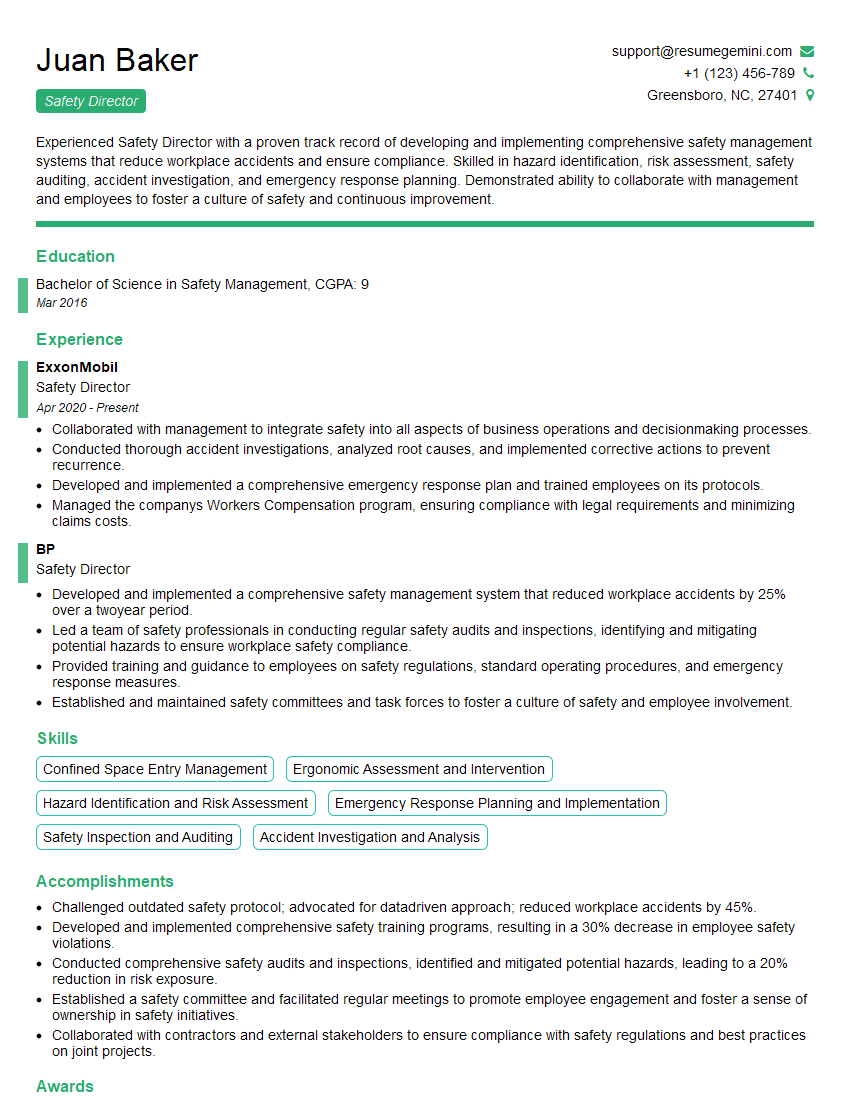
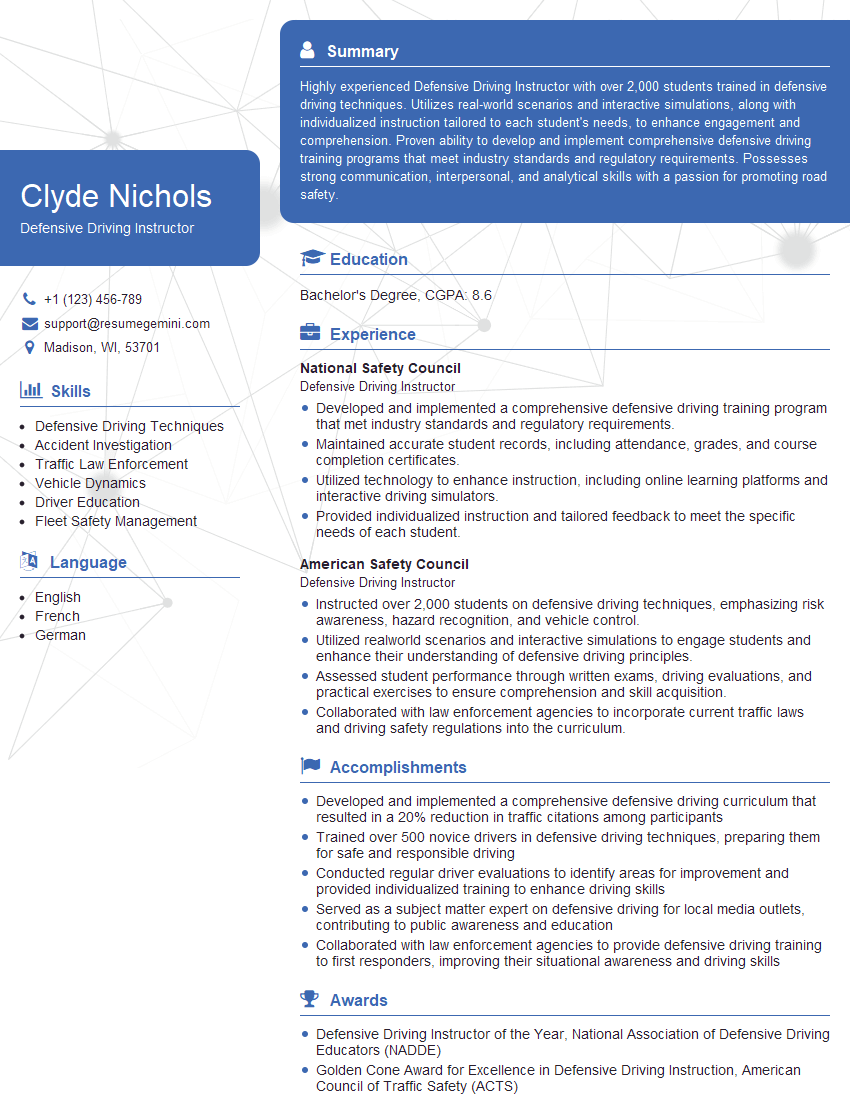
Mastering Driving Safety Culture is paramount for career advancement in today’s safety-conscious world. Demonstrating a deep understanding of these principles will significantly enhance your interview performance and open doors to exciting opportunities. To further strengthen your candidacy, focus on building an ATS-friendly resume that effectively highlights your skills and experience. ResumeGemini is a trusted resource to help you craft a compelling resume that showcases your qualifications. We provide examples of resumes tailored to Driving Safety Culture to help guide you.
Explore more articles
Users Rating of Our Blogs
Share Your Experience
We value your feedback! Please rate our content and share your thoughts (optional).
What Readers Say About Our Blog
Very informative content, great job.
good